

It’s been a while since I’ve done one of the defensive previews, so I’m a little rusty, but hey, I love bowl games. Hawaii runs a 4-2-5 defense: 4 down linemen, 2 linebackers, and 5 defensive backs, with one of those being a versatile type of hybrid role (in this article, I’ll call him the nickel, because that’s how Hawaii lists him).
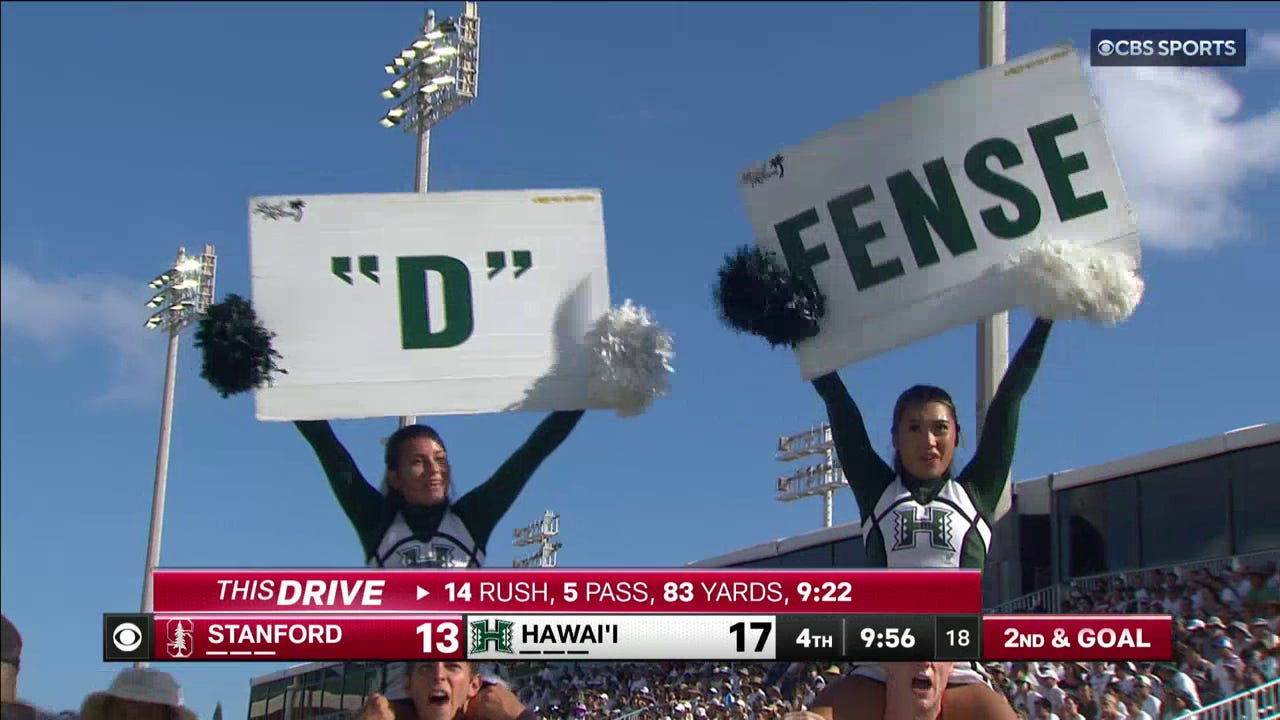
Hawaii has a strong defensive line, but somewhat of a suspect secondary. This meant that they matched up very well with run-heavy teams (like SDSU, who Hawaii manhandled), but have struggled against pass-heavy teams (e.g. Arizona, SJSU, UNLV). Luckily, Cal is a pass-heavy team.
Hawaii has an aggressive defense, where they’re always looking to make a big play: a sack, TFL, or turnover, and they’re willing to take risks defensively to do so. Hawaii has at least one takeaway in 10 of 12 games this season, including a season-high four (2 INT, 2 FUM) against San Diego State. Of the team’s 14 takeaways this season, LB Jamih Otis was in on four of them (1-INT, 2-FF, 1-FR), including three of the six fumbles. Unfortunately for Hawaii, Otis will not be available for the Hawaii Bowl.
I also want to talk about their special teams. You’ll undoubtedly hear the story (if you haven’t already) of “The Tokyo Toe,” 26-year old Kansei Matsuzawa, a Tokyo-native who learned to kick by watching YouTube. Hawaii created an entire page devoted to him. His story first came to the national spotlight when he kicked the game-winner against Stanford, earning 100% of the population’s eternal gratitude as everyone can agree making Stanford lose is a good thing to do and he should be lauded for it.
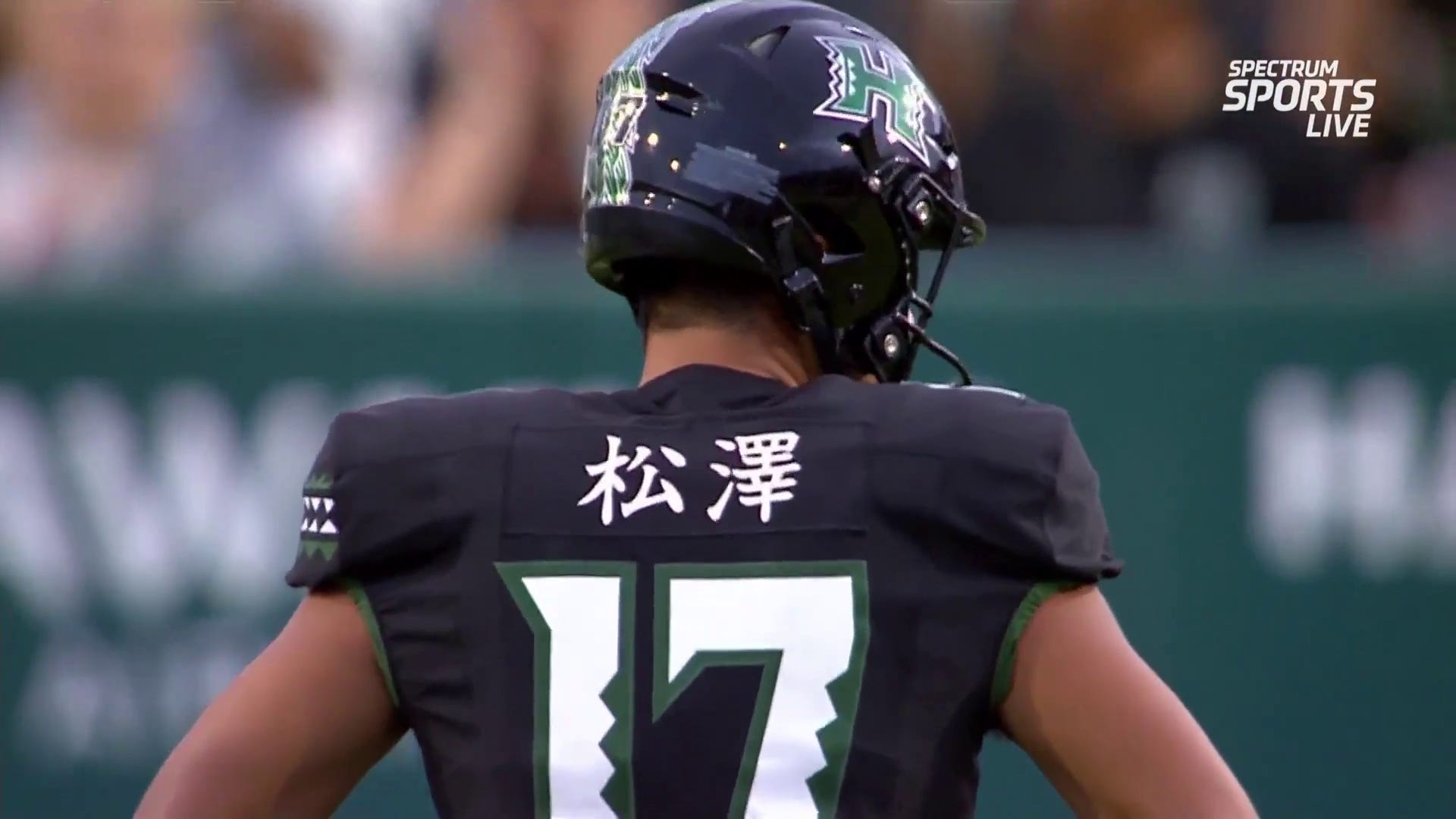
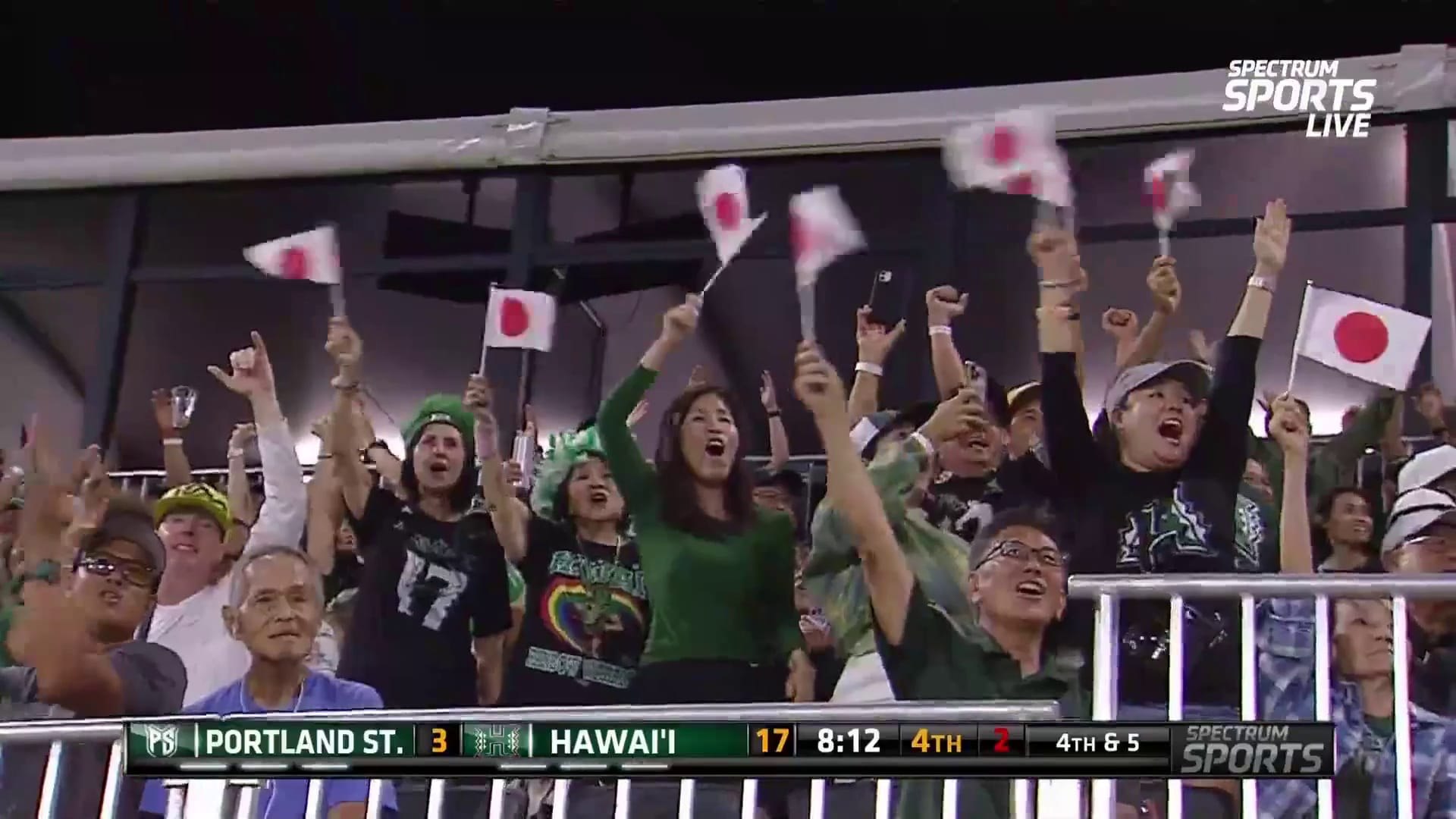
Unsurprisingly, the Tokyo native has earned his share of devoted fans:
Matsuzawa came to the US to kick at junior college without speaking English. He said that he fell in love with football after watching a the Raiders play the Rams when he was 20, per Hawaii’s media guide and that TokyoToe website previously linked. (Note: I checked the historical series between the two, and the Raiders did not play the Rams in 2019, when Matsuzawa was 20. The Hawaii TV announcers stated that it was a Raiders-Chargers game, and as divisional rivals, those two teams play twice a year. The Raiders and Rams did play in 2018, when Matsuzawa would have been 19, in a game that featured 6 FGs made, so there seems to be at least one minor detail incorrect in the media guide’s telling. The 2019 Raiders-Chargers game seems less likely from a FG-lover’s perspective, so I am leaning towards 2018 Rams-Raiders). Regardless, falling in love with football after watching a Rams-Raiders game is kind of like falling in love with Mexico after eating at Chipotle.
Matsuzawa said after his game-winner at Stanford that he was more nervous having to speak English at the postgame press conference than he was kicking the game-winner. Matsuzawa has set all kinds of kicking records at Hawaii: he set the Hawaii school record and tied the MWC record with 26 consecutive FG made (dating back to last season), and tied the FBS record for consecutive FG made in a season (25, tied with Chris Jacke at Kansas State 1988), although he missed the 26th one in his final kick of the regular season. His season long FG is 52 yards, and he was a Lou Groza Award finalist for the best placekicker in CFB this year.
But let’s get back to the defense.
Defensive line
The strength of Hawaii’s defense is definitely their pass rush, and in particular, their defensive line. The player that has stood out to me most on this defense is DT De’Jon Benton, a transfer from USC (although his teammate, DE Jackie Johnson III, is right up there too). Hawaii’s defensive line is on the lighter but faster side, generally using speed to win individual matchups, and playing an aggressive style of defense.
DT De’Jon Benton has a nasty swim move, but he also has plenty of power as well. He can push the OL back into the lap of the QB, and was still able to win matchups with defenses keying in on him:
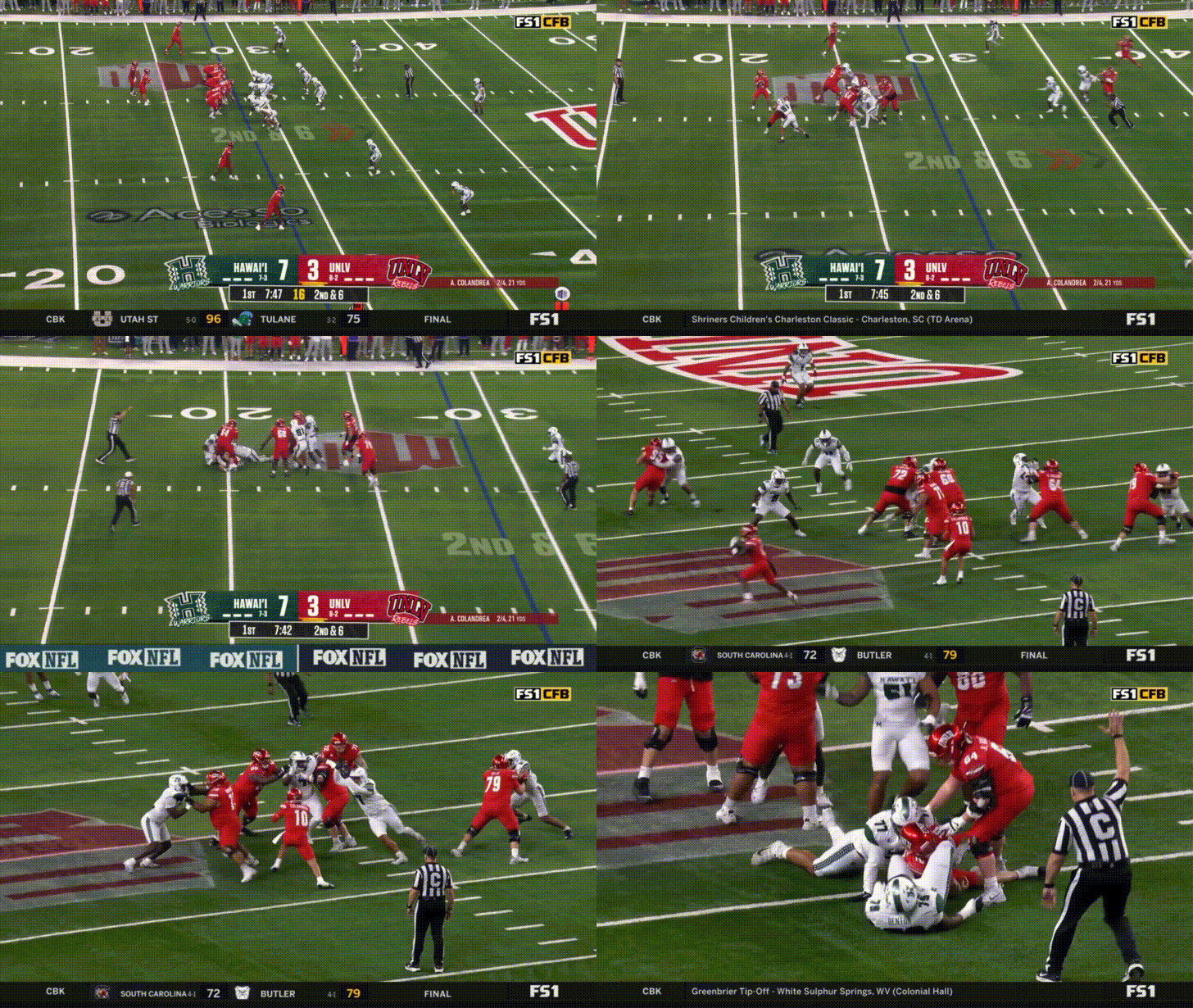
Here Benton shows a nice get-off and his short area quickness:
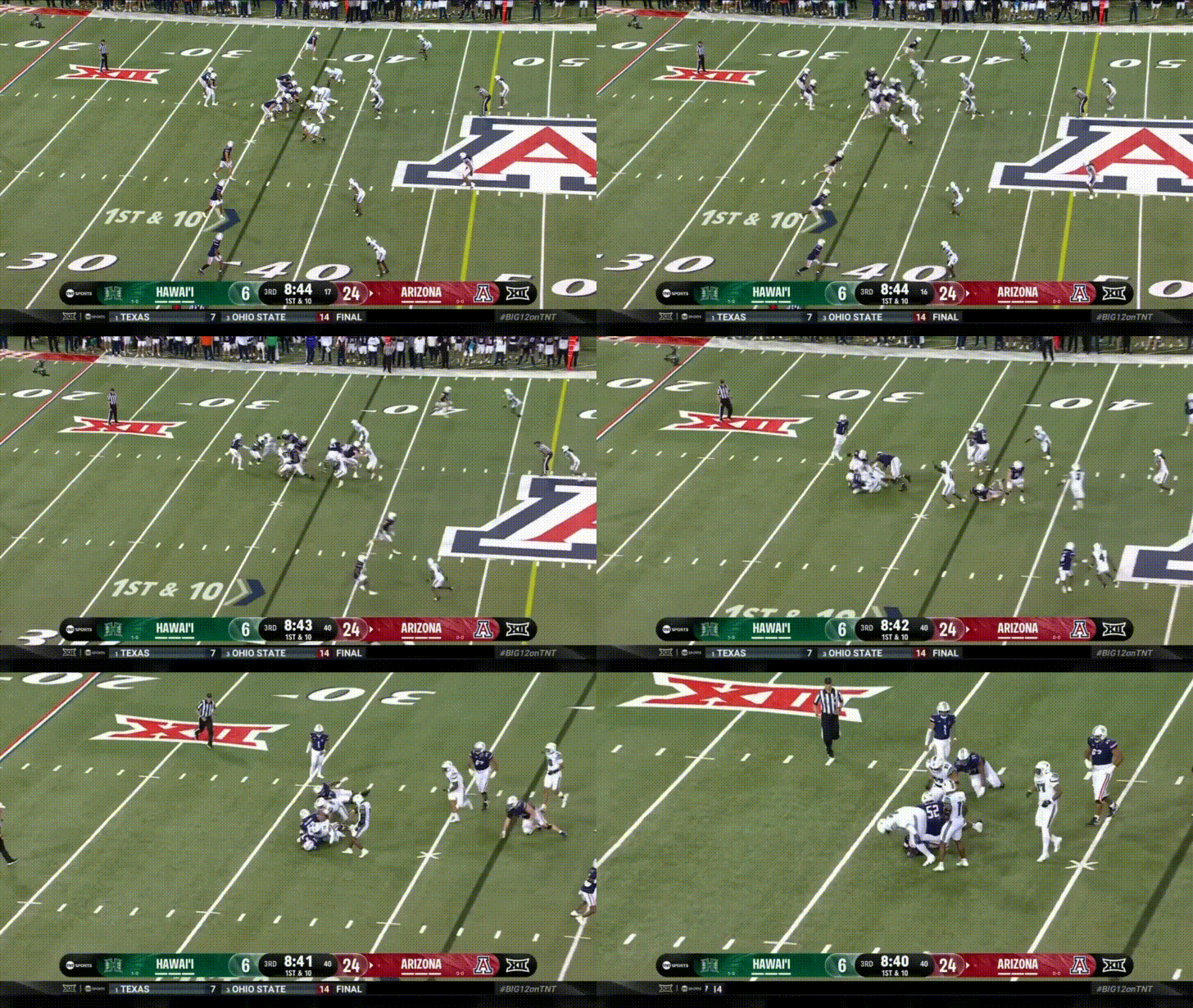
Benton leads the team in TFLs (9.5), and is 2nd in sack (5.5). Here he shows that quickness again, quickly getting by the much bigger offensive lineman:
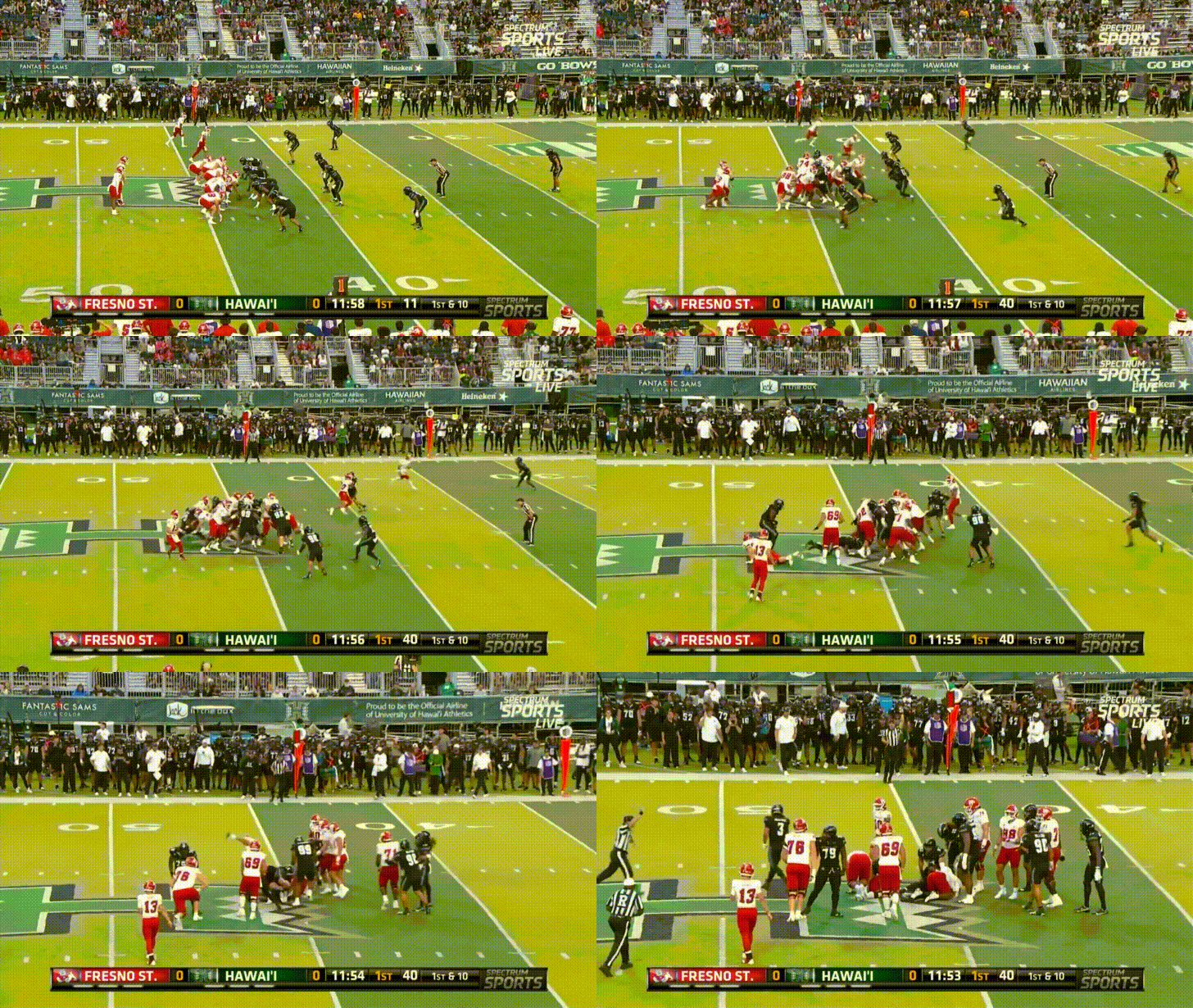
Benton’s ability to quickly get into the backfield would often completely blow up a play:
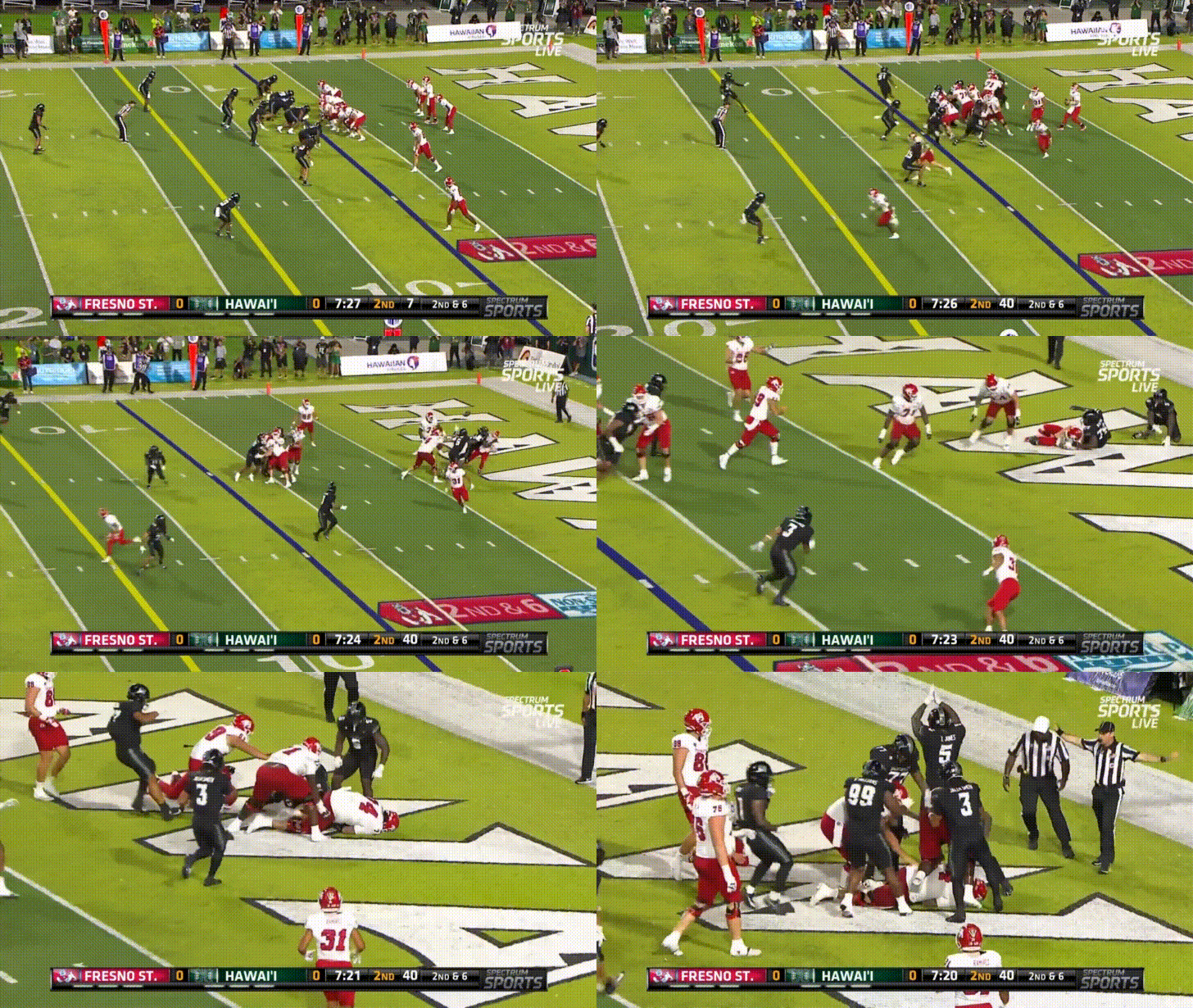
And here Benton is with his nasty swim move:
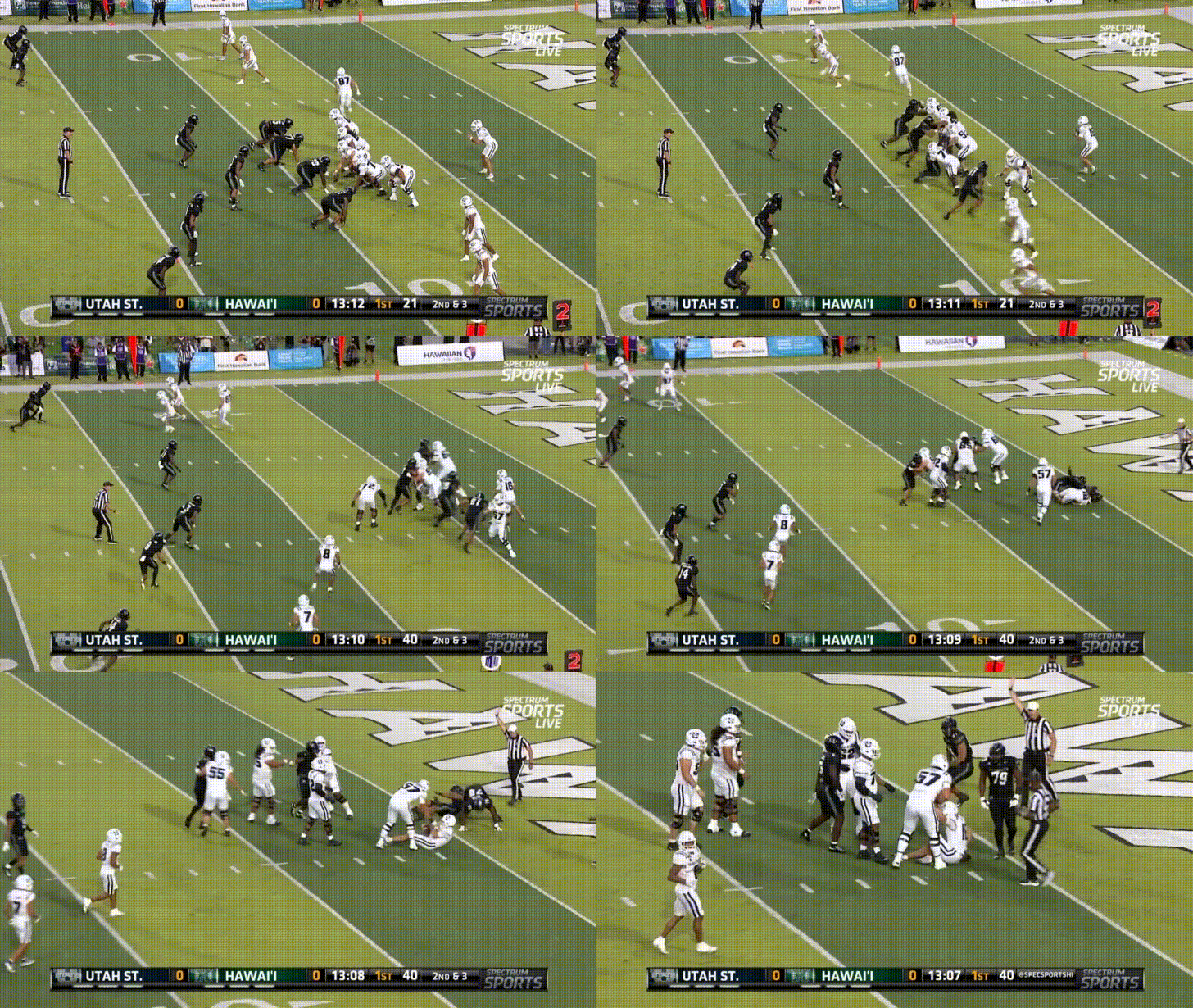
In the following play, DE Jackie Johnson III shows good pad level, getting up and under the right tackle, pushing him back into the quarterback, which leaves him nowhere to go as Benton also wins his matchup to pick up the sack:
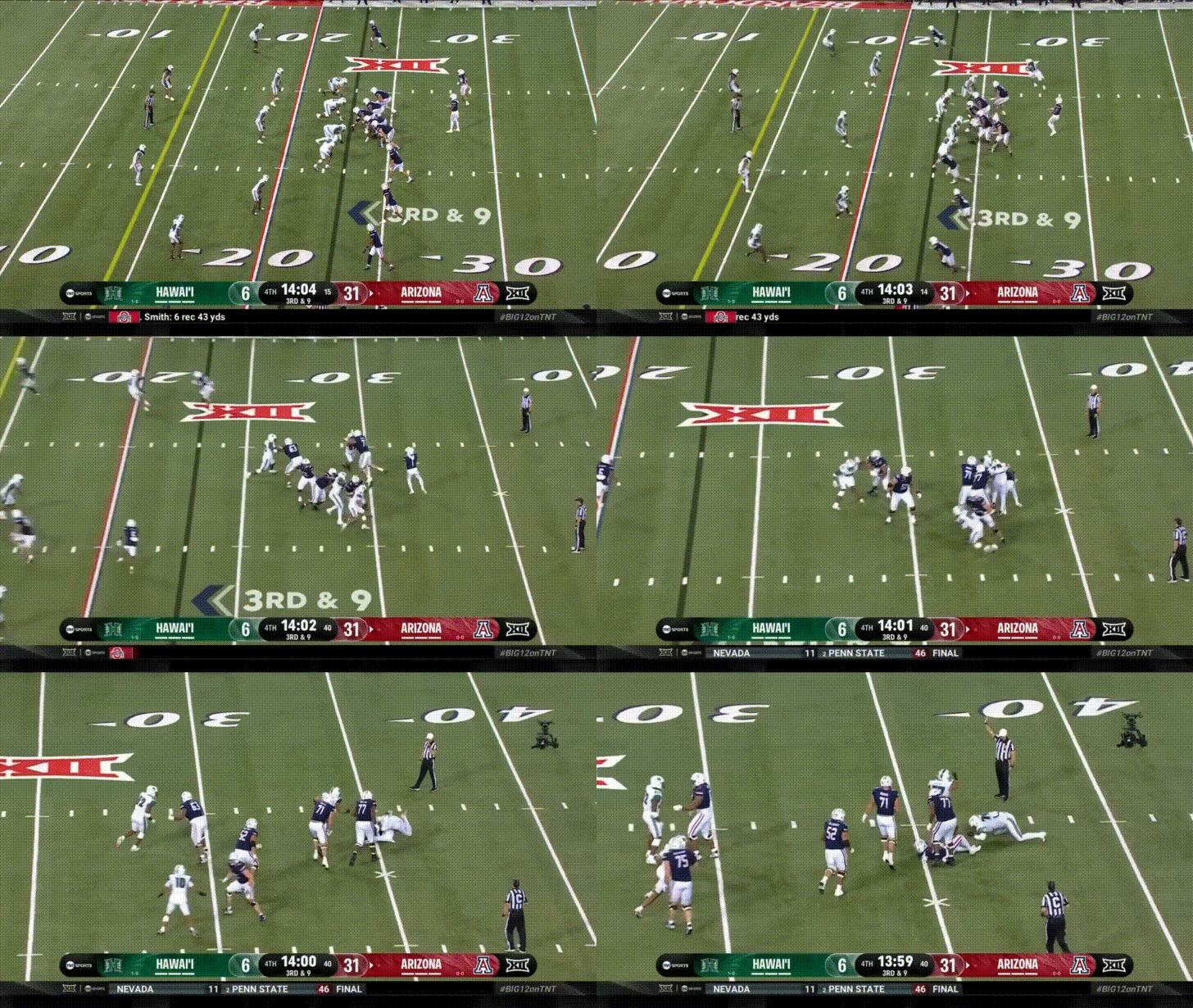
Of course, it wasn’t usual at all to see Benton and Johnson III both creating havoc in the backfield:
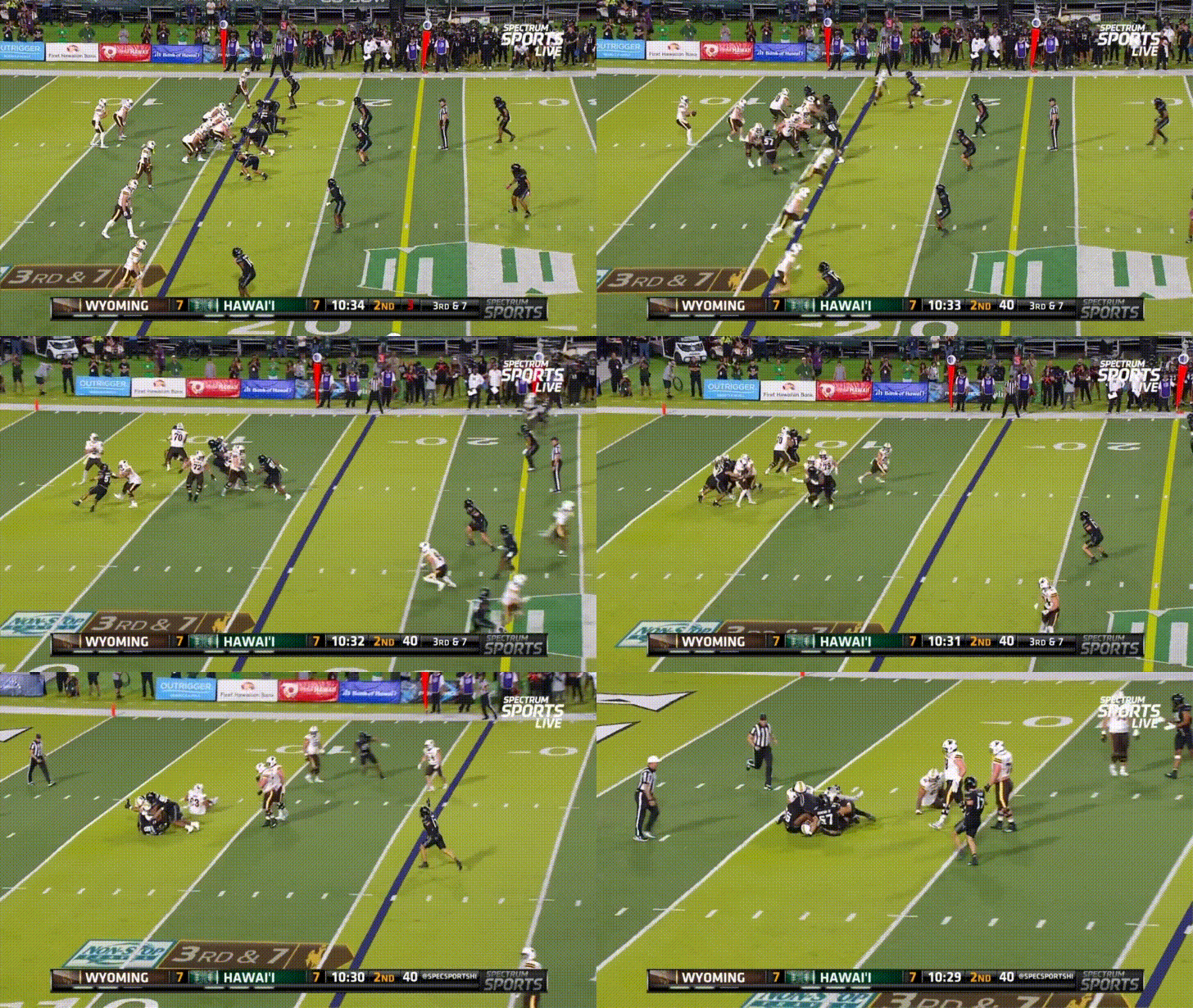
DE Jackie Johnson III leads the team in sacks (7.5), good for 3rd in the MWC (and just 0.5 sacks behind 1st). Johnson III is undersized but very fast, and probably closer to an outside linebacker than defensive end. Johnson III rose from the ranks of NAIA Lawrence Tech University to the starting job at Hawaii, so he’s obvious progressed a lot during his career. Jackie Johnson III was a First-Team All-Mountain West selection, and his 40 pressures on 11.1% of his snaps played is the highest percentage in the conference.
Here Johnson III wins with pure speed:
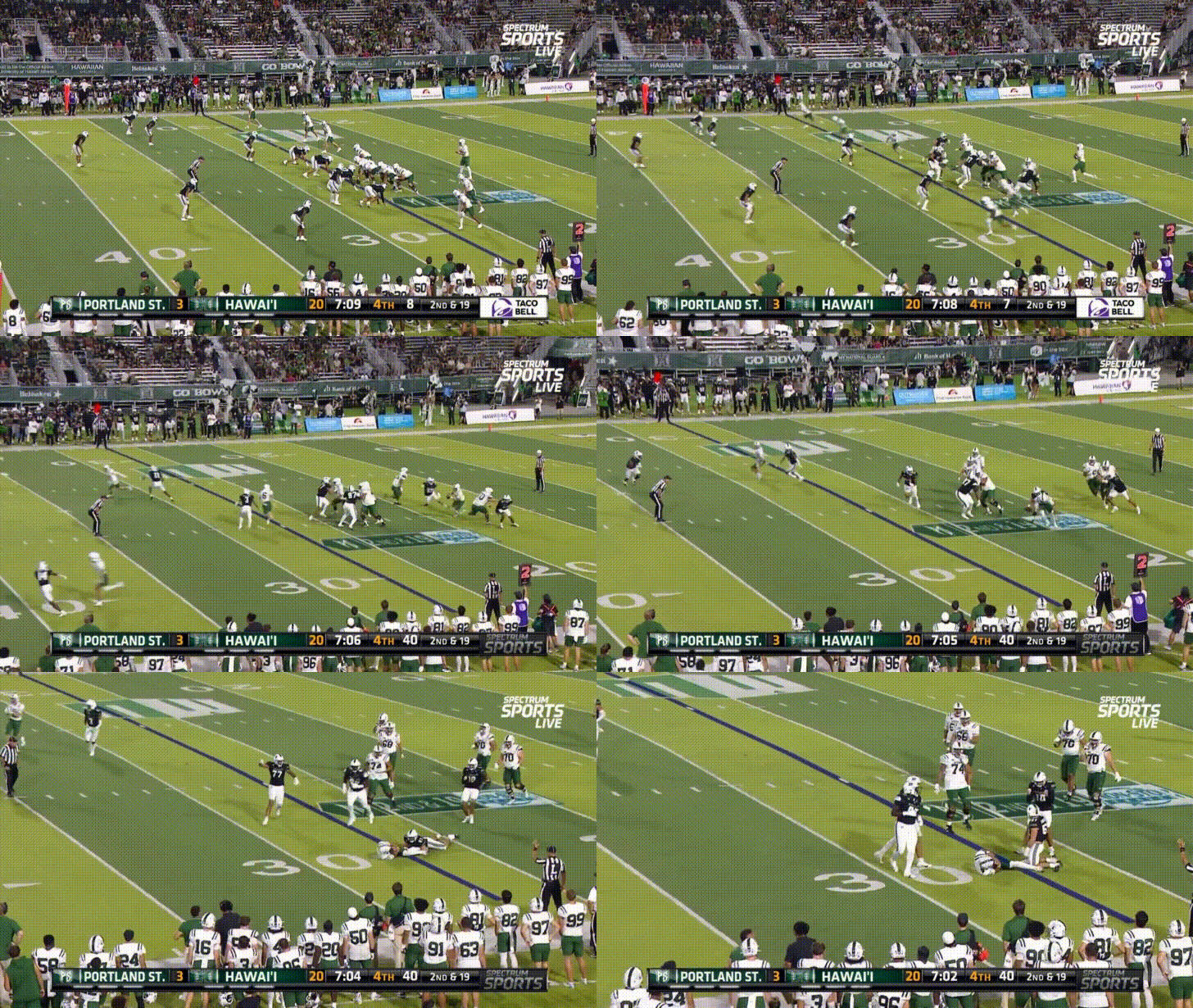
In fact, this was a pretty common move of his:
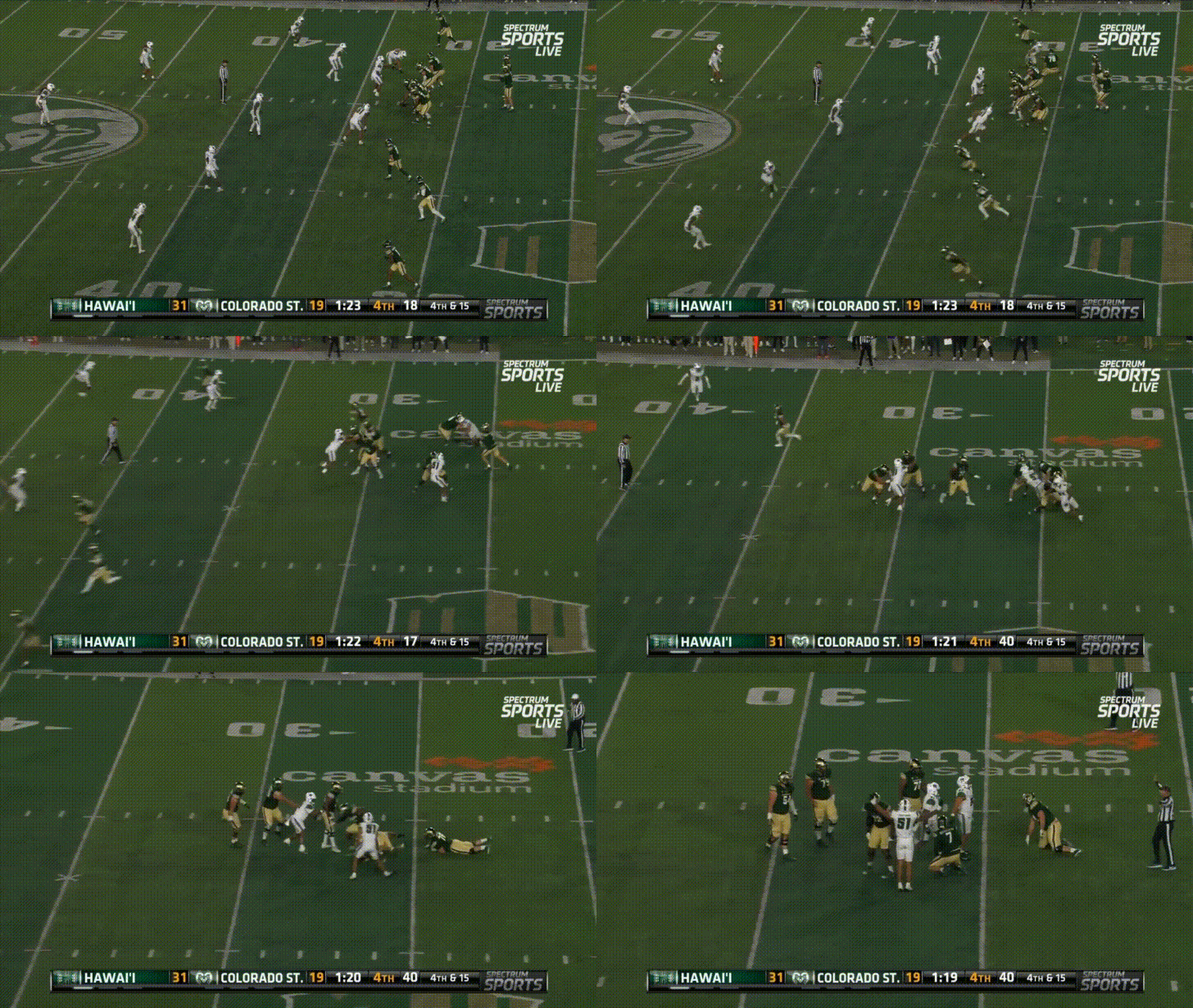
Here Johnson III does a good job on swiping the lineman’s hands away from him:
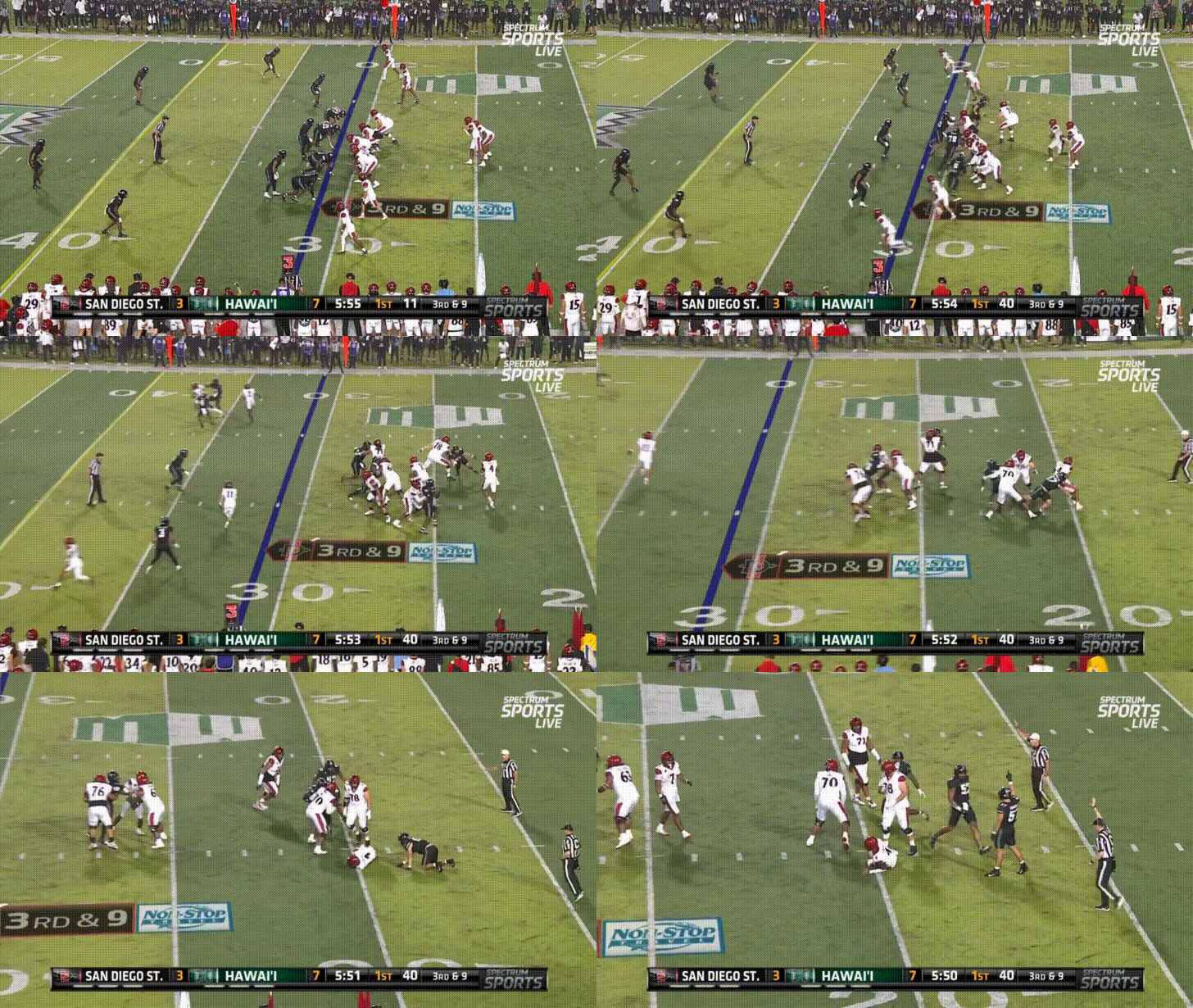
Here Johnson III shows the ability to get off the block:
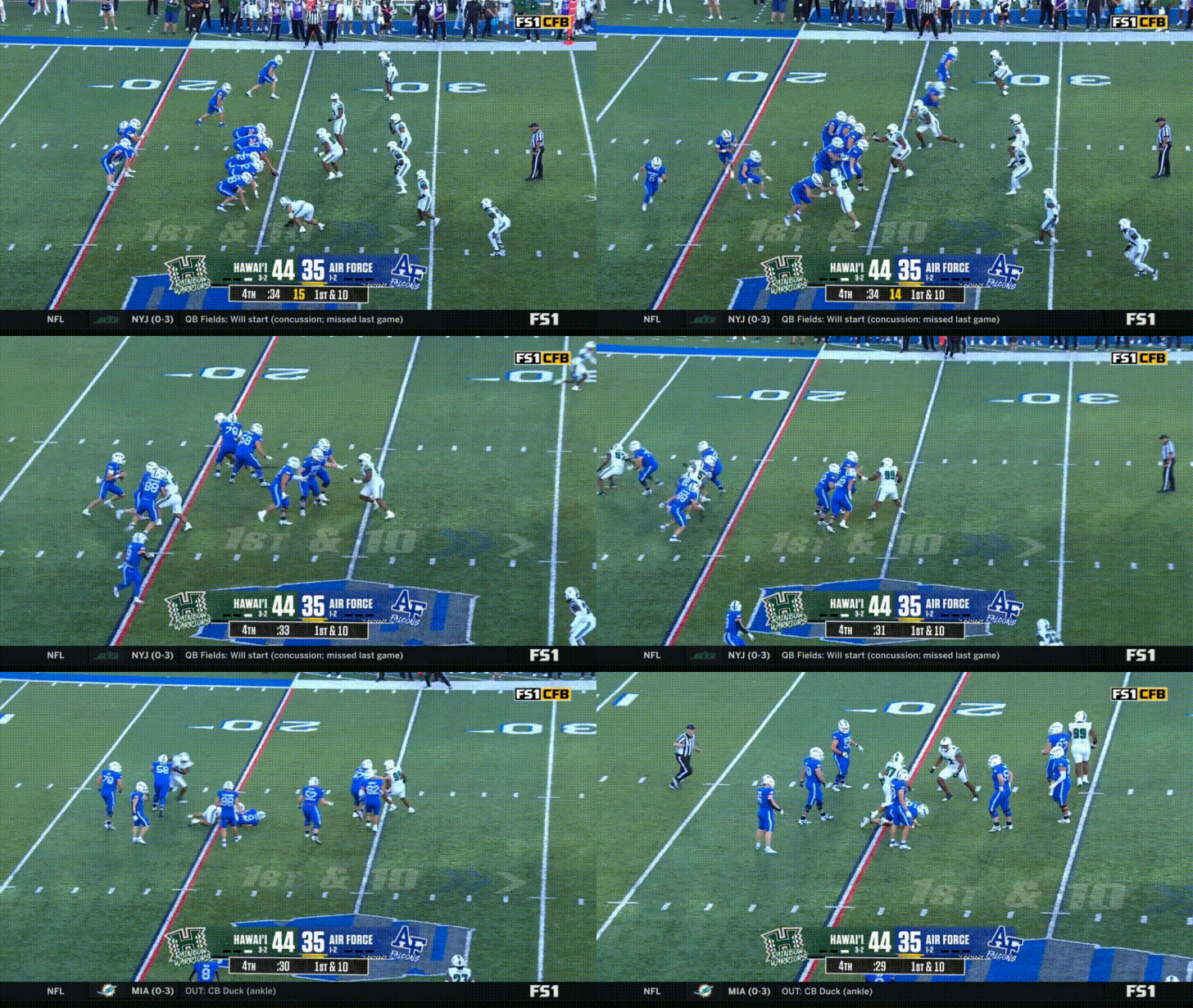
And again, speed rush to the outside:
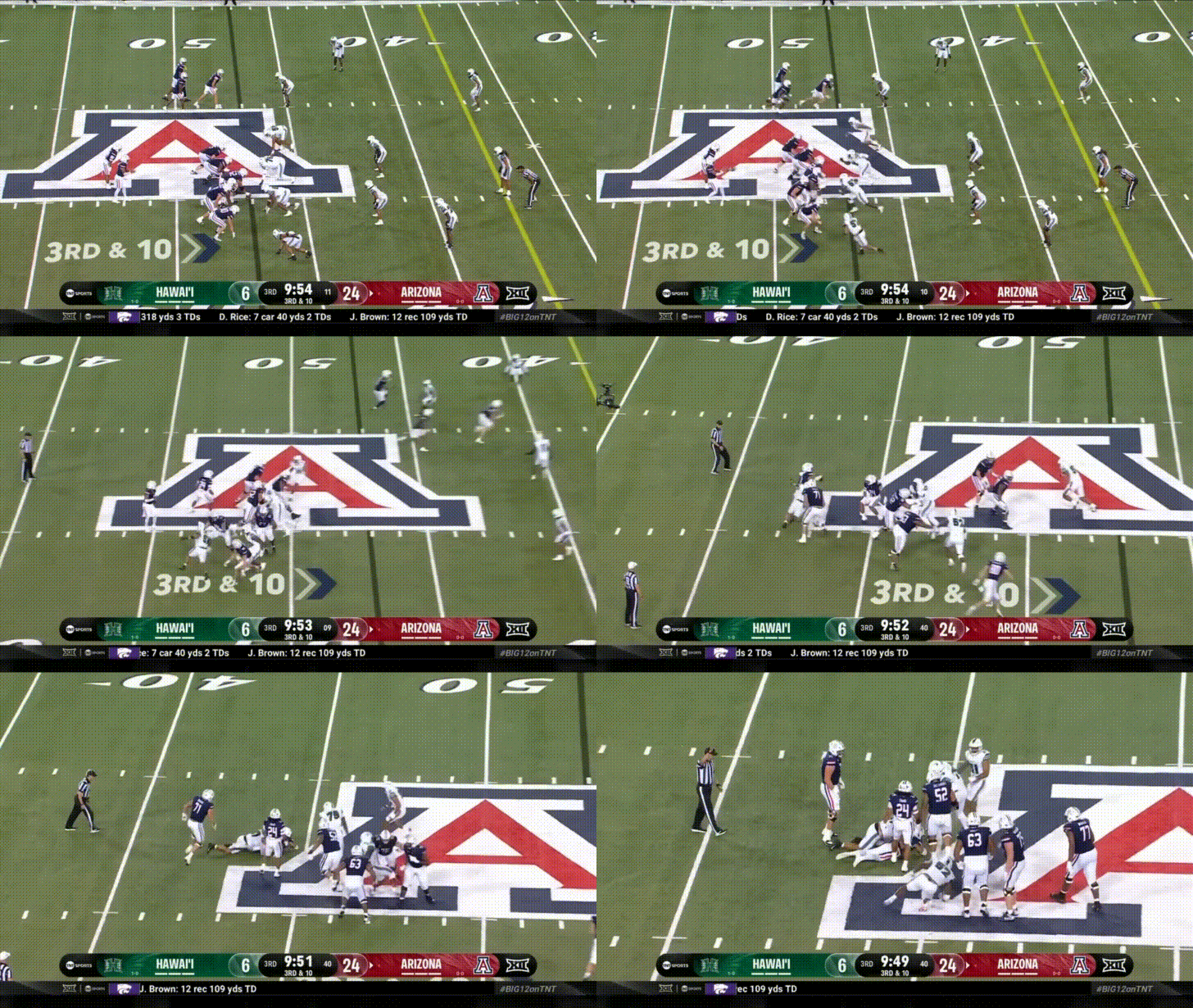
DT Luther McCoy (originally a Minnesota transfer) is De’Jon Benton’s backup, and he’s also been a disruptive force, even if it doesn’t always register on the stat sheet:
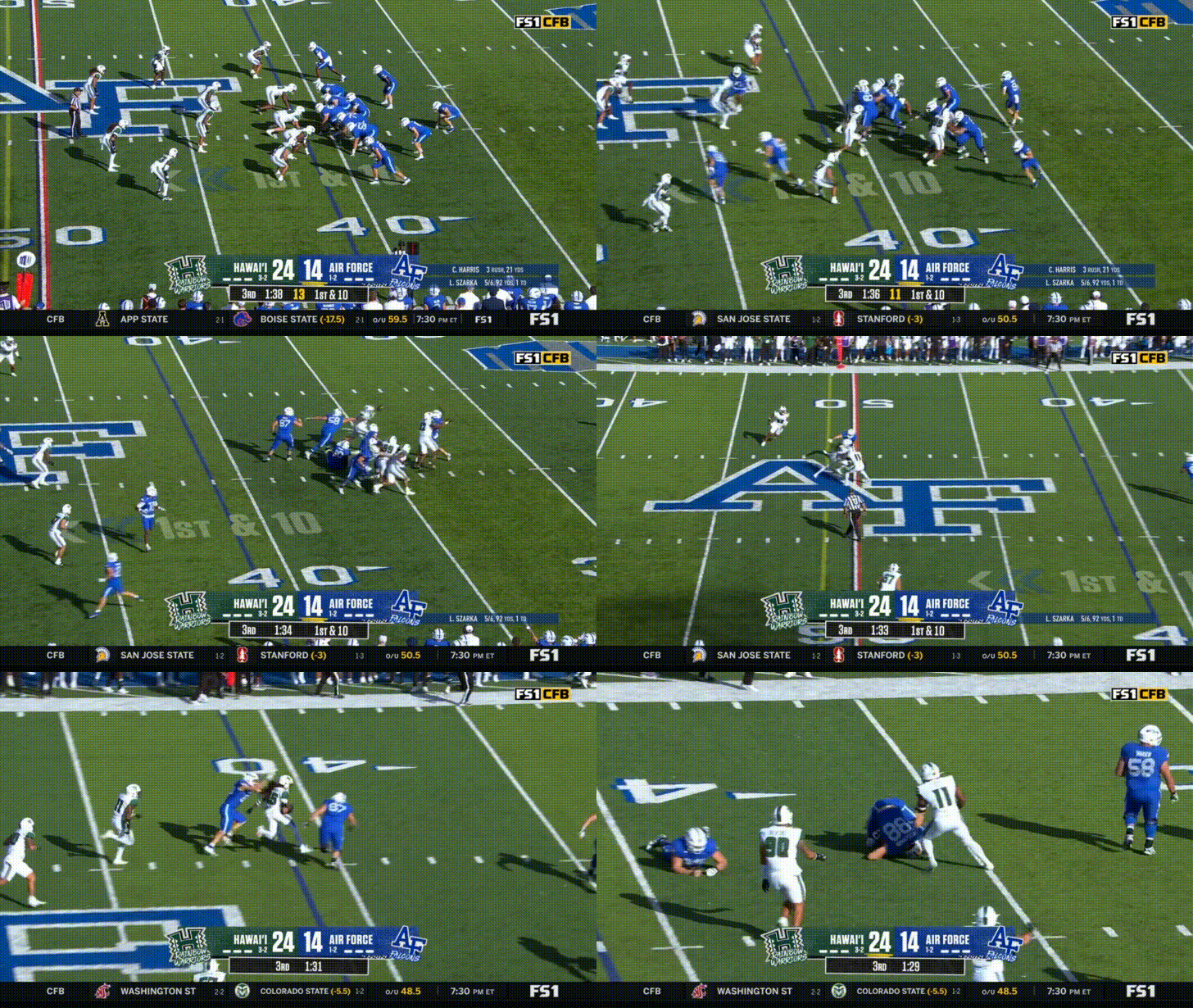
Hawaii does a good job of the “peanut punch,” punching the ball out of the ball carrier’s hands to force a fumble. Here McCoy forces a fumble:
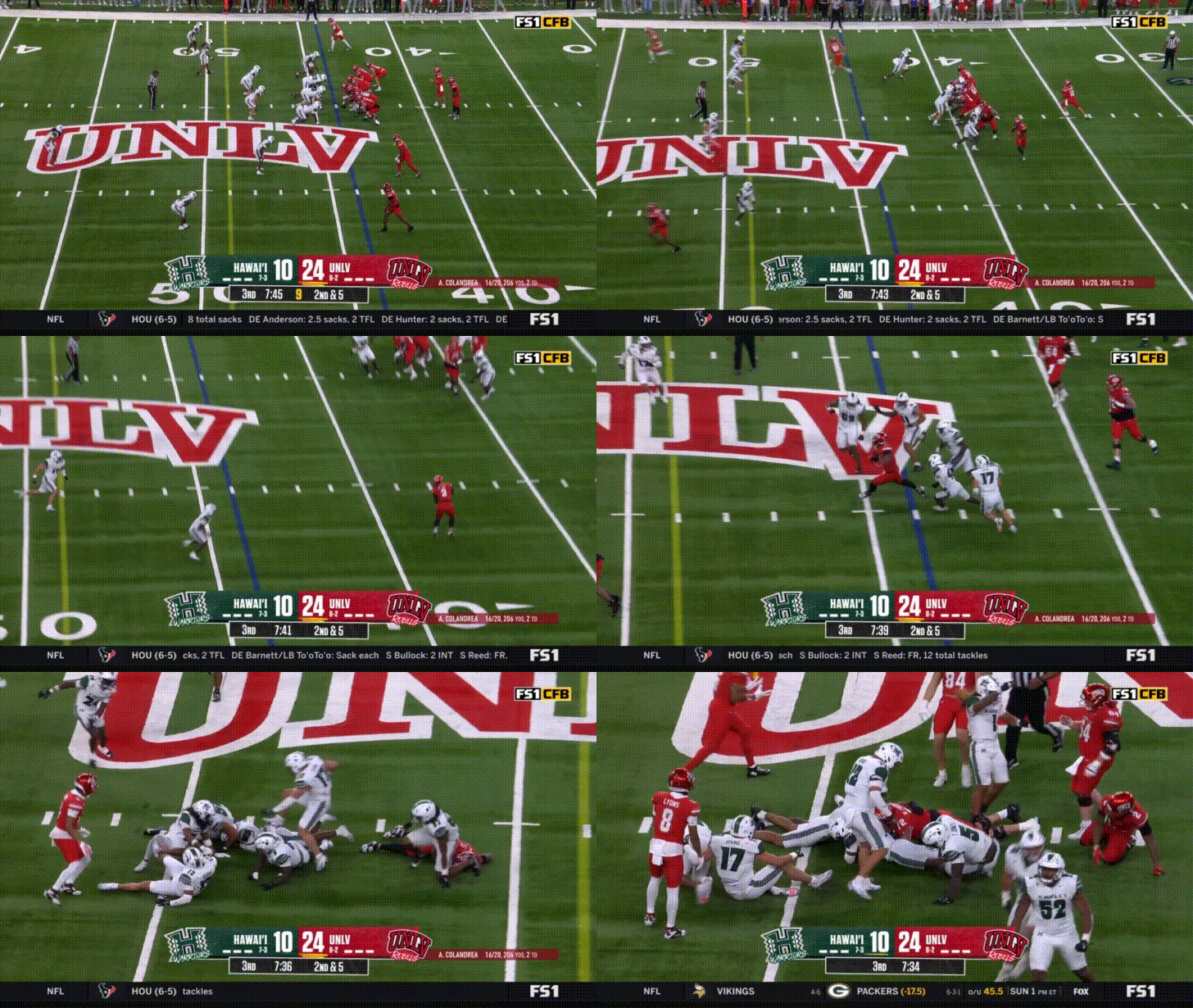
Here McCoy is just a beat too quick for the CSU OL:
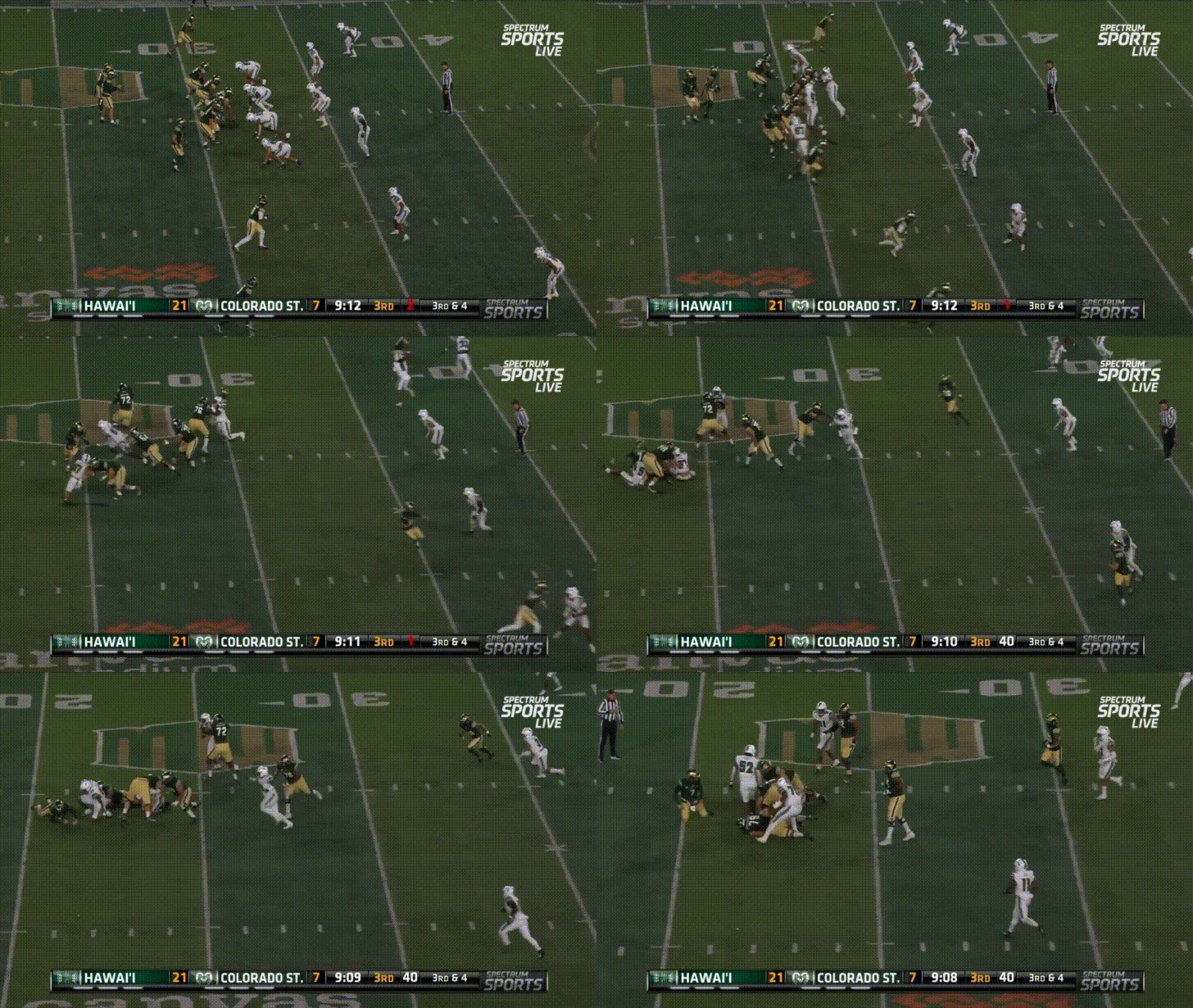
And here McCoy shows a nice swim move as well:
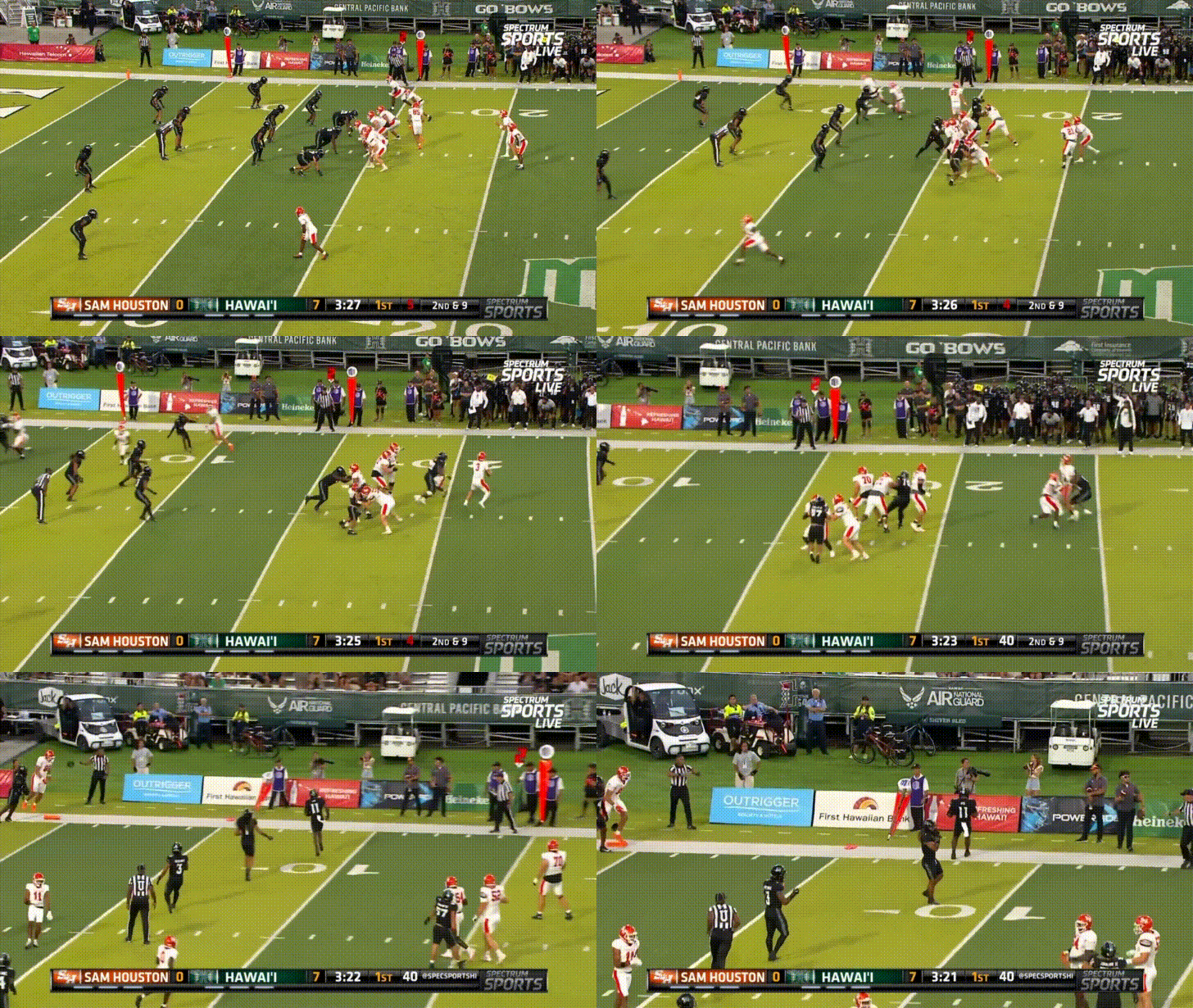
At the nose tackle spot, Hawaii has had a bit more rotation there. The starting NT in the previous game against Hawaii was Qwyn Williams, although Hawaii’s depth chart currently lists Carsen Stocklinski as the starter (Stocklinski was the starting NT to start the season), although Jamar Sekona has also seen significant snaps there as well. I feel like I’ve seen NT Qwyn Williams at that spot the most, so I’ll start with him. Williams is typically the gap filler, but here he finds his way through for the sack:
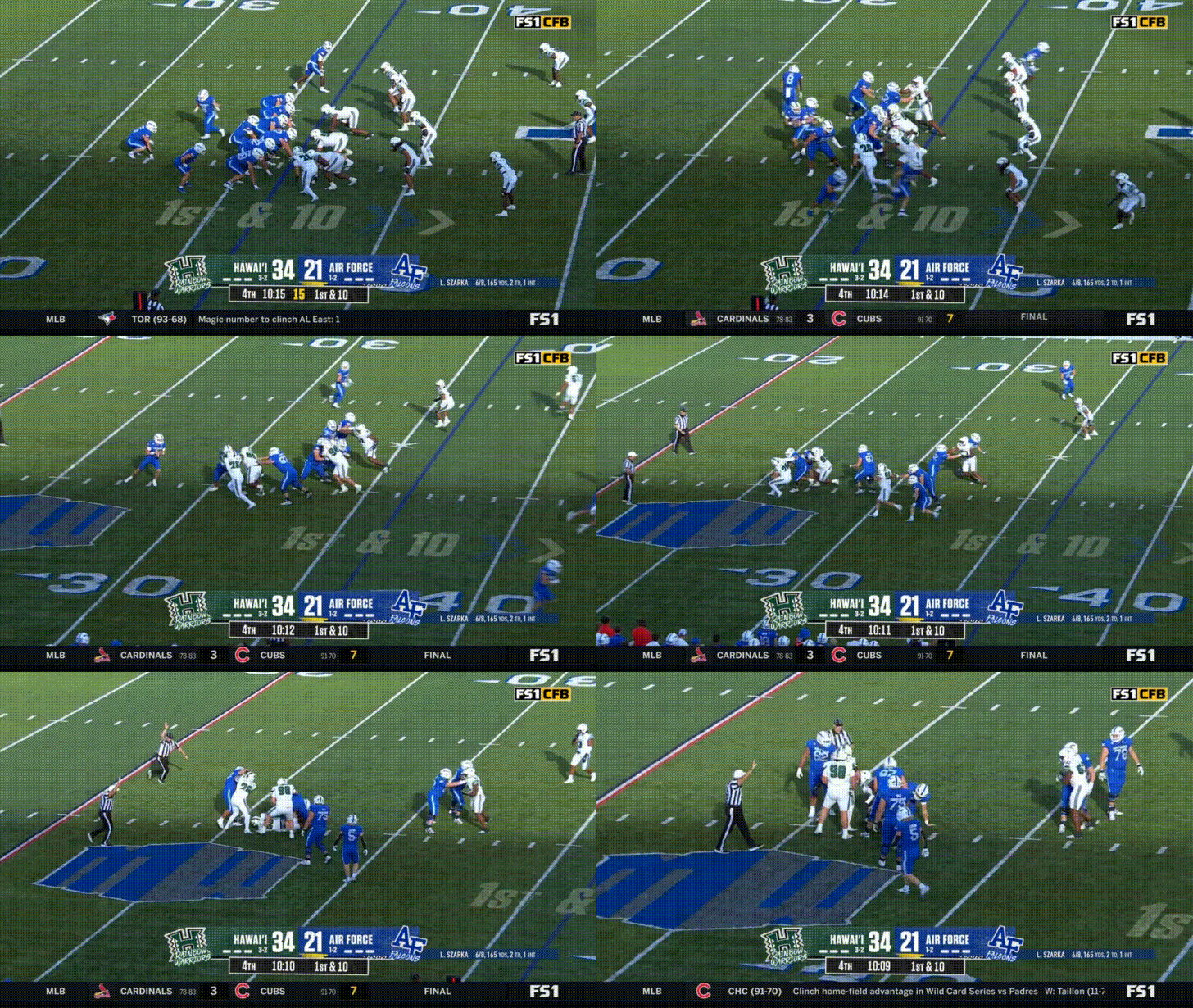
Here Williams fights his way into the backfield, despite being held on the double team and pulled down from behind:
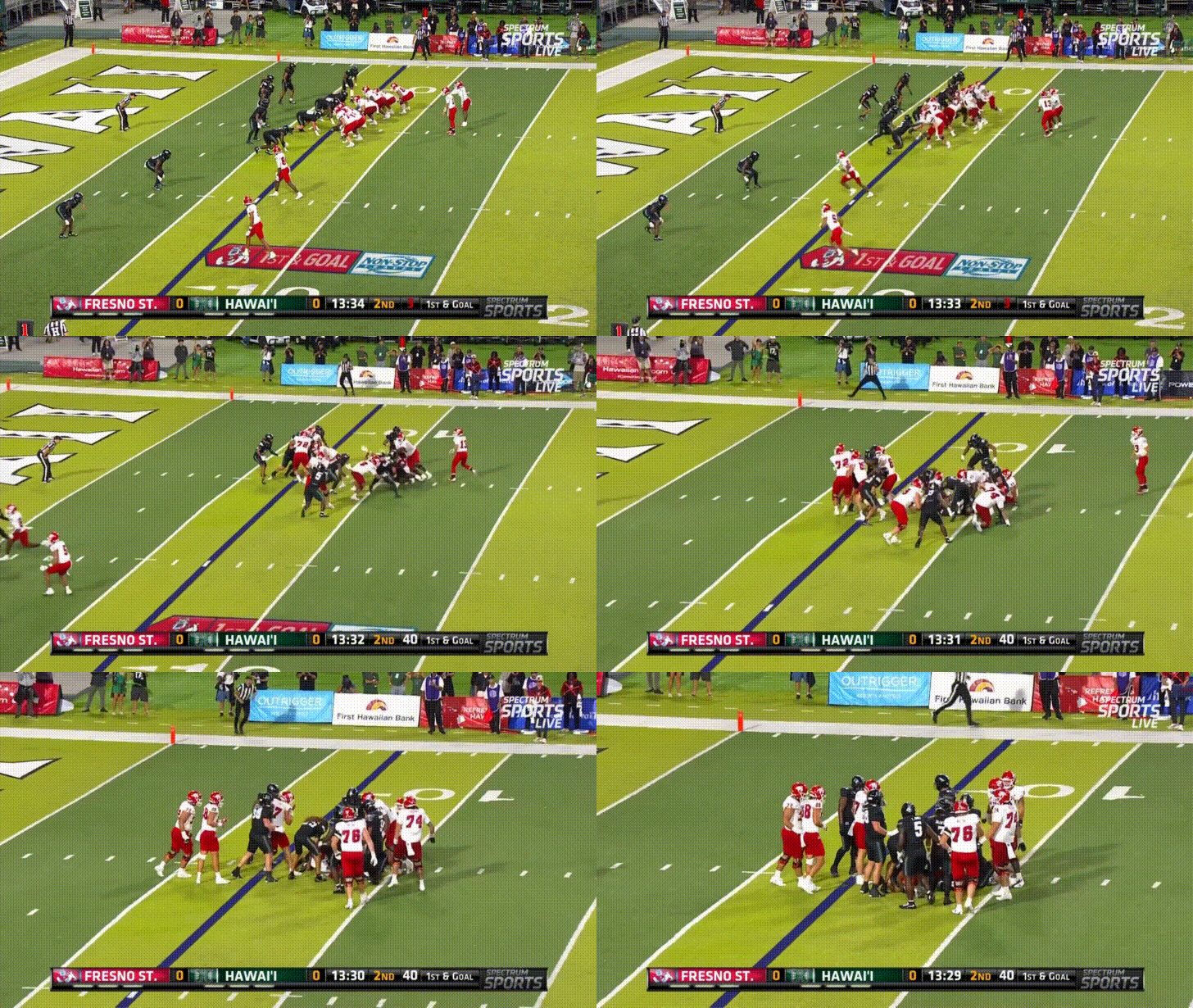
DE Tariq Jones has started some games at DE (and the depth chart puts him as an “OR” with DE Jackie Johnson III). Here Jones gets by the LT for a sack:
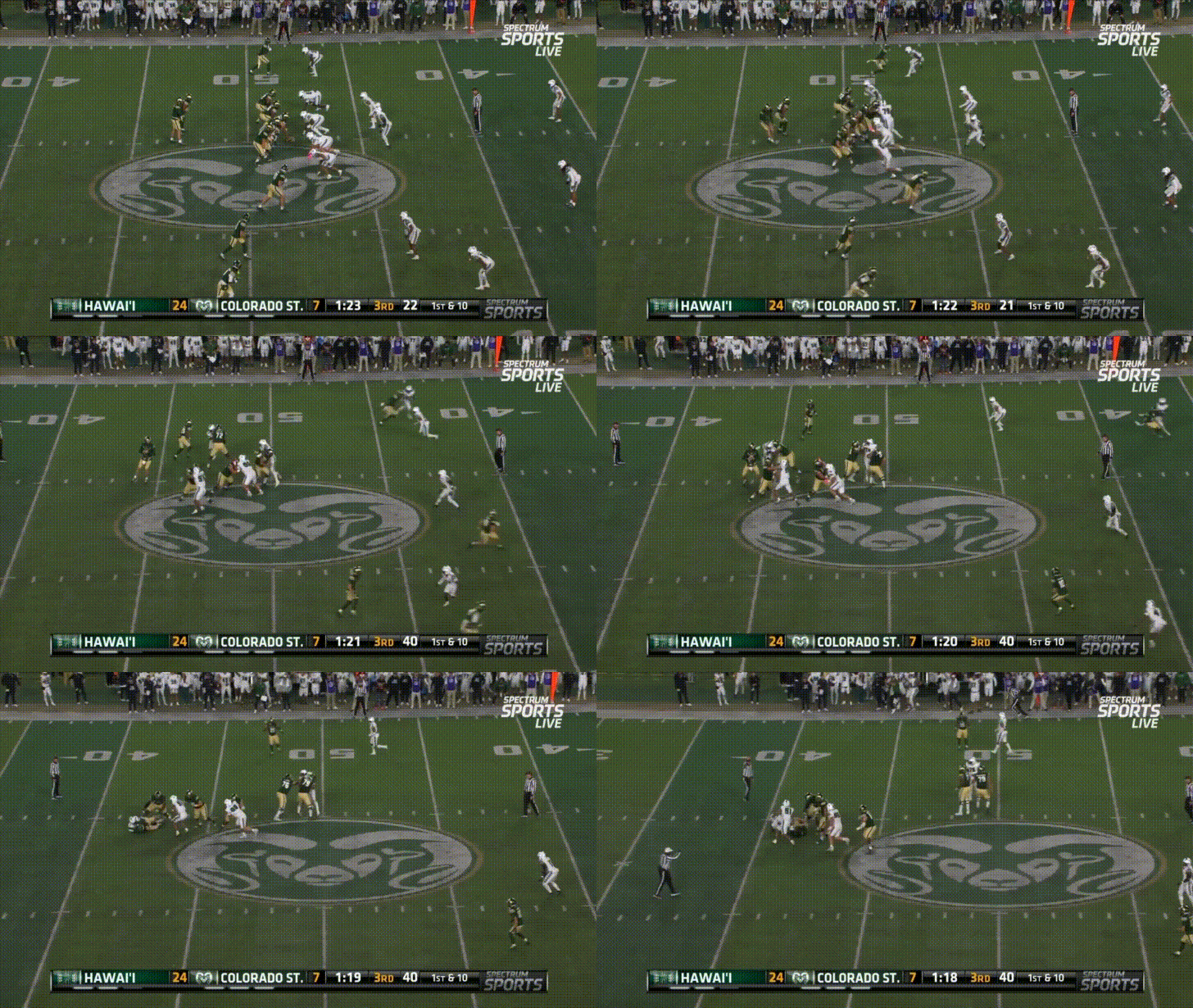
Here NT Carsen Stocklinski pushes the center back into the QB (as DT De’Jon Benton draws the initial double team) for the sack on former Utah QB Bryson Barnes:
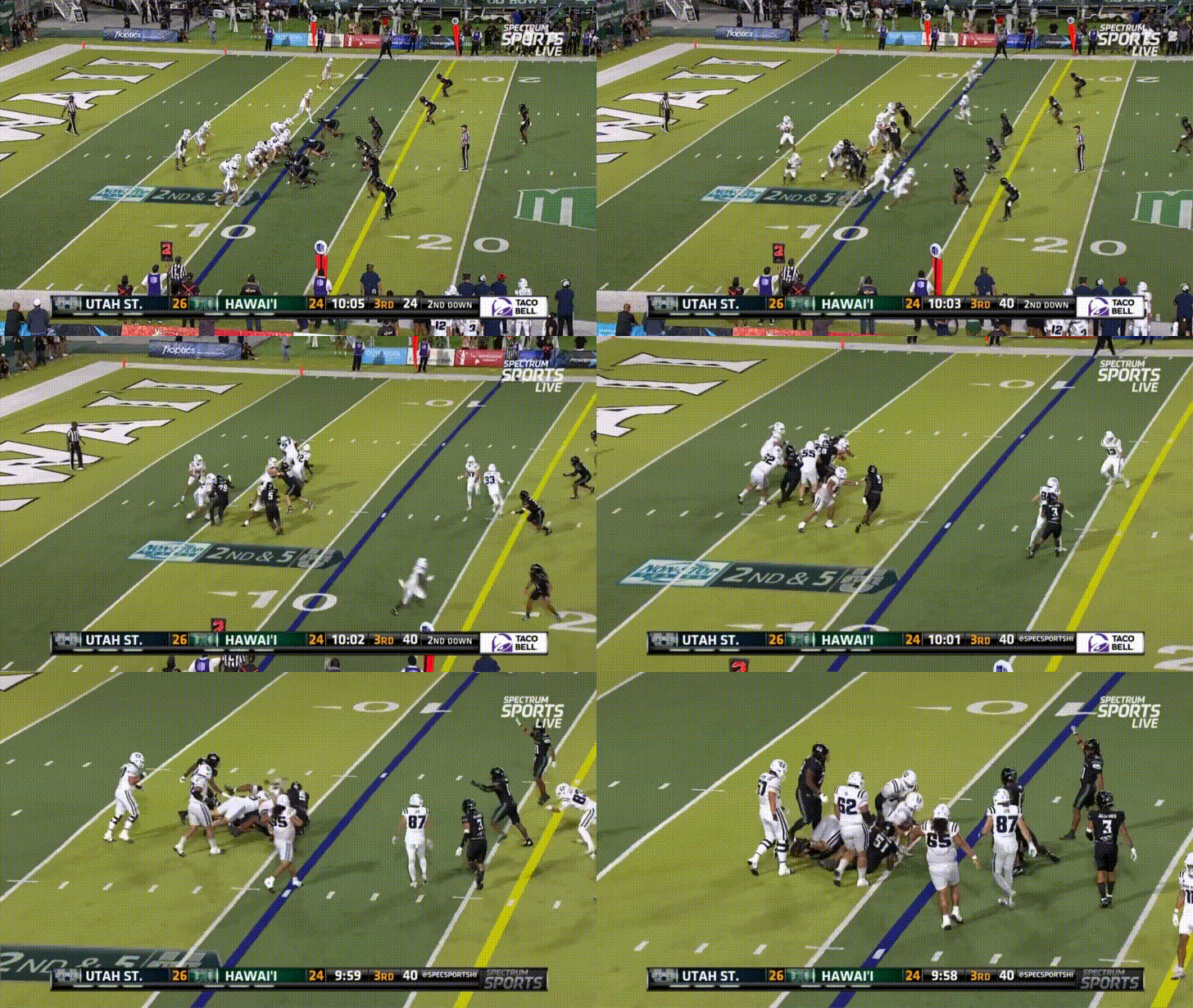
The other defensive end (opposite Jackie Johnson III) is DE Lesterlaisene (“Lester”) Lagafuaina. Lagafuaina has a bit more versatility in where he lines up along the line, but I don’t really have any good highlights to show here. Here’s one of his sacks:
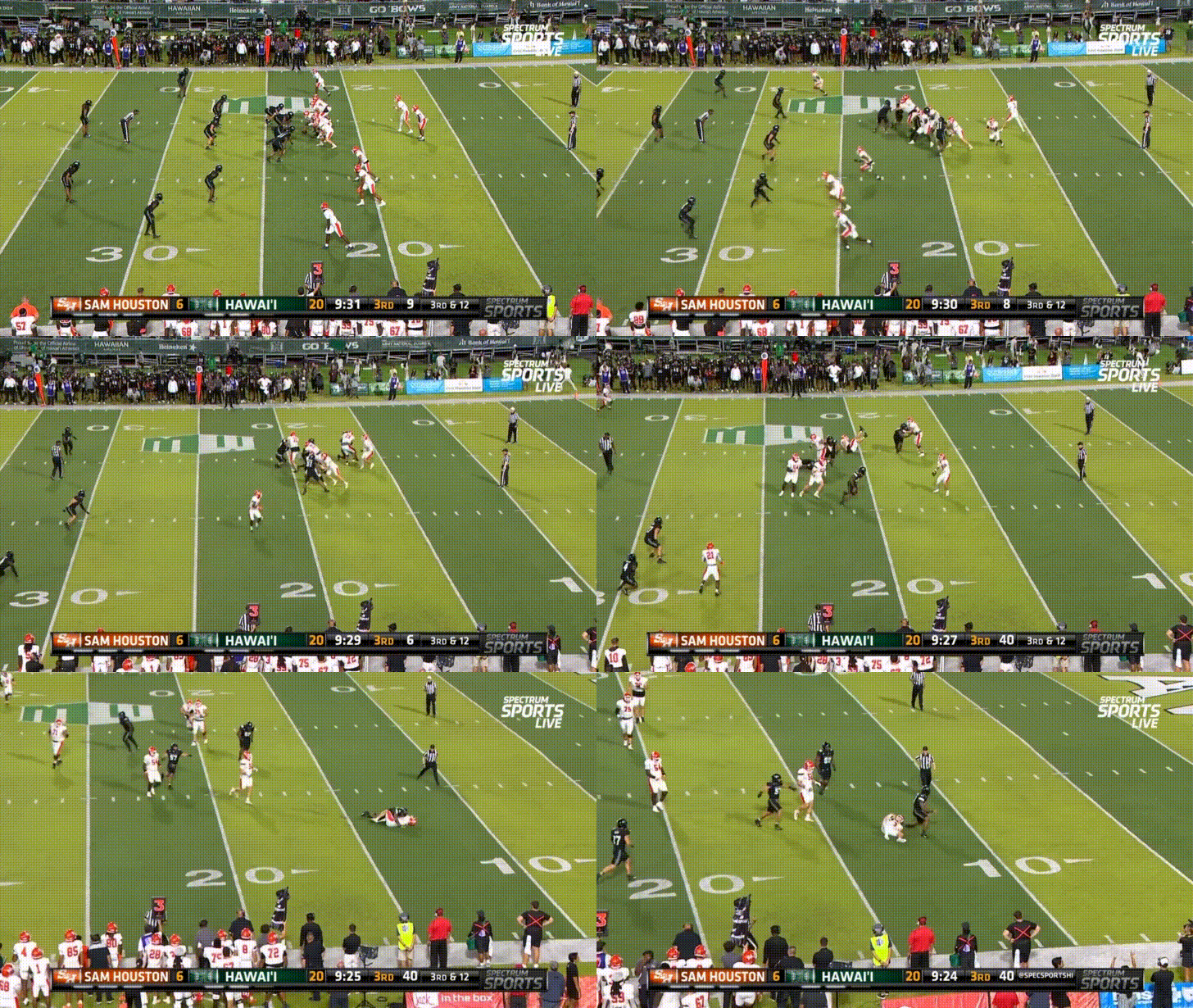
You can expect Hawaii to bring a lot of defensive pressure with these guys.
Linebackers
With a 4-2-5 defense, I don’t have a ton of players to talk about in this section. (I almost wanted to put NB Elijah Palmer here as he fills kind of a hybrid role here). The starting weakside linebacker, Jamih Otis, suffered a season-ending injury in the first half of the UNLV game, and the backup Giovanni Iovino will be starting in his place. Otis was the second-leading tackler on the team. To be honest, none of the linebackers have really stood out that much.
The starting middle linebacker is Jalen Smith, who is 3rd on the team in tackles. Here he does a good job of shedding the block and putting himself in a good position to stop the run:
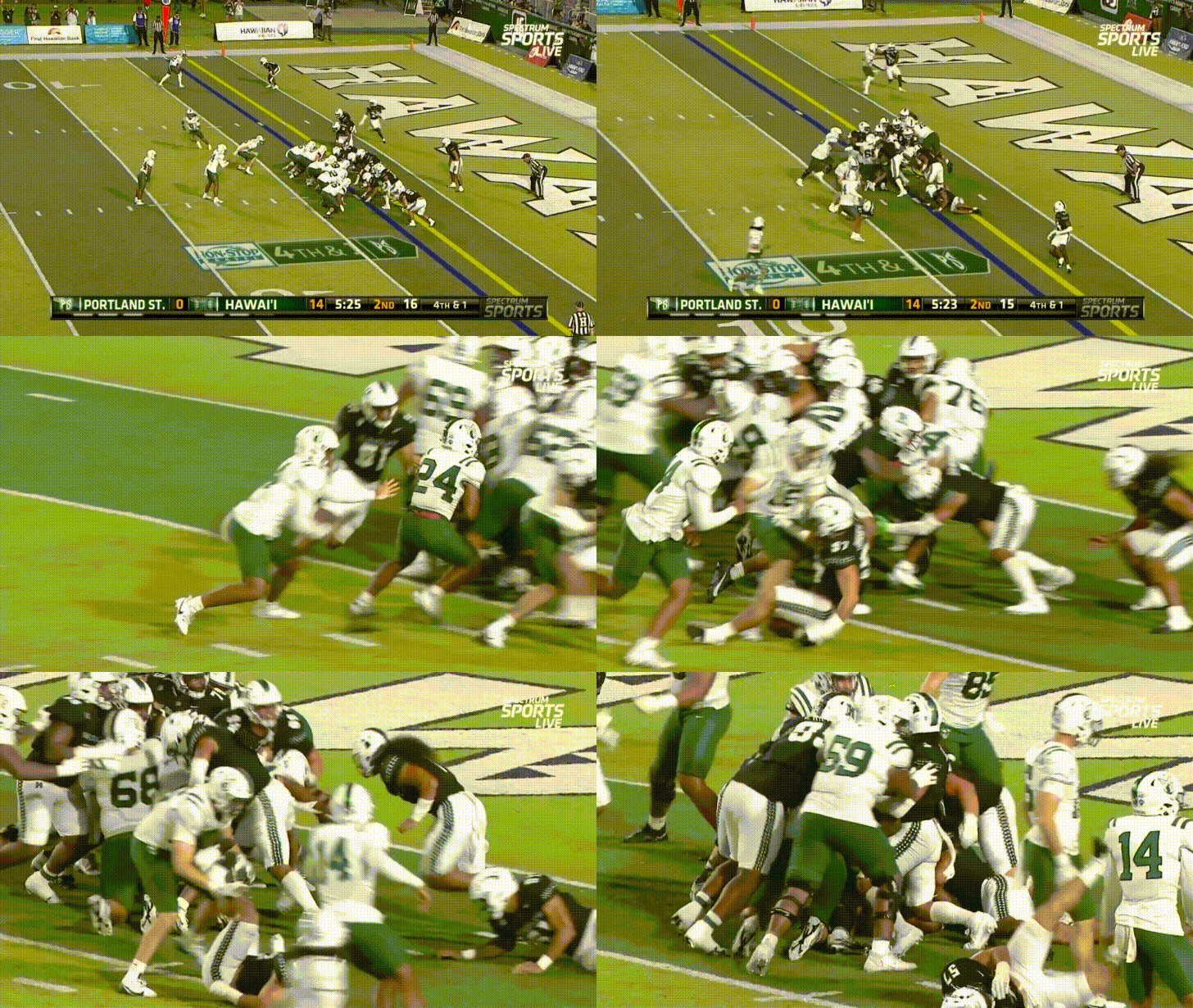
Smith also has 4.5 TFLs this season:
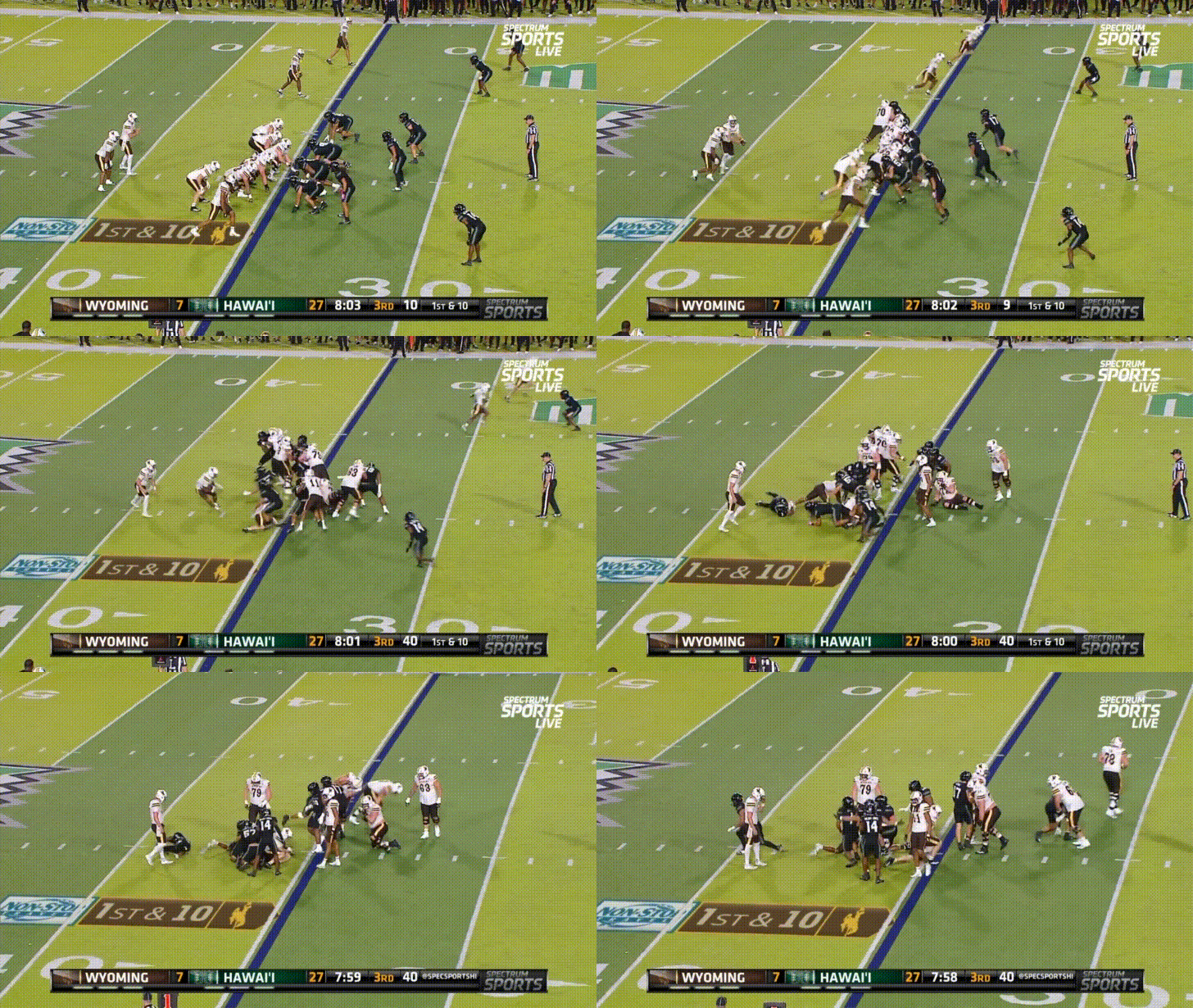
Here’s another good run stop on an RB known to break tackles:
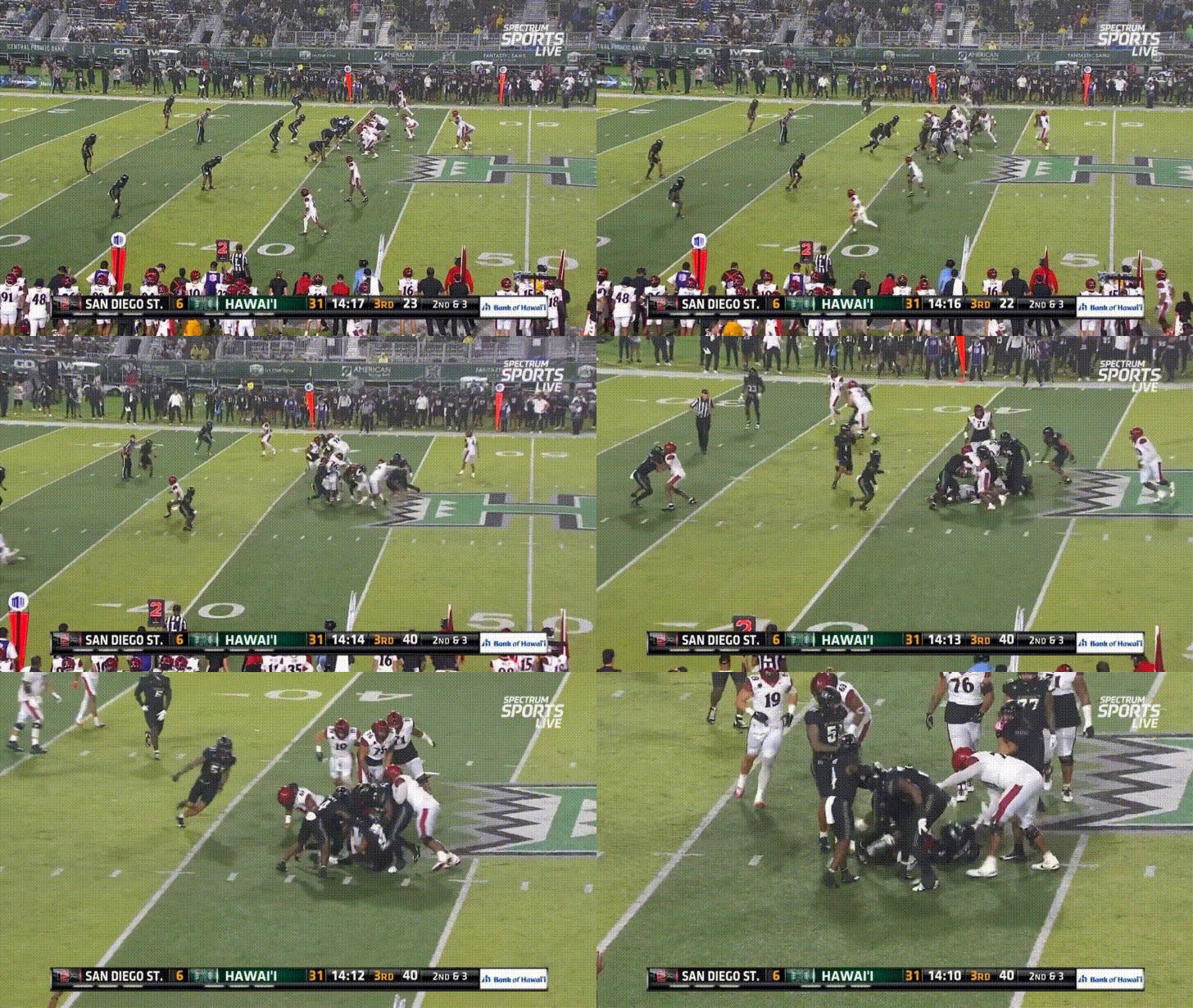
Here Smith does a good job triggering:
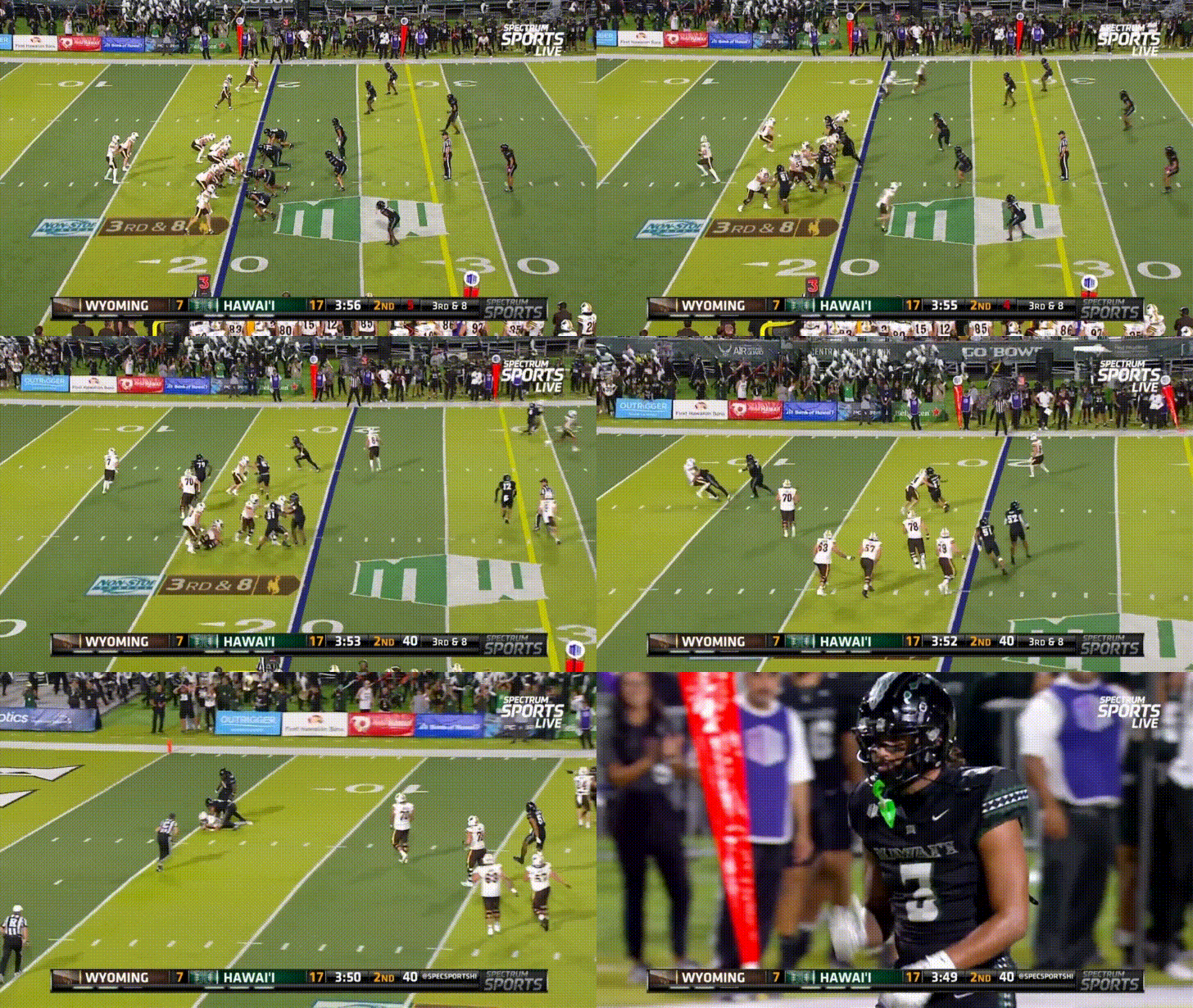
As mentioned earlier, Hawaii loves the peanut punch. Here Smith gets the initial stop to set up his teammate with the forced fumble:
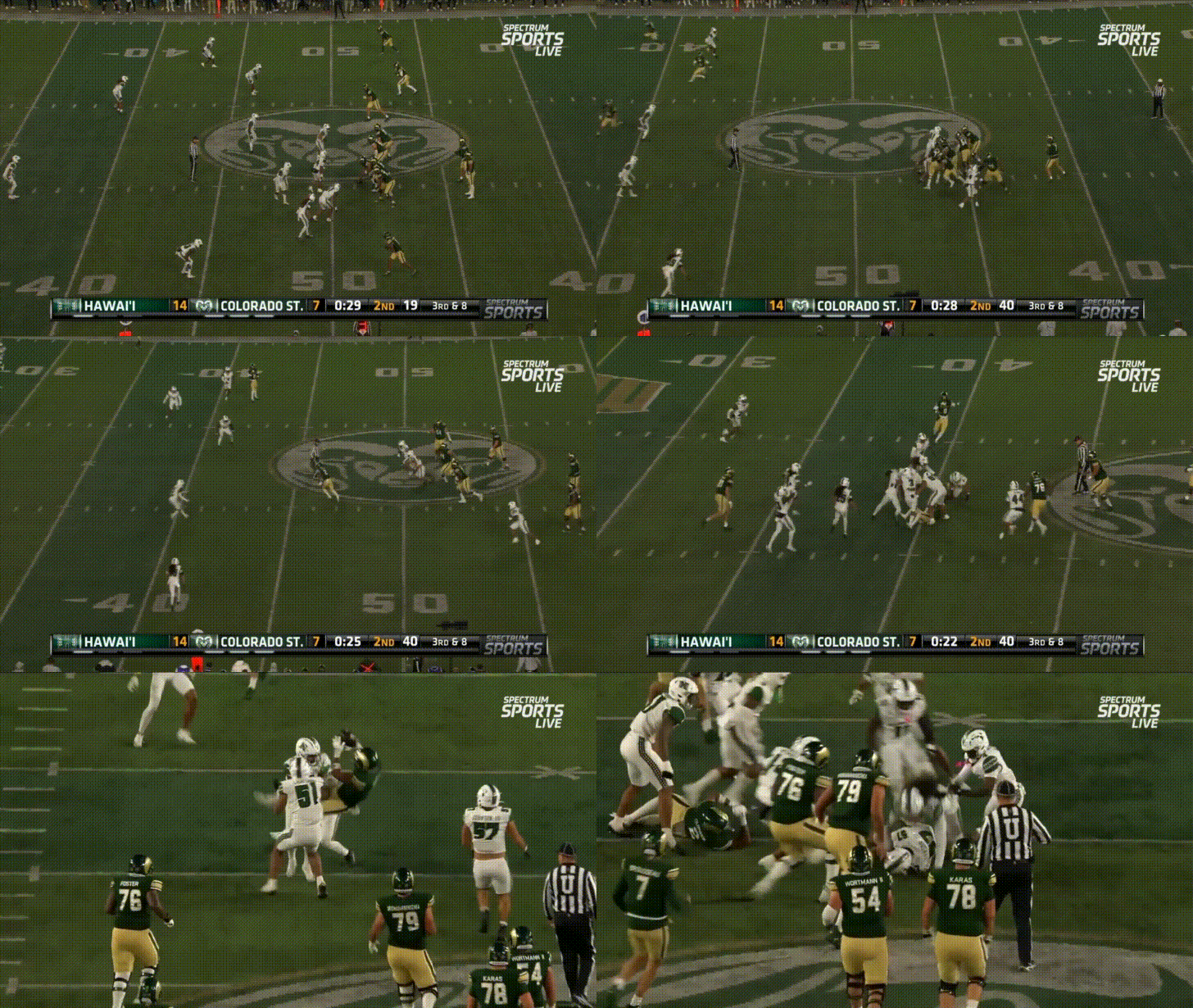
Sometimes, however, Smith (and Otis) would be nonfactors in the run game, finding themselves out of position:
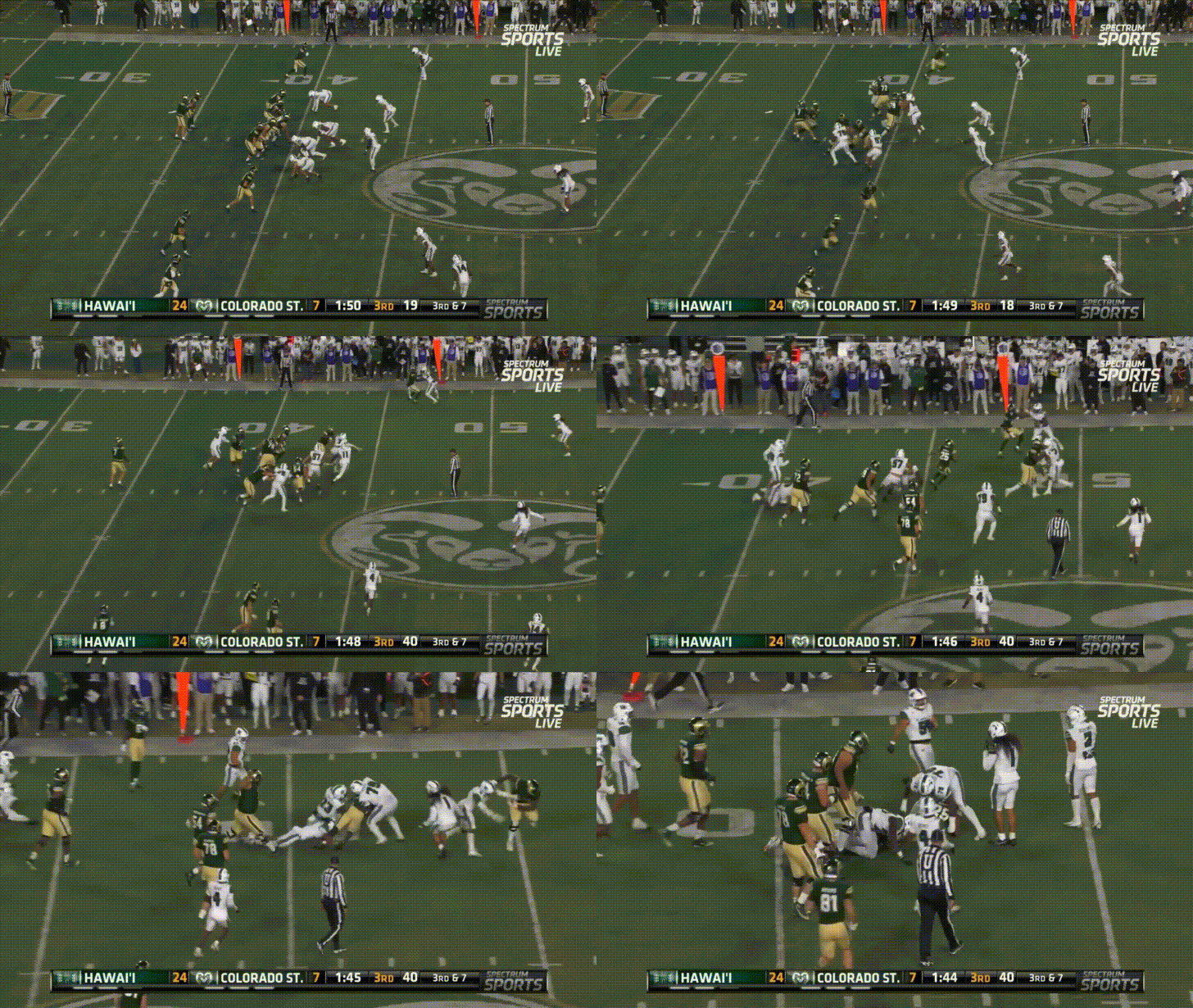
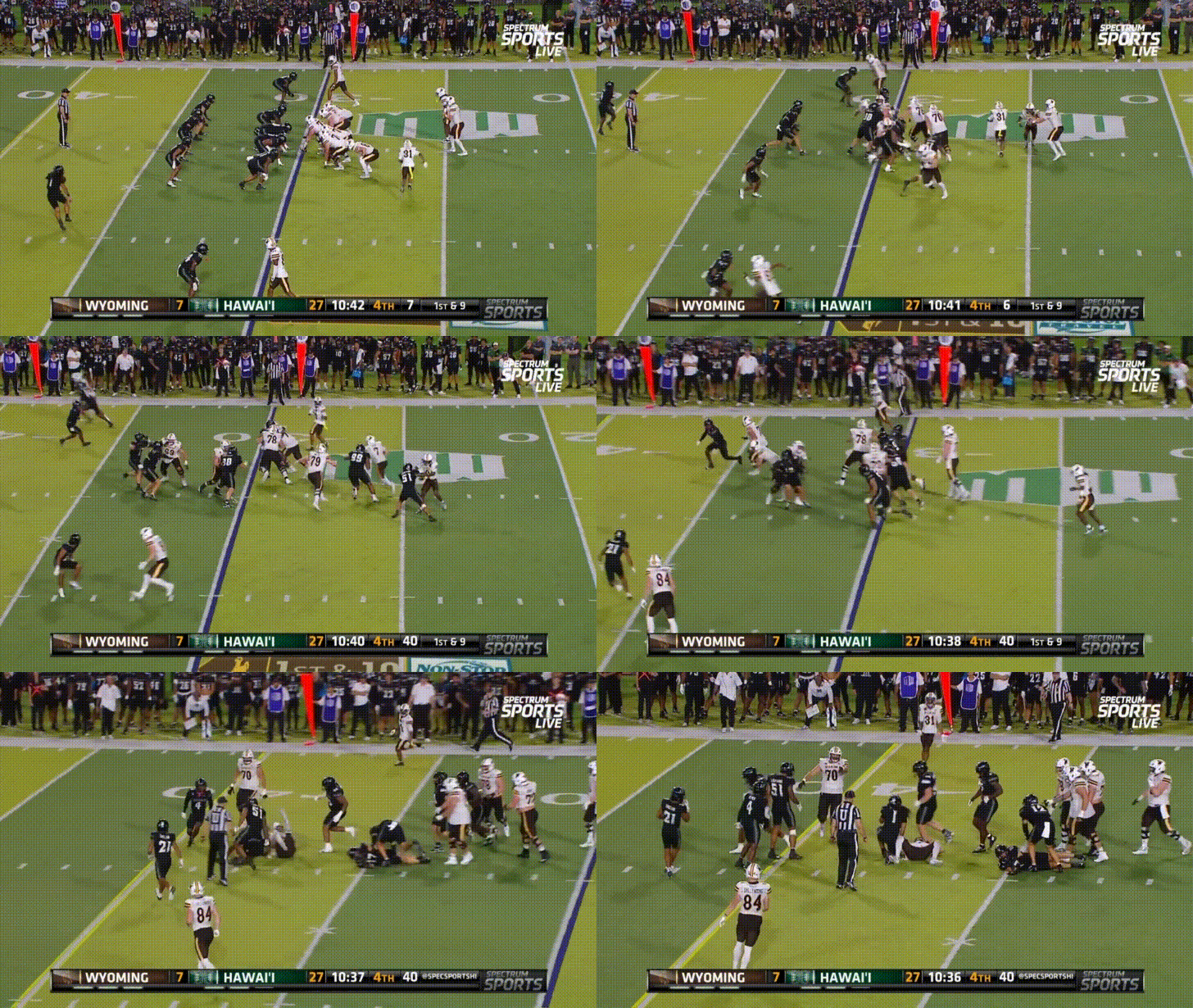
Hawaii is listing LB Giovanni Iovino as the starter to replace Jamih Otis (and he started against Wyoming). I don’t have a huge sample size to judge, but I wasn’t terribly impressed so far. He got away with some shoestring tackles, but it wouldn’t be hard to see a running back breaking these sorts of tackles:
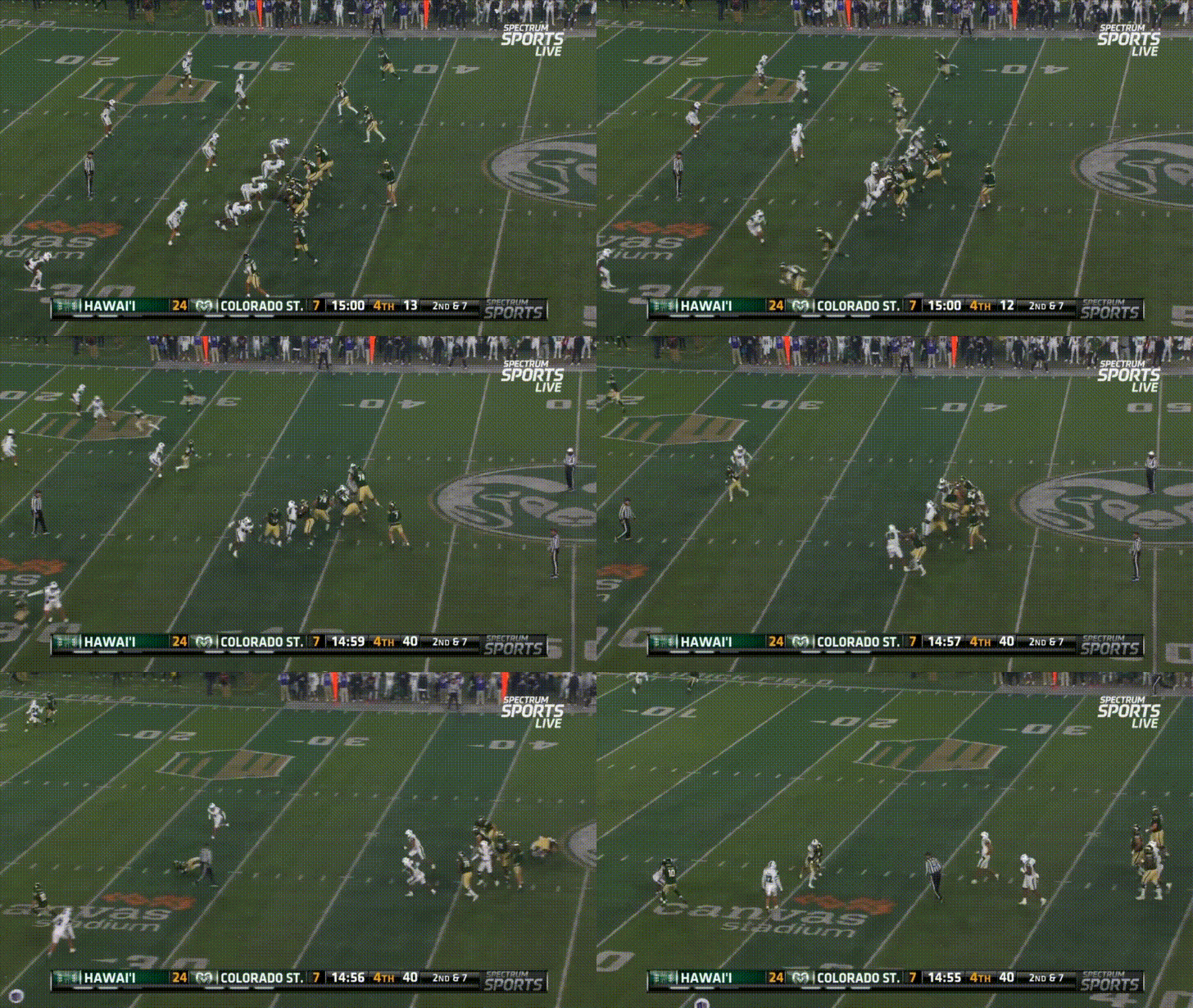
Iovino also wasn’t terribly impressive in pass coverage:
Smith’s backup is LB Wynden Ho’ohuli, and he did receive an increased number of snaps with Otis out. I was a bit more impressed with the play of Ho’ohuli:
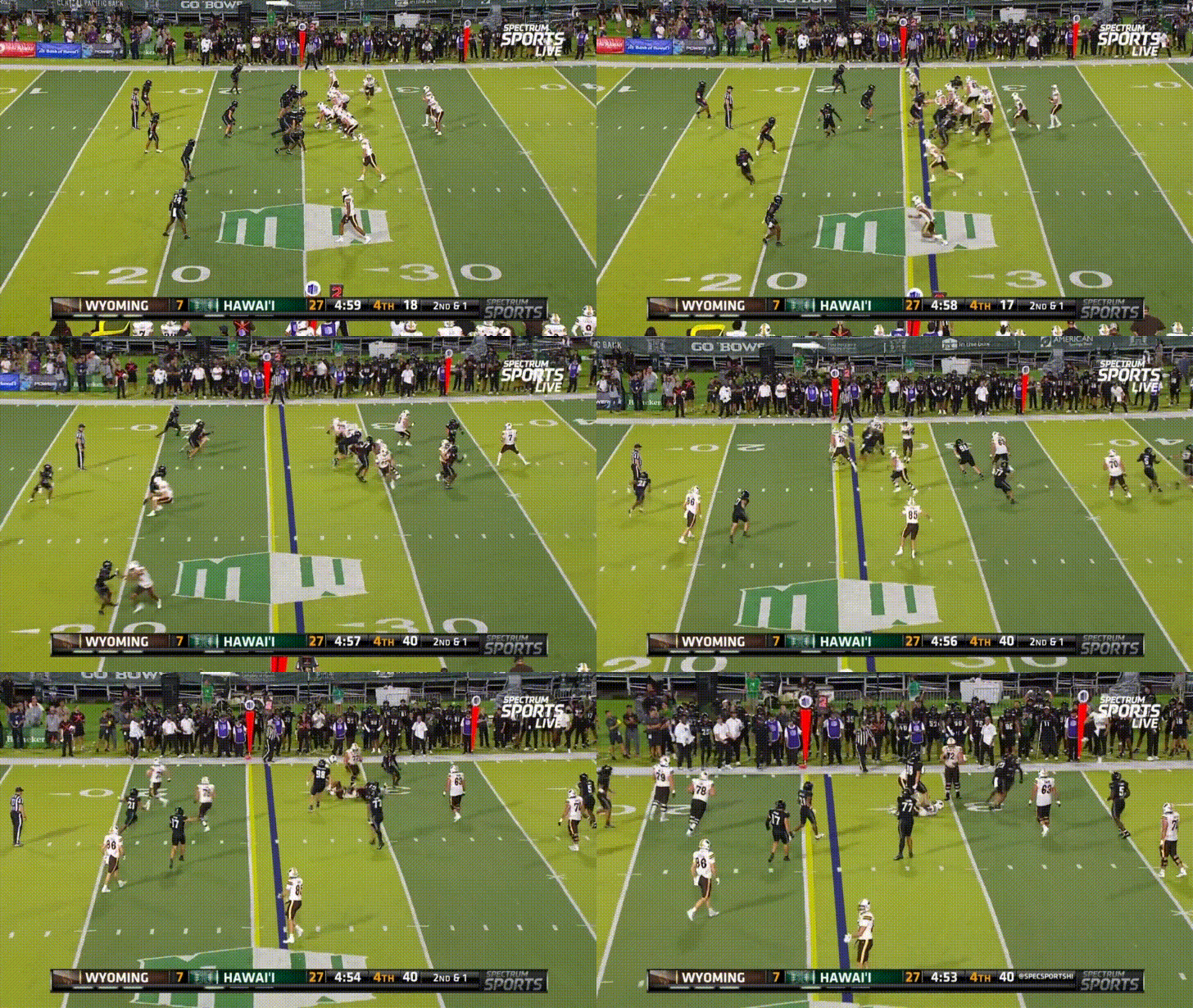
Linebacker is a relative weak spot in this Hawaii defense.
Secondary
Something that stood out to me about this Hawaii secondary was that they were often a lot more impressive in run defense than pass defense. They will absolutely fly to the football, and are happy to roll the dice on a play that will be either a TFL or a missed tackle—as opposed to playing it safe and making an offense earn their yards, Hawaii would rather take risks to put opponents behind the chains. Hawaii’s leading tackler is the strong safety, Peter Manuma. Often times a defensive back being the leading tackler on the team is a sign of a weak run defense (indicating that opposing running backs are frequently getting to the second level), but in this case, I think it’s more of an indication in how Hawaii uses their secondary: run blitzes and so forth.
The most versatile player on Hawaii’s secondary is the nickelback, Elijah Palmer, who will be flying all over the field. While I usually like to watch what the mike linebacker does on defense to see where the play might be going, I’d say that for Hawaii, Elijah Palmer is probably the player to follow. He has good instinct in both the run game and pass game, and will generally find himself in the middle of the play:
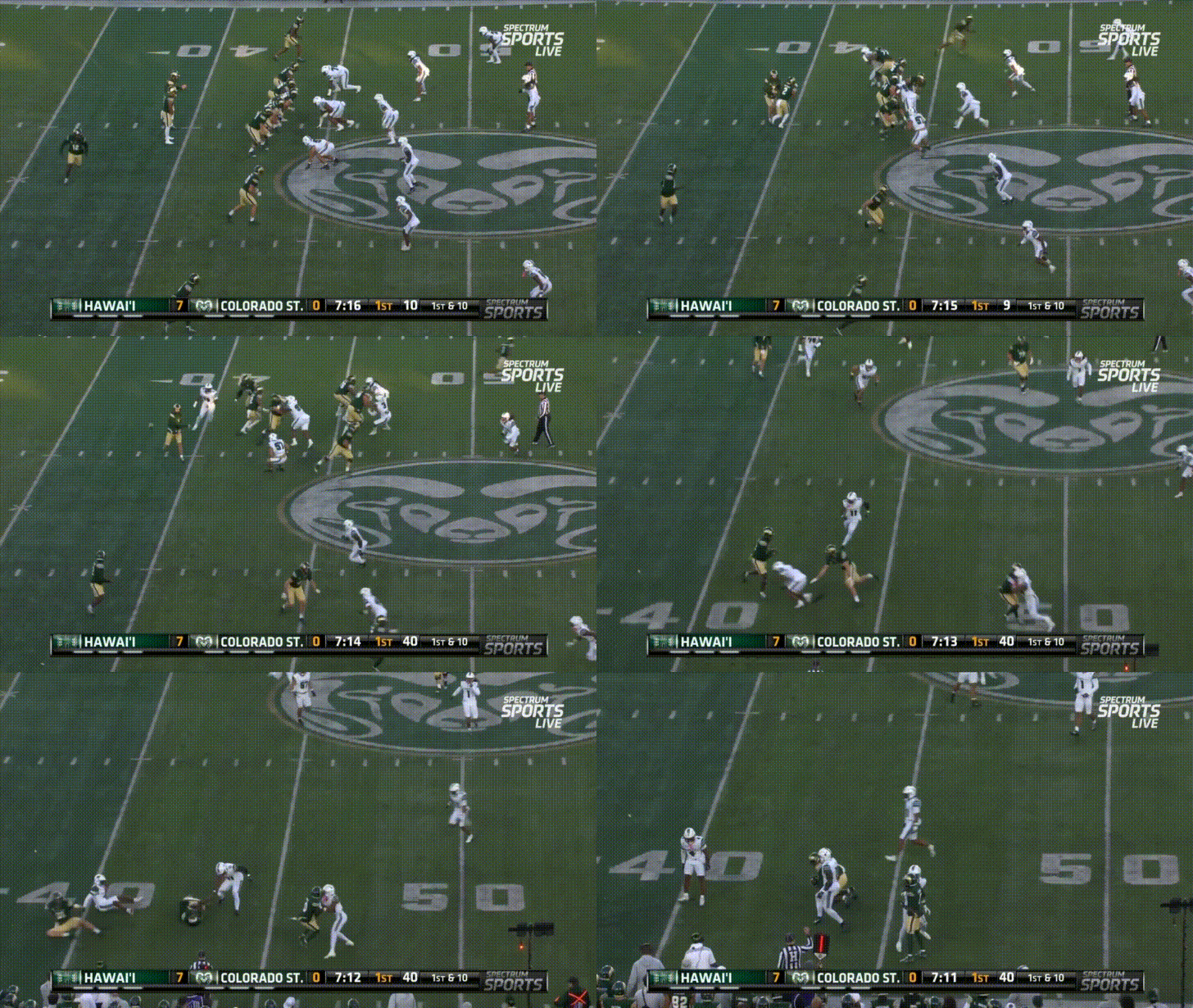
Palmer is a reliable tackler and doesn’t often let things get past him:
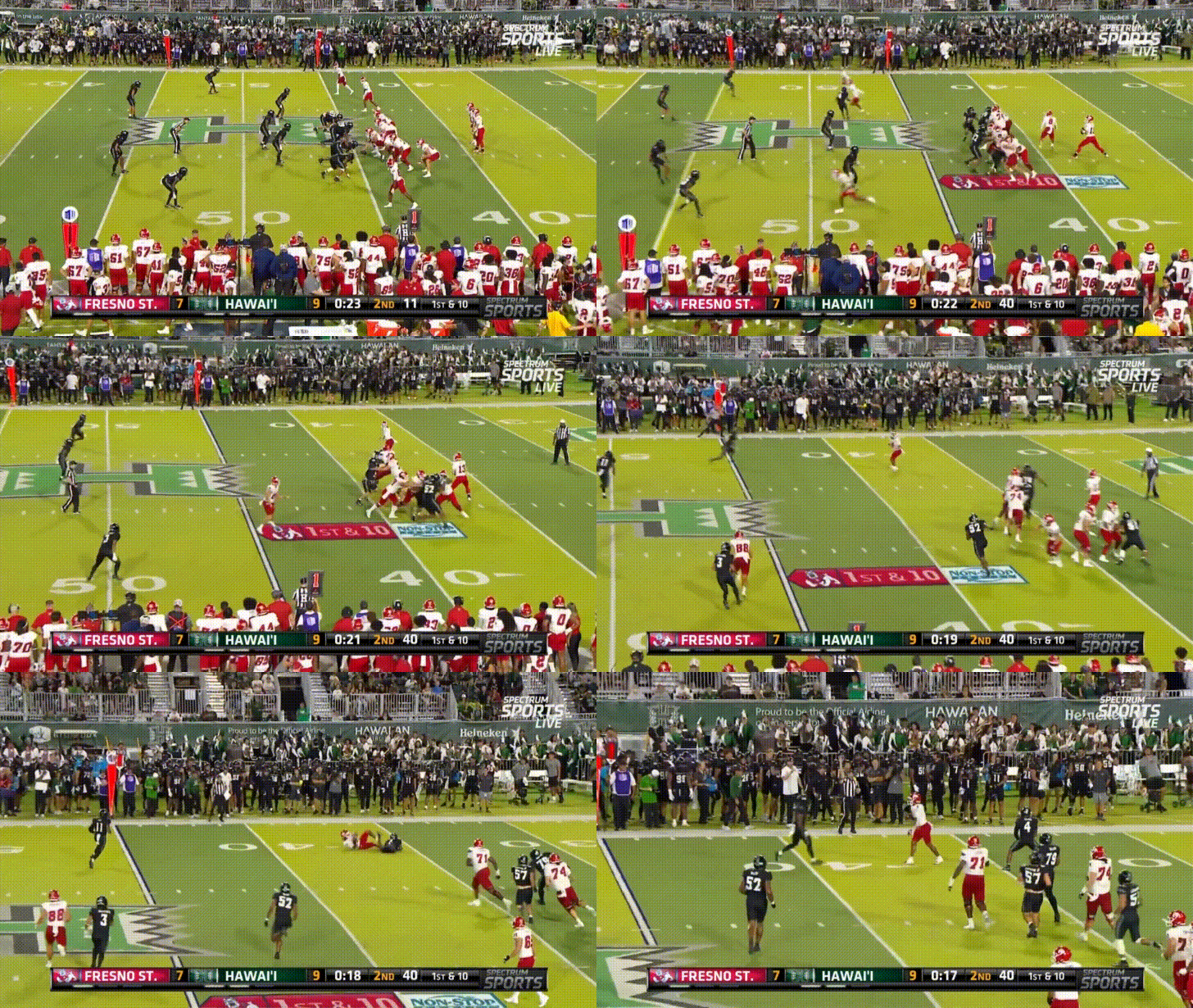
Here Palmer does a good job following the eyes of the quarterback (JKS’s brother) and reads the play well:
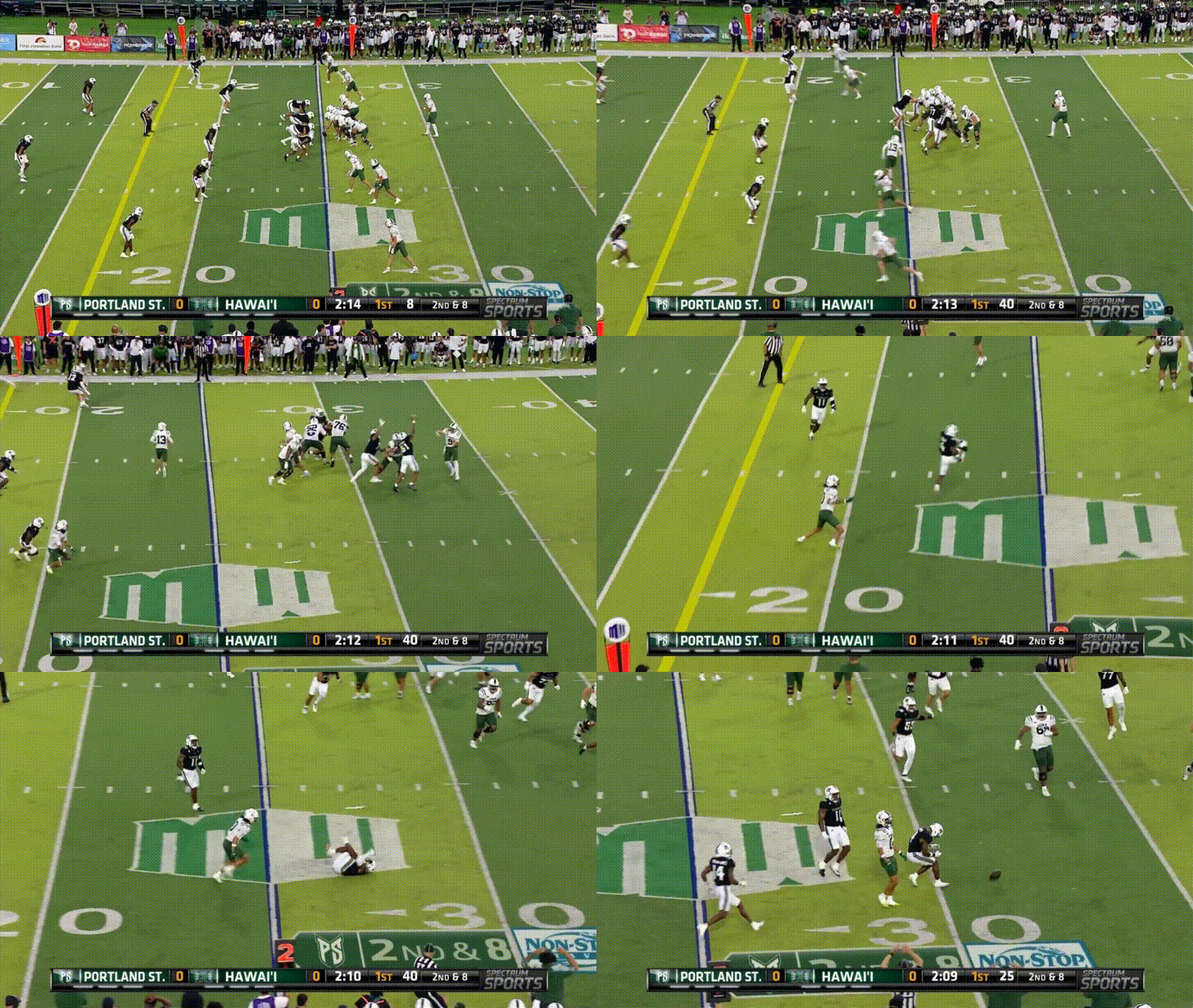
Another great read by Palmer ends in a touchdown:
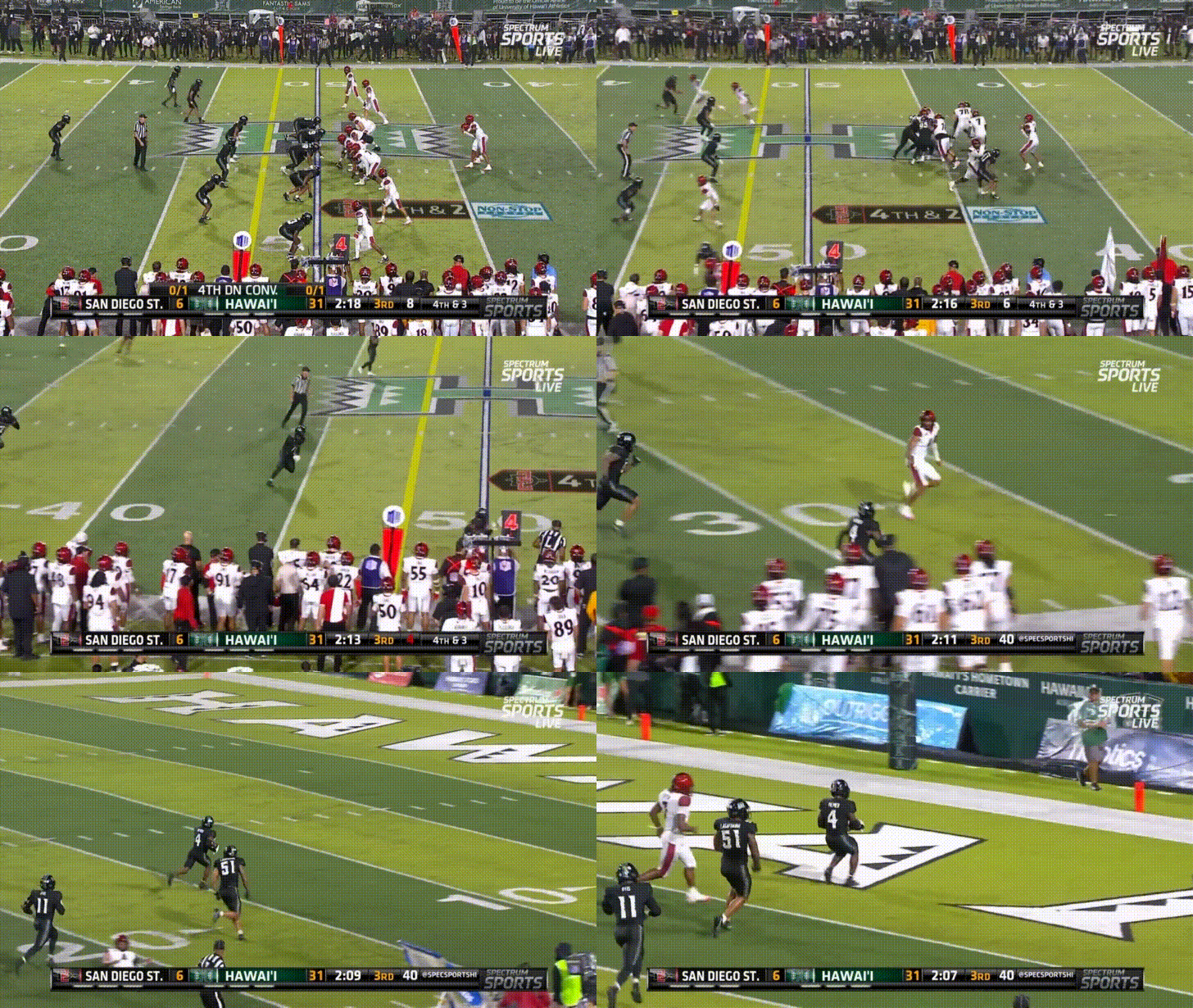
Even though Palmer is a bit undersized at 5’8”, he did a good job covering bigger receivers with his physicality:
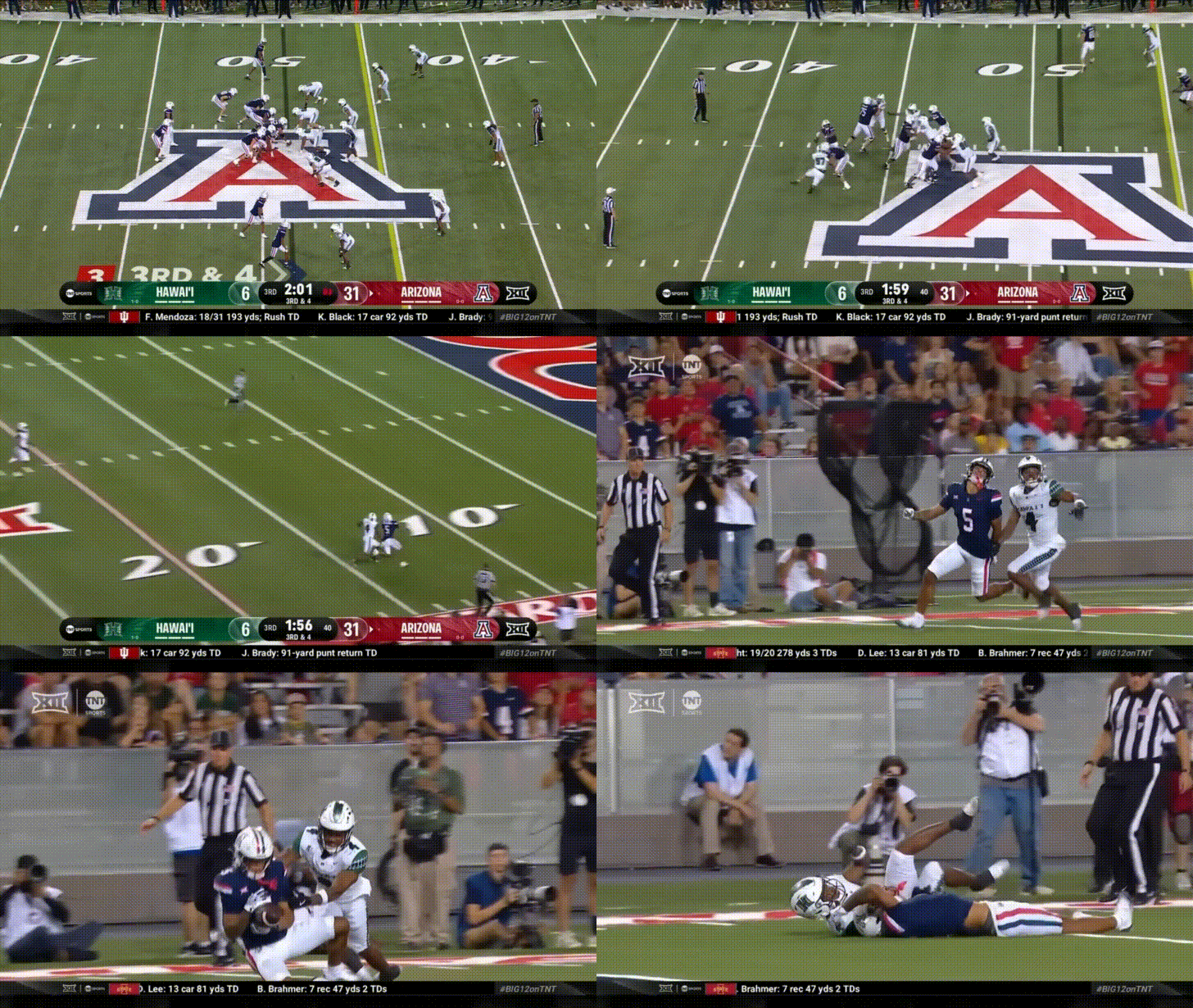
There were a few times I thought Palmer was beat with speed, but he was often able to recover (although perhaps a better ball from JKS doesn’t give him the chance):
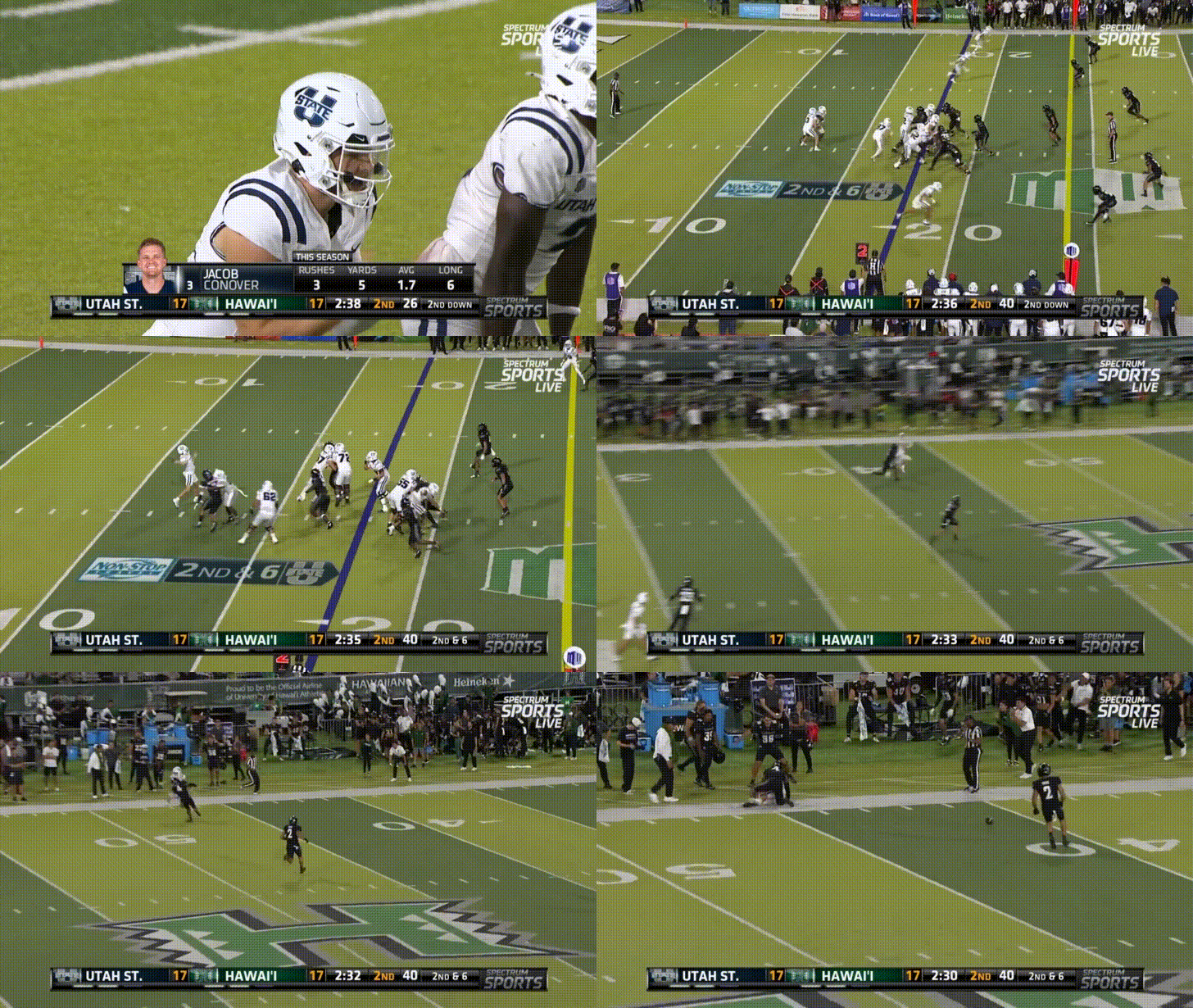
I think it’s quite likely that Palmer will be responsible for covering Jacob De Jesus in the slot. That’s a good-on-good matchup, but I have to point out that Palmer did struggle against a similar receiver in SJSU’s Danny Scudero (and to be fair, who didn’t):
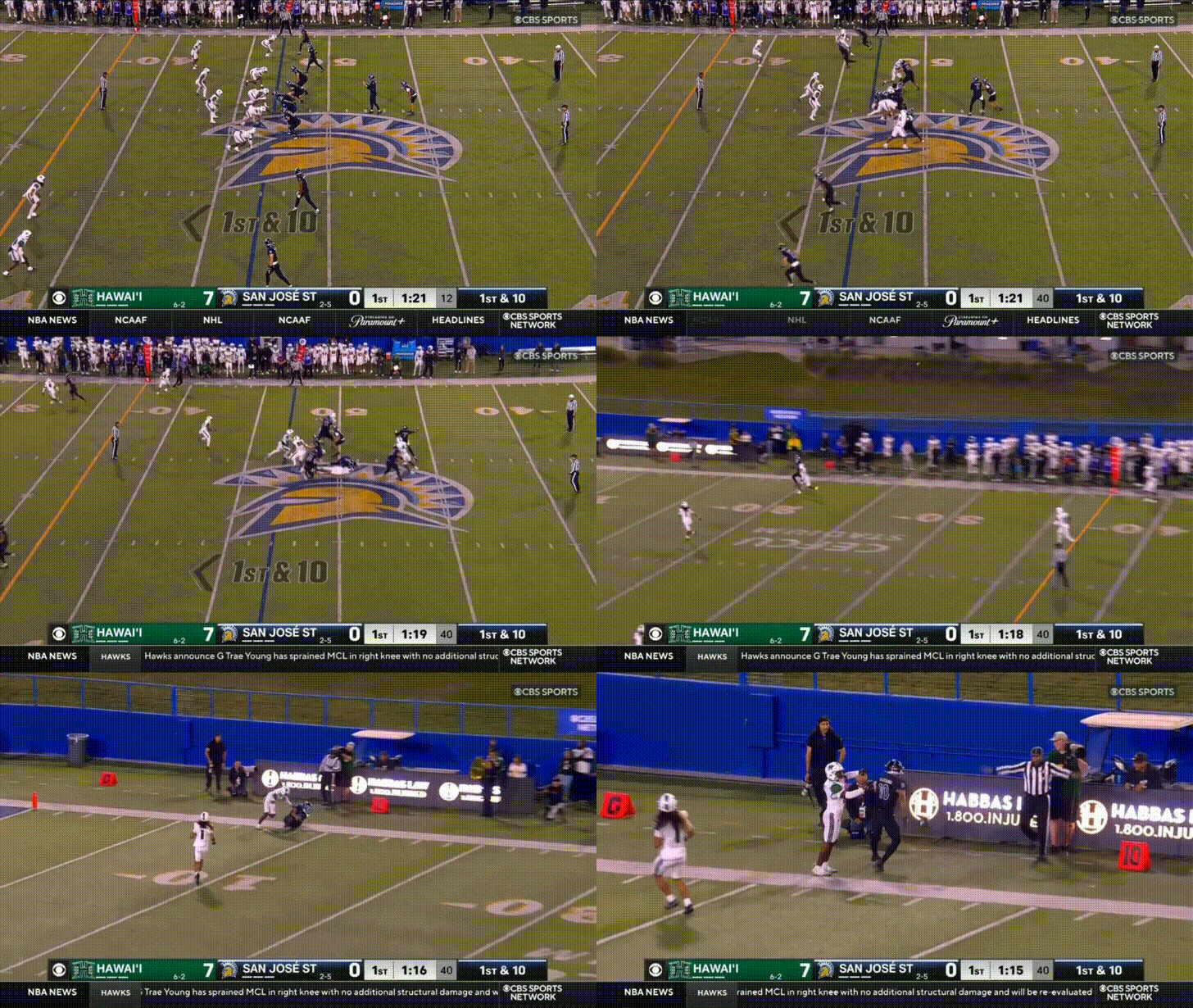
SS Peter Manuma exemplifies Hawaii’s “fly to the ball” mentality, as he’ll come flying in from anywhere to find the ball carrier:
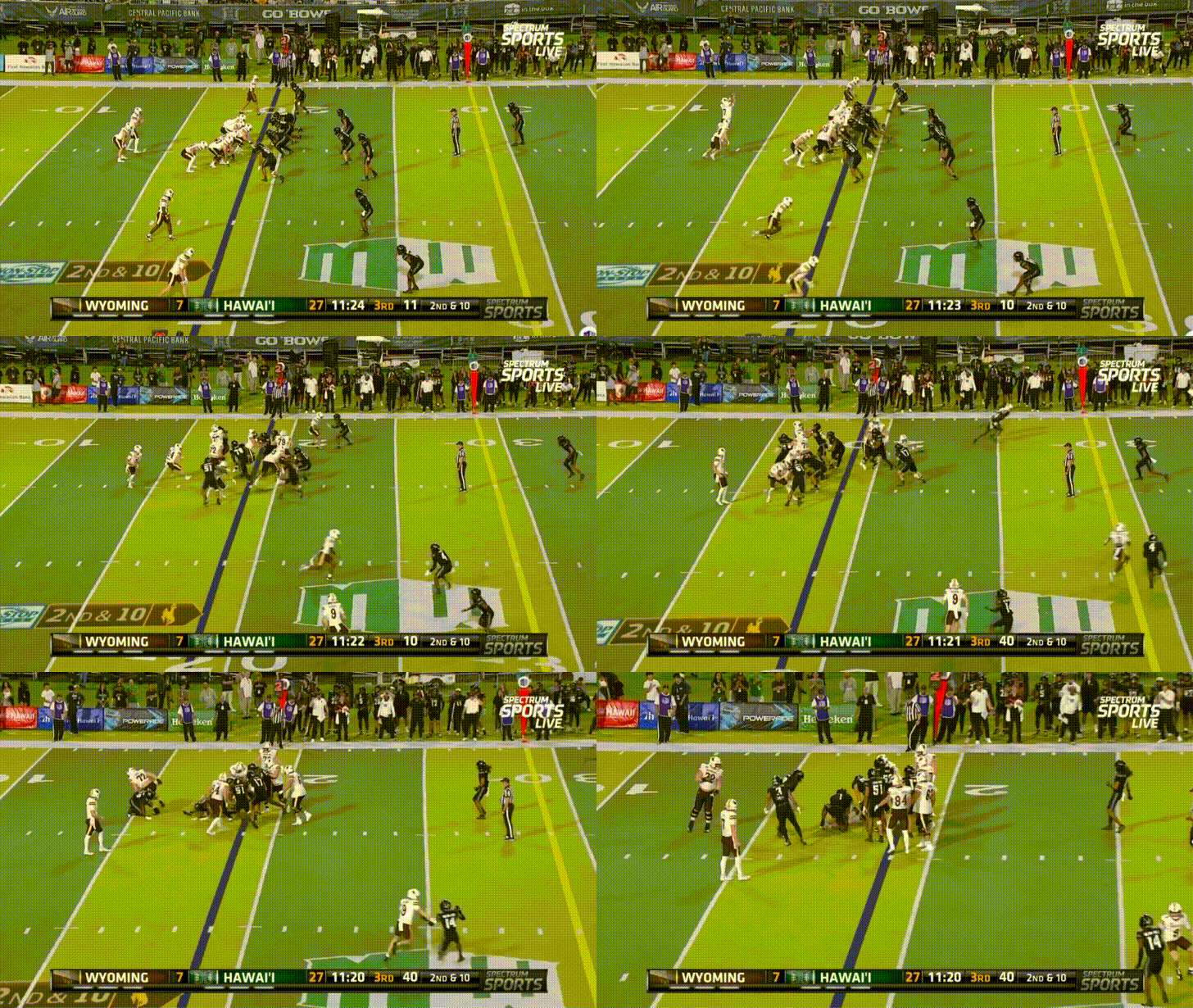
Manuma (who went to the same high school as JKS) doesn’t always wrap up and has the potential to miss some tackles, but he generally gets at least hand on the ball carrier:
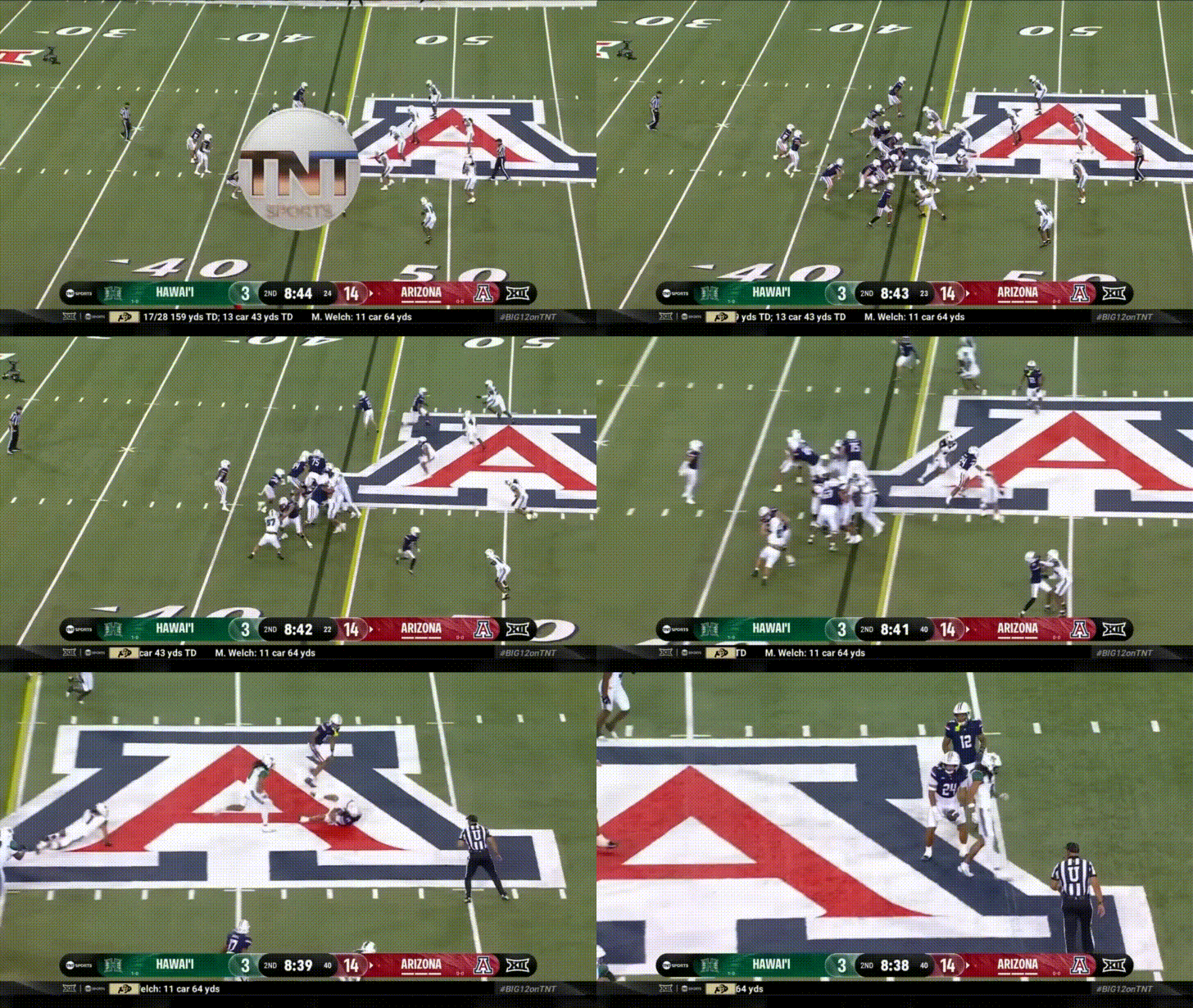
Manuma didn’t come up with any interceptions this year, but not for a lack of trying:
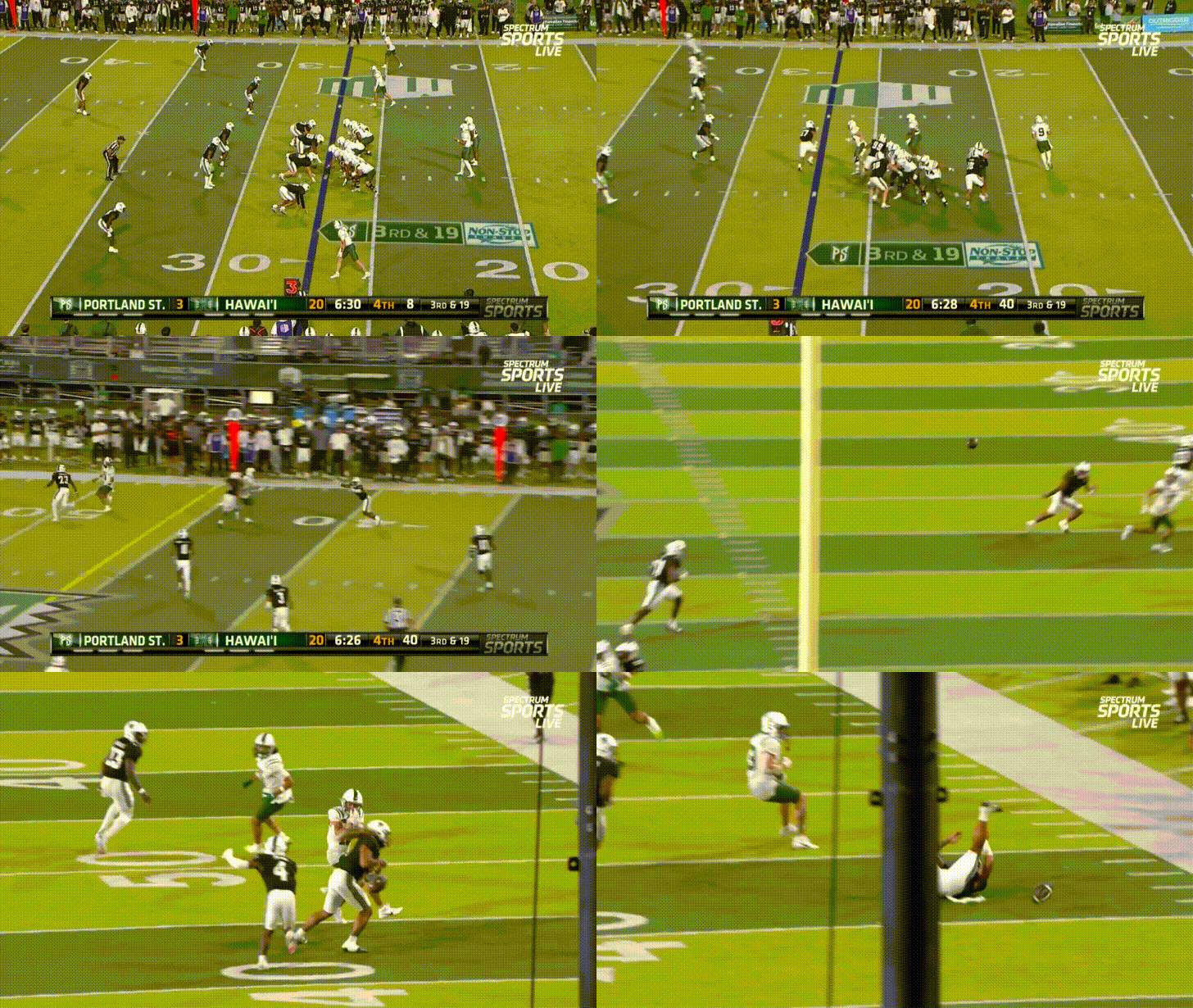
Manuma’s aggressive style of play sometimes backfired:
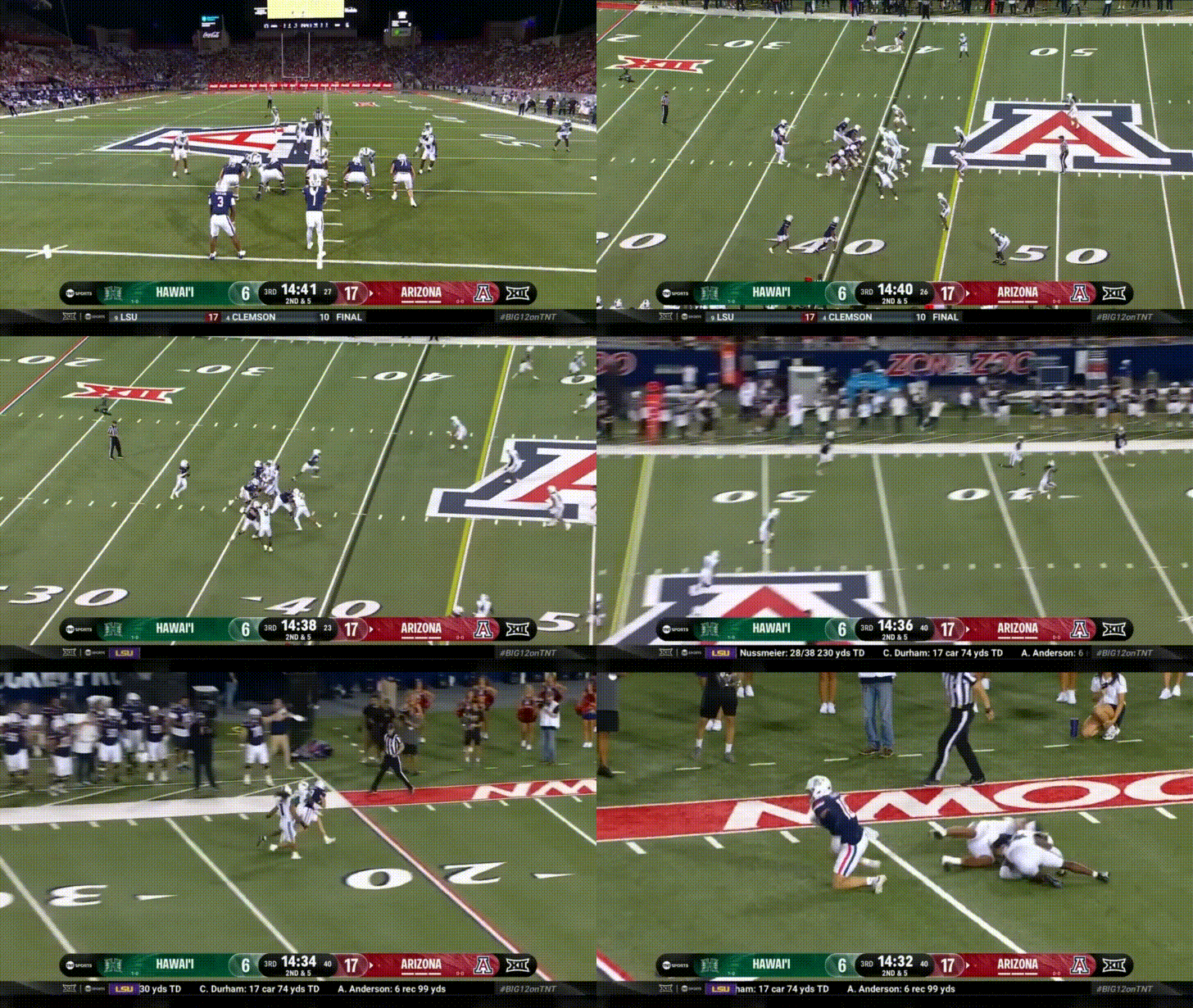
Like Palmer, Manuma also struggled to cover WR Danny Scudero, who managed to get behind the safeties:
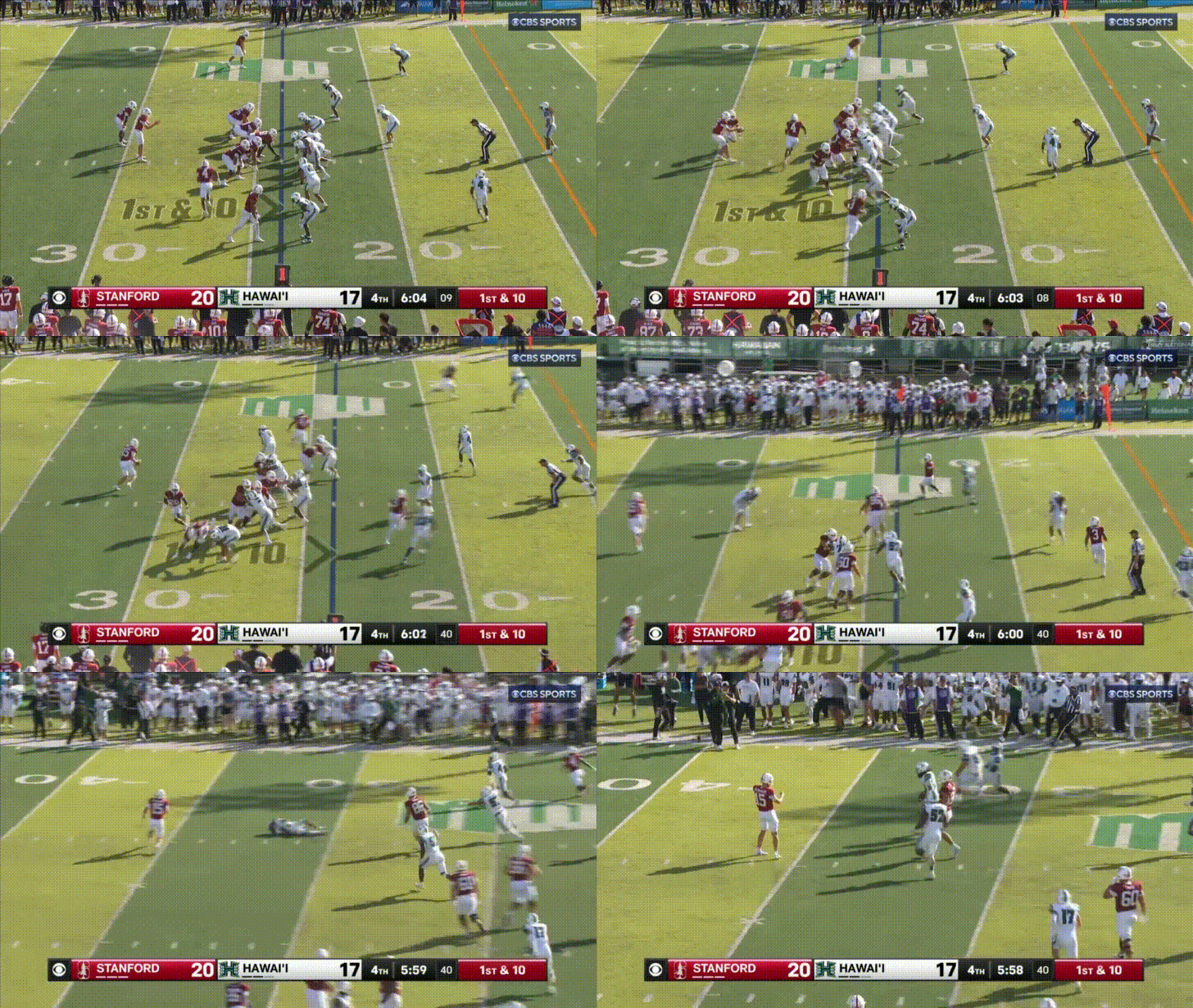
The free safety is Kilinahe Mendiola-Jensen, who opened the season with a critical interception against Stanford which led to the game-tying points and ultimately led to a Hawaii victory:
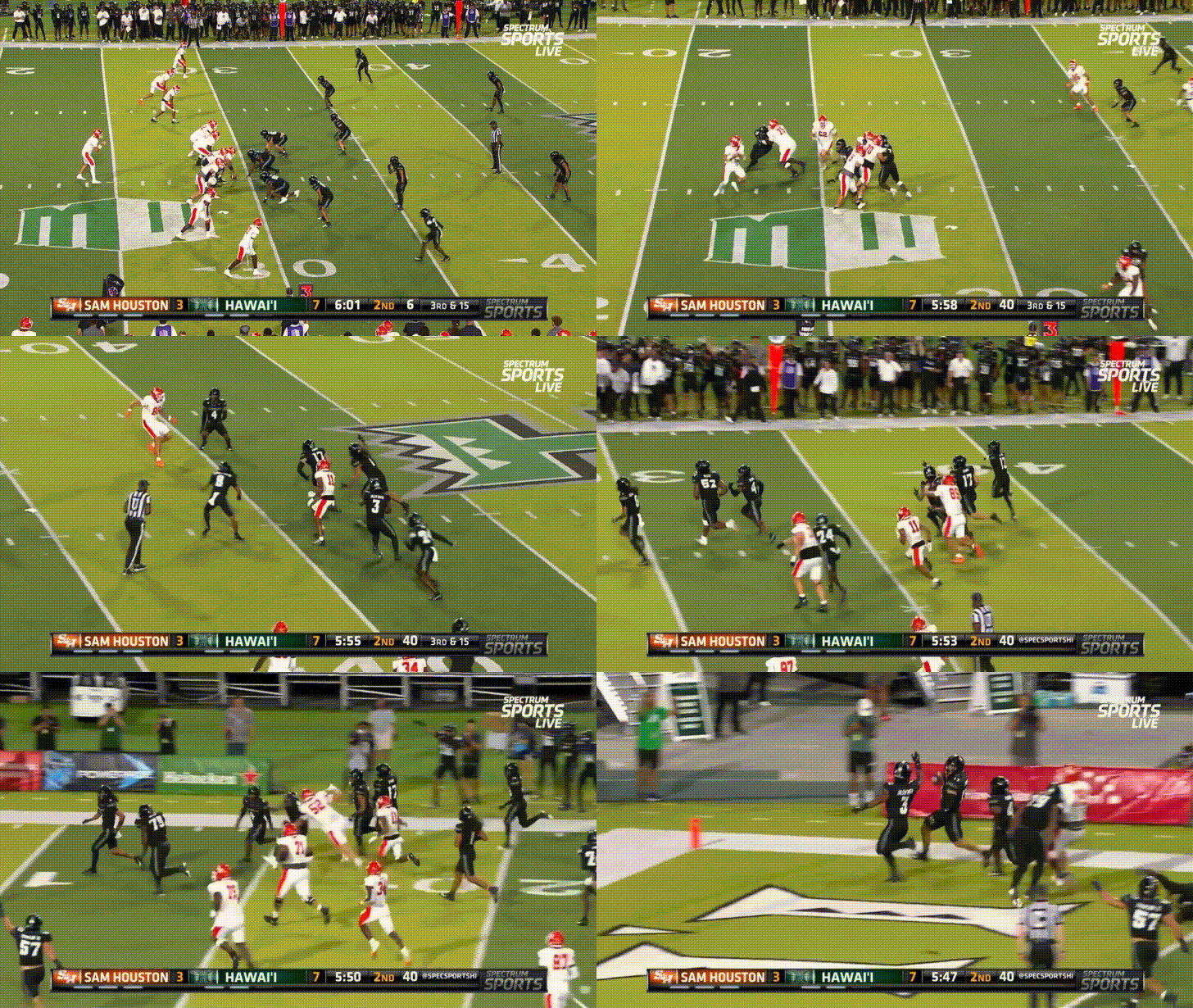
Mendiola-Jensen generally had good coverage on receivers:
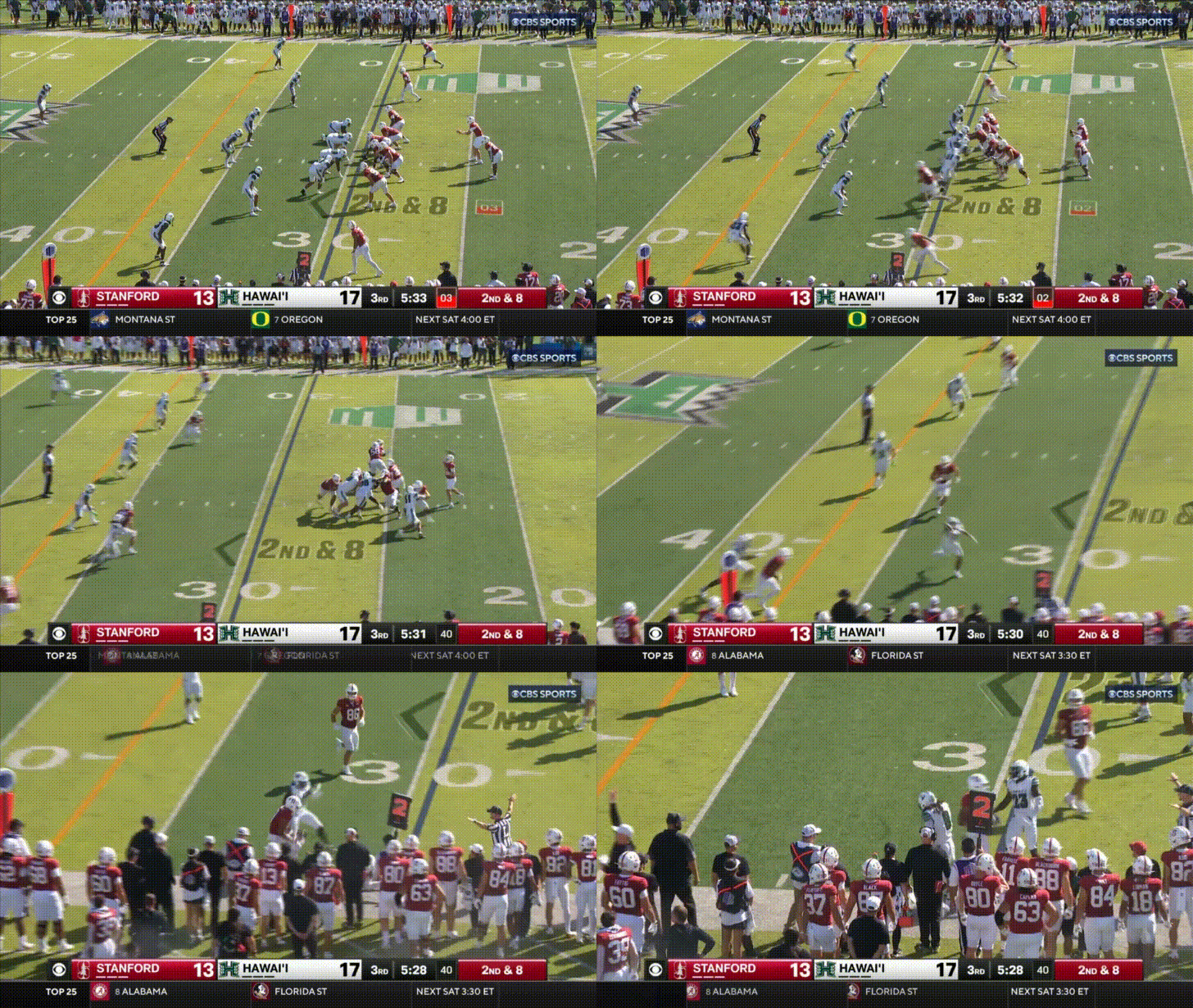
There was another play from the Stanford game which I thought demonstrated Mendiola-Jensen’s good instincts. Watch the way he takes away the quarterback’s first read, before making a play on the ball as he throws to his second read:
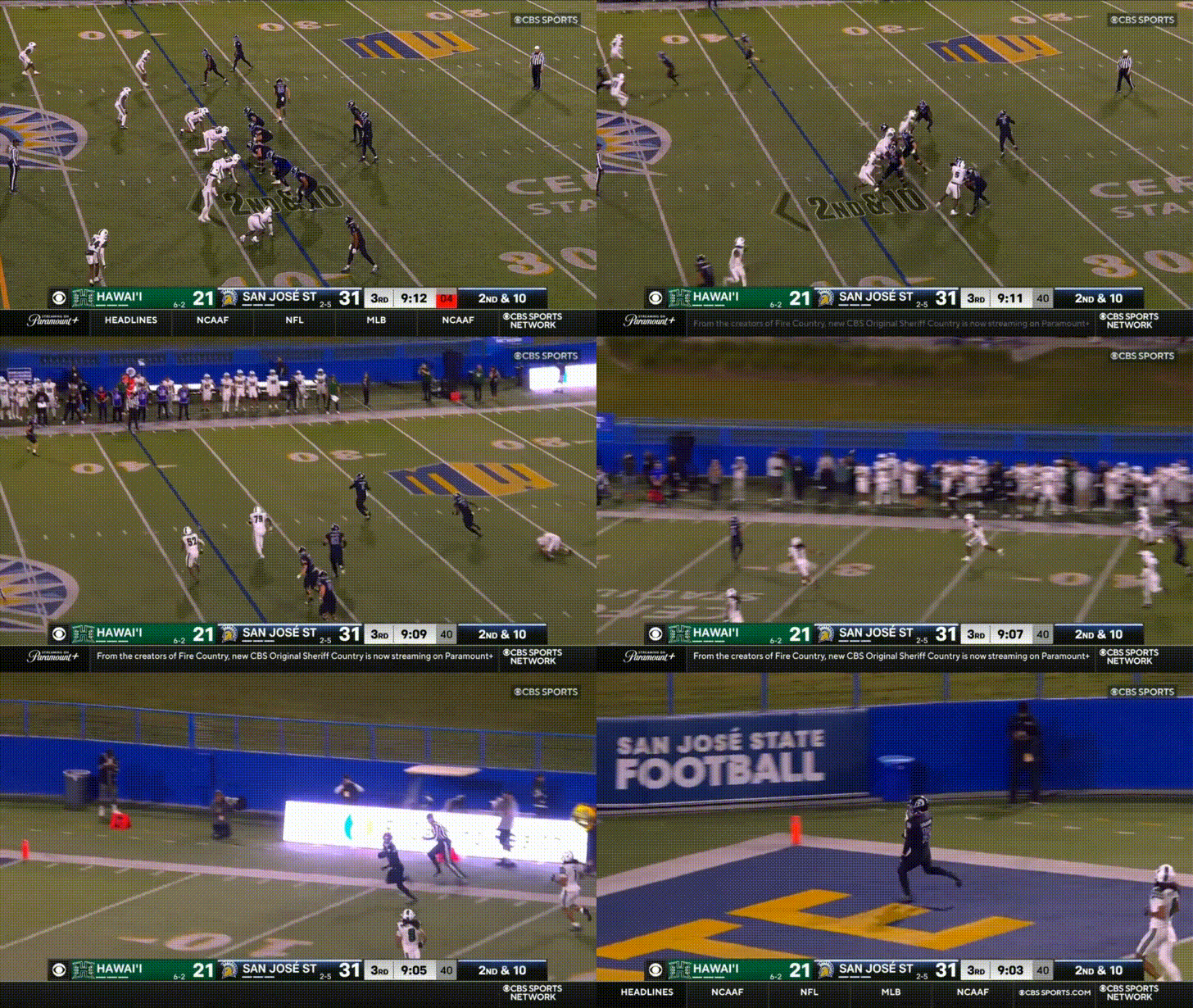
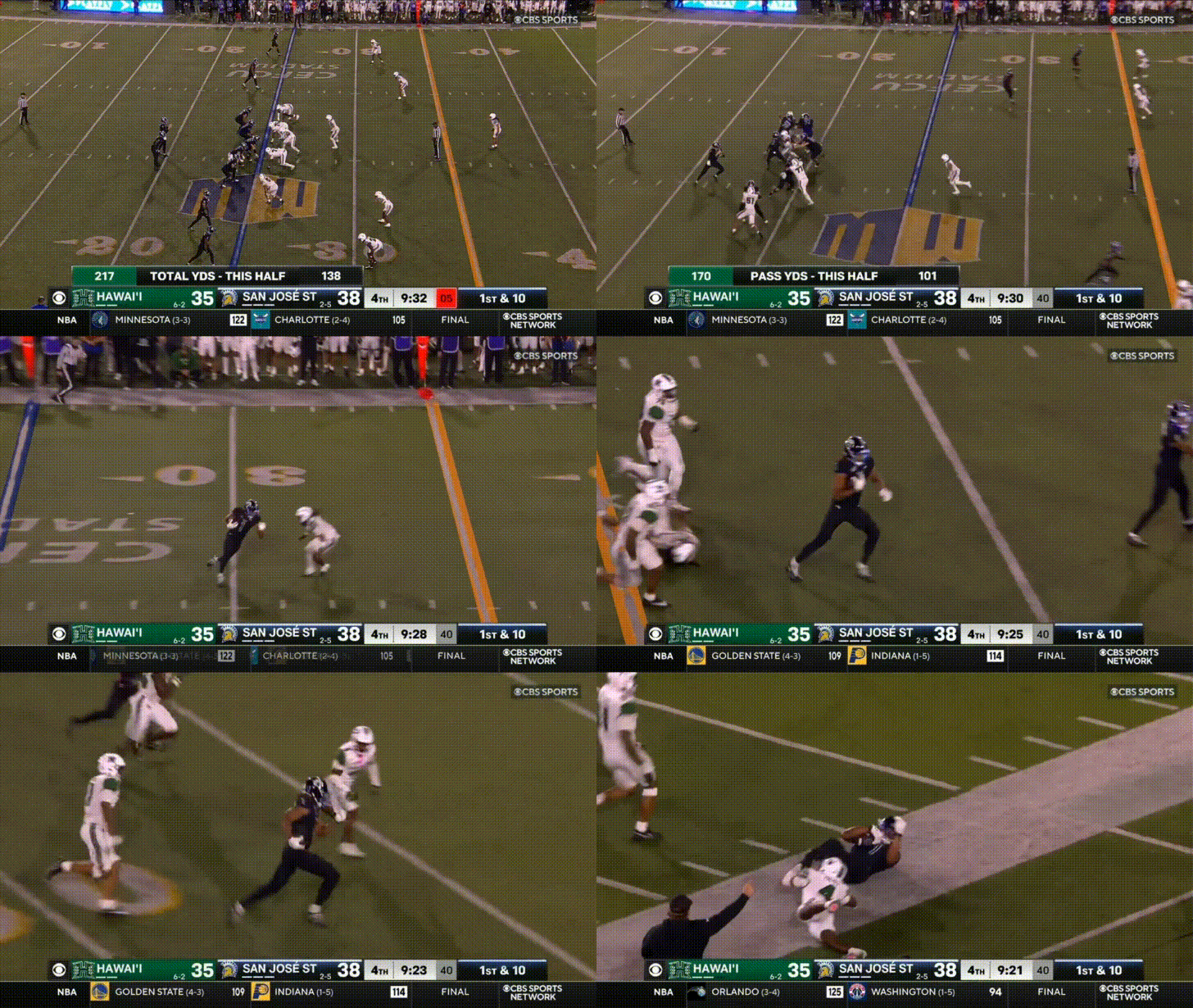
I did want to point out that while the way Hawaii flies to the football sometimes works out for TFLs, it also led to a lot of missed tackles:
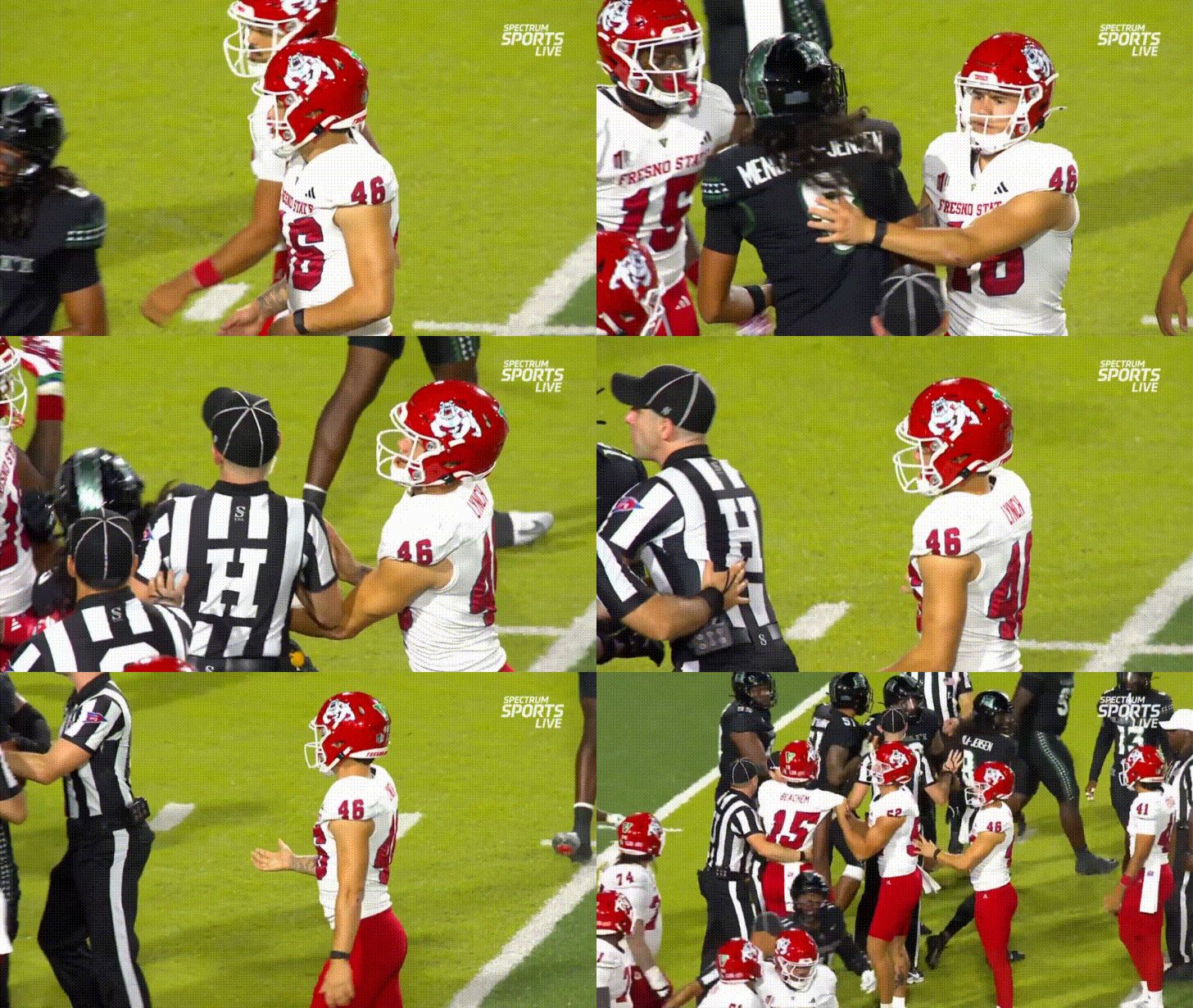
It’s also worth pointing out that against rival Fresno State, Mendiola-Jensen also had this near brush with death:
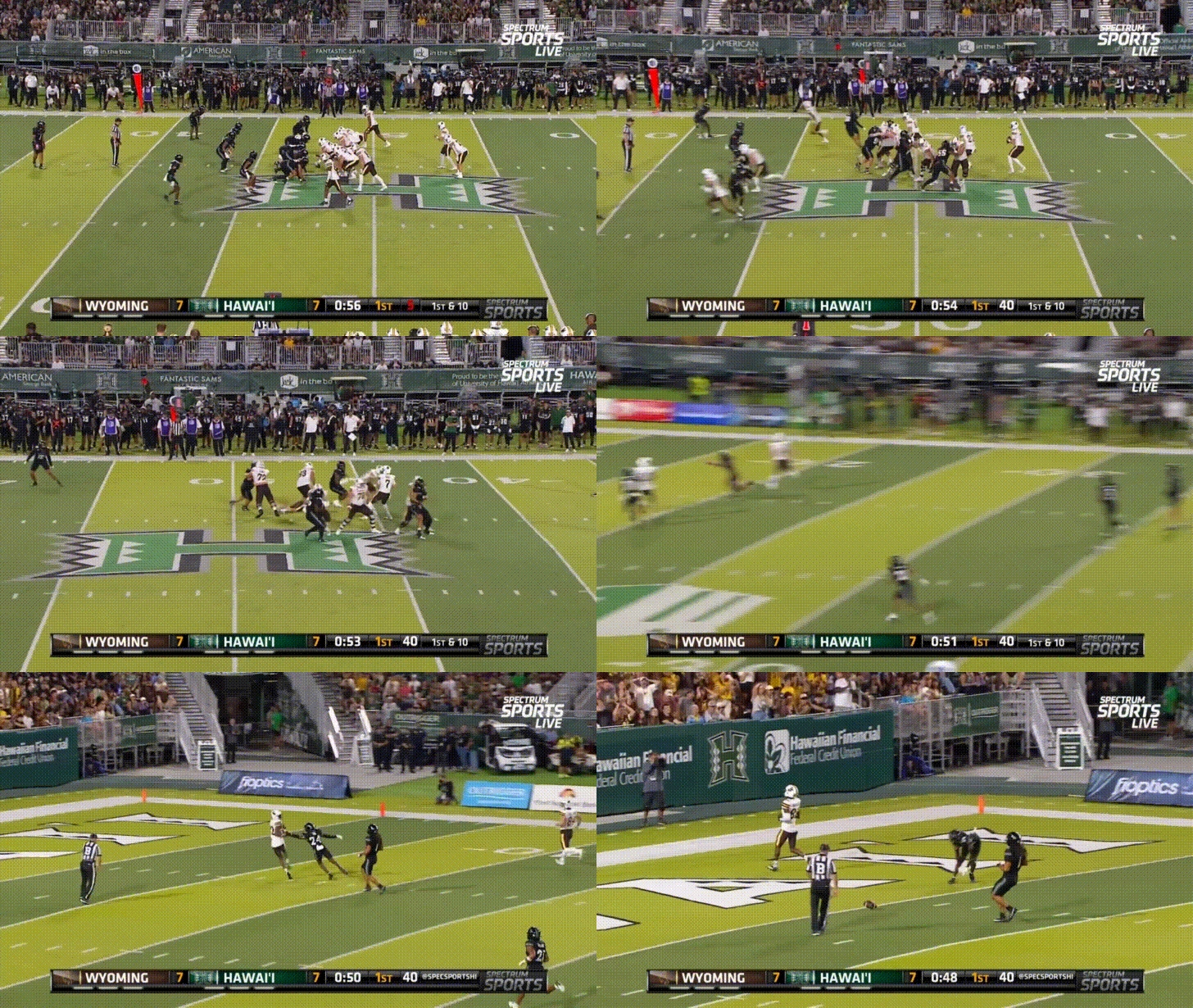
Hawaii’s best cover corner is likely CB Devyn King. I want to say that not a lot of opposing QBs tested him, but when they did, he often ended up with the pass break-up:
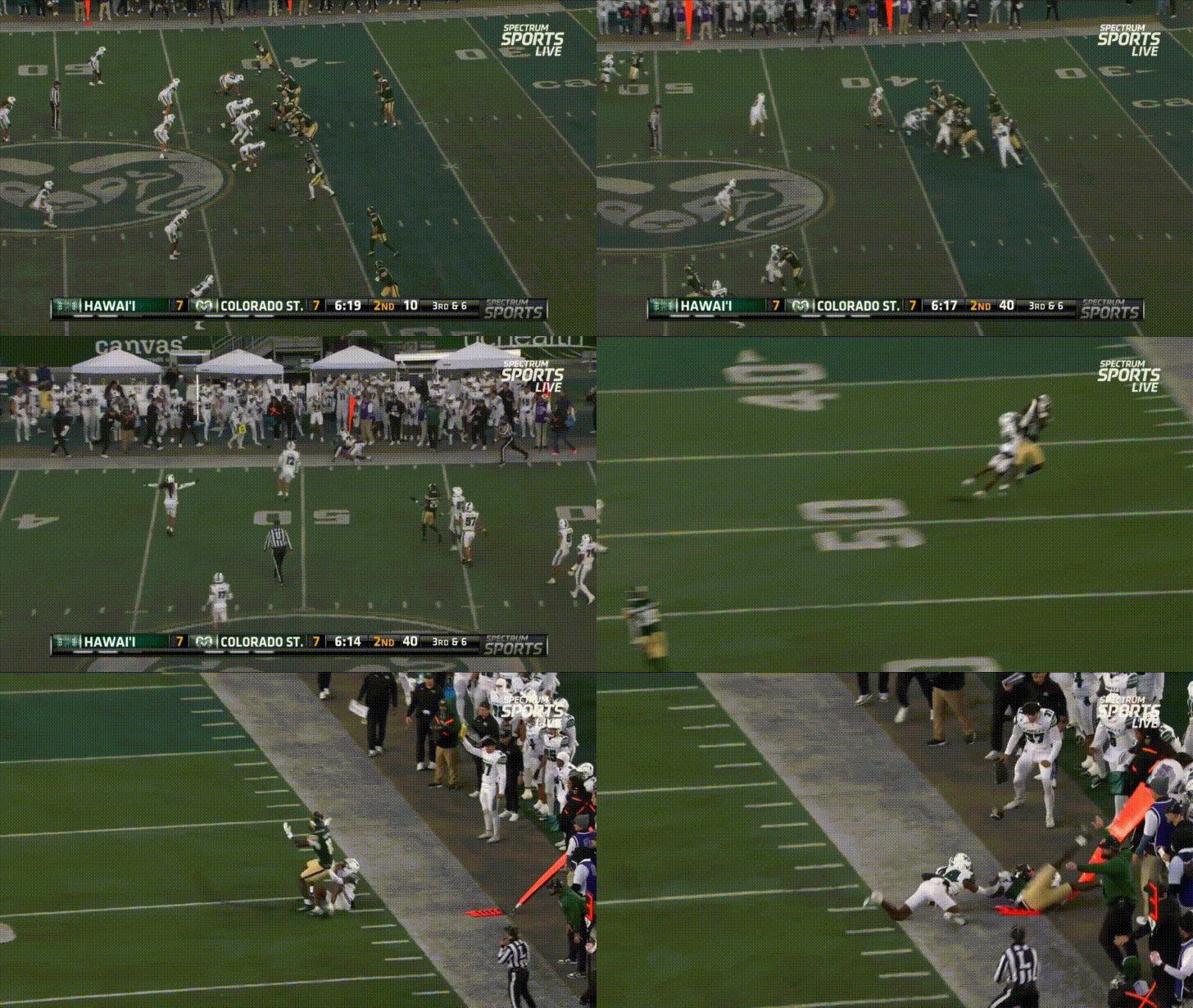
King does a good job fighting through the receiver’s hands:
And King had tight coverage on the receivers in general:
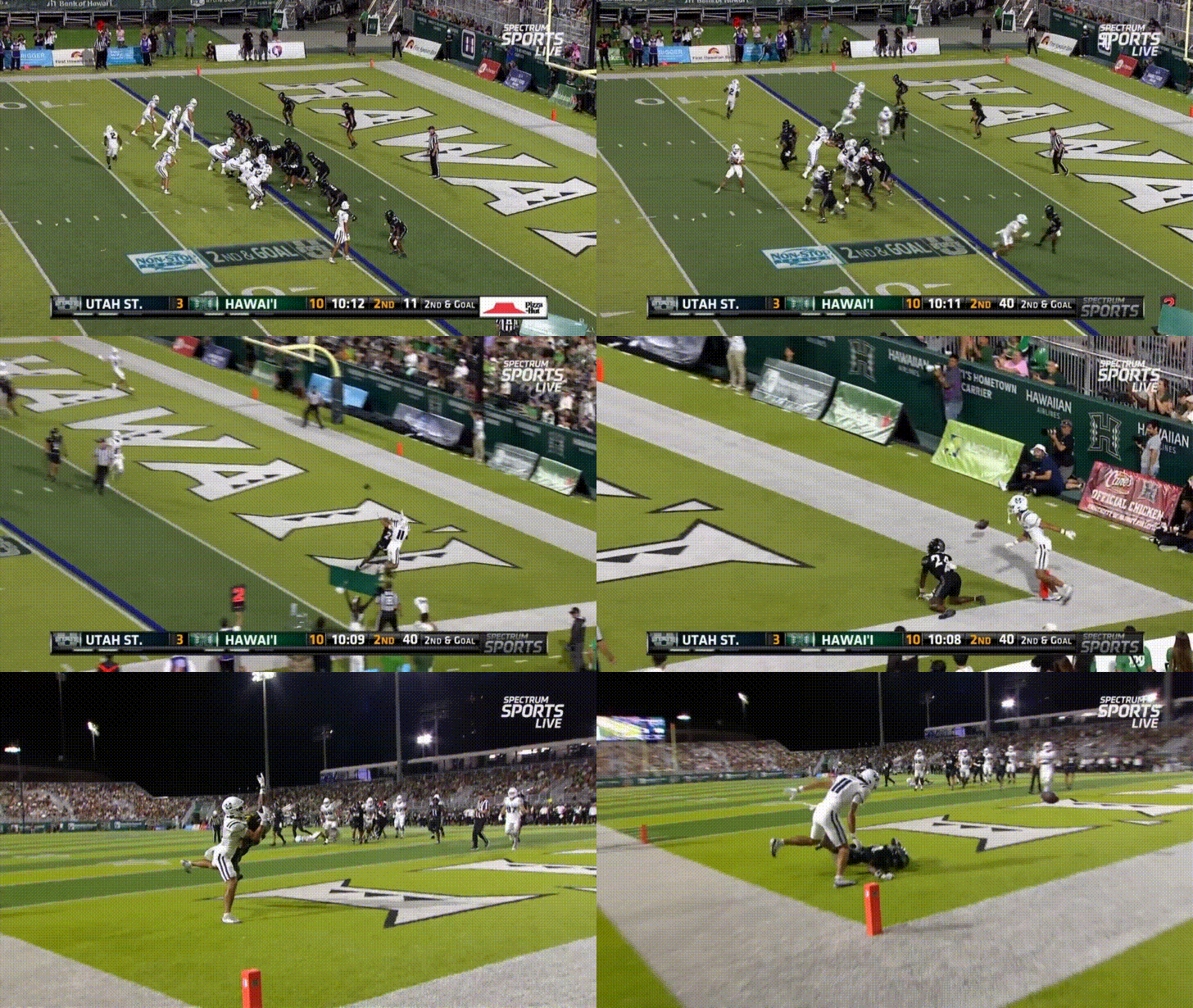
Although King wasn’t perfect:
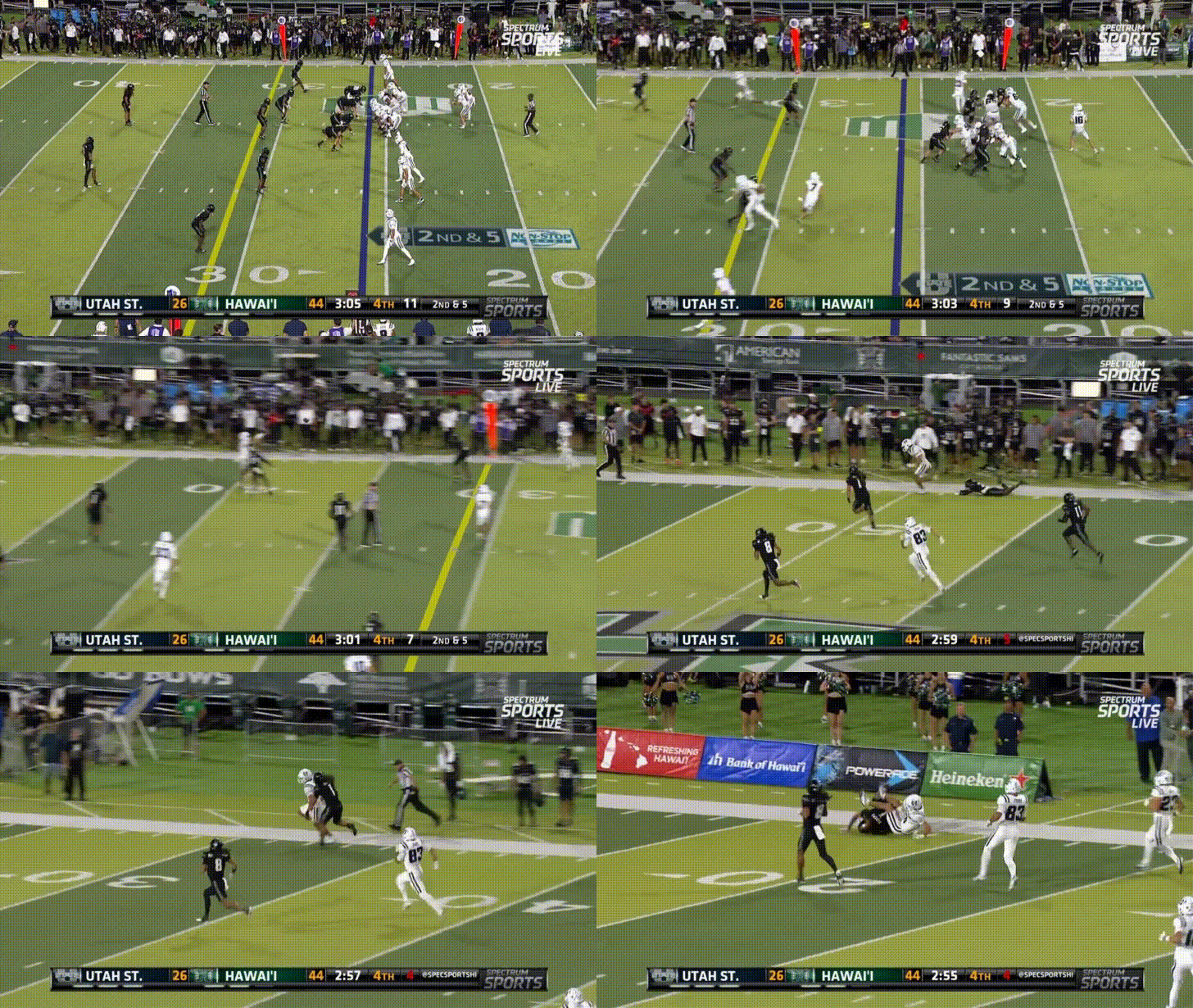
CB Virdel Edwards II is Hawaii’s biggest defensive back at 6’2” 210 lbs., and he most often stood out for the big hits he landed on receivers. He’s likely to be responsible for covering the bigger receivers:
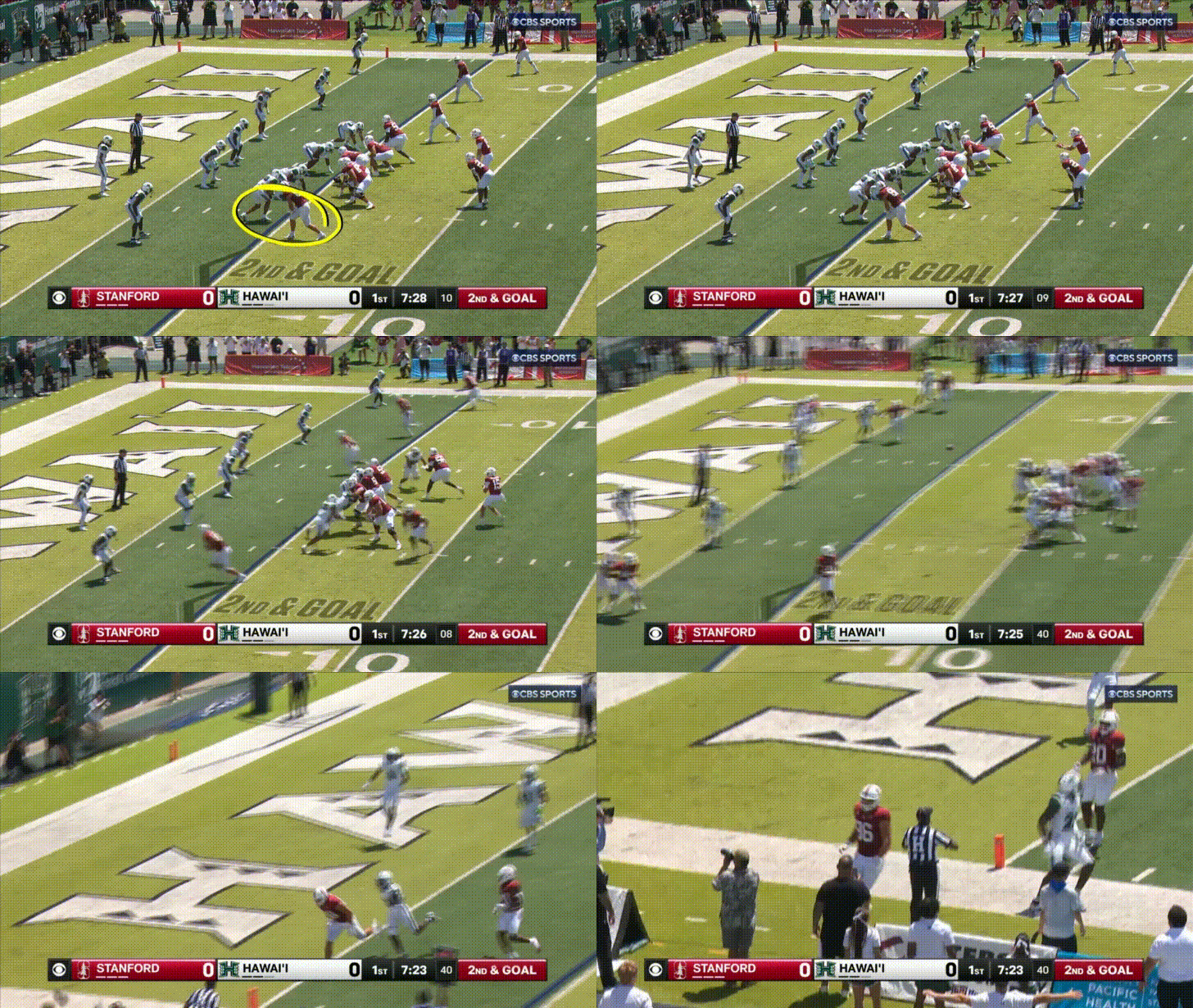
But Edwards II most frequently broke up the plays by landing big hits on receivers:
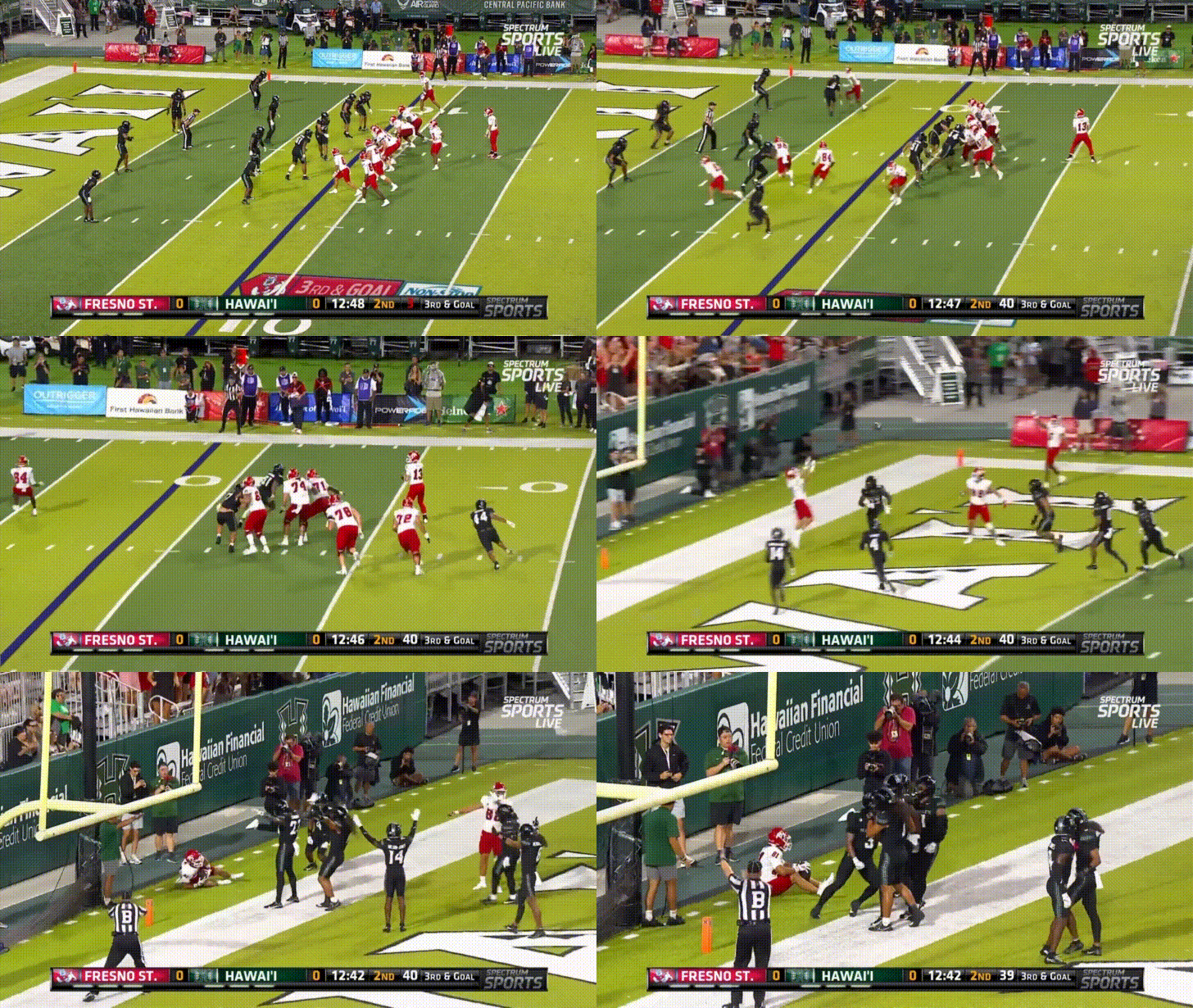
Not even the referees are safe from Edwards II:
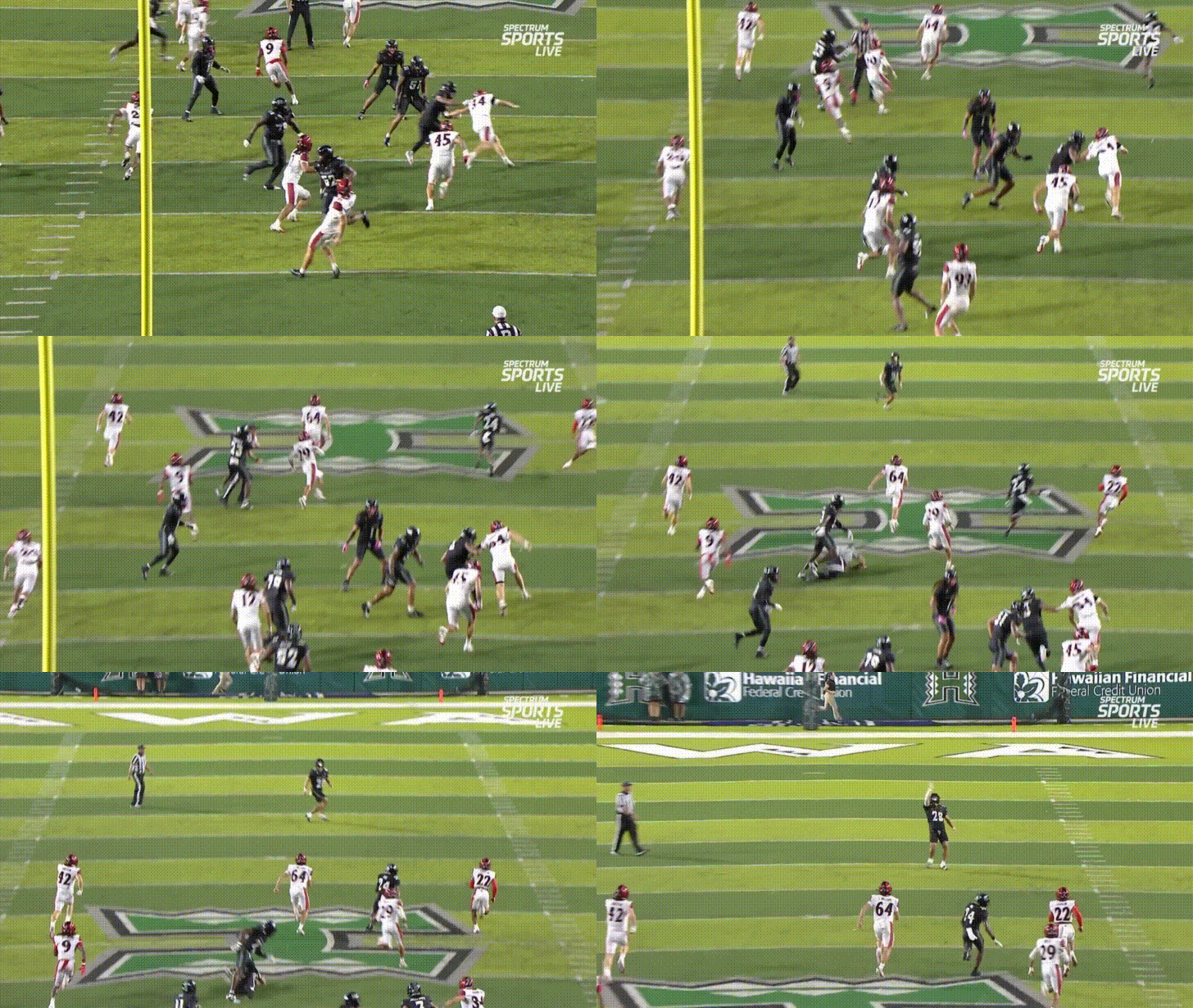
The corner who I thought was picked on the most by opposing QBs was CB Jaheim Wilson-Jones, and he gave up more TDs than any other defensive back for Hawaii. Wilson-Jones played tight but physical coverage:
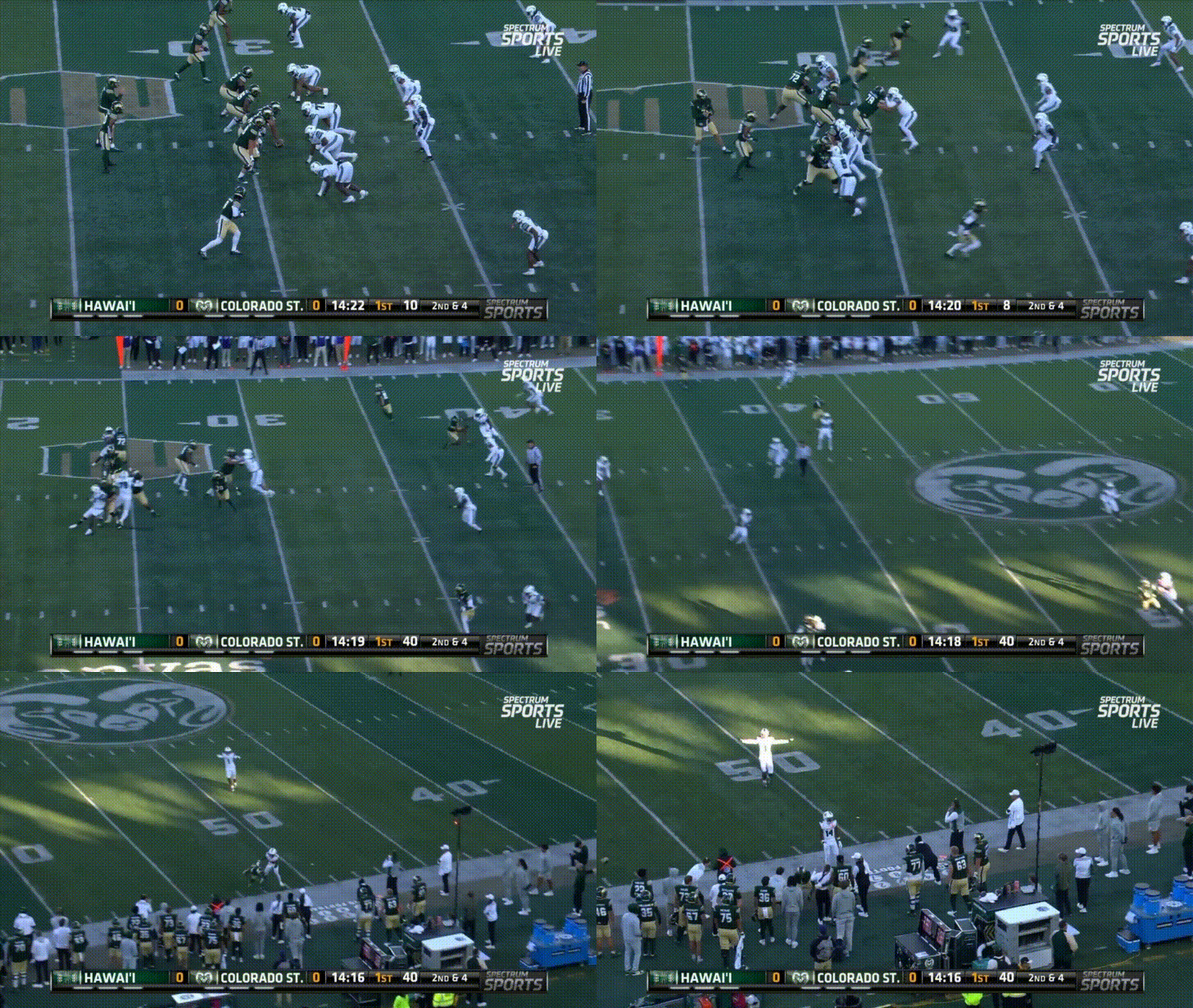
And Wilson-Jones came down with his first interception last game:
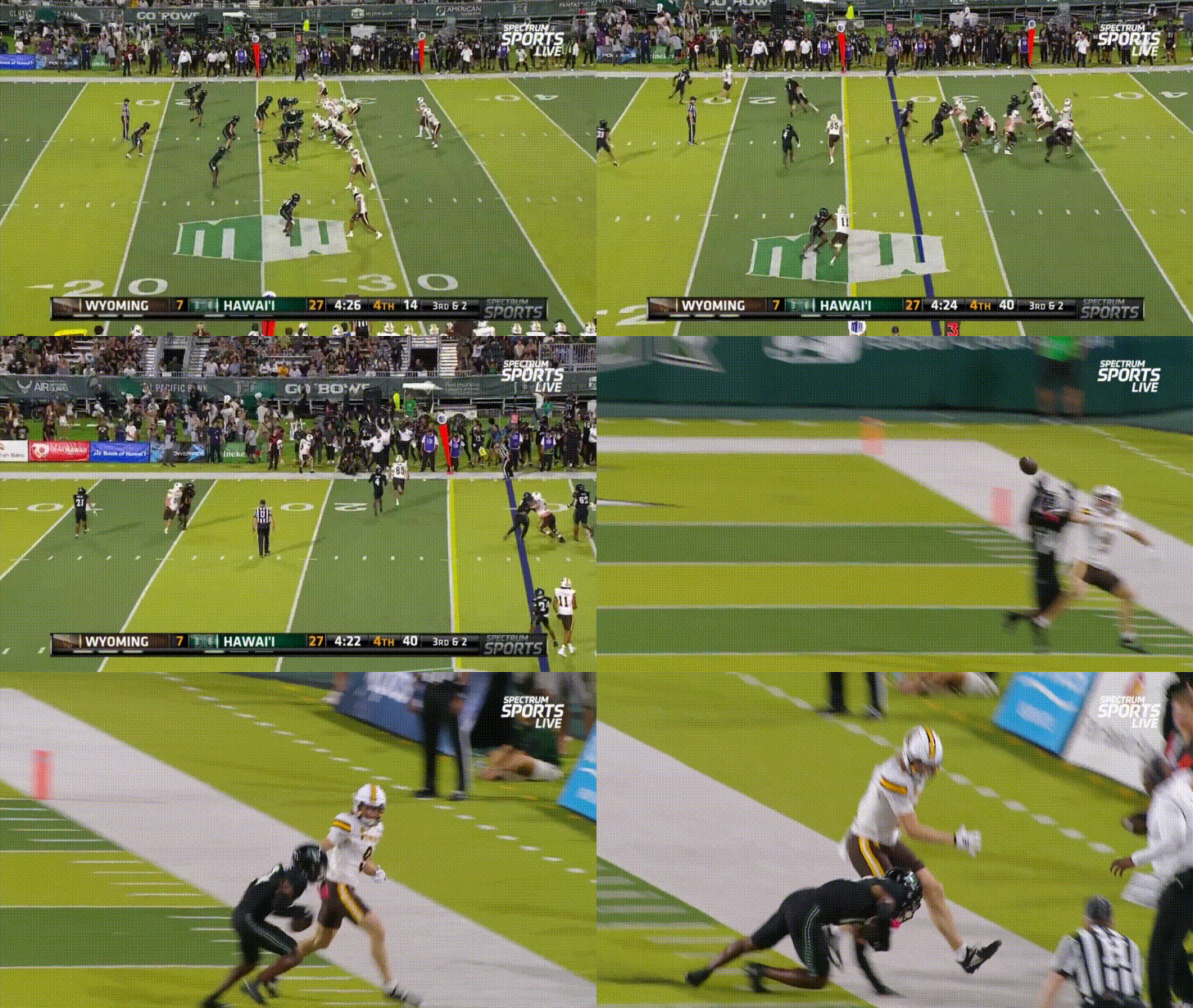
Wilson-Jones tended to commit PI when he was beat (which is sometimes just a heads-up play):
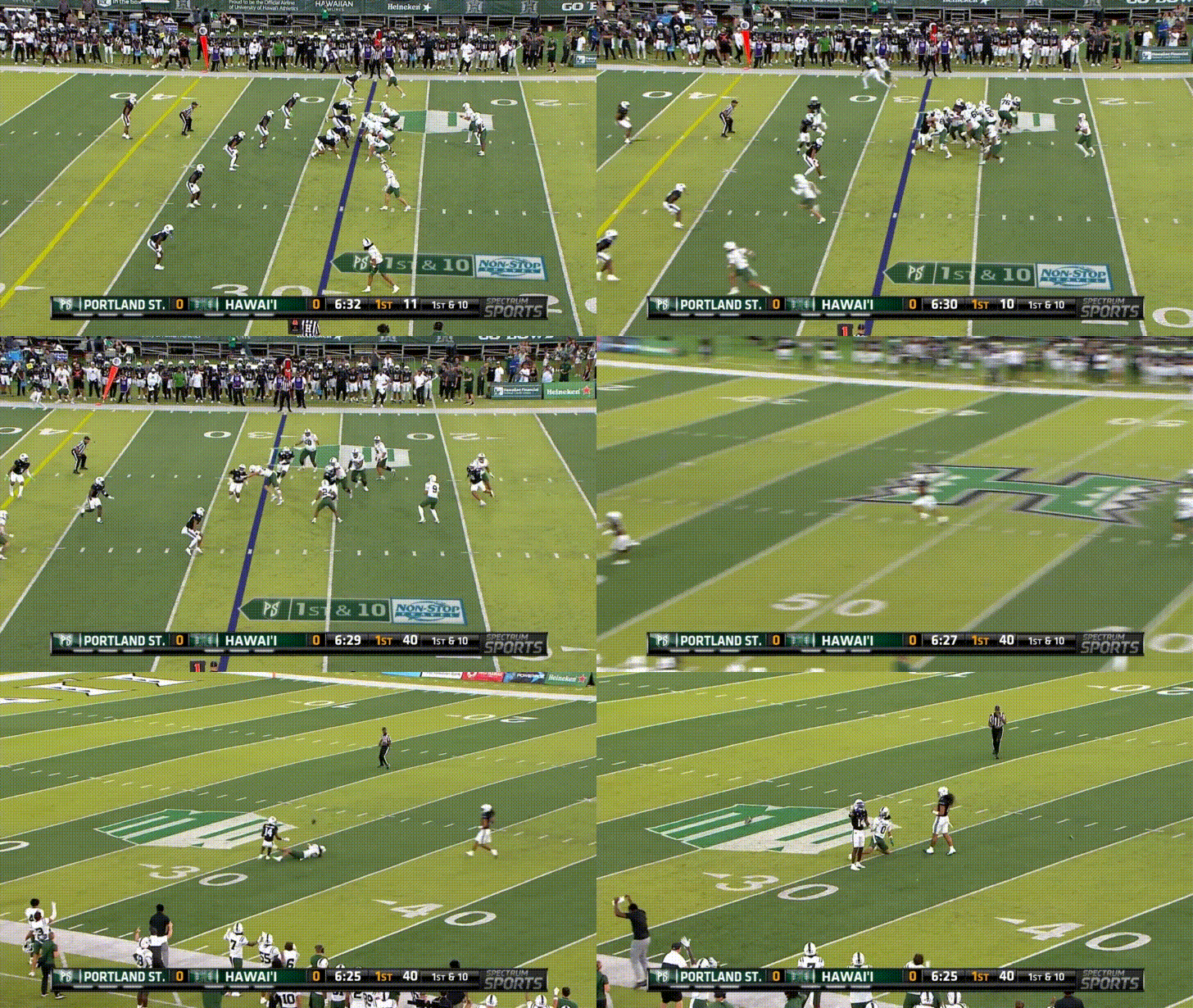
Opposing QBs seemed to look his way in the redzone:
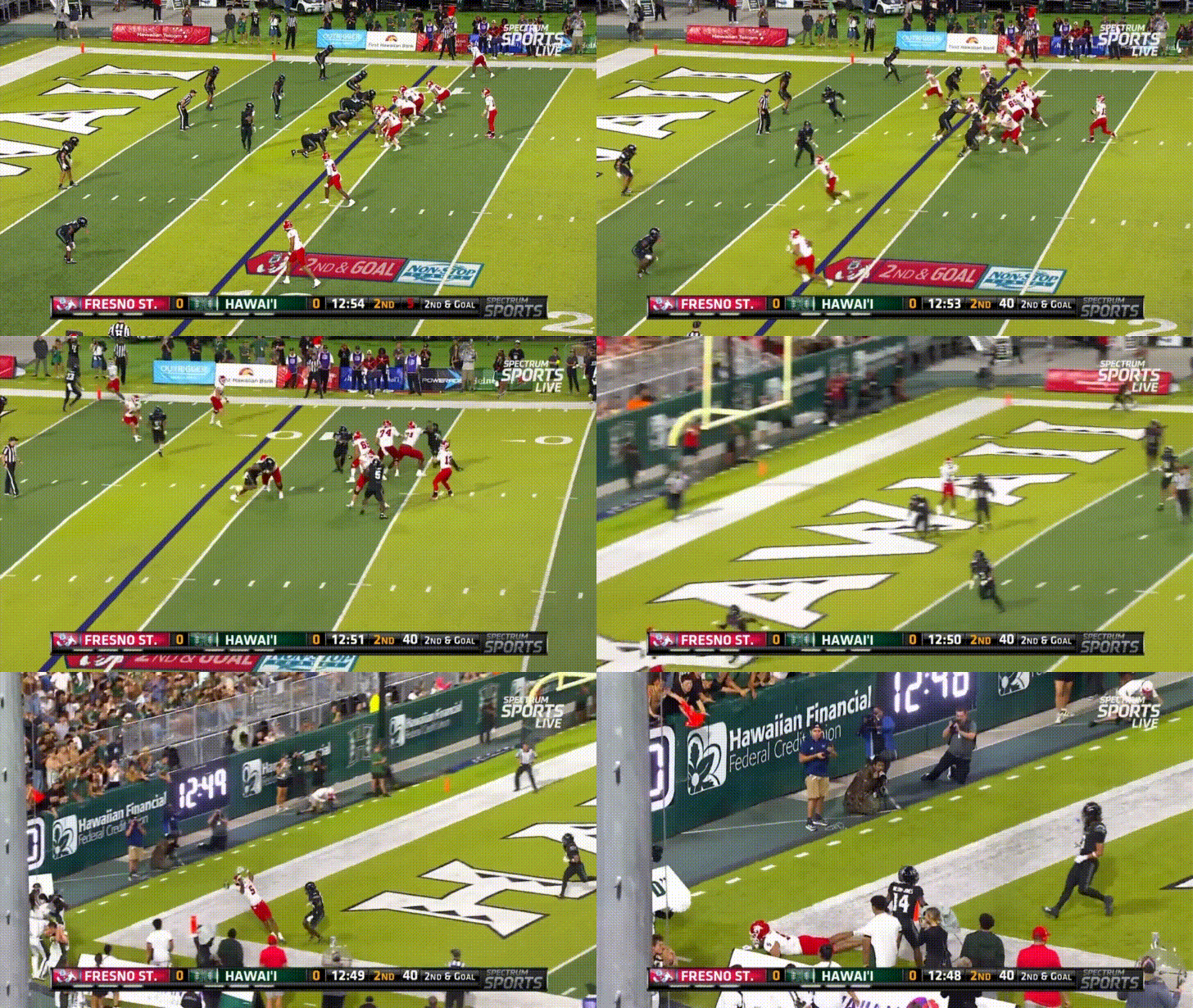
While the Hawaii secondary generally does well defending the run (blowing up screen passes, picking up TFLs in the backfield), the pass coverage strategy mostly relies on the defensive line getting early pressure on the quarterback to force quick throws than it does to blanket opposing receivers.
Special teams
I don’t always cover special teams, but I think about it a lot more now after the conversation I had with Coach Wilcox back at the Pac-12 Media Days in 2023. He made the point that “special teams needs to be a weapon,” and his discussion about it stuck with me. Special teams is one of those things you don’t often notice unless you have bad special teams. The punt got blocked, the kicker missed, the kickoff coverage was bad, etc. You can probably name a couple quarterbacks from teams you don’t follow, but how many punters can you name from teams you don’t actively follow? It made me pay attention to the field position battle a lot more (anyone else remember all the punts in the 2018 Cheez-INT Bowl? It was a game where an extra 10 yards on a punt may have made a difference), and I noticed that good teams often win that battle. Having the nation’s best kicker or punter isn’t going to make a difference if your defense gives up 50 points a game, but special teams is often the difference in close games. So now I feel like it’s important to cover in games I think will be close.
Well, Hawaii has good special teams. The placekicker Kansei Matsuzawa was a 1st Team All-American (AP, AFCA, CBS, Walter Camp), the MWC special teams player of the year, and a Lou Groza finalist (for the best placekicker in college football). The punter Billy Gowers PFF’s 1st Team All-American, the highest graded punter in the country by PFF.
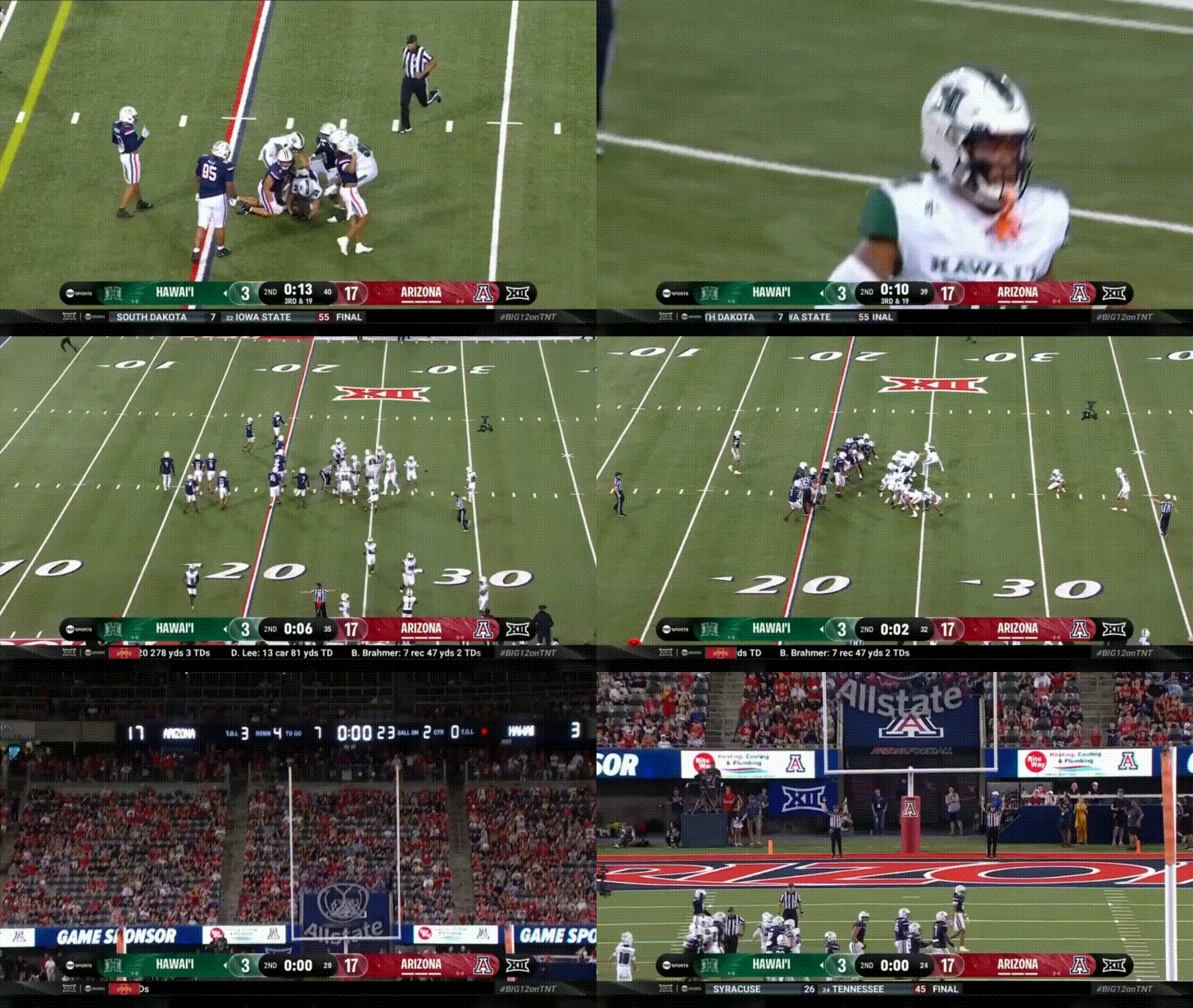
There are also things that aren’t going to show up in the stat sheet which demonstrate that Hawaii is well-coached on special teams. After a questionable throw to the middle of the field with no timeouts, the special teams unit is able to get on the field, line up, and hit the FG. I wish Cal had this in 2007:
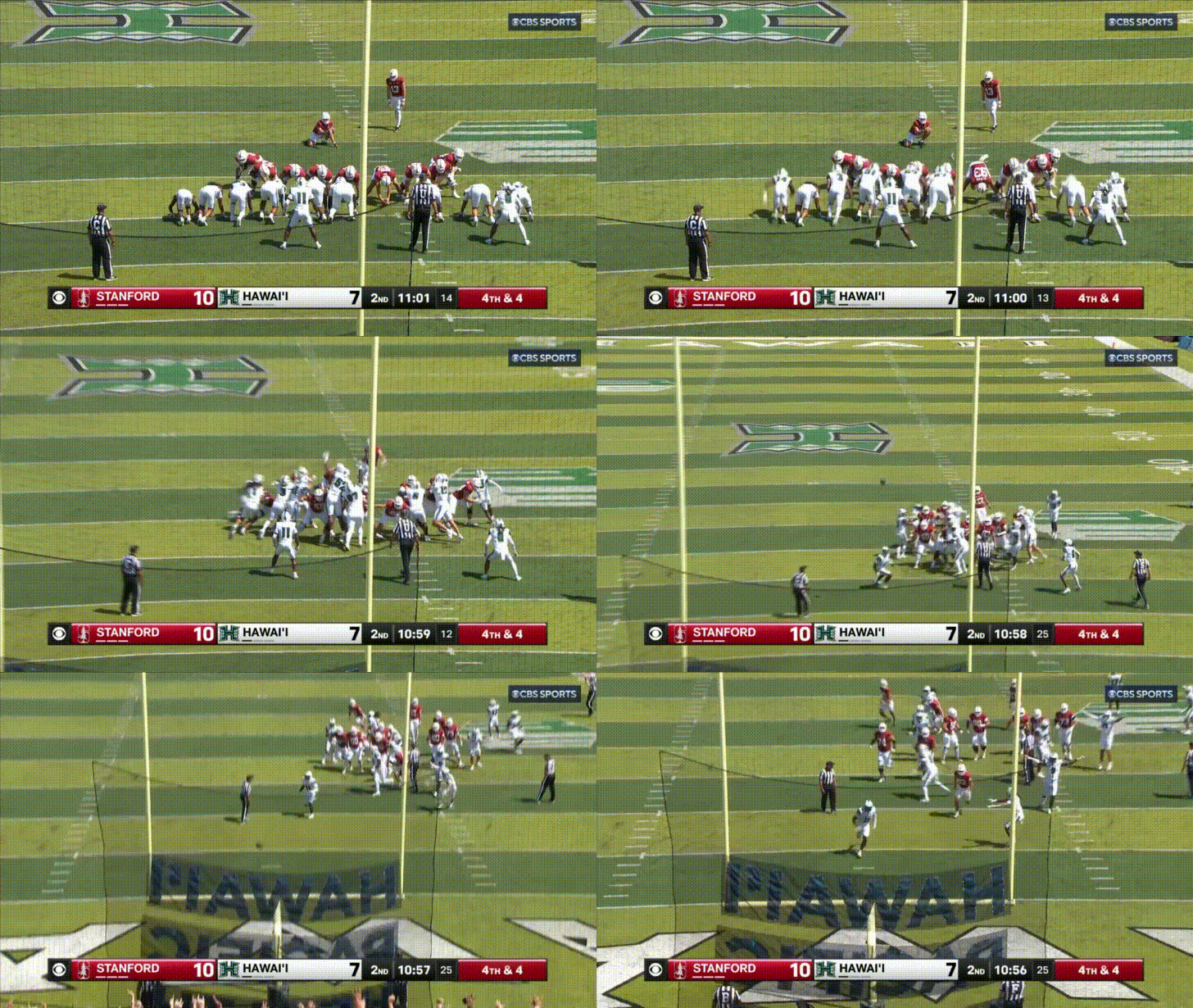
Hawaii is able to block FGs:
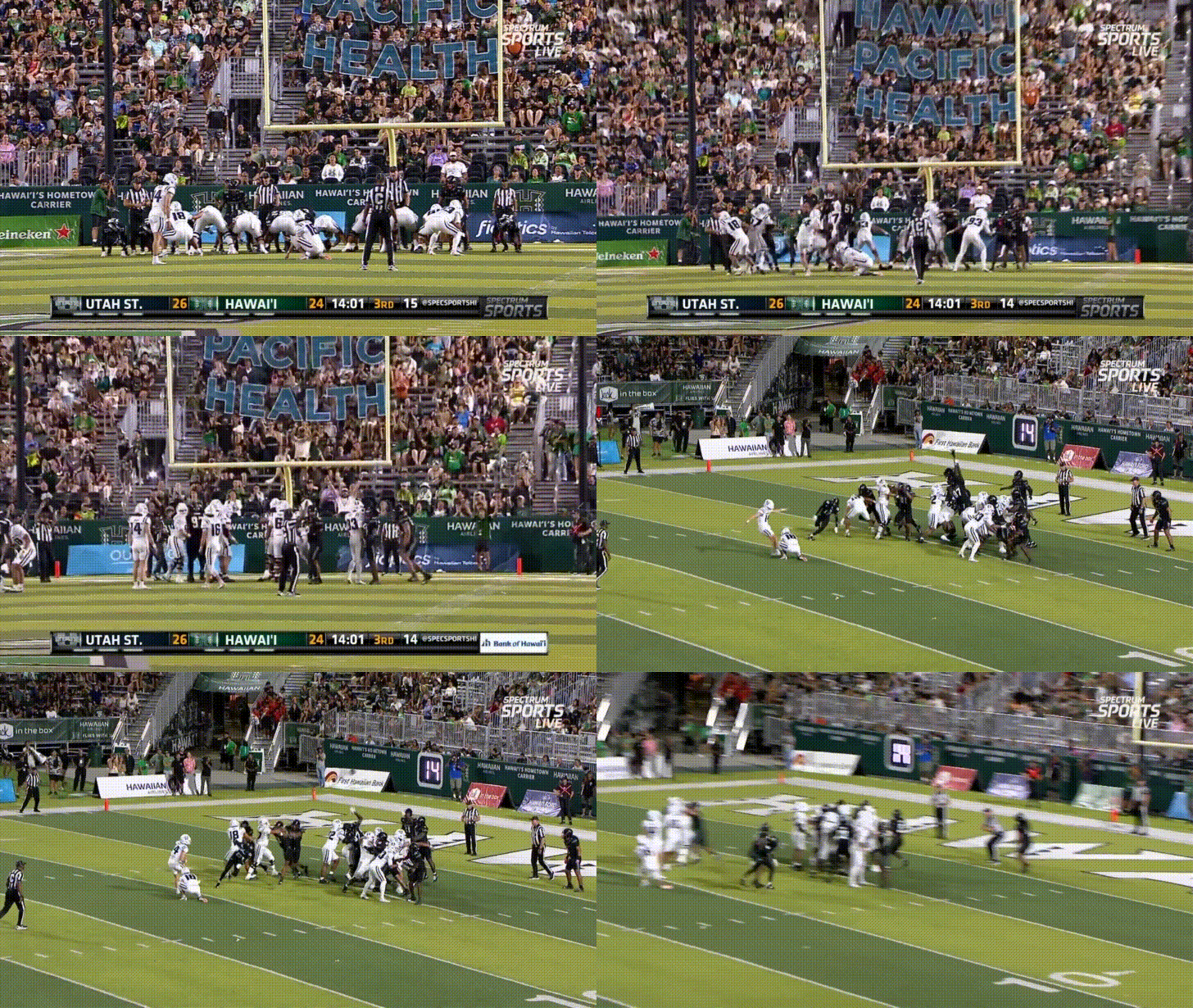
And they can even block PATs:
The punter, Billy Gowers, is a former professional Australia Rules Football (AFL) player. As a 29 year old freshman, he’s the 3rd oldest player in the FBS in behind Southern Miss’s Jack Murley (30) and Arkansas’s Monte Harrison (30). He’s the team’s barber, and co-founded a barber shop back in Australia. He’s blasted multiple punts this season for 67 yards. His 46.28 yard average this season is the highest in Hawaii history. He can kick with either foot, rolling to either side. He had multiple coffin corner kicks this season:
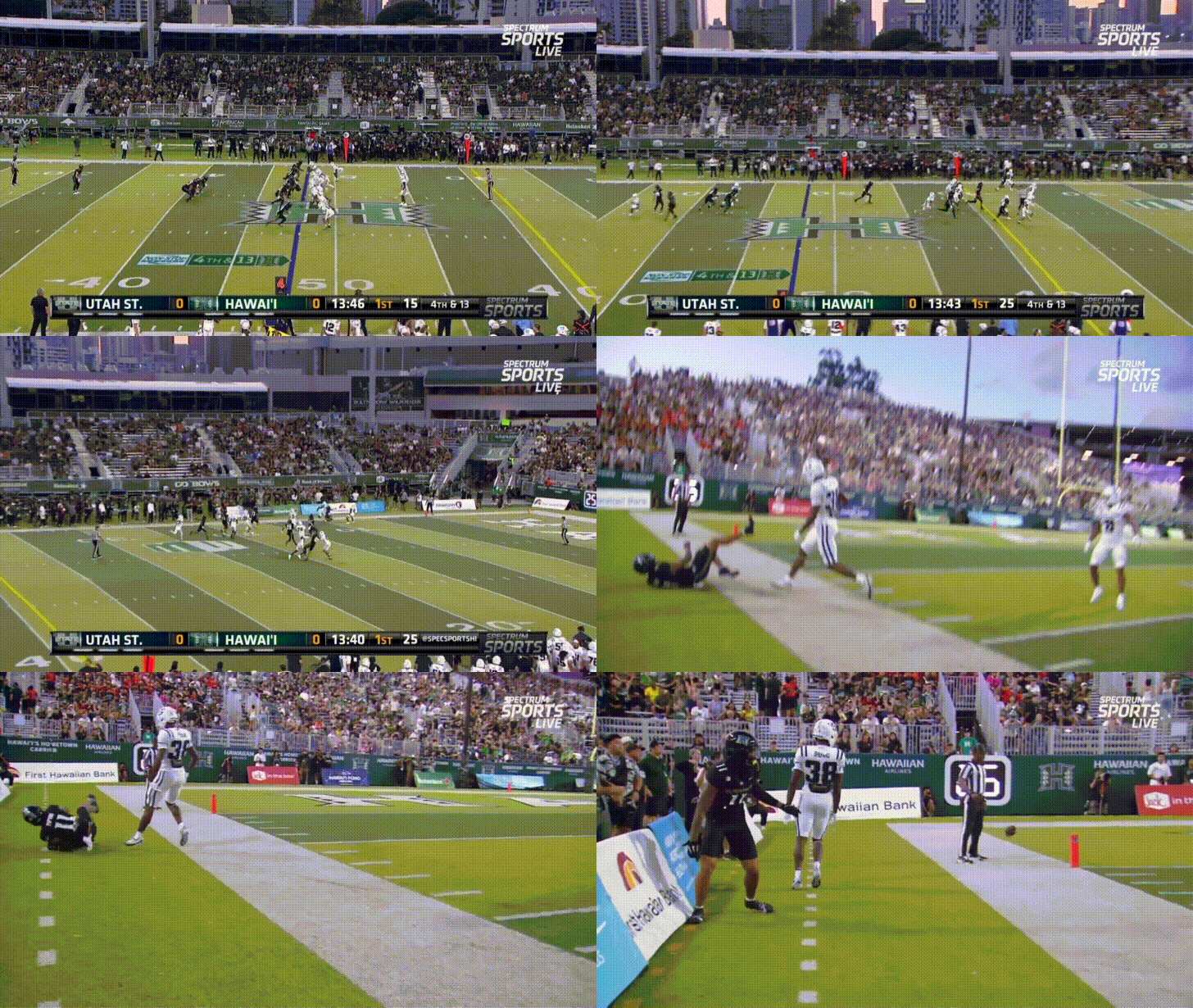
Another example:
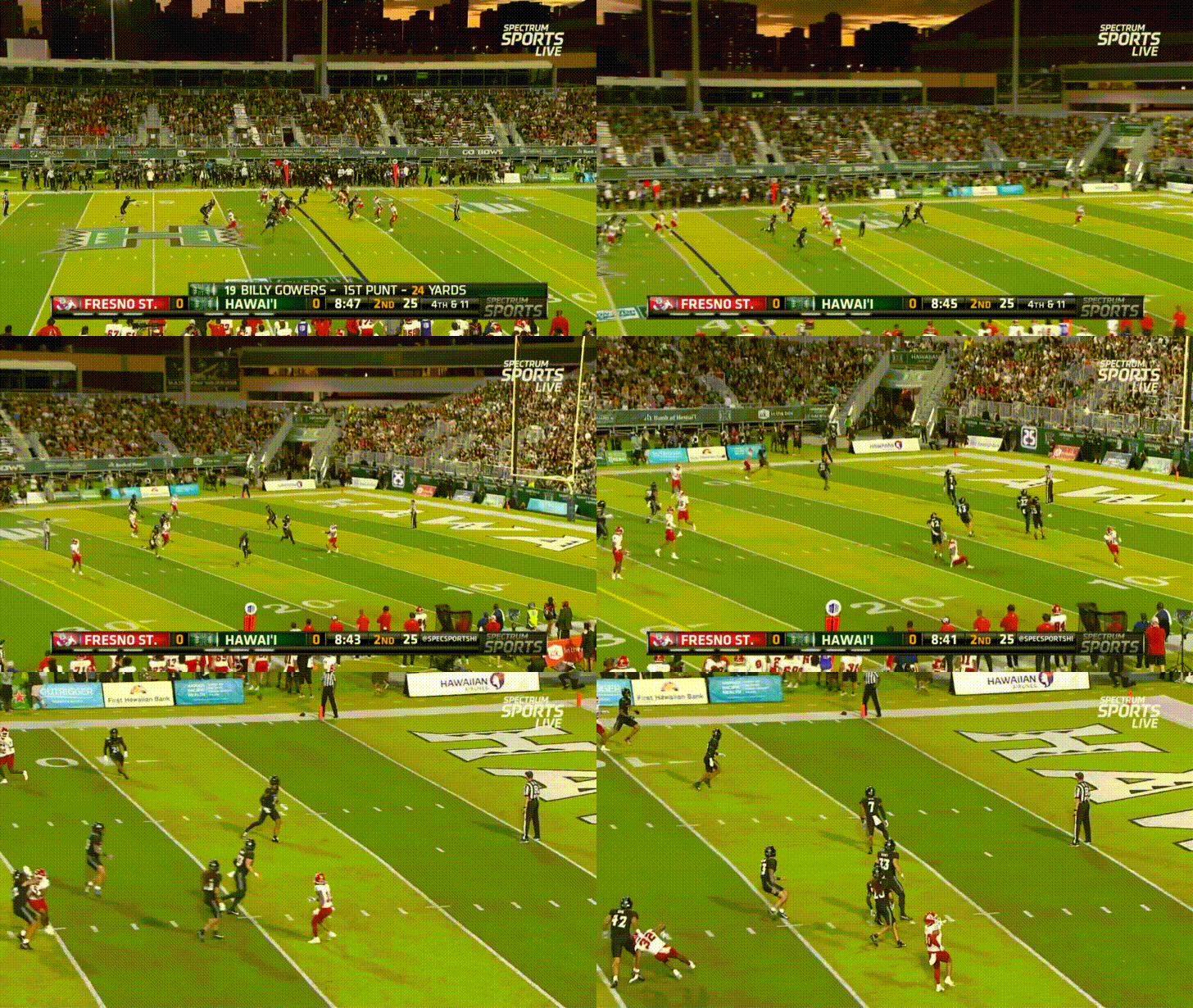
I don’t know if this was planned, but he wasn’t afraid to run the ball either:
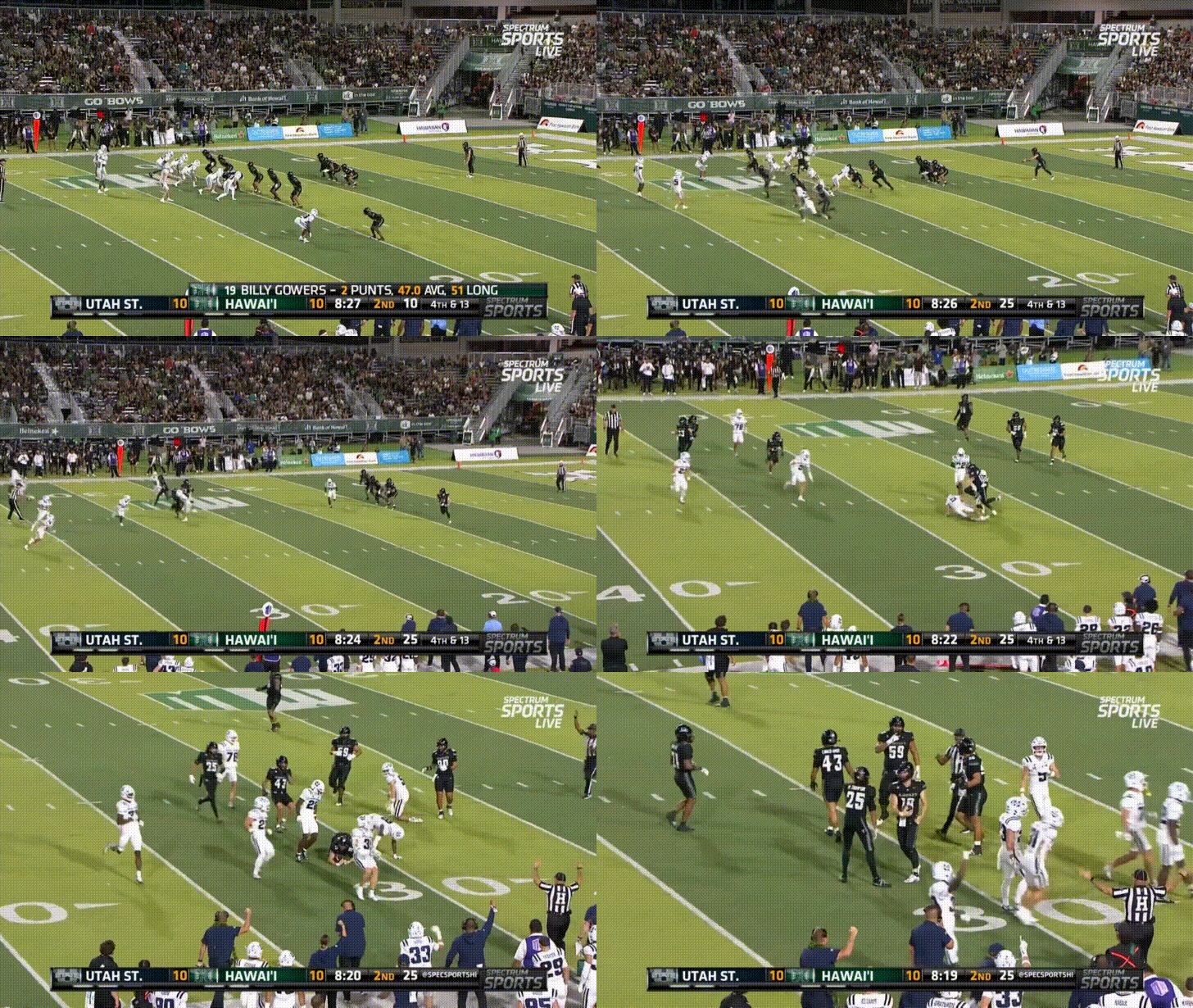
Hawaii has also had some big kickoff returns this season:
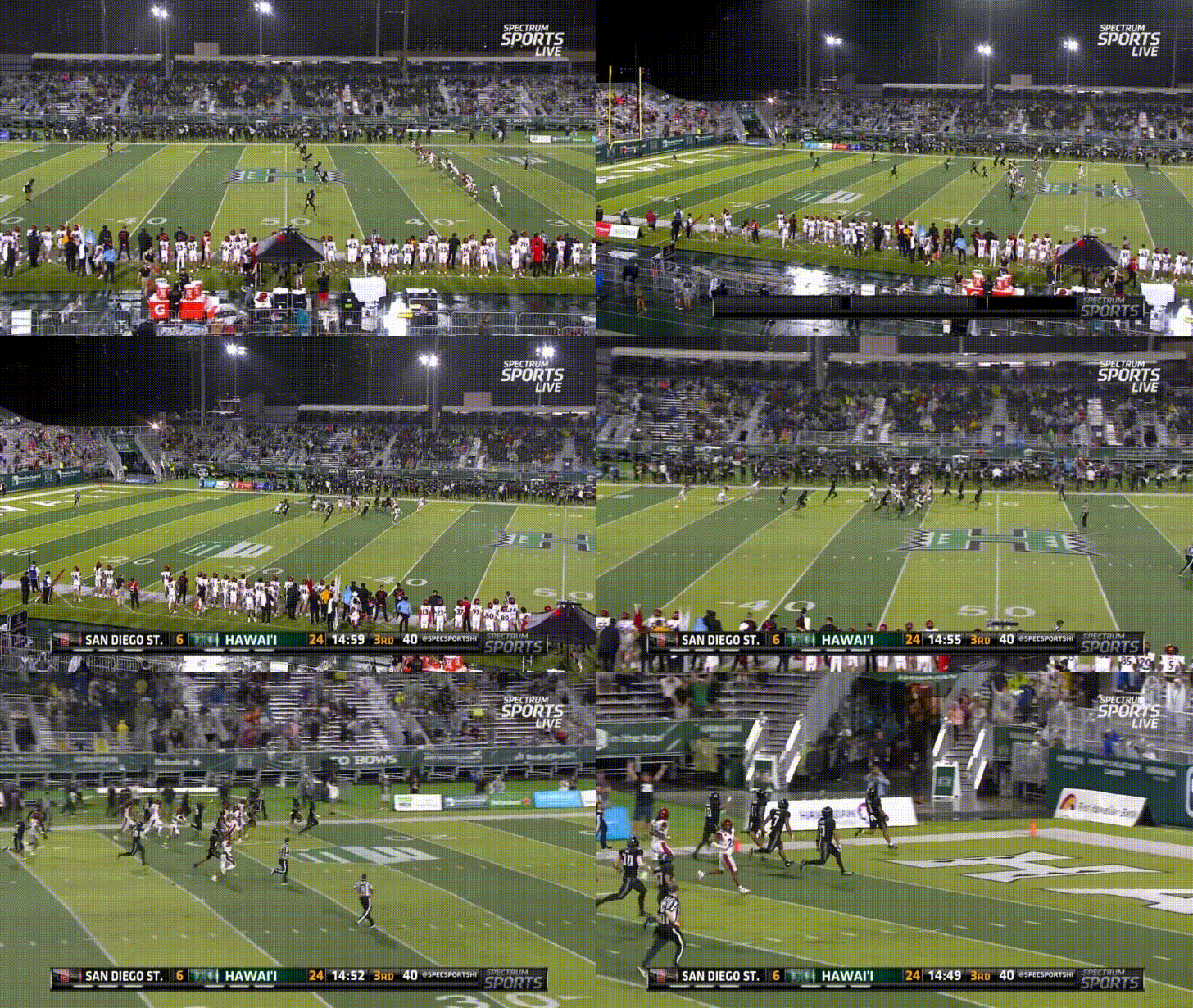
This is a game that I hope doesn’t come down to the wire, because Hawaii most definitely has the edge here.
Conclusion
This is a home game for Hawaii, and Hawaii plays pretty well at home. I think that Cal matches up well with Hawaii, however. Cal’s strong passing attack led by hometown hero Jaron-Keawe Sagapolutele will have plenty of opportunities to take advantage of a weaker secondary. Cal struggled with their run defense, but Hawaii is a pass-heavy team, and Cal’s secondary routinely features future NFL players (I’d be shocked if Hezekiah Masses wasn’t drafted, for instance). I think Hawaii’s key to the game is to get defensive pressure on JKS, and not give him time to let routes develop. So Cal needs the offensive line to protect well, limit negative plays and turnovers, and play well enough on defense to avoid turning this game into an offensive shoot-out. With Wilcox out, I have no idea what we can expect from the Cal defense, but we know Rolovich is very familiar with Timmy Chang and the Run-and-Shoot offense, so I am hoping Cal has a few tricks up their sleeve, and that Cal shows up to play a more inspired bowl-performance than they have in years past.
As always,
Go Bears.
Thanks again to the Mountain West Conference for providing me with the Hawaii games that aired on Spectrum Sports.
The fact that a good SMU defense got Zero sacks against Cal makes me optimistic that the O line has turned the corner enough to give JKS the time he needs.
I think the teams are pretty evenly matched so it will come down to which team is more motivated to win. I know that winning the game is very important to Rivera, but we'll have to see if that translates to the players.