

Cal is headed to the Hawaii Bowl to face Hawaii in their home stadium, the Clarence T.C. Ching Athletics Complex in Honolulu, Hawaii. It also happens to be a homecoming for Cal quarterback Jaron-Keawe Sagapolutele, as the Ewa Beach native is just a half-hour drive from the stadium. The Hawaii Bowl was created by ESPN in 2002 (in partnership with the University of Hawaii and the Western Athletic Conference) because Hawaii kept having strong seasons (9-3 in 2001) but wouldn’t be invited to a bowl game due to geographical limitations (and because ESPN would get a bowl game in a desirable location and holiday programming).
The last time Cal played Hawaii was actually in Sydney, Australia in 2016, when Davis Webb and the Bear Raid outgunned the Hawaii’s spread offense led by former head coach Nick Rolovich, himself a former Hawaii QB. After a rough year in 2017, Rolovich returned to the Run-and-Shoot system he learned as a quarterback under legendary Hawaii head coach June Jones (Hawaii’s winningest coach in the modern era) back when Rolovich played there from 2000-2001. Rolovich was a junior college transfer from the City College of San Francisco, and after a season-ending injury to the star sophomore quarterback in the 3rd game of the year (who was subsequently granted a medical redshirt), Rolovich ended up leading the Rainbow Warriors to an 8-1 record the rest of the way. That quarterback? Current Hawaii head coach Timmy Chang, who would go on to become college football’s career passing leader (until his record was subsequently broken by Houston QB Case Keenum in 2011). Timmy Chang also happens to be the NCAA career leader in interceptions (with 80), but hey, you need a gunslinger to run a Run-and-Shoot offense. Perhaps unsurprisingly, after a brief Todd Graham stint after Rolovich left to become the head coach of Washington State, Timmy Chang also brought back the Run-and-Shoot offense.
Of course, I covered the Run-and-Shoot offense back when Rolovich was at Washington State, but to briefly summarize, the Run-and-Shoot offense is a dynamic offense in which receivers often adjust their routes on the fly (i.e. option routes) to find open space. It’s similar to the Air Raid offense, with spread concepts, 4-receiver sets, and WR motions to get tells on the defensive coverage, but fundamentally, the key is that the quarterback and receiver need to be on the same page when reading defenses. If a receiver is going to change his route on the fly based on the coverage, the quarterback needs to be making that same read to know that, given this coverage, the receiver is going to break this way, so that the QB can throw to where the receiver is going to be. It’s different than the traditional offense where the QB knows WR-X is running a post route, so I can expect to throw to this spot on my 3- or 5-step dropback. The WR could be breaking inside (e.g. post/slant) or outside (e.g. go/out) based on the coverage, so making the same read is critical, otherwise the QB is throwing to the middle of the field while the intended receiver is down the sideline.
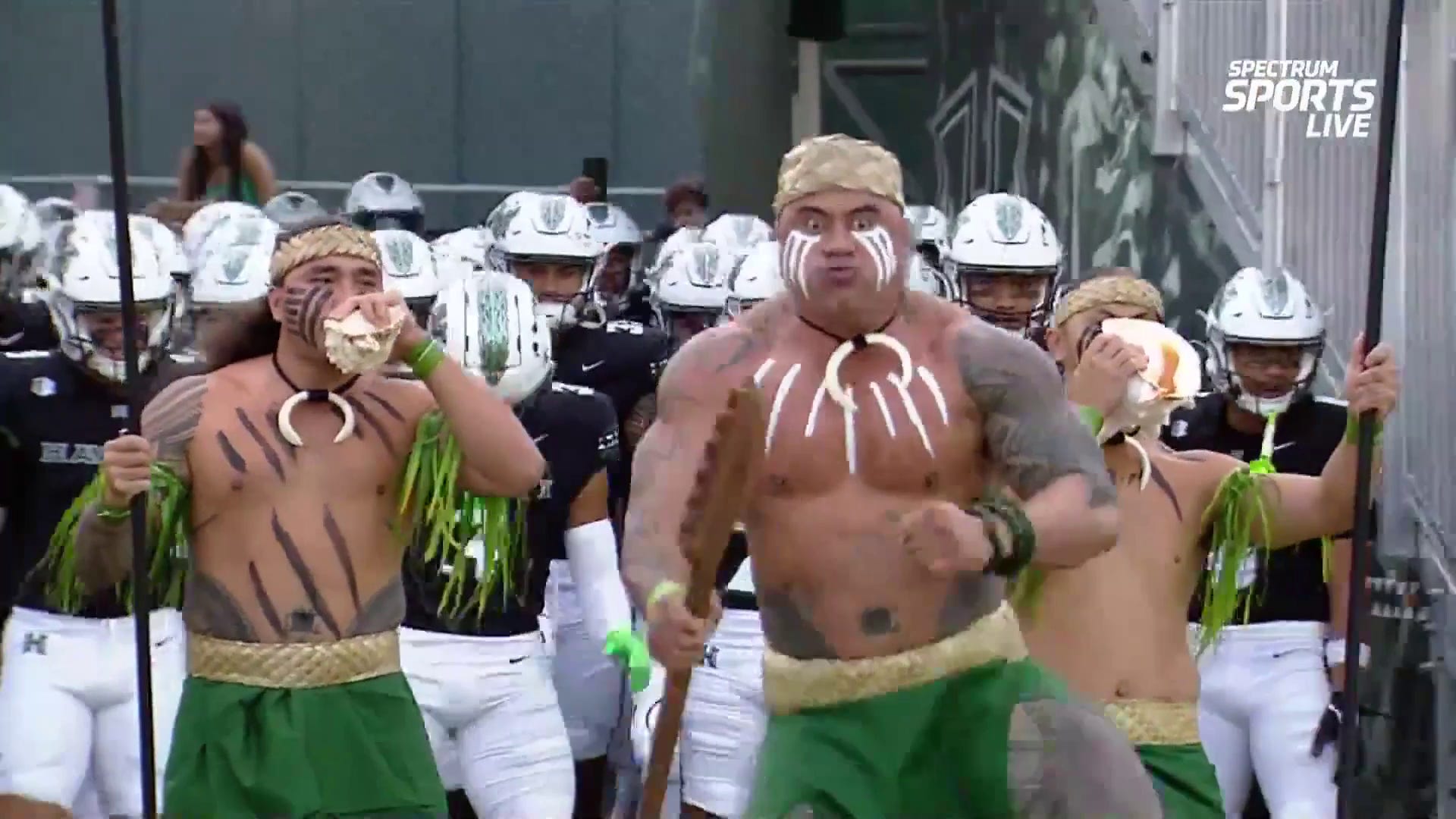
I bring up the relationship between the two head coaches, Nick Rolovich and Timmy Chang, to kind of highlight something interesting to me about Hawaii. It’s really a fraternal type of brotherhood amongst all these players and coaches from Hawaii. Hawaii’s home games air on Spectrum Sports*, and they have their own Hawaii announcers calling the games. The Hawaii play-by-play announcer, Kanoa Leahey, is a 3rd generation Hawaii sportscaster. The color analyst is Rich Miano, a former Hawaii defensive back and secondary coach (during the time Rolovich and Chang were players). The Honolulu mayor, Rick Blangiardi—himself a former Hawaii player and LB coach—was in the broadcaster’s booth for the Utah State game, talking about how he remembers Kanoa Leahey and Larry Beil (the Bay Area sportscaster/news anchor and Hawaii alum was subbing in for Miano for a game) back when they were kids. It should come as no surprise that these Hawaii announcers can find the Hawaiian connection back to pretty much any player or coach. There will obviously be no such shortage of Hawaii connections to Cal with JKS, Rolovich, et al., so I am pretty sure the ESPN crew covering the game will be able to handle these duties in their stead.
Obviously, Miano and Leahey were excited about the potential Cal-Hawaii matchup, such that they mentioned it during the Wyoming game (long before it was announced or even set). They would update Hawaii fans on Jaron-Keawe Sagapolutele’s freshman season, talking about how he’s one of the best freshman quarterbacks in college football. In an unrelated game (obviously), Miano said that JKS is “one of the best college freshman QBs in all of college football, he’s showing the ability to be a Tua Tagovailoa, to be a Marcus Mariota, to be someone who is playing at the next level.” Hawaii is proud of Jaron-Keawe Sagapolutele.
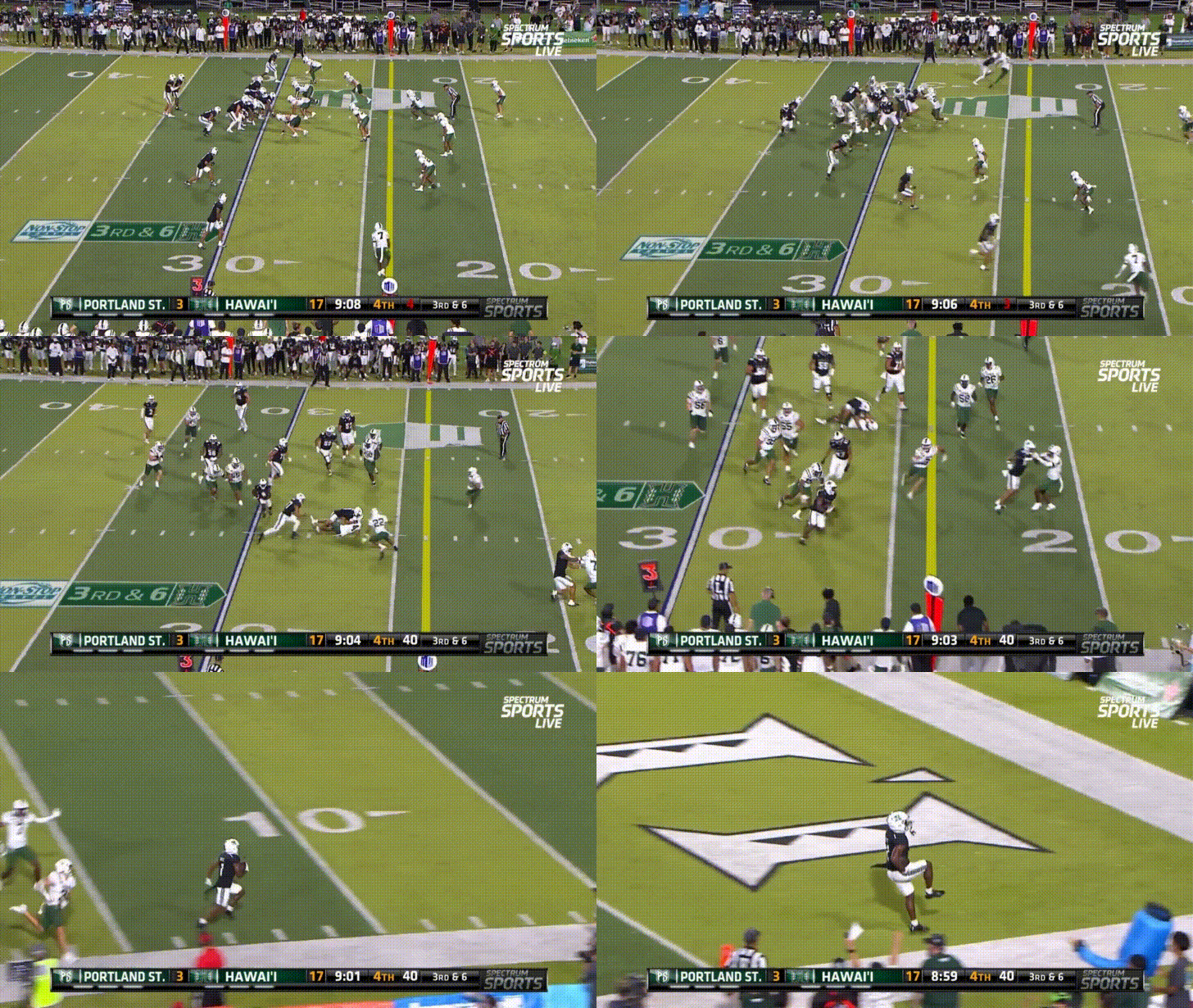
There are plenty of connection from JKS back to Hawaii. His older brother, John-Keawe Sagapolutele, was the quarterback at Hawaii before transferring to Portland State this year (and where he faced his old team). His cousin Josh Sagapolutele is currently a defensive lineman at Hawaii, and their other cousin (Josh’s brother Anthony, also a DL) played his last season just last year. This article isn’t long enough to detail all the Hawaii connections between these teams. I’m also not sure how to tie this into the article, but every Hawaii home game ends with a group prayer at midfield with both teams. I guess I never realized quite how big Christianity was in Hawaiian culture (especially given its contentious relationship to native Hawaiian traditions and spirituality), but it definitely explains some things.
Back to football for a moment: Hawaii has had a weird season. The travel accommodations allow Hawaii (and any team traveling to Hawaii) to play in week 0 of the season, but in practice, this means that the cadence of Hawaii’s season is quite odd. Hawaii played its first 6 games in 36 days, and the last 6 games in 63 days. By September 27, they were already halfway through the season. Hawaii’s season was effectively:
6 games, BYE, 2 games, BYE, 2 games, BYE, 2 games
Hawaii went 1-2 after their BYE week, playing a great game offensively against Air Force (4-8), but dropping games to SJSU (3-9) and UNLV (10-2). I would glean this as a positive, but we know that Cal is not much better after an extended break either.
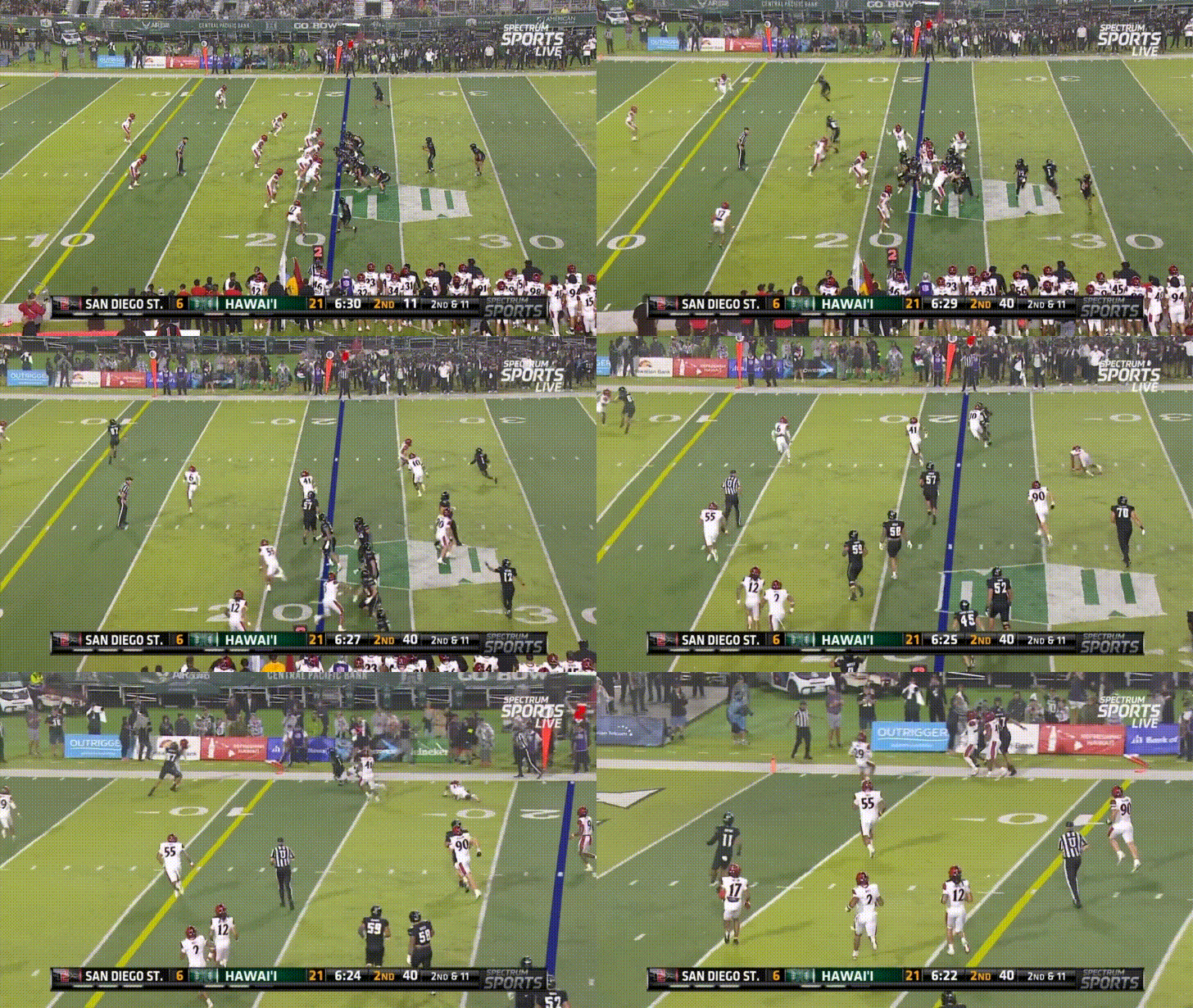
Hawaii’s first win over Power-4 team in 5 years was against Stanford this season (Hawaii’s last P4 wins before then came in 2019: 8/24/19 Arizona 45-38, and 9/7/19 Oregon State 31-28 in back to back weeks). Hawaii also absolutely murdered San Diego State 38-6, in a very rainy weather game that should have favored a run offense like SDSU over a pass offense like Hawaii. This is not good news if you believe in the transitive property of football (and you shouldn’t: Cal has a transitive win over Alabama from Cal > UNC > Stanford > FSU > Alabama, or you can find circular weirdness like Hawaii > Stanford > SJSU > Hawaii). Stanford was still playing Ben Gulbranson in the opening week of the season, and SDSU had injuries to some key defensive players against Hawaii (not to mention that they also played terribly, particularly on the road, while playing lights-out that week at home against Cal).
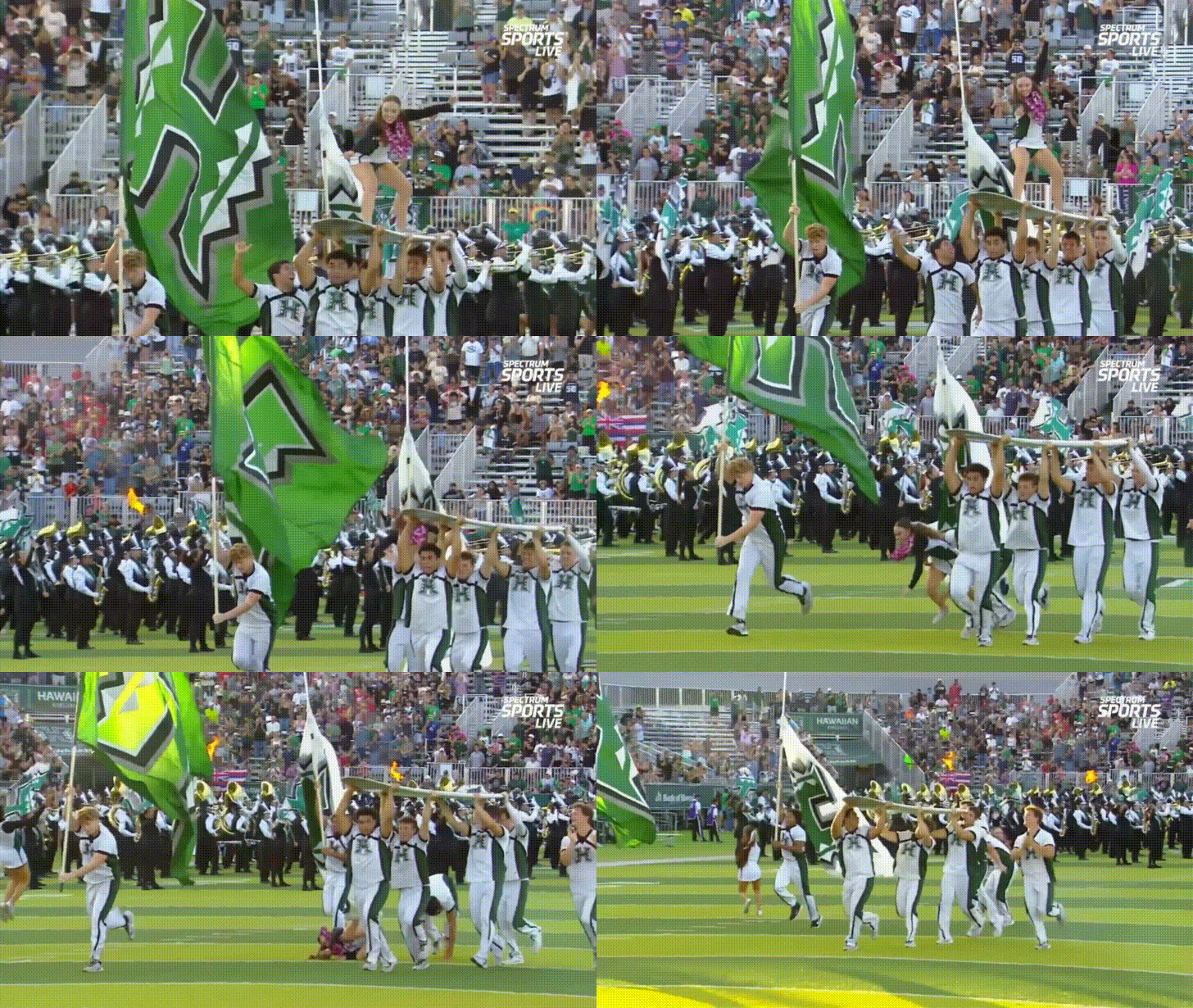
This is actually Hawaii’s first winning season and bowl game appearance by Hawaii under Timmy Chang, in his 4th season as head coach. Hawaii is seemingly on an upwards trajectory, and should be a fairly even match for Cal.
Let’s take a closer look at the positional breakdowns.
Quarterback
Hawaii runs a very pass-heavy offense, ranking 7th in the FBS in pass attempts per game (40.5 pass attempts/game) and bottom-10 in the FBS in rushing attempts (128th/135, 29.1 rushing attempts/game). Hawaii is going to throw the ball a lot, and of Hawaii’s 350 rushing attempts this season, 109 (31.1%) of them belong to the quarterback. That’s an awful lot of the offense running through the quarterback.
Leading that charge at quarterback is the redshirt freshman, Micah Alejado. The Bishop Gorman (Las Vegas) product is one of six on this Hawaii team (and one of four starters — heck, even their QB coach Chad Kapanui joined this year from Bishop Gorman, not to mention that Kapanui was also Hawaii teammates with Timmy Chang and Nick Rolovich), with this Vegas-to-Hawaii pipeline demonstrating why Las Vegas is sometimes called the “Ninth Island”. Listed at 5’10, 180 lbs., Alejado is undersized for the position, but you wouldn’t know it from the gutsy way he plays. His size is a primary reason why he was under-recruited as a prospect, despite leading Bishop Gorman to a perfect 12-0 record and state championship his senior year.
Alejado is a mobile passer with good accuracy on short-to-intermediate range throws. He is a dual-threat quarterback with a pocket passer style; Alejado can make plays with his feet and will use his mobility to extend the play, but he’s looking primarily to throw it. Alejado opened the season with a game-winning 1:33 52-yard drive (capped off with a Kansei Matsuzawa FG) to open the season with a win over Stanford, but suffered an ankle injury during the game. He re-aggravated his ankle the following week against Arizona in the 3rd quarter, and it was clear that his mobility is a big element of his game. Hawaii struggled to contain the Arizona pass rush, and without Alejado’s typical elusiveness, the game quickly turned into a blowout (even before Alejado’s injury). He missed the following two weeks to injury (backup QB Luke Weaver held the fort against weak competition in 2-10 CUSA Sam Houston and 1-11 FCS Portland State), and struggled in his first game back, a 3-INT performance in a 23-21 loss to Fresno State. Although not a lot went right for Hawaii that game:
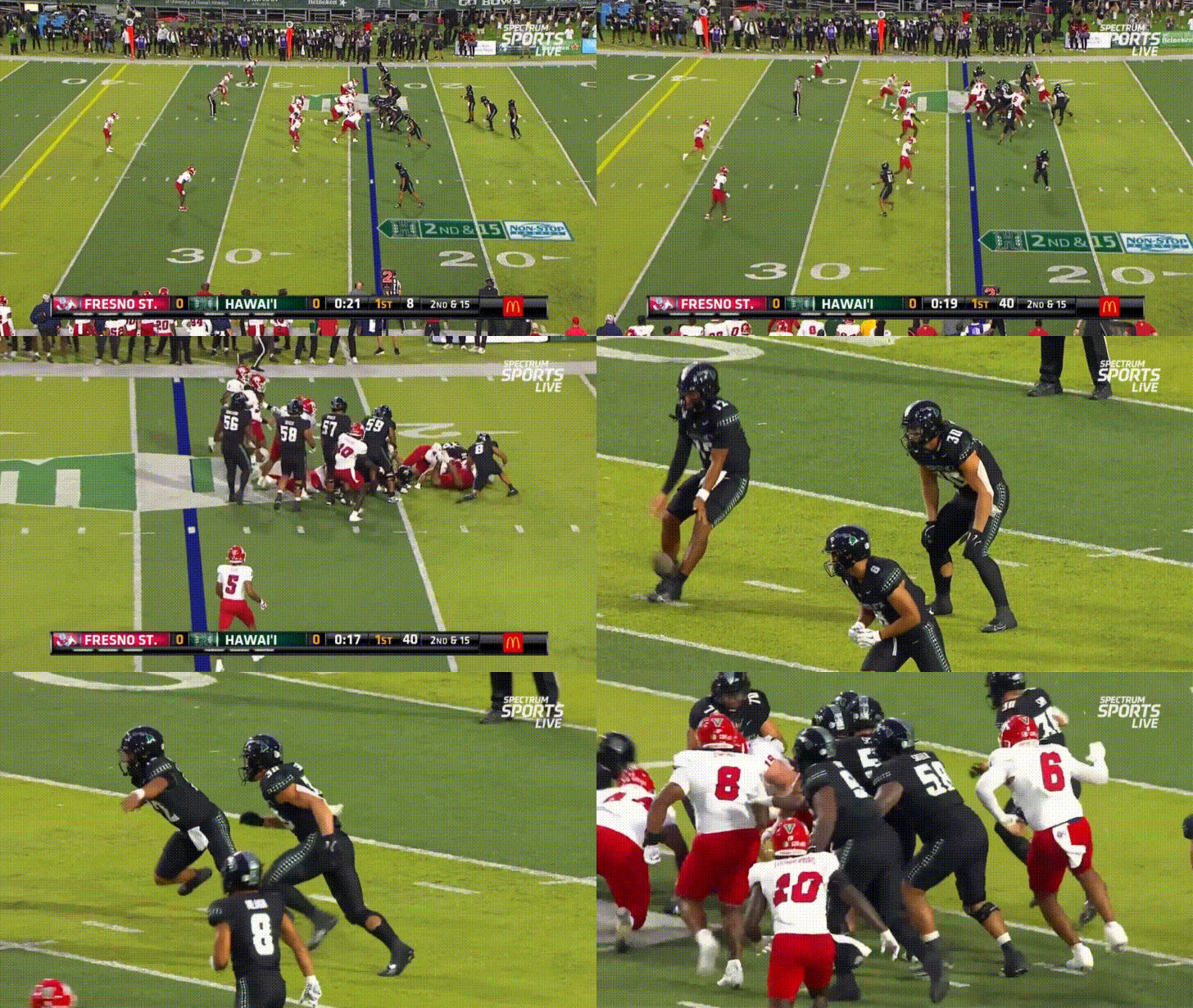
Alejado likes to work the short and intermediate portions of the field, and when pressured frequently looks to make throws to the sidelines. Alejado likes to work the quick passing game to ultimately set up the deep shot down the field:
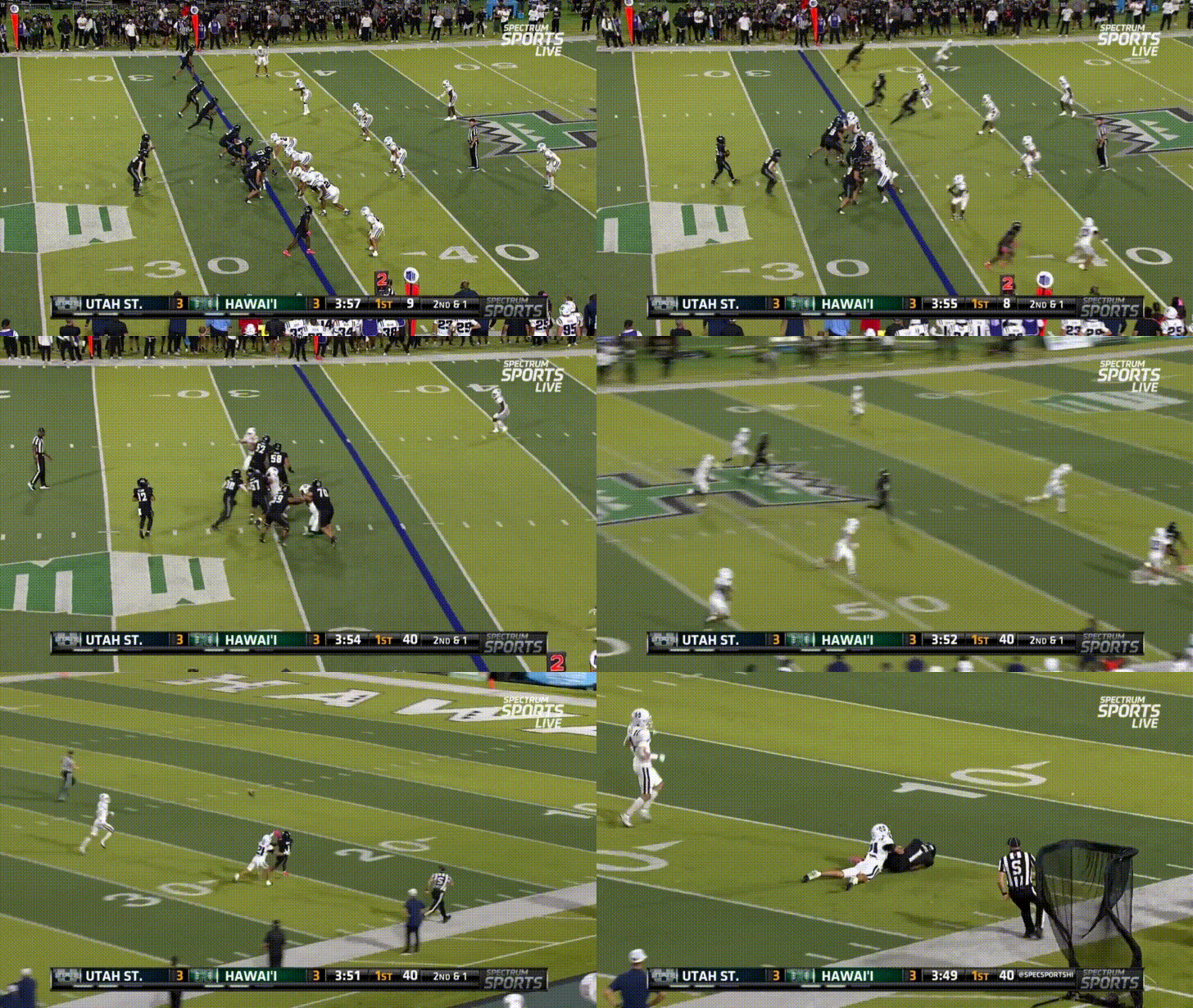
Alejado doesn’t have the strongest arm, and would often underthrow or loft the deep ball a bit on his shots down the field. However, he often had good separation from his receivers (or, generally, receiver, but we’ll revisit that in the later section):
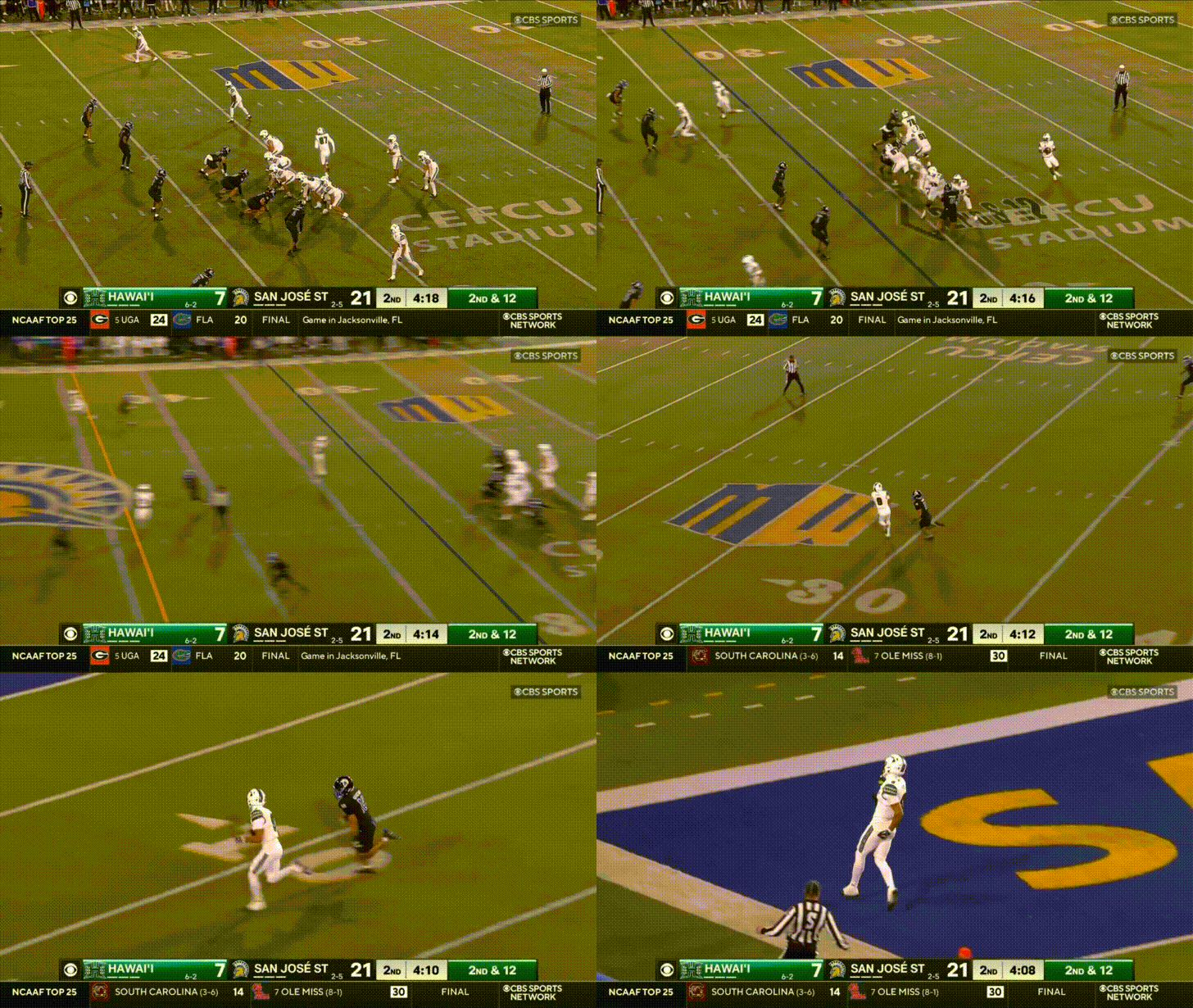
Alejado is a left-handed passer, and would often roll out to his left, showing good touch on these throws on the run:
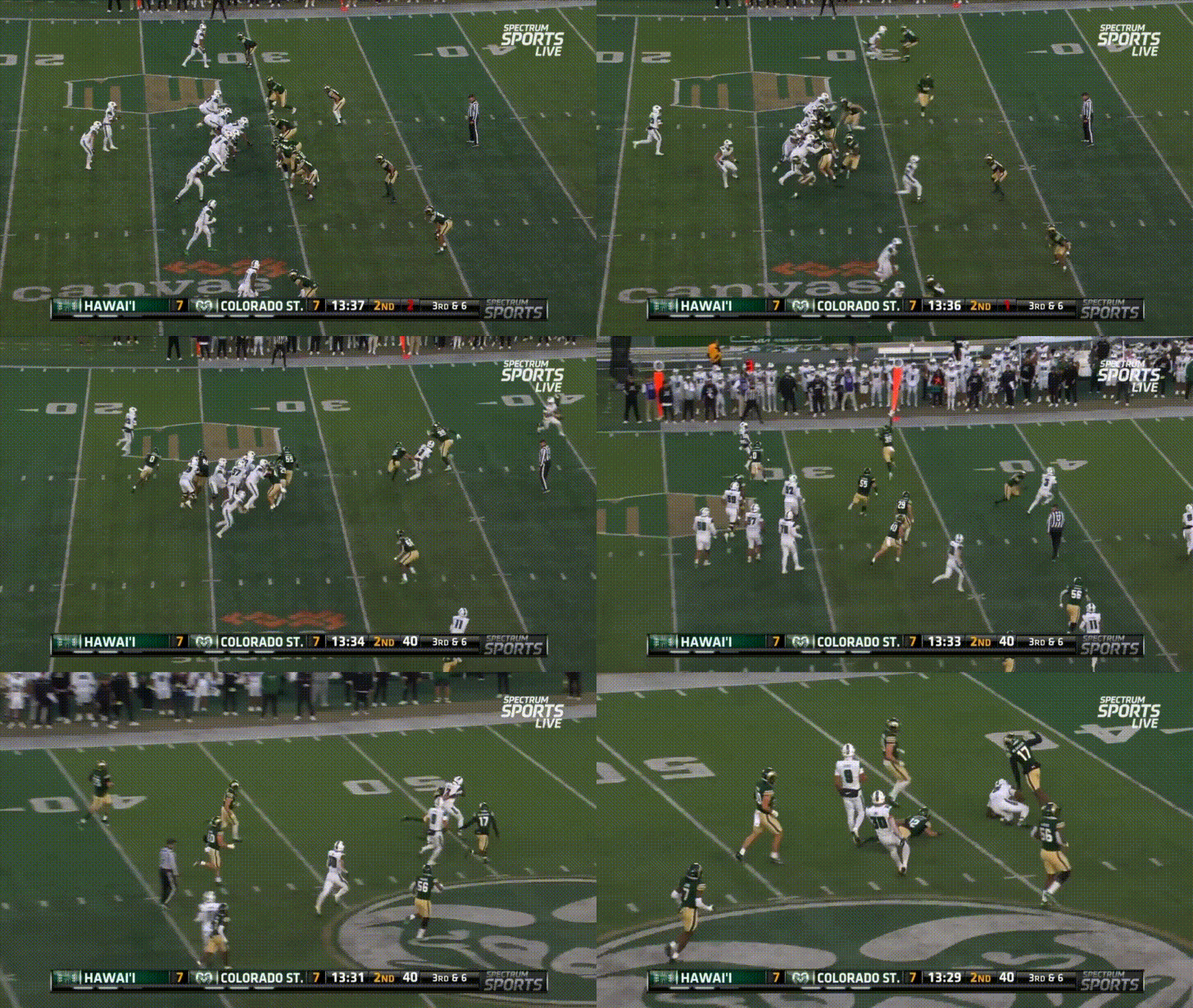
Alejado also showed the ability to zip throws to the opposite side of the field:
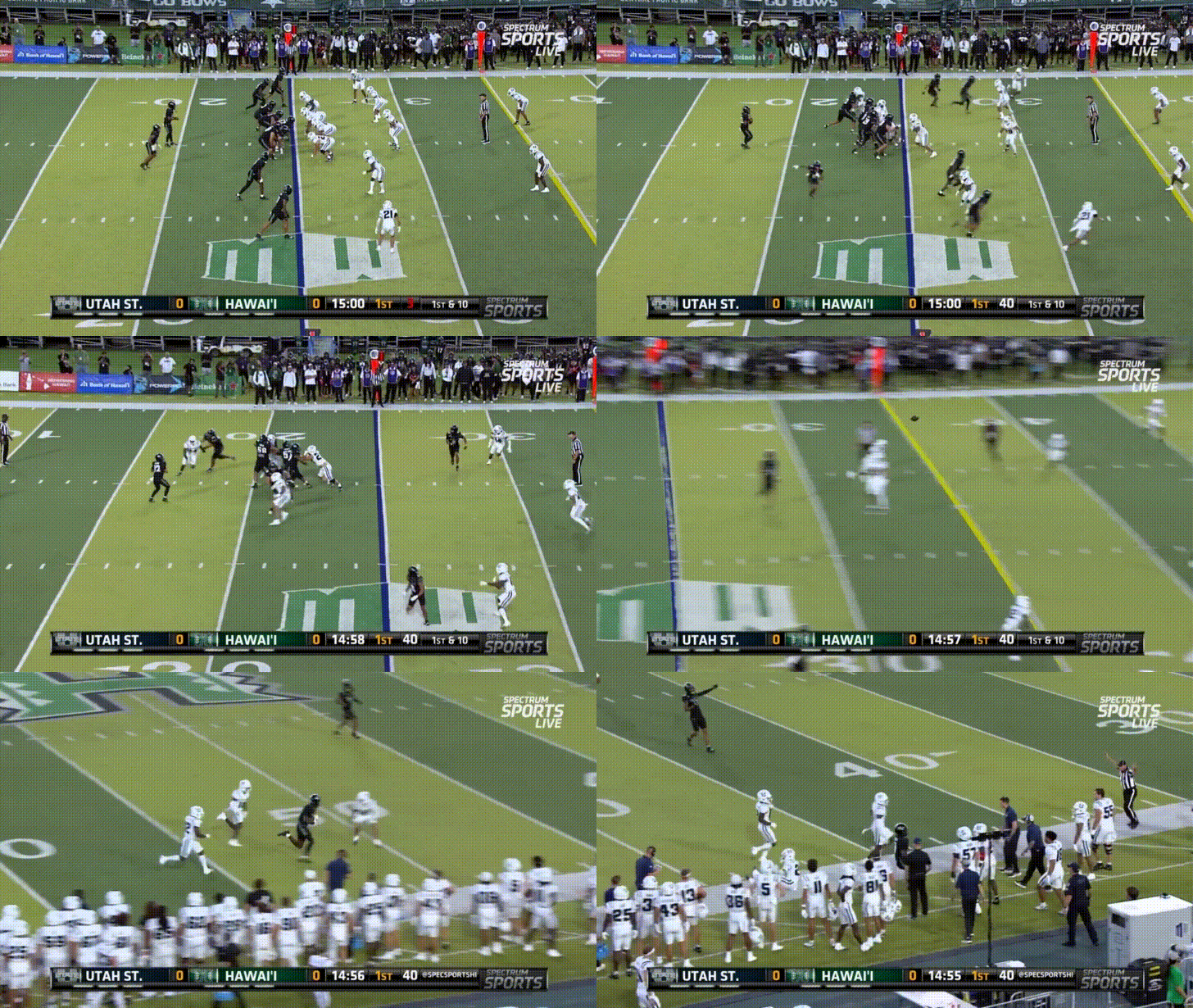
Here Alejado shows good timing and anticipation on this throw into a tight window for WR Pofele Ashlock:
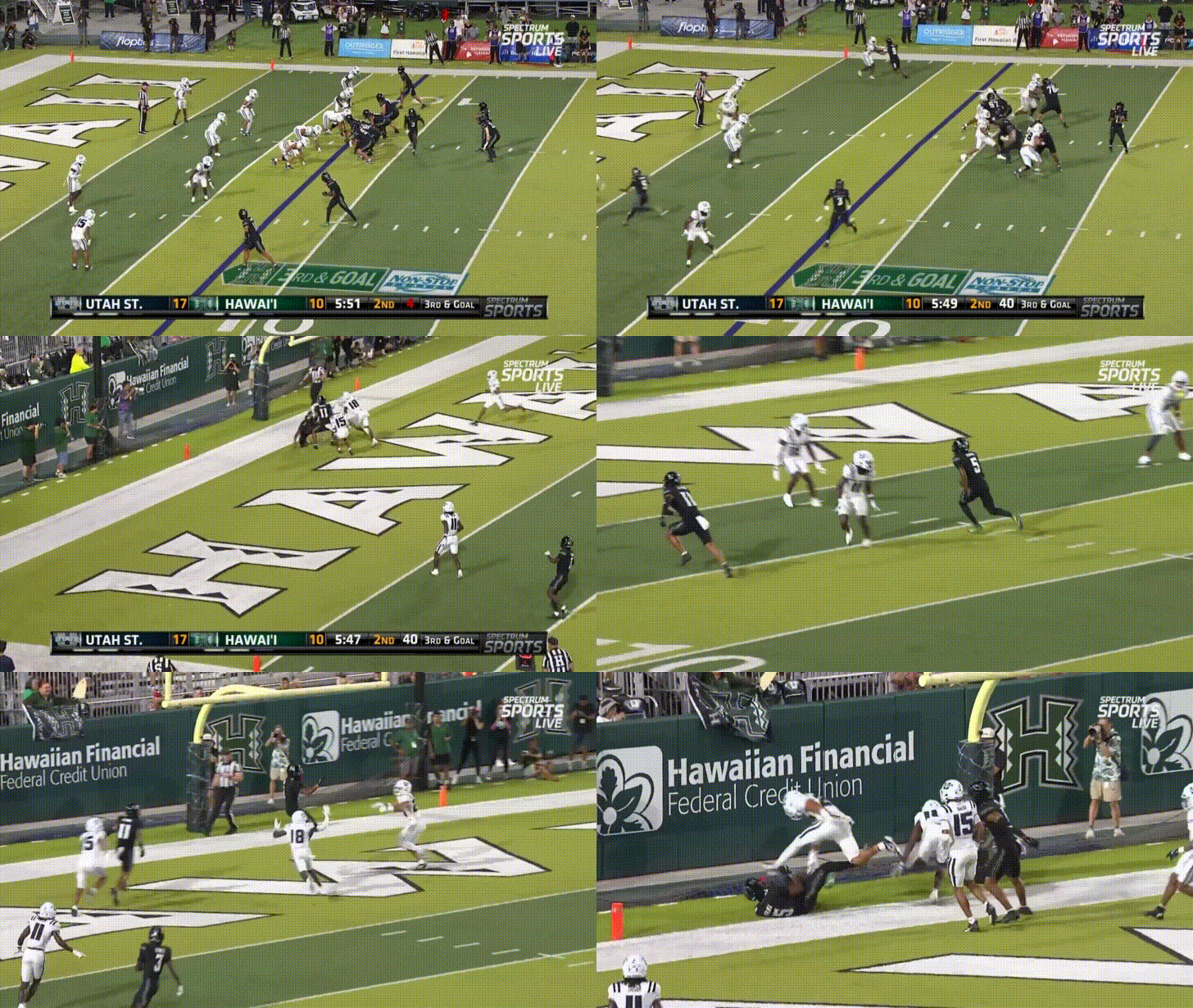
Alejado showed nice touch on shorter throws, and a lot of trust in his receiver:
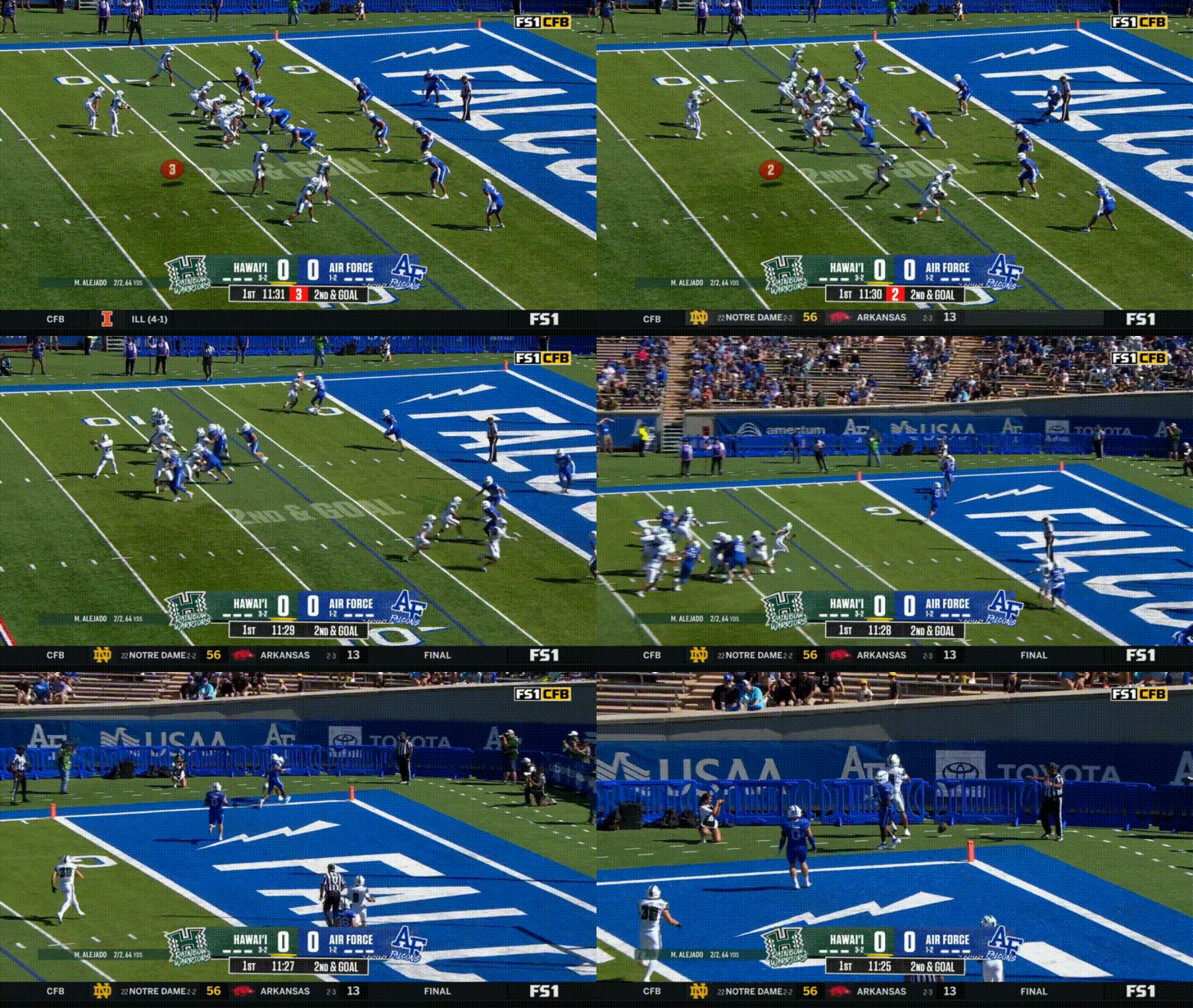
Here Alejado extends the play with his legs, and makes another nice throw on the run, rolling out to his left:
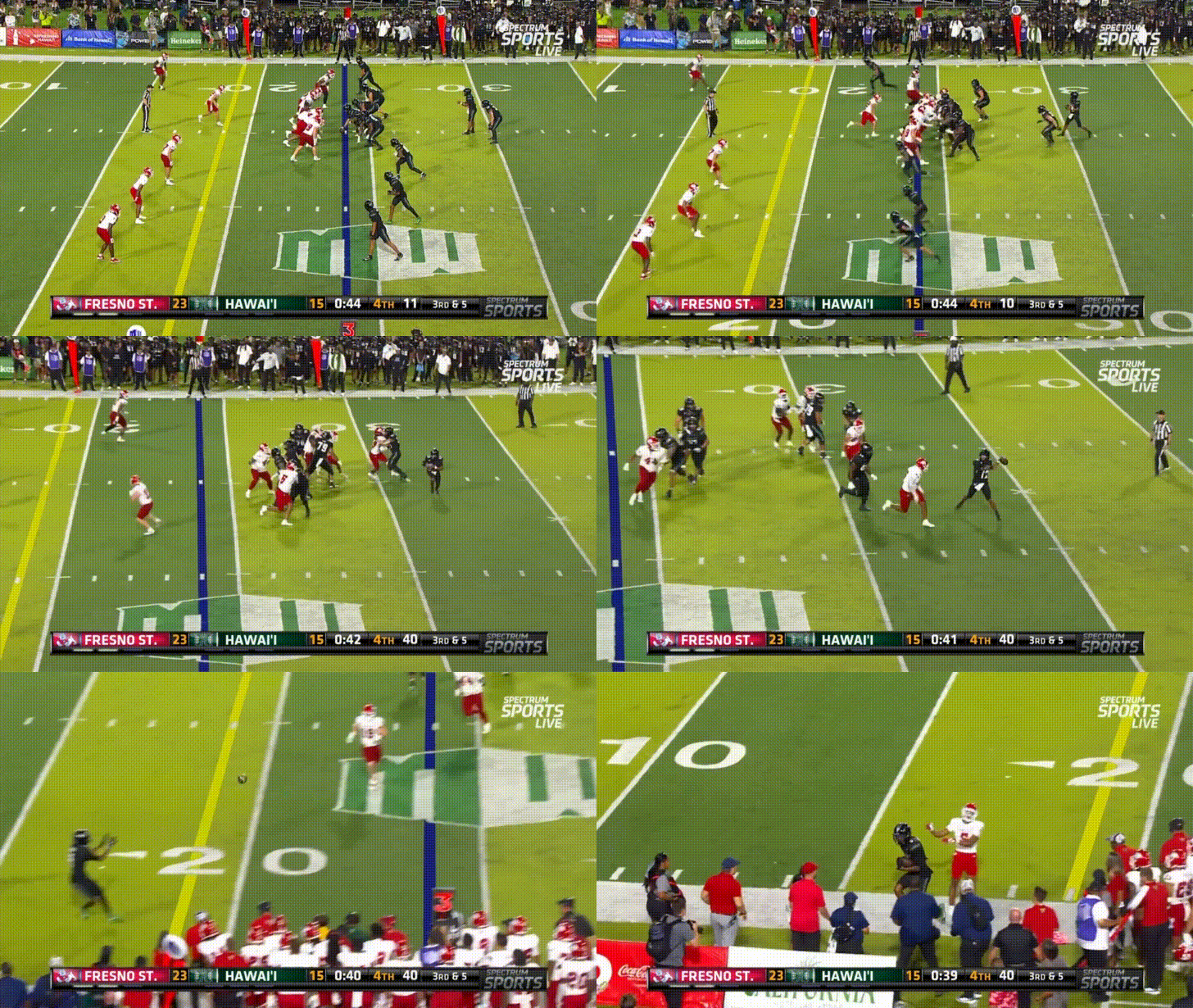
Nice touch on the throw, again rolling to his left:
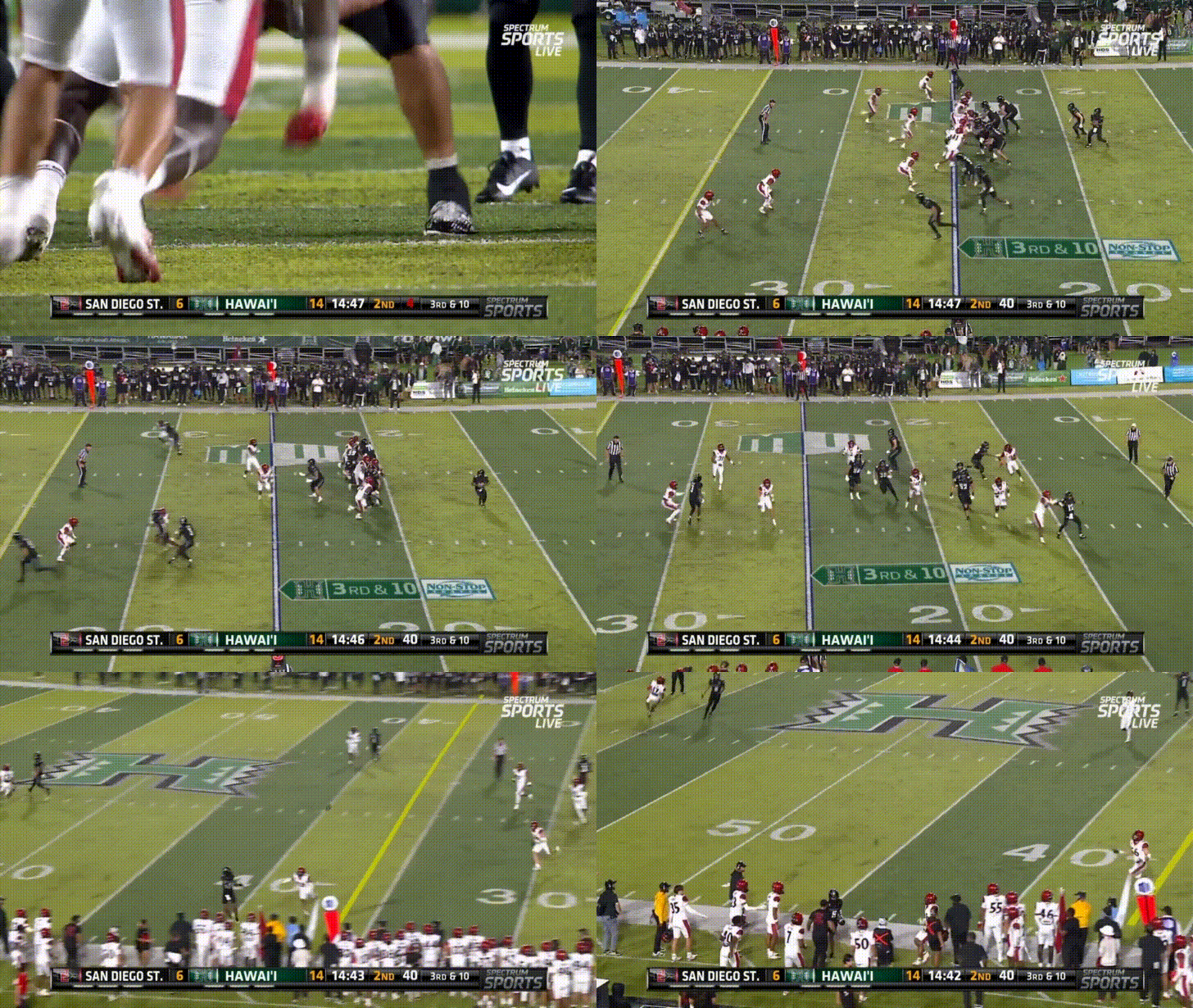
Even with his mobility limited by injury, he still showed nice touch on this short throw between the defenders:
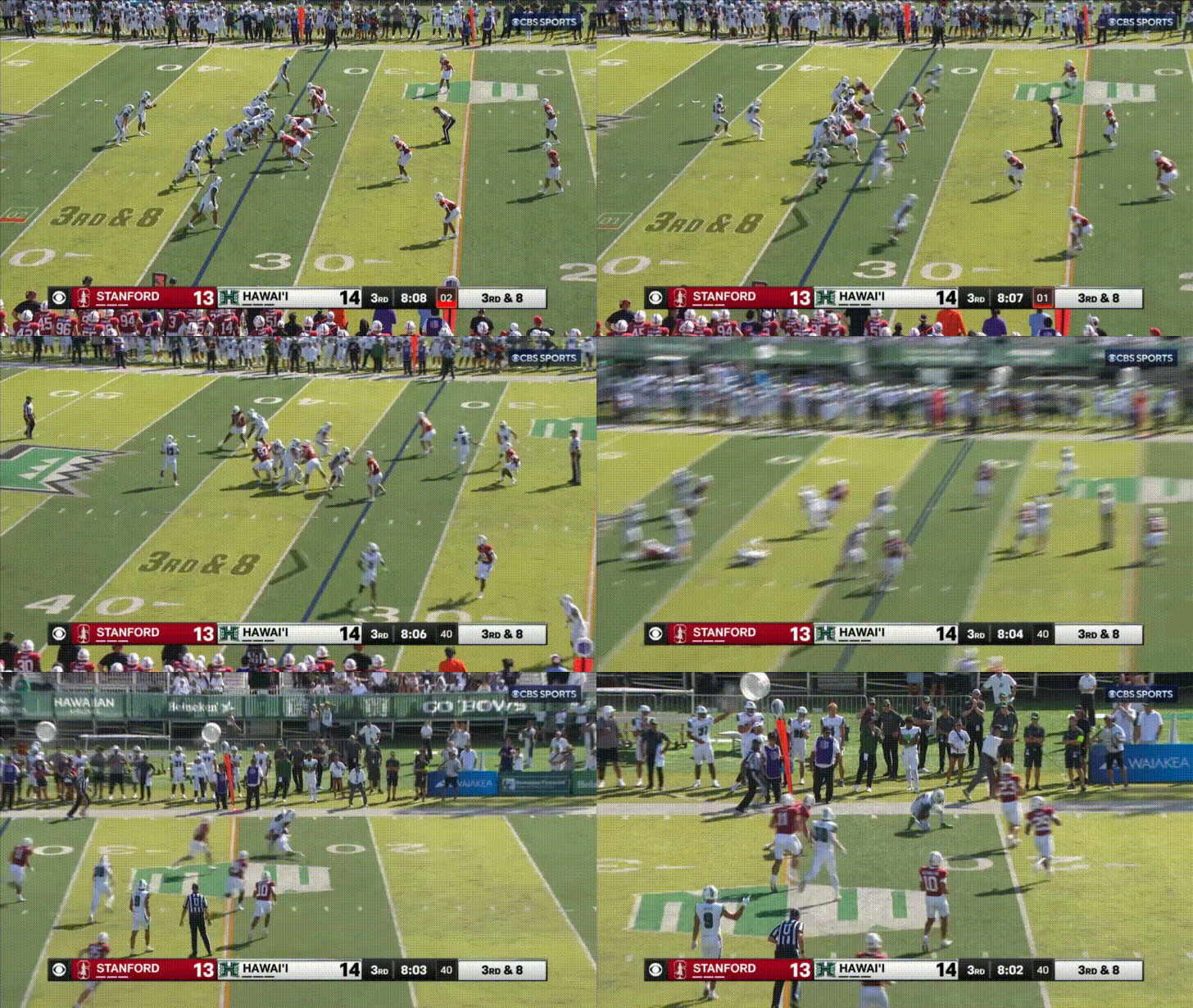
Alejado needs to be accounted for in the run game, because he absolutely can create his own yards on the ground:
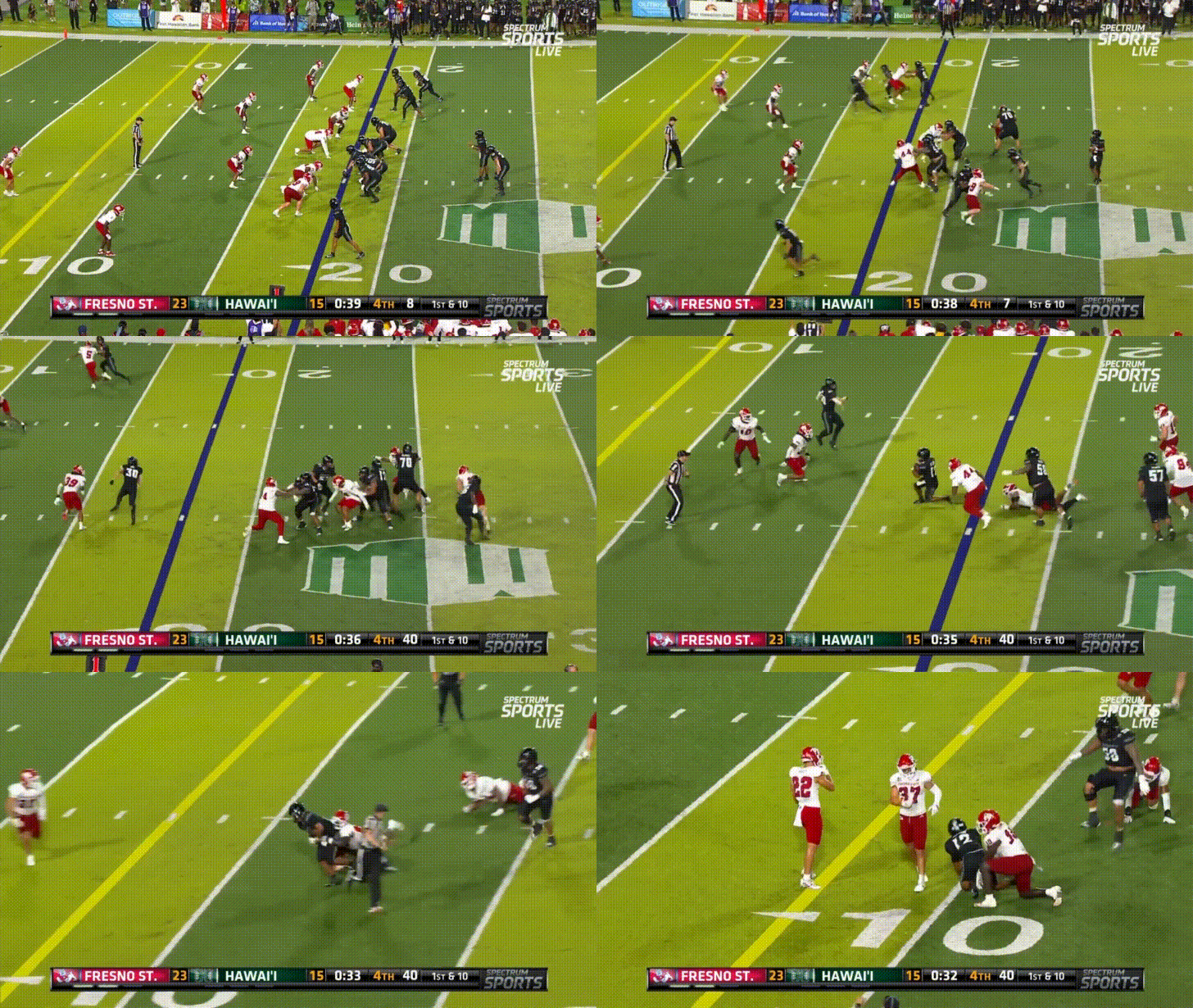
Here Alejado gets flushed to his right, but he’s still able to set his feet enough to fire off this throw on the scramble drill:
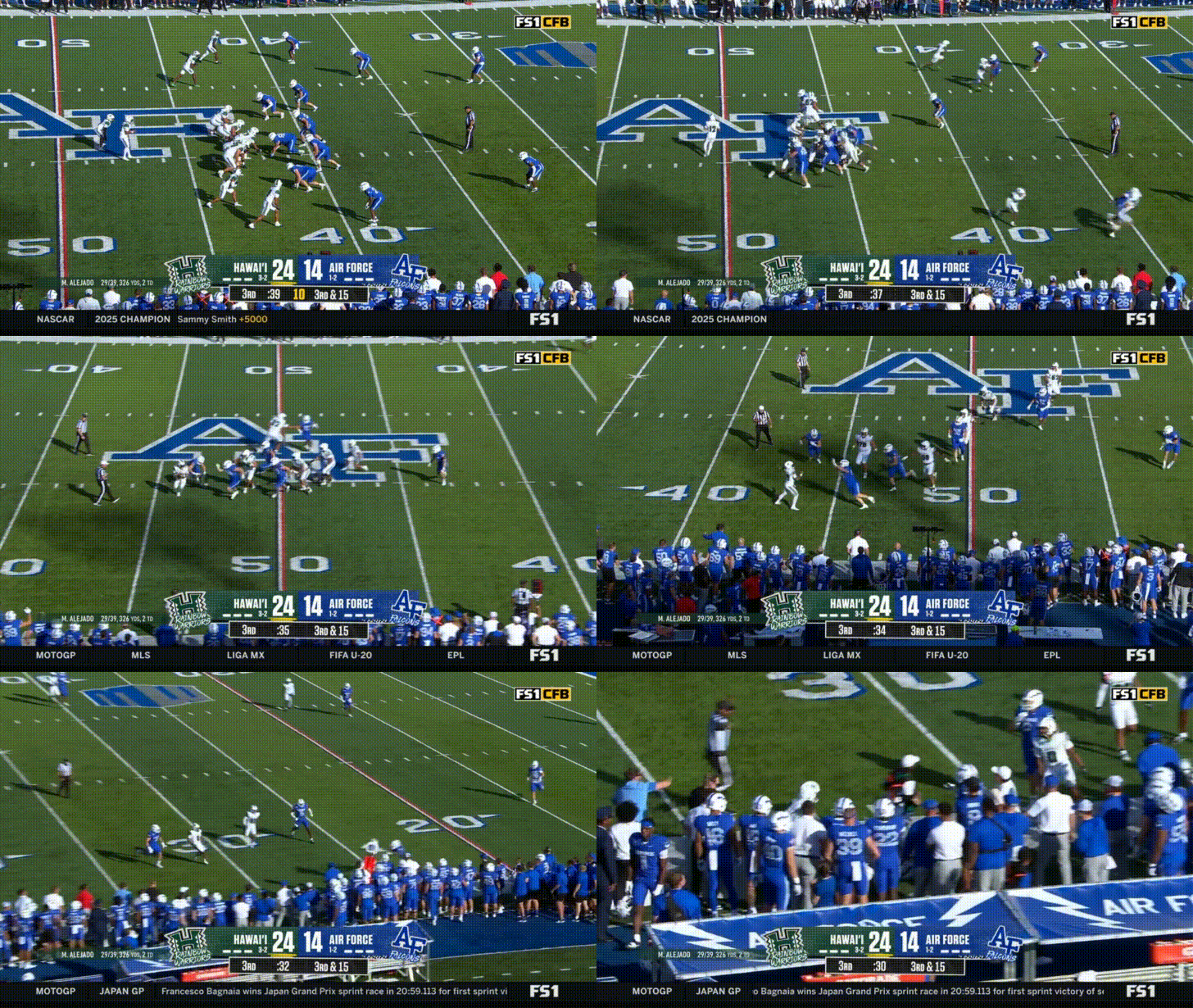
Alejado does a good job quickly identifying the coverage and realizing he will have room to run:
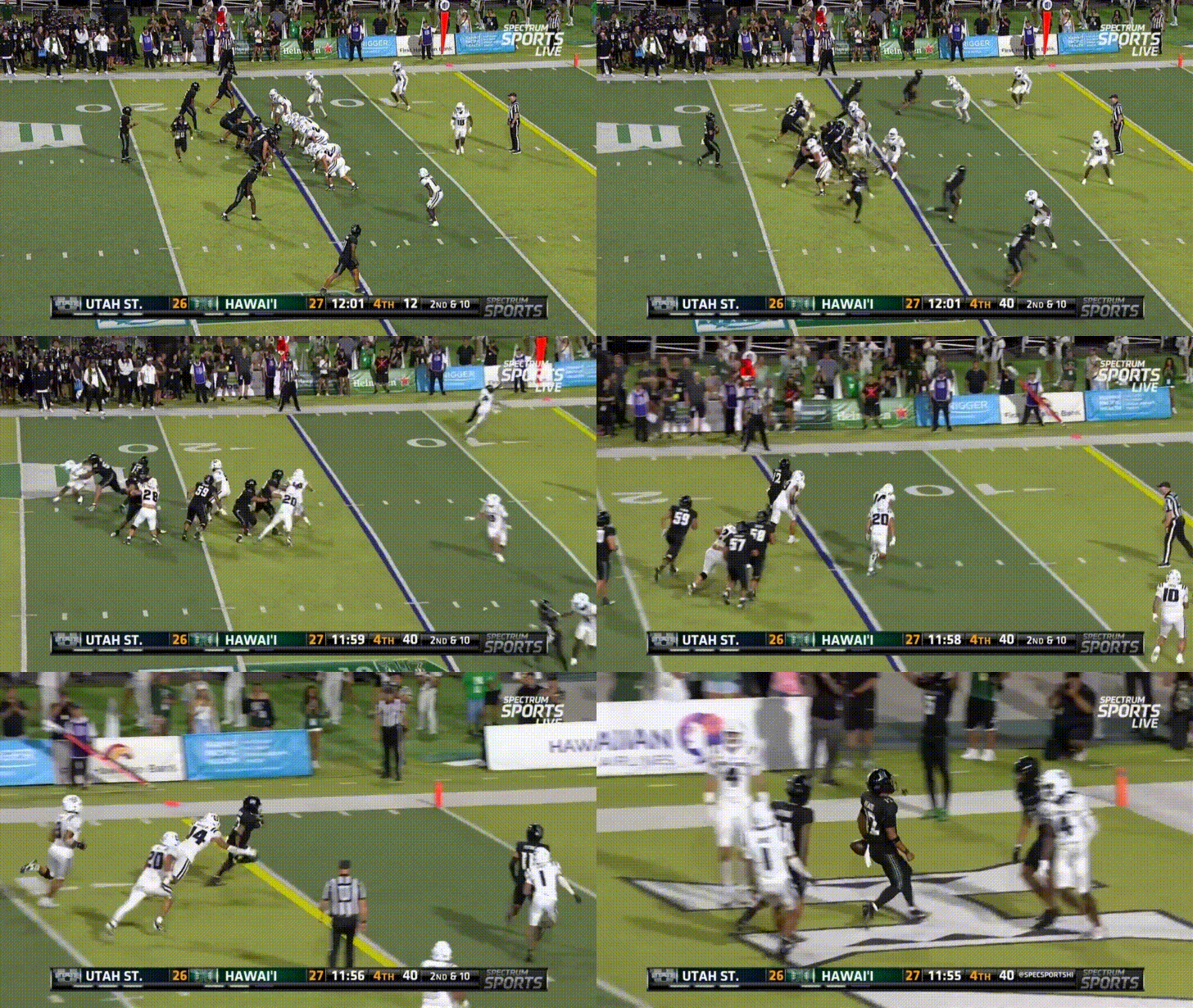
Just another nice run by Alejado:
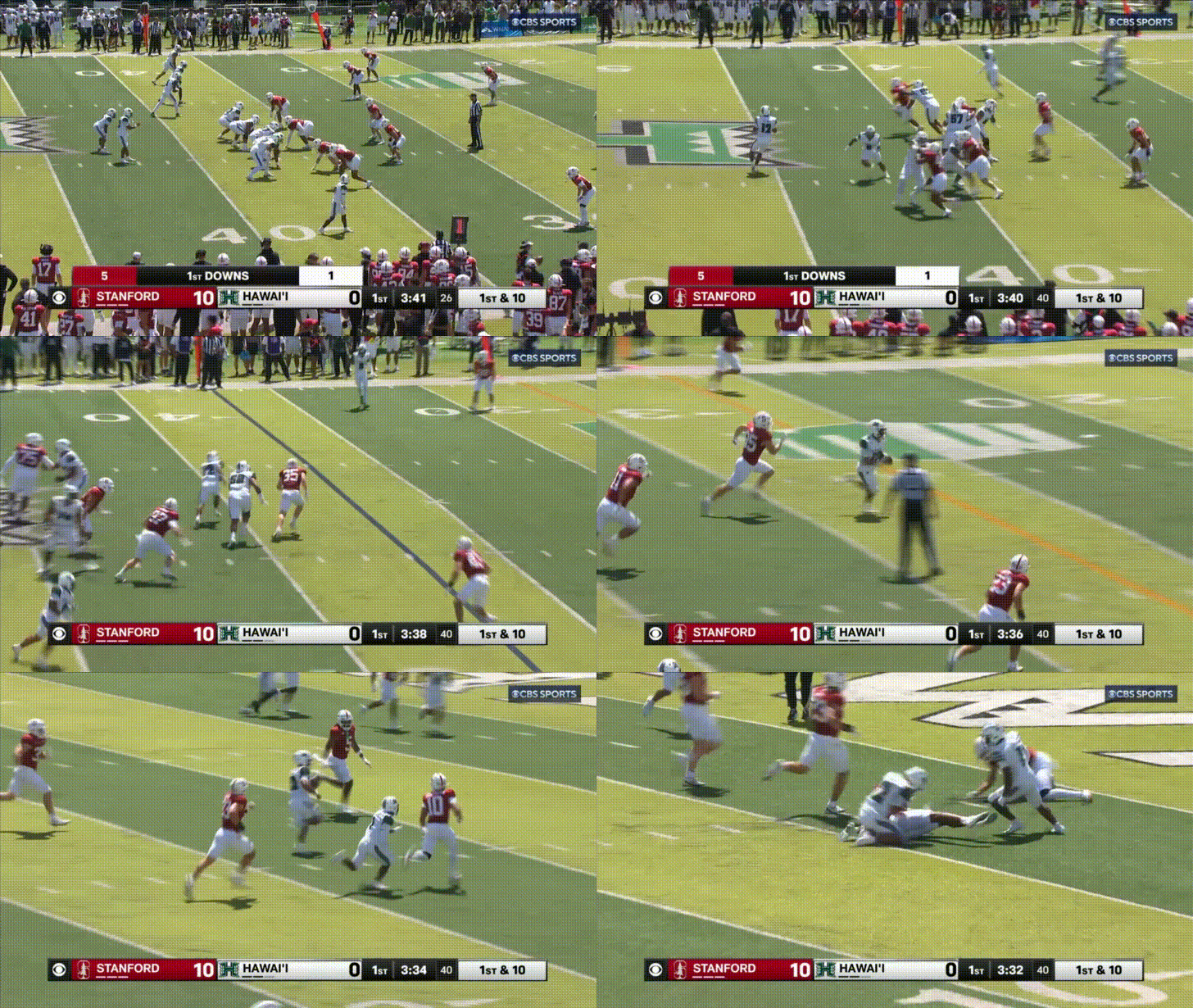
Although Alejado can run the ball himself, he’s often looking to buy time for his receivers to come open. Here he does a good job of extending the play and avoiding a sack:
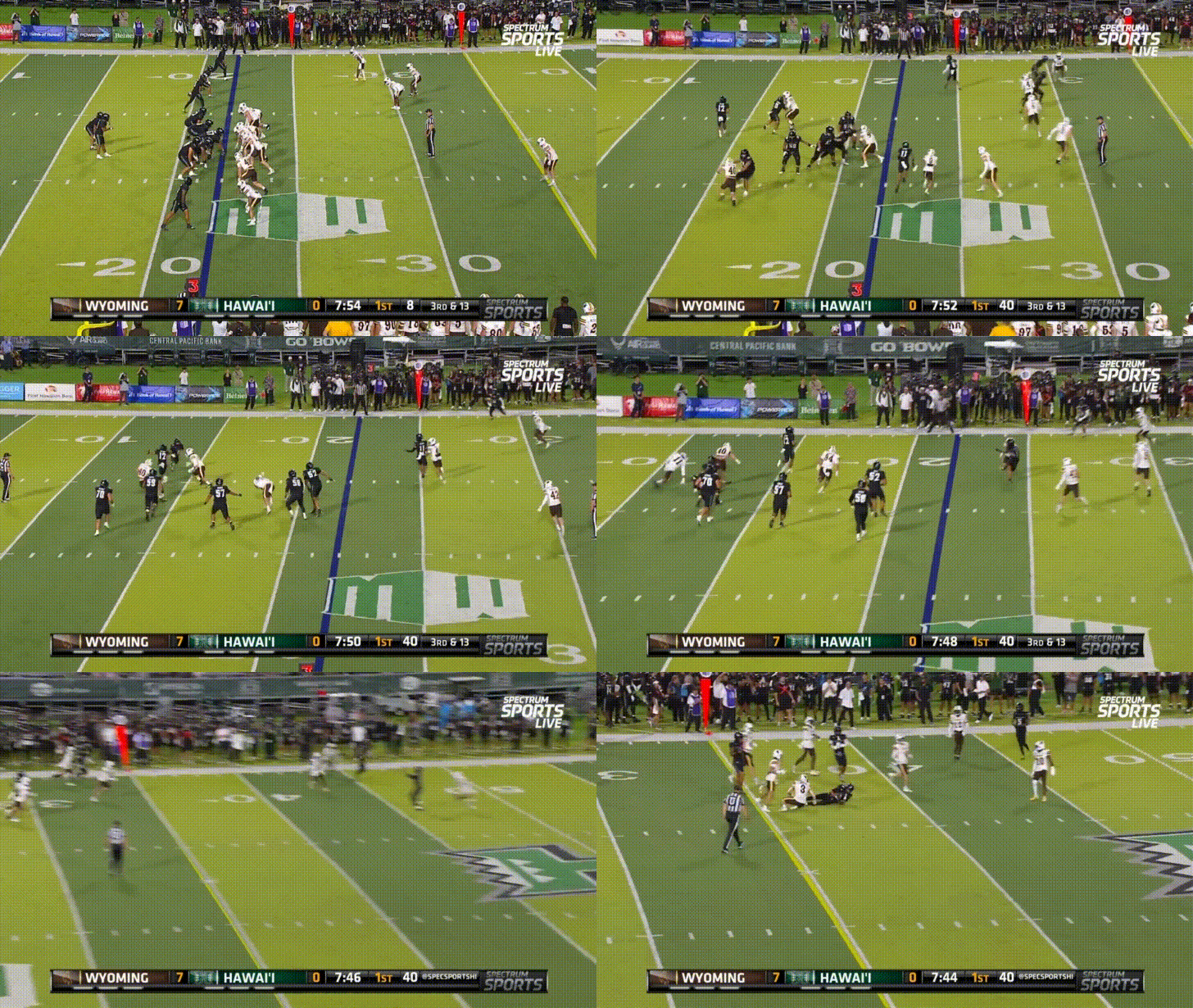
As a redshirt freshman, Alejado did make some freshman mistakes. Most often, it appeared he predetermined where he was going with the ball:
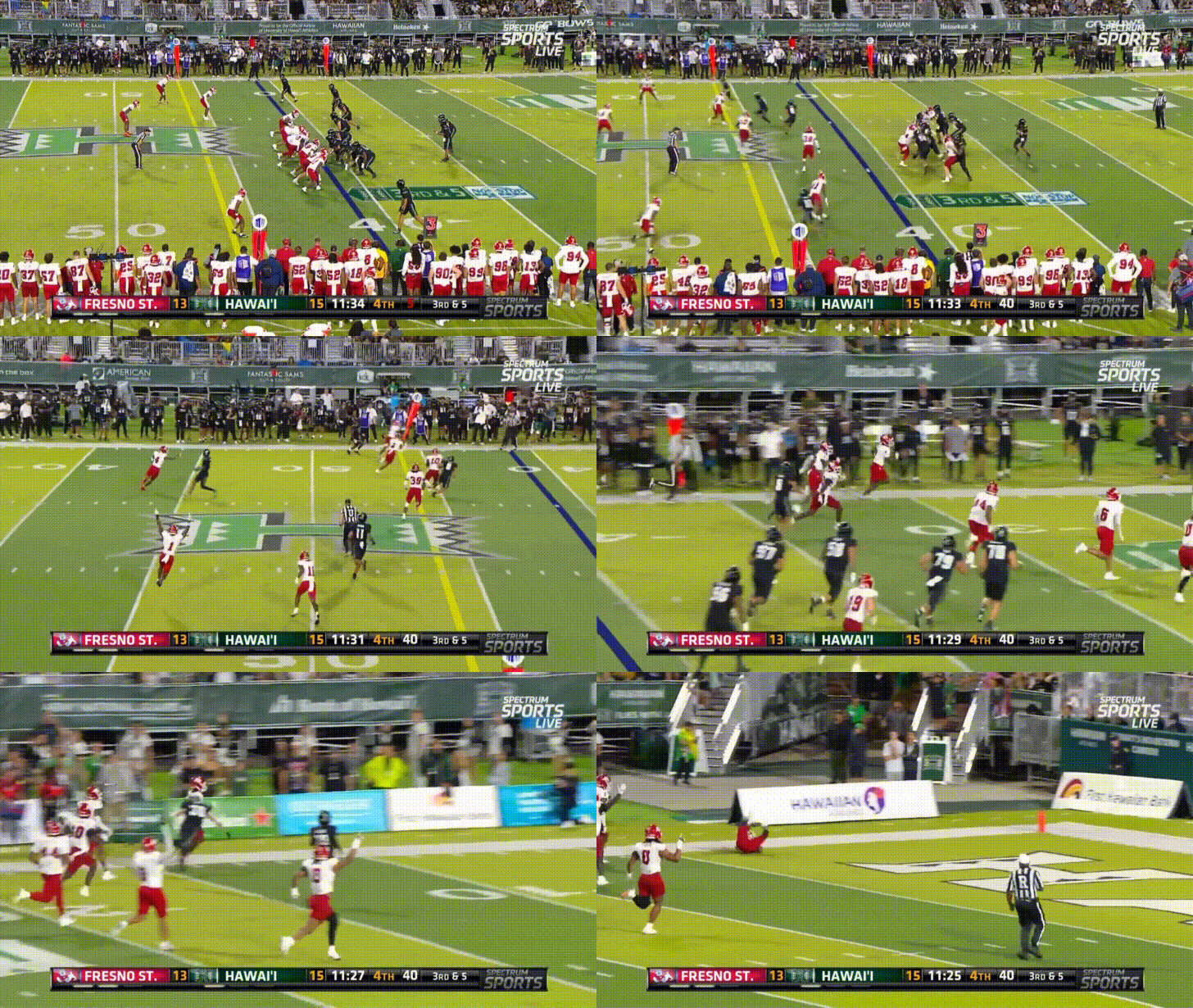
This one also looks predetermined, and just a bad read. Watch the switch route at the bottom of the screen:
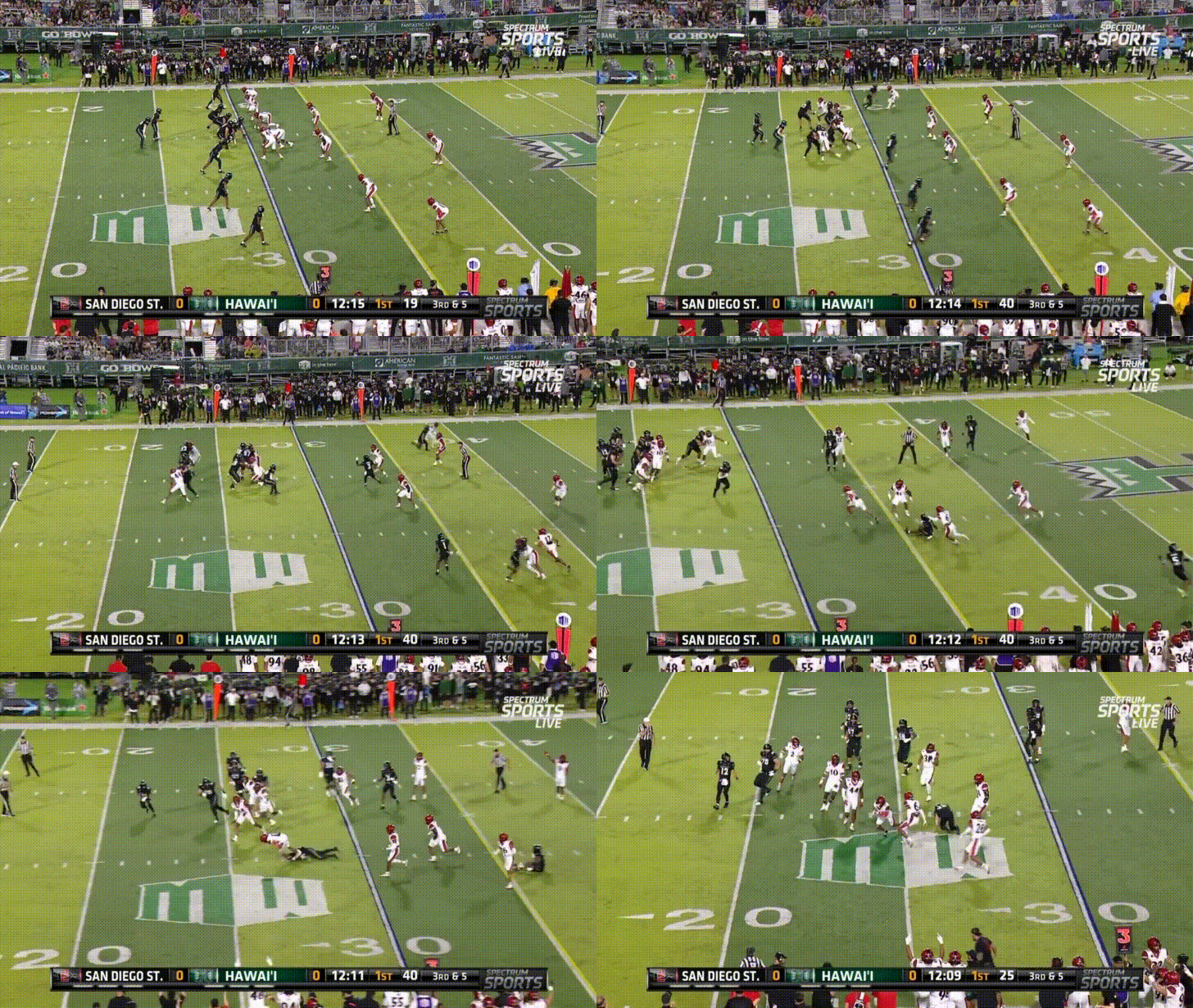
Here, Alejado forces a throw into coverage he shouldn’t:
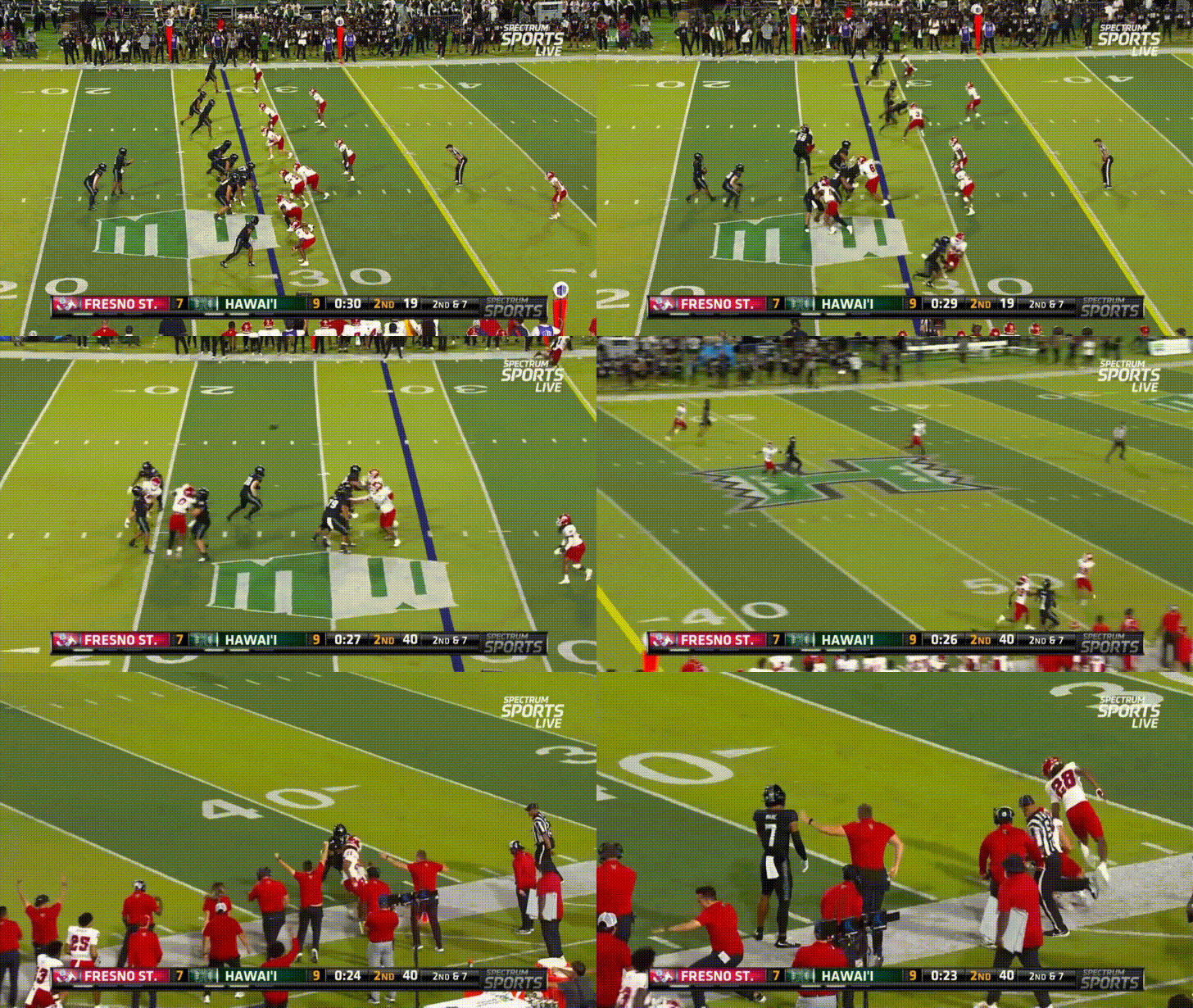
And although Alejado can typically escape pressure, he may have been limited in his first game back from injury, and pressure here forces Alejado into another bad read:
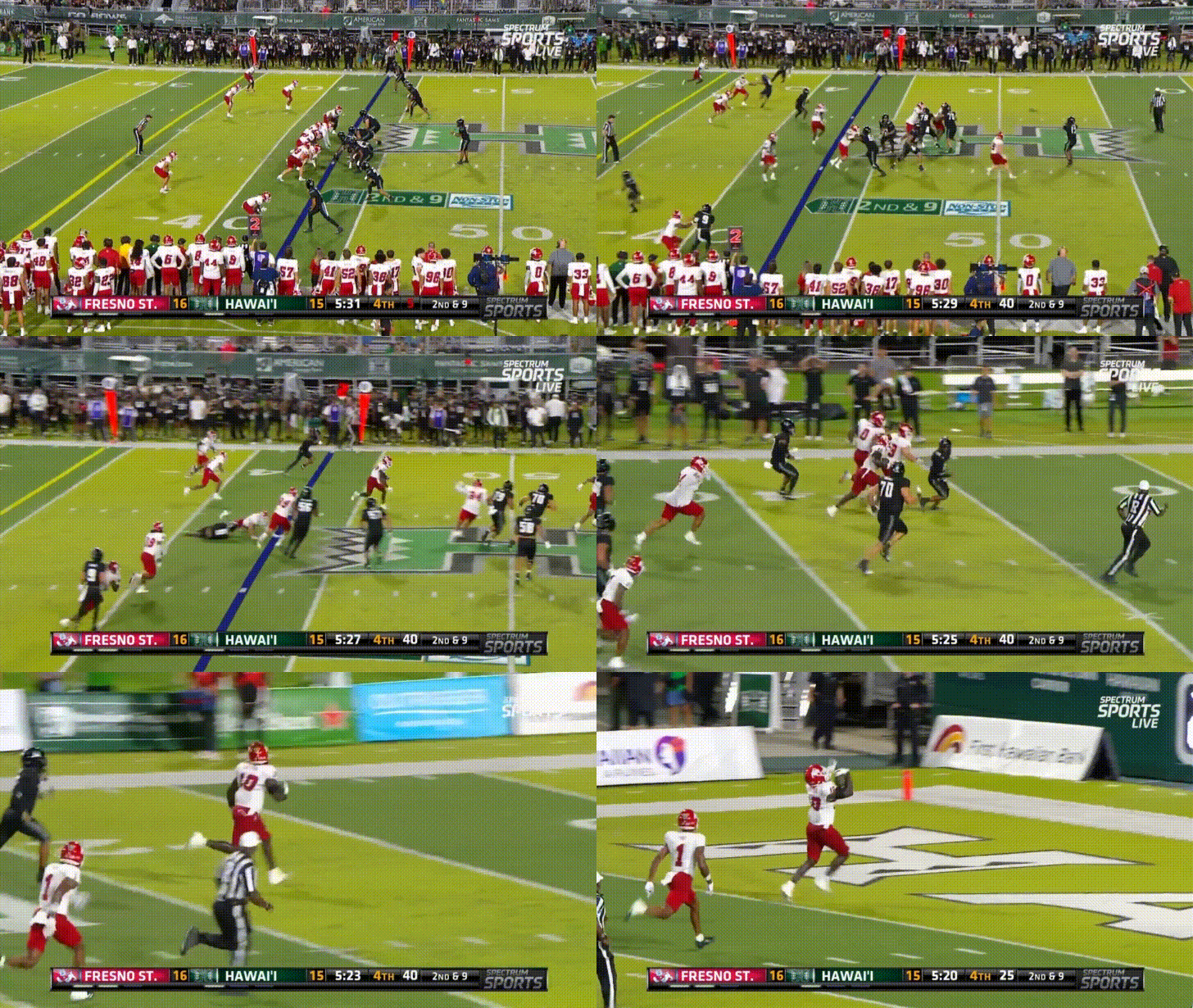
Typically Alejado has the opposite problem, where he’ll hang onto the ball too long, confident in his ability to buy time with his legs:
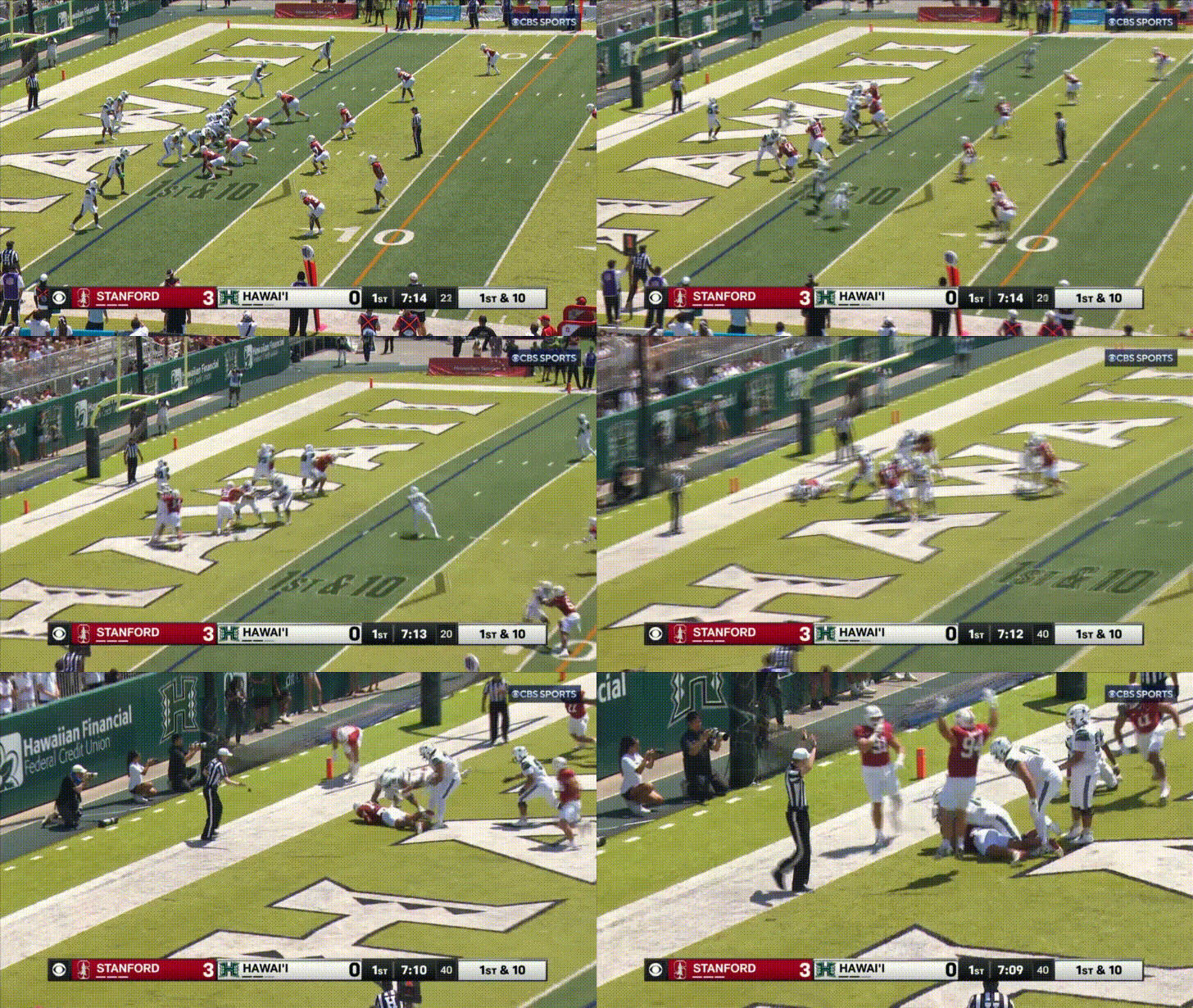
However, not all of Alejado’s throws on the run were perfect:
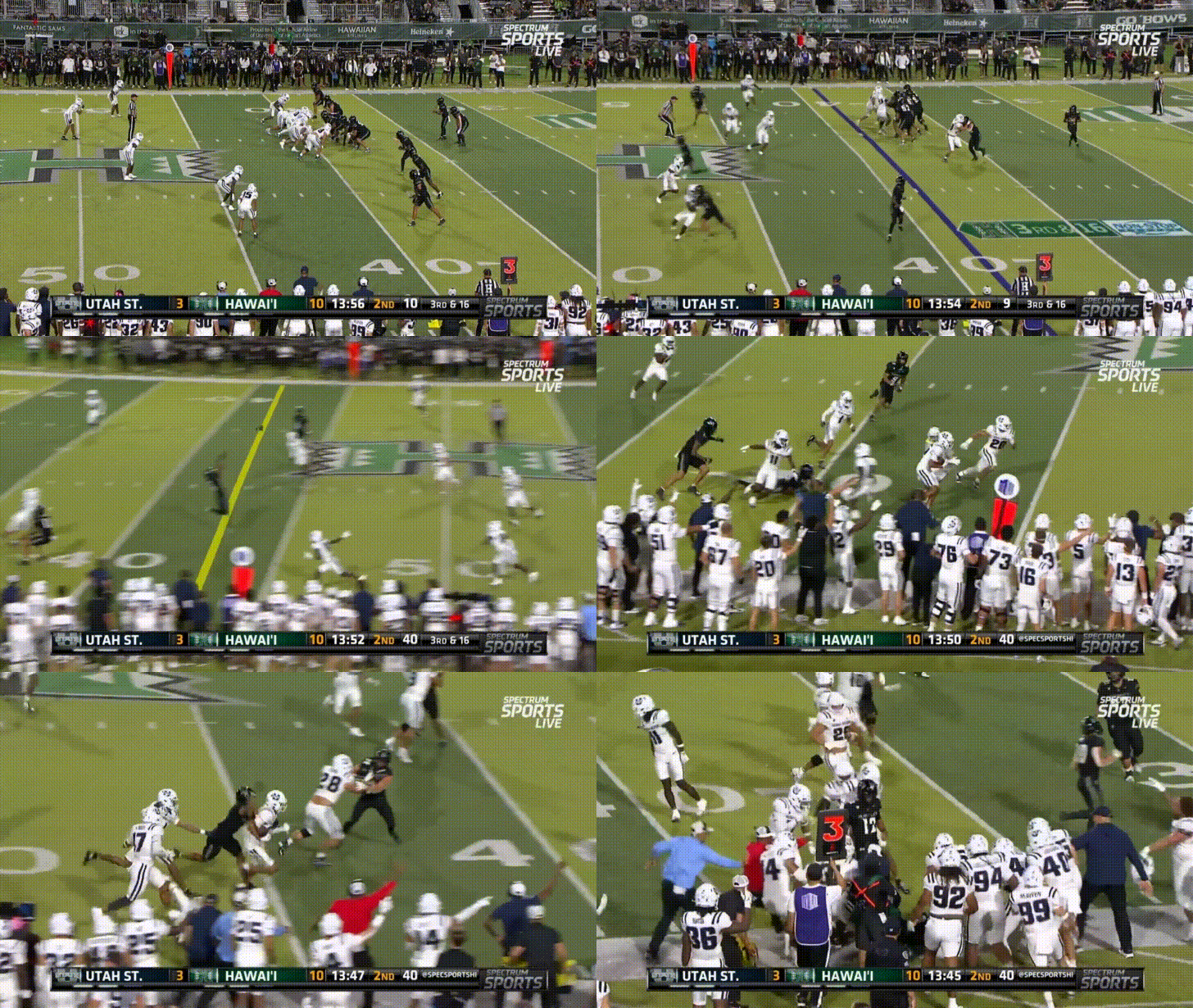
Hawaii does not run a ton of RPO plays, and it was apparent:
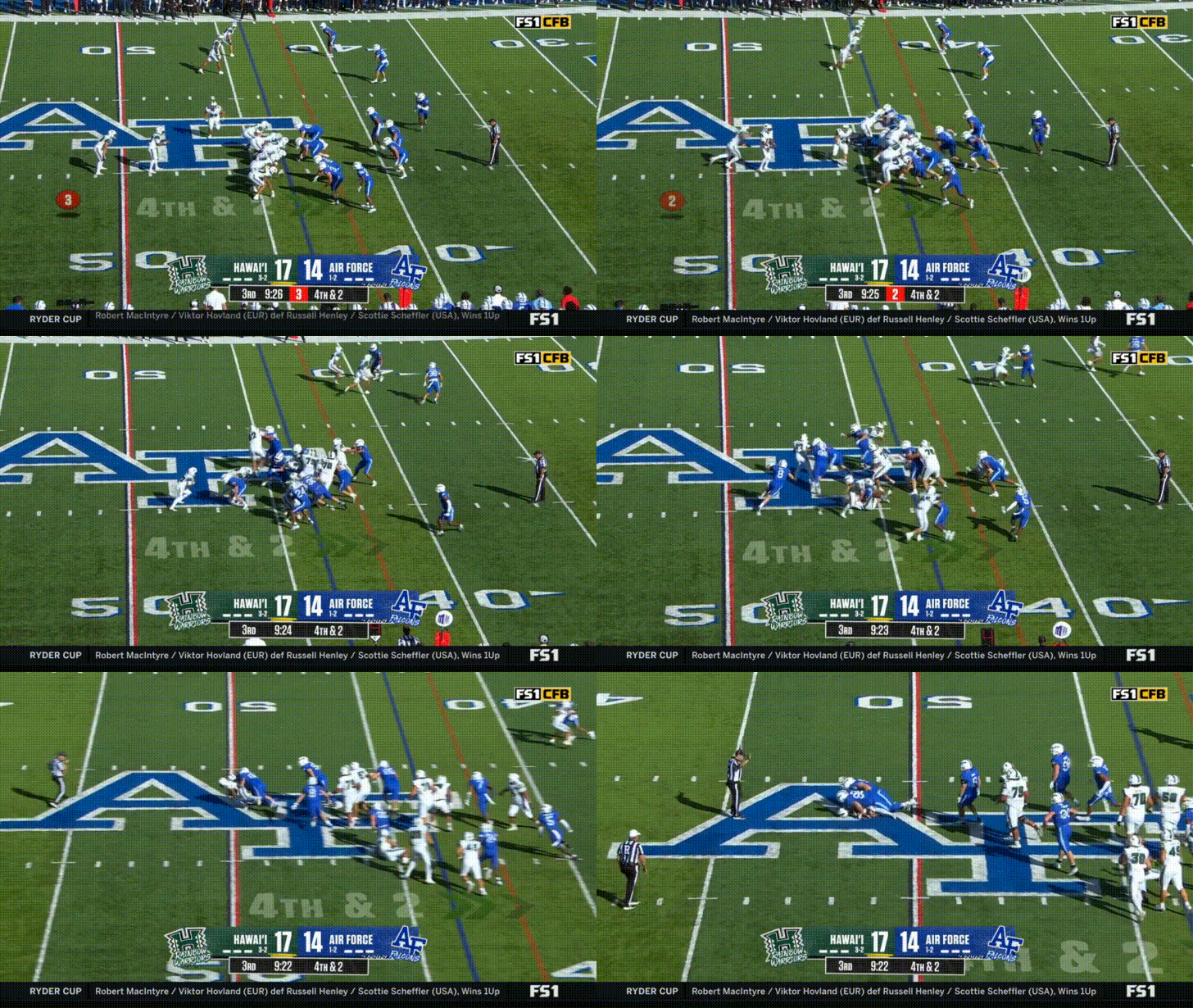
It’s also worth noting that Hawaii can also run special packages for the backup, Washington/UCLA transfer QB Demaricus Davis (pronounced “de-mar-shoe-us”, often called MarMar by his teammates). Davis is adept at designed runs, and more likely to run the RPO:
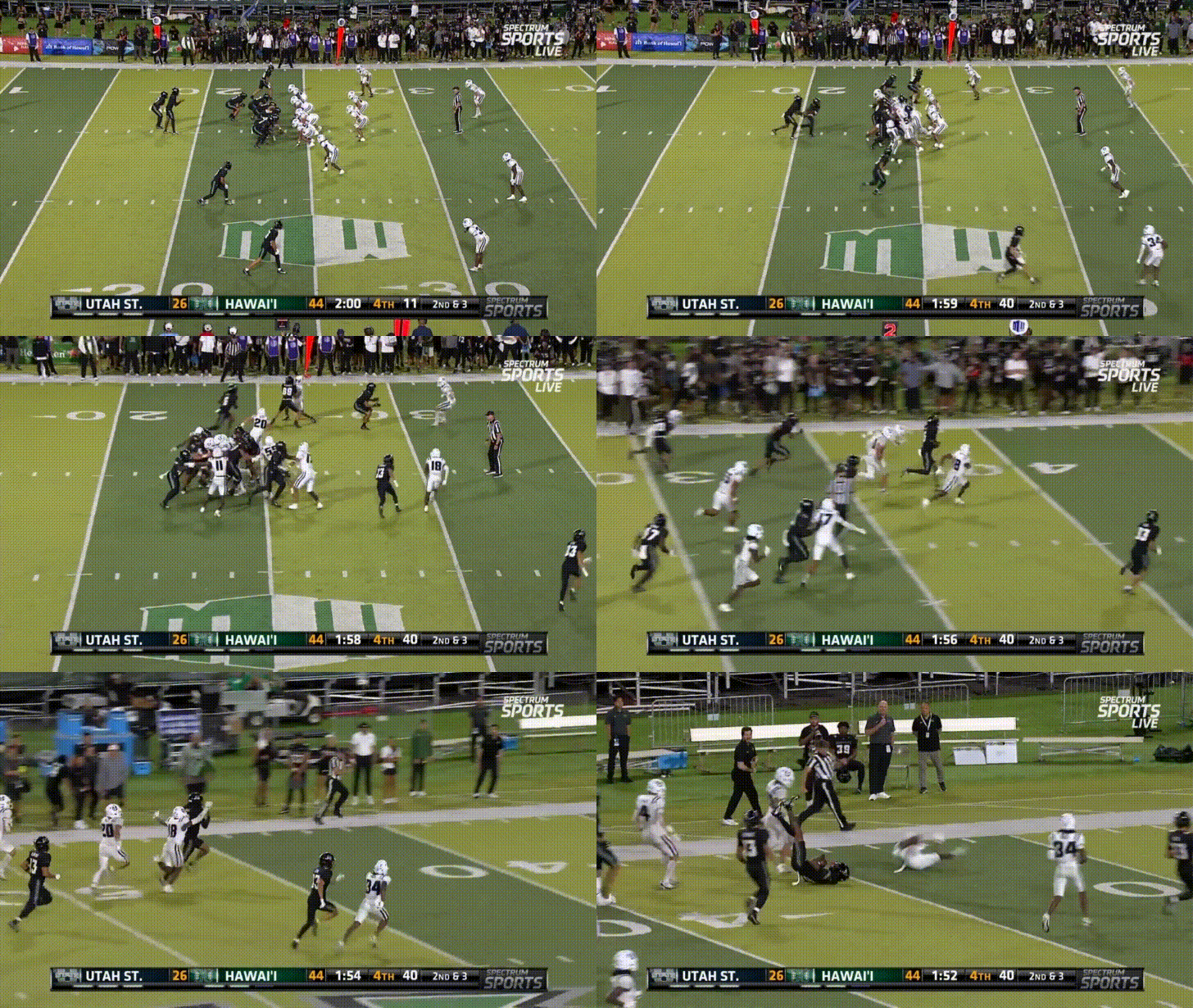
The success of the offense will rest on the performance of Micah Alejado.
Running back
Although Hawaii may be a Run-and-Shoot offense, there wasn’t a whole lot of running this season. Hawaii didn’t run a ton of traditional run plays, and often found the most success using their running backs as extensions of the passing game. The Hawaii run game is led by the duo of Cam Barfield and Landon Sims. Barfield is listed at 5’7” 185 lbs., while Sims measures in at 6’2” 220 lbs., to give you a brief indication of their respective yin and yang running styles.
Barfield is an adept receiver, shifty and fast, although not necessarily a homerun threat:
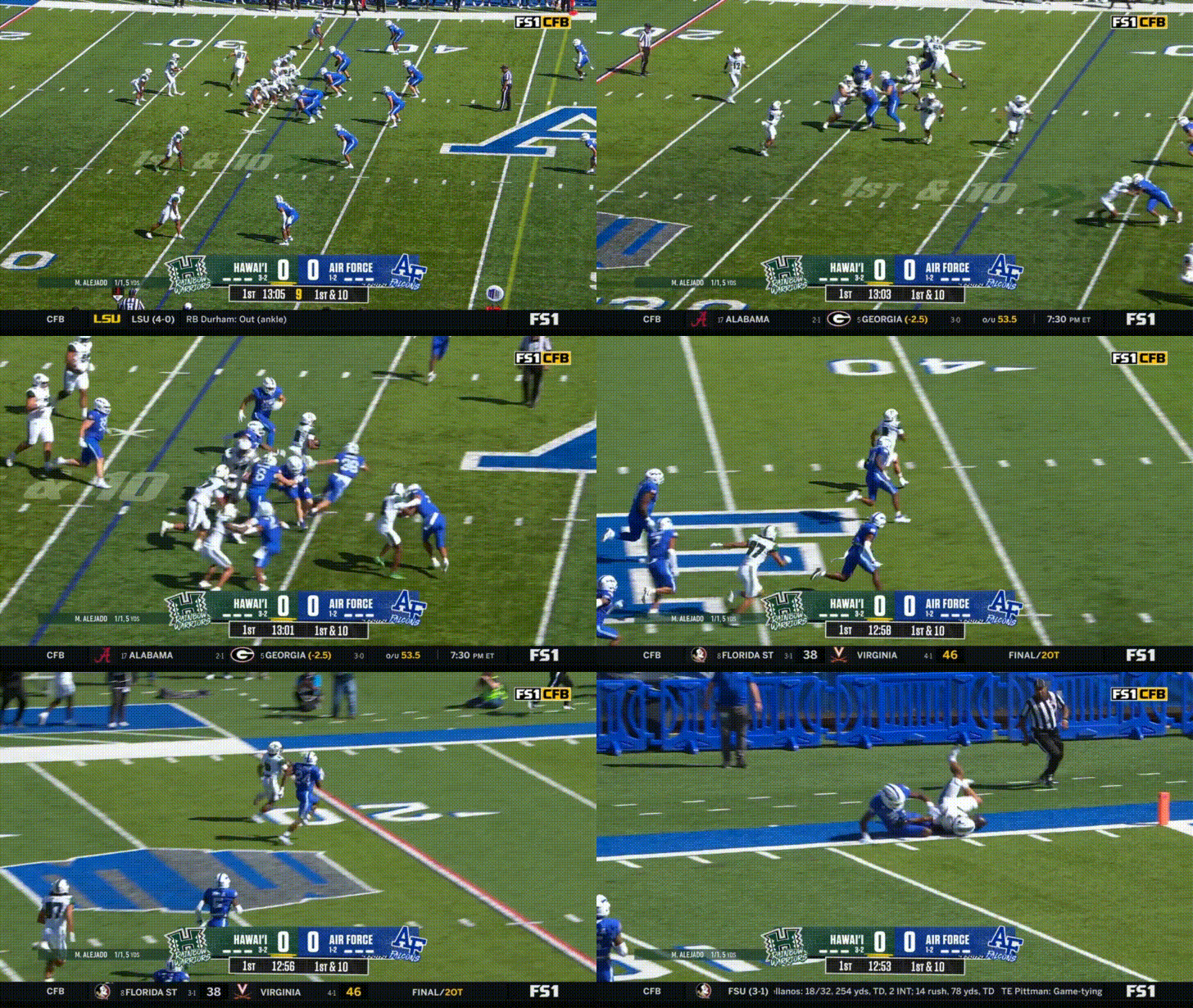
I’m starting with the pass plays to give you a better idea of how Hawaii utilizes Barfield. Here he does a nice job of finding his lane:
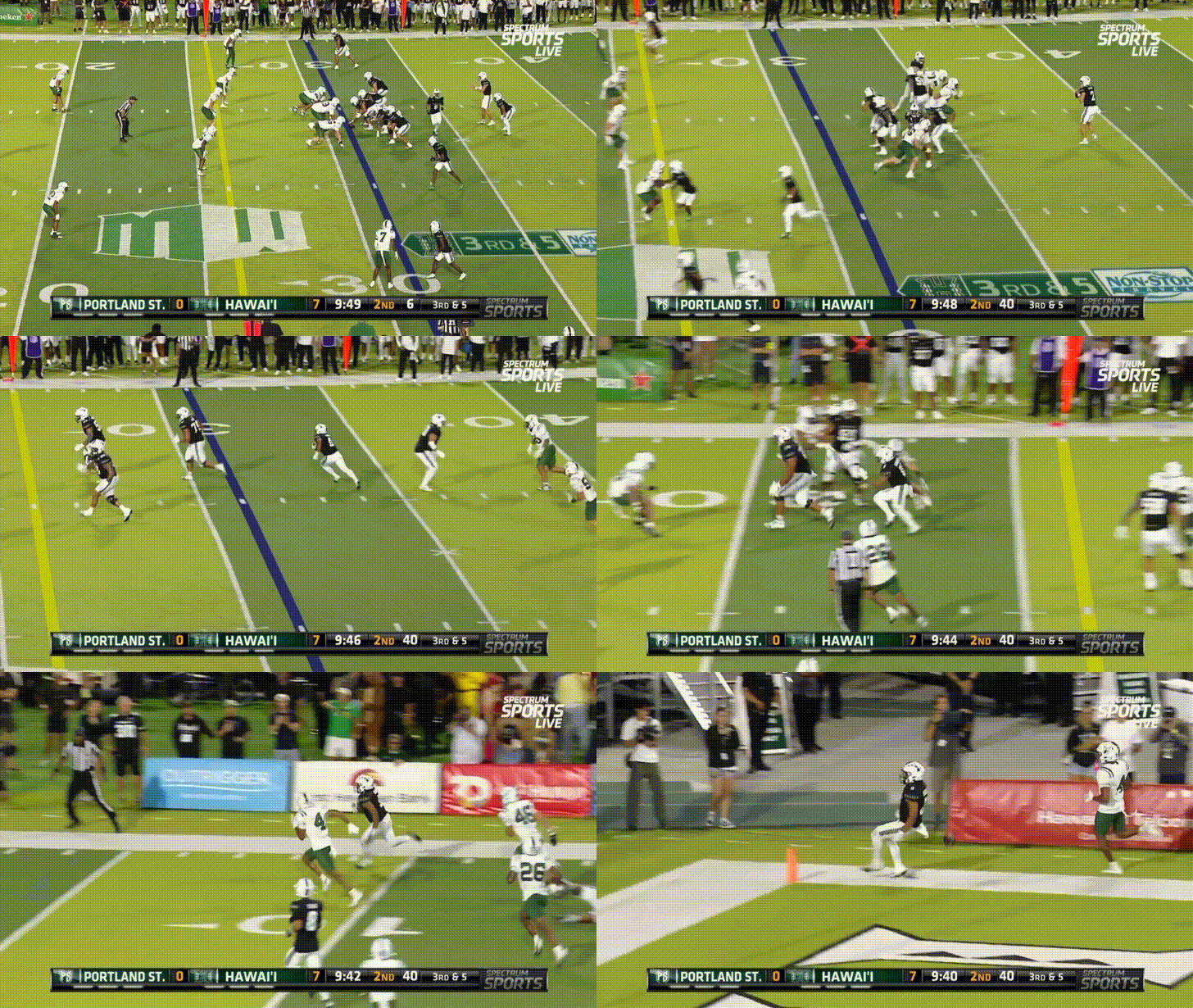
And here Barfield does beat the defense with his speed:
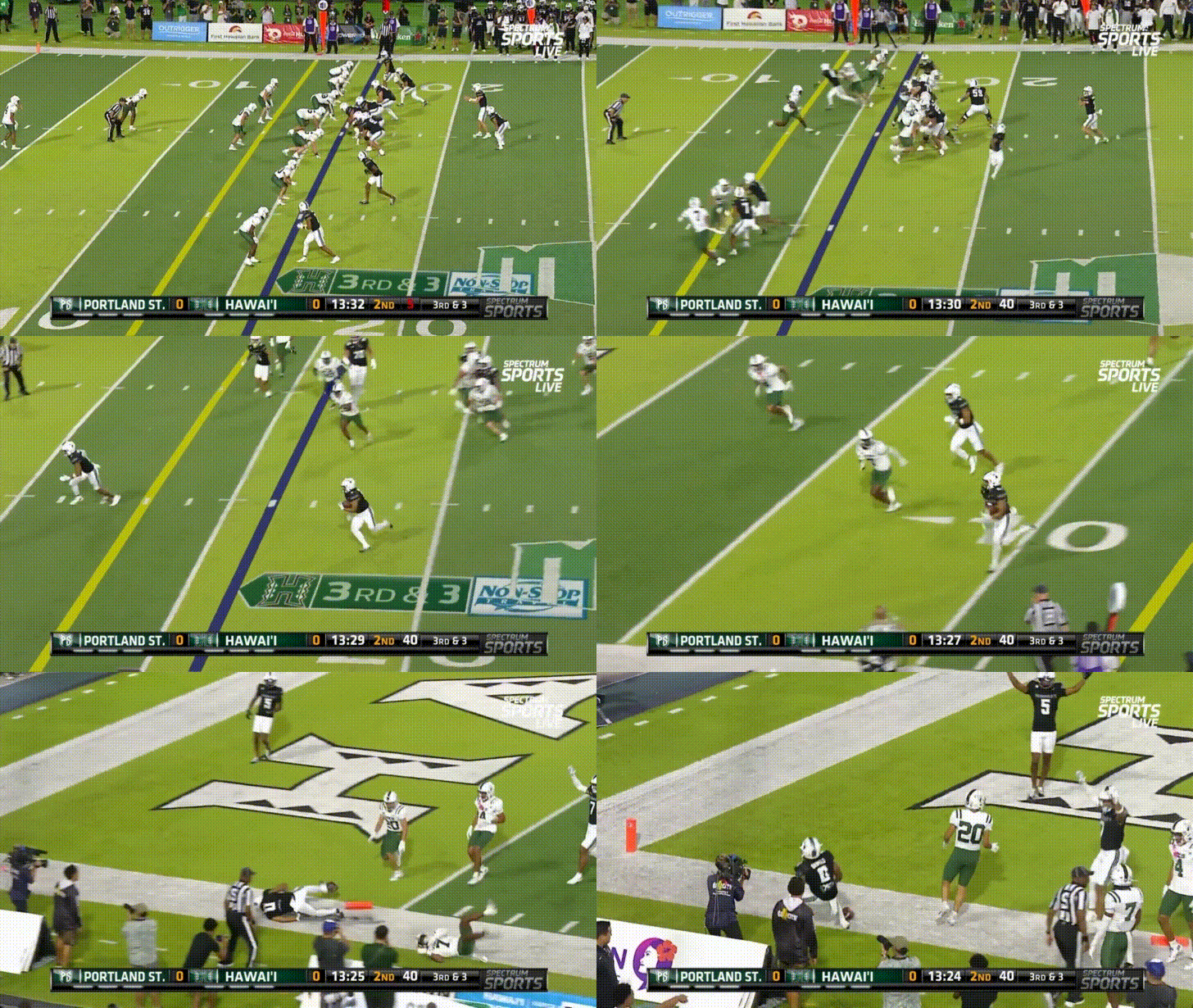
Hawaii’s offensive line is generally pretty decent and run blocking, and Barfield shows nice patience in letting blocks develop:
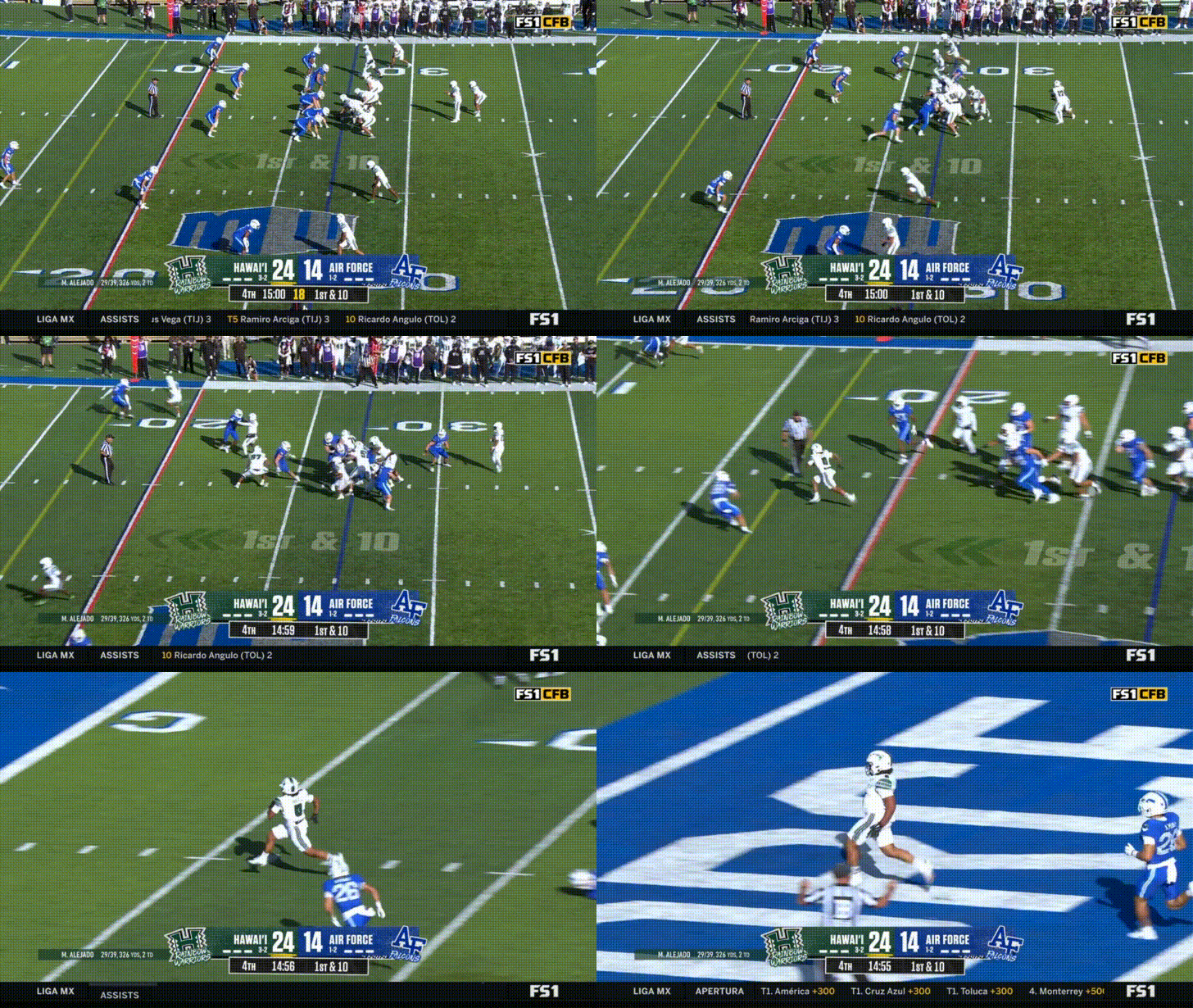
Here Barfield shows his speed again, and a nice move to make a defender miss:
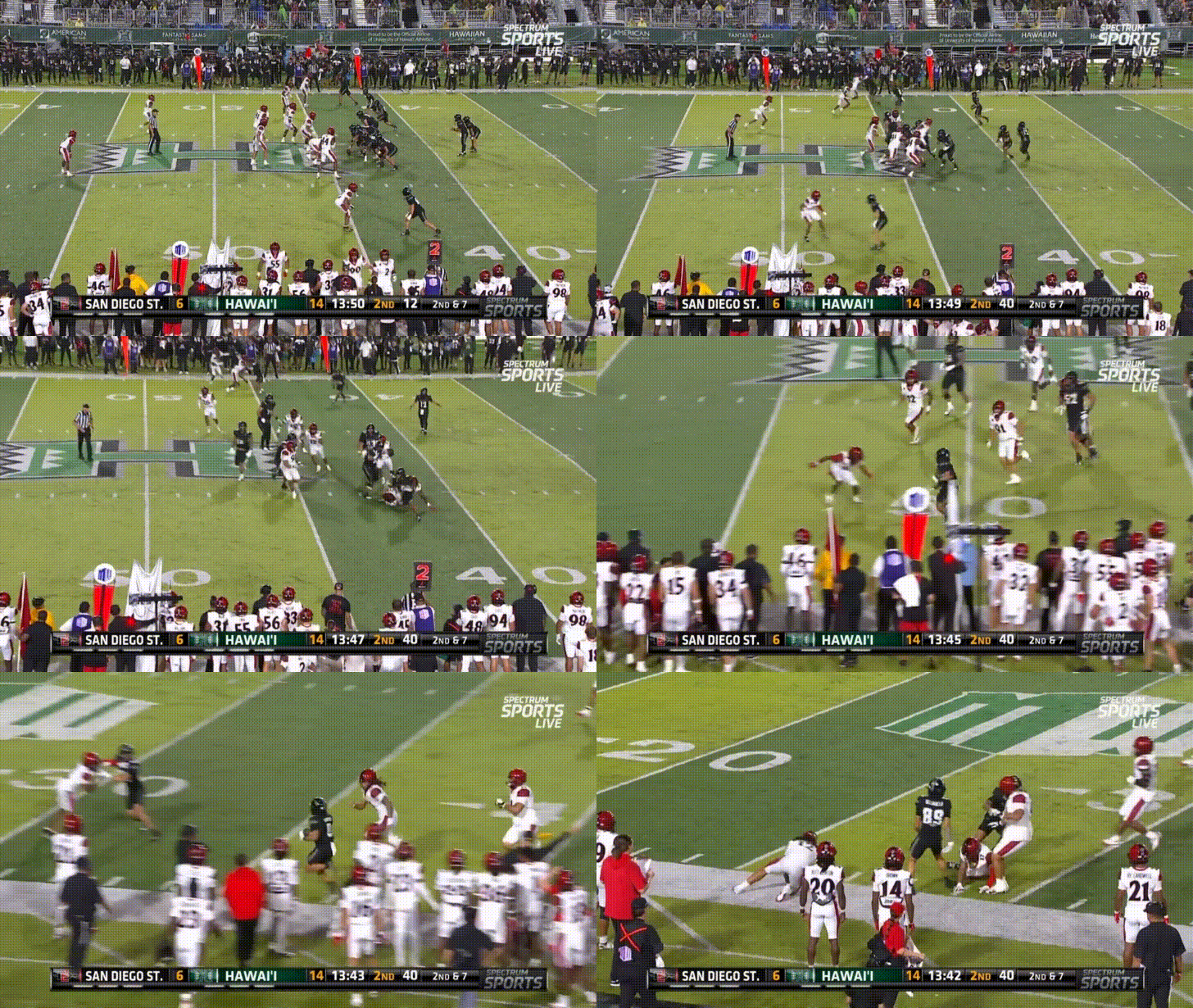
And here Barfield shows off his elusiveness:
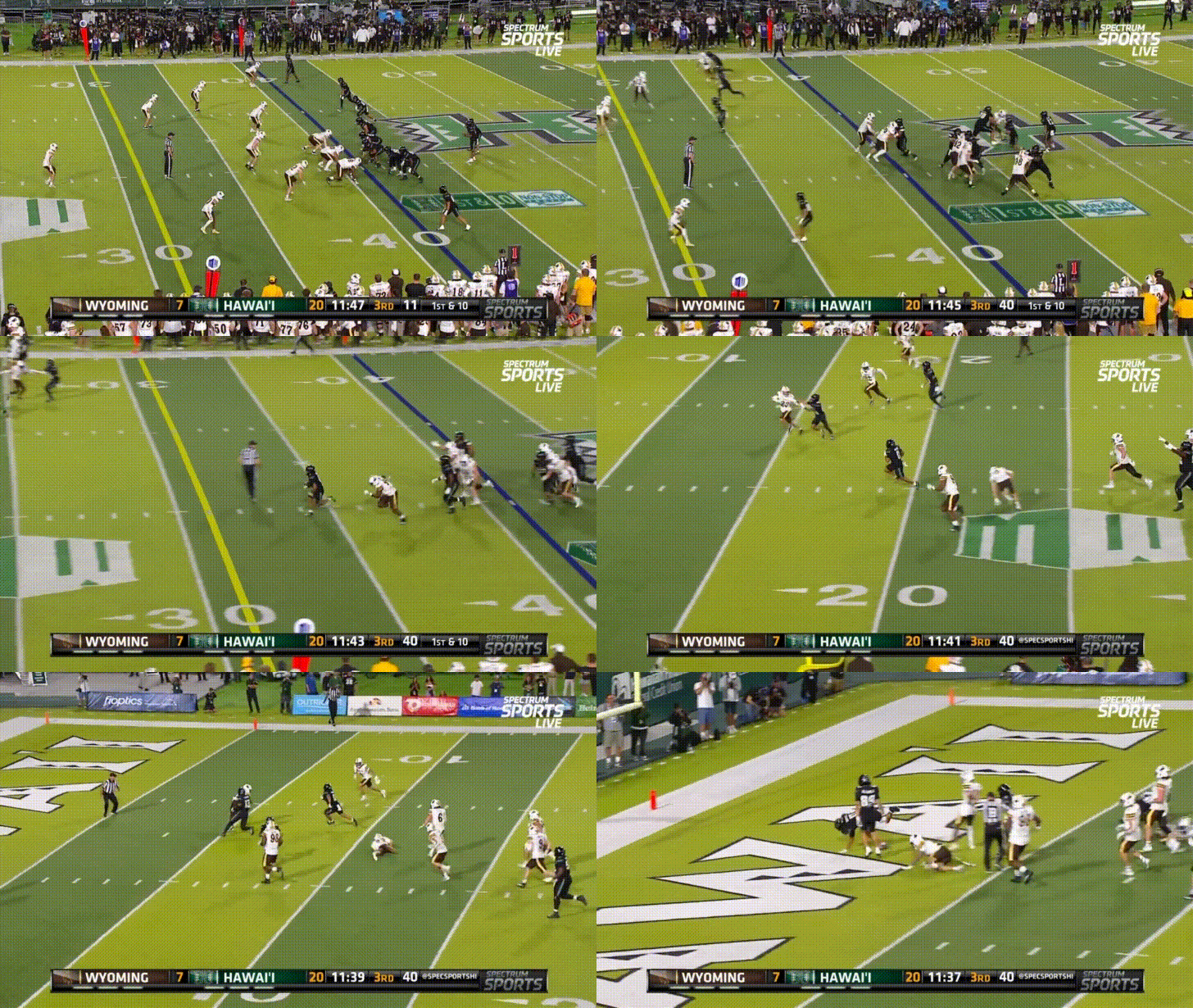
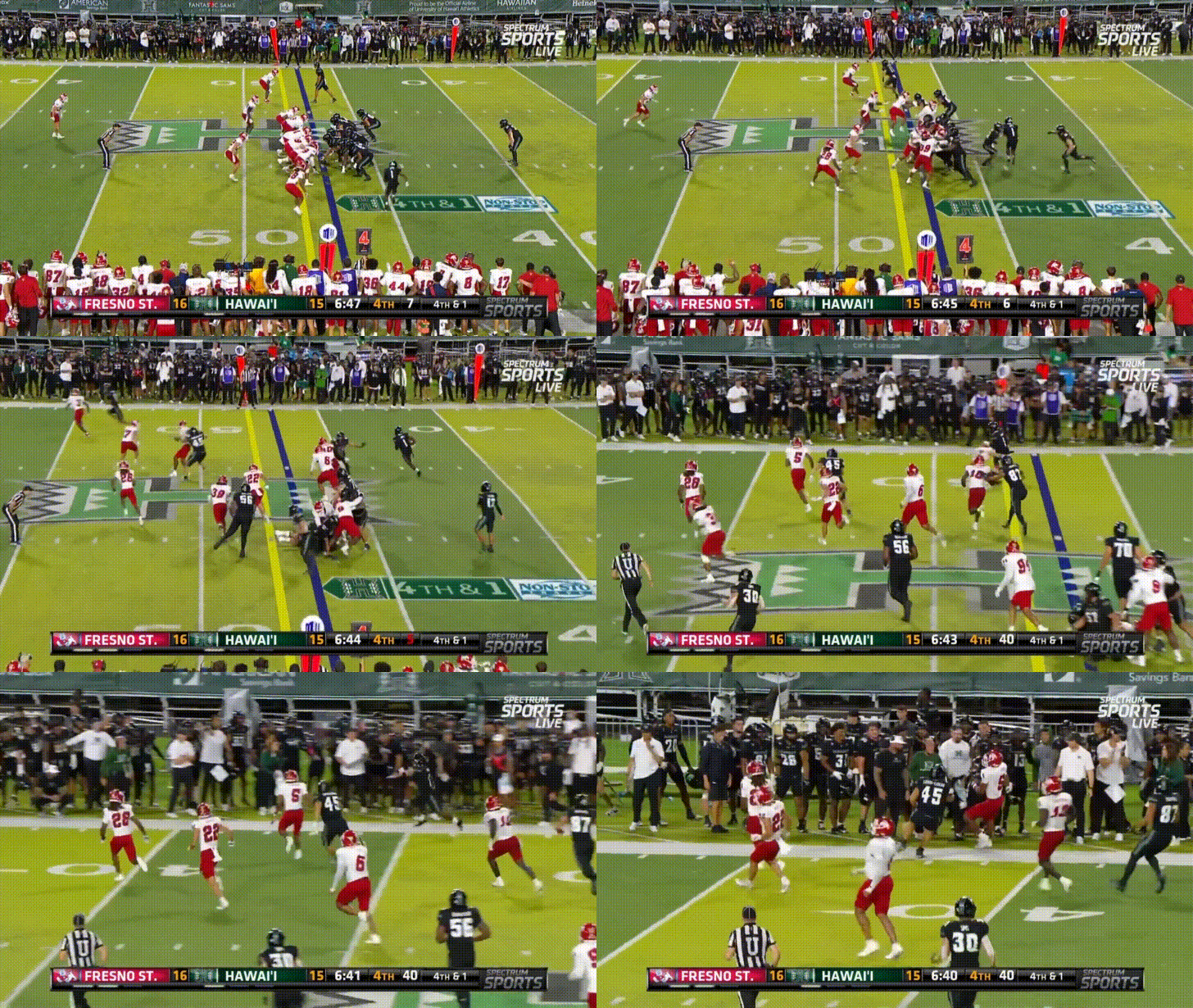
Barfield also shows some downhill running capability, and I was generally surprised a few minutes ago when I looked up his exact listed weight. Barfield will try to run through contact, and here Hawaii turns to Barfield on 4th and 1:
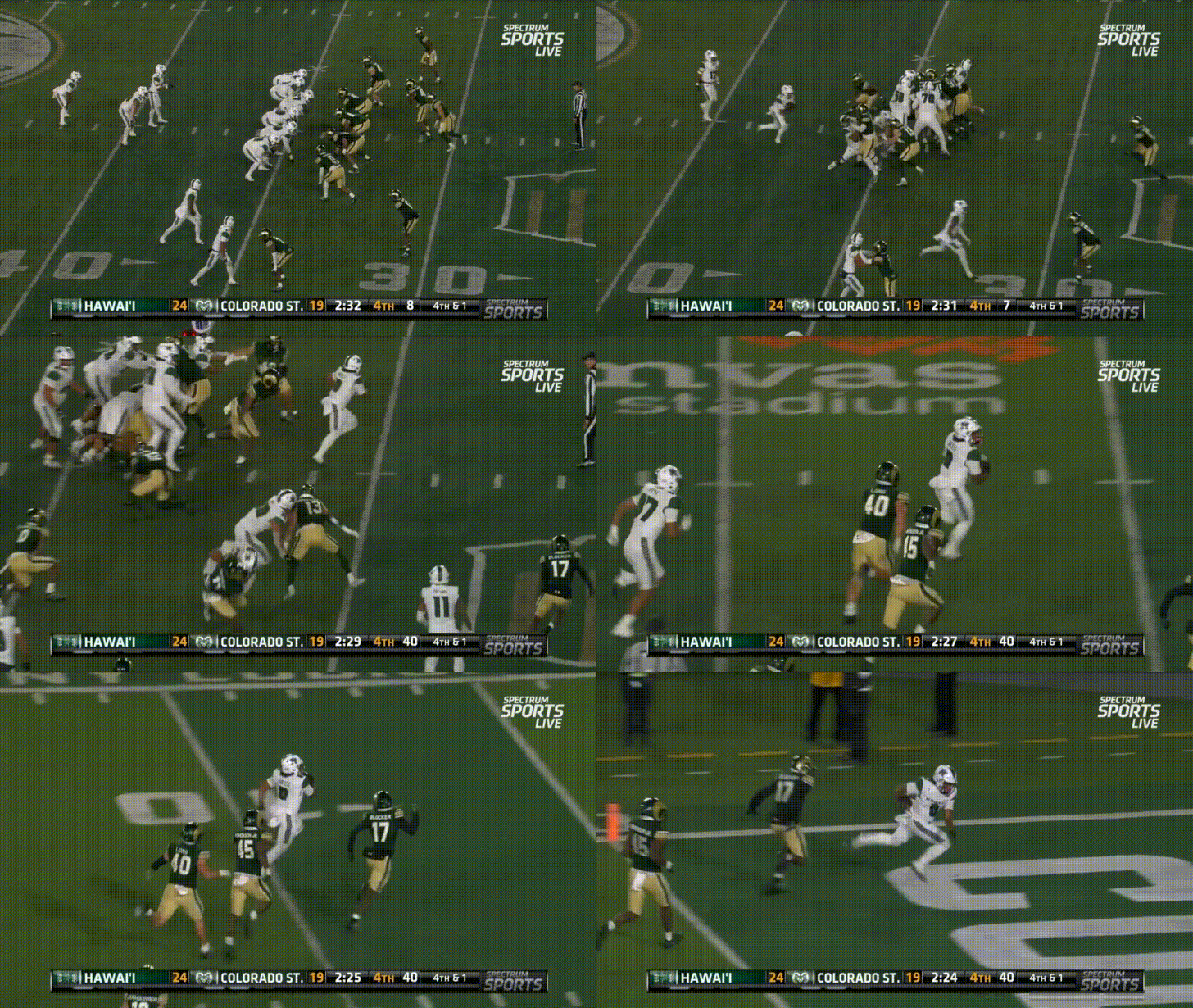
Here Barfield fights through contact:
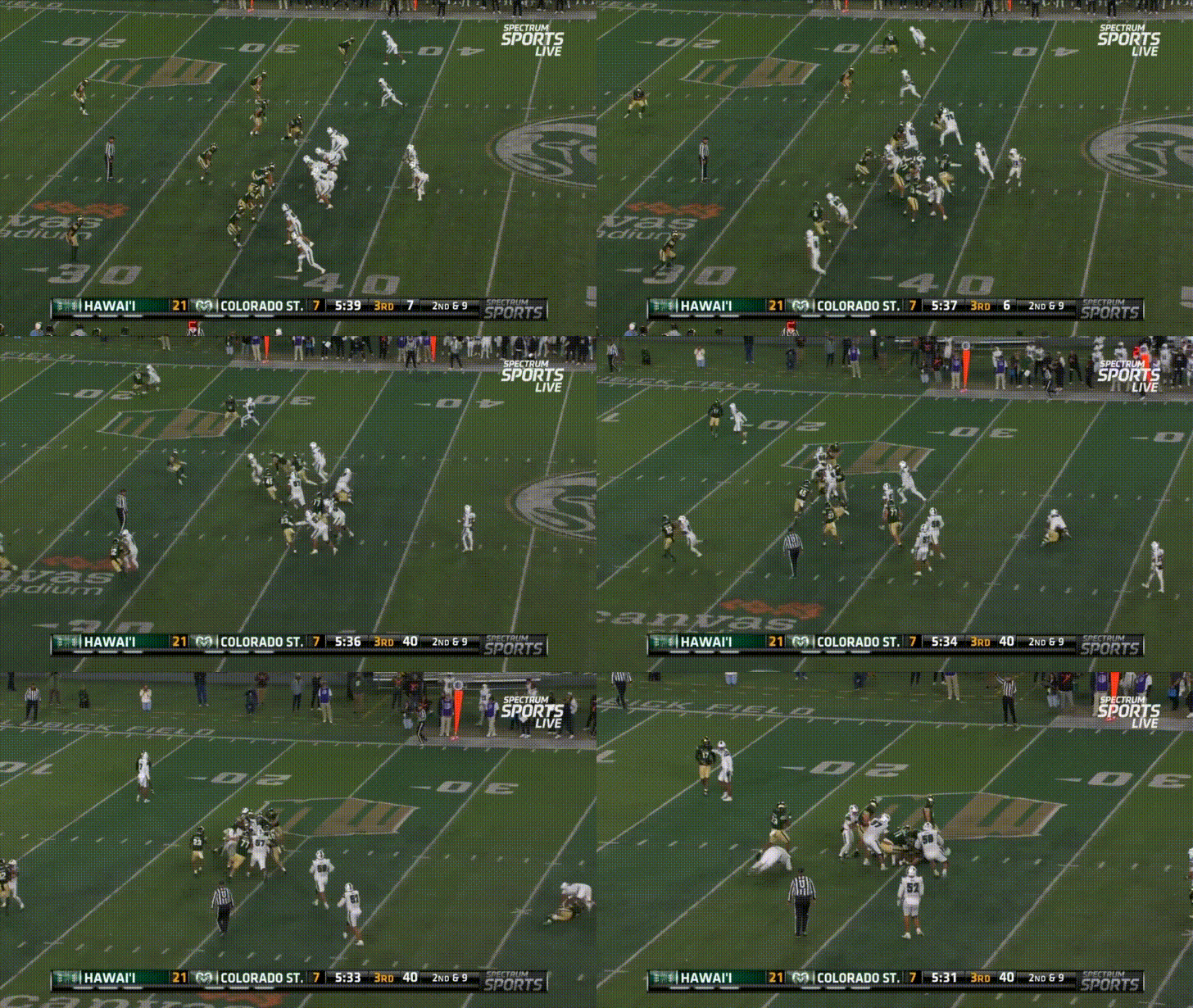
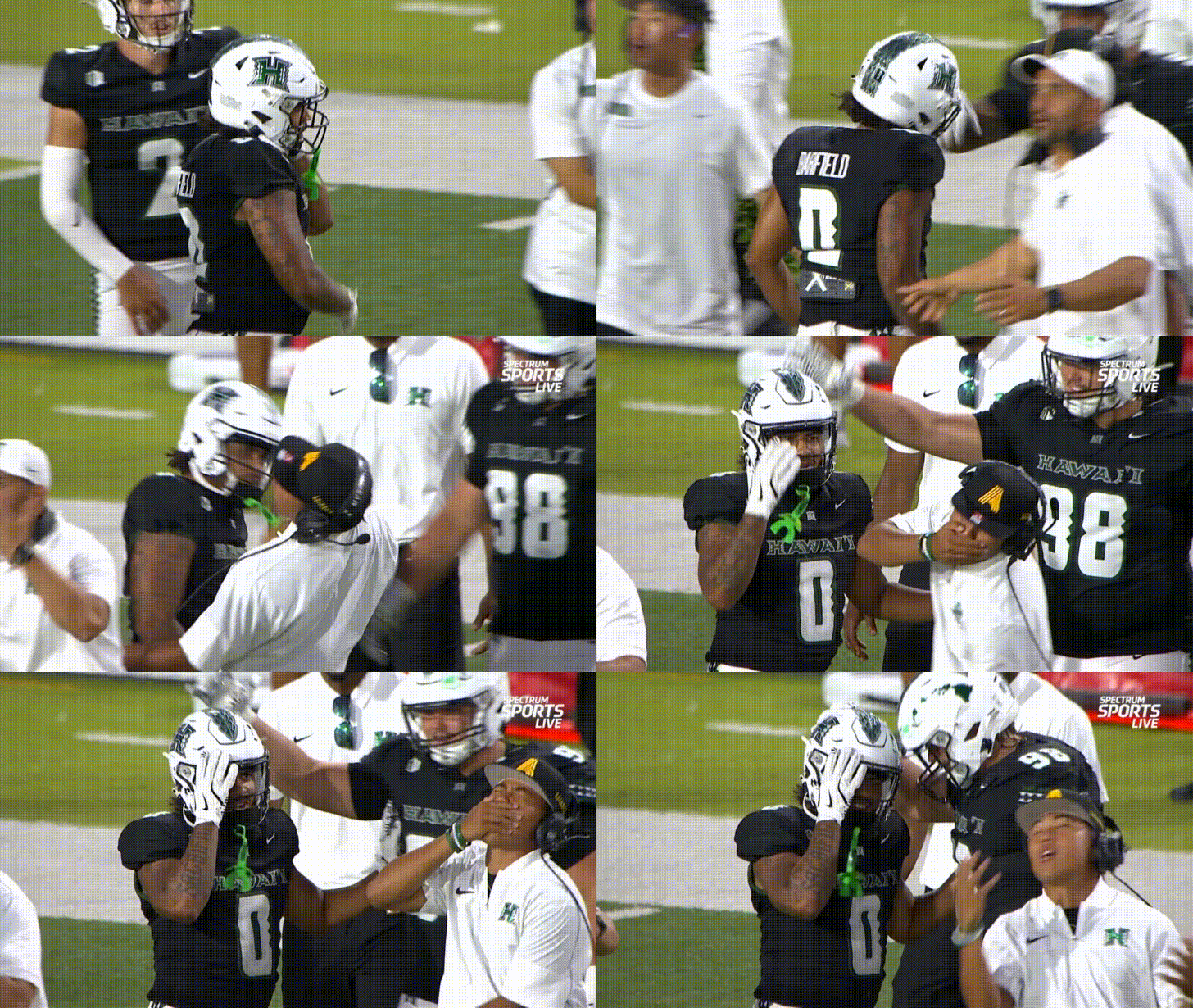
Barfield, another product of Bishop Gorman, likely has a little too much familiarity with his QB Micah Alejado. Consider this force of habit:
If Barfield is 1A, then Landon Sims is 1B. Landon Sims is the son of Travis Sims, a member of the 1992 Hawaii team that went 11-2, WAC champions and Holiday Bowl winners, and who rushed for 1498 yards that season. Sims is about as hard-nosed of a runner as you can get:
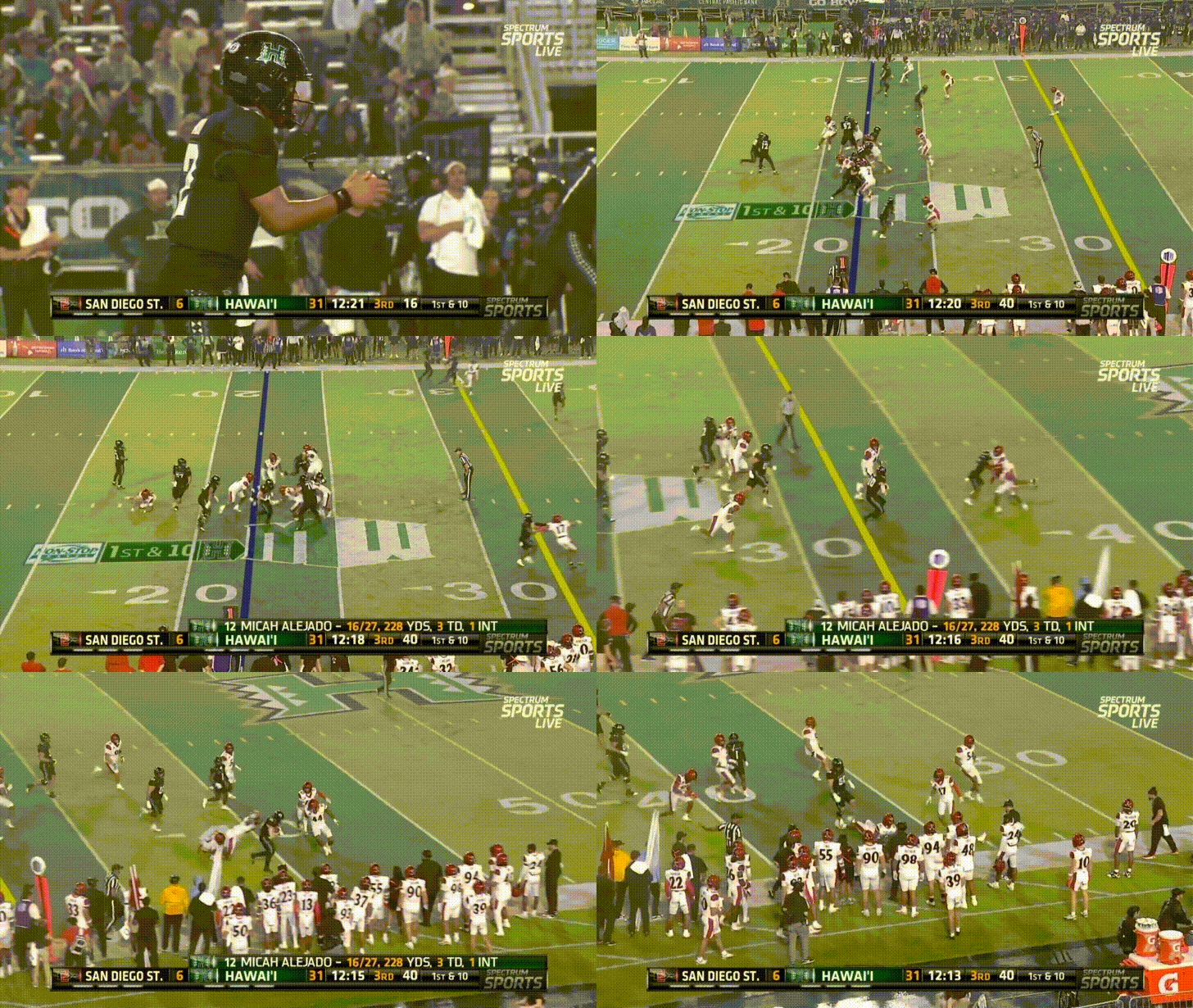
Sims runs one direction and one direction only, and that’s forward through tackles:
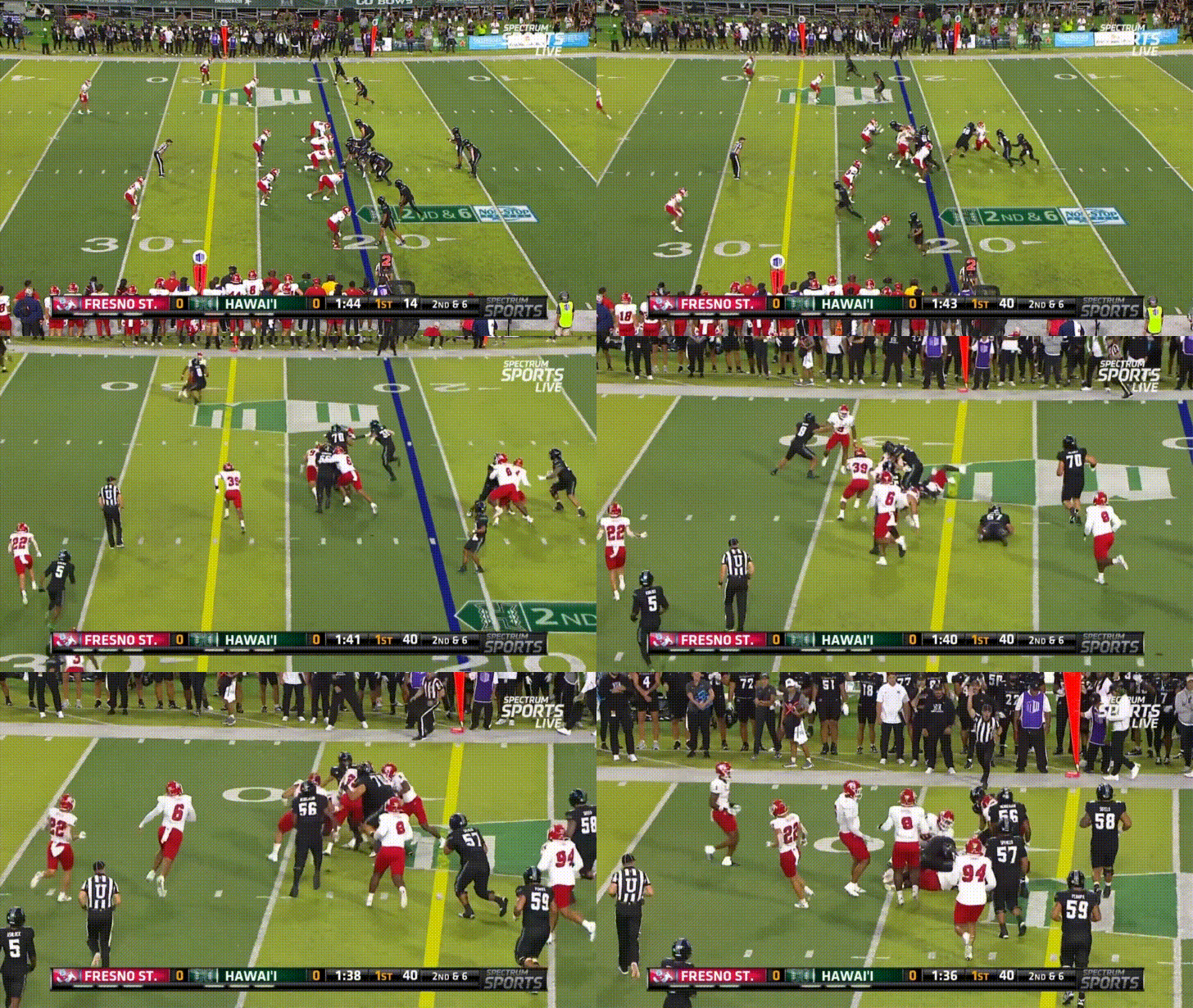
Sims is a strong runner, and here he shows a nice second effort after initial contact:
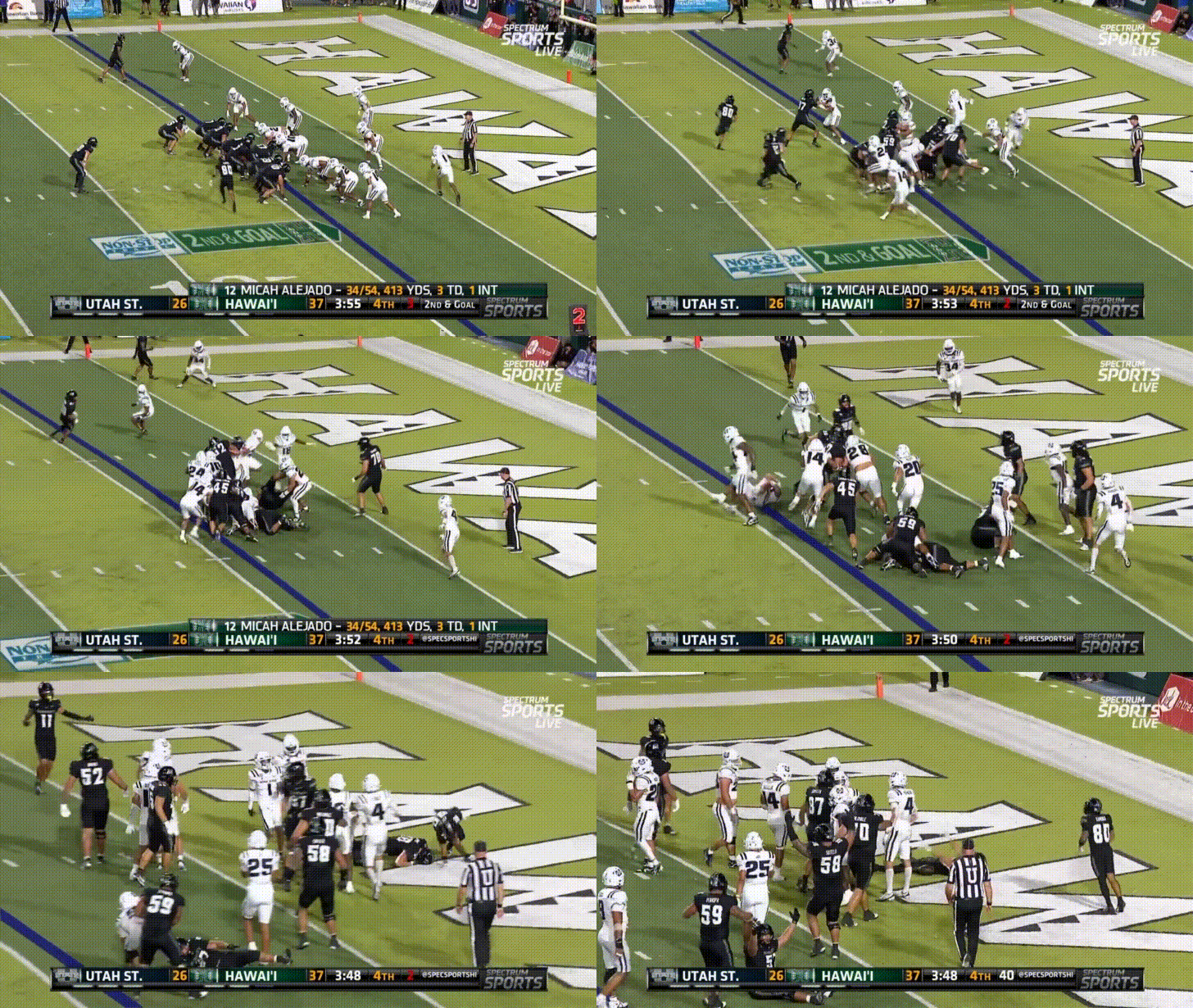
Sims also shows good contact balance, keeping his feet even on contact:
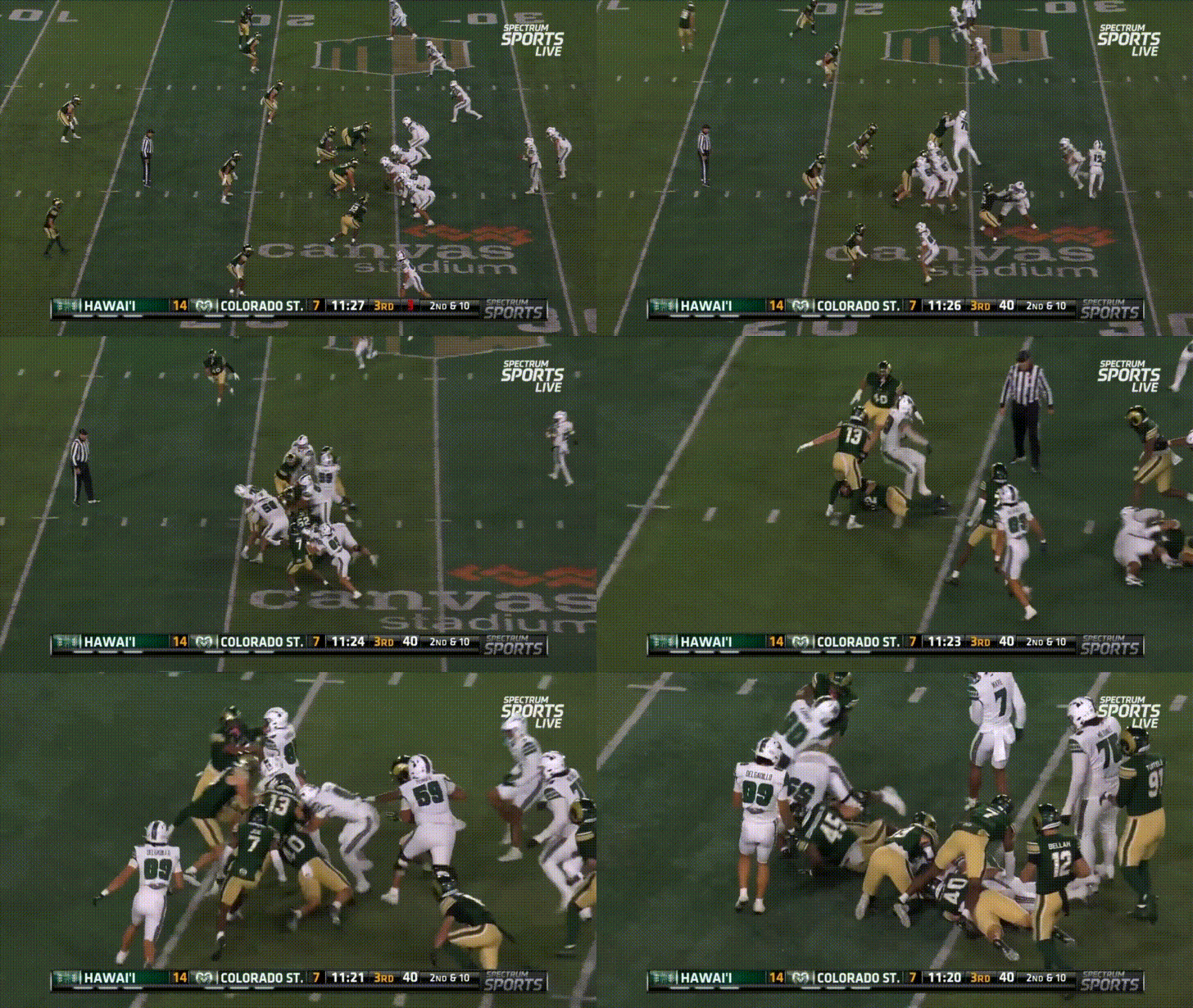
Here Sims carries a defender with him:
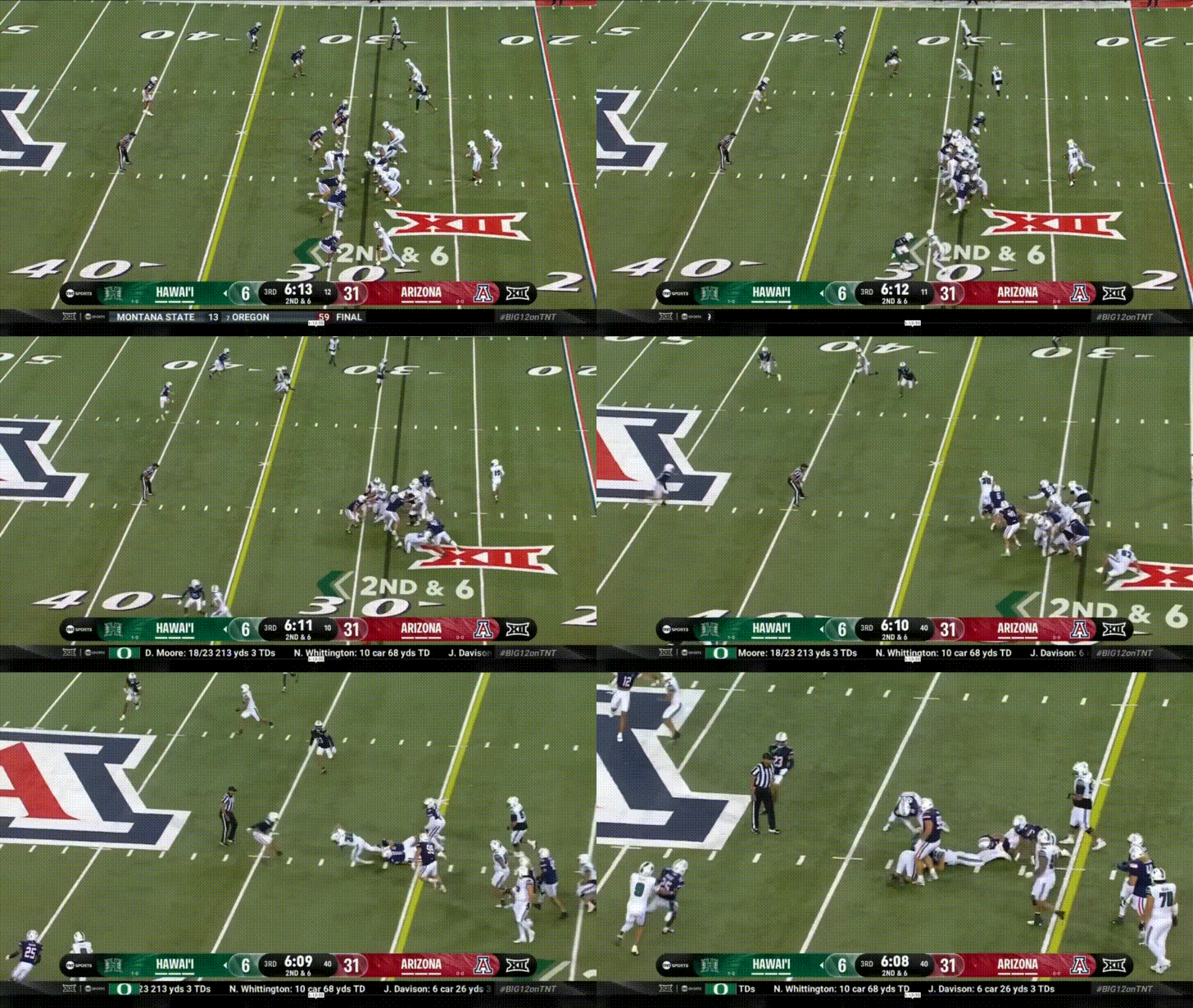
While Sims isn’t going to blow anyone away with his jump cutting ability, he makes up for it with his power:
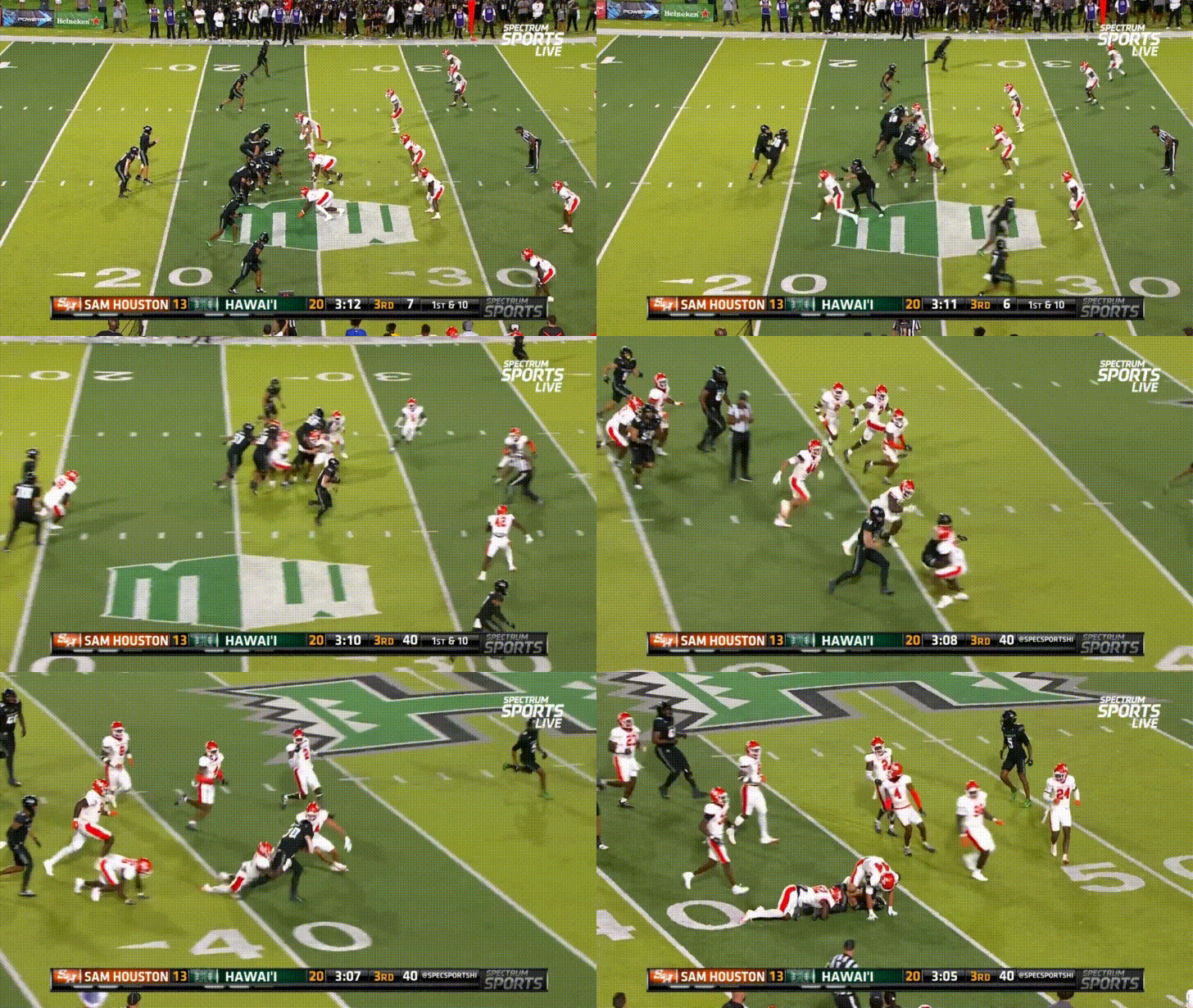
Like Barfield, Sims is probably not going to blow anyone away with his top end speed:
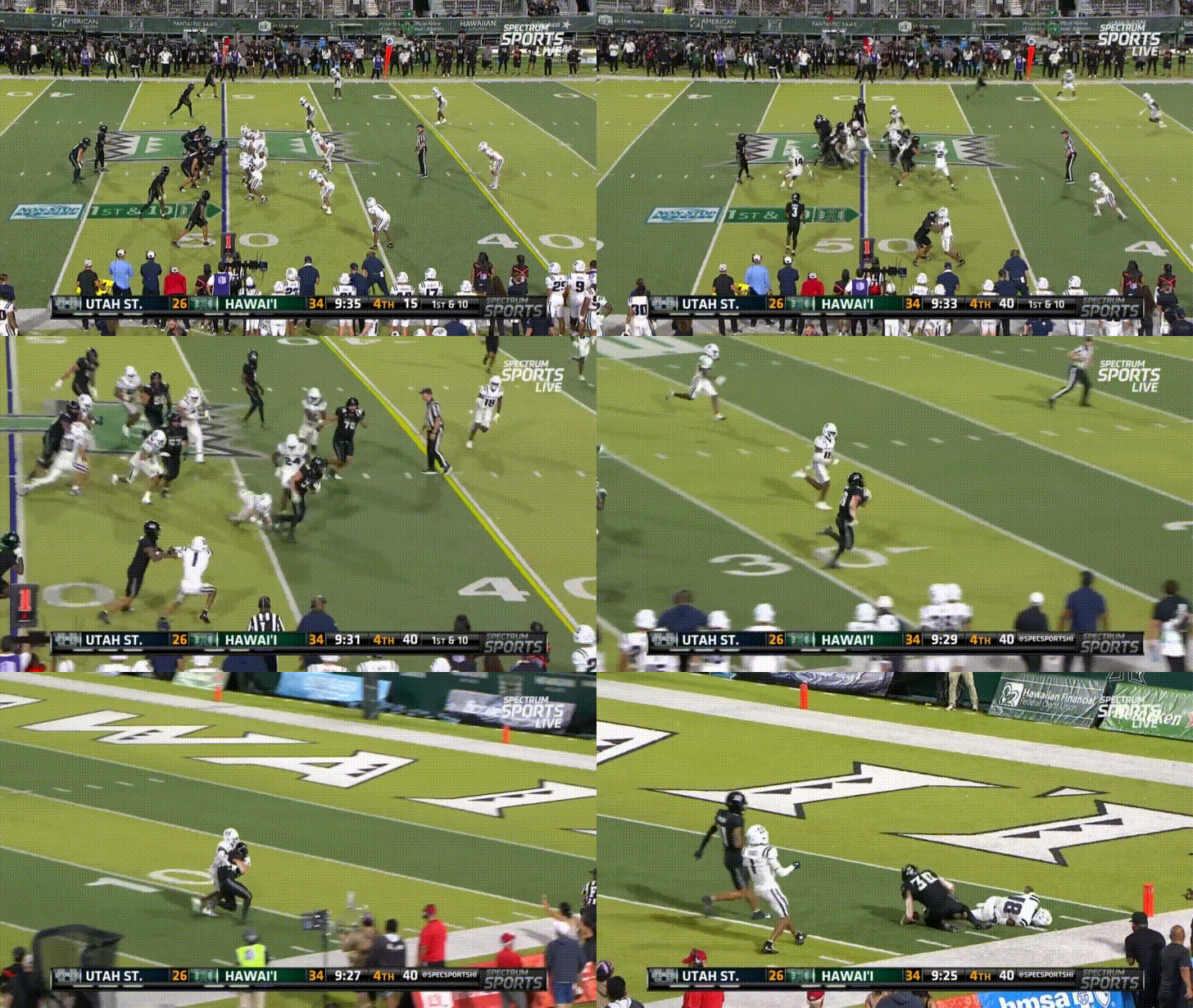
I think this run falls more into the “good balance” category than the “elusive spin move” category, but here’s another nice run:
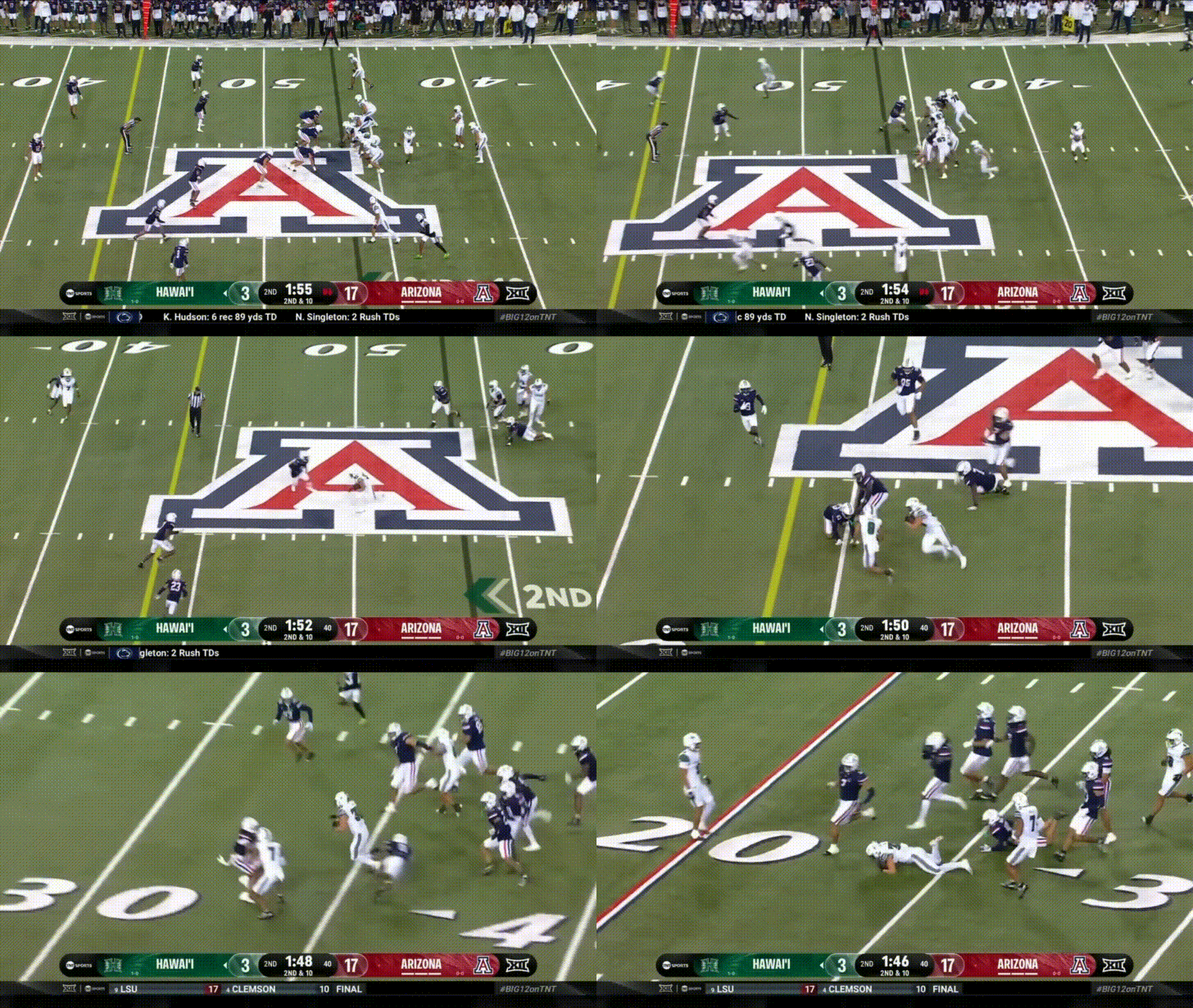
Of course, Sims is a big part of the passing game as well, often chipping or faking a block before going out for a pass, or just generally being the checkdown receiver:
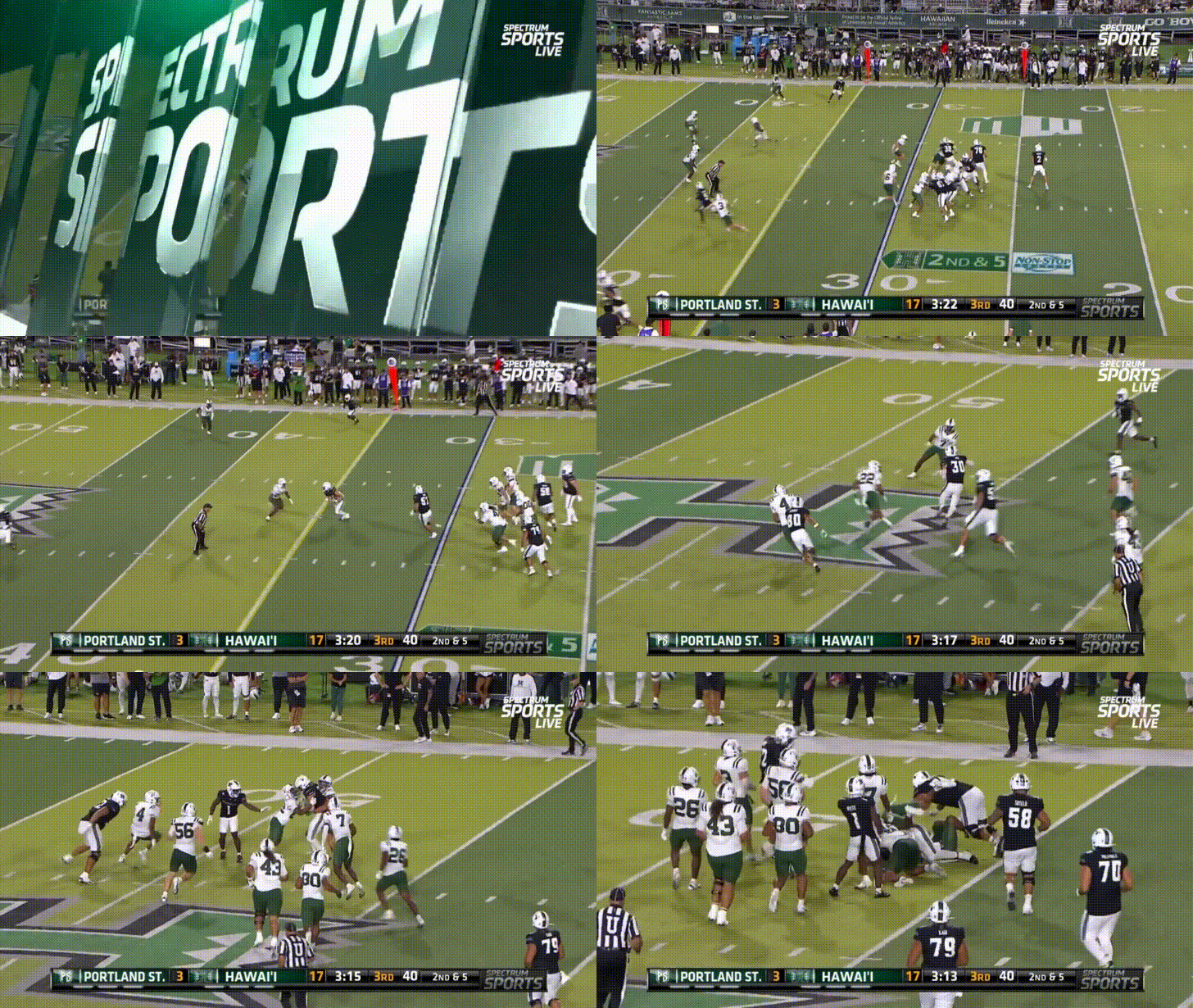
Here Sims gets involved with a bit of misdirection:
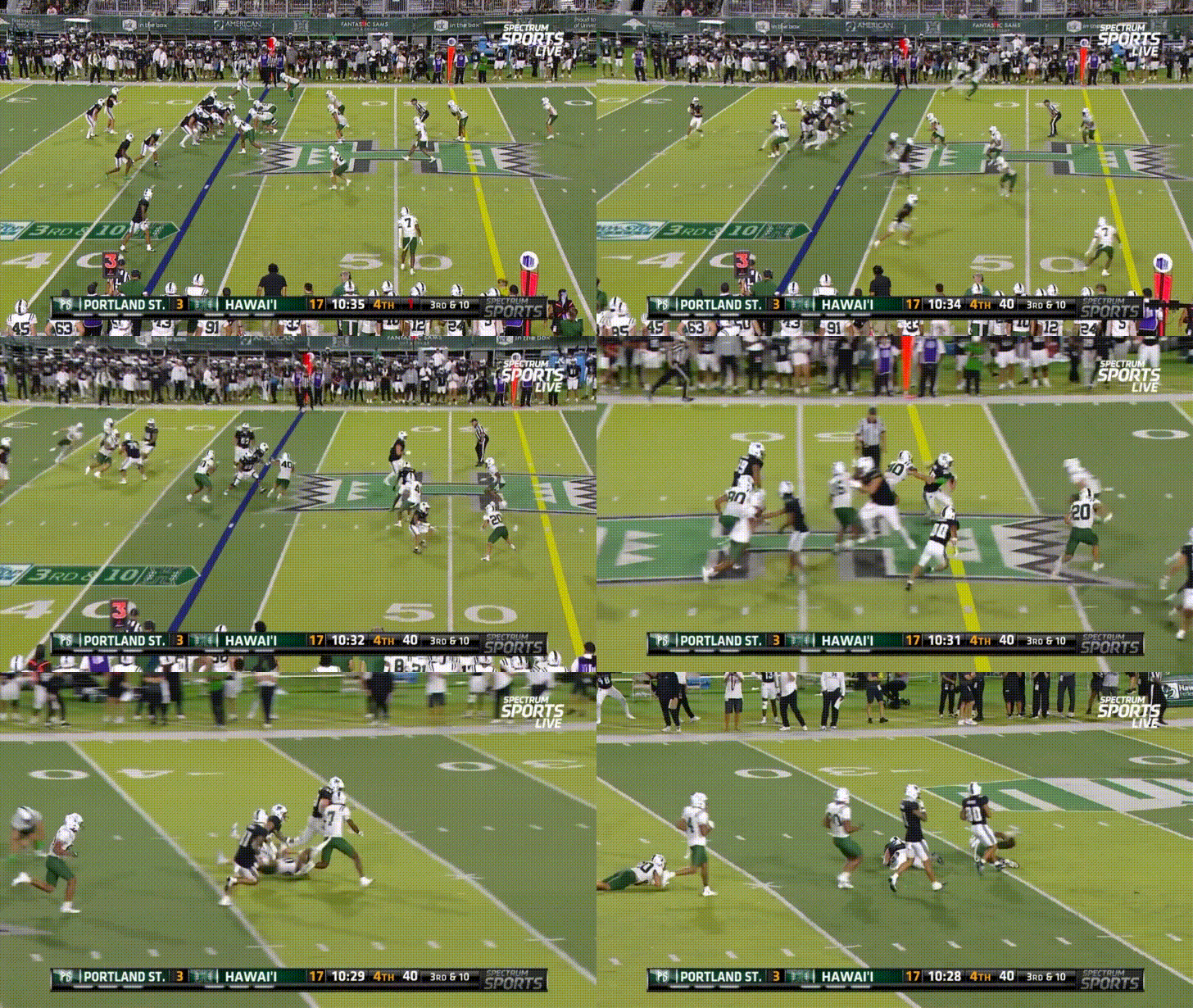
Although I am not sure if he’ll make an appearance, RB Christian Vaughn has received an increased number of carries in recent weeks. Vaughn is another power-running style of back:
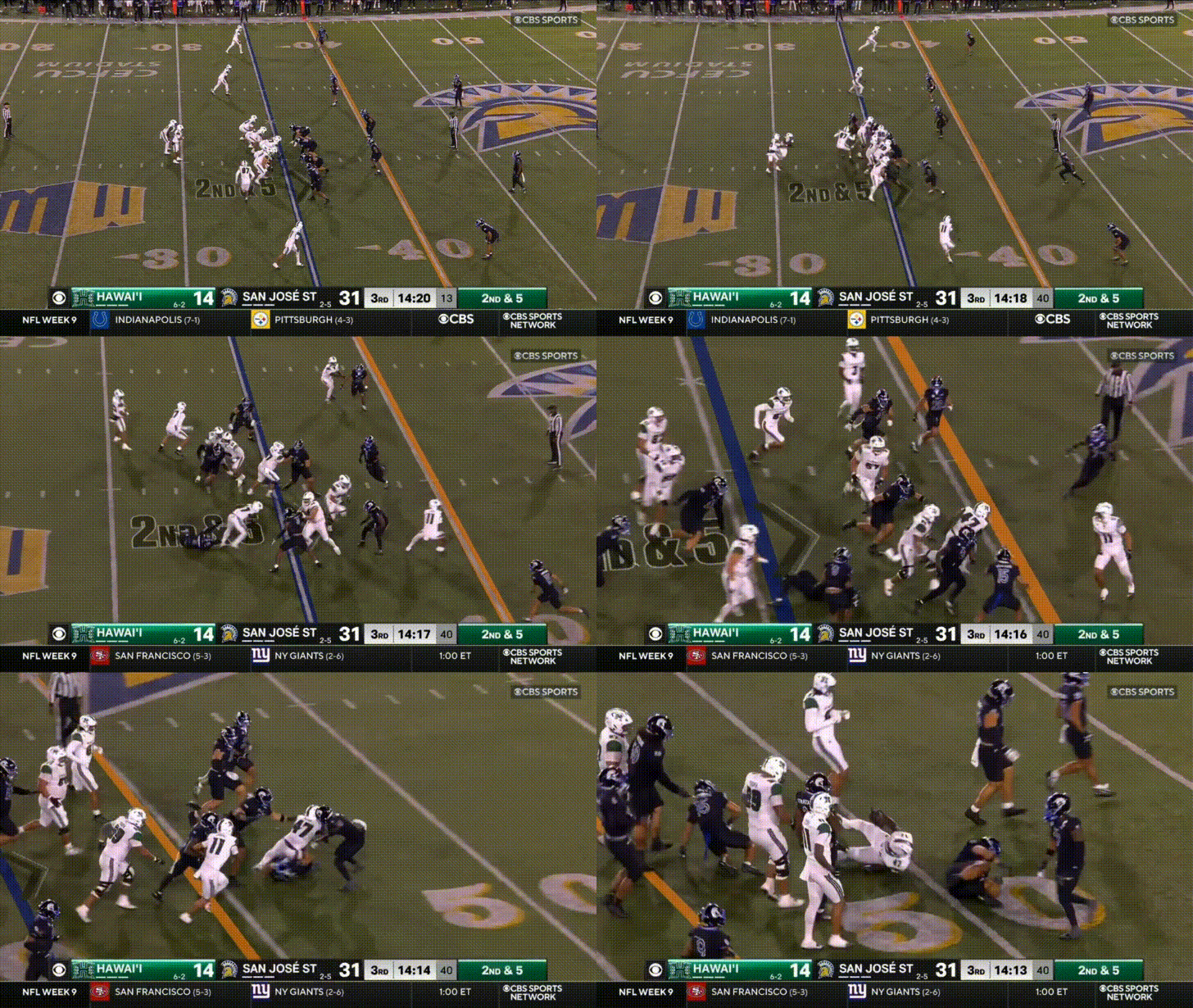
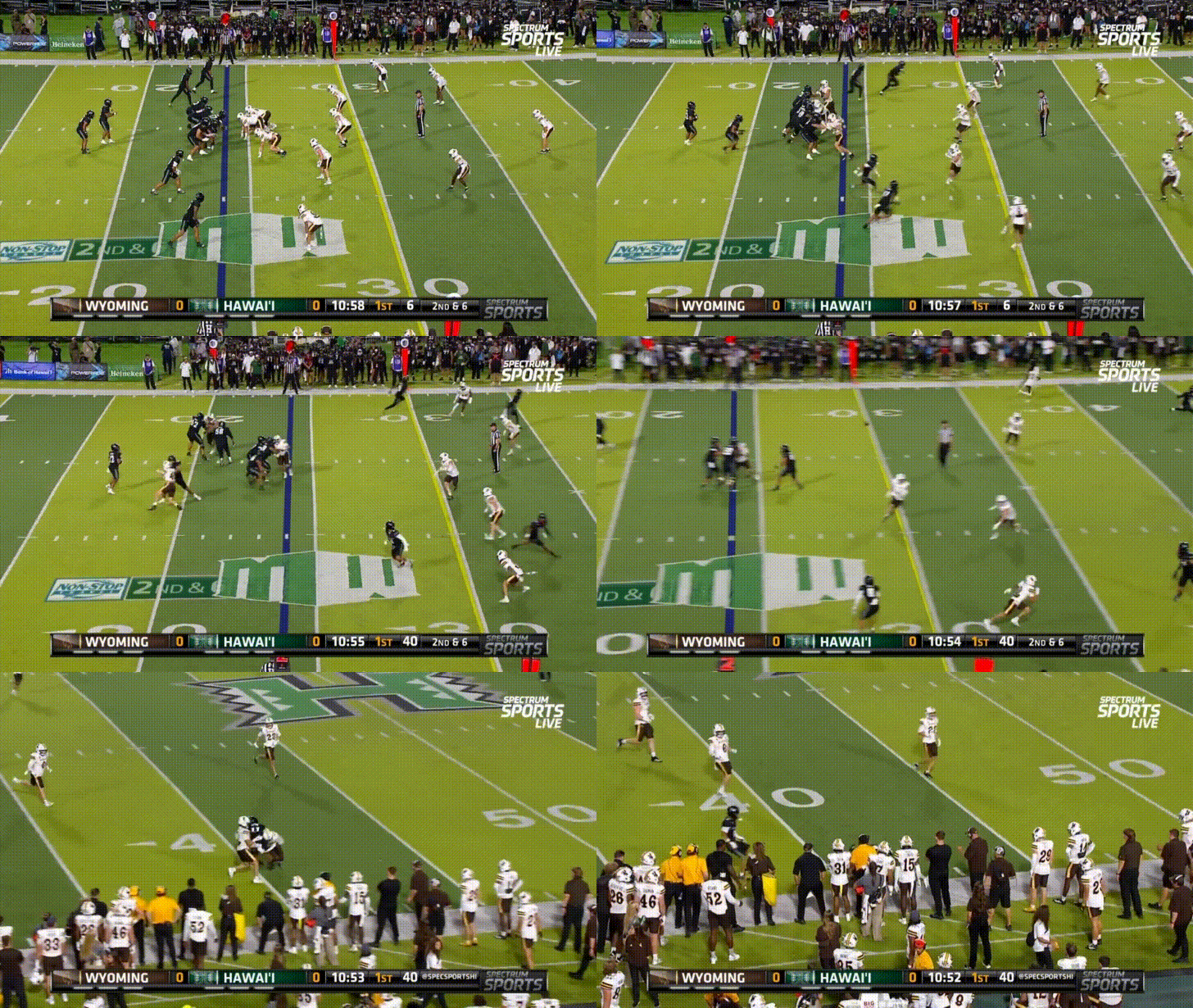
Look for the running backs to be involved primarily in the passing game, but it’s worth noting that Hawaii bounced back from a poor rushing performance against UNLV by making a point of establishing the run the following week against Wyoming to end the regular season. Hawaii went into the game with something like a 72% pass/28% rush split (per the TV graphics), and ended up running the ball more than throwing it against Wyoming. I don’t think Hawaii is a bad rushing team, it’s just not something they choose to do too often. Hawaii did indeed have success establishing the run early against Wyoming, so it’s worth keeping an eye on how that affects the play-calling in the bowl game.
Receivers
Hawaii’s offense suffered a big blow as wide receiver Jackson Harris announced his intention to enter the transfer portal and sit out the bowl game. Harris was far and away the best receiver on the team, and will likely be moving to a program where he can command bigger NIL bucks. Harris was an excellent deep threat receiver, and in my view, was responsible for a couple of Hawaii’s wins. After getting over some early season injuries, Harris was virtually uncoverable in some games, and had over 100 yards receiving in 6 of his last 7 games (he had a 70 yard TD against UNLV, effectively Hawaii’s only offense of the game). Even when other facets of the offense was shut down, Harris was the sole constant in being able to continue to make big plays. Hawaii had 5 plays this season of 60+ yards, and all of them were Jackson Harris. I think Harris’s absence will have a transformative effect on Hawaii’s offense, as Alejado no longer will have the “Jackson Harris down there somewhere” throws. (I did keep my Jackson Harris clips, just in case the former Stanford/Hawaii player transfers some place else familiar).
Hawaii typically runs 4-receiver sets, and I expect WR Karsyn Pupunu will likely take Harris’s place on the outside. The other outside receiver is Brandon White, with Pofele Ashlock and Nick Cenacle lining up inside.
Hawaii will likely lean heavily on WR Pofele Ashlock in Harris’s absence. Although not the focus of previous articles, I remember Ashlock from previous years where he torched former Pac-12 schools, like Stanford in 2023 and UCLA in 2024. (I am hoping this is a trend that doesn’t continue).
Ashlock has a big catch radius, good body awareness, and the ability to lay out for a catch:
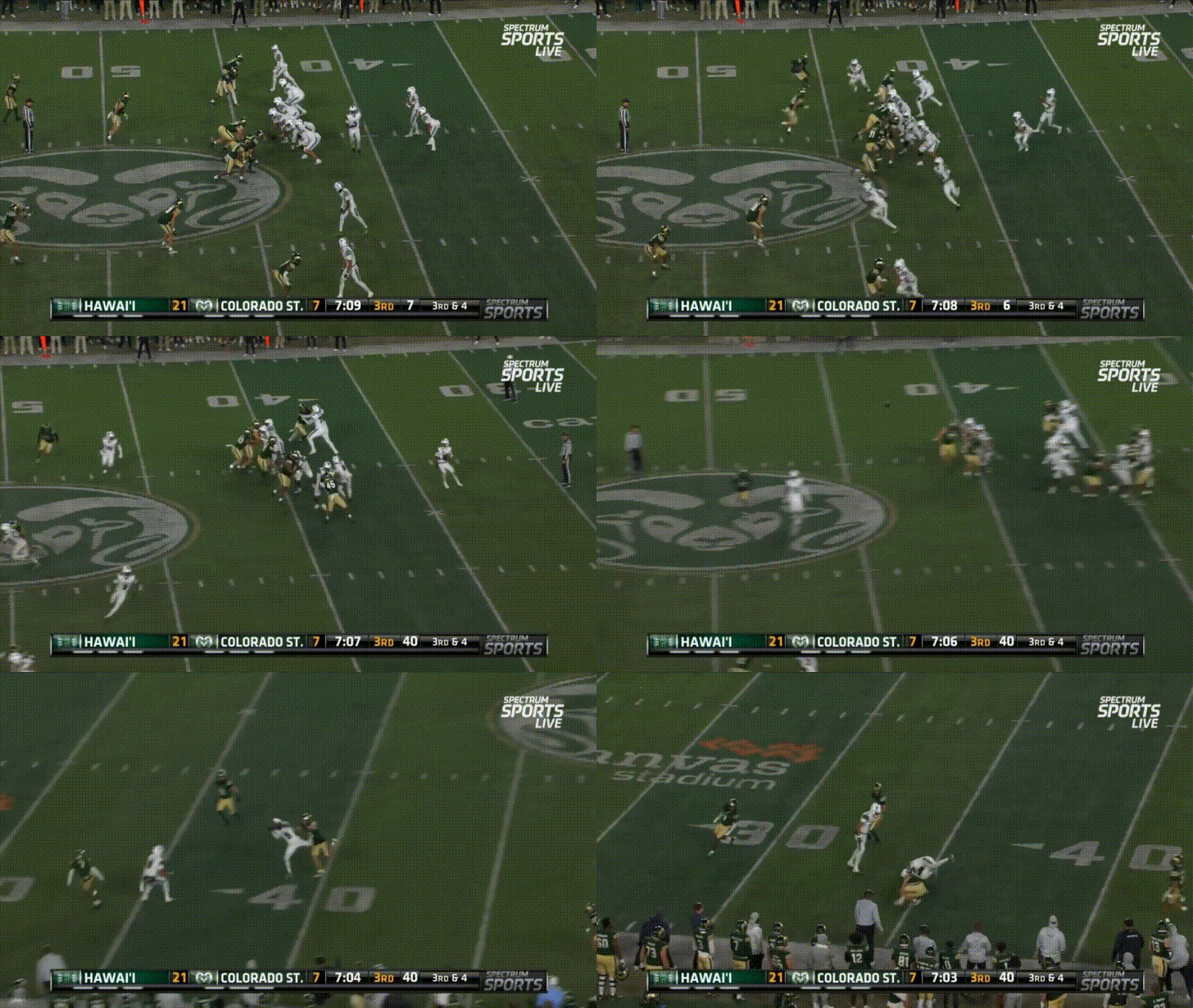
And again, showing his hands:
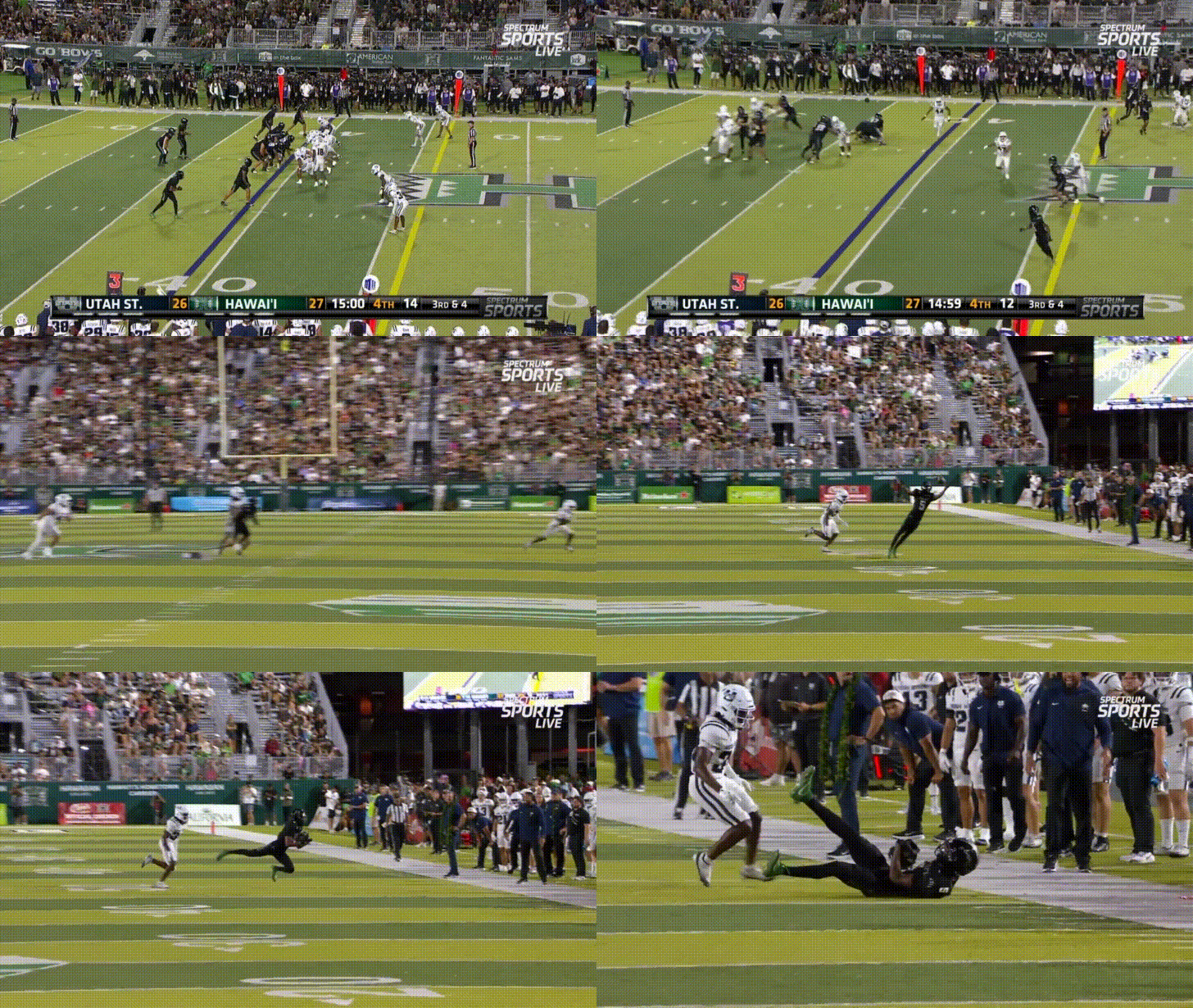
It’s worth noting that although Ashlock routinely makes some impressive catches, he’s also struggled with some drops, and that’s probably the biggest knock against him. PFF credits Ashlock with 12 of the team’s 32 drops this season, 3 times as many as the next guy.
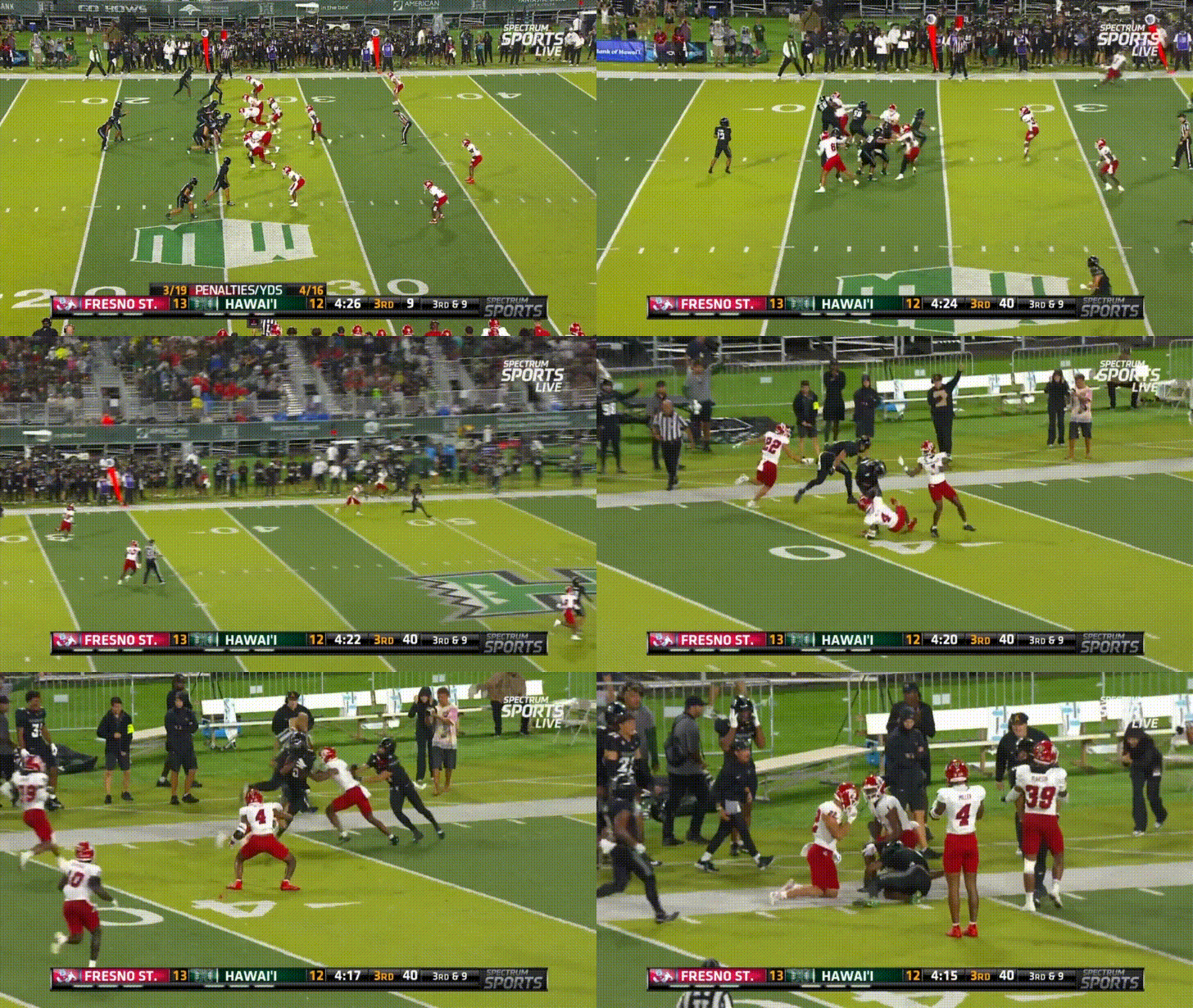
I’m not sure how this play was drawn up (you generally don’t run two receivers to the same area), but here Ashlock shows his ability to make a catch in traffic:
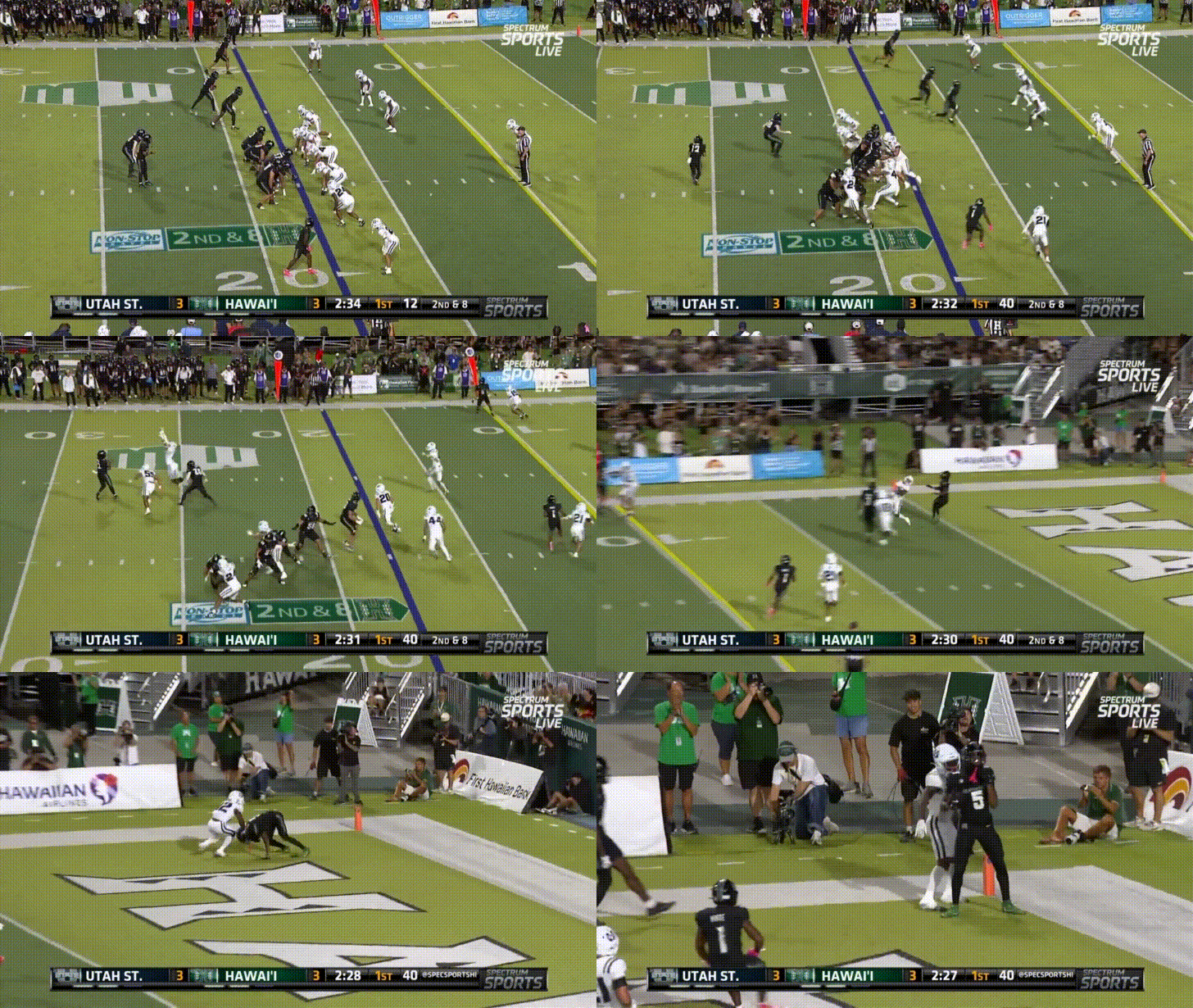
Here Ashlock again shows off his nice catch radius, hauling this one in:
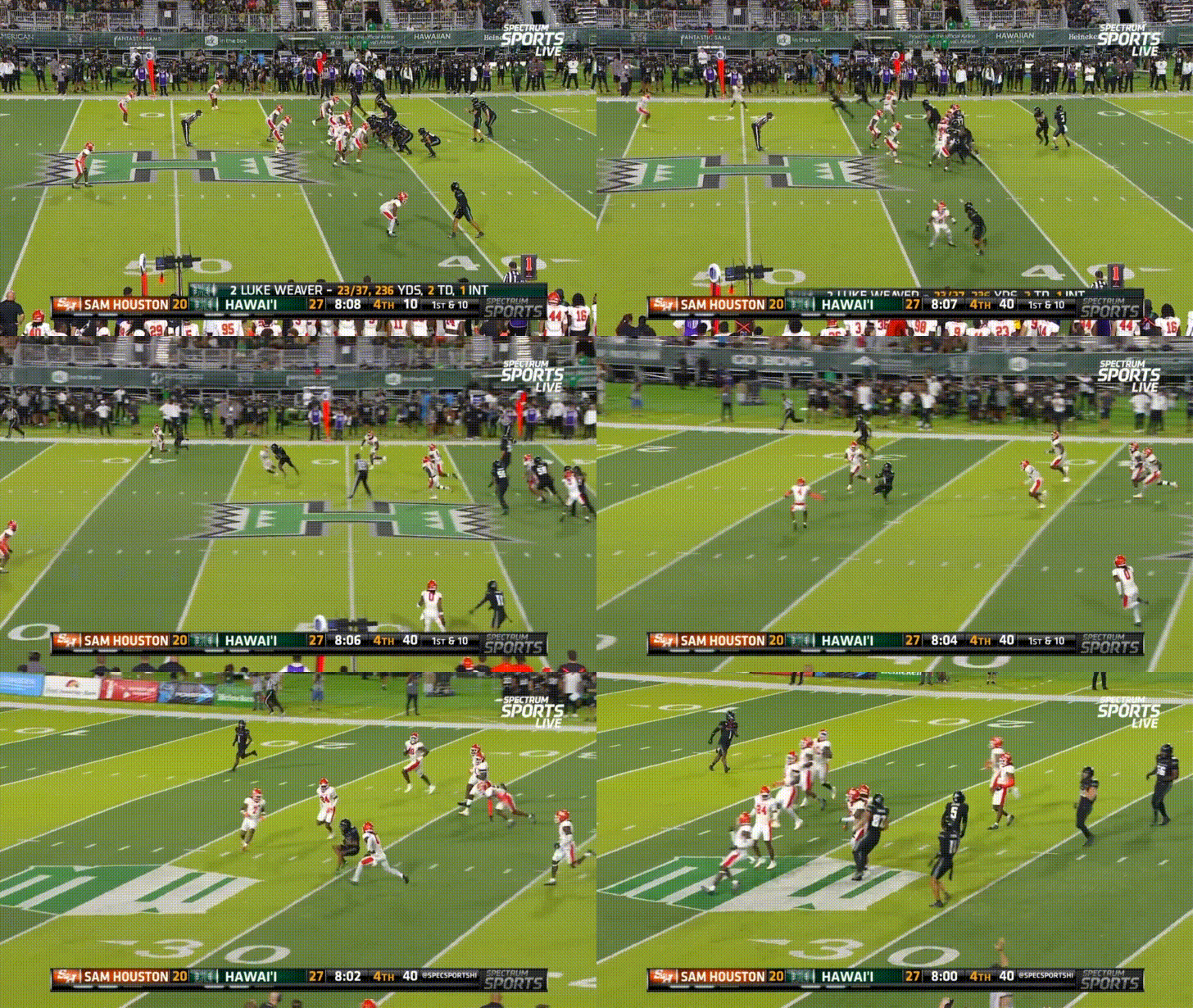
Ashlock can also work the middle of the field, where his ability to make catches in traffic come in handy. Here Ashlock shows his ability to run after the catch:
With Harris gone, the likely deep threat target will be Brandon White. Hawaii’s announcers said that WR Brandon White has “4.28 speed”, and ran a 10.30 100m dash in high school. For comparison, Jahvid Best’s HS best was 10.31, so suffice to say that White is fast.
Here White shows off his after-catch moves:
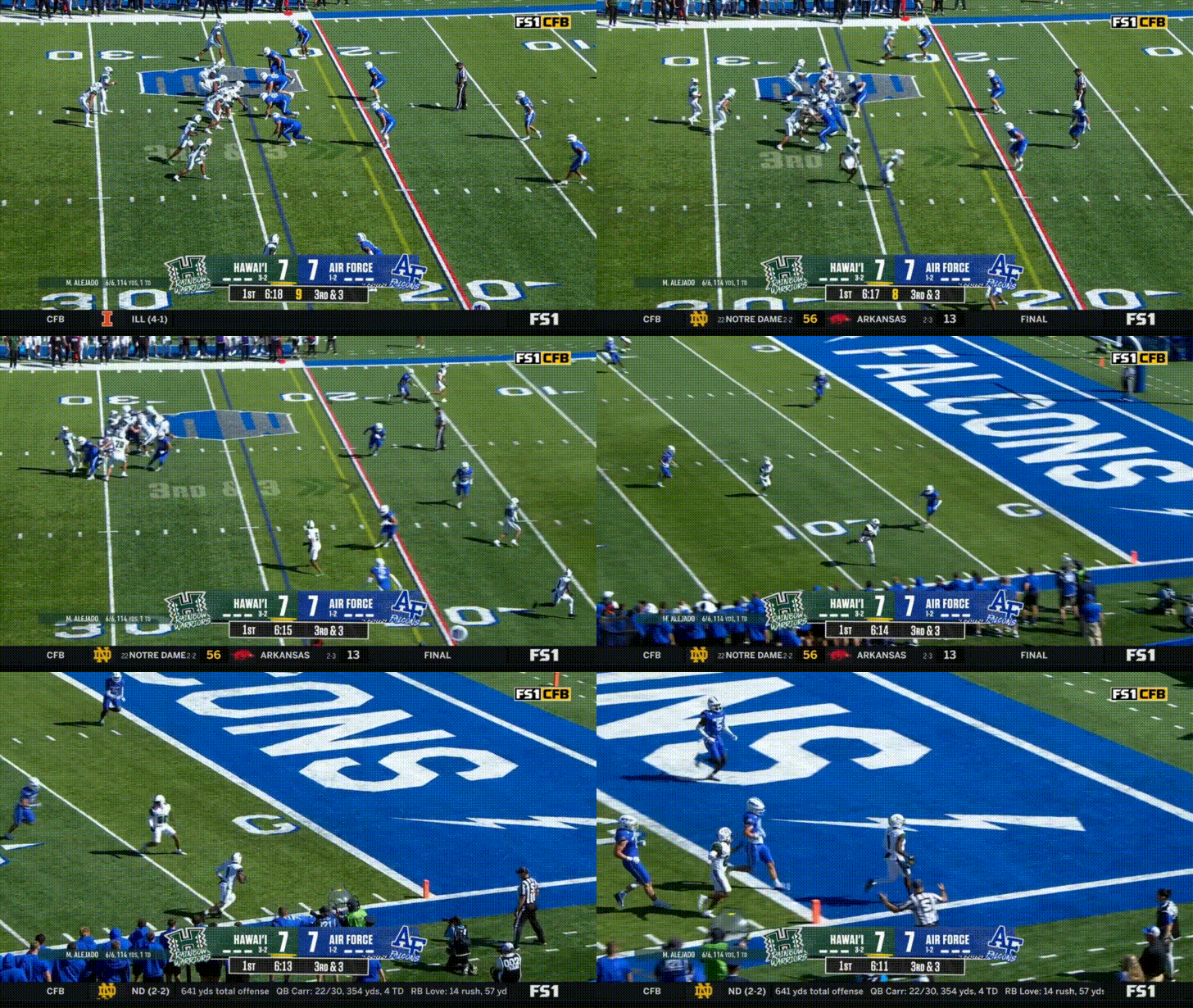
As White can probably outrun Alejado’s arm, he does a good job adjusting to balls a bit underthrown:
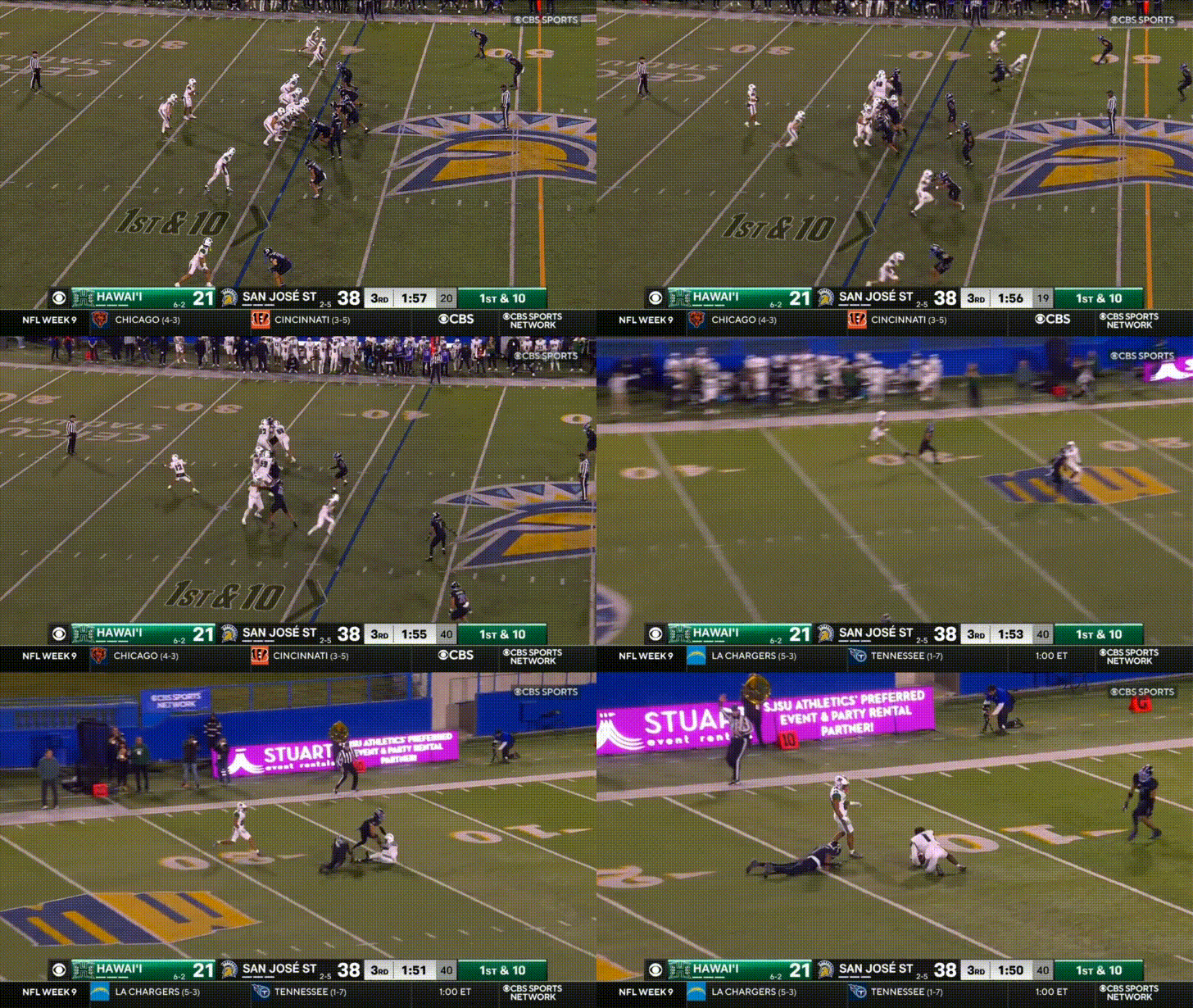
Here White does a nice job of making the catch with his hands away from his body:
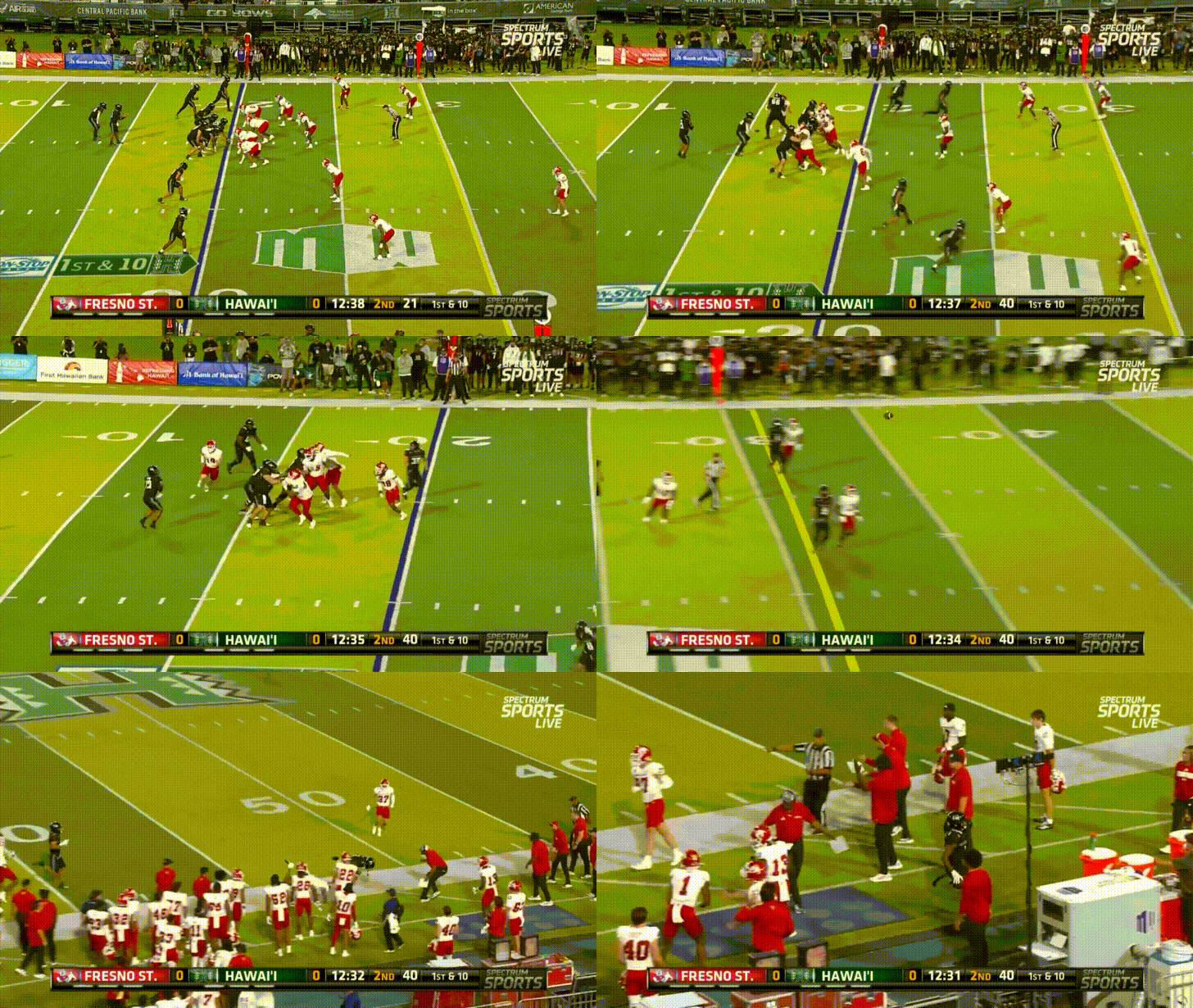
Hawaii will try to get the ball to White in space, because of White’s ability to run after the catch:
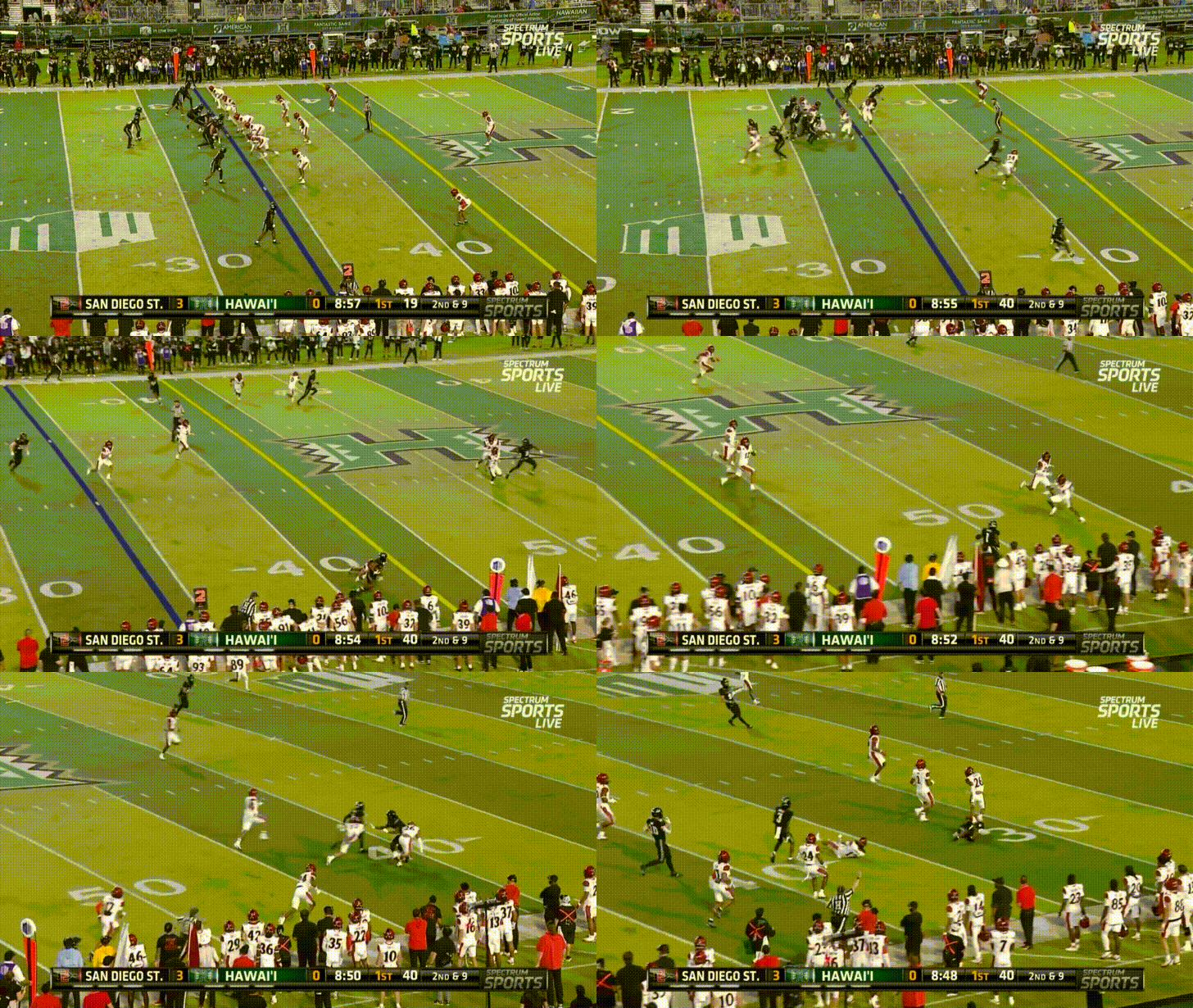
Although White hasn’t dropped as many as Ashlock, he’s not immune to drops either:
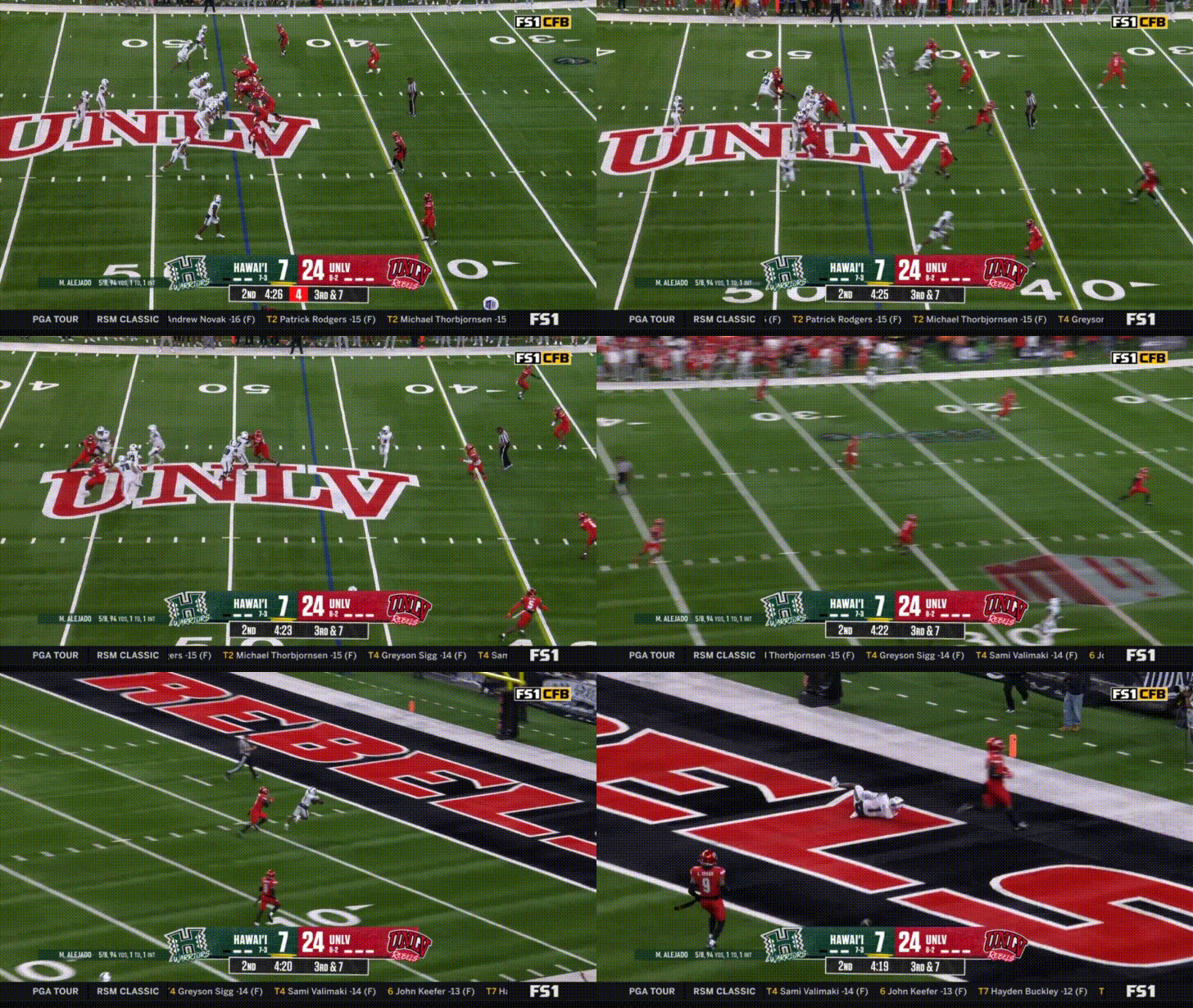
Hawaii will also get White involved in the run game, e.g. on jet sweeps:
Or on the reverse:
Heck, they’ve even lined him up at RB:
With Harris out, Karsyn Pupunu will likely step into the starting role at outside receiver. The senior receiver has found an increased role this year, with 30 catches on the season (after just 5 in 2023 and 6 in 2024). I don’t have a ton of highlights for him, but he was often making catches in the middle of the field, typically short routes, but occasional intermediate routes as well. Here Pupunu makes a nice catch through contact:
And here Pupunu makes a nice catch on the throw out wide with the toe tap:
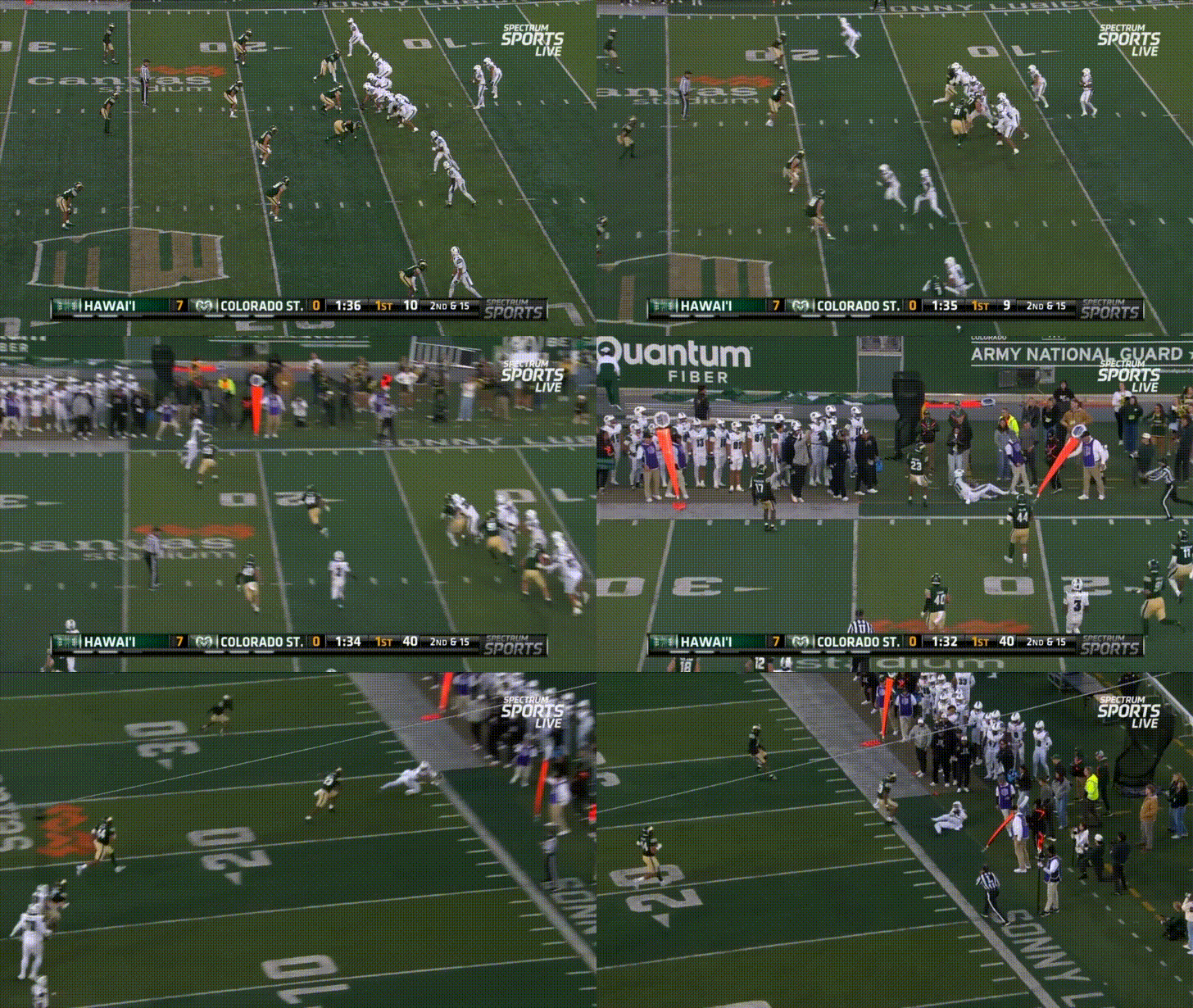
The other slot receiver (opposite of Ashlock) is Nick Cenacle. Cenacle has missed a few games this year with a knee injury (and did not play in their last matchup against Wyoming). Cenacle is typically targeted on short throws to the sidelines or intermediate throws across the middle:
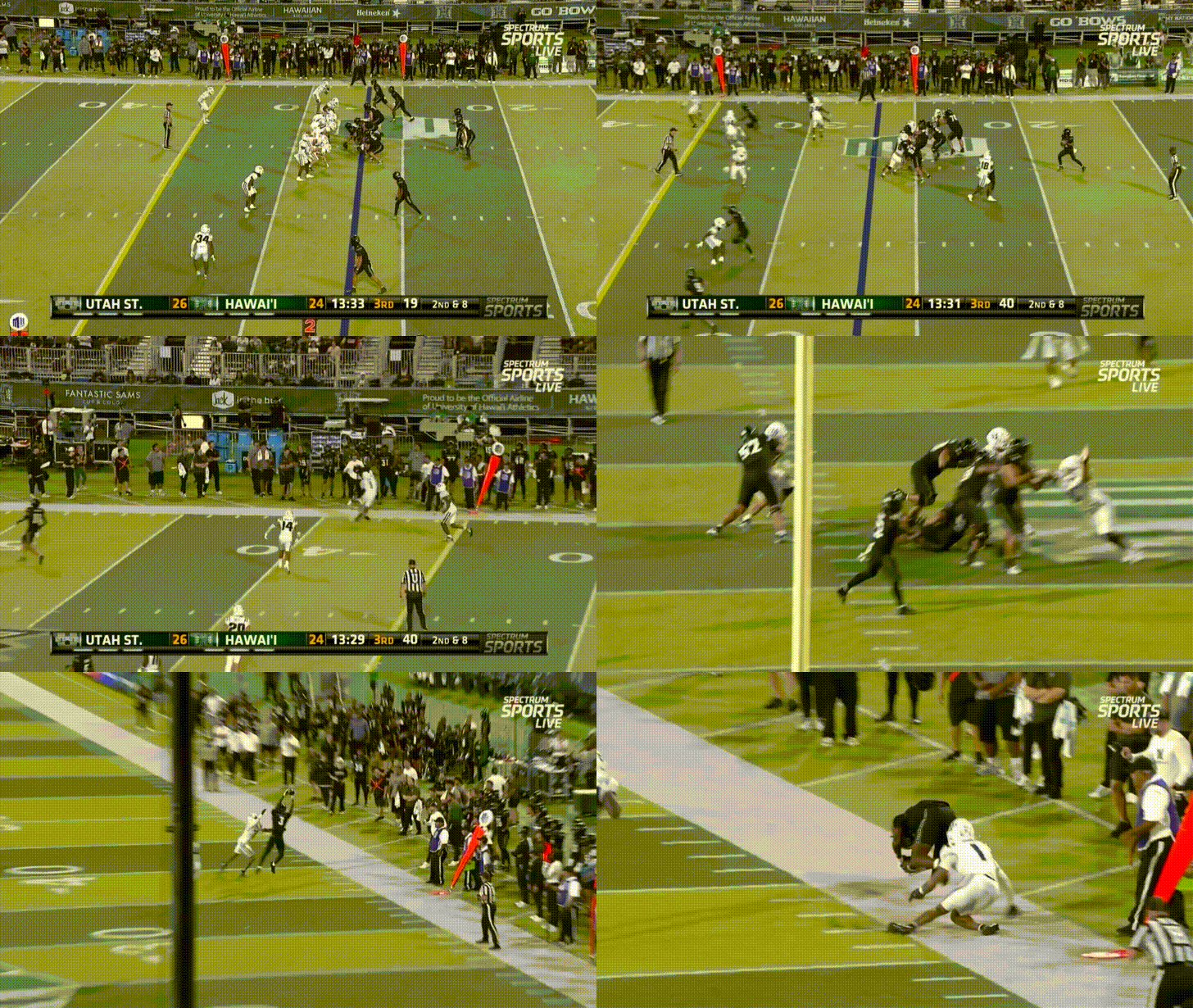
Like Ashlock, Cenacle also suffers from some concentration drops (and his 4 drops are 2nd most on the team, but in far fewer targets than Ashlock):
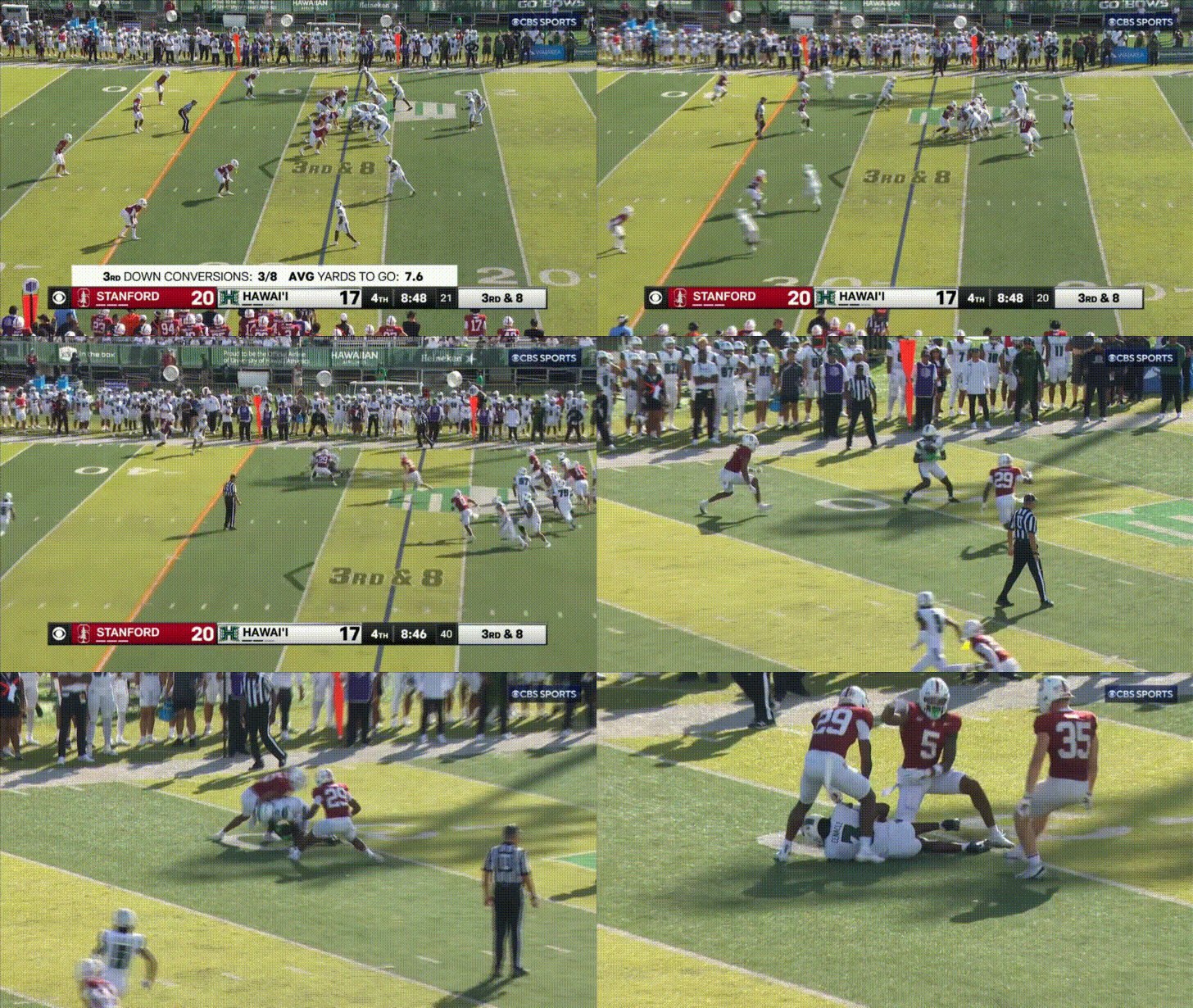
With Cenacle missing significant playing time this year, the redshirt freshman WR Tama Uiliata stepped into the starting role in his place, and showed a lot of promise for the future. Uiliata showed some nice hands:
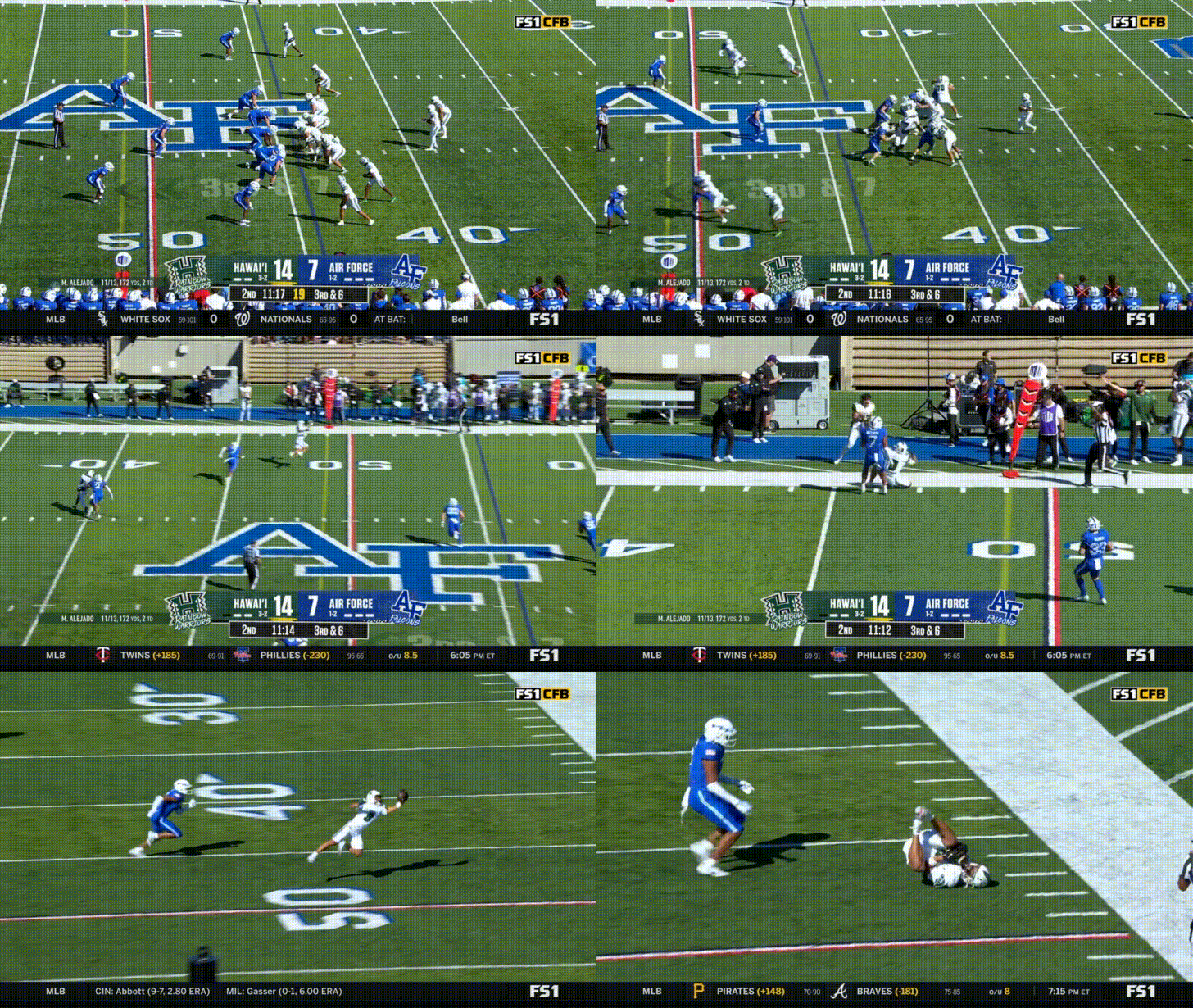
Here Uiliata does a nice job of tracking the ball down:
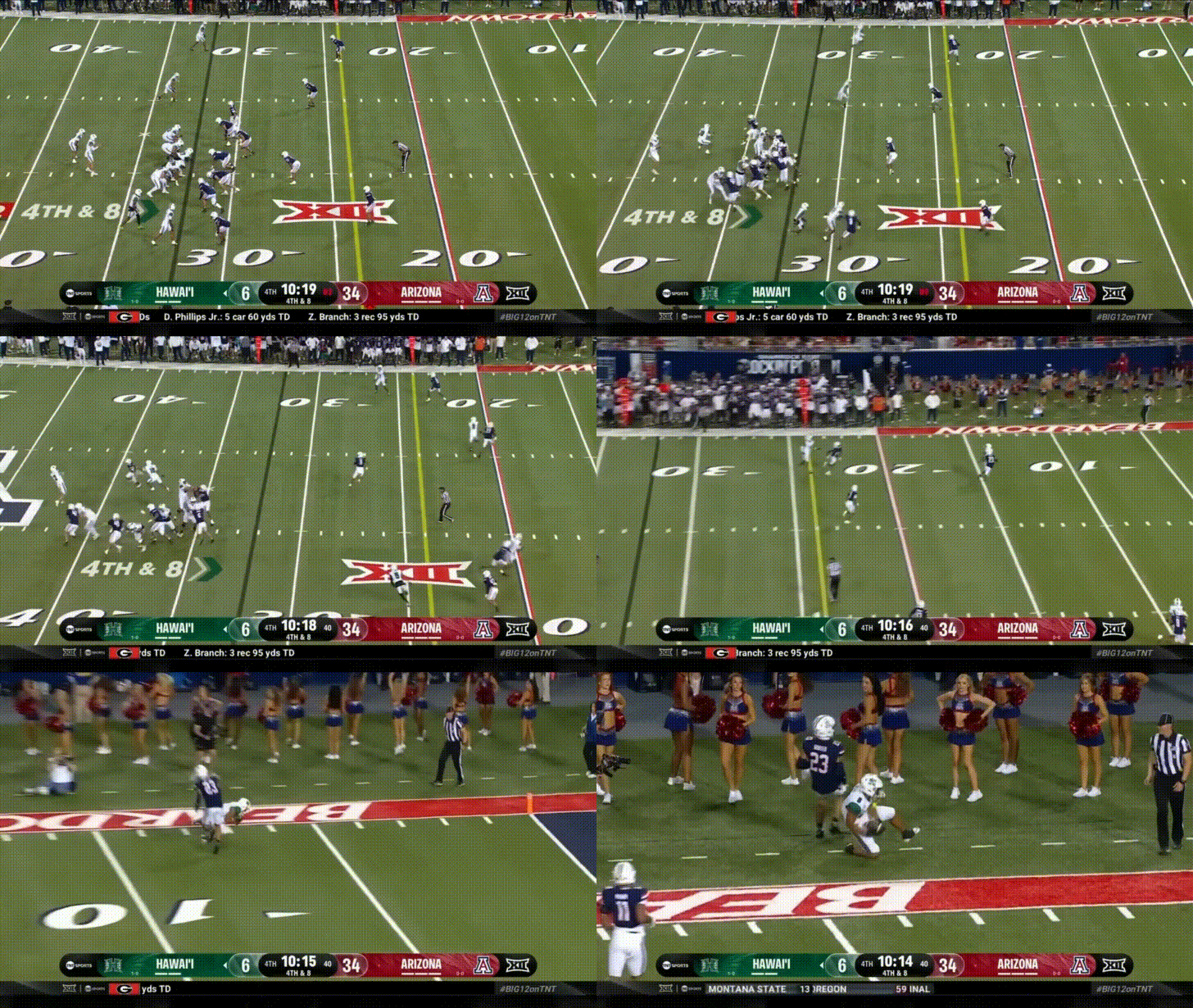
And here Uiliata shows some YAC ability (note the clear-out routes when Hawaii intends to throw it short):
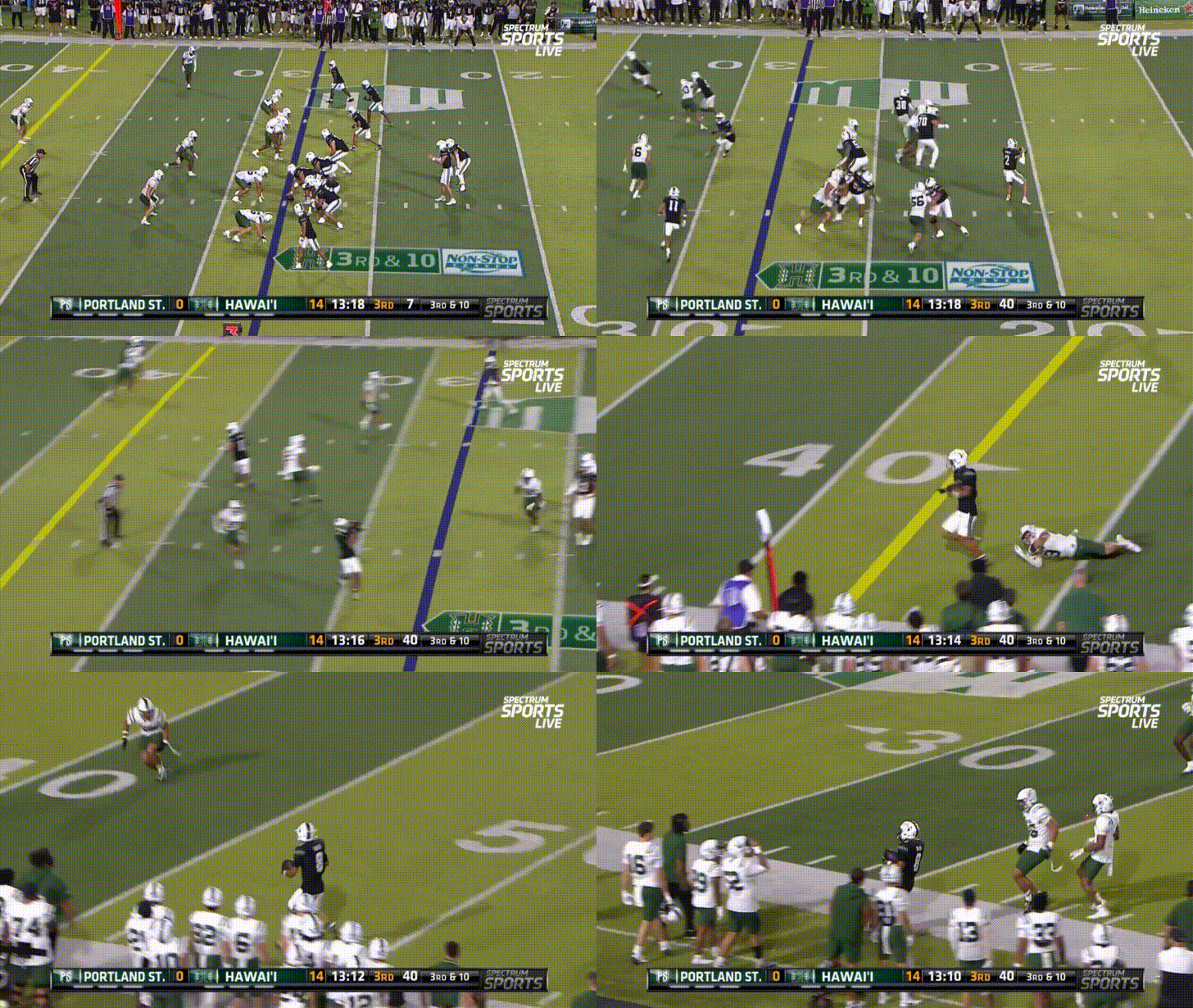
It’s also worth noting that WR Tama Uiliata was a high school quarterback (he also played CB, RB, and WR for his team), so Uiliata is sometimes involved in the double pass trick play:
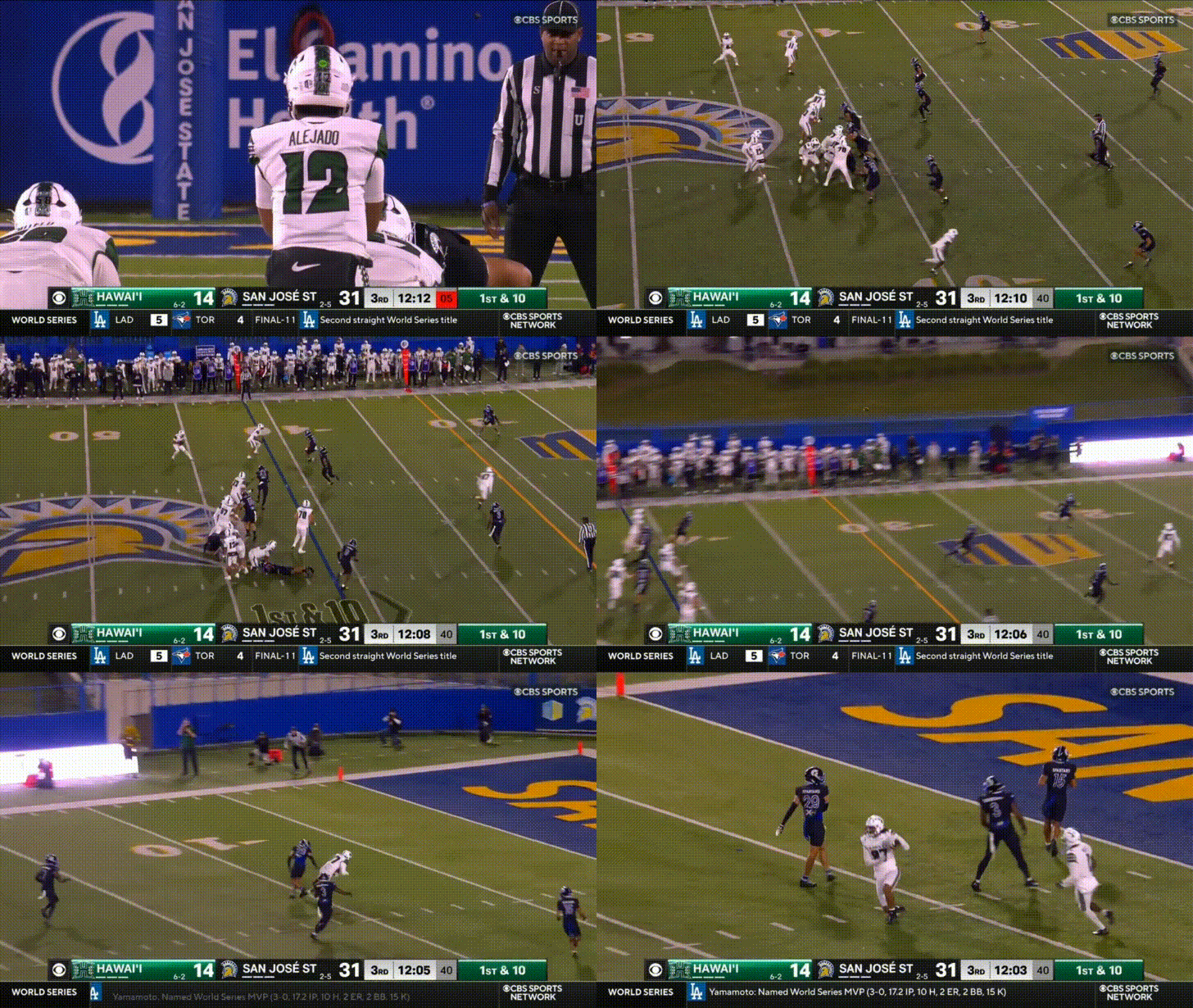
It will be worth watching to see how Hawaii adjusts to Jackson Harris’s absence.
Conclusion
Hawaii’s a strong passing offense lead by a capable young quarterback. In previous years, I’d probably be weighing Justin Wilcox’s historical success defending against Air Raid and Run-and-Shoot offenses against Cal’s historically poor bowl performances in recent years. In retrospect, though, was Cal really that bad? The 2018 TCU team ended up in the national championship a few years later (after former Cal head coach Sonny Dykes took over). 2023 Texas Tech is currently the #4 seed in the College Football Playoffs. 2024 UNLV just lost the MWC championship game, but we did take their best player (thanks, Jesus De Jesus!).
I’m going to save my final conclusion for the defensive preview tomorrow (where I will also cover special teams), which will come out the morning of the game. Please read it, it will probably be my last.
*Special thanks to the Mountain West Conference for providing me with the Hawaii games that aired on Spectrum Sports.
Extra section because I have a platform and can write whatever I want here
If you’re a regular follower of WFC, you may or may not have noticed that I’ve occasionally been late or missed a game preview in recent years, even after paring down from both offensive and defensive previews to just offensive previews. The past couple years have been very hard, as both of my parents have unfortunately declined in health and I’ve needed to take on increasing family responsibilities. In particular, my dad has Alzheimer’s, and it’s been an increasing struggle to care for him as he’s gotten worse and worse. As much as I love Cal football, Write For California, and everyone who follows this site, I just can’t devote the time needed anymore to write articles up to the standard that I’d like to write.
More importantly though, I want to advocate that you are more prepared than I was. It sucks to think about, but make sure you have a plan for your parents, your loved ones, or even yourself, for if anything were to happen to you, especially as you age. God forbid, someone could have a brain bleed or a stroke at any minute and wind up unable to care for themselves in an instant. If your child had to step in and care for you tomorrow, would they be able to do it? Would they be able to pay your bills? Would they be able to access your finances to make sure your bills continue to be paid? Would they be able to arrange care? How would they pay for it? Who are your doctors? Where is your insurance information? What do new doctors need to know about you going forward? Who has medical power of attorney in the event that something happens? Who is the lawyer that wrote the trust or living will or legal documents that dictate these sorts of things? I don’t know what your plan should be, but you should have one. Maybe you just need to write down your bank passwords and lock them in a safe deposit box, and give your loved one that information if you ever need to. I needed to take over the bills for my parents, and I didn’t even know what bank accounts they had and where, nor a good way to find out. Doctors will ask me questions (when was he first diagnosed, and by who? Sorry, I don’t know who his doctor was), his insurance info (he lost his wallet), his billing info, who is legally authorized to make medical decisions, and so on. It’s a lot harder to find these answer out after the fact.
Your parents, your grandparents, or maybe even you can decline in health much faster than you realize (and perhaps without you even realizing it). Consider how many old people are convinced they can still hop in a car and drive long past they’re truly able. My mom can’t walk, but she still will try to stand up and walk out of her wheelchair if the caregiver turns their back. People will be in denial about their declining health, or oblivious to the fact that something is even wrong. My dad thinks he’s okay, and then repeats the same sentence three times in a row. If he’s in denial about his health or condition (he thinks he can live by himself, he thinks he can drive, etc), there’s nothing I can do or say to let him realize there’s a problem when he can’t even remember what he said one sentence ago. This is why you need a plan in place before it happens.
I don’t have the answers, but if there’s just one thing to take away from this, it’s that you should at least ask the question. Could I really step in and take care of my parents tomorrow if I had to? What do I need to do? Could my kids step in to help me if something happened to me tomorrow? What do they need to know? Don’t find yourself playing from behind.
God bless.
Go Bears.
Thank you for this article and all the many previews you have done so well in the past. I never felt that I could fully observe, enjoy, and yell with confidence during a Cal game unless I had read through your preview before the game. You are the best! Having gone through the decline and ultimate loss of both my parents, who passed with me at their bedside, I appreciate your good words and practical advice regarding ageing and care for our parents. I wish you the very best in all you do. Sincerely, thank you.
Christopher, we all love your writing and clips immeasurably and are rooting for you and your family. This point: "If your child had to step in and care for you tomorrow, would they be able to do it? " is so critical. In our American culture, somehow we don't want to discuss this. And really we should all be doing this sooner than anyone wants to.