

We last saw UNLV at the 2024 LA Bowl, but it was a hollow shell of a game as Fernando Mendoza came down with a very serious flu that caused him to miss the final game of the season against SMU, and he got so sick that he woke up in a red uniform before the LA Bowl. Devastating illness, really. Wouldn’t wish it on my second-worst enemy.
UNLV is led by head coach Dan Mullen, the former Mississippi State and Florida head coach (and Wagner alum who got his start coaching as Wagner’s WR coach, in case you missed that fact buried in the 9,577 words and 155 video clips I included in my Wagner articles). After 2024’s head coach Barry Odom was poached by Purdue after a 10-2 regular season (just prior to the LA Bowl), Dan Mullen took over in 2025 and kept that momentum going, leading UNLV to another 10-win regular season (although UNLV had losses in the MWC Championship and bowl game to finish 10-4 overall).
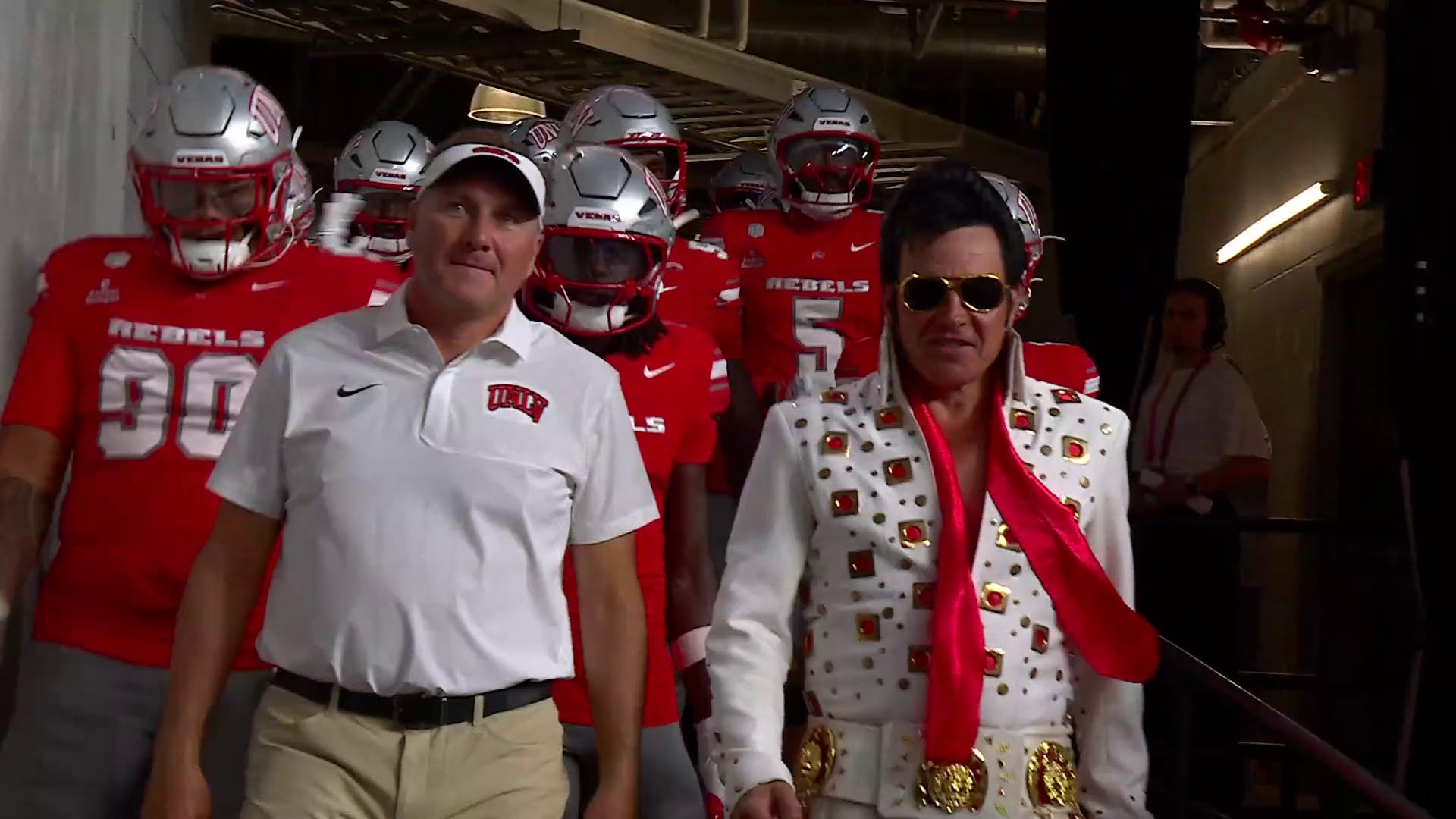
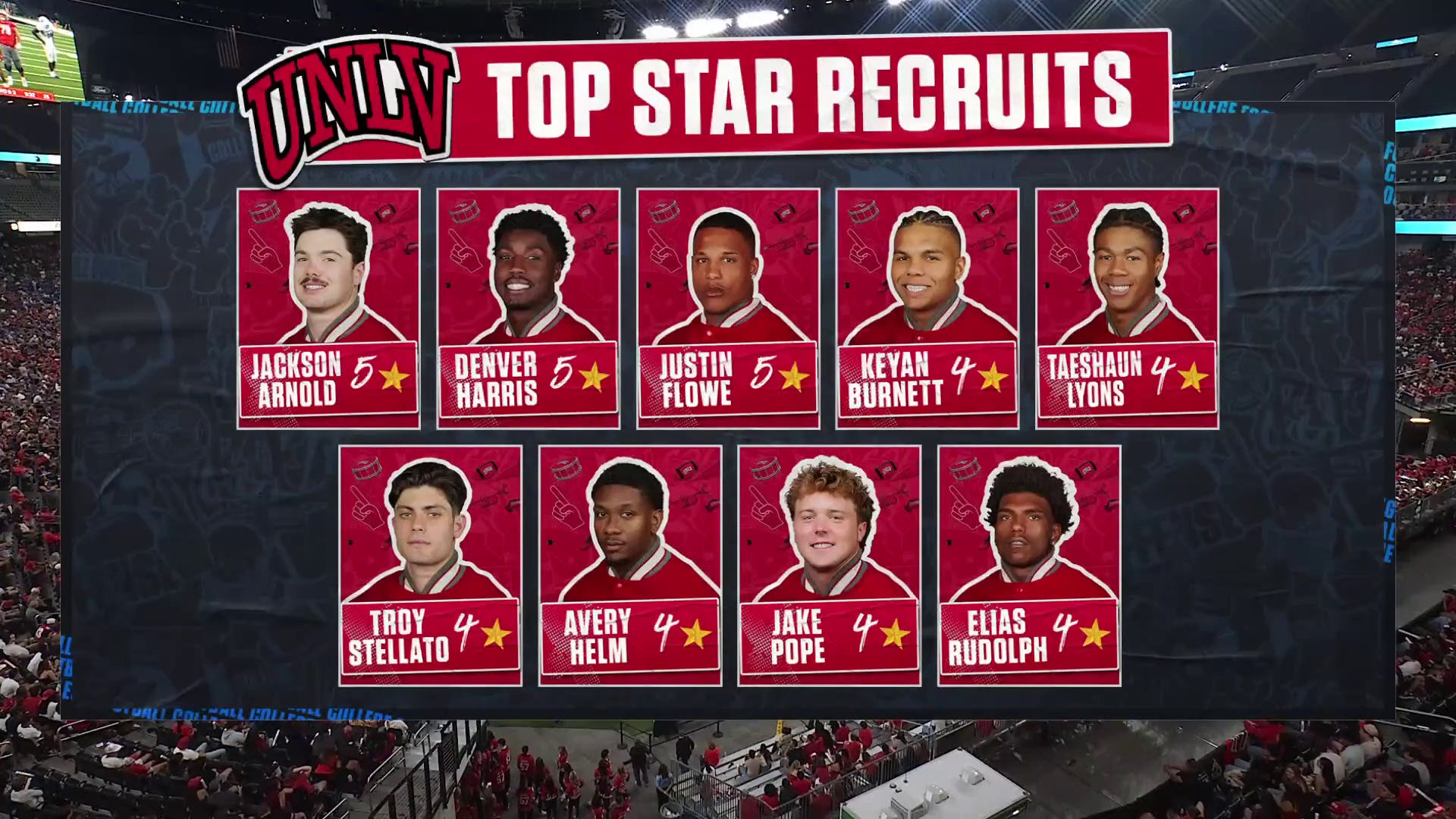
Kind of similar to Mullen rehabilitating his coaching image after being fired from his last SEC job, UNLV remains an attractive place for talented players looking to bounce back after falling short at previous destinations. In 2025, Mullen brought to Vegas sixteen former 4- or 5-star players, with 33 of them having P4 experience, and have kept that trend going heading into 2026:
UNLV runs a pro spread offense with a dual threat quarterback. When an opponent drops defenders into coverage, this gives UNLV a lighter box to run the ball. UNLV will try to spread the defense out in the passing game, both horizontally and vertically (and UNLV will run 4-verts quite a bit), to make it easier to run the ball. When defenses commit defenders into stopping the run (especially because you also have to account for the QB), this gives the quarterback receivers to attack in one-on-one man coverage. UNLV can then run zone-read or RPO plays and attack the run or pass depending on what the defense is giving them.
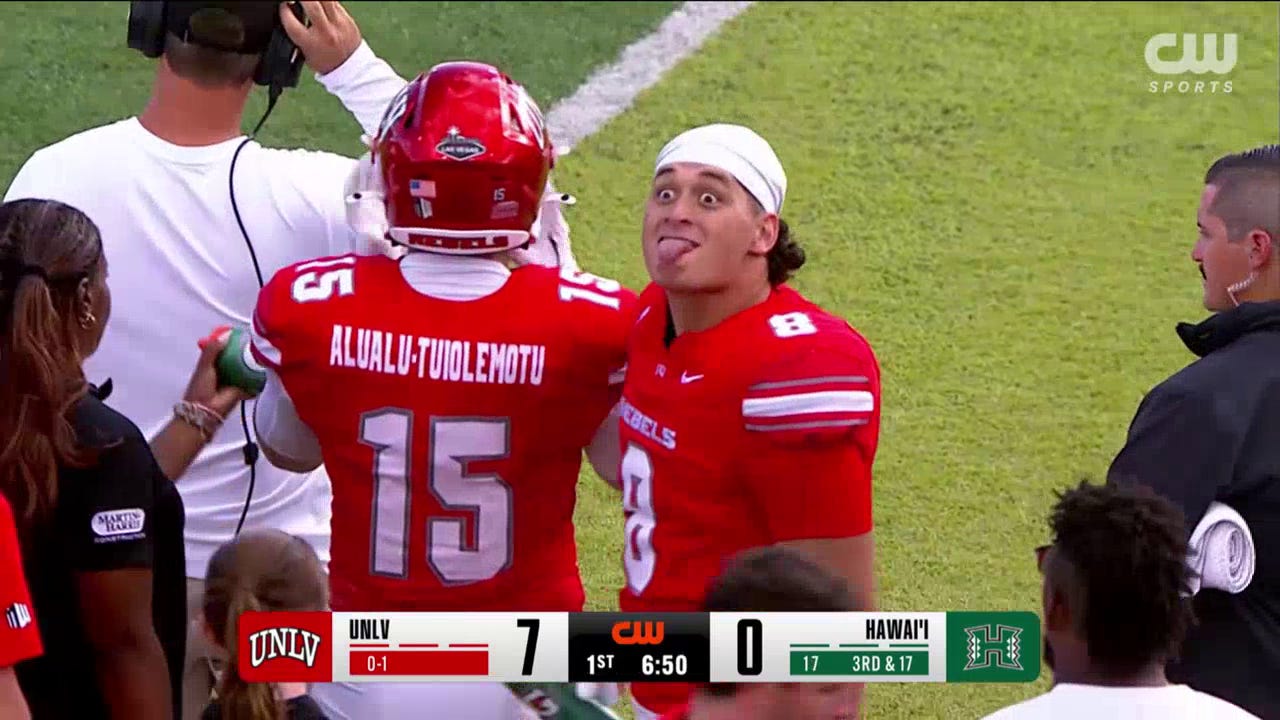
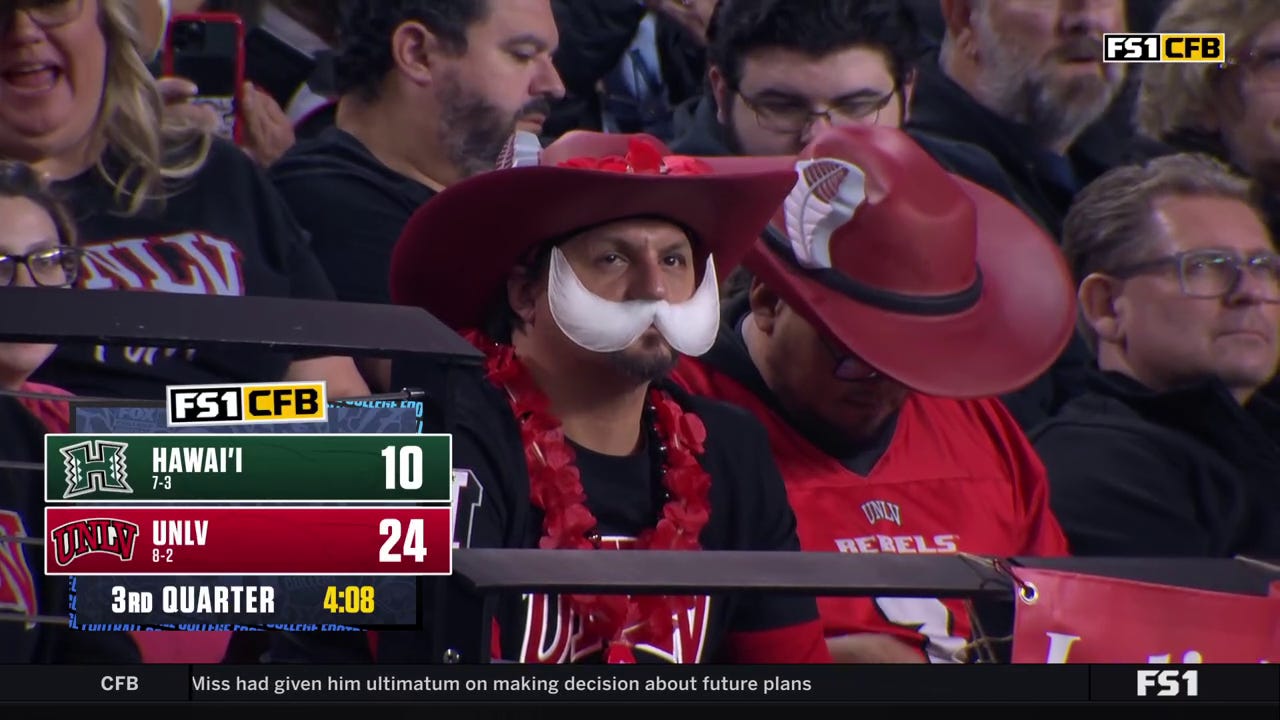
UNLV was founded in 1957, as you may have learned from Ben’s Wurster Hall this week (as I did). They spun off as an extension of the University of Nevada, Reno (i.e. the Nevada Wolfpack), which makes them the UCLA of Nevada schools in my eyes. They named themselves the Rebels, which I had assumed was some sort of Civil War reference, but realized that doesn’t make sense given their relatively recent founding. To quote the UNLV website:
UNLV’s nickname dates to the university’s origin in the mid-1950s, a time when a nation founded by rebels once again became obsessed with the idea of the iconic nonconformist. The decade of the 1950s was epitomized by young people rebelling against their parents’ middle-class American values. From popular motion pictures such as 1953’s The Wild One starring Marlon Brando and 1955’s Rebel Without a Cause starring James Dean, to “rebellious” musicians, such as Elvis Presley and the beginnings of rock and roll as it emerged from American blues music, the spirit of the times was rebellion.
So I’m supposed to believe the Running Reb is basically George Washington, mad at his parents? “1950s middle-class American values” is certainly vague, and while I’m sure it includes things like the nuclear “traditional” family, suburbanization, and whatever else boomers were up to, I can’t help feel like this rebellious spirit is missing one crucial aspect of 1950s American values deserving rebellion.
On the other hand, the “Hey Reb!” mascot originally wore a Confederate uniform, so maybe the Rebel was exactly who I thought he was.
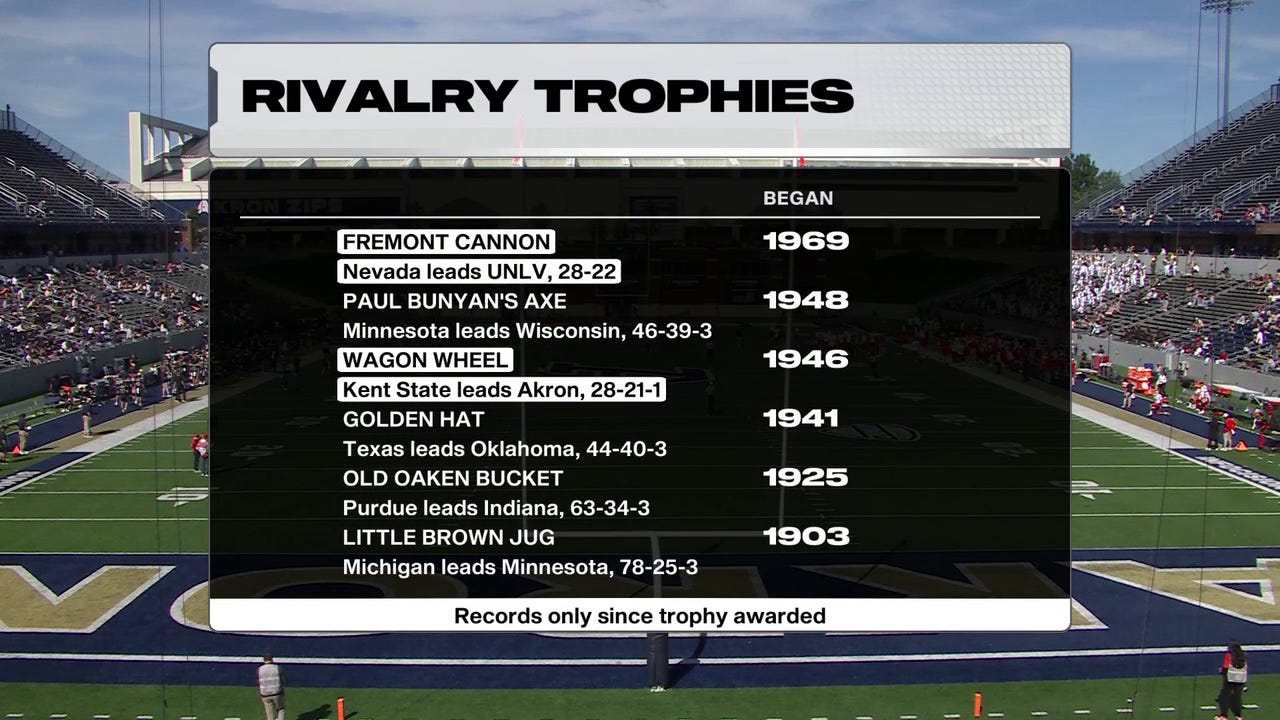
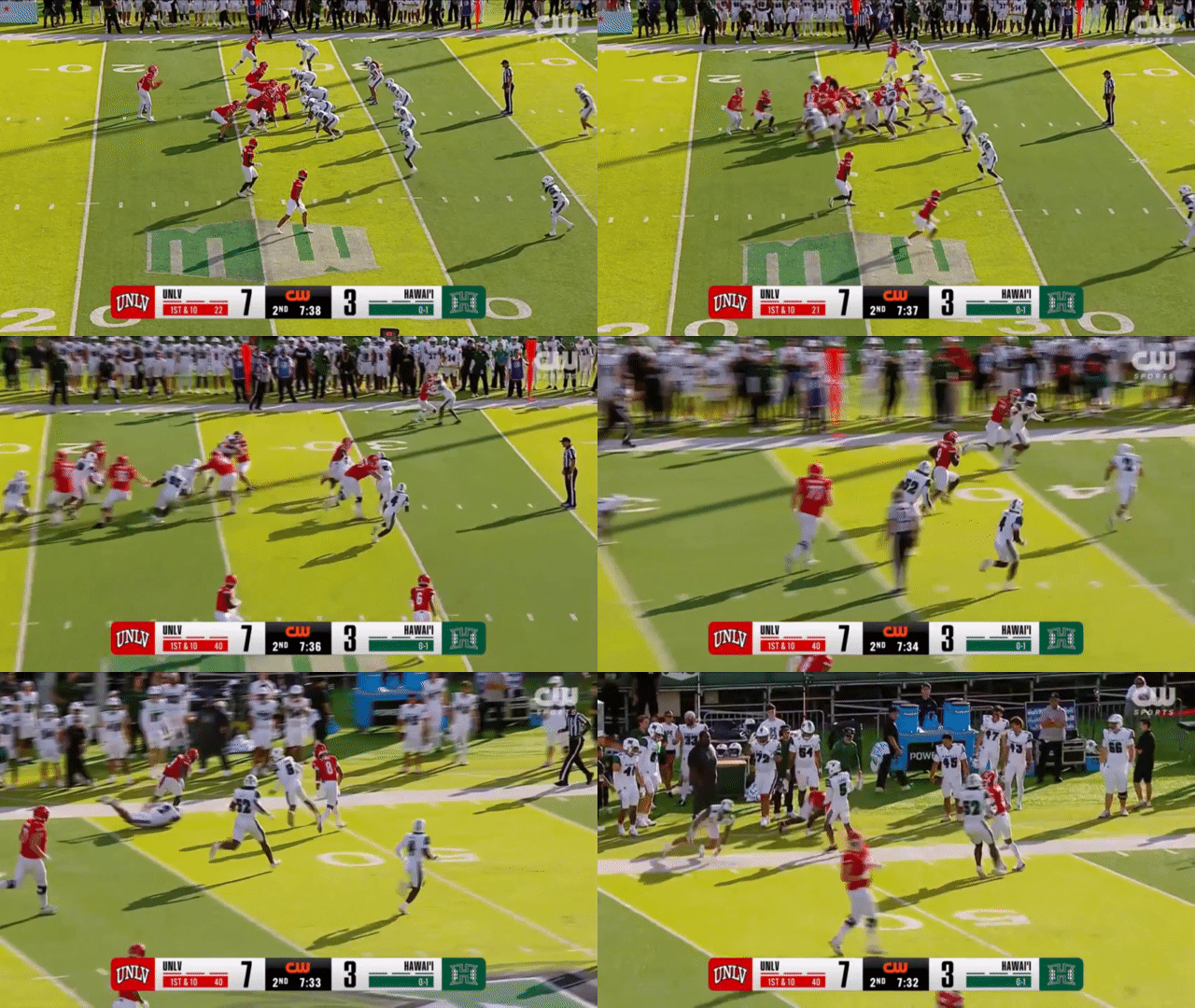
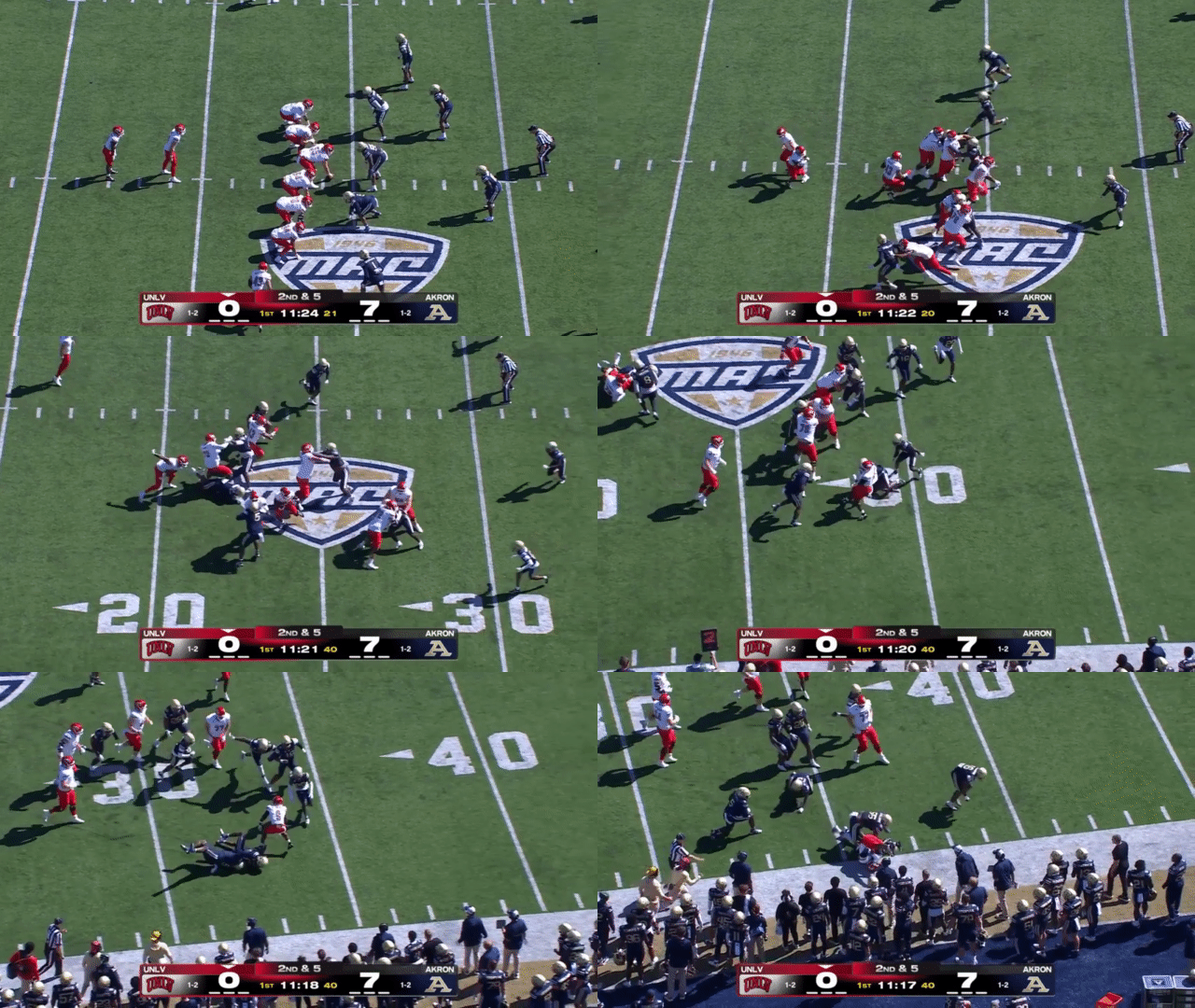
UNLV is 2-2 so far this season, suffering a close loss to a good Memphis team and a blowout loss to North Texas (44-6). In defense of that North Texas result, I have never seen such effective home field advantage: the game kicked off at 2:45pm local time in 100+ degree weather, and exactly half of the stadium is shaded with the other side cooking in the sun. UNLV went on to have 3 fumbles, missed tackles all day on defense, and stalled out on offense multiple times in the redzone. They’ve also handled business against a bad Hawaii team (who also lost to Stanford) and a very bad Akron team. That means that Cal will be an effective measuring stick game for them: are they winning because they’re playing well, or because they’ve had a favorable schedule so far?
Quarterback
UNLV is led at quarterback by former class of 2023 5-star quarterback, Jackson Arnold. I mentioned this in the Syracuse article, but after Arnold, Cal will have faced all of the 5-star quarterbacks from the class of 2023 except for #1 Arch Manning. (I count Malachi Nelson in this one, because he saw Cal from the sidelines at both USC and Syracuse). So I definitely see a future showdown between Cal and #1 Texas (likely in the CFP) just so Cal can tick off that box. (Kidding, obviously).
Arnold started his career behind Dillon Gabriel at Oklahoma, before taking over in 2024 and leading Oklahoma to a 6-7 record. He transferred to Auburn in 2025, where he was ultimately benched for former Stanford (now FSU) QB Ashton Daniels (yikes). Arnold has struggled with his consistency, and he now looks to put up some solid numbers in his senior season at UNLV and establish himself as a legitimate NFL prospect.
As you would expect from a former 5-star QB, Arnold has the tools, he has just struggled to translate them into his game. He has a strong arm, quick release, and can throw with some velocity, and he has the athleticism to create his own yards on the ground running the ball. However, he’s also struggled with his accuracy at times, as well as his placement on deep throws.
Here Arnold shows some nice touch and placement on this throw:
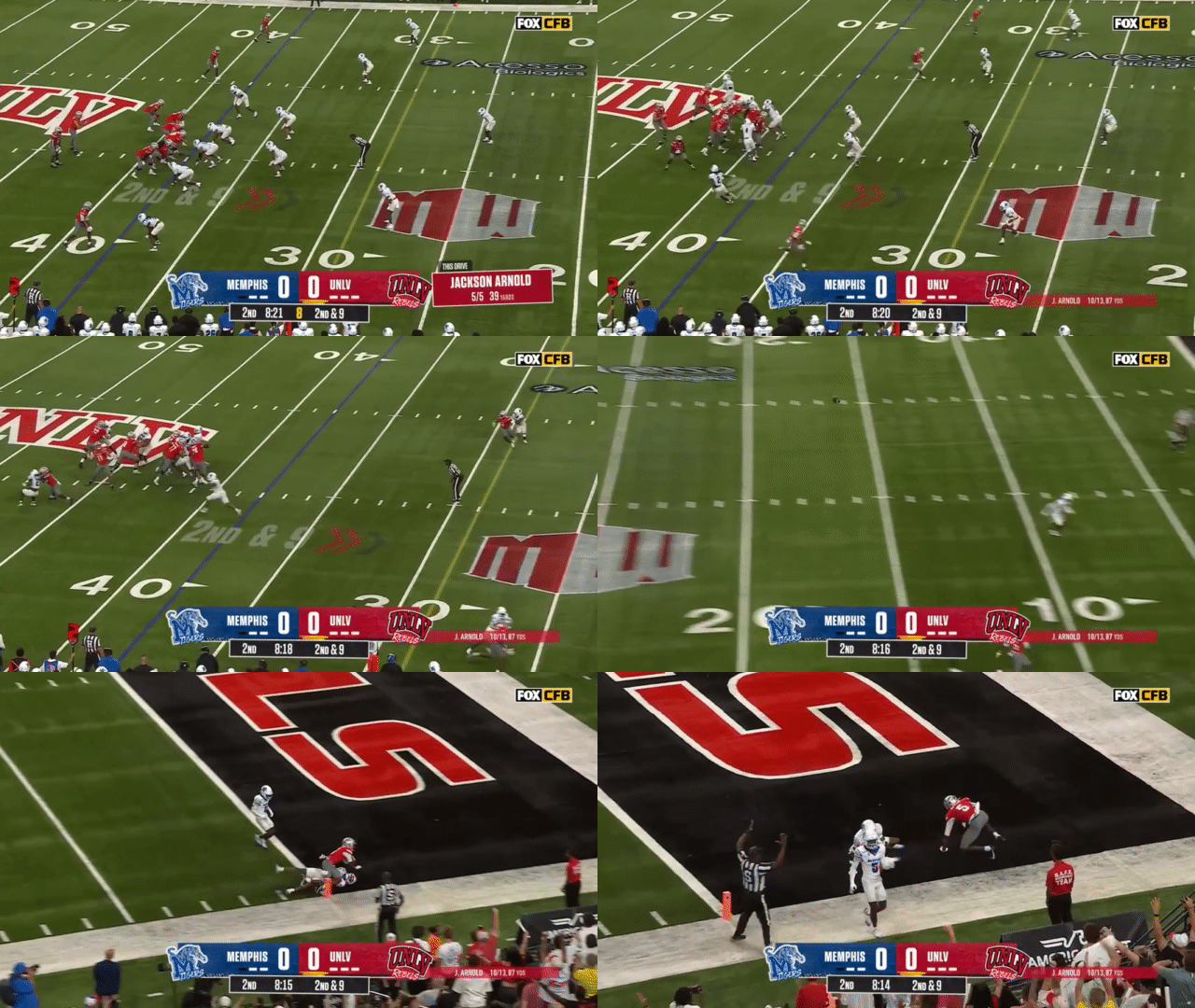
Arnold is tough, and one of his knocks against him at his previous stops of Oklahoma and Auburn was his tendency to hold onto the ball too long and eat sacks. And while that may be true, it’s also because he’s not afraid to stand in the pocket and deliver:
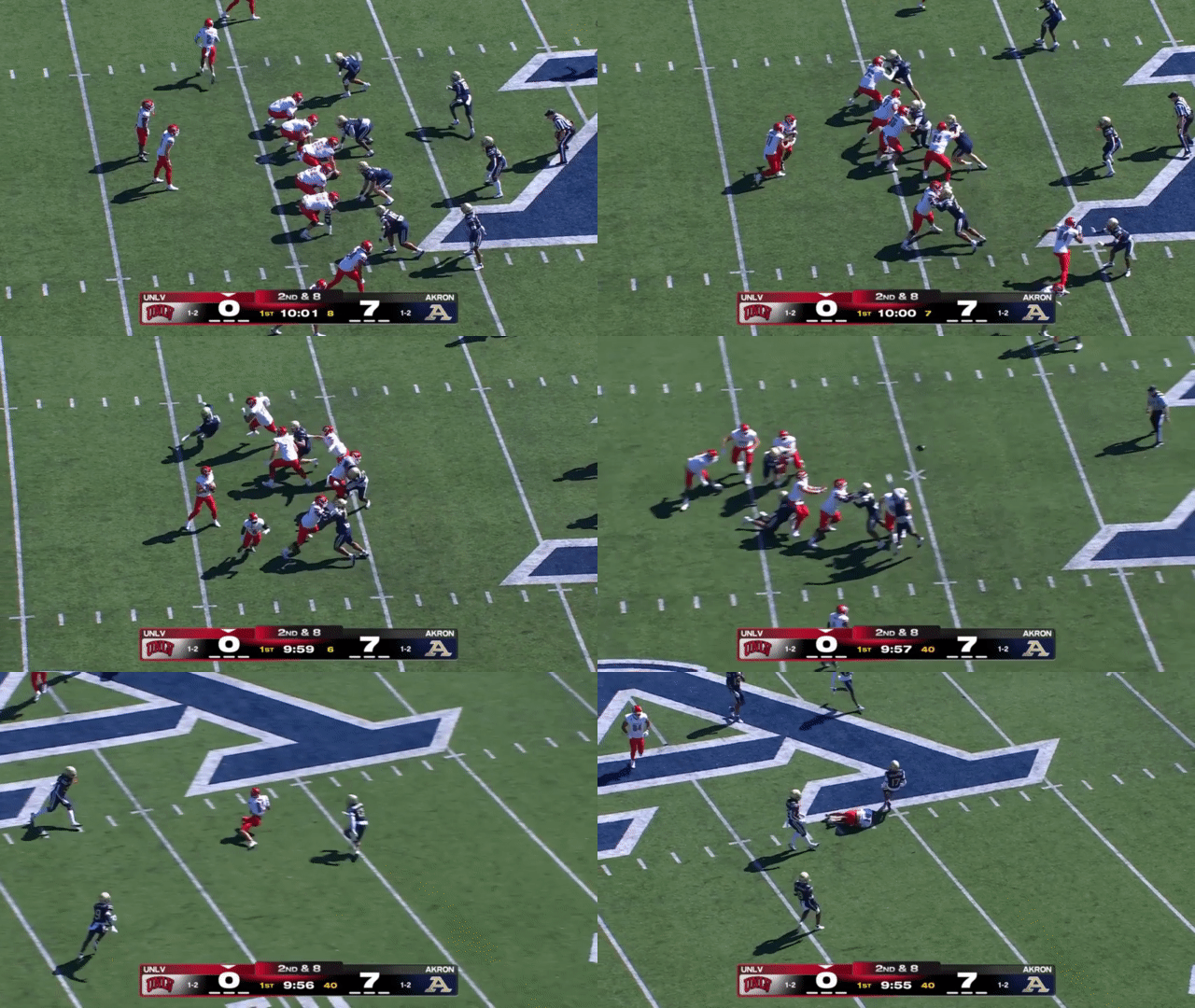
Arnold has a tendency to roll out and throw on the run, often using all arm strength or inconsistent mechanics with his off-platform throws (hence the occasional misfires). When he can set his feet, he can stand and deliver nice throws:
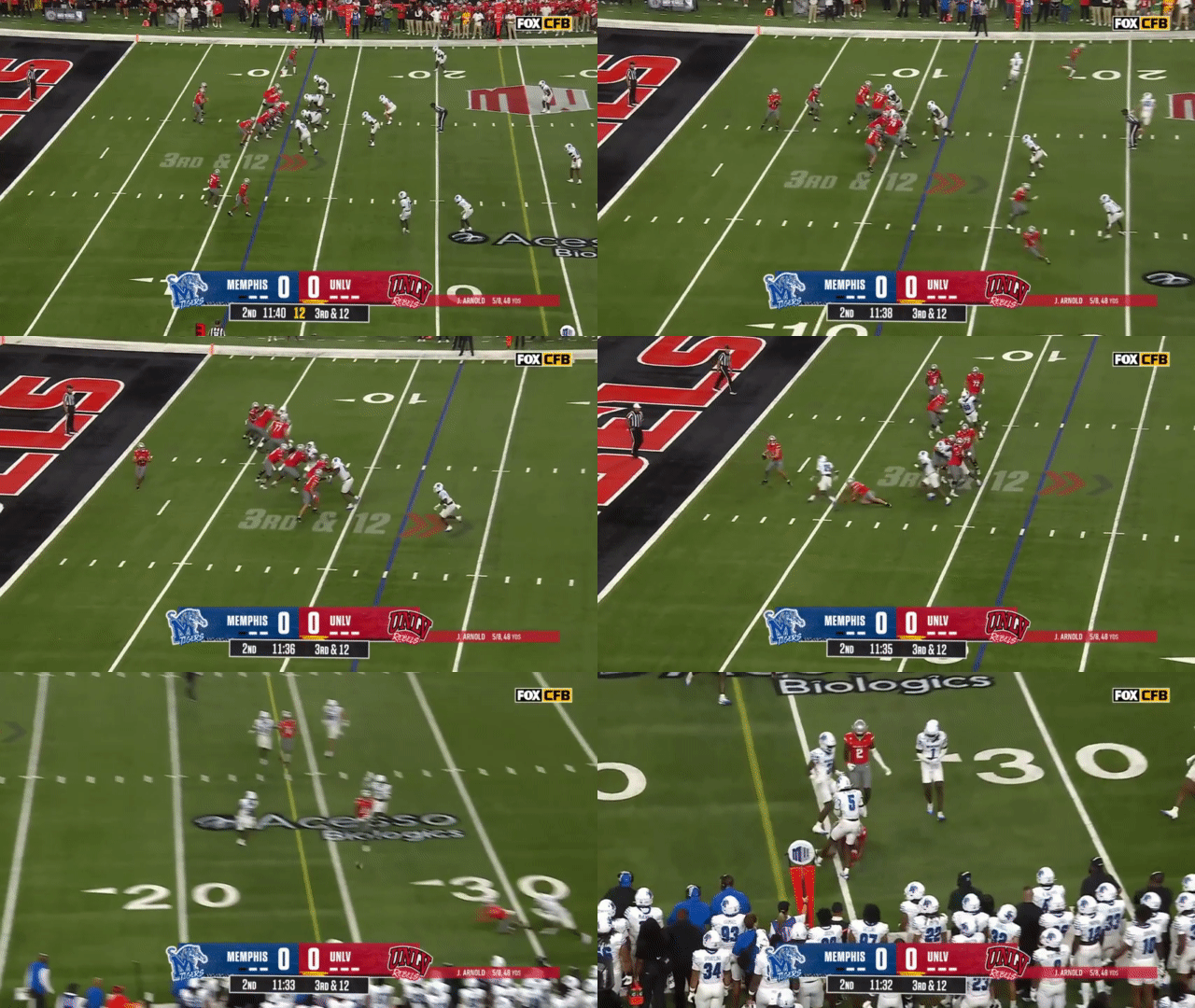
Arnold is very escapable in the pocket, and he will often look to extend plays with his feet (although watch his lower half as he throws this one):
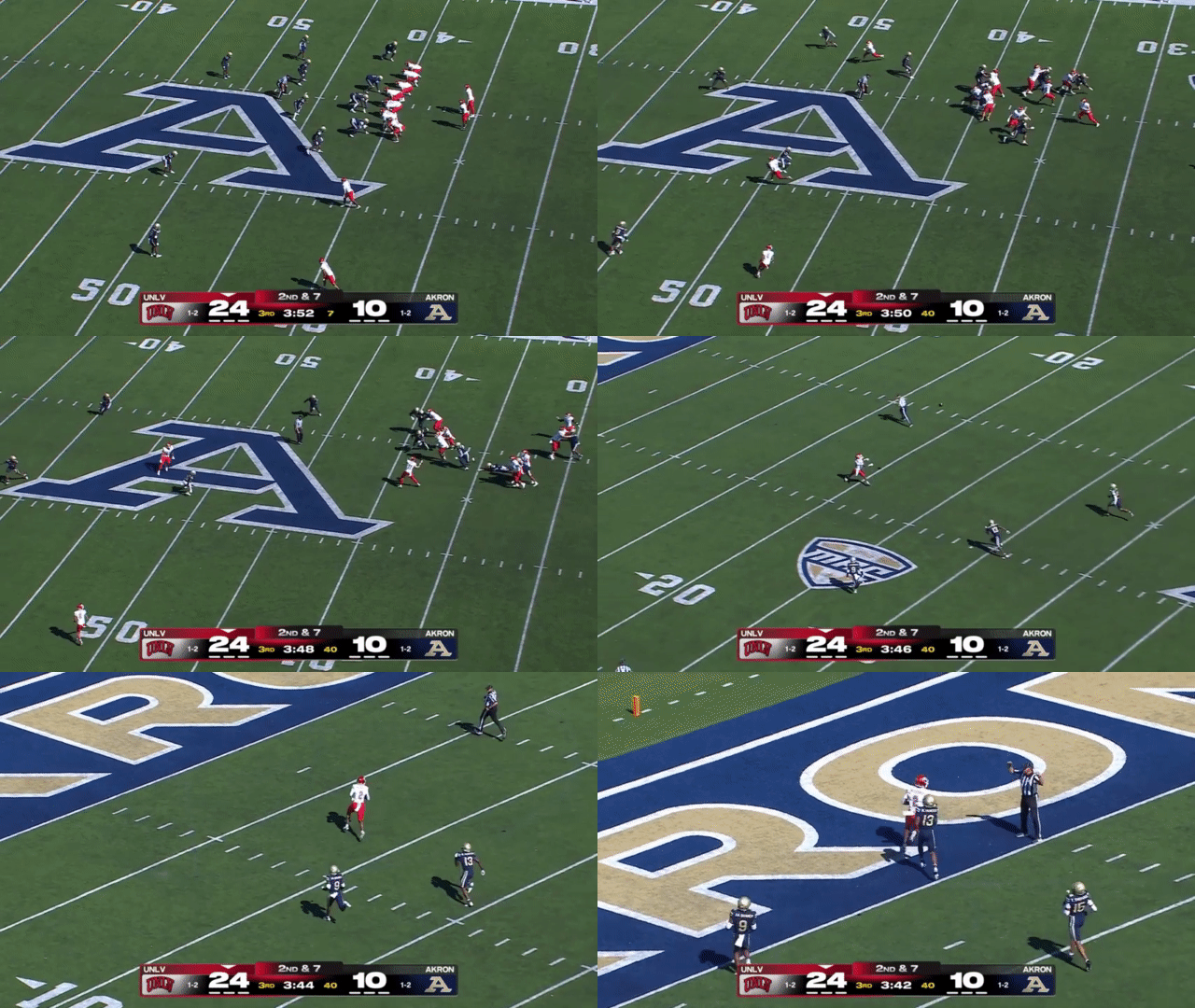
However, sometimes his throwing mechanics break down, and it seems like his lower body is not in sync with his upper body. Here’s an example where he lets his accuracy get away from him:
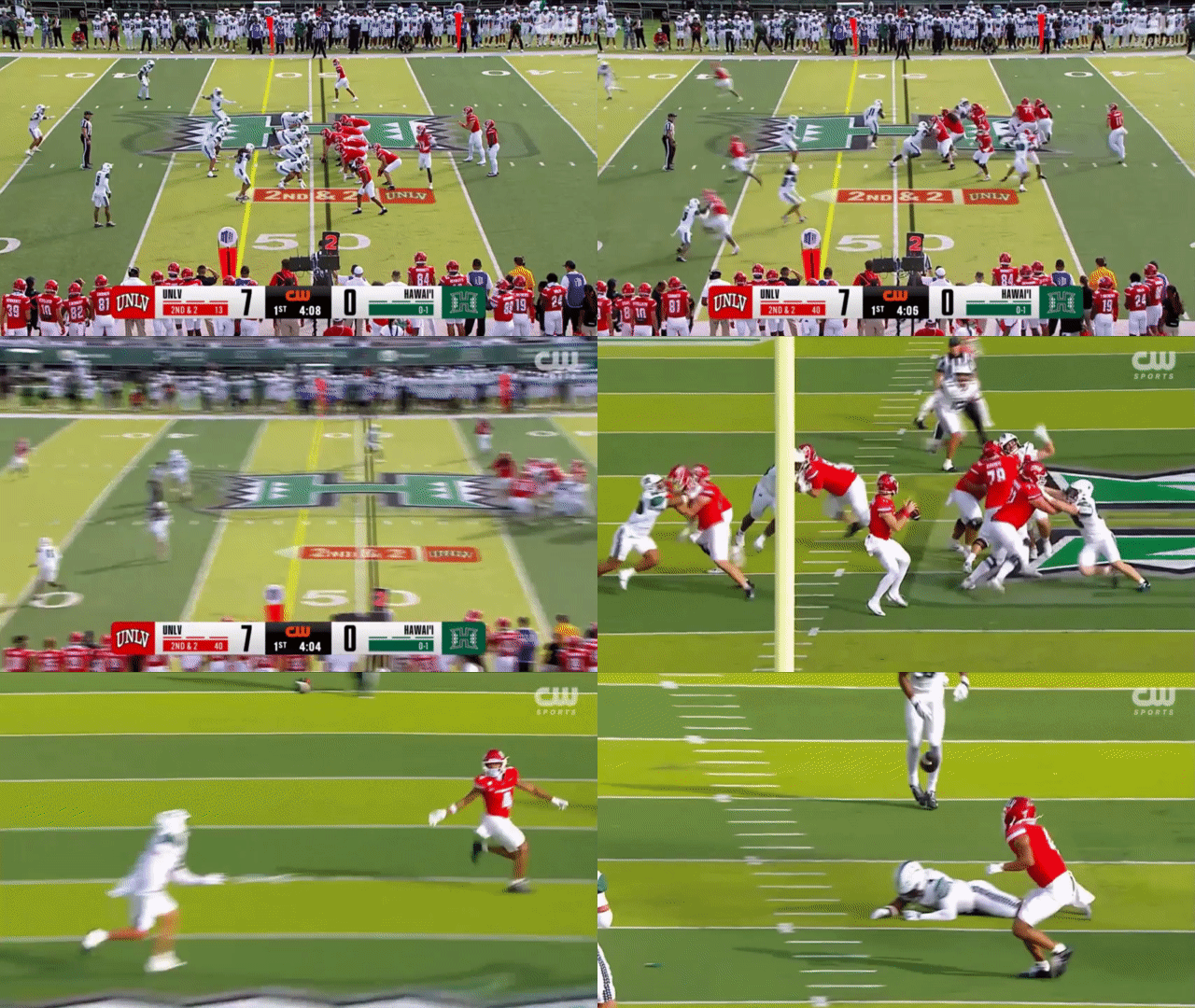
Here Arnold has time, but still sails the throw high:
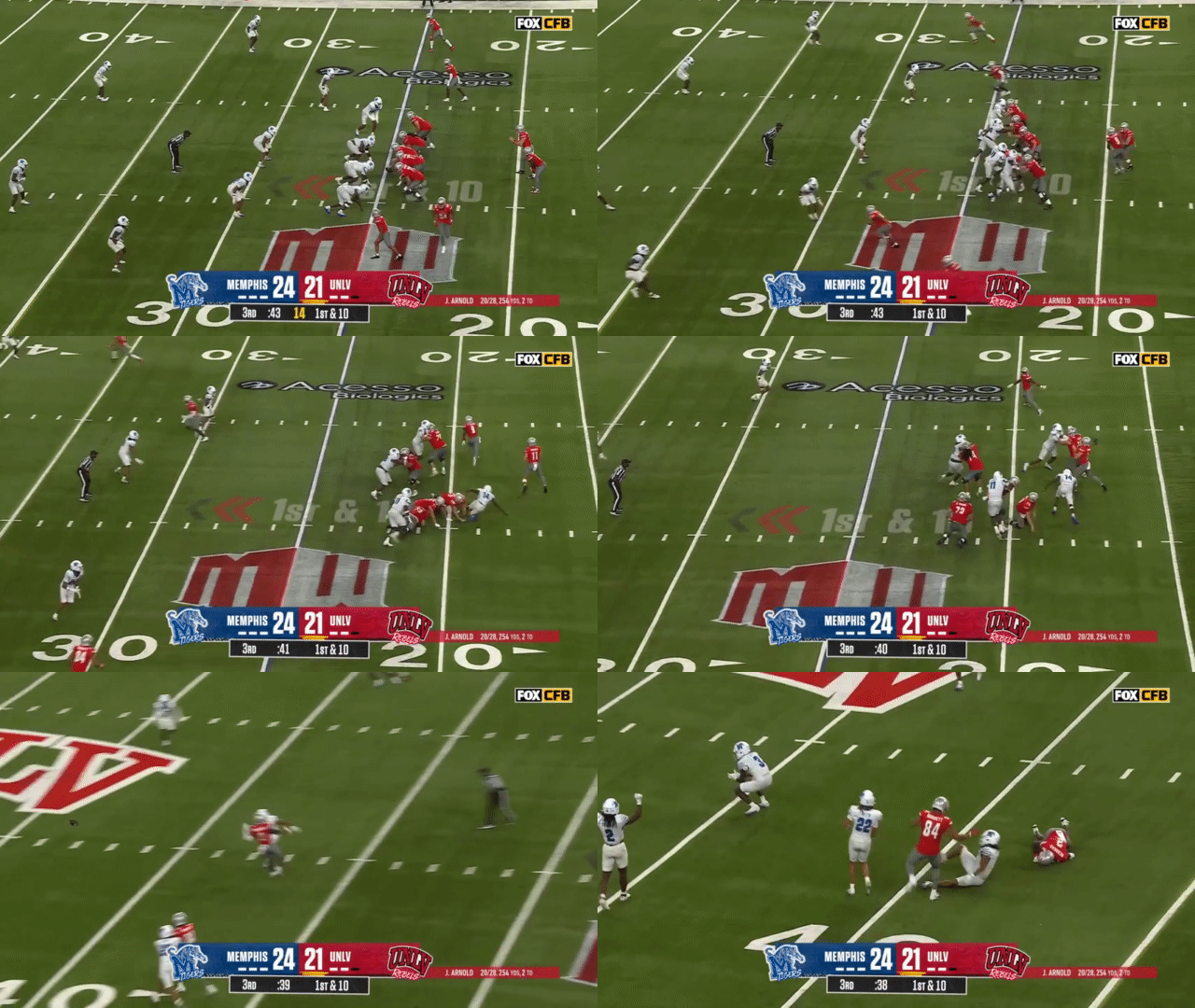
Arnold is also prone to misfiring even on easy throws:
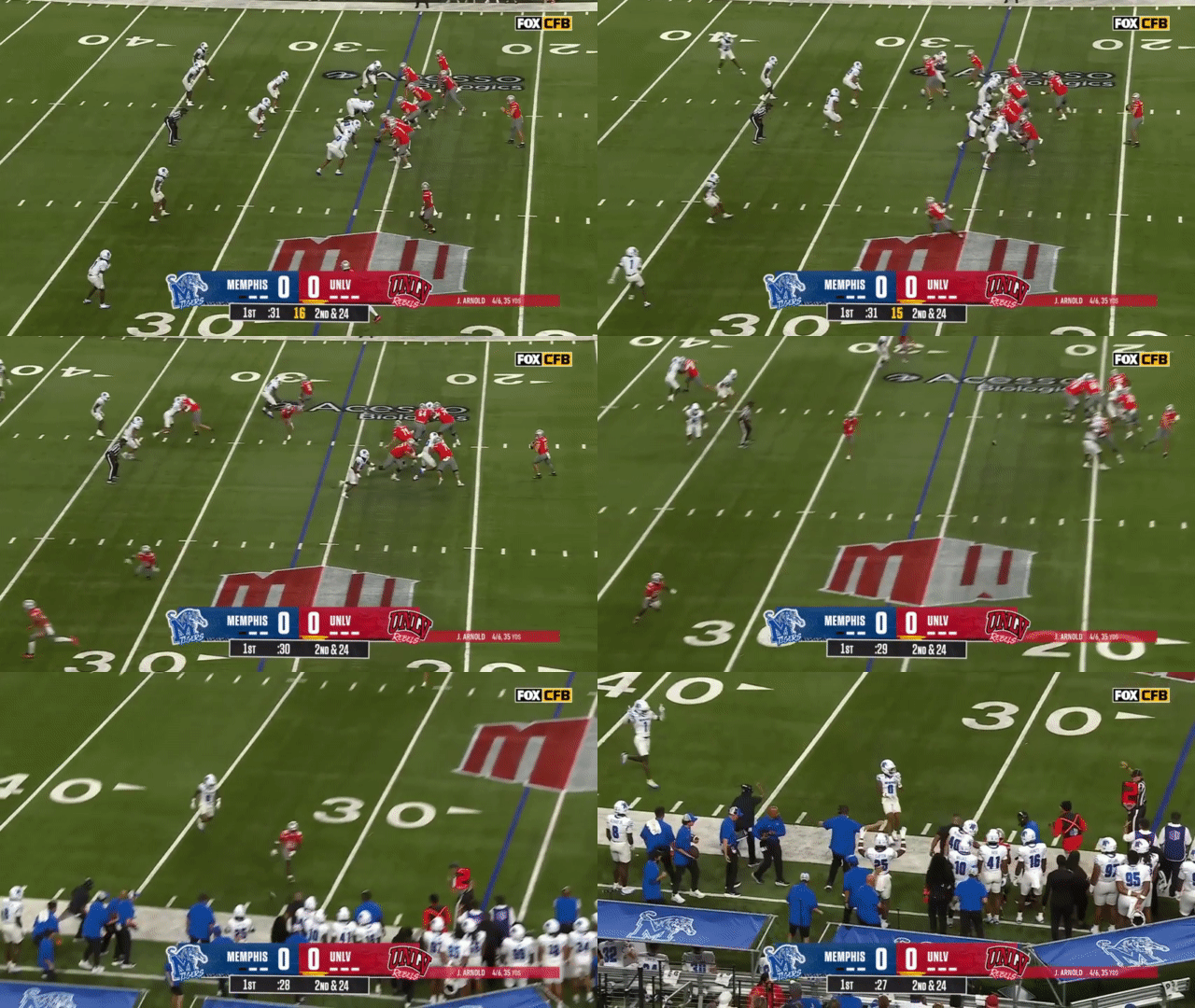
Arnold is a dual-threat quarterback, and he’s the team’s second leading rusher. He will run zone-read, option-read plays, QB draws, QB power, etc., and not to mention all of his unscheduled scrambles. Here Arnold successfully navigates pressure to turn this into a positive gain on the ground:
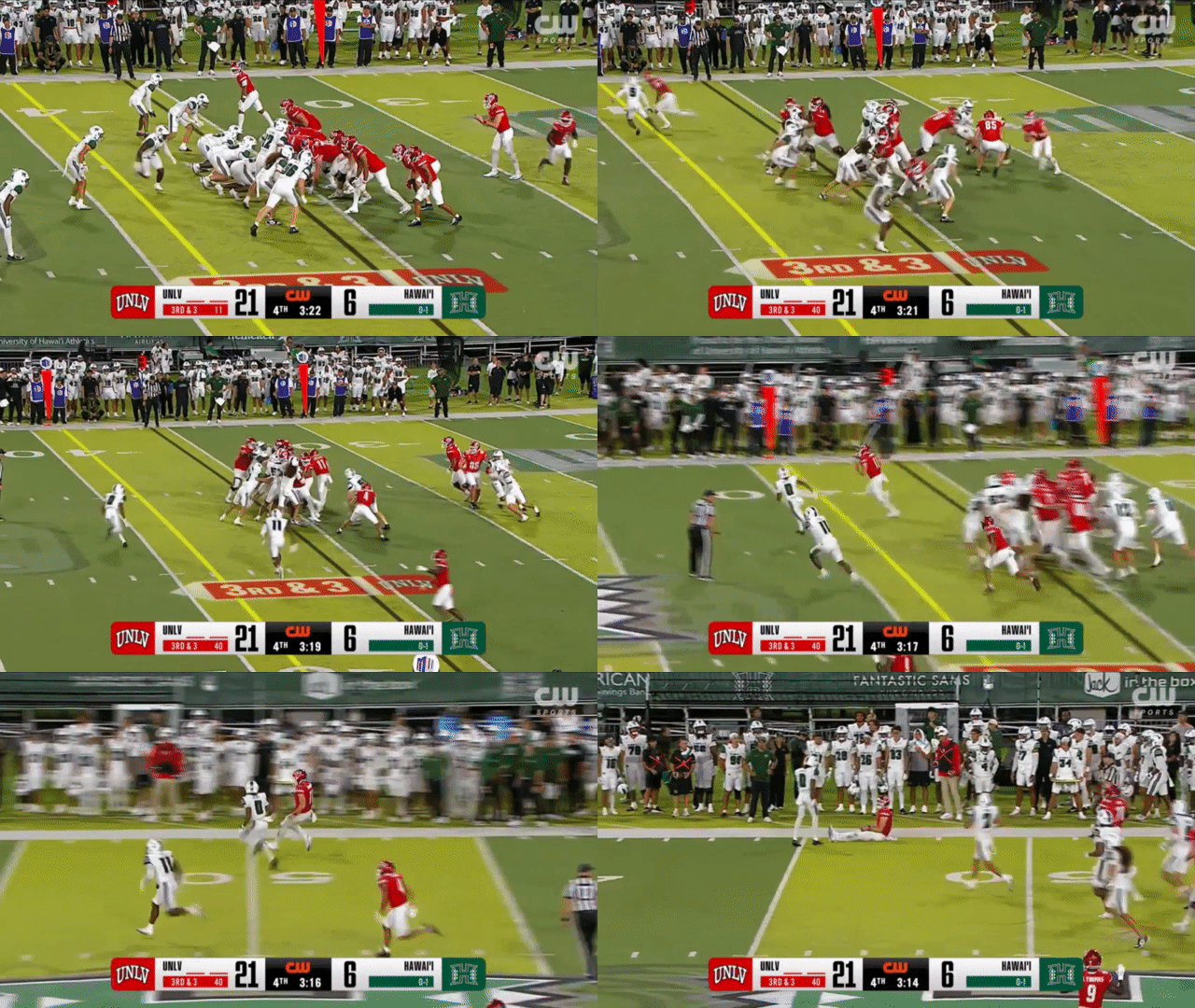
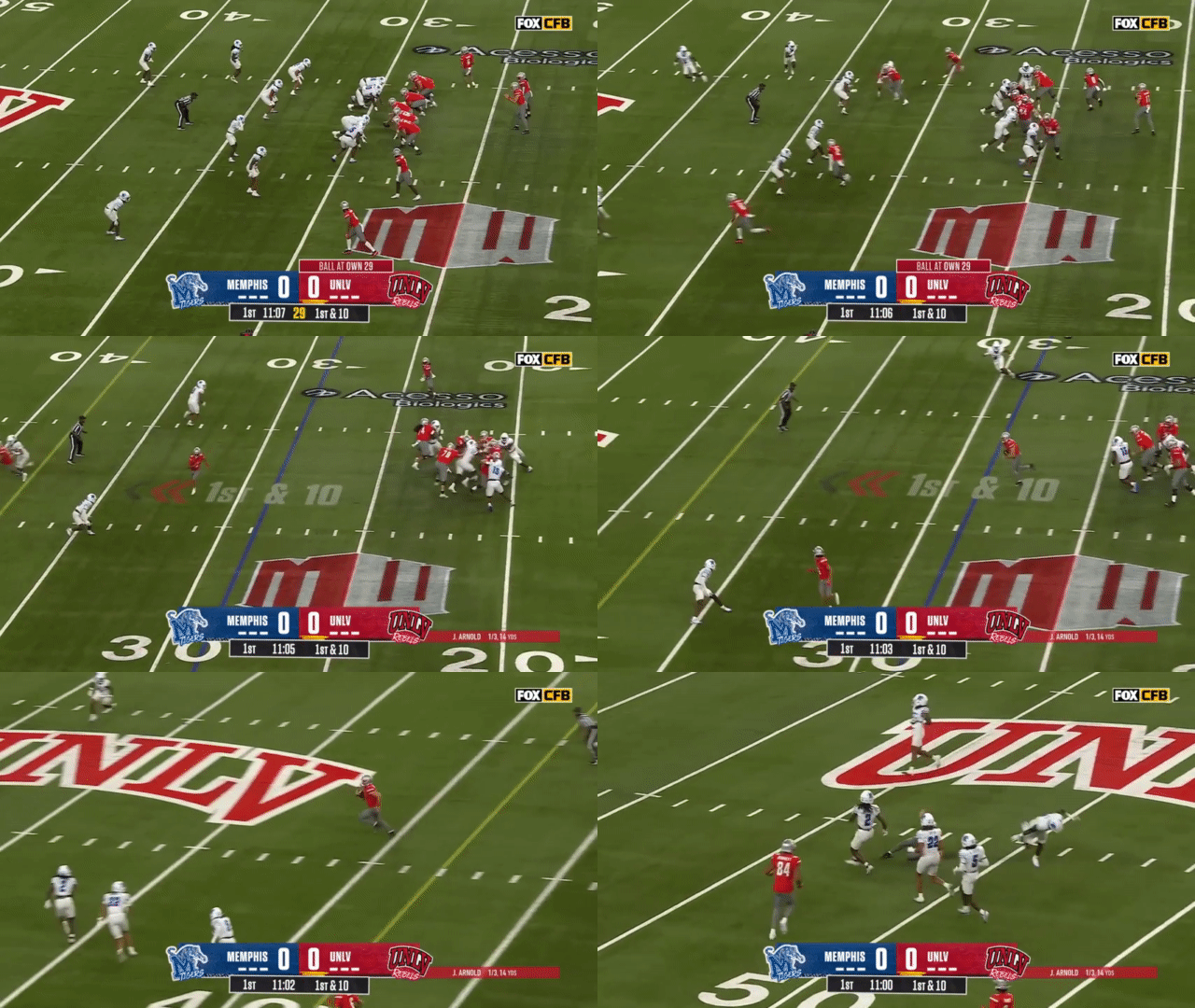
And when Arnold has room to run, he can really gash a defense:
UNLV will incorporate Arnold into the run game:
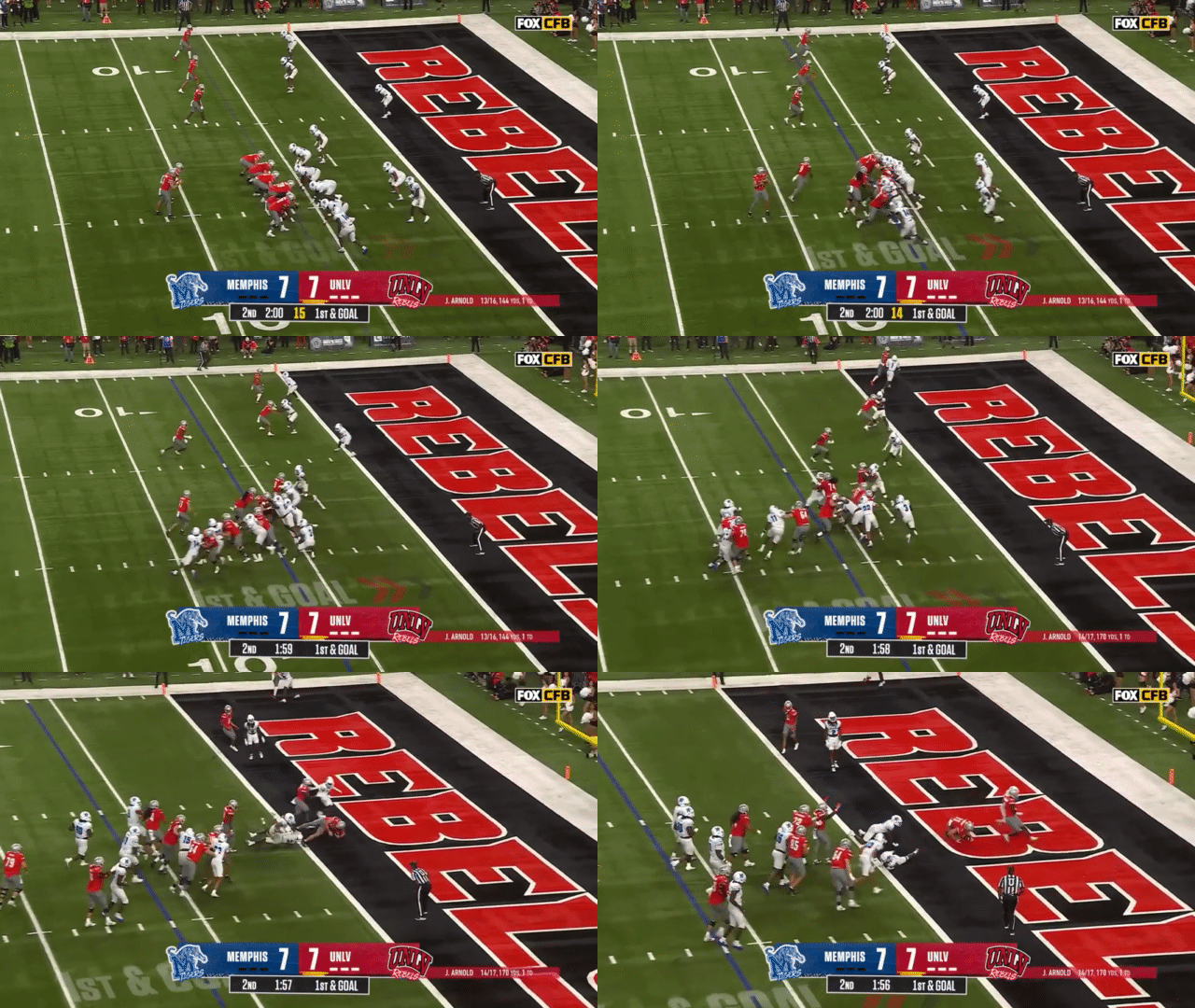
And here he is on the draw:
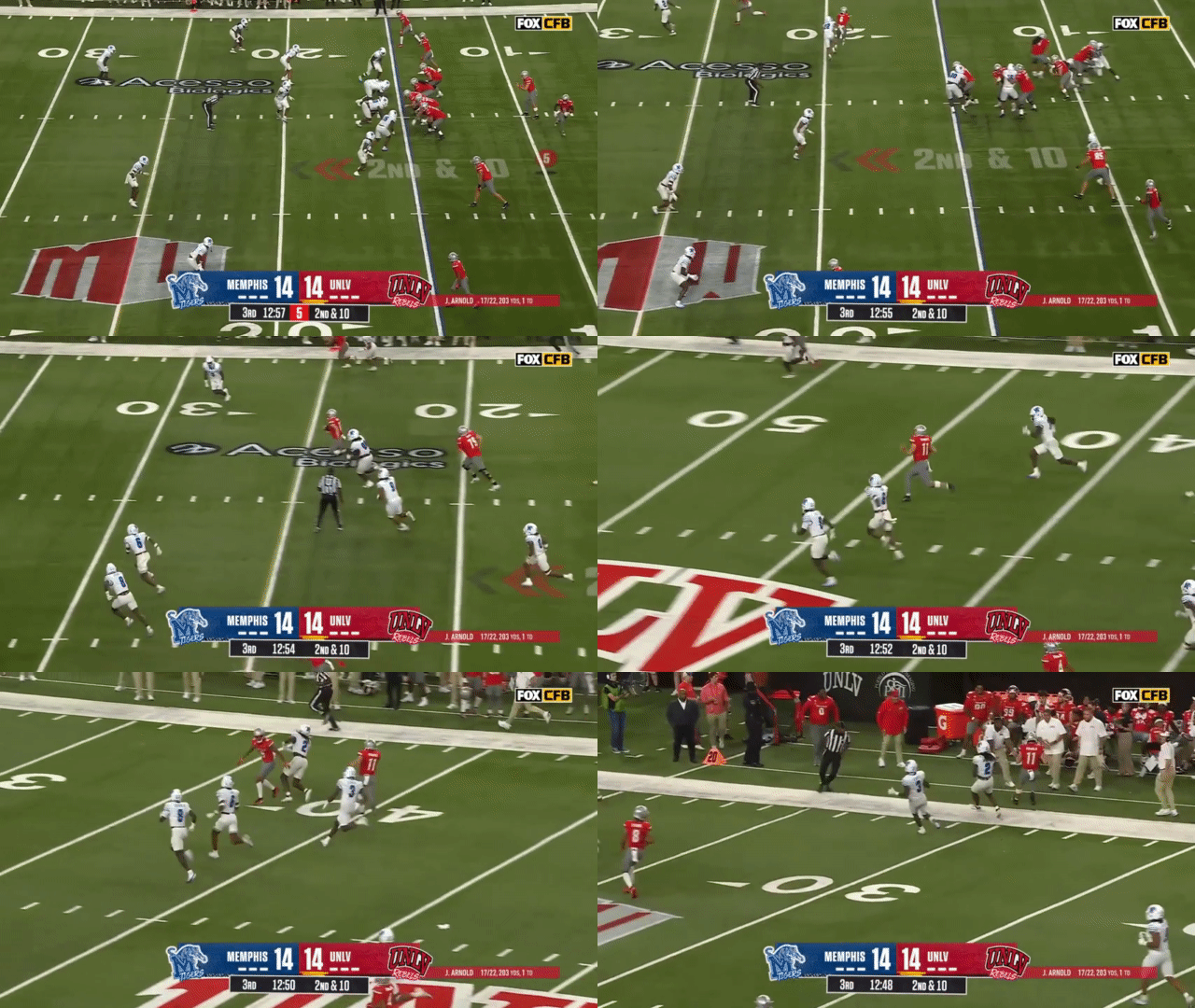
Arnold runs with power, and will look to level a defender:
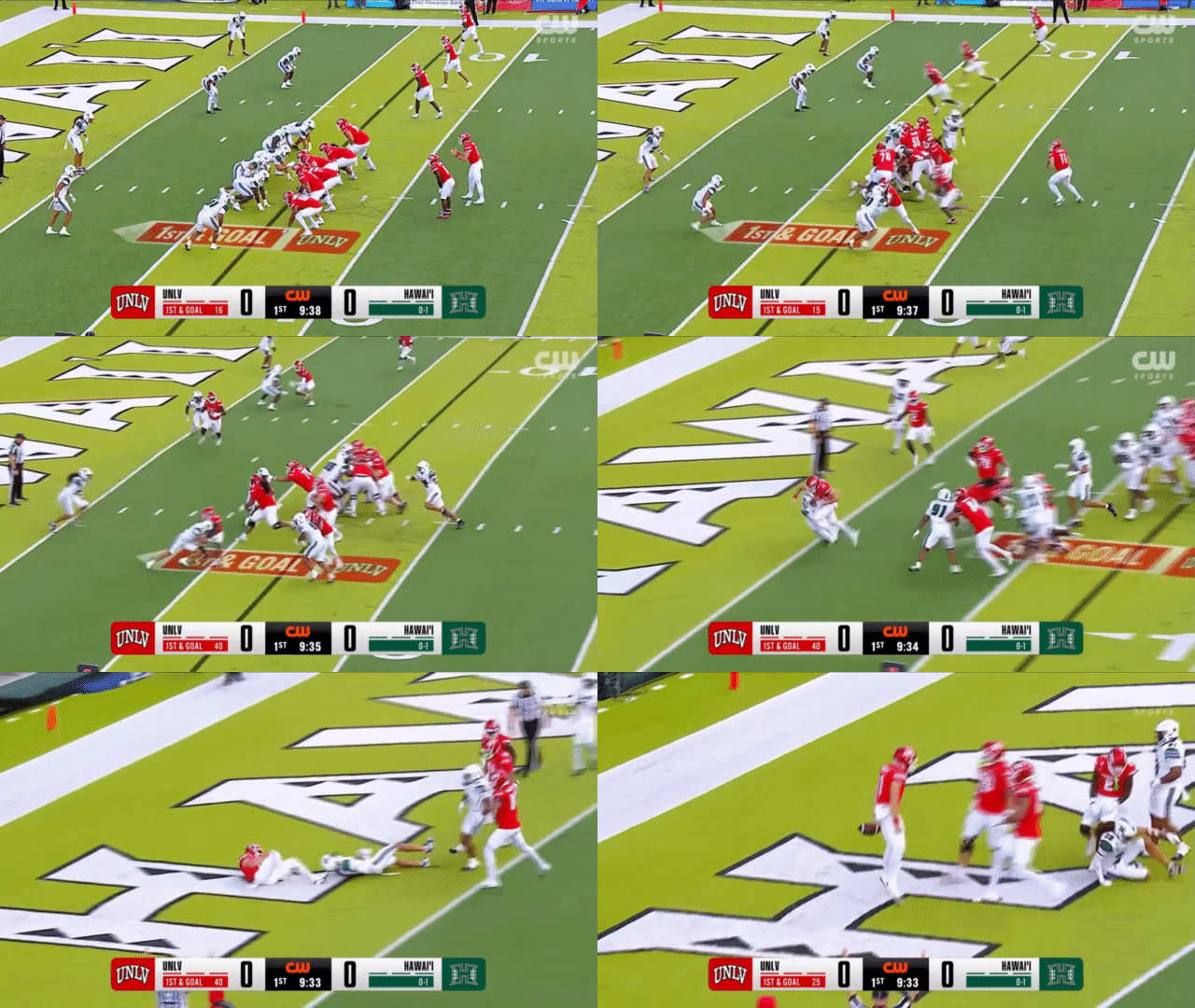
Earlier in the season, UNLV utilized their backup QB, the 6’3” 240 lbs. Alex Orji, on some gadget plays, so I figured I’d include that here:
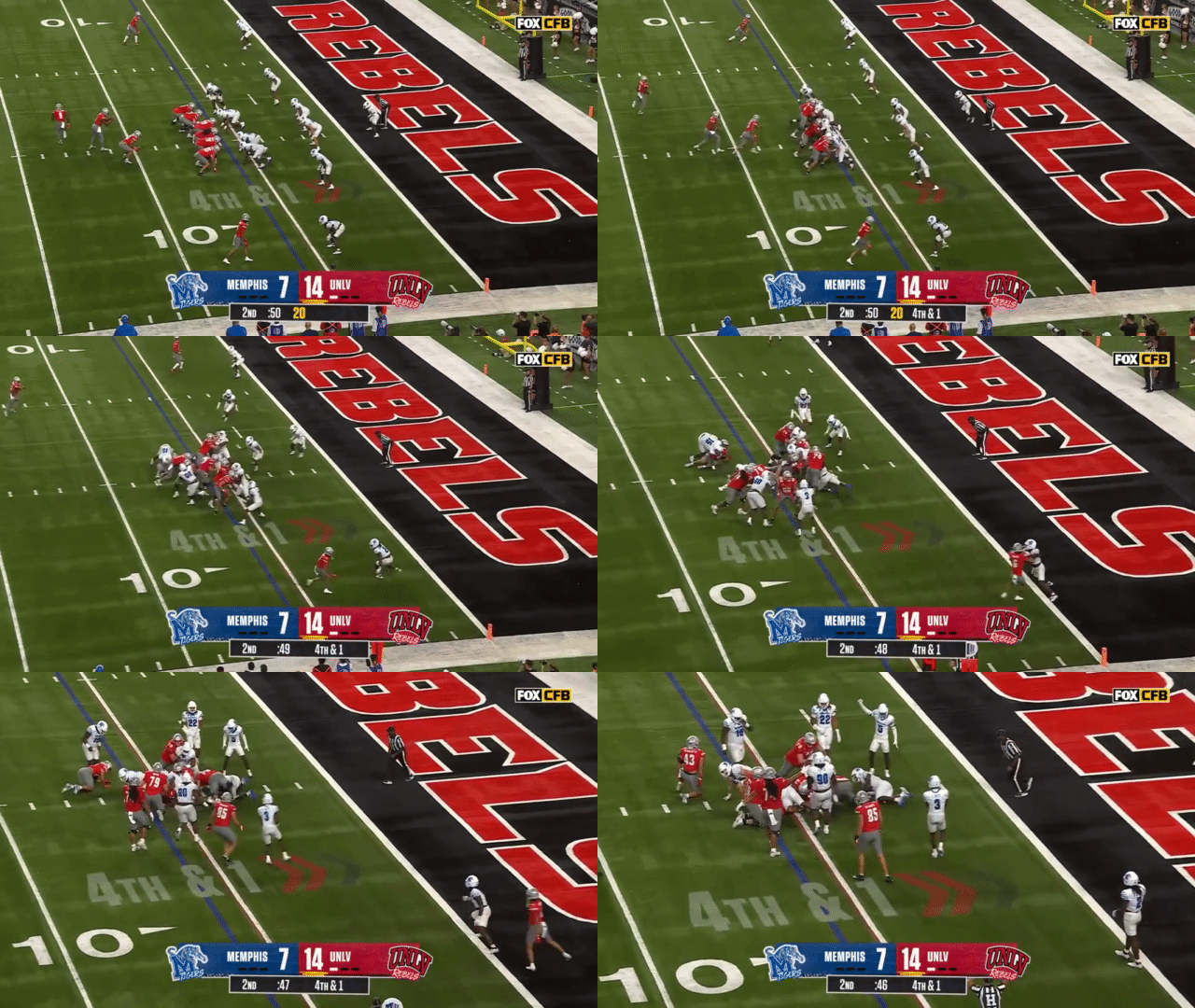
Cal has already faced a similar quarterback to Arnold this season in Nico Iamaleava, although I’d say that Arnold is quite a fair bit better throwing the ball, but not quite the same level of talent running the ball as Iamaleava. Interestingly, they’re pretty close on paper (Arnold: 891 yards passing, 61.3% completions, 5 pass TDs, 0 INTs, 160 rush yards, 3 rush TDs; Iamaleava: 820 yards passing, 62.6% completions, 4 pass TDs, 2 INTs, 143 rush yards, 1 rush TDs), although I guess you have to give Iamaleava a little more credit for the more difficult schedule (although Purdue and Maryland may end up Big Ten bottom-feeders, who knows). Regardless, Cal will need to keep Arnold contained, force him into more difficult throws, and not allow Arnold to extend drives on his own.
Running back
UNLV returns their top rusher from 2024 and 2025, senior Jai’Den “Jet” Thomas. I covered Jai’Den Thomas once before (in my 2024 LA Bowl Preview) and it’s interesting looking back and seeing what I got right and wrong in retrospect. For instance, I had nothing but positive things to say about Jacob De Jesus, Ricky White III was drafted in the NFL (though I didn’t know he’d sit out the bowl game) and I think my Jai’Den Thomas section still stands, but I was also clearly wrong in asserting that Cal’s Jaivian “Jet” Thomas was the better of the Jet Thomases. We can’t always be right.
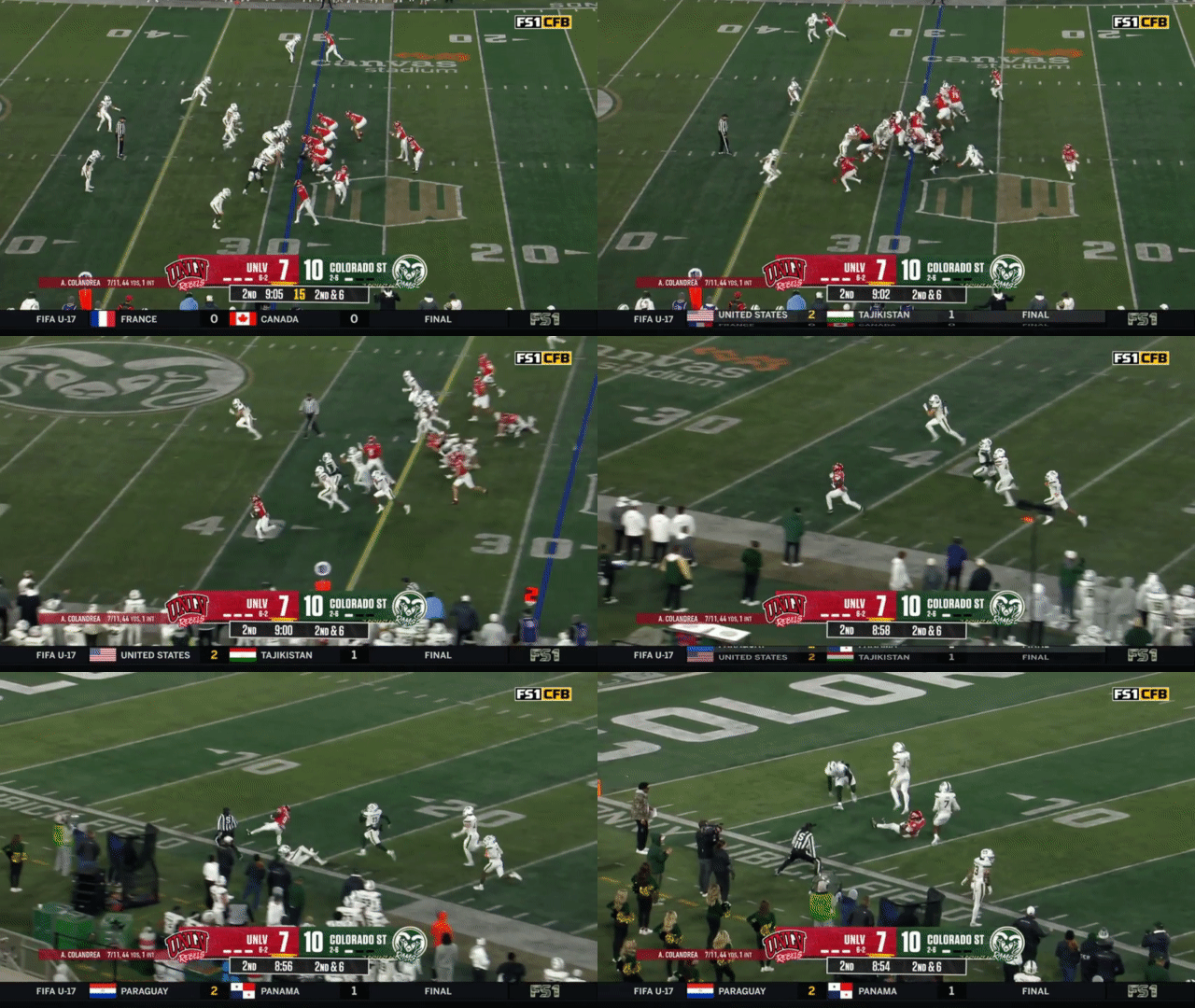
Jai’Den Thomas returns after a 1000+ yard season last year, and was a balanced part of the offense in complementing QB Anthony Colandrea last year. Although Anthony Colandrea and Jackson Arnold have comparable play styles, I think that Colandrea (now at Nebraska) was more of a focal point for opposing defenses than Arnold might be, and so Jai’Den Thomas will have his work cut out for him this season as he’ll likely be a bigger focus for defenses this year.
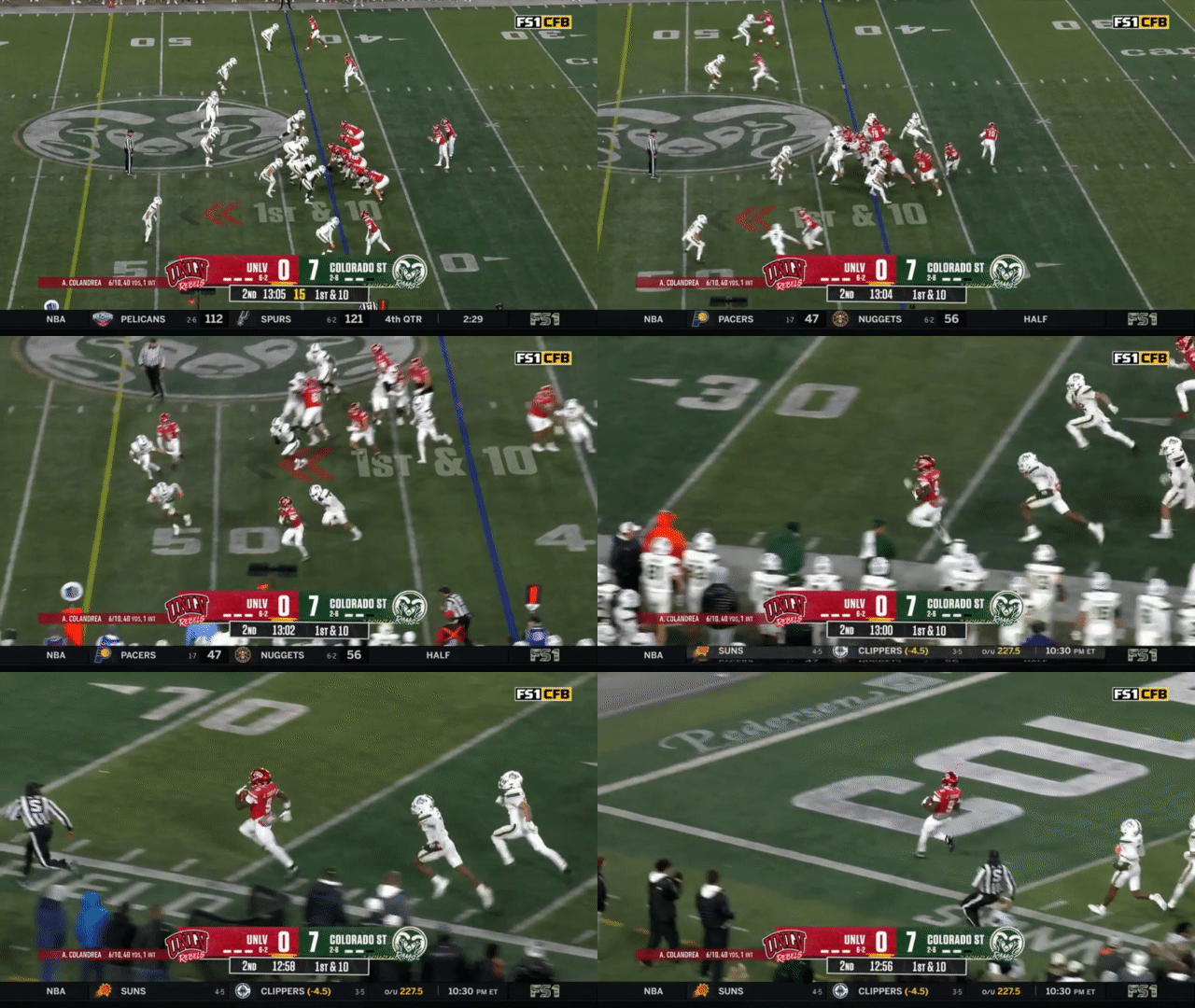
Although I stand by my original statement that Jai’Den Thomas doesn’t have elite breakaway speed, he’s still a homerun threat if opposing defenses take poor angles:
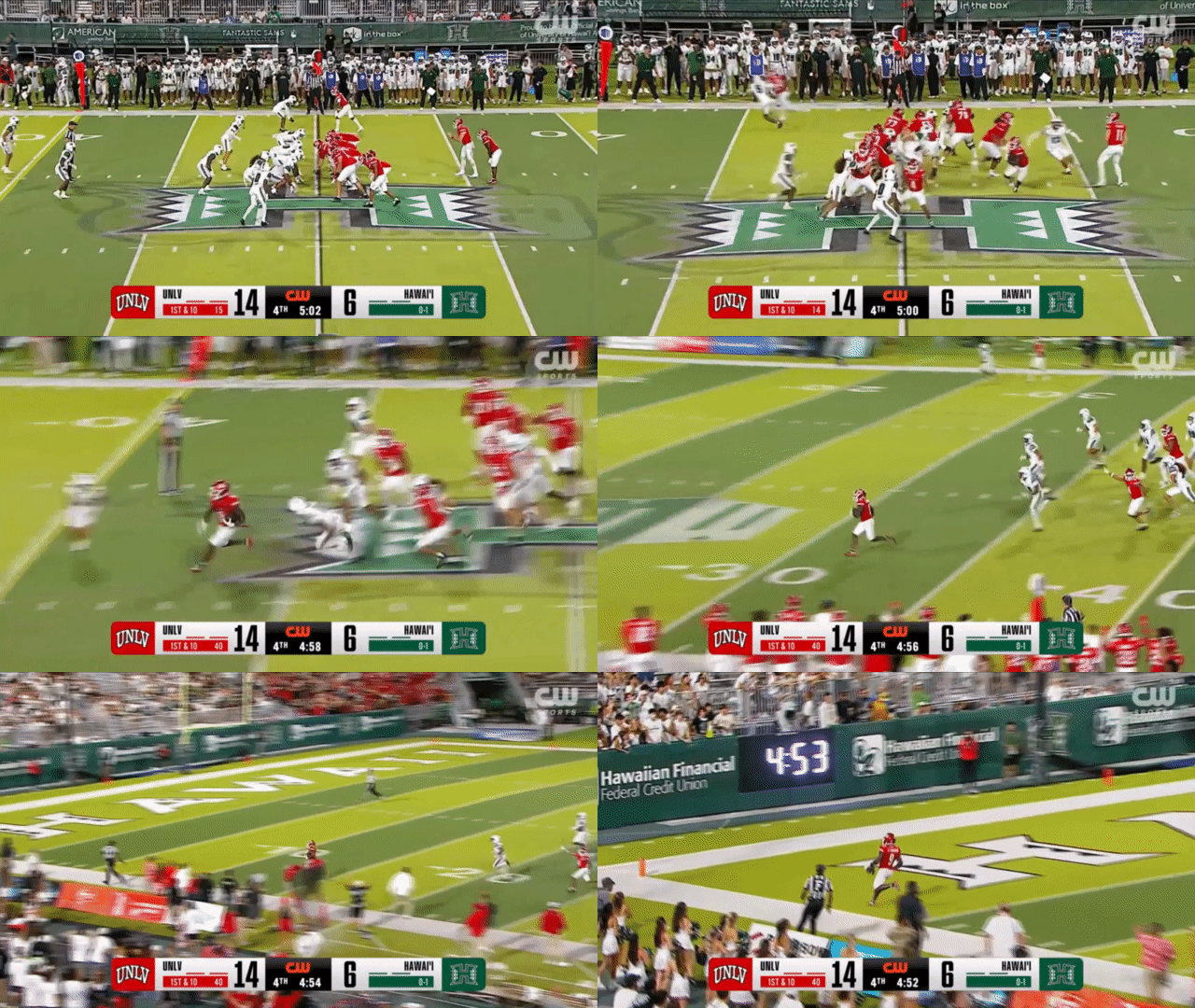
Thomas still loves his spin move, and he runs tougher than you may expect for someone of his size:
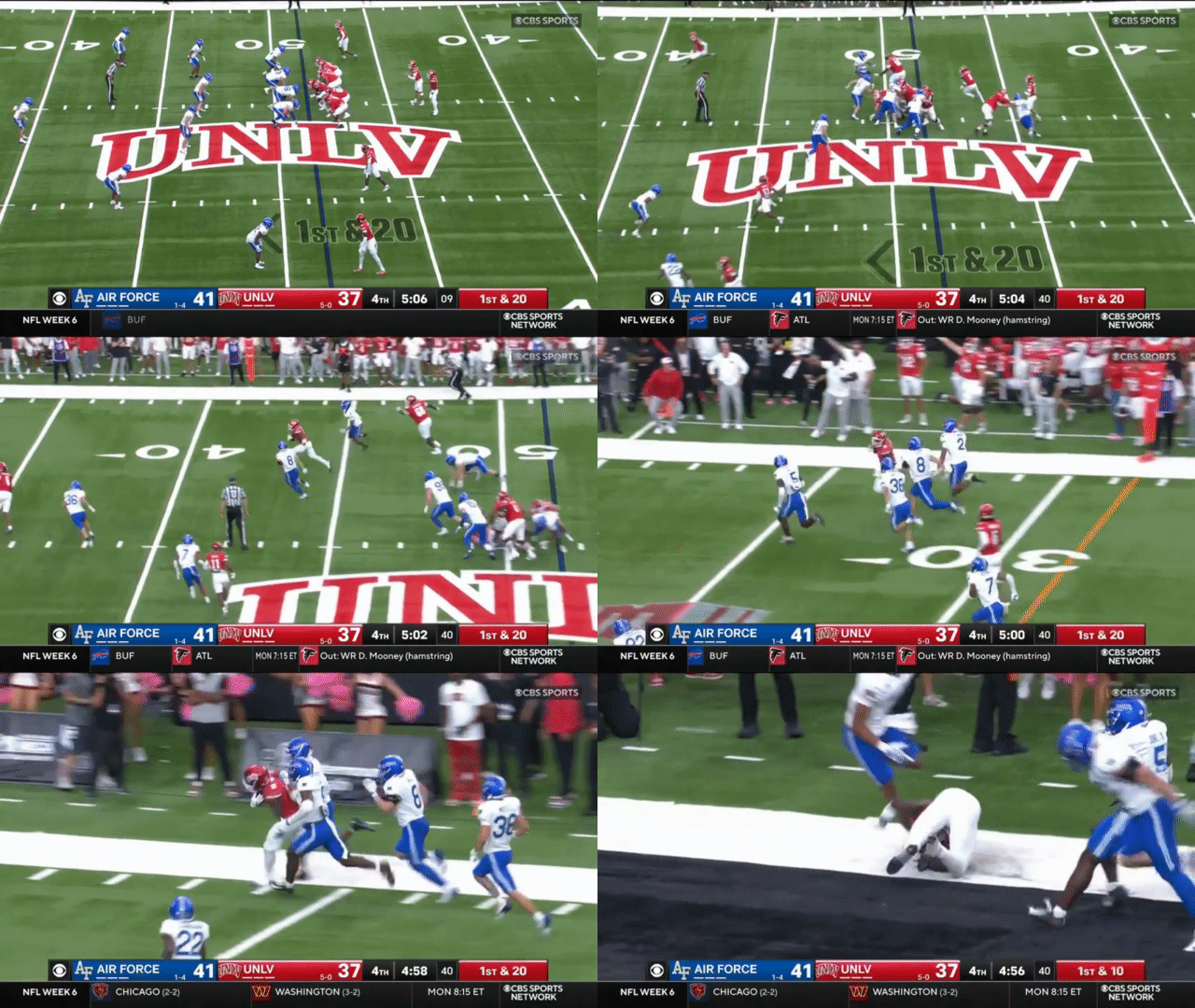
Here he breaks another big run:
And again:
UNLV has a pretty good offensive line, and Thomas shows nice patience in letting his blocks develop:
And here’s that spin move I mentioned earlier:
Here Thomas shows a nice stiff-arm to spring him free:
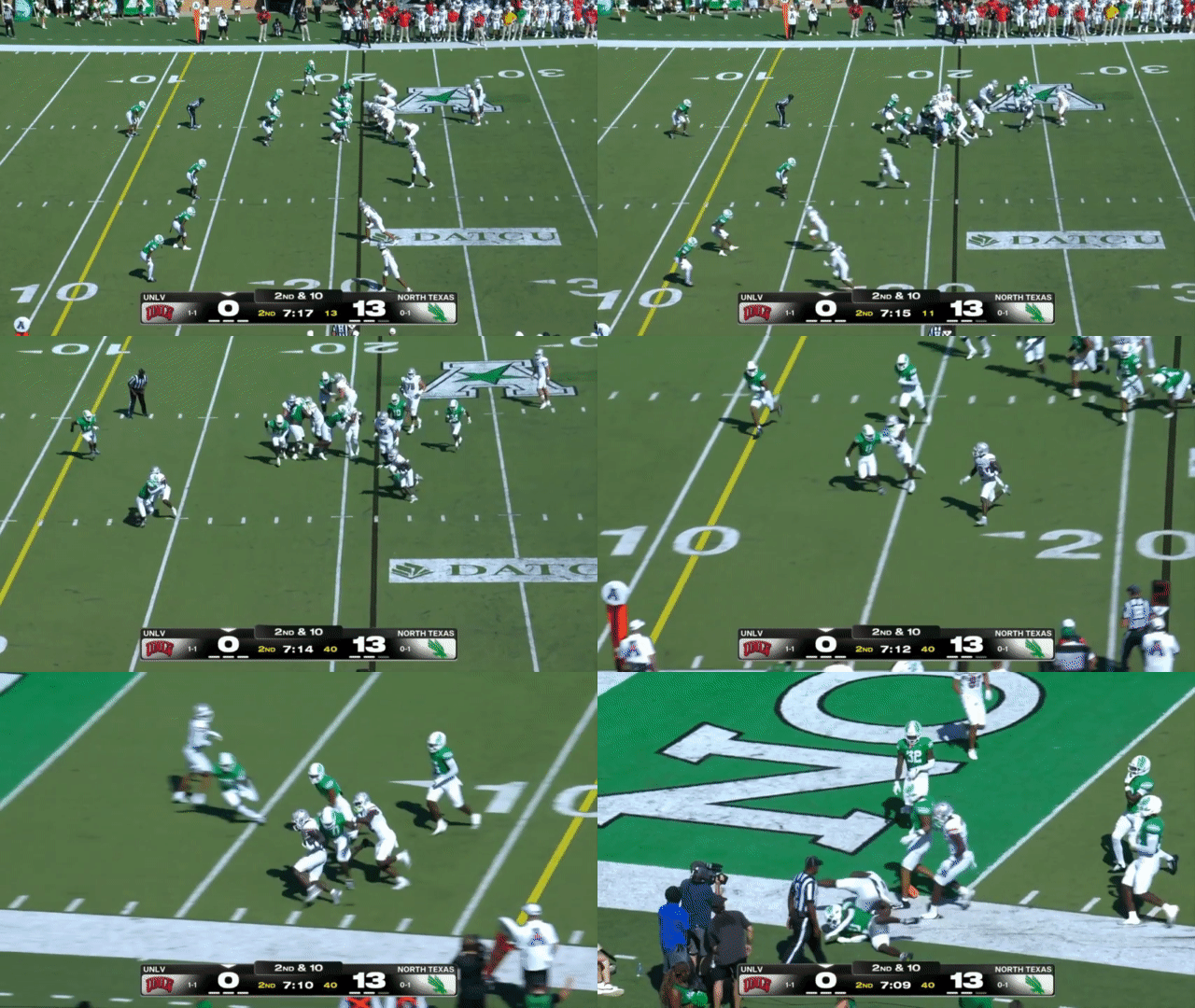
UNLV will also get Thomas involved in the passing game, typically on swing passes out wide to stretch the field horizontally, or wheel routes to test linebackers in coverage:
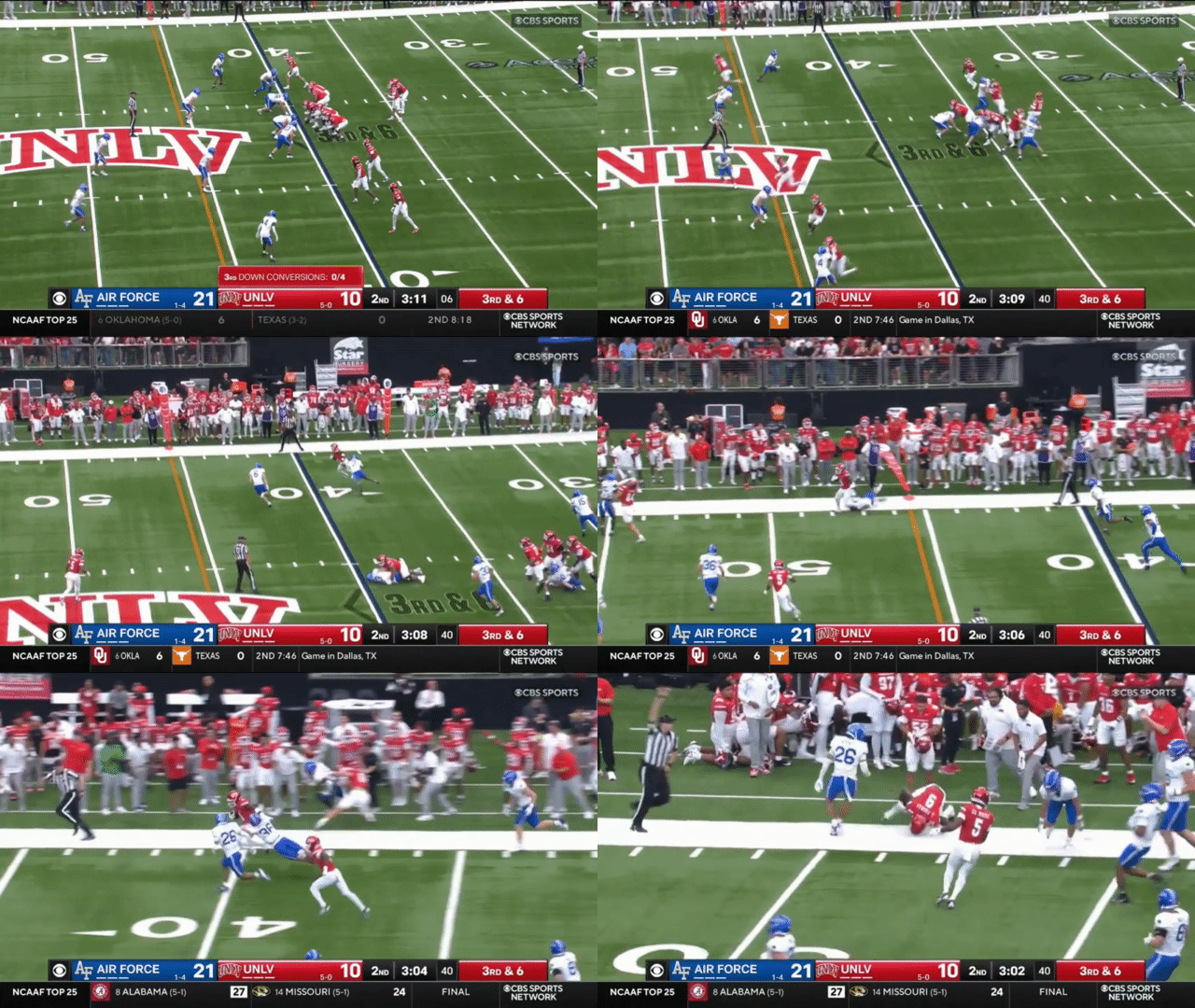
Here Thomas shows some nice hands on the wheel route:
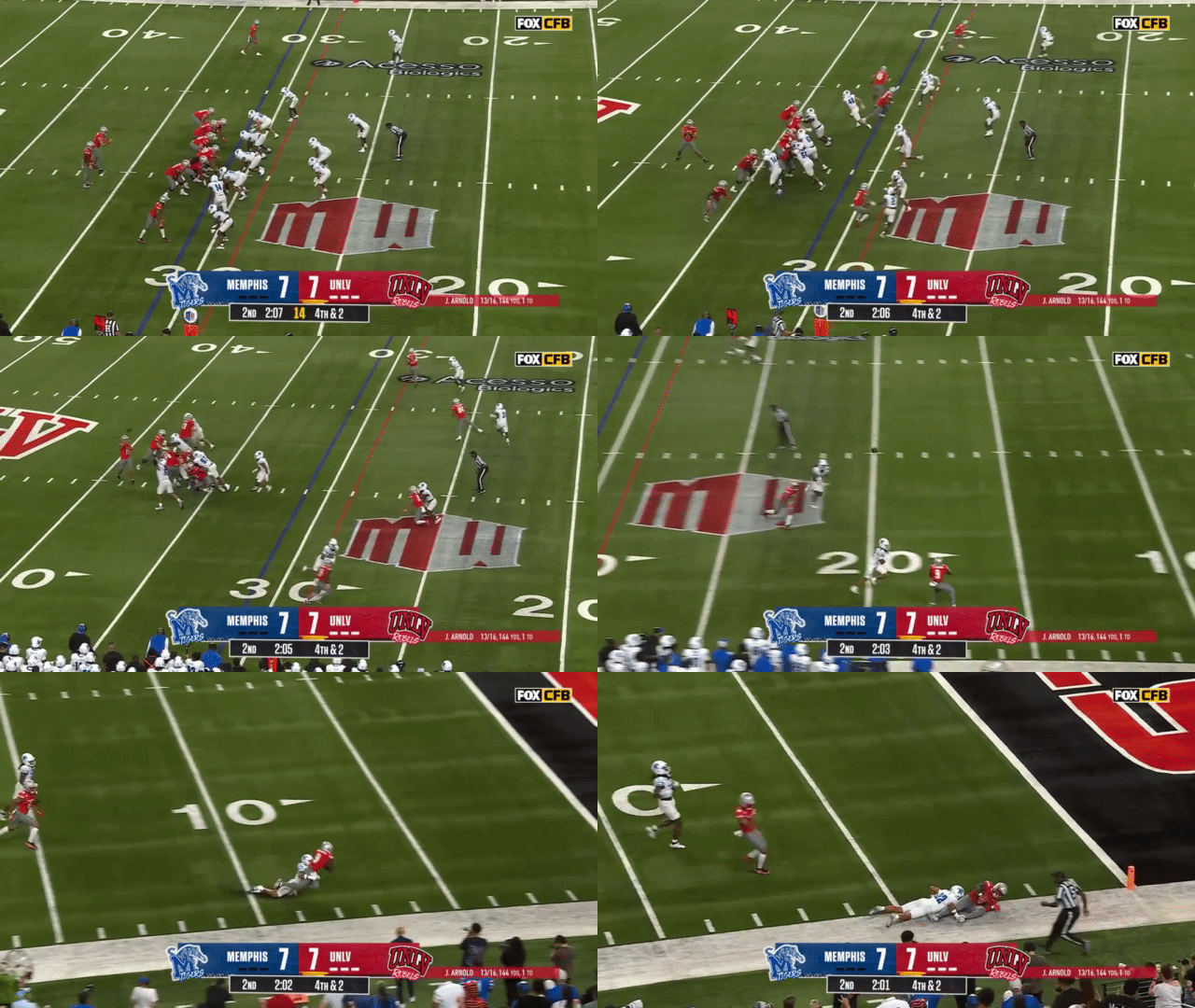
And this one’s just a busted coverage:
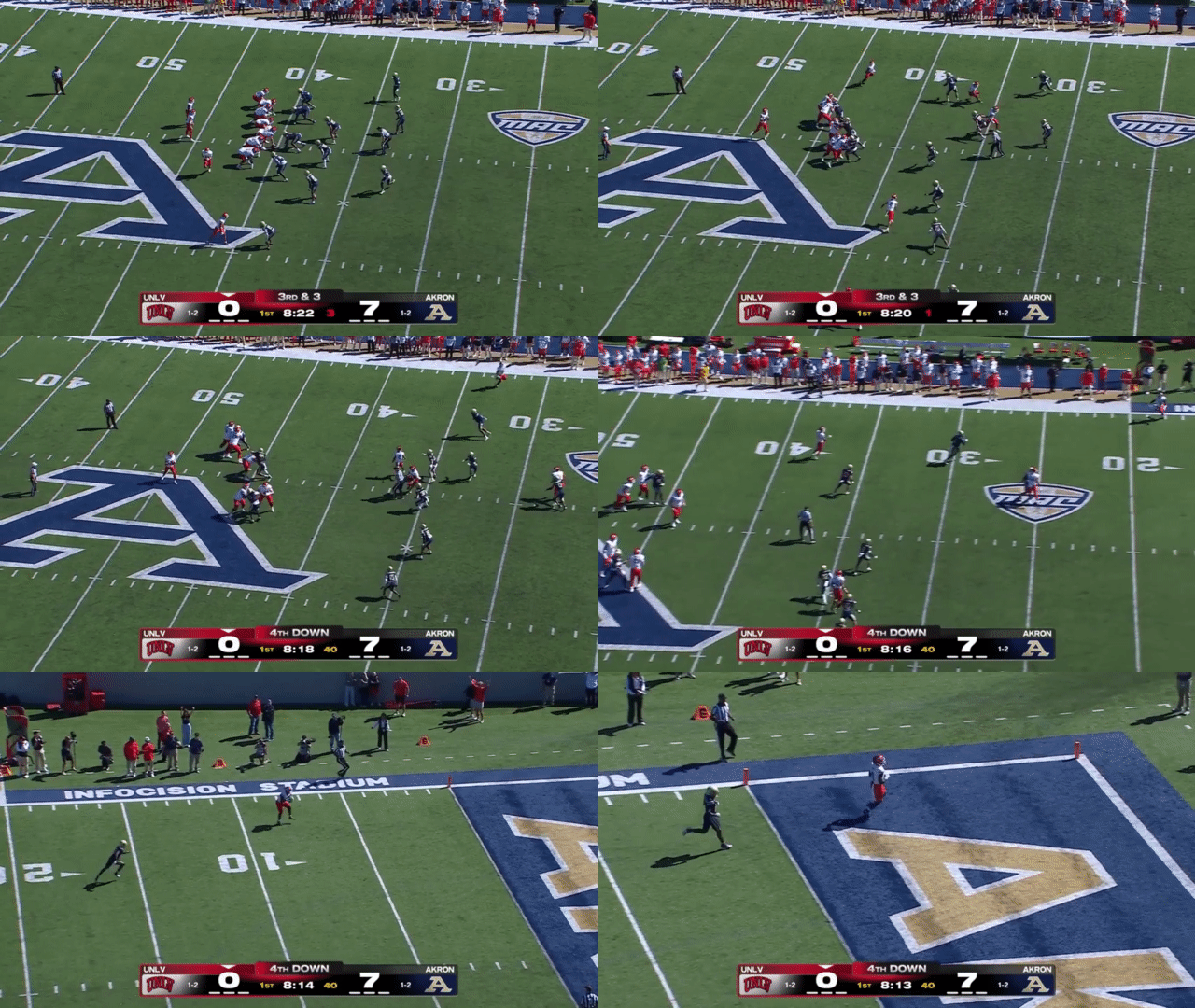
Backing up Thomas is former Utah RB Jaylon Glover, who, unsurprisingly, I covered once before in an WFC article back in 2023 (it’s ridiculous how often I can find players I’ve covered before in the transfer portal era). Glover is the power back to complement Thomas’s scat back, but Glover also likes the spin move:
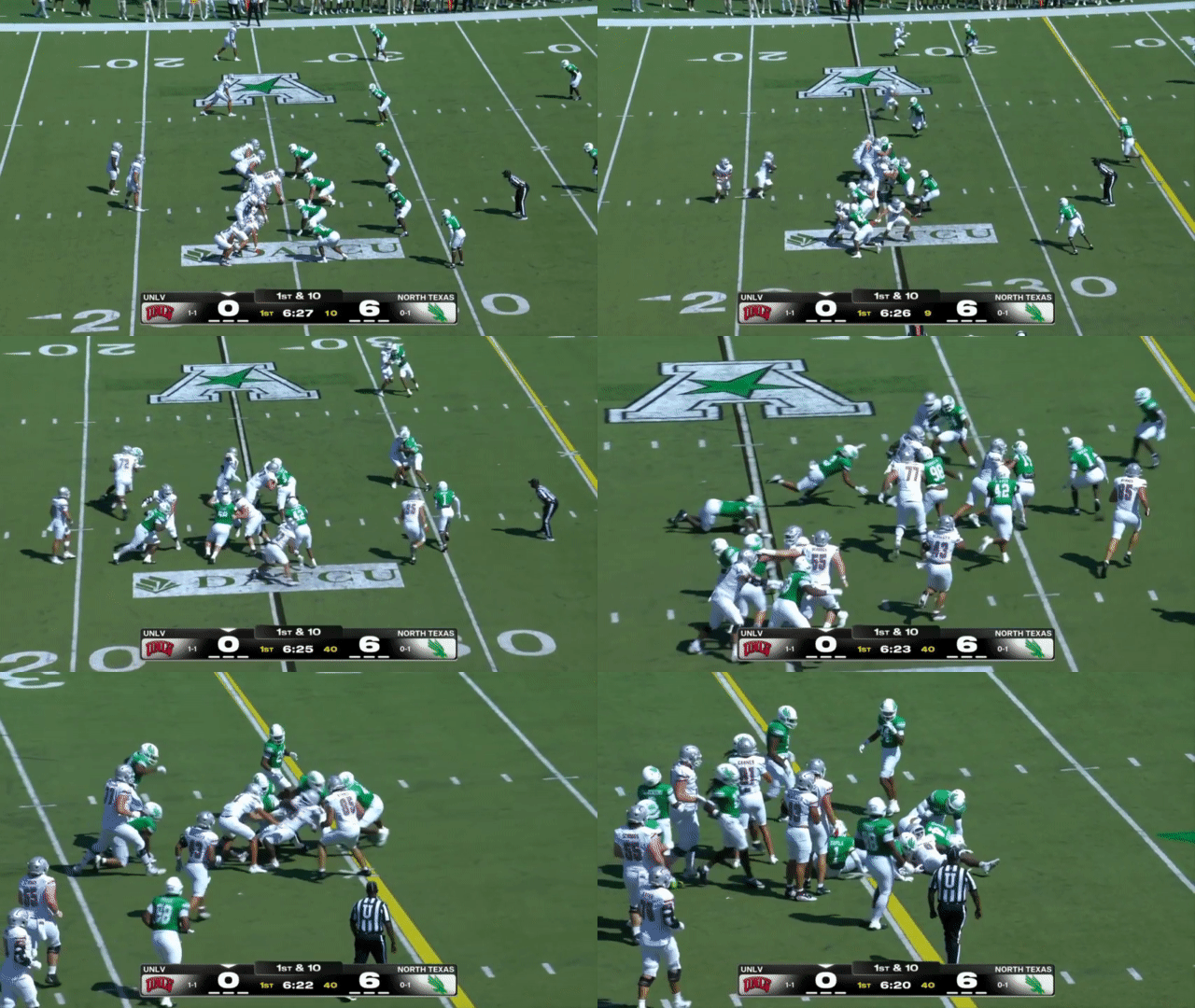
Glover shows nice patience on runs:
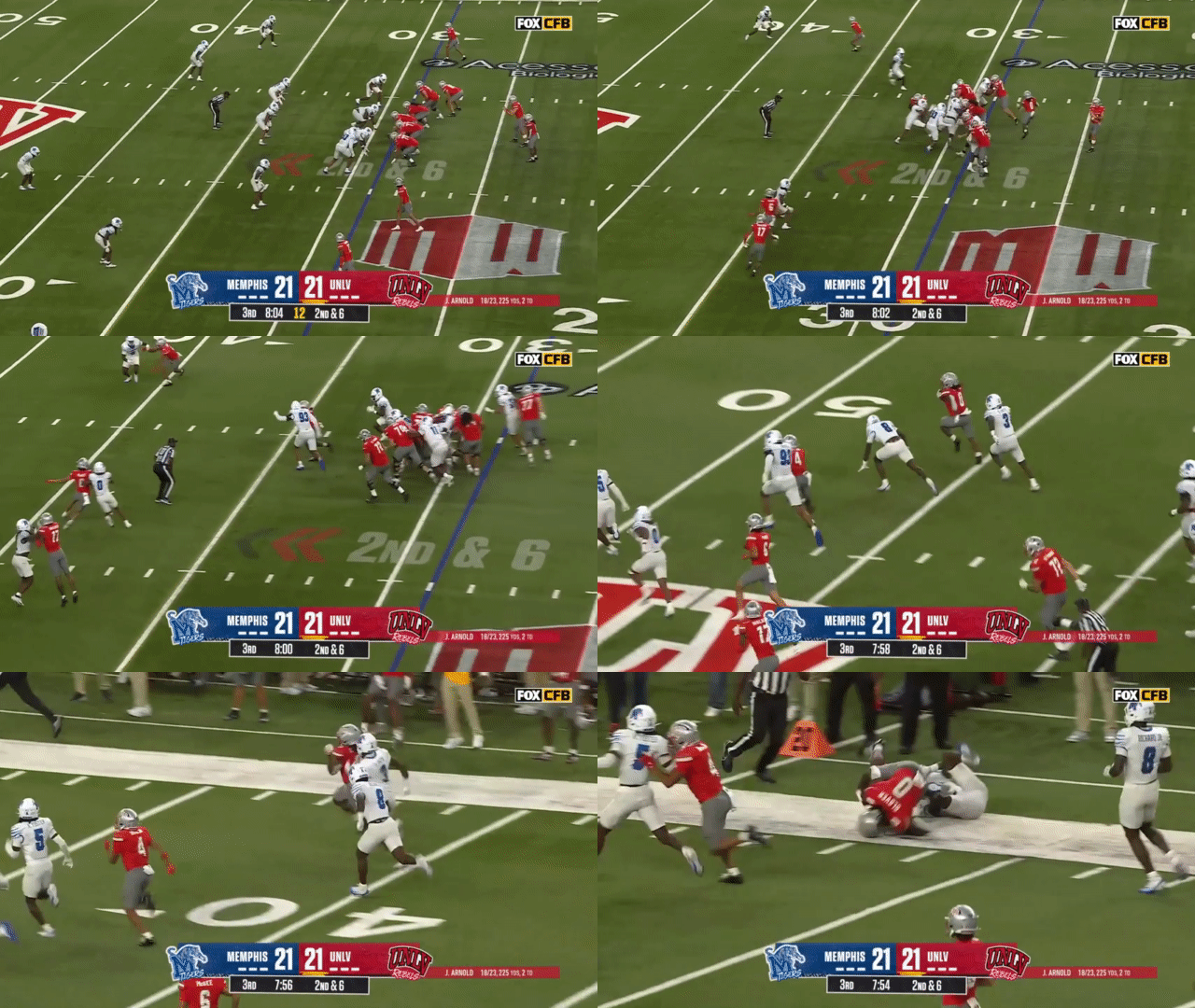
Lastly, Darrien Jones saw some relief work, and he caught a couple passes:
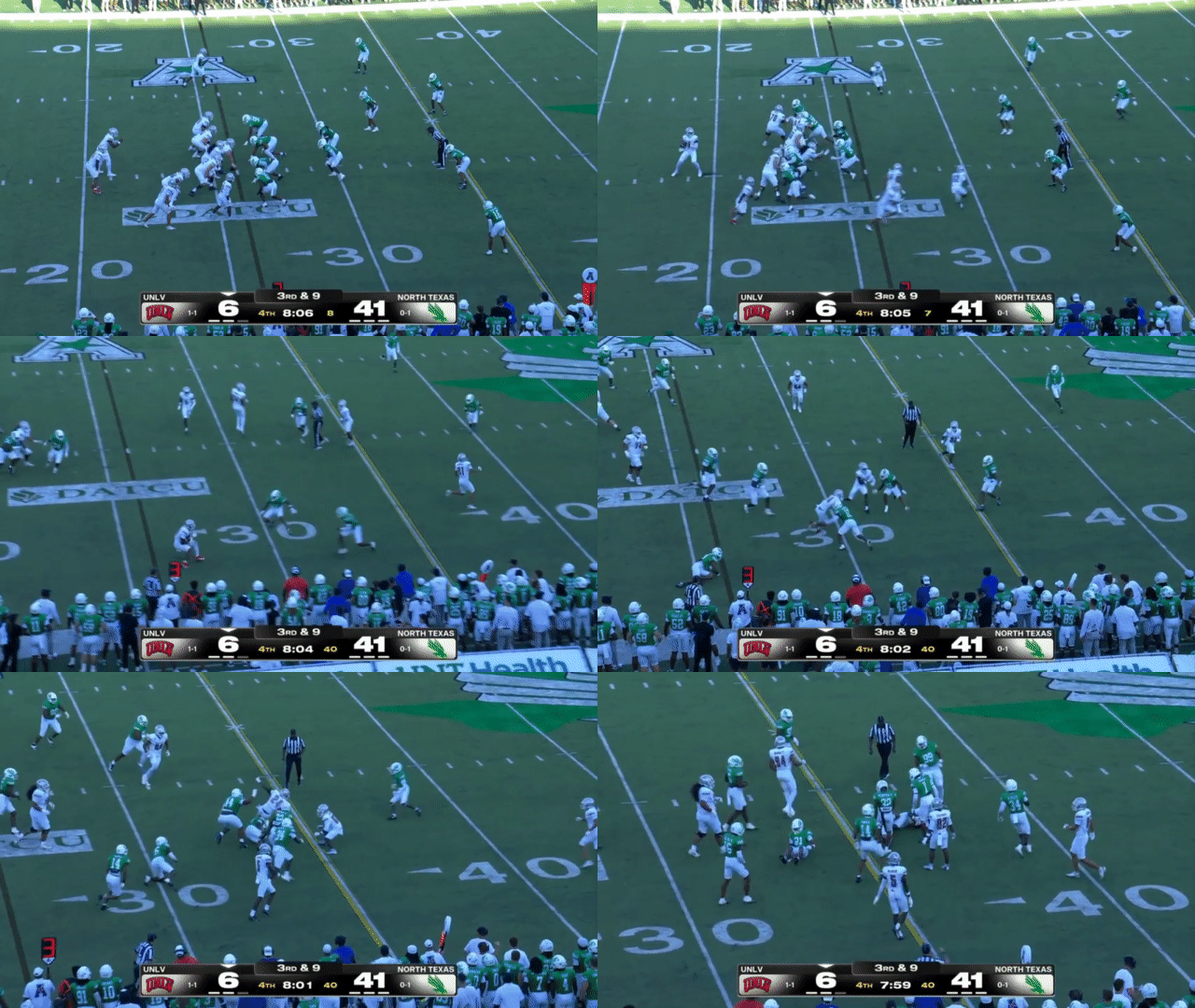
However, you can expect QB Jackson Arnold and RB Jai’Den Thomas to split most of the carries on the ground.
Receivers
UNLV’s leading receiver is Oregon State transfer, WR Taz Reddicks (mentioned very briefly in my previous articles, although I didn’t really have any thoughts about him at the time: 2024, 2025). This year, Reddicks has established himself as a viable deep threat (even from the slot), often running nice routes to get open deep down field:
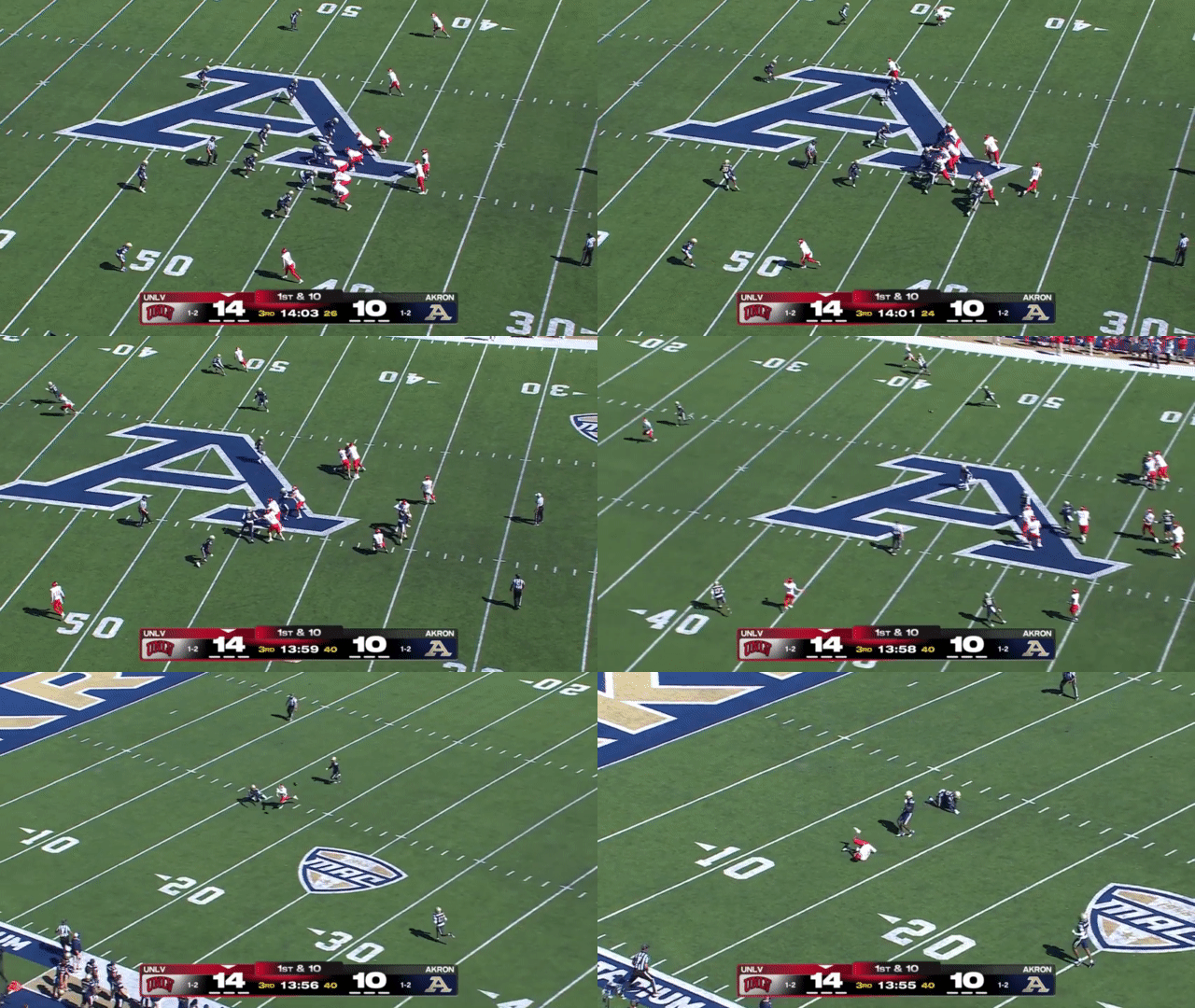
Reddicks has shown some reliable hands, doing a nice job of catching everything thrown his way:
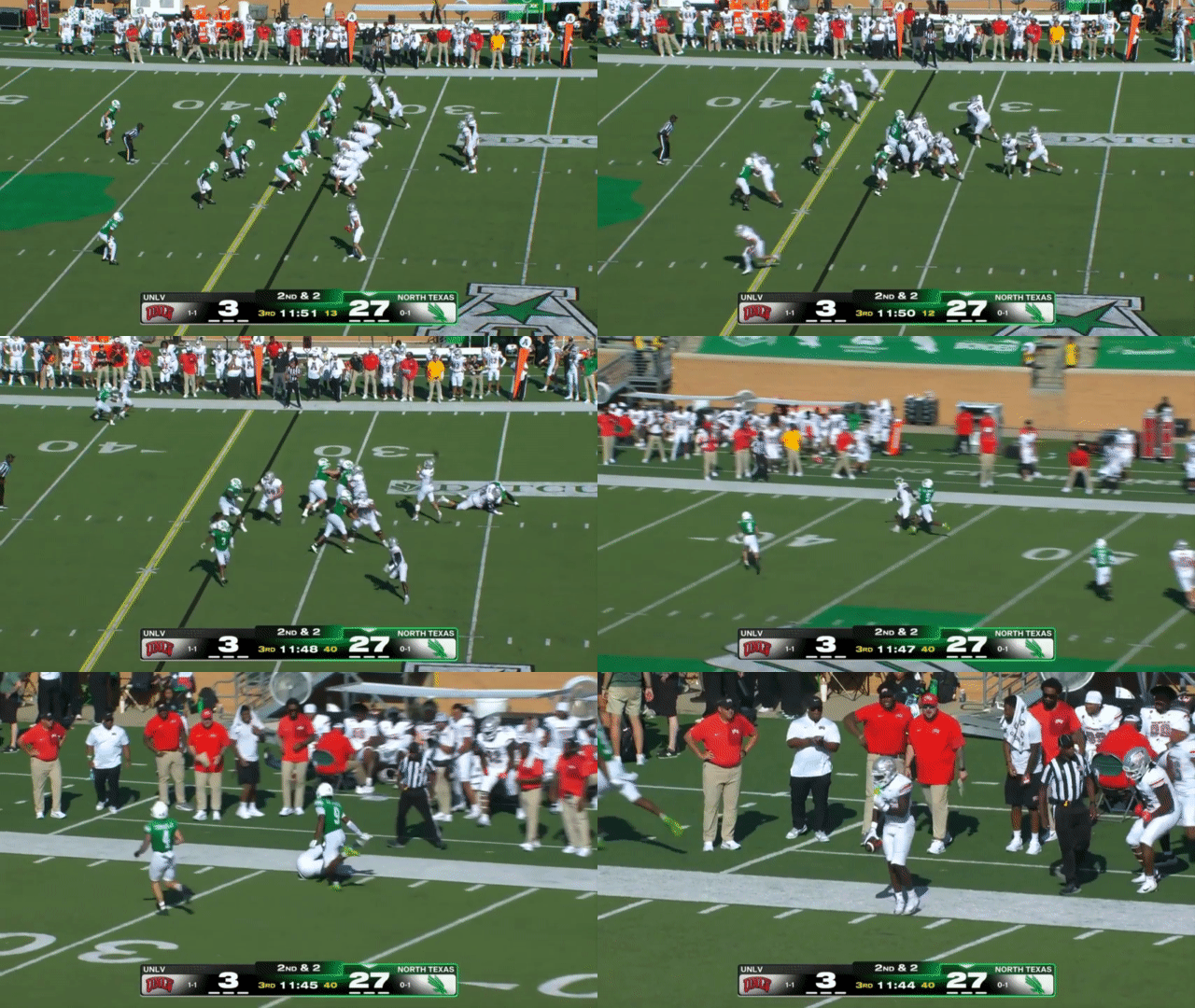
Here Reddicks makes a nice adjustment to the throw:
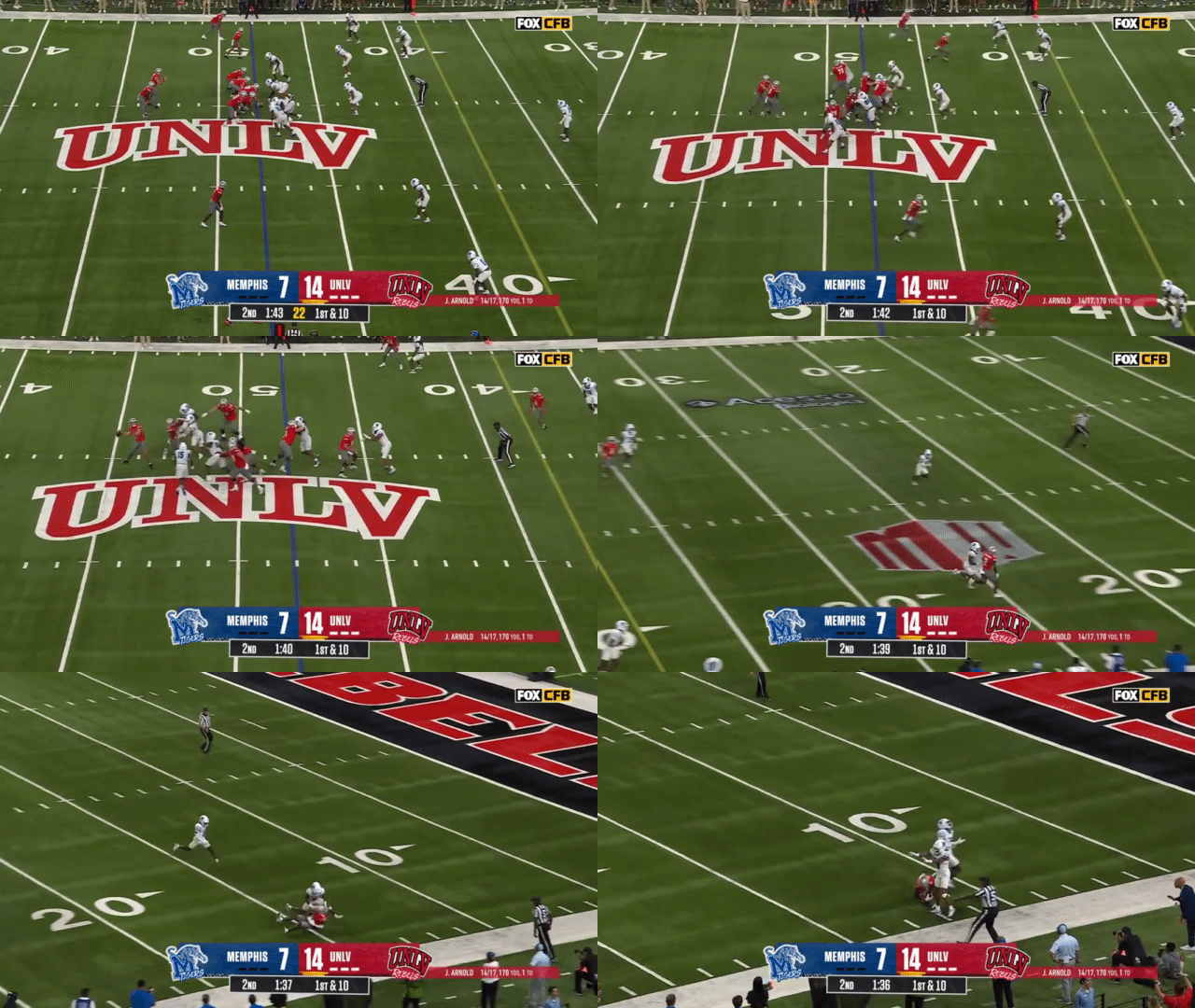
The next most targeted receiver is the X-receiver, Taeshaun Lyons, another Utah transfer. Here Lyons also makes a nice adjustment to the throw:
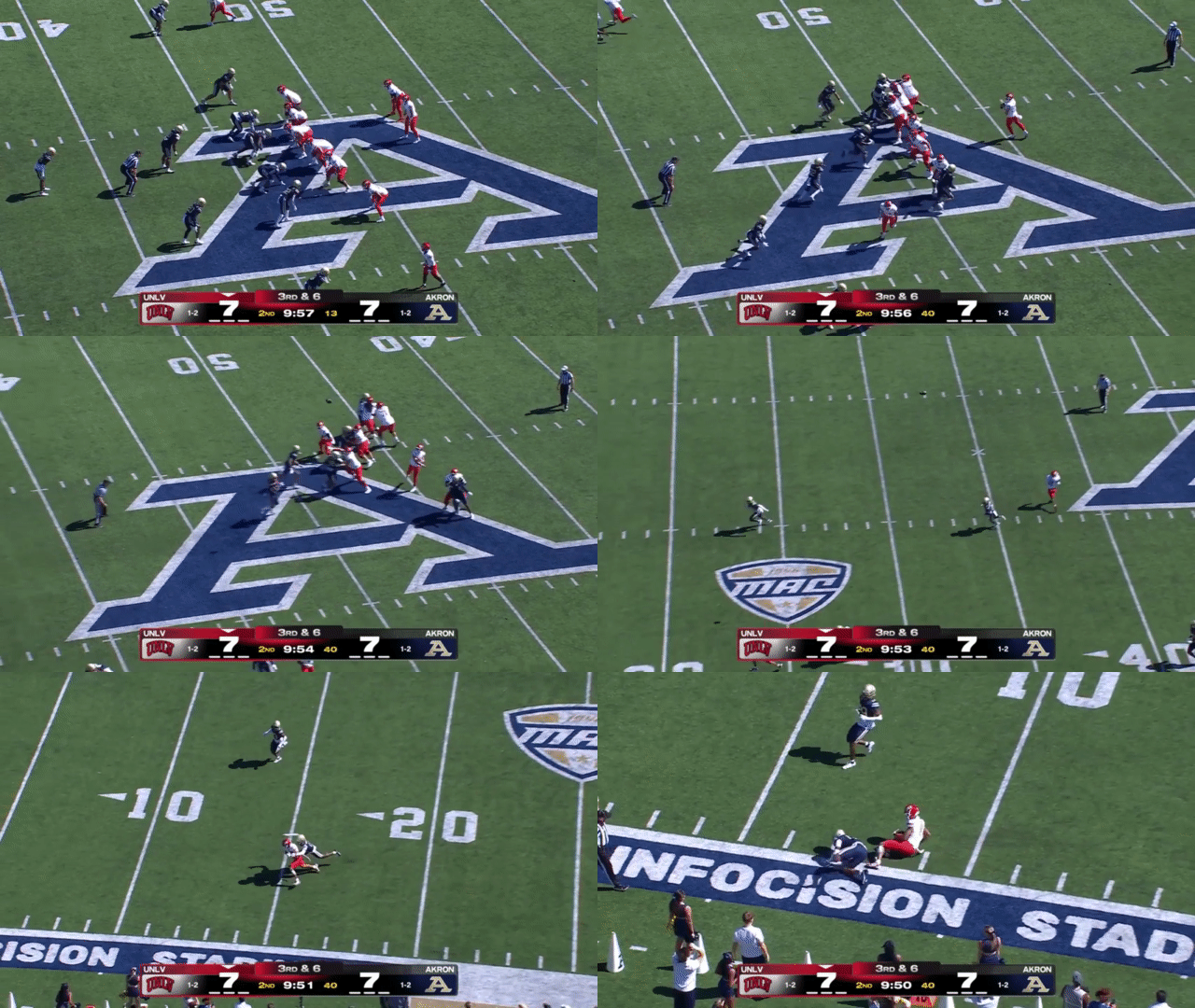
Lyons hasn’t had a ton of highlights so far this season, but he, for some reason, frequently finds himself the beneficiary of busted coverages. Here Lyons makes a nice catch in traffic last year:
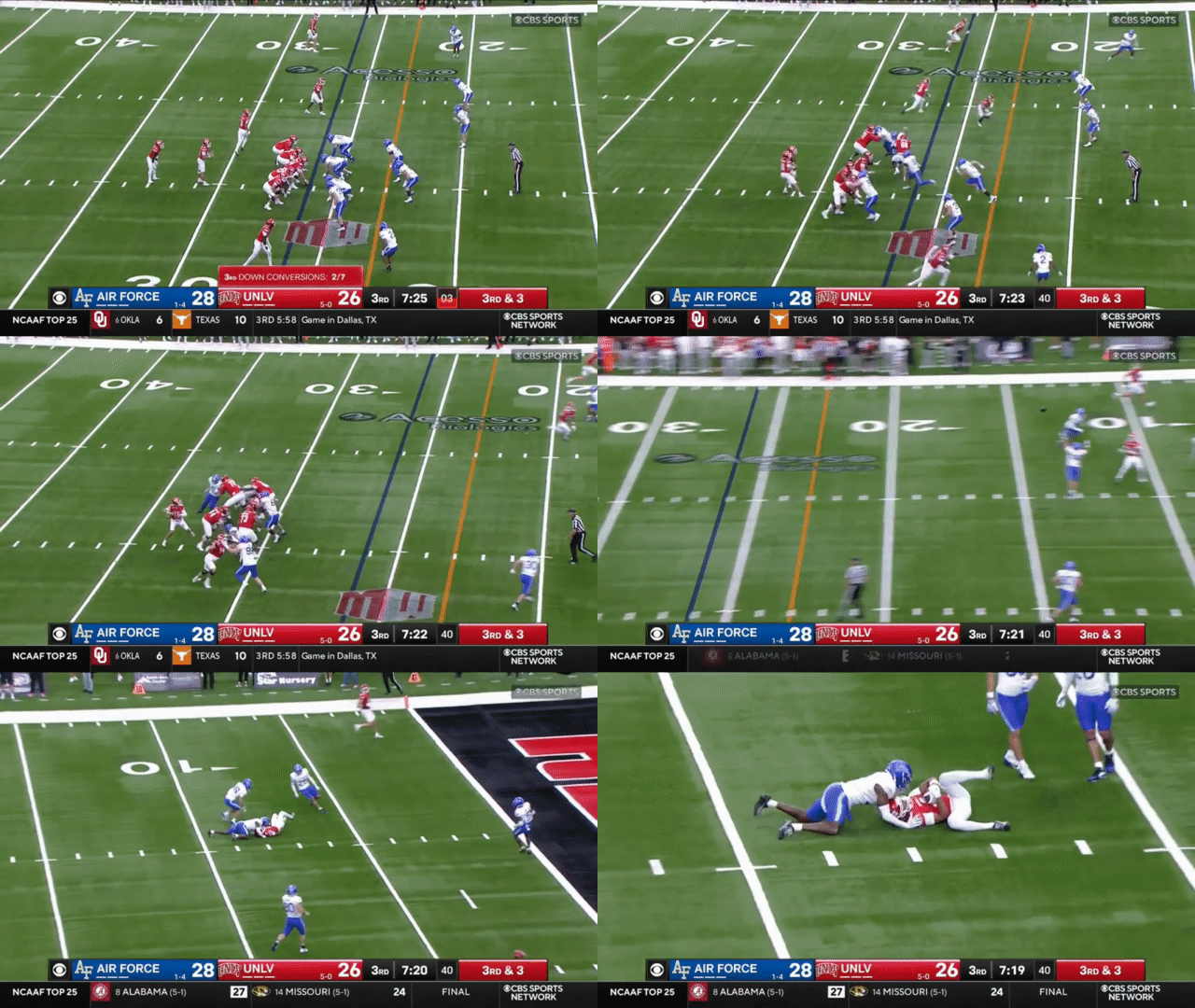
And here’s some of those coverage busts; here he slows down to make the catch:
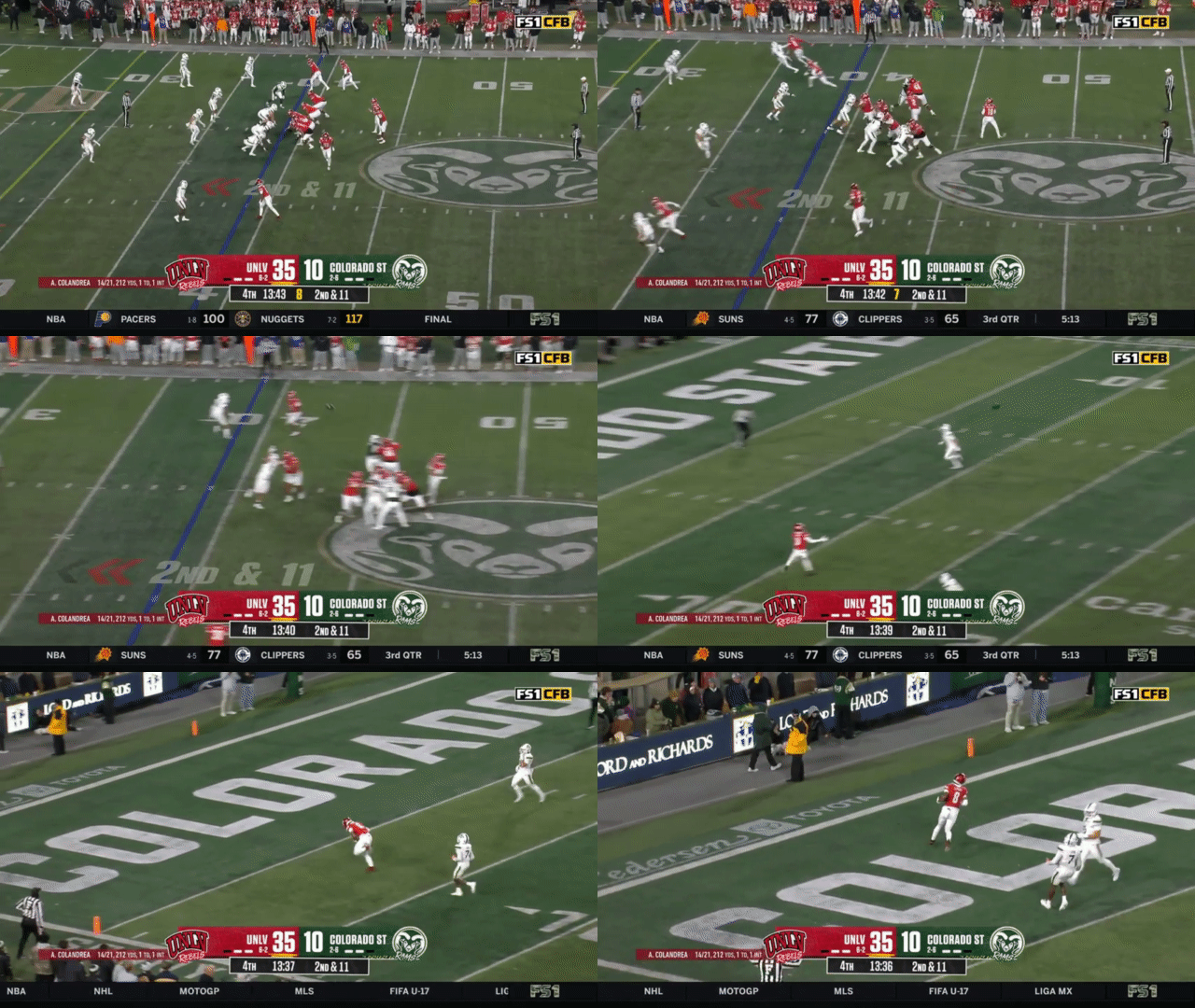
And here he shows his speed in turning this one into a 72-yard touchdown:
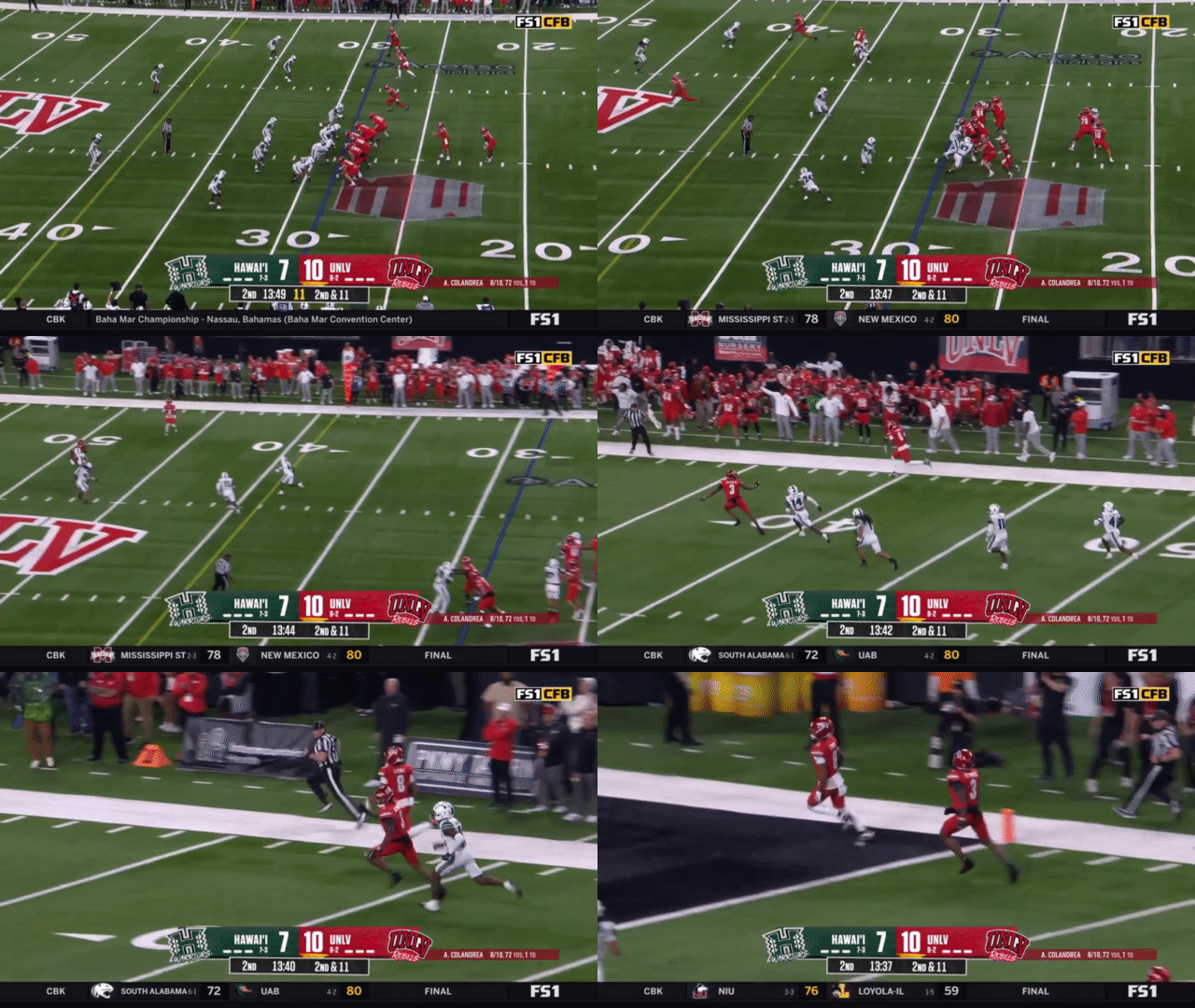
The next most targeted receiver after Reddicks and Lyons is actually the running back, Jai’Den Thomas. But after Thomas, it’s the Z-receiver, Kayden McGee, who creates a ton of separation here:
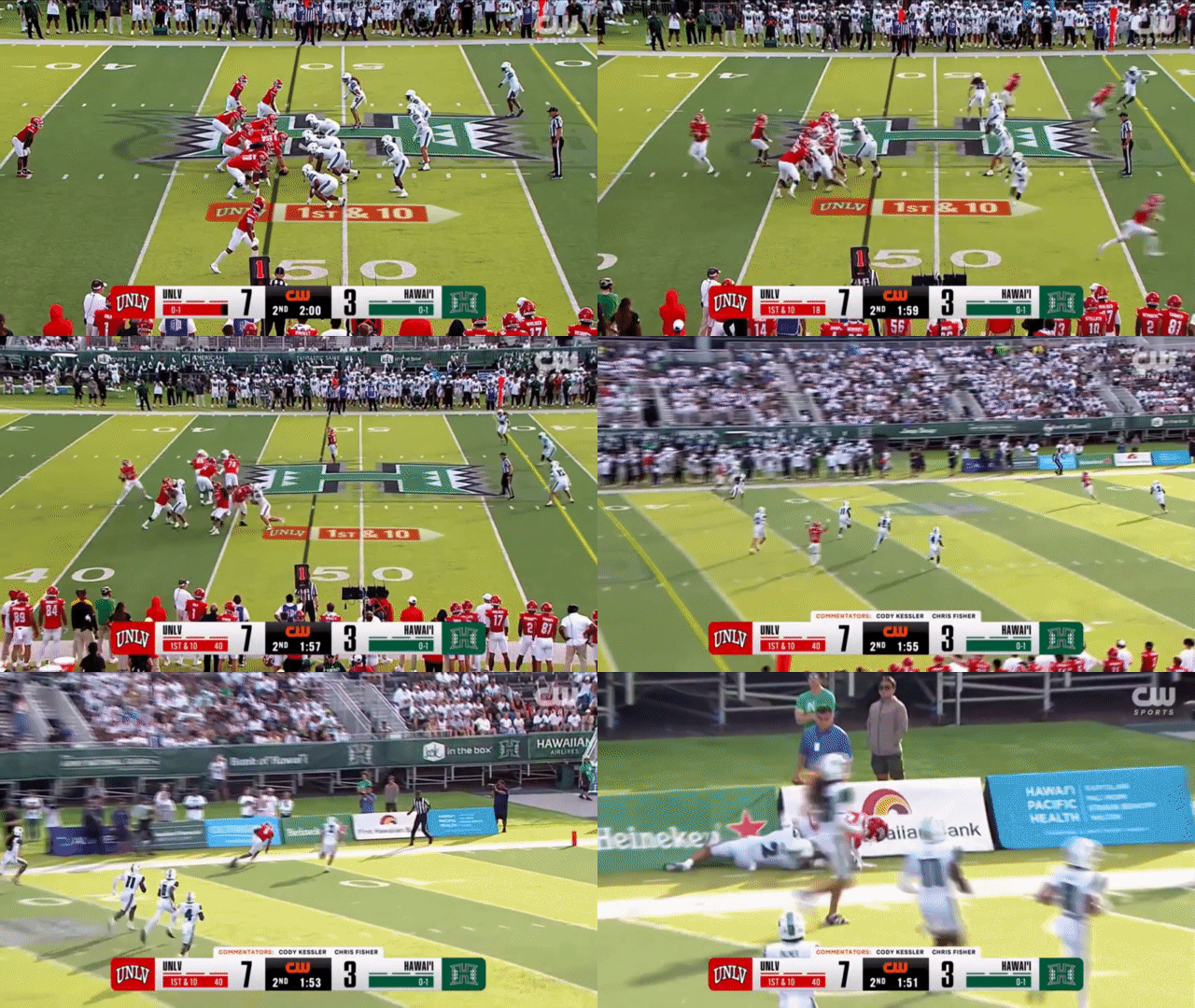
And here McGee runs a nice slant:
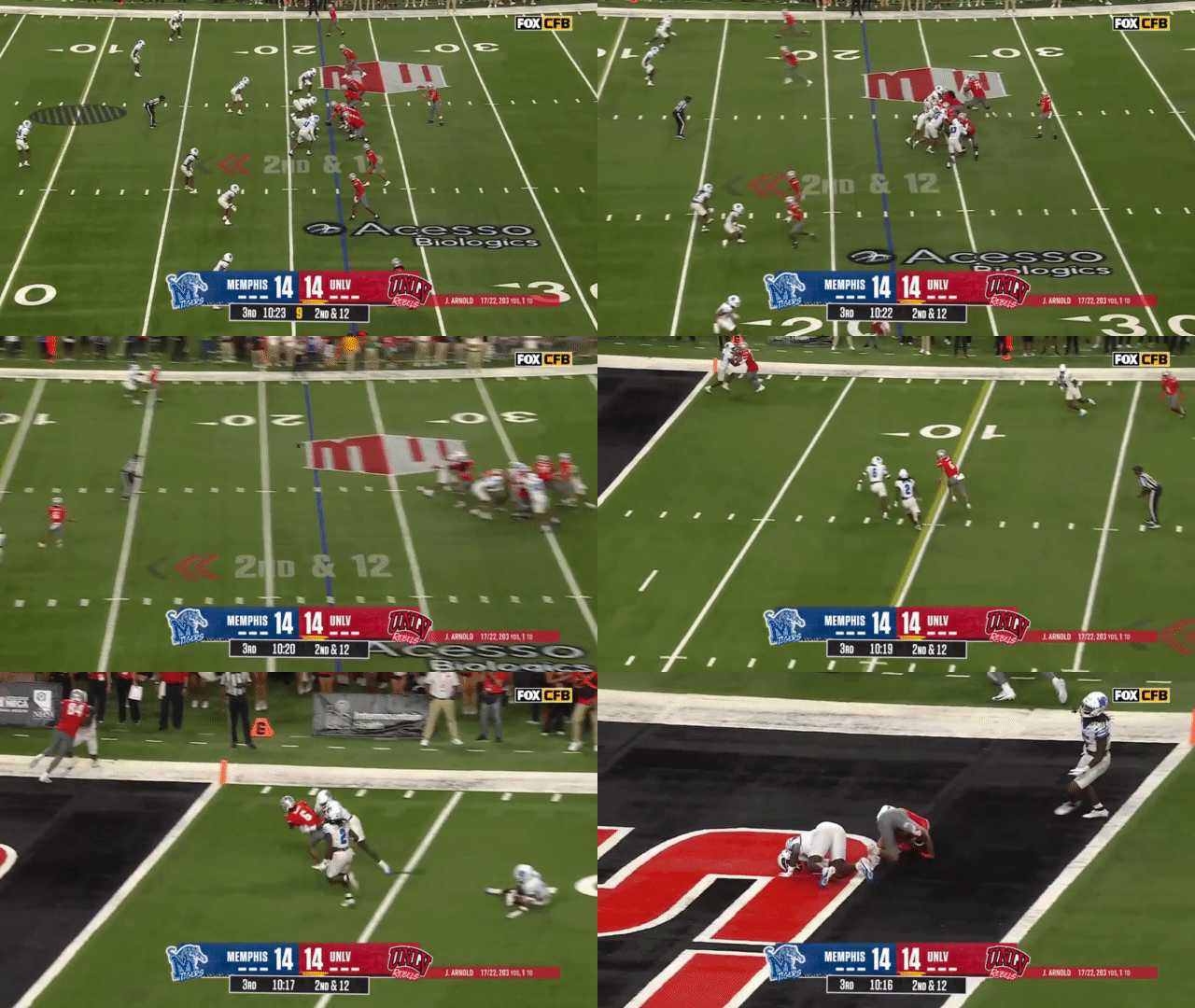
UNLV doesn’t rely a ton on their tight ends in the passing game, but here they split out both of their tight ends to the boundary side, showing they at least consider their tight ends like Keyan Burnett as viable receivers:
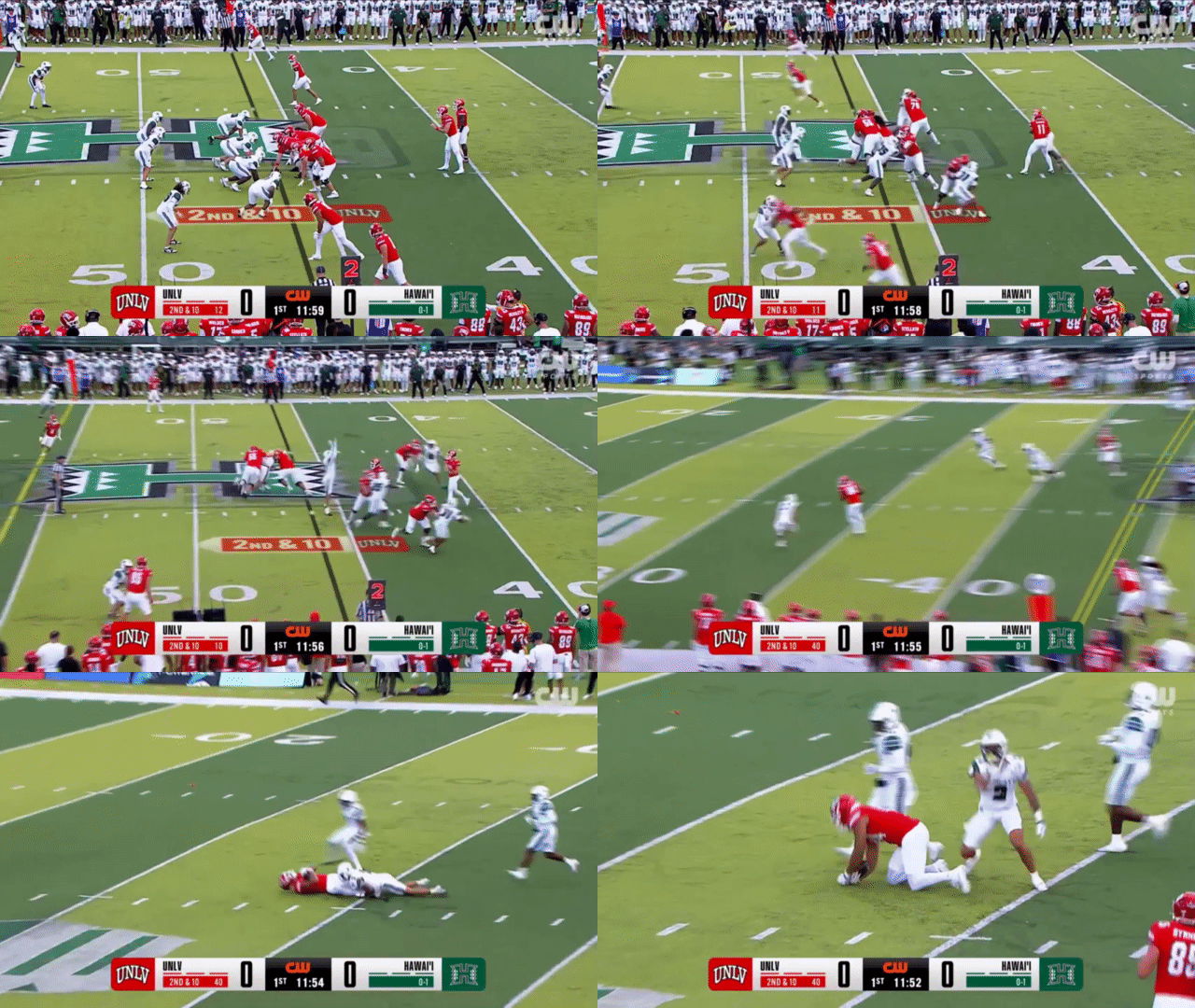
Also at WR-Z is DeAngelo Irvin, who showed some nice hands as well:
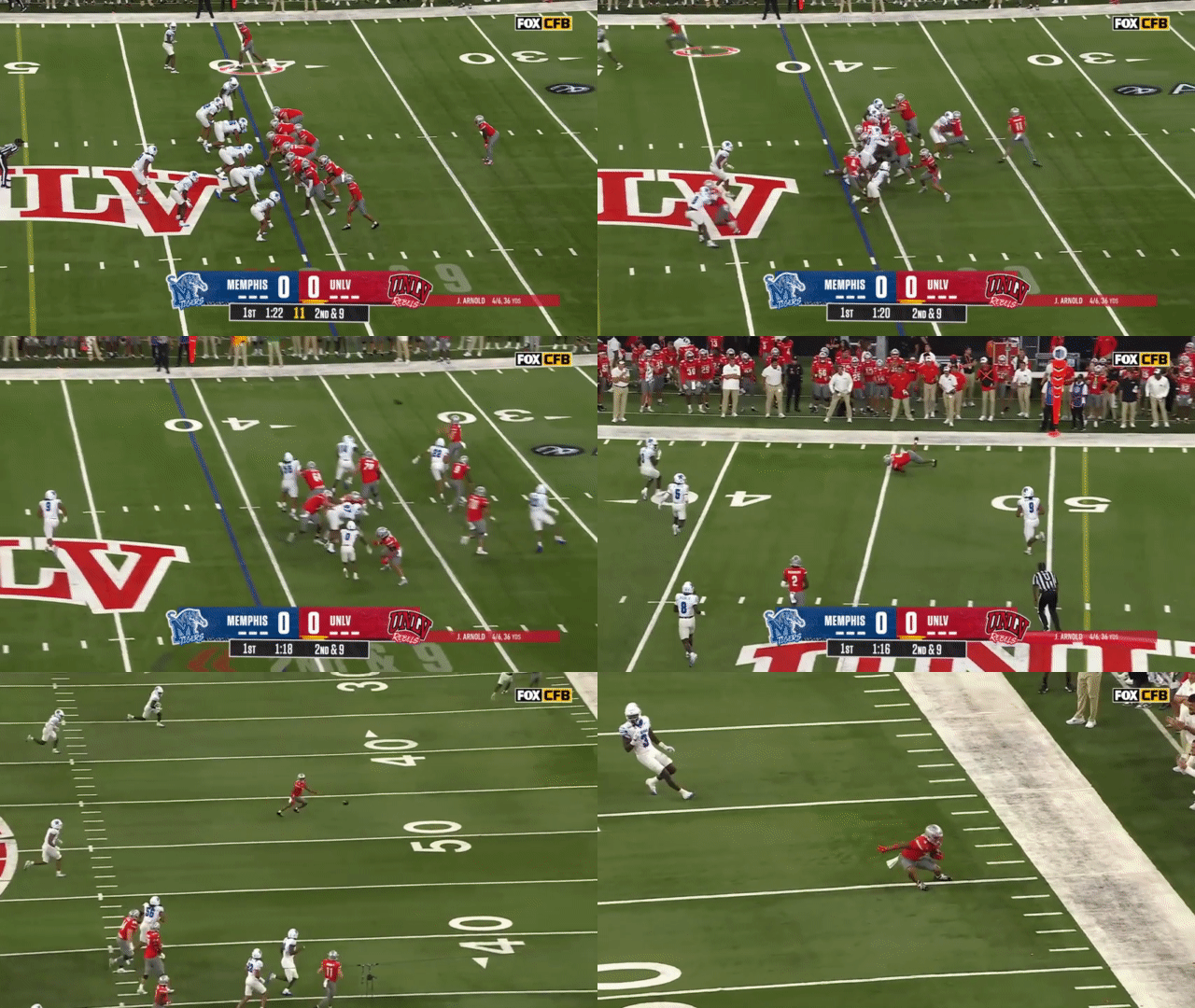
Backing up Lyons at WR-X is the redshirt freshman Tavian McNair (a former Cal recruiting target, by the way), another speedy receiver skilled in the art of catching off-target passes:
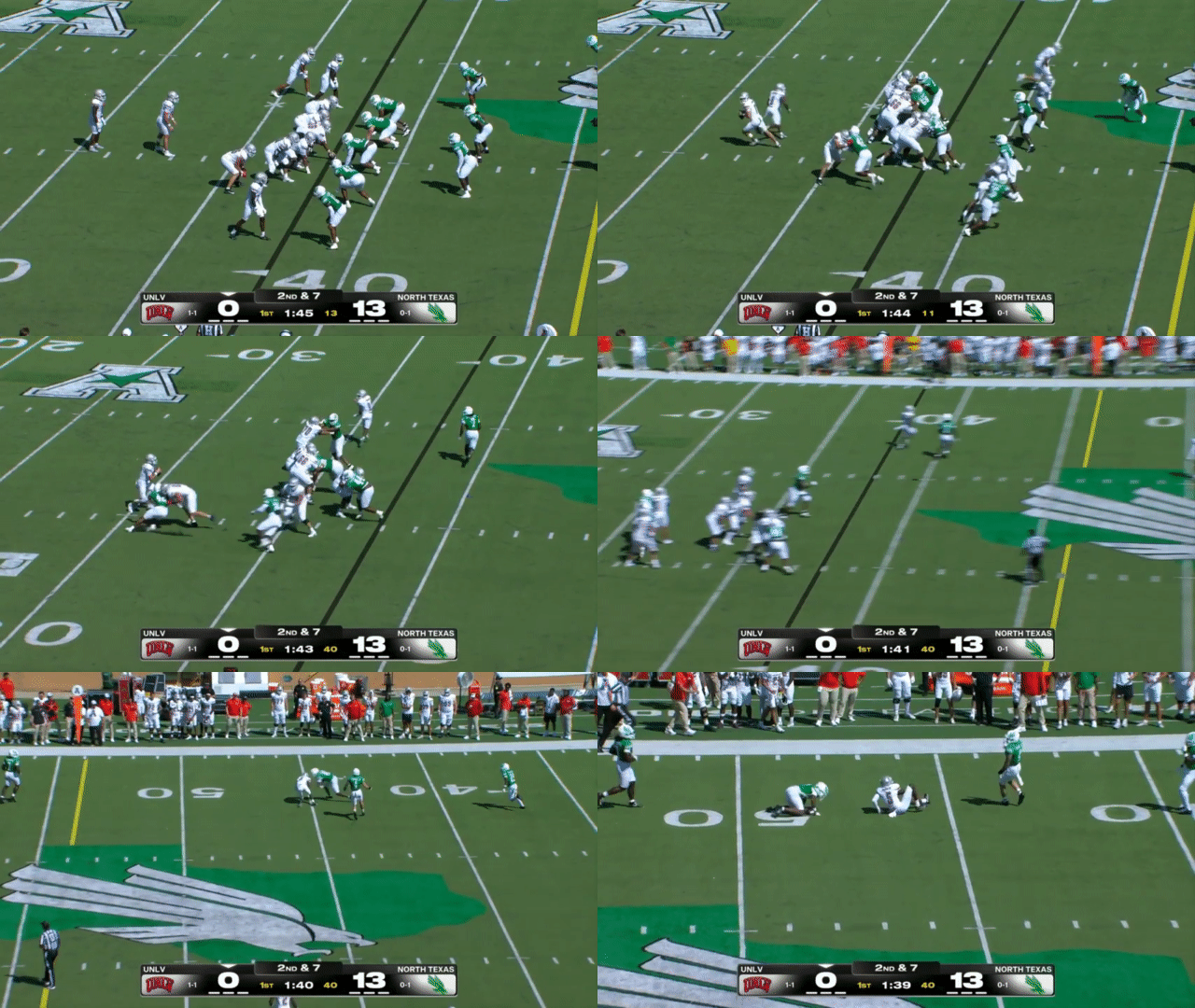
There’s also the 6’4” freshman WR-Z Vincent Carner, who robs a potential interception here:
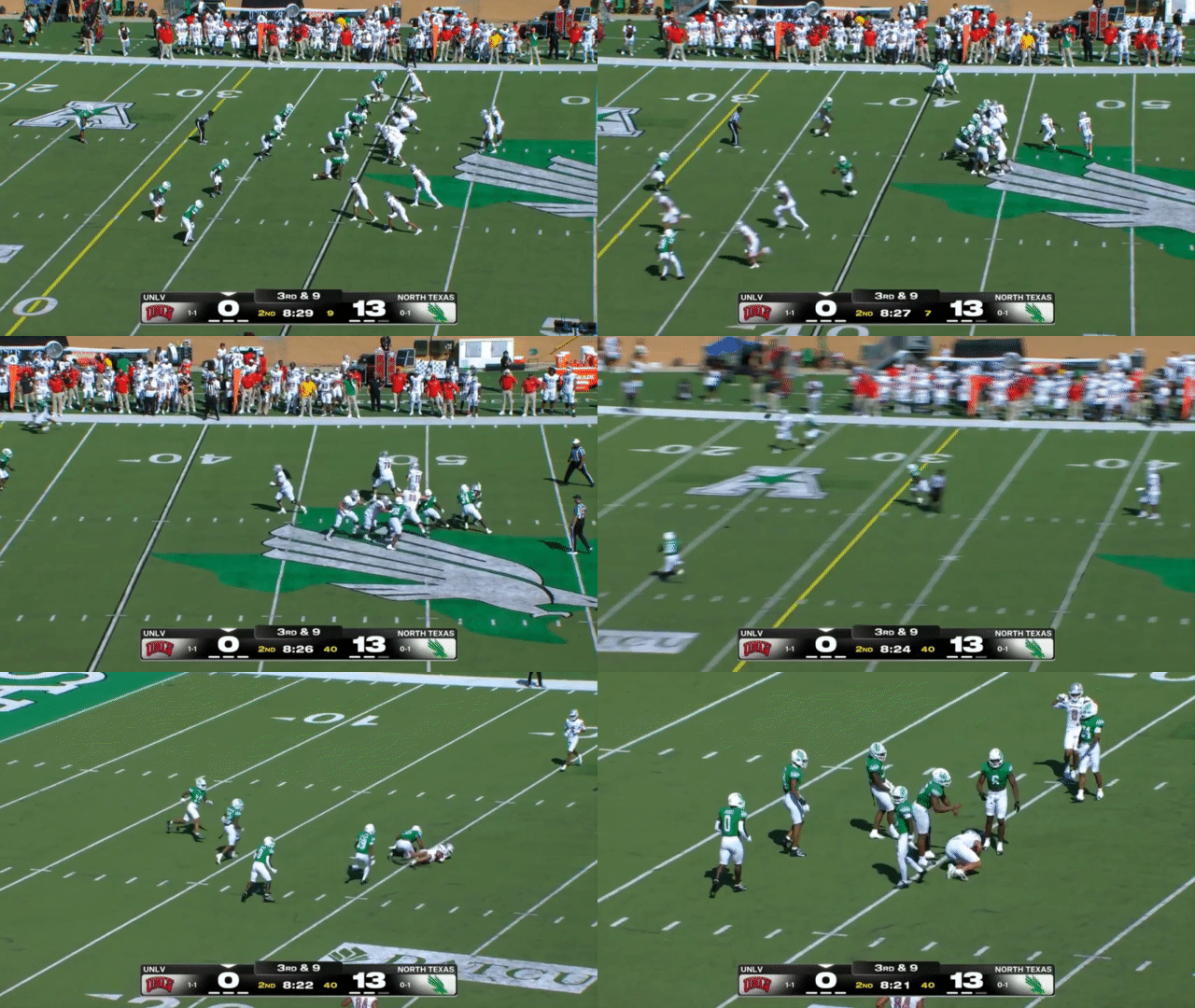
And finally, there’s TE Matt Byrnes (the receiver lined up out wide in the previous Keyan Burnett clip) running a route, but here he drops the would-be score:
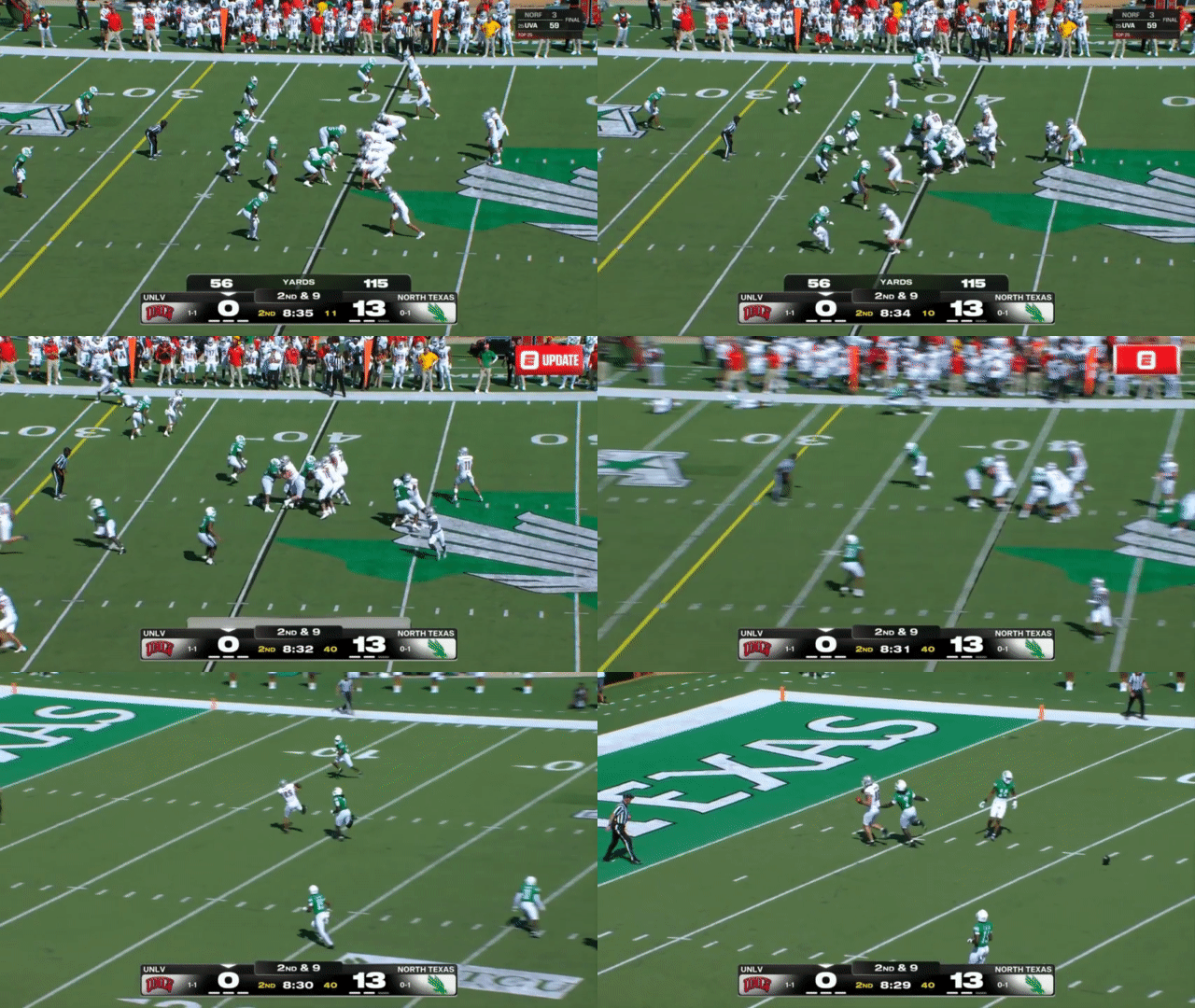
UNLV has a lot of capable receivers, even if none of them set the world on fire by themselves.
Special teams / miscellaneous
I don’t really want to focus too much on special teams, because we can safely summarize special teams sections from this point forward as “they’re probably better than ours,” but I did want to point out a few things (mainly the punter).
I was never a fan of the new rule to punish teams with a timeout if a player goes down with an injury after the ball is set, because in 95% of the games I watched, it inadvertently punished teams and players with legitimate injuries, and this rule is only necessary because modern sportsmanship has gone out the window as the Lane Kiffins of the world do everything in their power to game the rules (or lackthereof, or find a local judge to disagree with those rules, or whatever). However, in addition to discouraging the Kiffins, this was one (if not the only) time I can remember it properly punishing a team for violating the spirit of the game:
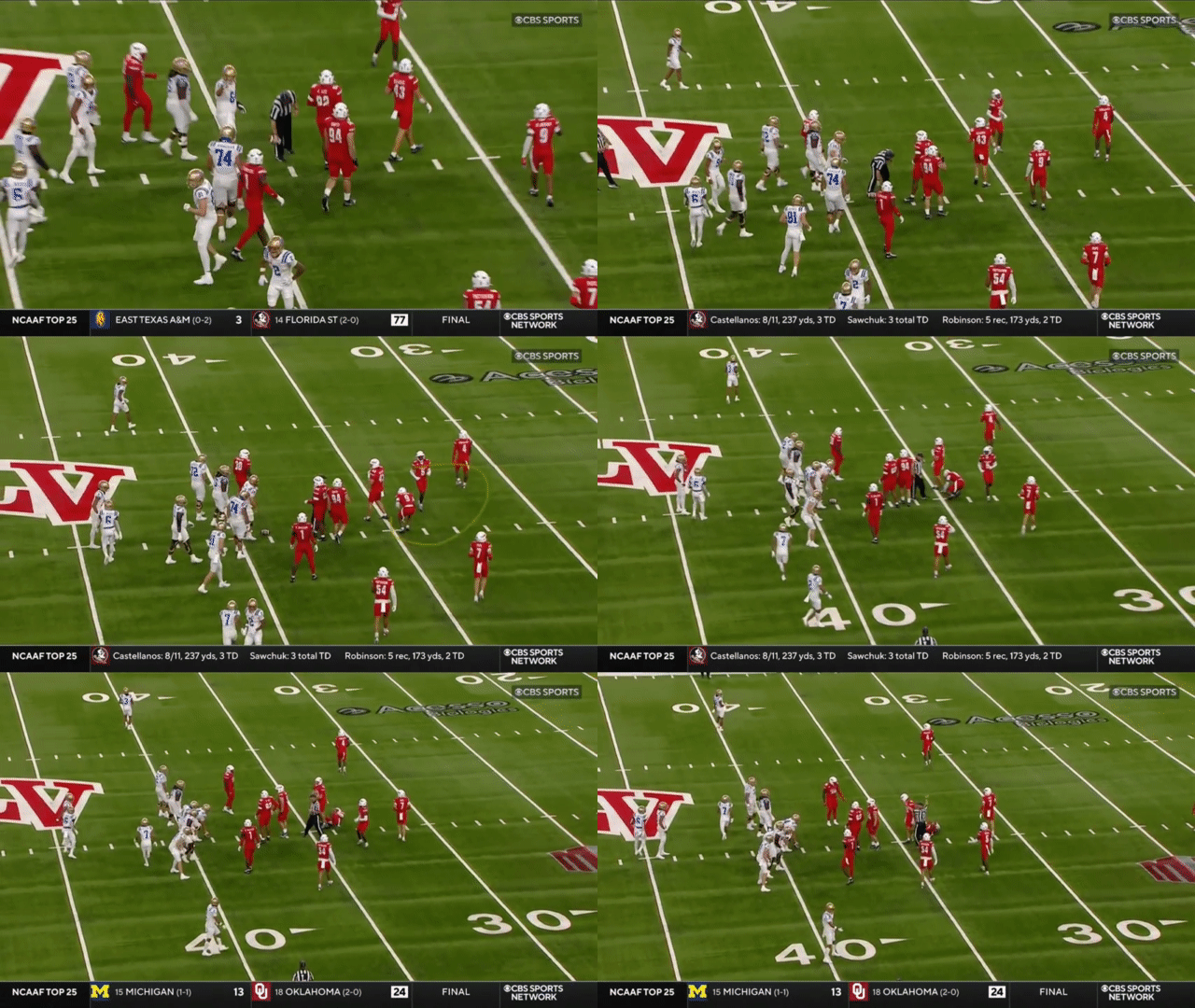
However, the real reason I wanted a special teams section was to cover the punter, Matt Choules. He’s a pretty good punter:
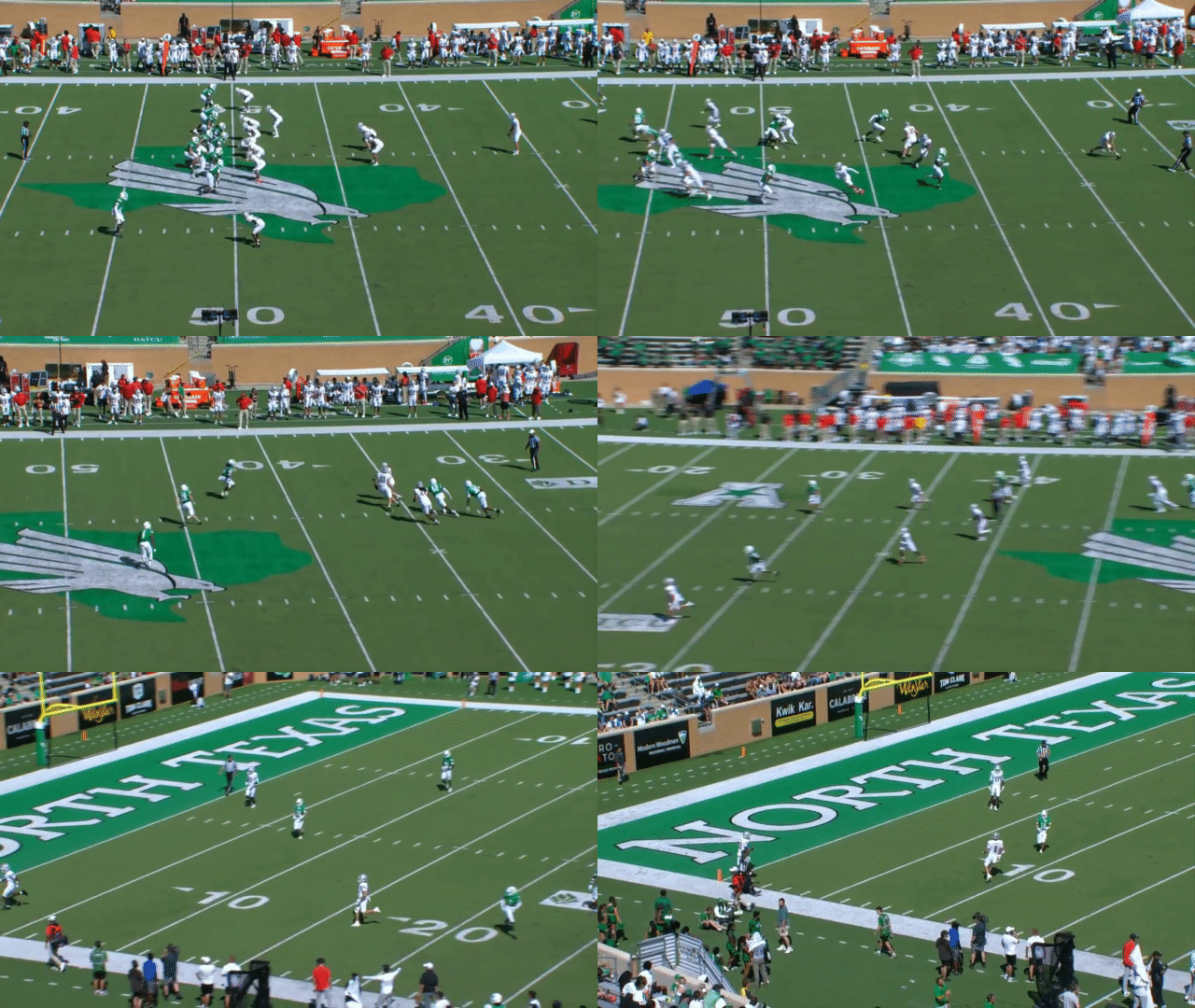
But the reason he gets his own section is that UNLV will actively try to cause muffed punts. UNLV calls it the “tornado kick”, where he kicks the low line-drive punt with a lot of spin to try and make the returner bobble or drop the kick:
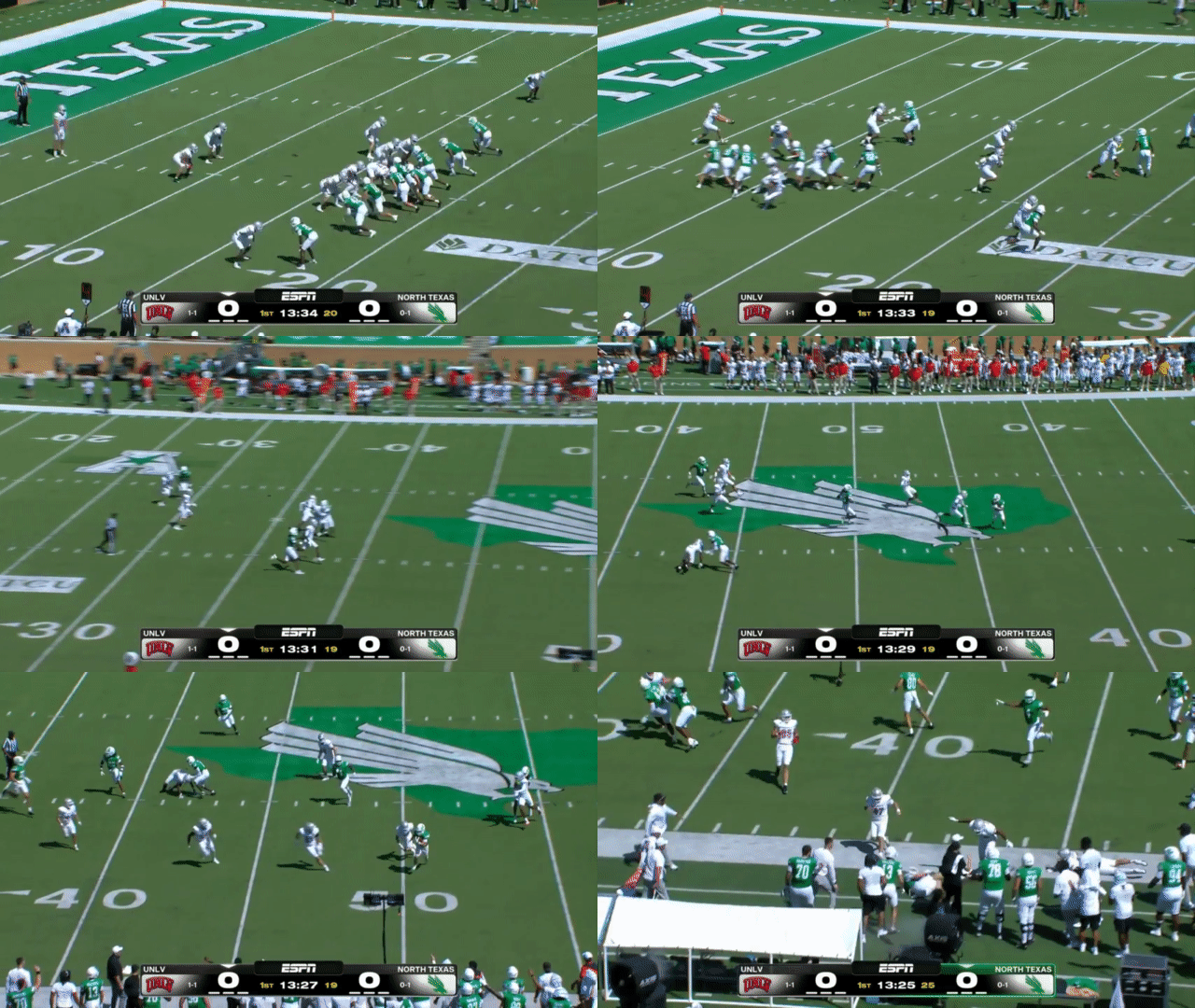
I had actually misremembered the tornado kick working (and rewatched every UNLV punt this season), but I realized now it was because I saw it in the SMU-FSU game, where FSU punter Daniel Hughes successfully forced a muffed punt with his “tornado kick.” These Australian punters tend to go through the same training, with FSU’s Daniel Hughes and UNLV’s Matt Choules both having attended the ProKick Australia, a kicking and punting academy to help transition Australian athletes (who do a lot of punting in Australian rules football) to American college football.
It’s also worth remembering the last time UNLV got tricky with a punt against Cal. I’m not necessarily saying it would happen, but I wouldn’t be terribly surprised of another Cal special teams disaster, which is why I’m mentioning it here.
Conclusion
UNLV has been one of the best non-power conference teams these past two years, even if they fell short of a Mountain West Conference championship both times to Boise State (who went to the CFP in 2024). I think they’re due for a step back, as I’m not sold on QB Jackson Arnold rising to the level that Anthony Colandrea was last year, nor UNLV replacing their top 4 receivers from last season. However, the run game should remain consistent, and a competent run game and a halfway decent defense will do just fine. Cal most certainly has the talent to overwhelm UNLV, but we’ve to see them play like it so far this season. Cal needs to get their act together in a hurry, because Virginia Tech, Wake Forest, SMU, NC State, Virginia, and Pitt are also talented teams (there’s one more team on the schedule I’m forgetting, but they’re probably not any good), and Cal’s not going to be able to win any of those games without some semblance of an offense.
As always,
Go Bears.
You can find my full clips here.
I’m also gunna need a cal offensive preview not sure who’s calling plays this weekend
As a Jerry Tarkanian fan, was always interested in the Runnin' Rebels nickname. Neither the Rebels nickname nor 'Hey Reb!' had an explicit Confederate connection. The original Rebel nickname (1954) predated the short-lived Confederate imagery (dropped by the mid-1970s), and Hey Reb! was intentionally designed as a Western figure.
Historical context: During the Civil War, Nevada recruited roughly 1,200 men into the Union Army, forming the Nevada Volunteer Cavalry and infantry units.
UNLV briefly adopted Confederate visual tropes....but not because they were Confederate sympathizers. The first official mascot was Beauregard, a cartoon wolf named after Confederate General P.G.T. Beauregard. The wolf wore a Confederate gray uniform and cap depicted with a wink. It was created as a jab at UNR’s wolf mascot—Southern “Rebel” wolf versus Northern wolf.