

Last year, I wrote enviously about Virginia’s “Cardiac Cavaliers” having the kind of season I always hoped Cal would have. Virginia did indeed make it to the ACC Championship game, although their playoff hopes came to an end after falling to 7-5 Duke for the ACC title. Although Virginia had a lot of lucky breaks go their way last season, that hasn’t been the case so far this year. Last year, Virginia had a favorable schedule which missed most of the top teams in the ACC: Miami, Pitt, SMU, Georgia Tech. The only ACC contender they faced last year was Duke, who they beat during the regular season. For context, Cal was the team with the second-best conference record of teams on their schedule (behind Duke), and “when is the last time Cal had a winning conference record?” is an unfortunate trivia question (it’s 2009). Virginia survived 3 games in overtime, and won 3 games by 3 or fewer points, and 4 games by one possession.
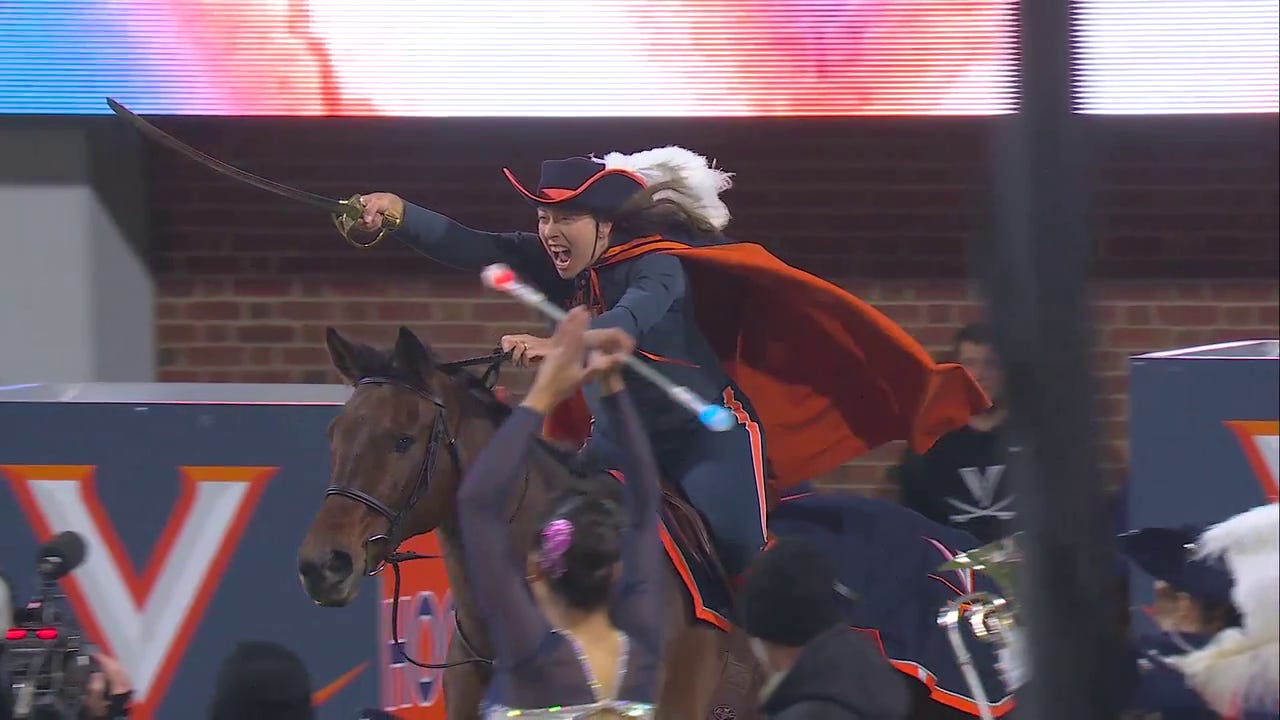
This year, Virginia has had no such luck. They have already faced a couple of the ACC contenders in SMU, Wake Forest, and Duke. They were blown out by a talented-but-underperforming team in Florida State. They won a rock fight with Syracuse, but at this point, who hasn’t. They’re currently on a 3-game losing streak, and just got blown out by Wake Forest. In other words, they sound a lot like Cal.
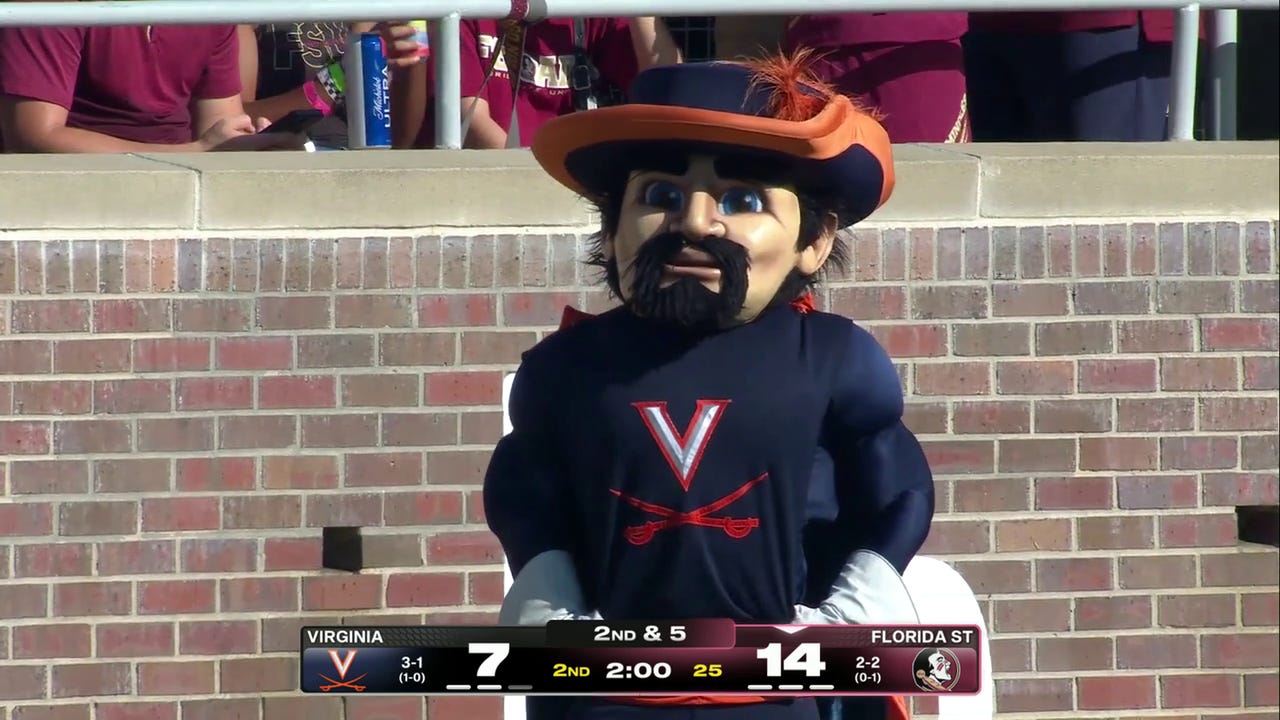
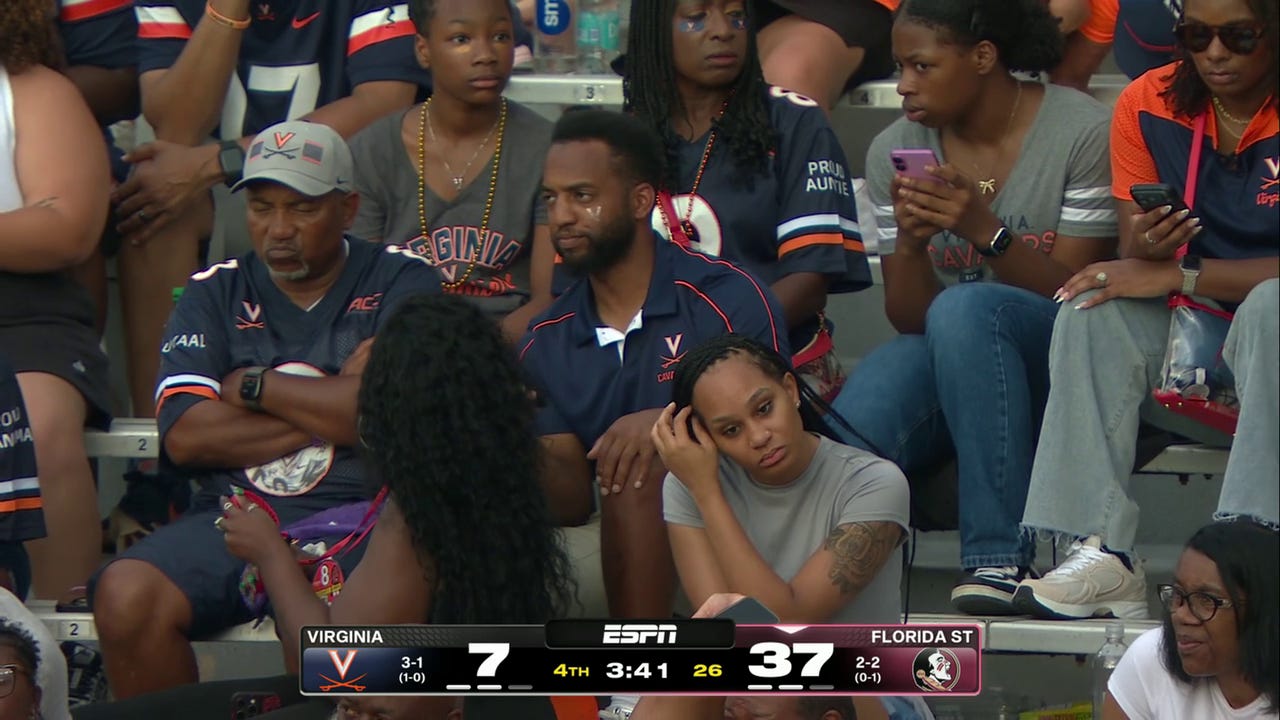
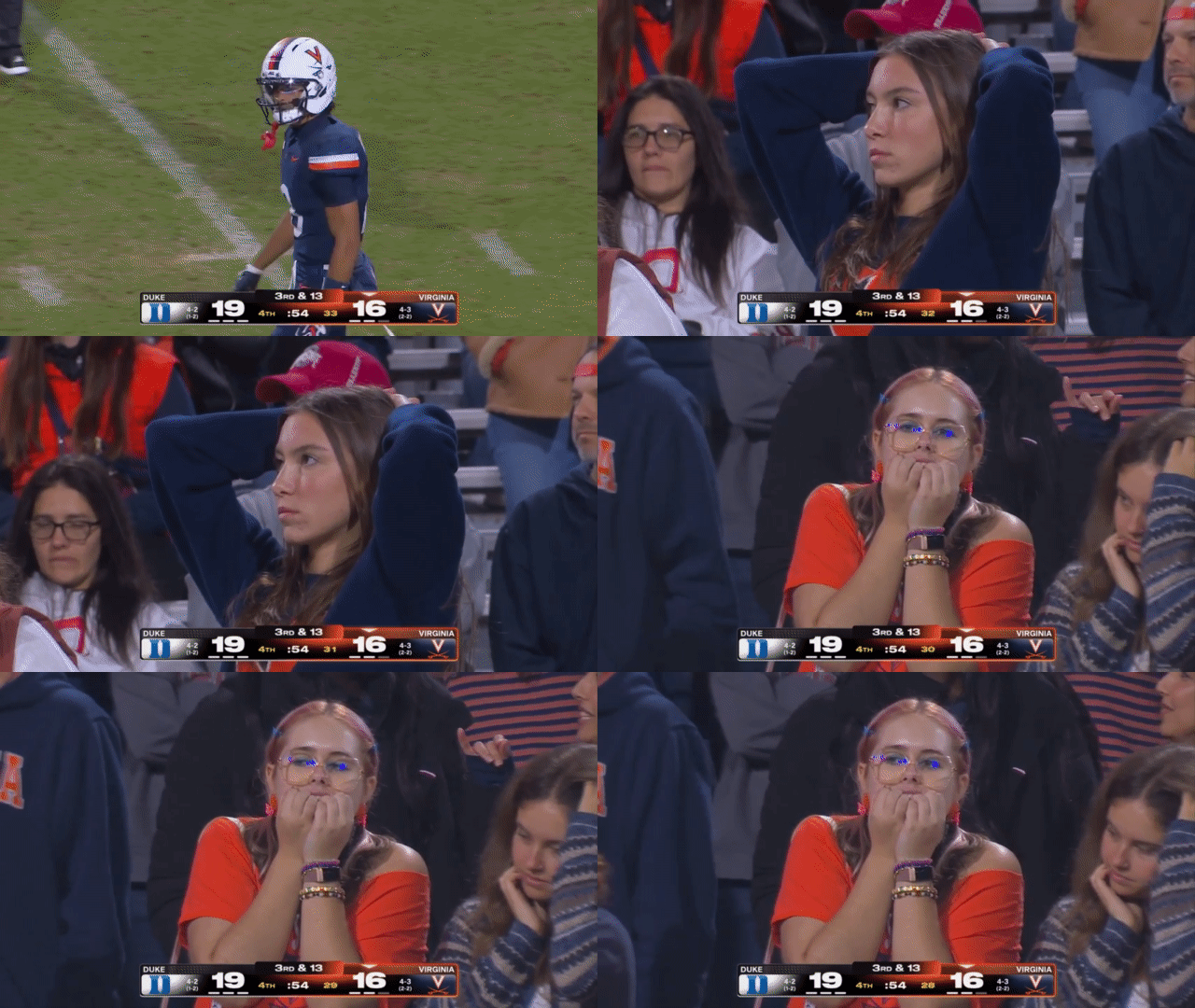
I mean, you can see it in their faces. Does this look like a crowd having a good time?
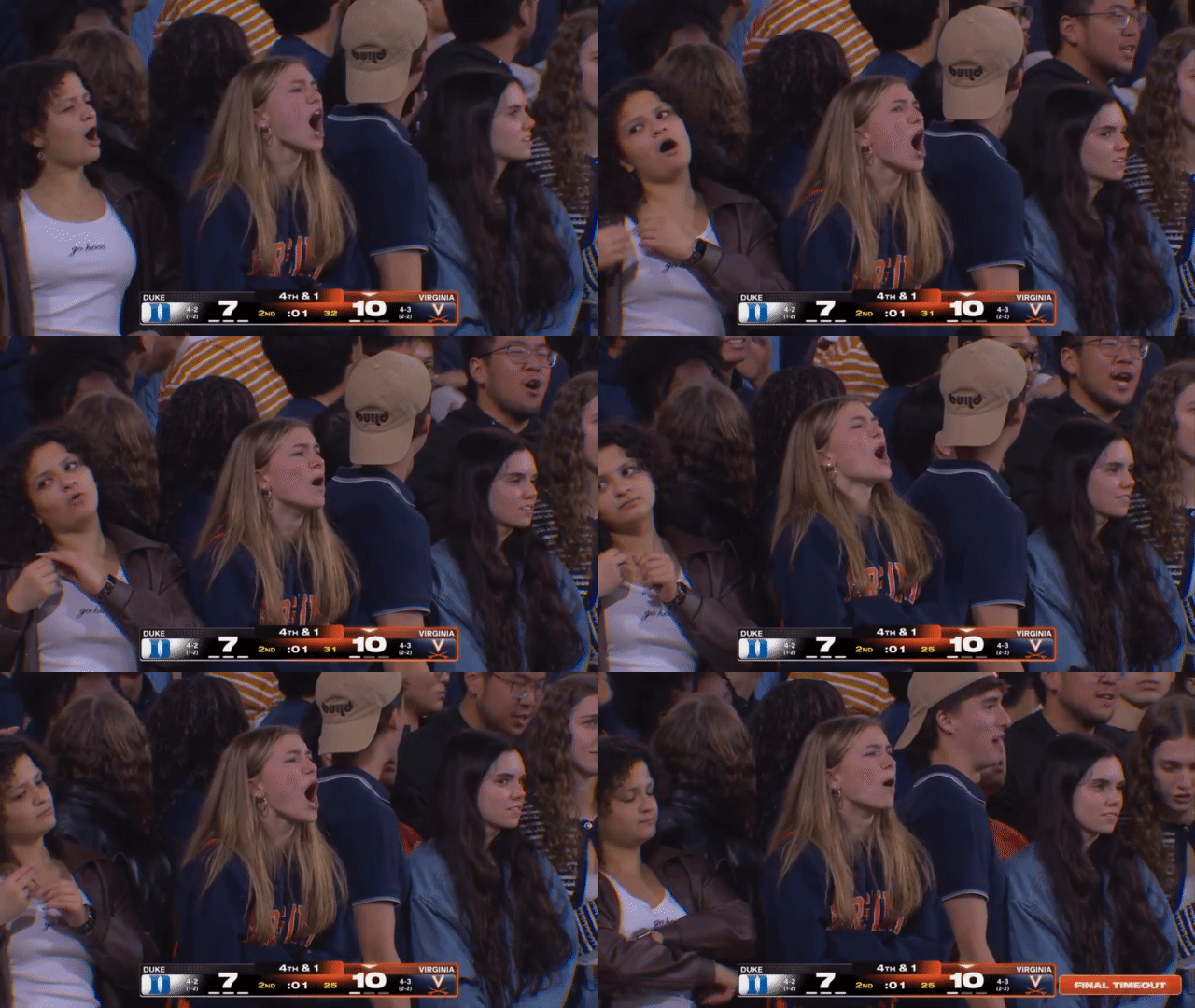
The fans have openly expressed their disapproval with the offense’s play-calling:
And while this may be more akin to Wilcox-era Cal, the close games this season have not gone their way (2026 Cal prefers to lose in style):
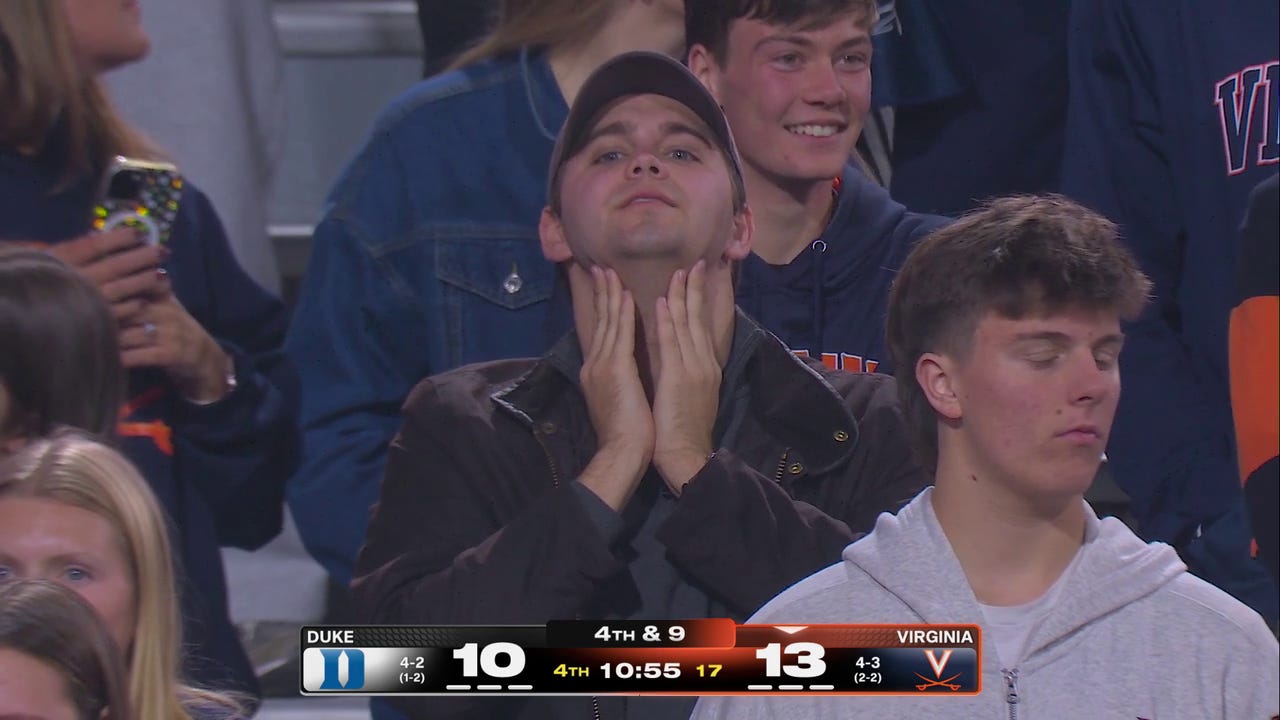
Appropriately, Virginia fans don’t trust leads either:
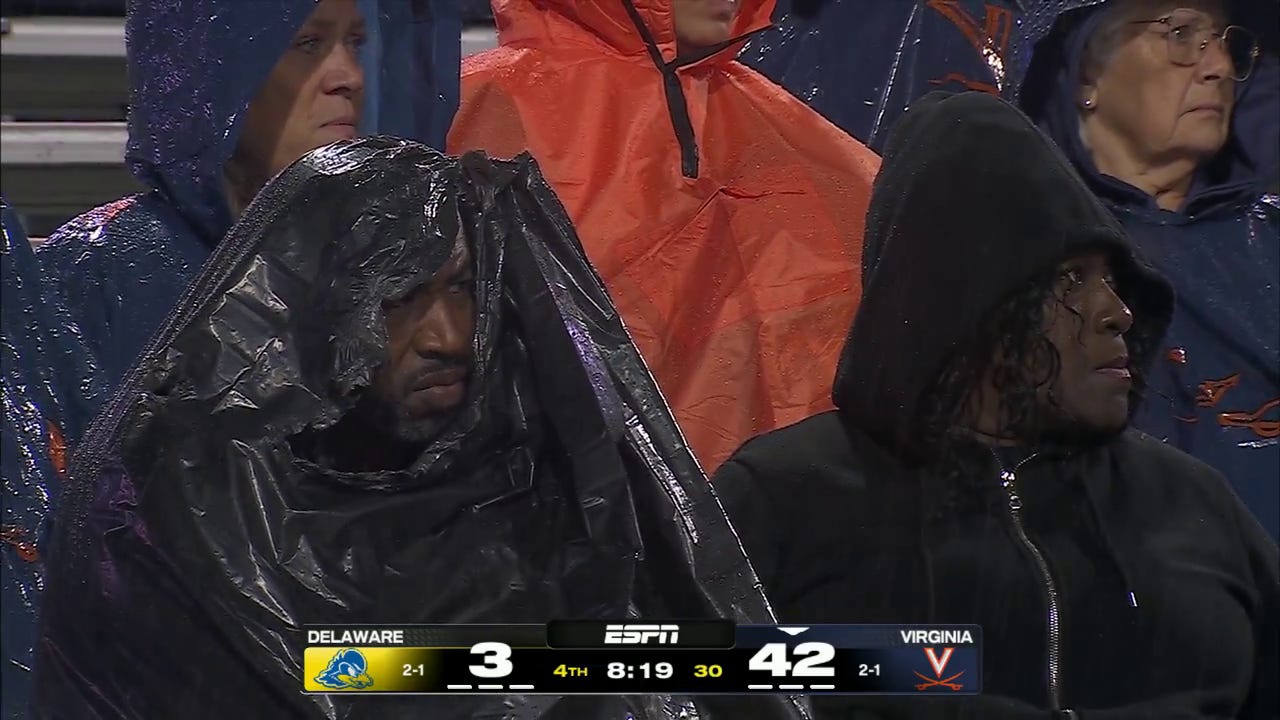
But unlike some teams that are currently 9-0 and still playing to empty stadiums, at least Virginia fans show up, rain or shine:
Of course, although Virginia’s season feels similar to Cal’s in spirit, they’ve arrived there in completely different fashion. Let’s take a closer look at what’s gone wr— err, the positional breakdowns for UVA.
Quarterback
Mizzou transfer QB Beau Pribula starts for Virginia Tech. Pribula originally transferred from Penn State to Mizzou during PSU’s 2024 CFP appearance, when then-starting PSU QB Drew Allar announced he would be returning to Penn State for another year. I mentioned this briefly in the Virginia Tech preview, but the former Penn State/Mizzou quarterback thought he was destined for Virginia Tech to rejoin his old coach at Penn State in James Franklin: he scheduled exactly one trip during the transfer portal window—to Virginia Tech—only to find out from a different school during his visit at Virginia Tech that now-VT QB Ethan Grunkemeyer (also a former PSU QB) had just committed to Virginia Tech. It then became a mad scramble for Pribula to find a landing spot. He traveled to Nebraska, only for former Virginia QB Anthony Colandrea to commit to Nebraska while Pribula was again on his official visit. Washington then flew Pribula in for a visit after QB Demond Williams announced he was entering the portal after already re-signing with Washington, before Williams reversed course again. He took trips to Georgia Tech and Tennessee, where ongoing court eligibility news further affected the transfer portal landscape. Last year’s quarterback for Virginia, Chandler Morris, had his eligibility waiver denied by the NCAA, and now Virginia was scrambling for quarterbacks. They brought in Beau Pribula and Pitt QB Eli Holstein (who had lost his starting job to freshman standout Mason Heintschel), and an exhausted Pribula finally found a landing spot right before the transfer portal deadline, while Holstein expressed he was still interested even with Pribula expected to take the starting job (Holstein will likely be the starter for next year). The fact that Pribula ended up at Virginia Tech’s rival—a happy coincidence.
At Mizzou, Pribula went 7-3 as a starter, with losses to 2 playoff teams (Alabama and Oklahoma), and to Vanderbilt who narrowly missed the CFP (finishing #14 in the final CFP rankings). At Mizzou, Pribula threw for 11 TDs and 9 INTs, but has done a much better job of keeping the ball safe this year with 14 TDs/3 INTs so far this season.
Pribula is a dual-threat quarterback, capable of throwing on the move, and excelling primarily in the short-passing game. He can improvise, make plays with his feet, and does a good job running the read-option. Conversely, Pribula is patient in the pocket and sometimes doesn’t trust his reads, so he can sometimes be way late on his throws, and sometimes he misses his reads completely. Pribula hasn’t shown great reads and anticipation on throws, which has put a limit on downfield or explosive plays.
Pribula has shown some really nice accuracy at times, particularly into tight window throws:
Pribula shows good chemistry with his tight ends, and here has perfect timing and placement on his throw:
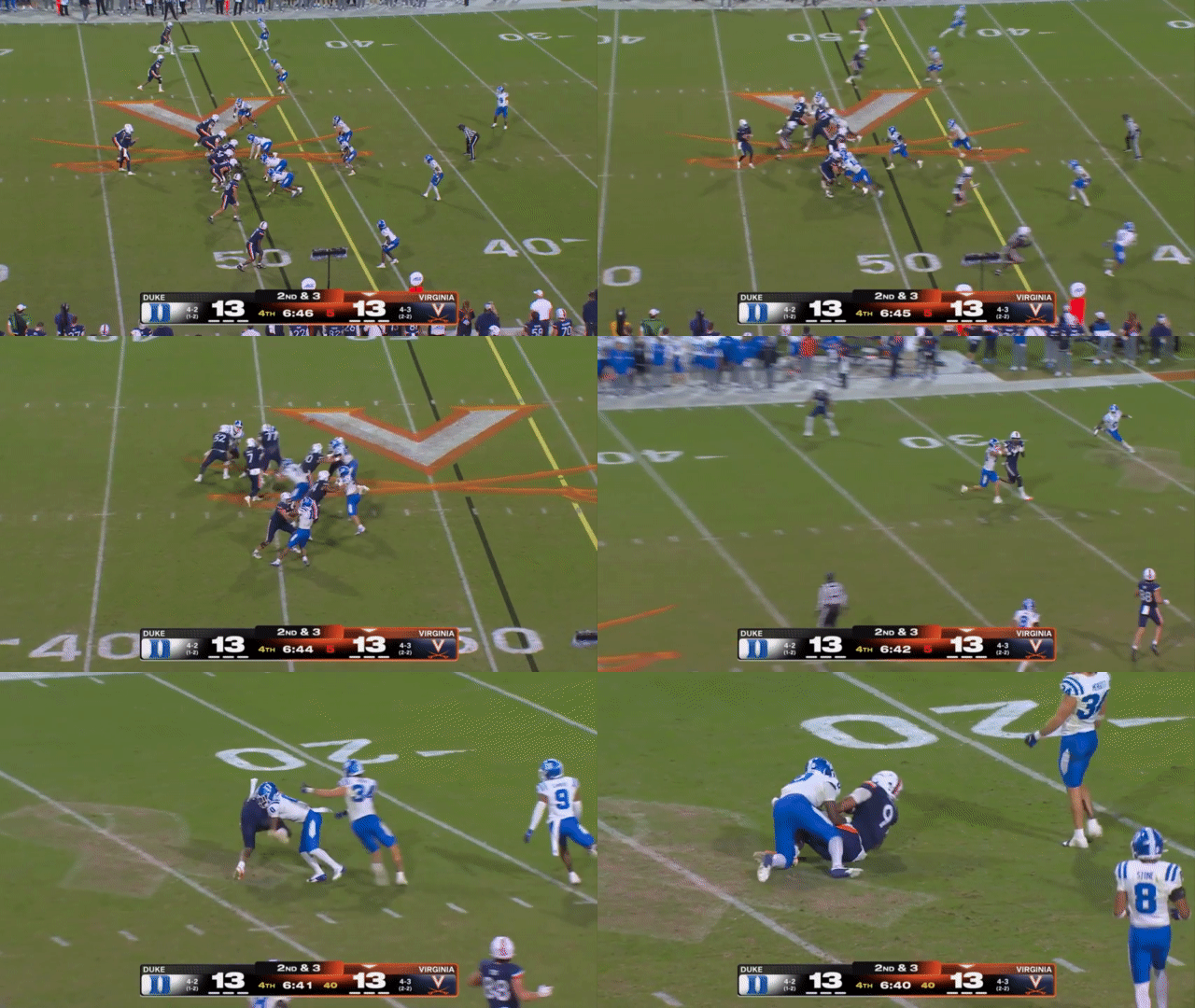
Similarly, he makes an other nice throw to his tight end down the sideline (I imagine these are first-read throws):
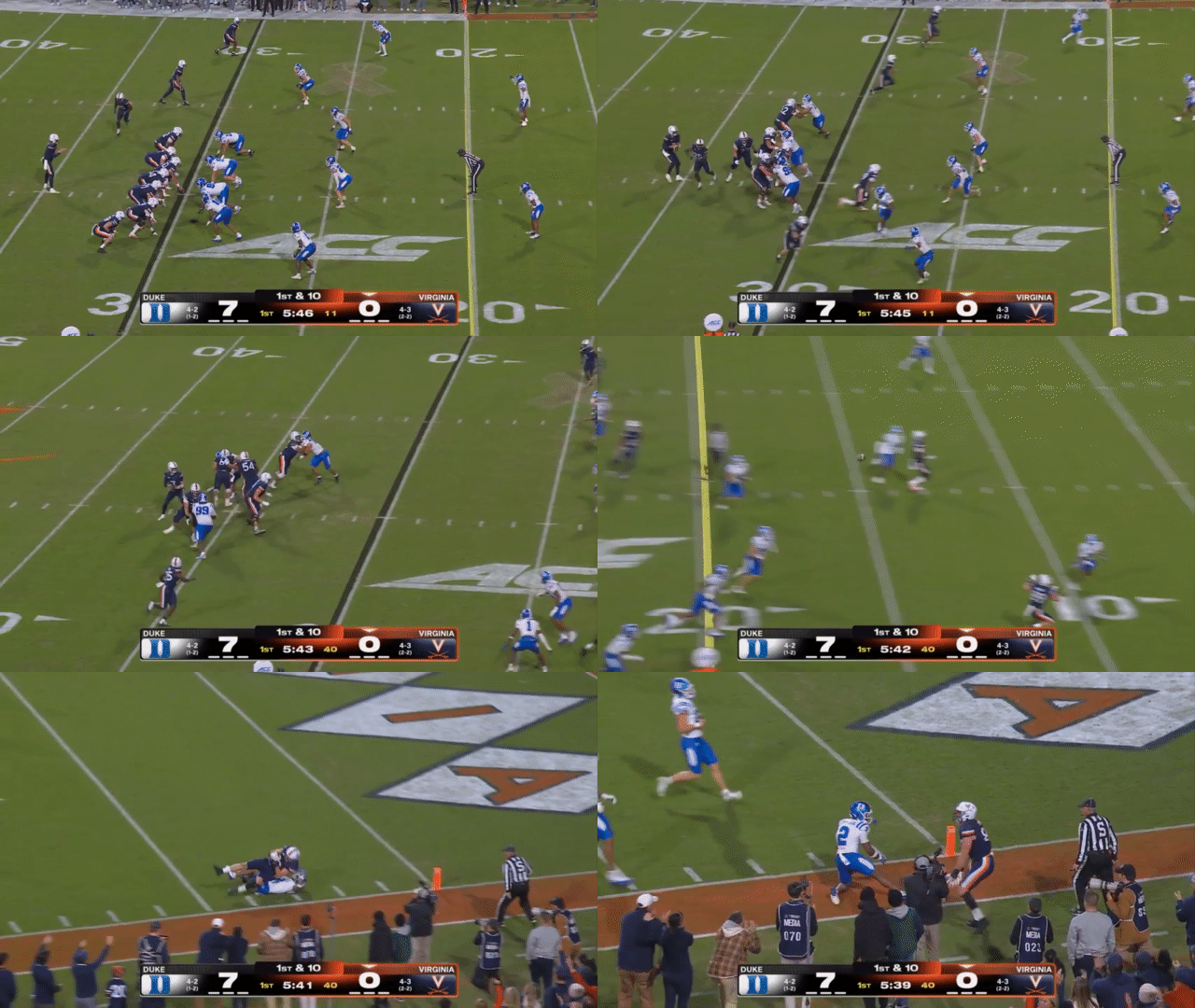
Pribula does a nice job of buying time in the pocket for making a nice throw down the sideline here (Pribula seems most comfortable with his deep shots being back shoulder throws down the sideline):
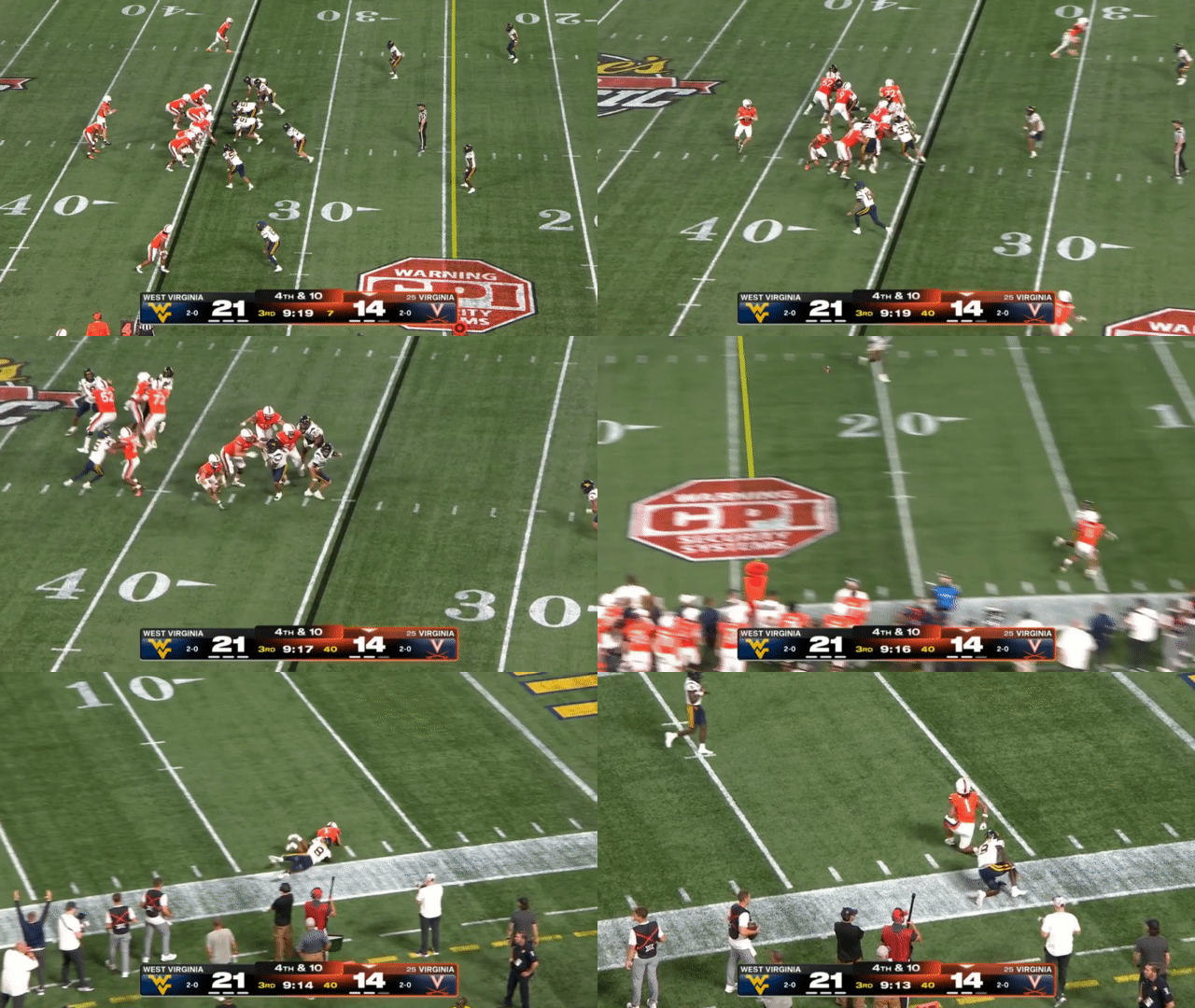
Here Pribula shows some nice touch in layering the throw over the underneath defender:
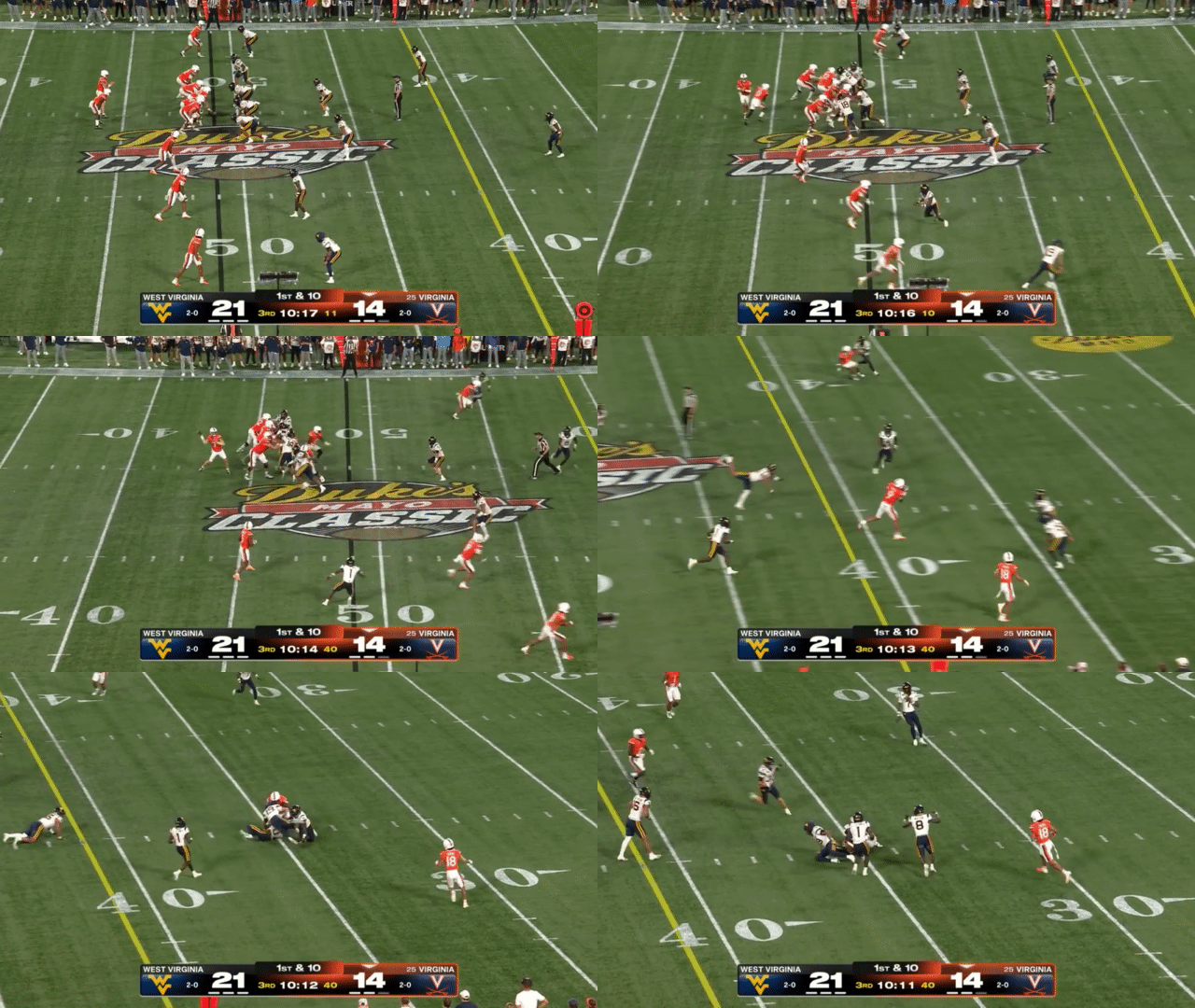
However, Pribula also has plenty of moments where his accuracy just gets away from him. Sometimes, even without pressure, he can completely misfire:
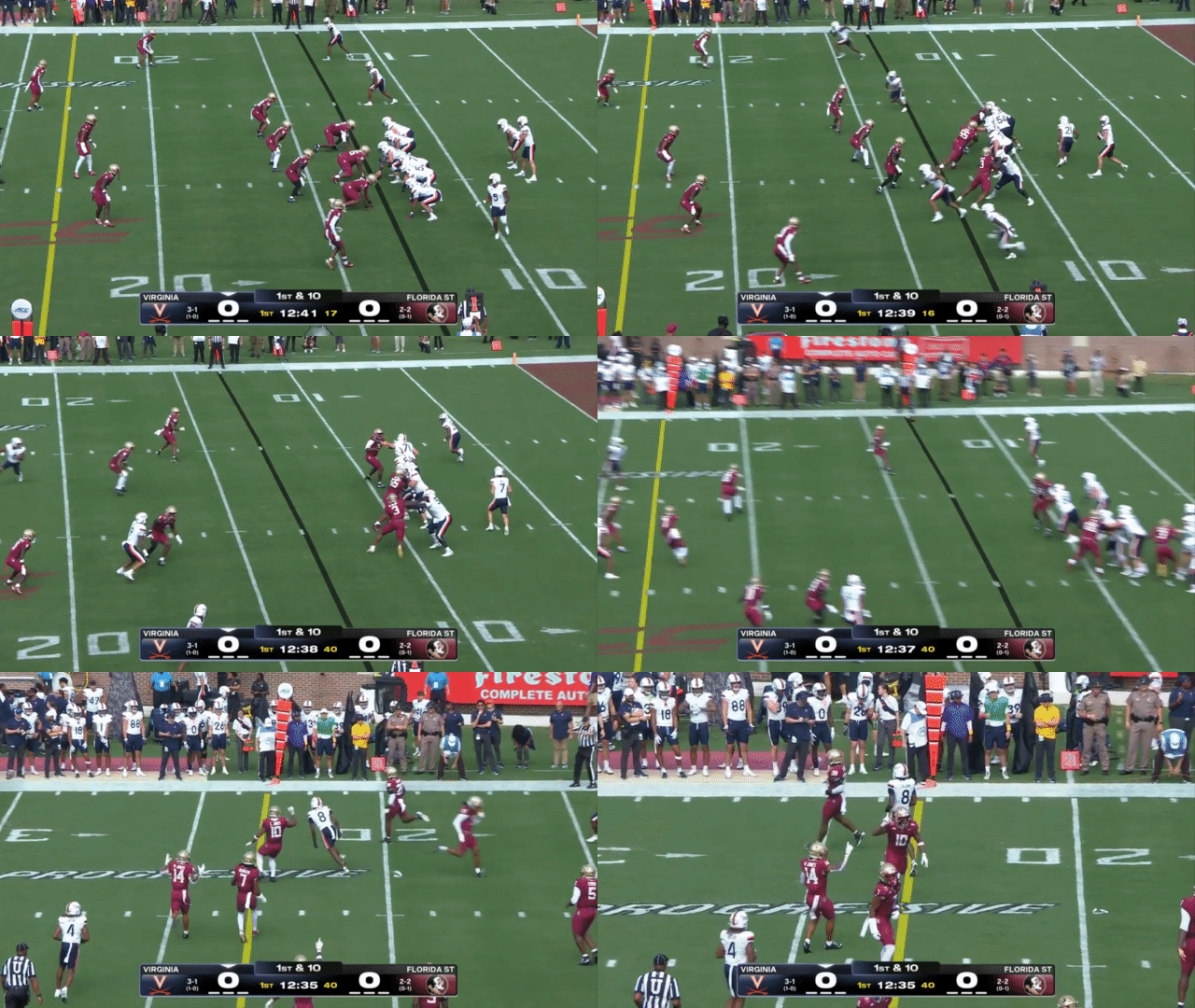
And again:
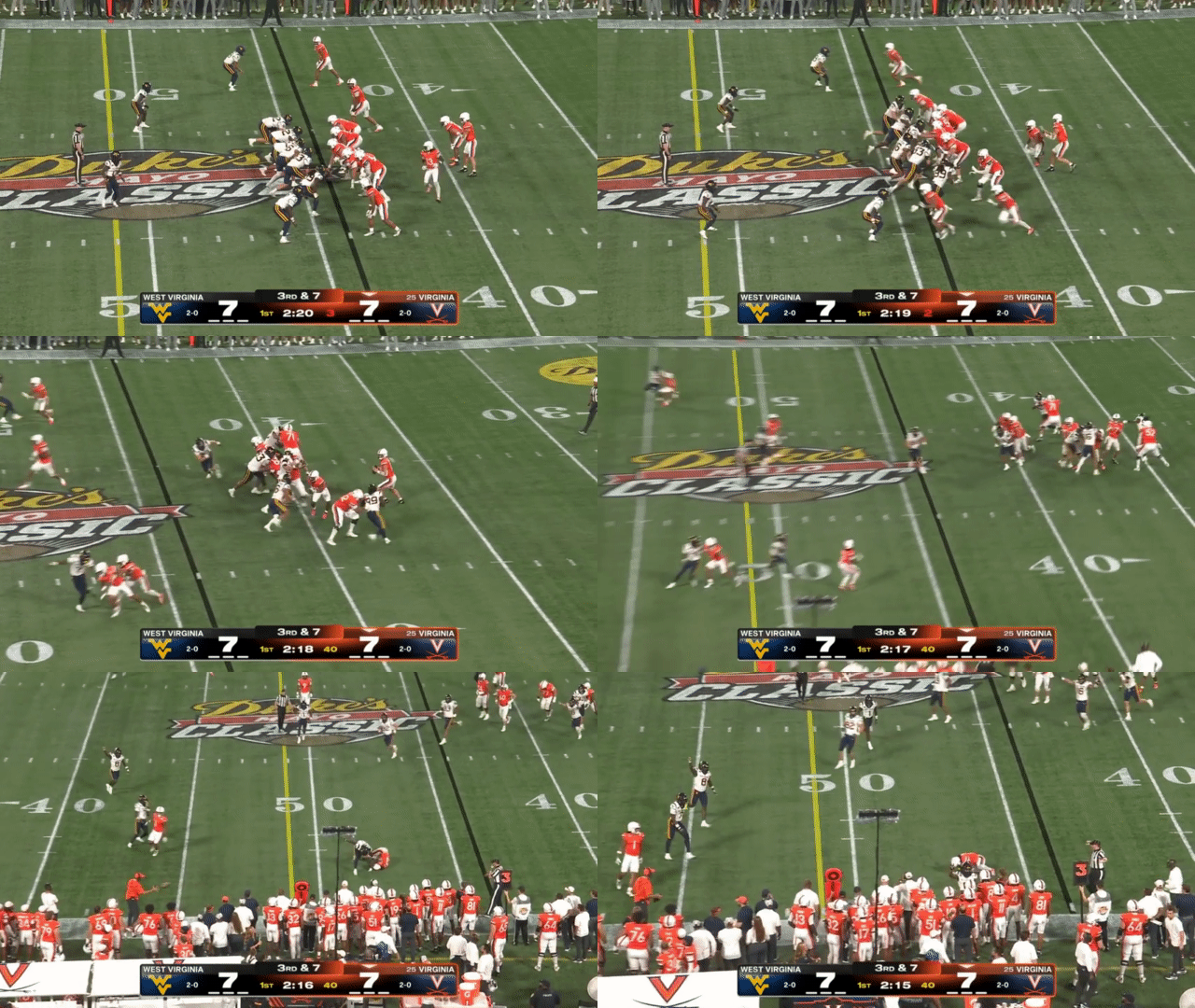
Another misfire:
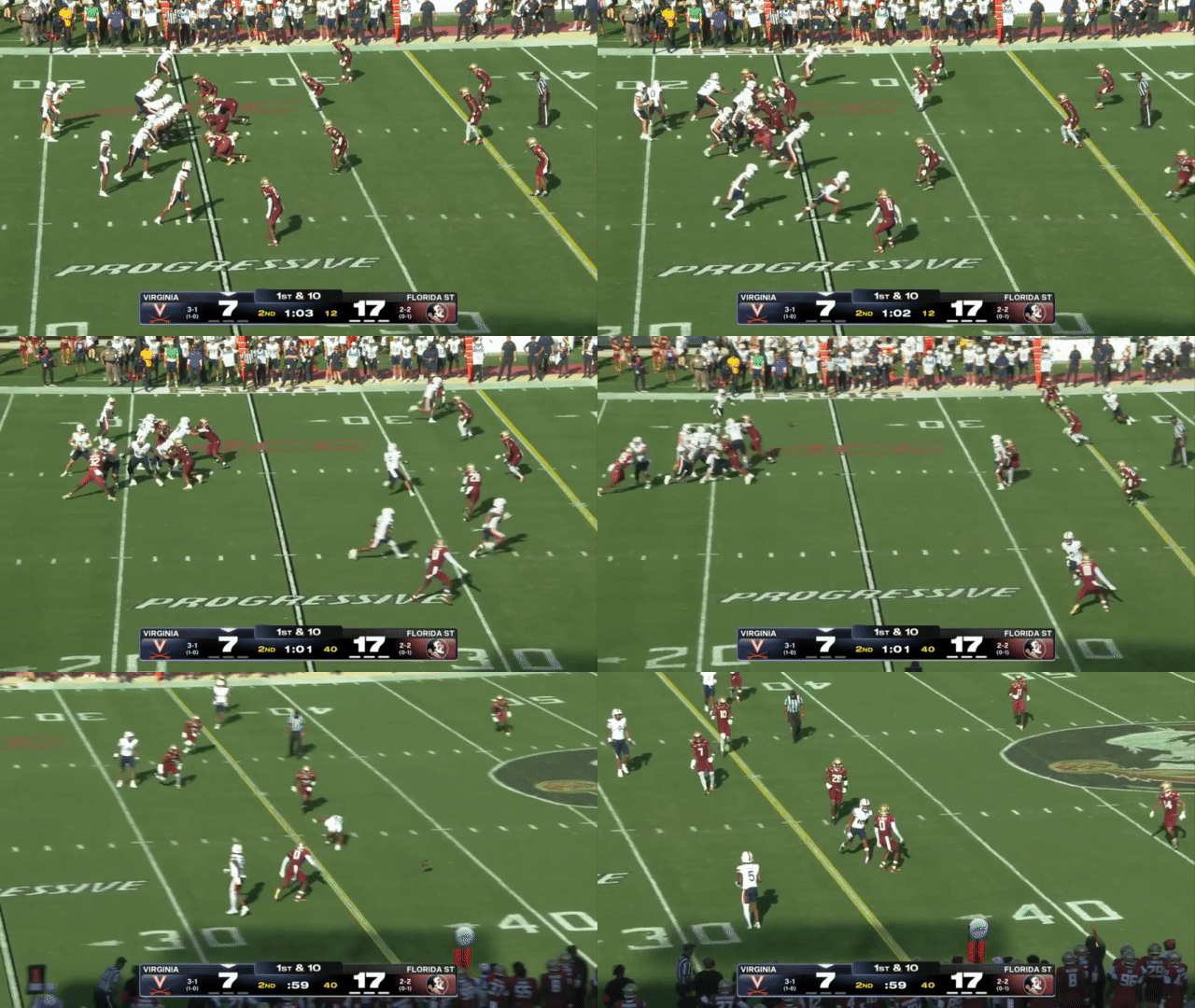
Pribula also struggles with his accuracy on deep throws:
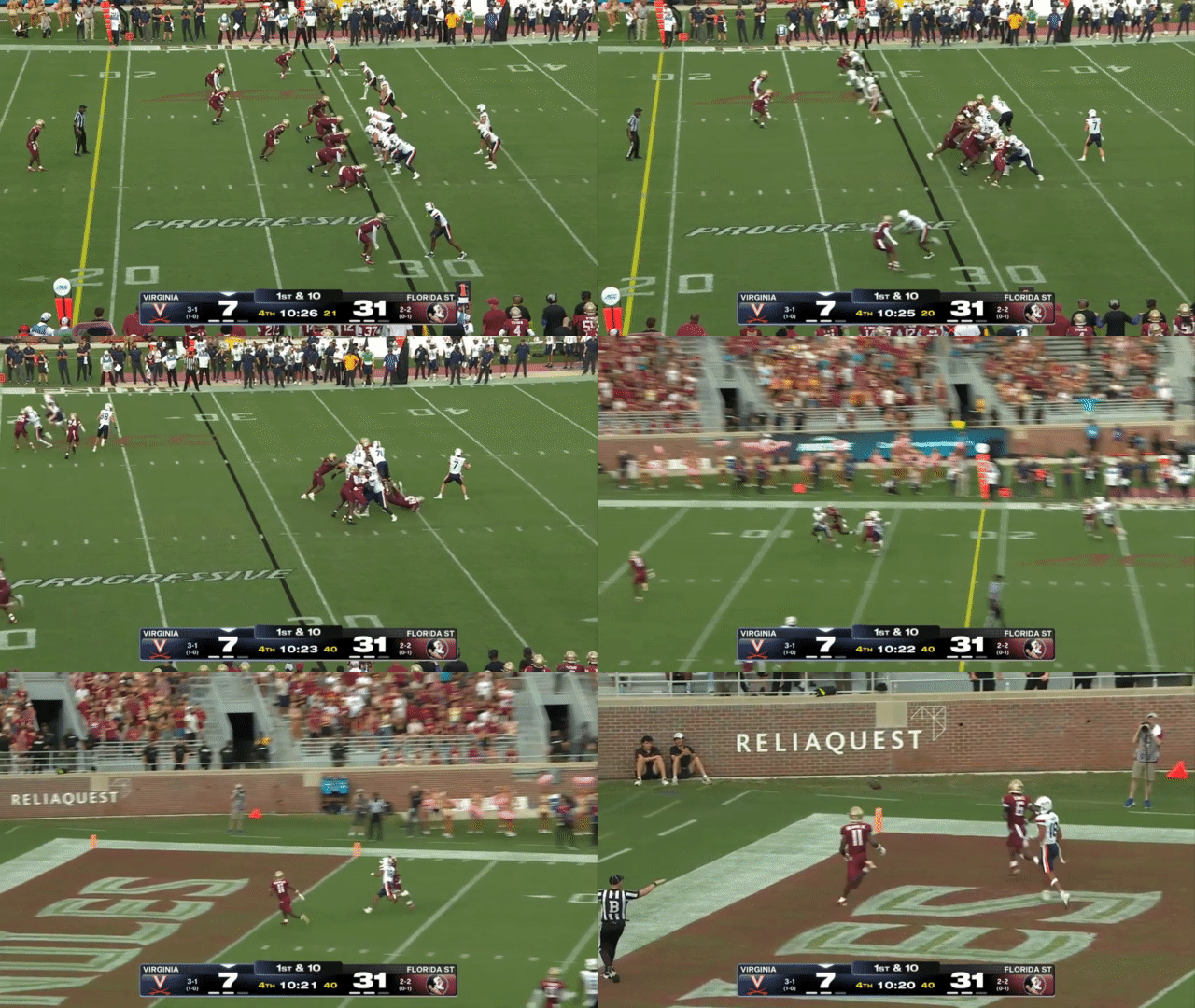
Pribula also doesn’t trust his reads at times and often misses his throwing window:
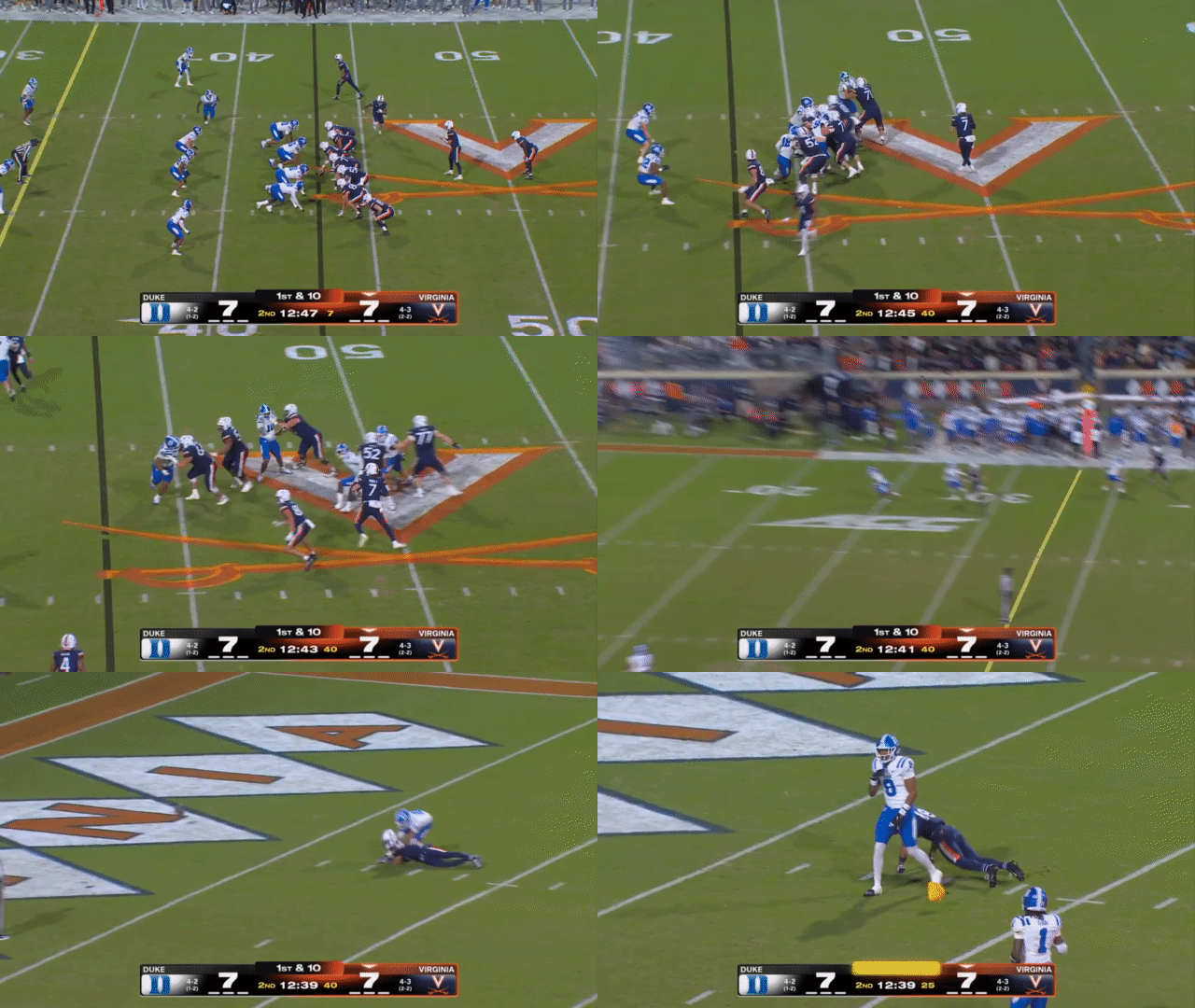
However, Pribula is able to make plays on the ground. Here he does a nice job improvising on a broken play:
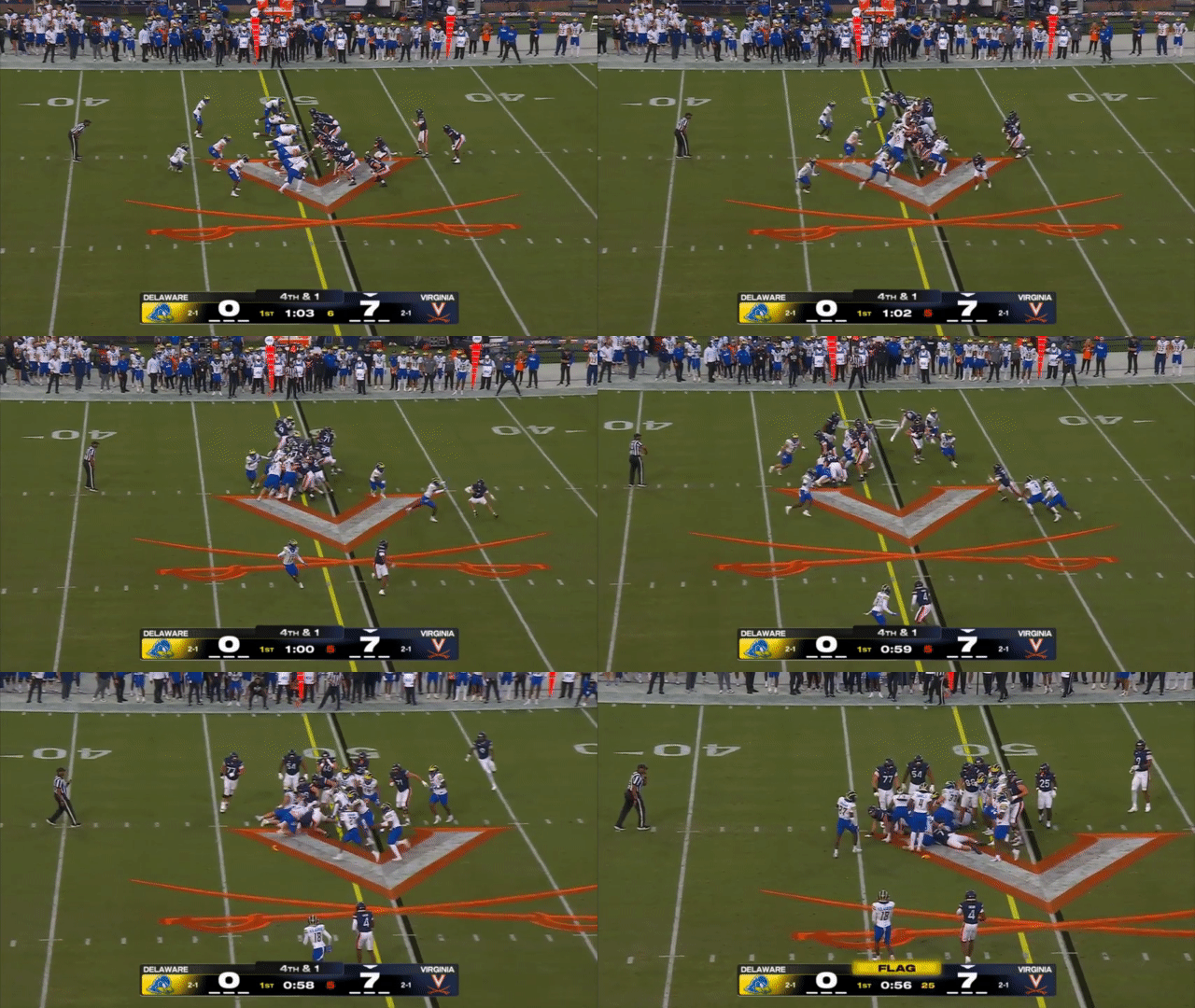
He can score it with his feet:
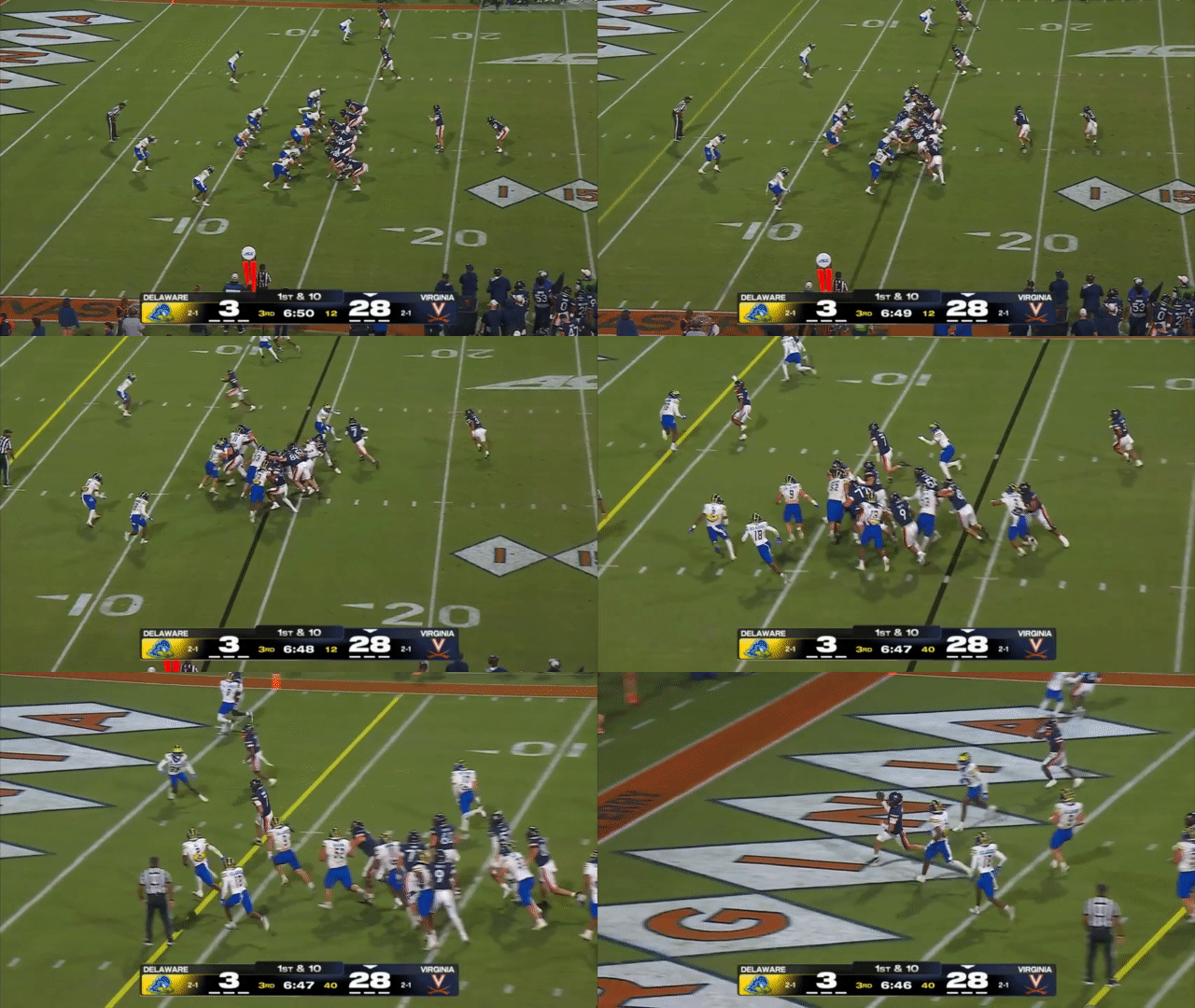
And he even showcases some RB-like skills cutting his way through traffic:
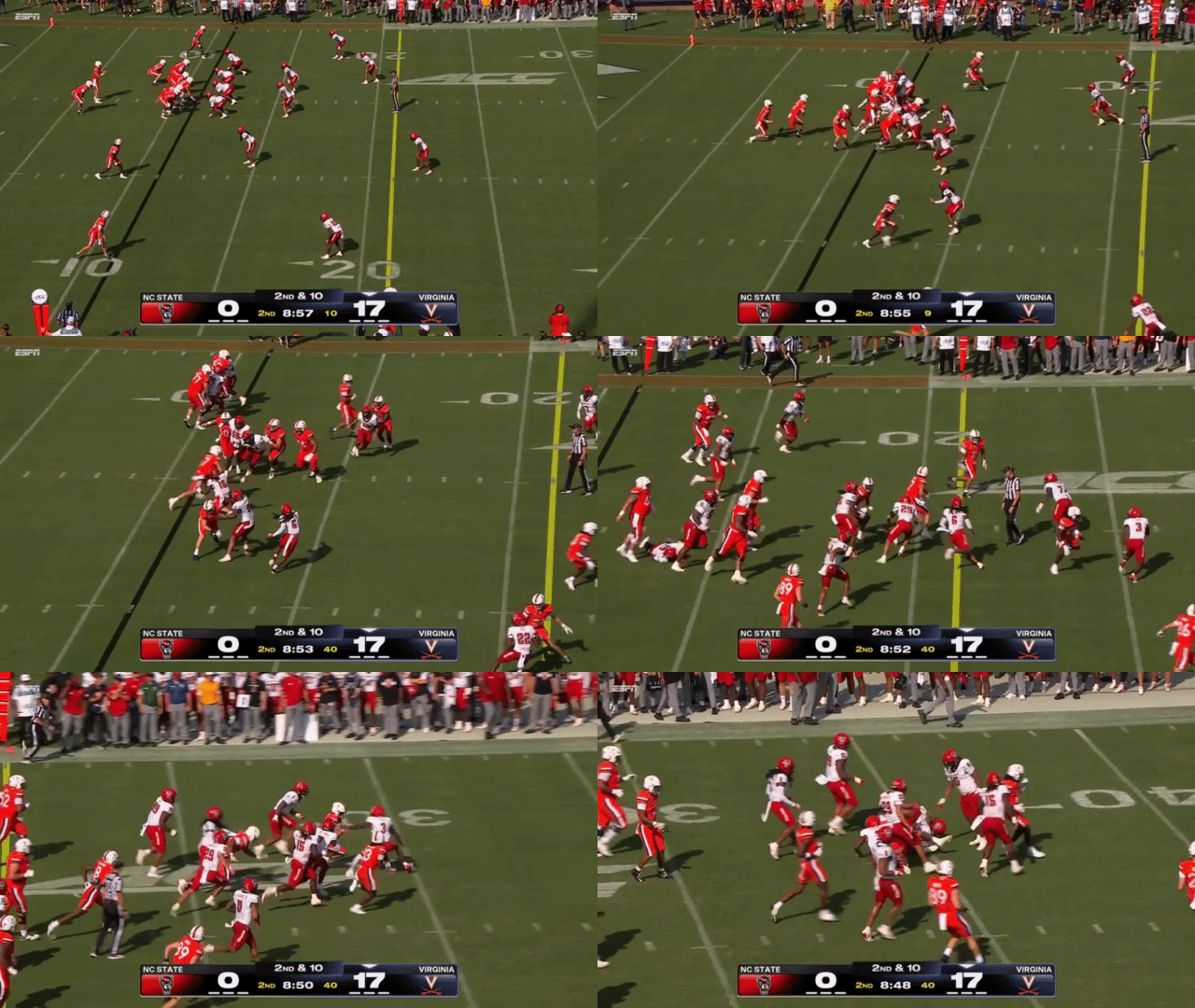
Here’s another nice run:
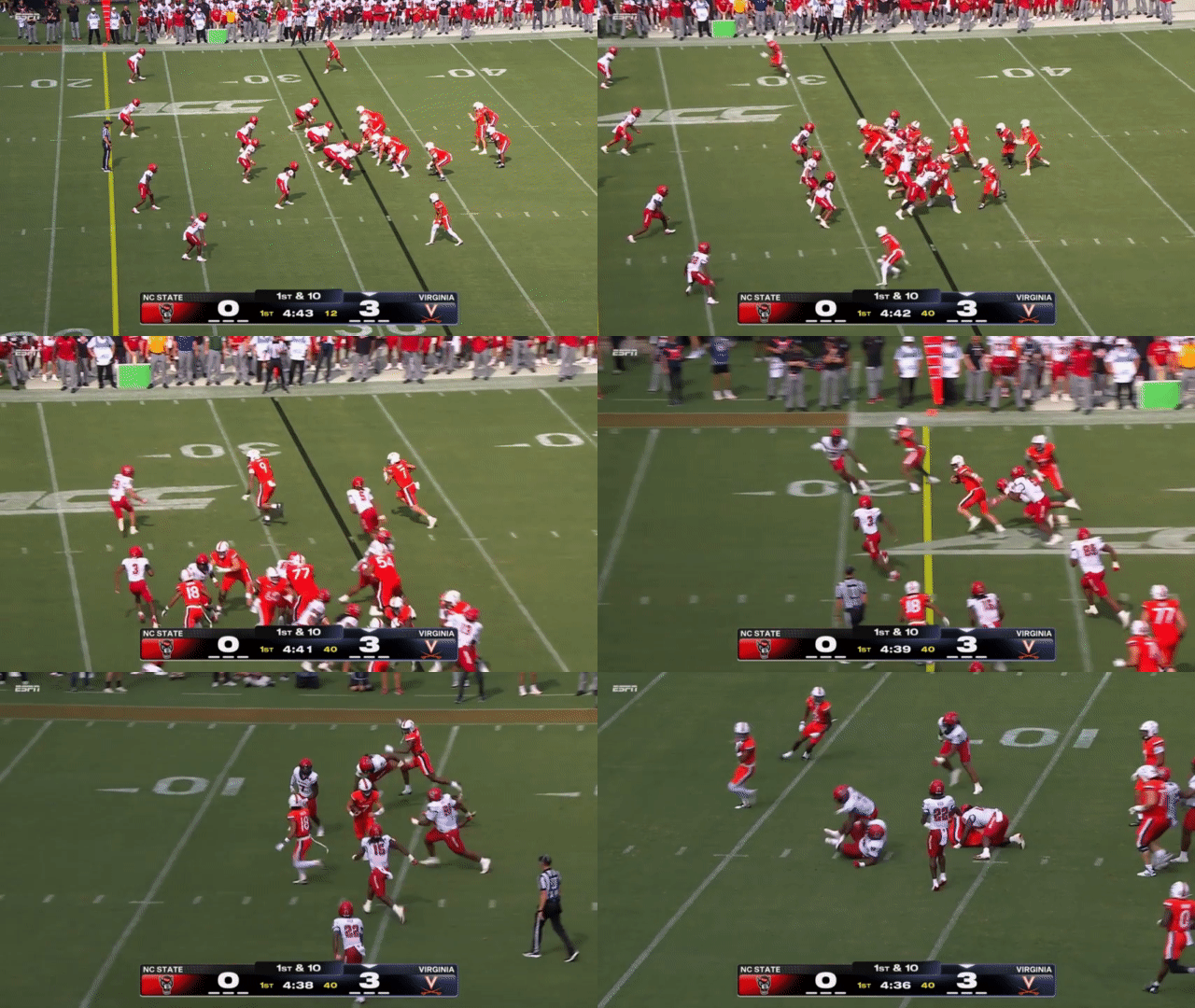
Virginia will run a lot of zone-read, option, and RPO plays with Pribula:
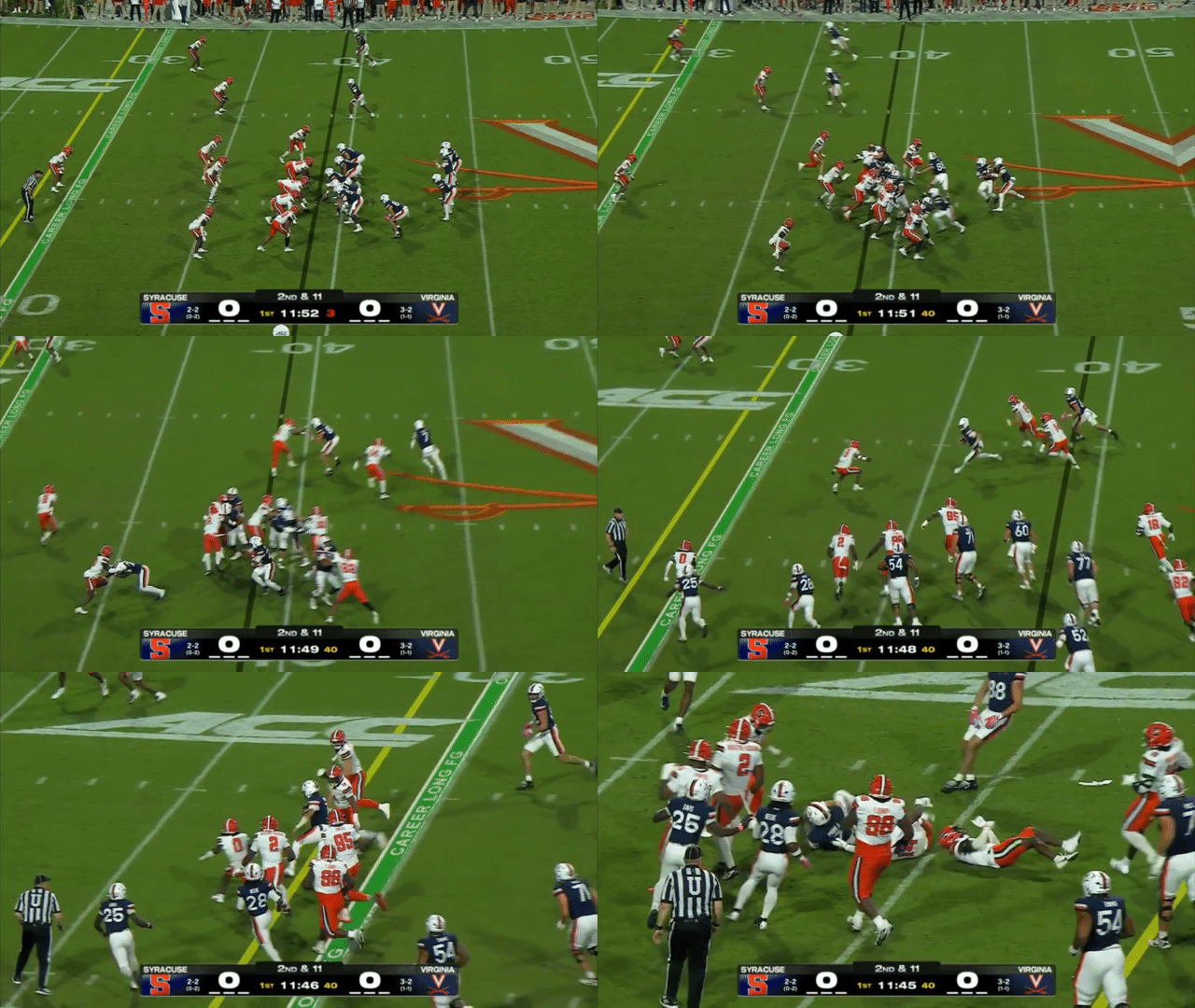
Because Pribula can make plays on the ground, he sometimes doesn’t make the correct read on the throw or looks to run too soon:
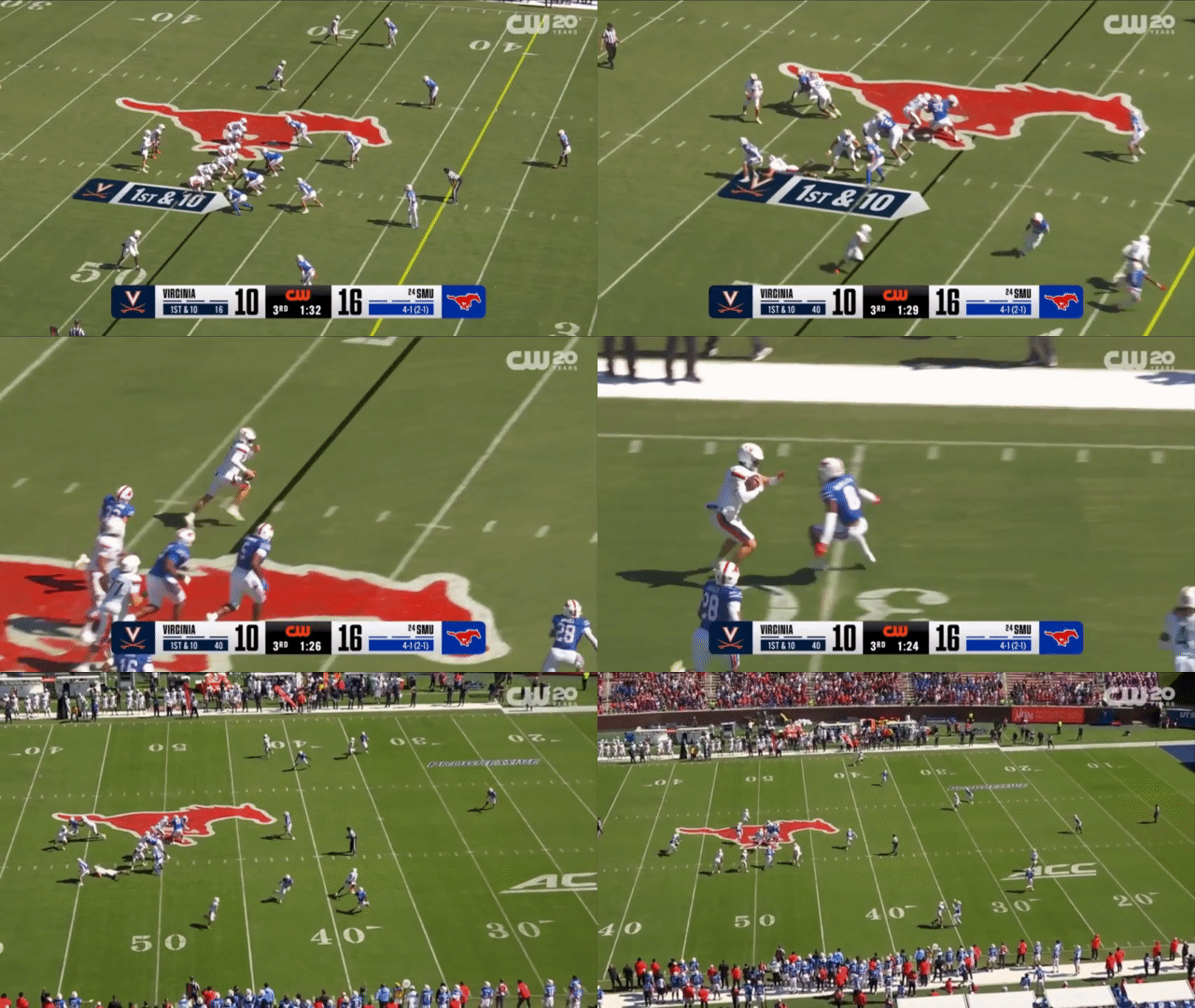
Although Pribula can run the ball, he most often uses his legs to buy time in the pocket:
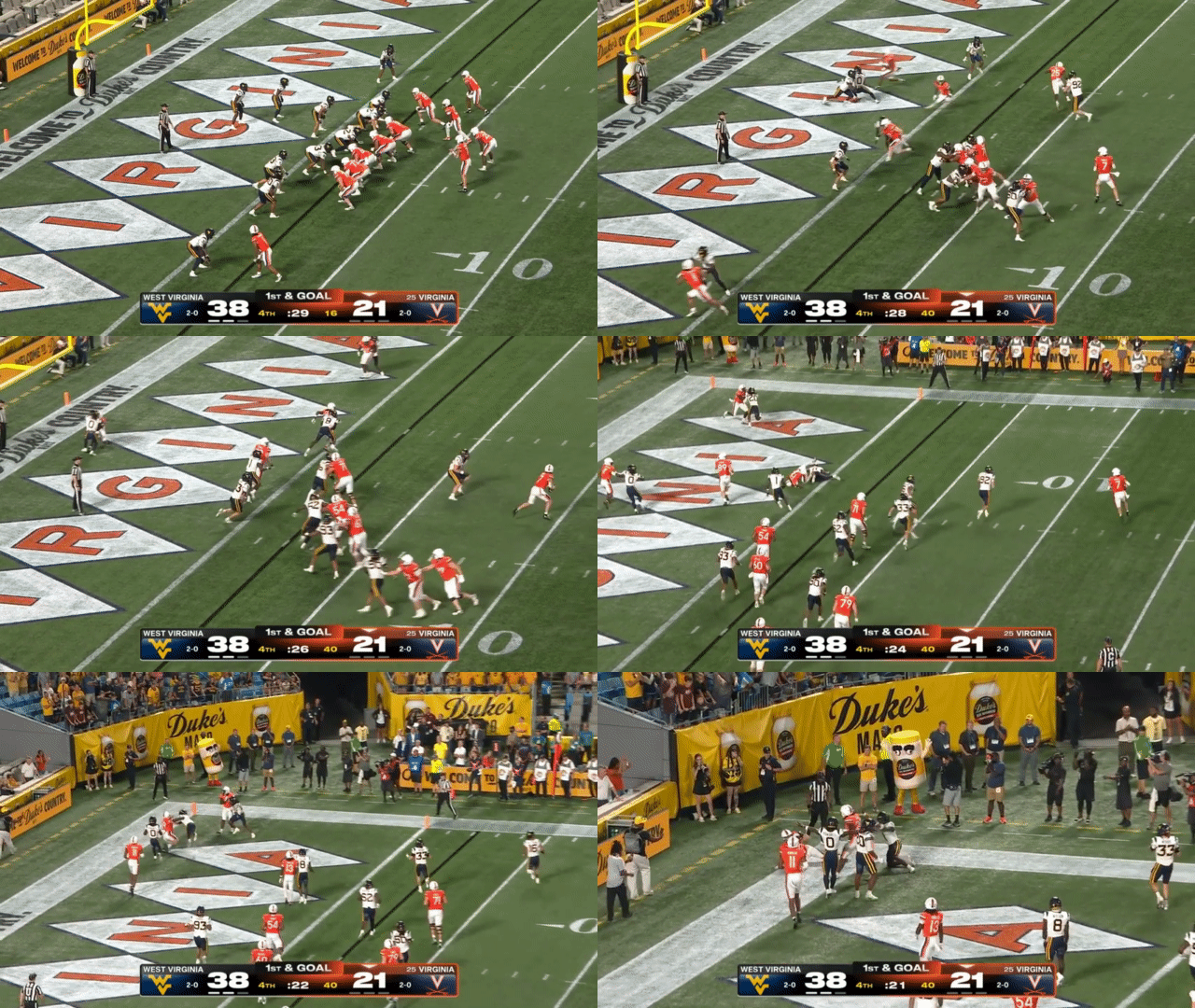
This looks like another improv play, made possible by Pribula’s ability to buy time in the pocket:
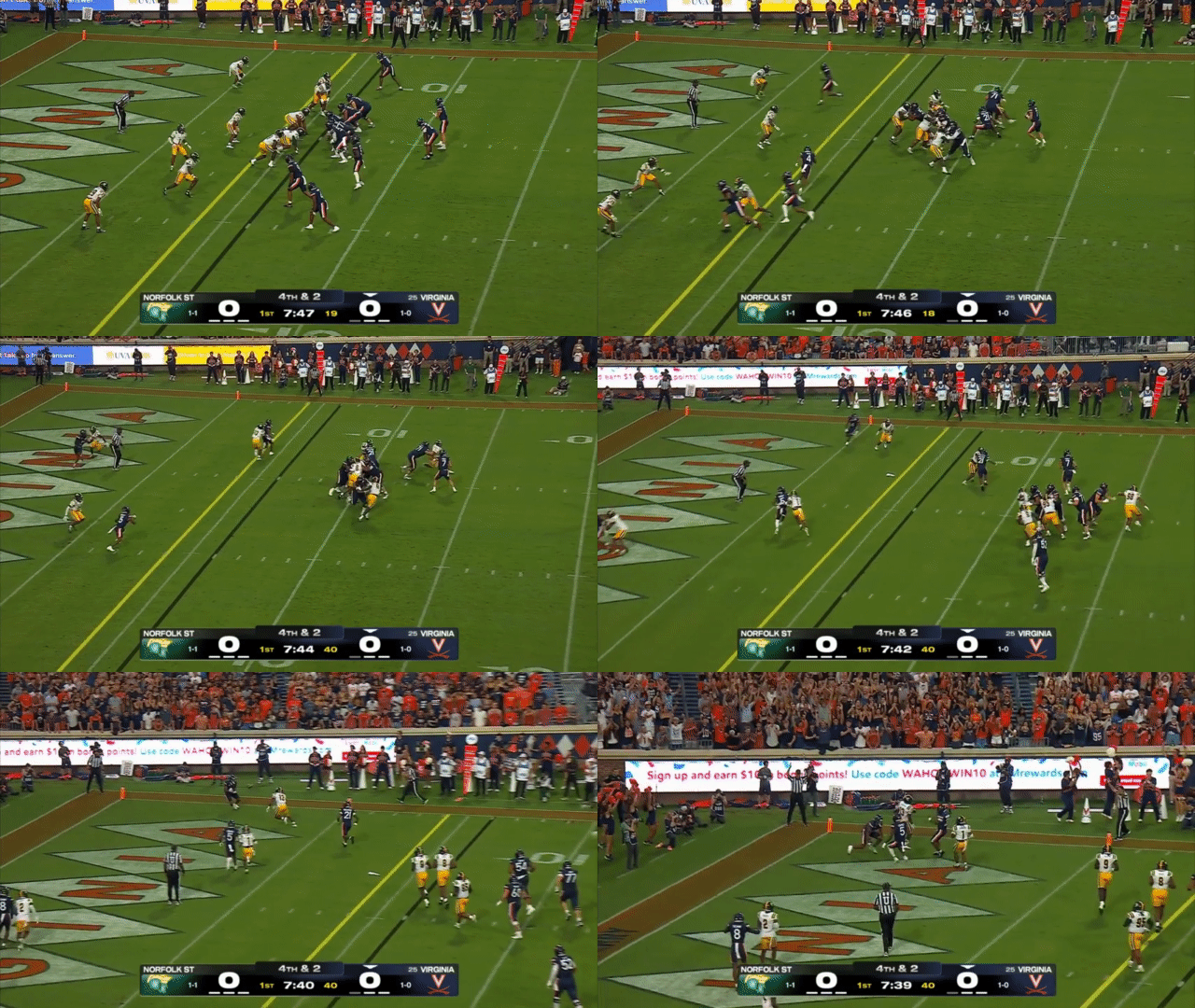
Here Pribula does a good job of avoiding pressure (after his OL was beaten) to buy time to find his receiver:
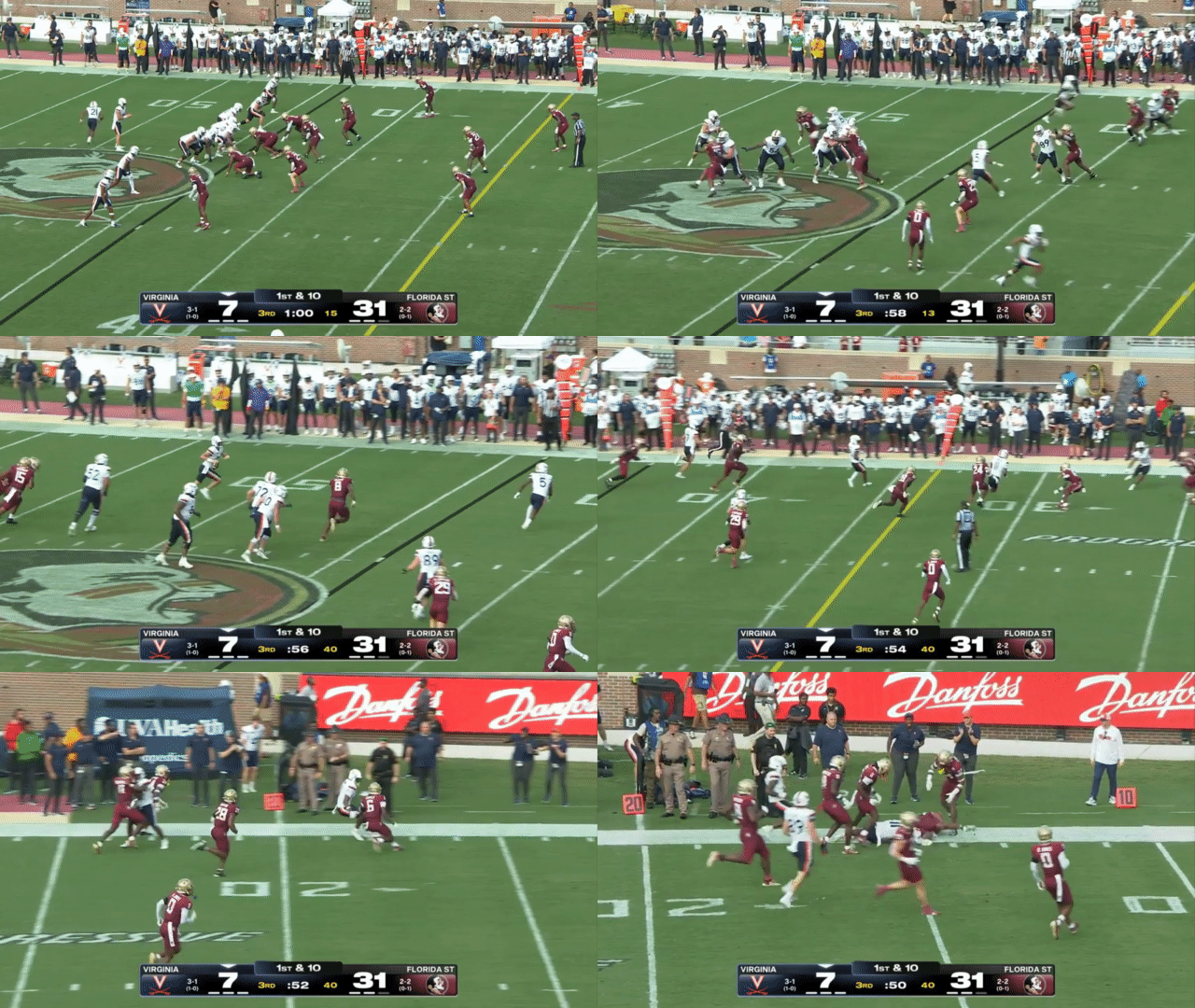
Because Pribula can struggle to make reads even while not under pressure, his ability to make throws under pressure can suffer:
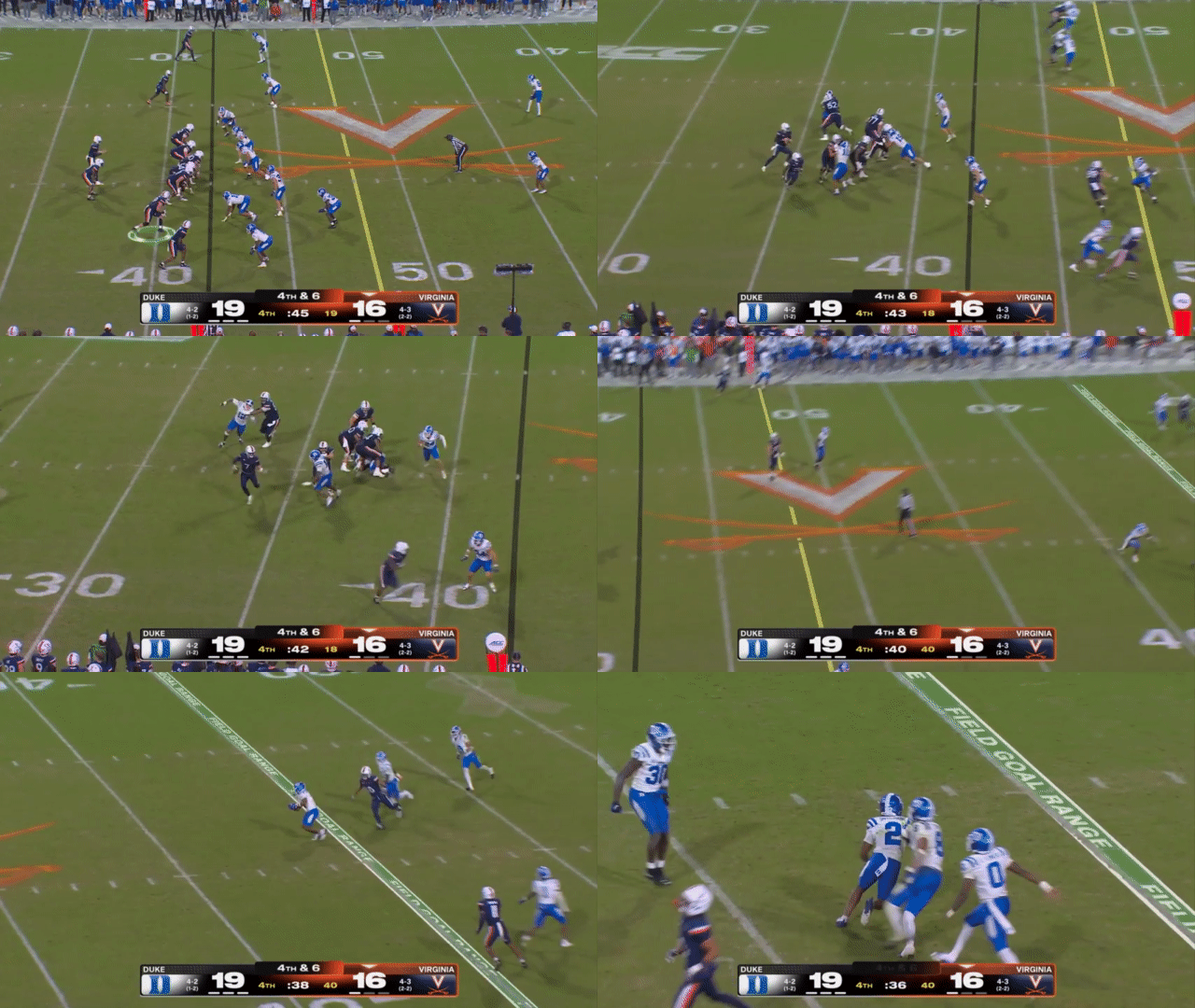
For the most part when watching Pribula, he’s just a quarterback that makes a lot of bad decisions, even though he hasn’t thrown nearly as many turnover-worthy plays this year. He likes to throw the back shoulder down the sideline, and he tried it ad nauseum against SMU, despite it never working with the coverage SMU had:
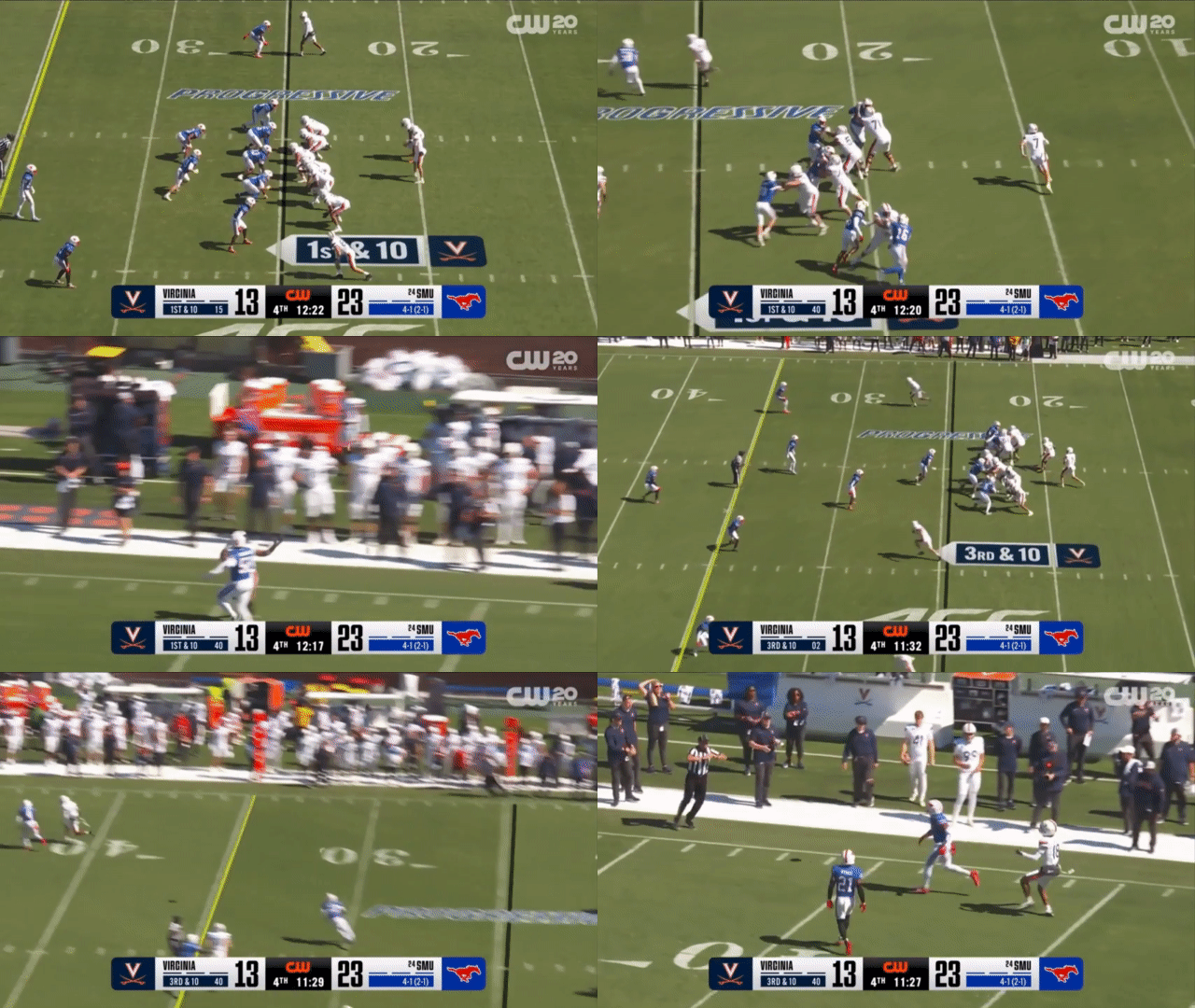
Here’s another example, in what looks to me like a desperation throw despite the game still being very much in hand:
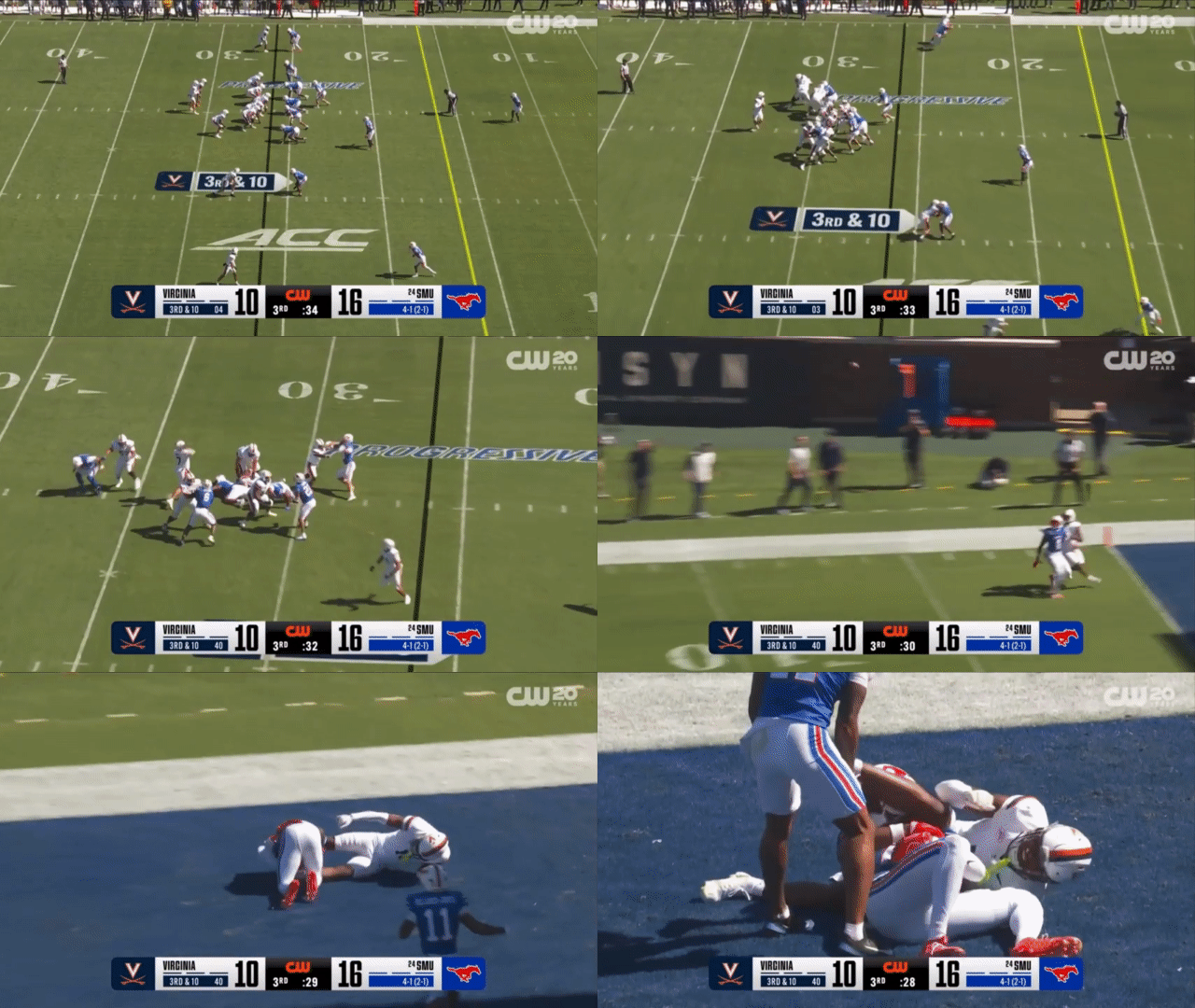
Virginia also has a very capable backup in QB Eli Holstein, Pitt’s former starter (and presumably Virginia’s future starter). Holstein does show some nice accuracy on throws:
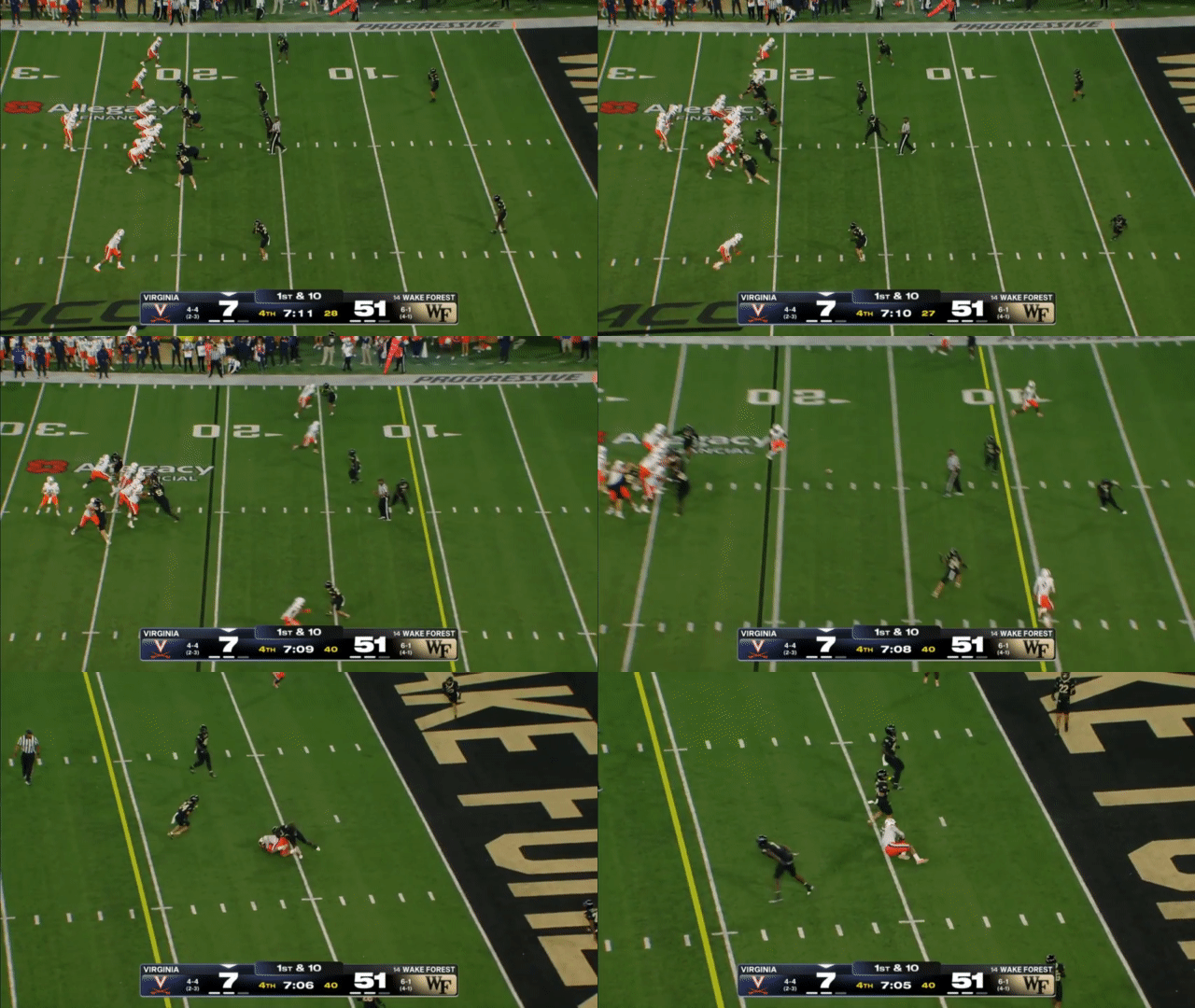
And I also think that Holstein is a bit more capable on the deep ball:
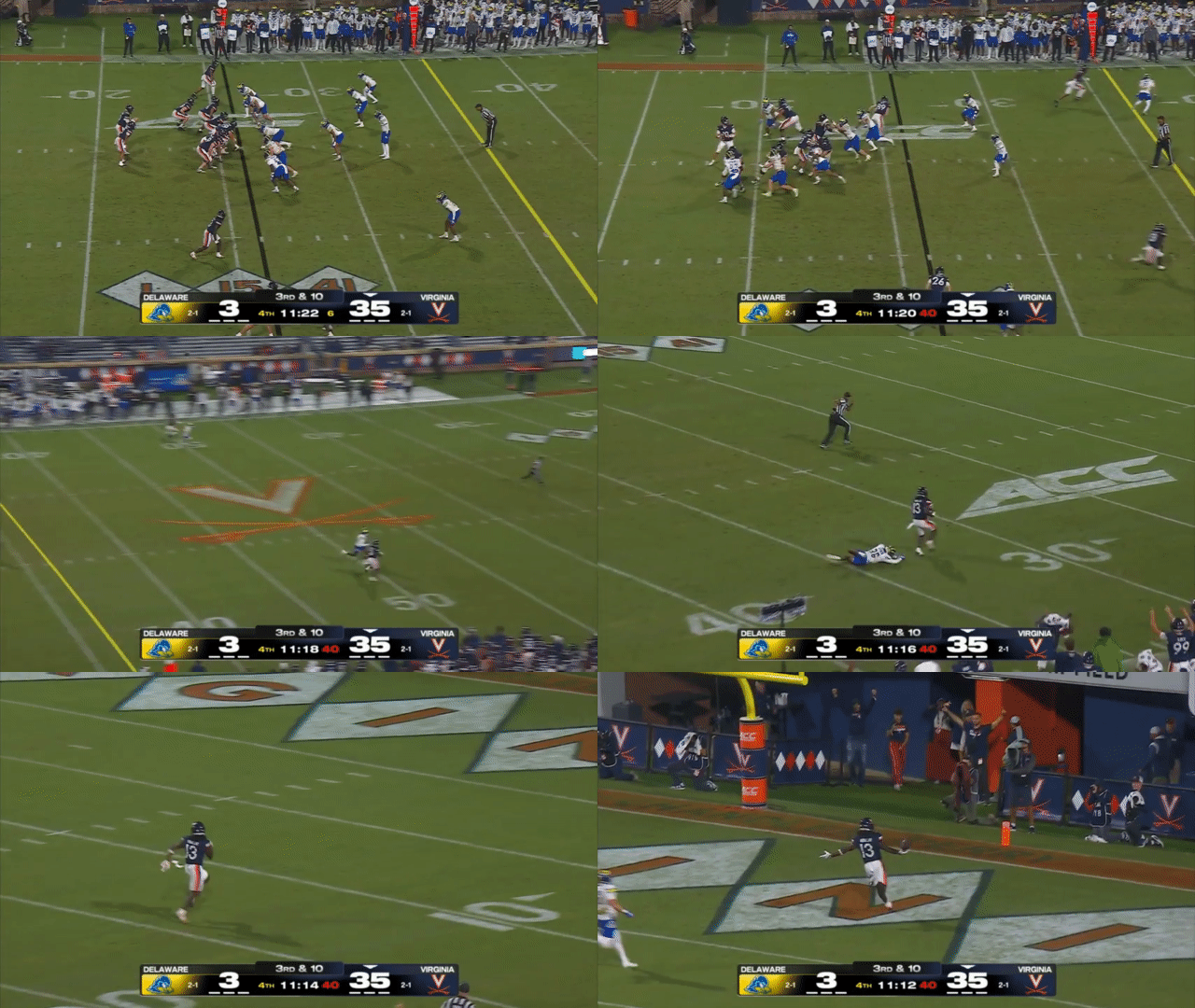
This next throw is probably the most fading endzone fade I have ever seen, but it worked:
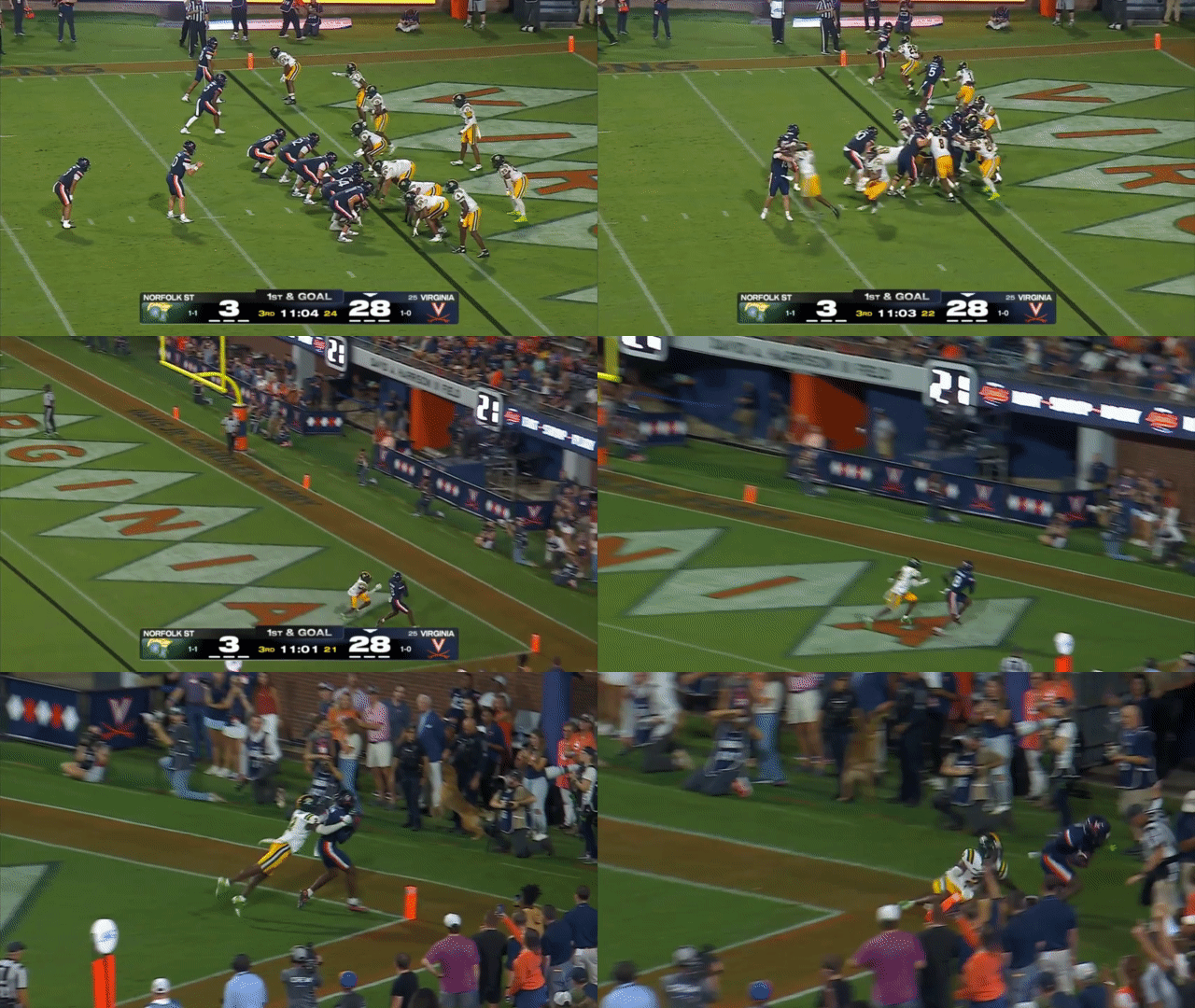
The redshirt freshman QB Cole Geer has also shown some nice poise:
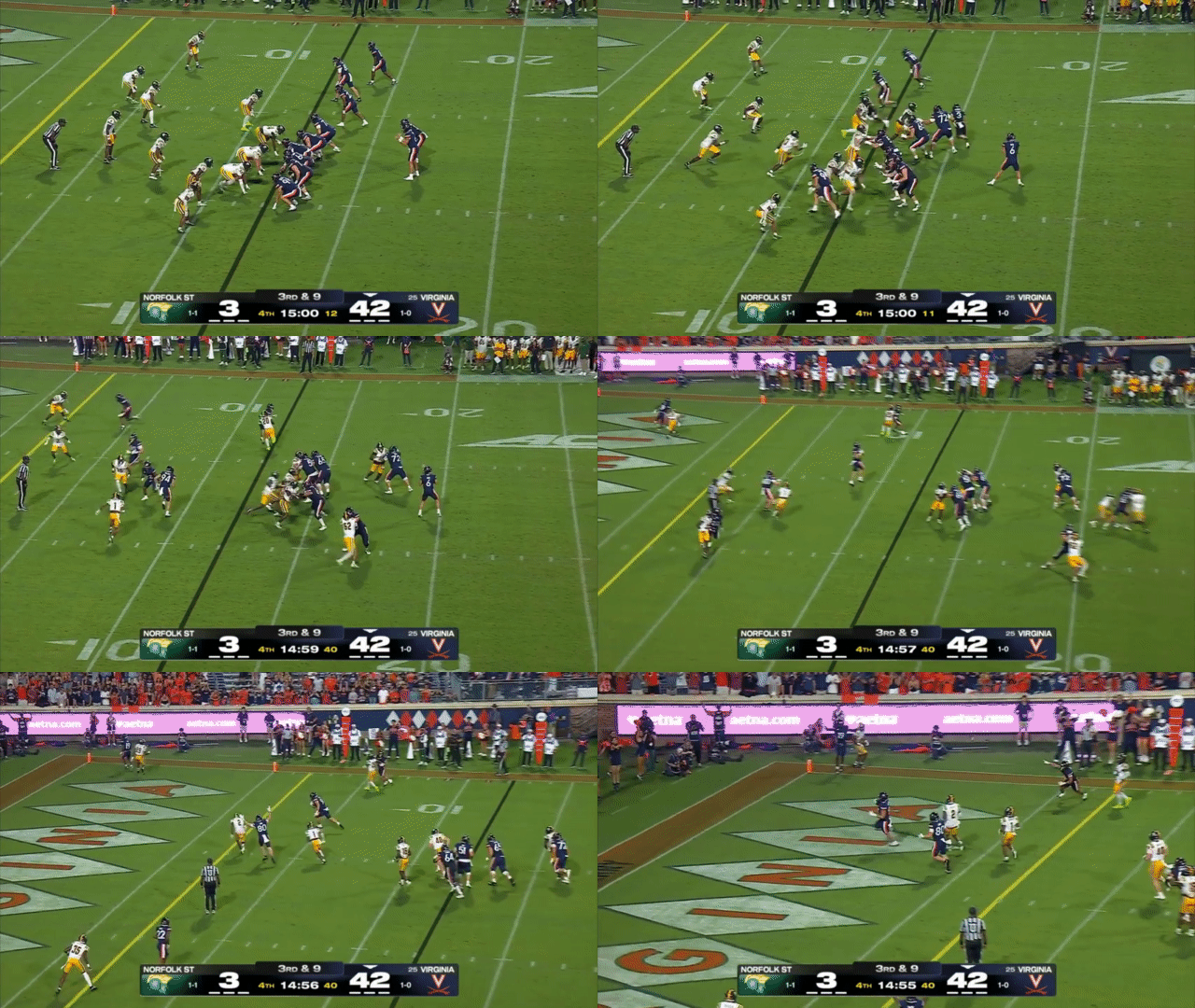
Look for Virginia to try to establish their run game early, so they don’t need to try and win through the air, and because their QB adds a dimension to their run game.
Running back
Even though the QB is also a threat in the run game, I’d say that Virginia has been mediocre at best running the ball, and they rank 12th of 17 in the ACC in rushing yards per game (though not nearly as anemic as Cal, who sit in dead last by a lot: Cal could double their rush yards per game and would only end up in the middle of the conference). None of Virginia’s running backs are going to blow anyone out of the water. They don’t have any super explosive homerun threats, and although they can break some tackles, they won’t be nearly as efficient doing it as someone like SMU’s Kendrick Raphael or FSU’s Ousmane Kromah, for example. They’re just going to quietly keep moving the ball and picking up first downs to keep the offense rolling. In the SMU game for instance, Virginia ran the ball the entire first quarter, with the only passes being screen passes to the running backs out wide. Virginia really wants to establish their run game, and their record so far is a reflection of their success doing so.
Virginia’s usual starter is RB Jekail Middlebrook, but he missed last game against Wake Forest with an MCL sprain, and it’s not yet clear if this is a short-term or long-term injury.
Middlebrook does a good job of decisively hitting his gap:
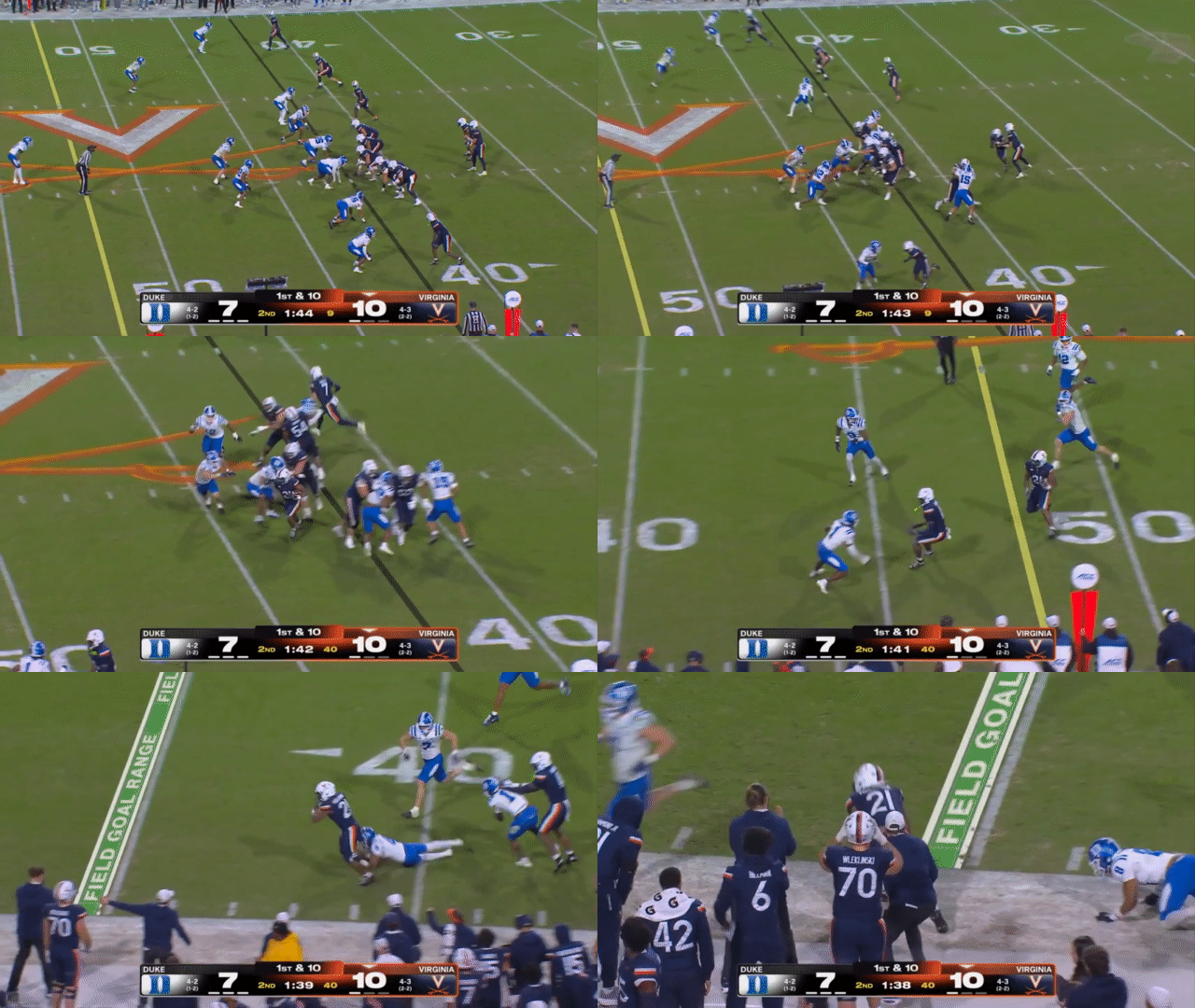
Middlebrook (and pretty much all of UVA’s RBs) will look to run through contact:
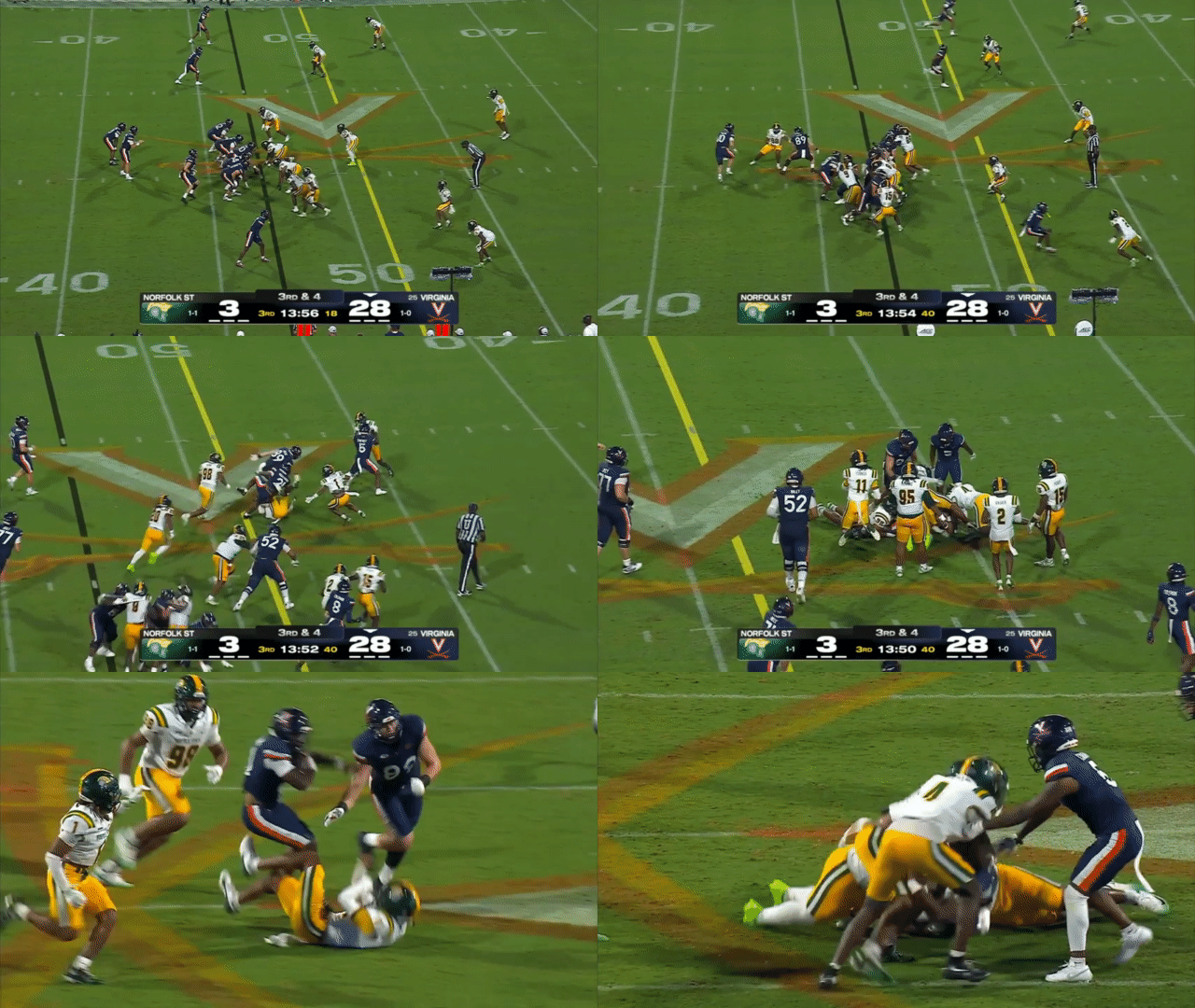
Here Middlebrook has a nice run on the option:
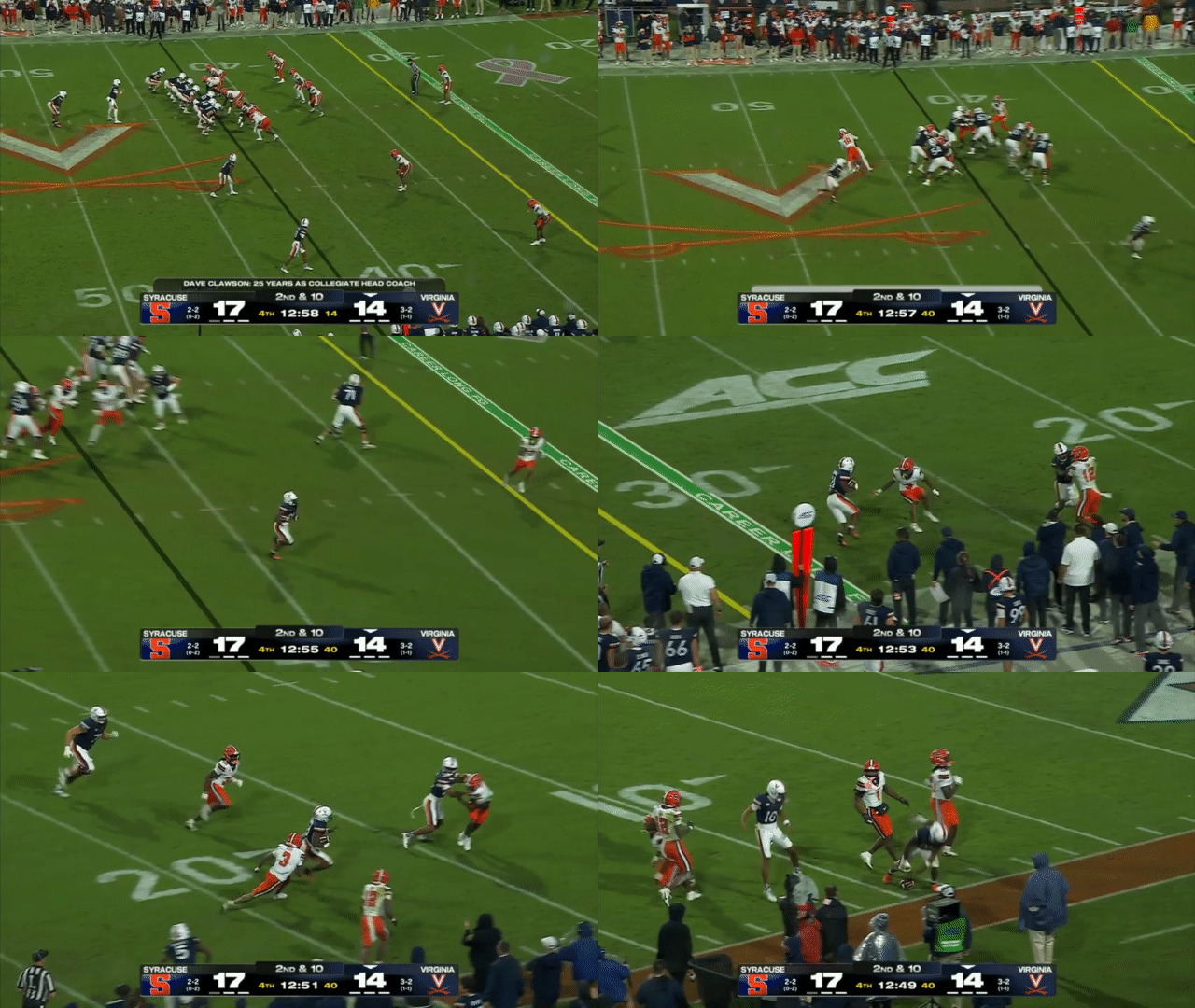
And Virginia will also put the ball directly in Middlebrook’s hands in short yardage situations:
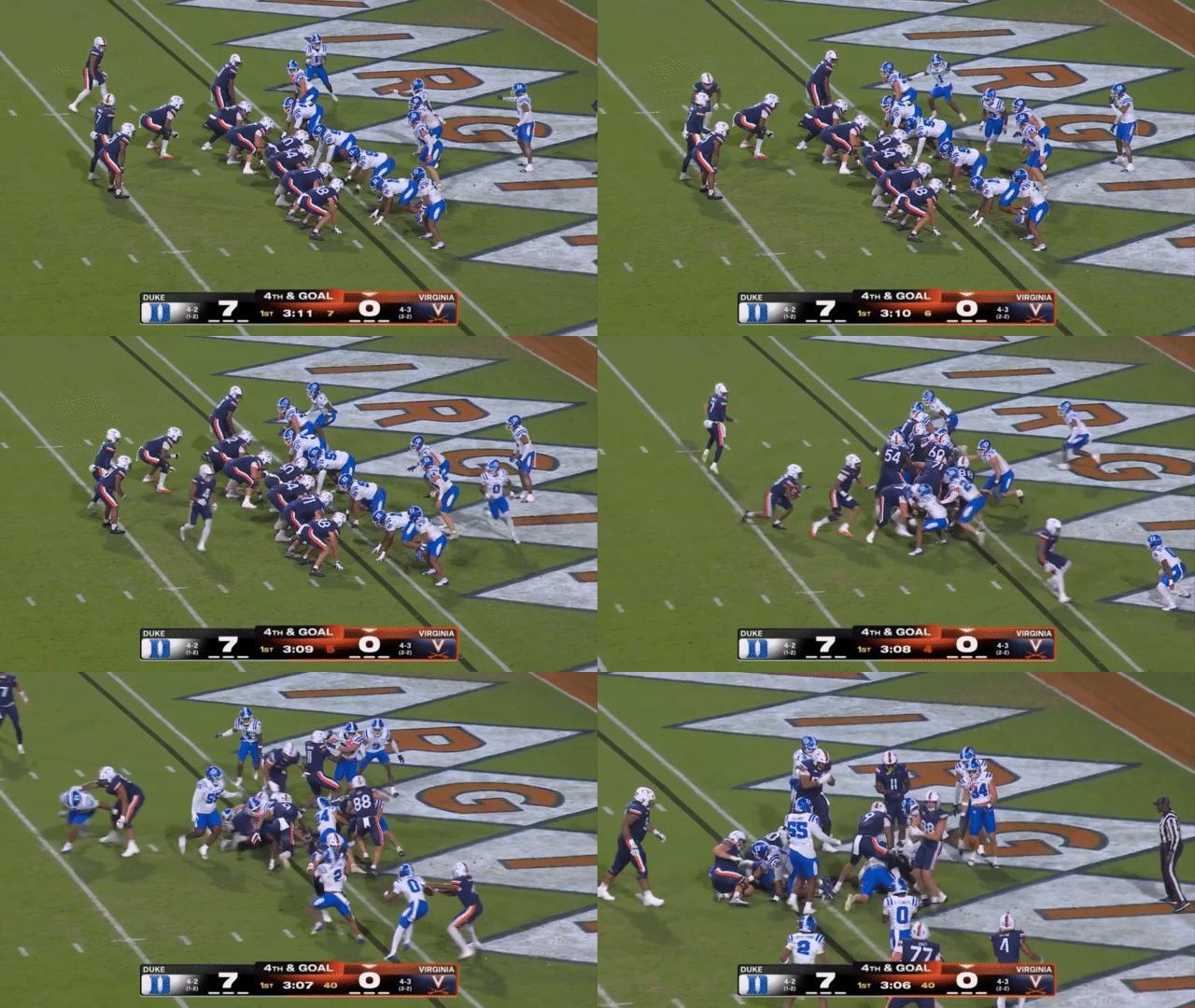
If Middlebrook is unable to play, expect the bulk of his carries to be split between RB Xavier Brown and RB Xay Davis (both of whom can get involved in the pass game). Here Brown makes a nice catch out of the backfield:
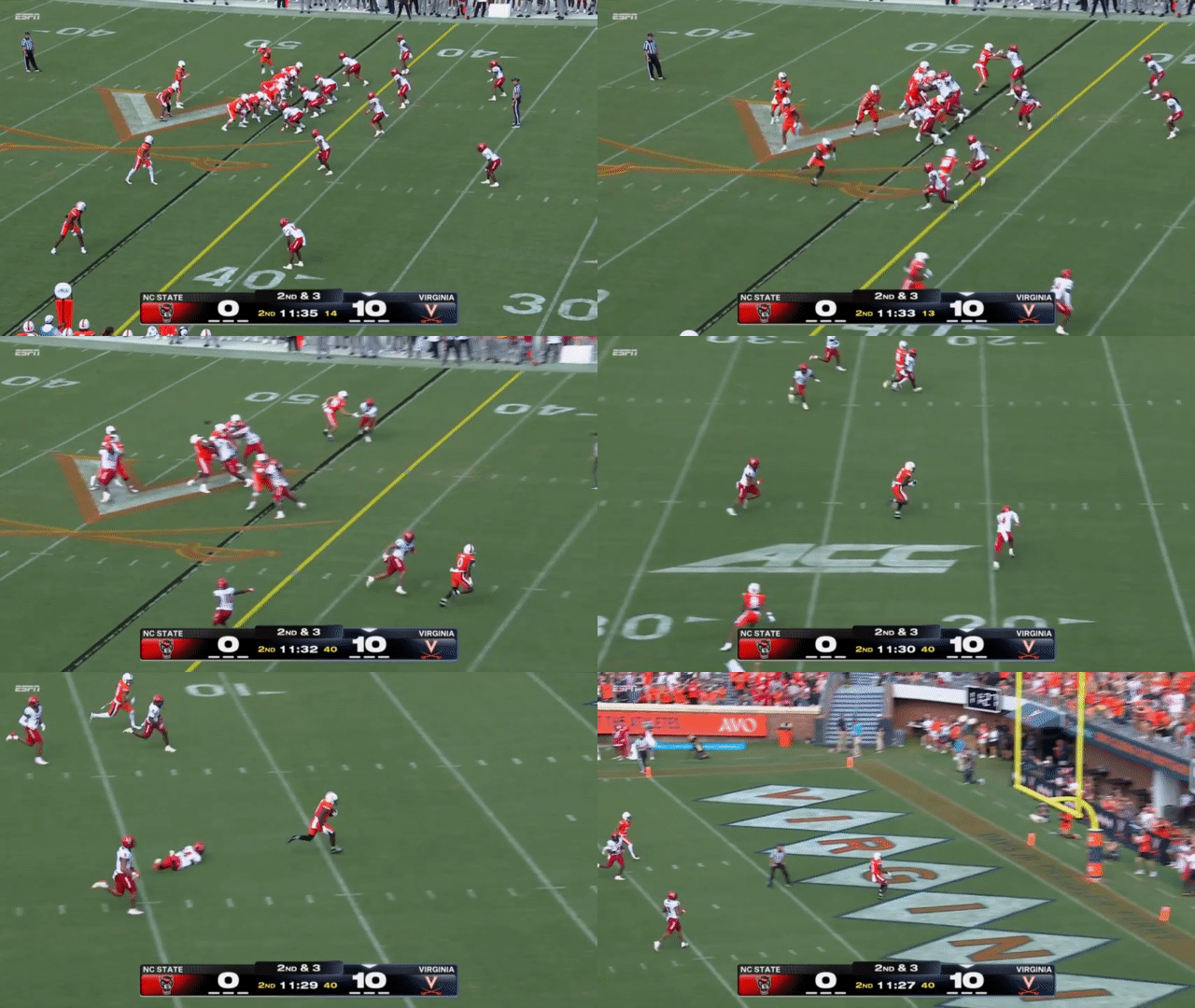
Brown also has the longest run of the season for Virginia, on this run where he snuck through the line and caught the defense out of position:
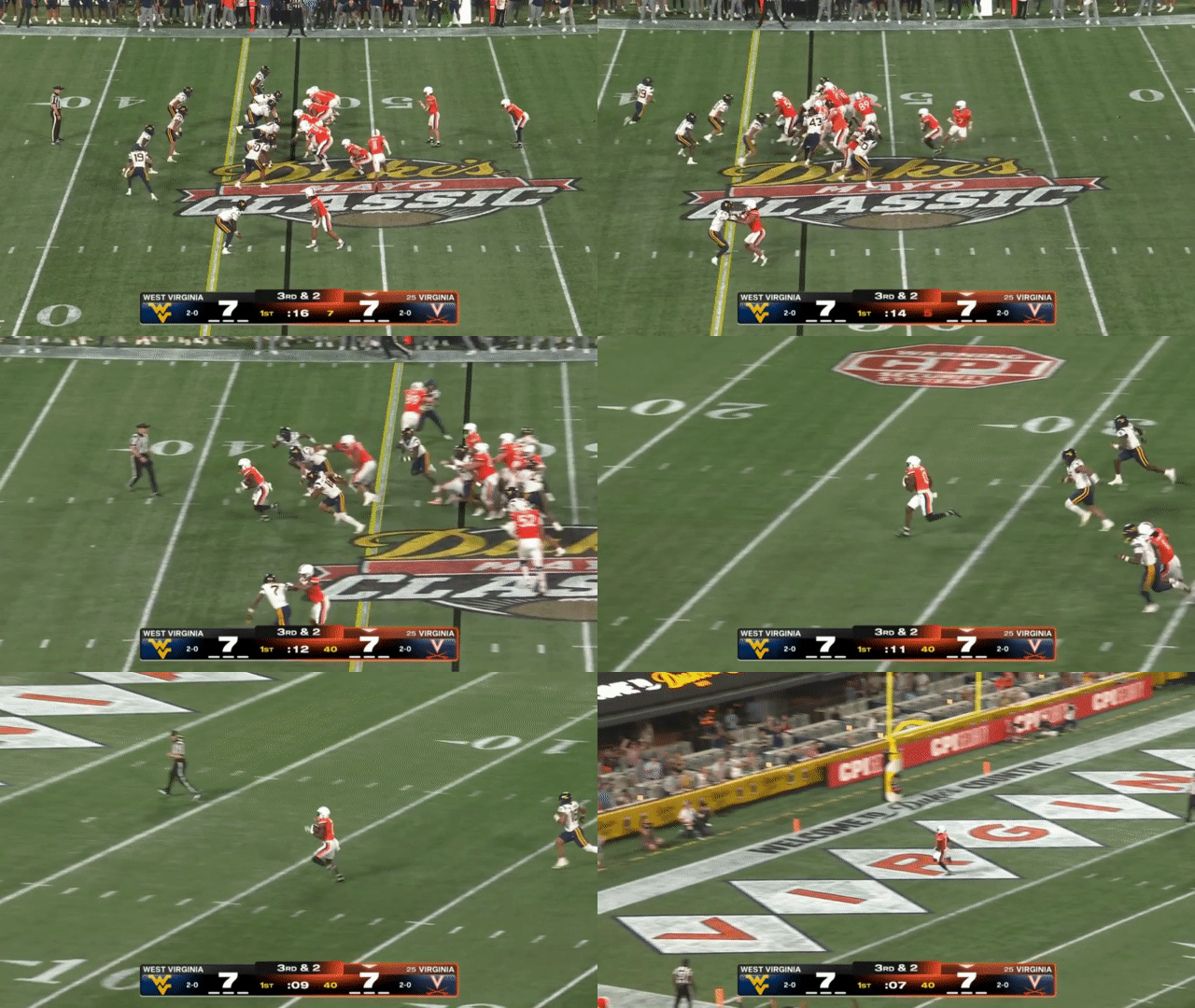
RB Xay Davis is another hard runner who will look to fight through contact. Here Davis does a nice job of breaking tackles:
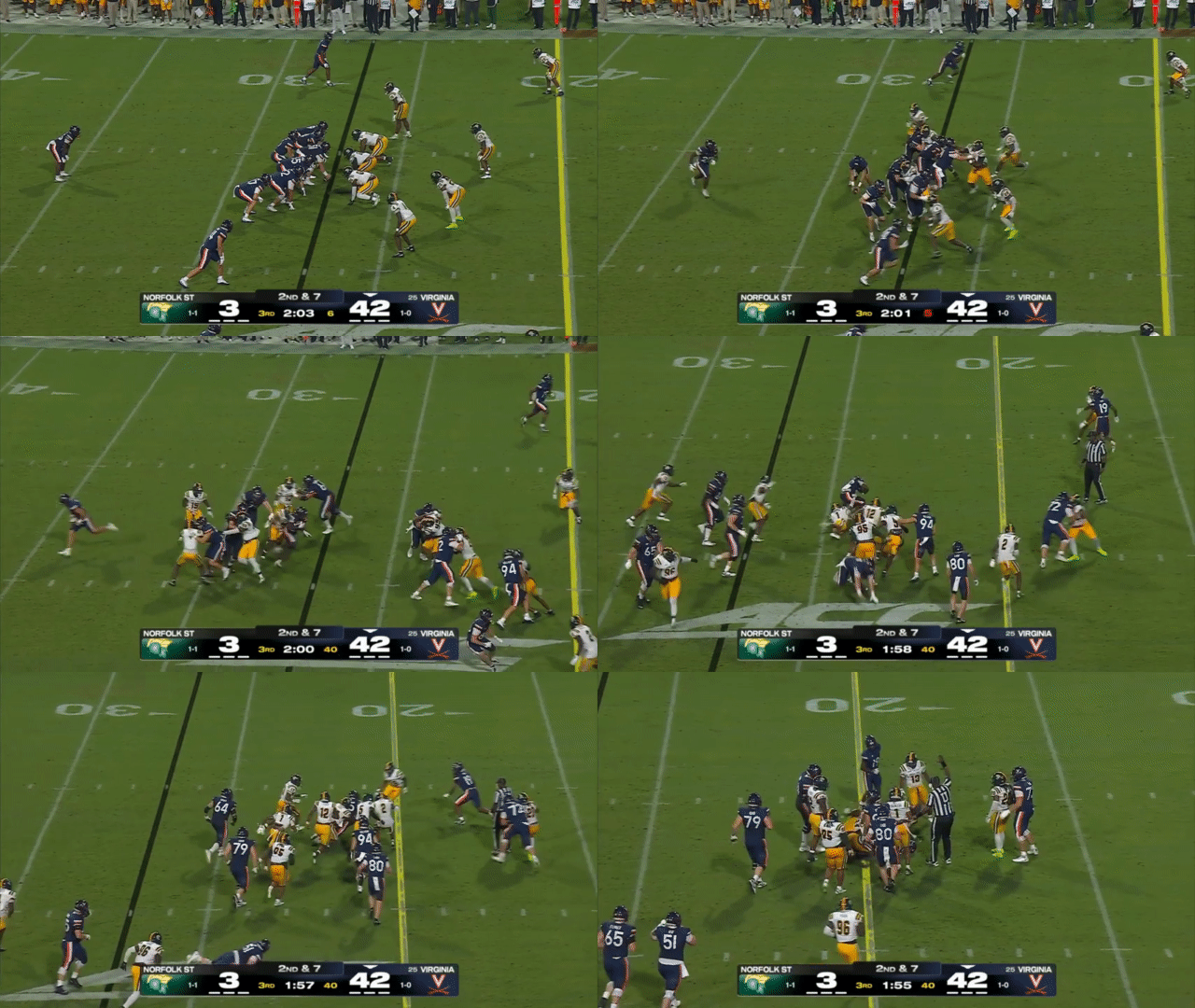
And here Davis does a nice job of finding an open lane for a first down:
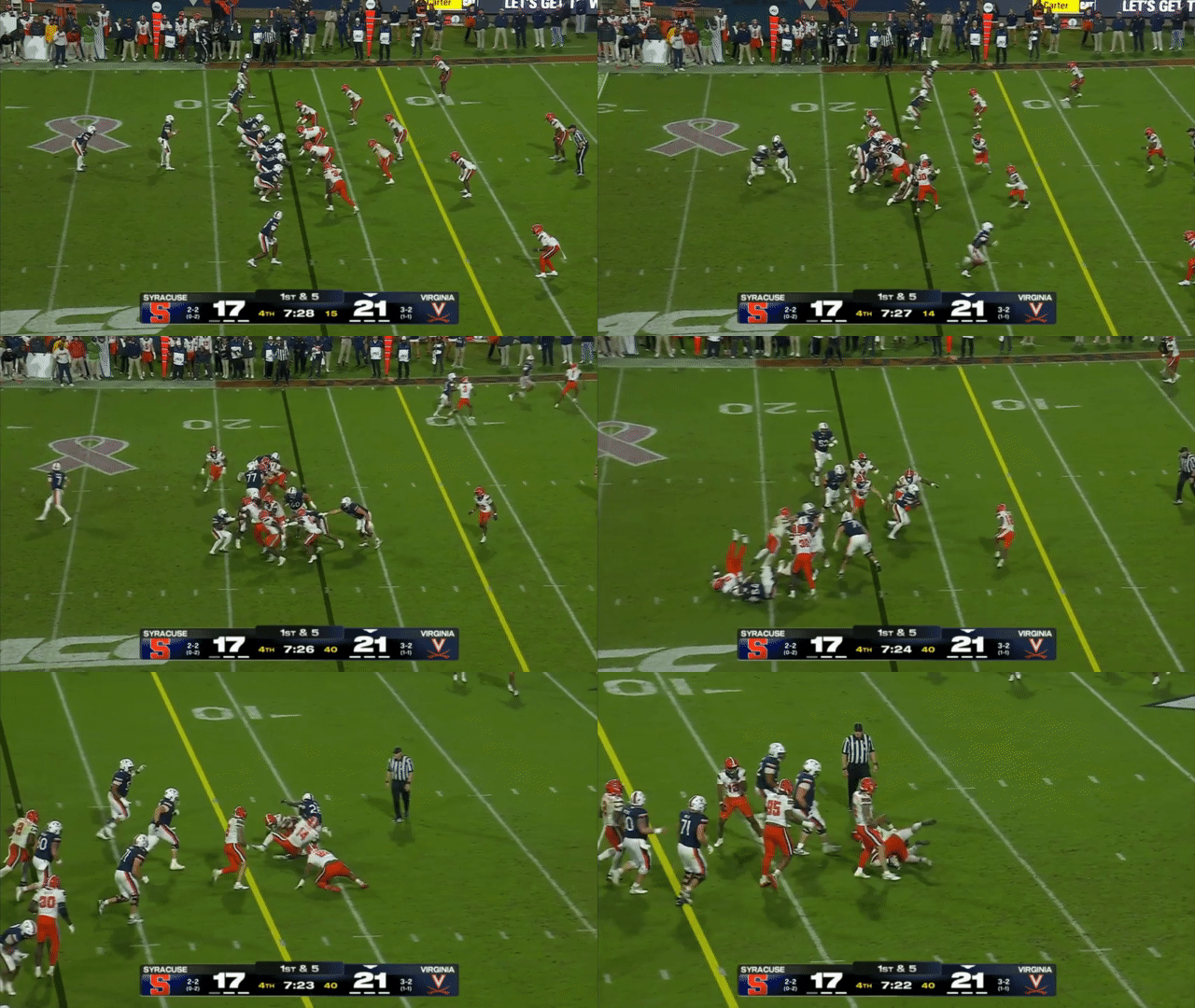
Davis also had a big run in their FCS matchup, where the defense appeared to lose sight of him:
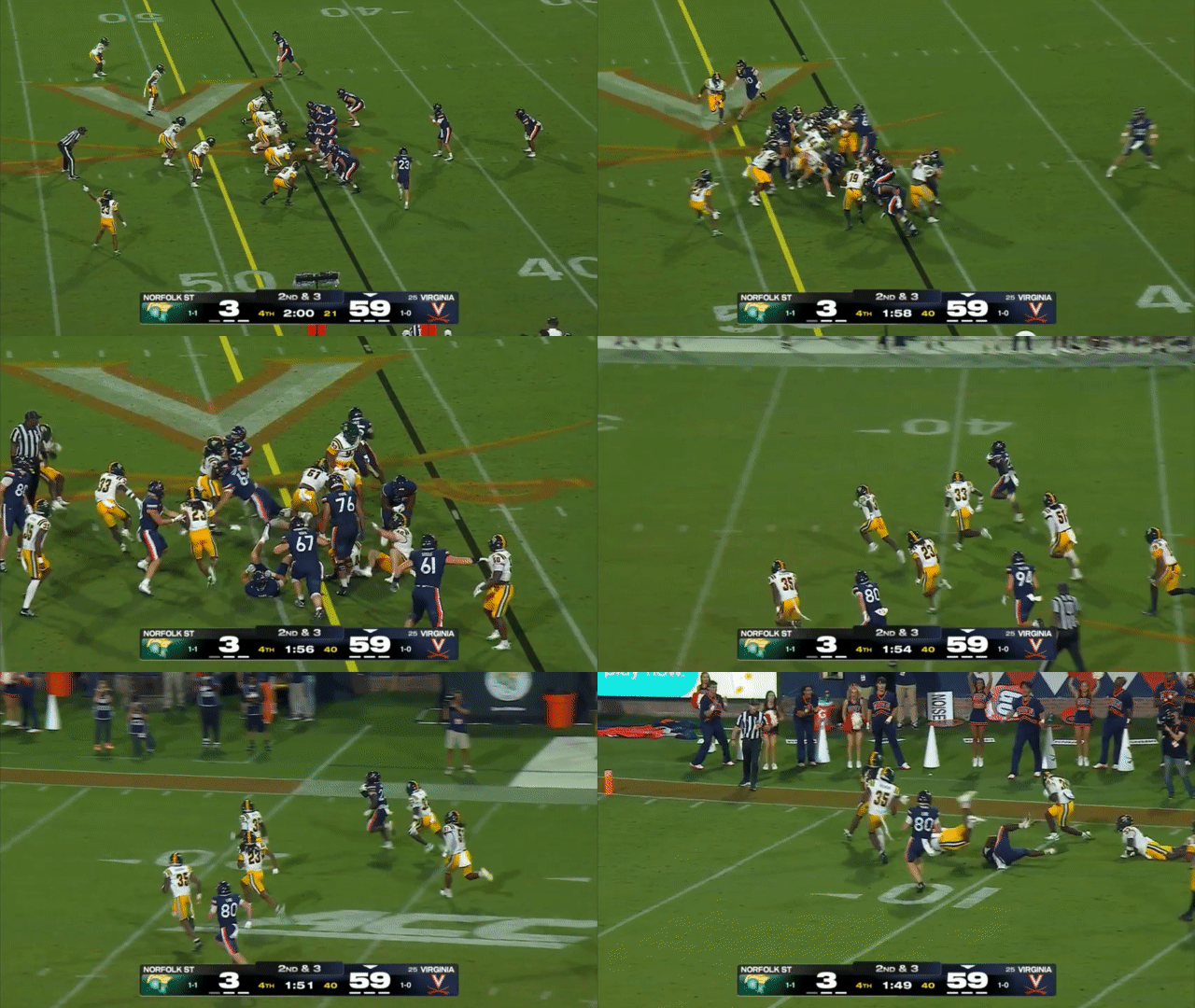
Behind Brown and Davis is RB Noah Vaughn, who had a big game against their FCS opponent:
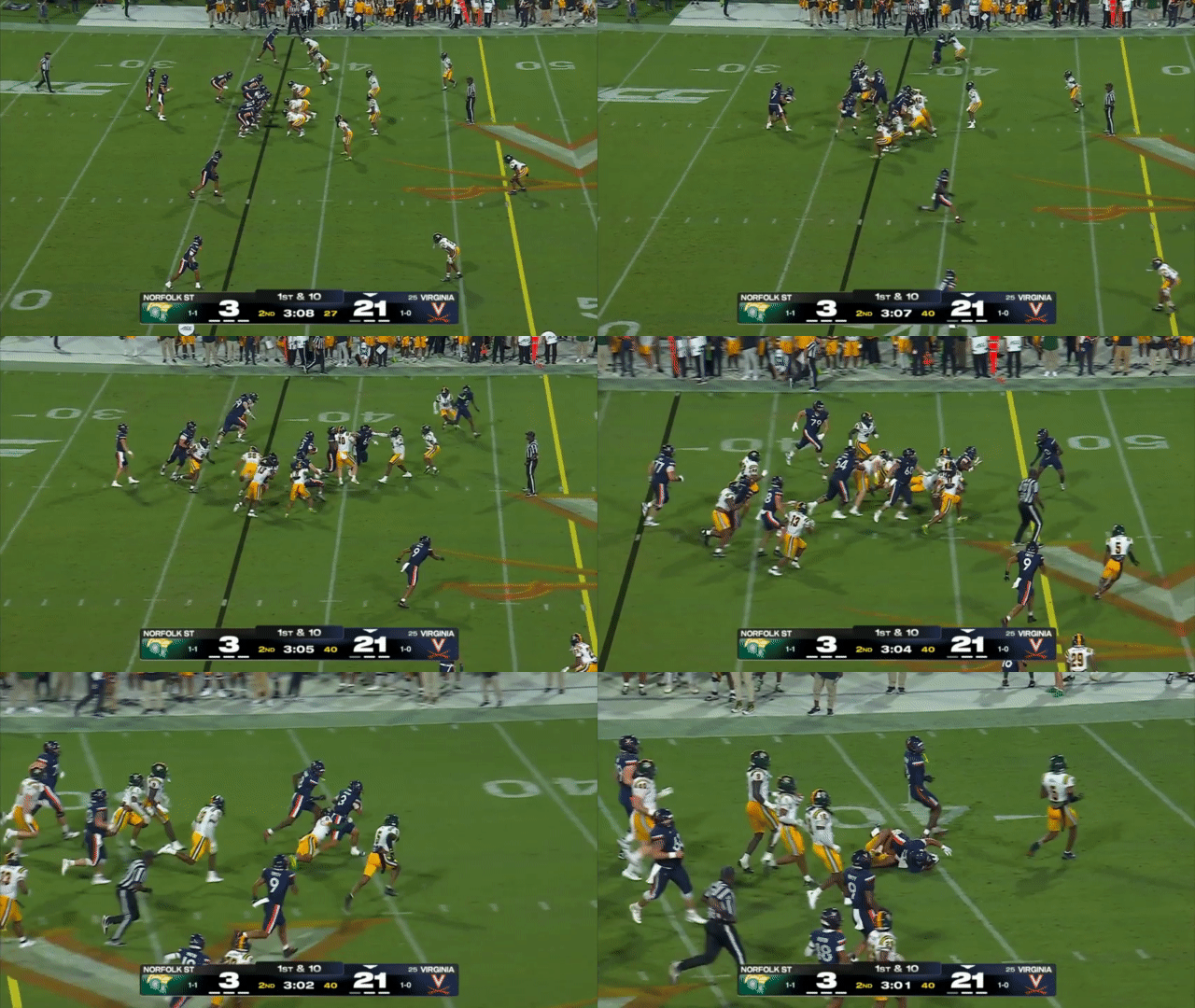
The other backs are UAB transfer Solomon Beebe and Tennessee transfer Peyton Lewis, but no one has really established themselves that far down the depth chart. Beebe received some touches last game against Wake Forest, so perhaps he’ll play a bigger role moving forward.
Receivers
Virginia’s top receiver in recent weeks is the Kent State transfer, WR Da’Shawn Martin. Martin is the primary deep threat receiver:
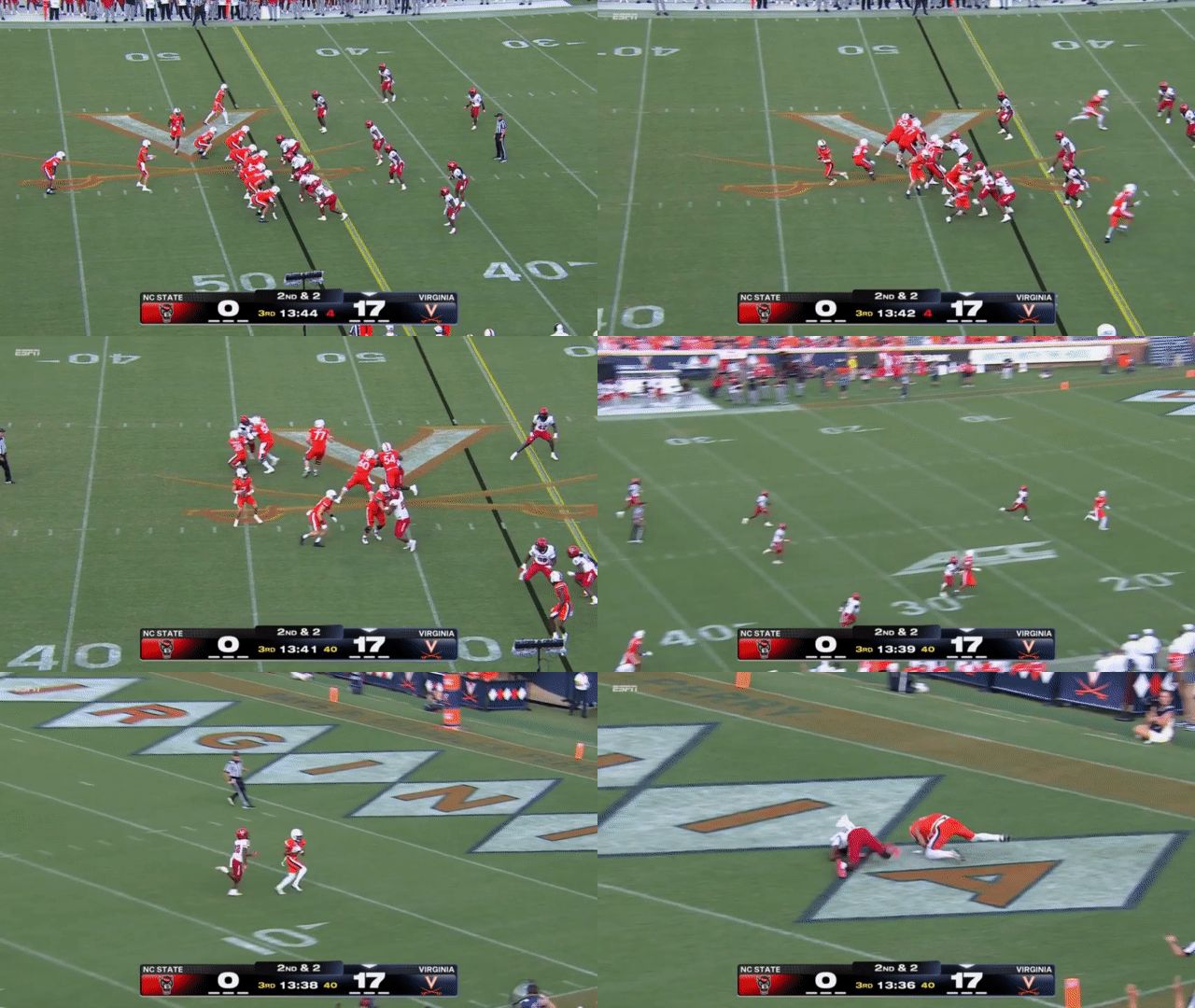
Martin has shown some nice after the catch speed:
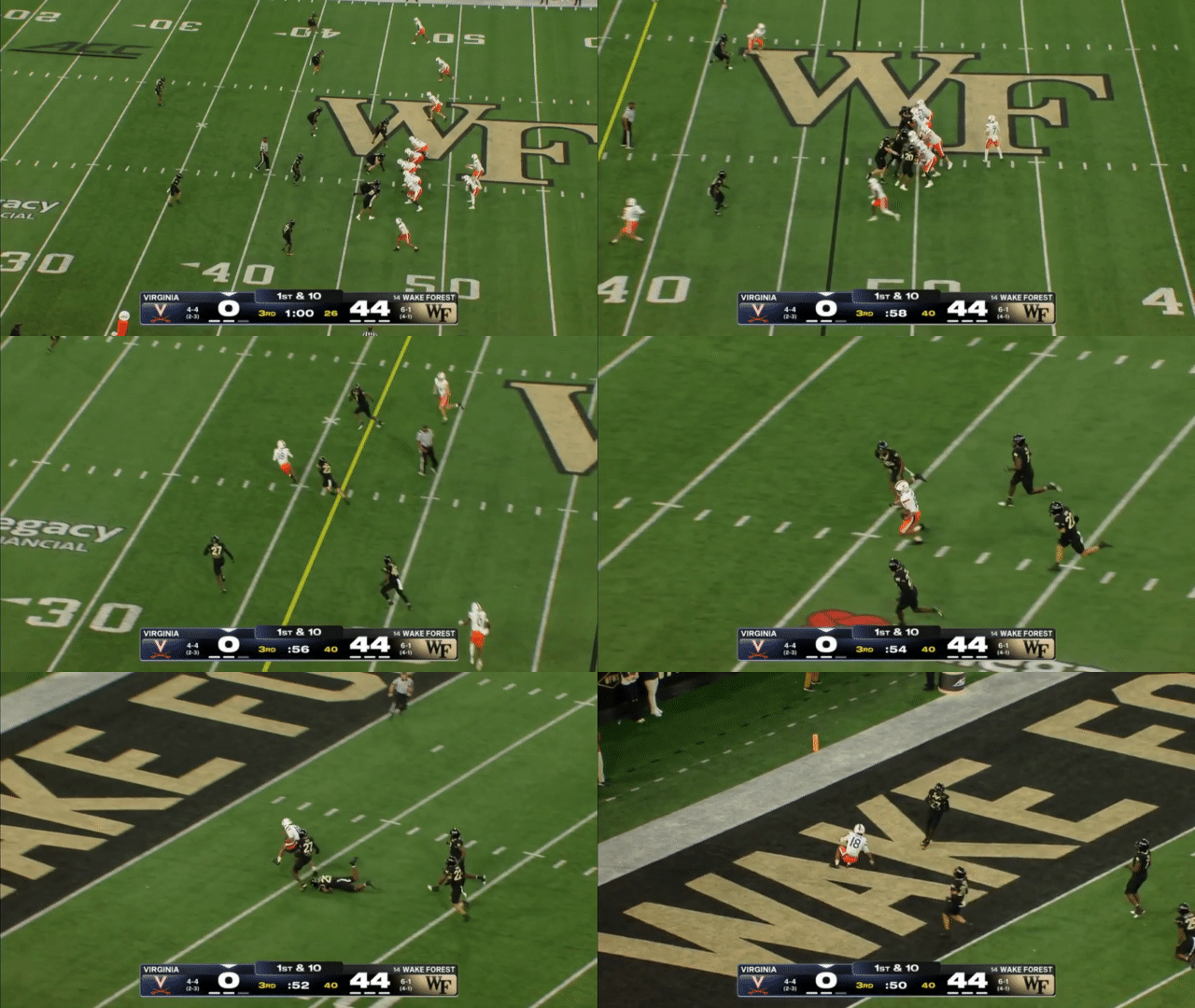
Martin is not a contested catch specialist, but he has made a few catches in coverage:
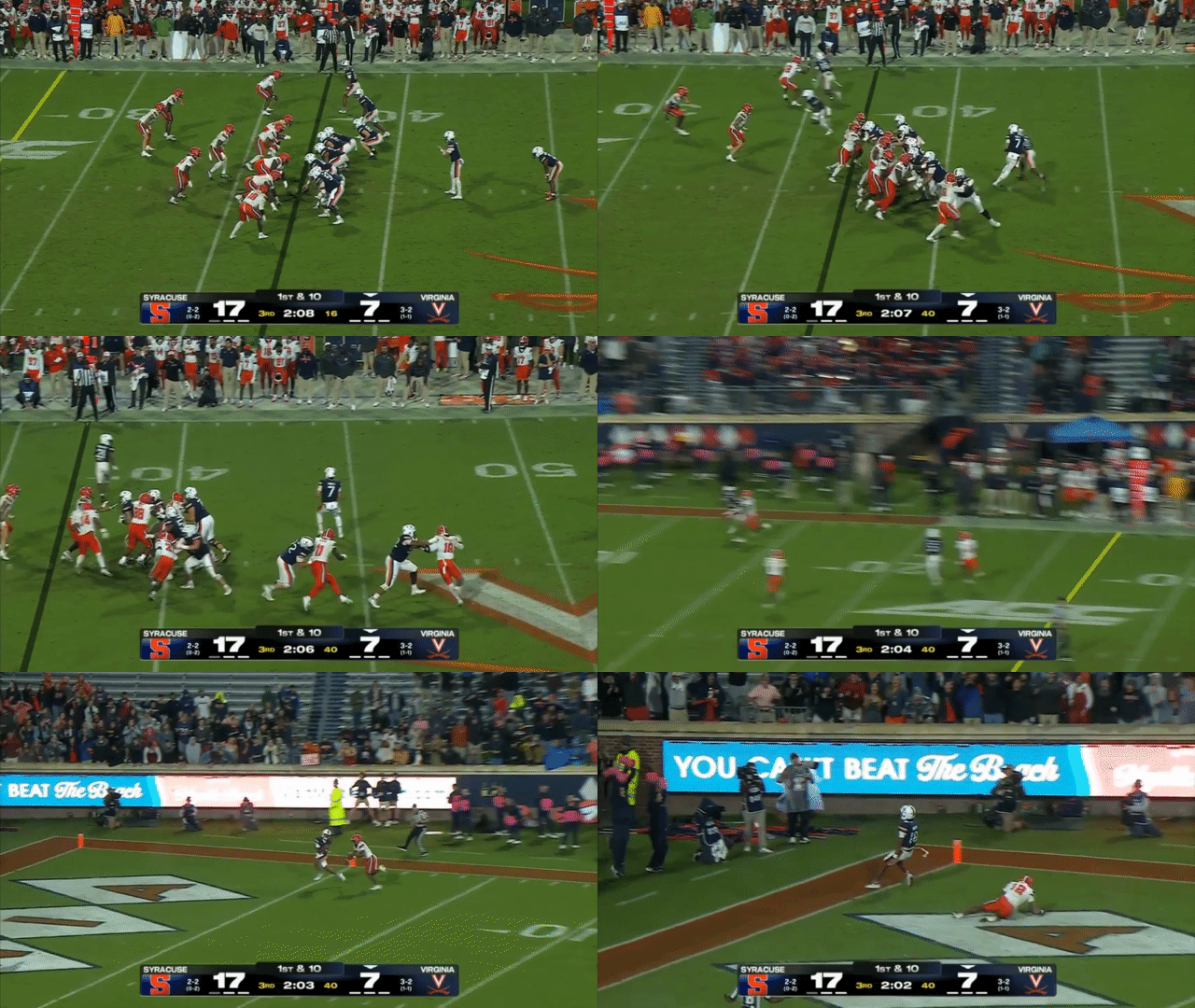
Martin has also shown some nice hands at times:
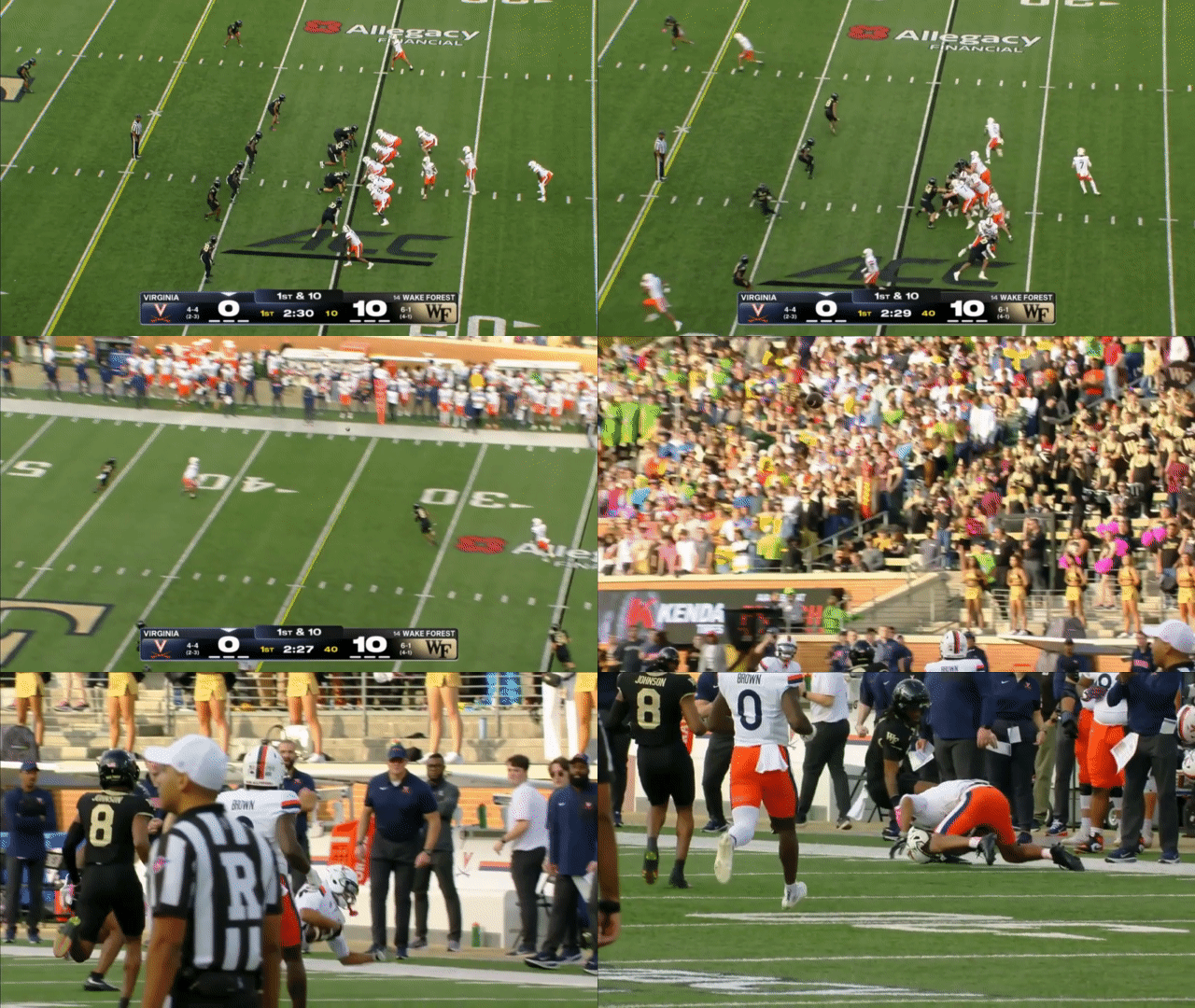
But he has also had some costly drops:
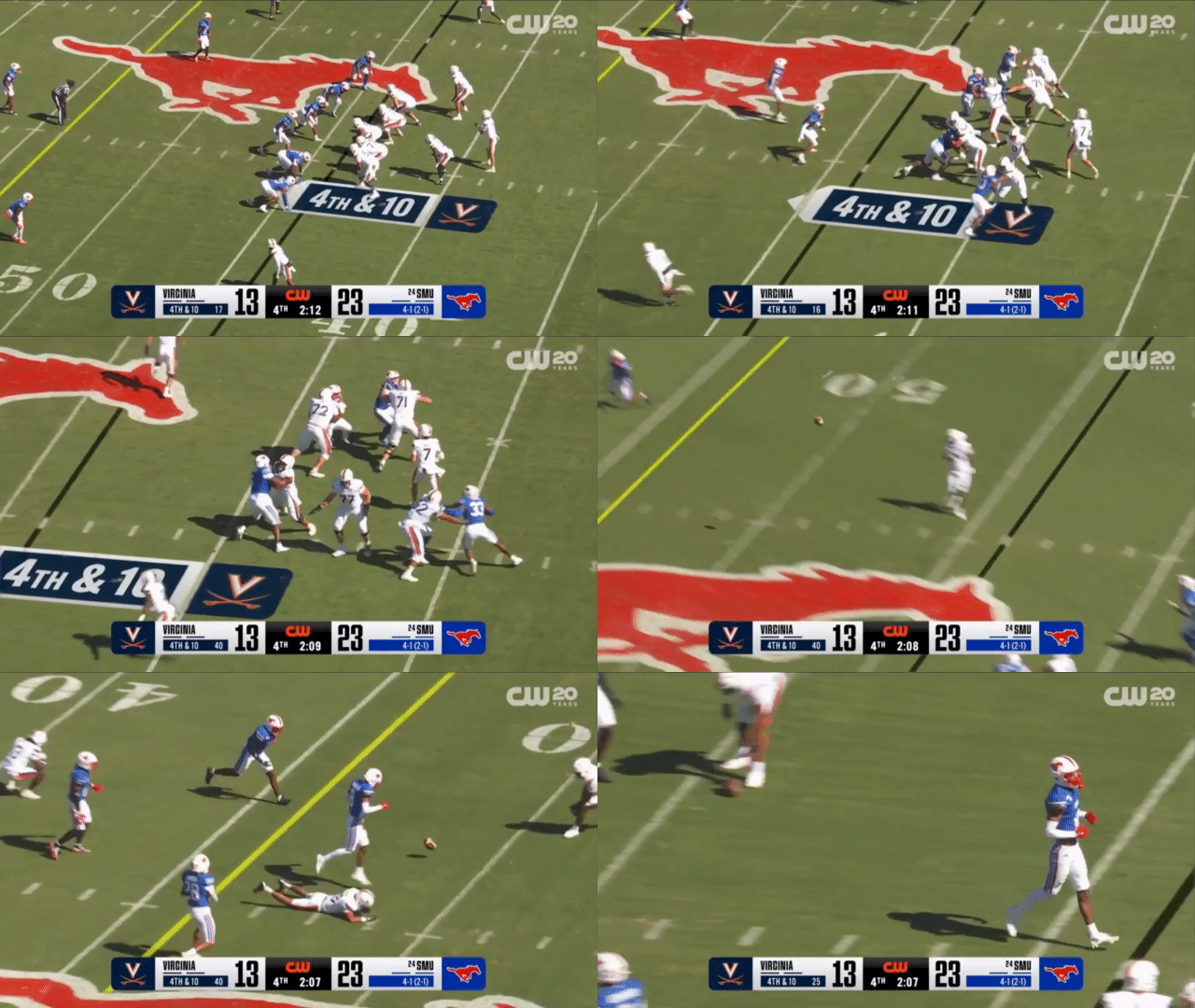
Another impact receiver for Virginia is the slot receiver WR Kameron Courtney, although has also been out for a couple weeks with an ankle injury, and his absence has been notable: Virginia is 4-1 with Courtney in the lineup, and 0-4 without him. At the time of this writing, reports suggest he will return for the Cal game. Courtney is dangerous in open space:
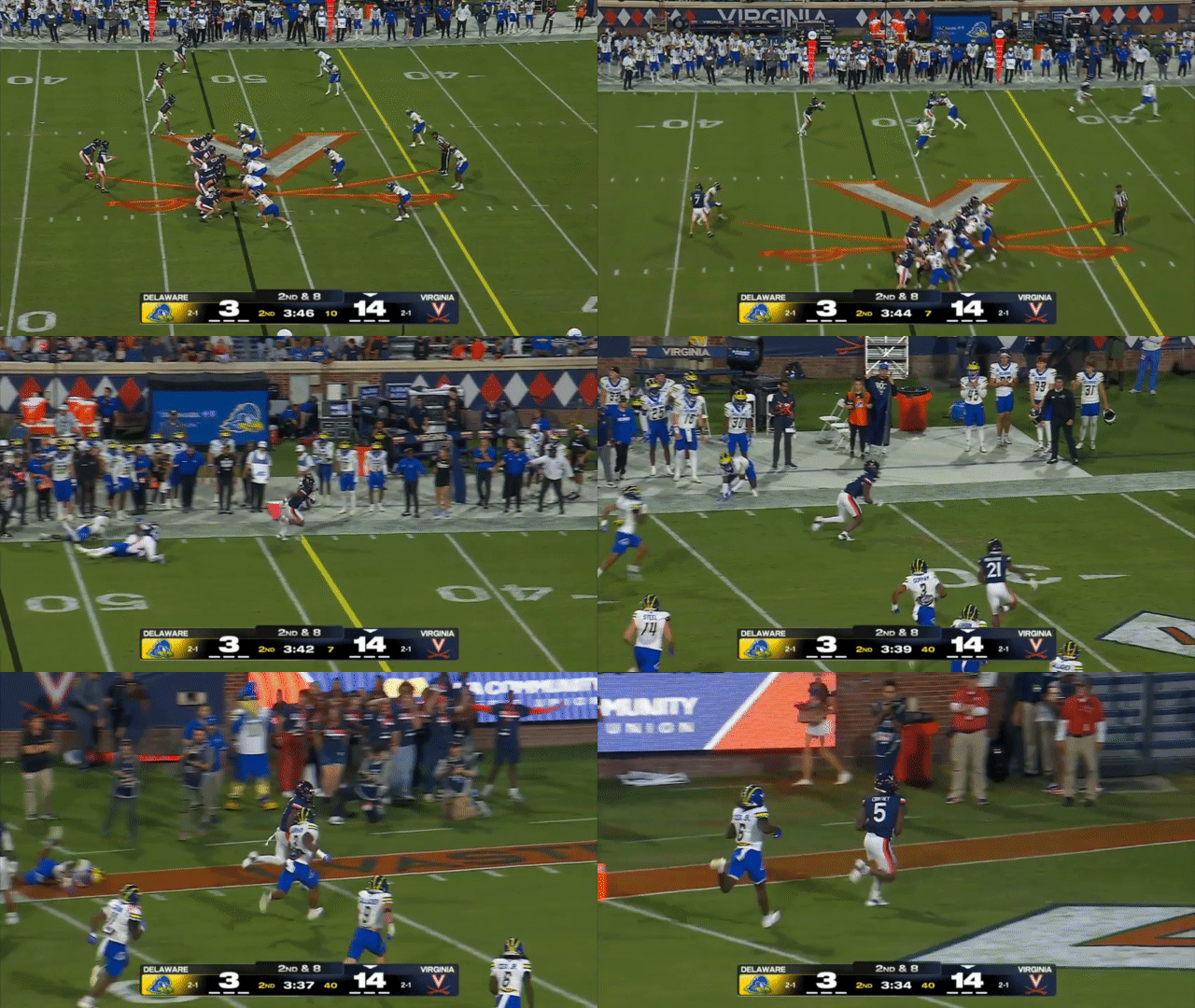
And Courtney has strong hands, making him a productive slot receiver:
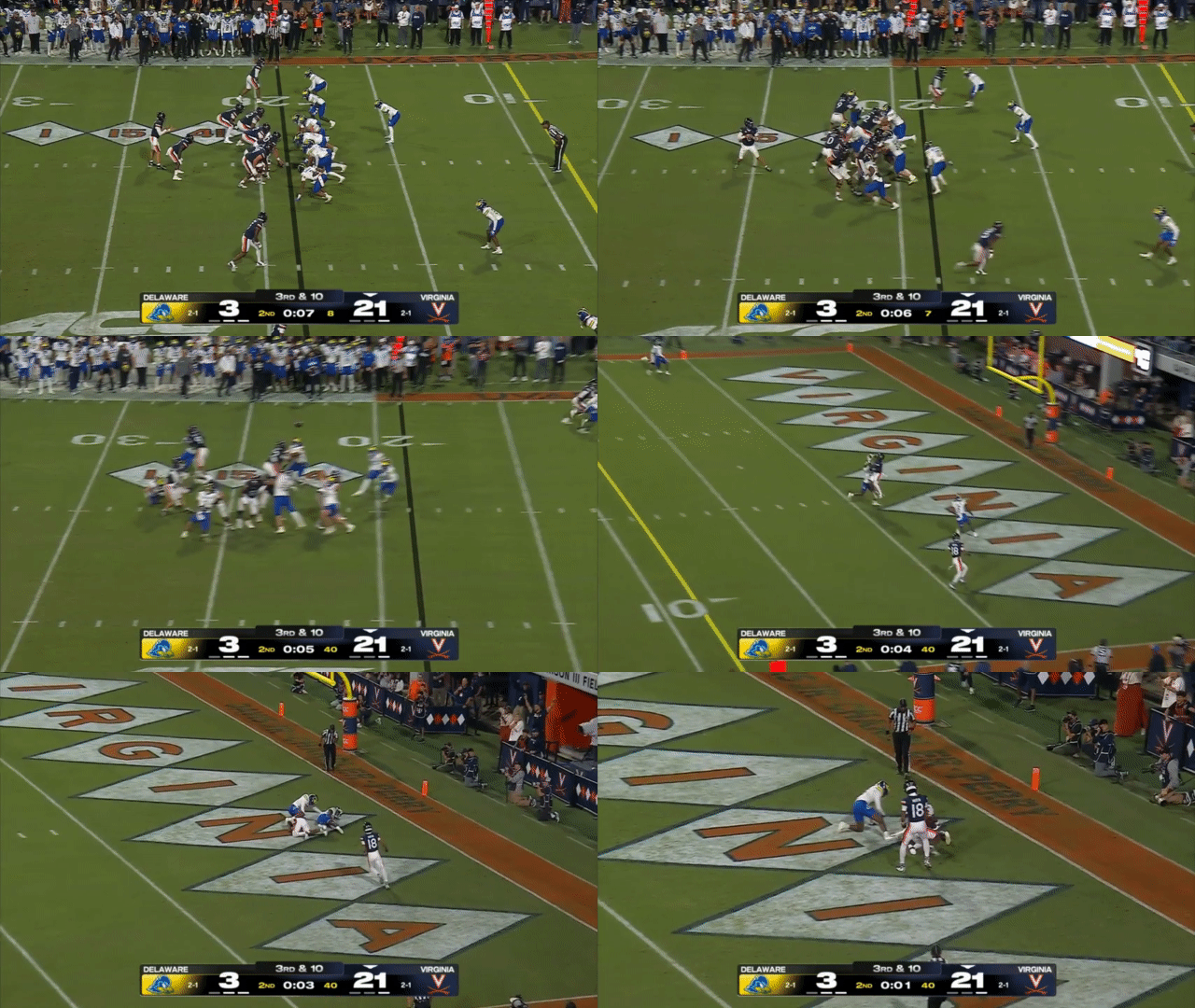
Stepping up in Courtney’s absence was Jacquon Gibson, a transfer from UMass (he played in the slot, although Virginia’s official depth chart lists him as a Z-receiver):
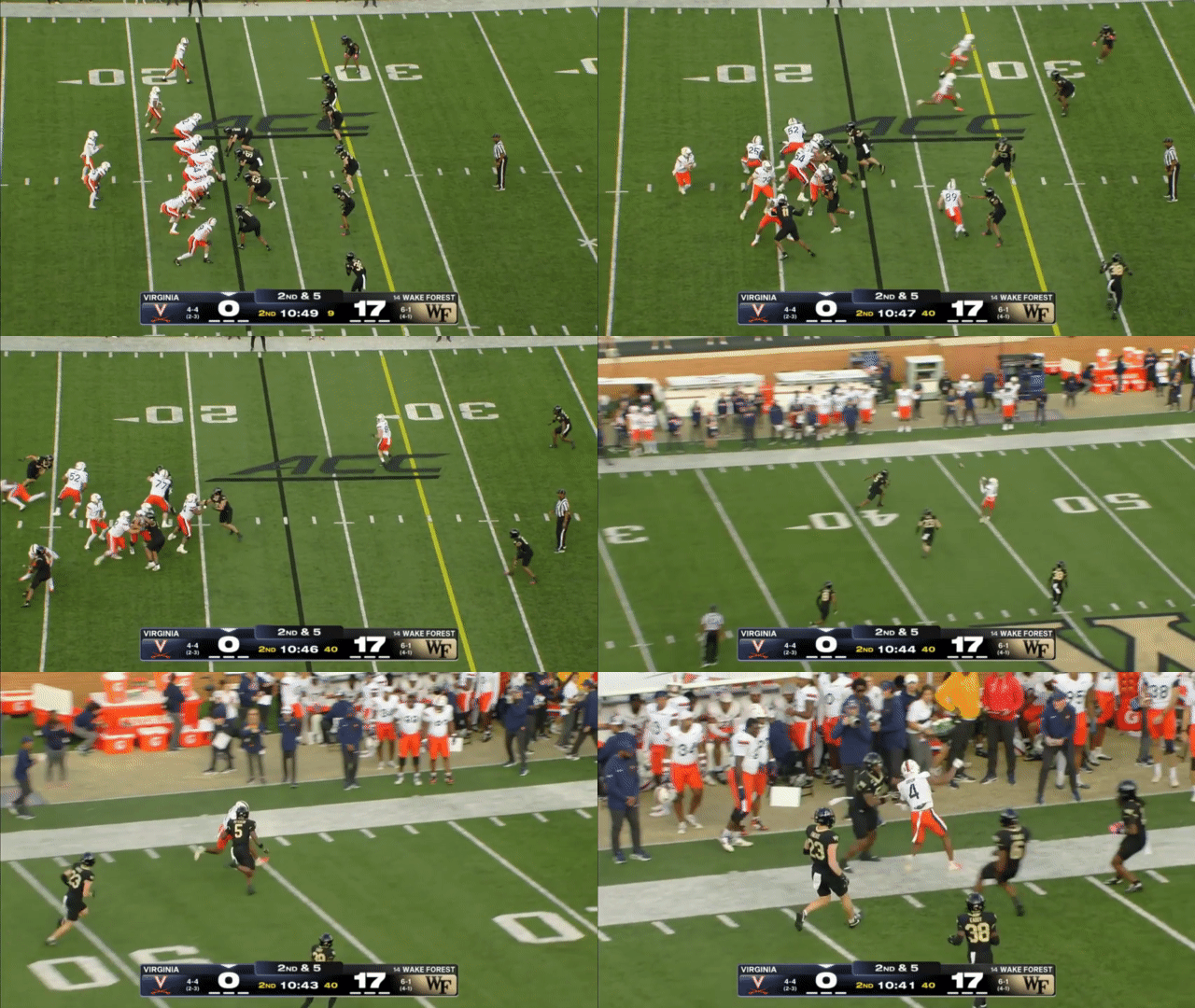
One of Virginia’s most talented receivers this year was the UCLA transfer, Rico Flores Jr., but he had a season-ending knee injury. Virginia has struggled to replace the production in his absence. Receiving the snaps in his absence have been Josiah Abdullah and Isaiah Robinson. You can find one of the Abdullah highlights in the quarterback section with Eli Holstein, but Abdullah had a tough time last game with Wake Forest’s coverage:
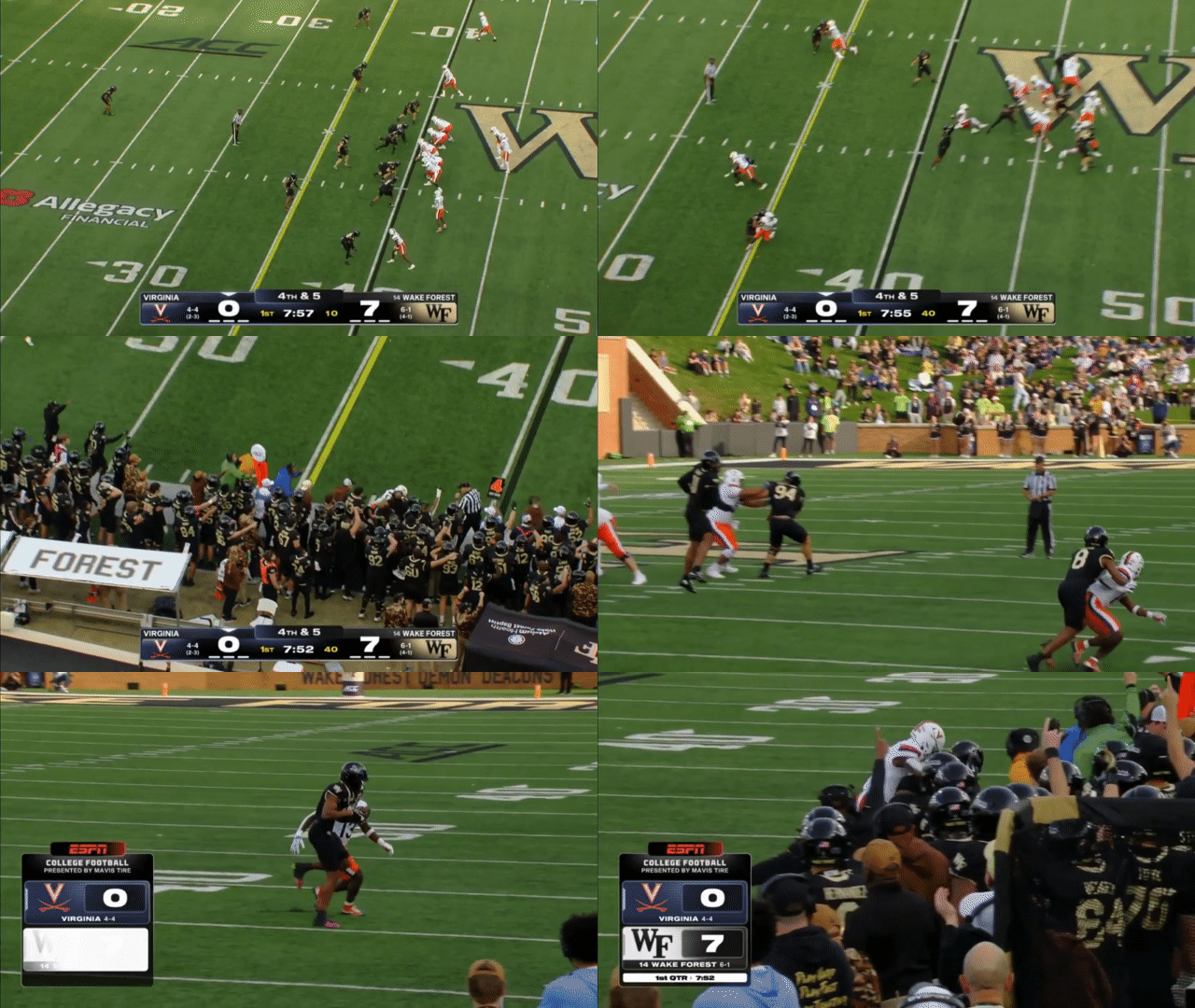
Isaiah Robinson has had his moments (you can also find some of his catches in the QB section with Pribula), but he hasn’t had a ton of targets. Here Robinson showed some after the catch ability:
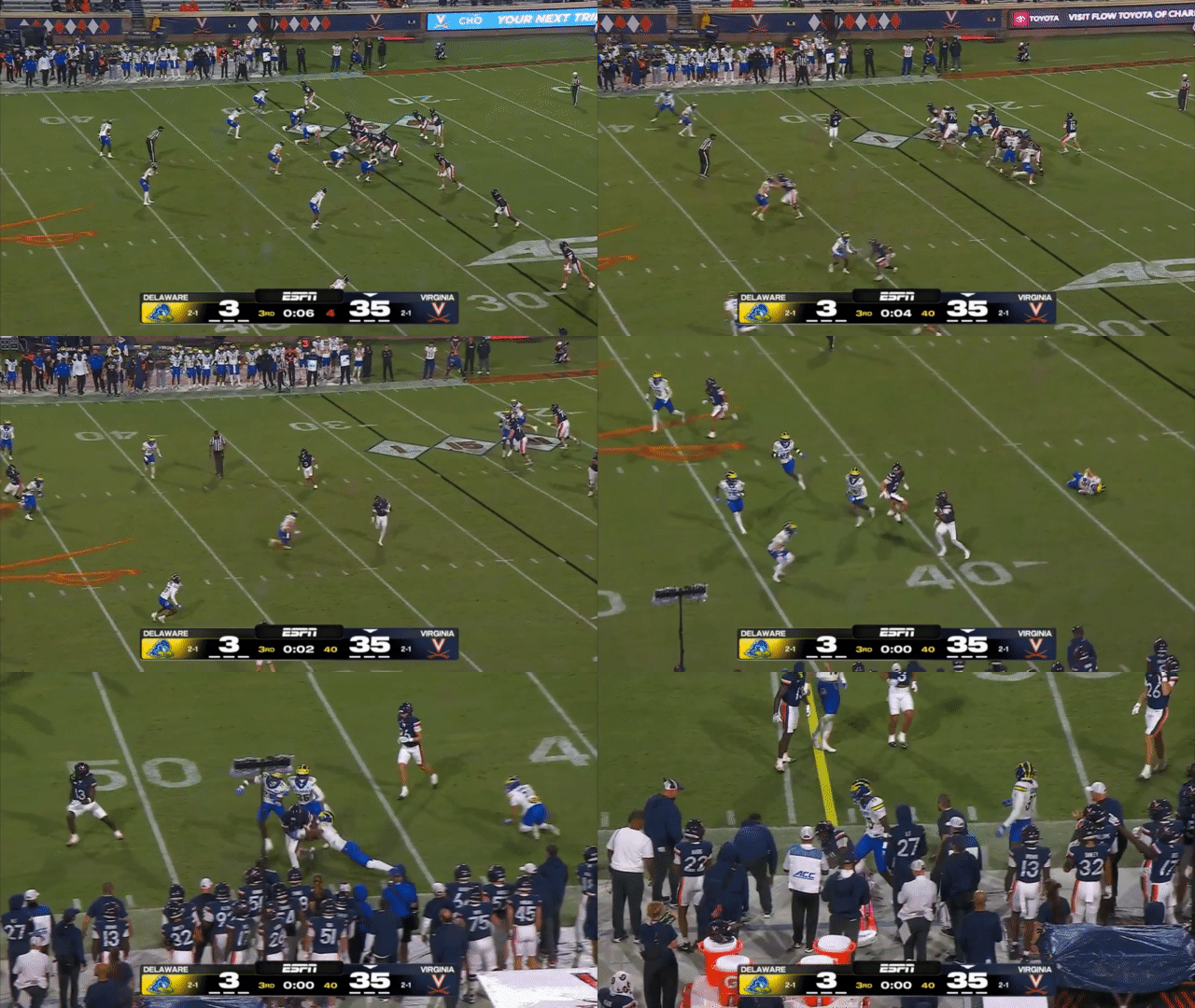
Virginia’s official depth chart lists WR Ty’Lyric Coleman as the starting X-receiver, although he’s only had a handful of catches this season. Here’s Coleman’s biggest play, a 20 yard catch on a flea flicker:
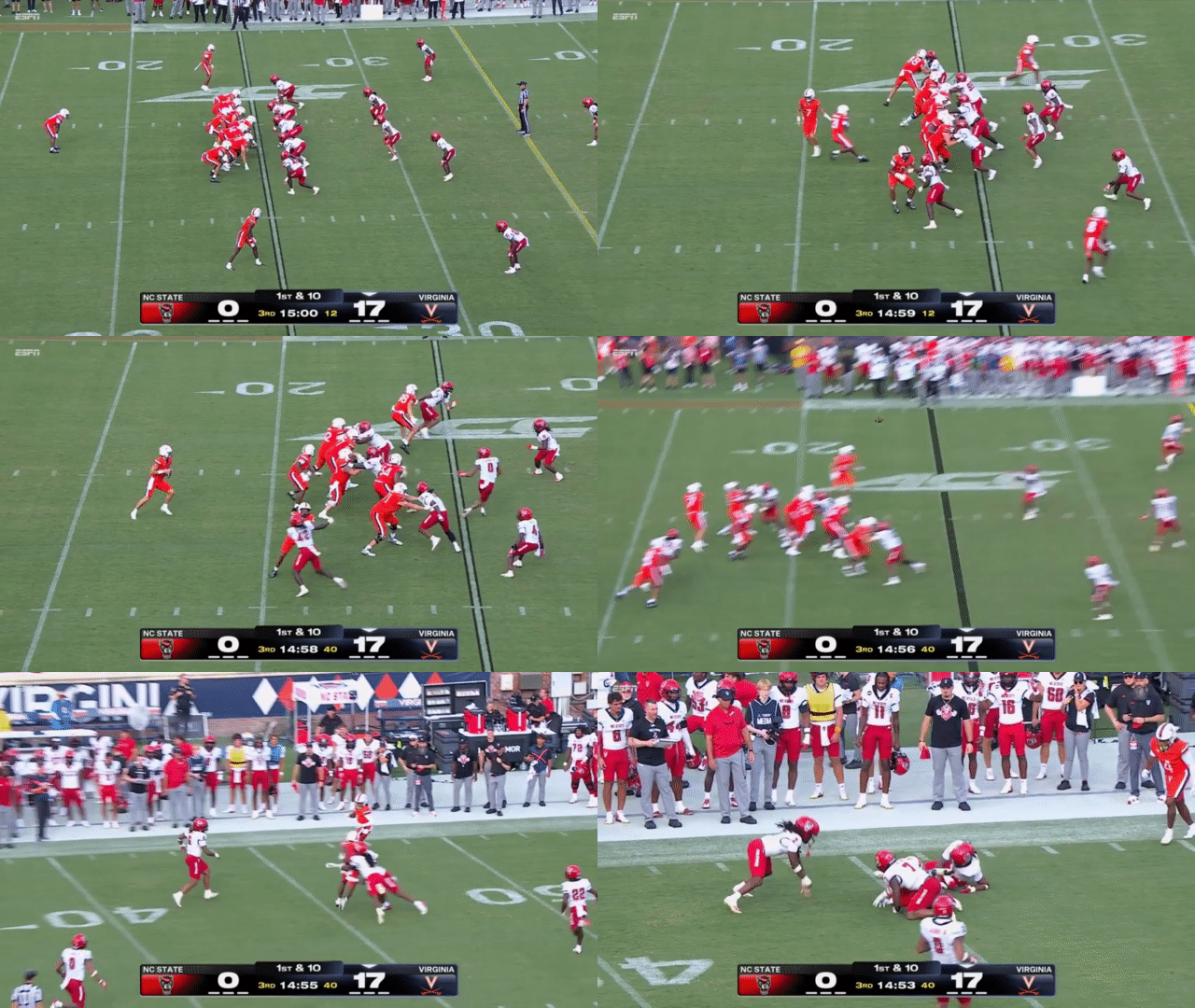
I also don’t have any highlights left of the tight ends, TE Dakota Twitty and TE John Rogers, but they are most often used on shorter, middle of the field throws. After WR Da’Shawn Martin and WR Kameron Courtney (or perhaps as a result of Courtney’s recent injury), the tight ends are the most likely targets in the middle of the field.
Conclusion
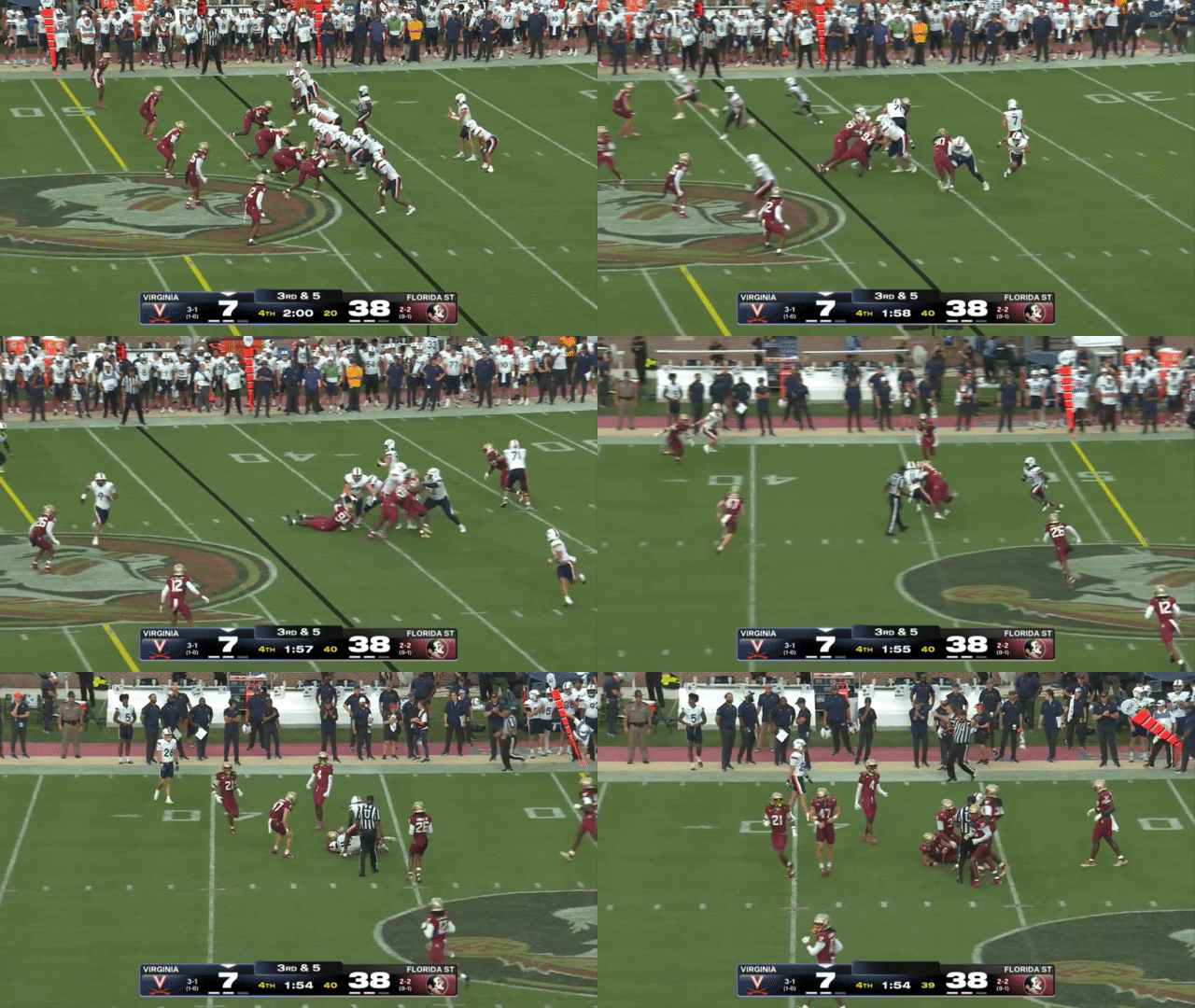
Virginia has one of the most experienced offensive lines in college football (LT McKale Boley - 5th year, LG Noah Josey - 6th year, C Drake Metcalf - 7th year, RG Makilan Thomas - 6th year, RT Monroe Mills - 7th year), and they will first and foremost look to establish the run game. Teams that have been able to shut down the Virginia run game have ended up completely blowing out Virginia; e.g. Virginia managed 37 yards rushing on 40 carries in a 38-7 loss to Florida State and 16 yards rushing on 19 carries in a 51-7 loss to Wake Forest. Conversely, Virginia has had the most success in games where the run game works (e.g. handily defeating NC State 34-8 when they put up 258 yards rushing on 57 carries, including 110 yards rushing by QB Beau Pribula). Obviously, stopping the Virginia run game is the first and foremost priority to stopping this offense, and forcing Virginia to throw the ball. Virginia does have a solid defense (like Cal, they won a slugfest with Syracuse 28-25 despite being outgained 430 total yards to 282 yards for Virginia), with a disruptive defensive line and decent secondary, and they are a team that somehow finds a way to win close games even while looking terrible doing it. In an ideal world, Cal would put up points quickly, load up to stop the run, and force Pribula to win through the air. In the actual world, they probably consistently run it down the throat of a Cal defense that—to this point—has been completely helpless to stop it. Just in case you forgot about SMU’s 42-0 second half over Cal in which SMU had 182 yards rushing (again, just in the second half), I figured I would remind you.
As dejectedly as ever,
As always,
Go Bears.
You can find my full clips here.