

Intro
The first few weeks of of Cal football have not inspired confidence in the offense. I will try here not to be a doomer and instead try to extract some kind of silver gold lining by crunching through the numbers and comparing data from the first five weeks of the 2026 season with data from the thirteen games of Cal’s 2025 season. I will note some developments since my first analysis of the year, which included data through the first three games of 2026.
Playcalls
Question: What proportion of playcalls are passes vs. runs?
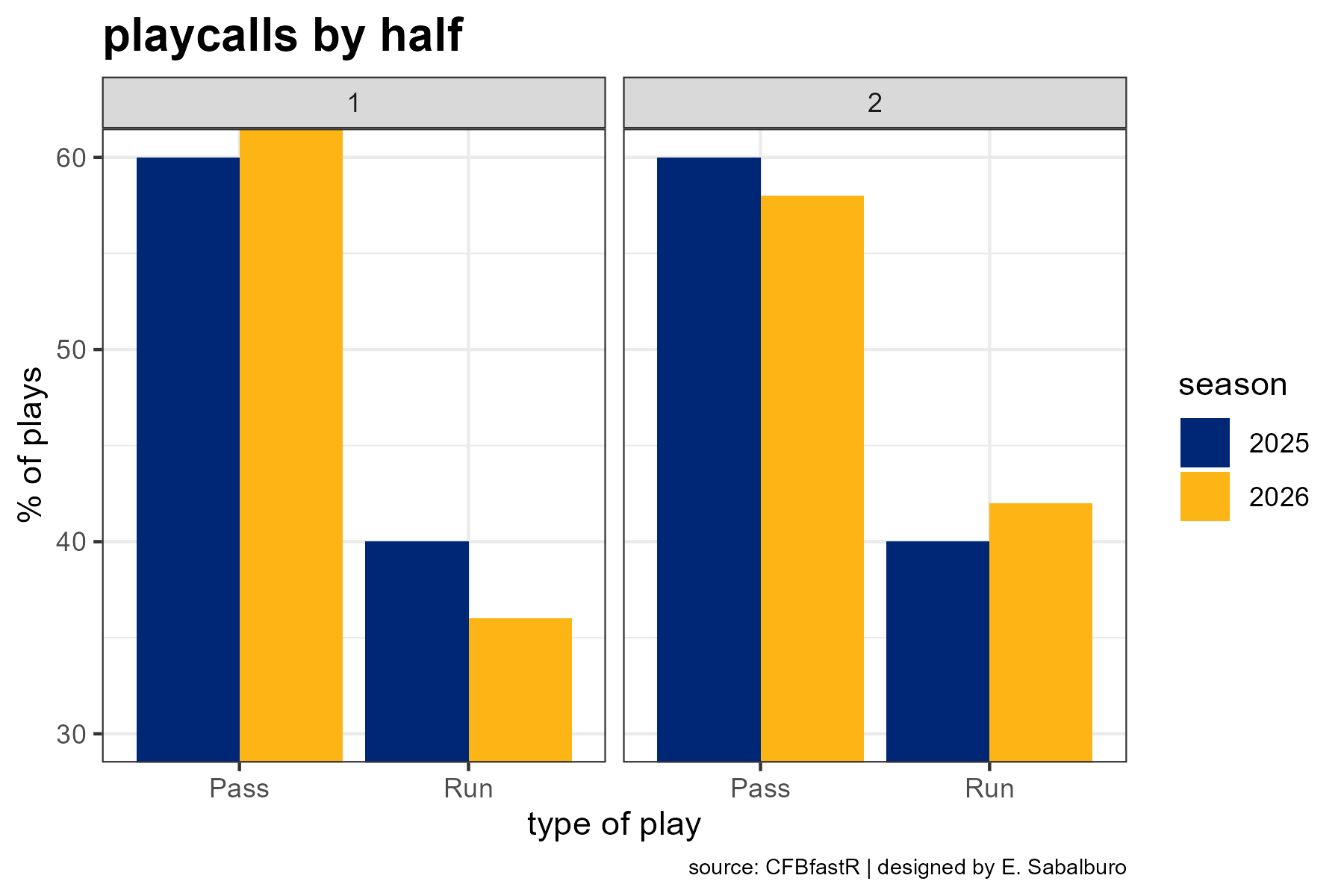
Below are the playcalls so far with the 2025 offense in blue and the 2026 offense in gold. We see that Cal is passing at about the same rate as last season. This is a change from my last analysis, where I joined the chorus of Cal fans pointing out that our playcalls (particularly in the second half) hovered around a puzzling 50/50 pass:run ratio.
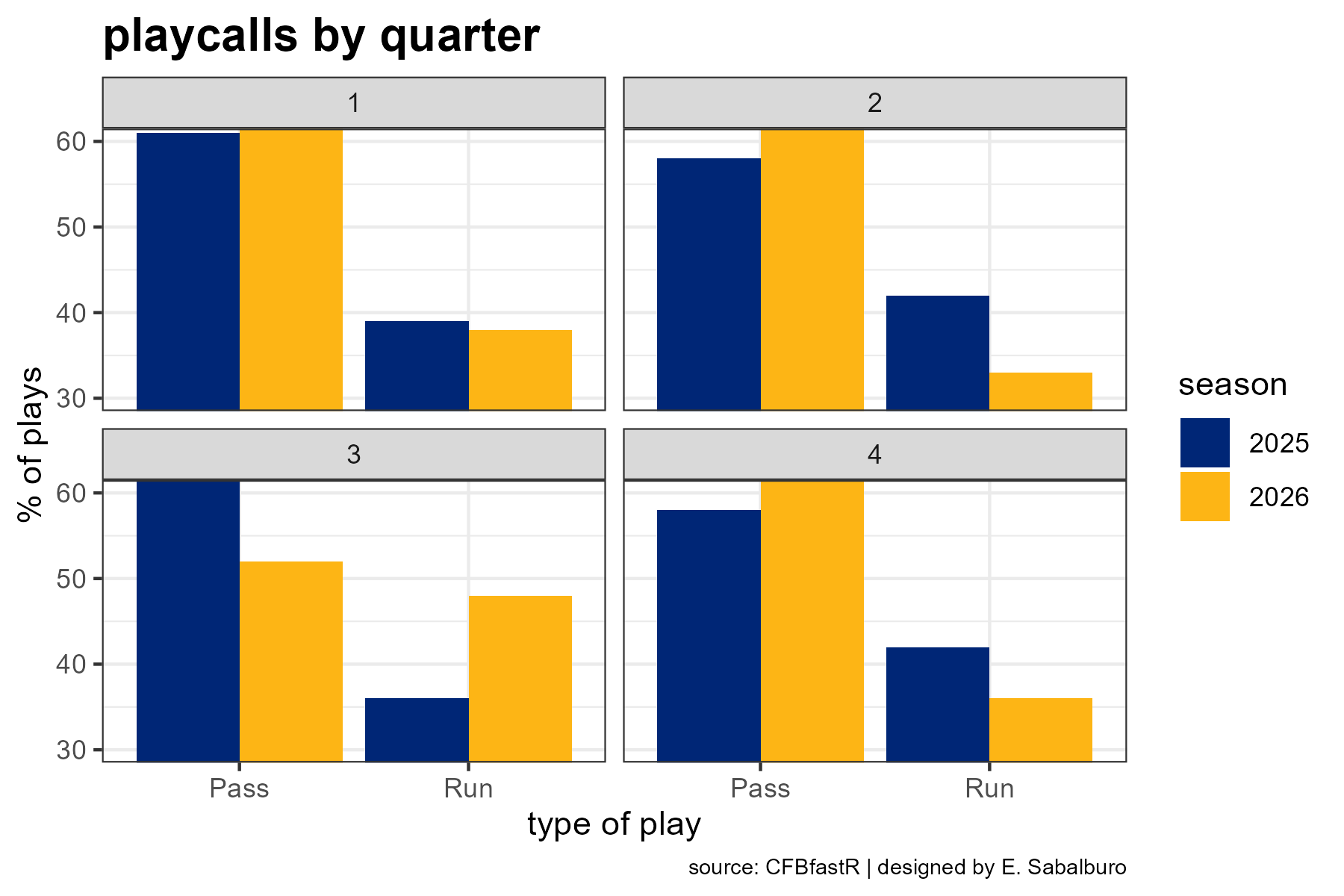
Below are the playcalls divided by quarter, where we can observe a drastic move toward the pass in Q4 after adding the Clemson and UNLV games to our 2026 dataset. (Though we should note that Cal was playing from behind in the fourth quarter in both of those games).
Passing
Question: How has the passing game looked against each opponent?
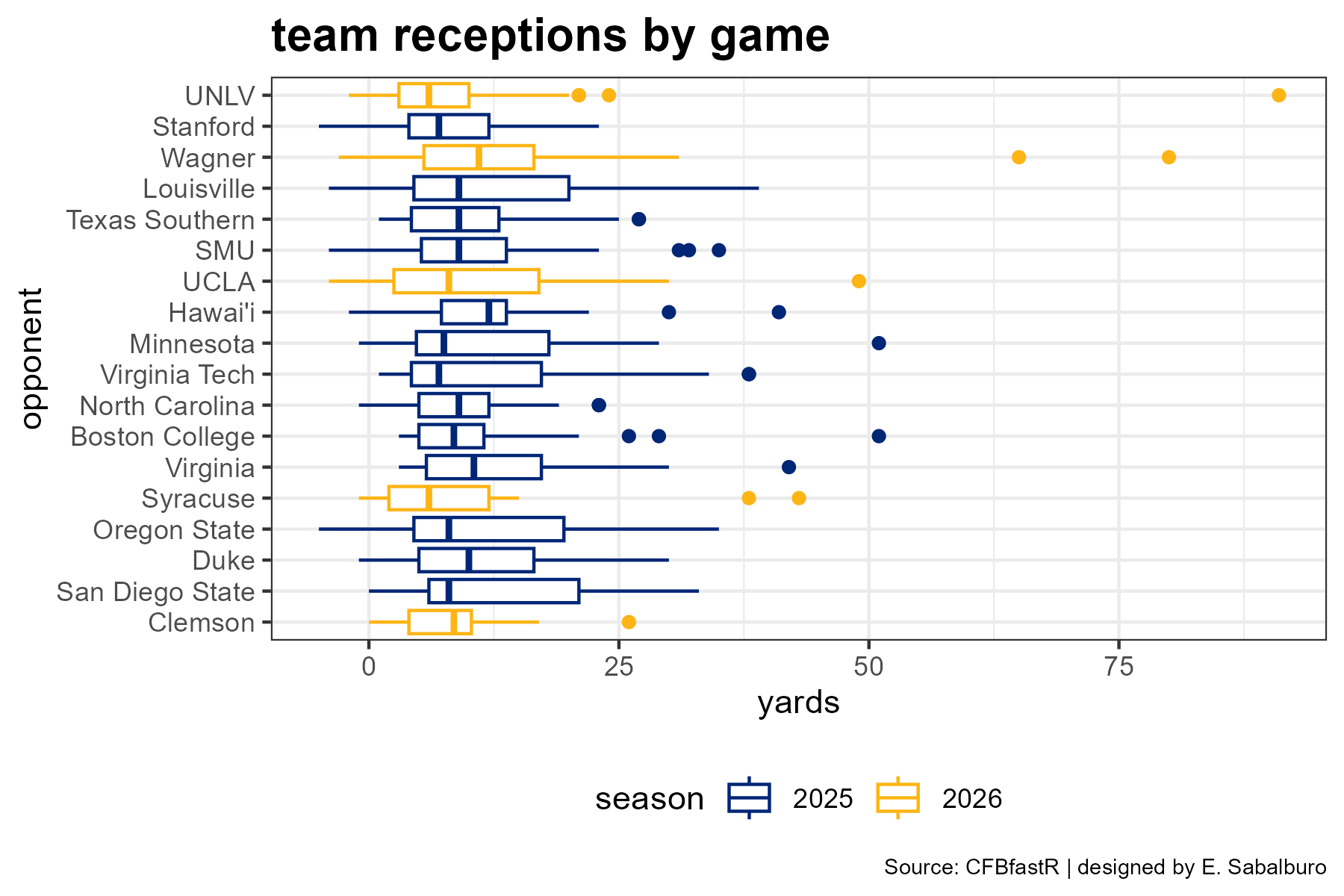
The boxplots here plot receptions by game and season. (Here is a helpful refresher on how to read boxplots.) Games with more completions are listed higher up on the graph.
Over the last 18 games of Cal football, the two most recent (UNLV and Clemson) are the games with the highest number of receptions and lowest number of receptions, respectively. Both losses. Neat!
Question: How distributed is our passing game among the receiver room?
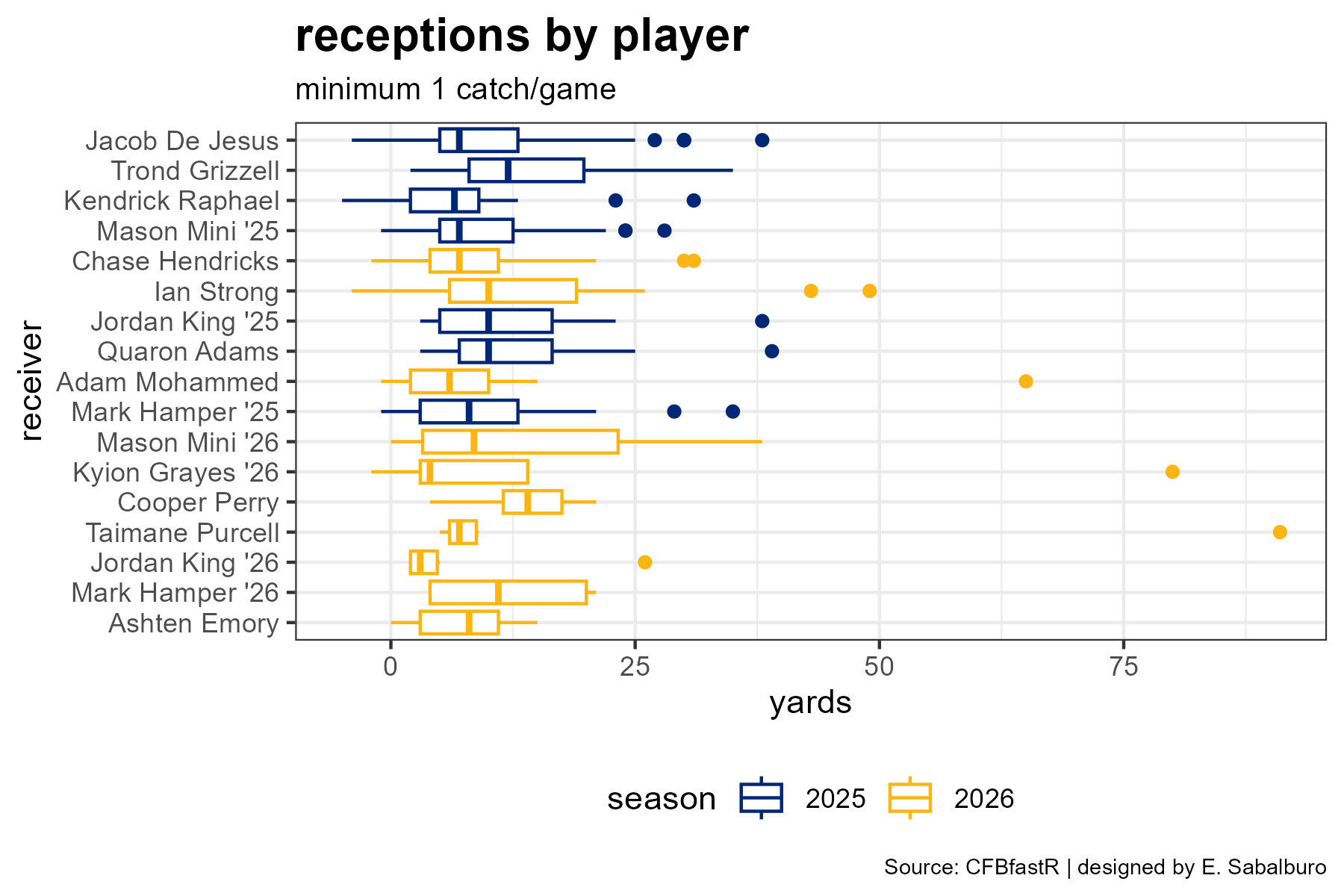
Below I disaggregate the data to show receptions by player and season. I only include receivers averaging at least one catch per game. 2026 players need to have made at least five catches thus far, and 2025 players need to have made thirteen catches over the course of last season. Players with more catches per game are listed first.
In keeping with the last analysis, no single receiver this seasons is matching the per-game production of our top receivers from 2025: De Jesus, Grizzell, Raphael, and Mini. UNLV hinted at the the possibility that Cal will be moving toward a more air raid style offense, and we see a new pass-catcher enter the graph in Ashten Emory.
Question: How does the passing game compare to last year overall?
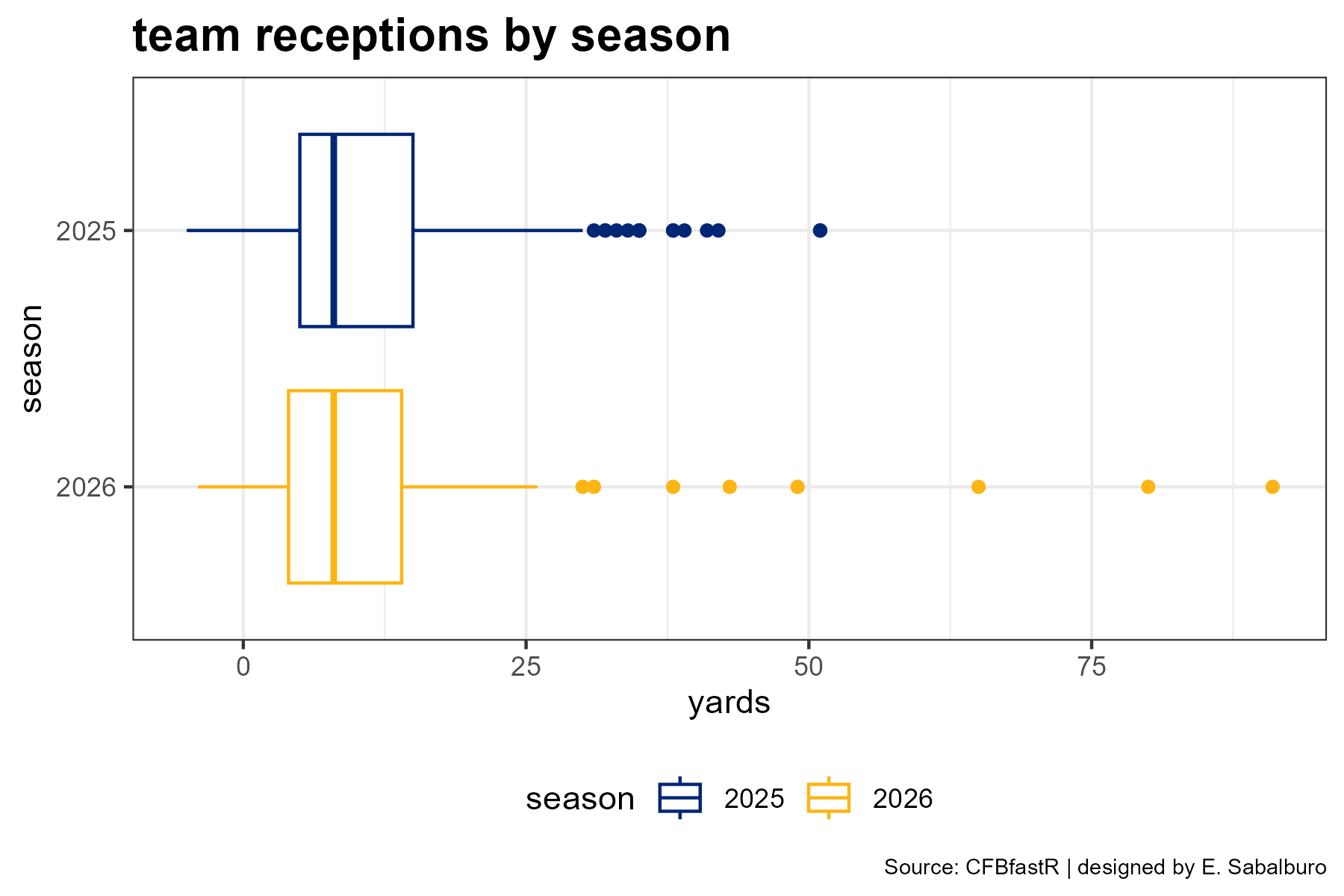
In my last analysis, I noted that our 2026 average yards per completion matched our 2025 season average yards per completion; I called this a yellow flag. I am prepared to call this a red flag. Through five games, our passing game is still only matching last season’s average. (And to get more technical, I am noticing that the upper bound of the interquartile range is a little lower now this year than last year.)
Running
Question: How has the run game looked against each opponent?
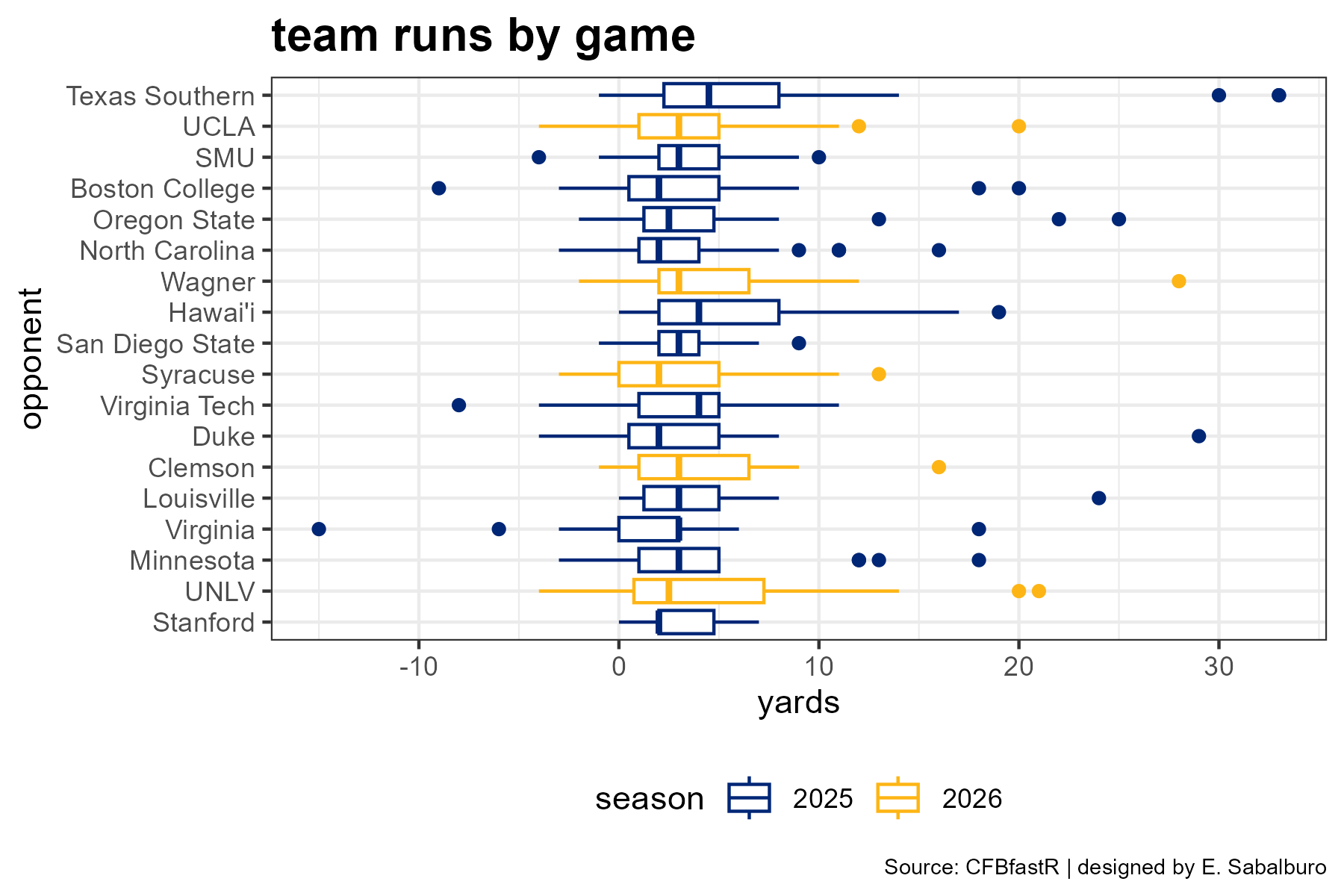
The boxplots below plot runs by game and season. Games with more runs are listed higher up on the graph.
Clemson and UNLV have featured the fewest runs per game so far this season. Another way to see the shift toward passing.
Question: How distributed is our run game among rushers?
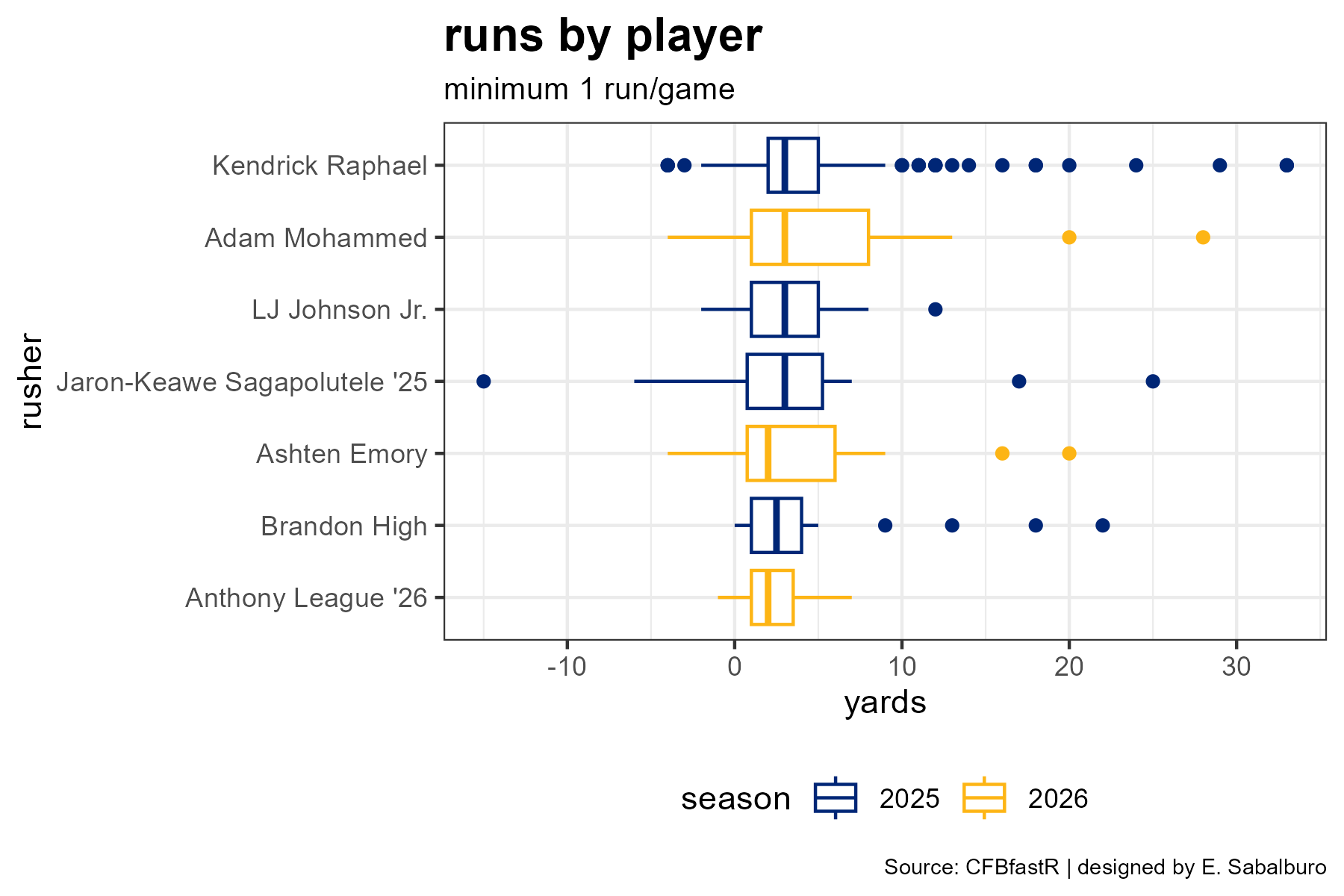
Below I disaggregate the data to show runs by player and season. I only include runners averaging at least one run per game. Players with more runs per game are listed first.
Carter Vargas has missed the last two games due to injury and has dropped off the graph. Carson Perry-Smith has dropped off due to a decrease of carries. Here’s to hoping we can get Adam Mohammed back healthy soon.
Question: How does the run game compare to last year overall?
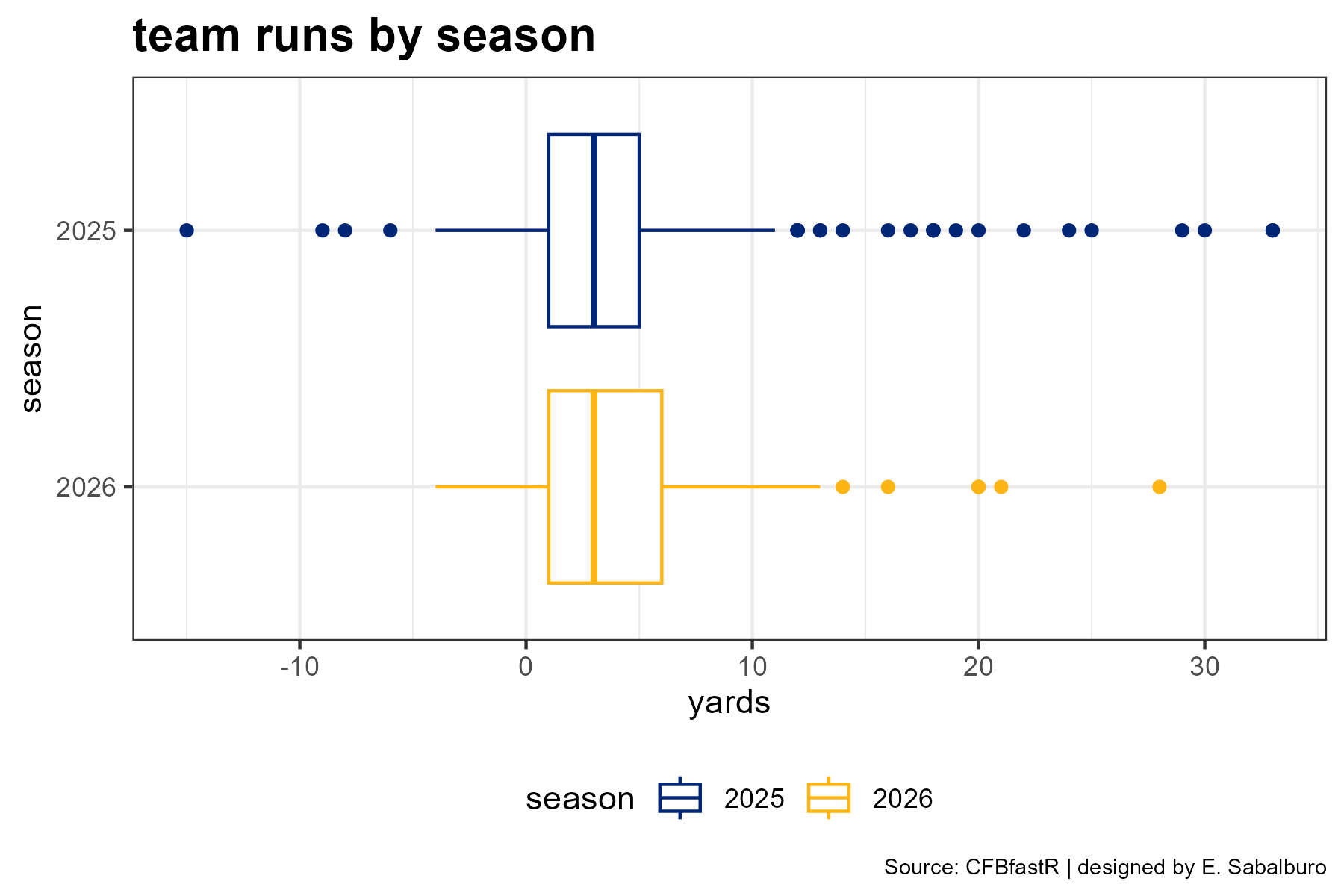
The box plots below summarize the information for the teams as a whole.
Once again, our run game is producing the same average yards per carry compared to last season., with fewer explosive plays.
Conclusion and Questions
We are just shy of the halfway point of the season. While the game results have pointed to a regression, the offensive data make a case for mere stagnation. This is not encouraging. A new coaching staff, portal additions, and the (presumed) growth of our star QB have amounted to matching last season’s productions but failing to match last season’s wins.
Hope springs eternal, and maybe the offensive staff can make some magic work with a mid-season pivot toward the pass.
Maybe.
Go Bears.