Leland Stanford Junior University Football 2026: Offensive Preview
At 5-5, this is the first time Stanford is playing with bowl eligibility on the line since 2019, and the first time Stanford can clinch it with a win in the Big Game since 2014.

In fact, this year is the first time since 2020 that Stanford is not entering the Big Game as a 3-win team. Stanford hasn't been to a bowl since 2018. The last Big Game where Cal was already eliminated from bowl eligibility was in 2022, when both Cal and Stanford were equally terrible—well, Stanford was slightly more terrible given that they lost that year, but both teams were 3-7 at the time. The point that I am trying to make here is that the season is already lost. You know this, I know this. There's nothing left to play for this season but a Big Game win. Tell me, would a Big Game win make you feel better about this season? Normally I'd say yes, but the current state of the program has me at new lows. I'm not sure the rivalry fills me with enough hate to feel satisfaction at ruining their season anymore. Let's see if I can talk myself into it here.
Stanford, you may recall, has been a magnet for all sorts of criminals. There's just something about overprivileged rich kids with their penchant for financial crimes.
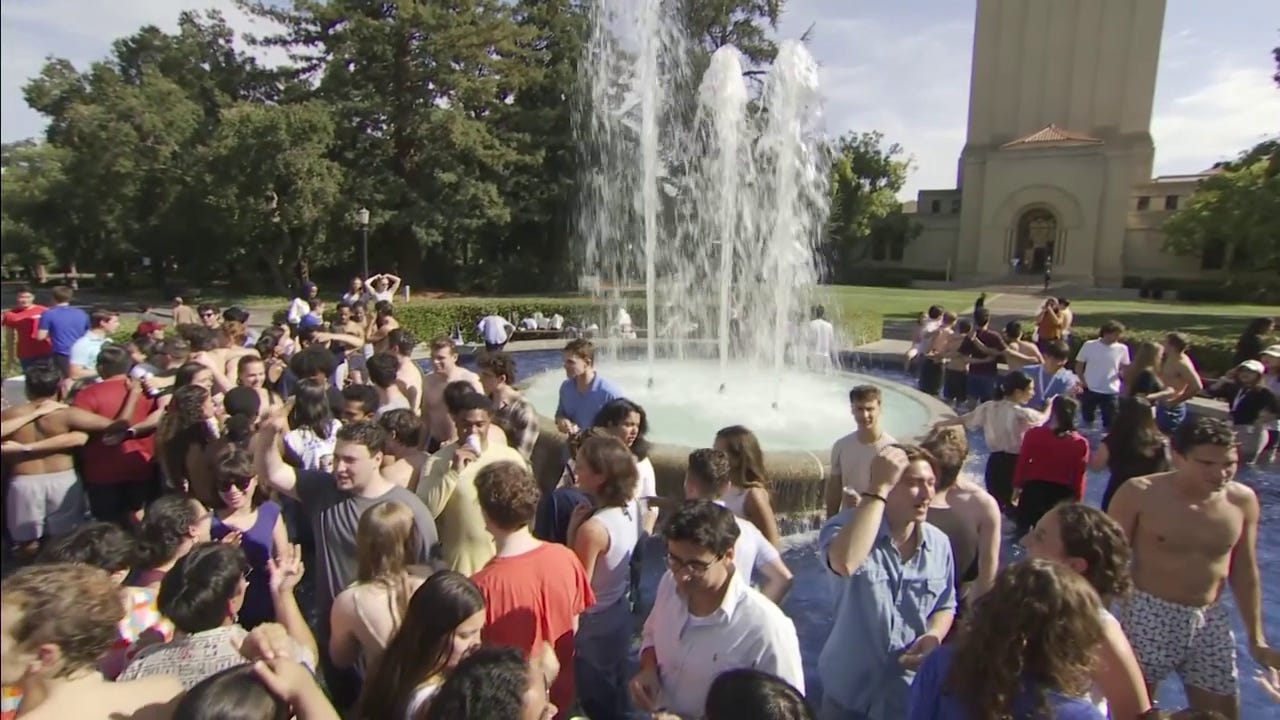
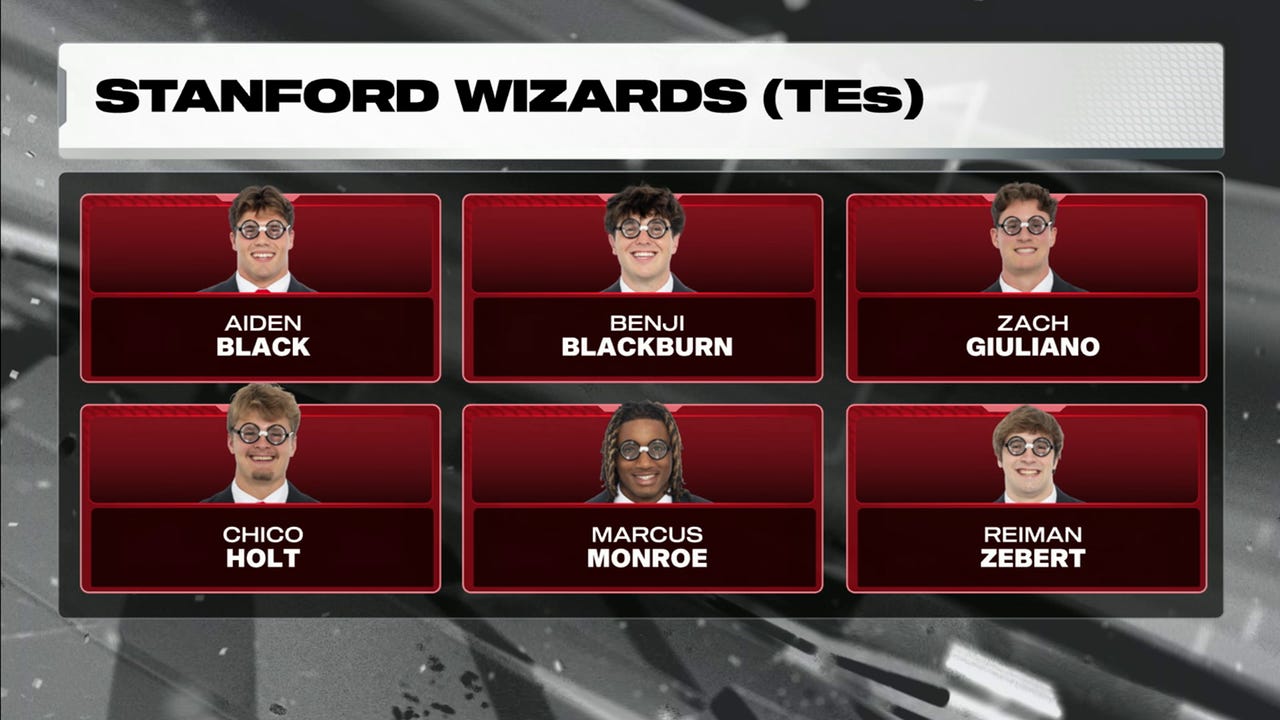
Before becoming seasoned financial criminals, Stanford students are often known for their zany and not at all cringey humor, such as their perpetually awful tree mascot or their unabashed support for anti-trans bigot J.K. Rowling:
Since joining the ACC (thanks for bringing us along, Stanford), Stanford hasn't been particularly good. Stanford won their first ACC road game in 2024 at Syracuse, then went 0-15 on the road until last week’s upset at Virginia Tech to bring that ACC road record to 2-16 overall. The stats at home versus on the road are pretty jarring as well: with Stanford scoring 25.9 points and allowing 27.3 points per game at home, while only managing 16.6 points of offense and allowing 38.1 points per game on the road. Stanford has been especially terrible in road games since joining in the ACC.
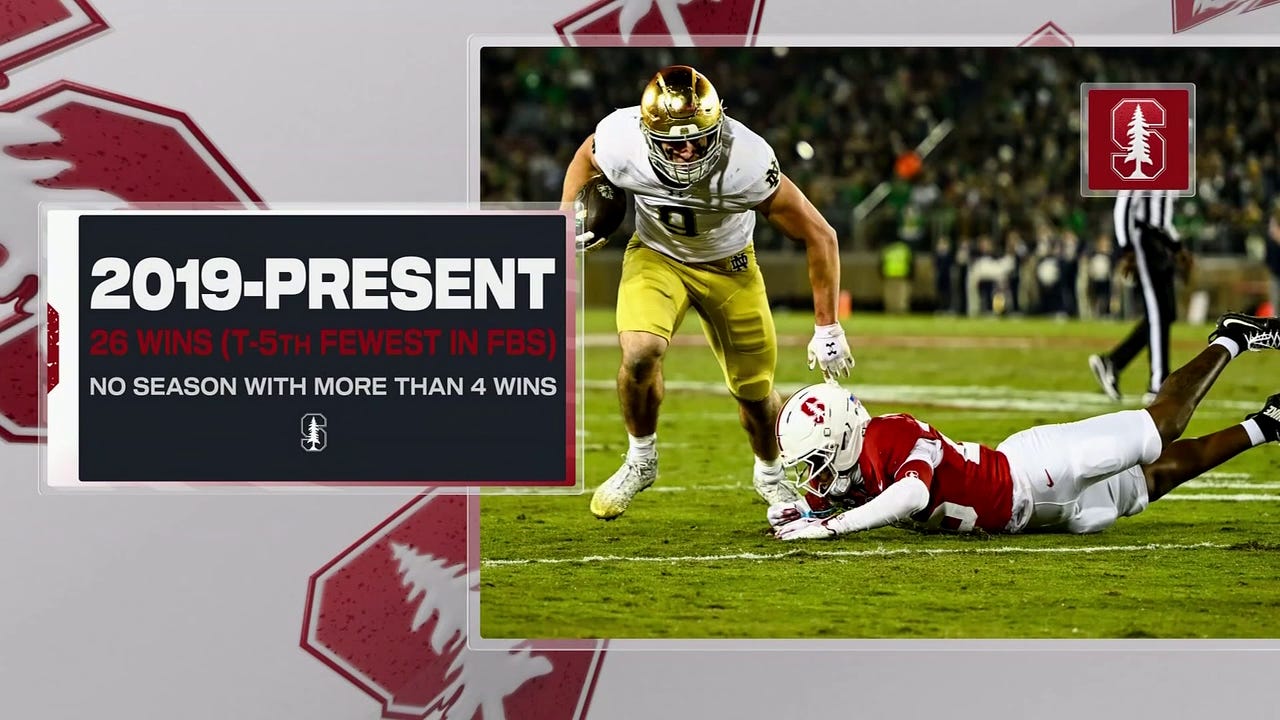
Although to be fair, they weren't doing particularly well before that either. Their last bowl game was in 2018, and they went 3-9 every year from 2021 to 2024. Their 4-win season in 2025 to their current 5-win season in 2026 represent a very unfortunate uptick in success.
Stanford's football GM Andrew Luck finally had a full-time coaching search (after Frank Reich’s interim year last year), and he spent all that time searching… Only to land on his buddy (and former Stanford OC) Tavita Pritchard.
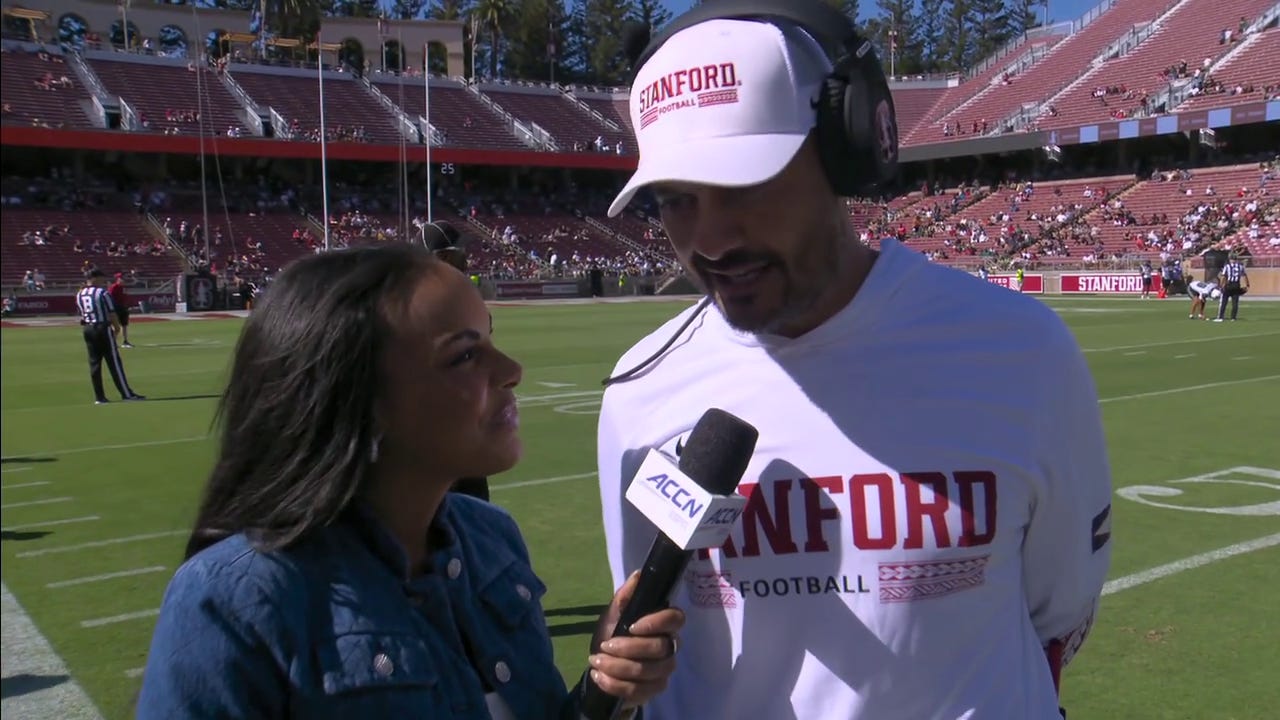
Pritchard is the nephew of former NFL quarterback Jack Thompson, “The Throwin’ Samoan.” Pritchard was also the Stanford quarterback that was ultimately usurped by a redshirt freshman QB Andrew Luck in 2009 (and perhaps helped him transition to more of a coaching role back in college), but before that, was probably better known for being the backup QB forced into action against Pete Carroll's juggernaut USC program as 41-point underdogs.
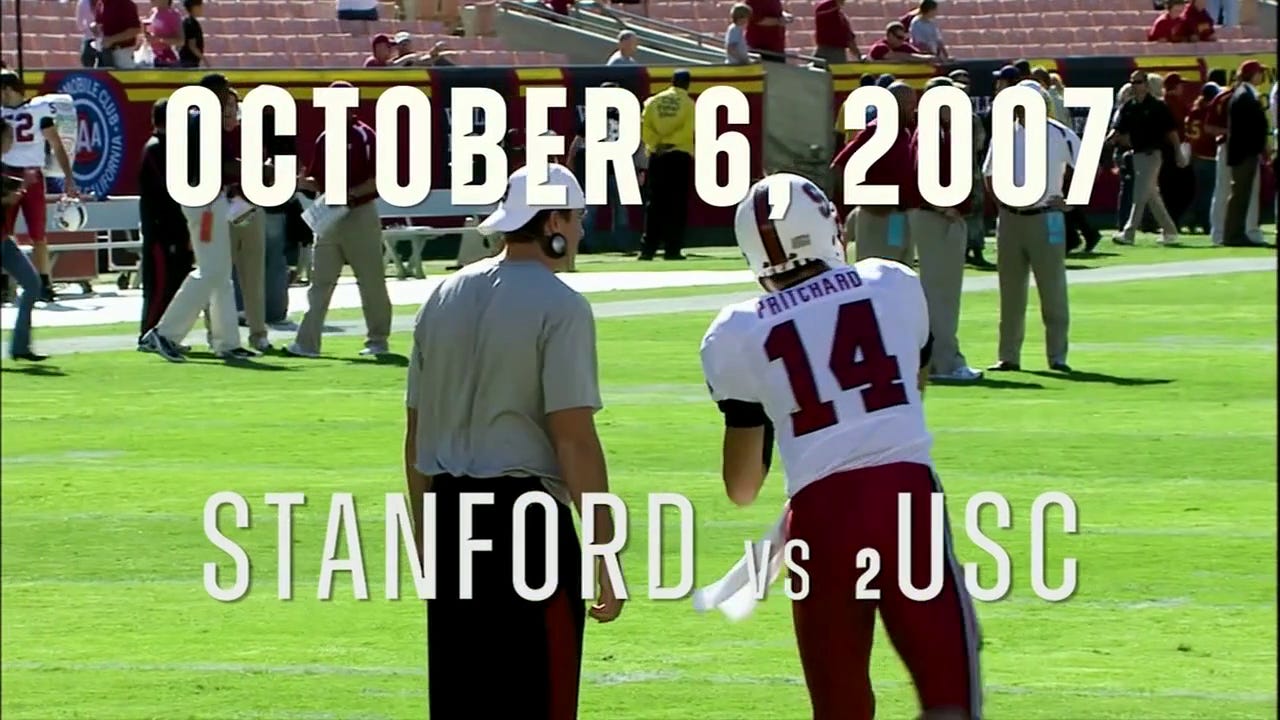
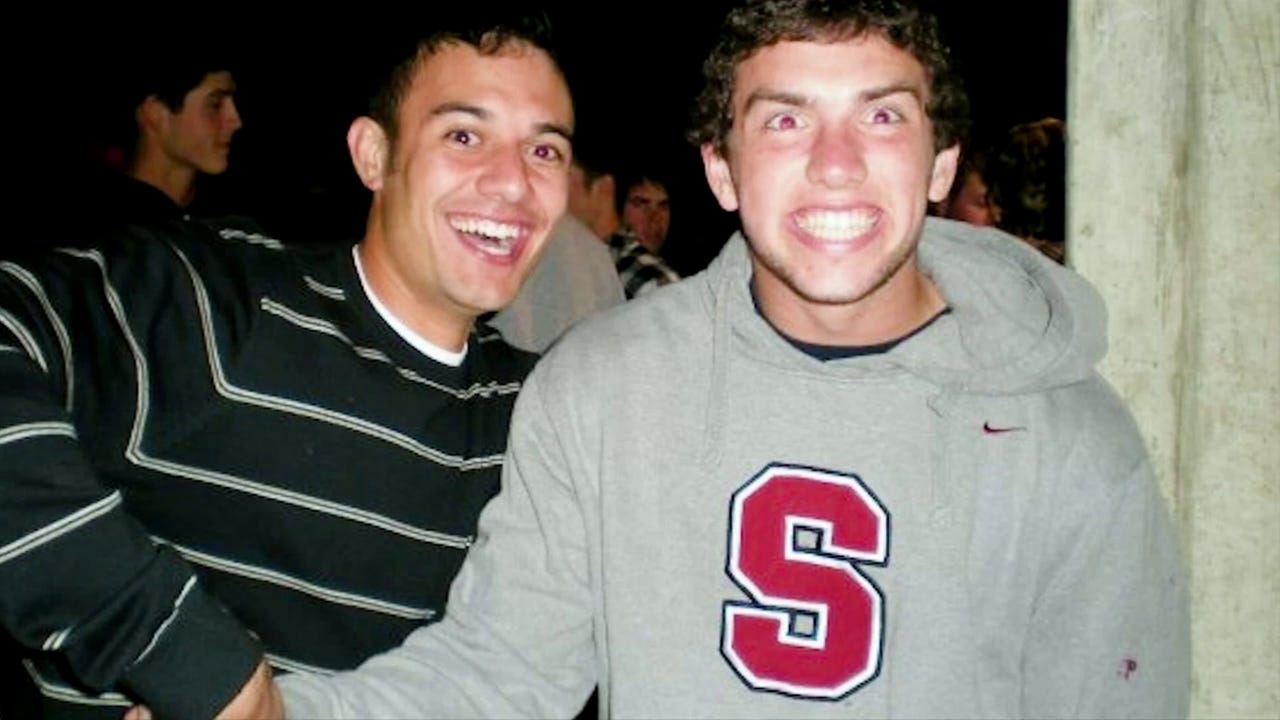
Here's Pritchard and Luck back in college, in a photo so millennial that I couldn't decide if it belonged in the part about cringey Stanford humor or the part about Luck hiring his buddy.
Let's take a look at the positional breakdowns.
Quarterback
Stanford is led by Michigan transfer QB Davis Warren. As you’ll surely hear during the broadcast, Warren is an inspirational story. He was diagnosed with acute myeloid leukemia (AML) in high school, spending 4.5 months in the hospital where he underwent four rounds of chemotherapy, before eventually beating cancer and beginning the long and arduous road to recovery where he hoped to become a college and later NFL athlete.

He managed to walk-on to Jim Harbaugh’s Michigan team in 2021, and became the starter for Michigan in 2024, where he led Michigan to a 6-3 record as the starter (he was benched in the middle of the season after a 122-yard, 0 TD, 3 INT performance against Arkansas State, but returned to the starting role after the backups didn’t prove to be much better). Warren tore his ACL in Michigan’s ReliaQuest Bowl win over Alabama, and missed the entire 2025 season as a result. So the 2026 season is just another chapter of the Davis Warren comeback story: an inspiring tale of a young boy who beat cancer and made his way to Stanford in the hopes of joining the venture capitalist class, hellbent on the destruction of American society and the middle class, in pursuit of a future in which AI streamlines away white-collar jobs and we are all gig-economy laborers liberated from the oppressive shackles of health insurance, homeownership, and free time.
Davis Warren is a pocket passer that best operates out of structure. He has sufficient arm strength and does best when his reads are clear (e.g. they’re running a flood concept against clear zone coverage), but he is often late on his throws as a result of his indecisiveness. He has no trouble targeting the wide side of the field:
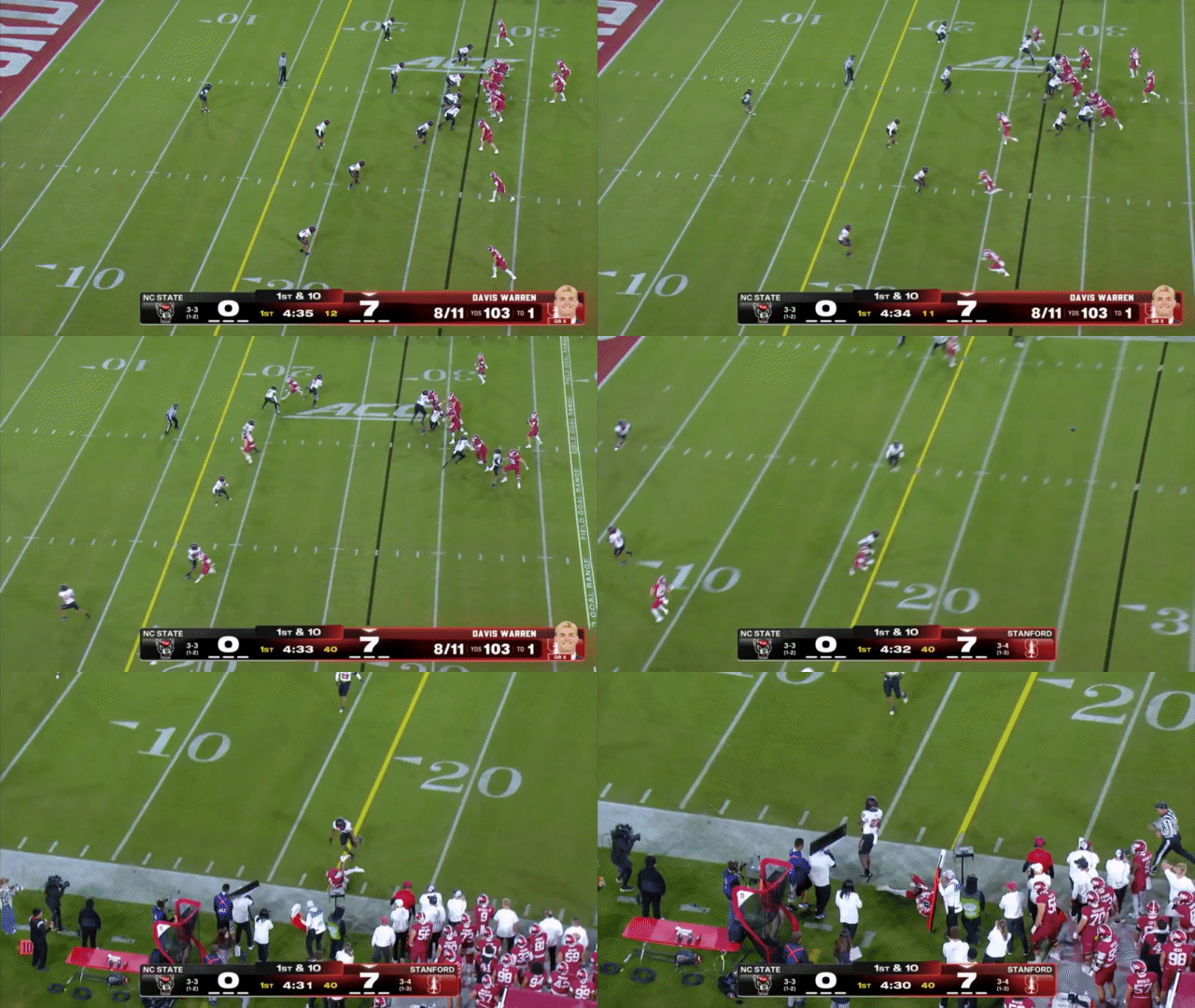
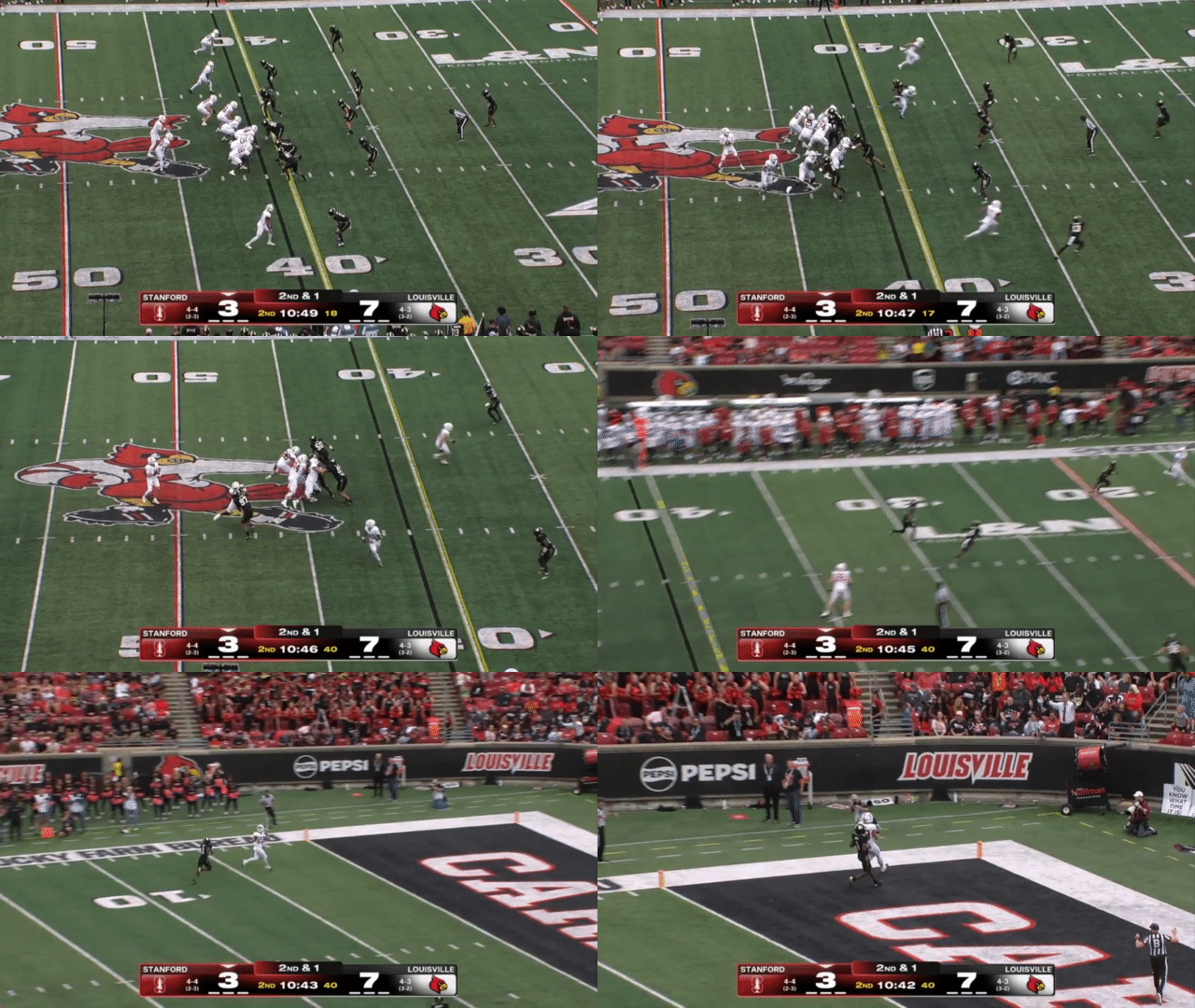
QB Davis Warren fires a dart across the field for 10 yards to WR Caden High
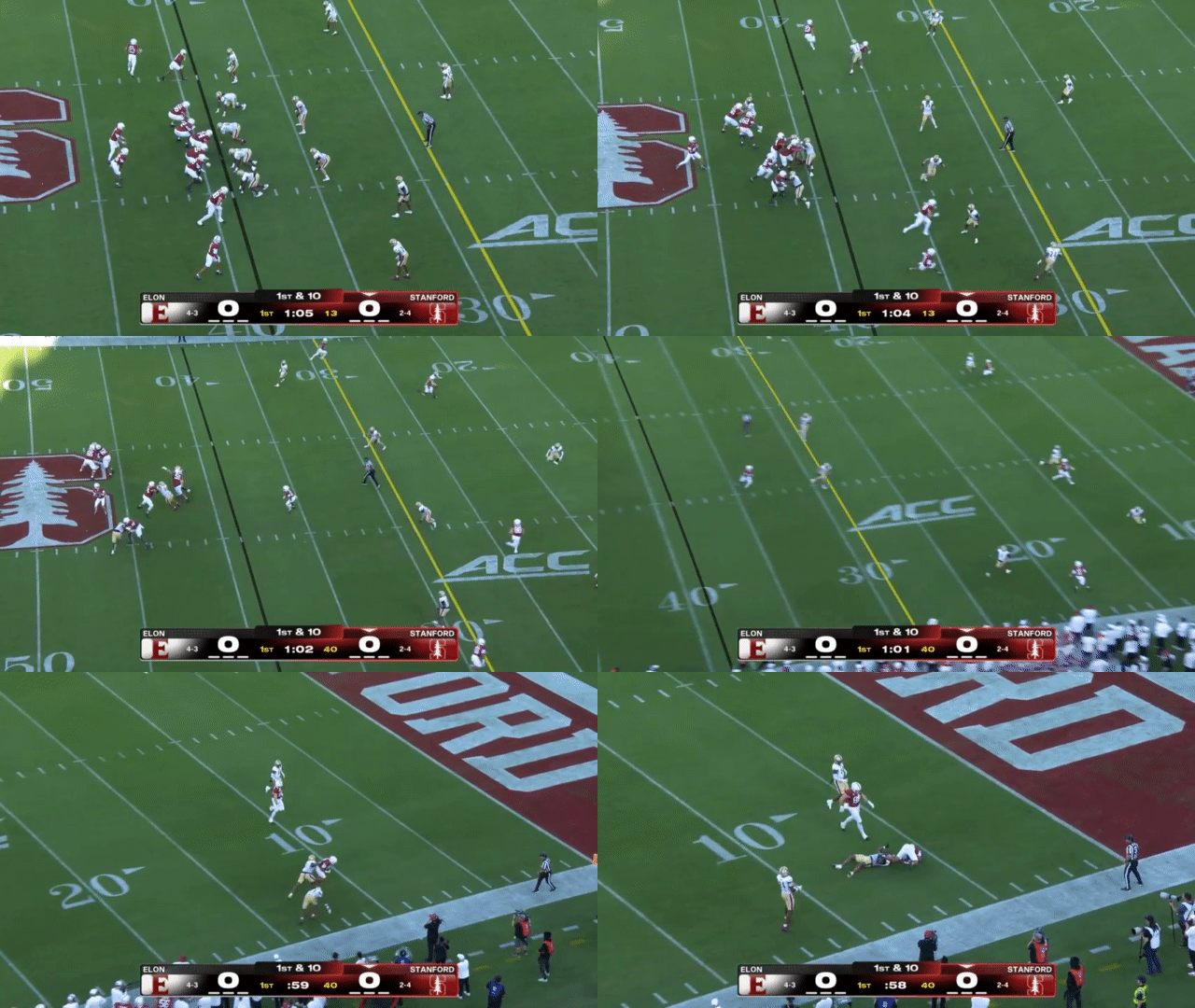
Here Warren does a nice job on throwing the ball where only his receiver had a chance at it:
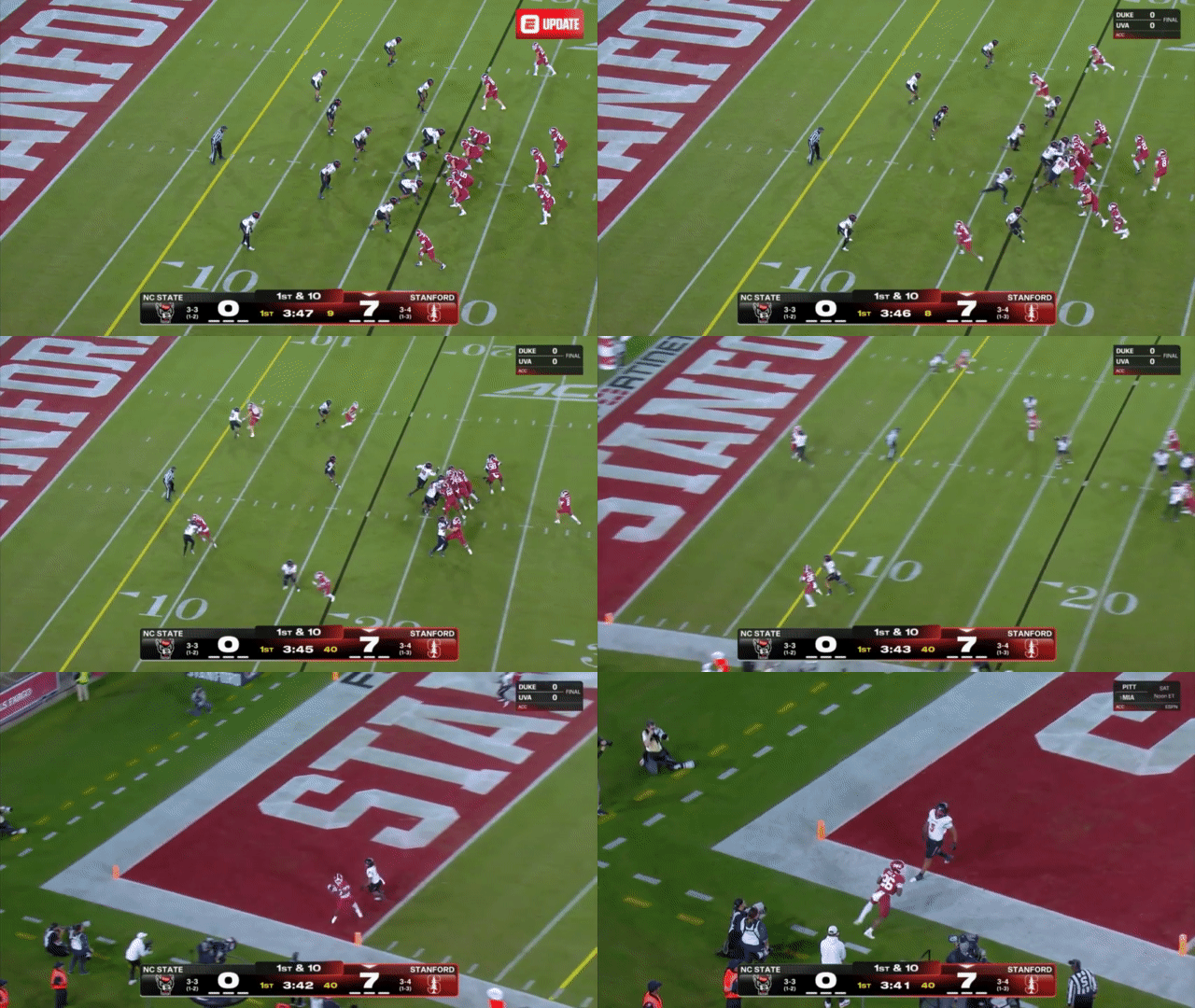
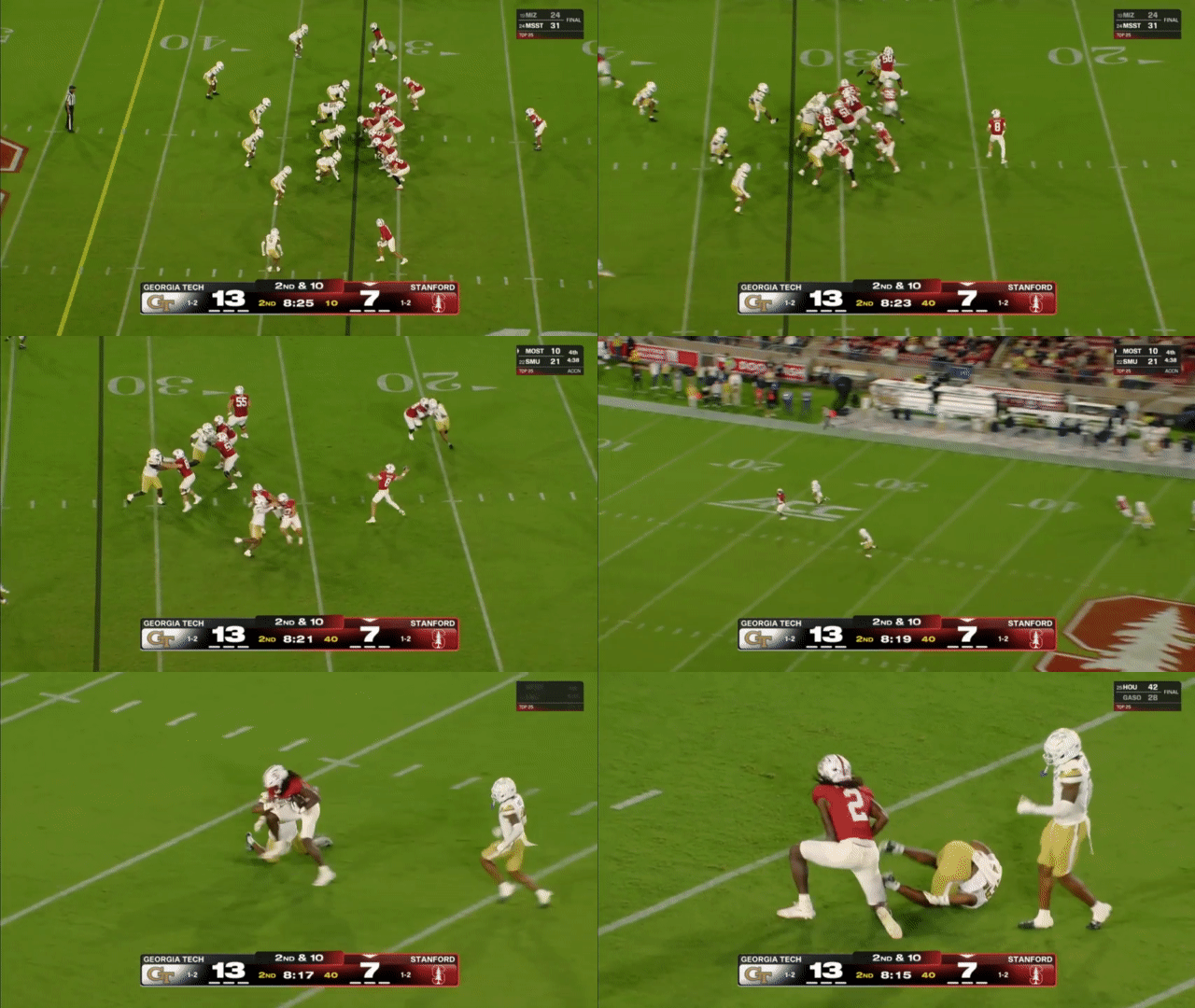
And although Warren is a pocket passer, he does at least have some amount of athleticism:
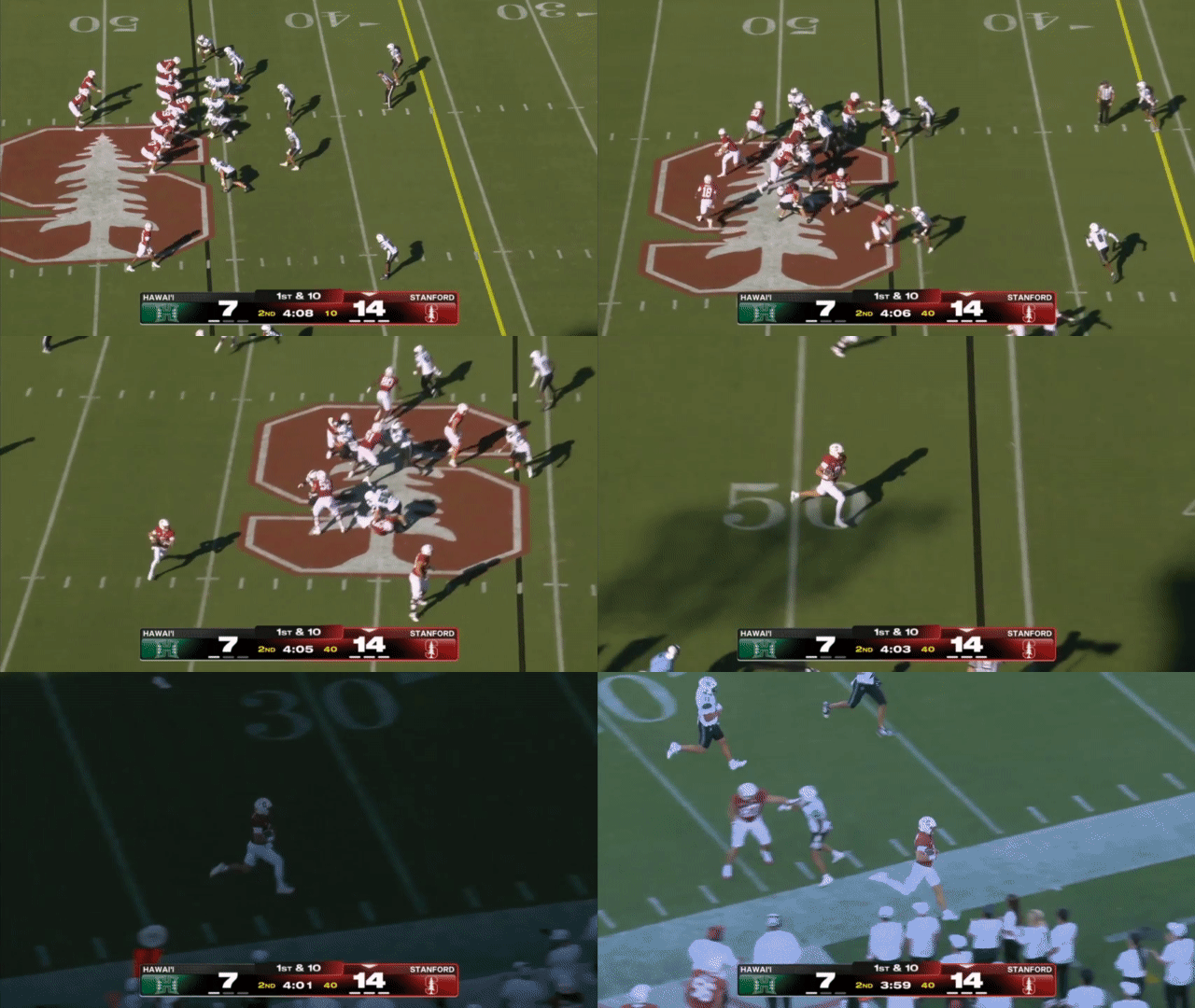
Warren isn’t usually the type to tuck it and run (he has -20 rushing yards on the season), he did show some nice wheels out of nowhere last week:
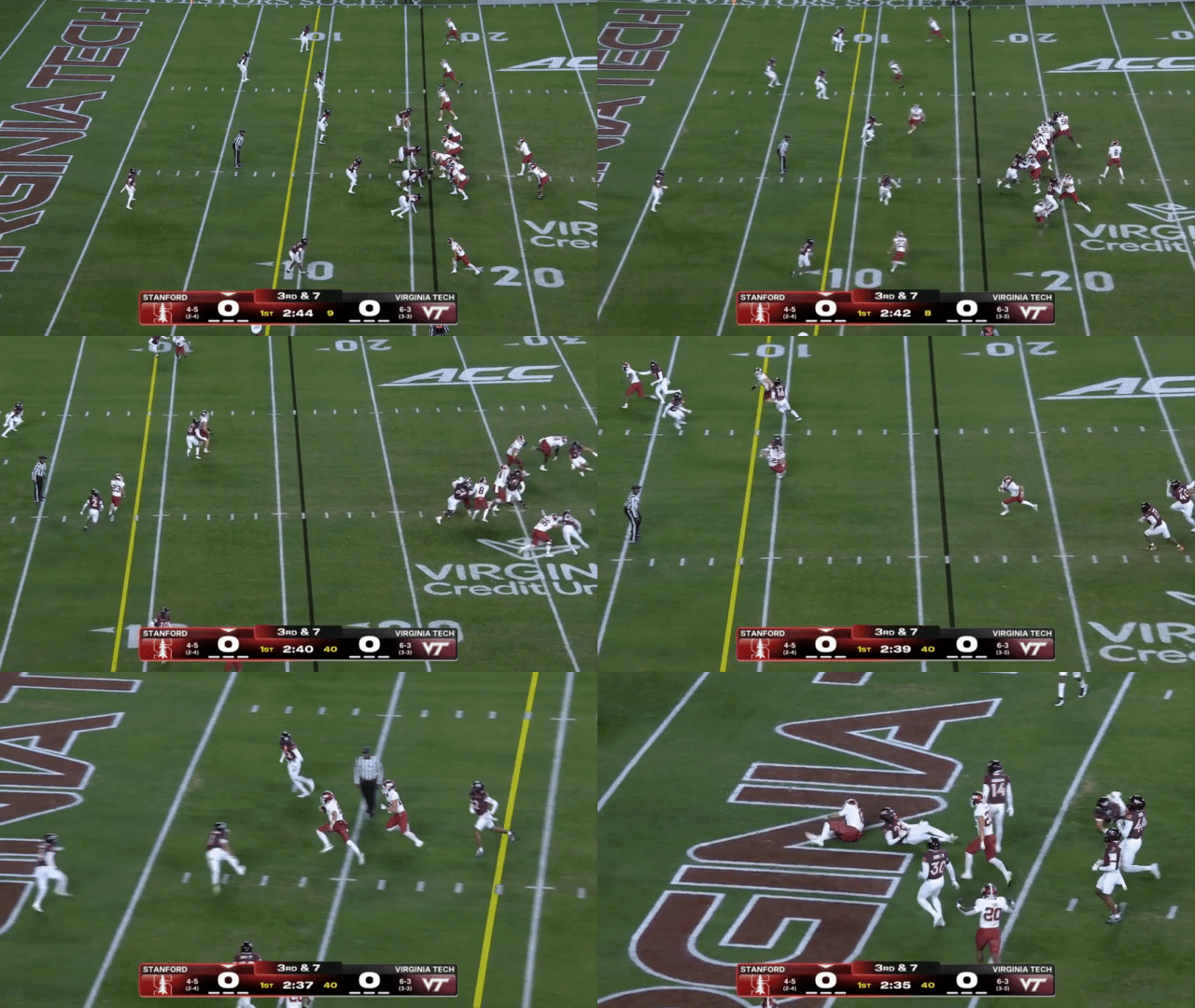
Although Warren can be indecisive at times and a little slow to process, he does show toughness to make the throw when he knows where he’s going with the ball:
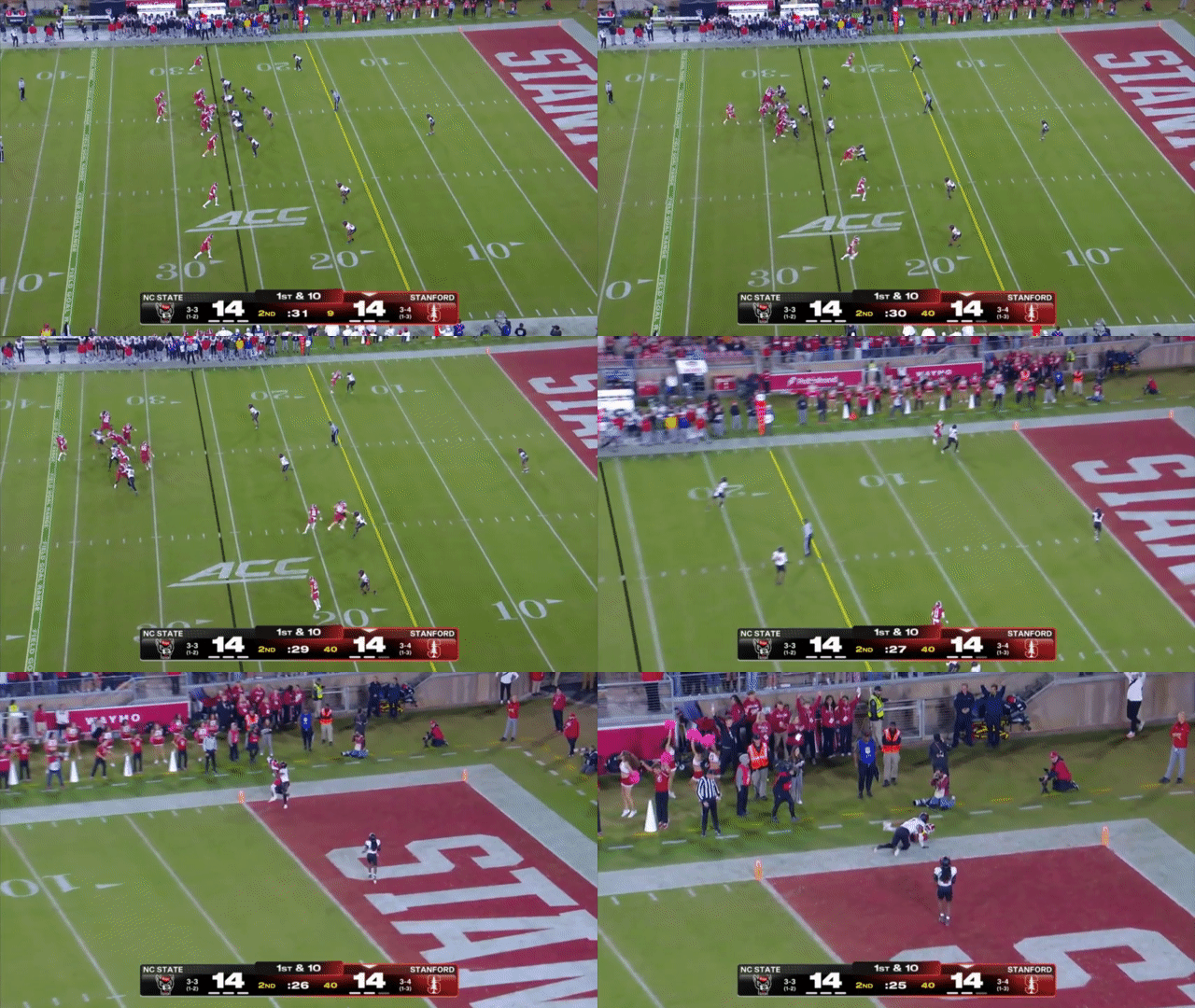
Warren has also shown decent pocket movement to buy time:
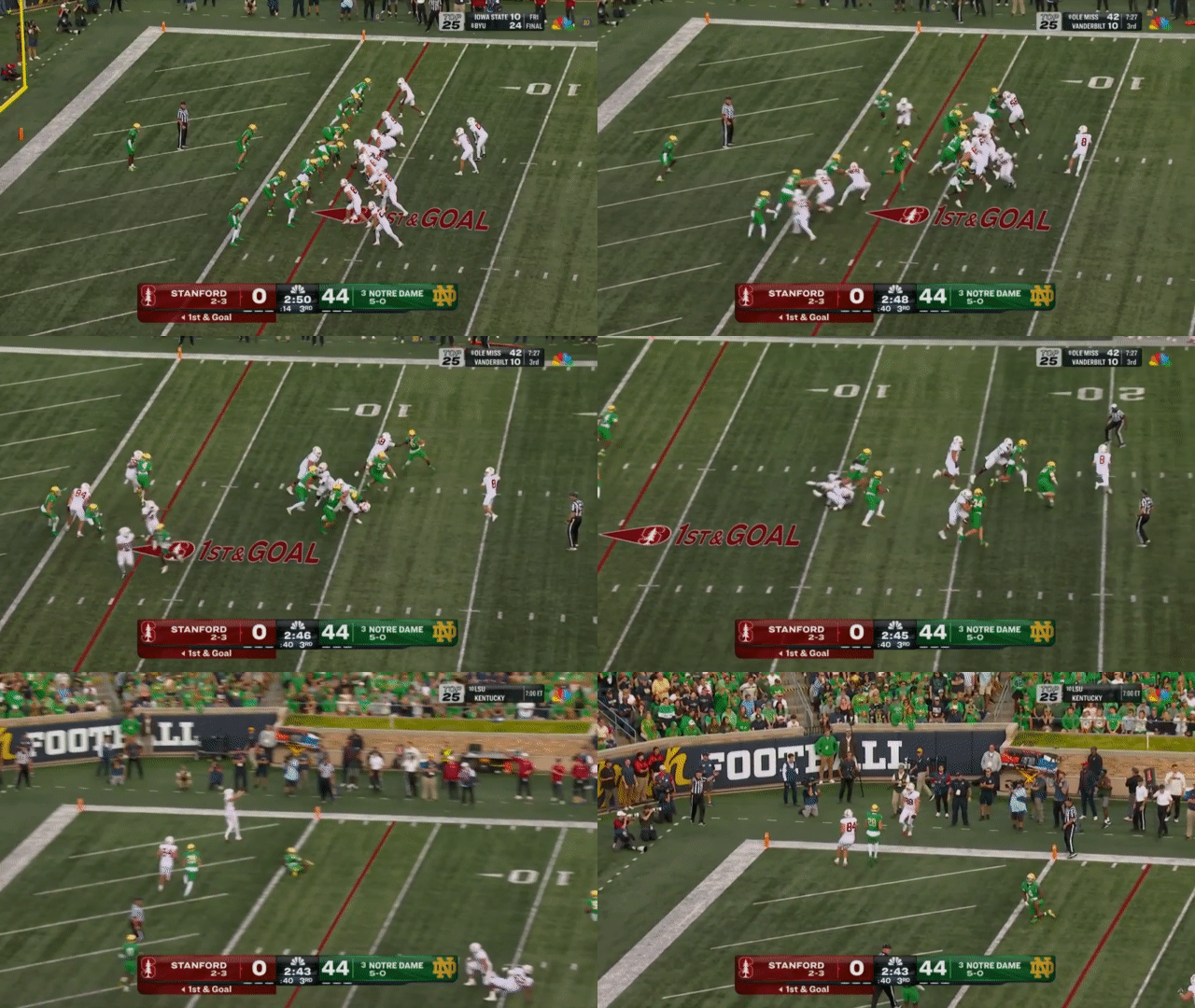
And another throw where he’s pressure but knows where he’s going with the ball:
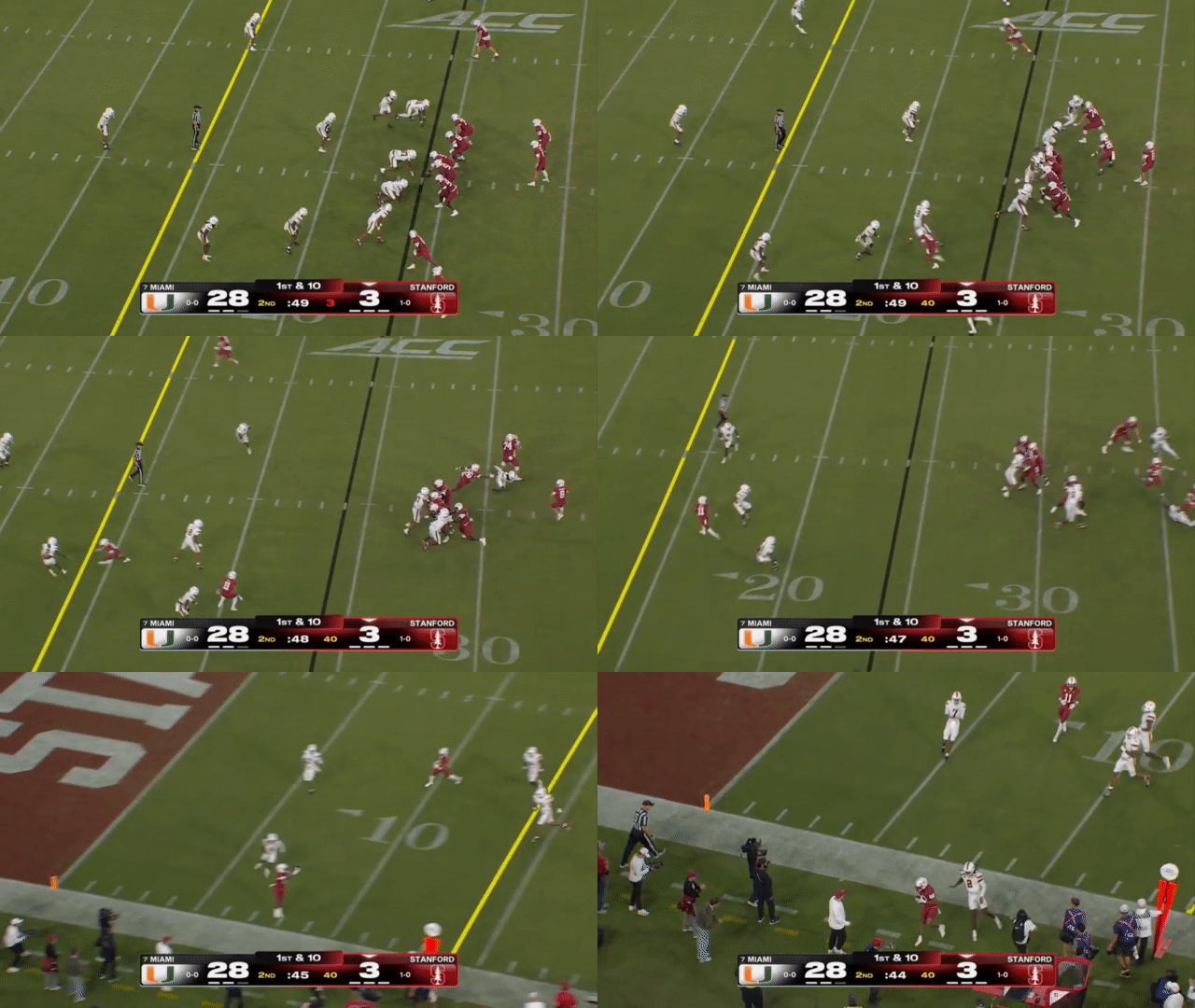
Here Warren again does a nice job when his read is clear:
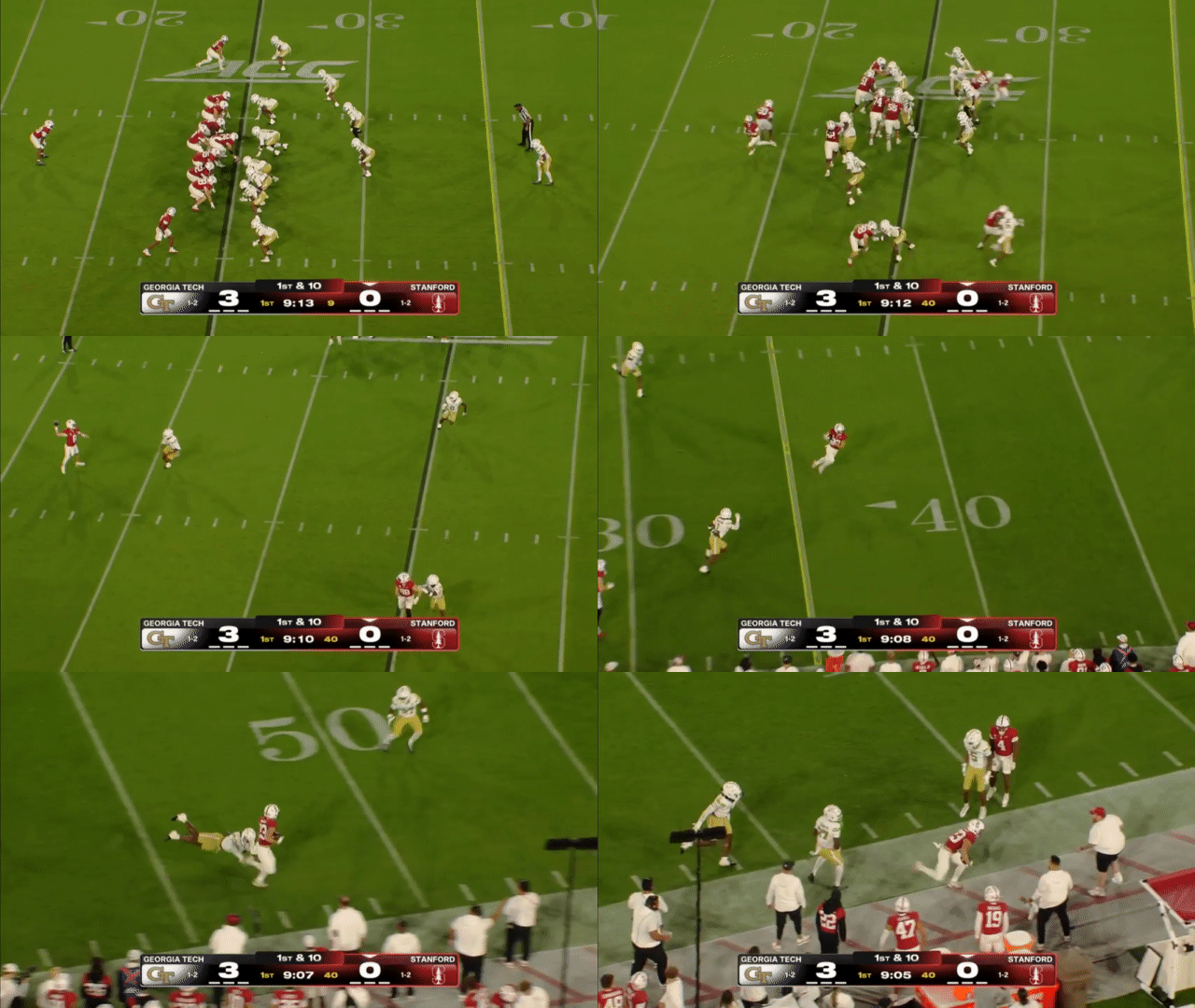
I think that Warren’s passing mechanics generally break down under pressure, but here he does a nice job of layering this throw off-platform:
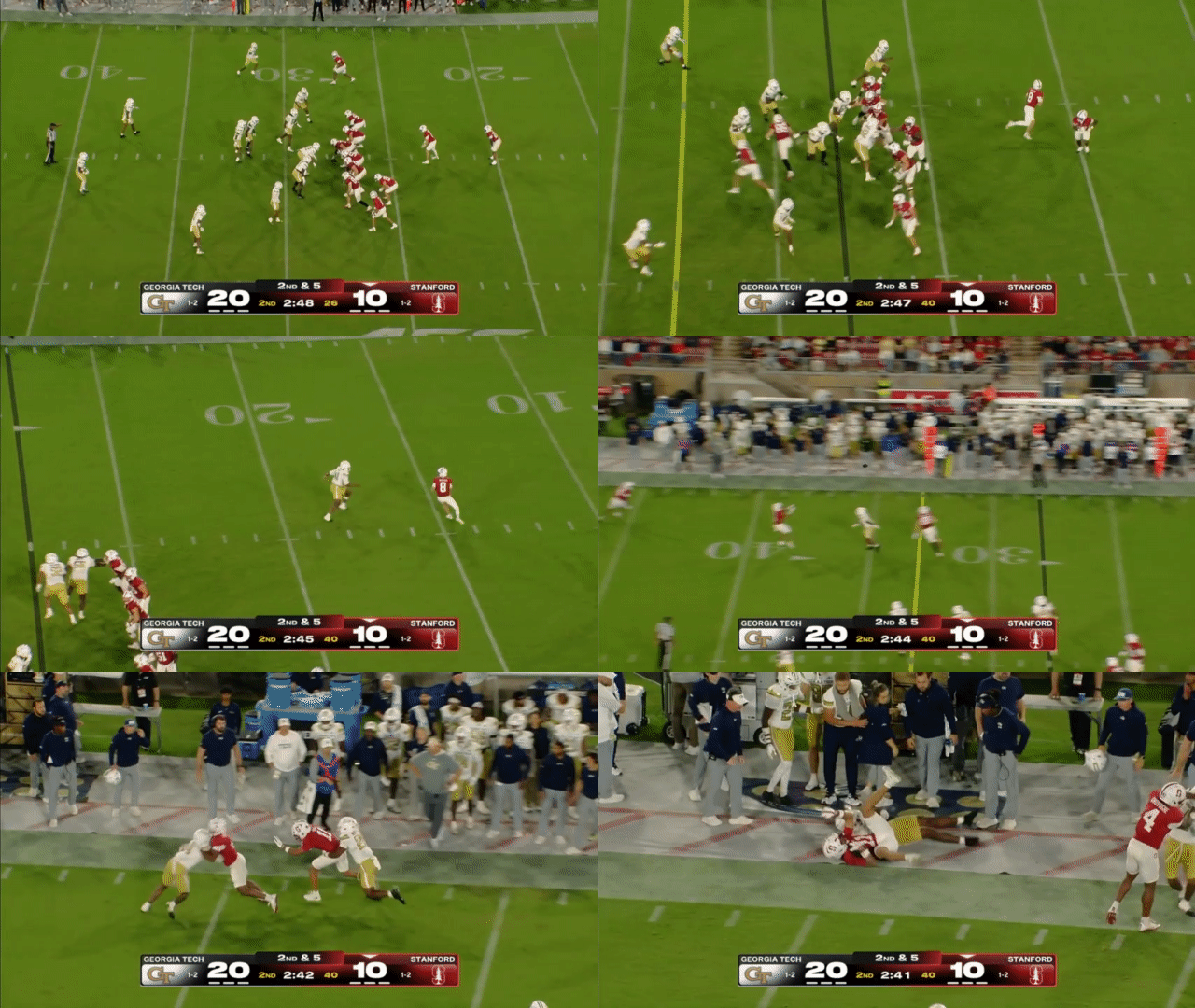
And again, another nice throw on the run:
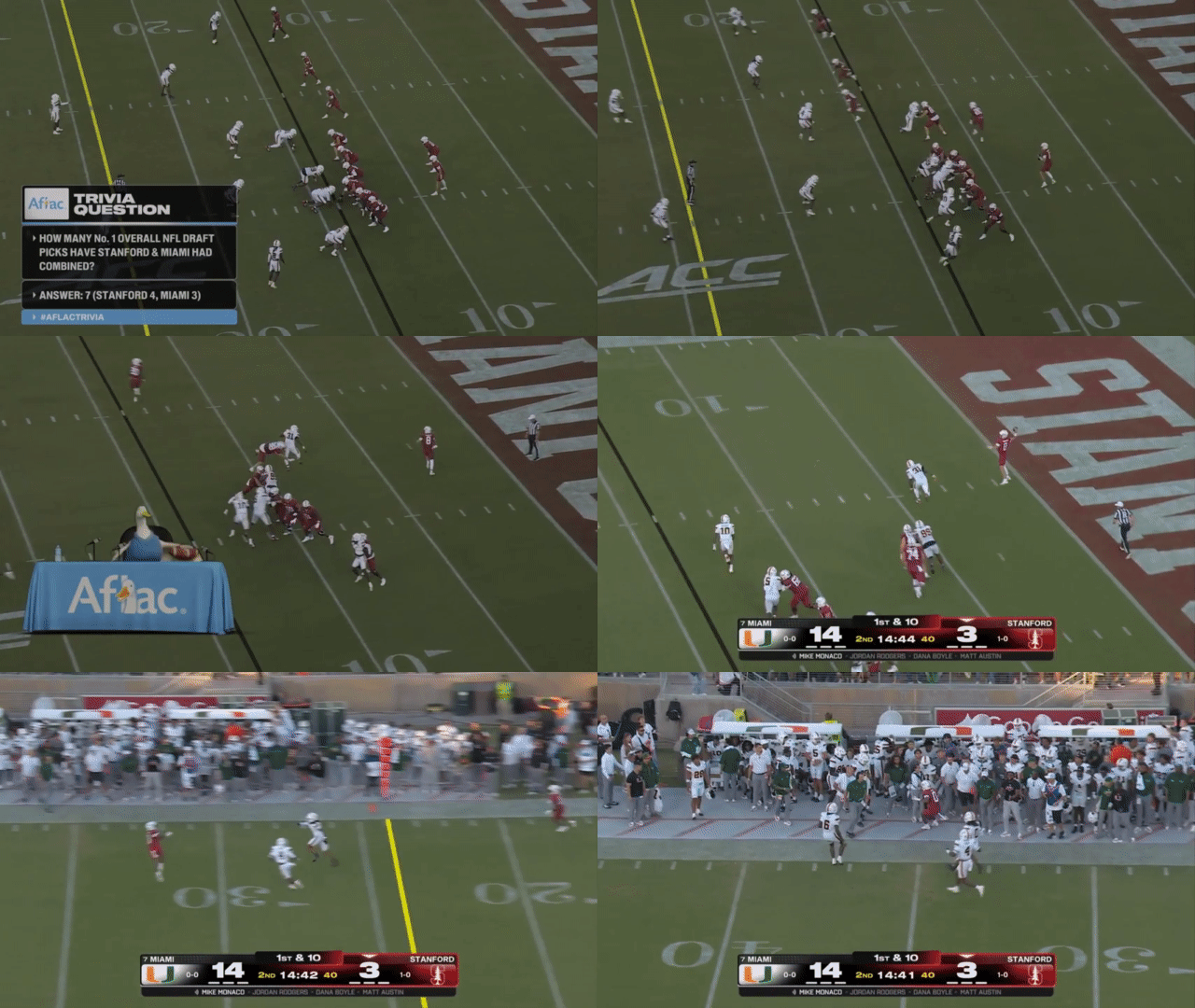
However, a lot of times, pressure forces early and bad throws from Warren:
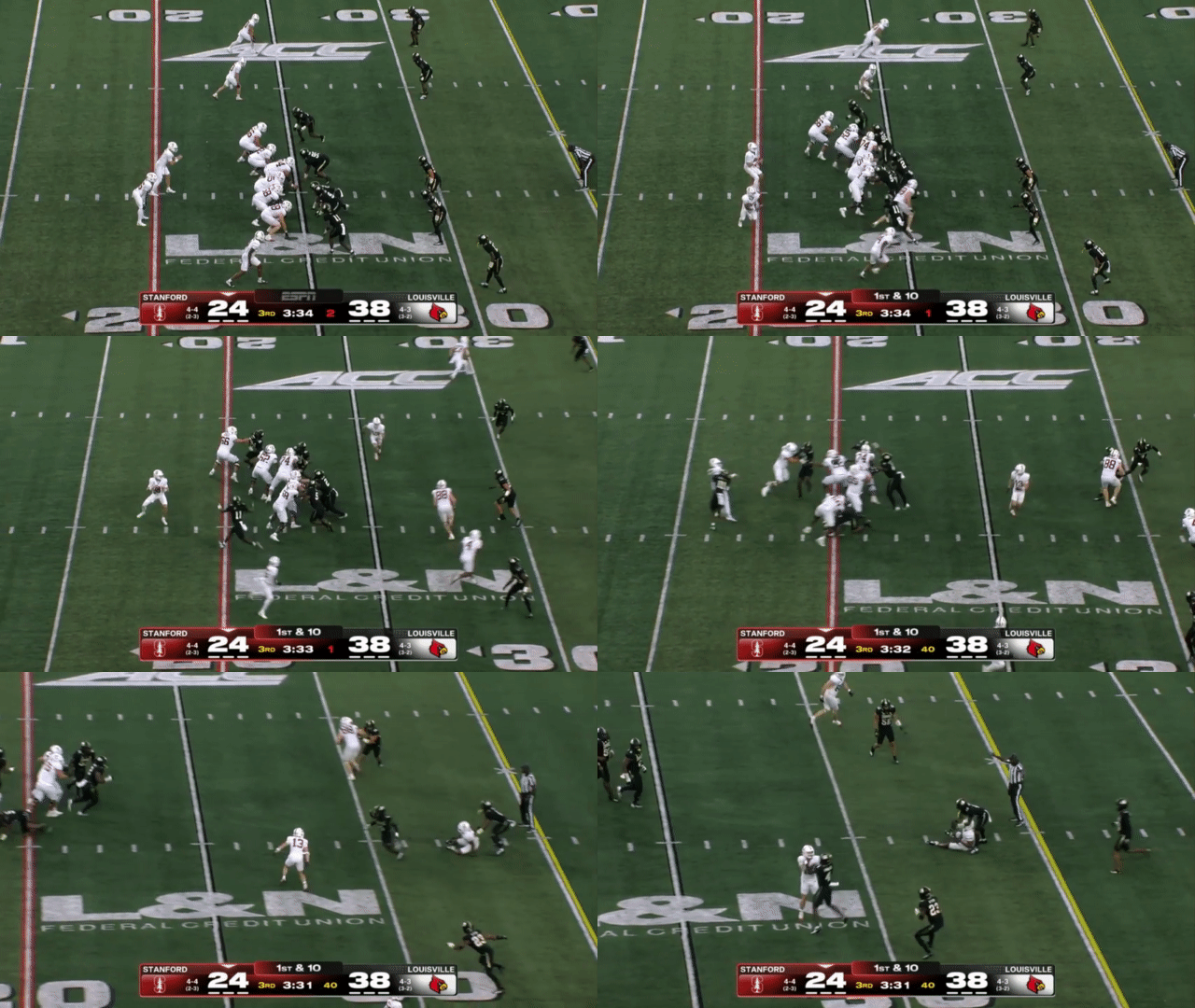
Here pressure again accelerates Warren’s decision-making too much:
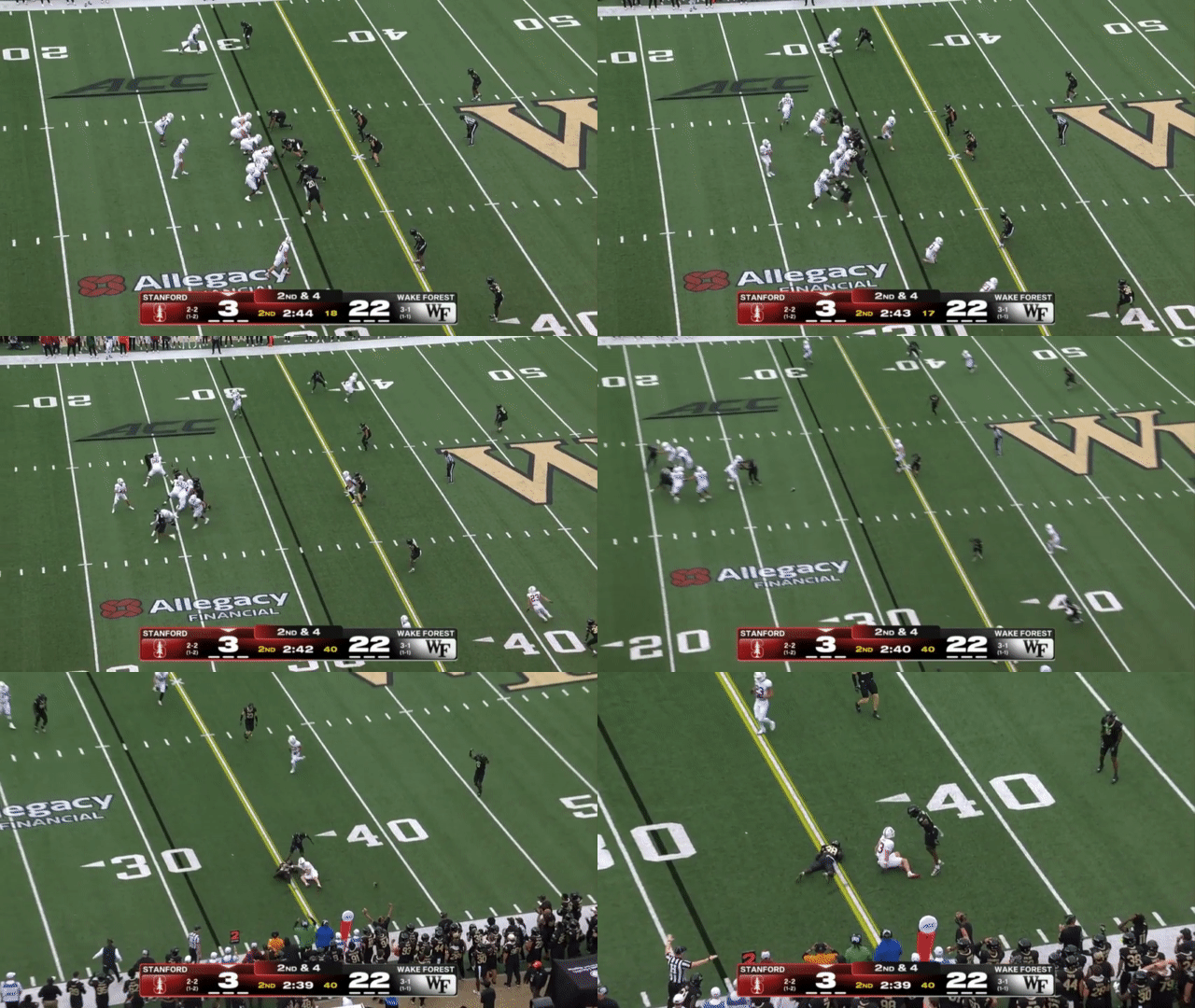
Usually Warren isn’t forcing throws into coverage like the previous clip (he may have back at Michigan, where he had 7 TDs/9 INTs in 2024, but he’s currently 14 TDs/3 INTs in 2026 at Stanford); when Warren misses, he’s usually way off-target:
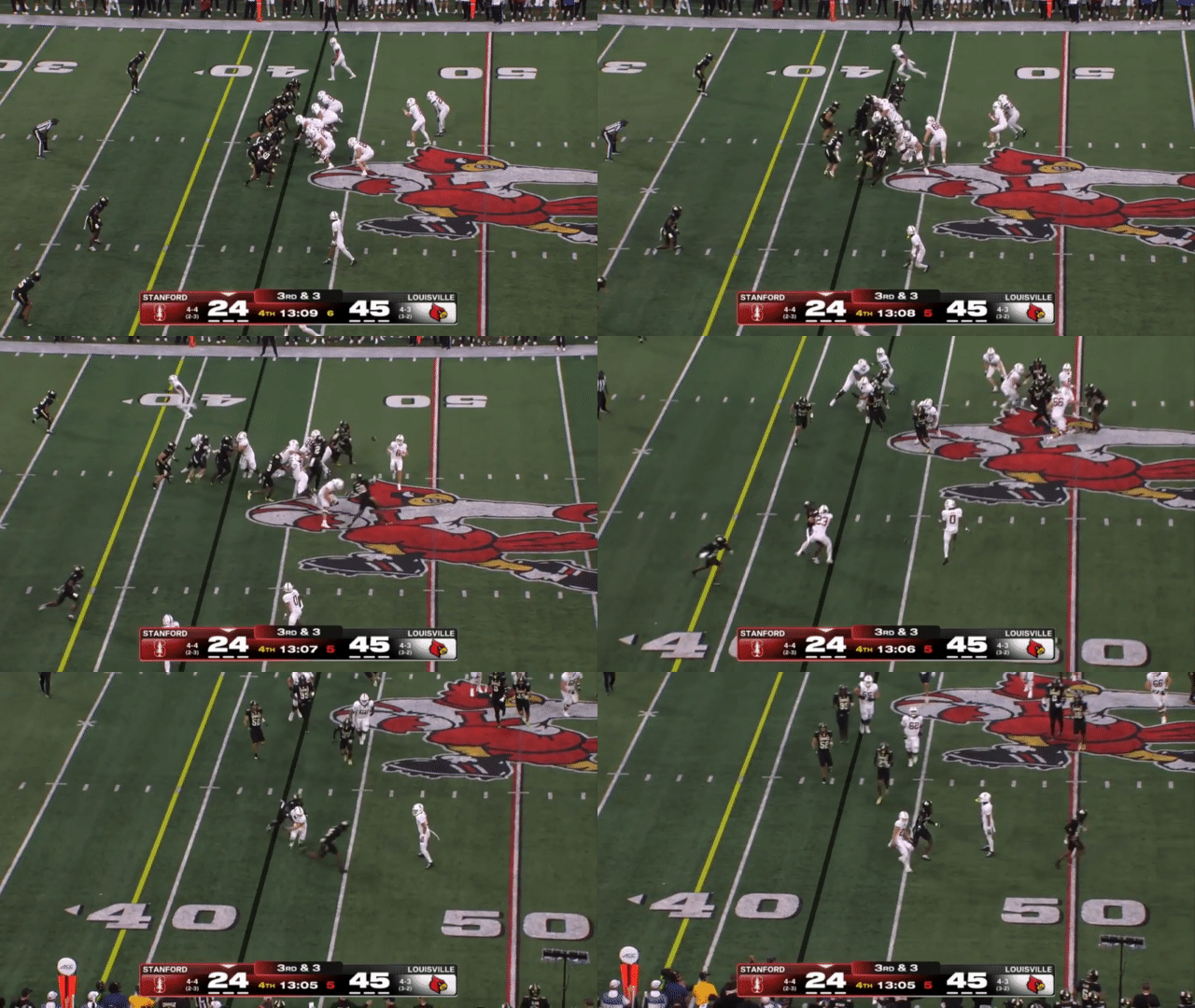
Sometimes he’s just off-target in general:
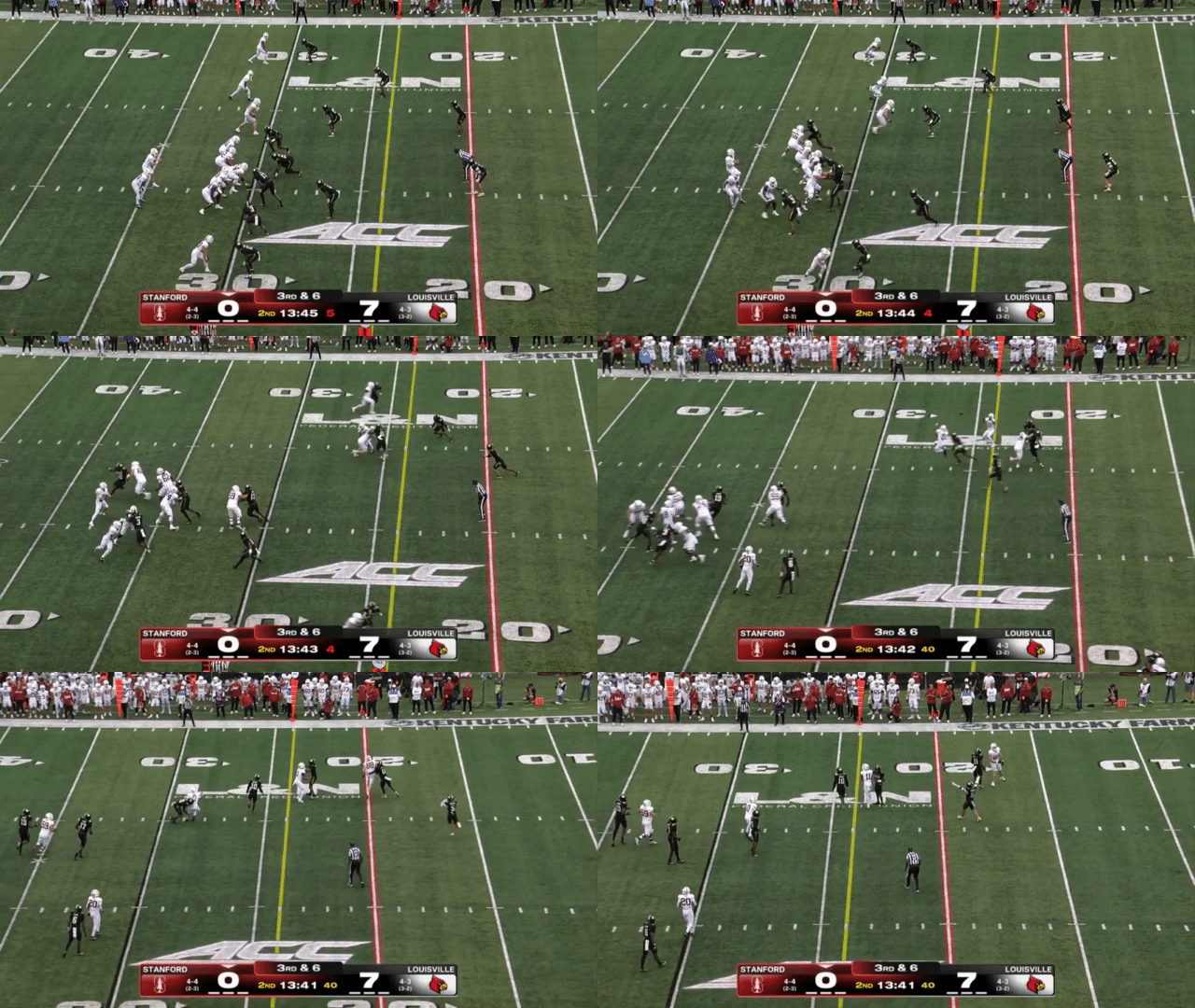
Warren’s accuracy and anticipatory throws have been an issue at times:
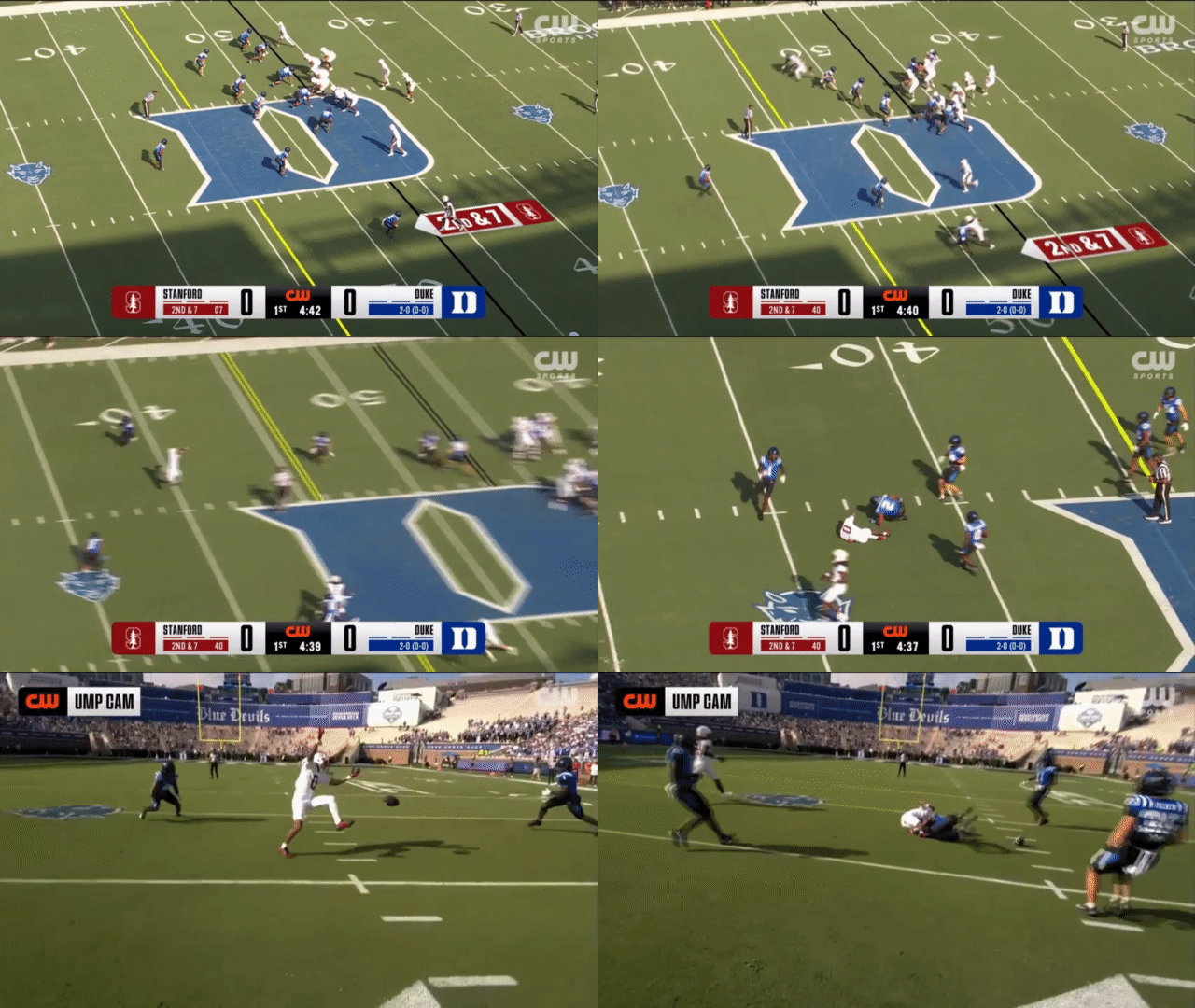
The following is just a terrible read; even if the defensive end didn’t drop back into coverage, the corner probably would have intercepted it anyway:
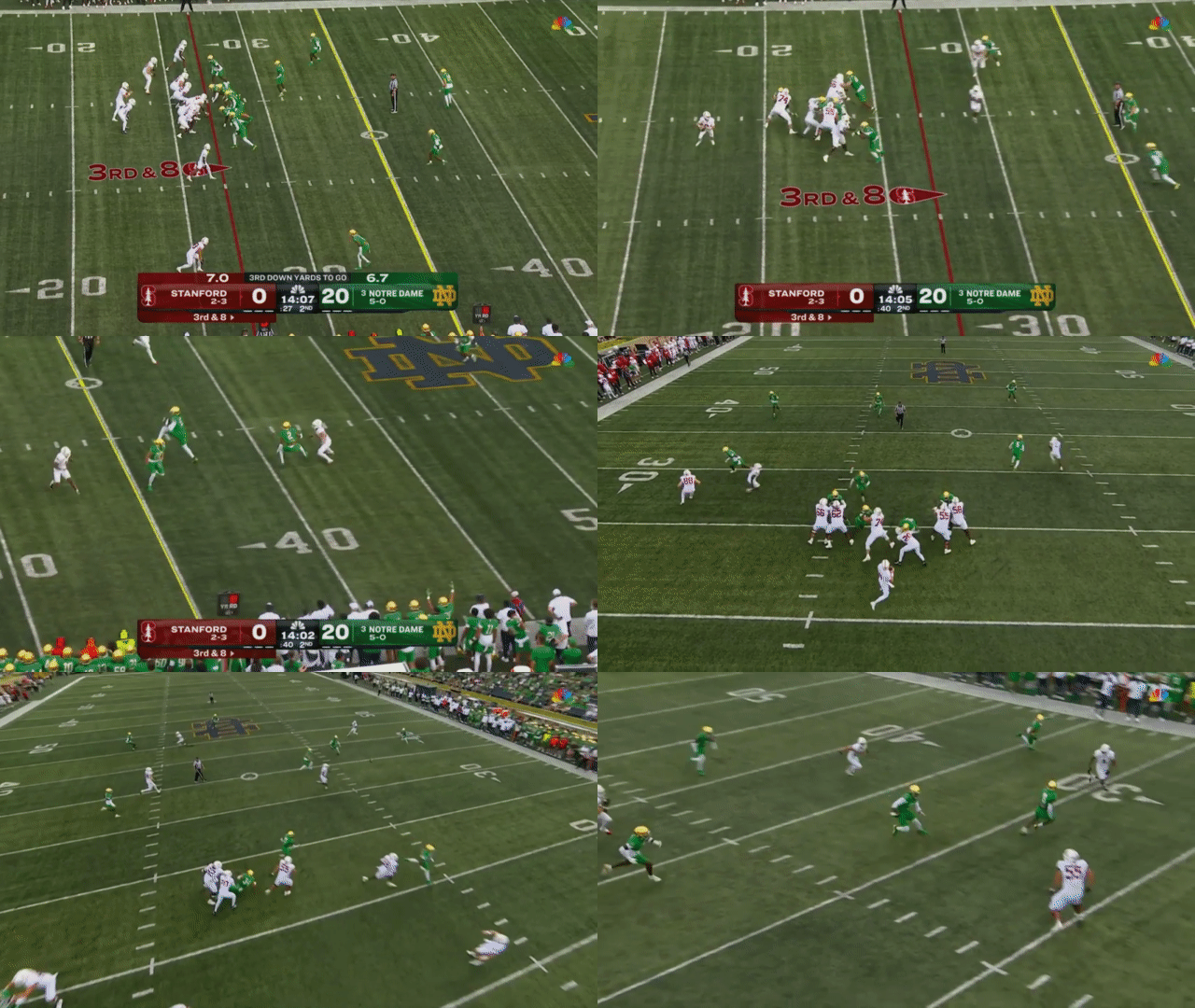
It’s not just a pressure thing, Warren sometimes just straight-up misses throws:
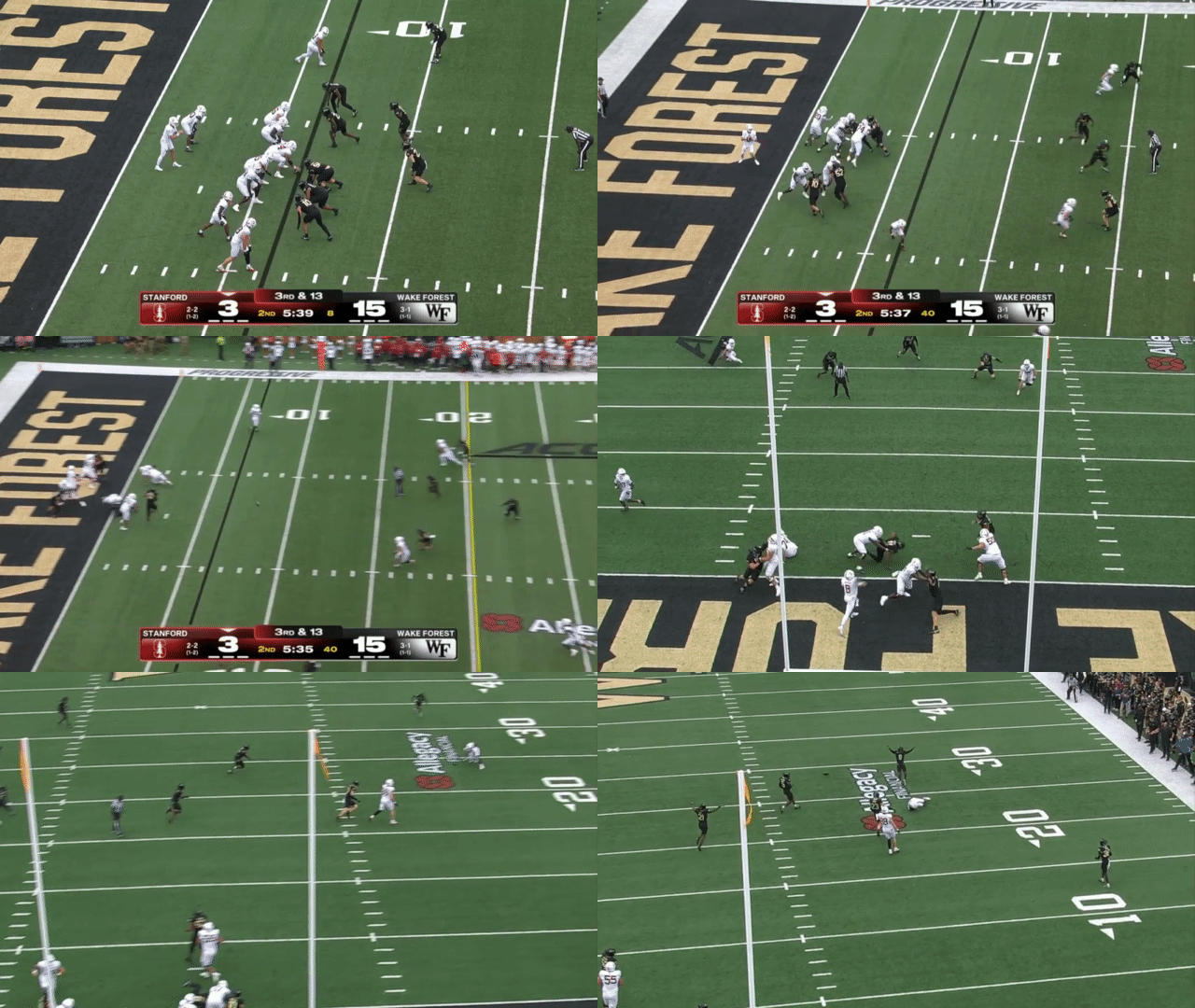
And again:
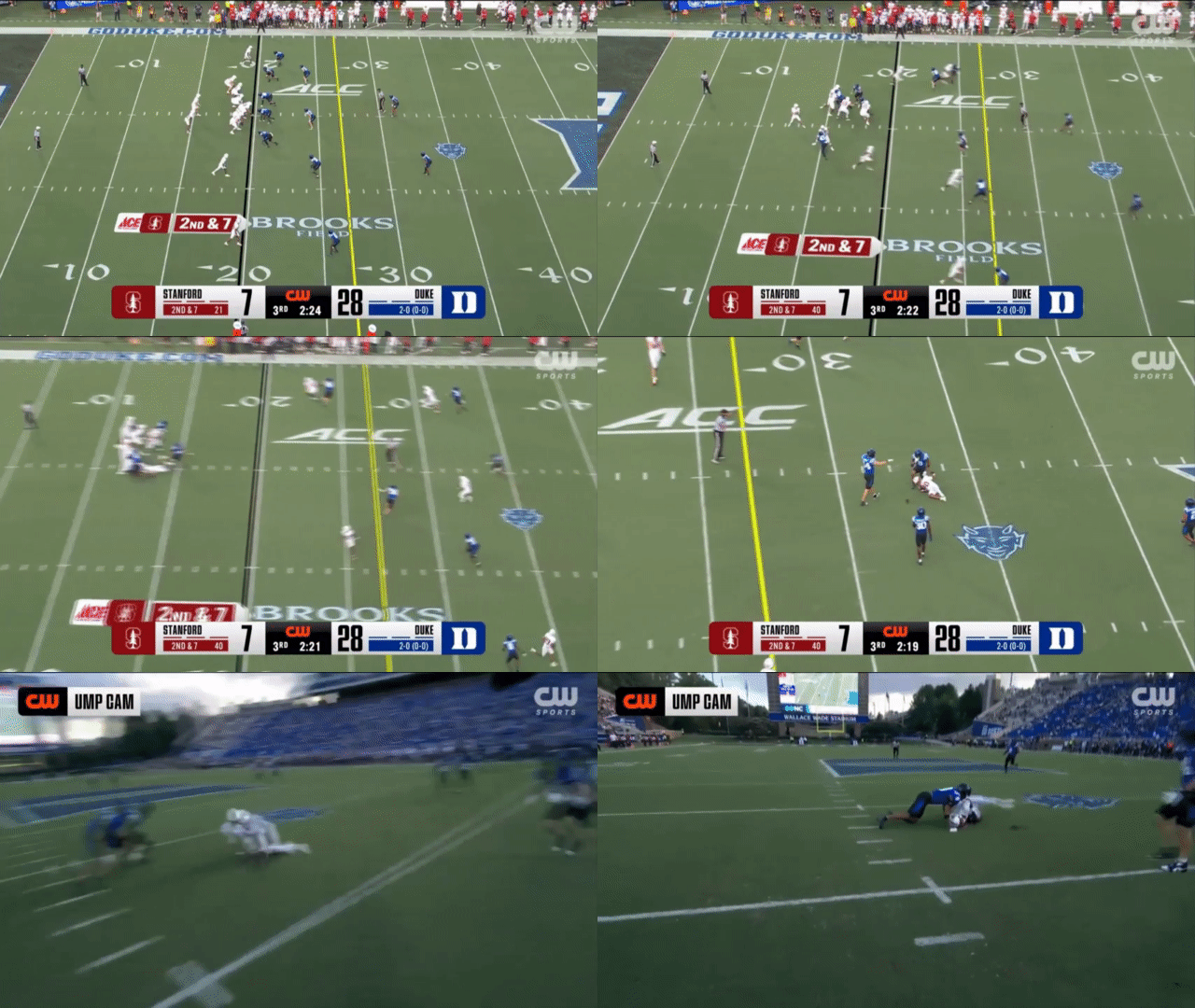
This one he throws off-platform, but the low throw costs him this time:
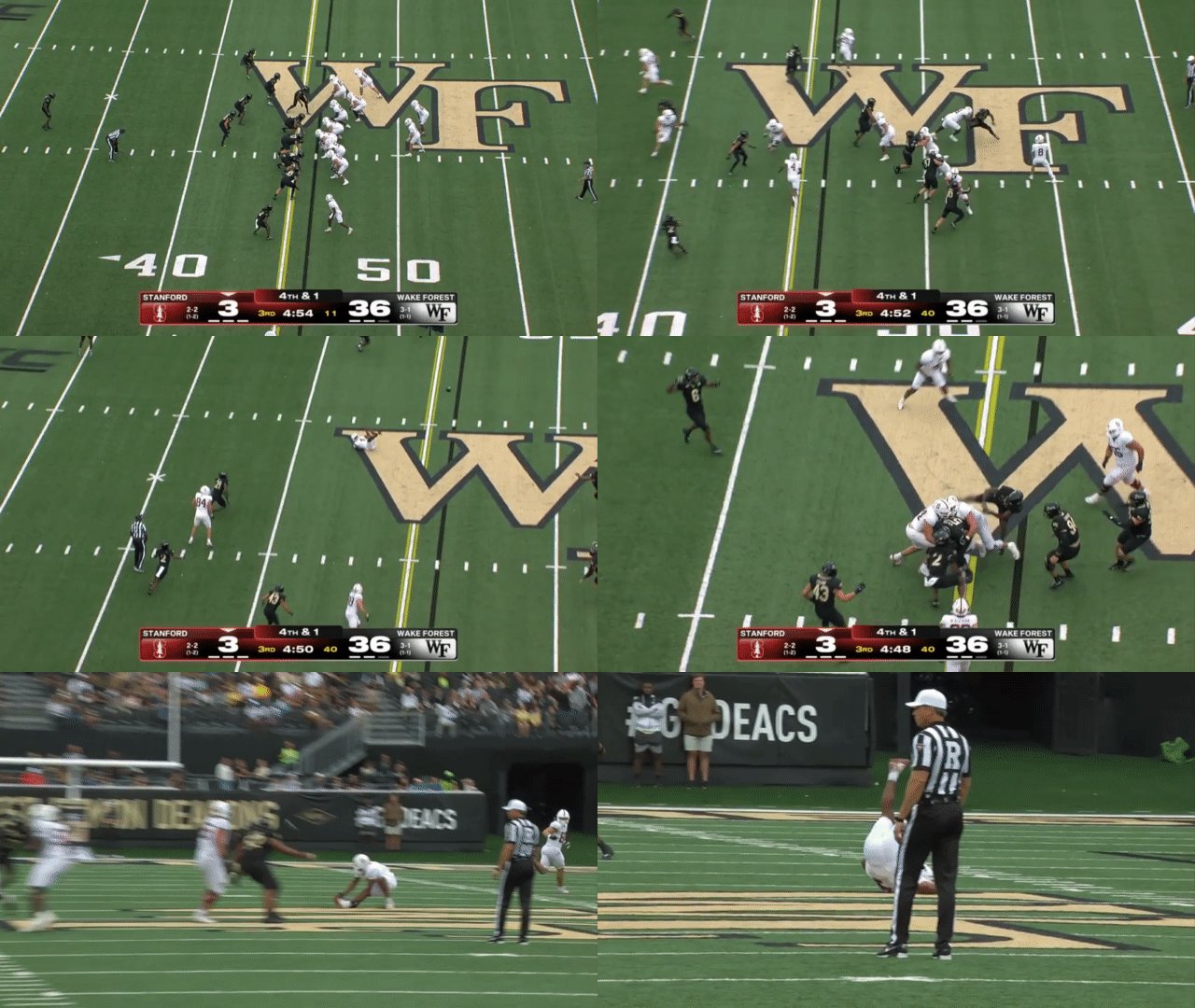
Sometimes Warren’s mechanics just break down, forcing errant throws:
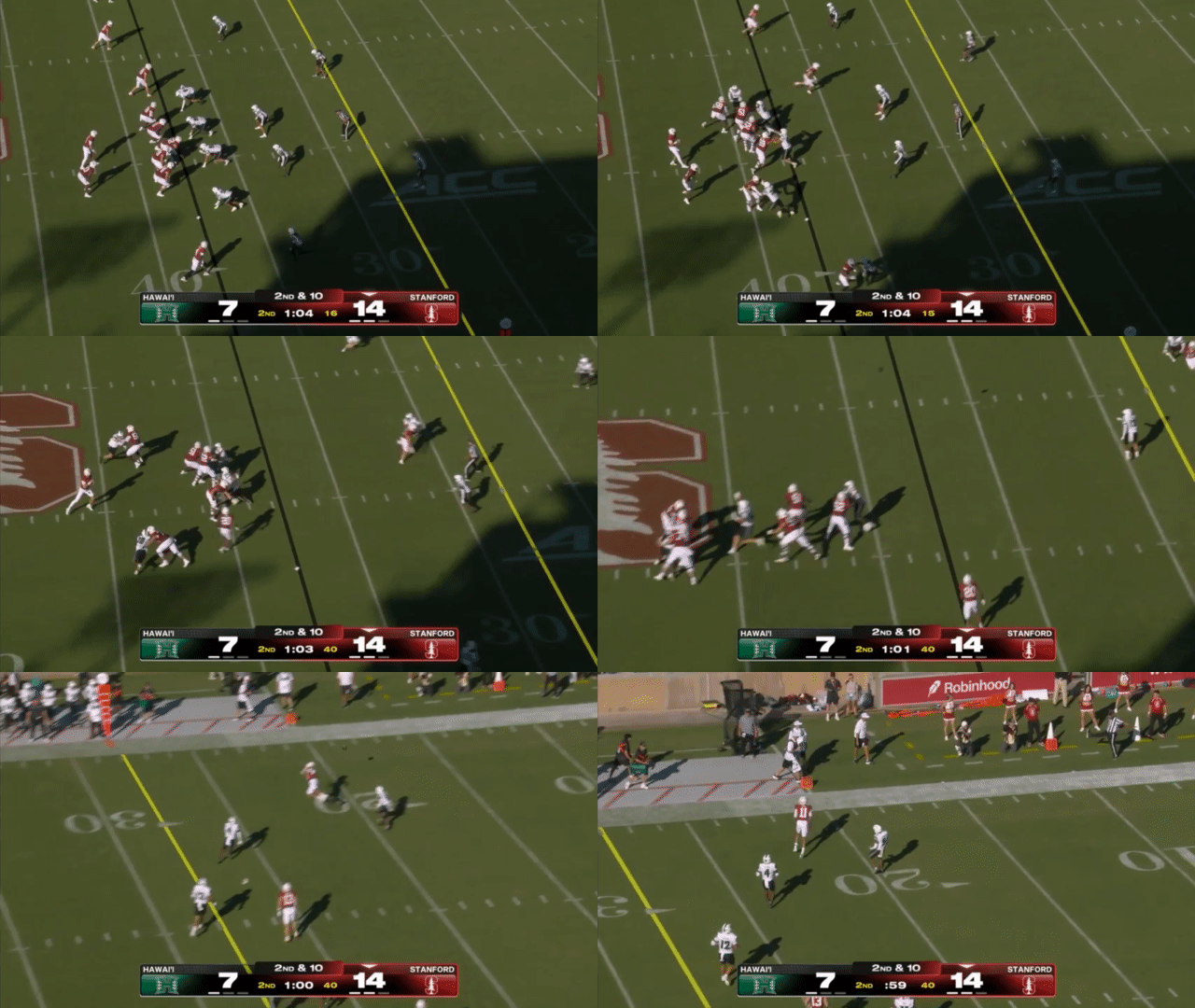
Warren doesn’t usually challenge coverages like this, but it was 4th down and he didn’t have much choice (and it’s also worth noting how aggressive Stanford has been on 4th down; not the same team I remember from the past two decades):
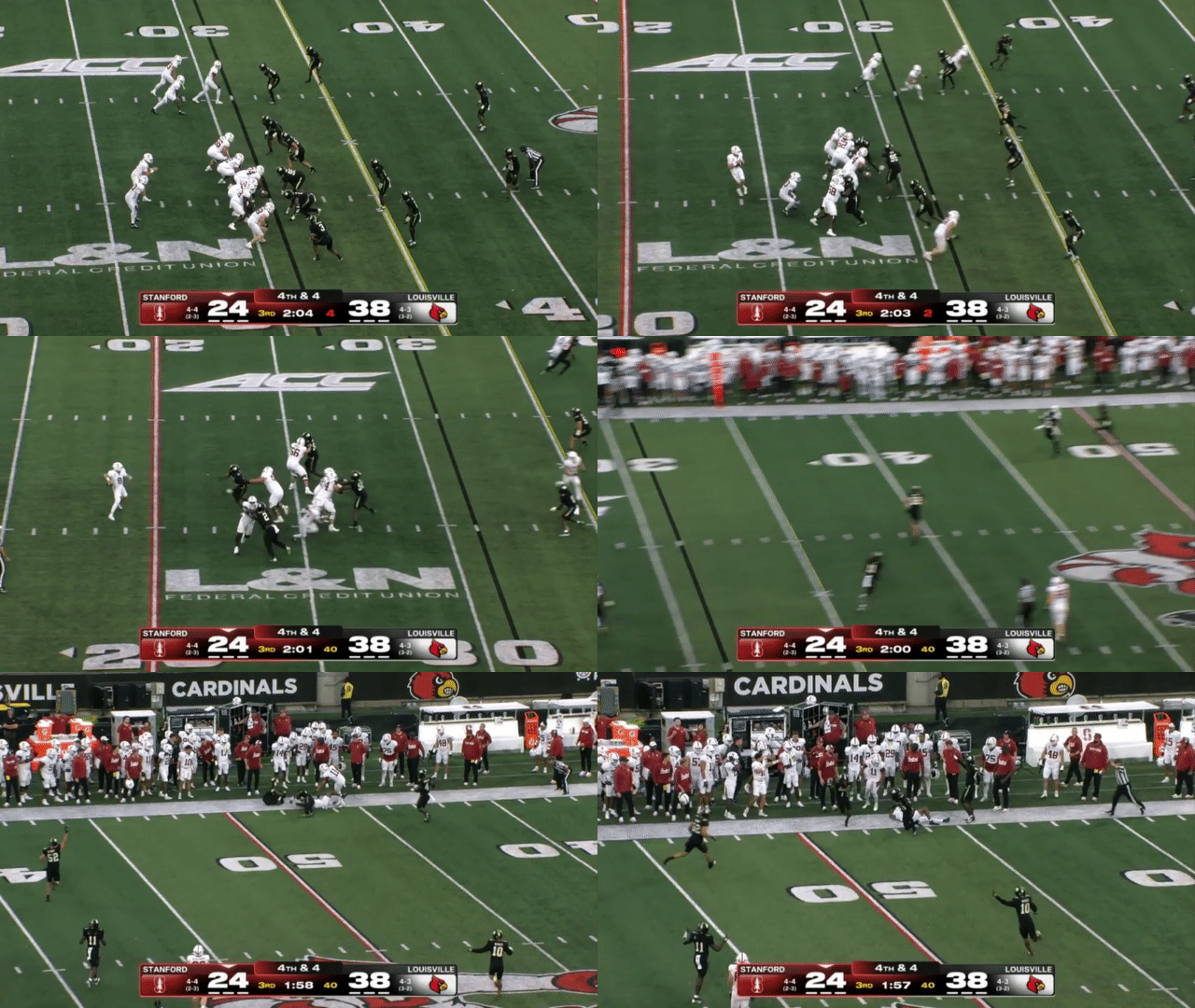
Sometimes Warren is just making bad reads, even when the throw is on-target:
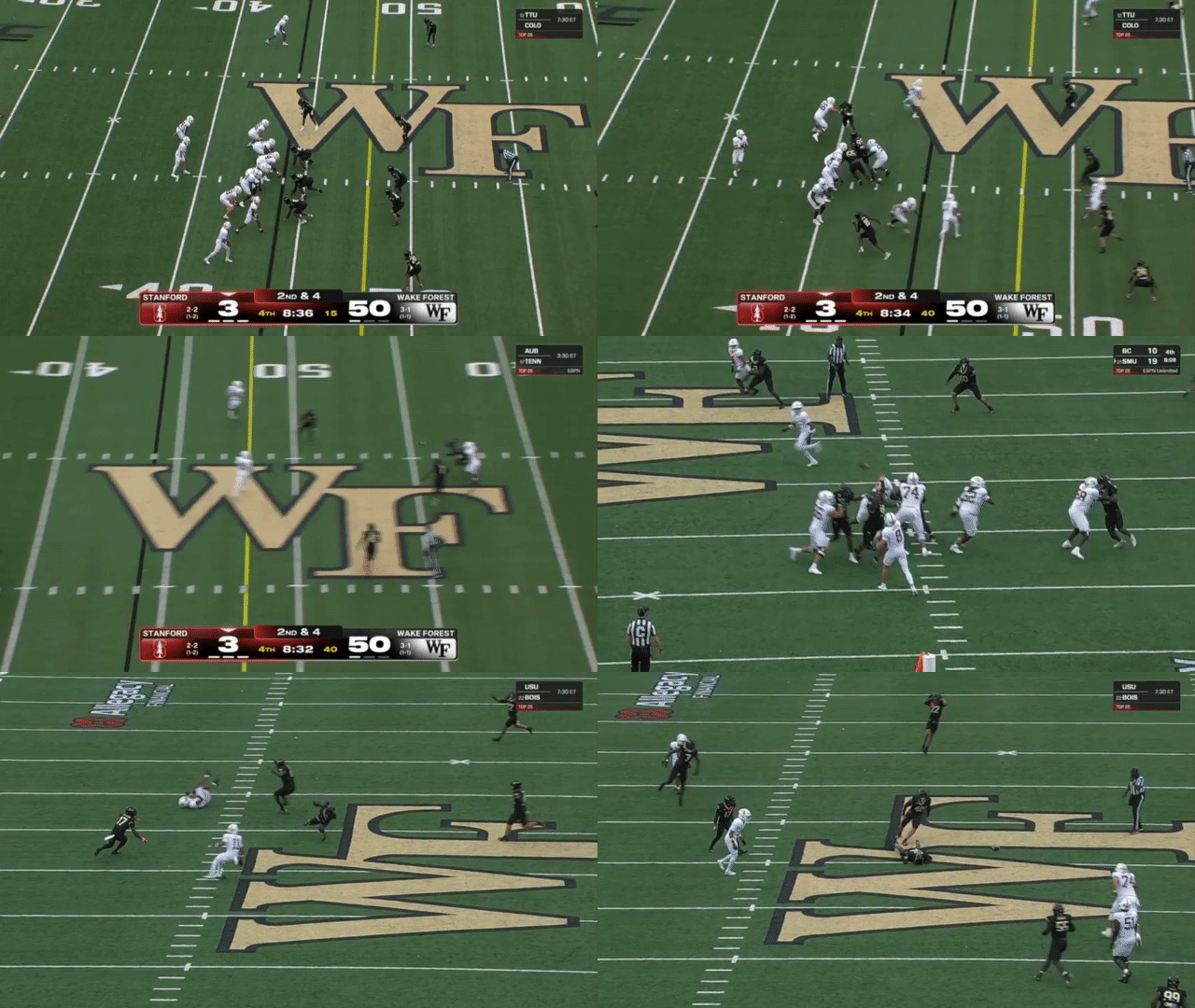
Here’s an example of Warren’s slower processing speed and/or indecisiveness. Keep an eye on #0 in the slot to his right, on the bottom of the screen:
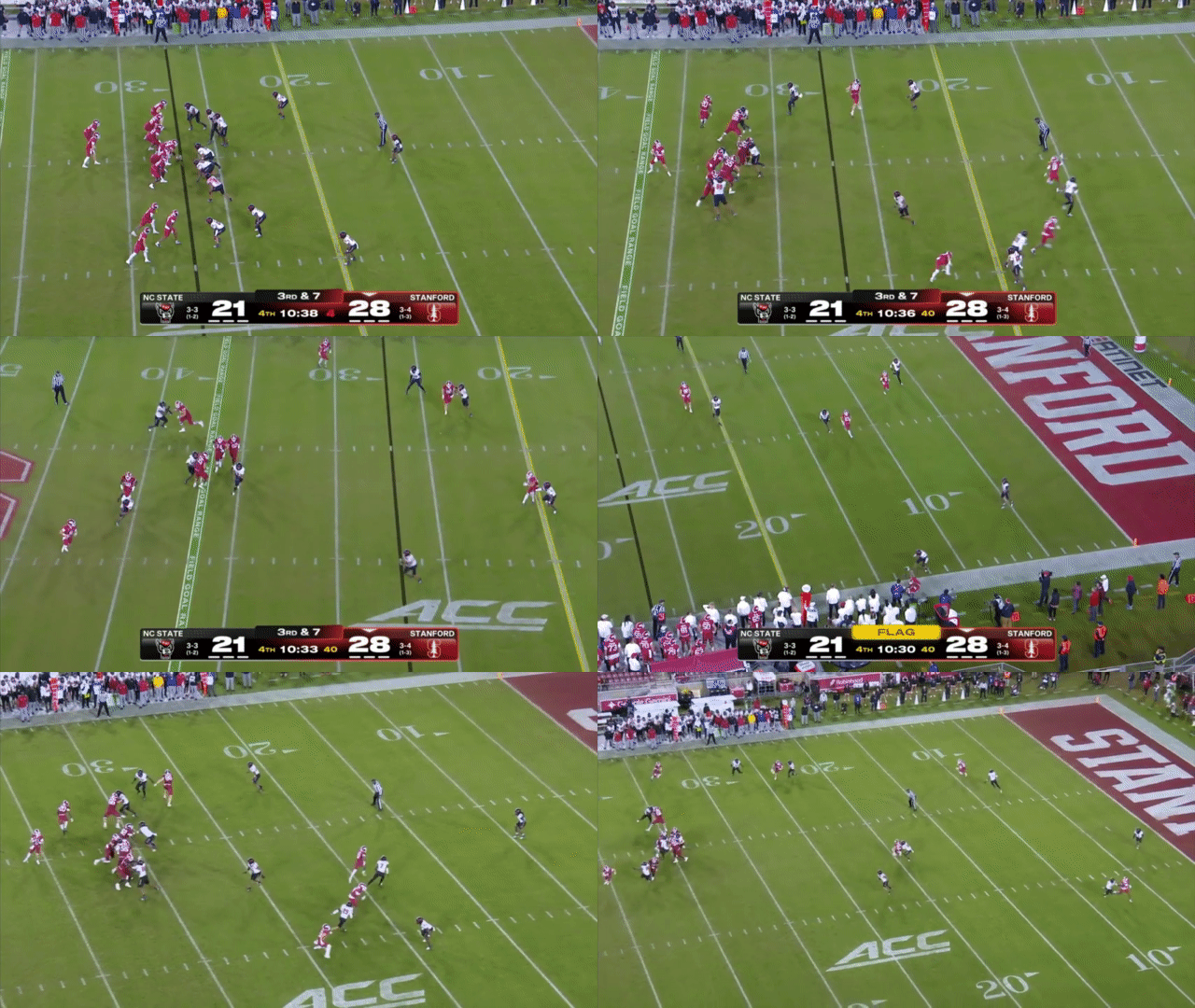
Similarly, Warren probably makes this decision pre-snap and doesn’t see he has his receiver go uncovered on his shallow crossing route (#2, again on the bottom of the screen):
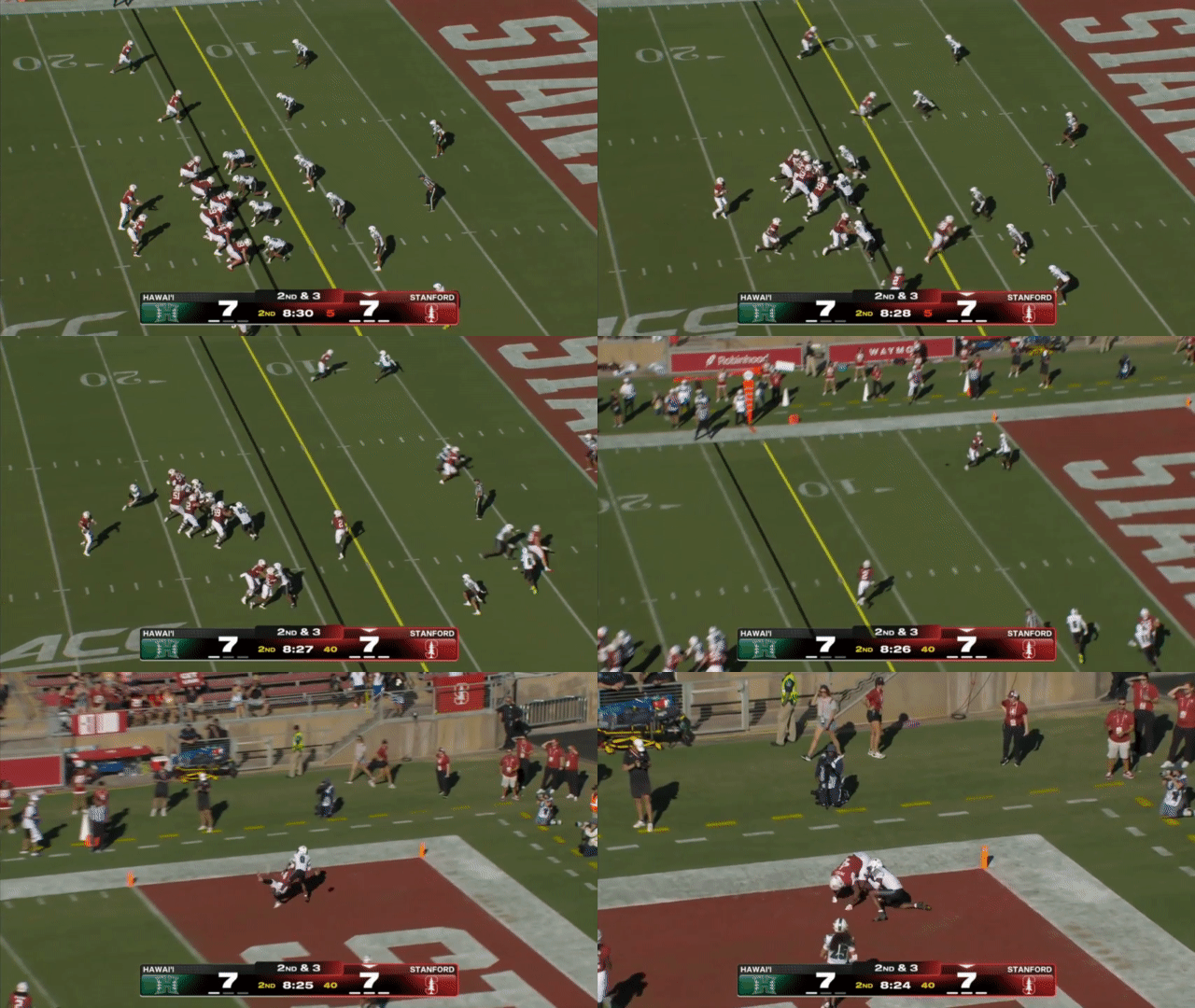
And yet again, here’s WR Caden High in the slot to Warren’s right, this time on the top of the screen:
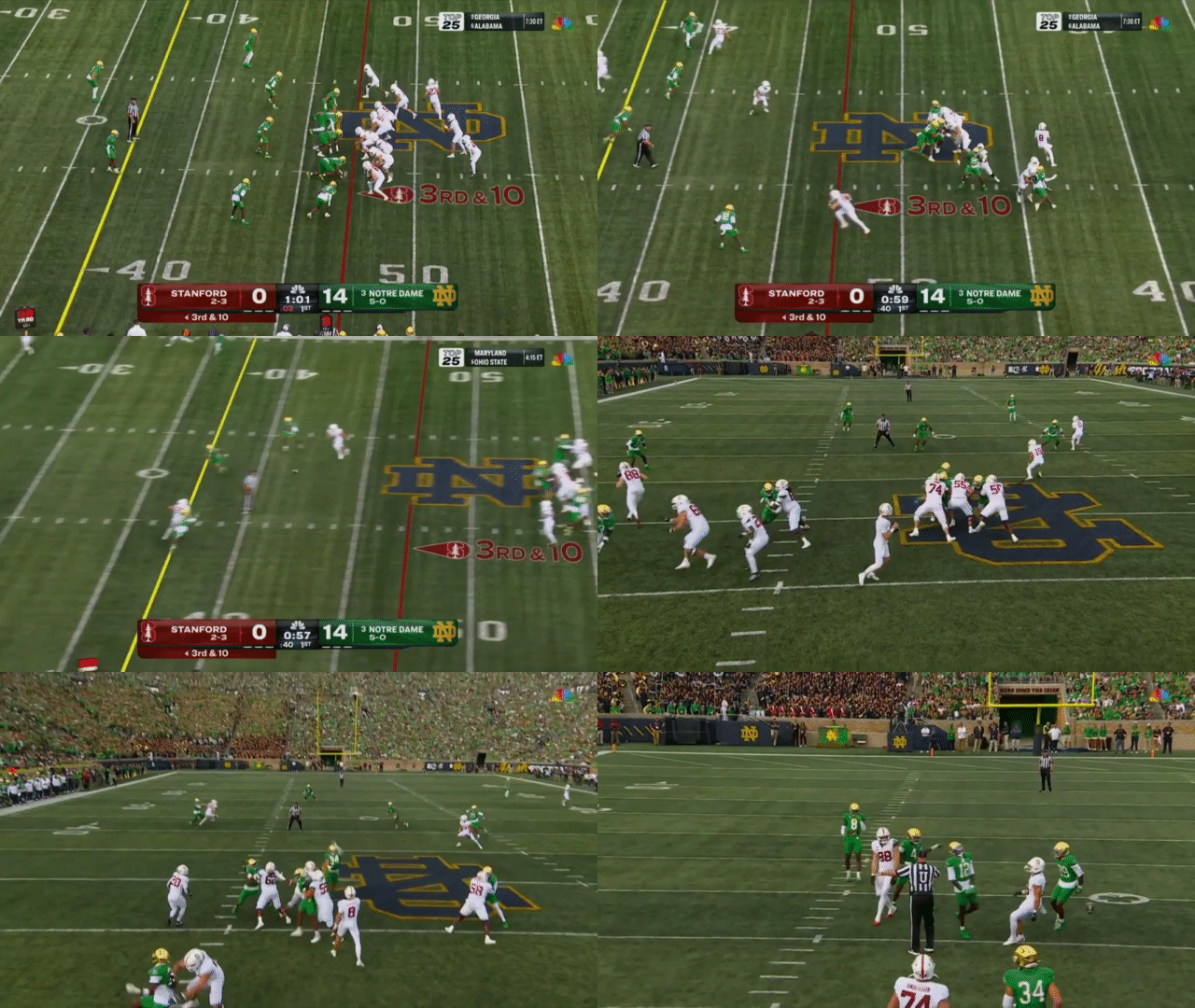
Although he only has 3 INTs on the season, Warren has been lucky to get away with quite a few:
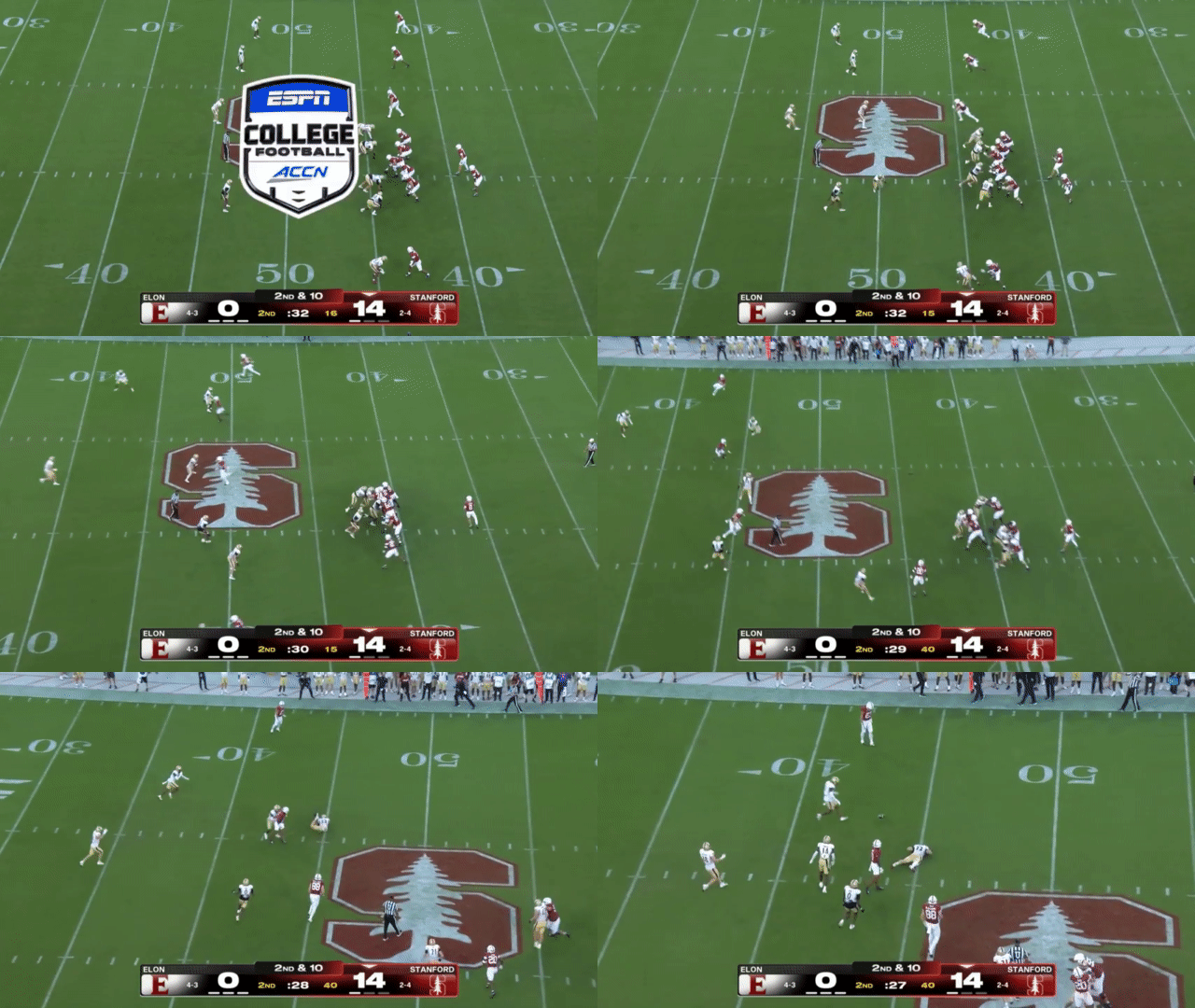
I’m not even sure where Warren is looking here, but again, just taking way too long on his reads:
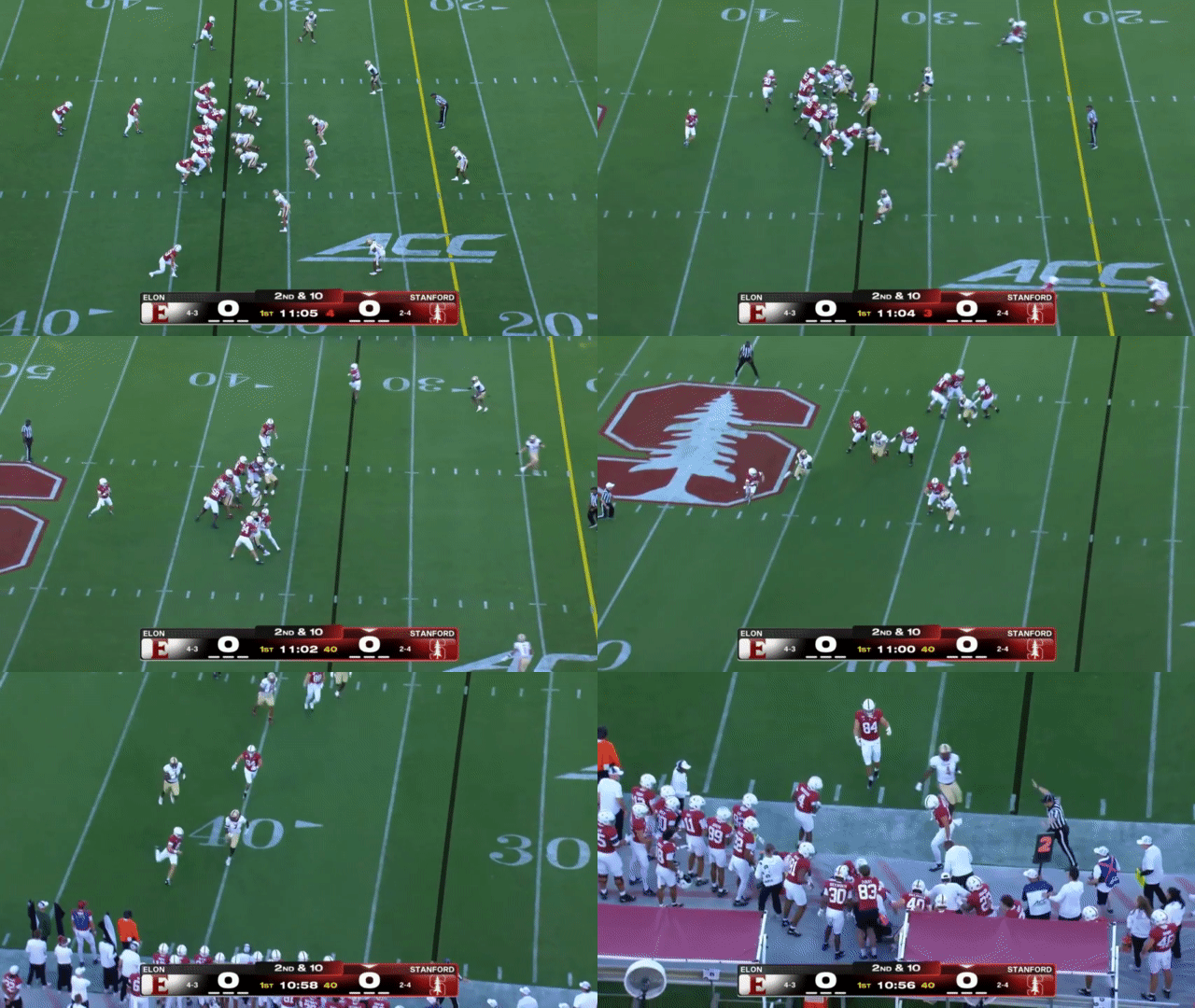
If Warren were more decisive in his reads, he absolutely would be crushing it:
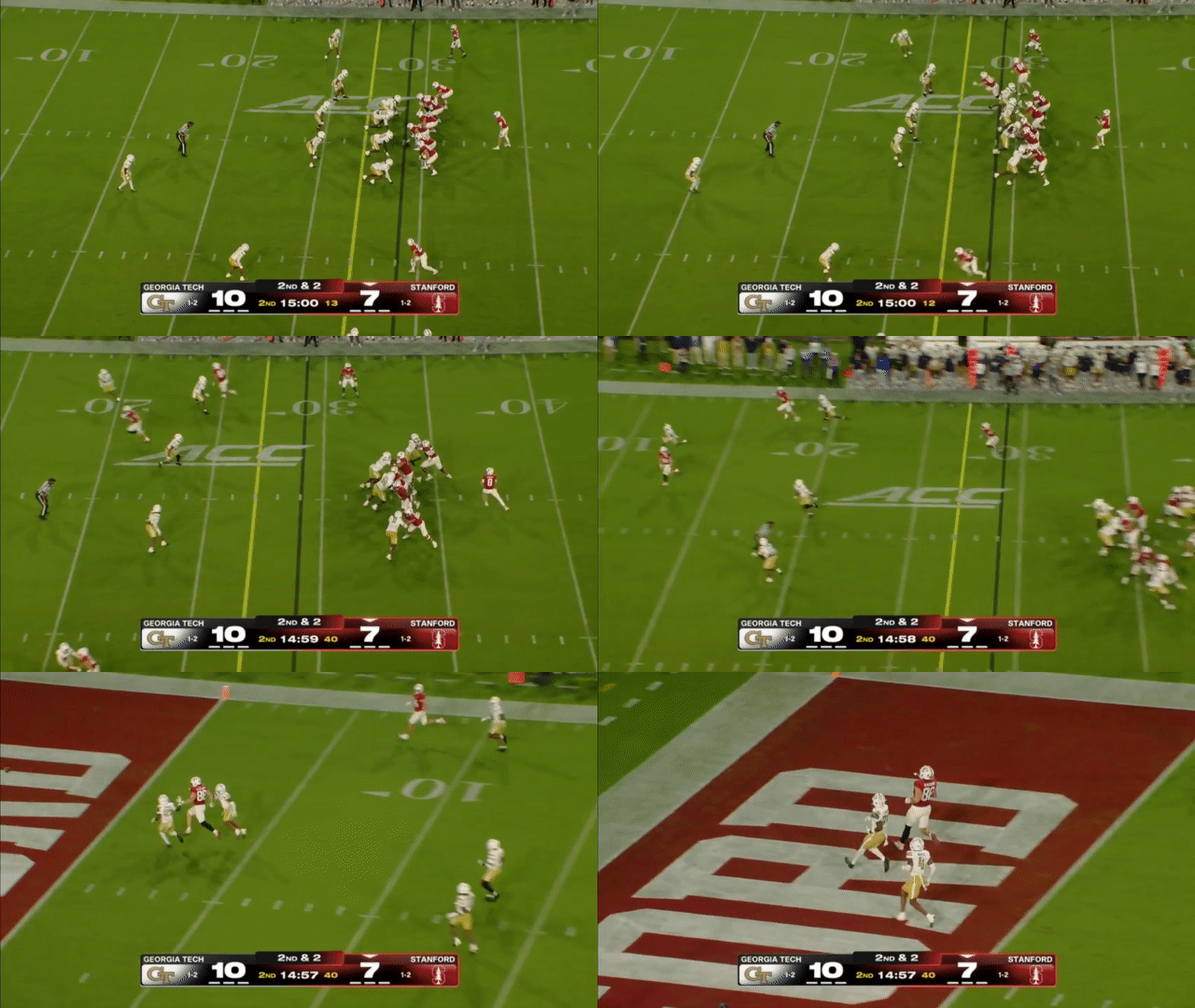
Stanford has mostly used the passing game to supplement the run game, but Warren has looked better in previous weeks, particularly in games against NC State and Louisville (the two games prior to last week at Virginia Tech). Warren is exactly the type of quarterback that Wilcox secondaries have absolutely feasted on, th—wait, what do you mean Justin Wilcox isn’t the coach anymore? Oh, shit.
Running back
The Stanford rushing attack is led by RB Micah Ford, who as much as it pains me to admit, is one of the best running backs in the ACC. The 6’0” 225 lbs. running back is a powerful, downhill runner and does a great job of running through tackles to pick up extra yards. In previous years, Ford has been described as a “bowling ball” who picked up most of his yards after contact behind a porous offensive line. The easiest Cal comparison to make for Ford is that he runs like Kendrick Raphael.
Stanford’s offense has struggled when they had some offensive line injuries earlier this year (e.g. LT Niki Prongos, RG Simione Pale, C Aidan Kilstrom), but the offense has looked better as their health improved. Ford is currently 4th in the ACC in rushing yards, and most of it is from reliably picking up chunks of yards through downhill running:
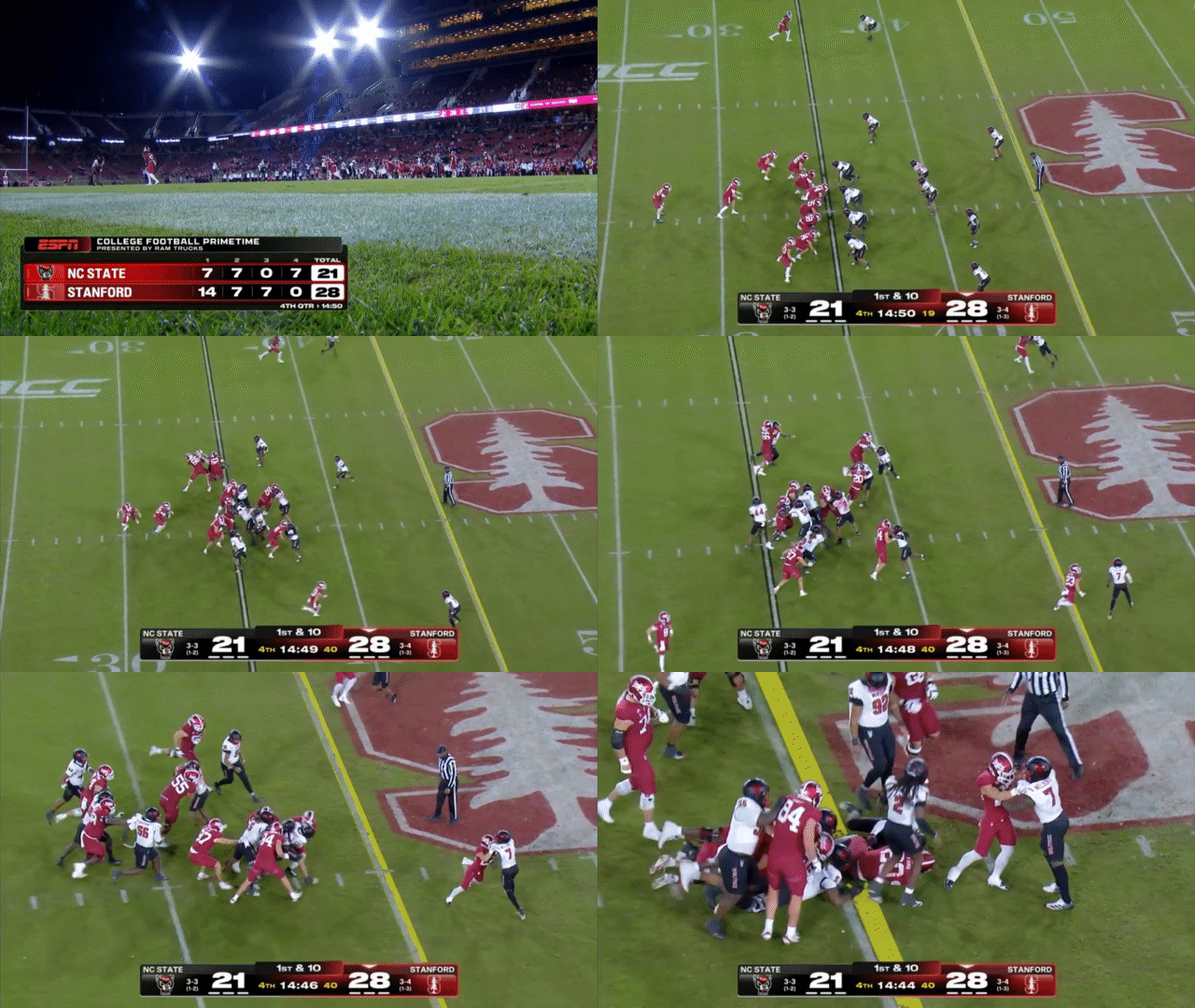
Here you can see Ford just bulldoze his way through tacklers:
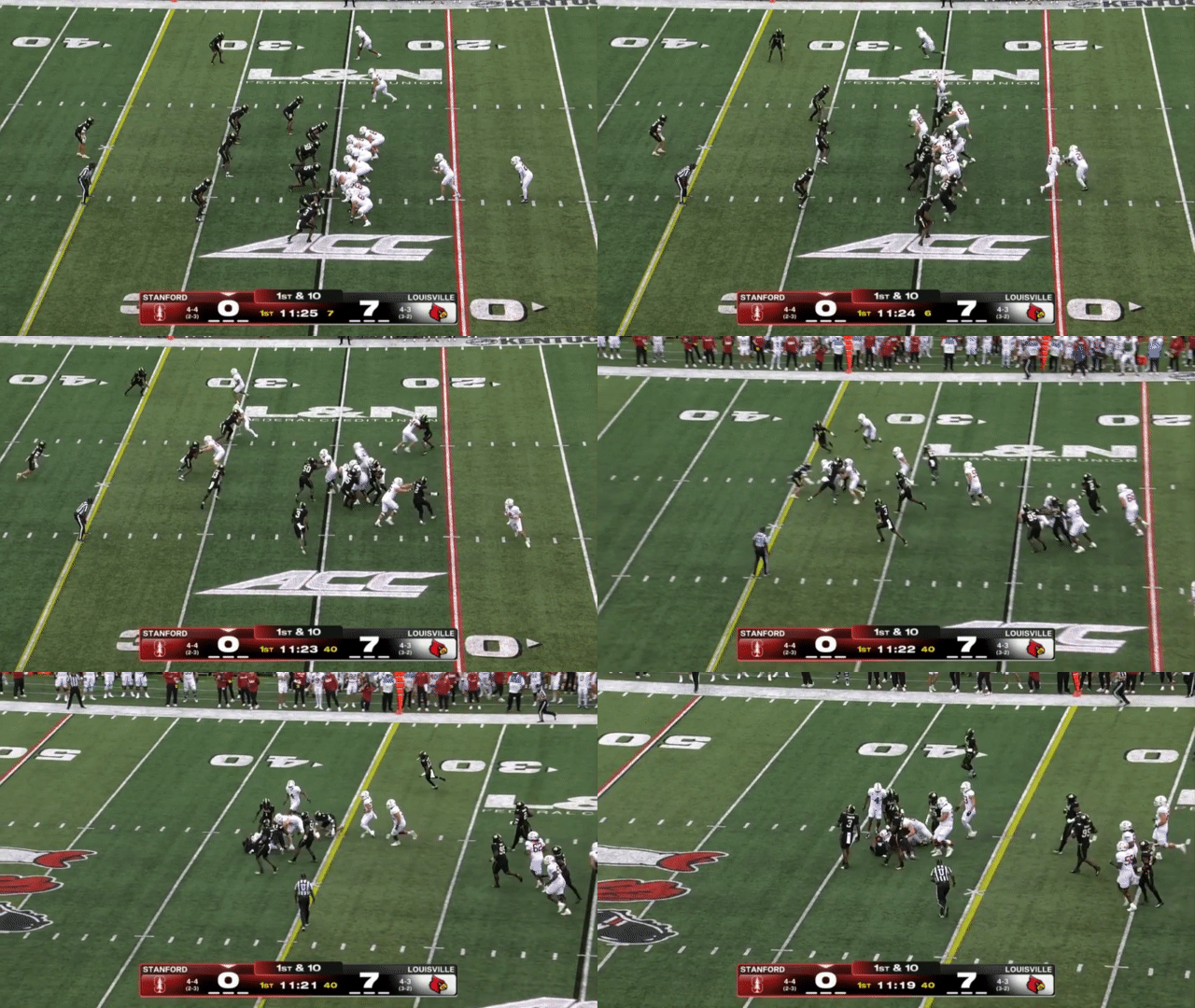
Ford possesses a nice stiff-arm and the ability to run through arm tackles:
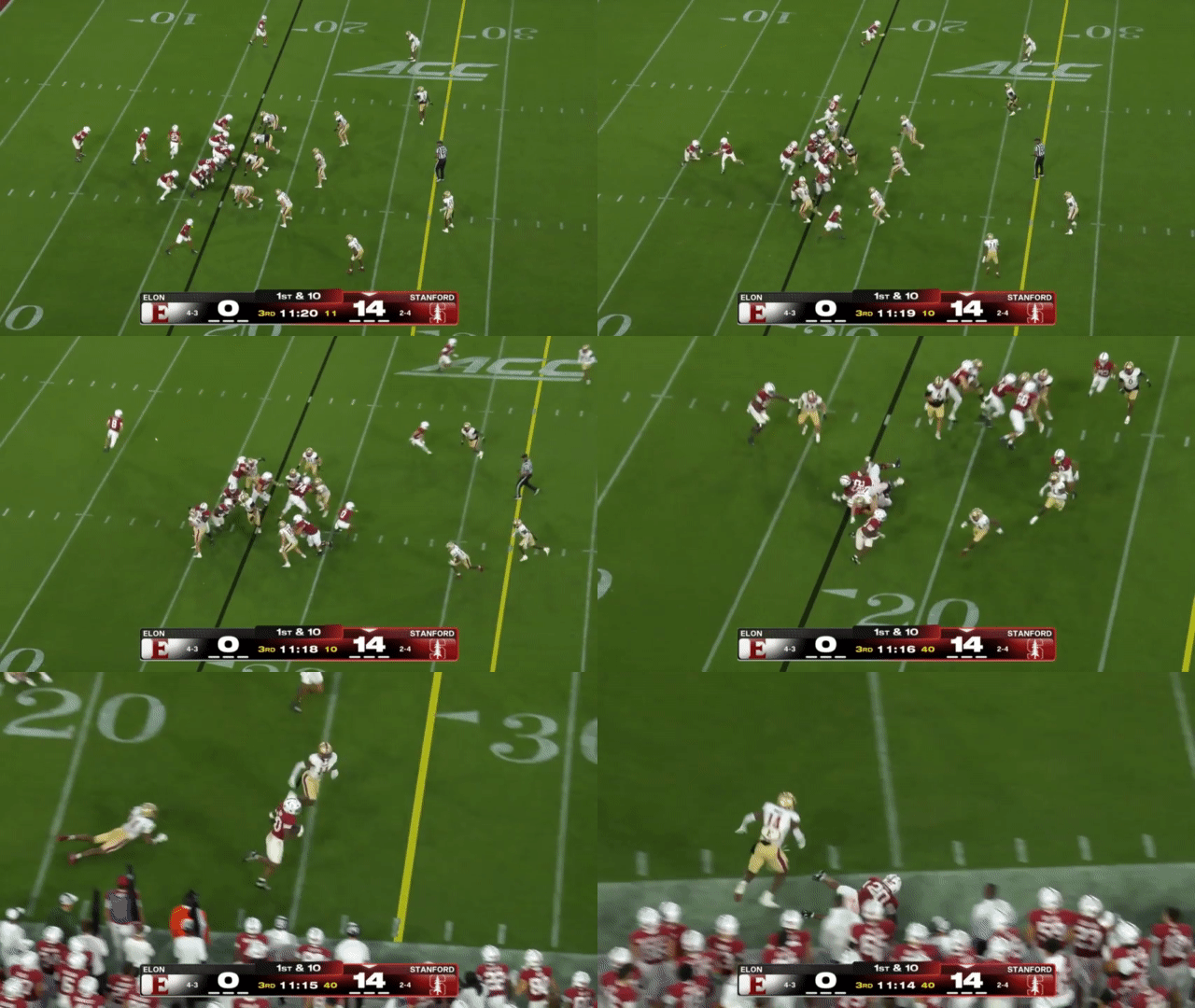
Ford does a good job of carrying his momentum forward and keeps his legs moving to fight for extra yards:
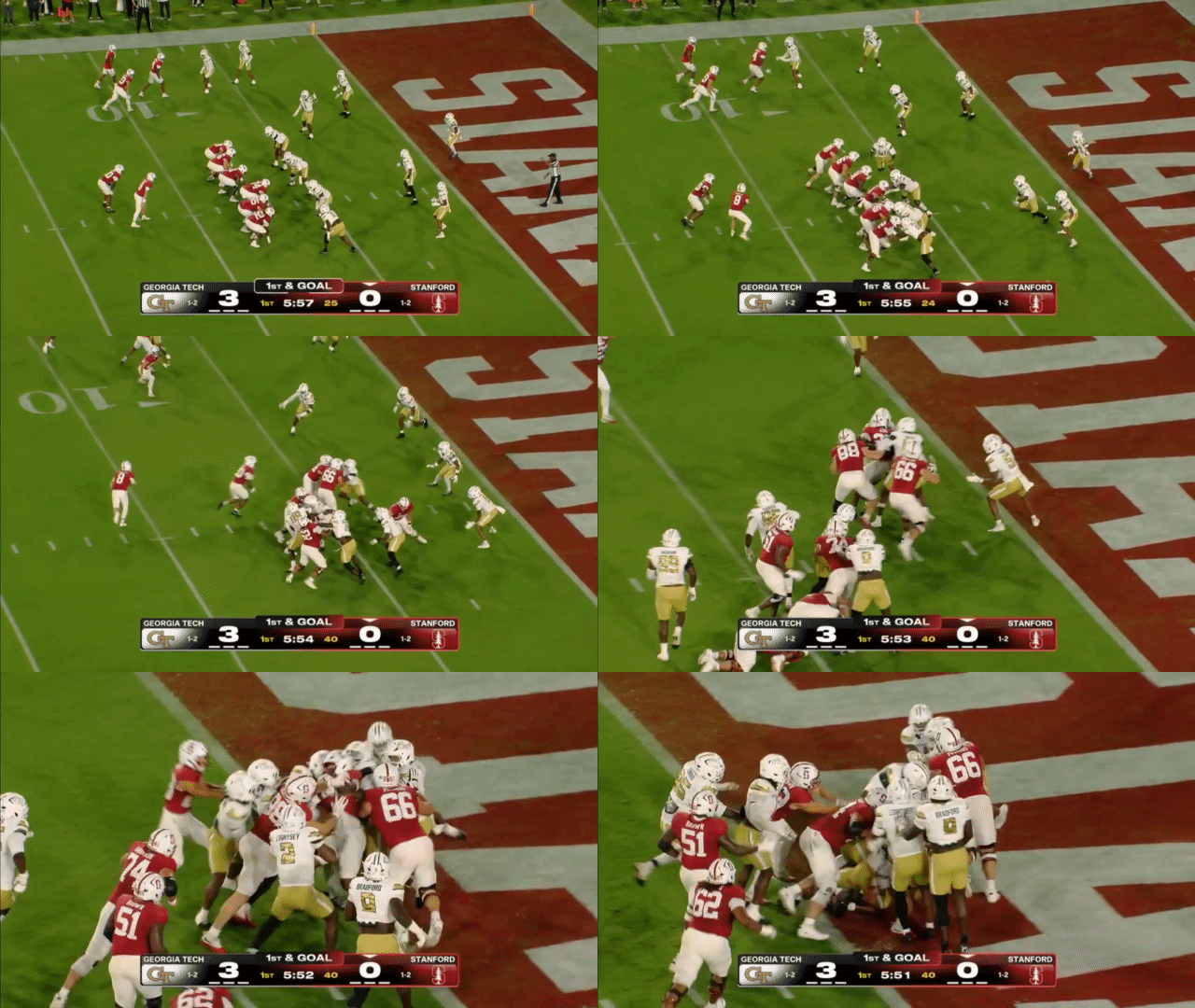
Ford is a bigger, heavier back who usually uses his speed to pick up momentum, so he generally picks his spots wisely, and does a good job of being patient and using his vision to find his run lanes:
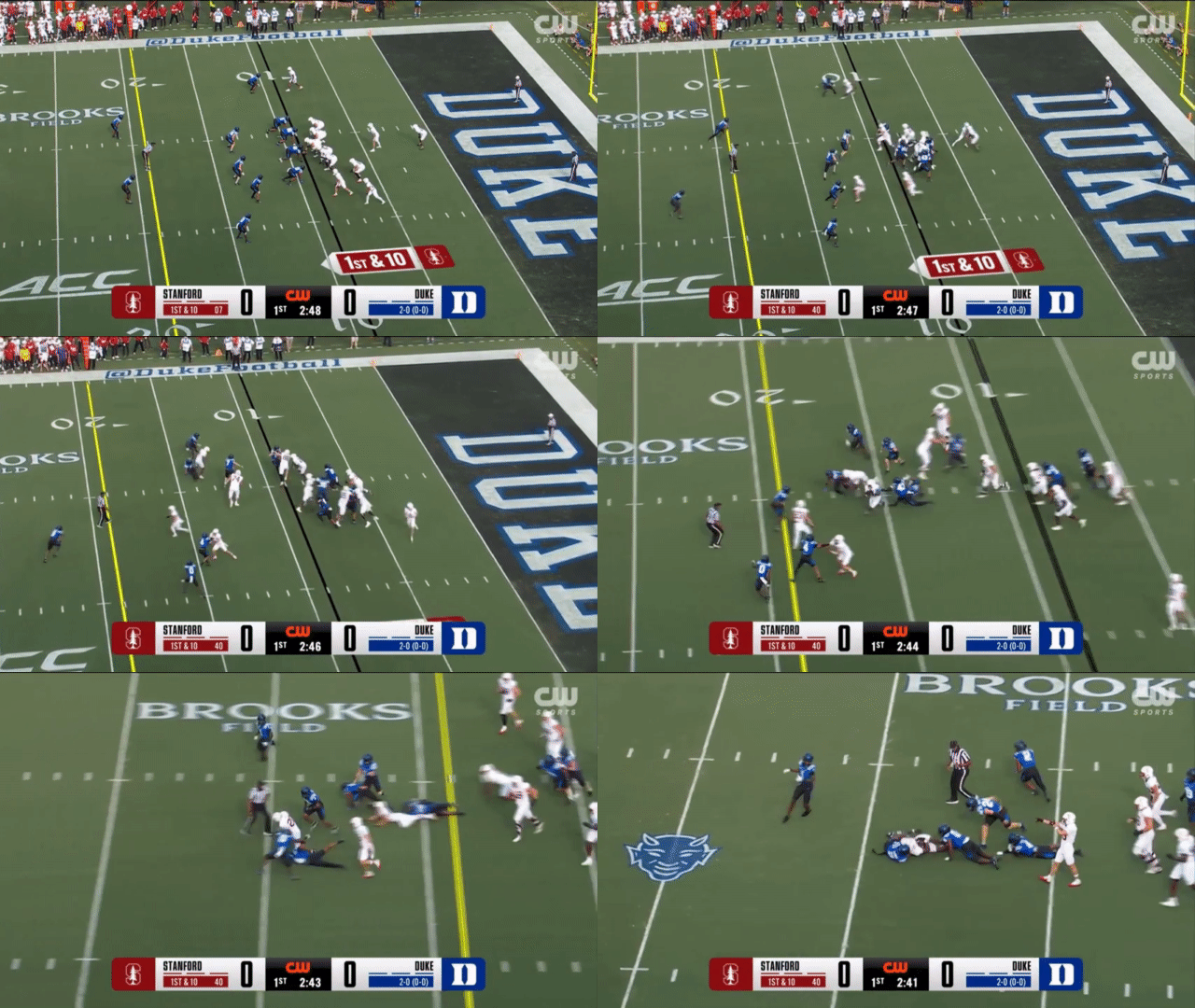
Ford also shows good speed for a back of his size and power:
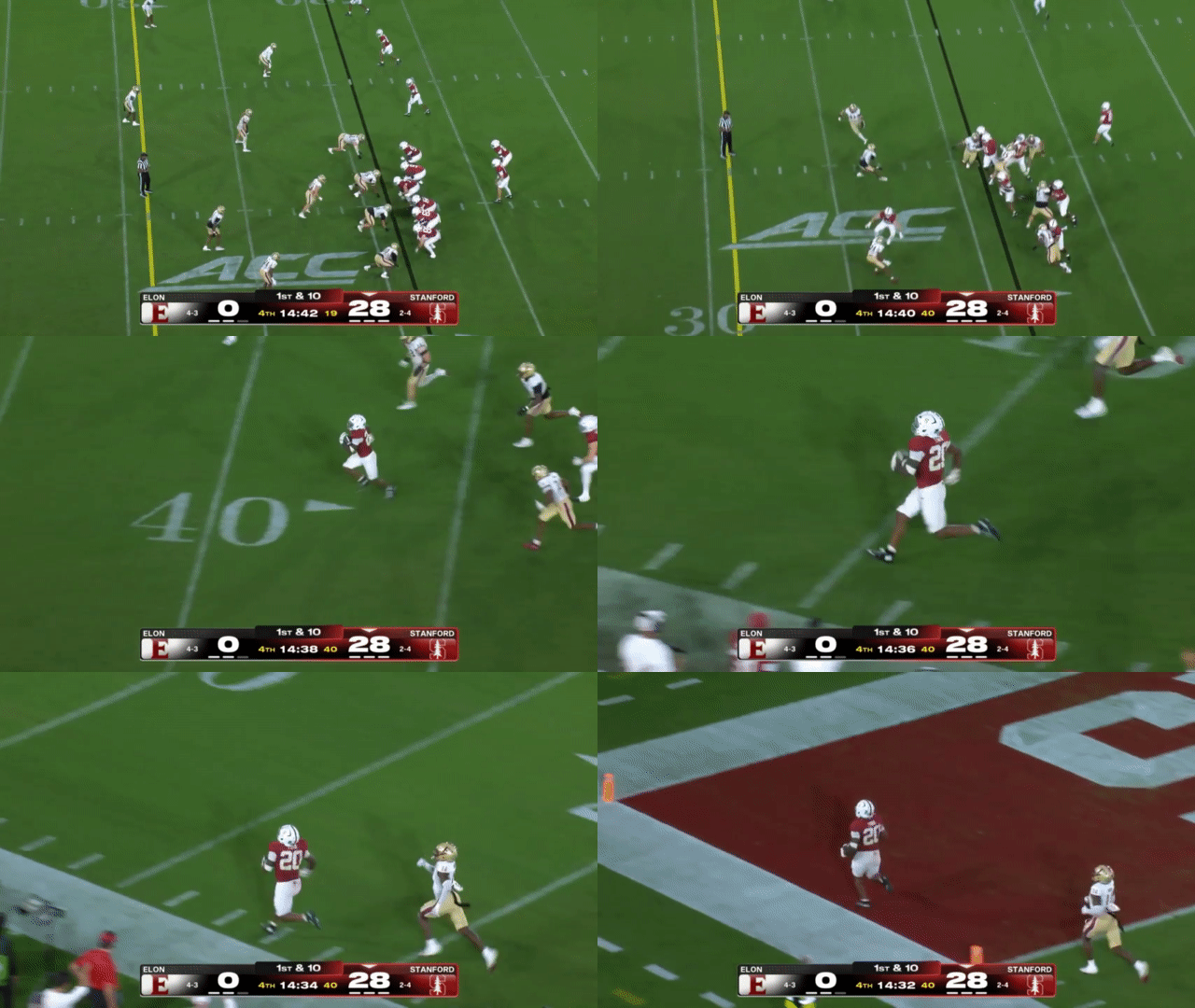
While Ford is not generally known for big, explosive runs, he can still pick up plenty of yards when given room to run:
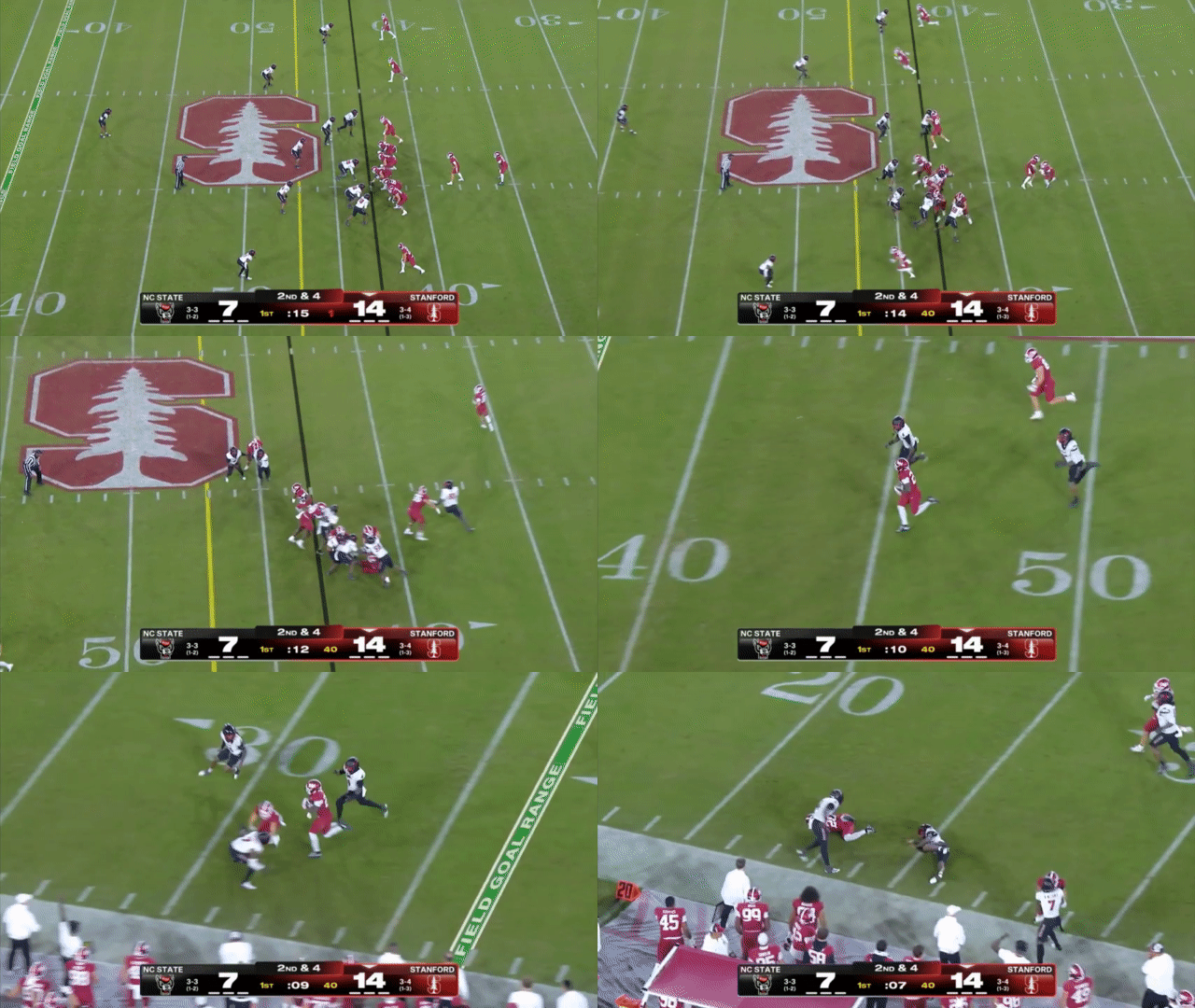
Here Ford shows a nice burst of speed:
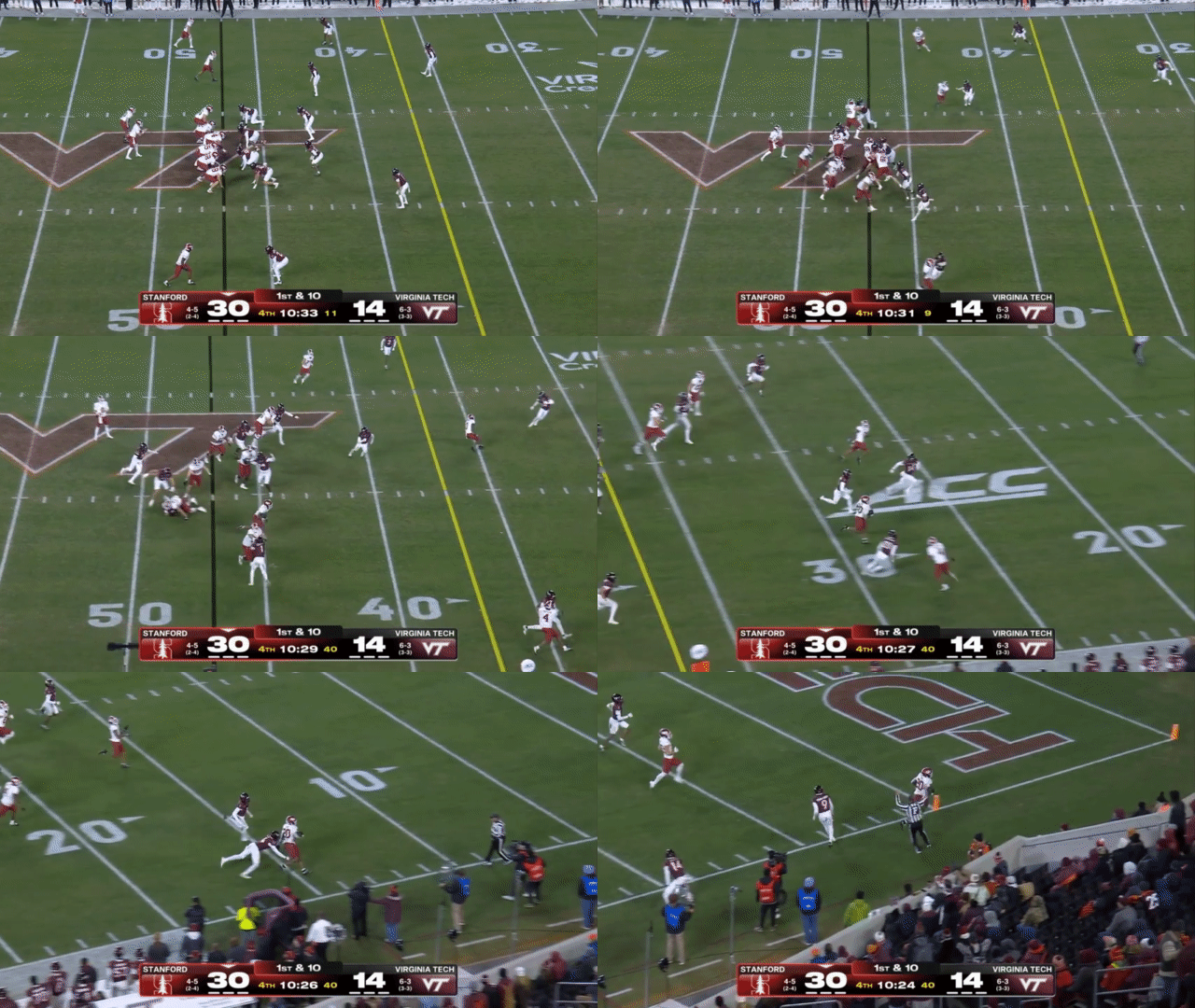
Here Ford decisively hits the hole:
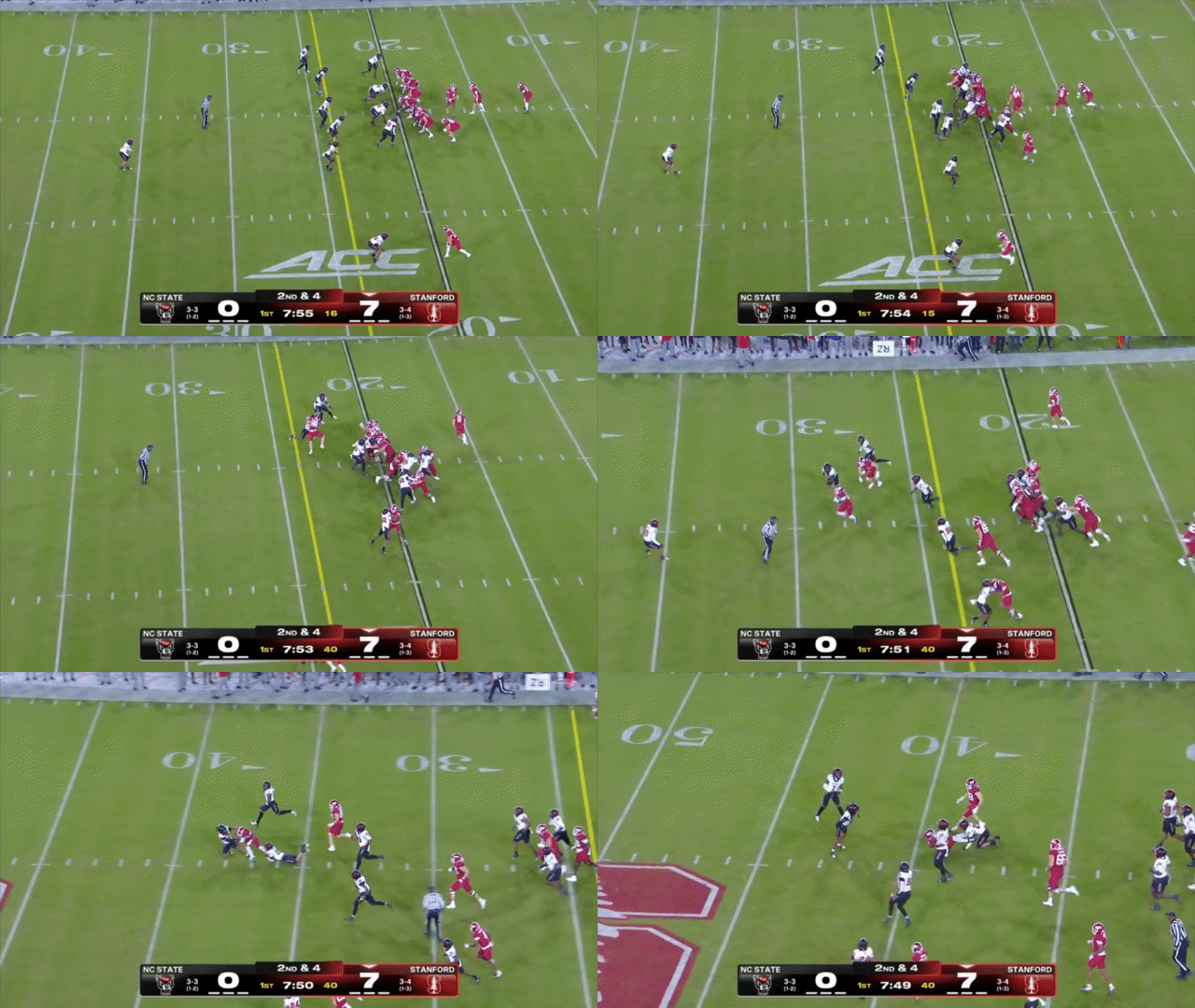
And here Ford again does a nice job of following his blocks and letting the play develop:
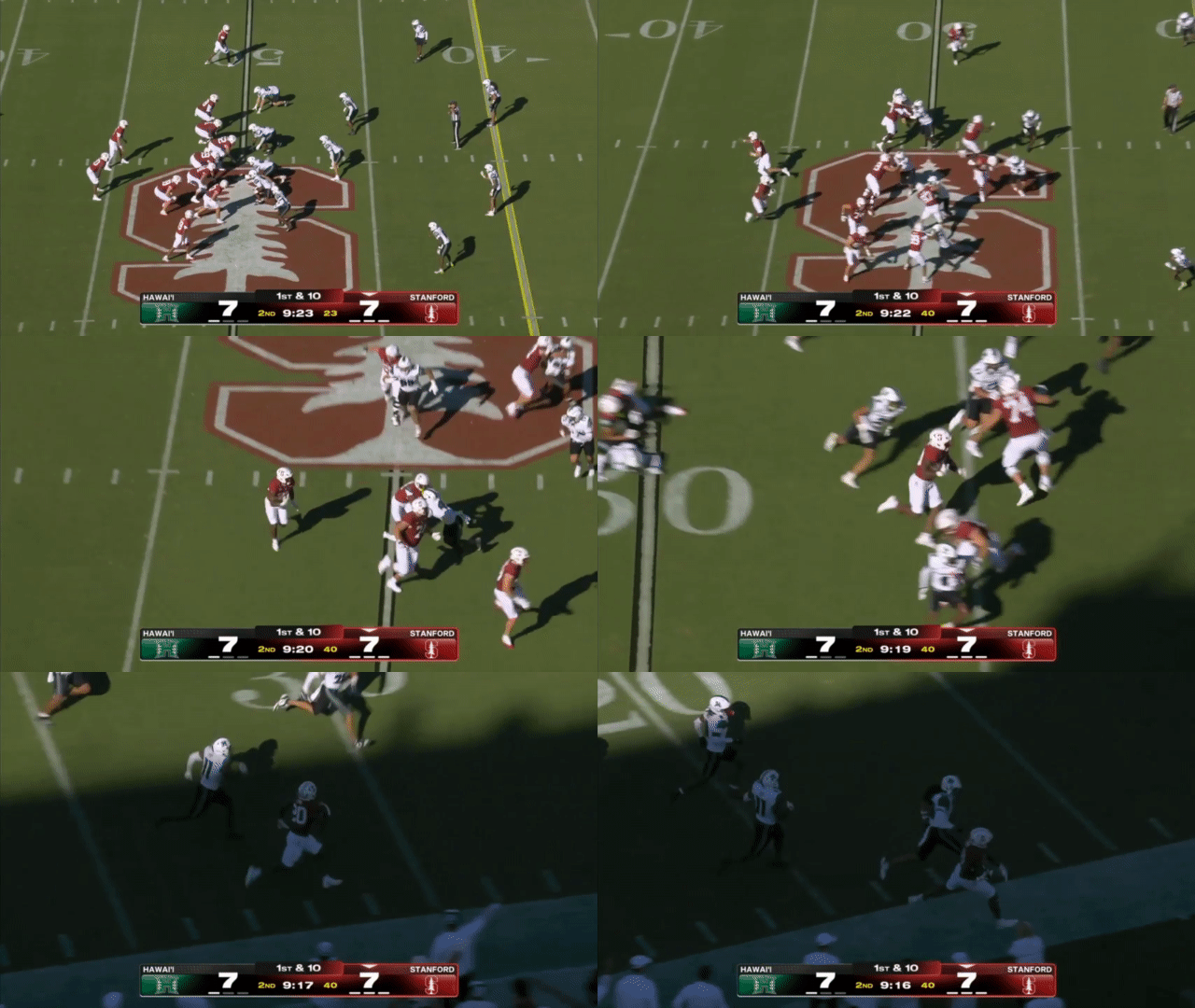
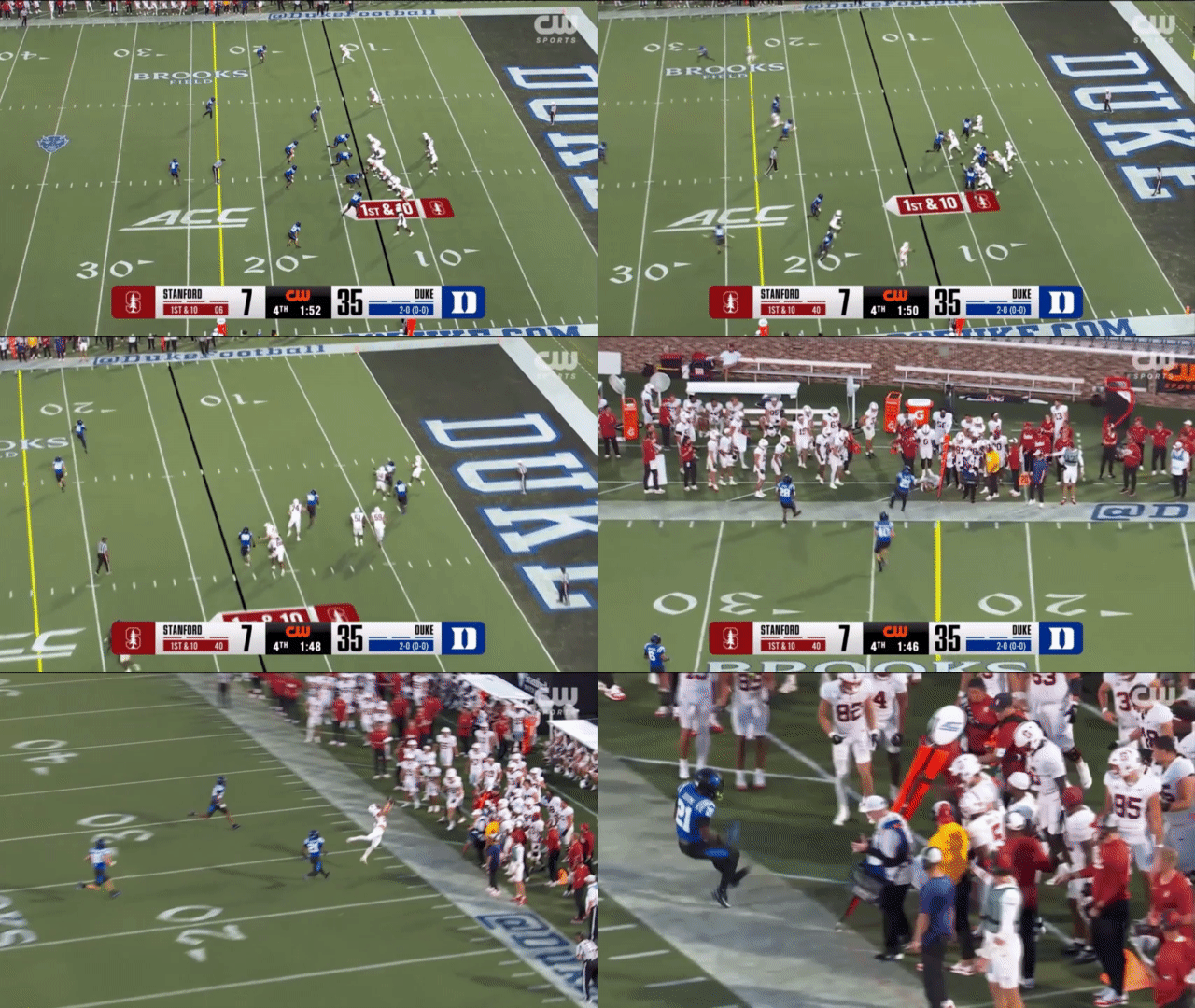
This year, Ford has also shown his aptitude in the passing game as well. Here Ford shows some nice hands in pulling down an errant throw with one hand:
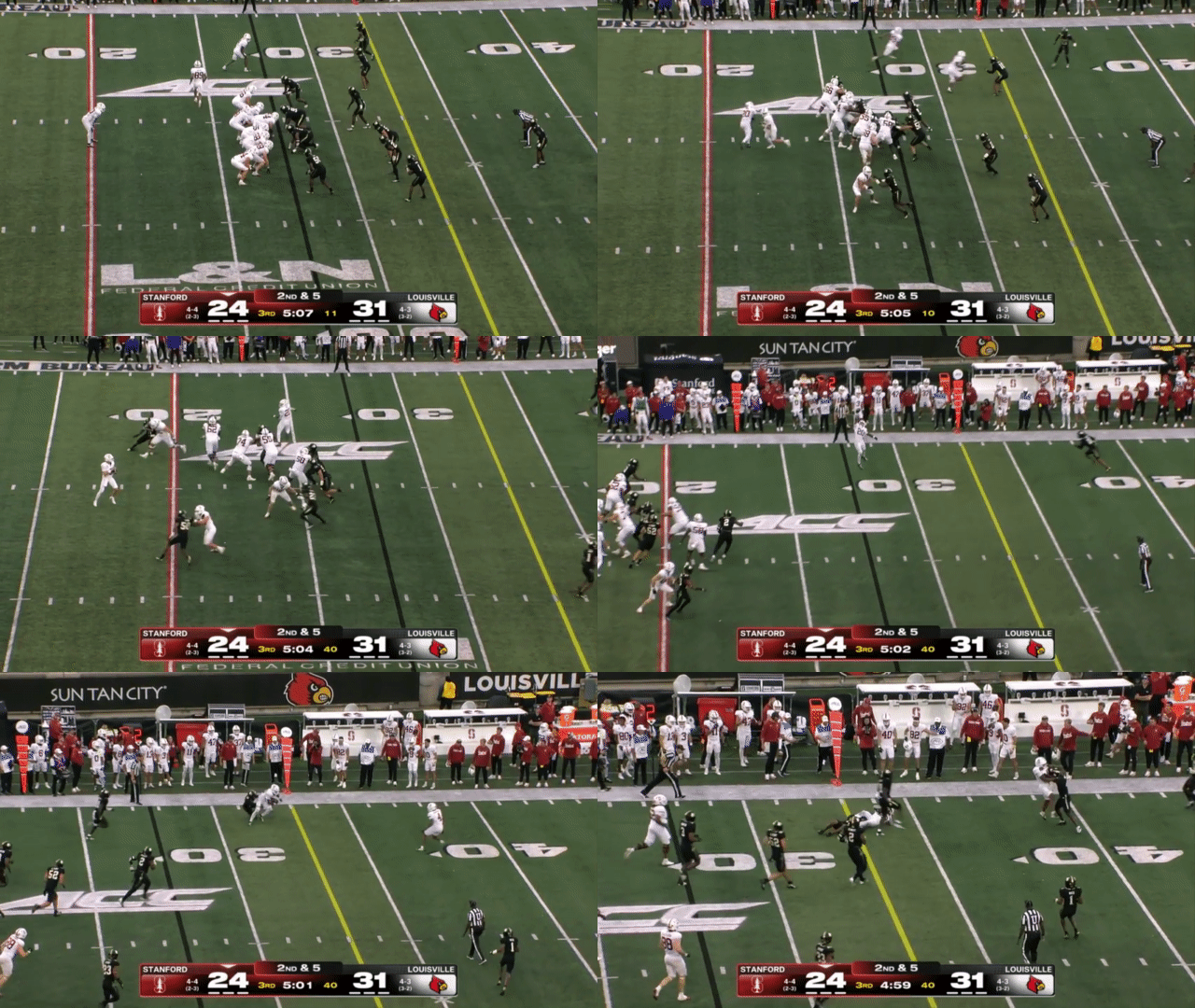
Ford’s biggest asset is his ability to generate momentum and use that to punish opposing defenders. Here he uses his power to absolutely level one defender and carry another into the endzone, but he also runs a pretty nice route here as well:
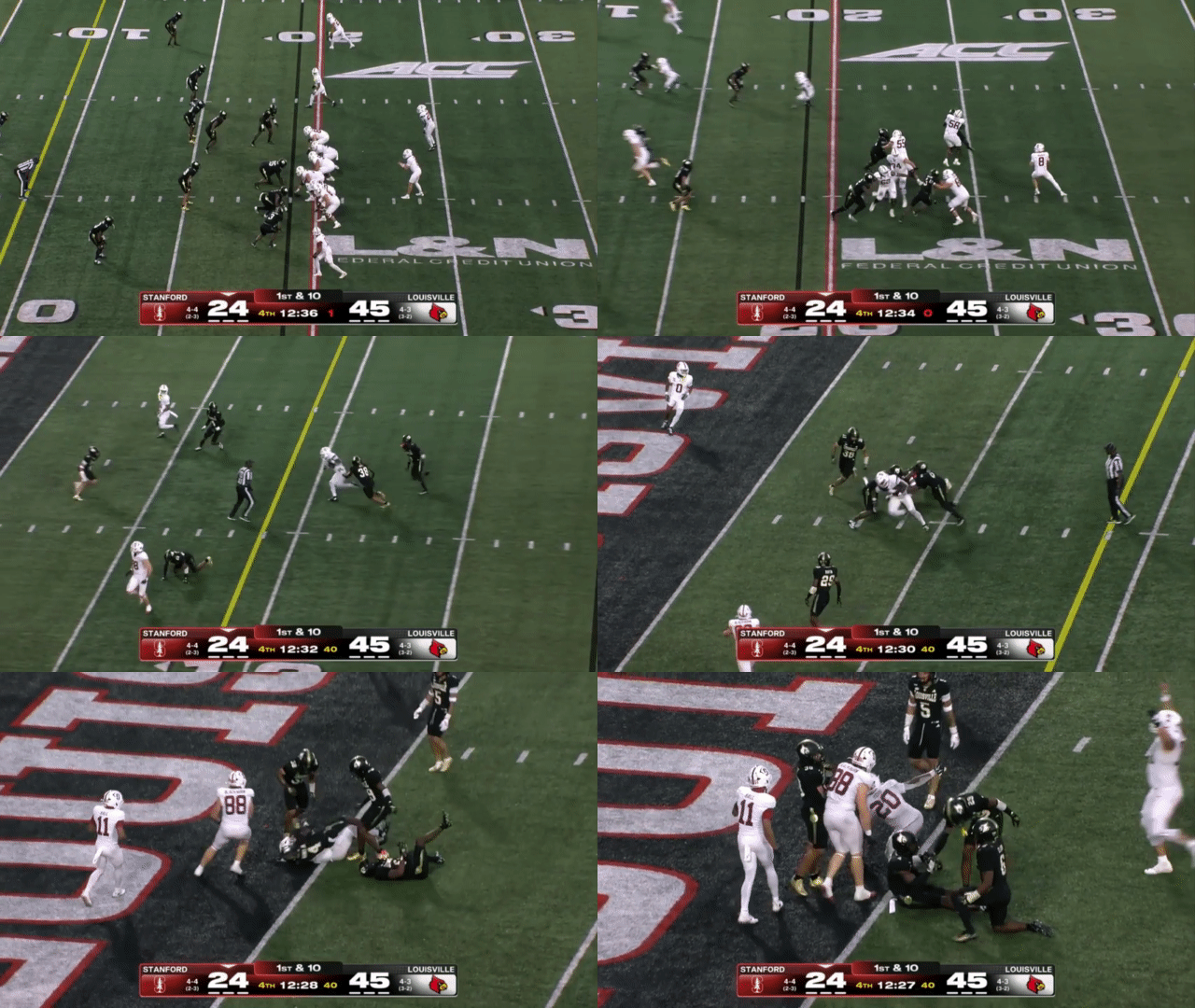
Here Ford again shows off some of his run game abilities as a receiver:
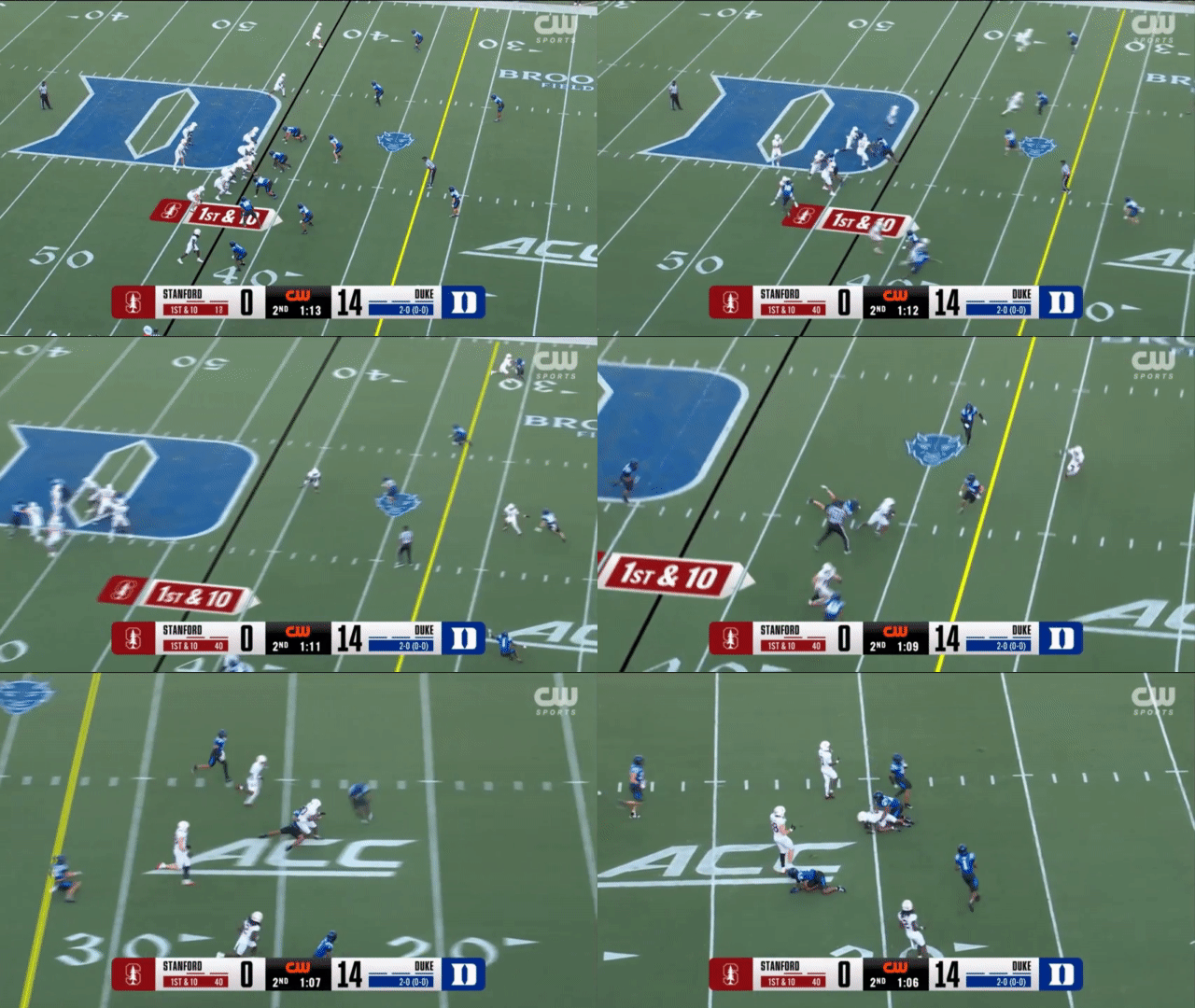
And here he takes a routine screen pass for a big gain:
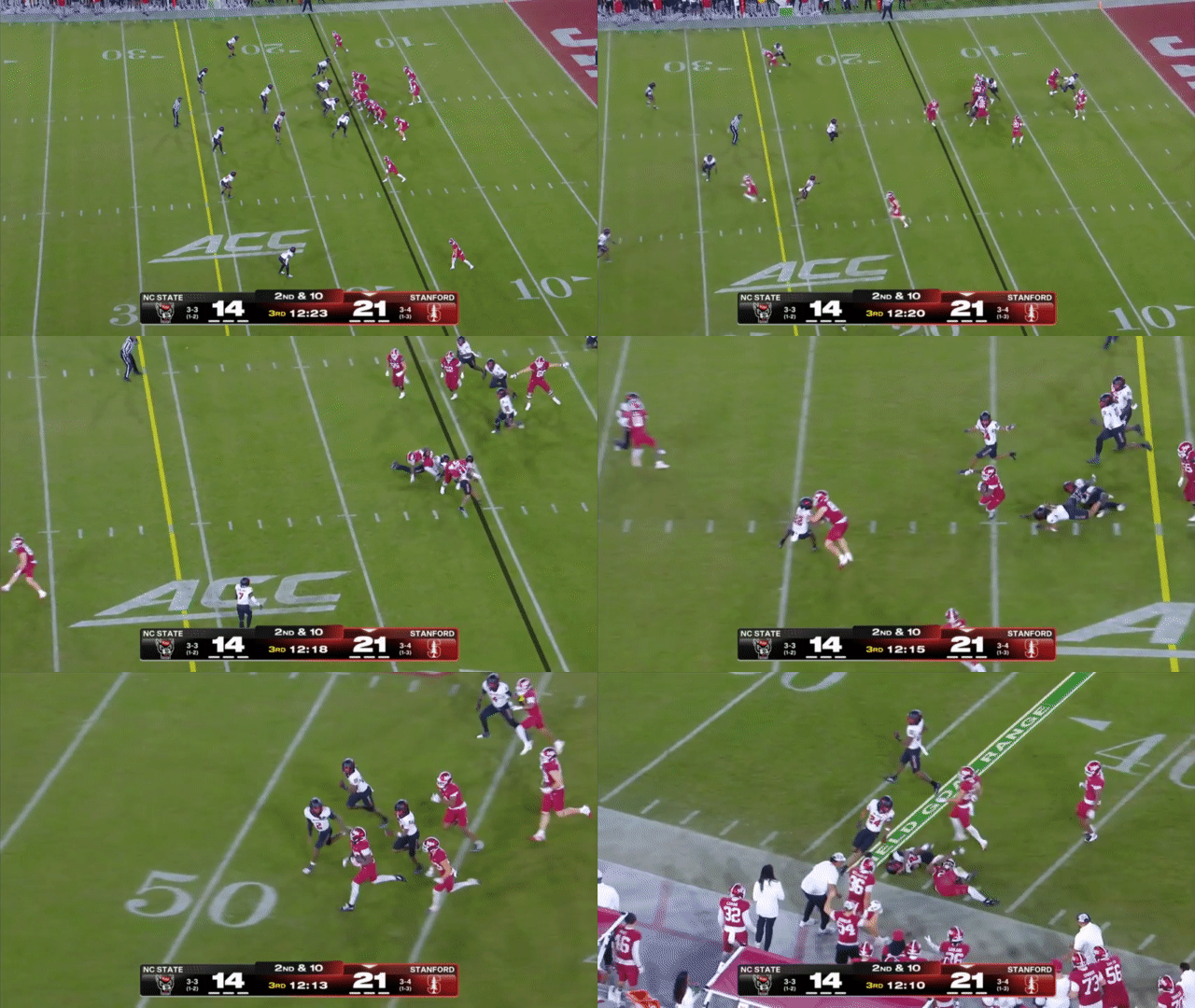
Because of Micah Ford’s ability in short yardage situations, Stanford has also used that against opposing defenses, by disguising this play as a typical “run Ford up the middle” play:
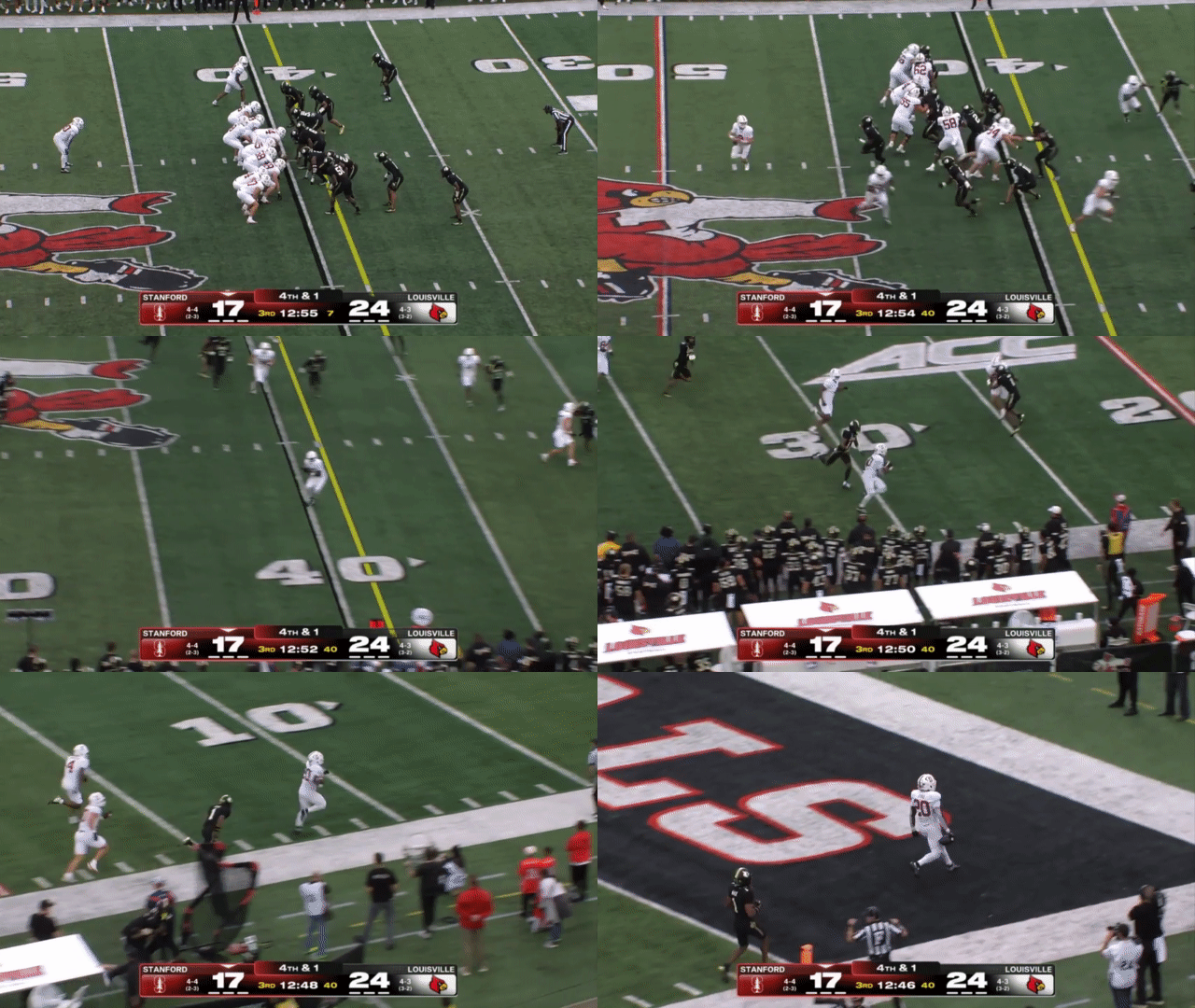
Backing up Ford is RB Sedrick Irvin Jr., who is first cousins once removed with Pro Football Hall of Fame WR Michael Irvin (i.e. Irvin Sr., a former Michigan State RB, is cousins with Michael Irvin), who is best known these days for acting completely sane and normal on the sidelines of Miami football games. Irvin is a slightly smaller, speedier back than Ford:
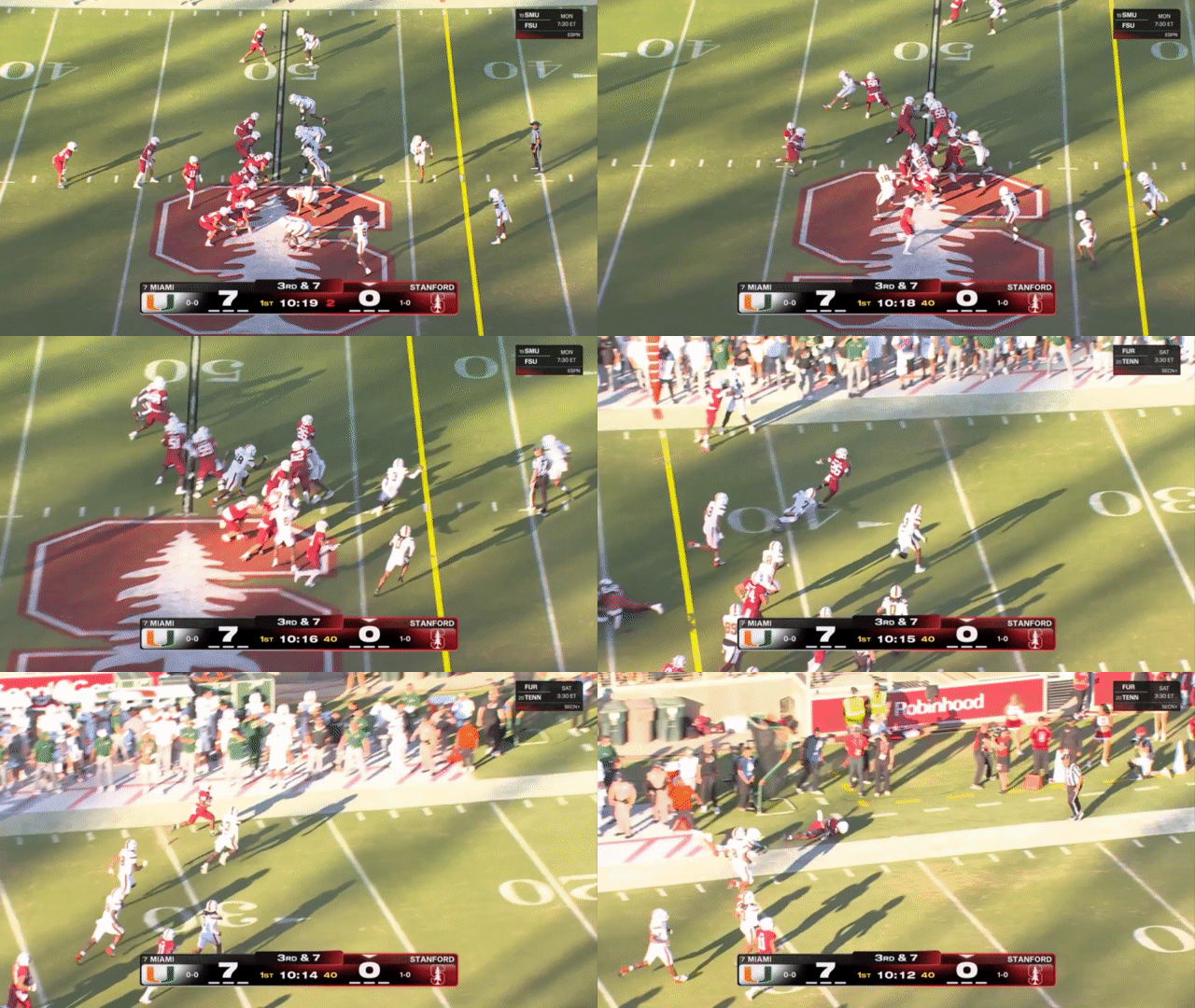
And like Ford, Irvin is also a good receiver out of the backfield:
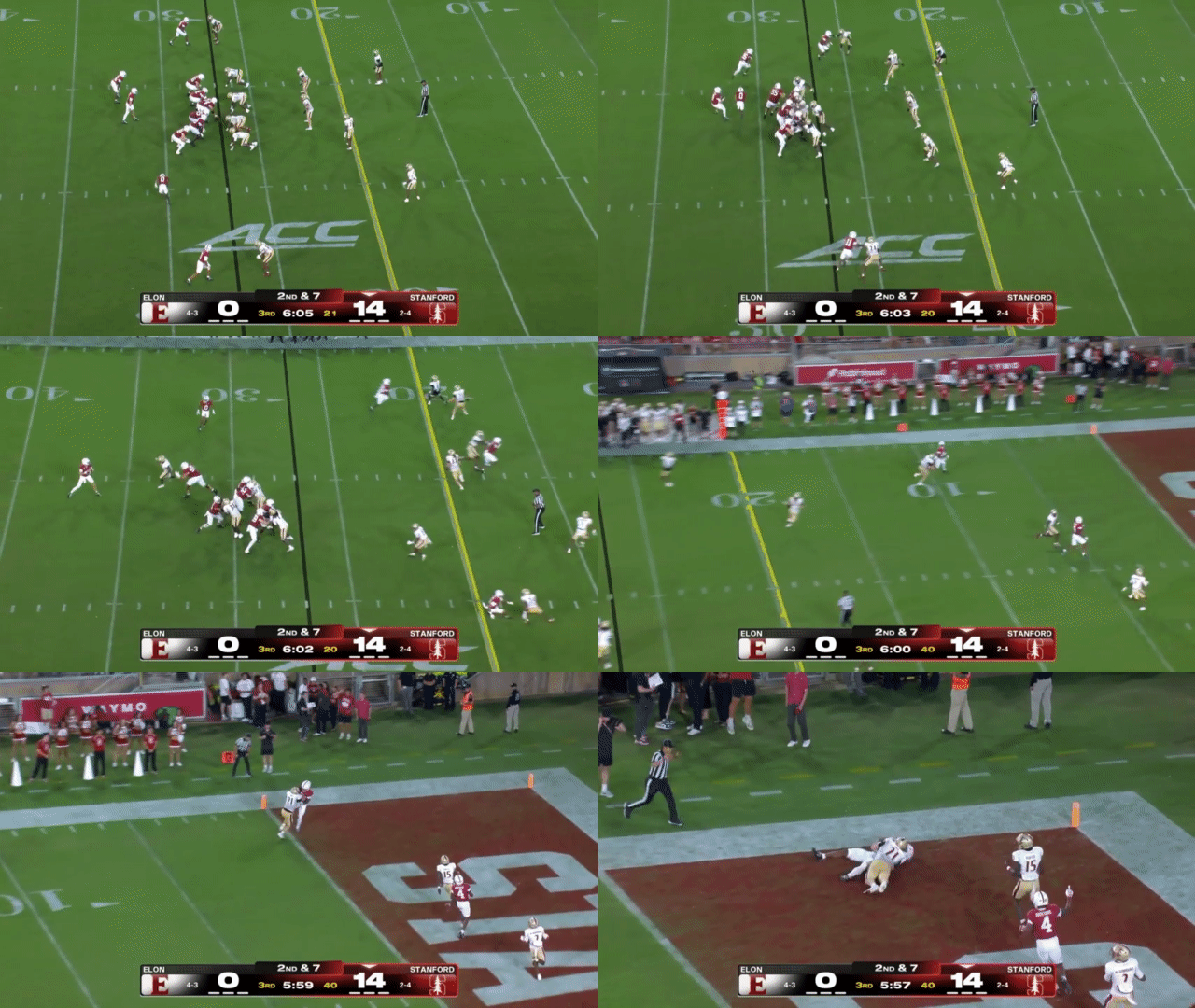
While Ford is known for his ball security, Sedrick Irvin has not been quite as fortunate:
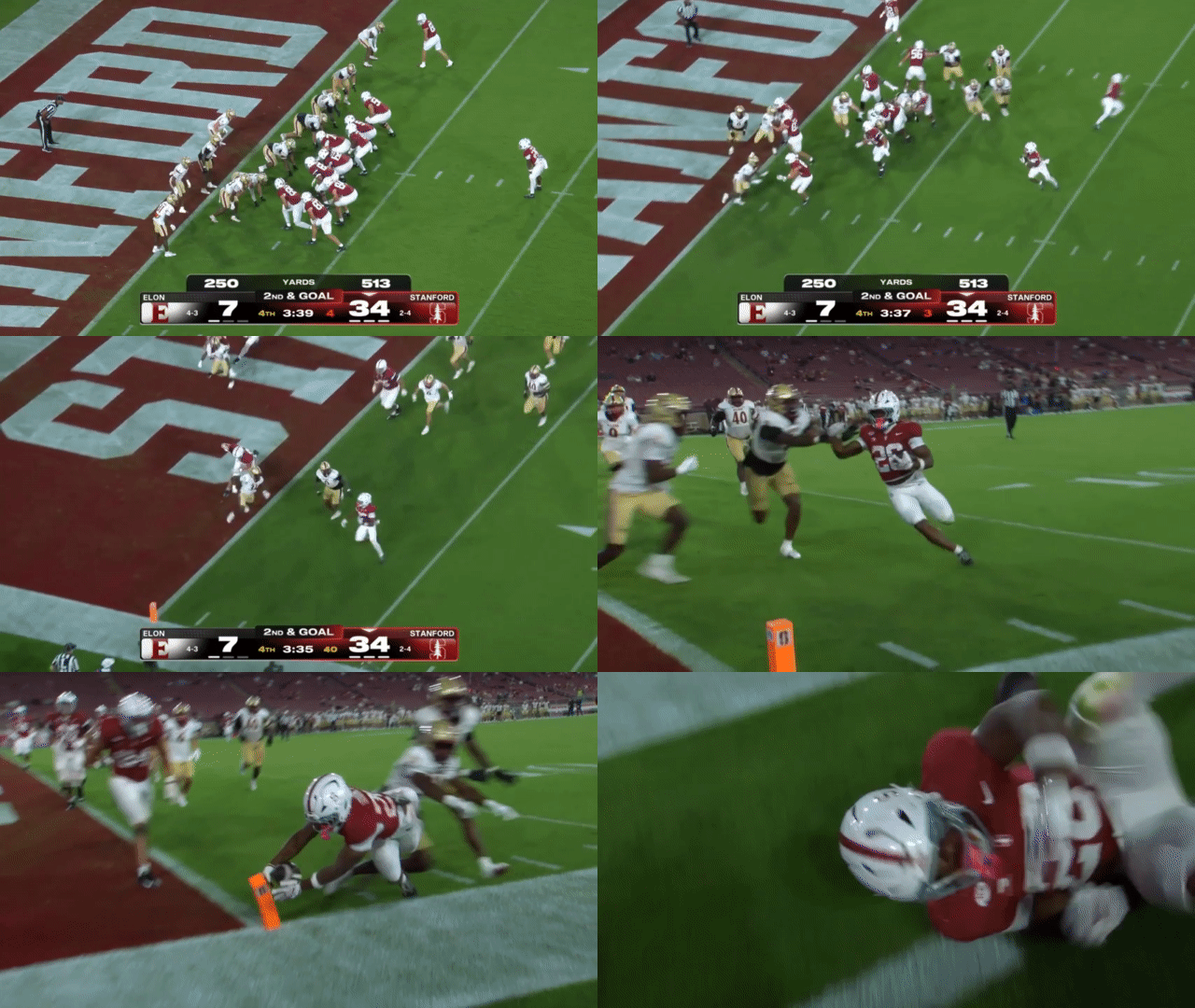
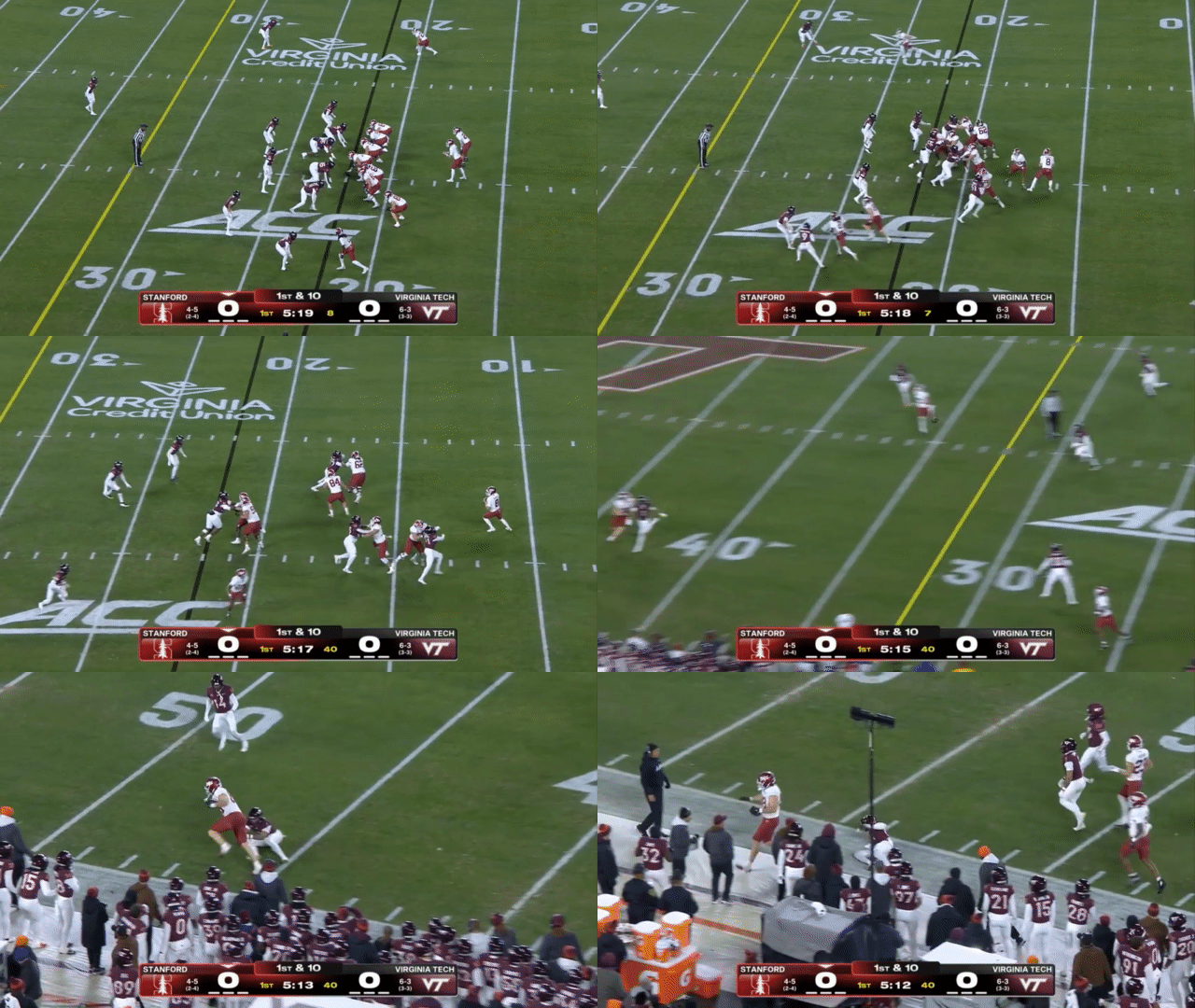
Despite Stanford’s talent at running back, their offensive line struggles have affected their total rushing numbers. Prior to last week’s game at Virginia Tech, Stanford ranked 16th of 17 teams in the ACC in rushing, and 128th of 138 in the FBS (I’ll leave it as an exercise to the reader to determine who is 17th in the ACC and 137th in the FBS). Stanford posted 222 rushing yards in their FCS matchup against Elon (the school, not the Stanford ally), 174 yards rushing against NC State, and 203 rushing yards against Virginia Tech last week, so recent trends have been positive for Stanford as the health of their offensive line has improved. And one final thing I want to mention after watching the Virginia Tech game last week is that Stanford was really creative in their unbalanced offensive line formations. They would show one (more traditional) look, then e.g. quickly switch formations and have the left tackle Niki Prongos (probably their best OL and an NFL Draft prospect) line up outside the right tackle, motion the multiple tight ends next to him, and then they would open large holes with the offensive tackles blocking the defensive line and the tight ends blocking the smaller defensive backs. But the fact that they kept running the same sorts of plays (very successfully against Virginia Tech) had me thinking that Stanford is probably playing chess while Cal is playing checkers, and I wouldn’t be surprised if Stanford was doing it to set up plays for the Big Game the following week. However, I also wouldn’t be surprised if Cal lost at checkers either—that is, if Stanford just decides to run those exact same run plays that worked so well against VT.
Receivers
Stanford’s best receiver is the 5’10” 175 lbs. receiver, Caden High. High was an under-recruited (“zero star”) prospect out of high school and started at a D2 school (Benedict College), before transferring to FCS South Carolina State and then on to Stanford, where he’s had breakout seasons at each new location. High is Stanford’s leading receiver due to a combination of his speed, athleticism, route running, and catching ability.
Here High does a good job of creating immediate separation:
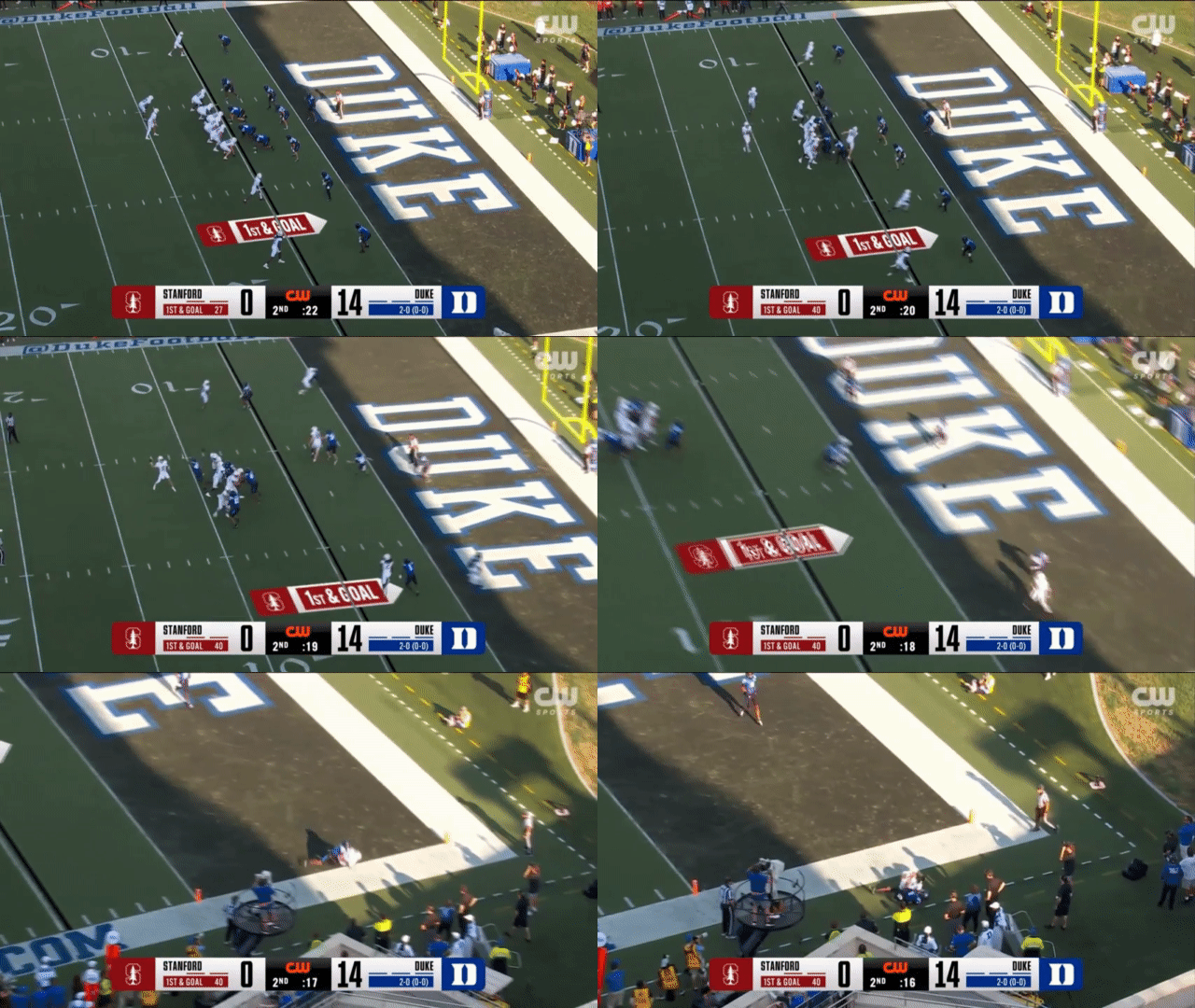
Here High runs a nice double move to get open deep:
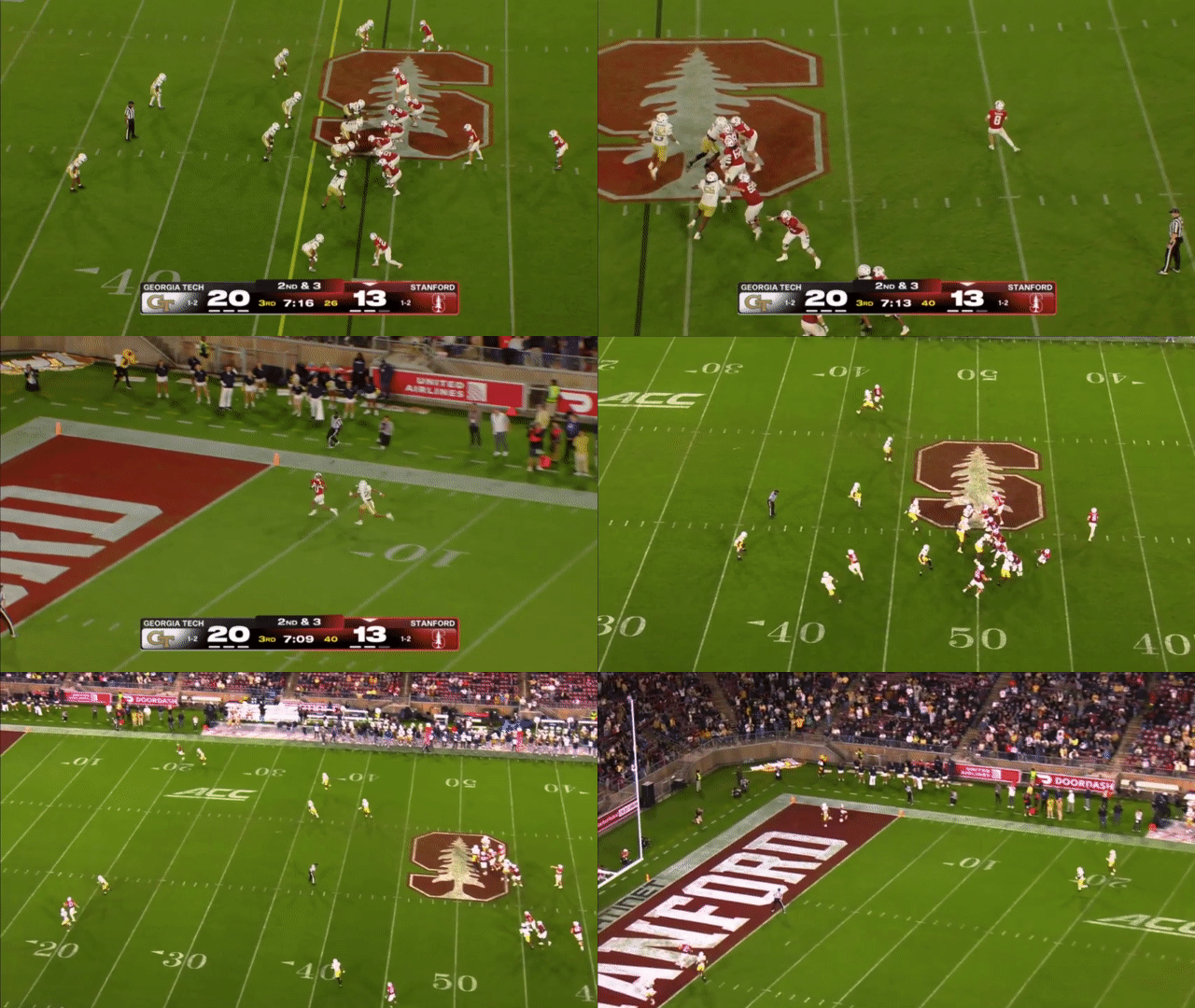
I’m not sure what’s going on with this coverage, but High is left unaccounted for and finds himself in open space:
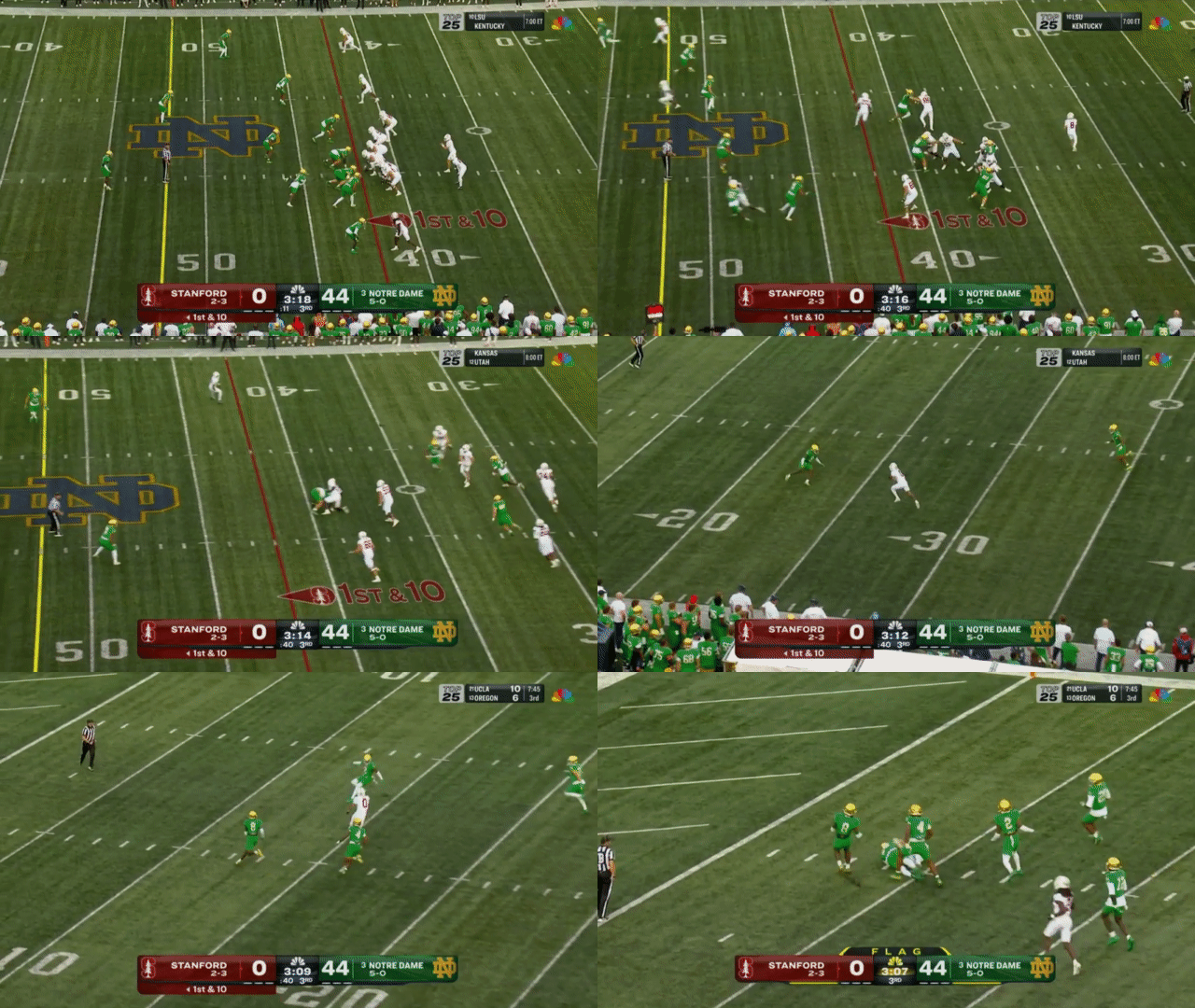
High has a done a good job of hauling in errant throws, an important skill in the Stanford offense:
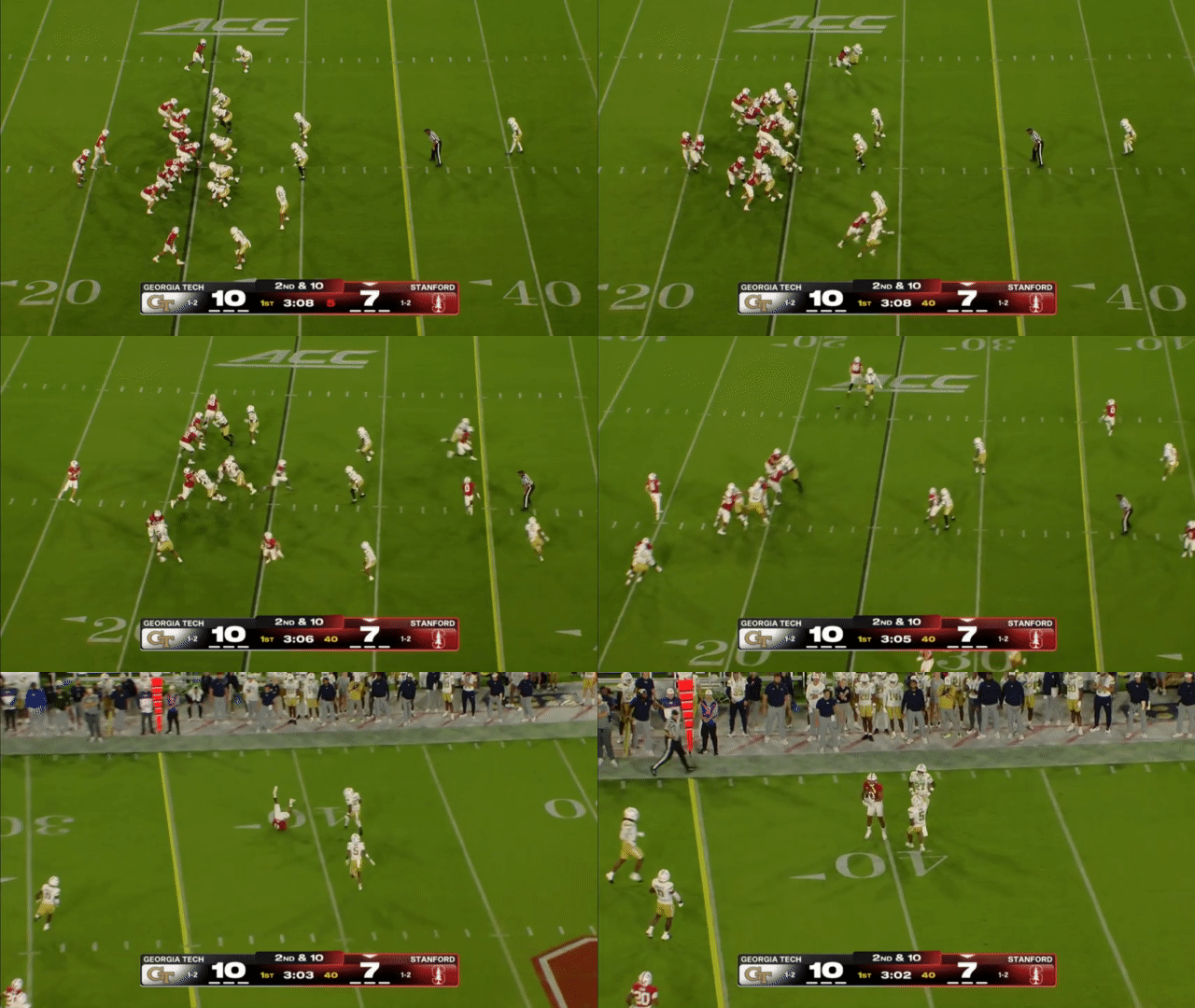
And again he shows some nice hands on this leaping catch:
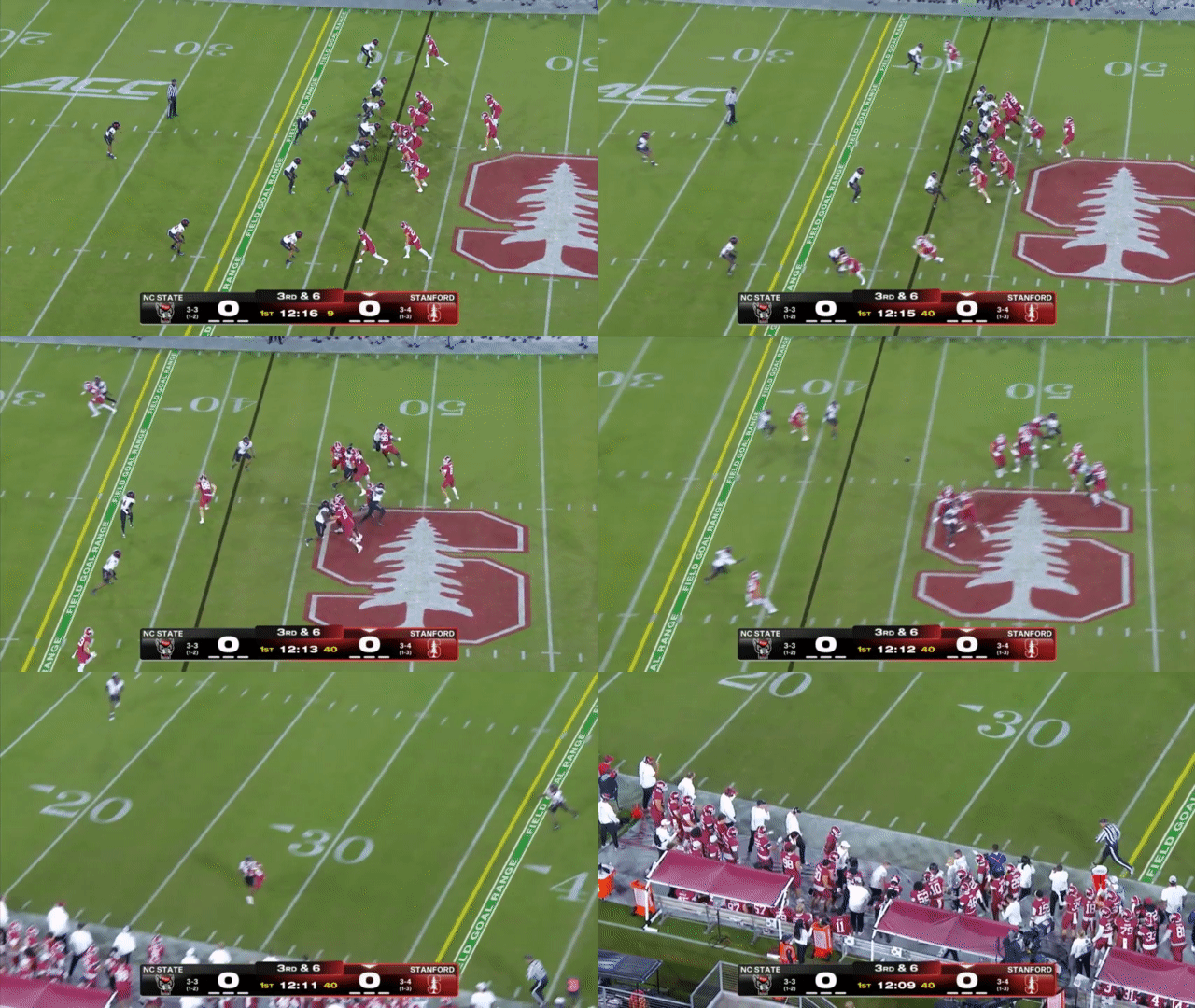
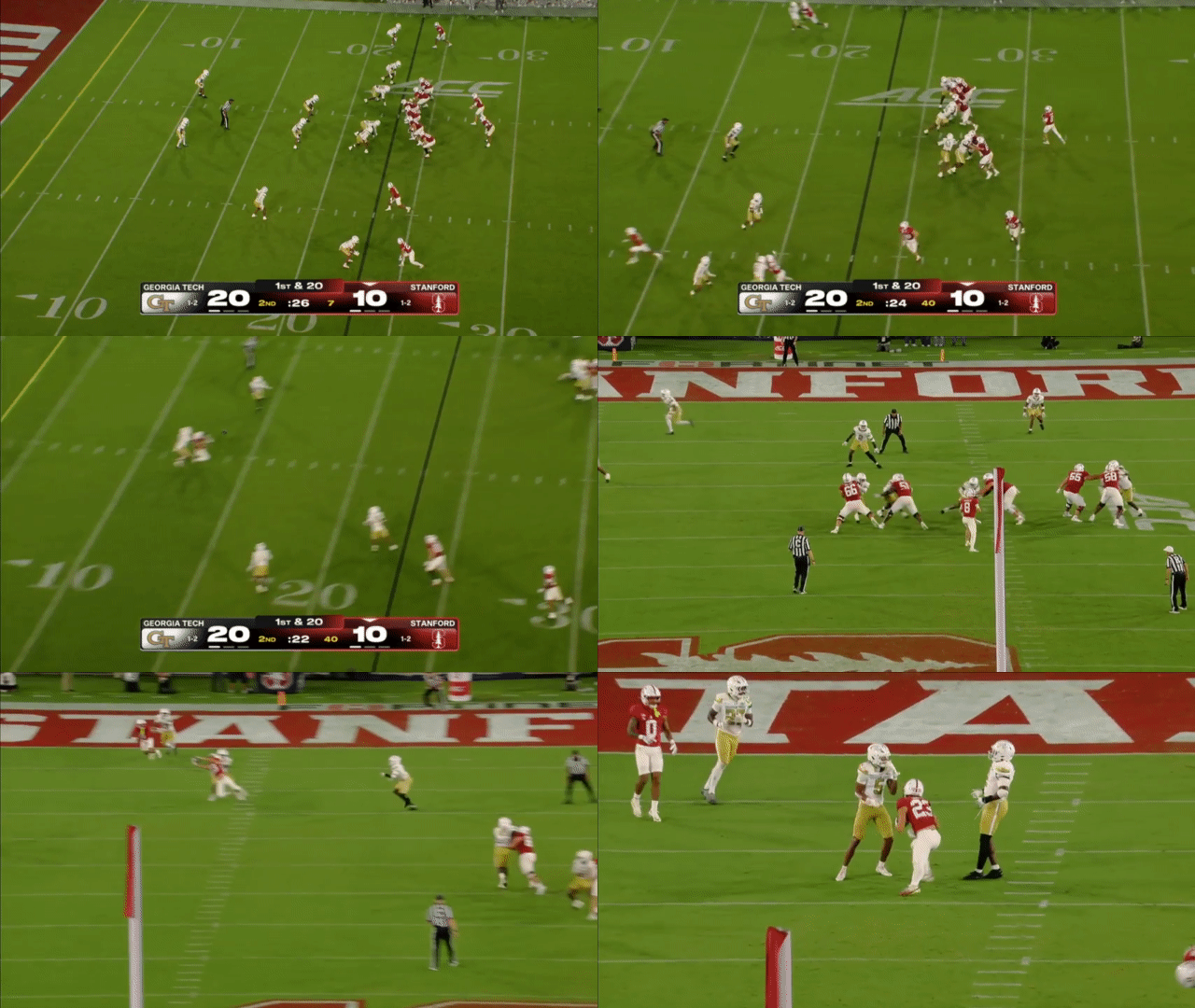
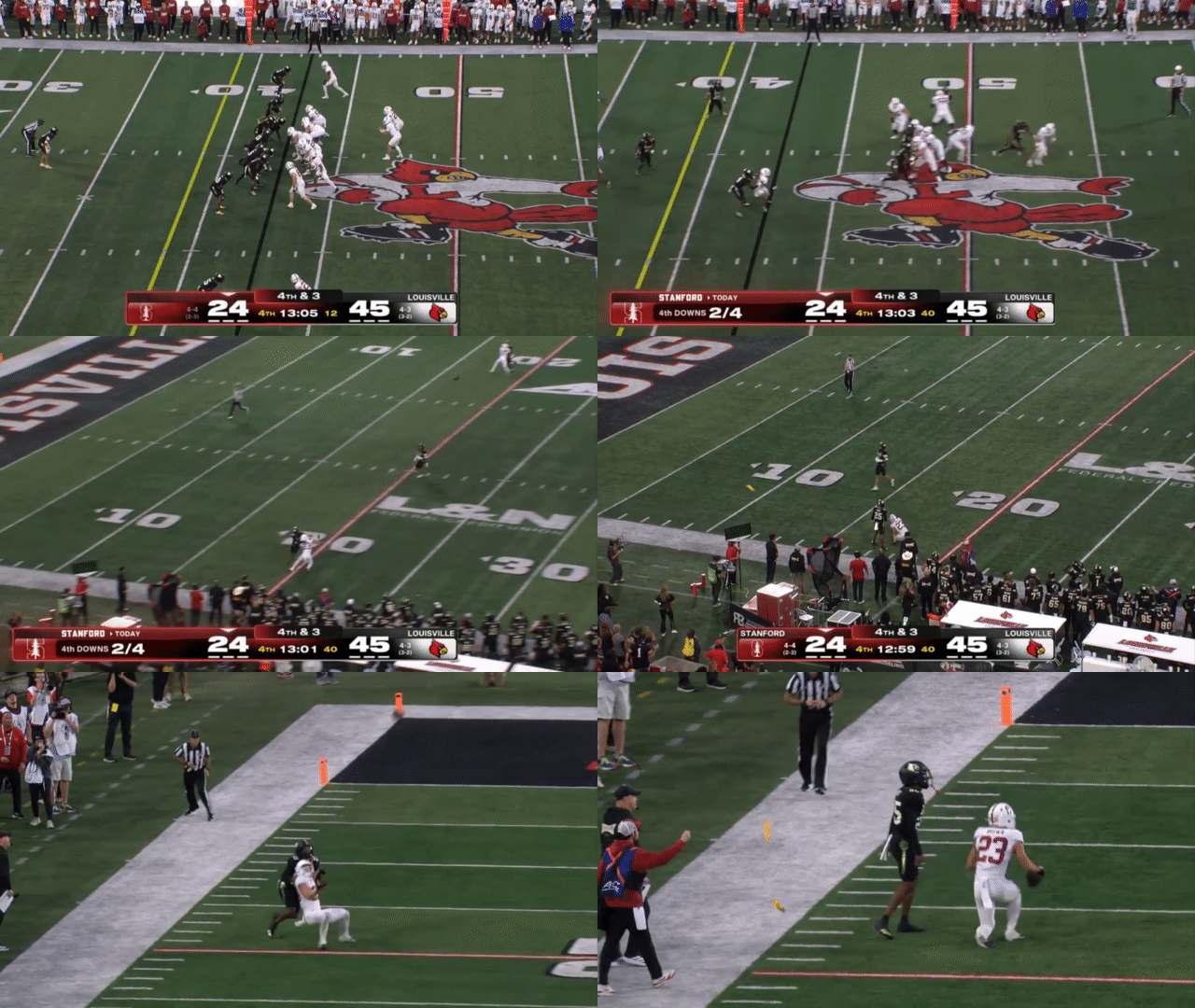
In what I can only assume is a middle finger to the historic David Shaw offenses, Stanford decides to go for it on 4th and 20, and trusts WR Caden High to make that happen on a simple screen pass:
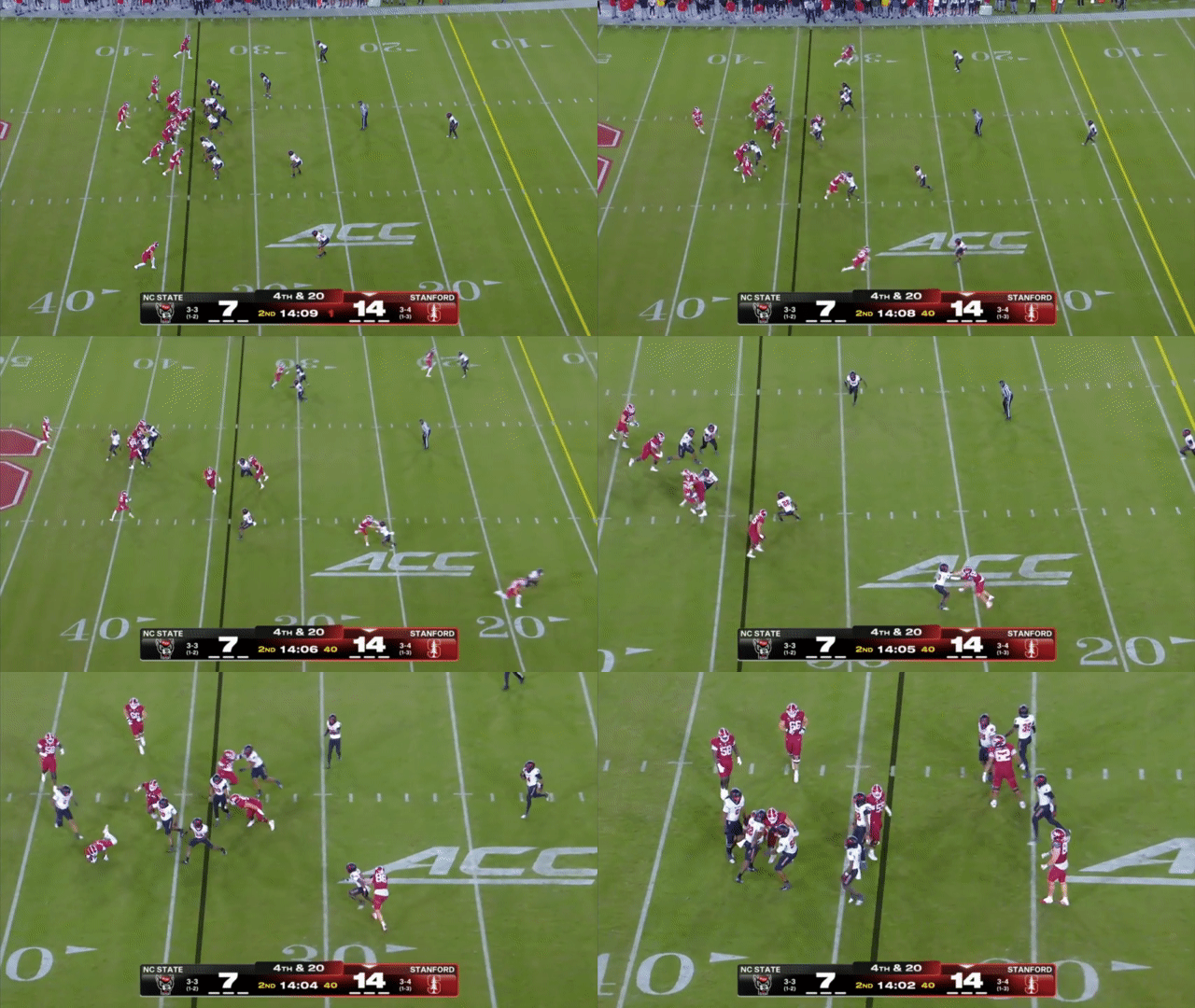
However, High came up short in this critical play, which ended up being the turning point in the Louisville game:
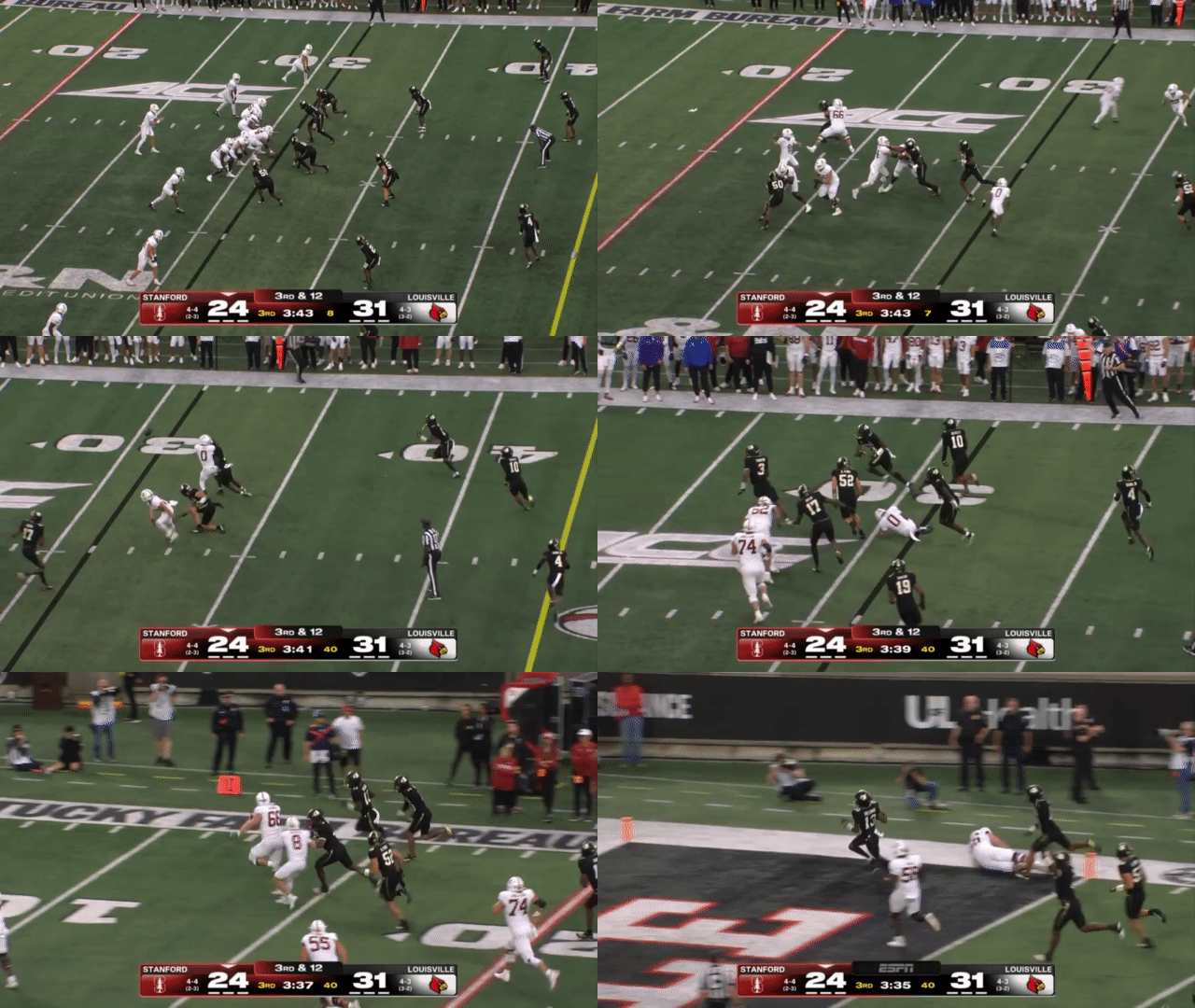
Another emerging star for Stanford this year—also from the FCS—is the Yale transfer WR Nico Brown. Brown has speed, nice route running, and has shown some nice hands. Here he runs a nice route to get open deep:
Here Brown shows some nice body control in adjusting to a ball thrown well behind him:
And here Brown again shows some nice adjustments to the ball in mid-air:
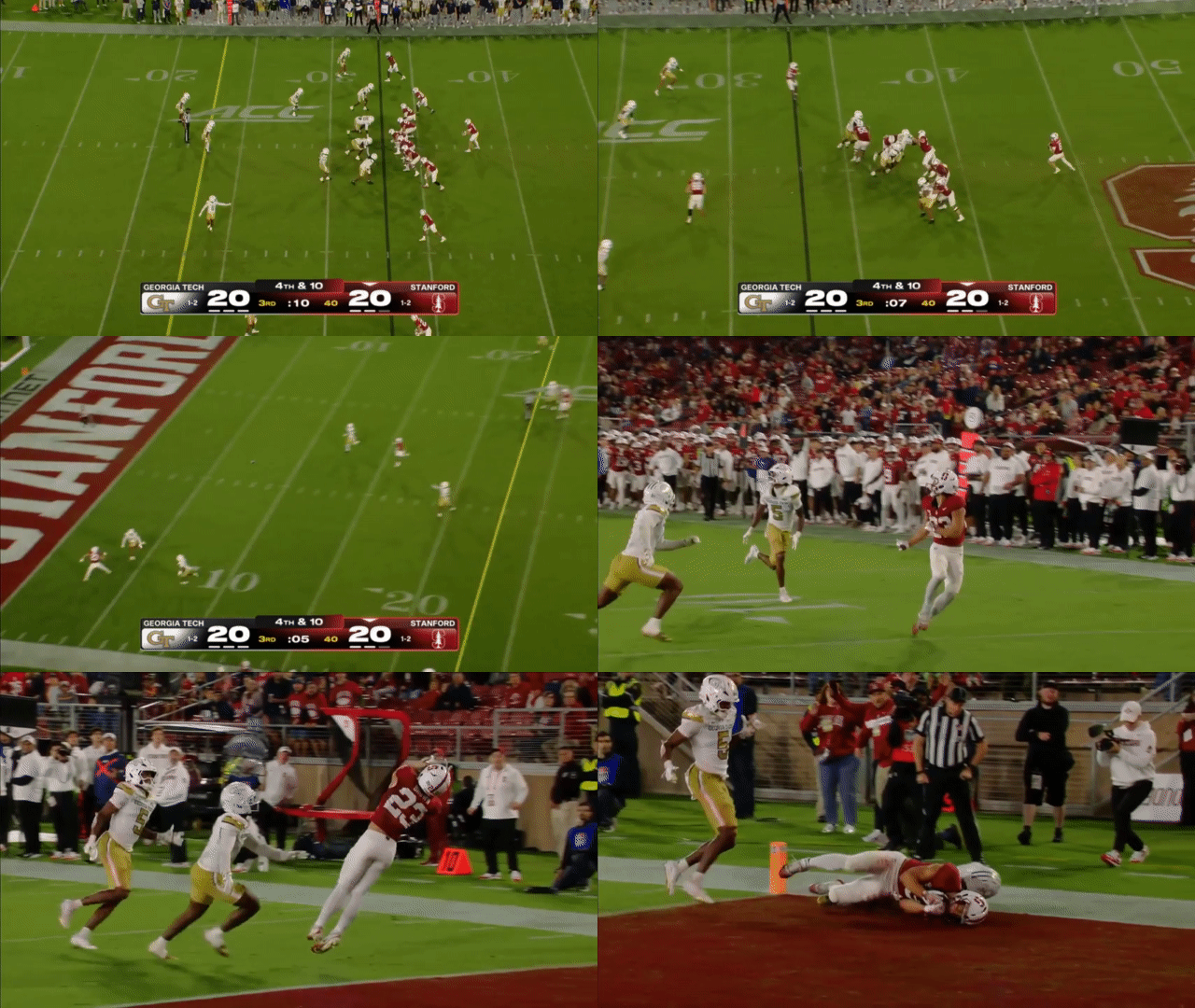
Here Brown shows off his hands:
I don’t even know how to explain this next one; Brown gets slammed to the turf after beating the corner, lands on his back, and the ball just drops in his lap:
The other big target (no pun intended) at receiver is the tight end, Benji Blackburn. Although Stanford does have a ton of tight ends currently in the NFL and announcers will often play up the “Tight End U” angle, I’m less convinced that Blackburn keeps up the streak of Stanford tight ends drafted into the NFL. Blackburn is a frequent target on underneath routes, and he’s a decent receiver:
Caden High, Nico Brown, and Benji Blackburn receive the bulk of all targets, and after them, you have to dig a bit further down on the depth chart. True freshman WR Zion Robinson appears to be the deep threat specialist. Robinson was the Texas state champion in the high jump, and has a bigger frame to build long speed over time (verse immediate acceleration). For Stanford, Robinson mostly appears to run deep (or clear-out) routes:
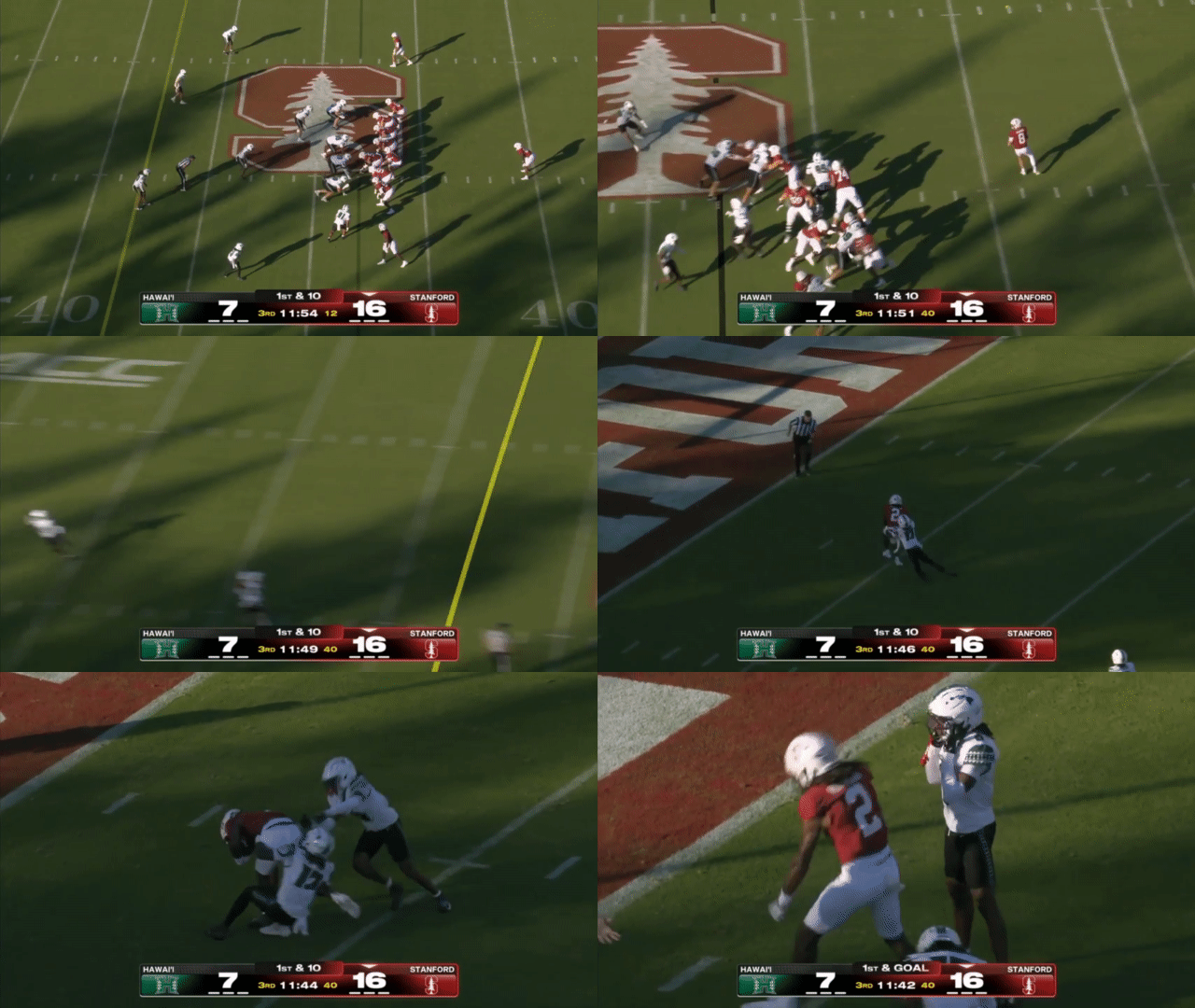
Robinson has 7 catches on the season with an average 22.1 yards per catch, and it’s mostly catches like this:
WR JonAnthony Hall has a similar profile, but runs a more varied route tree than Robinson:
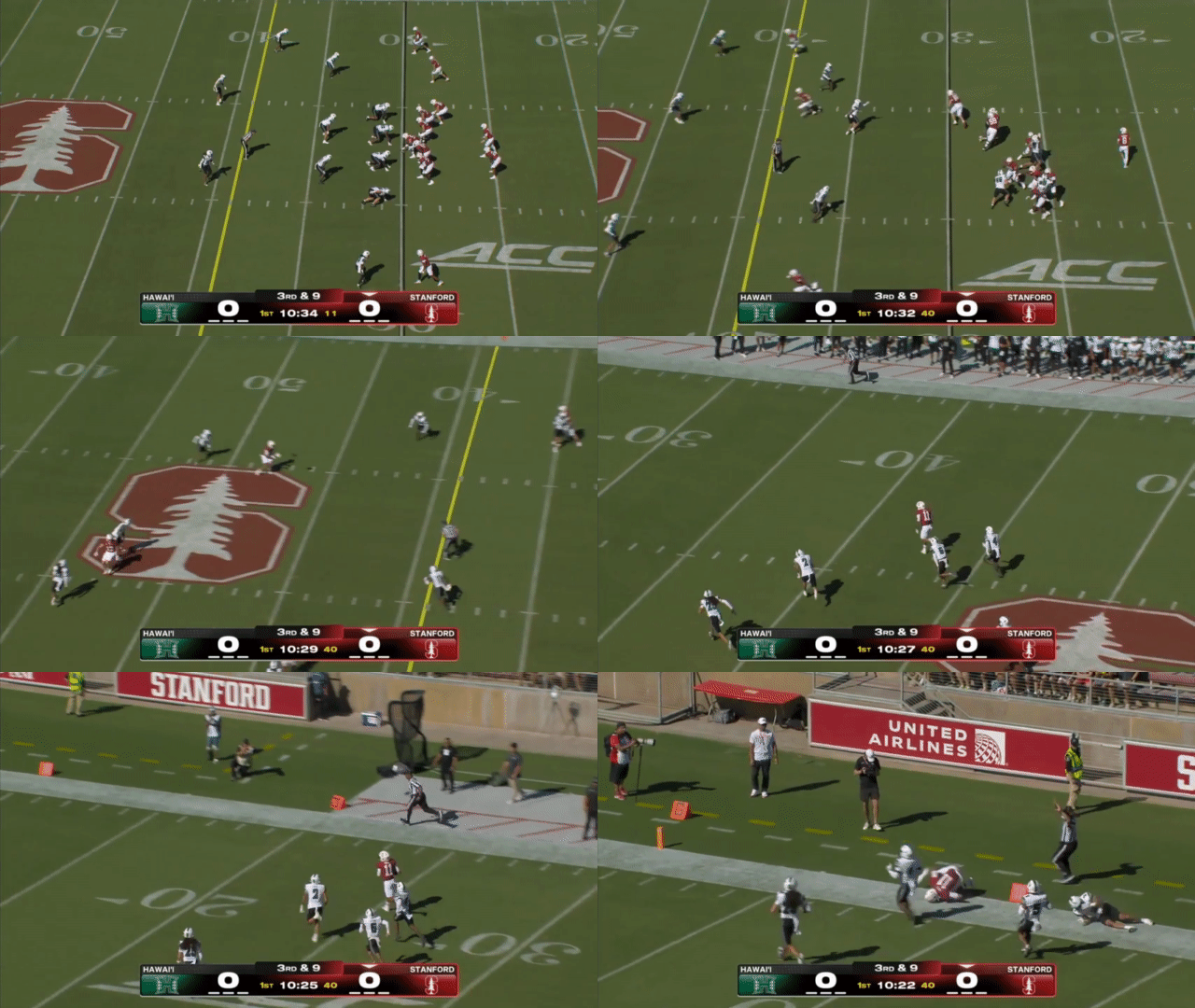
WR Jordan Onovughe generally runs shorter routes, but he has shown some nice contested catch ability:
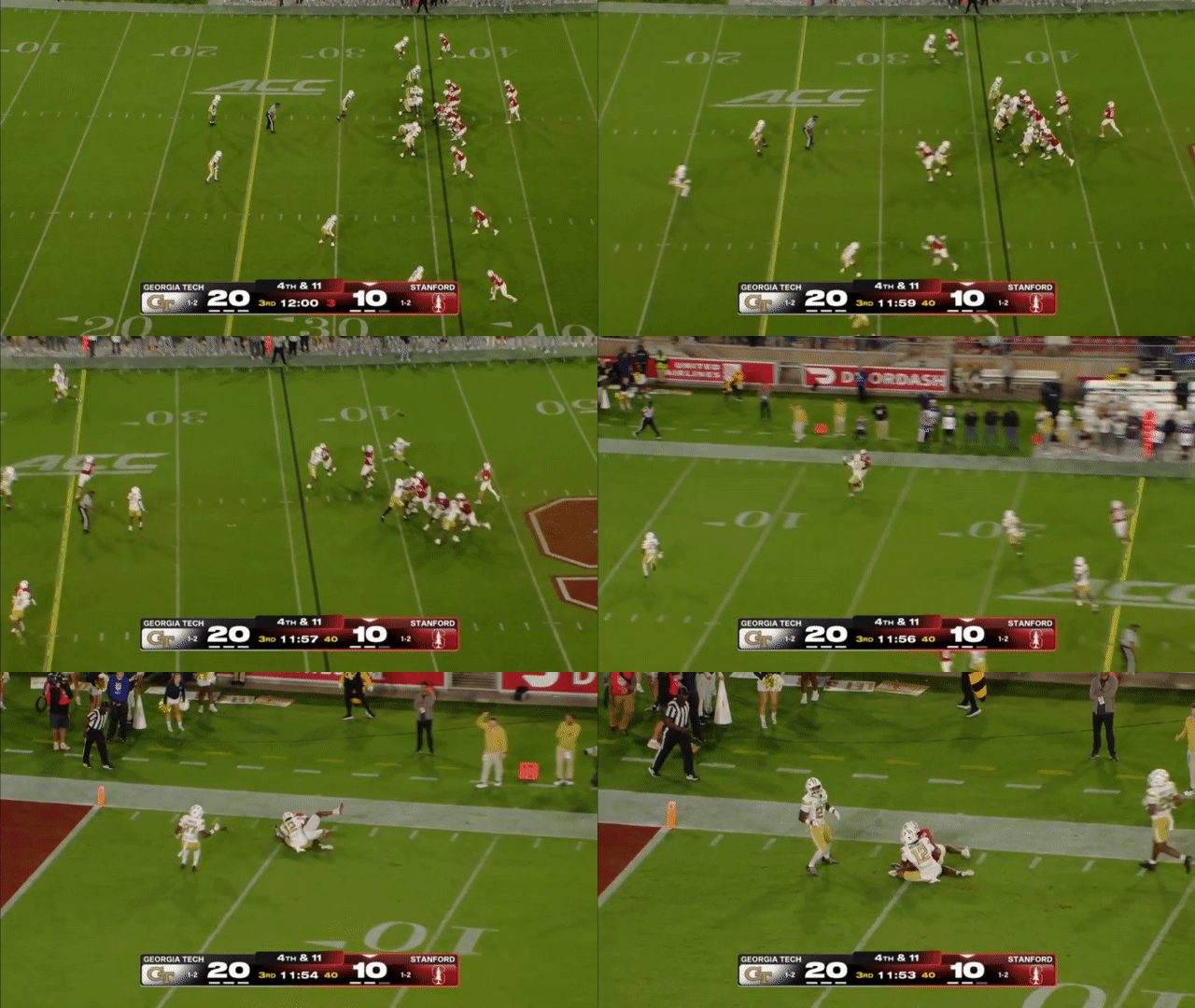
Liam Thorpe is the slot receiver behind Caden High, and although he’s mostly made appearances on special teams, he’s also shown some flashes of talent:
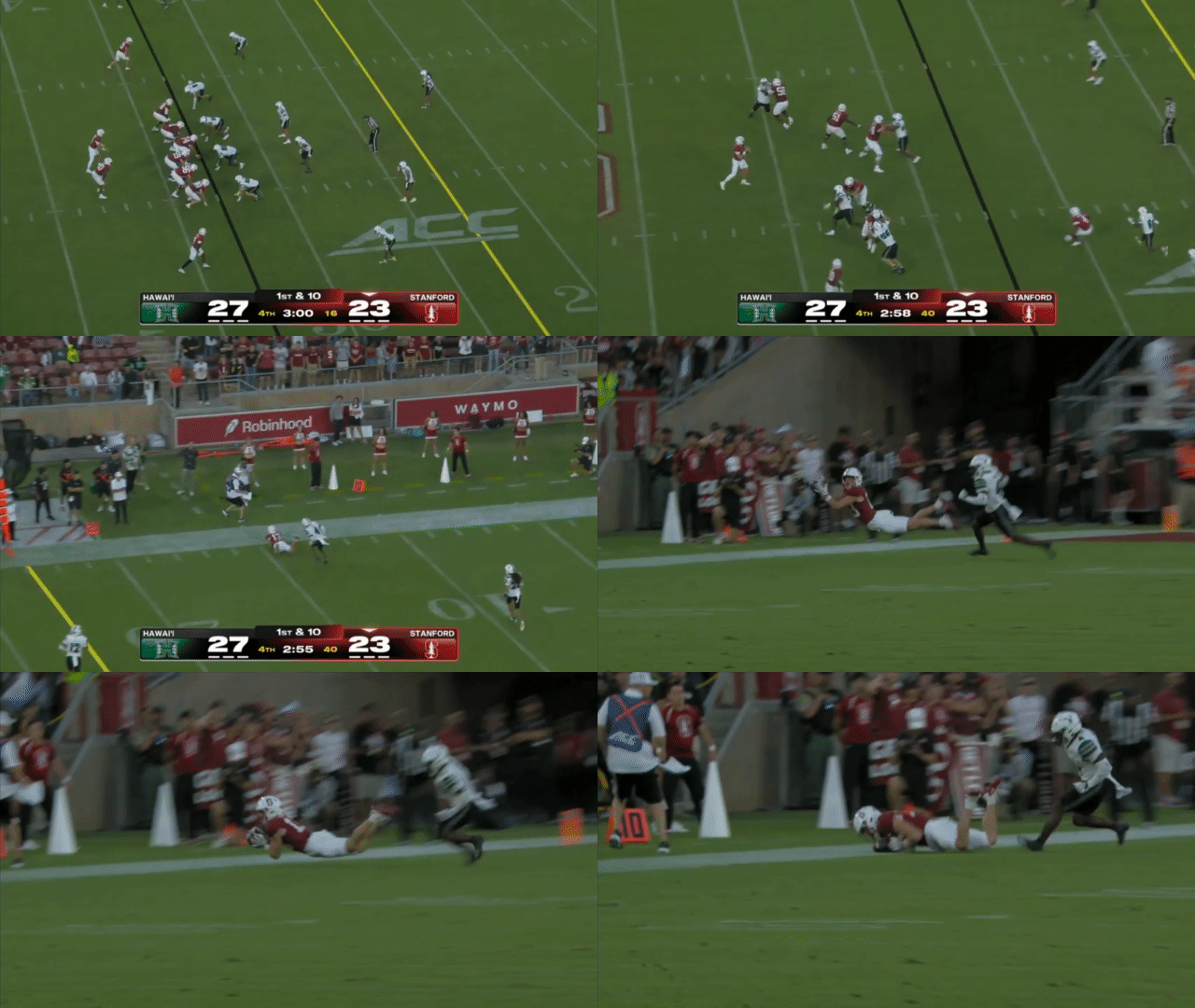
Stanford will often use multiple TE sets (12- or 13-personnel) as part of their run-heavy offense, so I figured I’d show some of that here. Here’s a heavy formation that shows why Stanford loves their blocking tight ends:
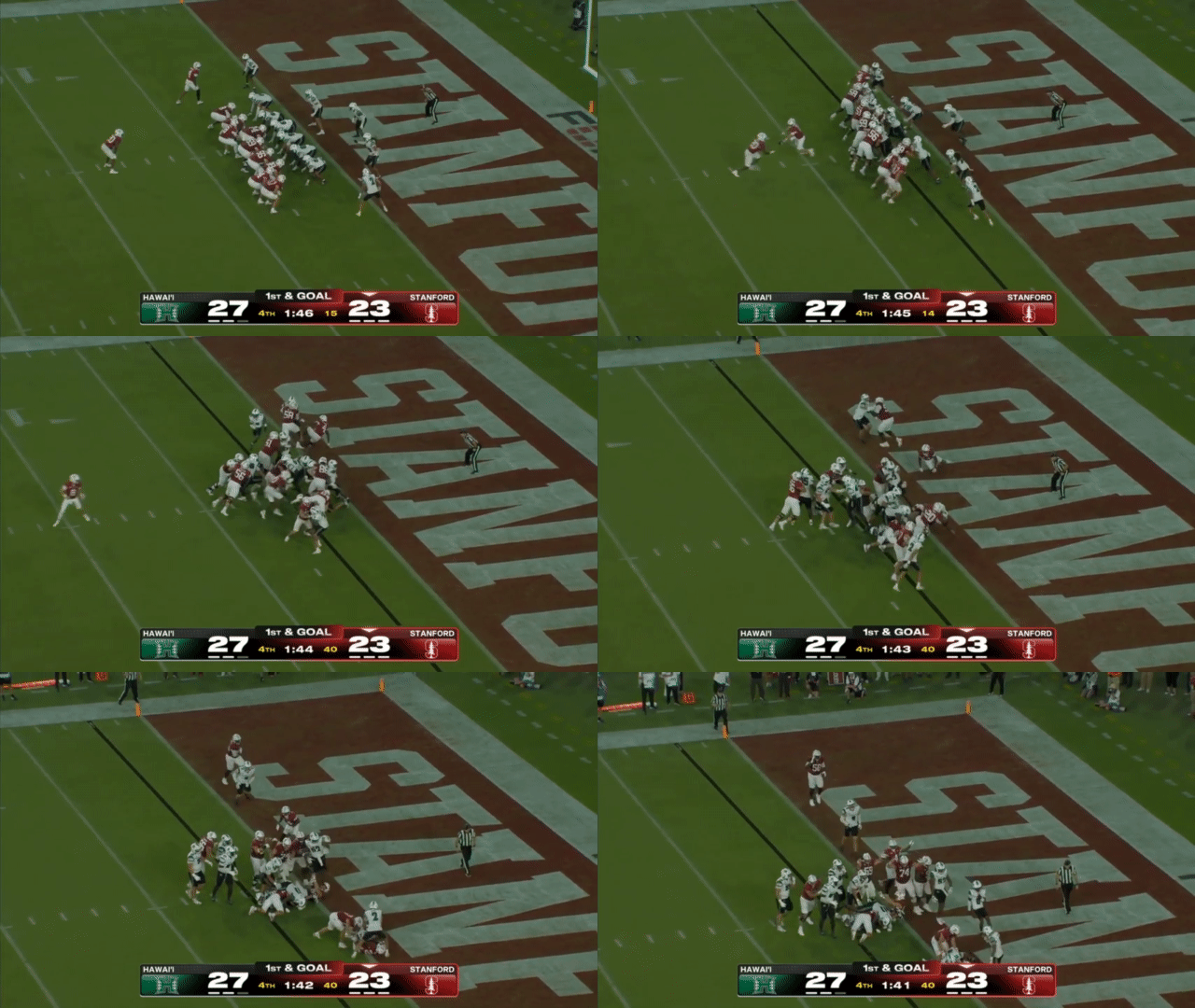
Only TE Benji Blackburn has been used heavily as a receiver this season, which is why this one catch by TE Aiden Black (who now has one catch on the season) caught the defense off-guard:
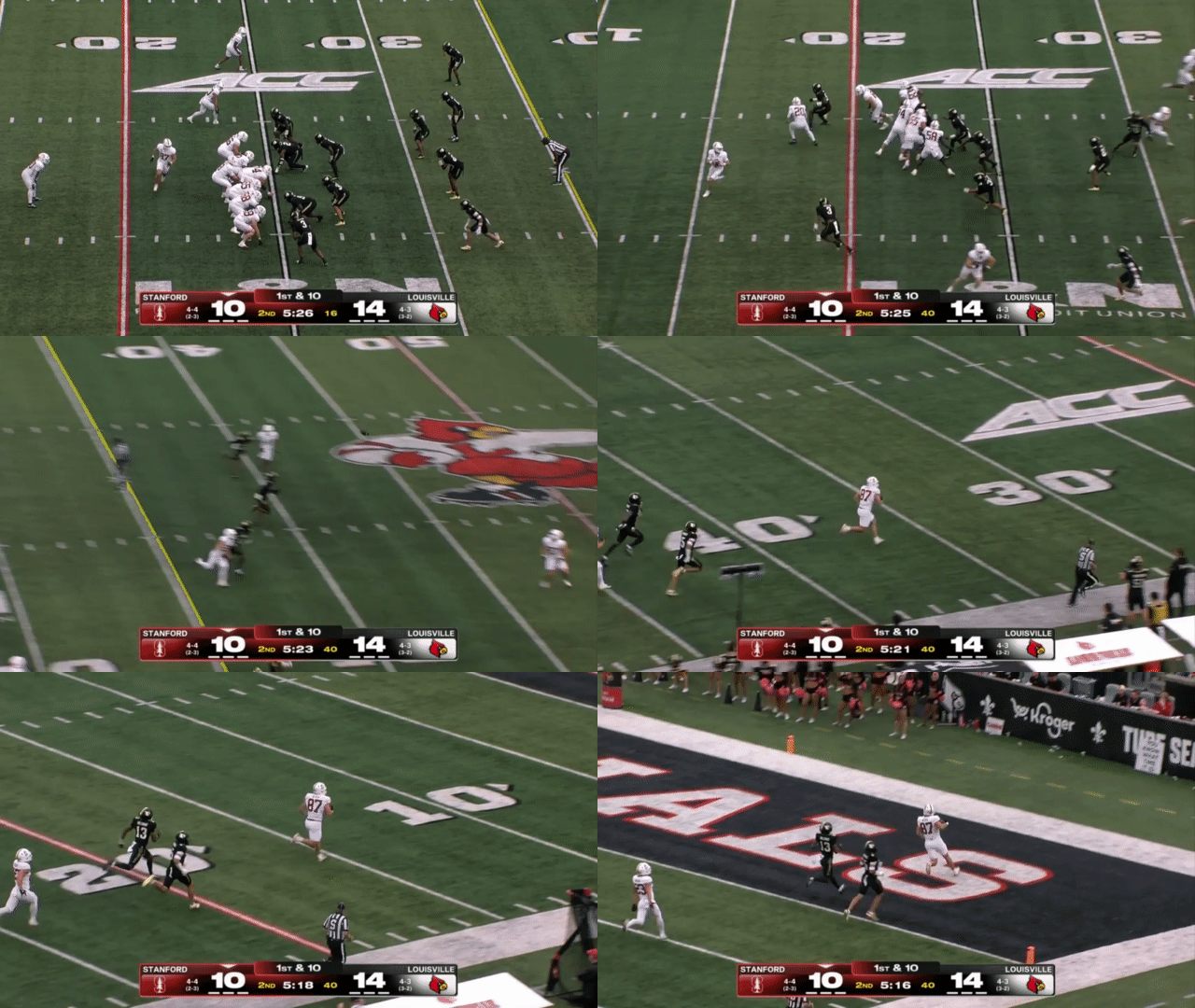
Although freshman WR Atticus Joseph only has a few catches on the season, he seems like a receiver that Stanford is trying to get more involved in the offense. Joseph has shown some nice after catch ability:
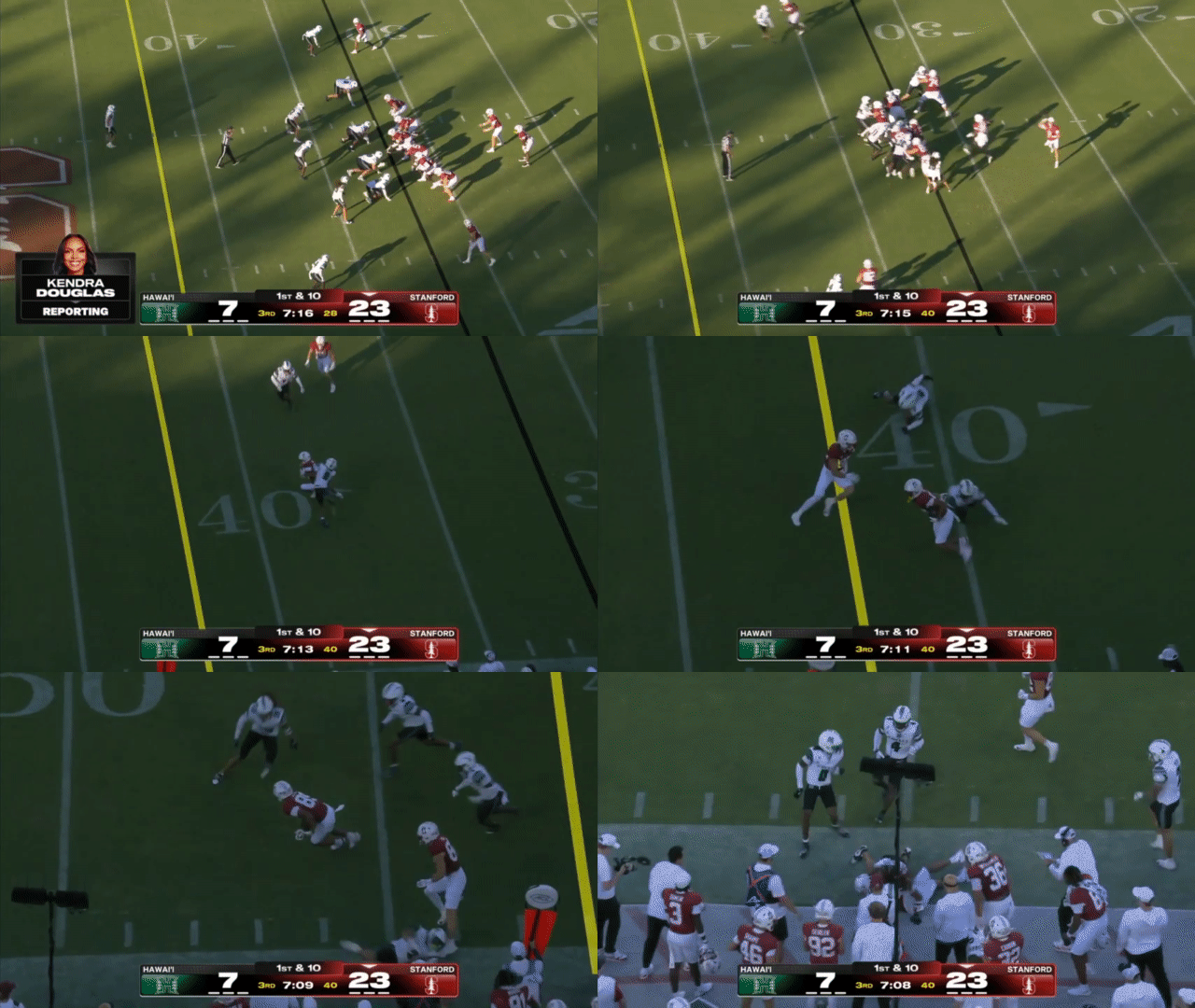
Stanford’s receivers are generally pretty good, given that they are a relatively unheralded group.
Conclusion
Listen, I don't feel great about this game. Stanford is on the upswing, and despite an especially terrible start to the season (bringing down most of their statistical metrics), they've looked pretty decent in recent weeks. They beat NC State (who beat Cal pretty convincingly), lost to a good Louisville team in a game that was fairly close for most of the game (tied in the 3rd quarter before a scoop and score and interception turned into 14 points for Louisville in a hurry and broke the game open), and they just beat Virginia Tech—Cal’s marquee win this season—a heck of a lot more convincingly than Cal did. And more concerningly, they did it by finding success in the run game that had previously been in the basement with Cal. Defensively, I don't think Stanford is terrible; they've got a solid defensive line and I have been pretty impressed with their linebackers (Matt Rose is out, but Sam Mattingly has done well in his place). I'd say their weakness is probably in the secondary (both in man coverage and especially in tackling), so a quarterback that could pick apart the defense with big throws would certainly be nice. I am sure Coach Lupoi will have Cal fired up for this game, I'm just afraid at this point that he's more likely to have them fired up to start a sideline brawl than fired up to play good football.
See you in Berkeley.
As always,
Go Bears.
You can find my full clips here.
Ford alone will shred Cal and their QB and WRs are good enough to provide a balanced offense. Cal’s victory will be getting on the scoreboard in the second half, though that may well be in garbage time before Stanford shoves the axe in our face and takes it home, again.
The most important part of this game is in the form of an answer to this question: Is Lupoi still the HC come Monday morning?
This will be the first home Big Game I'll miss in I don't know have many years. I can't go and watch a team that has been destroyed by such an inept Head coach. Telling players, "you are losers", is the worst kind of negative reinforcement a coach can do. Apparently he did this in front of other team members.
In all my years of coaching football I found out that POSITIVE reinforcement is much more successful in making a player improve in his skills and attitude.