

“Chris, every year Cal plays UCLA, you write a really mean article about UCLA. Perhaps too mean.”
(In defense of the “moronic subhed” of the 2023 edition of this article: I did not realize that the first text I write under “UCLA Football Offensive Preview” gets immortalized as such—I often put jokes in the drafts of my articles in case any of the other authors are taking an early sneak peek at my previews. I apologize for my crass words. I strive to choose my crass words much more carefully.)
You might continue on to ask, “Surely you’ve ran out of new material with which to skewer UCLA?”
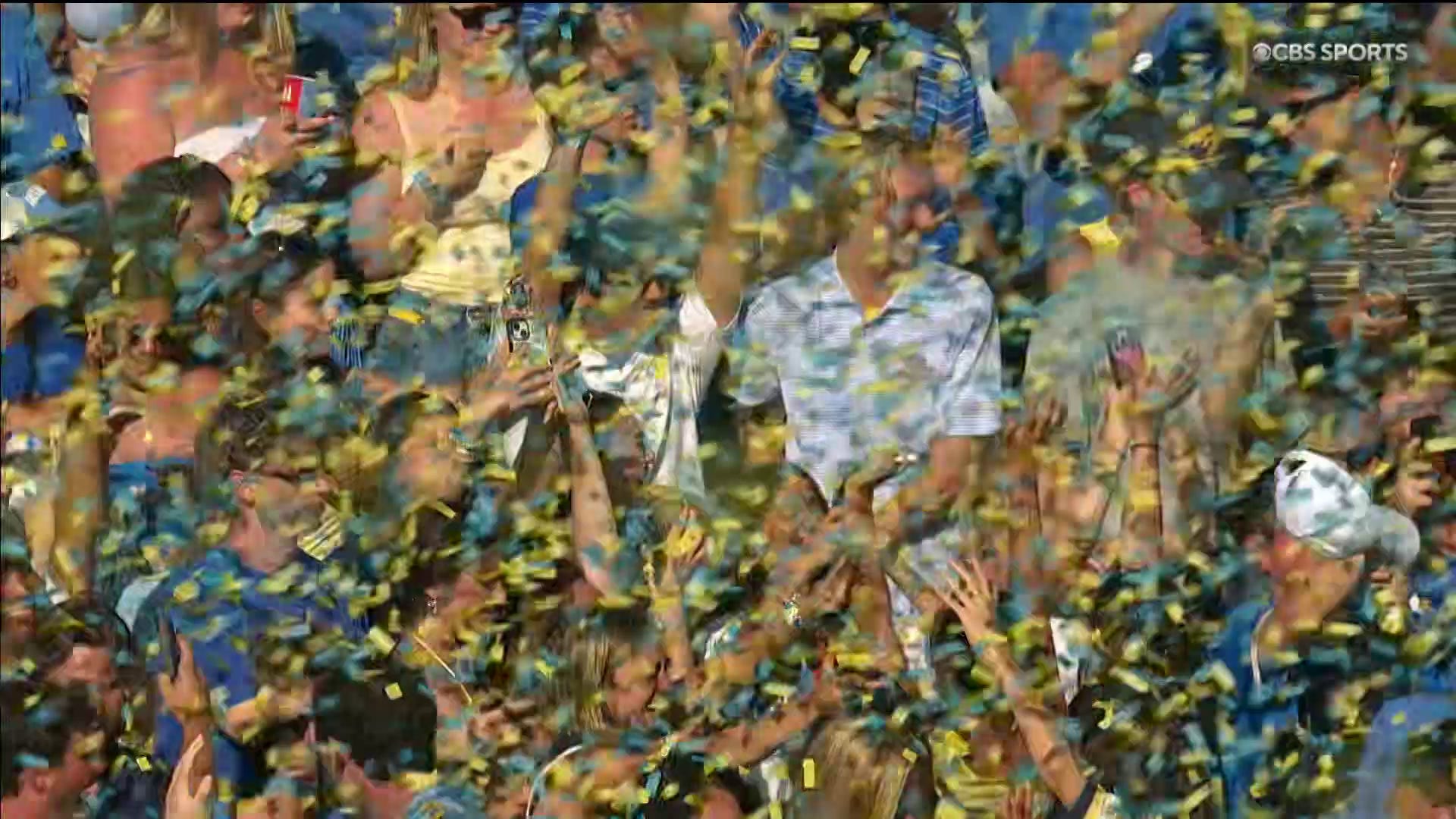
What a silly question that would be. Sure, I could talk about how UCLA had confetti ready to go for when a 0-4 UCLA team finally won a game:
Or perhaps I could talk about how visiting Big Ten teams turned the Rose Bowl into their own home game each time:
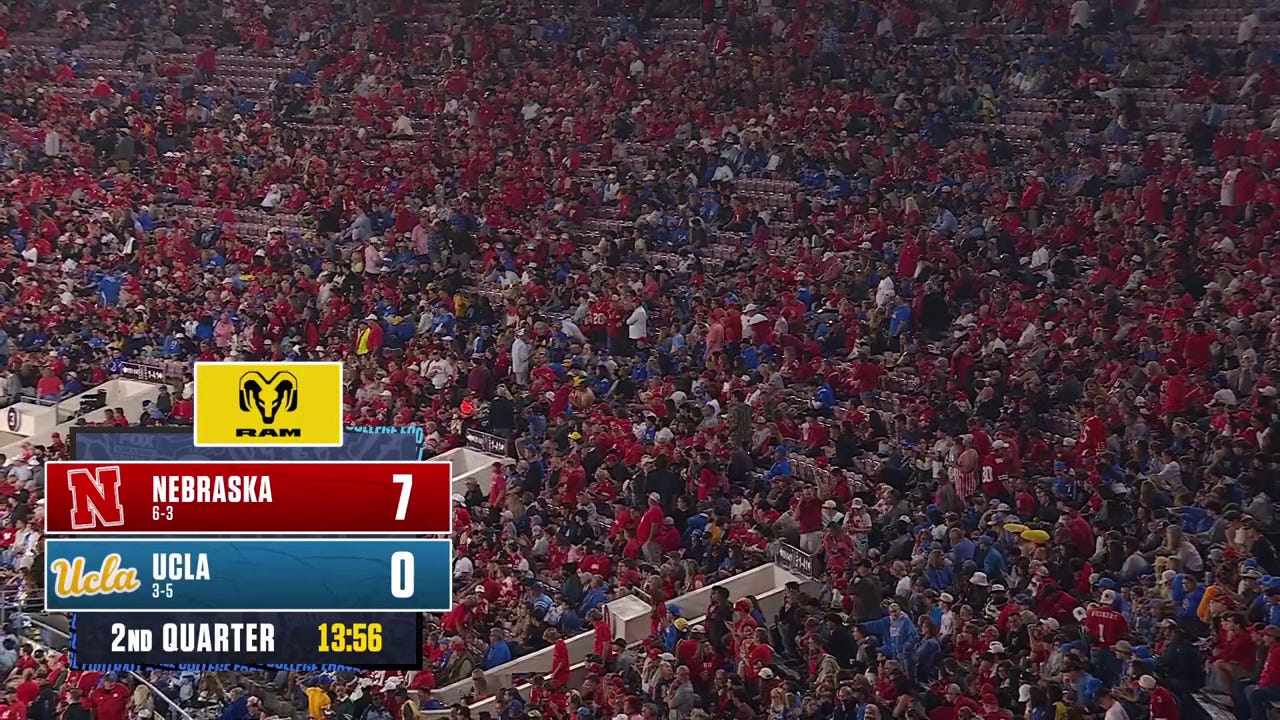
(The Bruins have a lease with the Rose Bowl that runs until 2044 (UCLA has played there since 1982), but they’re currently being sued by the Rose Bowl as UCLA continues to spit in the face of college football tradition, attempting to move their home games to SoFi Stadium to better accommodate all of the visiting fans. Hey, anything to make a buck!)
But no, I think I’ll take a different tack this time:
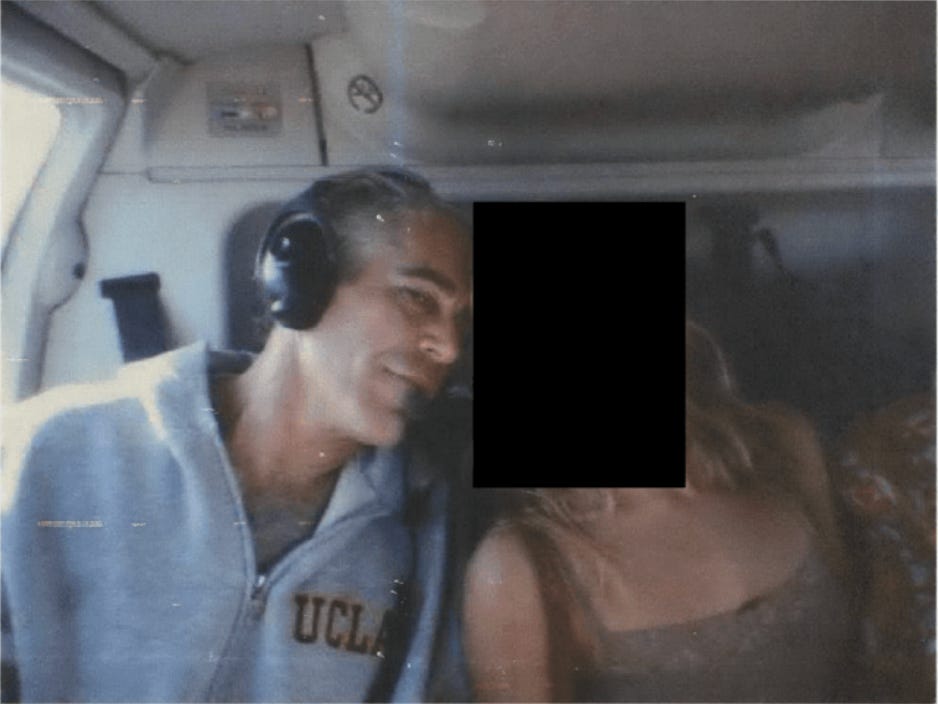
As we delve into the relationships between Jeffrey Epstein and UCLA’s NIL funds, it is important to note that I am not suicidal, never have been, and never will be.
“Oh come on, that’s ridiculous,” you might say. “Jeffrey Epstein was definitely way more connected to Berkeley,” you continue, obviously a stupid UCLA fan. Sure, there are some connections between Epstein and Cal. He lied on his resume about being a lecturer at UC Berkeley to get his start at Bear Stearns (Bear Stearns found out he was lying about this, but kept him at the company anyway). Of course, the California State Normal School knows all about attaching their name to a prestigious institution (UCLA, for all my UCLA readers out there). Epstein also funded a UC Berkeley student’s law school degree in return for referring “female assistants.” She put her law school knowledge to good use, playing dumb to Epstein’s insinuations, and recommended him a 28-year-old assistant. Epstein scolded her in broken English:
my poiint is in biz you MUST just do as you are told , you tendency to add your own thoughts is a huge negative in biz. sorry. im trying to help . I m not against helping you, however you must produce two candidates. with your full recomeendation . and then i willi help. i want it in a n organized professional form . . I know your work can be better than you have led me to believe. this is high school level .
She replied:
Hi Jeffrey, I see your point. Her looks and brain correspond more for what you might be looking for though...she really really wanted to be considered :) one should be given a chance to accomplish the dream!! But ok, no more over 24! Sorry for that
Source: EFTA02351139.pdf
(It turns out it’s probably not the best idea to con a well-known sex trafficker for tuition money, as apparently the association with Epstein negatively impacted this lawyer’s reputation).
Of course, Epstein was well-known to fund academics, many of whom were desperate to secure private research funding. However, not all of them had quite the cordial relationship as UCLA neuroscience professor, Mark Tramo:
Mark Tramo – an associate adjunct professor of neurology at UCLA – sent emails to Epstein in 2007 and 2018, according to Bloomberg and emails released by the United States House of Representatives’ House Oversight Committee. Lesley Groff, one of Epstein’s executive assistants, sent Epstein a “Skype schedule” in 2017 including a virtual meeting with Tramo, according to another email released by the committee.
Per Bloomberg, Tramo said in his 2007 email that he would stand by Epstein after it was reported that he was preparing a guilty plea to charges for soliciting prostitution – including from a minor – for which he served a 13-month sentence.
Tramo sent the 2007 email to Epstein’s assistant after reading reports that Epstein was planning to enter a guilty plea, according to Bloomberg.
“I read the newspapers this morning. … Please remind him that boys from The Bronx (even if they end up at Harvard) have long memories, know all about cops, and stay true to their friends through thick and thin (no less peccadilloes),” Tramo said in the email, according to Bloomberg.
(Source)
Epstein’s charity gave $100,000 to Tramo’s Institute for Music and Brain Science in 2017.
However, let’s not forget about Epstein’s right-hand woman, convicted child sex trafficker Ghislaine Maxwell (Epstein’s romantic partner who trafficked young girls to Epstein). Of course, for the serious crime of child sex trafficking, she’s now serving time in a minimum security prison, after Trump’s Attorney General Todd Blanche helped facilitate her transfer in 2025. Of course, Epstein wasn’t the only guy Maxwell was intimately familiar with:
Casey Wasserman, chairman of LA28: The agency exec sent messages—at times highly flirtatious—with Maxwell in 2003 about real estate and massages. When discussing the massage, Maxwell said there are “a few spots that apparently drive a man wild” and offered to “practice them on” Wasserman. He later said his “desires” include “You, me, and not else much.” In a statement on Saturday, Wasserman said, “I deeply regret my correspondence with Ghislaine Maxwell,” that happened “long before her horrific crimes came to light.... I never had a personal or business relationship with Jeffrey Epstein. As is well documented, I went on a humanitarian trip as part of a delegation with the Clinton Foundation in 2002 on the Epstein plane. I am terribly sorry for having any association with either of them.”
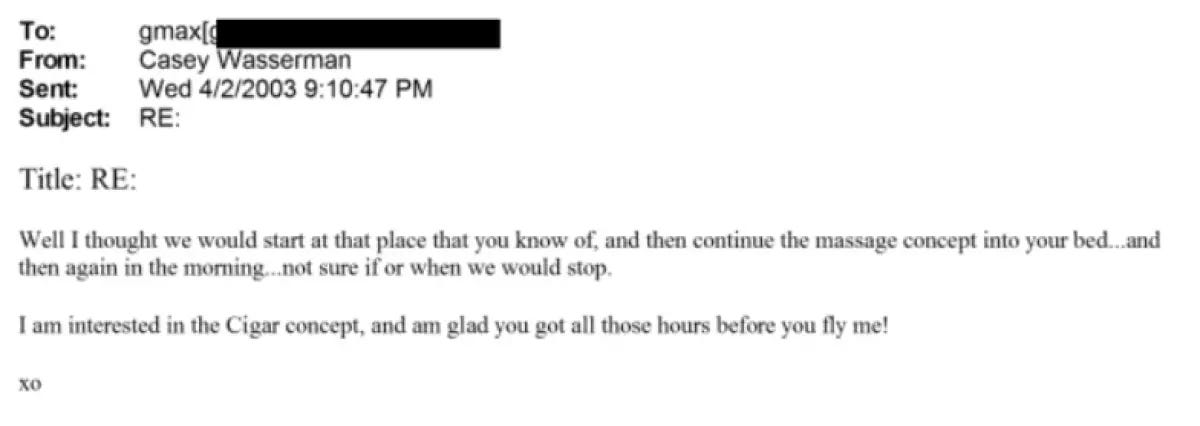
Wasserman’s name might be familiar to you, as UCLA Football’s $50M training center is named after him (after he reportedly donated about $20 million to the project), the Wasserman Football Center (see here on Google Maps). Not to mention that he was on the search committee that hired Bob Chesney. Wasserman “has had a say when it comes to the decisions that get made at the athletic department, from coaching searches to UCLA changing conferences.”
After the documents linked Wasserman to Epstein and Maxwell, Wasserman has decided to sell his talent agency. (He is remaining chairman of the LA28 Olympic Games, though; so, he feels bad, but not that bad.)
Okay, but what’s the big deal, he only donated an athletic facility. Everyone knows that college football is all about NIL spending these days. Their current quarterback only arrived after a dispute over NIL terms, after all. So how is UCLA’s NIL doing?
Well, just committing some mild tax fraud, is all. NIL contributions are not tax deductible, but Bruins for Life, UCLA's official football collective founded by former UCLA safety James Washington, funneled donations through Washington’s tax-exempt charity “Shelter 37 Inc.” In the current environment of college football, I’m sure none of this matters—it’s up to the individual donor to recognize that NIL contributions are not tax-exempt, and if you happened to contribute to a tax-exempt charity that was funneling money to an NIL collective and claimed that charitable contributions on your taxes, well that’s on you. To quote the lawyers interviewed by FOIAball:
After viewing the emails, Lloyd Hitoshi Mayer, a Notre Dame professor who focuses on non-profit tax law, said what was happening was clear.
“UCLA athletics is encouraging their donors to engage in fraud.”
Great job, UCLA Athletics. Committing a felony to go 3-9 should be another felony.
UCLA struggled last year, stumbling to a 3-9 record, helpfully summed up in this little chart:
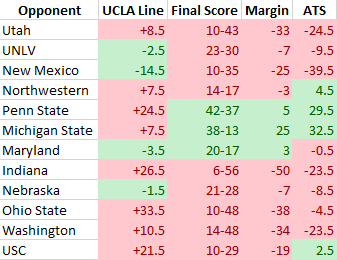
UCLA largely performed far worse than Vegas expectations, except for shocking upsets against Penn State and Michigan State (though I’d argue that the MSU line was awful on Vegas’s part, as MSU was a bad team that ultimately finished 1-8 in the conference, even below UCLA). UCLA went 3-9, 4-8 against the spread, losing 3 of the 4 games they were favored in and 6 of the 8 games they were underdogs.
But UCLA fans think that’s all about to change, because they just hired James Madison’s former head coach, Bob Chesney. JMU made an appearance as the #12 seed in the playoffs last year, largely due to chaos that Cal provided (defeating Louisville and SMU, which sent 7-5 Duke to the ACC Championship to face Virginia, which resulted in ACC Champion Duke not being among the top 5 ranked conference champions for a playoff auto-berth, which fell to JMU in the Sun Belt Conference instead). Chesney took over the head coaching job at JMU from Curt Cignetti (Indiana’s head coach, perhaps you’ve heard of him) and kept them overachieving at the FBS level (Cignetti managed JMU’s transition from the FCS to FBS, taking them to the FCS semifinals in 2021, going 8-3 in the Sun Belt (FBS) in 2022, 11-1 in the Sun Belt in 2023, and Chesney went 9-4 in 2024 and 12-2 in 2025 (losing to Tosh Lupoi’s Oregon in the first round of the CFP).
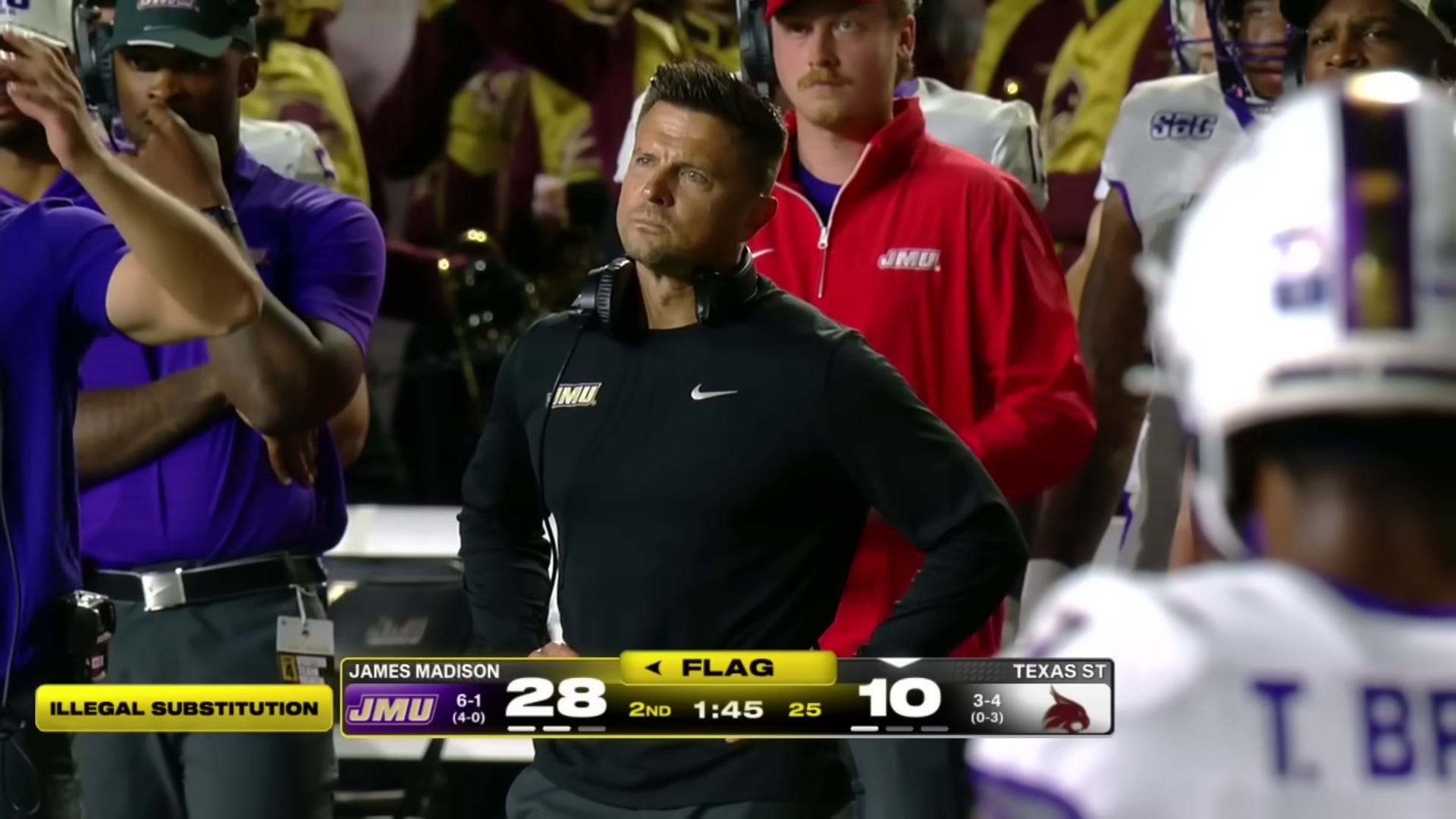
As a quick background note, I always record and save the games of Cal’s next year OOC opponents (good luck finding Wagner’s 2025 games now). Because I did not anticipate JMU games having such a large role on my previews this year, the only JMU games I was able to watch were those that survived my YouTube TV DVR after the offseason. From what I saw, JMU’s final scores were often deceptive—almost as if a team were posturing for a committee likely to only check box scores. Almost every single JMU game last year was very close and competitive, at least until JMU was able to break the game open and pour on some extra scores at the end. JMU had an early lead against Marshall and held it the whole way, and JMU blew out App State and Coastal Carolina. Otherwise, JMU was neck and neck with their opponent for the vast majority of the game. (Relatedly, regarding the CFP matchup, 51-34 Oregon sounds a lot closer than the game really was—Oregon scored 5 TDs on their first 5 drives for a 34-6 halftime lead, while JMU scored 3 TDs on their final 3 TDs in garbage time against Oregon backups to take the score from 48-13 to 51-34 at the finale).
Thus, by the numbers, JMU was statistically a good second half team last year—because they poured on a ton of points late in games (win or lose).
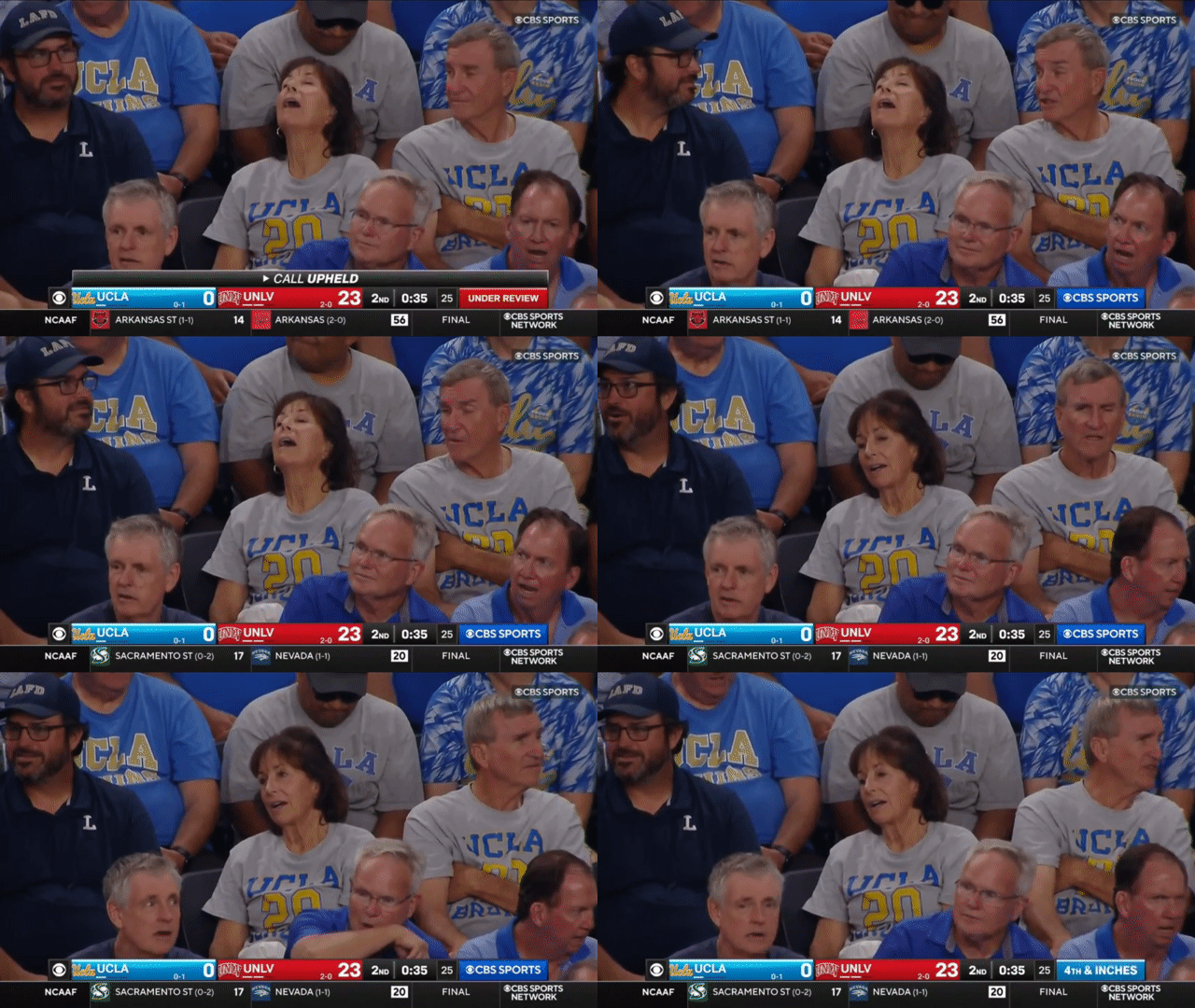
On that note, I hope Bob Chesney accomplishes at UCLA exactly what he did at JMU: turn UCLA into a successful mid-major program.
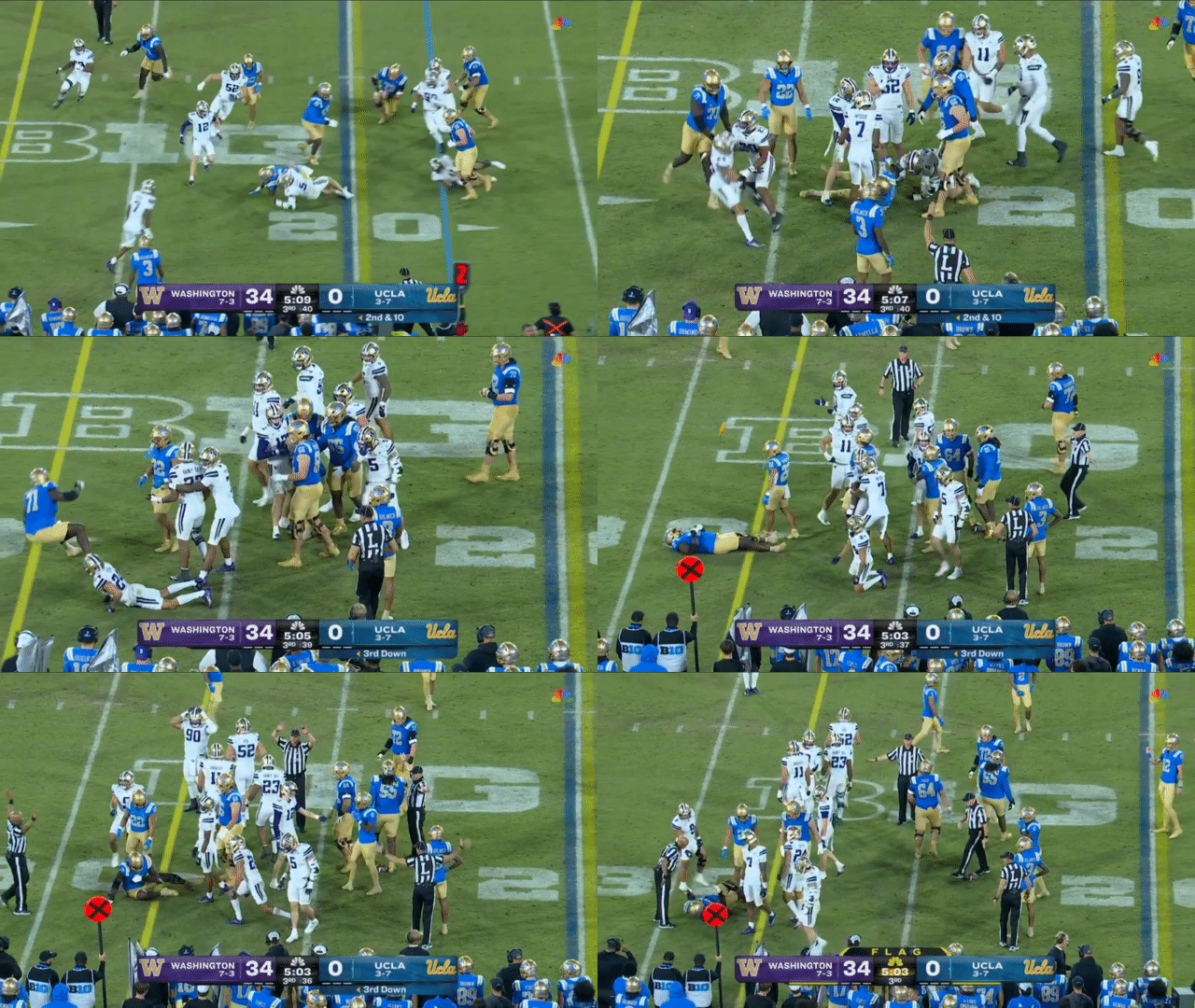
Because you know UCLA will pull out all the stops this game, whether it’s to commit tax fraud, tamper with recruits, or what have you:
Let’s take a closer look at the positional breakdowns.
Quarterback
UCLA is led by quarterback Nico Iamaleava, the #2 ranked recruit in the 2023 high school class (coincidentally, just above UCLA’s Dante Moore) and #1 ranked recruit of the 2025 transfer class. Perhaps fittingly, Iamaleava is the most over-ranked 5-star quarterback I’ve seen since… UCLA’s Dante Moore (who I begrudgingly covered in the 2023 edition of this article). In fact, I’m tempted to just copy and paste entire sections of that 2023 article:
Moore has a decently strong arm… This receiver is not open, the ball is not thrown to a spot where the receiver has a chance at it, and it’s thrown late… By far Moore’s most apparent flaw is his tendency to lock onto his first read and stare them down. This isn’t terribly uncommon for inexperienced freshmen quarterbacks, but the expectations are a lot higher when you’re one of the highest rated recruits in the country and commanding a large NIL deal these days… in the rare case he doesn’t stare his receiver down, he still struggled with even basic passing concepts… I hope Moore eventually transfers to a place where he can develop his skills.
I think that perhaps it’s not surprising that the same coaching staff that failed Dante Moore would also fail Nico Iamaleava.
(For the record, his last name is pronounced “ee-ah-MAH-LAY-ah-va”).
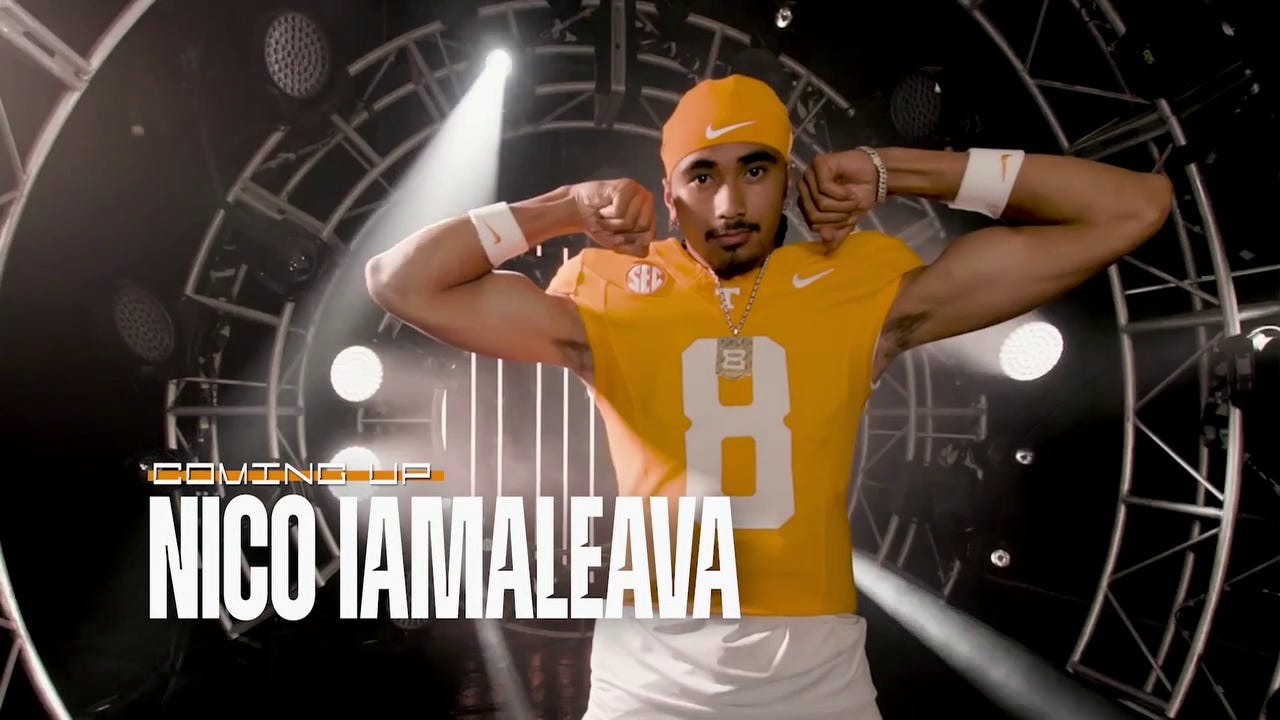
Perhaps worth mentioning is that Nico Iamaleava is also a star volleyball player, mayhaps due to his rangy figure:
I think the easiest way to describe Iamaleava to Cal fans is that—aside from their common Polynesian heritage—Iamaleava is essentially the polar opposite of JKS. JKS gets the ball out quick, can read a defense, always knows where to go with the ball, has excellent accuracy and touch, but is a bit limited mobility-wise. Iamaleava, of course, is great at running the football.
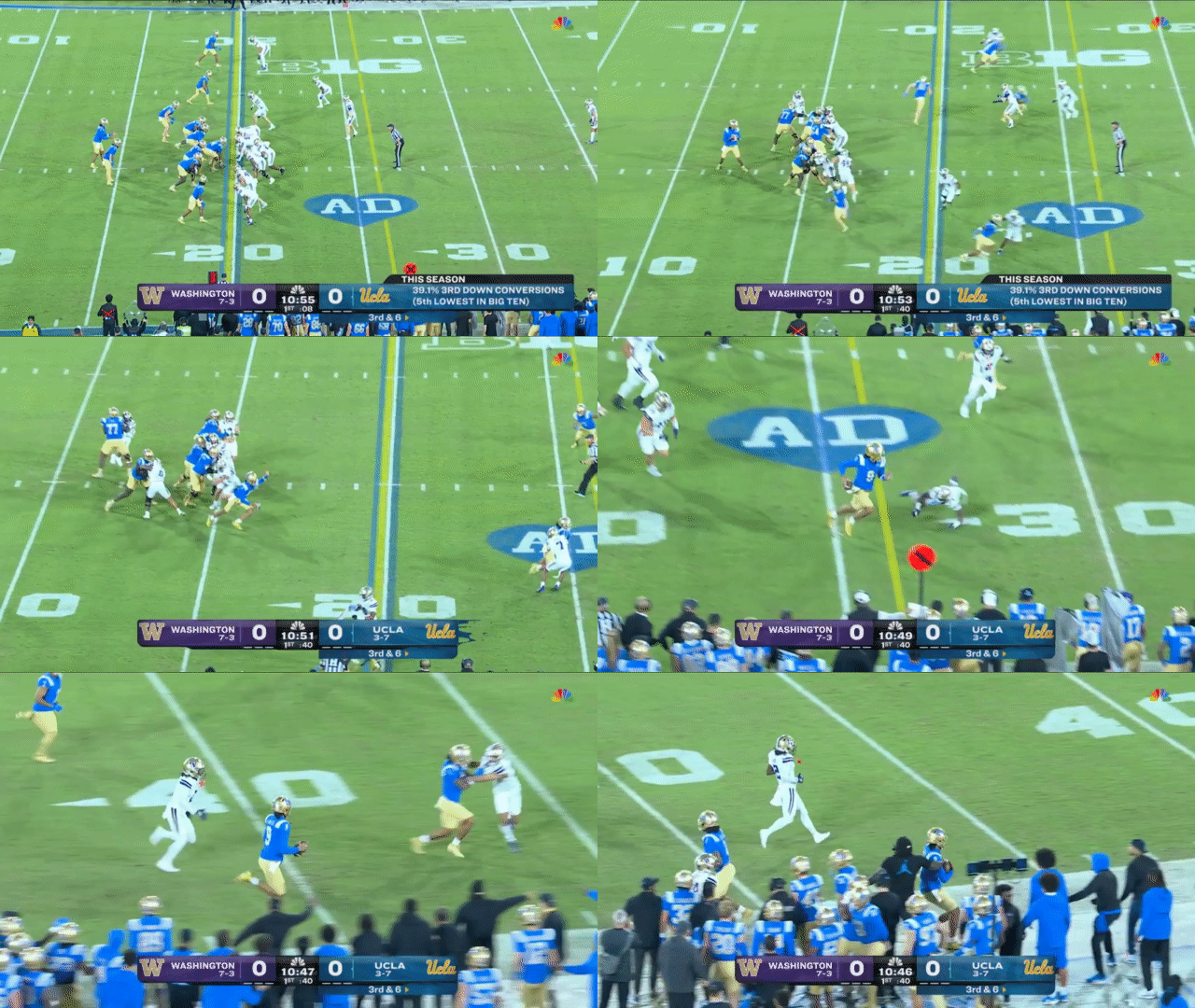
So let’s start with that. The most effective part of Iamaleava’s game is his ability to create unscheduled yards on the ground:
His response to pressure that he sees coming will be to escape the pocket and pick up yards on the ground:
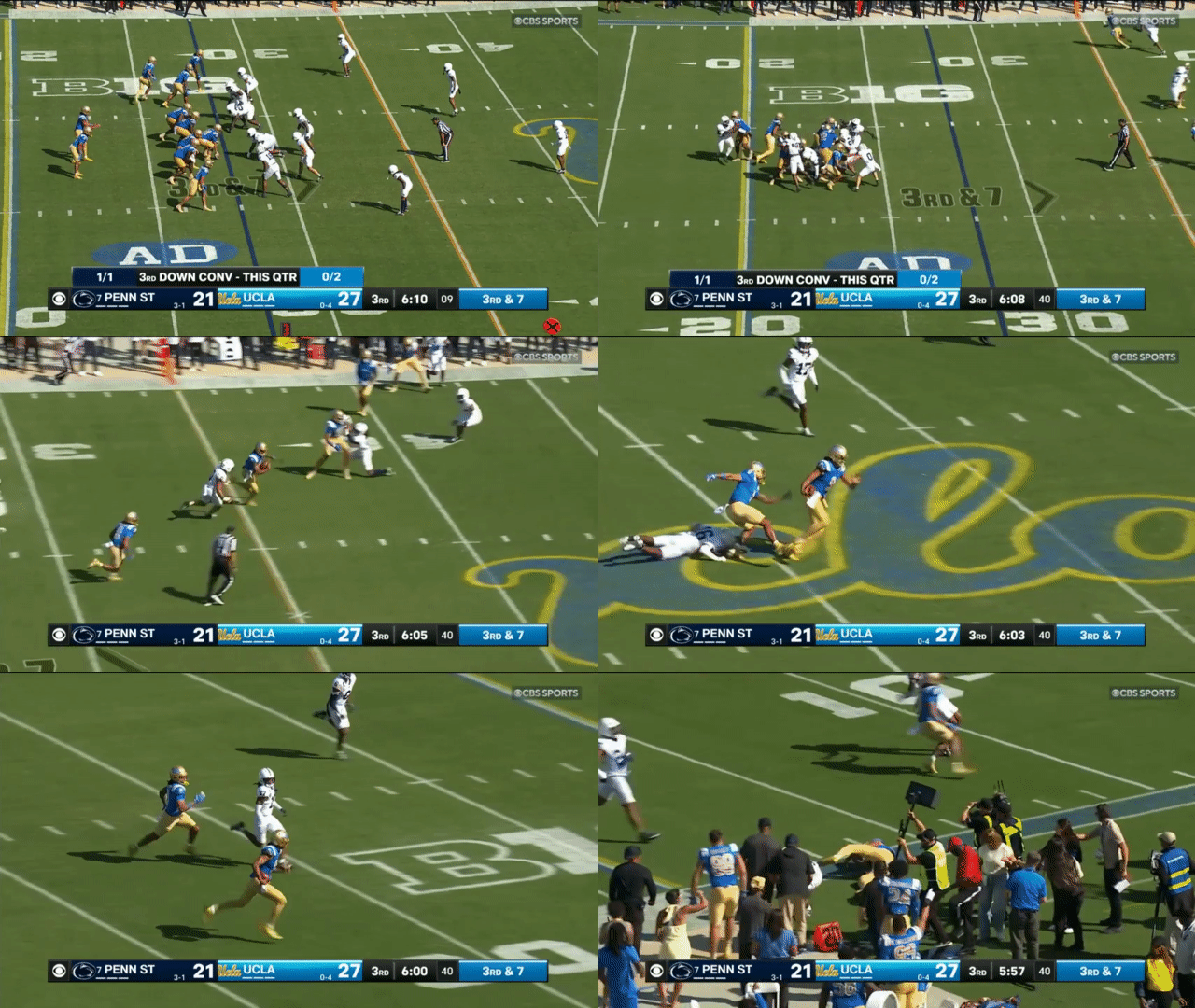
Iamaleava is difficult to take down in the open field:
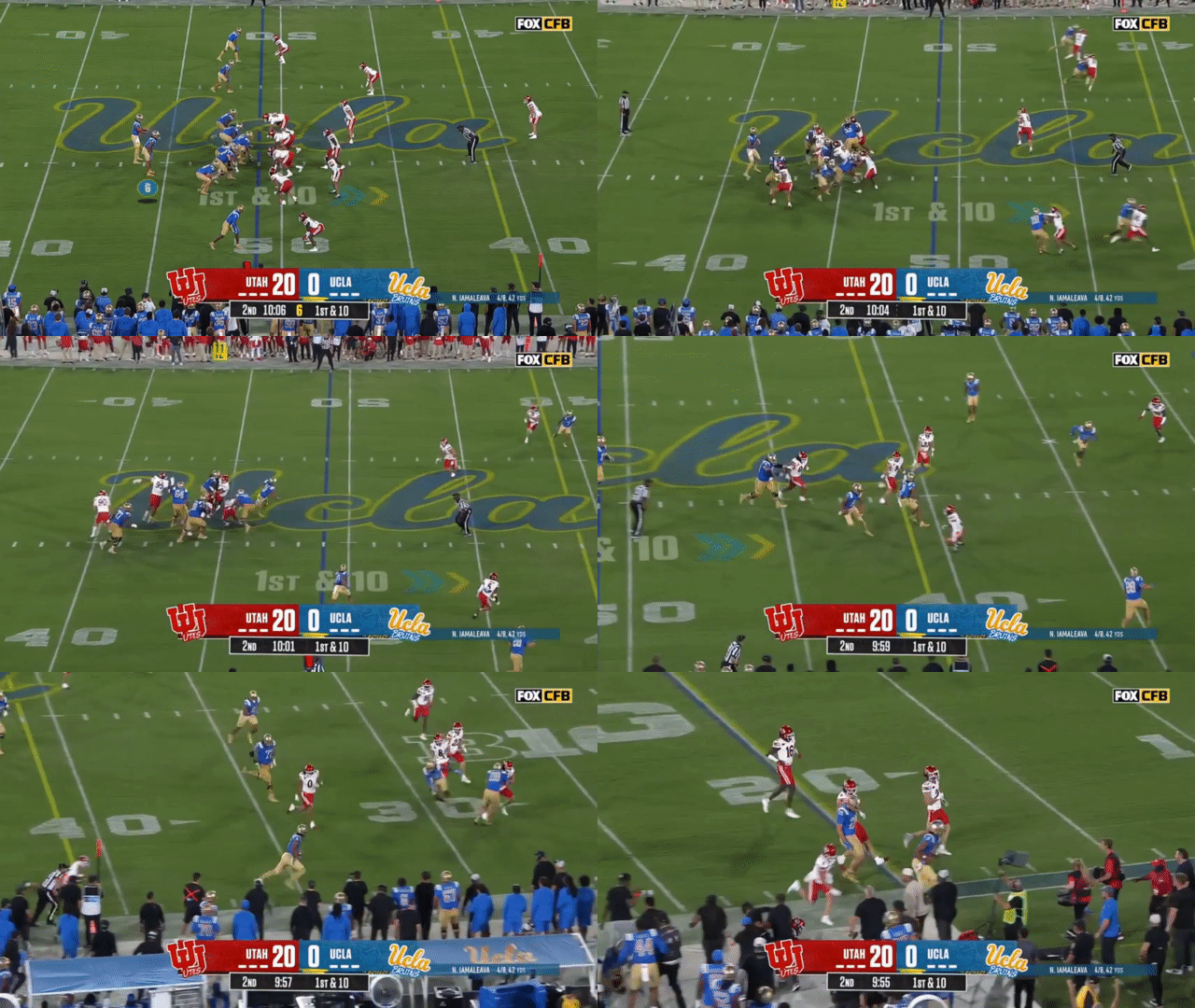
Pretty much any green grass in front of him and he’s gone:
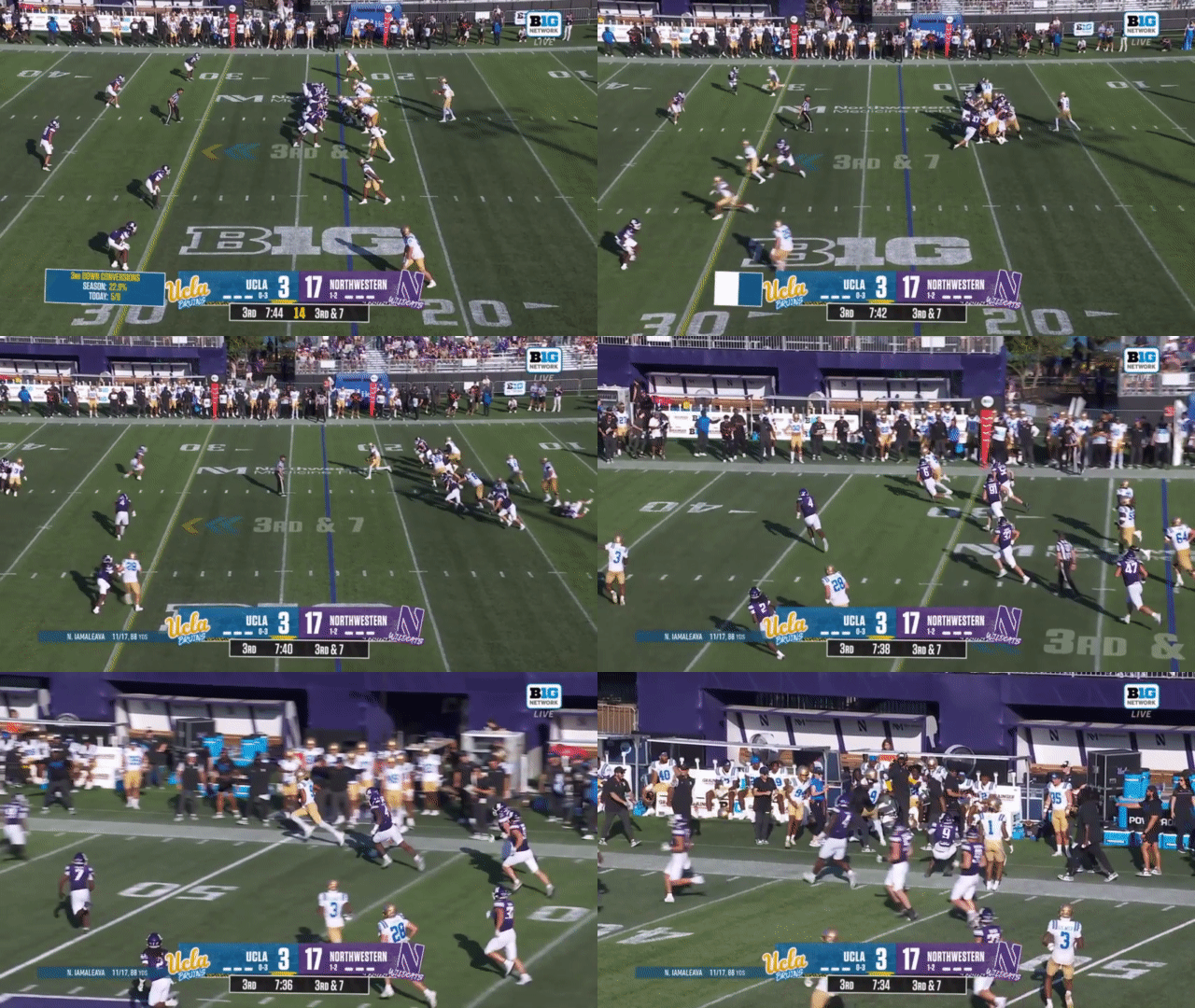
Iamaleava is both large and shifty, which makes him hard even for pass rushers to bring down:
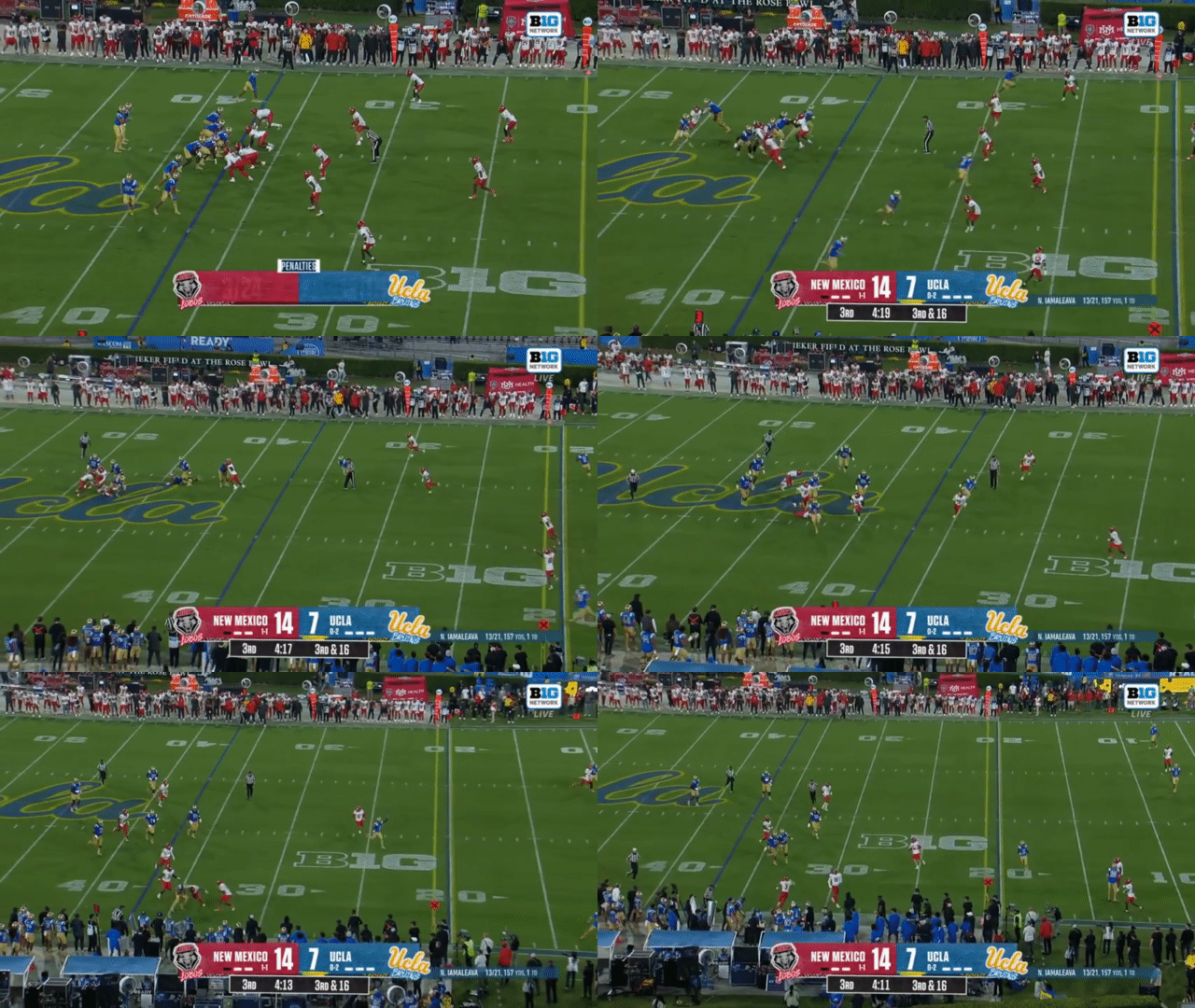
In the following play (selected because of Iamaleava’s ability to resist a sack), Iamaleava misses his window on the crossing route over the middle for a first down, is probably looking to run it, and probably doesn’t decide to throw it until he’s being tackled behind the line on 4th down (which probably helped them “just throw it” decision):
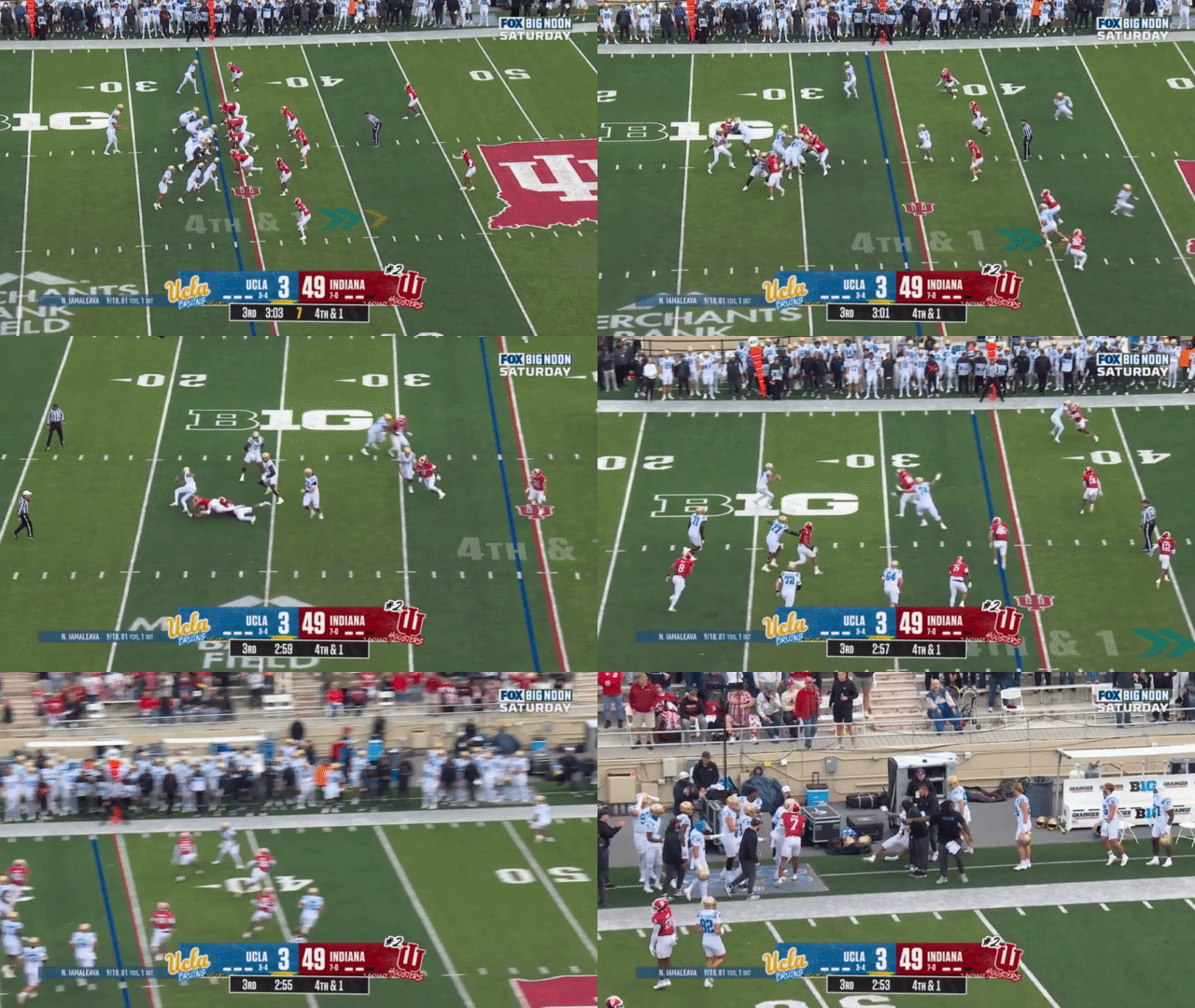
UCLA was generally awful on 3rd downs last season (92nd/134 in the FBS on 3rd down conversions) and a 4-down team by necessity (95th/134 on 4th down conversions). It was not at all surprising to see designed Iamaleava runs on 4th down:
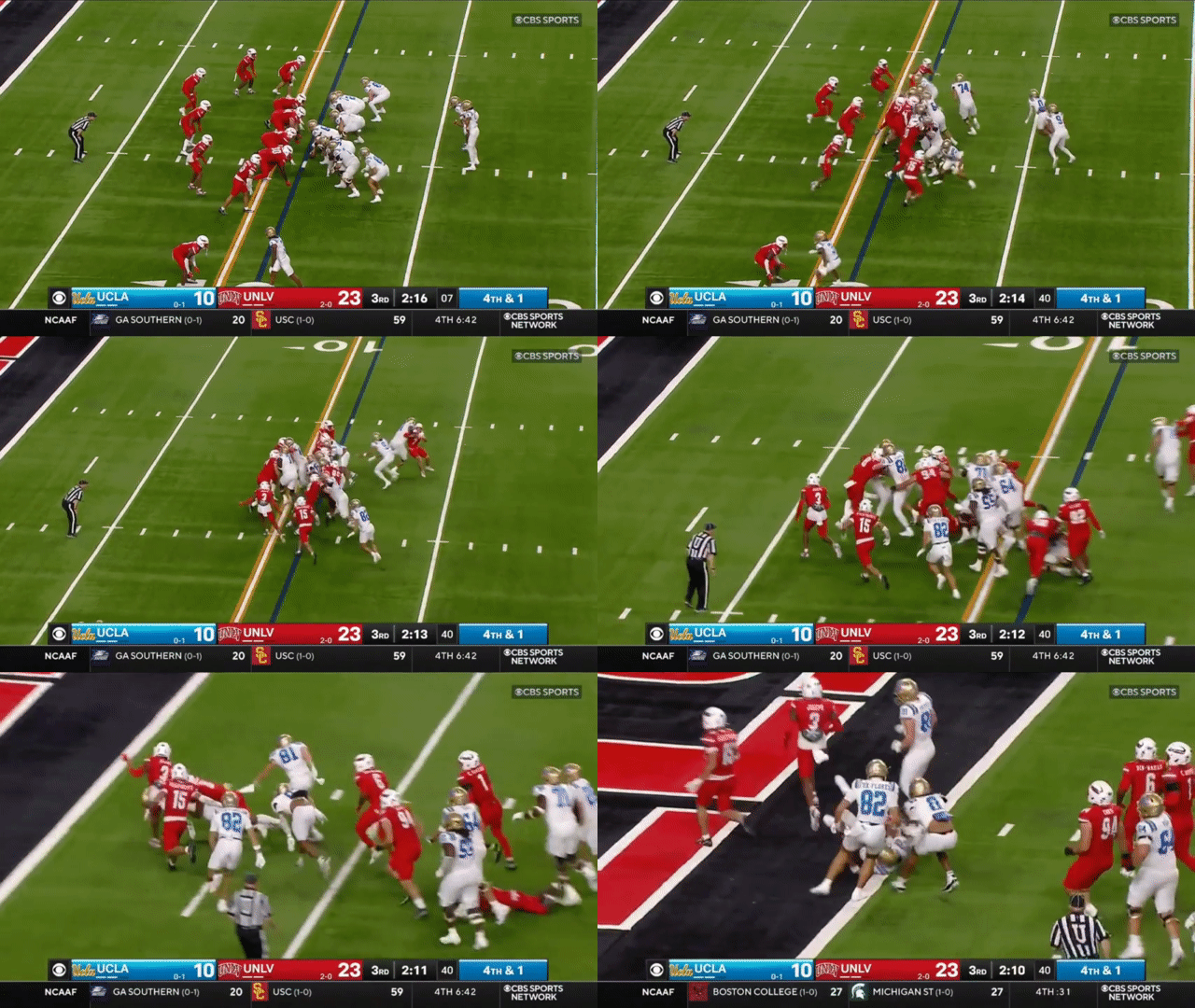
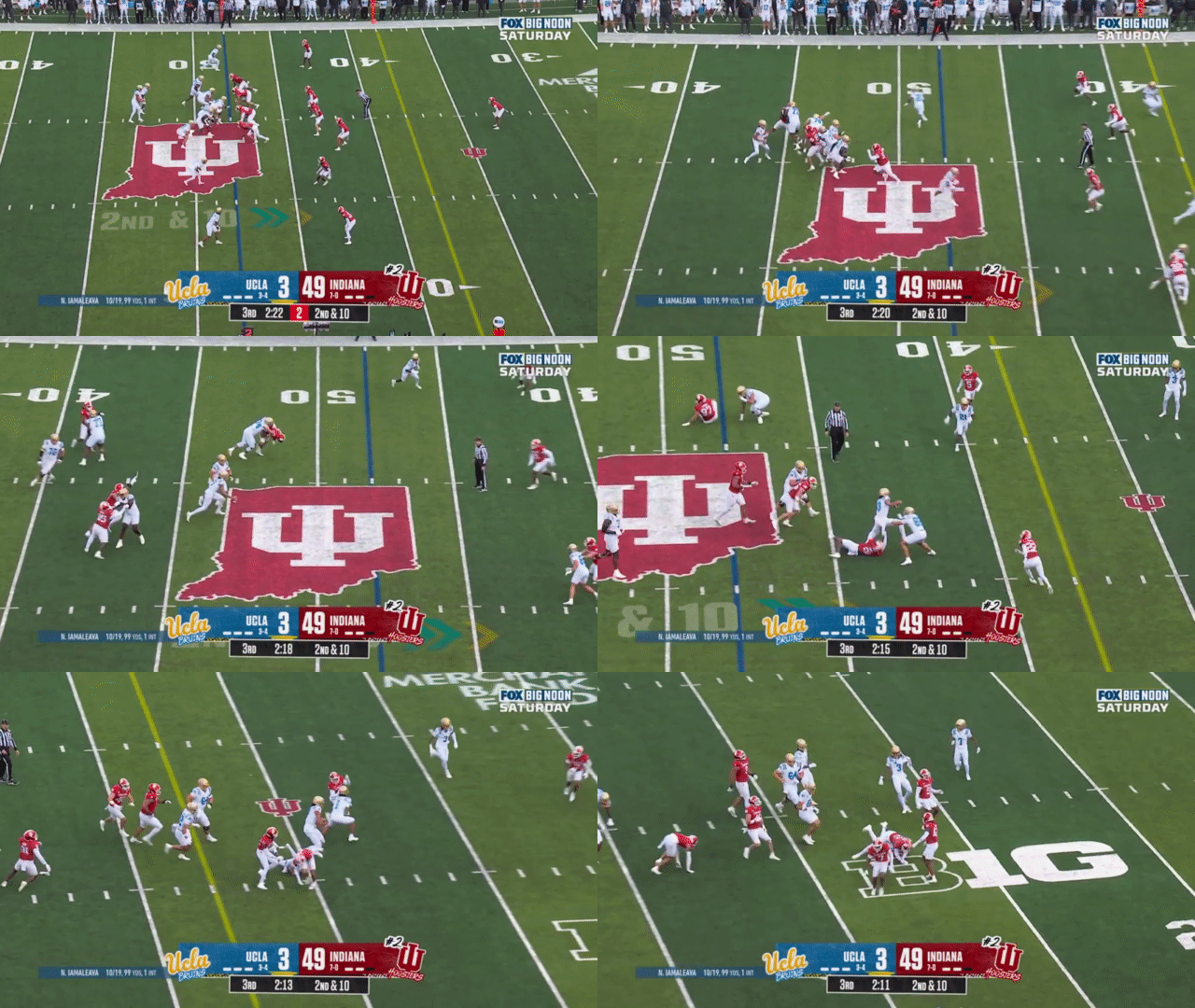
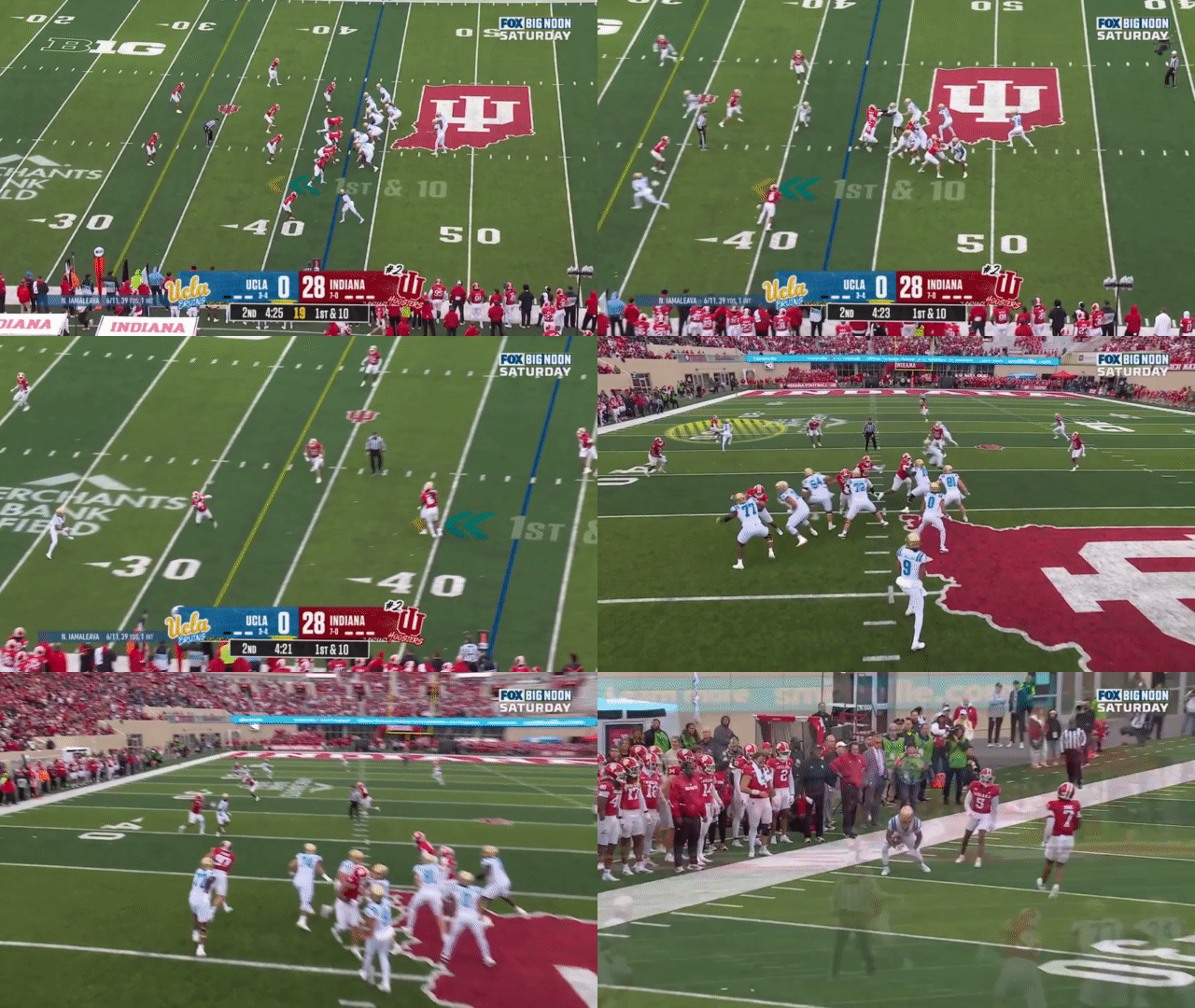
During the Indiana game, the announcers mentioned that Iamaleava was 2nd in the FBS in scramble yards. Most of Iamaleava’s rush yards came on QB scrambles (i.e. rush yards on a designed pass play) like this:
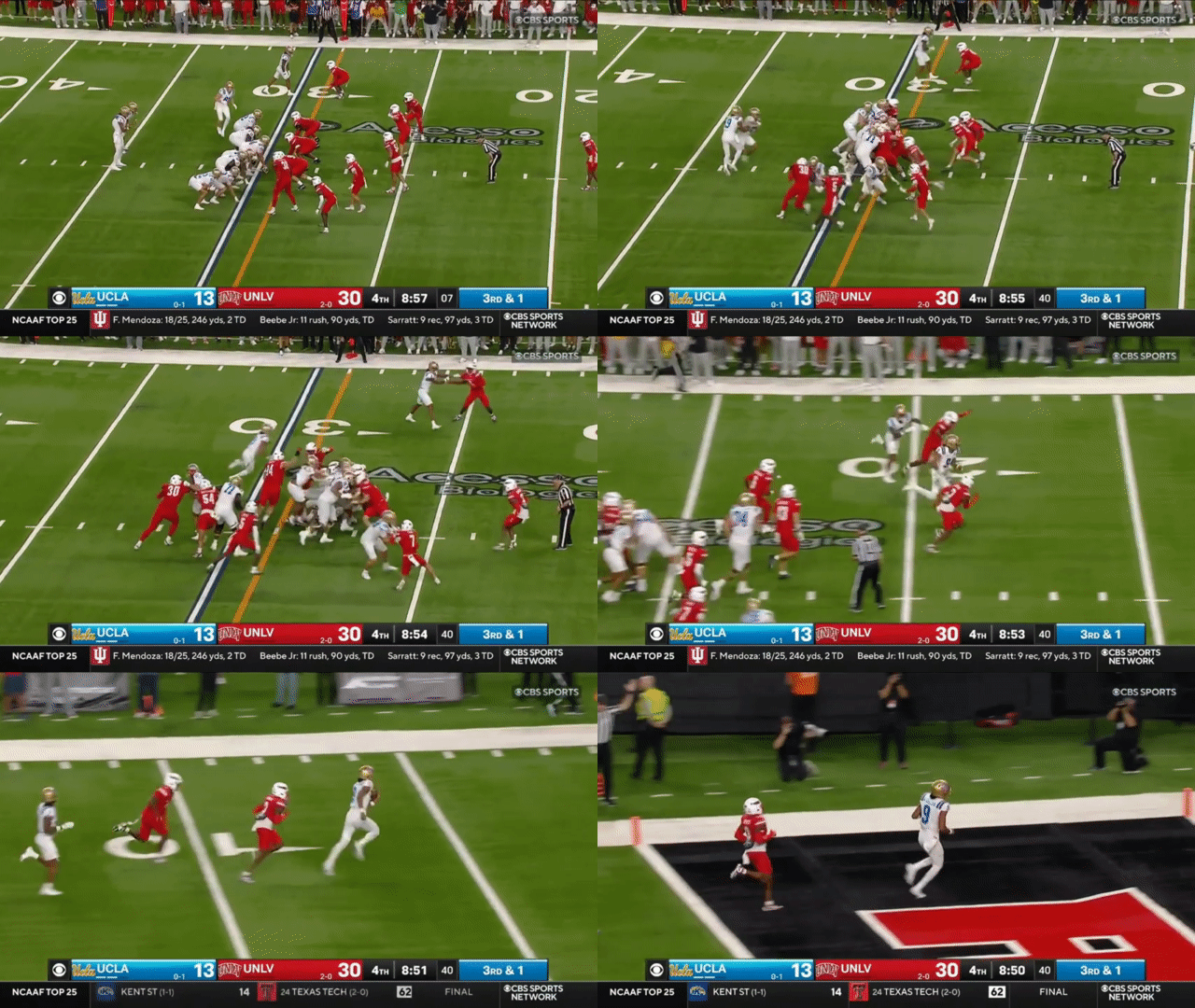
Simplified reads and decision-making were a staple of Iamaleava’s game, so UCLA also ran a lot of read-options:
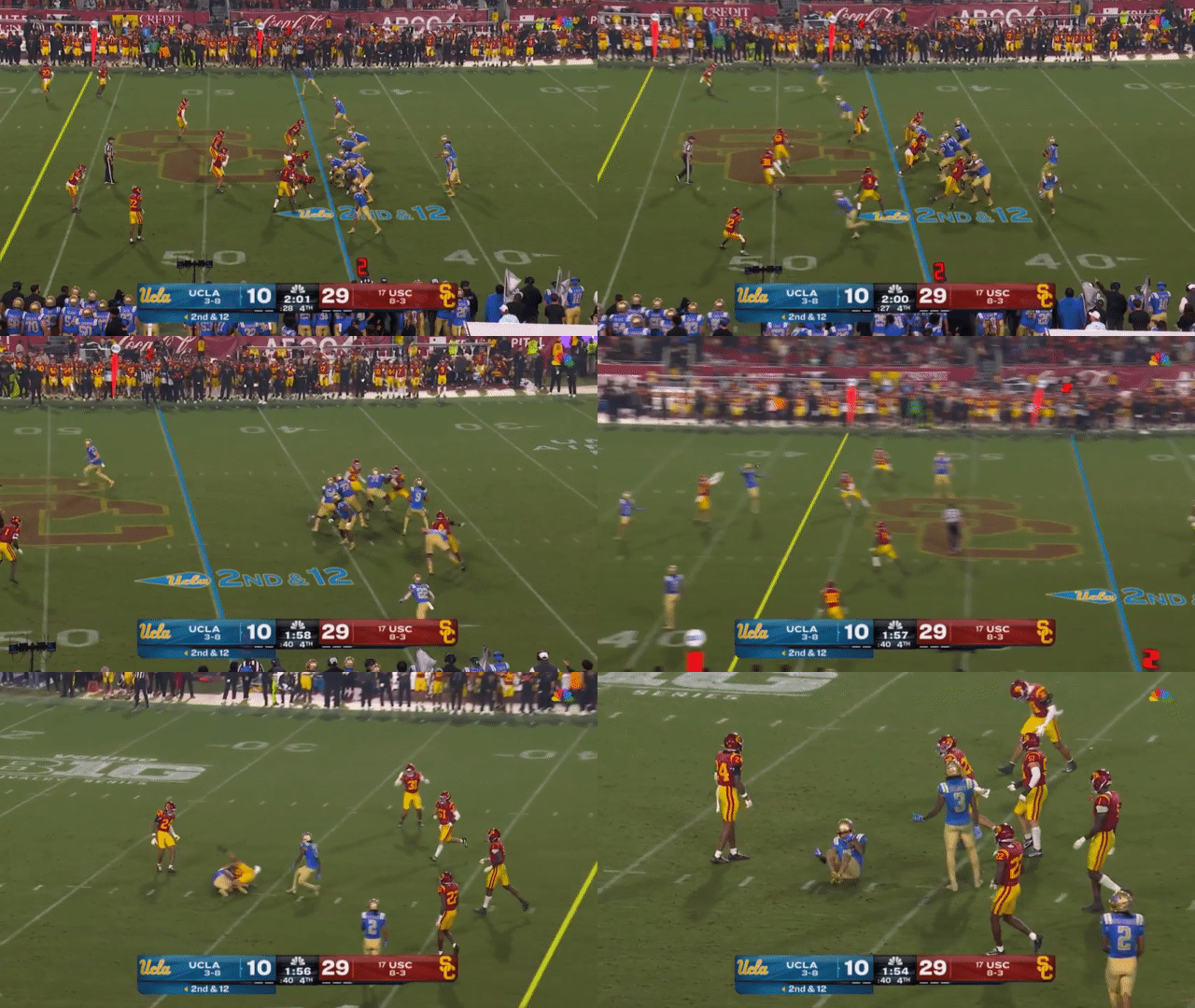
However, even though Iamaleava is tough to tackle and created a lot of yards on the ground, he was also prone to lax ball security at times:
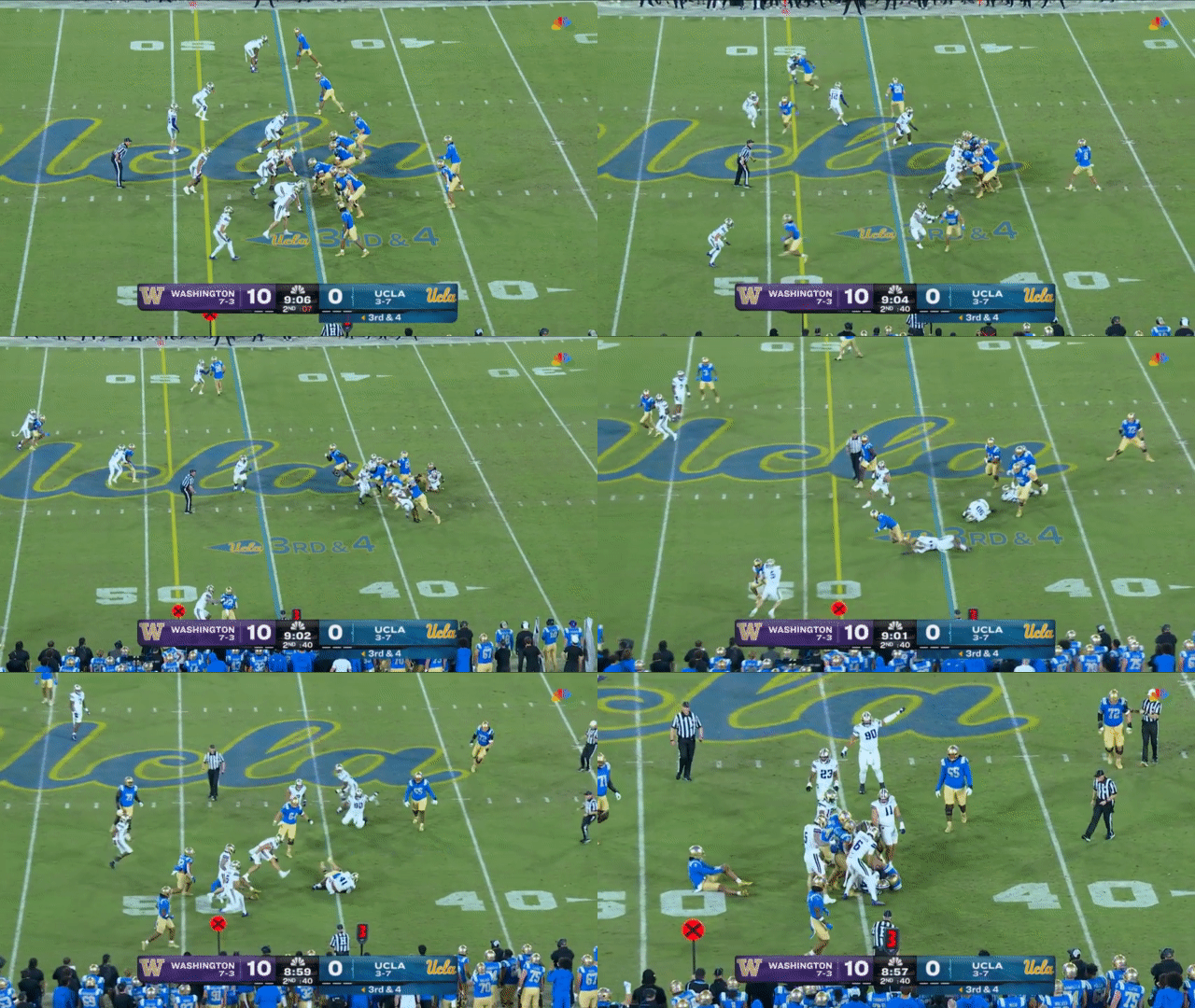
And again, in the same game:
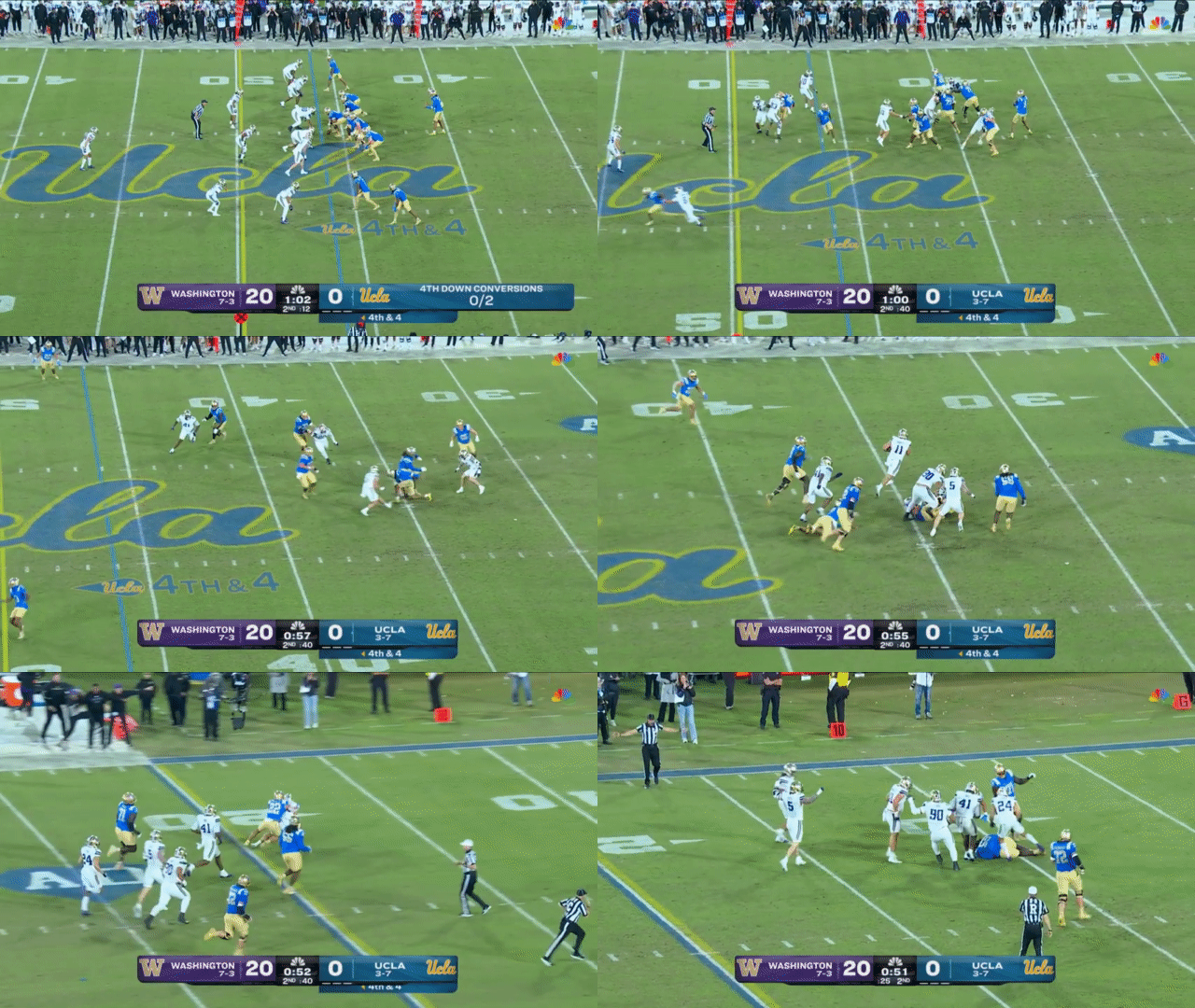
By the way, NFL teams, he can take snaps under center too:
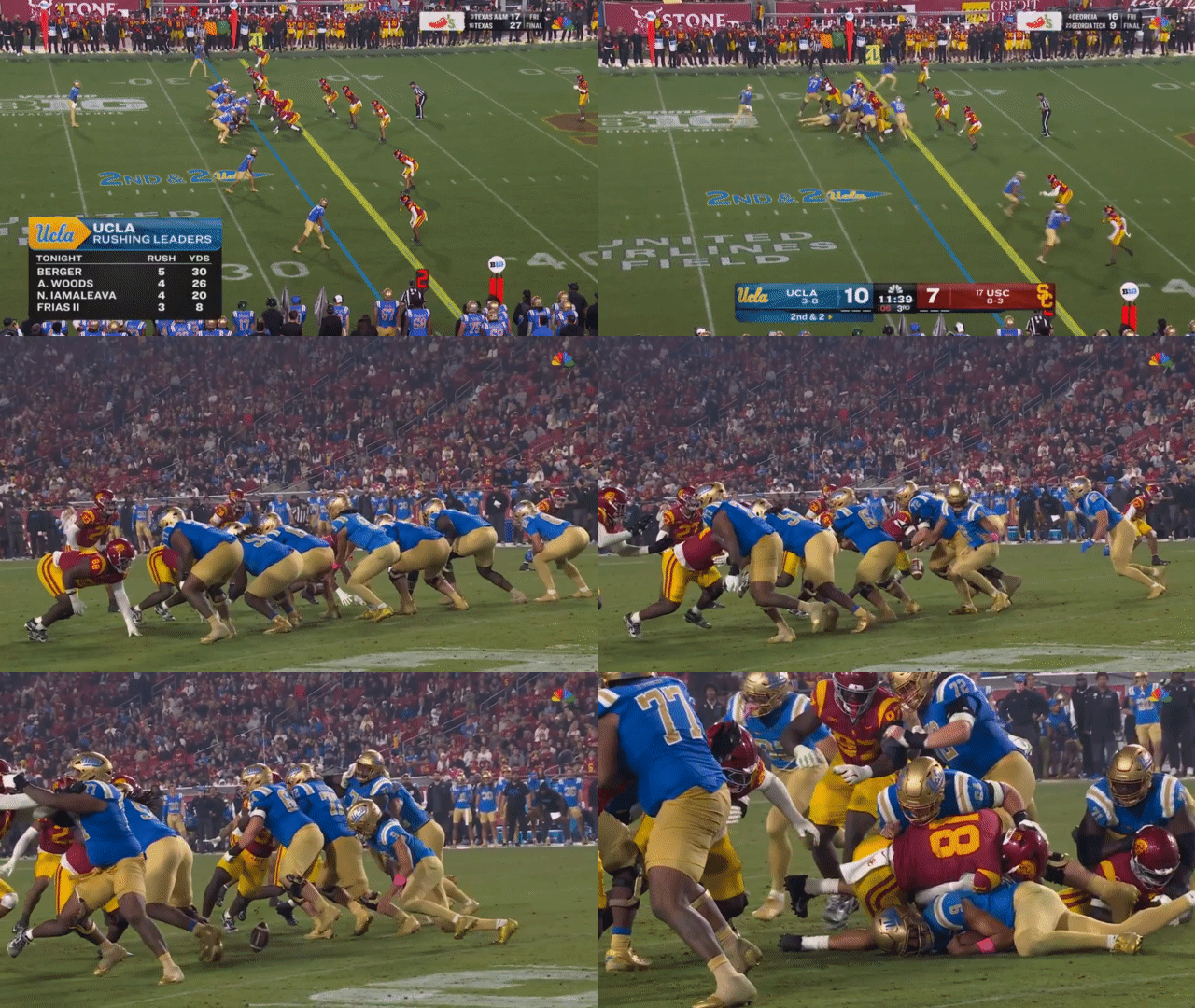
Of course, there’s a reason Iamaleava was the #2 ranked recruit in the country at one time. He has the size, athleticism, and physical tools you’d want in an NFL quarterback. He has a quick release that pairs well with RPO concepts. He’s got effortless arm strength:
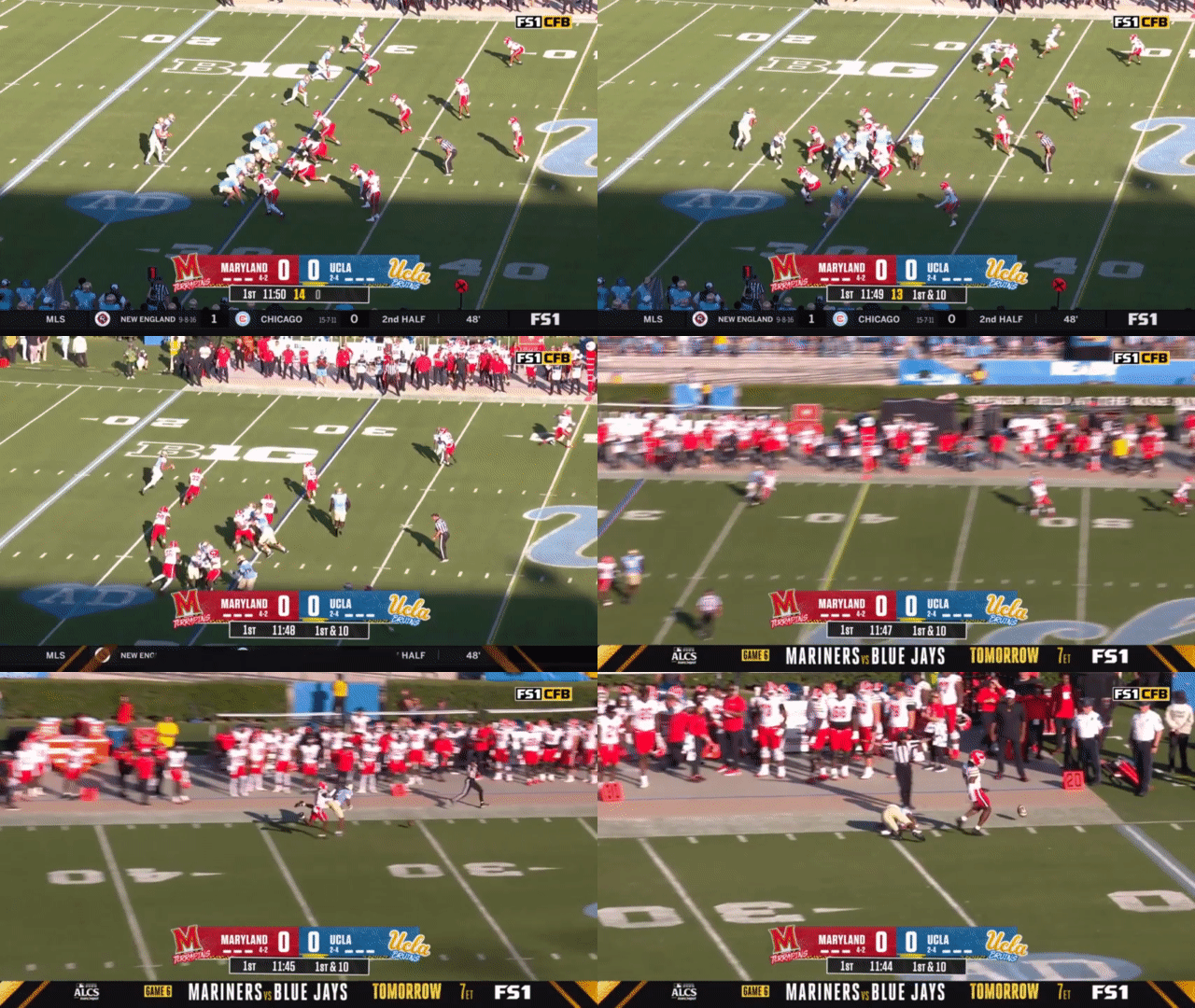
There’s theoretically no throw that Iamaleava doesn’t have the physical ability to make. Here’s another throw across his body where he still manages to zip this one in to his receiver:
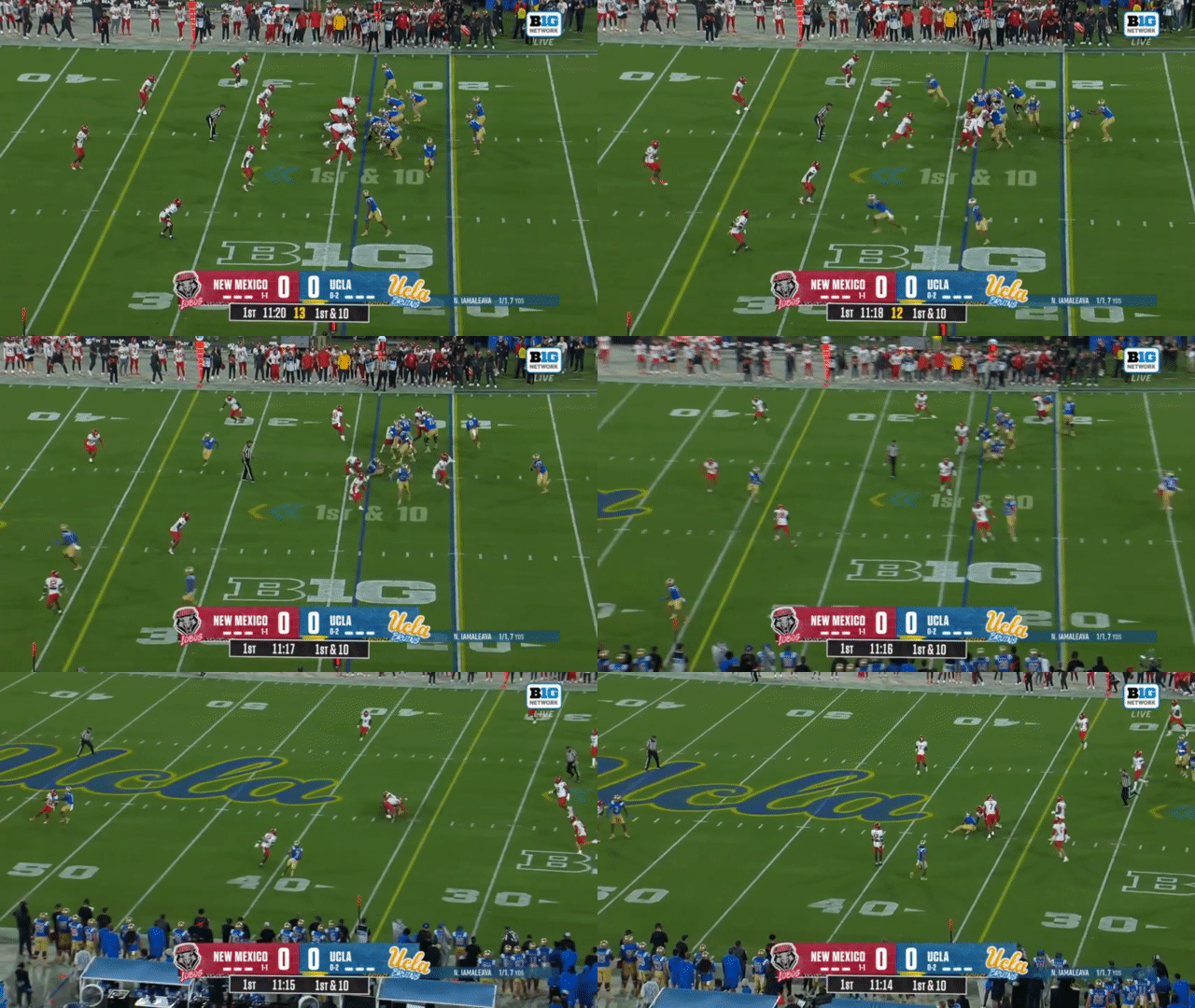
The following was a rare play, where Iamaleava had time, stayed in the pocket (by design), and made a great throw downfield:
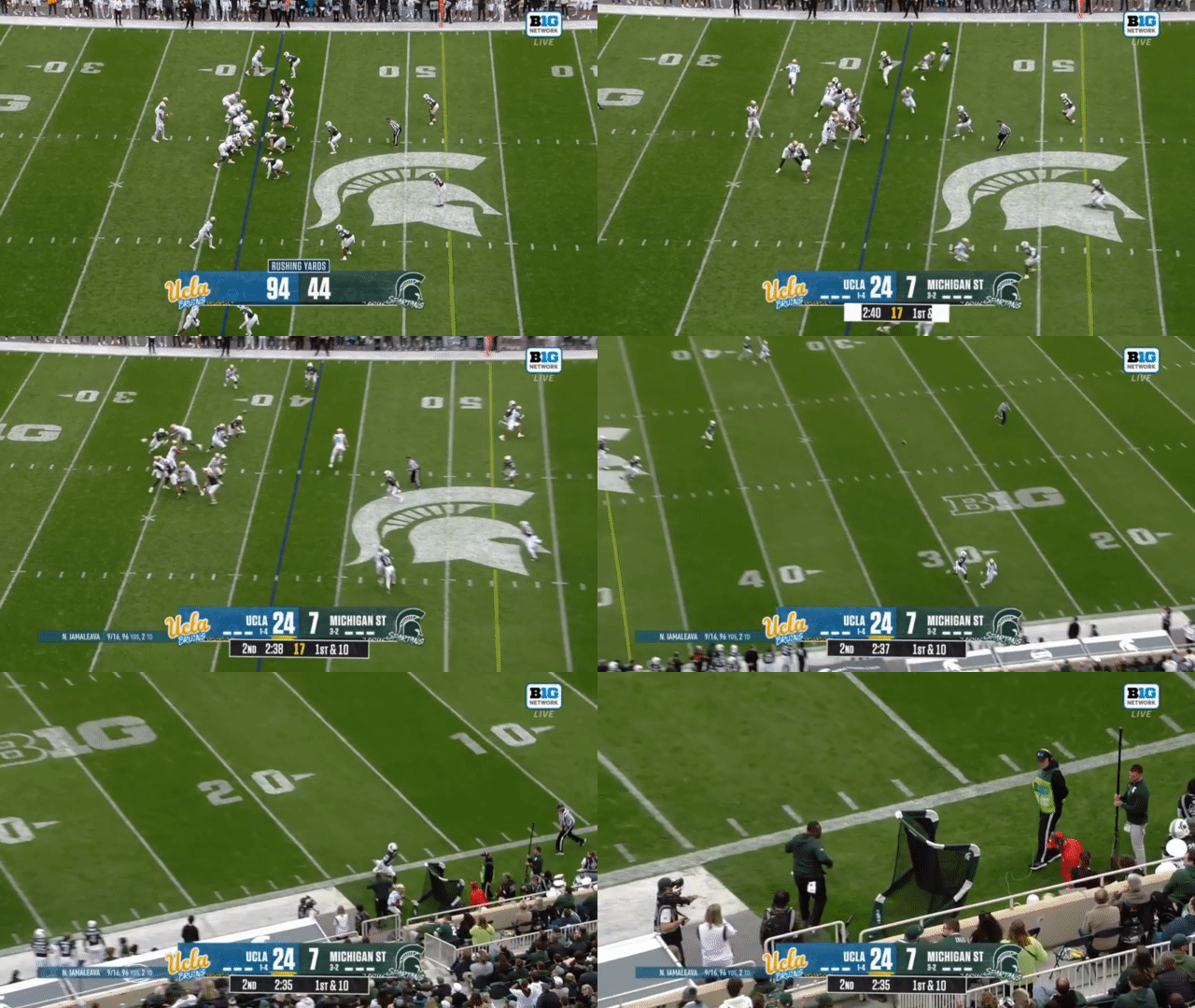
The following play is probably the only time all season I saw Iamaleava keep his eyes downfield under pressure and look to make a play through the air instead of on the ground (although some argument could be made for that 4th down conversion down 49-3 against Indiana above):
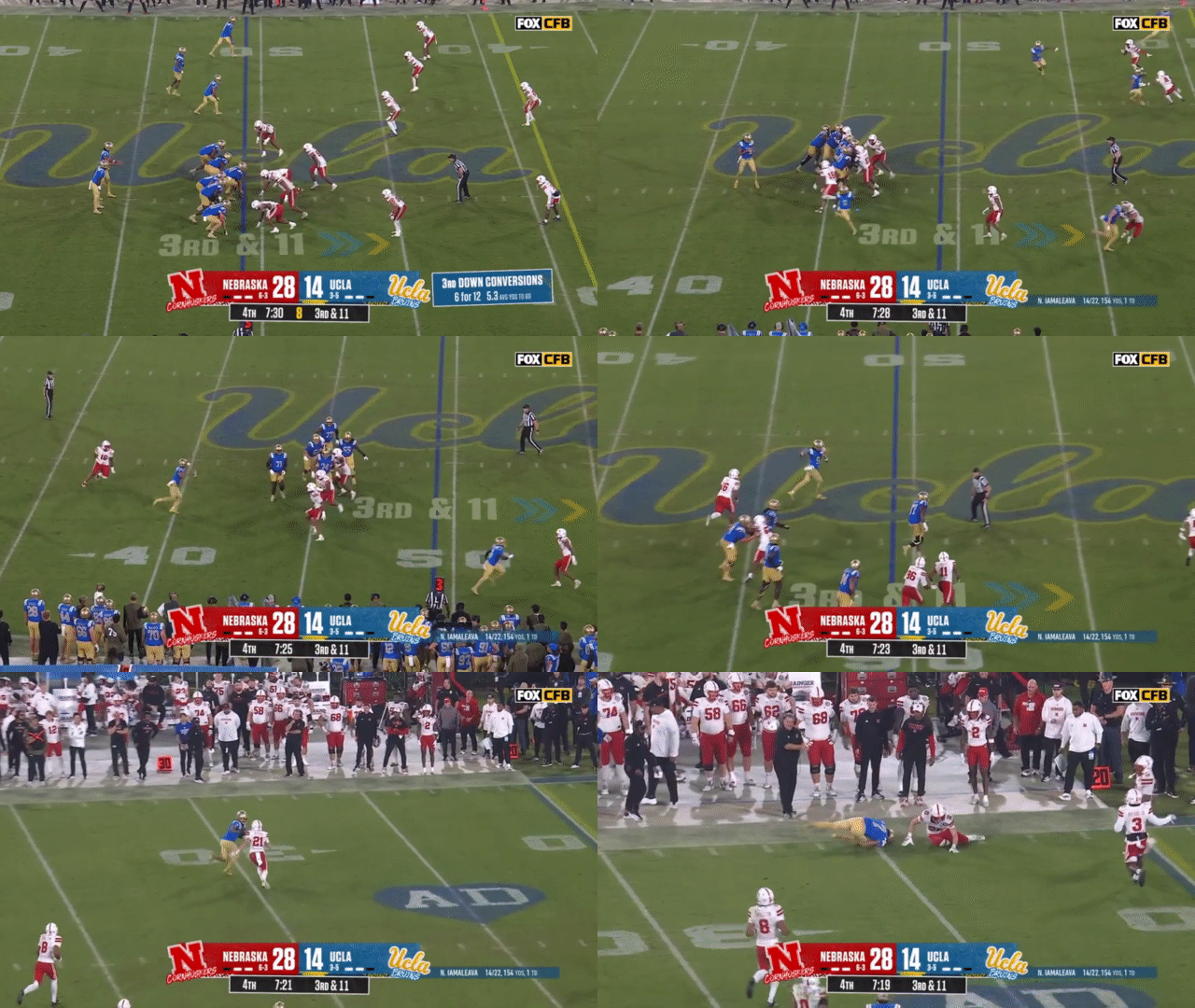
This was another impressive throw, where he showed the ability to layer a throw over the defense:
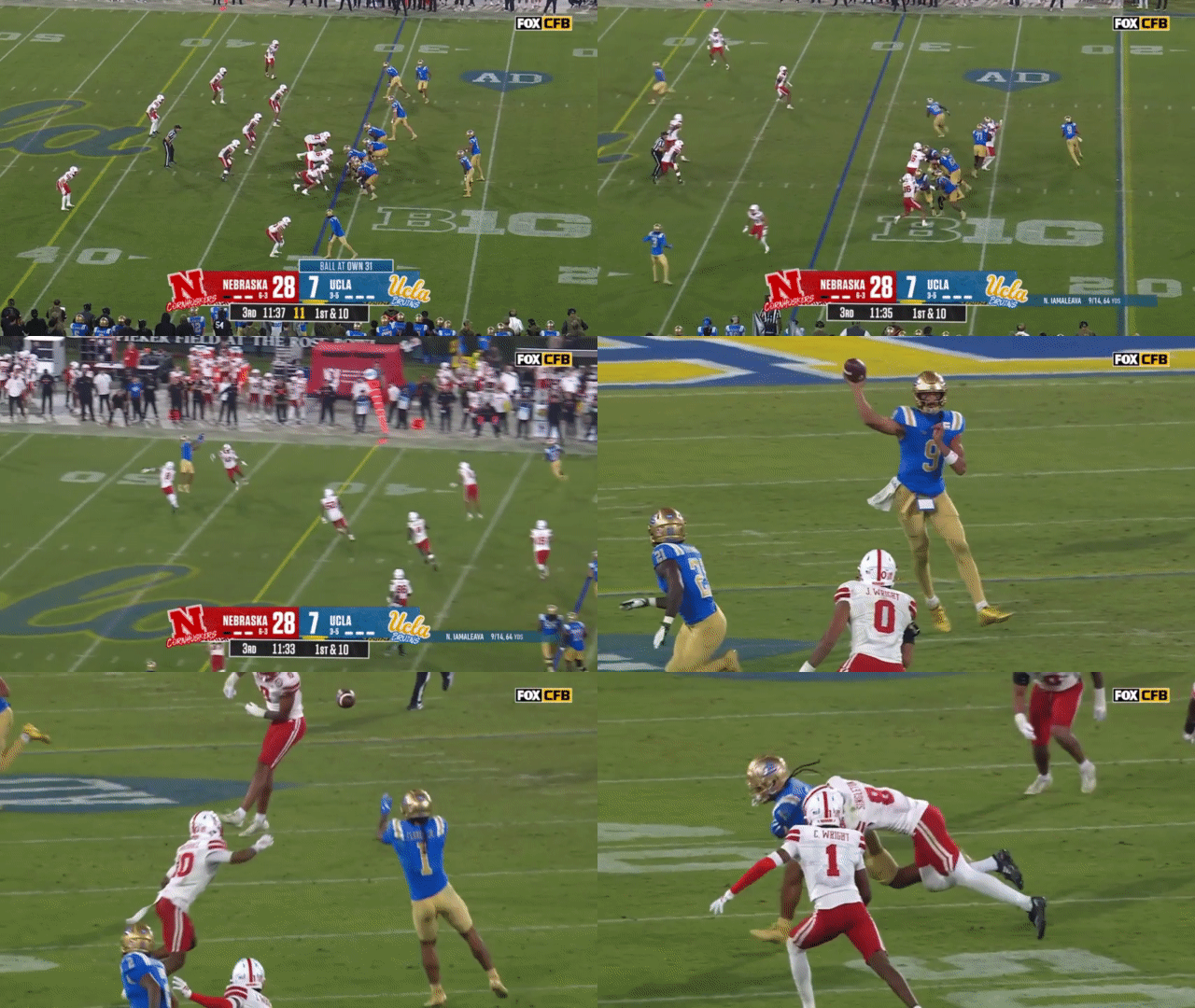
Iamaleava did not take a ton of shots down the field, and Penn State was asking for this in completely disrespecting Iamaleava’s ability to throw it deep (not necessarily a great read but still a great throw, and perhaps something he could do more often if he has more trust in his upgraded receiver room this year):
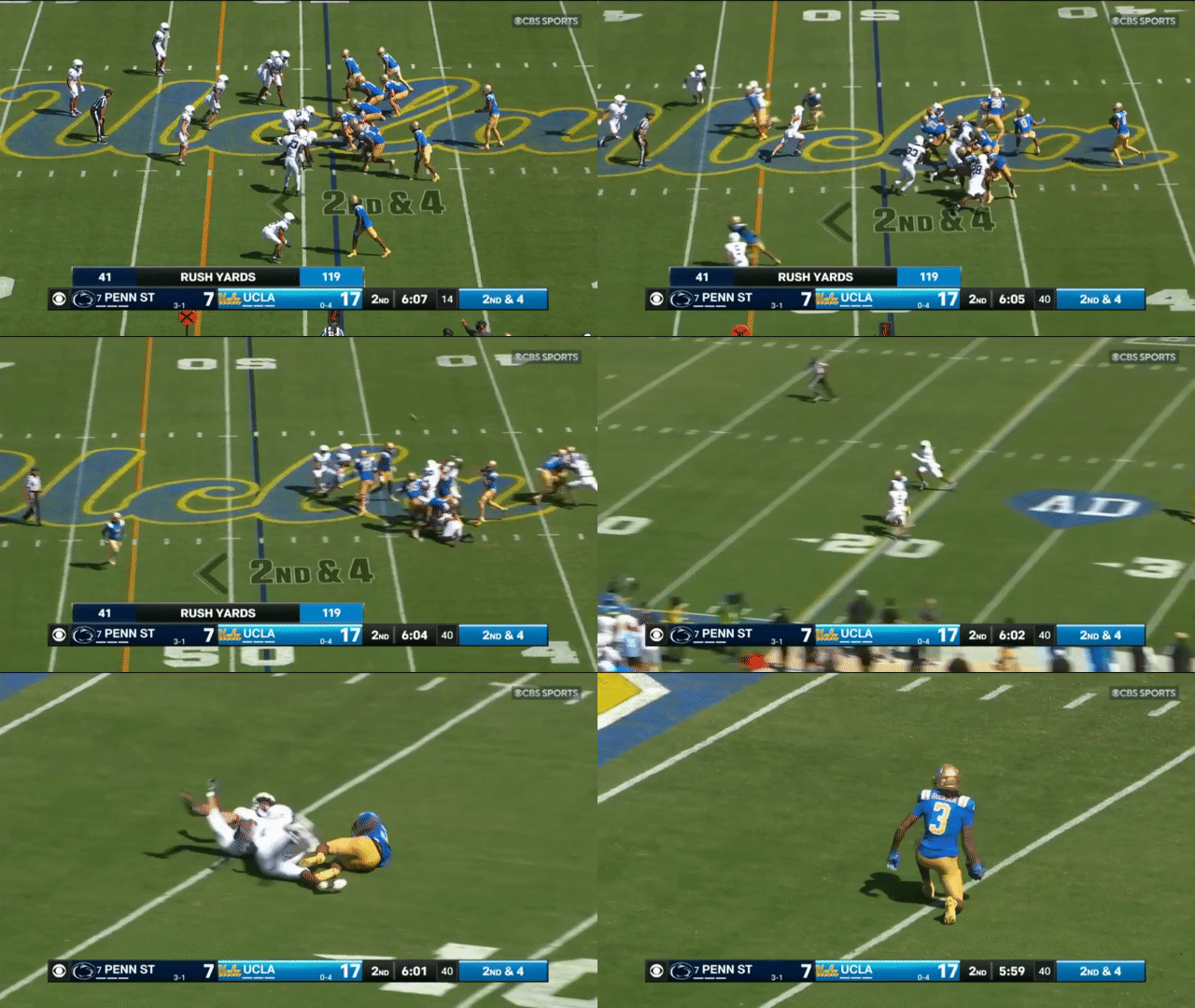
On the other hand, Iamaleava struggled against pressure: his throwing mechanics were affected (7 INTs) or he’d absorb sacks as a result (27 sacks, which is a lot considering his escapability).
His throws were often off-target under pressure:
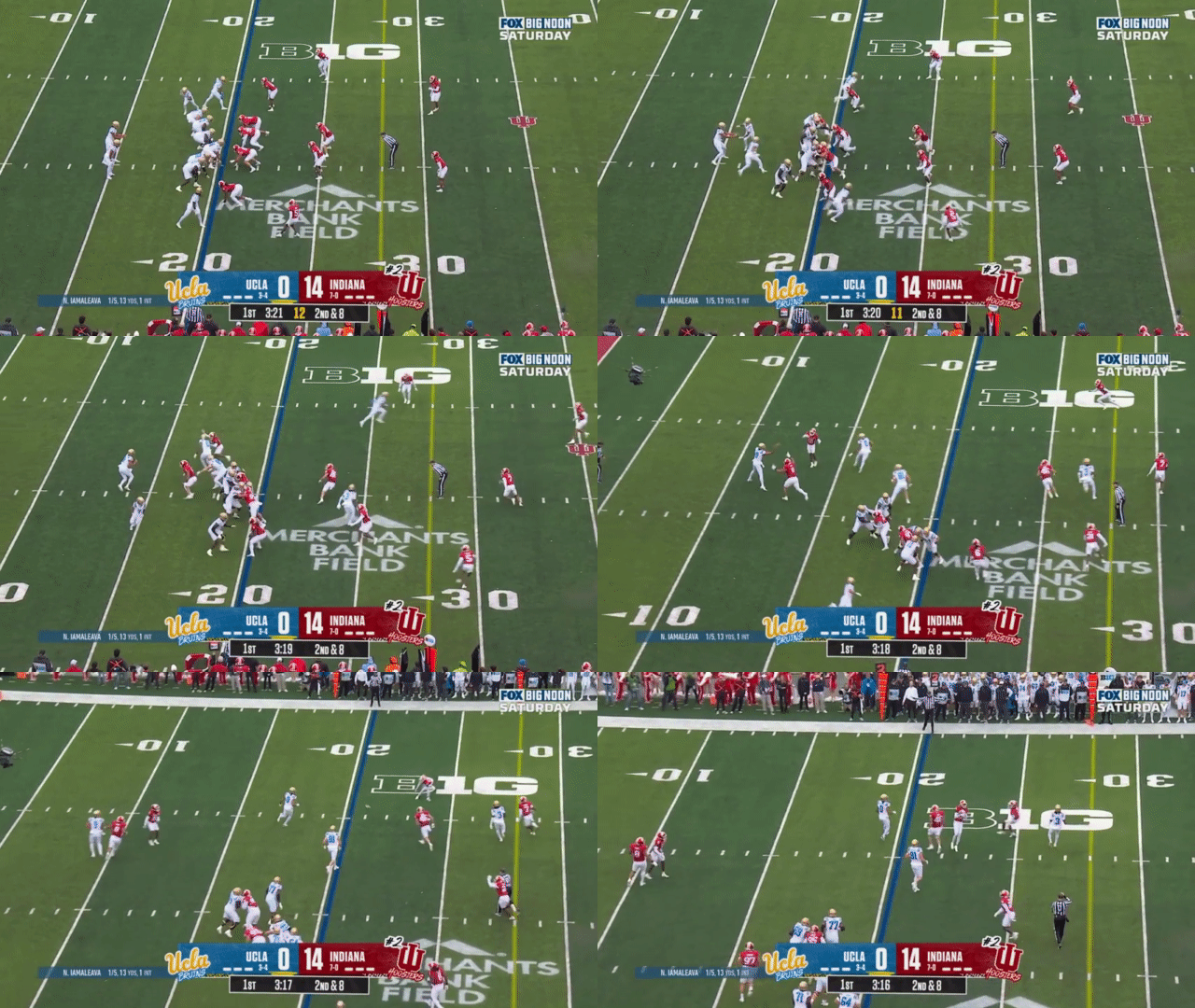
And he generally showed a poor understanding of when and where pressure was coming from:
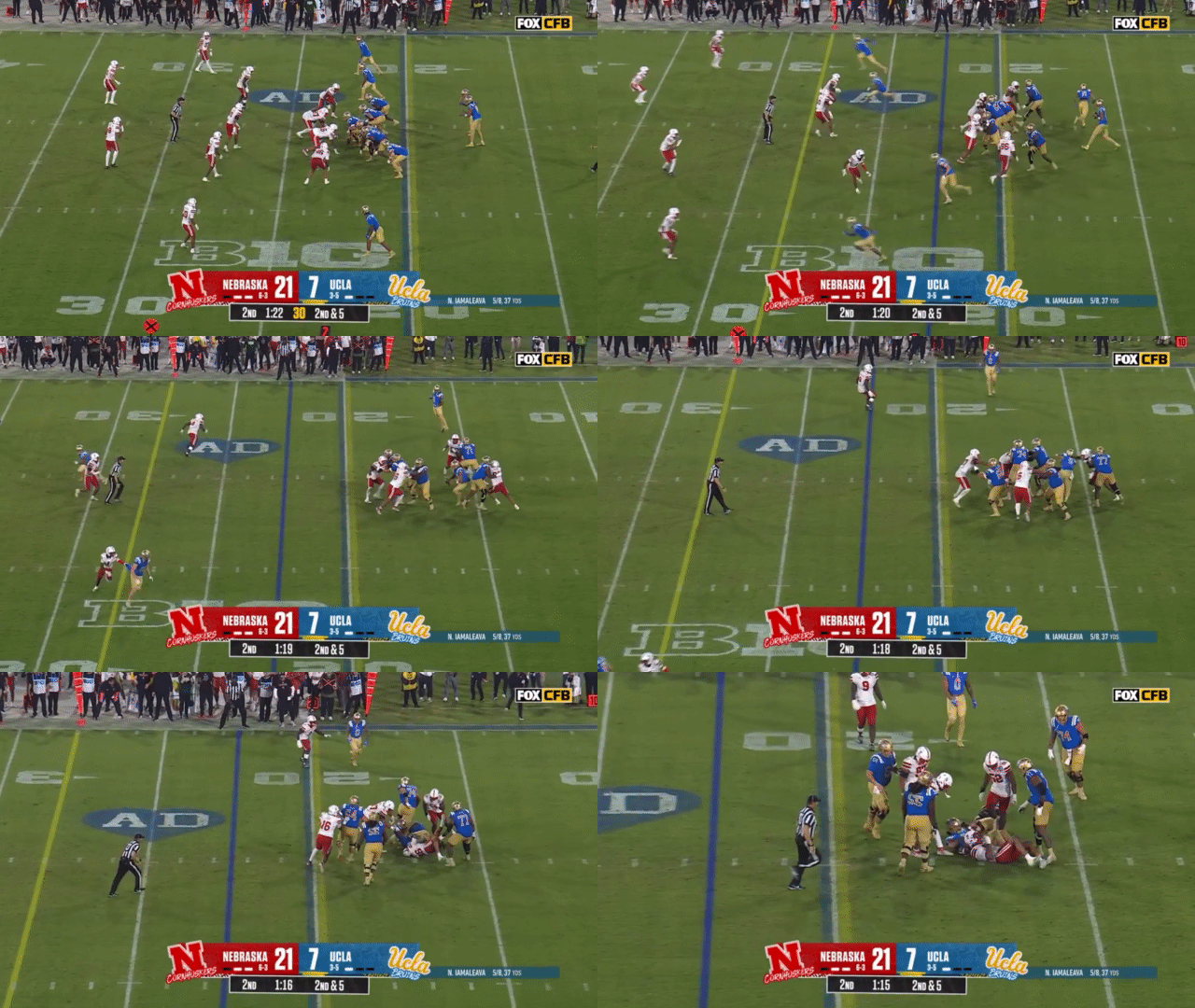
Here’s one of many examples of Iamaleava sitting in the pocket too long, likely a result of his slow processing speed:
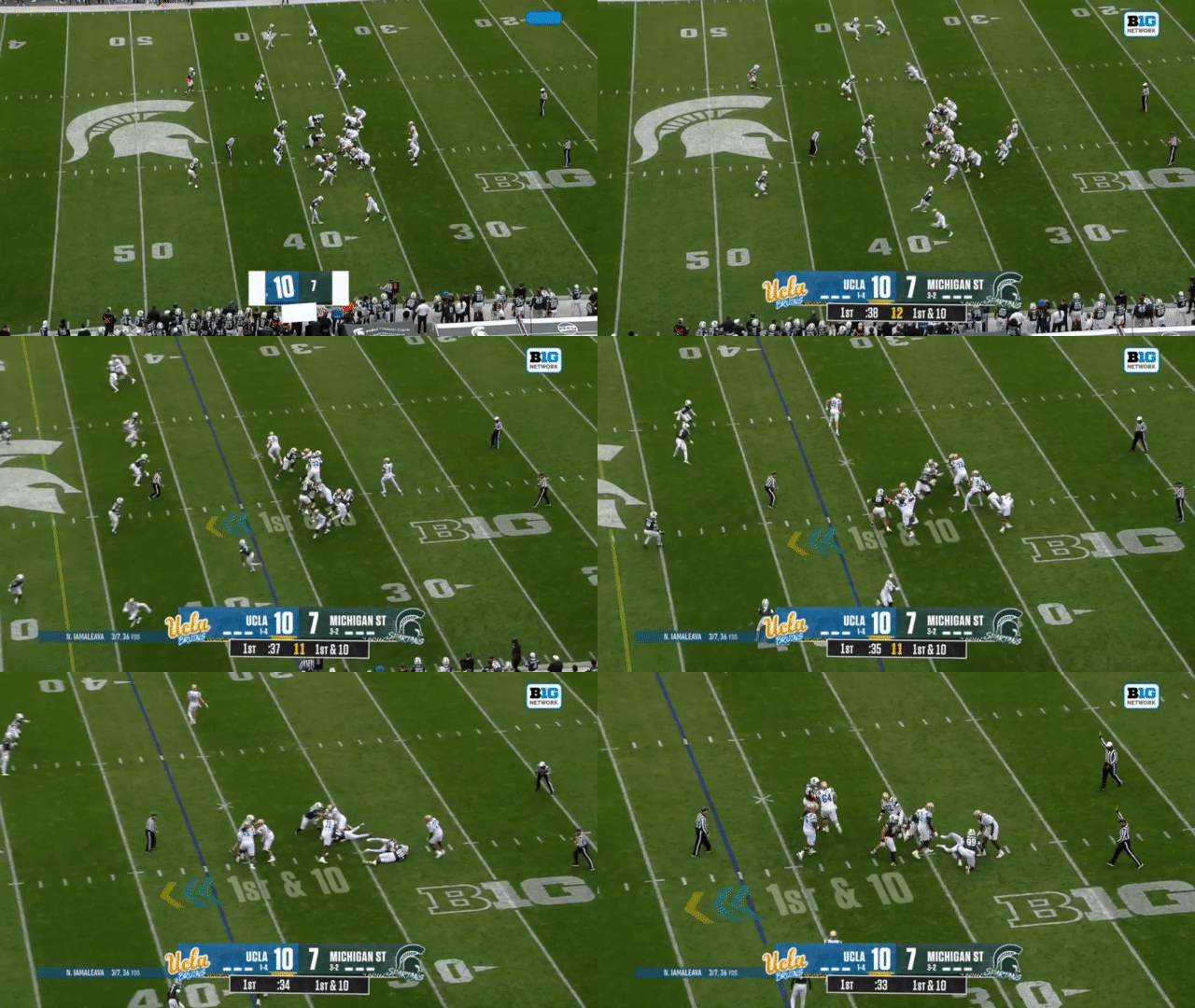
Not great protection, but most things with Iamaleava are just him reacting one or two beats too late:
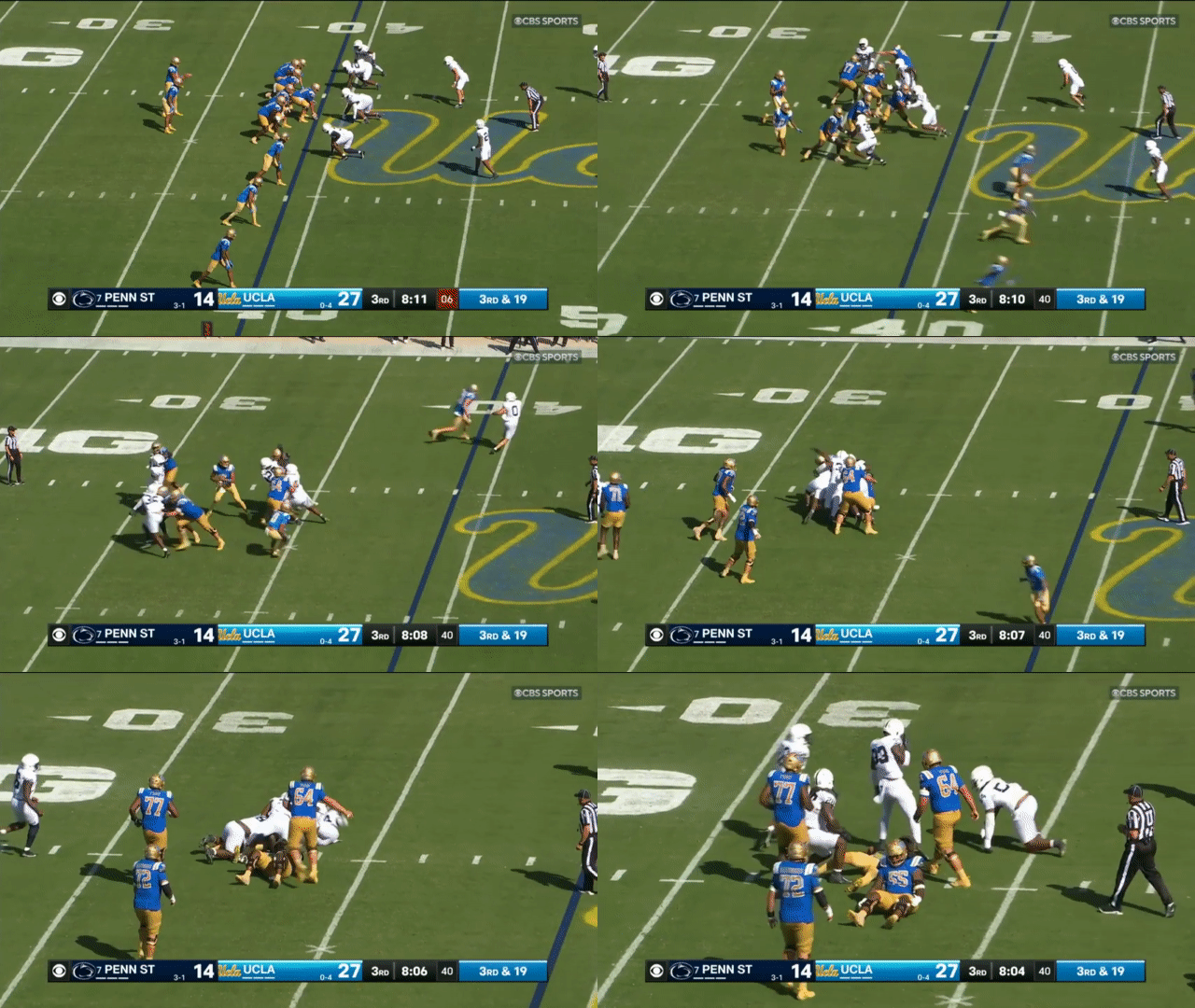
There are a ton of examples of Iamaleava being completely unaware of where pressure was coming from:
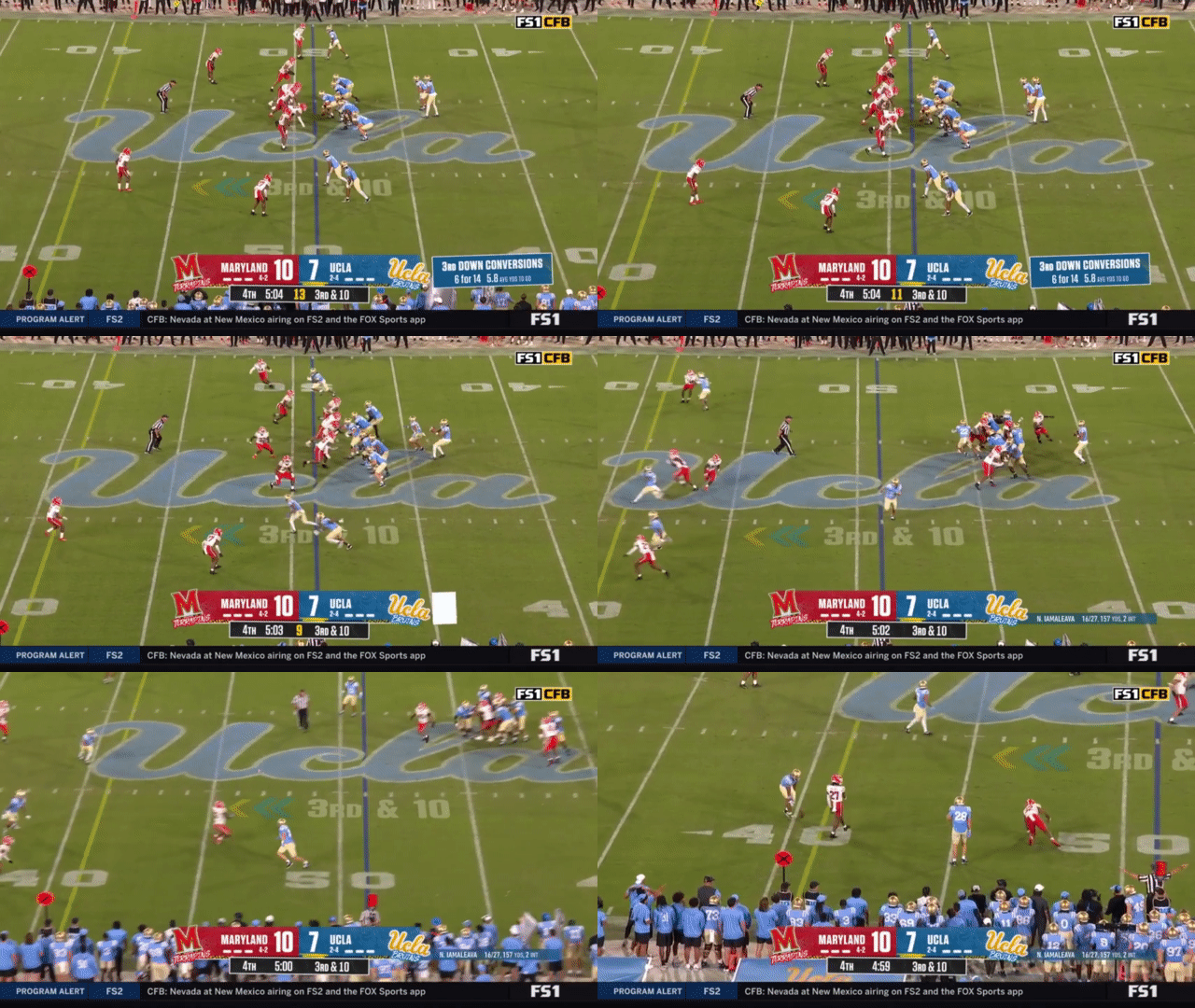
Here pressure affects the throw, but I don’t think it had a chance of making it to its intended target anyway even if Iamaleava had seen the linebacker:
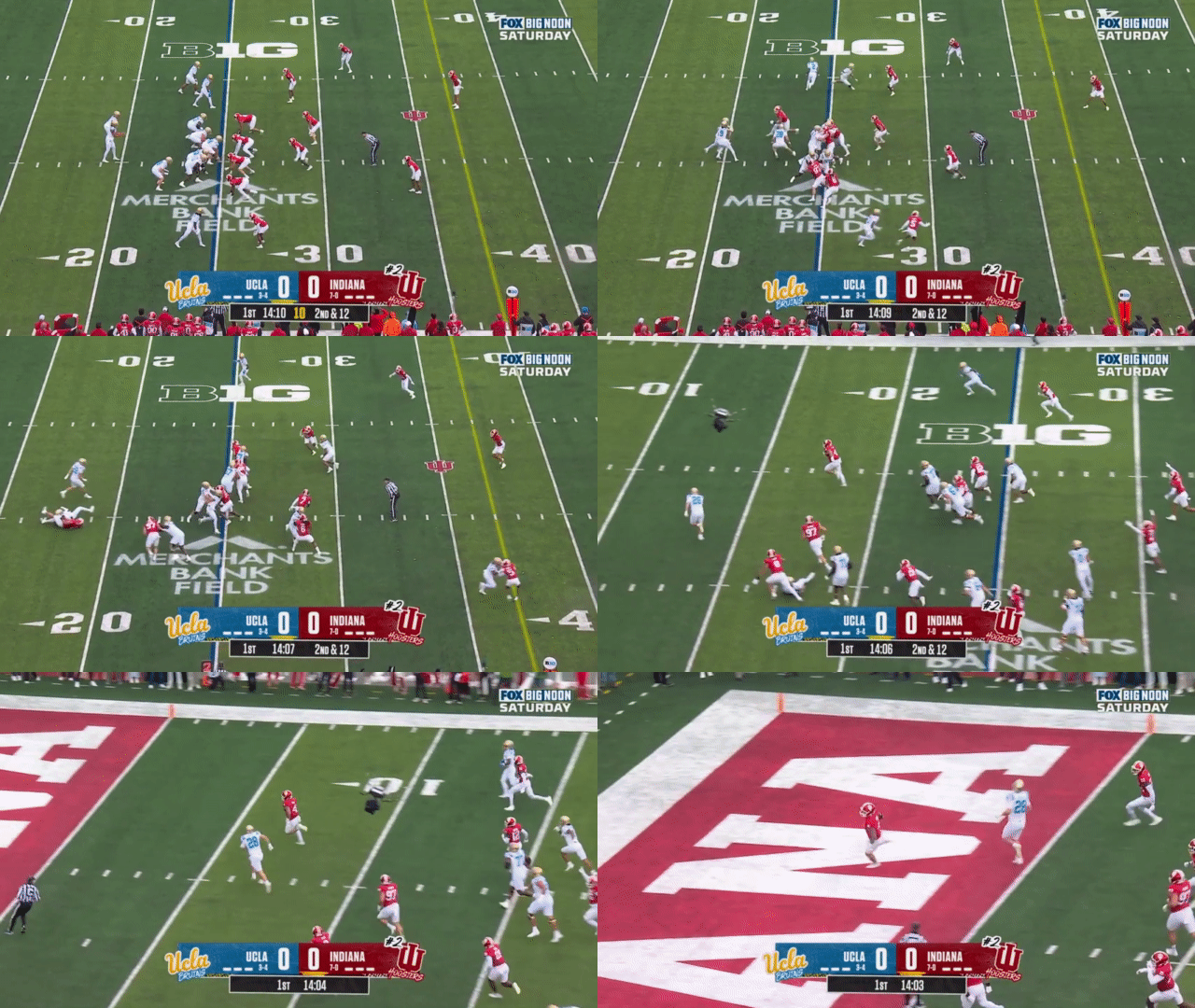
By far Iamaleava’s biggest weakness is his inability to read a defense. Most of his passing success comes from scripted plays; Iamaleava knows where he wants to throw the ball before the ball is even snapped, and he is often locked onto that first and only read. When the coverage changes post-snap or the defense can prevent that first read from getting open, Iamaleava is in trouble. Dante Moore was the same way at UCLA, but Moore was starting as a true freshman. Iamaleava is entering his senior season, how much more time does he need to adjust to the college game?
(As a brief aside, I haven’t followed Oregon since the end of the Pac-12, but I did watch the Oregon-JMU game. I saw Moore with an impeccably clean pocket and all day to throw, giving Moore the time and comfort to make multiple reads, and faith in his very talented receivers to make those contested throws if need be. From watching that game, I am still not sold on #1 NFL Draft Pick hype).
After watching the entire UCLA season, I went back to his Tennessee games to see if he had simply regressed at UCLA, or if he had always been this way. Well, all I can say is that it makes sense why Tennessee let him walk when he asked for more money. (In case you don’t remember the story, Iamaleava pulled an NFL-style camp holdout from spring practices for more NIL money from Tennessee after massive NIL deals for Duke’s Darian Mensah and Miami’s Carson Beck), and Tennessee opted to let him walk instead, and Iamaleava had to settle for a notably smaller NIL deal from UCLA instead.)
I watched Tennessee’s 2024 playoff game against Ohio State and discovered that no, he’s always played this way. Here’s the quintessential Iamaleava play: predetermine the first read, stare down your target, and the miss the open receiver anyway:
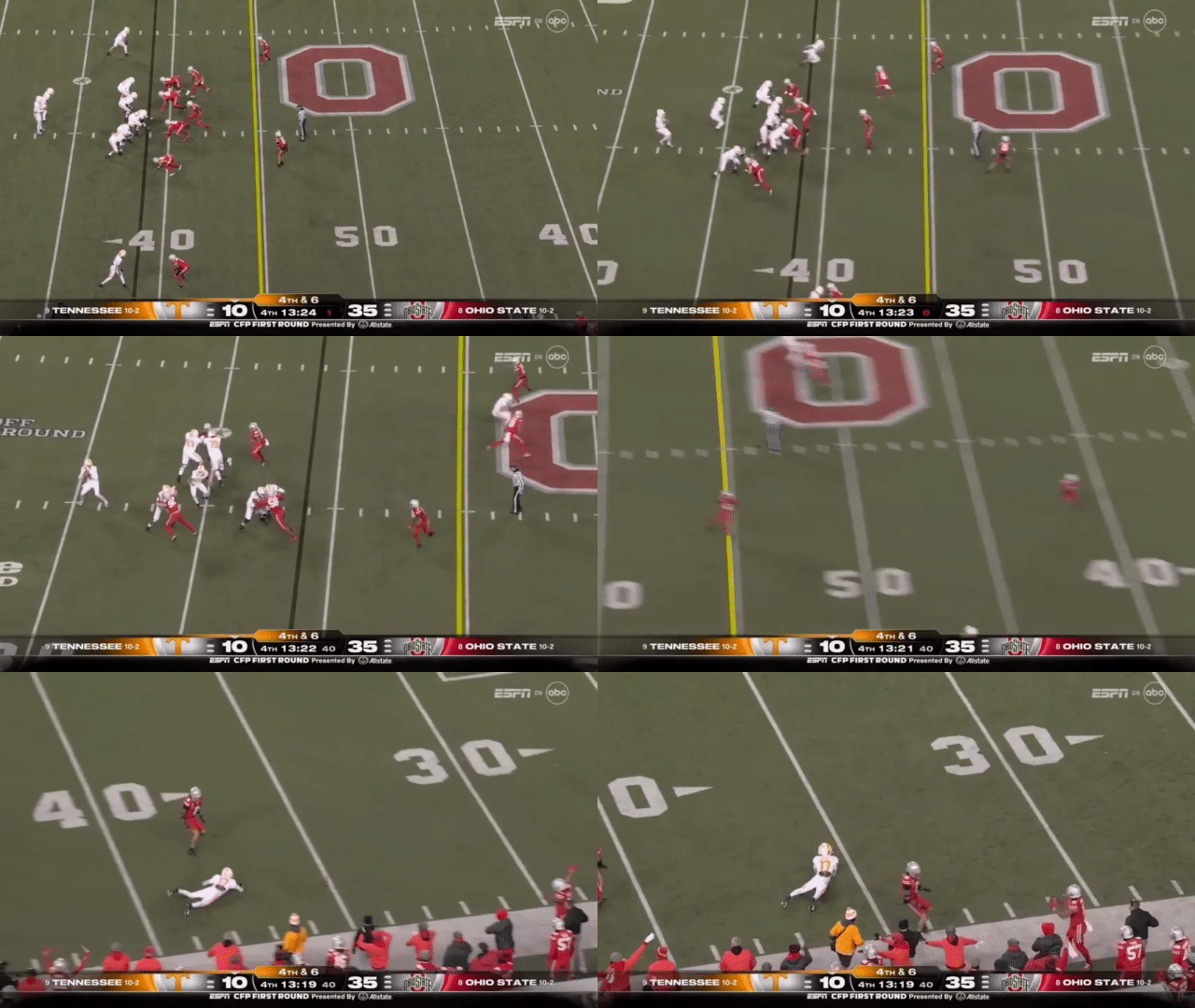
Don’t get me wrong, he played gutsy football and took a lot of hits on a lot of runs as he tried to generate some offense for Tennessee (he cracked his helmet on the first scramble after a hit by OSU!), but his struggles throwing the ball are absolutely not new. Kirk Herbstreit even mentioned during the game how OSU’s gameplan was to force Iamaleava off his first read and they’d win. At Tennessee, I saw a lot of: RPO read, read first WR, run. (Iamaleava would also run the option.) When his first read was not there, he’d start to scramble – and only on such plays on the scramble drill would he throw to a non-predetermined read. I even thought Devin Brown looked better than Nico in his limited playtime (although he did have OSU around him).
Here the corner reads Iamaleava the whole way:
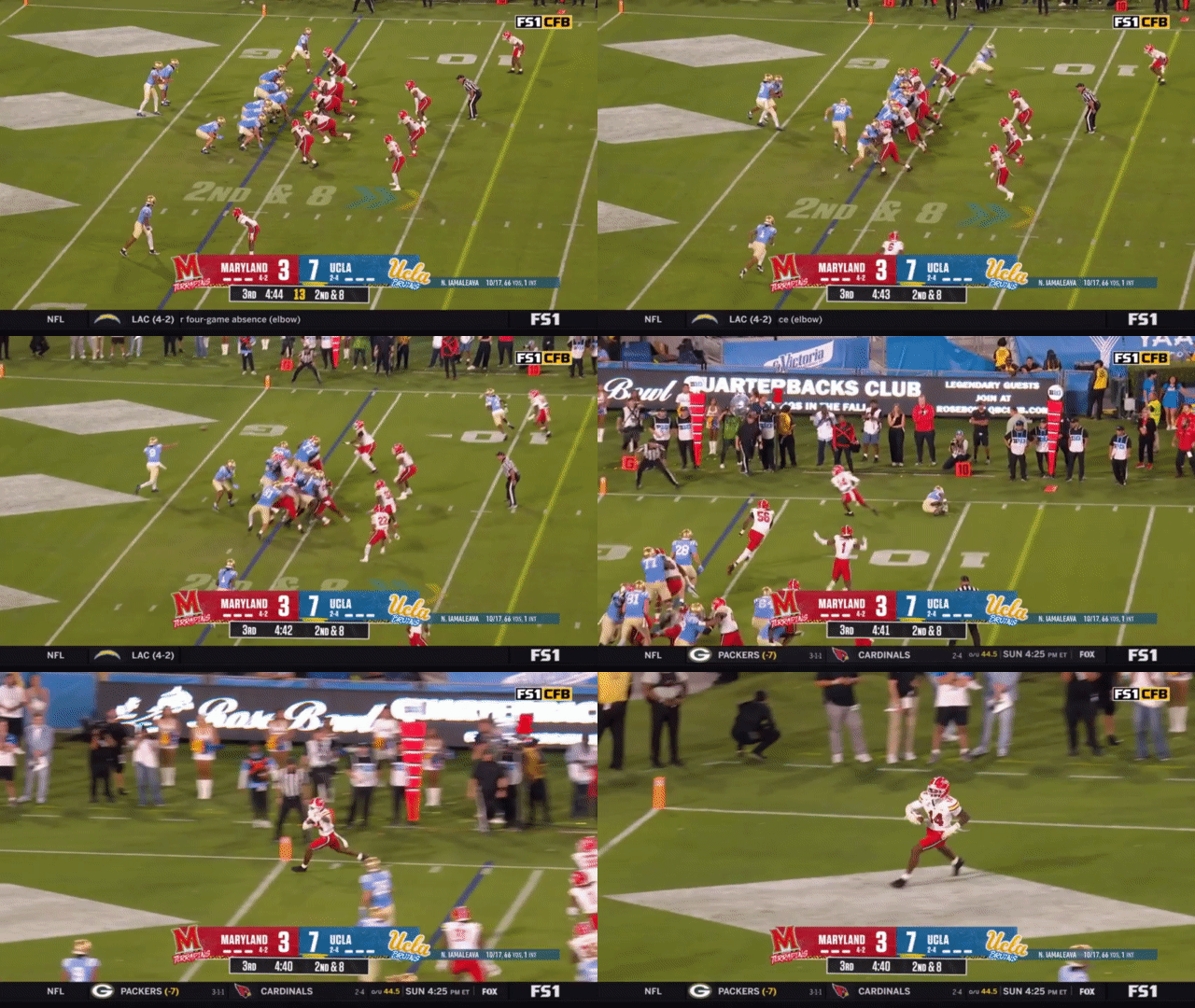
The previous INT was set up by the following play. Iamaleava likes to avoid the middle of the field where lots of defenders may be:
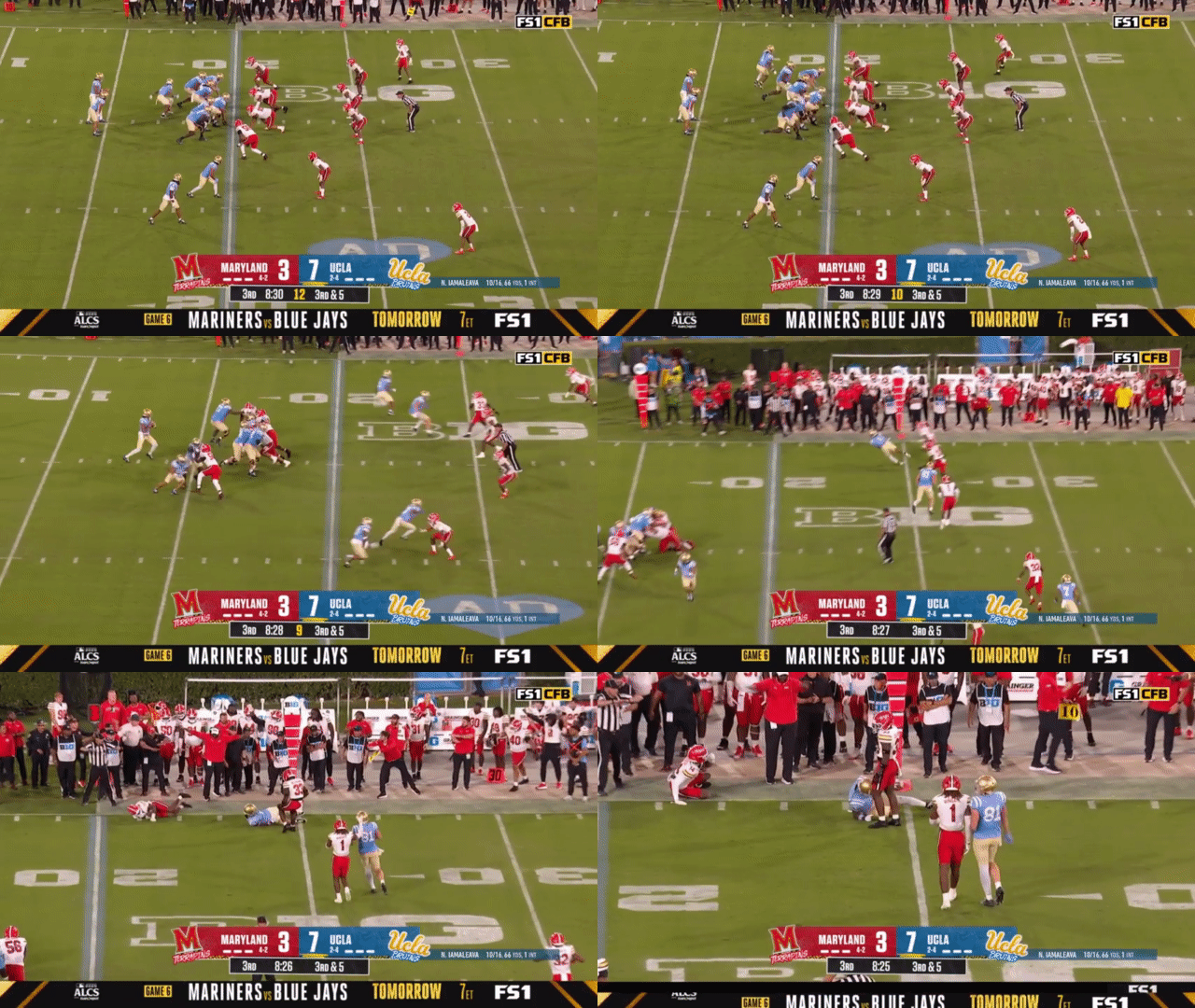
Not much touch on this throw and doesn’t give his receiver much of a chance here:
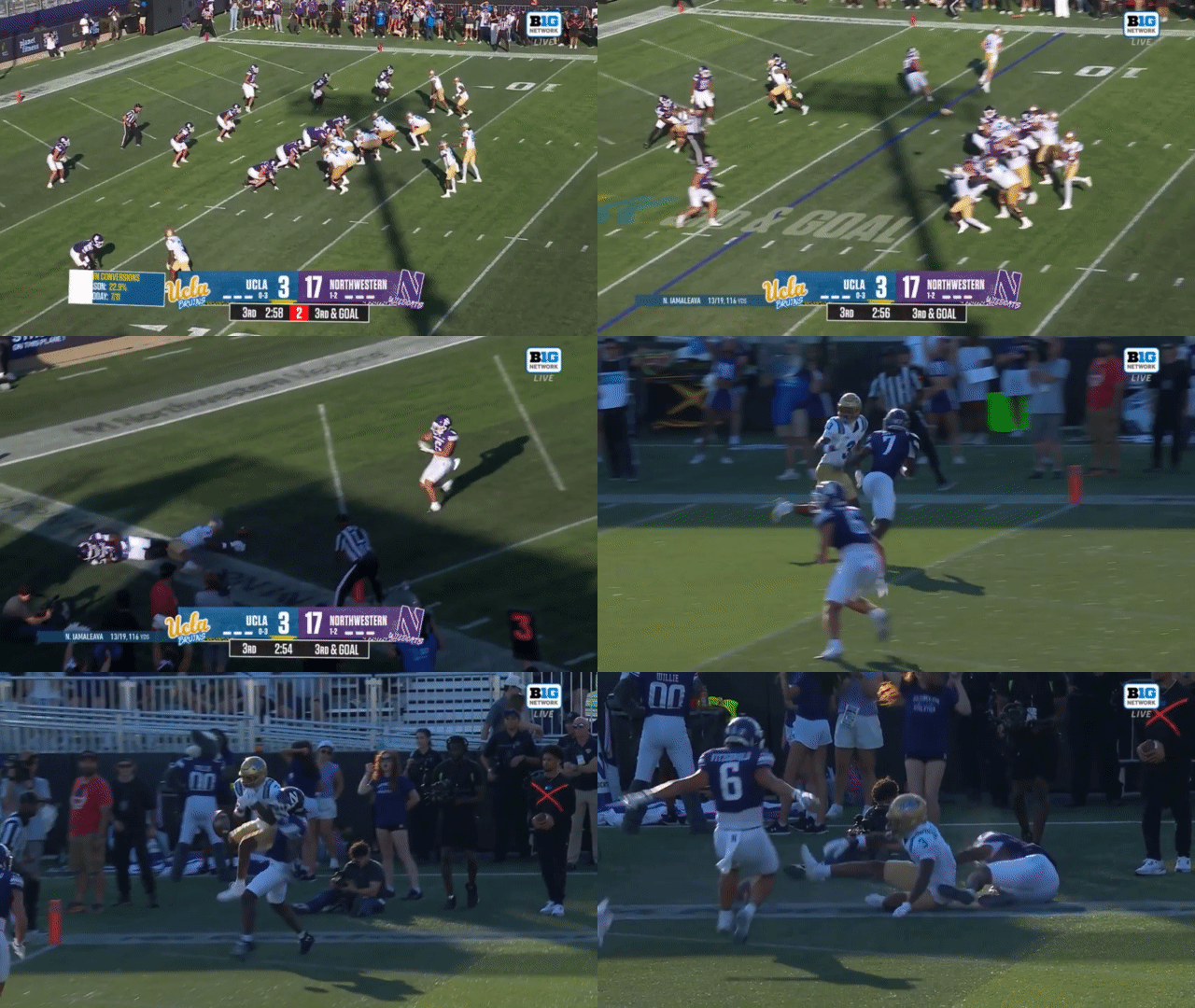
This one is just a terrible read:
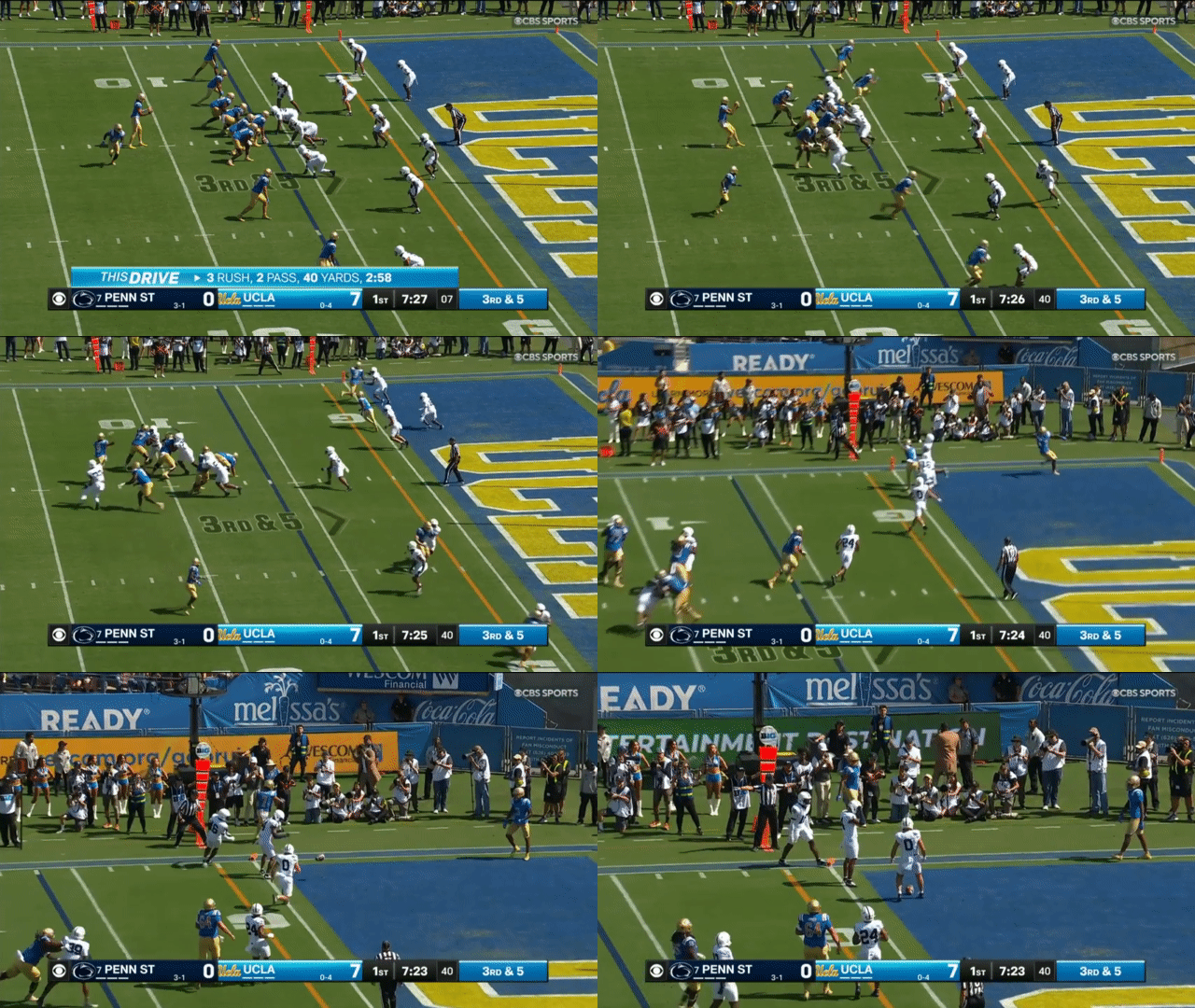
A lot of times that first read is open and the predetermined throw works out, but one frustrating thing about watching Iamaleava play is just how often he’ll double clutch the ball or hesitate to throw to that open receiver. This falls in the “potential for improvement” bucket as it’s something Iamaleava could plausibly fix; trusting his read more and/or throwing a receiver open, because throwing windows are small (and they get even smaller at the next level), and by the time a receiver is “visually open”, it’s already too late to start that throw:
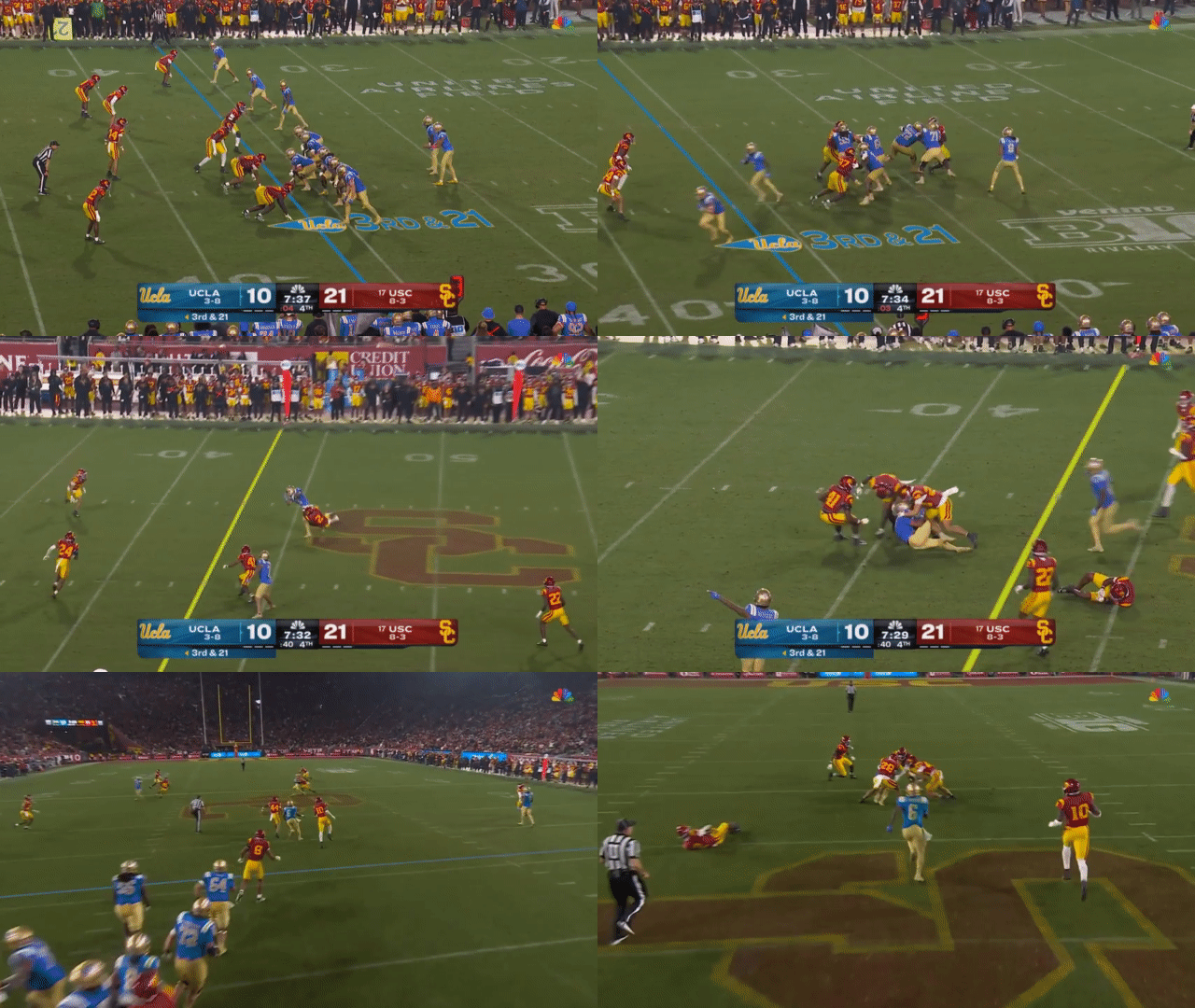
Here’s another example of what I’m talking about. His receiver is waving his hand downfield announcing he’s open before Iamaleava makes this throw — there is just zero faith in his own reads:
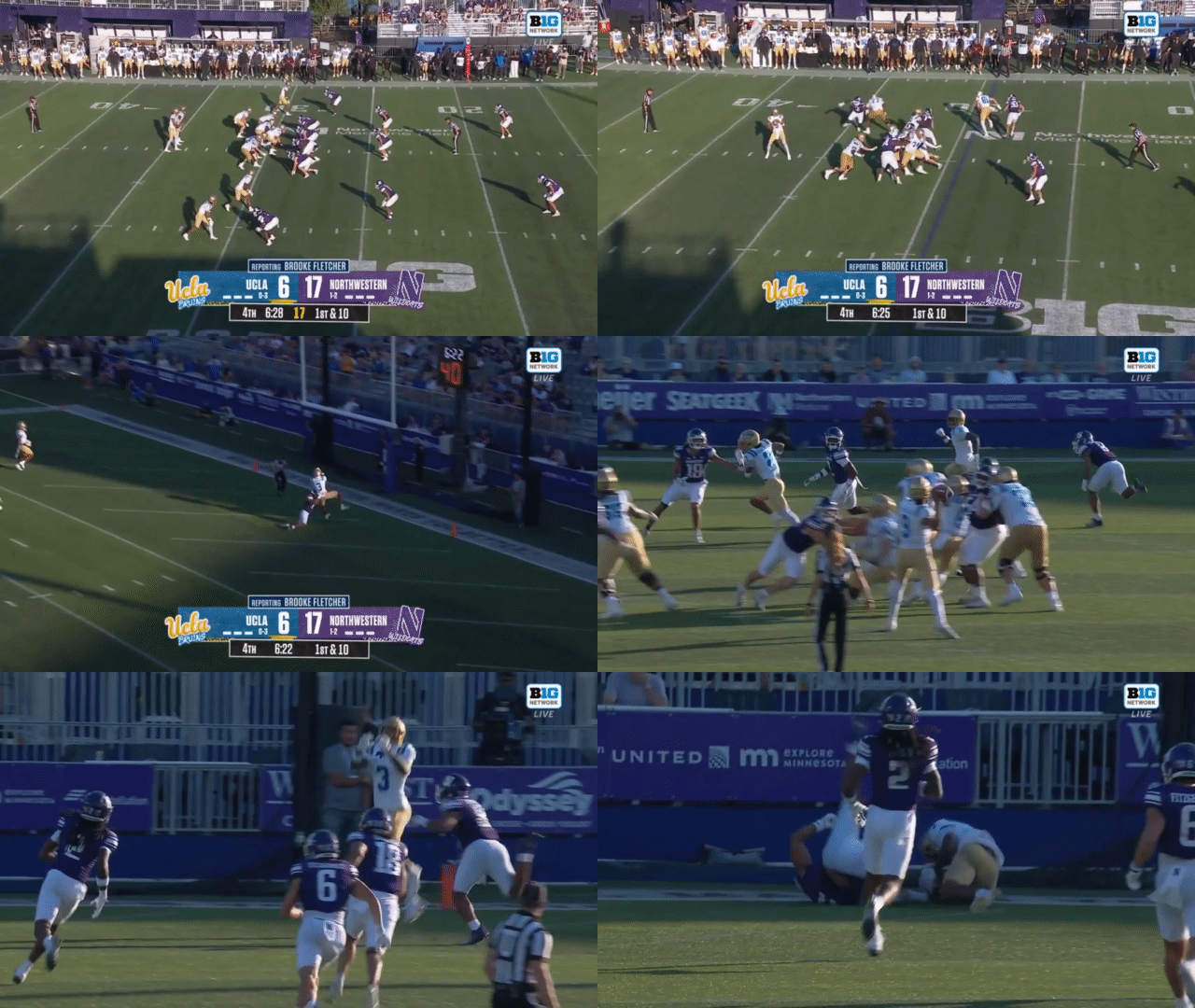
There’s probably good reason for that lack of faith. Iamaleava will often not see defenders in the middle of the field, and not see his own open receivers as he locks onto a target:
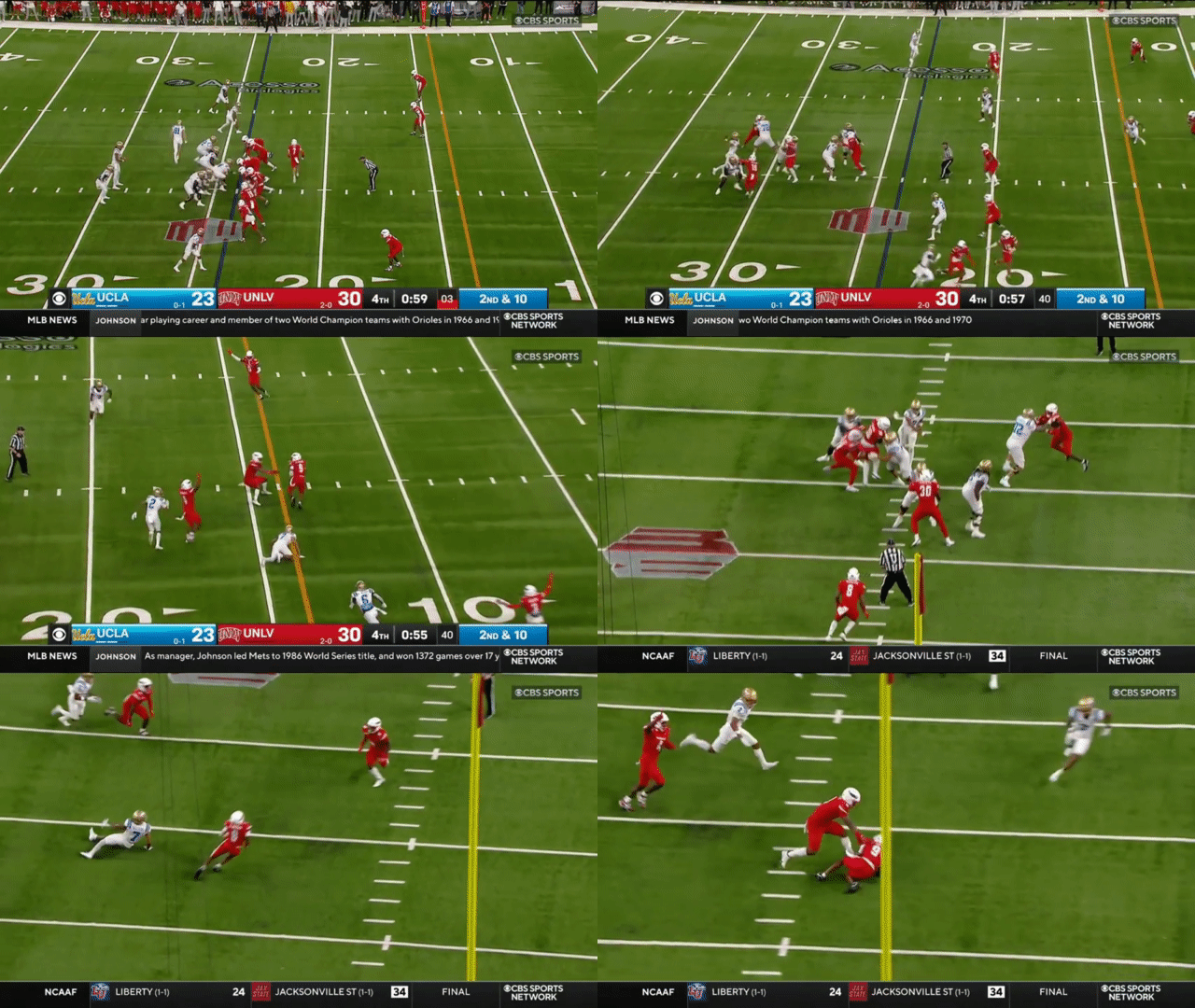
Even with a clean pocket, Iamaleava’s throws are not always ideal. I don’t know if this one is a miscommunication or a bad throw, but this one goes way behind his intended receiver:
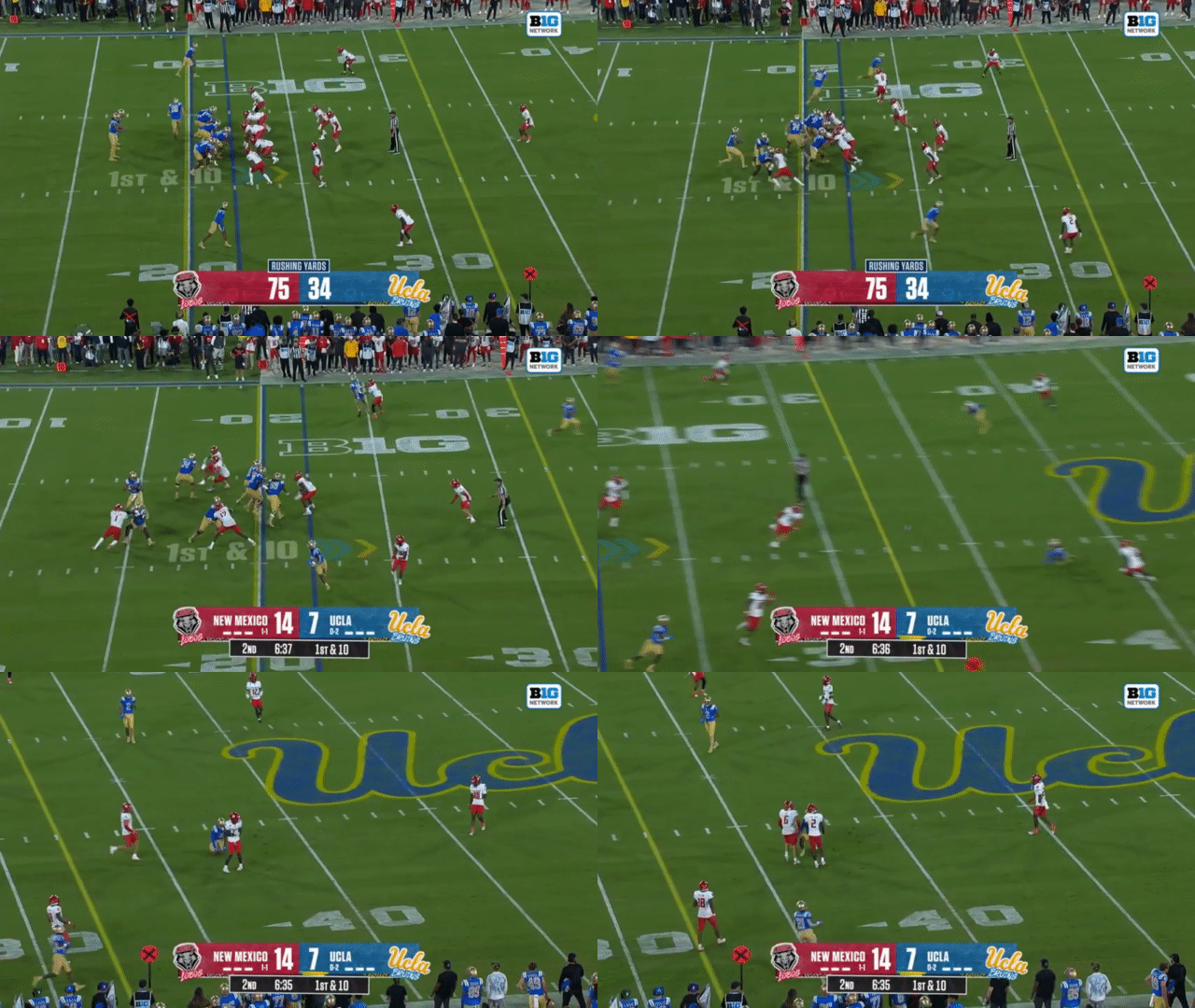
And despite his big arm, Iamaleava found relatively little success with the deep ball last season. There weren’t many attempts, but they generally weren’t on-target anyway (there was a reason Penn State ignored the deep ball threat from UCLA):
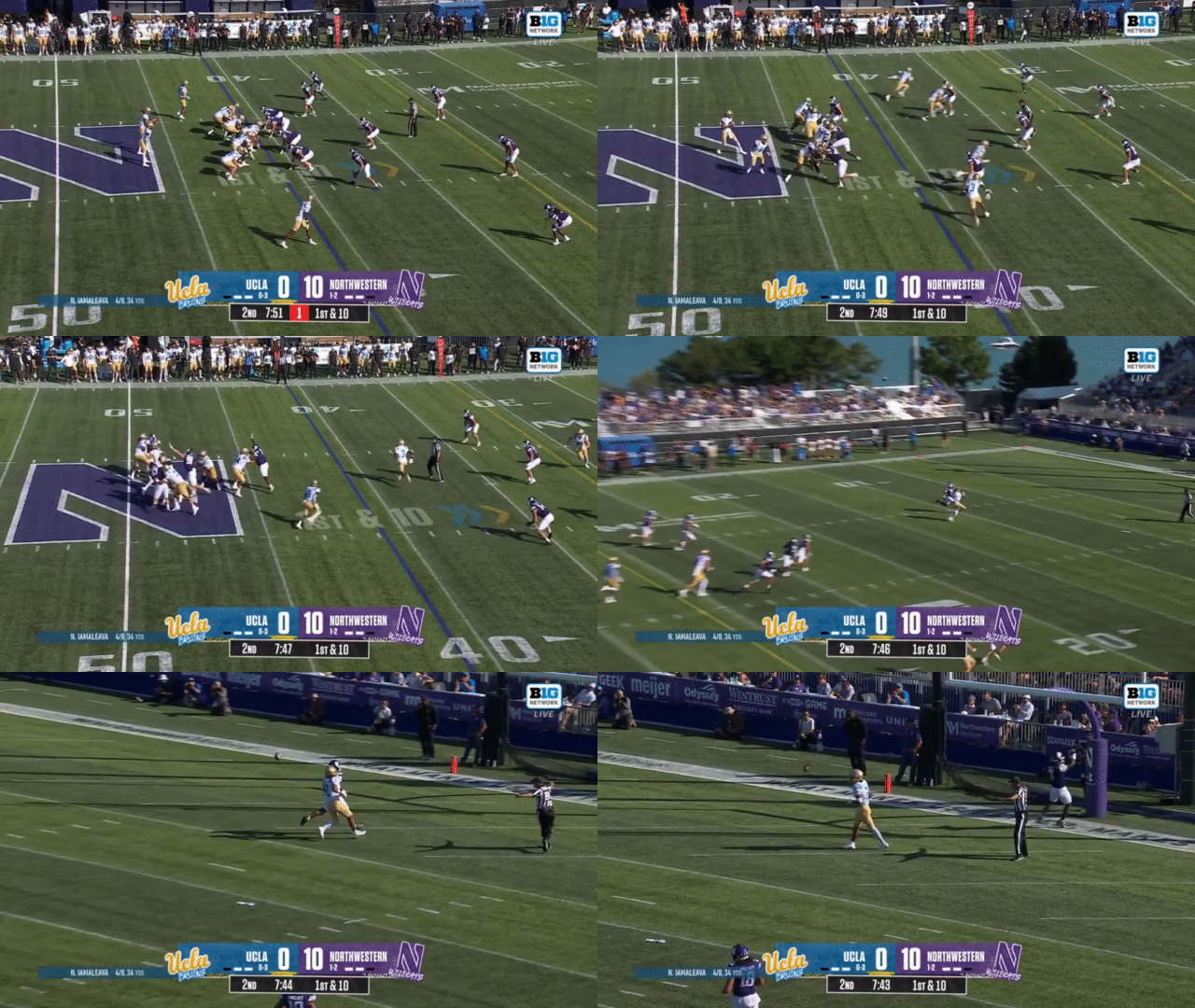
Look how open Iamaleava’s target is, and at which point he decides to make the throw:
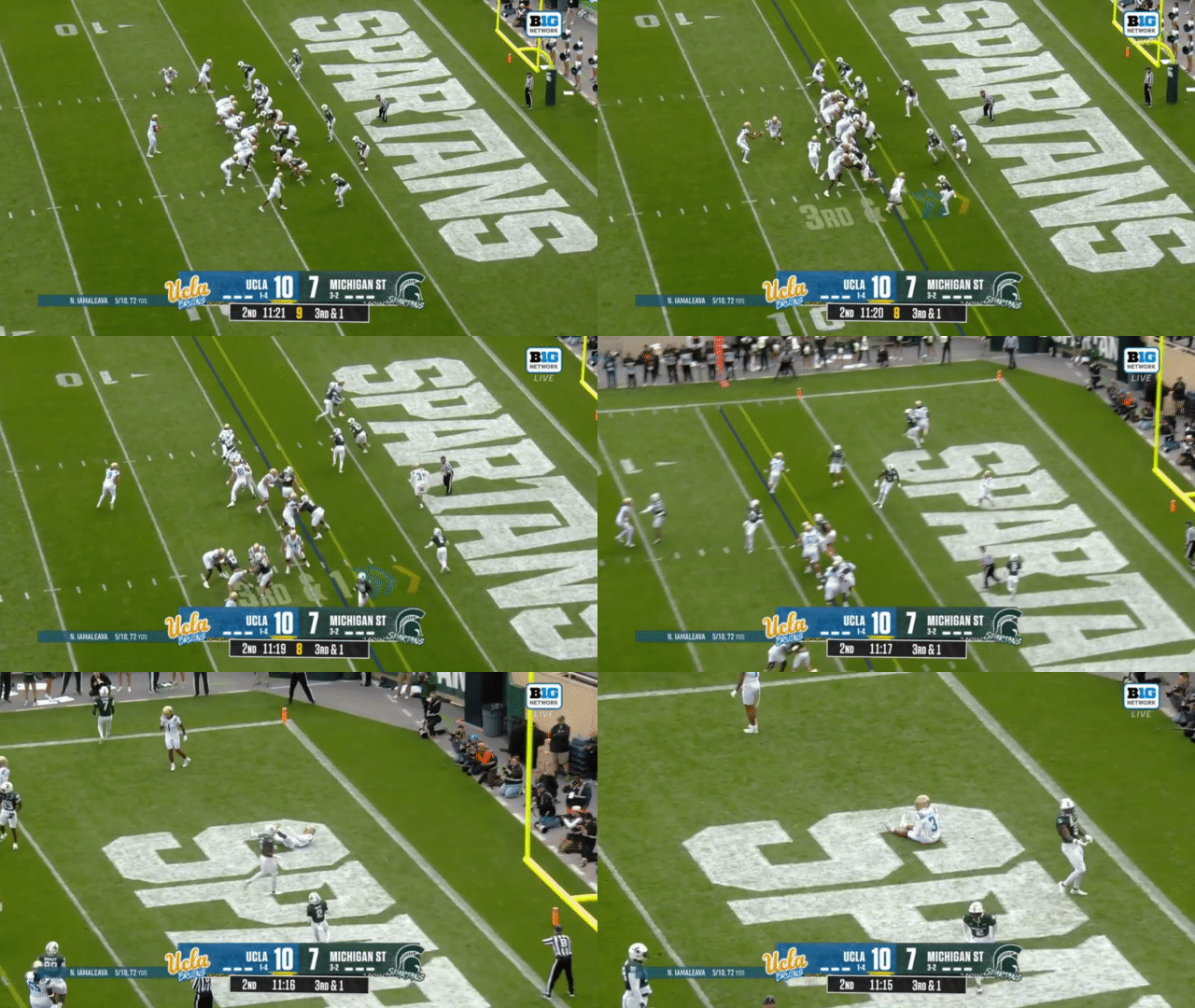
Although Iamaleava has the arm strength to make all-arm throws, accuracy struggles were a consistent issue:
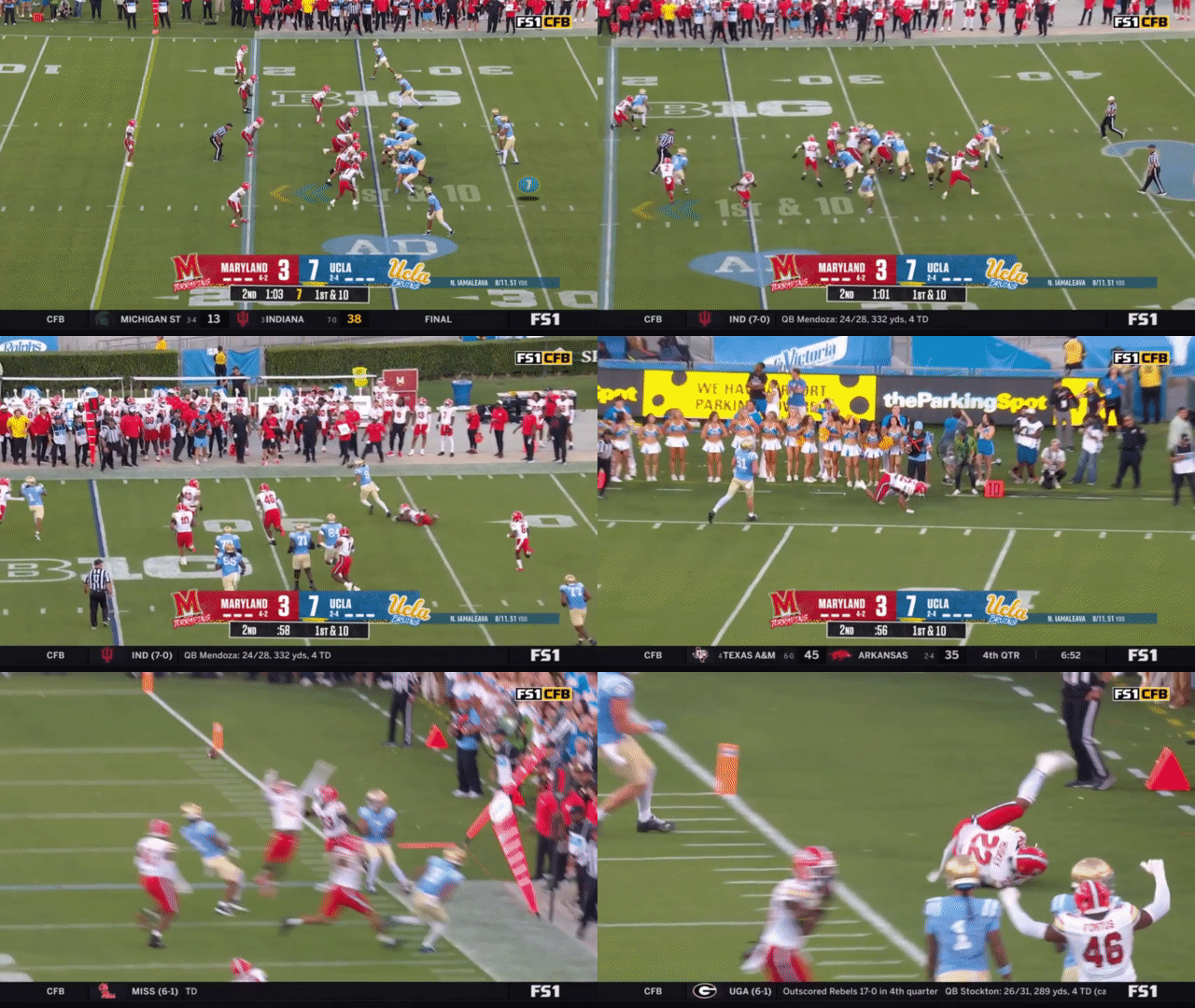
I don’t have an explanation here:
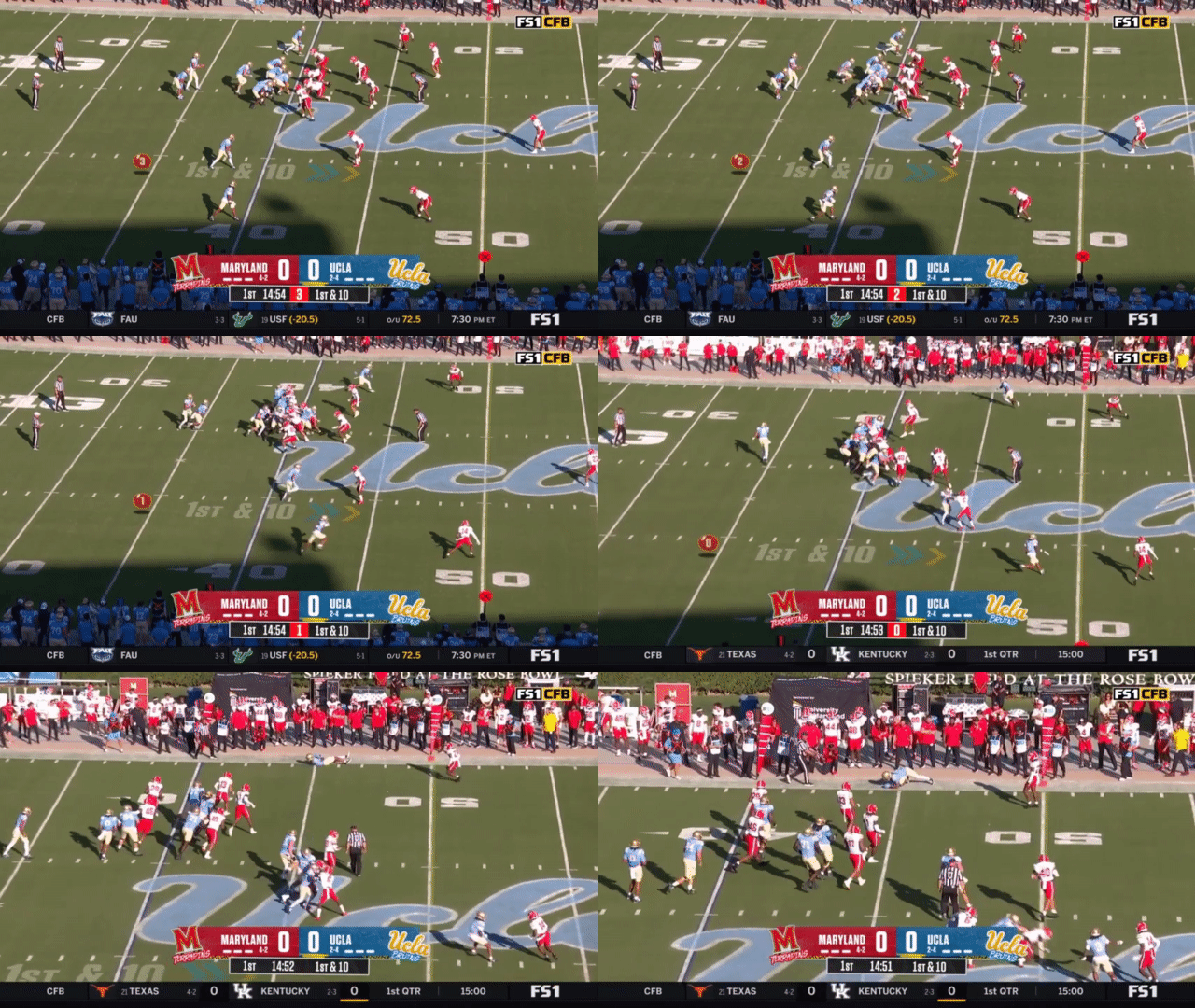
Clean pocket and just… off-target:
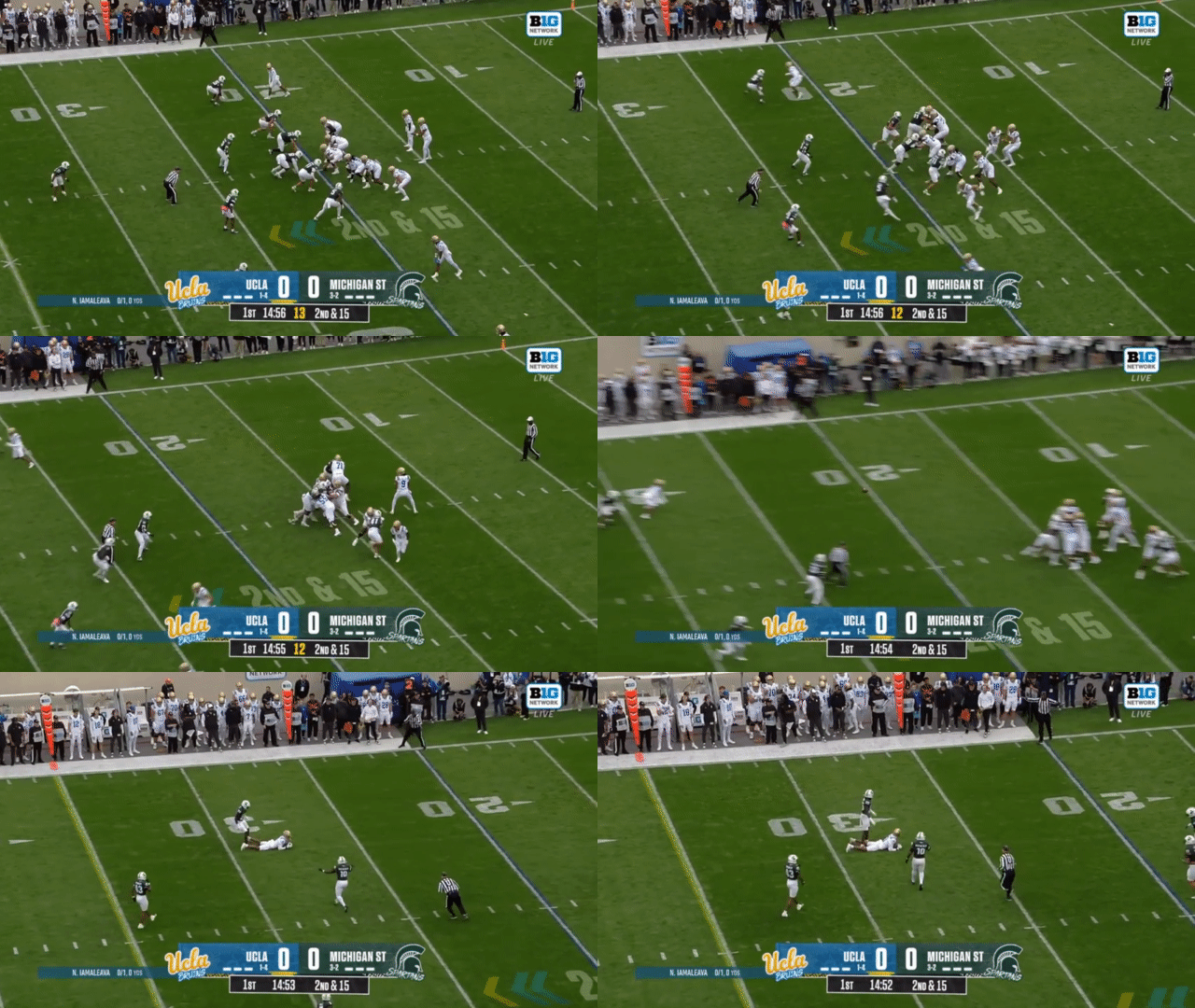
I saw the following play so many times and it just takes ages of being wide open for Iamaleava to pull the trigger on some throws:
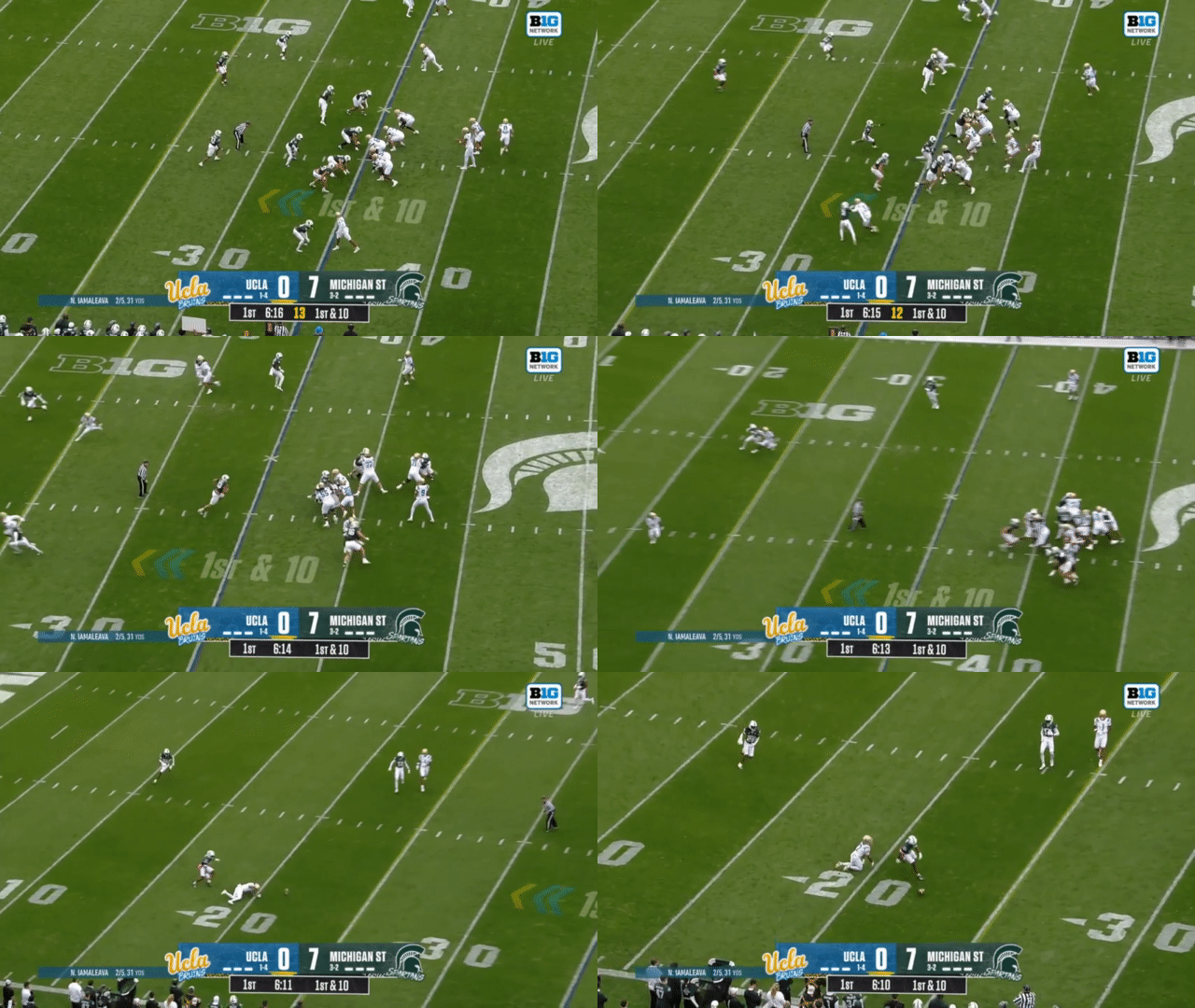
There were some throws that convinced me that Iamaleava just does not have an understanding of what the defense is doing sometimes. Here’s Iamaleava trying to get his slot receiver killed:
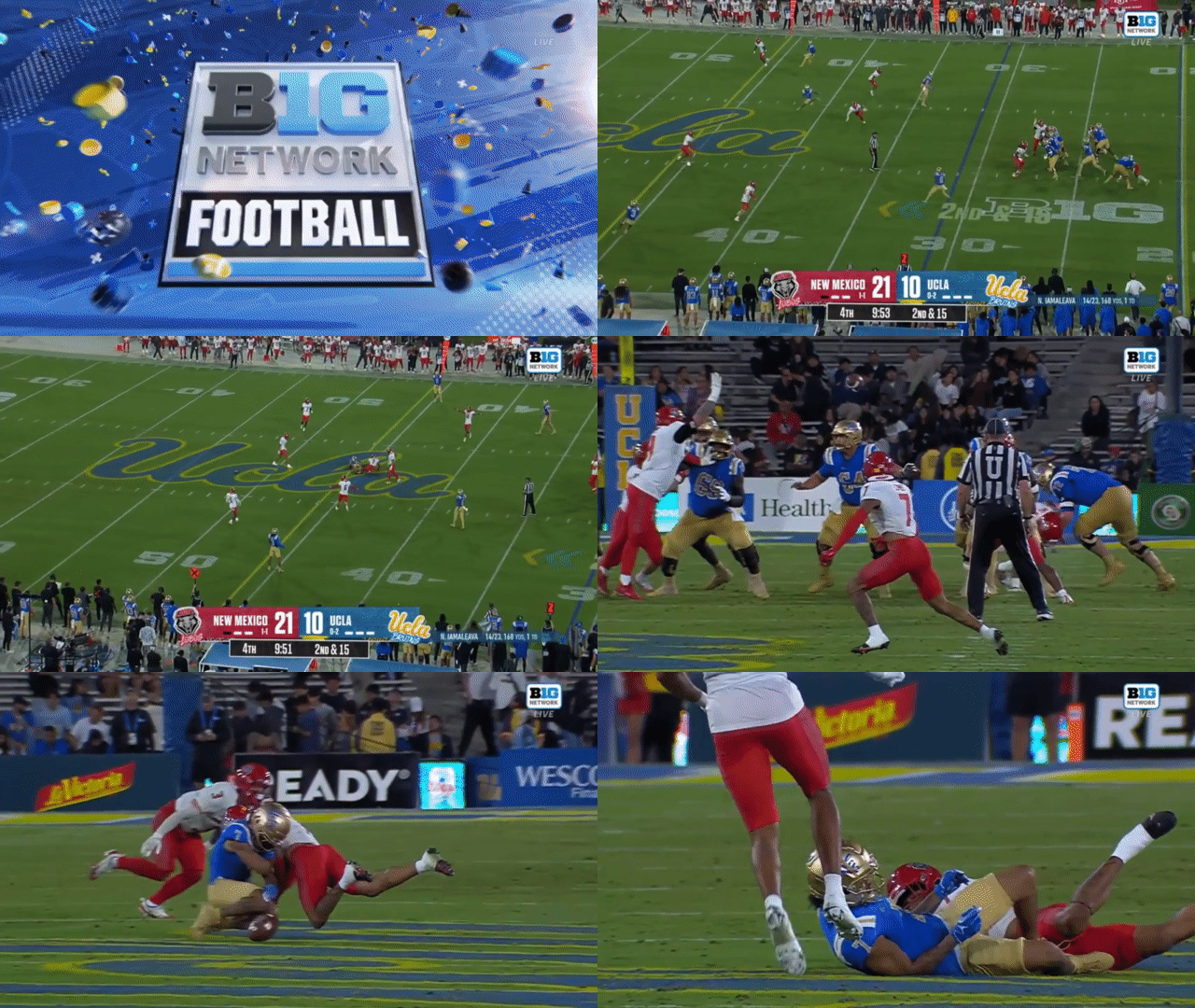
Where’s the safety? Oh well, who cares:
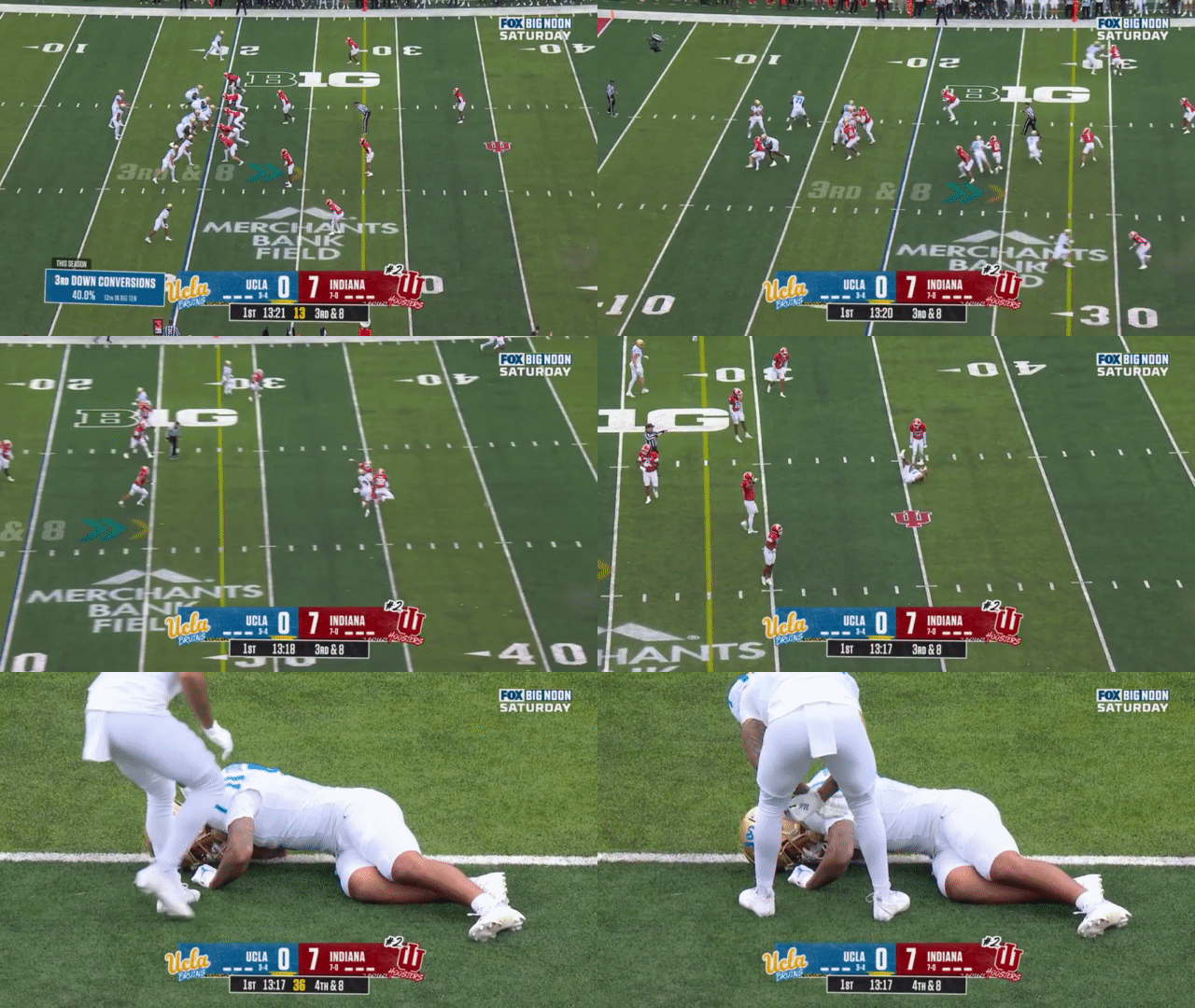
As mentioned earlier, throws in the middle of the field are dangerous, but I have no idea what Iamaleava was seeing here (besides, perhaps, the scoreboard):
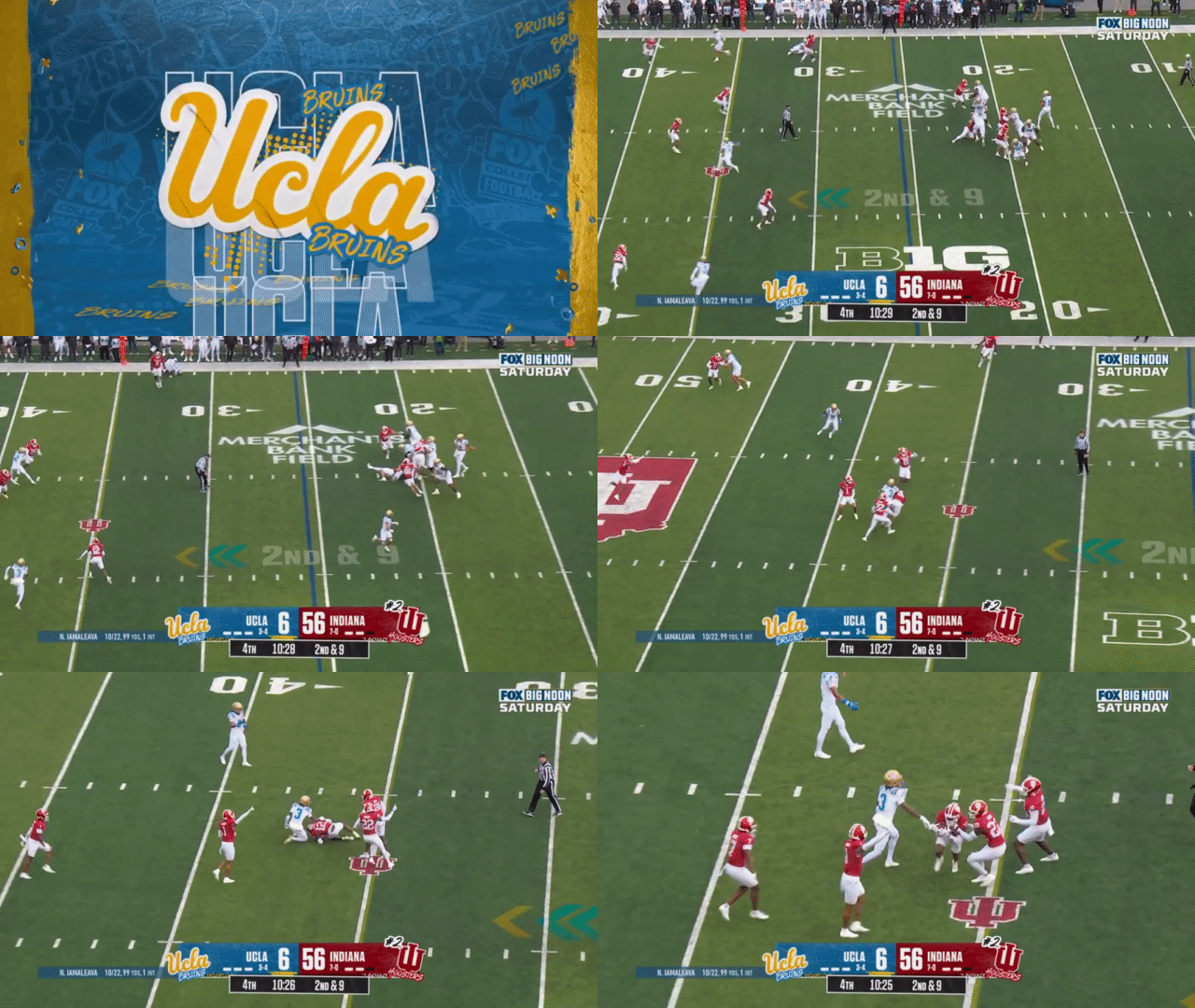
Iamaleava sets his feet and sails the throw anyway:
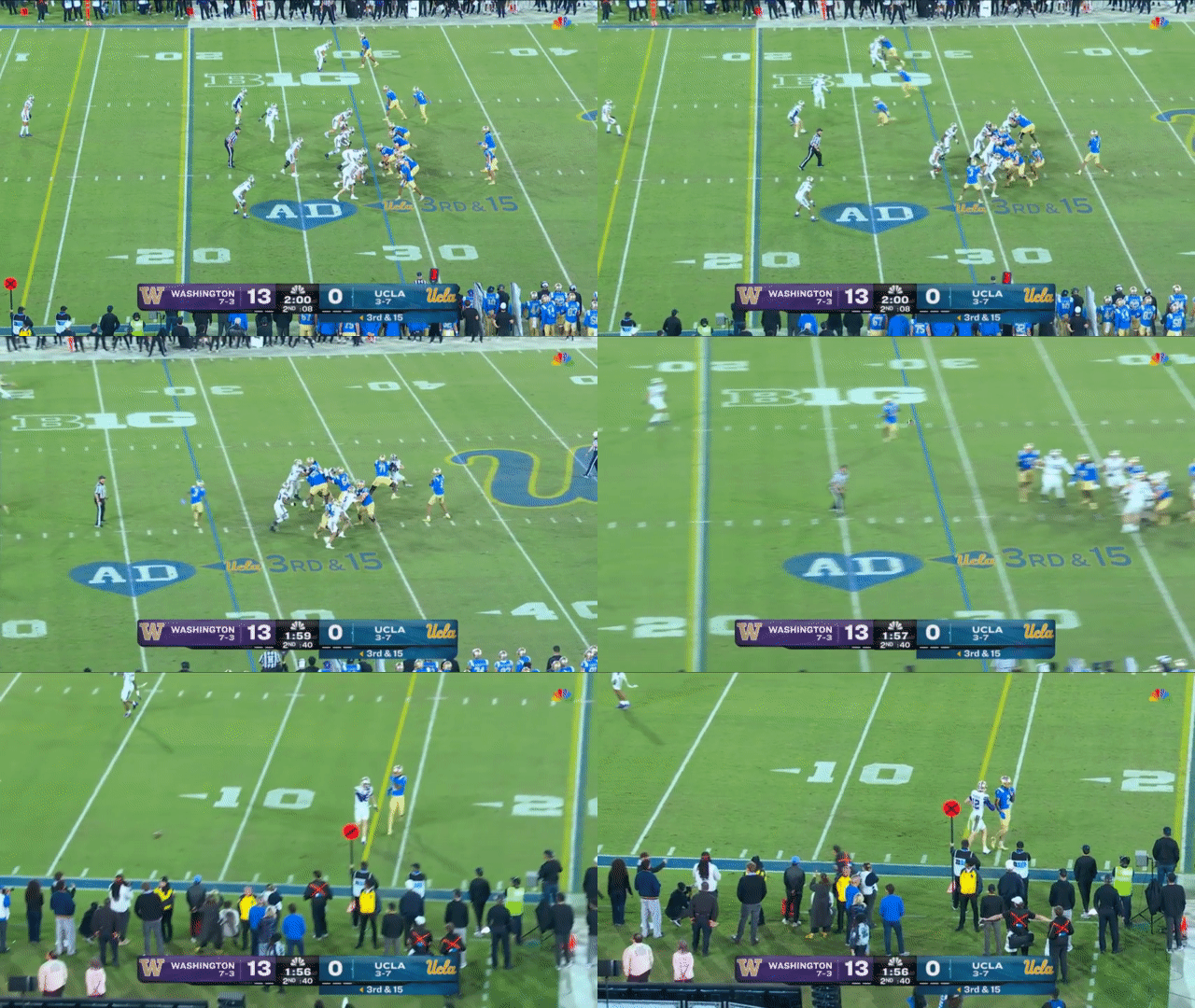
Here’s a throw on the run that probably should have been picked:
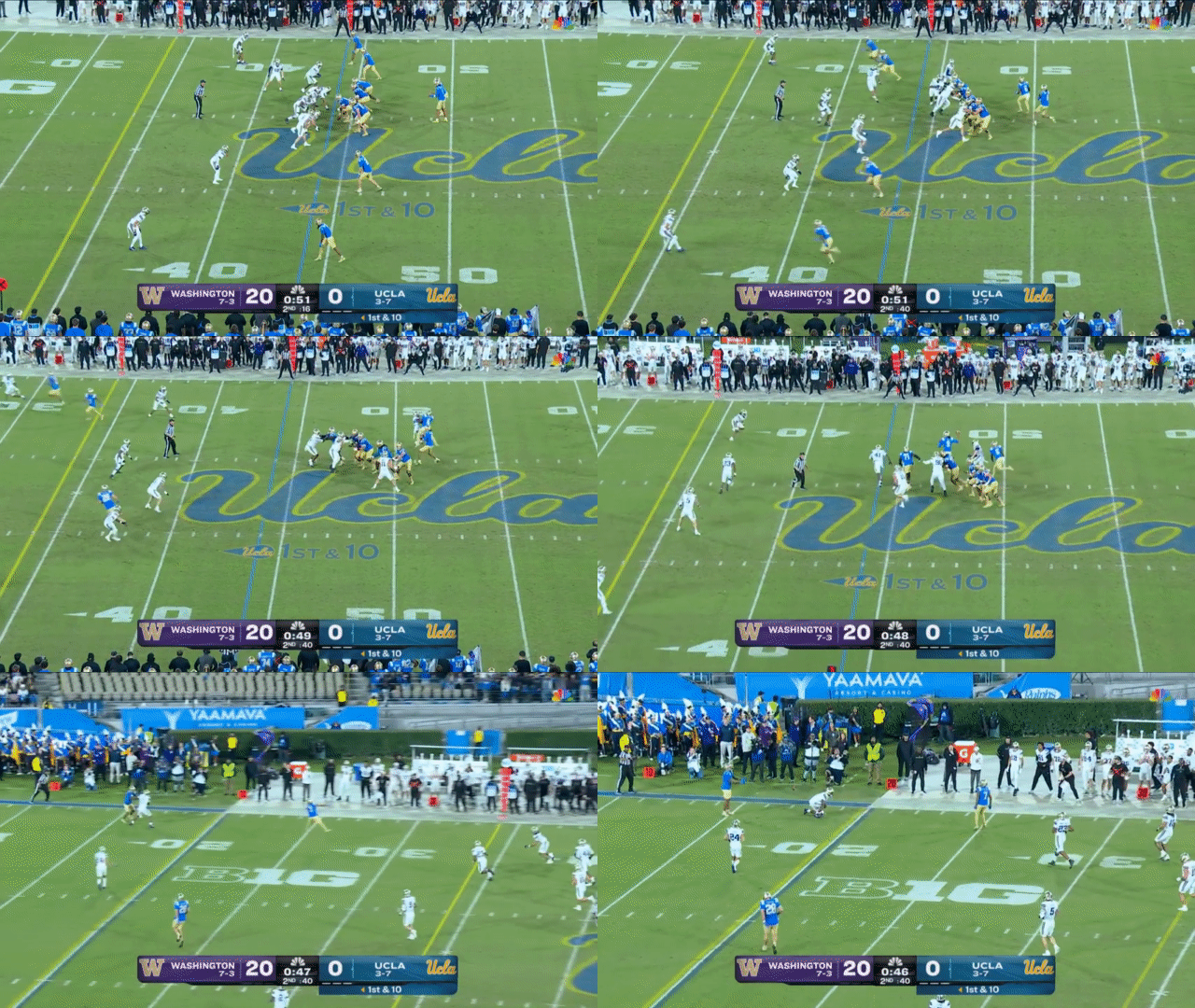
And here’s yet another such throw, from the pocket this time:
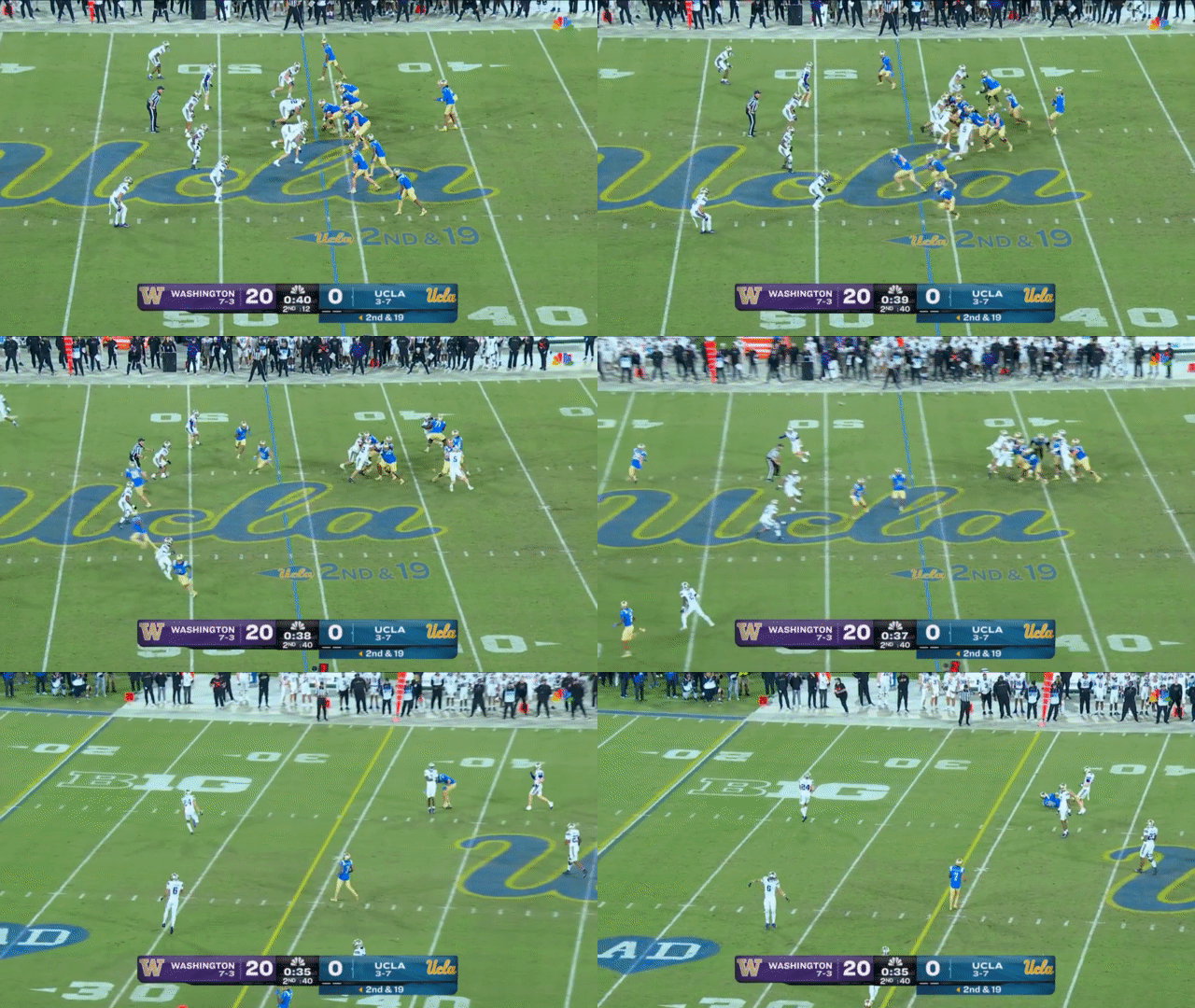
Again, this is a quarterback entering his senior season, his 4th year as a starter. I can see why a fan might have hope in a new coaching staff turning things around with a physically talented quarterback, but how many years does it take for a coaching staff to clean up freshman mental mistakes? How many quarterbacks finally learn to read a defense during their senior season? Iamaleava has a strong arm and a lot of arm talent, but he also has inconsistent throwing mechanics and struggles with accuracy even on routine throws. You’d think that if these were issues he was going to fix, he’d have fixed them by now.
Of course, Iamaleava will still be dangerous on offense for no other reason than that he can run the ball. You still have the service academies running the triple option out there, after all. Tennessee made the playoffs with their run-based offense that revolved around a future NFL running back, Iamaleava’s legs, and Iamaleava making easy reads/throws against stacked boxes. I’m just really skeptical of the UCLA fans that posit “if our QB could just figure out the entire mental side of the game” arguments. Yeah, if only.
Running back
Although UCLA returned their top running back rusher (Nico), they lost last season’s top running back in Jalen Berger, who led the team’s running backs in rushing yards (364 yards, or ~30.3 yards/game) and TDs (2). UCLA spread the ball out pretty evenly among their 4 running backs, although this season I suspect the new staff will rely much more heavily on incoming JMU transfer, Wayne Knight. After disappointing seasons from previous RB transfers Anthony Woods (Utah) and Jaivian “Jet” Thomas (Cal)—both of whom finished the season with 294* rushing yards (that’s 24.5 rushing yards/game, each)—UCLA is looking to avoid going 0 for 3 on incoming RB transfers.
(*Thomas actually had less than this, but not really relevant to my point)
Knight is listed at 5’7” and 193 lbs, which puts him at about Darren Sproles’s size, but his play style is more reminiscent of a different former UCLA running back— Maurice Jones-Drew. Because although Knight may be limited in stature, he runs with a lot of power and explosive speed.
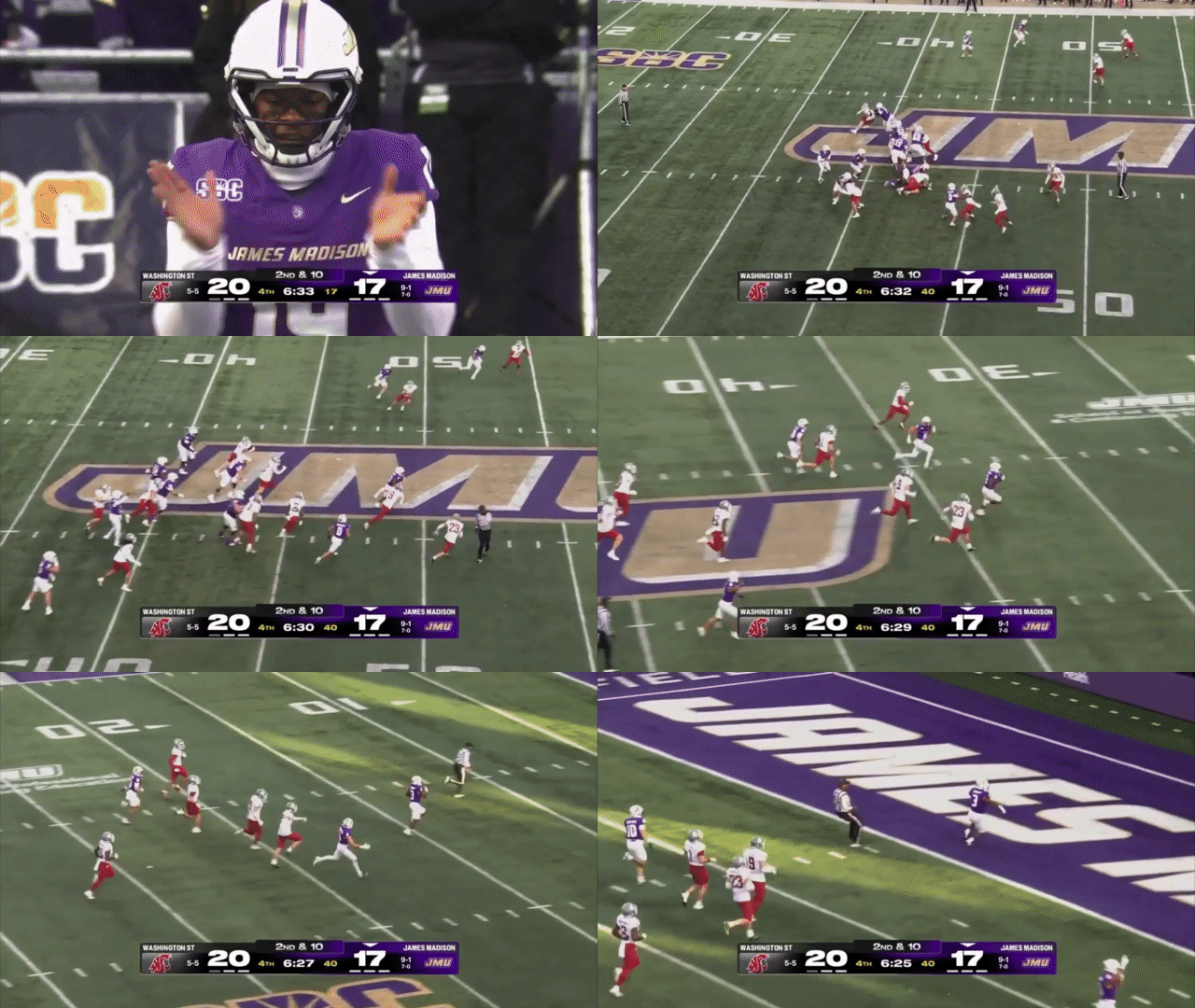
It was not uncommon at all to see Knight run through multiple tacklers on routine runs:
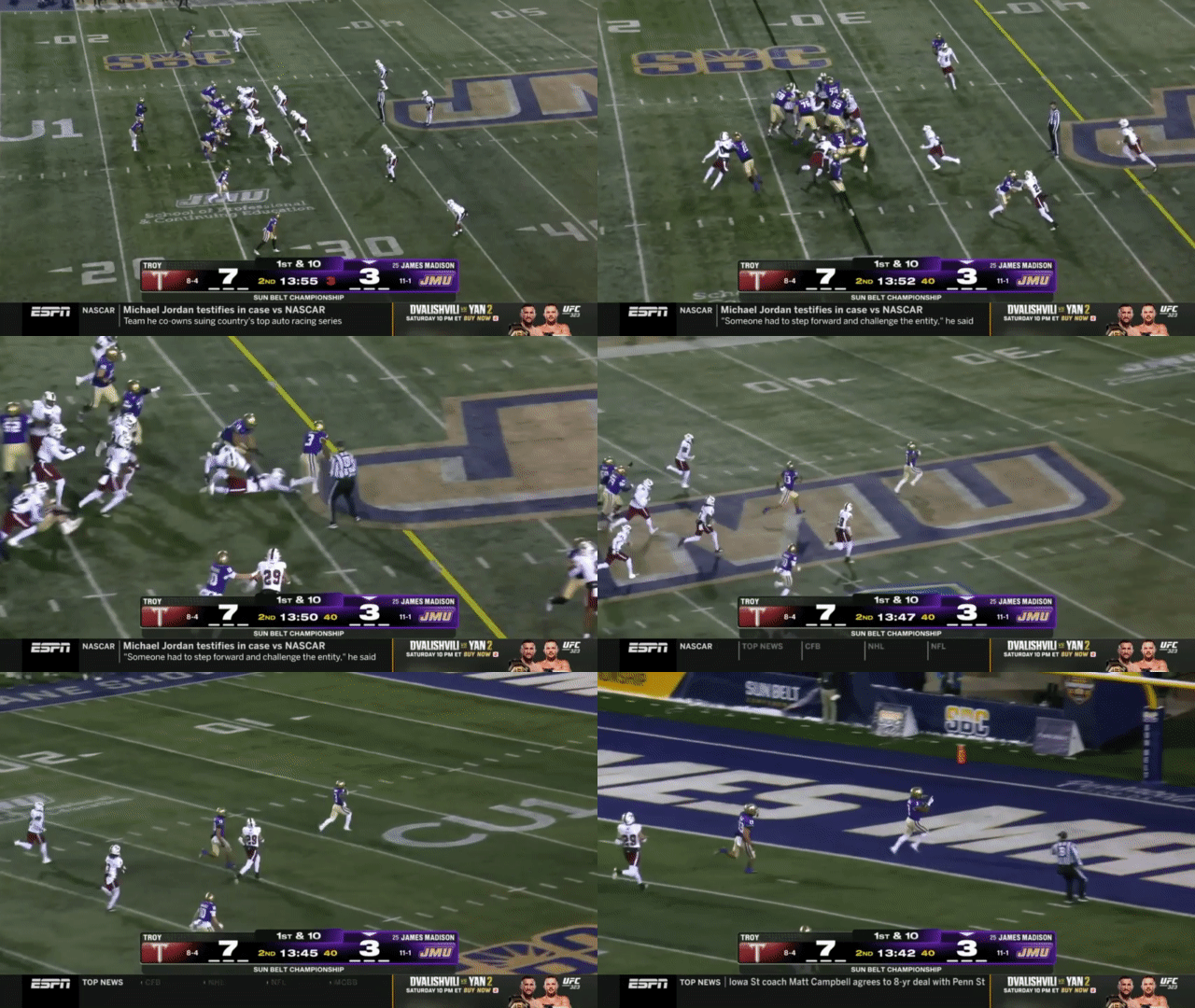
Knight routinely punished tacklers who took a poor angle on him:
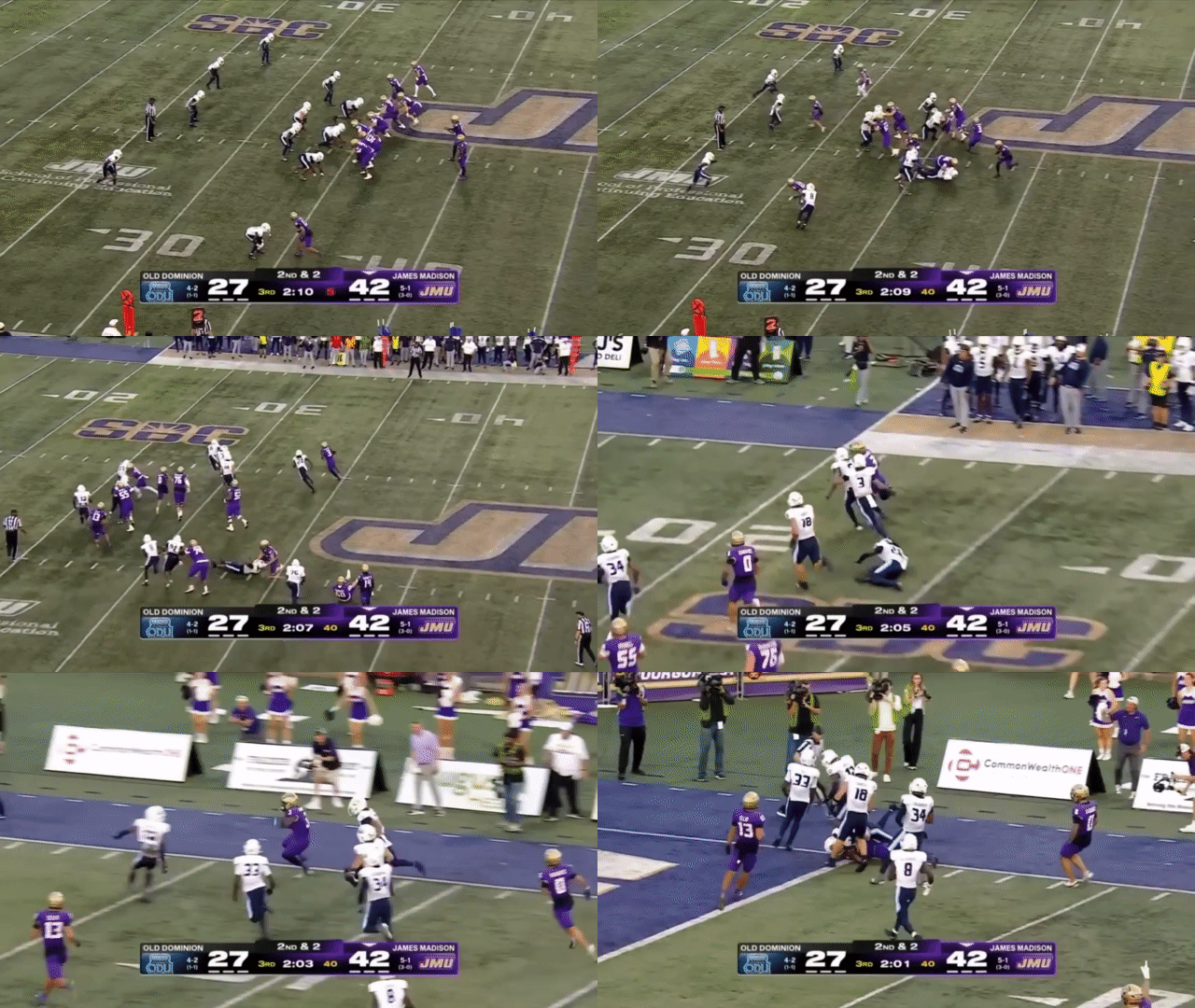
Knight has good vision, and a good understanding of where his blocks are developing downfield:
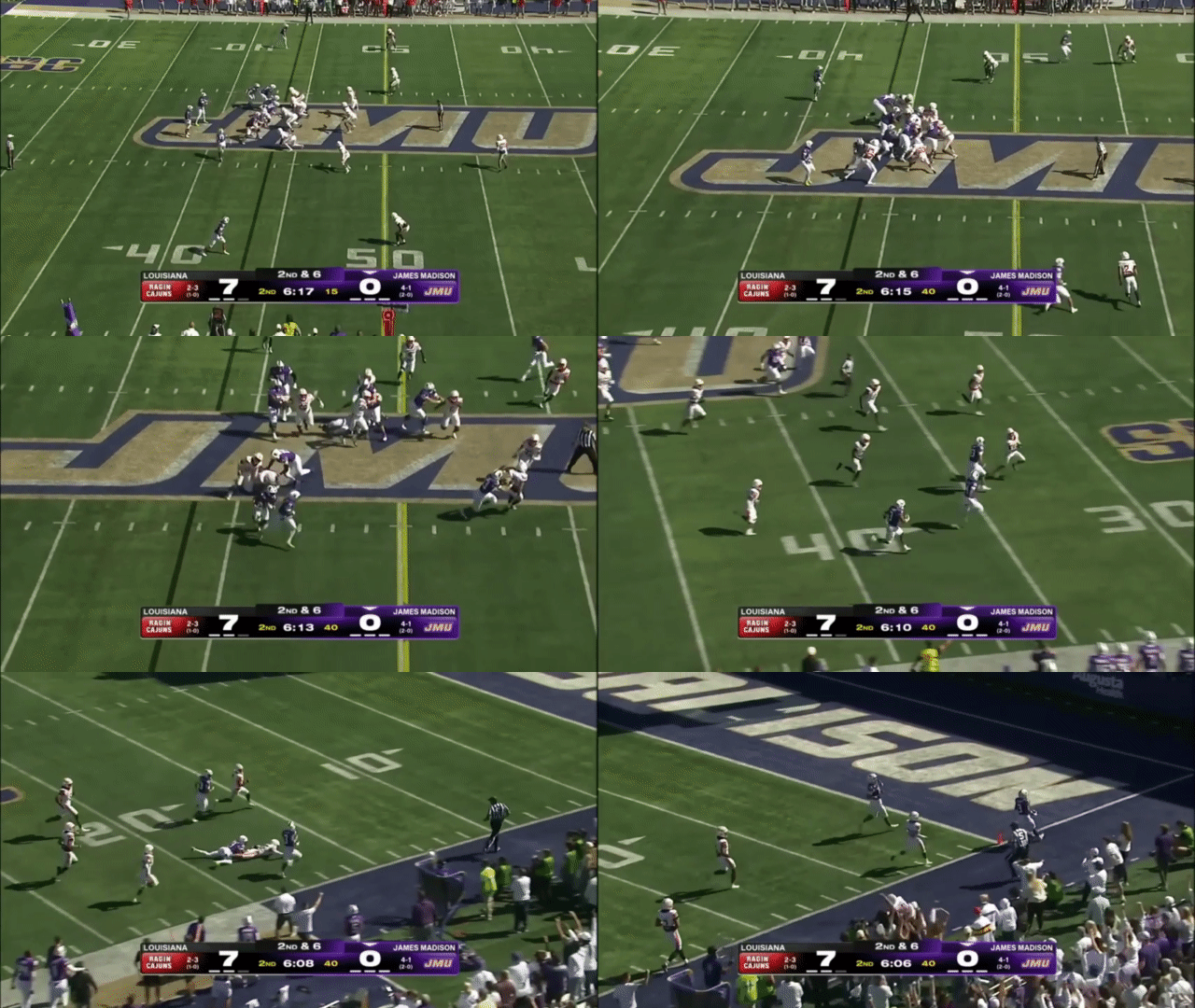
Knight also has impressive balance. One of the reasons he’s able to break so many tackles is because of the way he manages to keep his feet on contact, allowing him to get to the next level:
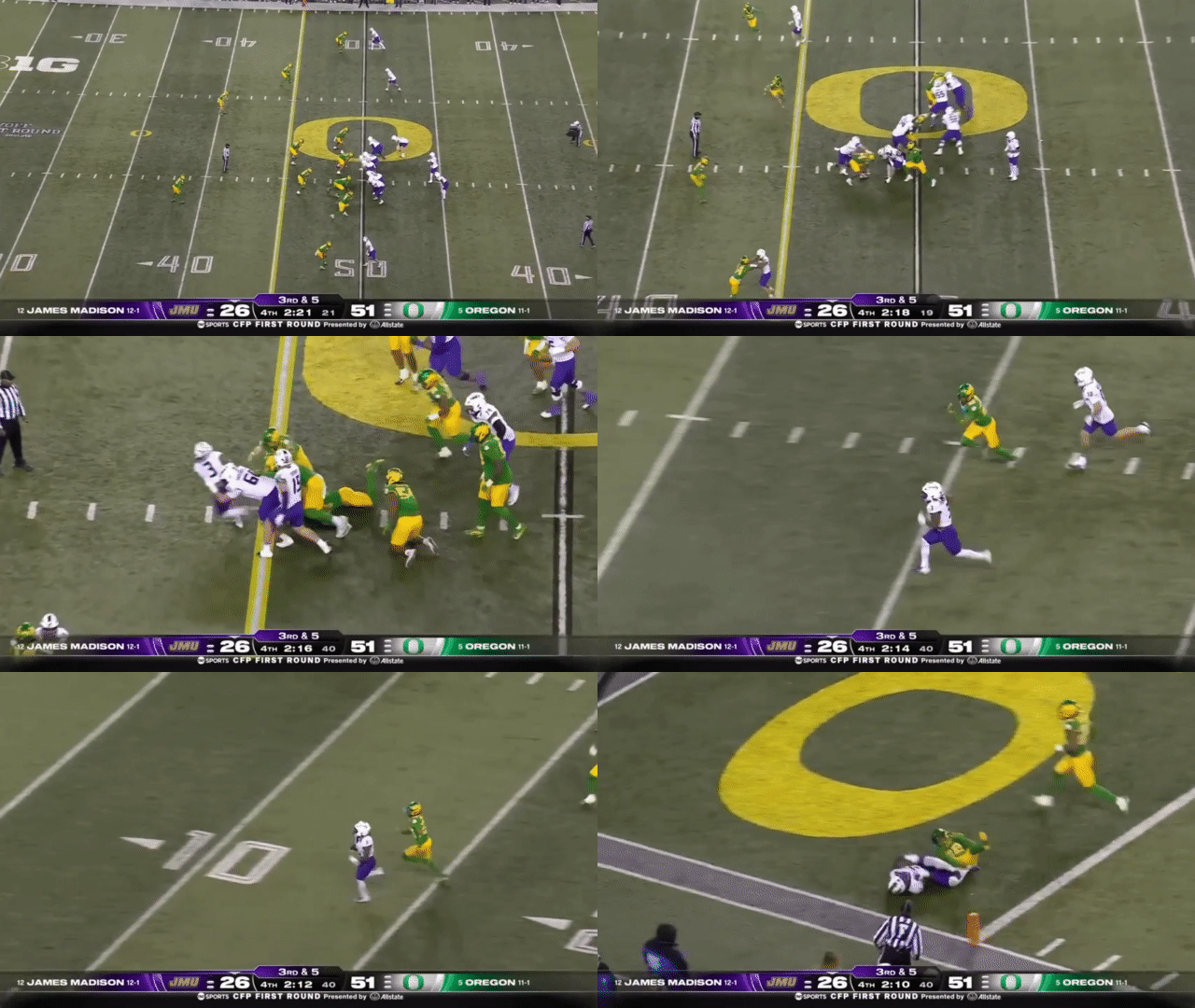
JMU was not very good at maintaining consistent drives, but they would bide their time until they could make an explosive play, and Knight was a big part of the reason the JMU offense was as explosive as it was last year, as most of Knight’s rushing yards came on big plays.
Of course, UCLA will look to get Knight the ball in space. Knight showed pretty good hands as a receiver out of the backfield:
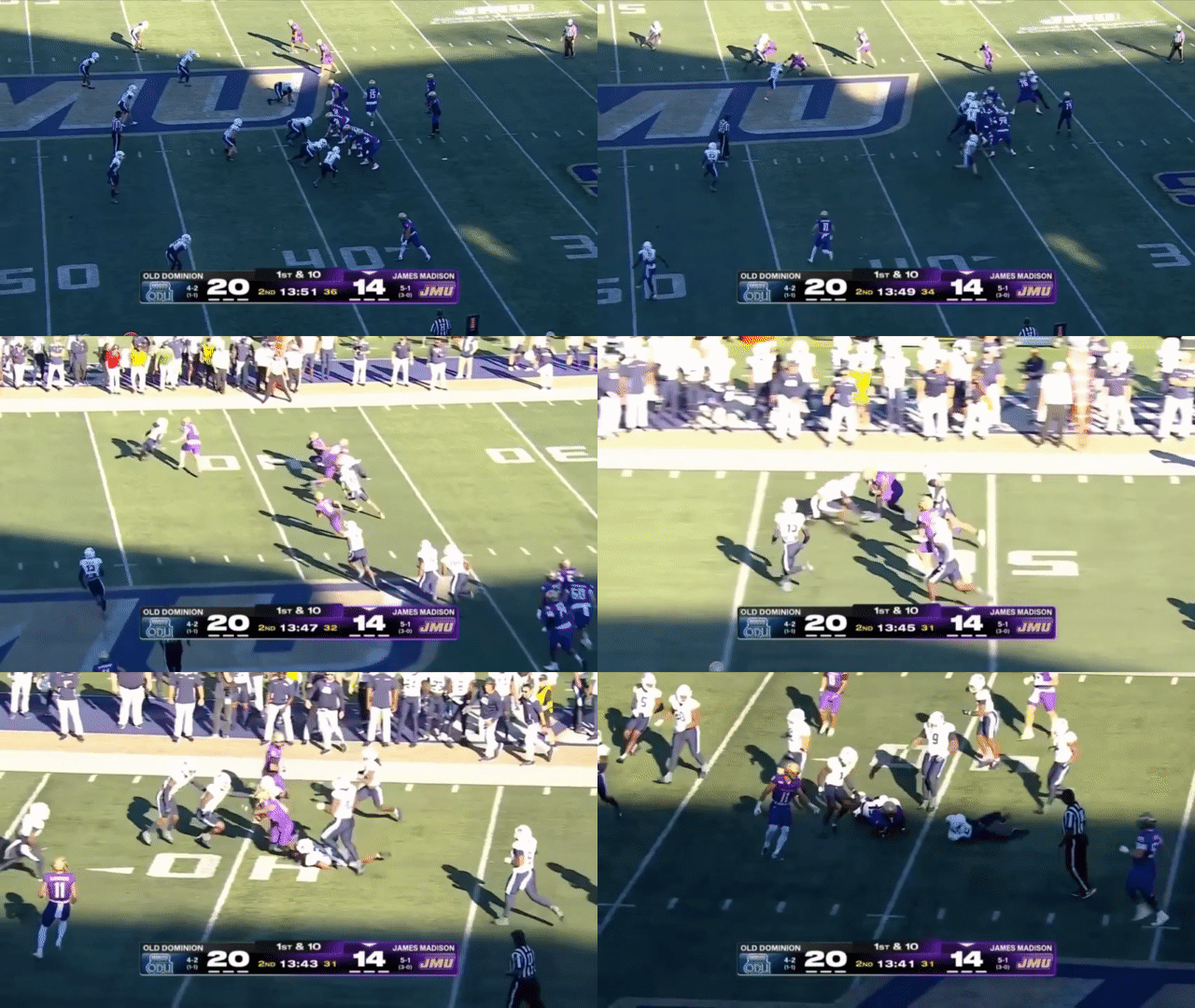
Knight is shifty and elusive in open space:
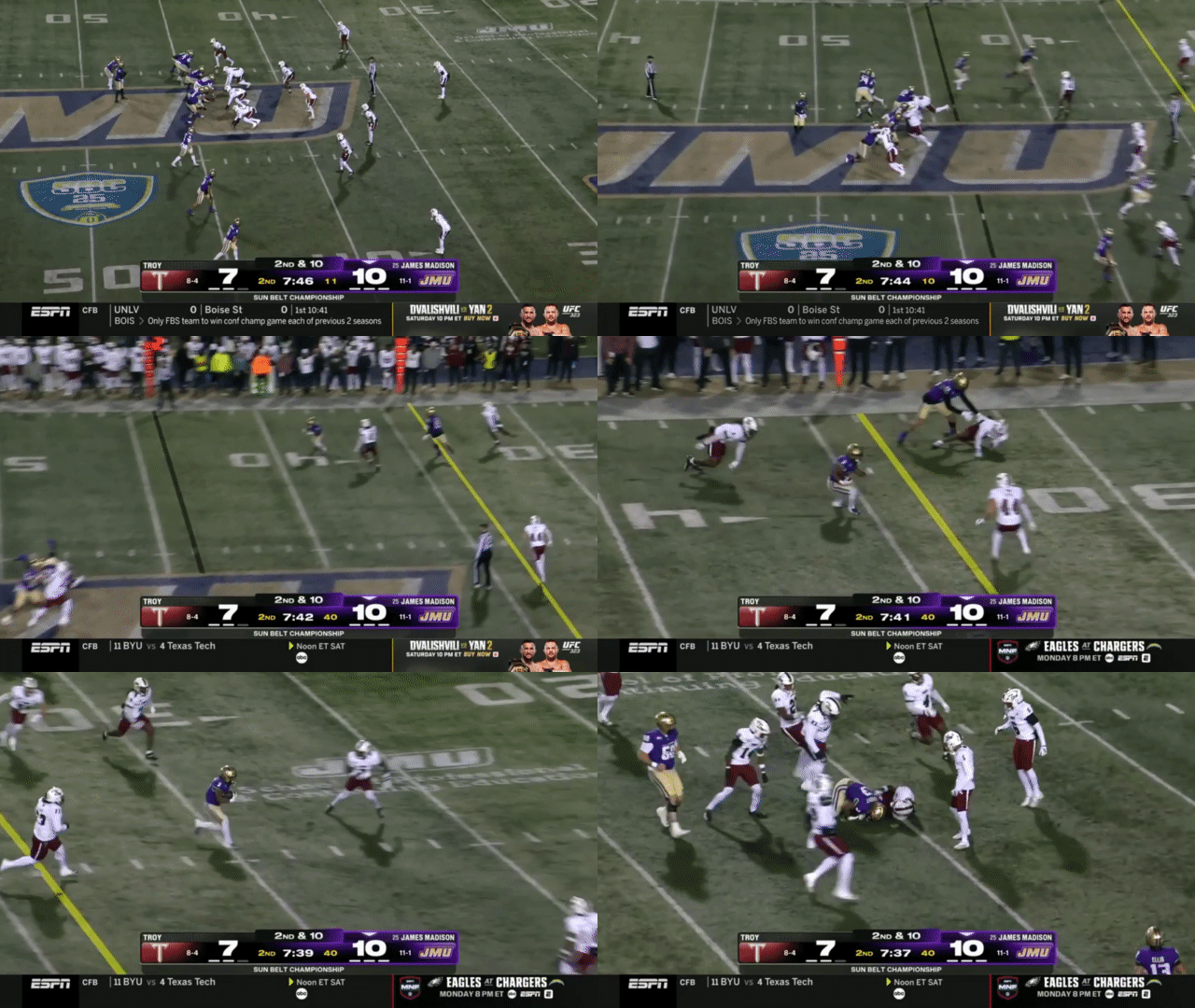
Knight was just as explosive as a receiving threat as he was a runner:
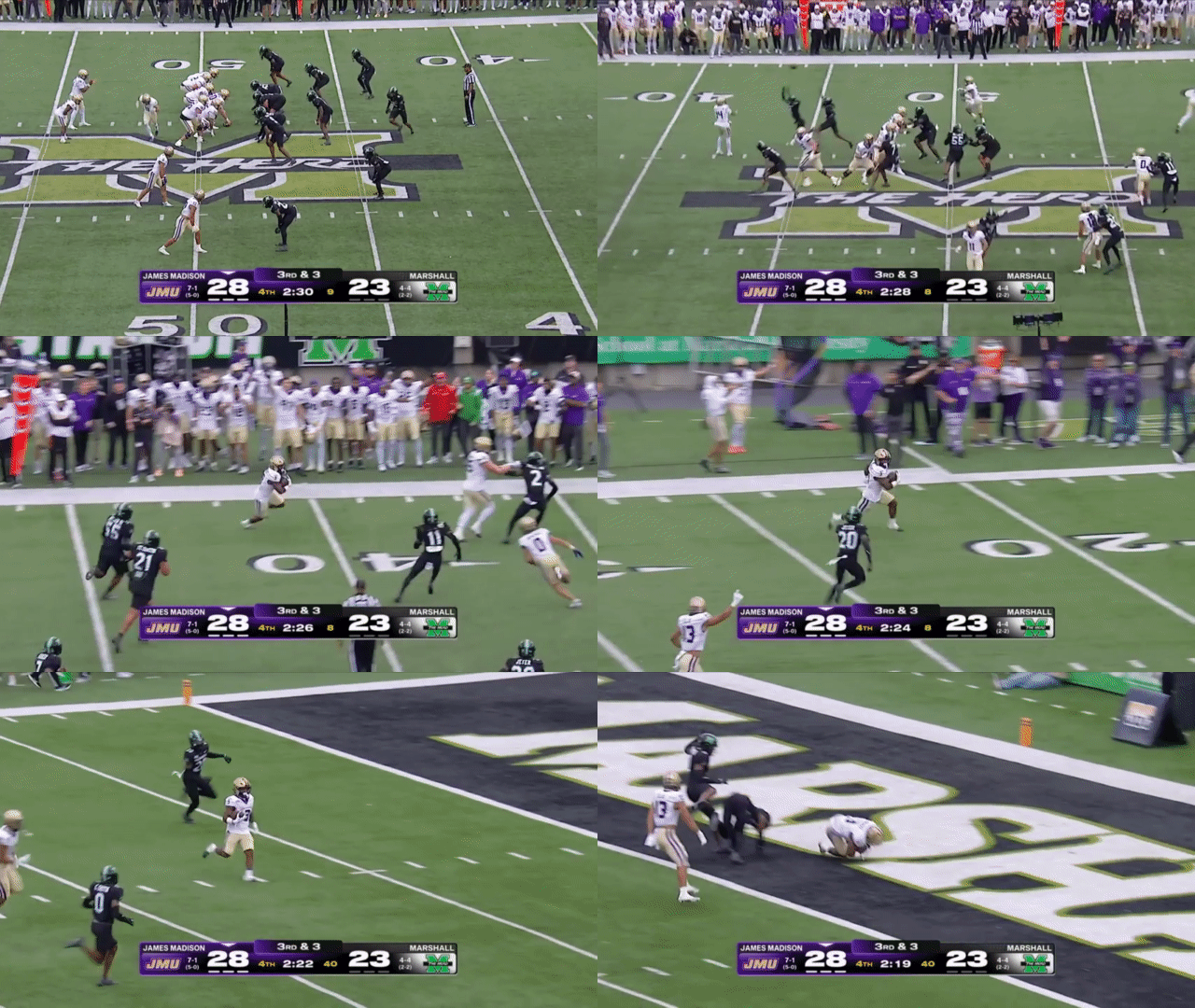
And of course, losing track of Knight was a big mistake, which also makes him effective as a decoy:
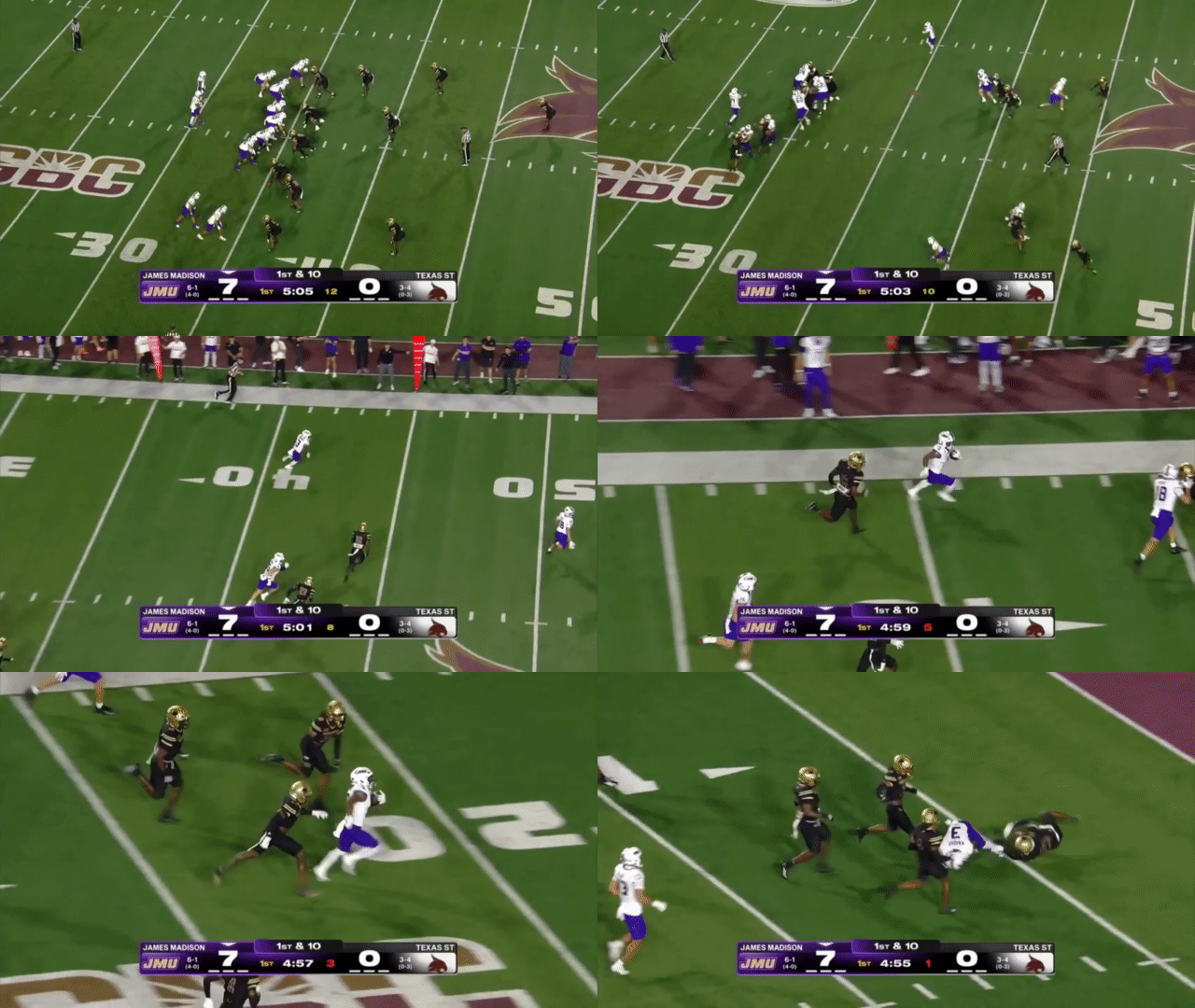
This season will be Knight’s chance to prove himself against P4 competition. He was limited in effectiveness at JMU against P4 teams, managing just 12 rushing yards and 23 receiving yards against Louisville and 110 yards against Oregon, but with almost half of those yards coming on a garbage time run (the 49 yard run featured above) against Oregon’s backups (and there was a lot of garbage time in this game, with Oregon leading by 5 TDs late in the 3rd quarter) — he was averaging 3.8 yards/carry before that run. It’s probably also worth noting that both Louisville and Oregon had strong defensive lines last year.
Among the returning RBs is Anthony Woods, the transfer from Utah. Woods runs with a downhill, physical style:
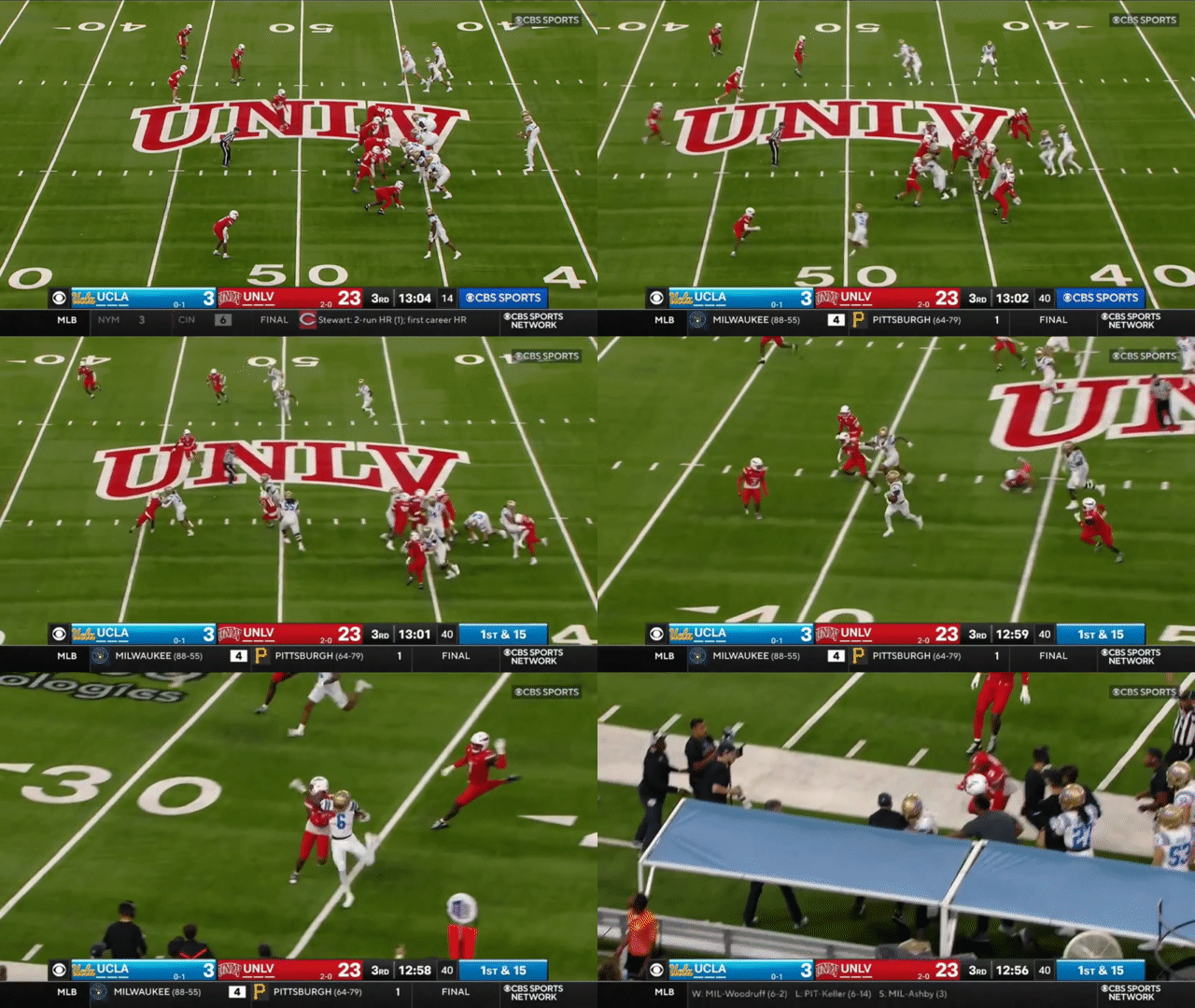
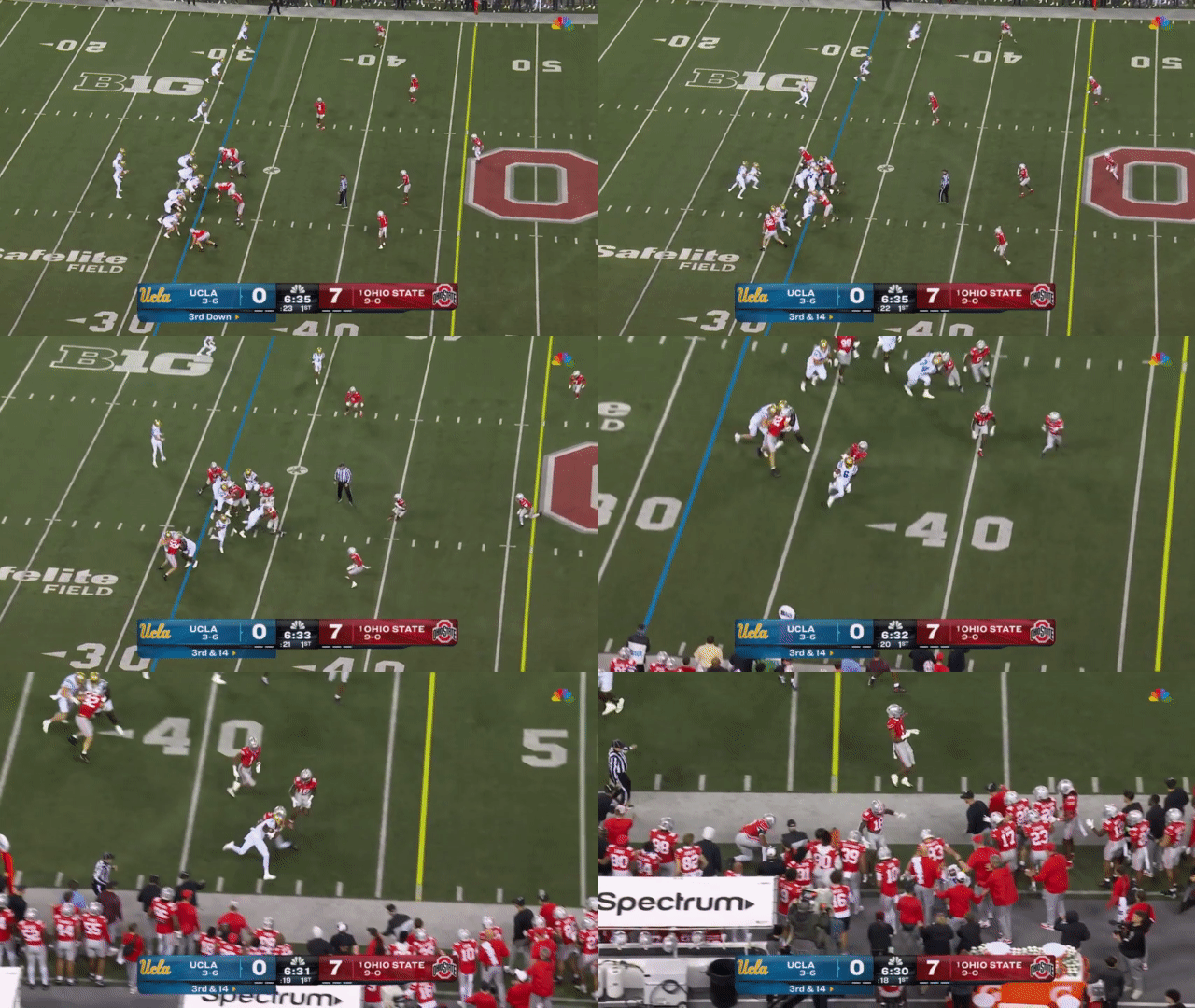
It’s worth noting that I did my best to find positives watching UCLA’s season last year. This is a comprehensive list of UCLA highlights. Woods’s longest run of the season was a 33 yard run, which isn’t included here because it wasn’t a highlight—UCLA opted to run the ball against a prevent defense with 1 second left on the clock before halftime from midfield, apparently not trusting Iamaleava’s ability to throw a Hail Mary from midfield against New Mexico (en route to a hilarious blowout). So with that said, here’s the only run of 10+ yards against Ohio State that didn’t occur in garbage time, which in my mind qualified as a highlight (I didn’t want to go the whole game with zero clips):
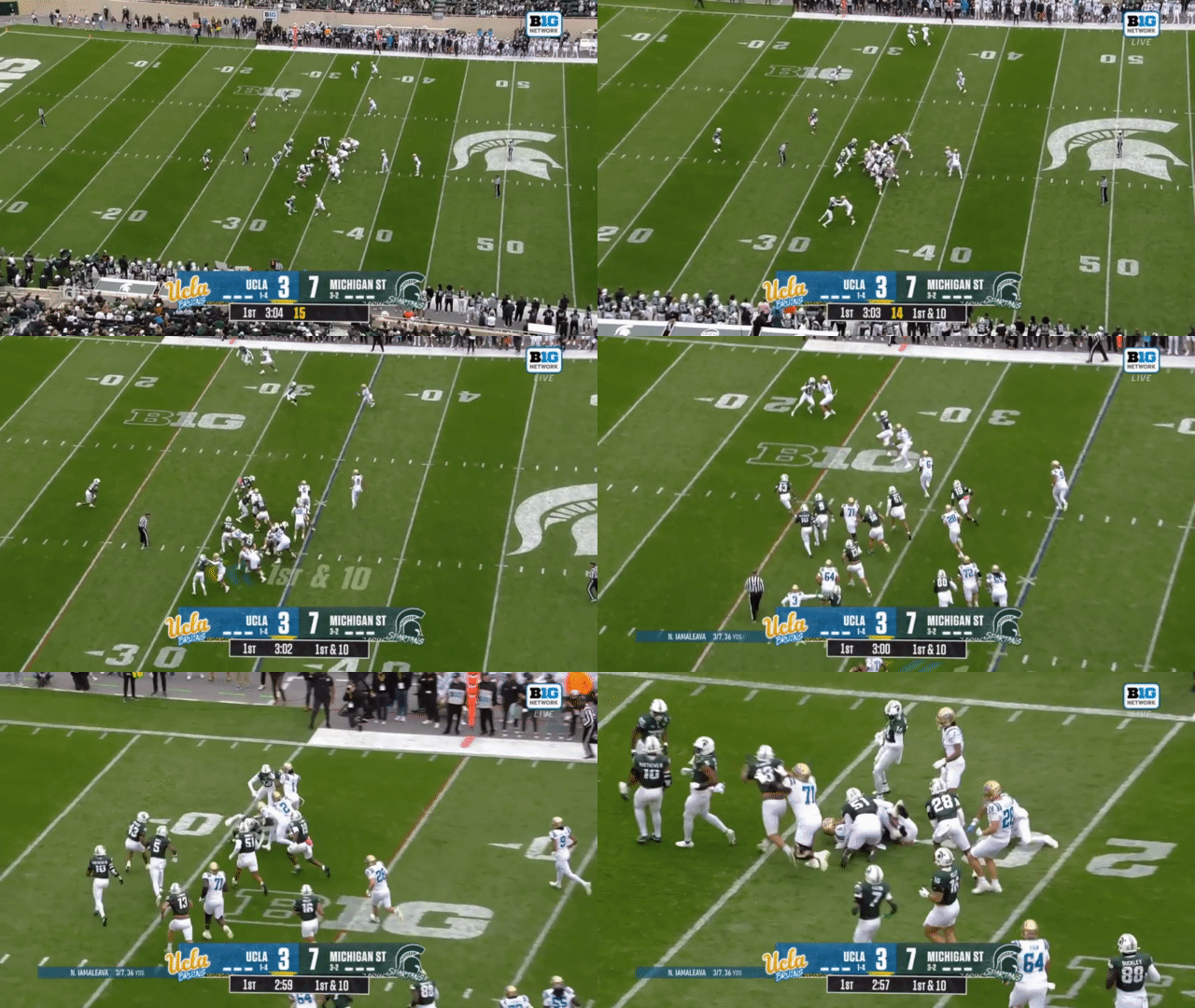
Here Woods shows a couple nice moves as he bounces a run outside:
Here Woods shows some of his downhill running ability:
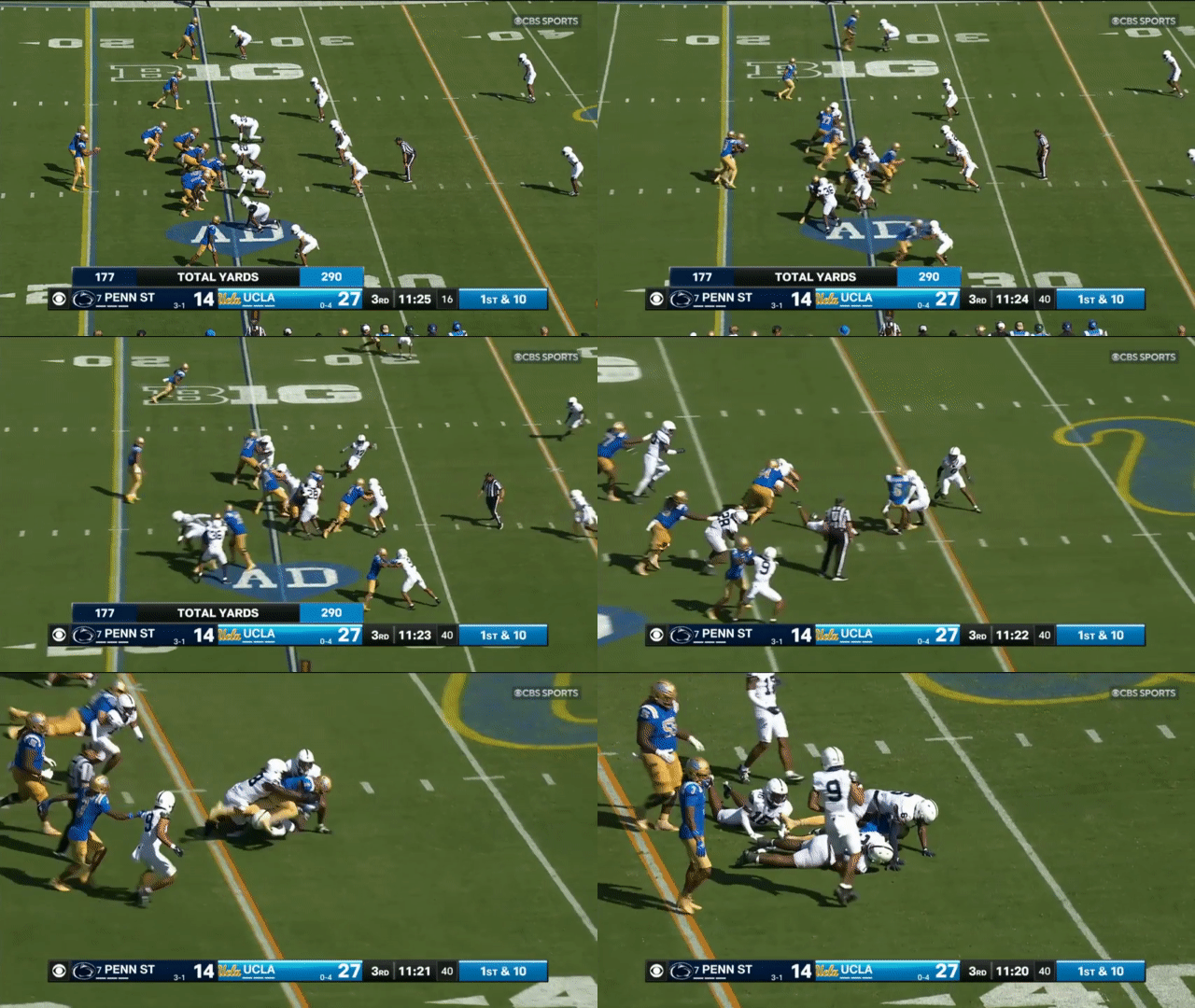
Woods was also a pass-catching target out of the backfield:
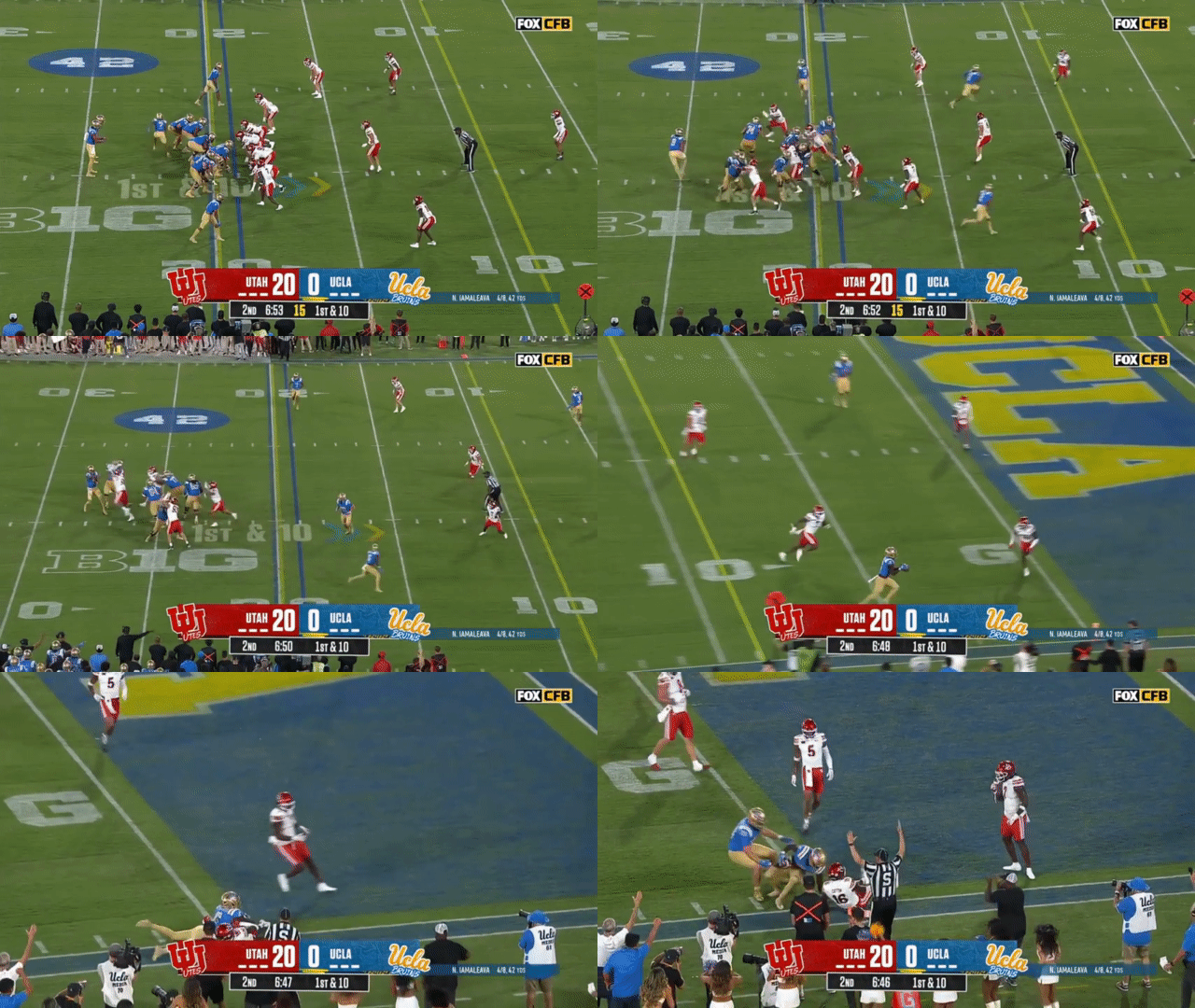
Here Woods does a nice job of lowering his shoulder as he fights for extra yards:
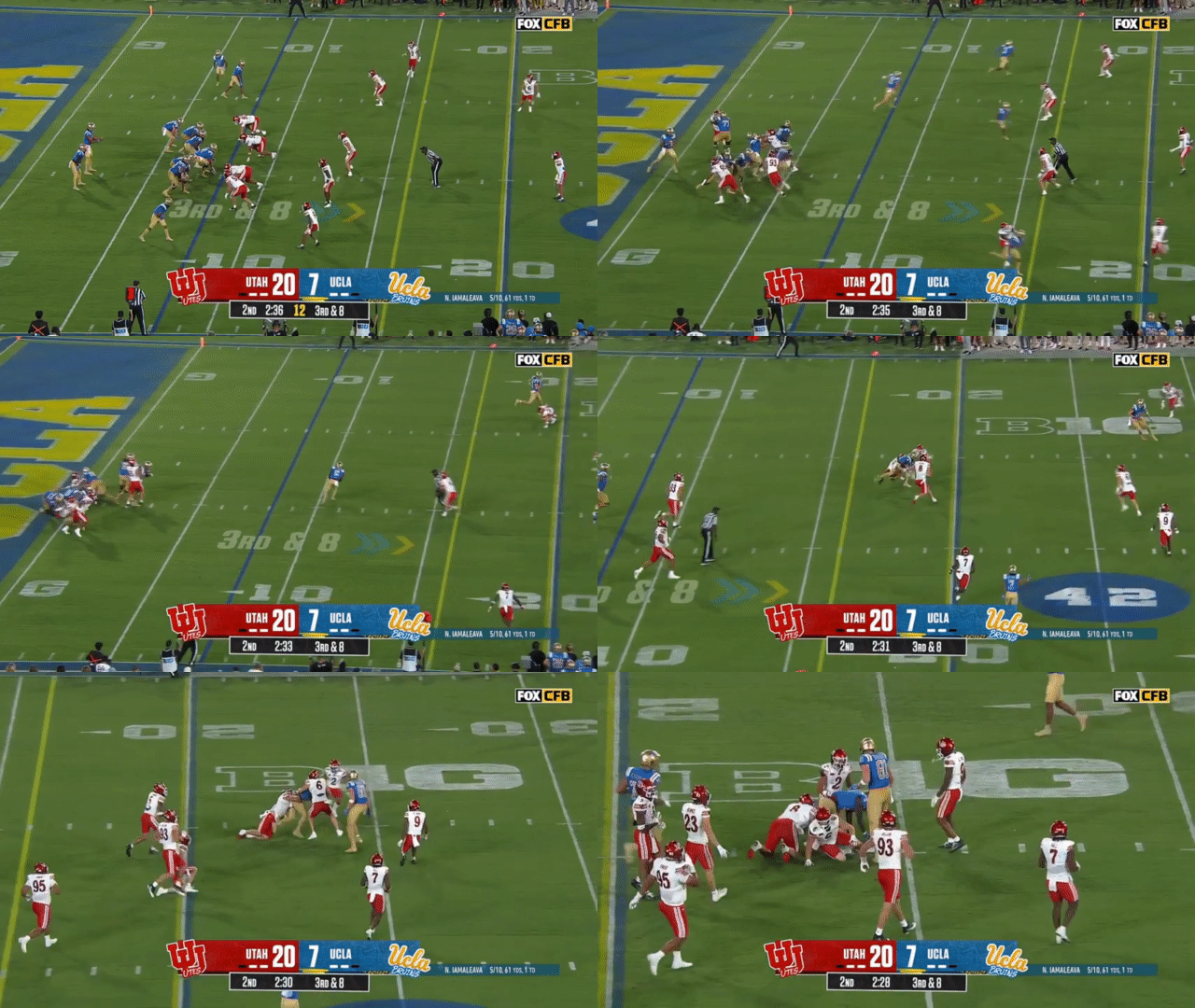
Woods was also responsible for Iamaleava’s longest pass of the season:
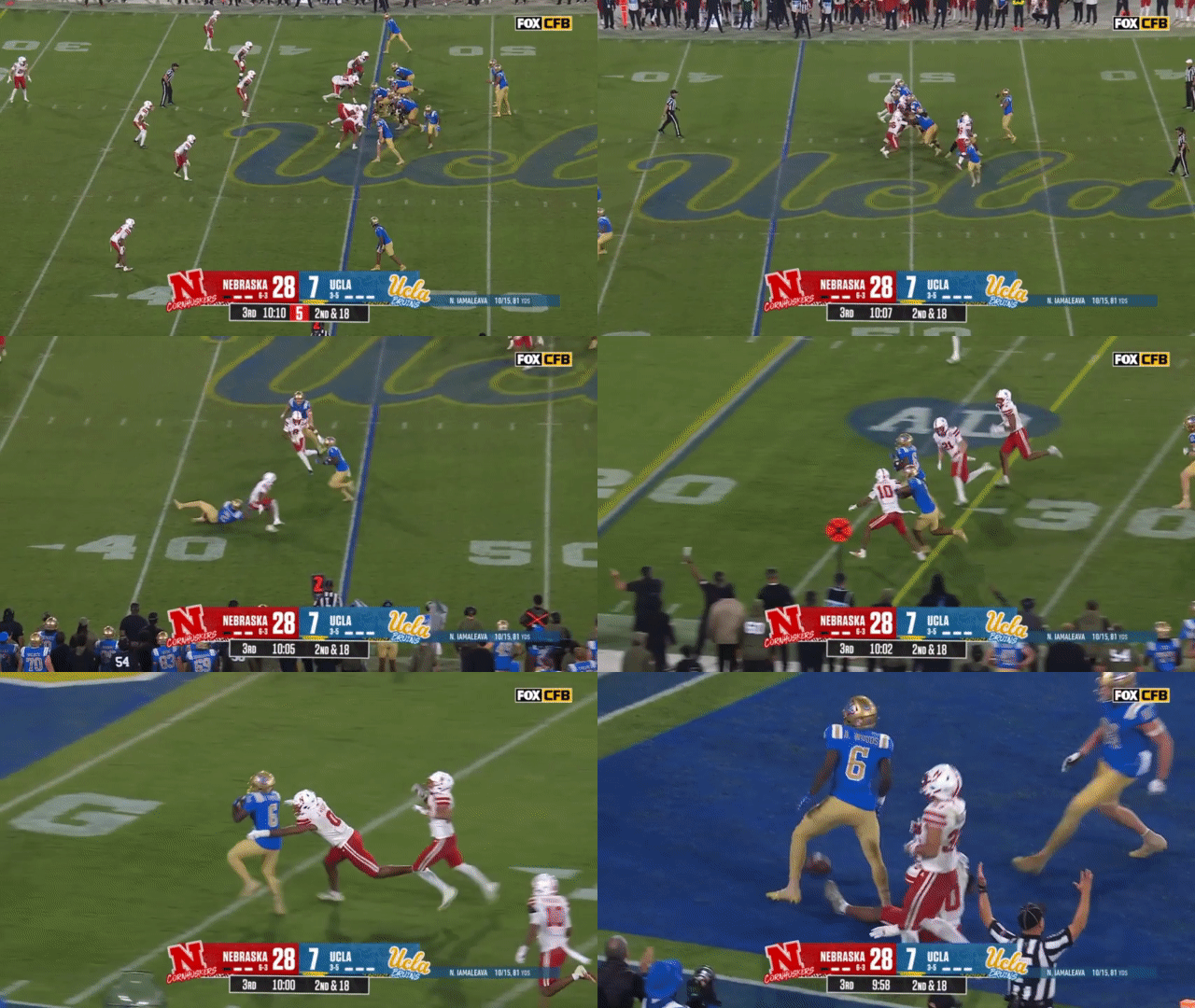
The other returning running back is Cal’s own, Jaivian “Jet” Thomas. For whatever reason, Thomas just really struggled to take off this year:
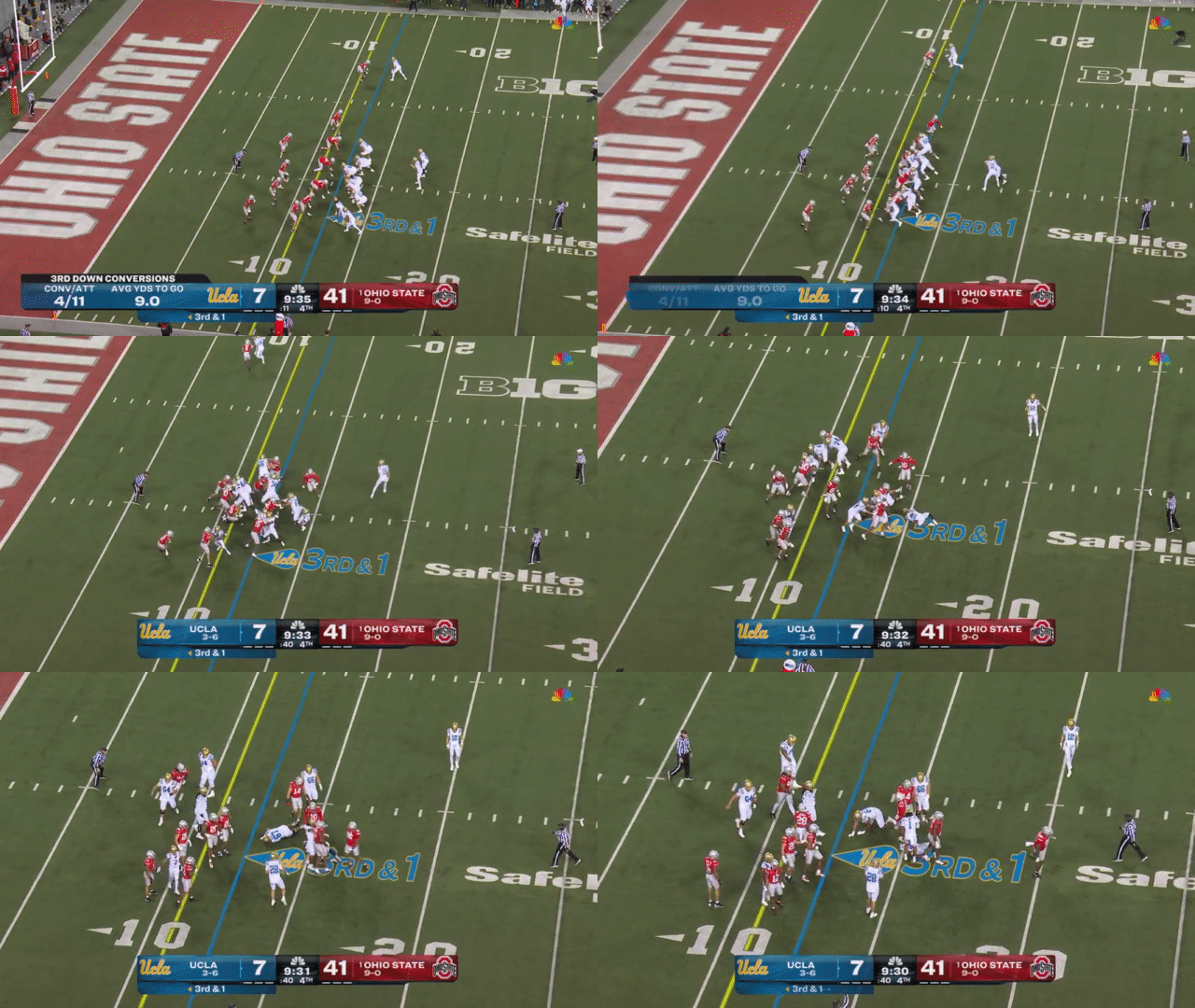
Of course, I missed Thomas’s longest run of the season, a 32-yard carry in the first quarter at UNLV. CBS Sports Network considered the UAB-Navy game a higher priority, and none of my recordings contained much of the 1st quarter. I assume that it was really impressive though, even though it would have only tied for his 4th longest run of 2024 when he played at Cal. Here he is breaking a tackle:
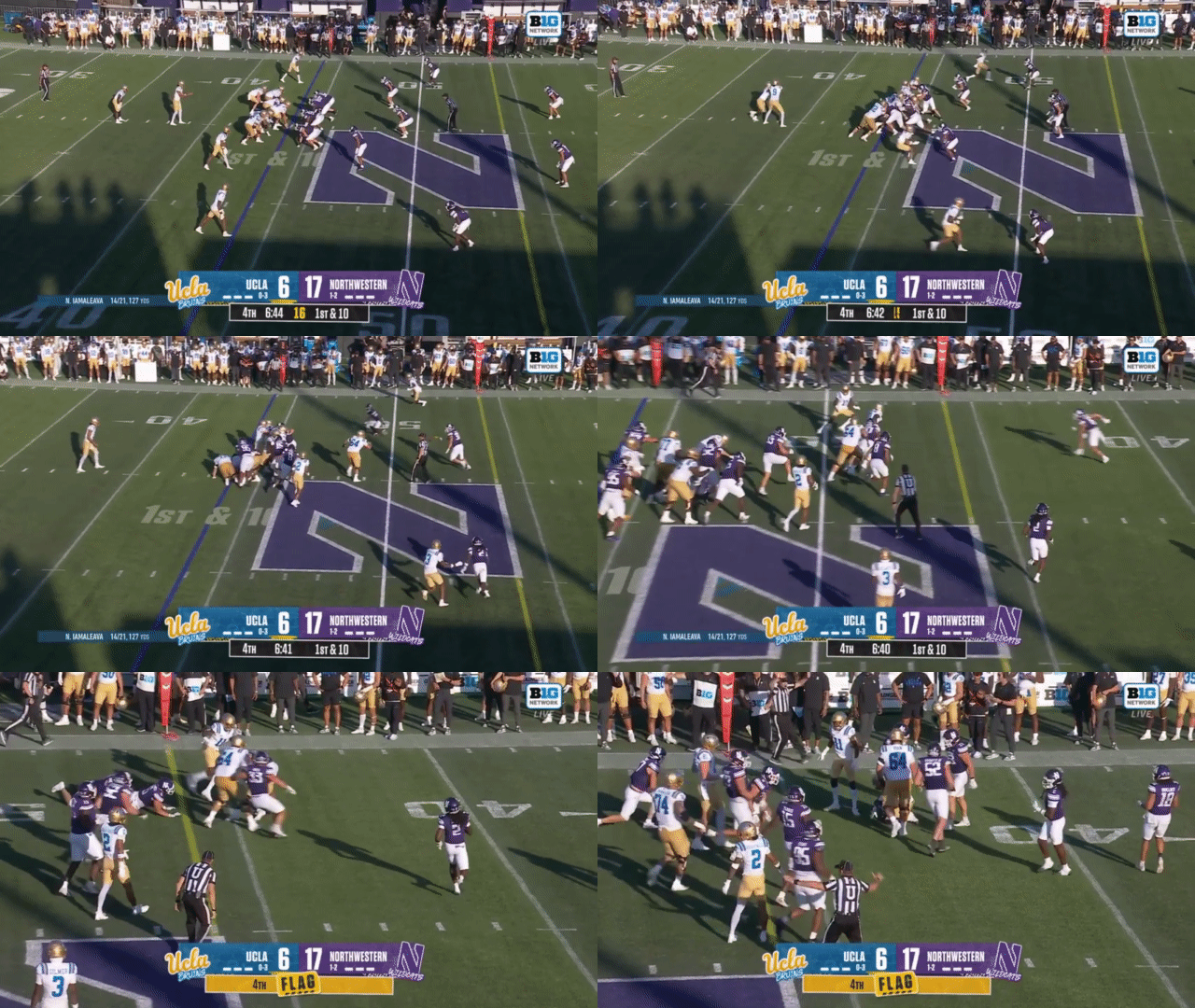
I don’t know why, but Thomas just didn’t seem to have that same explosiveness we saw at Cal. Although I missed his UNLV highlight, here’s his second longest run of the season:
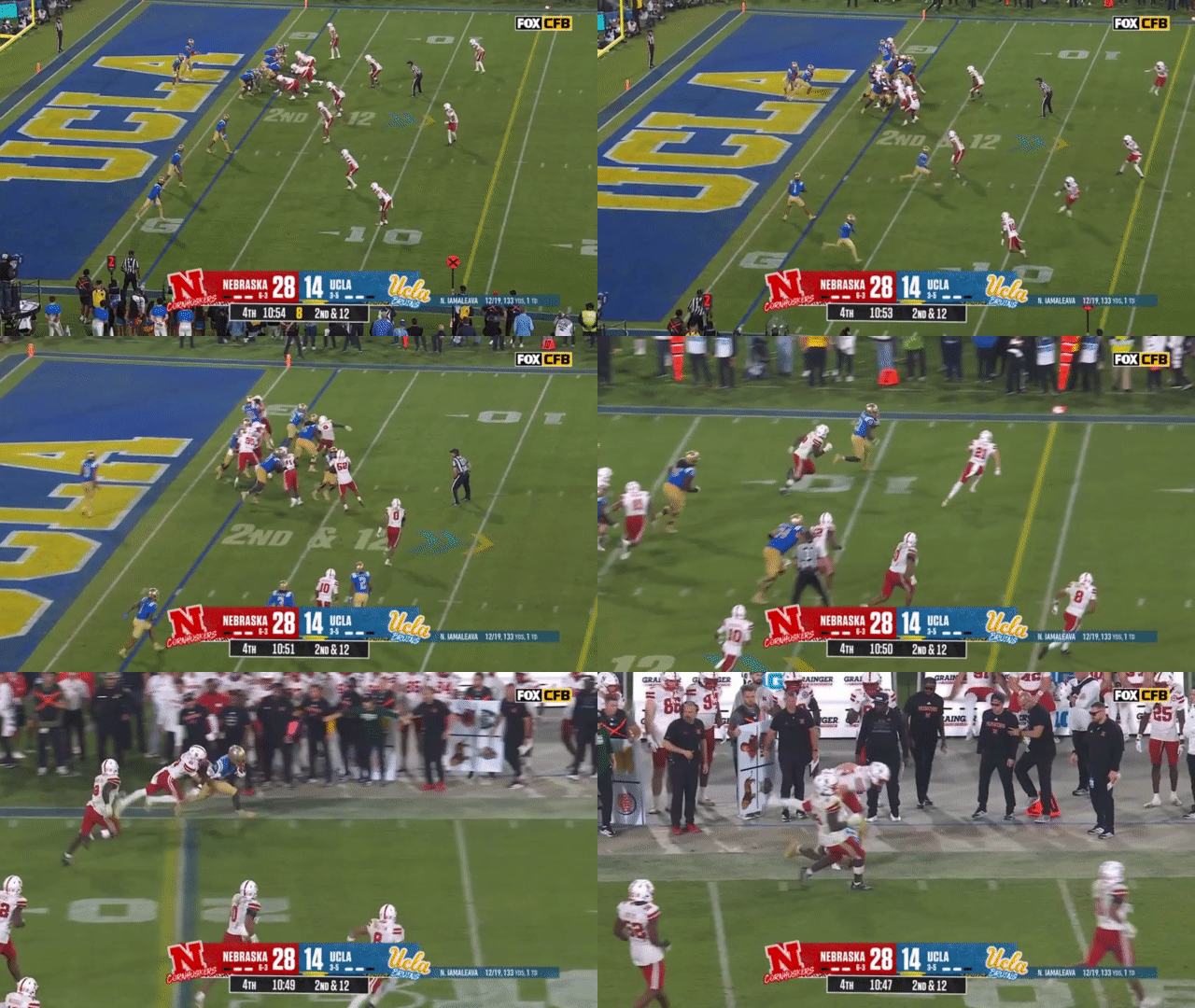
UCLA did try to put the ball in Thomas’s hands:
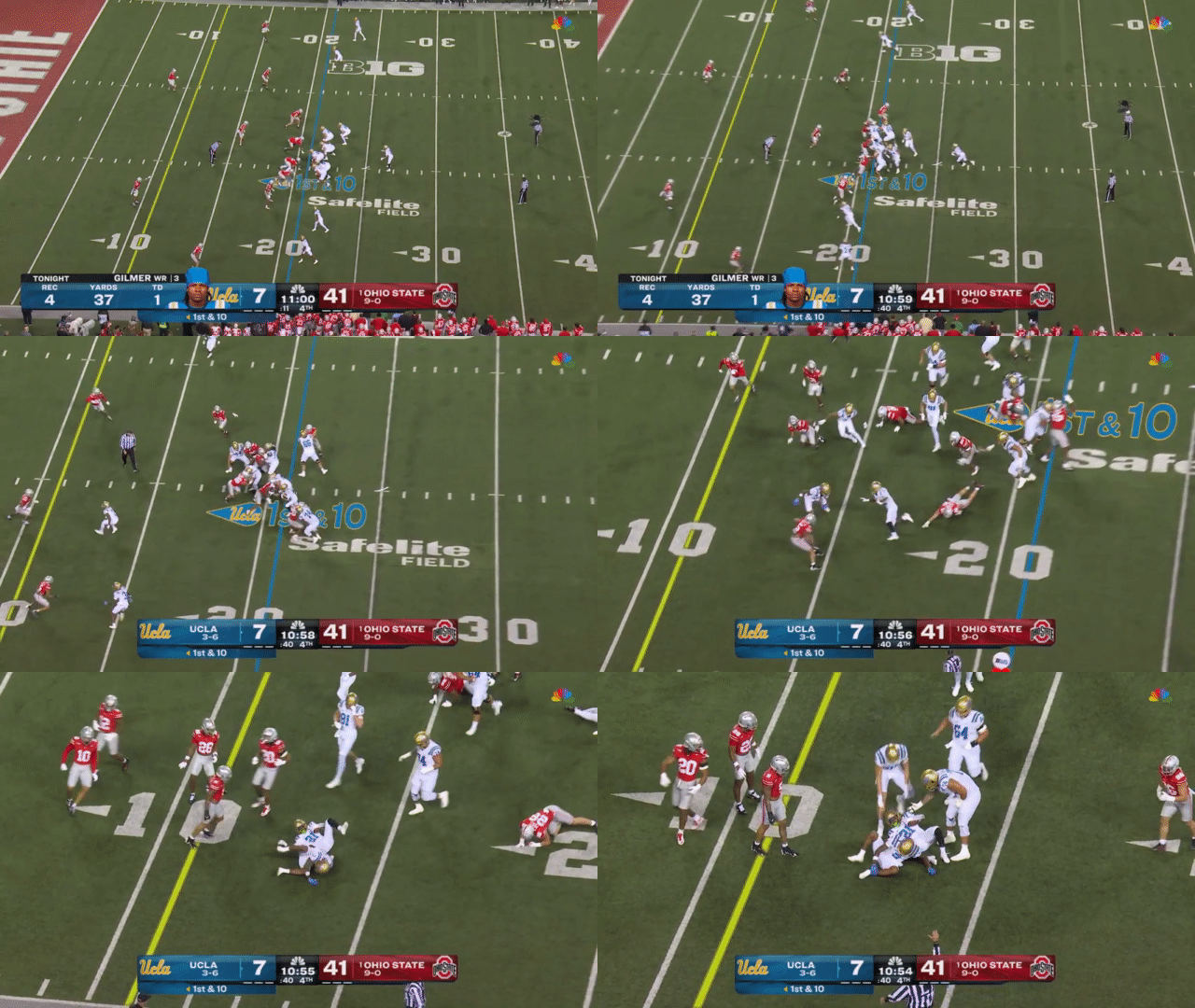
Again, desperately looking for highlights here, but here’s a nice stiff arm he had once:
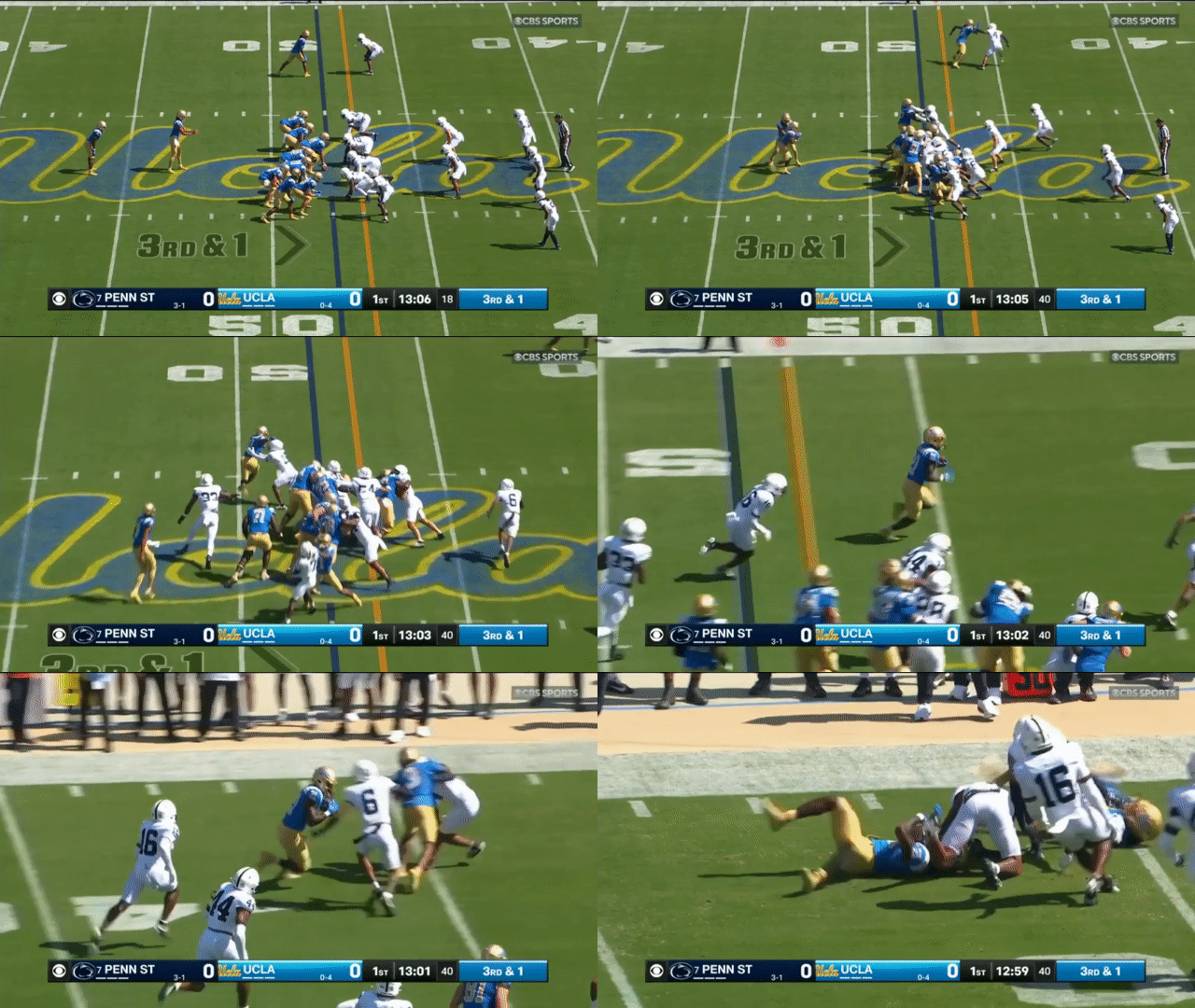
Although I mentioned earlier that Woods and Thomas tied for 294 rushing yards, it occurs to me now that this is actually a mistake. The following play was incorrectly attributed to Thomas in the official stats, but this is actually the defensive #21, Cole Martin:
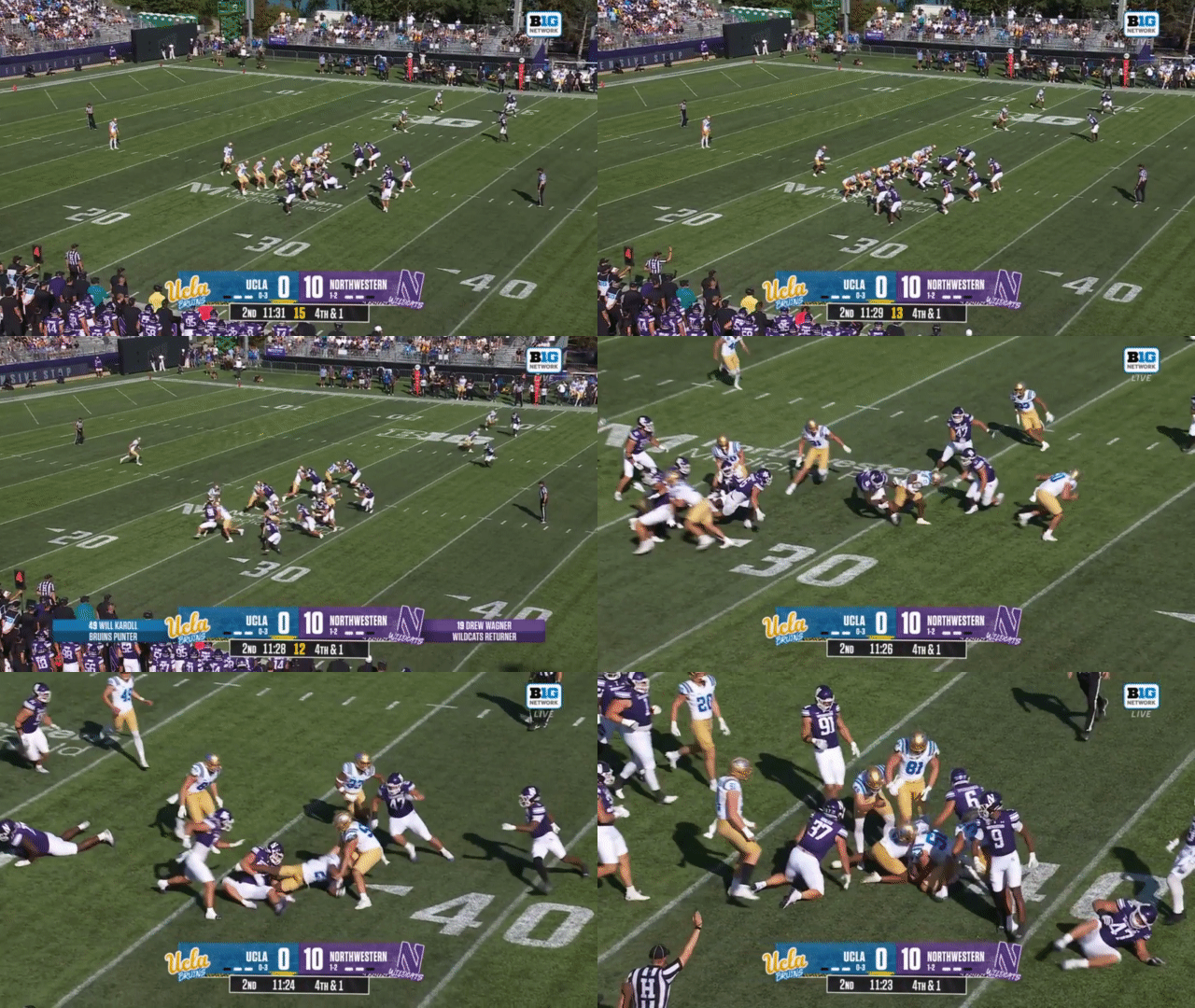
UCLA is likely going to lean heavily on RB Wayne Knight to carry them, because the rest of the RB room had major regressions last season at UCLA. (Don’t they remember what they did to J. Michael Sturdivant? Former Cal players are still transferring here?). It’s yet to be seen whether Knight can replicate his JMU success against tougher competition in the P4, or if he’ll simply be the latest of a long line of transfers who decided to squander their talent at UCLA. At least with a new coaching staff, UCLA fans can delude themselves into thinking it’ll be the latter this time.
Receivers
As much as I hate to say it, UCLA did bring in some talent to the receivers’ room via the transfer portal this year. My personal favorite is SJSU transfer Leland Smith. Smith is fast, rangy, and has reliable hands, which helps make him a dangerous deep threat target with a large catch radius. I actually did happen to catch some SJSU games last year, and Smith (and Danny Scudero, but that’s neither here nor there) consistently stood out. Smith does a great job of adjusting to throws, which will be a critical skill he’ll need this season:
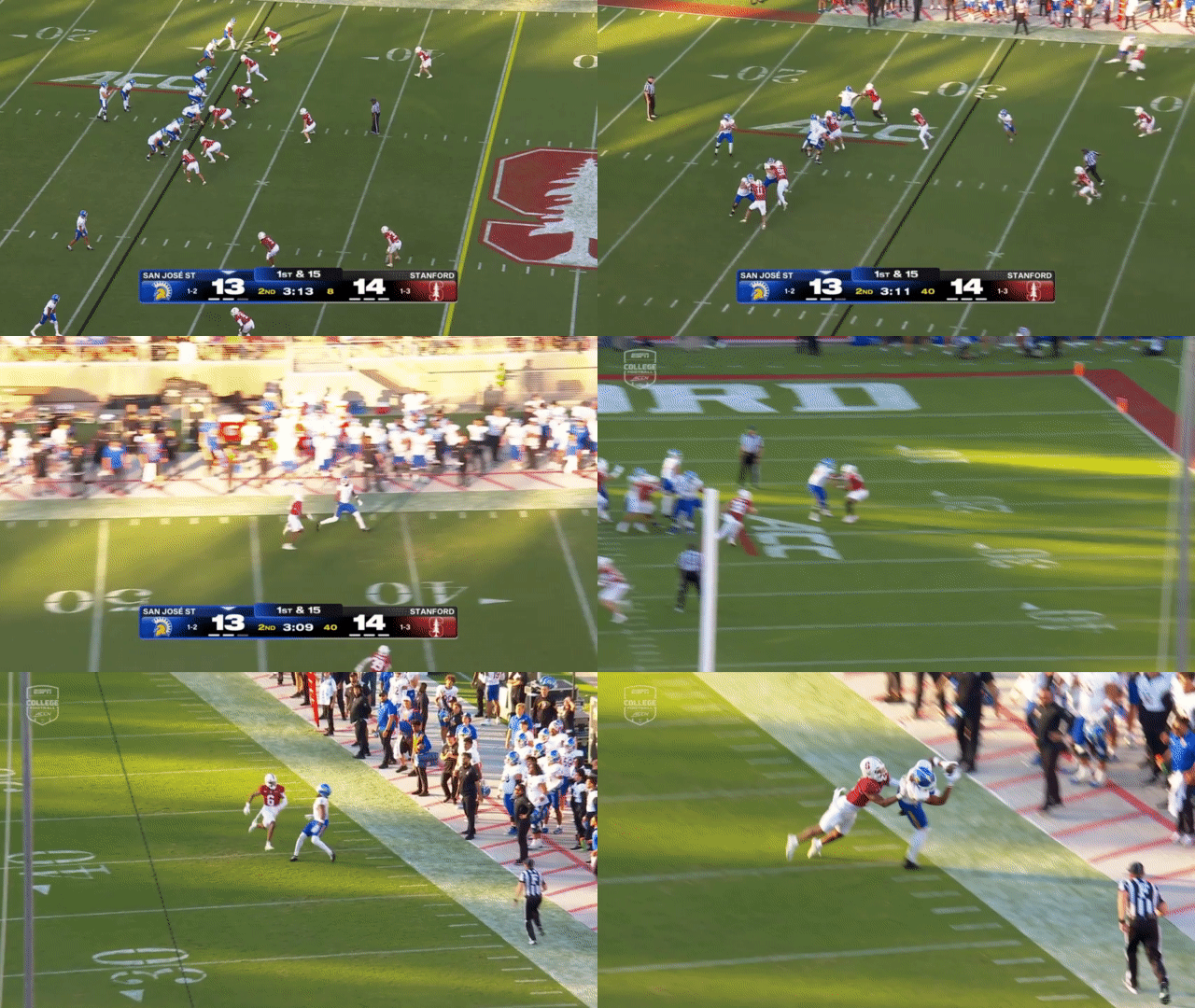
Smith is able to make the catch even when he has a defender draped all over him:
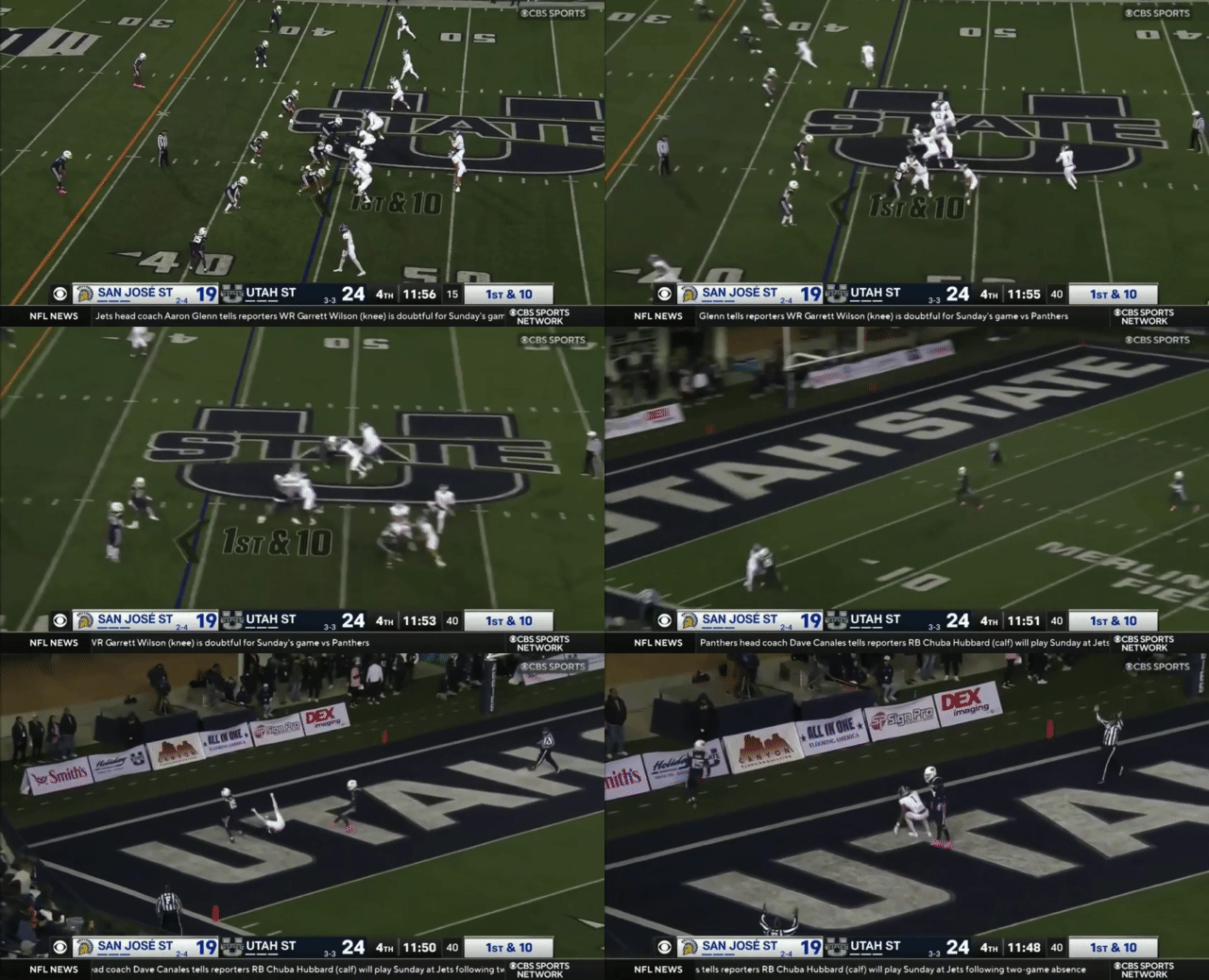
Smith shows good body control when adjusting to throws:
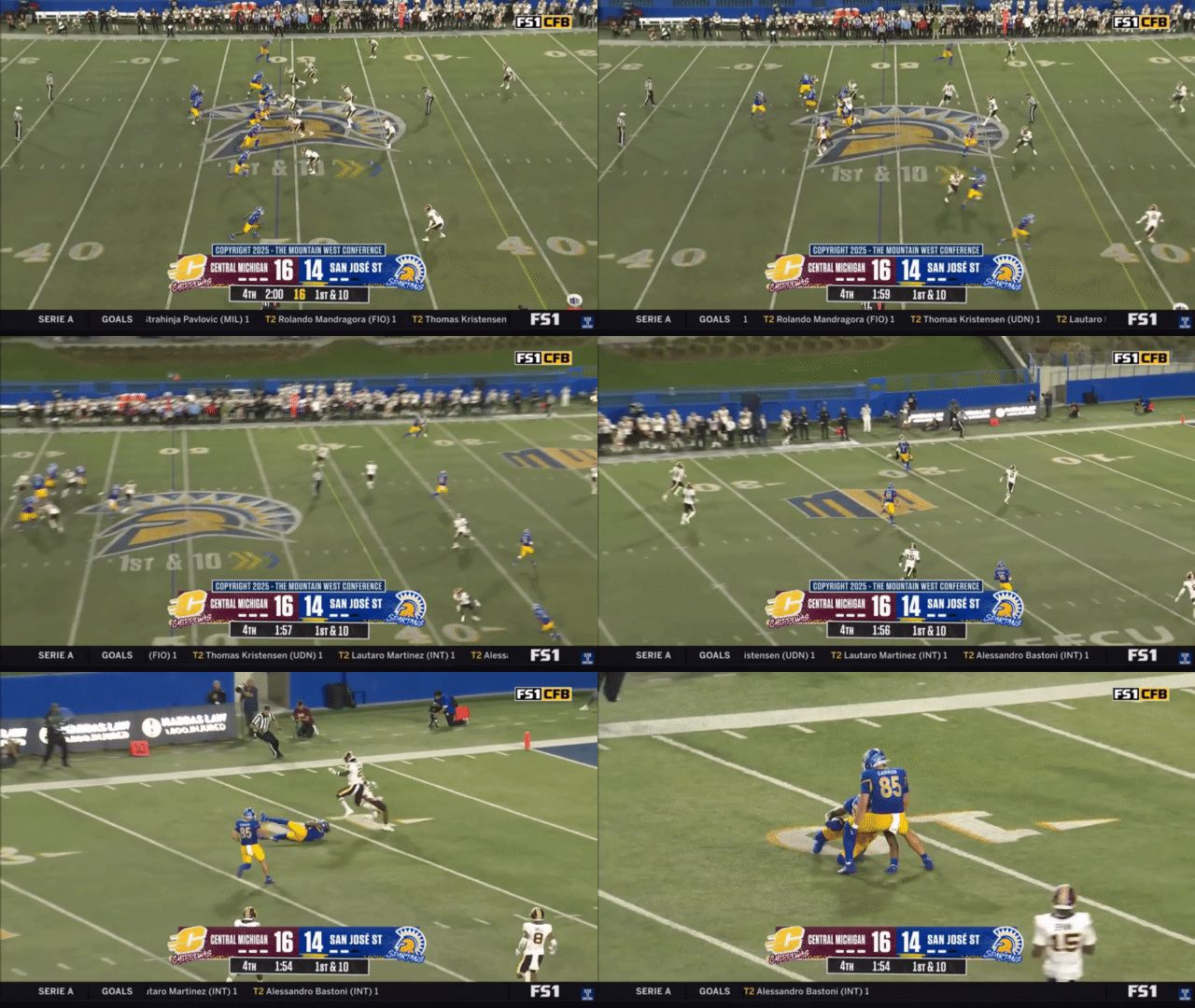
And although most of Smith’s yards came from big plays downfield, he also showed an ability to create his own yards:
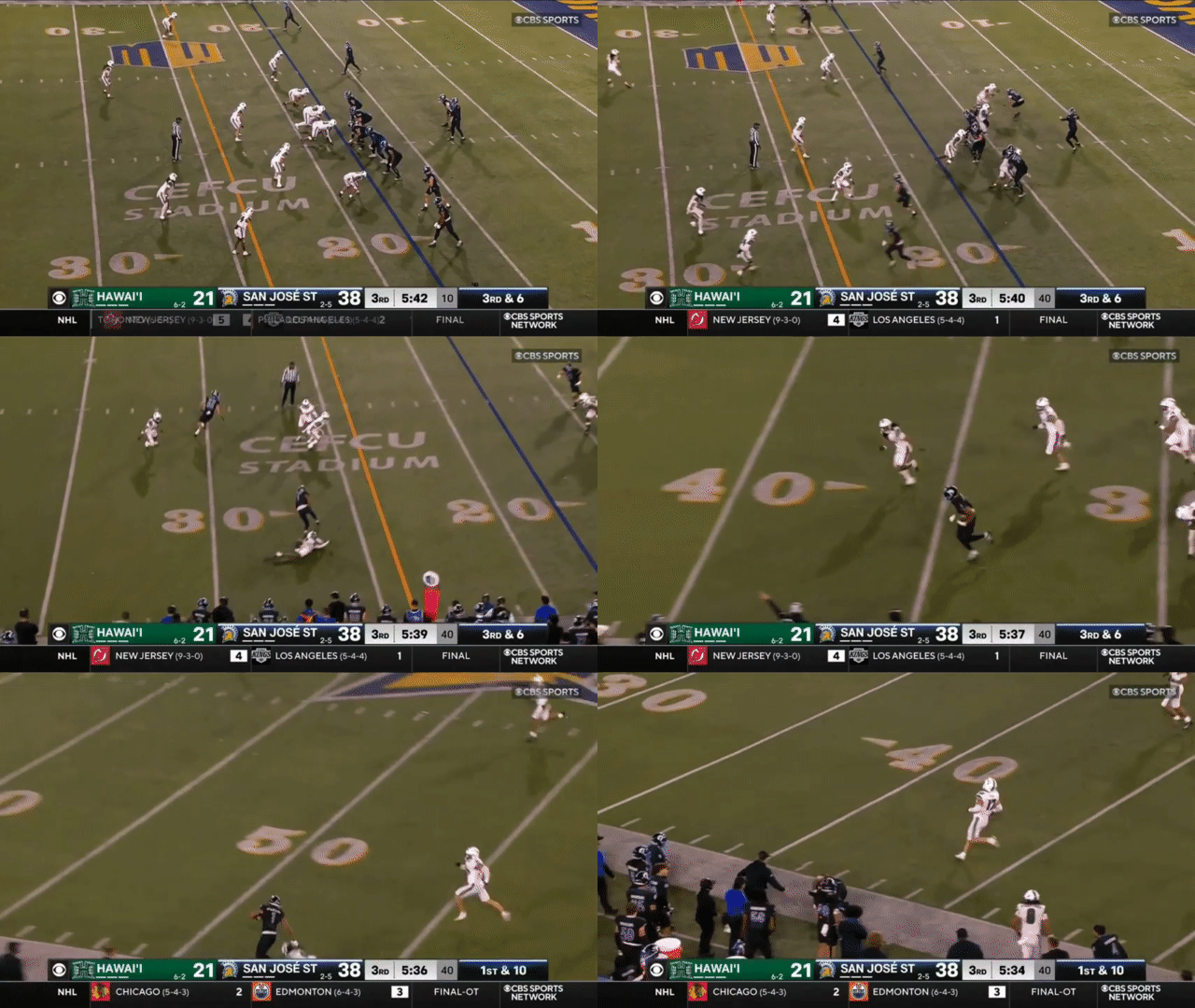
Again with a nice run off the catch, you can see some of that speed:
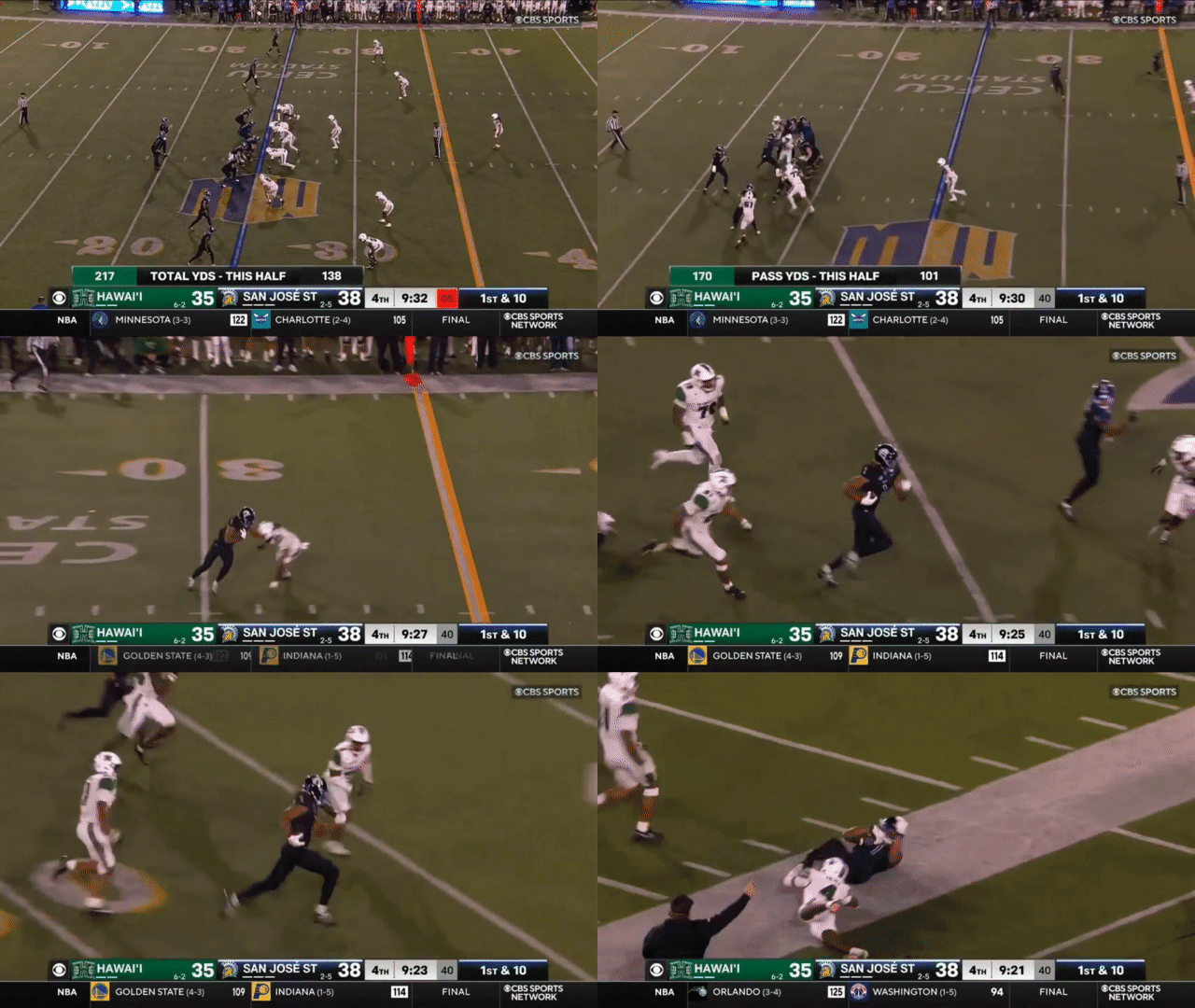
Although I do think Leland Smith is a very good receiver, I am a little skeptical on what kind of impact he may have for UCLA. Despite Nico Iamaleava’s strong arm, he’s yet to find much success connecting with receivers deep down the field.
The receiver I expect to have the biggest role in the first game of the season is JMU transfer WR Landon Ellis, if for no other reason his built-in familiarity with Bob Chesney and his offense. Although Ellis—like Smith—had a number of big catches, it wasn’t because he was a particularly adept deep threat receiver—it was because he was typically the beneficiary of JMU’s big trick pass plays:
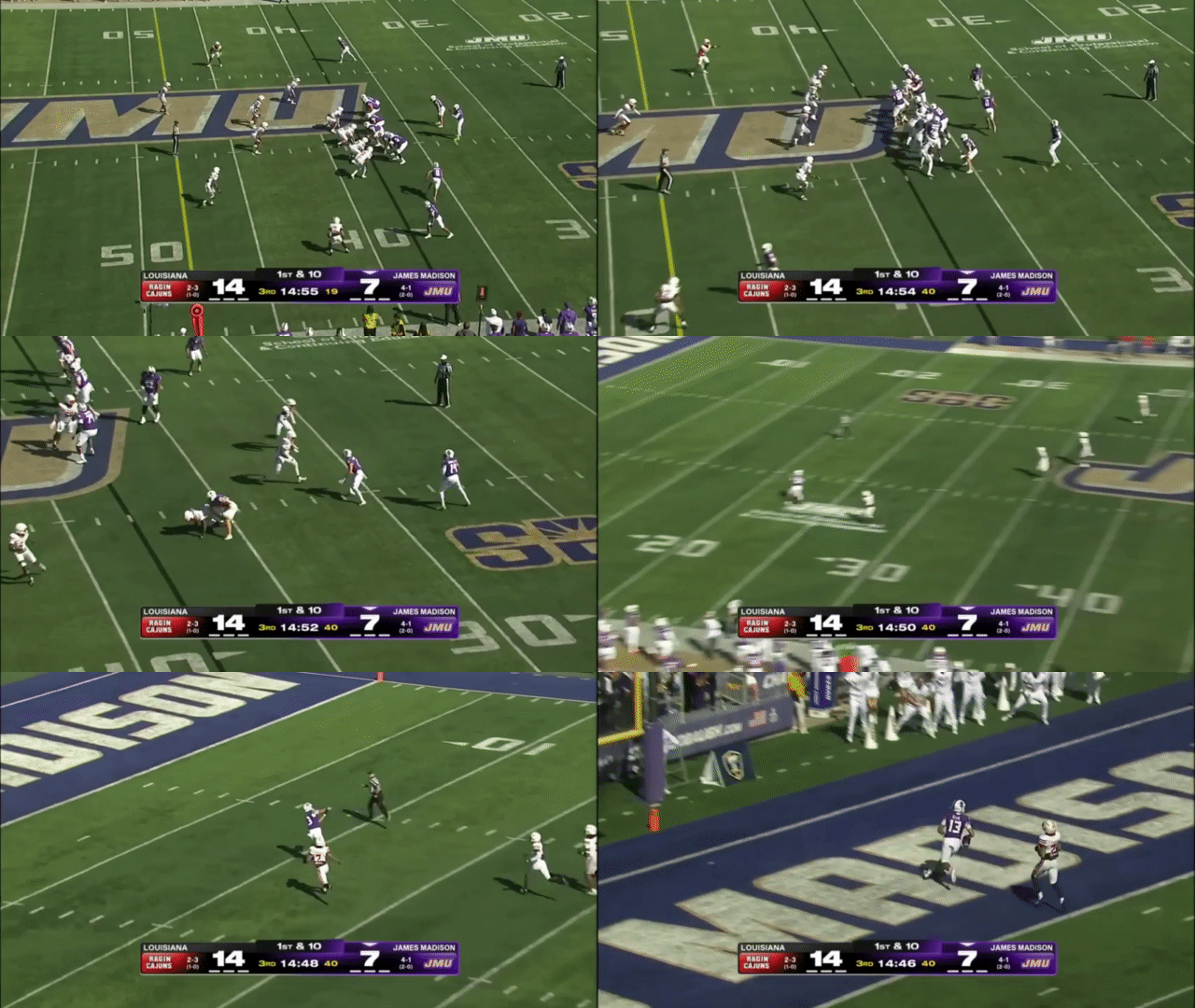
That’s not to say, of course, that he can’t get open on his own:
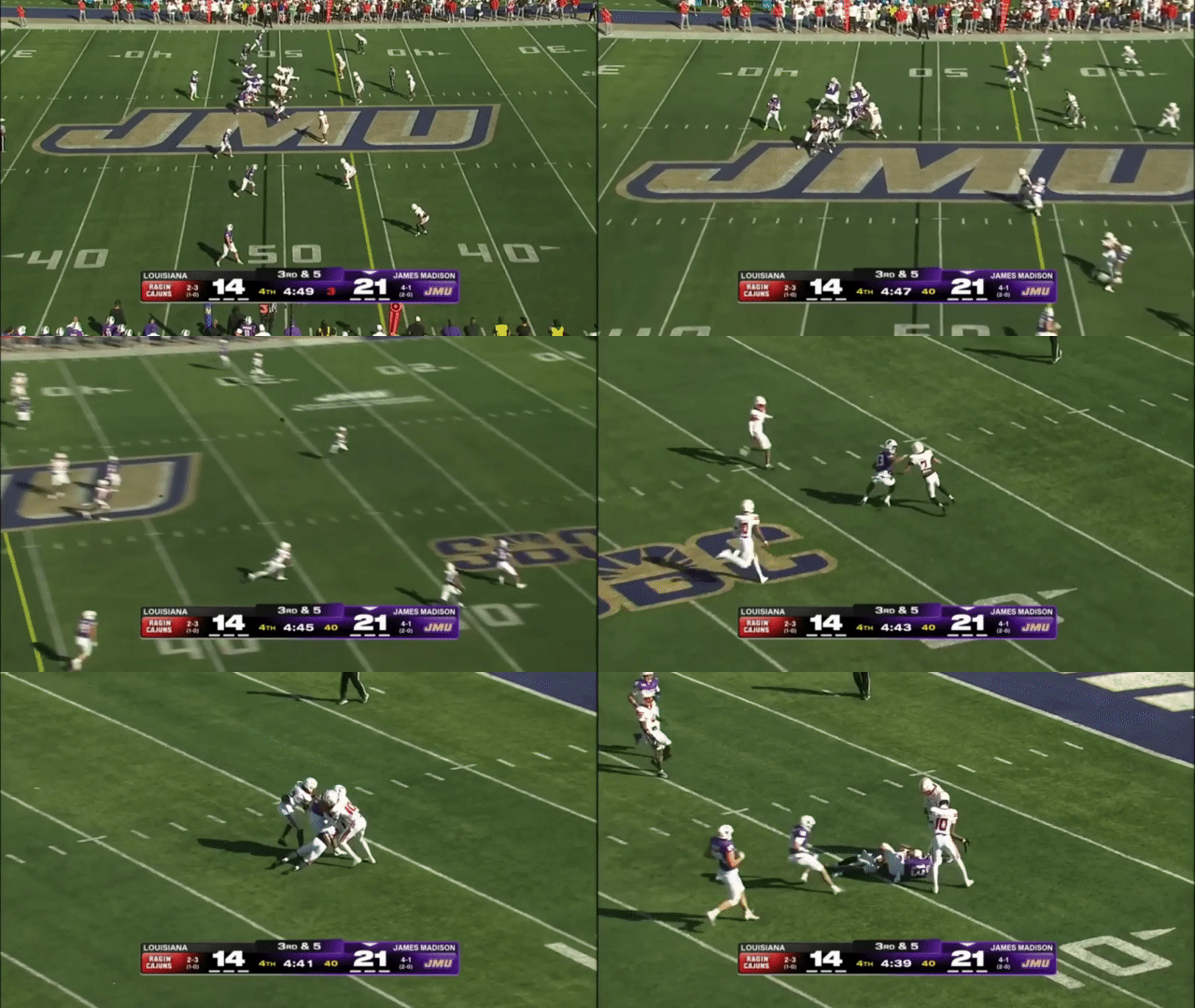
And here’s another nice bit of route running:
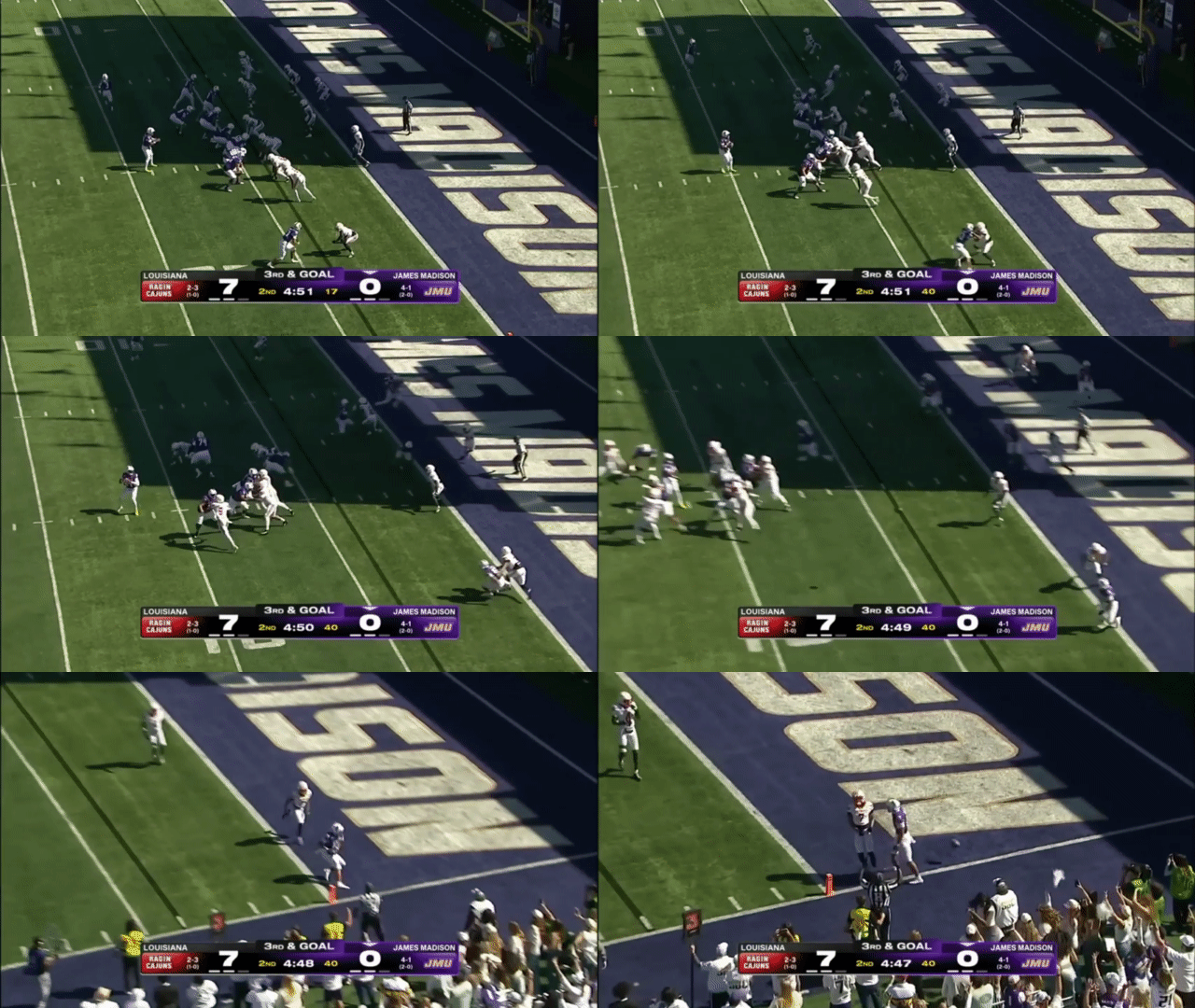
And again:
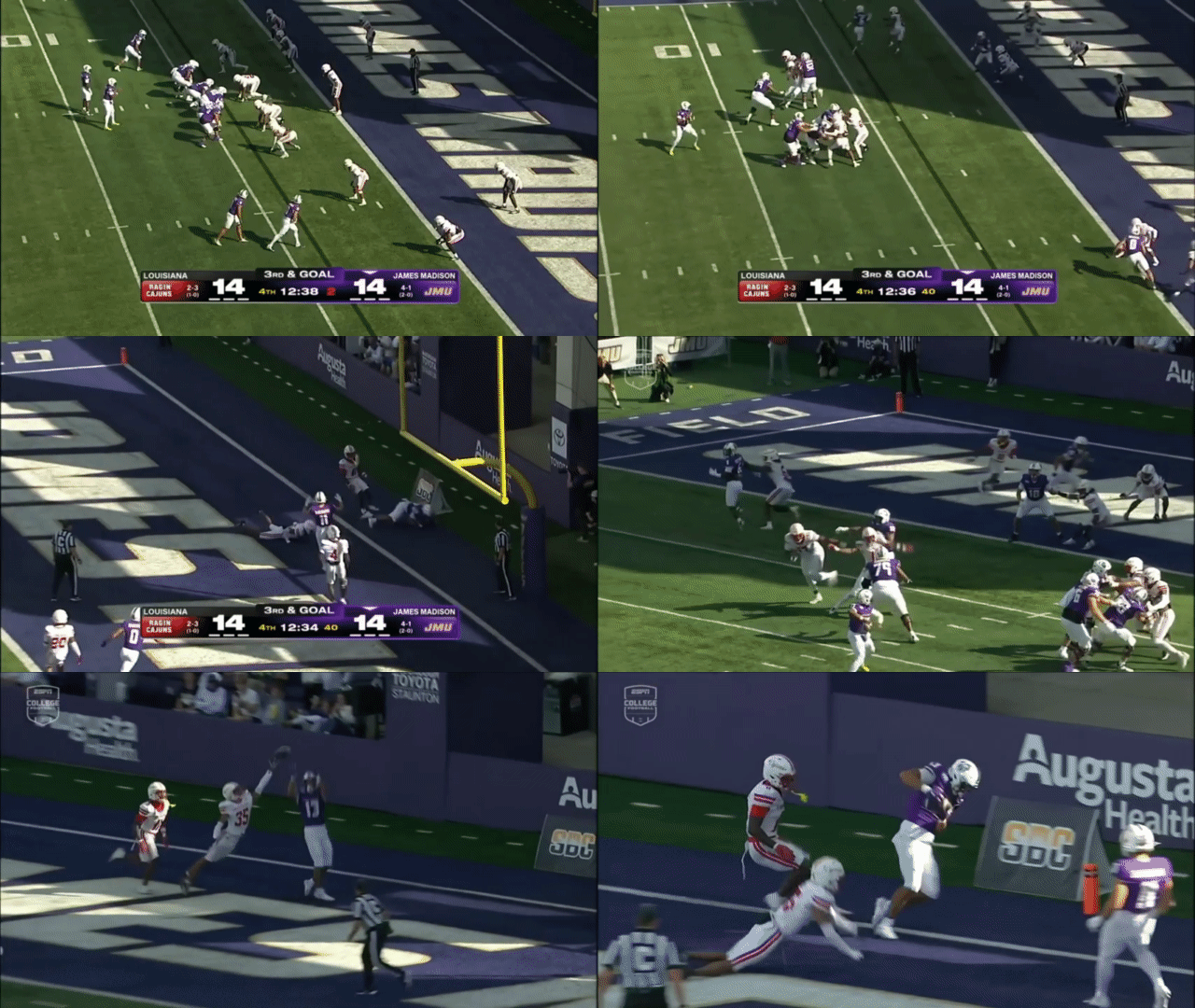
Ellis generally has reliable hands:
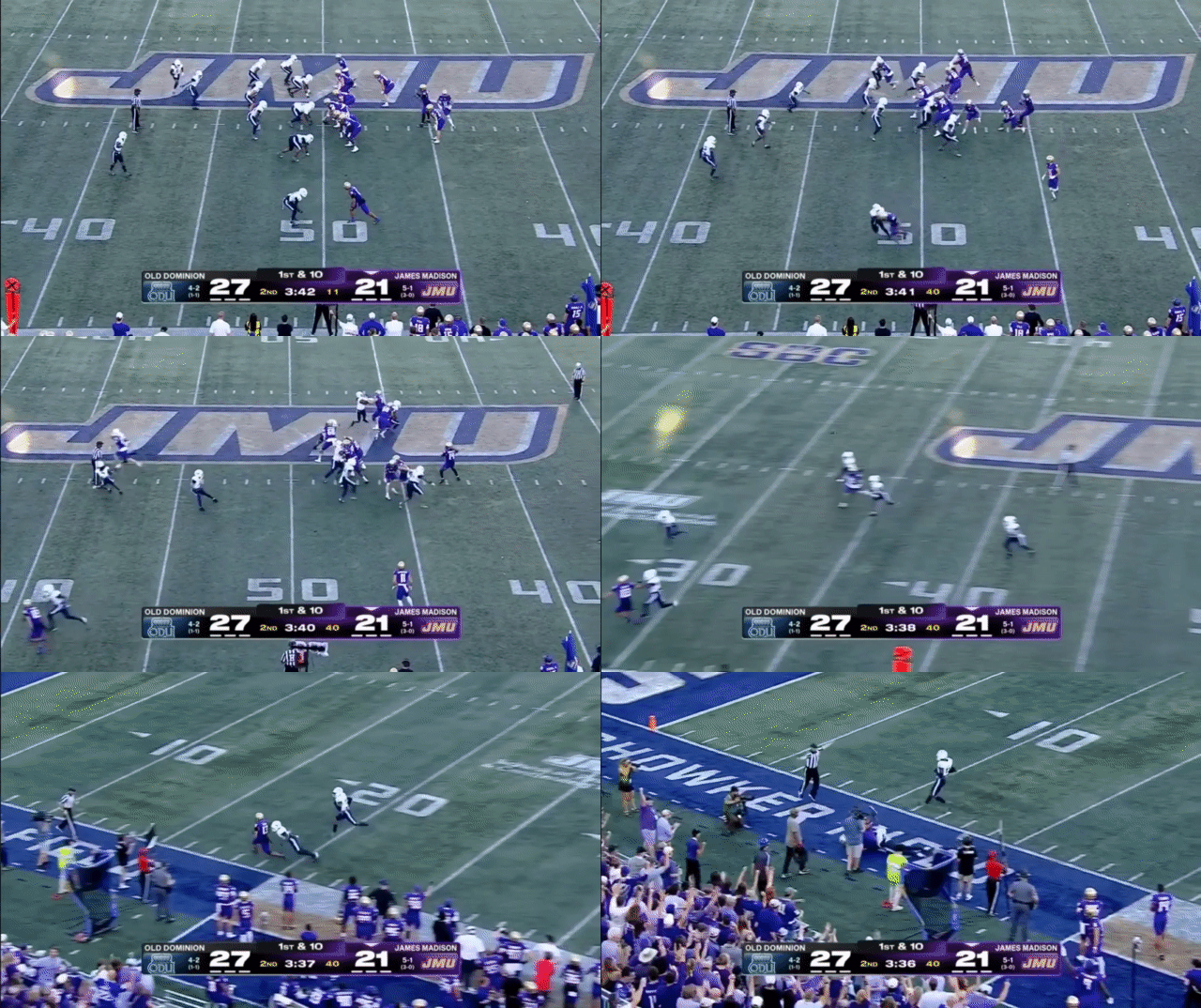
Although he did come up short a few times:
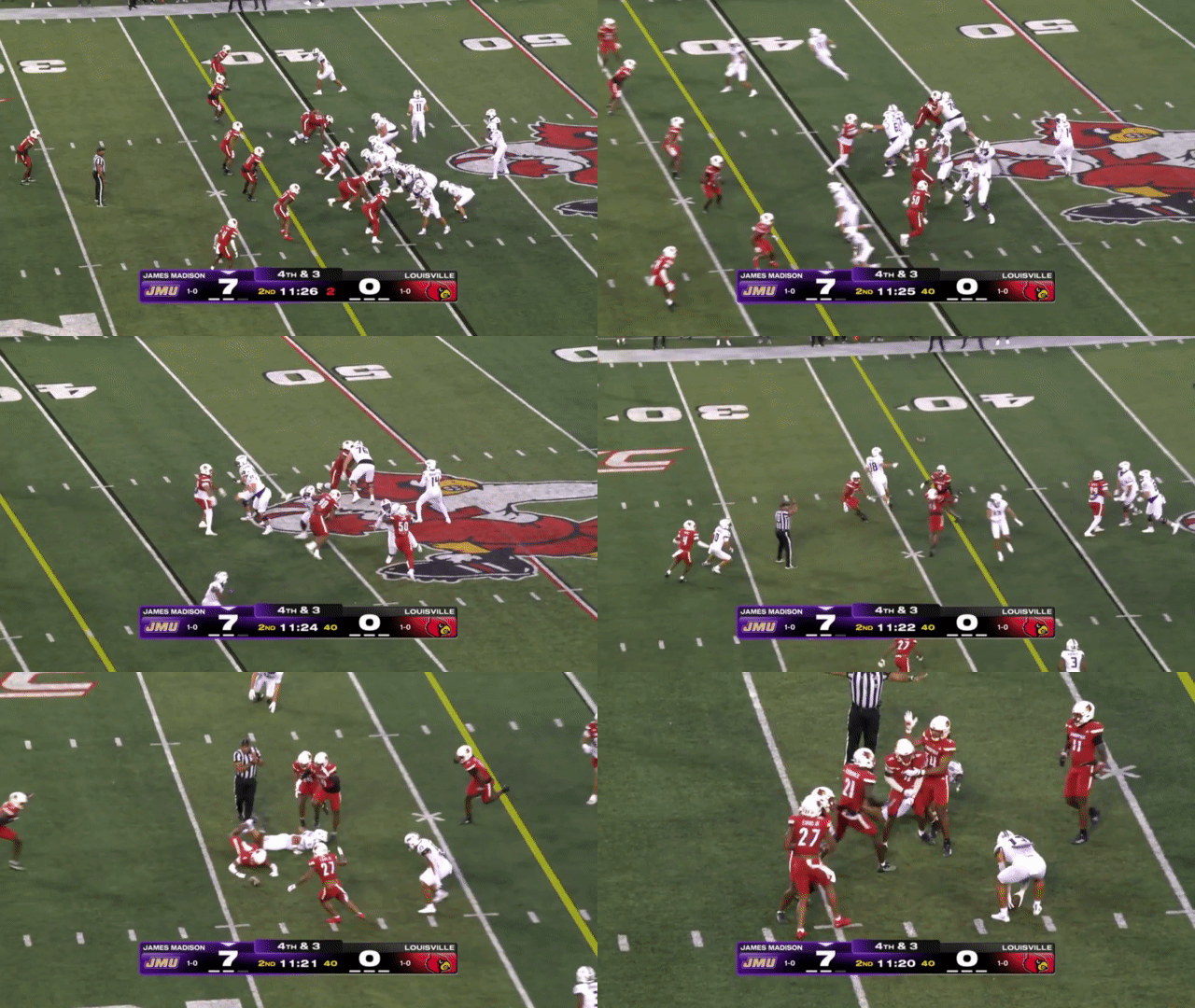
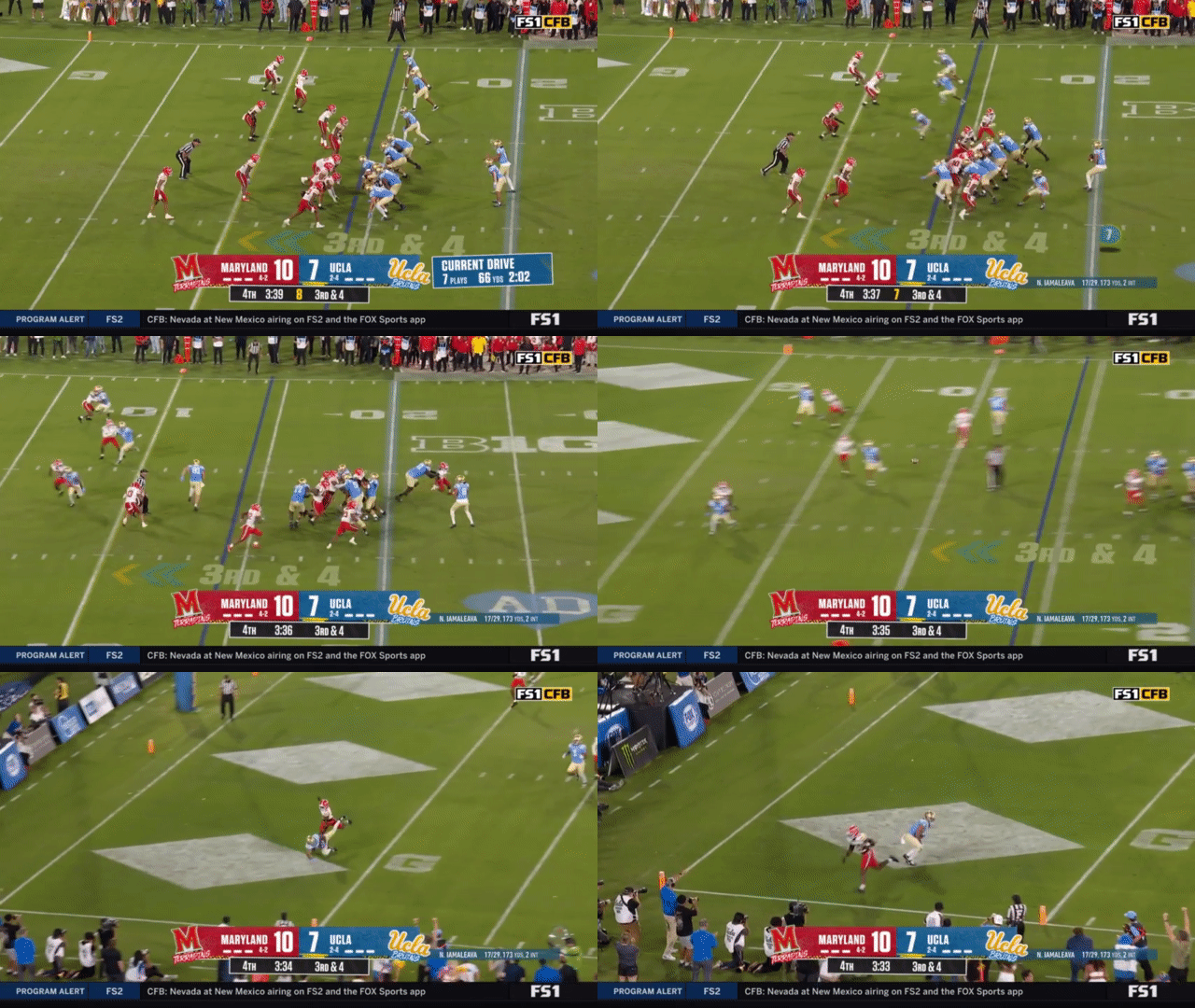
Lining up in the slot is another former Cal receiver, Mikey Matthews. Matthews was a valuable receiver for UCLA last year because of his ability to catch errant and off-target throws:
Again, Matthews showing a nice ability to adjust to the throw:
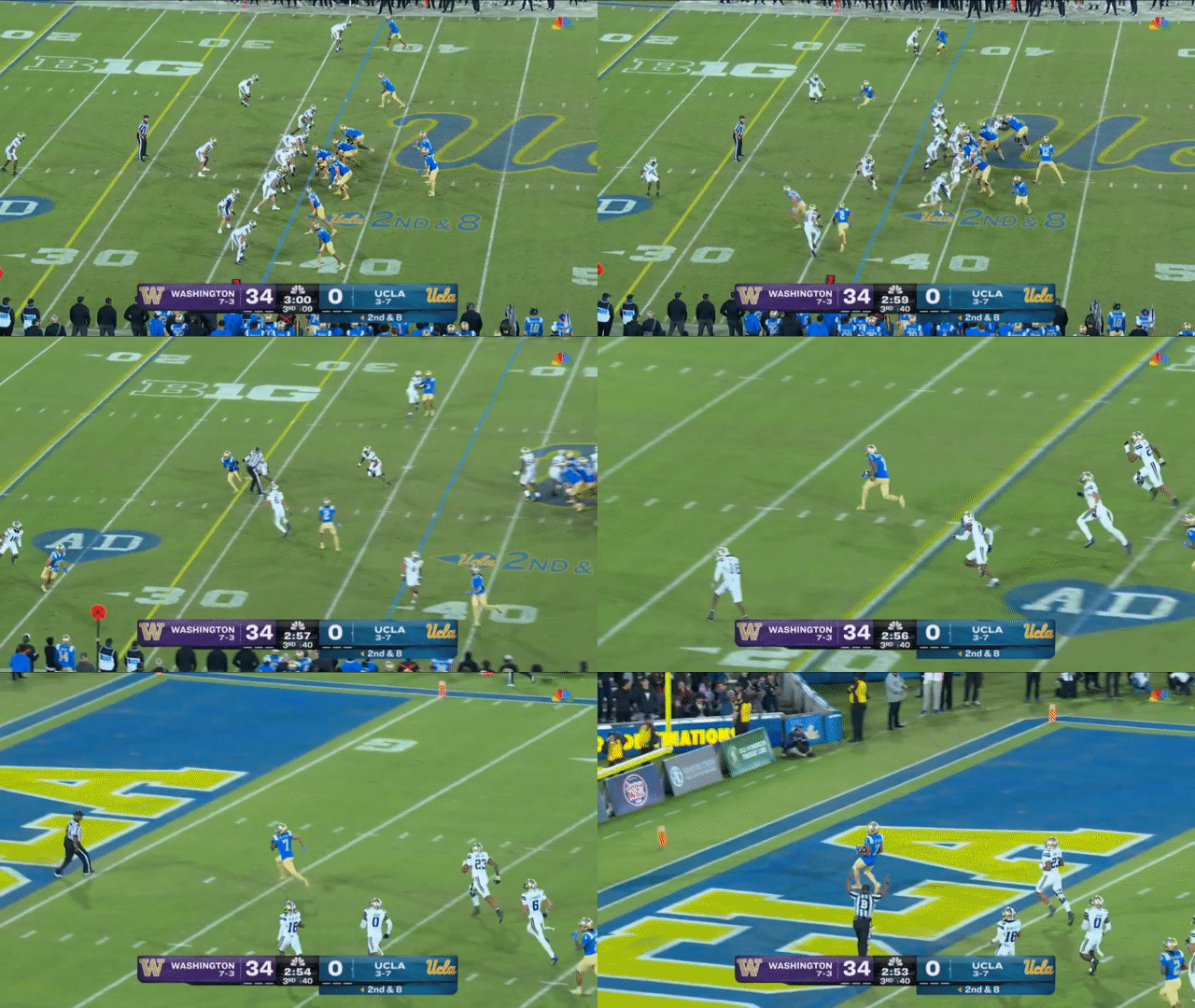
Although Matthews doesn’t generally win with his speed, he has shown some nice route running ability to find some open space:
And again, on a very similar play:
Here Matthews finds the soft spot of the defense:
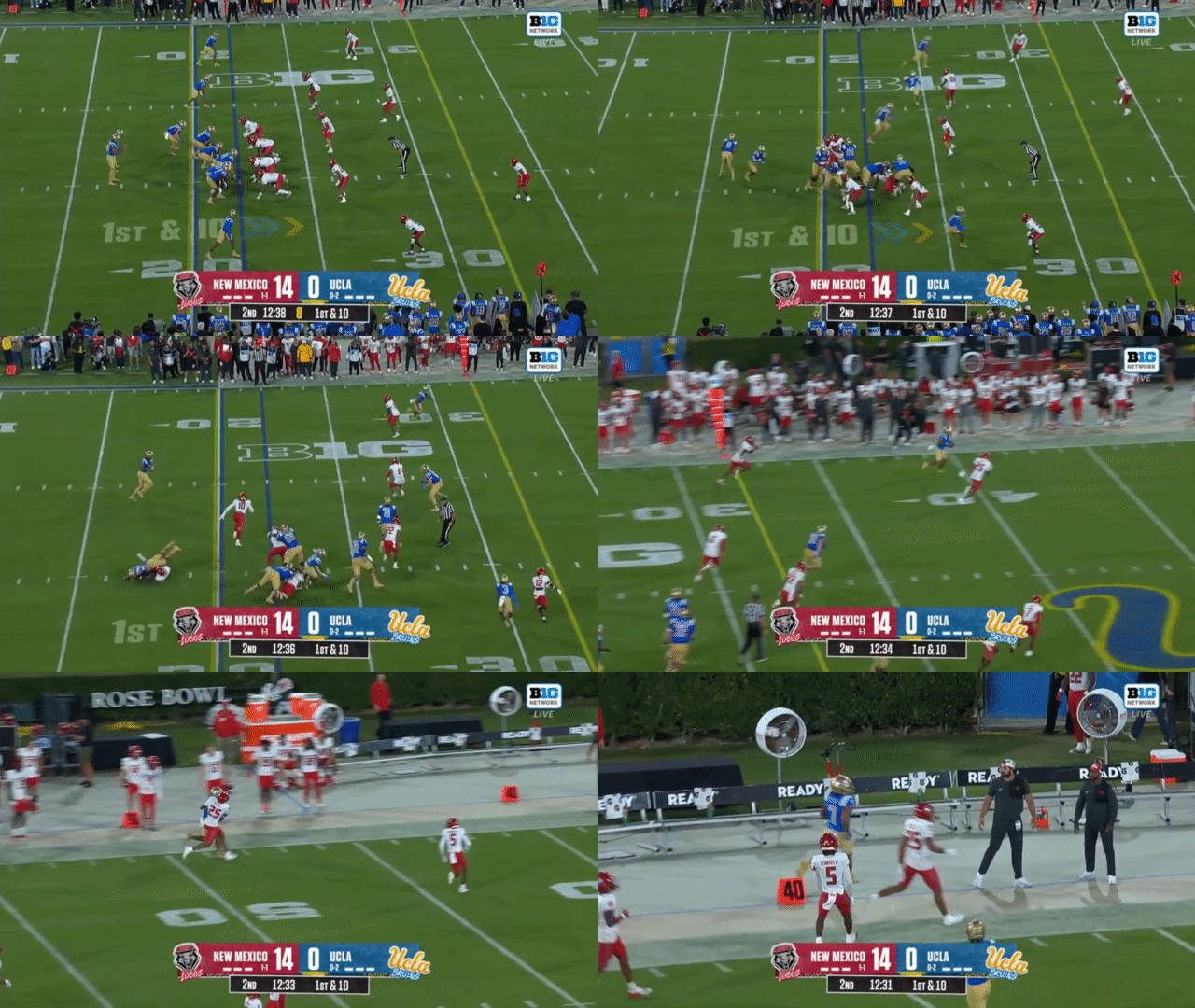
Although UCLA would sometimes try to get Matthews the ball in space, he had less success in creating his own yards:
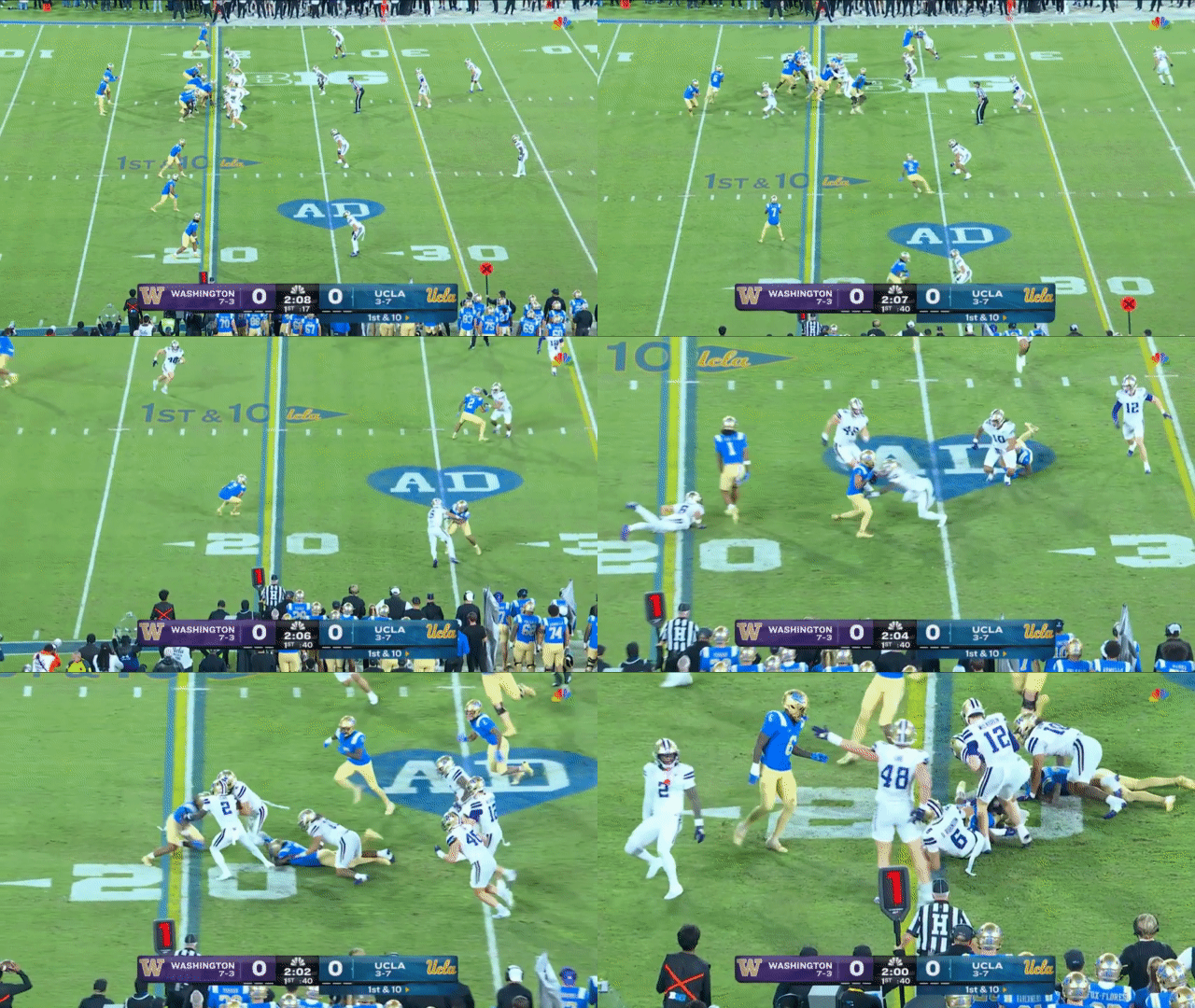
Similarly (although I am not sure if this was meant to be another double pass play):
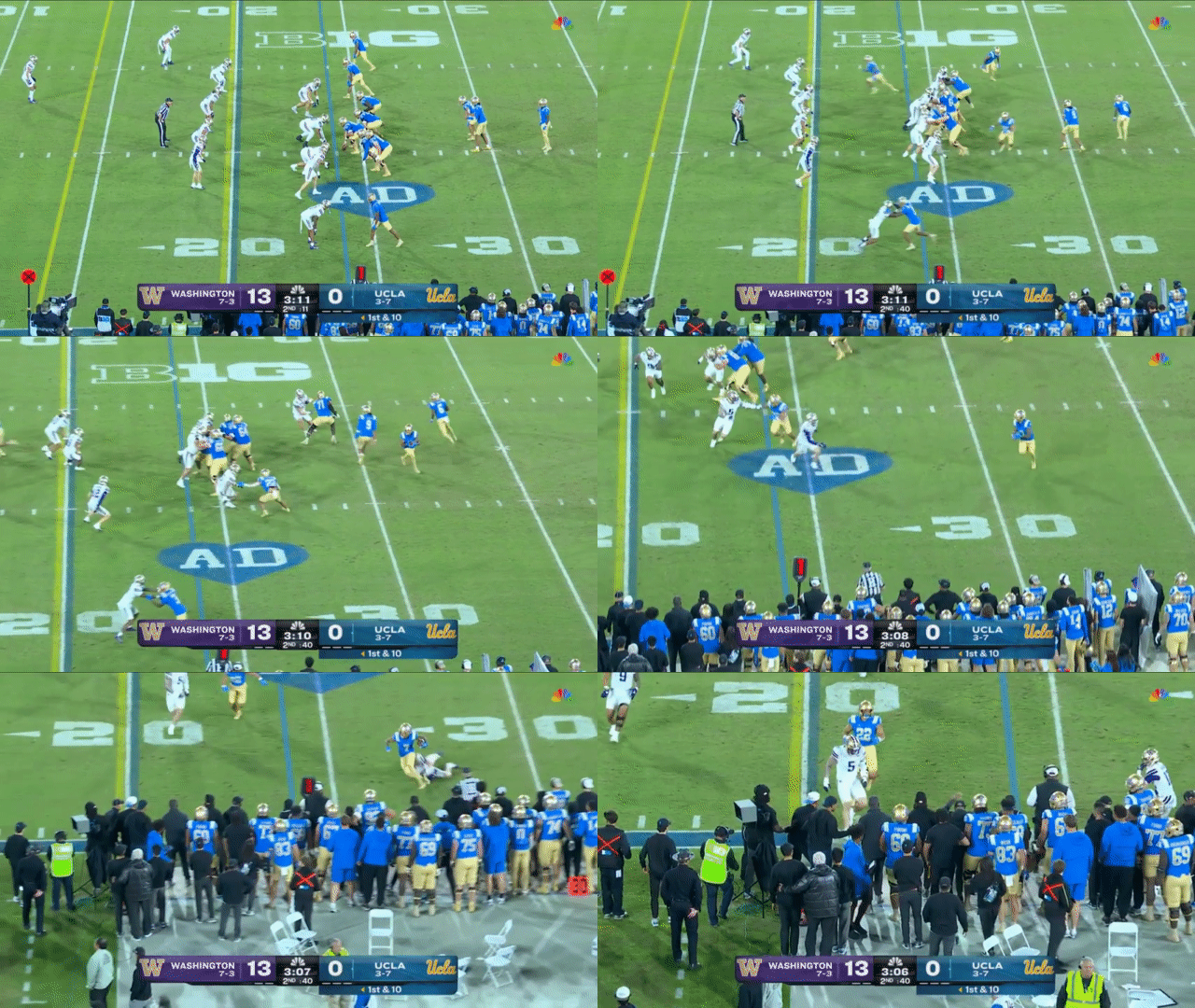
At the tight end position is another JMU transfer, Josh Phifer. He was typically a blocking tight end, so he did catch the defense off-guard when he went out for a pass:
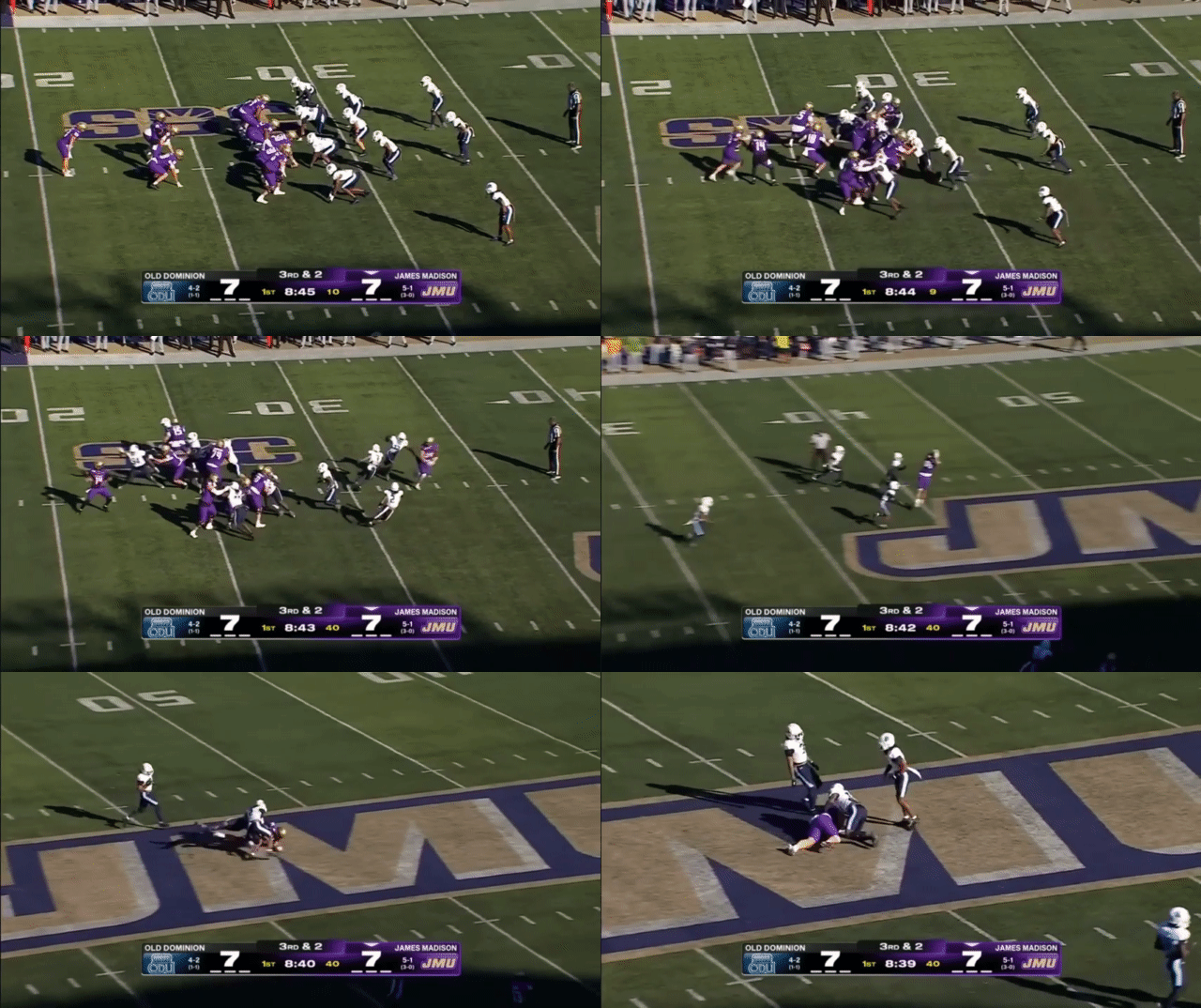
Similarly, this is a nicer catch than I would have expected for someone who rarely catches passes:
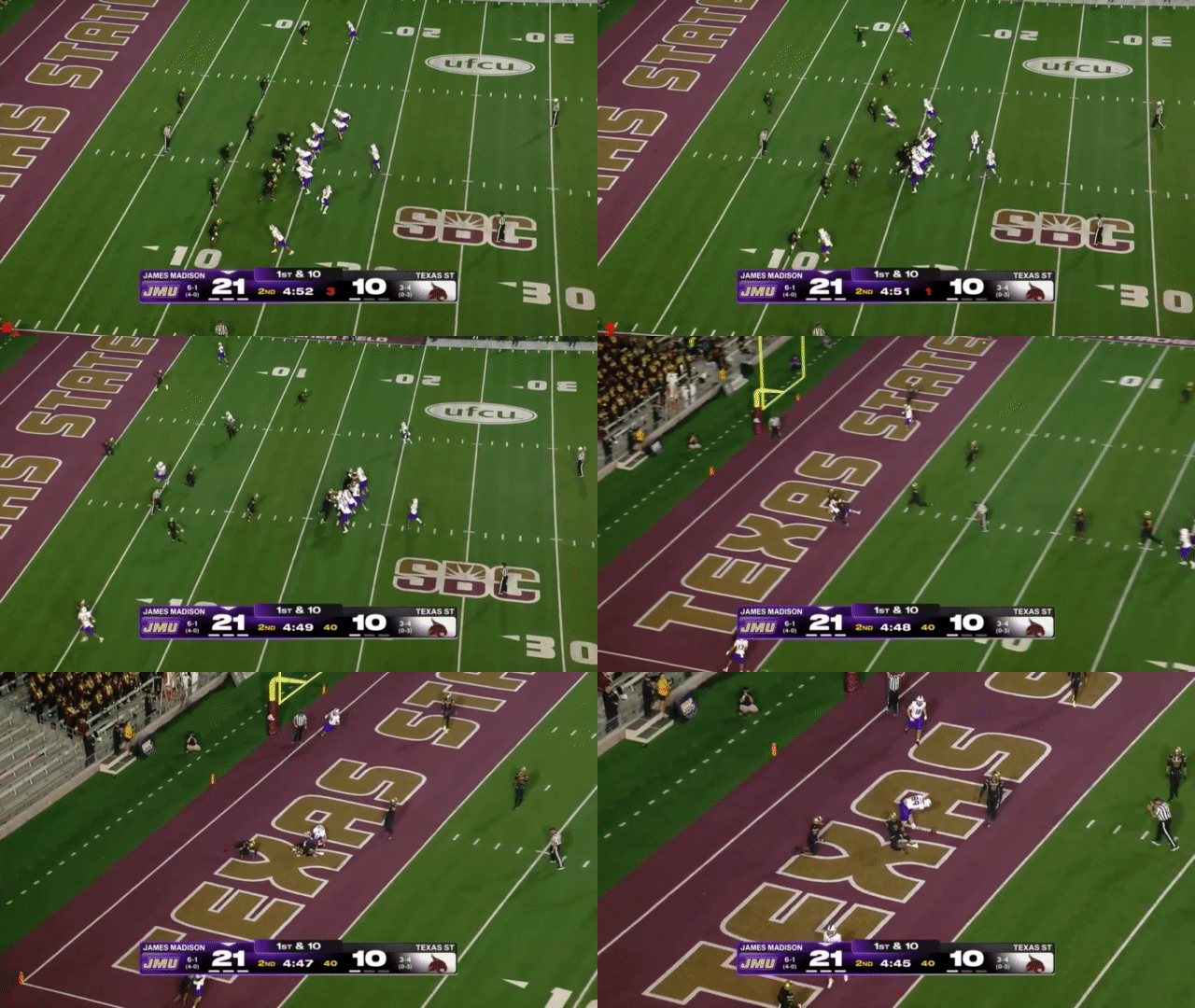
Backing up Mikey Matthews in the slot is Michigan transfer Semaj Morgan. Although I haven’t seen many Michigan games, I was impressed by Morgan’s athleticism, and I think (in contrast to Mikey Matthews), Morgan is far more capable at creating his own yards. Morgan served as a return specialist at Michigan and was a two-time All-Big Ten Honorable Mention.
Here Morgan shows nice body control in catching a Nico-type pass and managing to still get his feet in bounds:
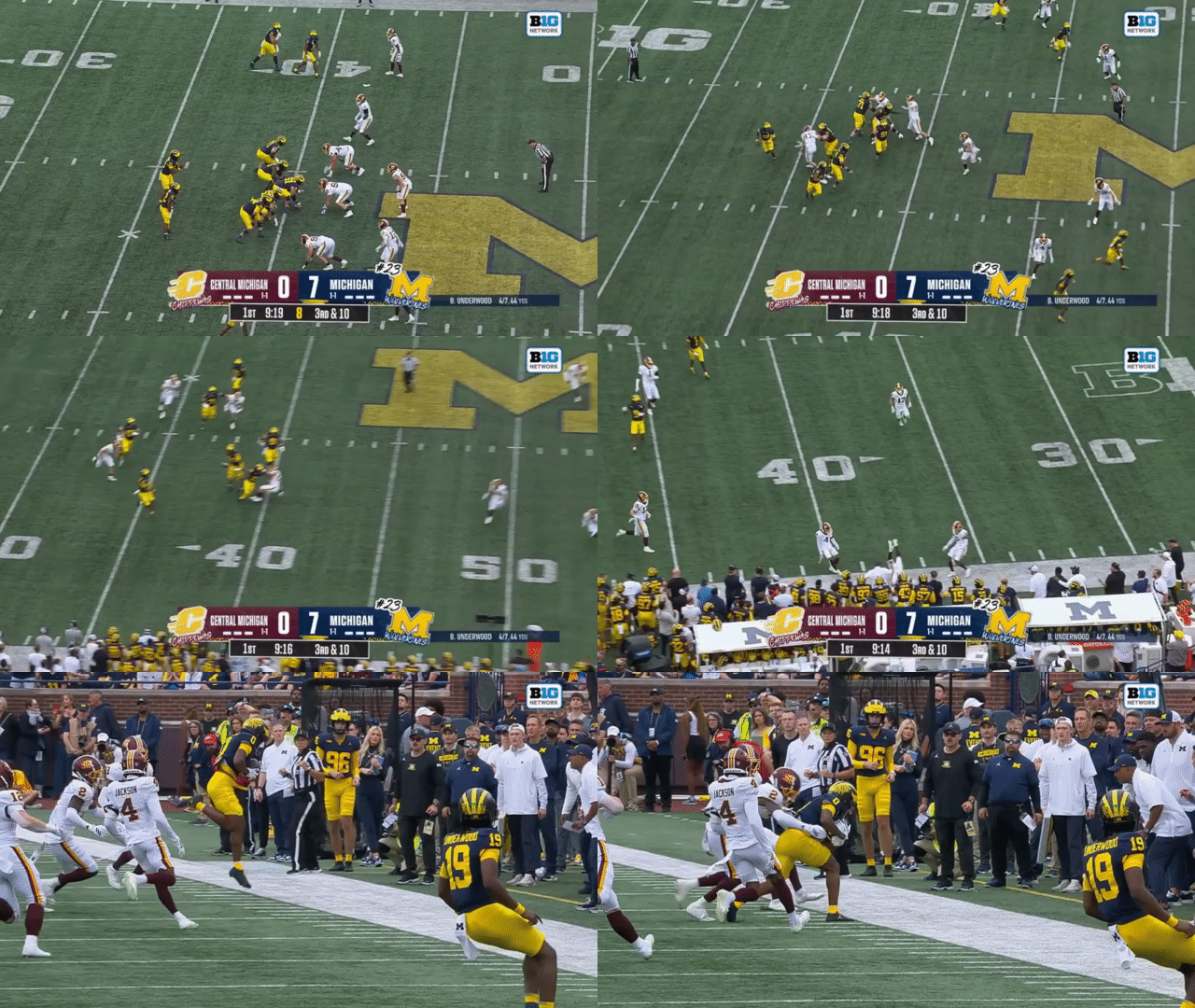
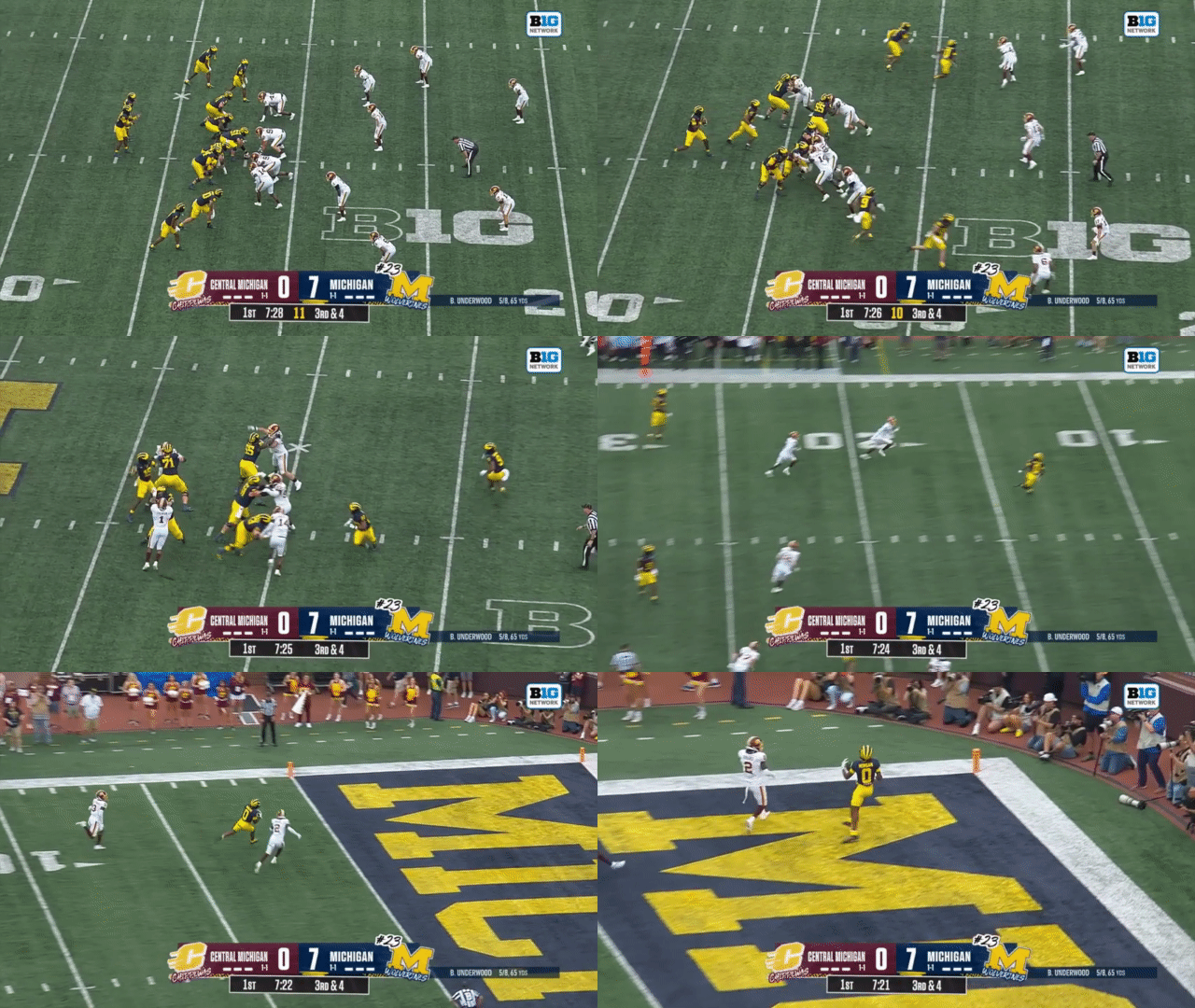
Here Morgan does a nice job of tracking the ball over his shoulder for an easy touchdown:
Backing up WR Leland Smith at the X-position is Florida transfer Aidan Mizell. I also haven’t seen a ton of Florida, but I did see their FSU game. In this one, he had a decent catch here:
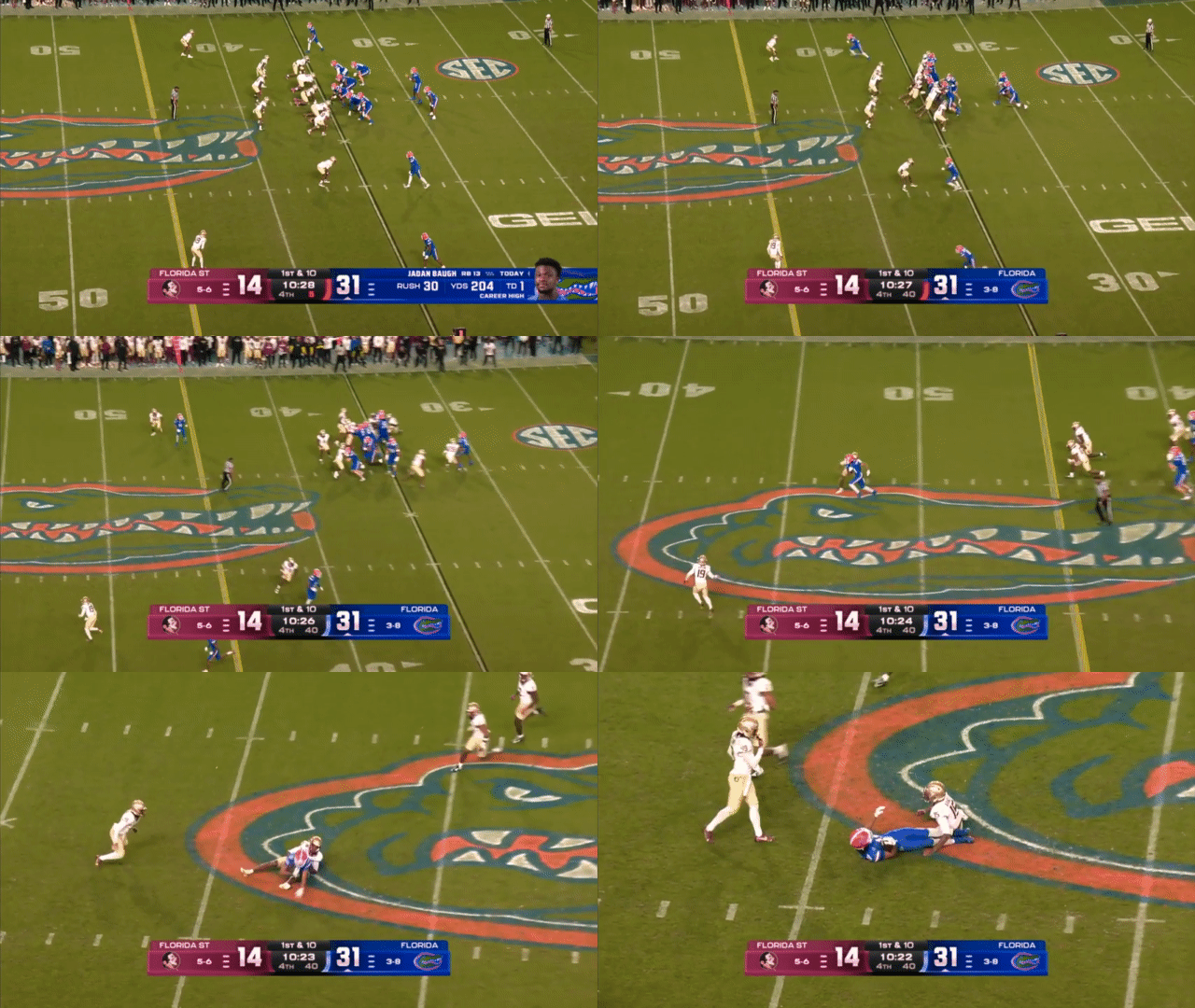
Although in that same game, Mizell was bullied off a contested catch resulting in an interception for Florida, so perhaps not a contested catch specialist here, and more of a speed guy.
Currently listed behind WR Landon Ellis at the Z-position is South Carolina transfer Brian Rowe Jr. He didn’t make an appearance in either of South Carolina’s ACC matchups I watched (VT, Clemson), so I went through the Mizzou game and saw Rowe get most of his yards against poor defense:
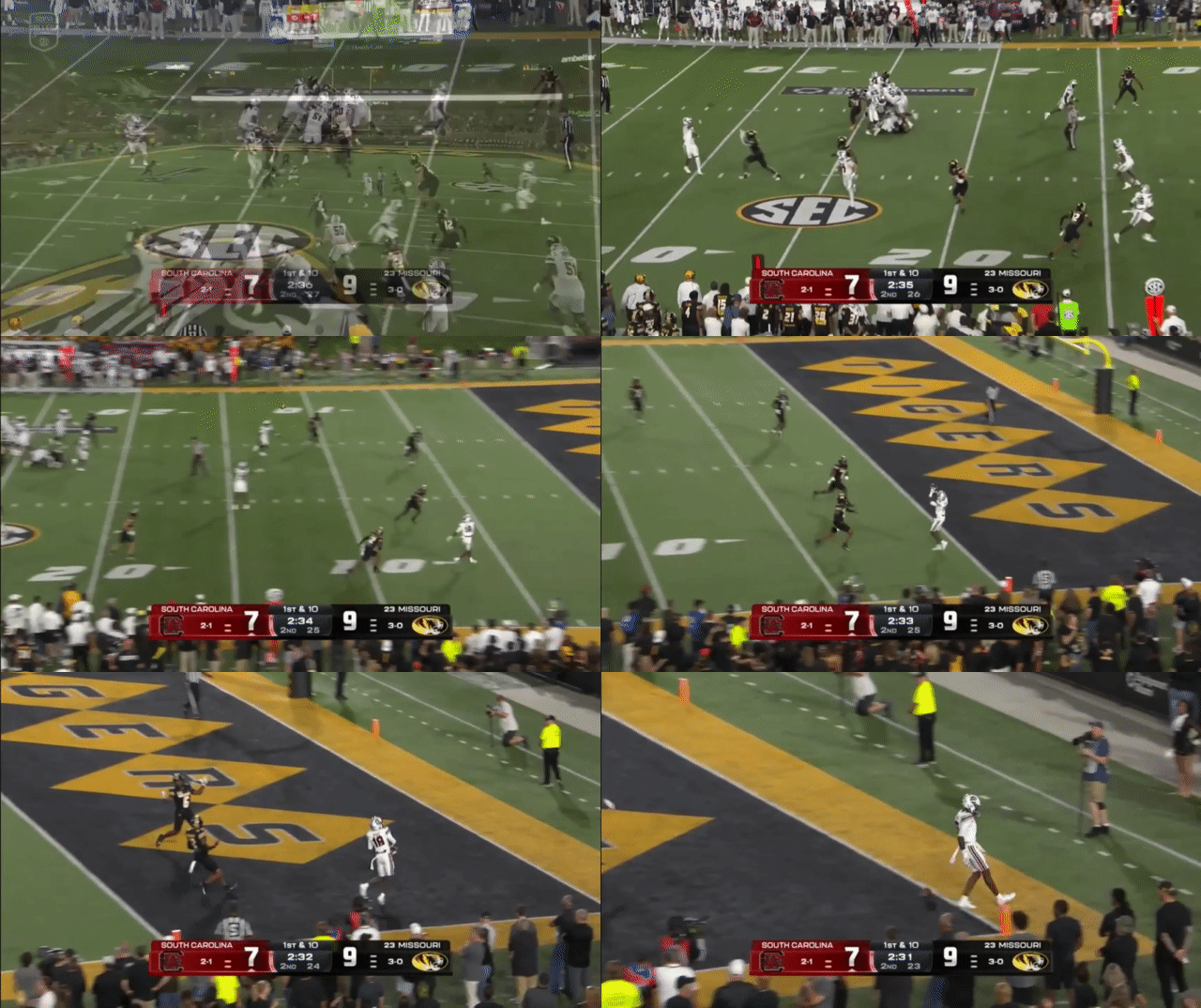
Backing up the tight end position is Kansas State transfer Brayden Loftin, who I also know very little about. Like, Phifer, he doesn’t have a ton of catches, so I presume he’s also primarily used in blocking, though he did have this catch (if you’re wondering why the field looks like this, it’s because they were playing in Ireland):
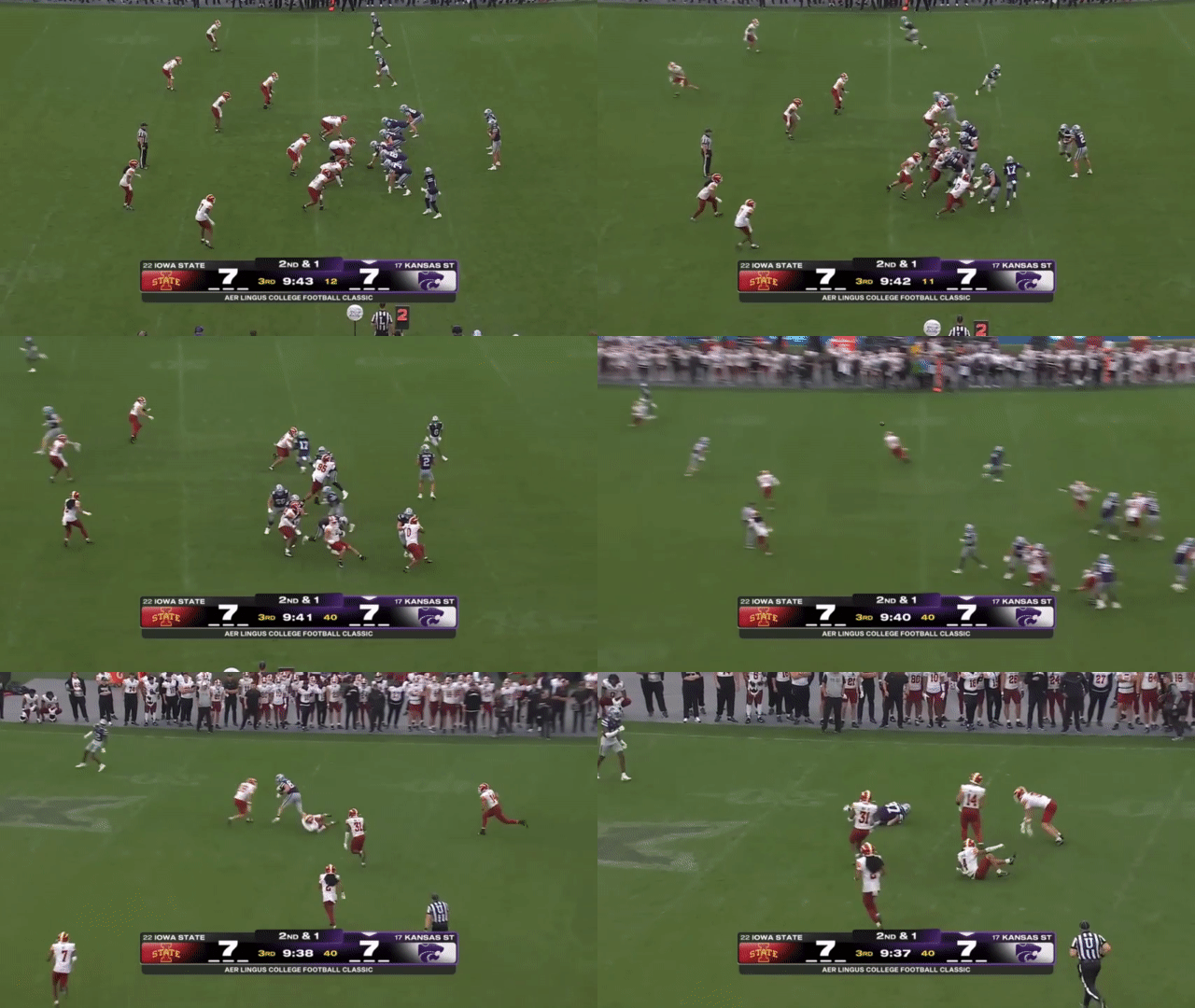
I expect to see a lot of one-read plays designed to quickly get receivers open, so the receivers that will have the biggest impact on the game are likely to be the ones who can get quickly open over those with longer-developing routes.
Special teams
UCLA’s kicker is another former Cal player, Mateen Bhaghani. In addition to finding success in Amazon Prime’s latest hit romantic drama, Off Campus:
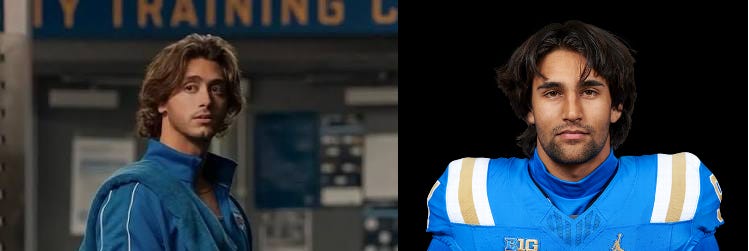
He’s also the rare example of a Cal player who found more success after transferring to UCLA, increasing his longest FG from 43 yards at Cal to hitting a 57-yarder in 2024 and a 54-yard FG in 2025:
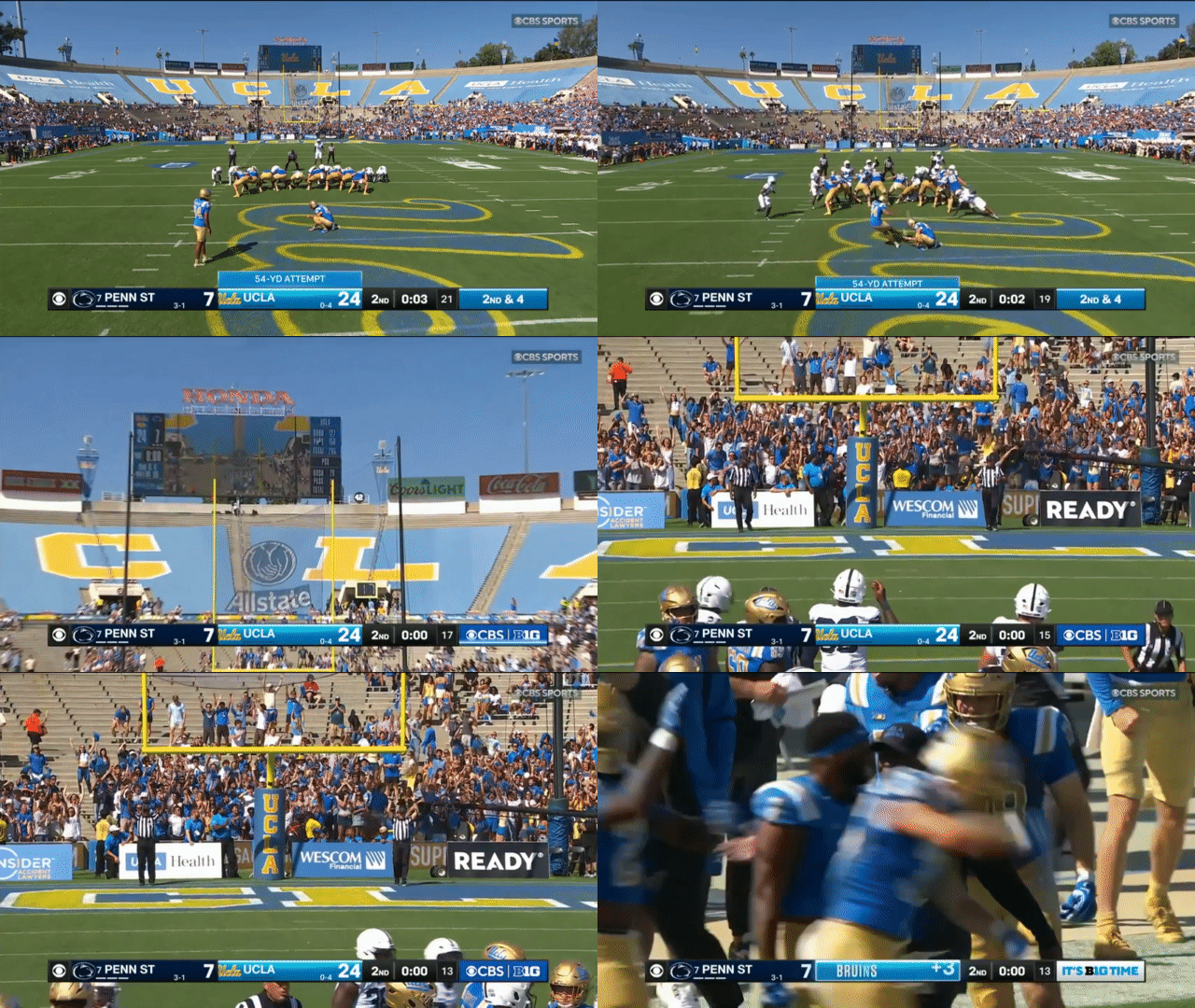
UCLA ran a lot of trick plays last year—primarily out of desperation, and Bhaghani perhaps made a business decision in this one:
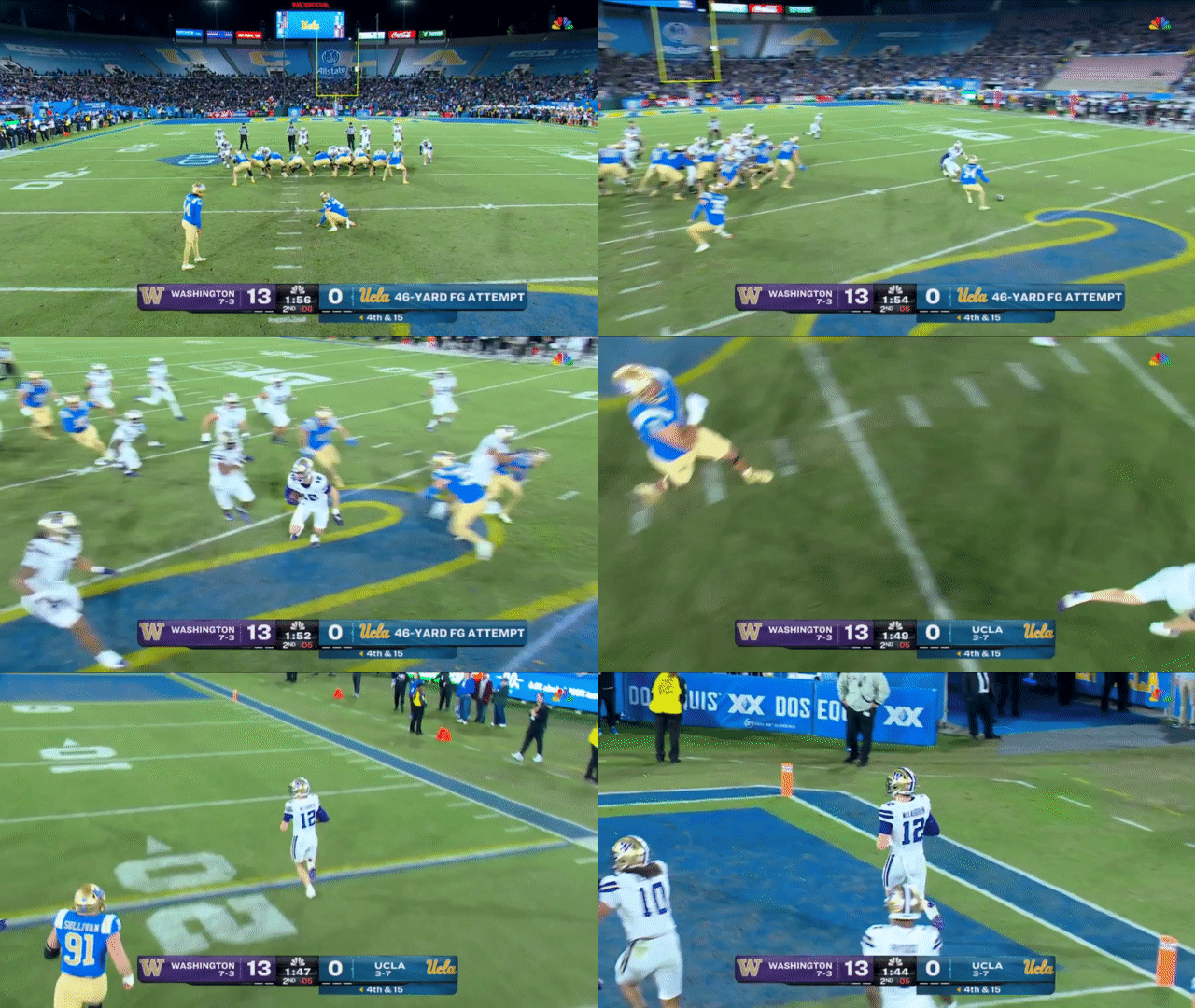
UCLA has a number of viable kick/punt returners and it remains to be seen who will get the majority of returns. JMU had RB Wayne Knight, Michigan had WR Semaj Morgan, and UCLA had WR Mikey Matthews (and DB Cole Martin).
Conclusion
UCLA is coming to Berkeley as a 1.5-point favorite, likely riding the high of their new coaching hire, but Cal is expecting a sellout crowd. To be honest, both of these teams are completely unproven under brand new coaching staffs, and it’s difficult to know what to expect. I expect QB Nico Iamaleava to have a lot of success scrambling and creating his own yards, and RB Wayne Knight to do a good job running the ball. I expect UCLA to have a lot of scripted plays for Iamaleava, to scheme up receivers to quickly get open and reduce Iamaleava’s mental load. I expect JKS and the upgraded offense to torch UCLA’s defense, but for Chesney and UCLA to keep the score close by minimizing possessions. I’ve seen a lot of sentiment online that the winner of this game is going to be good, a surprise dark horse, etc., but no; I think UCLA is going to stumble along to another losing season this year (barring miraculous development from Iamaleava). I’m just afraid of finding out that Cal is actually worse. With Cal football a complete unknown to start the year, optimism is high. Cal may have upgraded the talent on the roster, but as Iamaleava shows, simply having talent is half the battle. It’s what you make of it. This game is going to tell us a lot about what we can expect this season.
Go Bears!
You can find my full clips here.
IMO the most impressive bit of works done on Cal football. So damn impressive. Hilarious, yet insightful. Biased, but clear sighted. Thank you and Go Bears!
When world class shitposting meets world class review and analysis, I give you Mr. Christopher Helling...you've out done yourself, and we all benefit. In particular, so great to see the detailed work on the fUCLA QB Iamaleava, putting to rest some of the breathless hype we've seen. I for one am feeling a wee bit better about Saturday. Gracias