

Wake Forest is led by former Washington State head coach Jake Dickert, one of the rare examples of a former offensive player who rose through the ranks as a defensive coach. If you’ve followed this blog for some time, you’d know I am a pretty big fan of Dickert, and he has really turned around Wake Forest: after a pair of 4-8 seasons in 2023 and 2024, Dickert took over in 2025 and led them to a 9-4 season, capped off with a win in the Duke’s Mayo Bowl (pic related). Wake Forest is currently 5-1, and ranked at #21 in the Week 6 AP Top 25 poll, their first ranking since 2022. Wake Forest’s offense has been on fire, and just posted their largest ACC win in school history in a hilarious 57-3 blowout of Stanford.
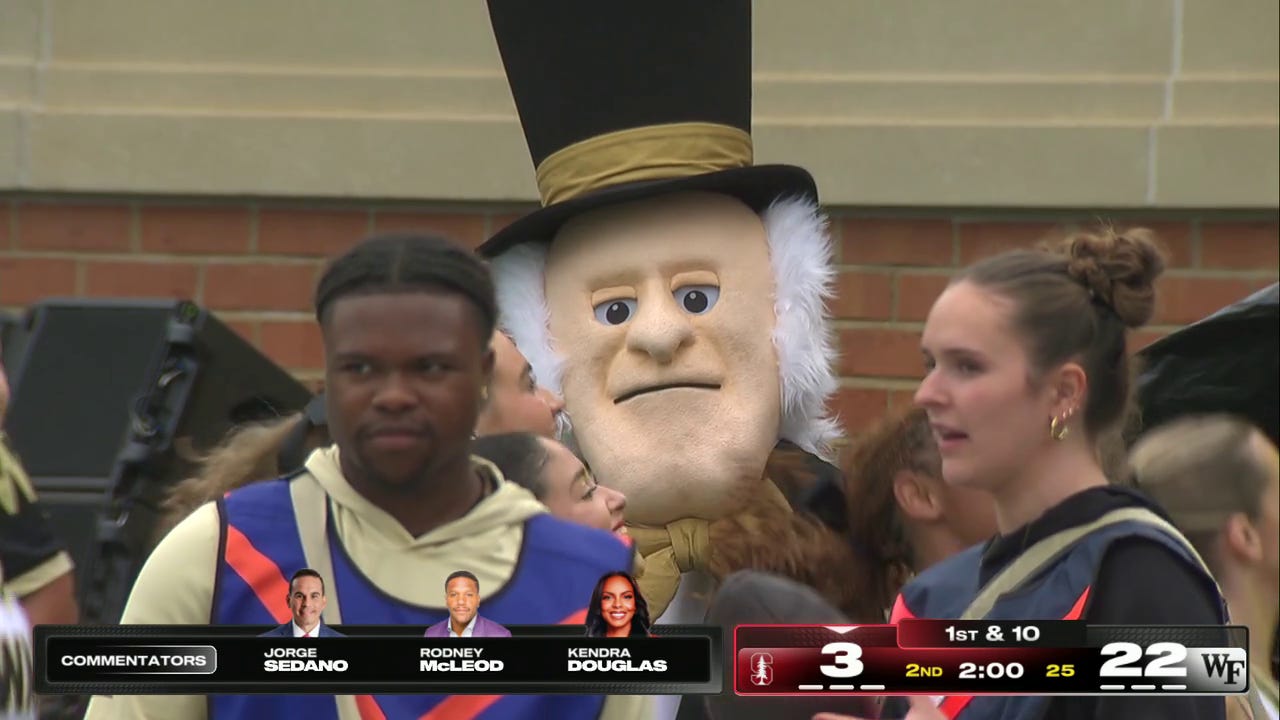
Since I posted about the Wake Forest traditions the last time Cal faced Wake Forest back in 2024, I won’t go over it again here, but I did notice one odd thing about the Demon Deacon:
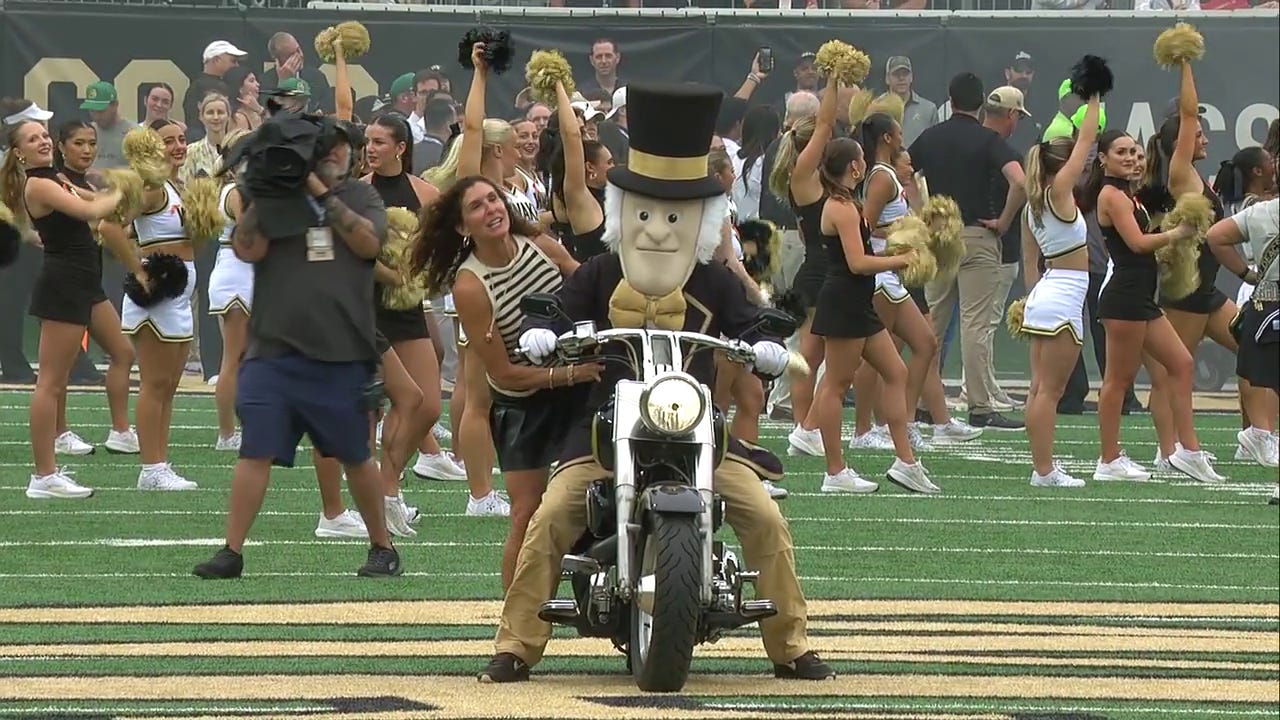
What kind of Deacon attaches their bowtie to their chin?:
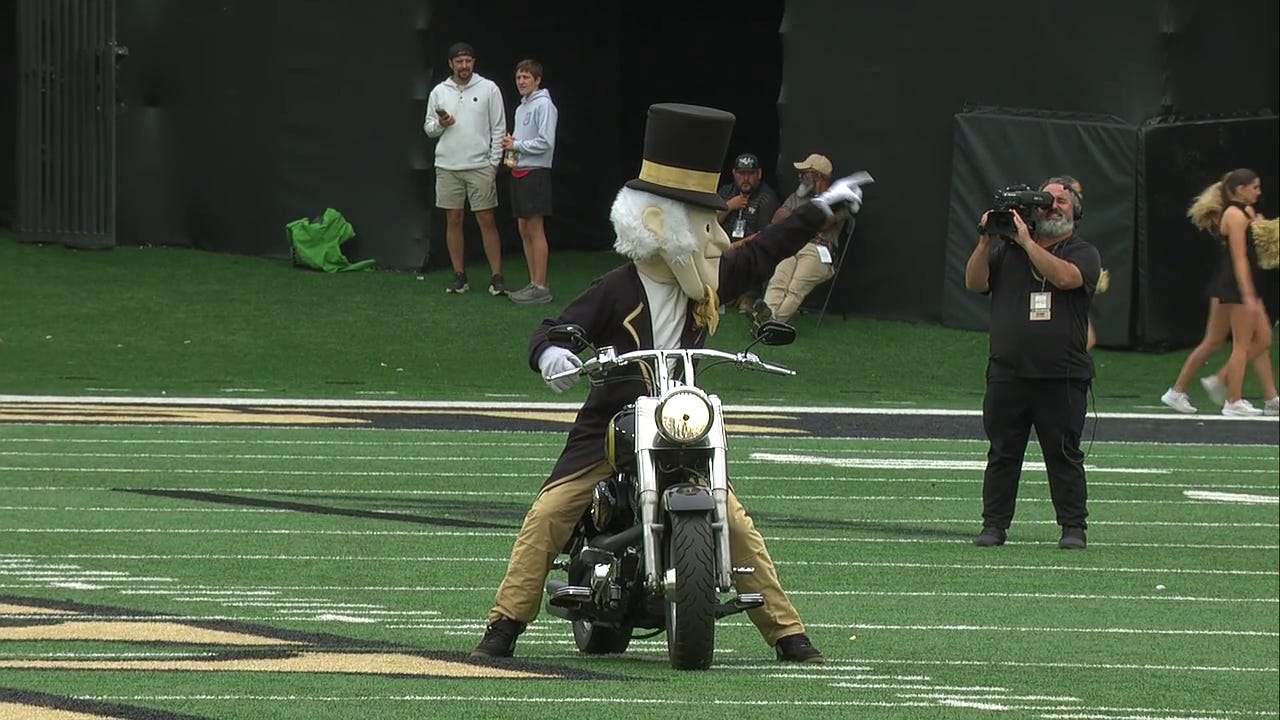
Wake Forest gave current #3 Miami their toughest game of the season, and fans have already been charting out their path to the playoffs (especially with a relatively “weak” schedule remaining). I feel like Washington State fans may know better than to test the Pac-12 ACC After Dark gods, though. Let’s take a closer look at their offense.
Quarterback
Wake Forest is led by North Carolina transfer QB Gio Lopez, who has had a resurgence after leaving the defensive-minded Tar Heels (back when I previewed him here)—through 6 games this season, Lopez has passed for 1,680 yards (7th in the FBS, and 2nd in the ACC behind… Virginia Tech’s Ethan Grunkemeyer), already approaching his 2025 season total of 1,747 passing yards. Further, he’s improved from 10 TDs/5 INTs in 2025 at UNC to 13 TDs/1 INT in half a season at Wake Forest. To put the change from 2025 to 2026 in perspective, Lopez’s season high in 2025 was 216 passing yards. His season low so far this season is 225 passing yards, and he has thrown for 300+ passing yards in 3 of his 6 games this year (including against #3 Miami).
A big factor in driving this offensive resurgence is his reunion with WF offensive coordinator Rob Ezell, who was previously Gio Lopez’s offensive coordinator at South Alabama in 2024. While UNC was reluctant to run the ball with Lopez (113 rush yards in 2025), Ezell had no such qualms at South Alabama, where Lopez ran for 465 yards rushing with 7 TDs (halfway through the 2026 season, Lopez has 202 rush yards with 6 TDs).
Ezell runs a power spread offense, which is an offense blending the wide-open spacing of a spread formation, with old school physical gap run schemes, and a QB that can run zone-read/read-option plays. While UNC wanted to keep Lopez in the pocket, Wake Forest much more effectively uses Lopez’s running ability to open up the defense. As I mentioned in last year’s preview, Lopez still loves the deep ball, and he’s looking for any chance he can get at an explosive play:
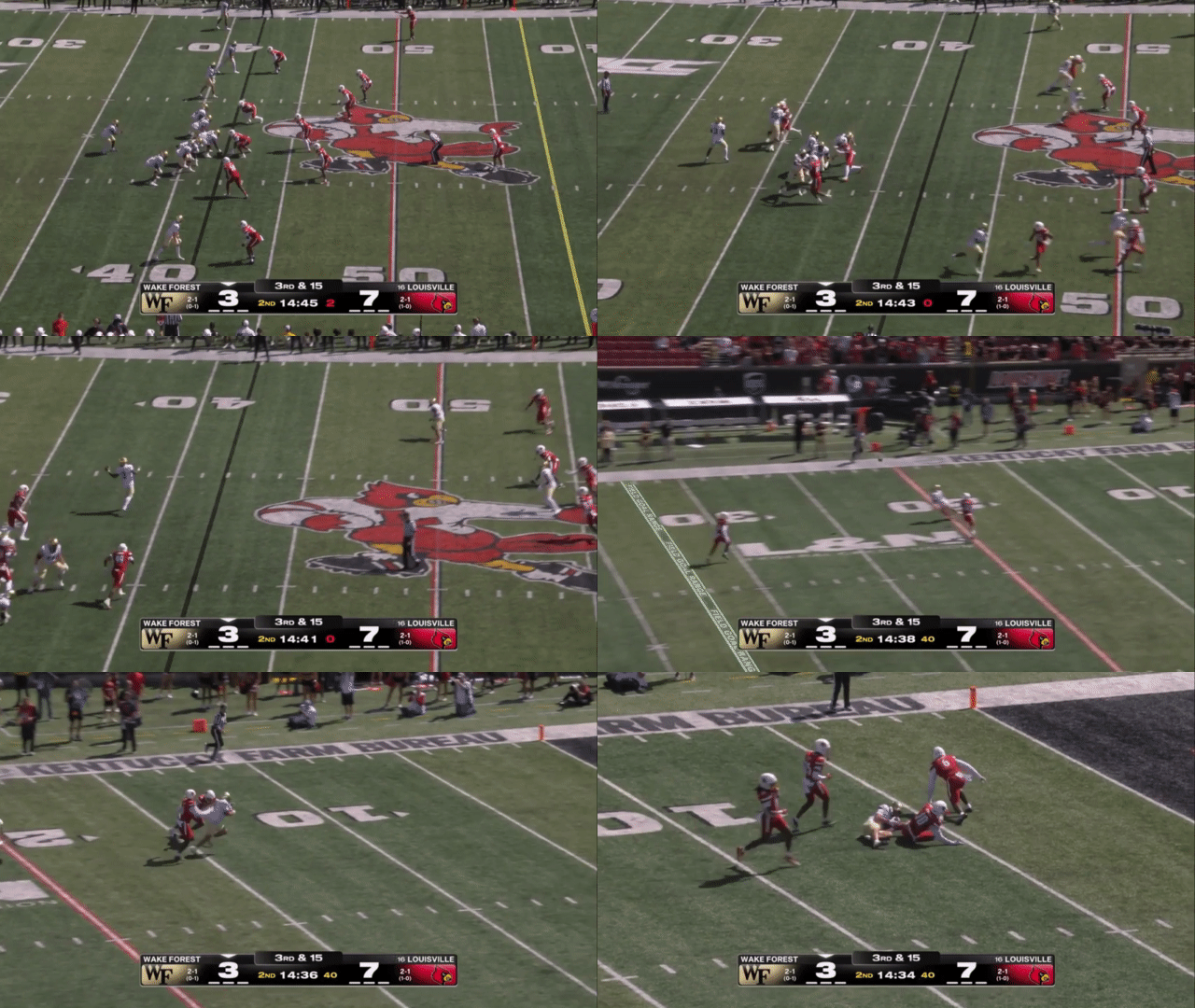
Lopez is accustomed to a moving pocket, and will often throw on the run, relying entirely on his arm to make the throw:
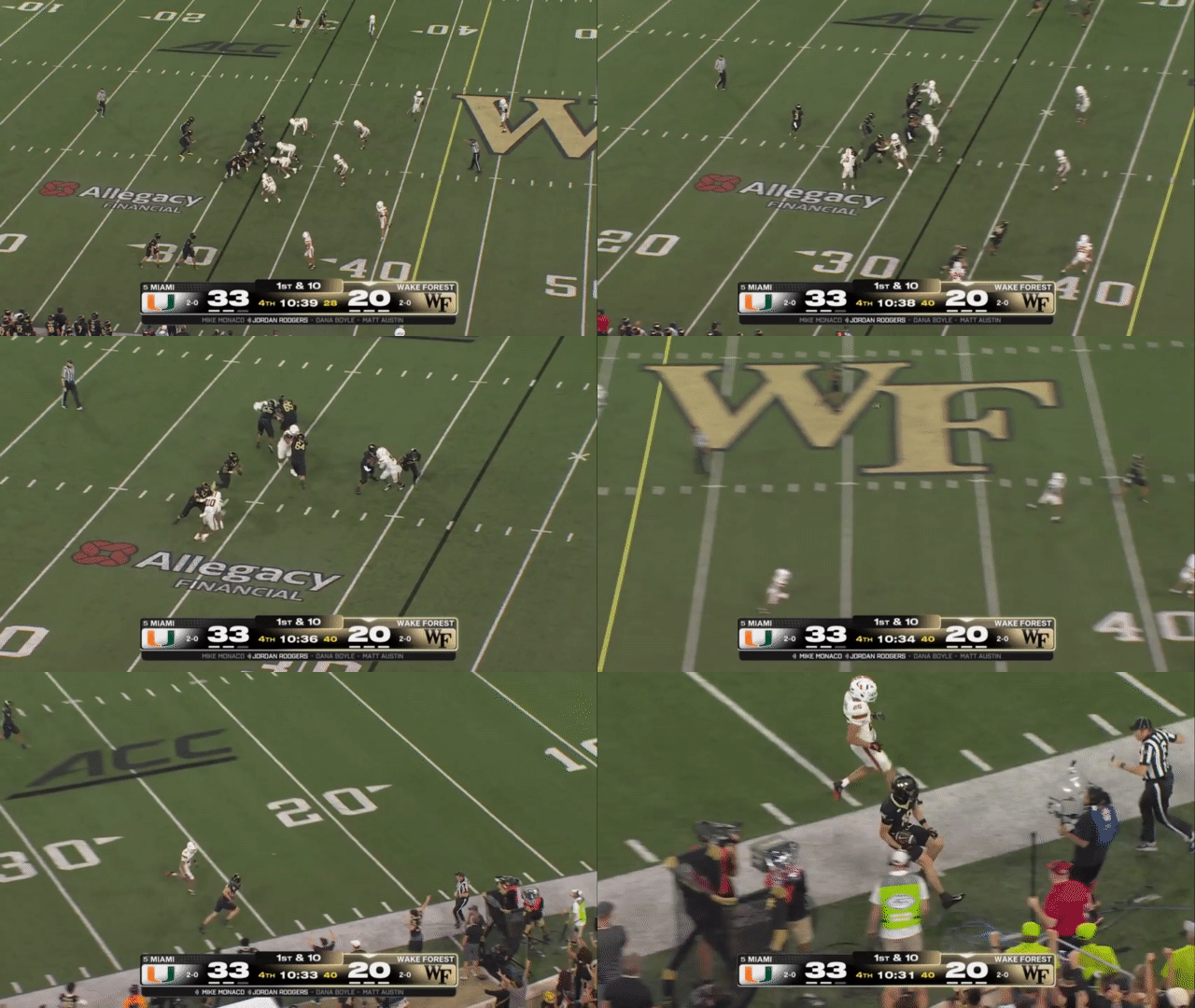
Lopez still maintains good accuracy throwing on the run (perhaps better than when he sets his feet and throws from the pocket):
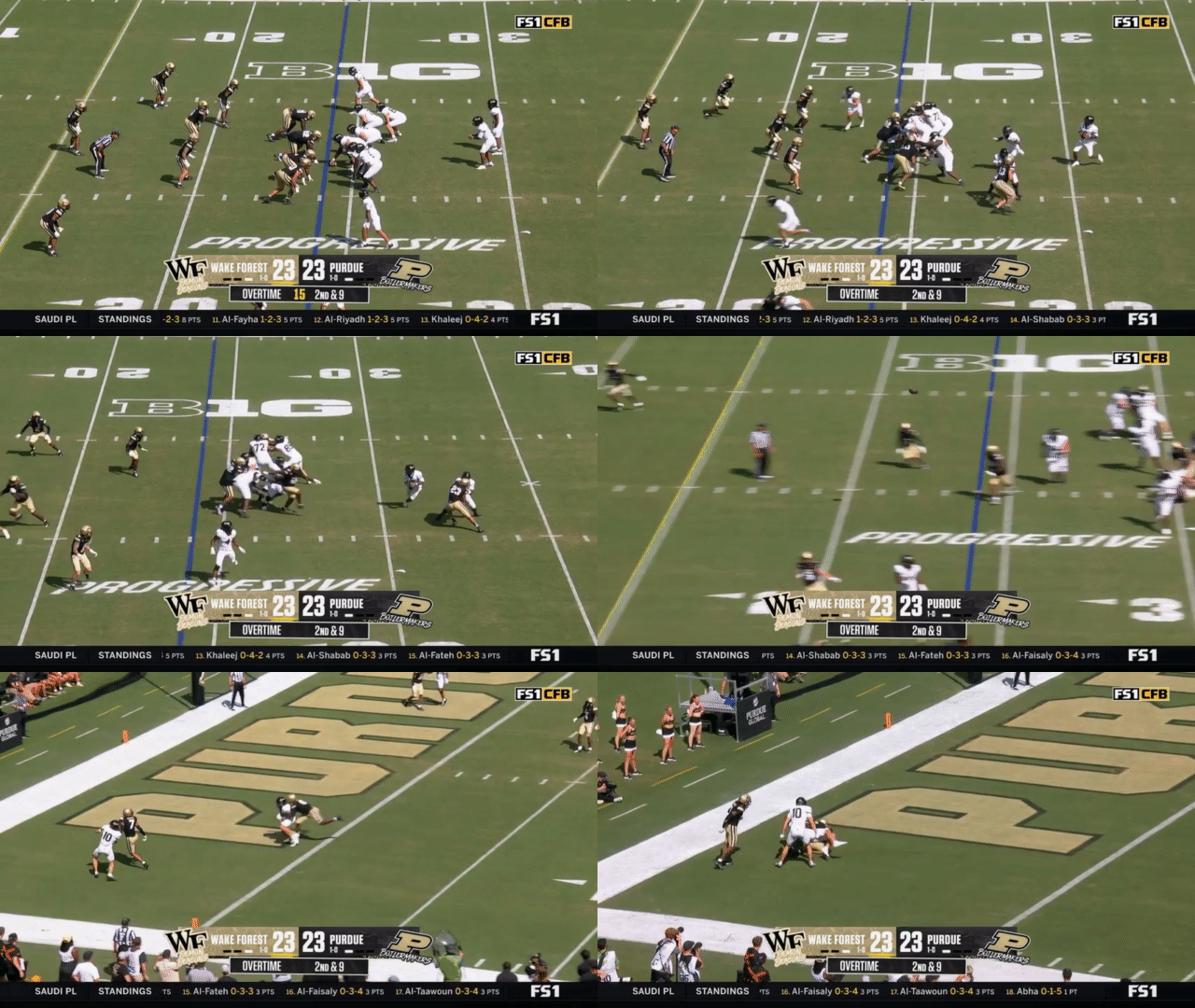
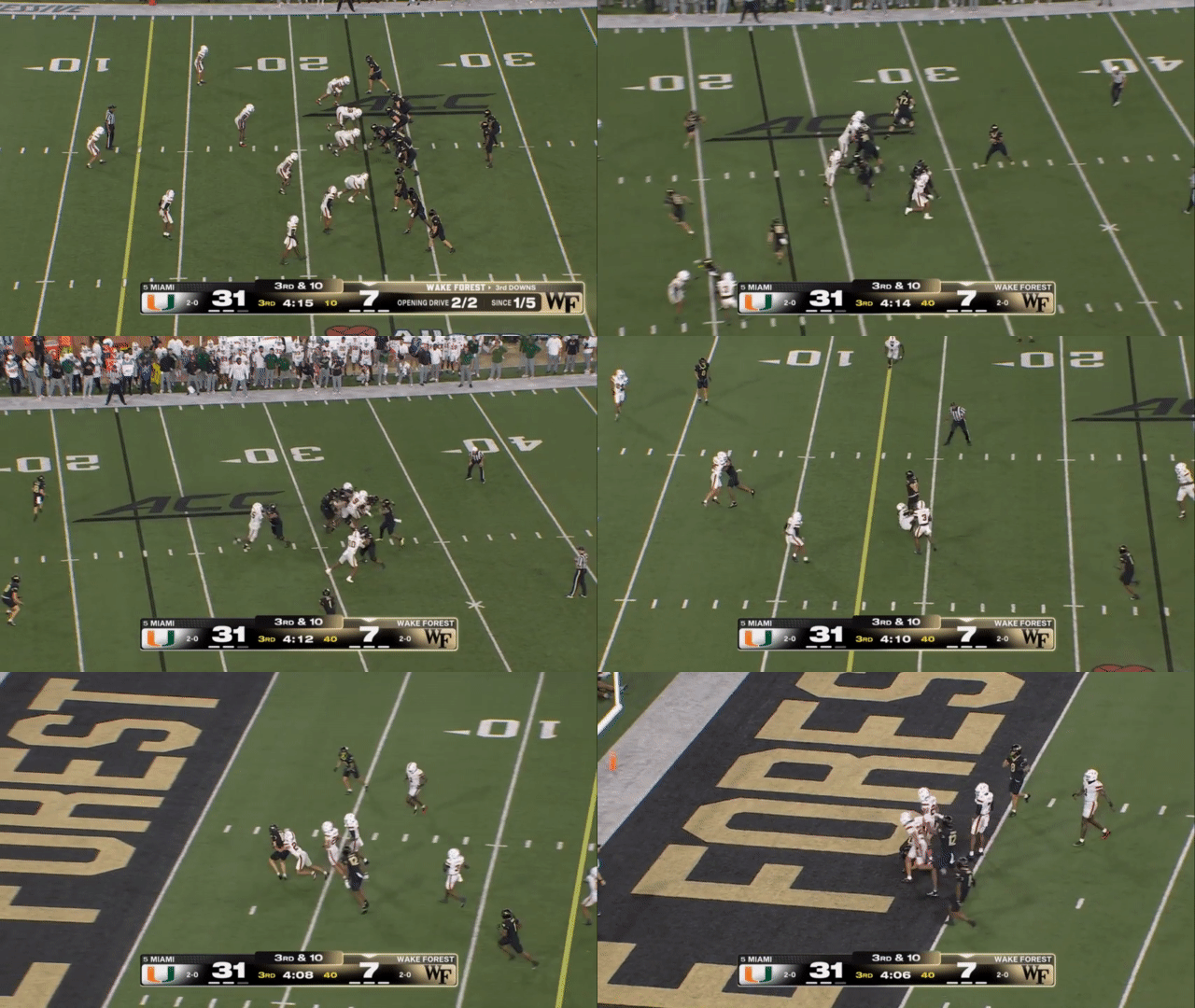
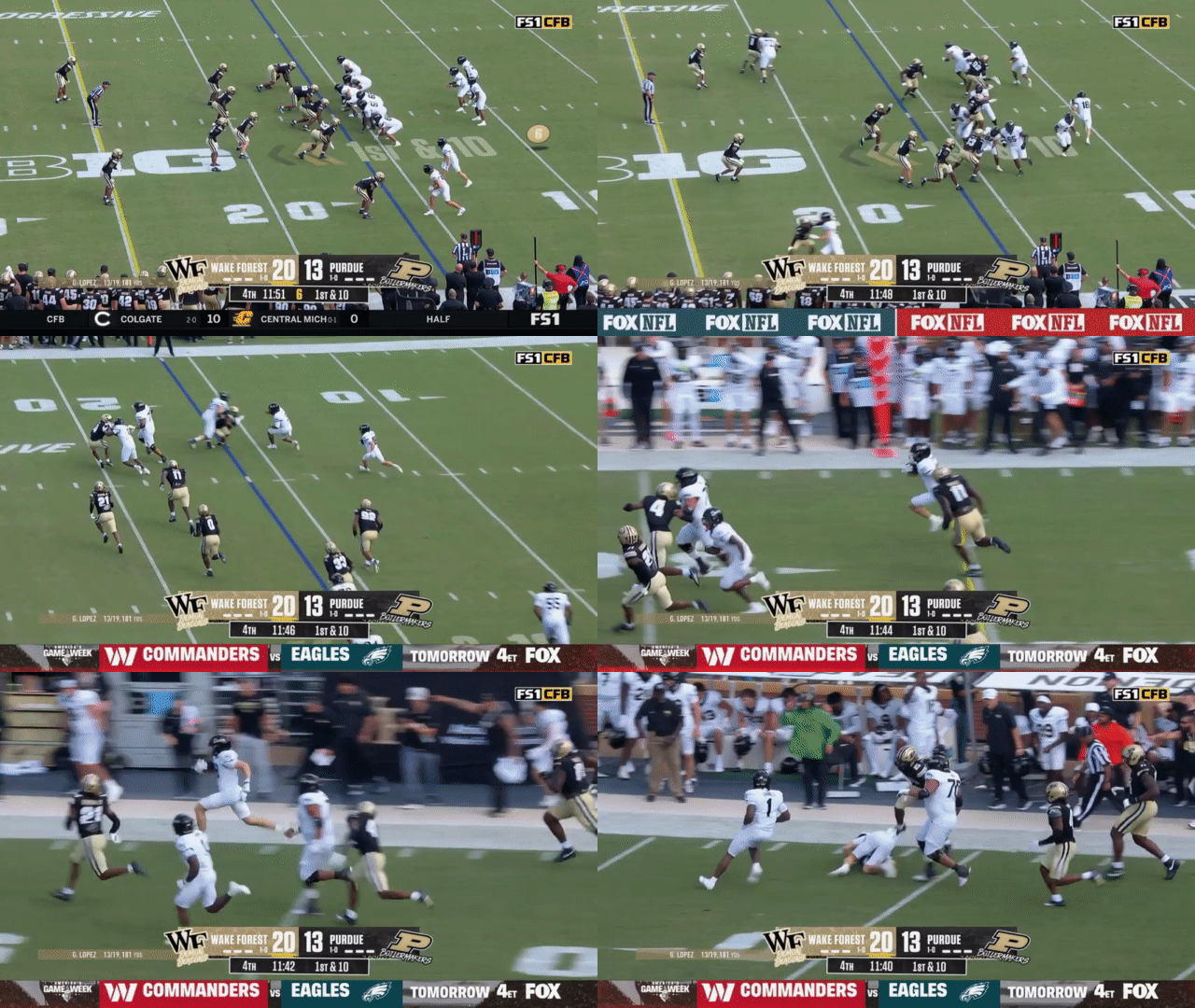
Lopez is a threat on the ground, and will frequently use his legs to extend plays and buy time for his receivers to get open. I think this is Lopez’s biggest strength:
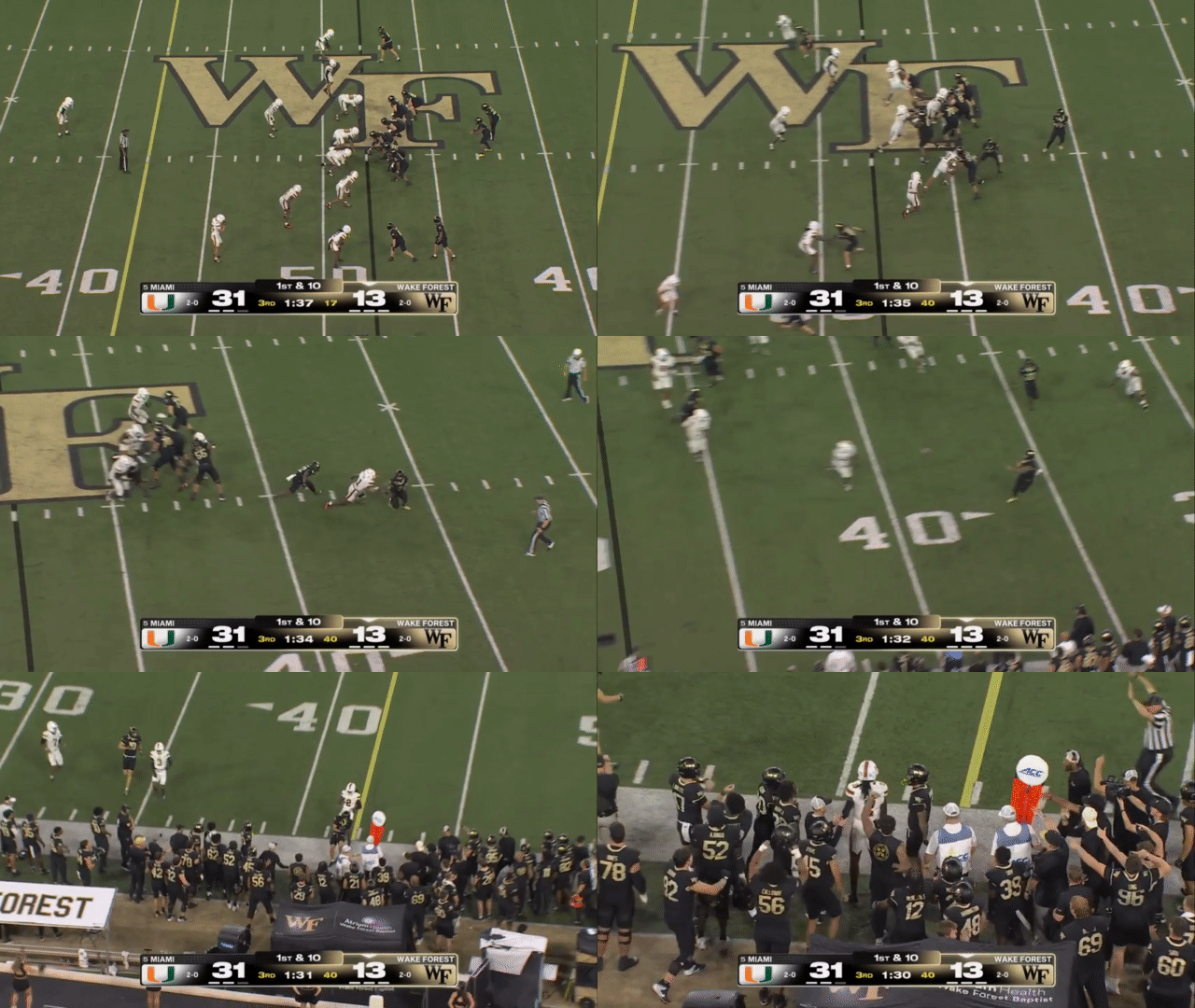
Lopez does a good job of sensing pressure in the pocket and when it is time to bail:
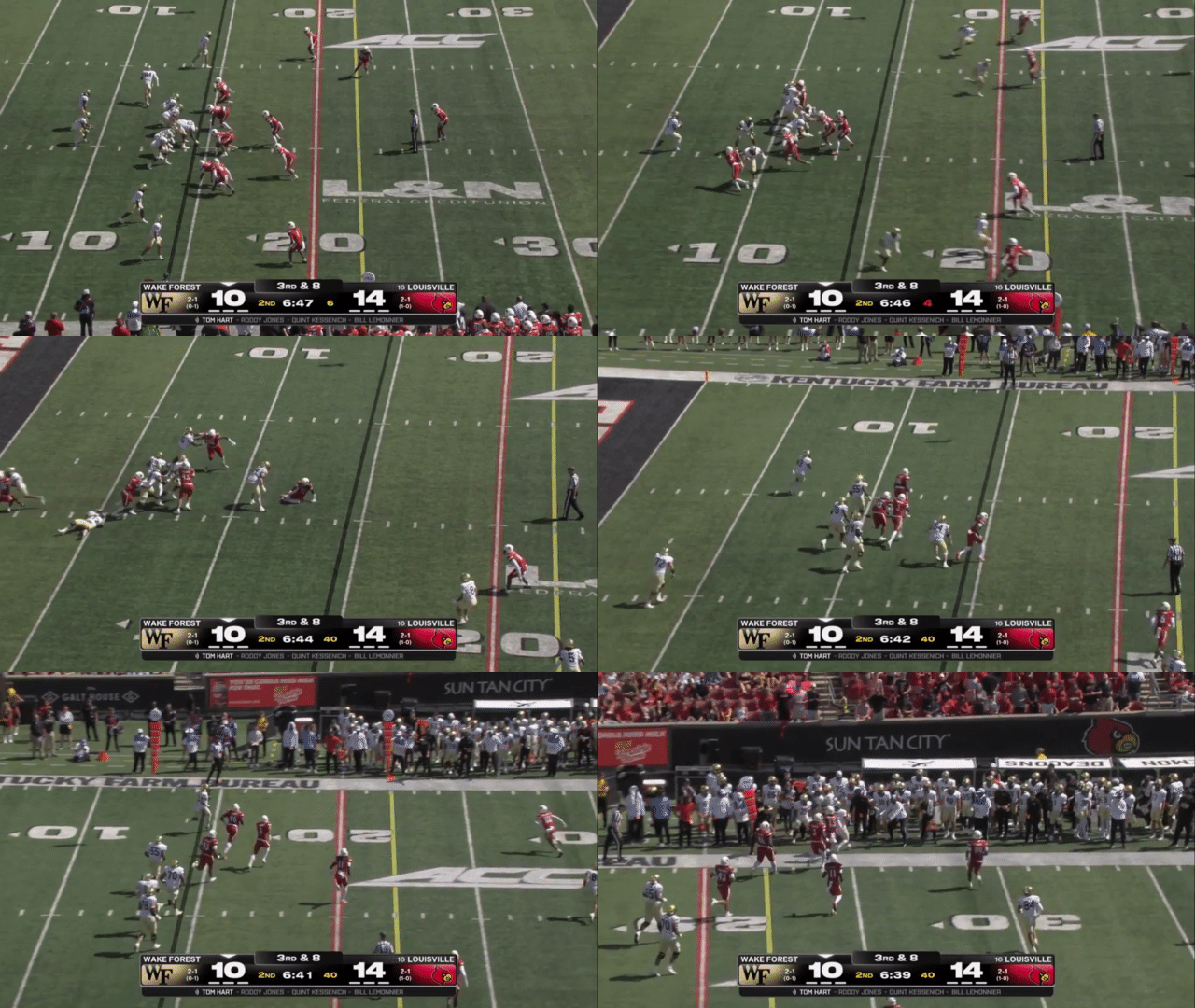
Lopez is not afraid to take a hit as he throws, and will often scramble away or throw it in the face of pressure:
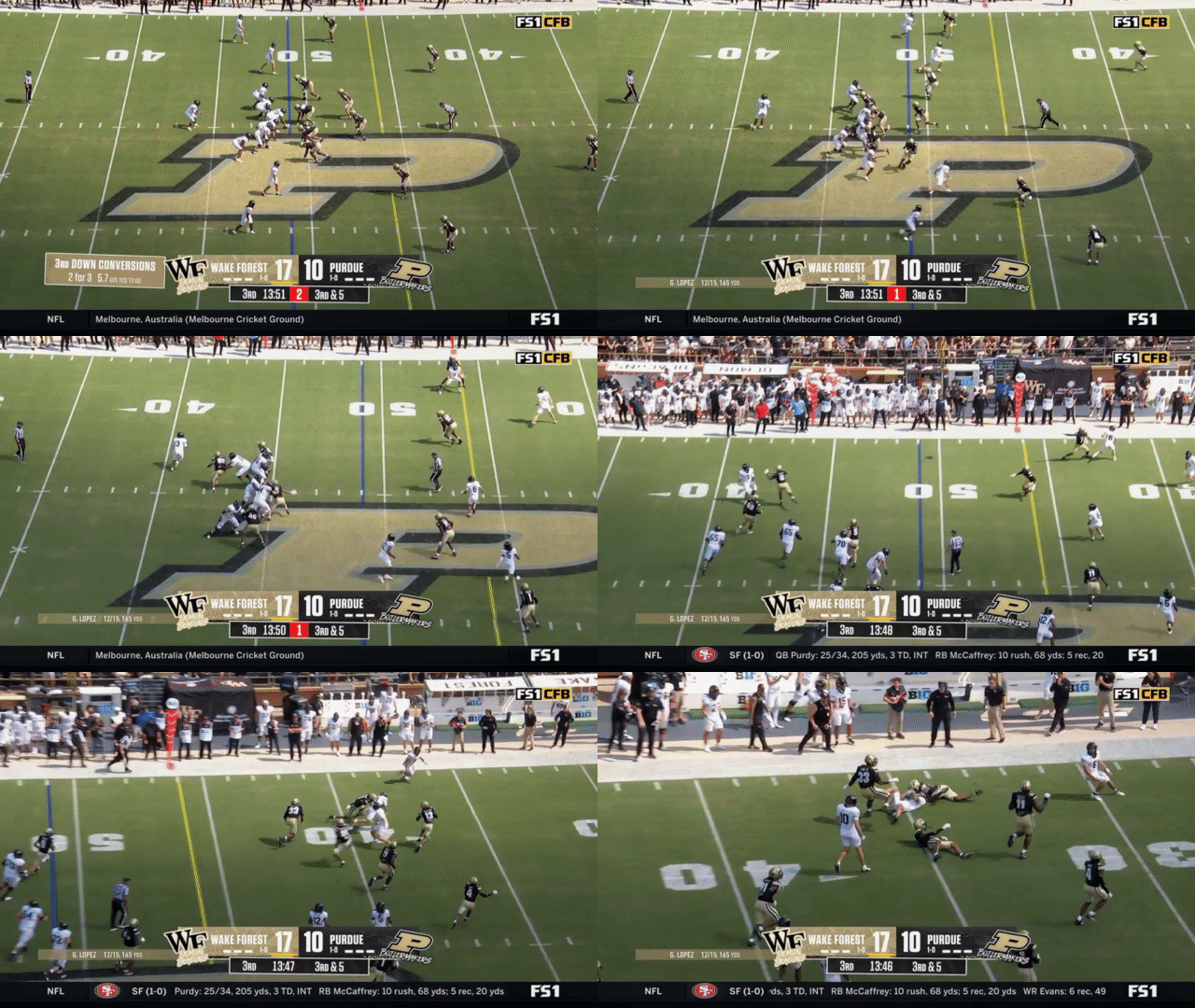
Lopez will wait until the last possible moment to throw it:
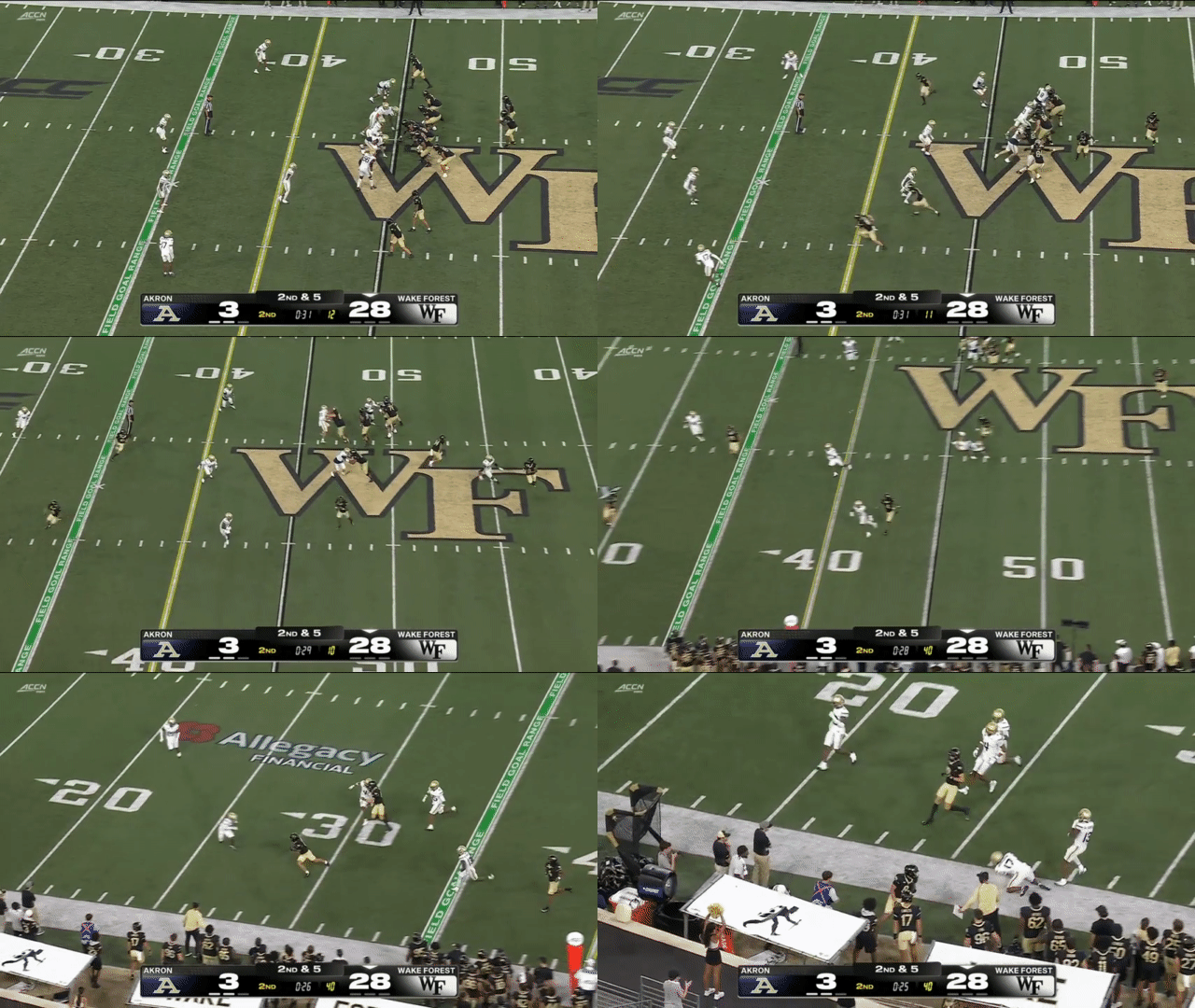
And here’s another throw where he stares down pressure to make the throw:
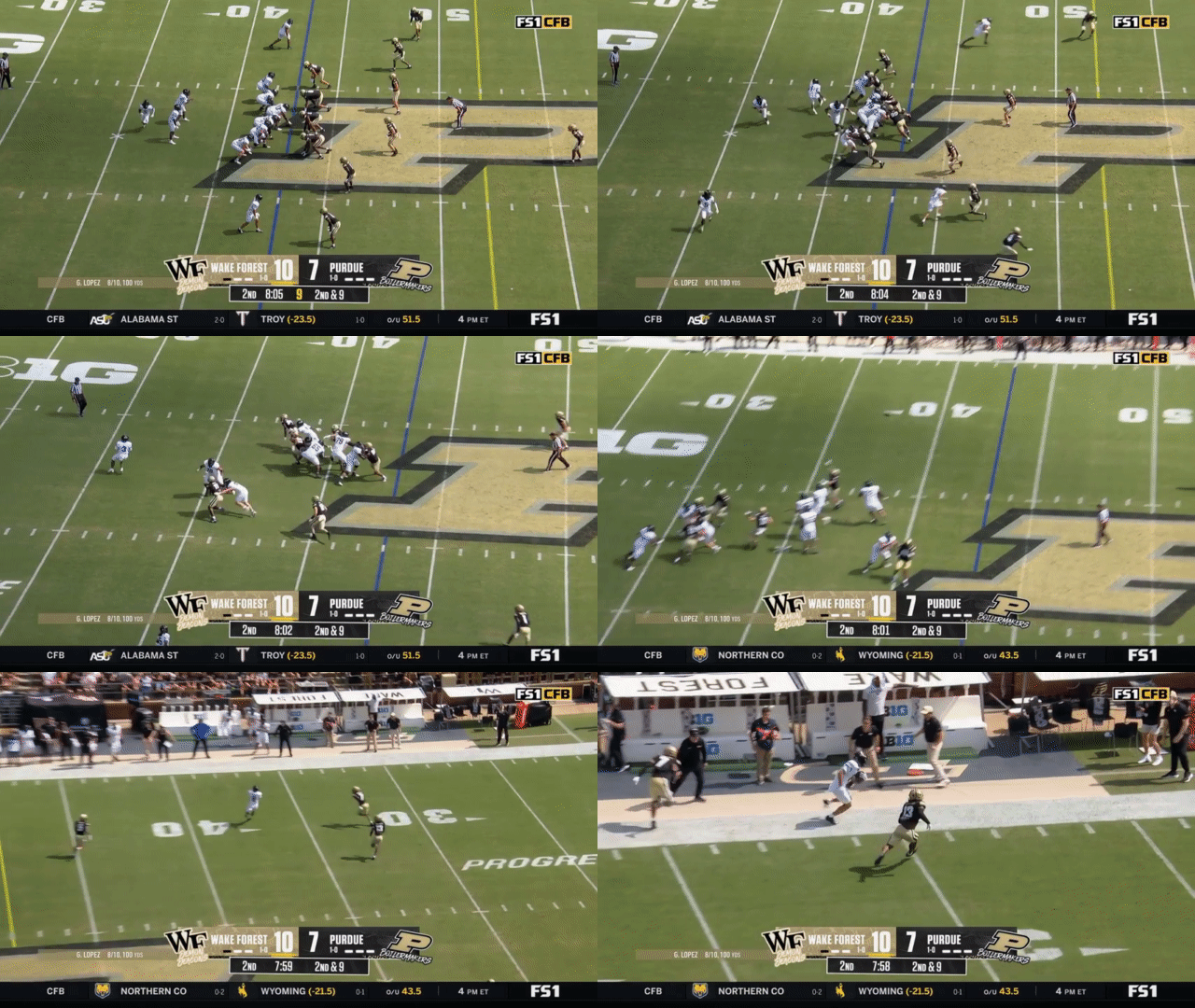
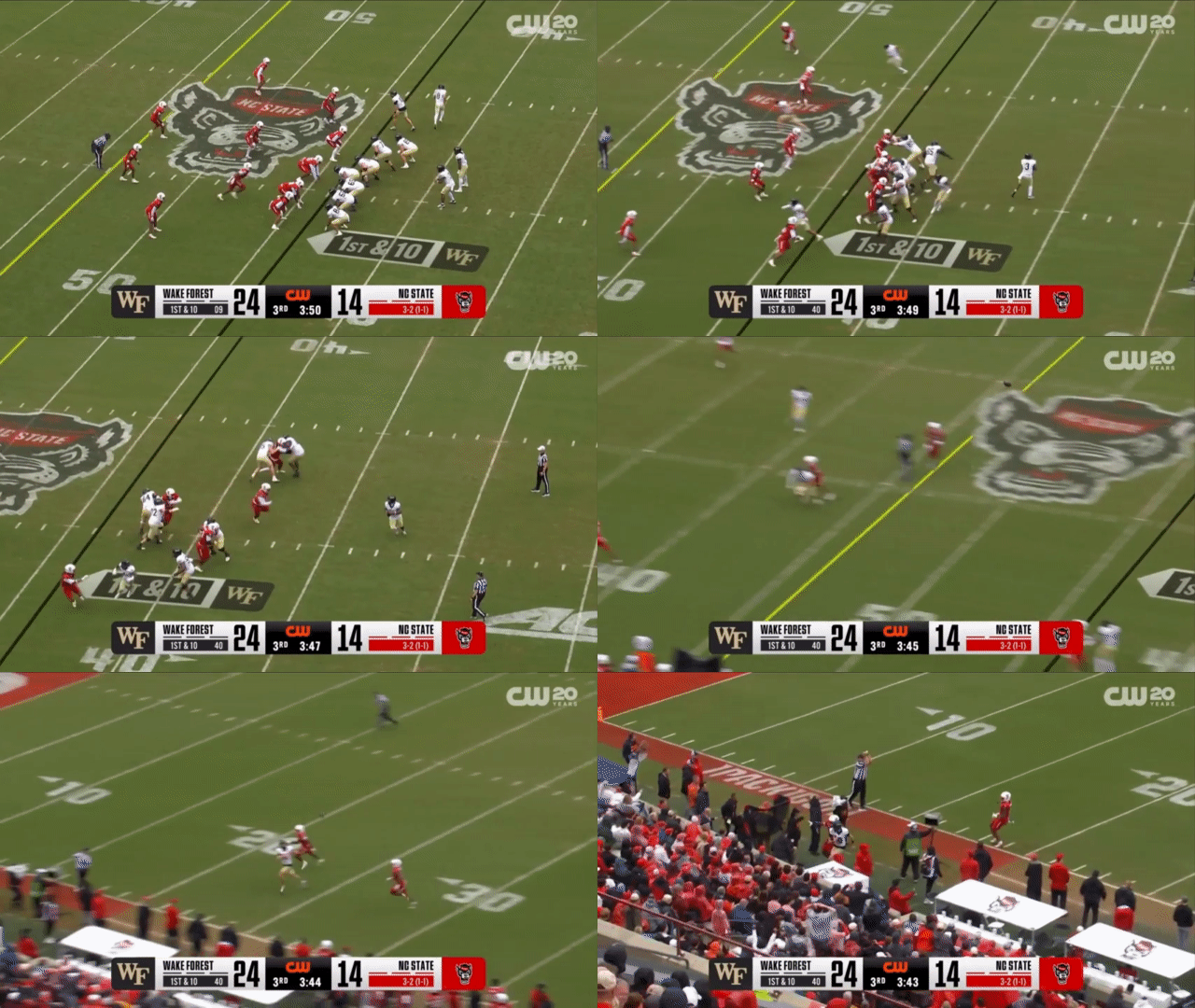
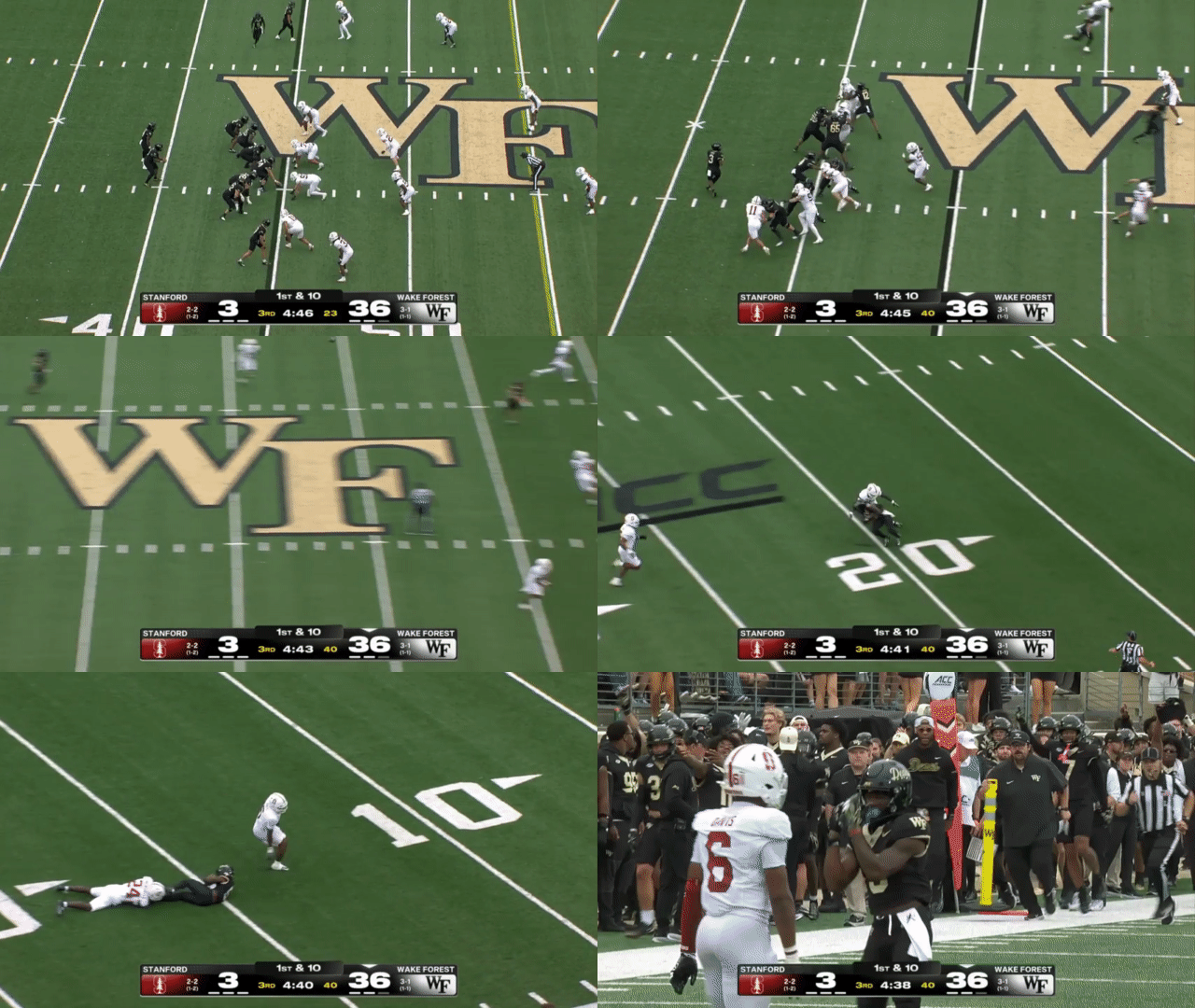
Of course, Lopez is a dual-threat quarterback and quite adept at running the ball, scheduled or unscheduled. Here he gets some nice blocks to spring him free, and you can see some of his speed:
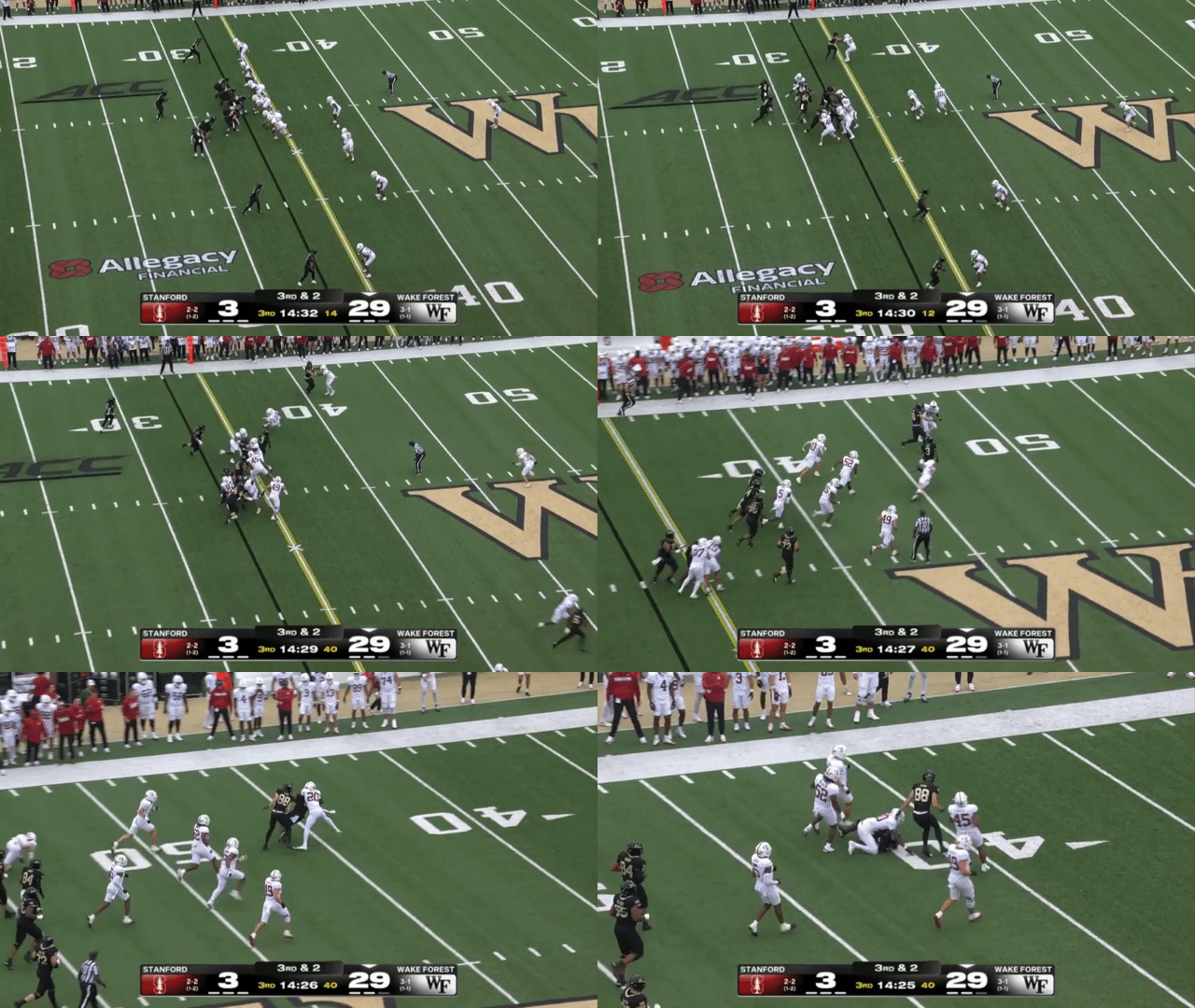
In a situation where one might expect a run up the middle, Lopez instead uses his speed to get to the outside as his blockers seal the edge:
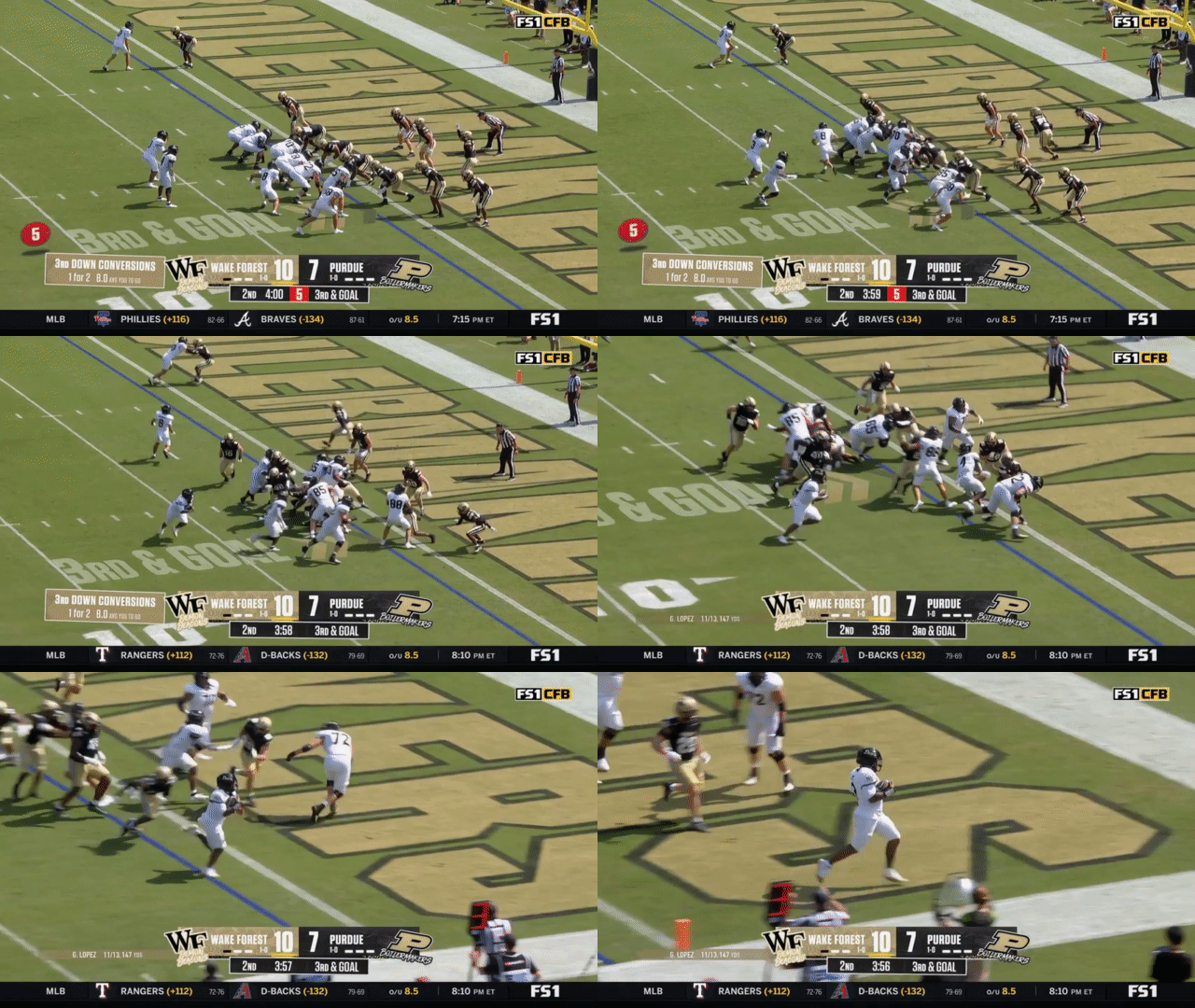
Here Lopez is on the draw, again following his blockers:
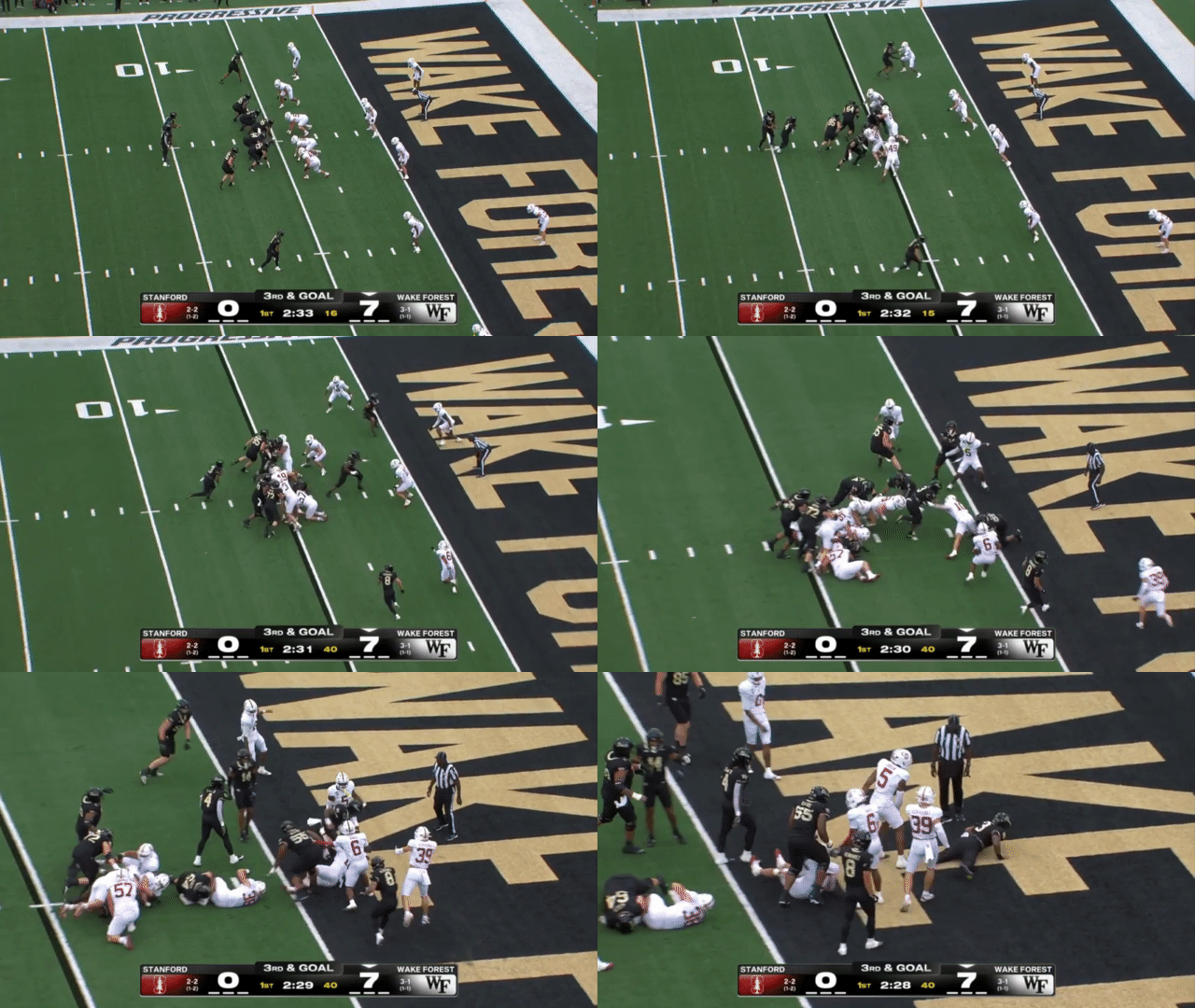
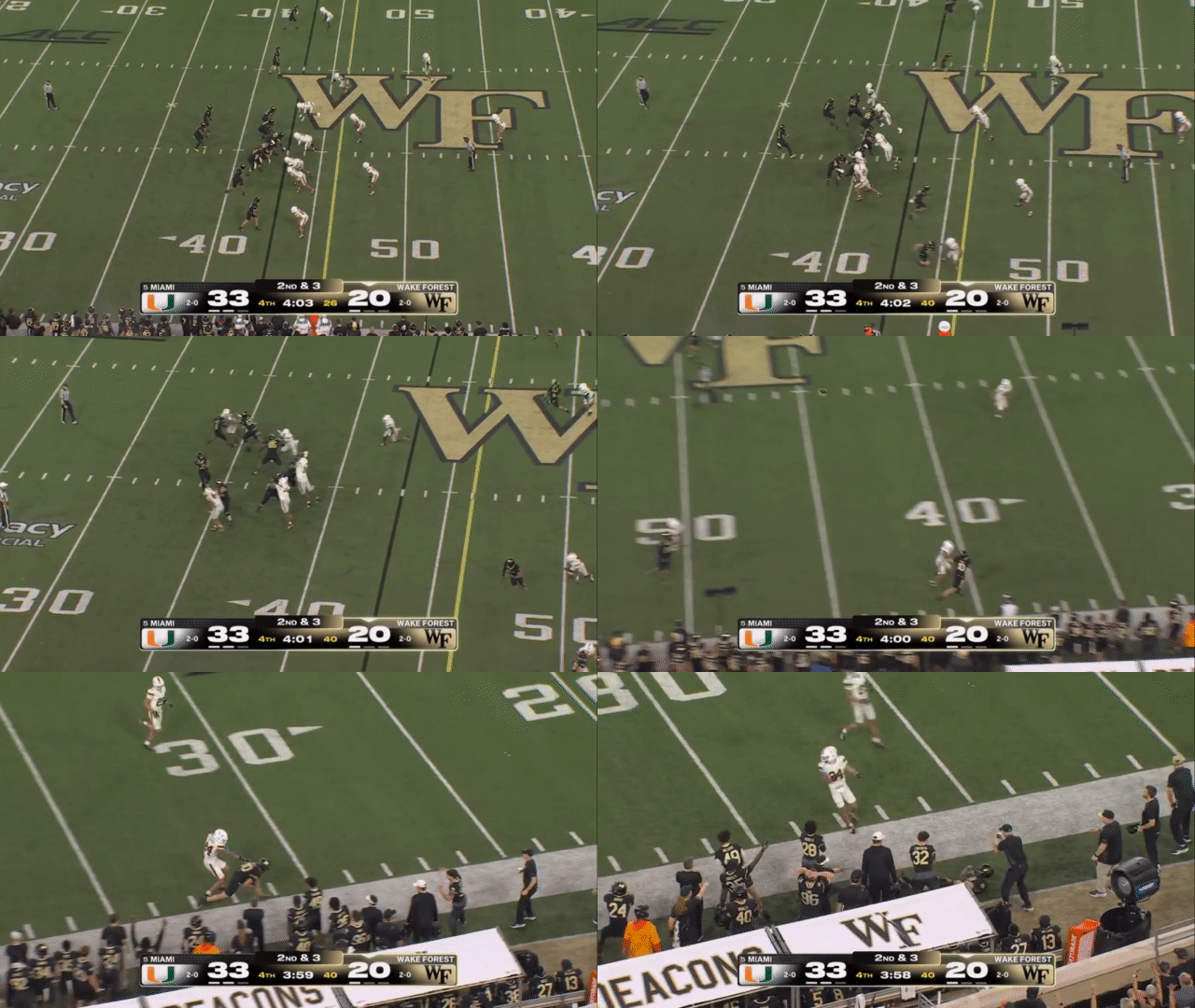
With the game on the line, Wake Forest will still rely on Lopez to run the ball:
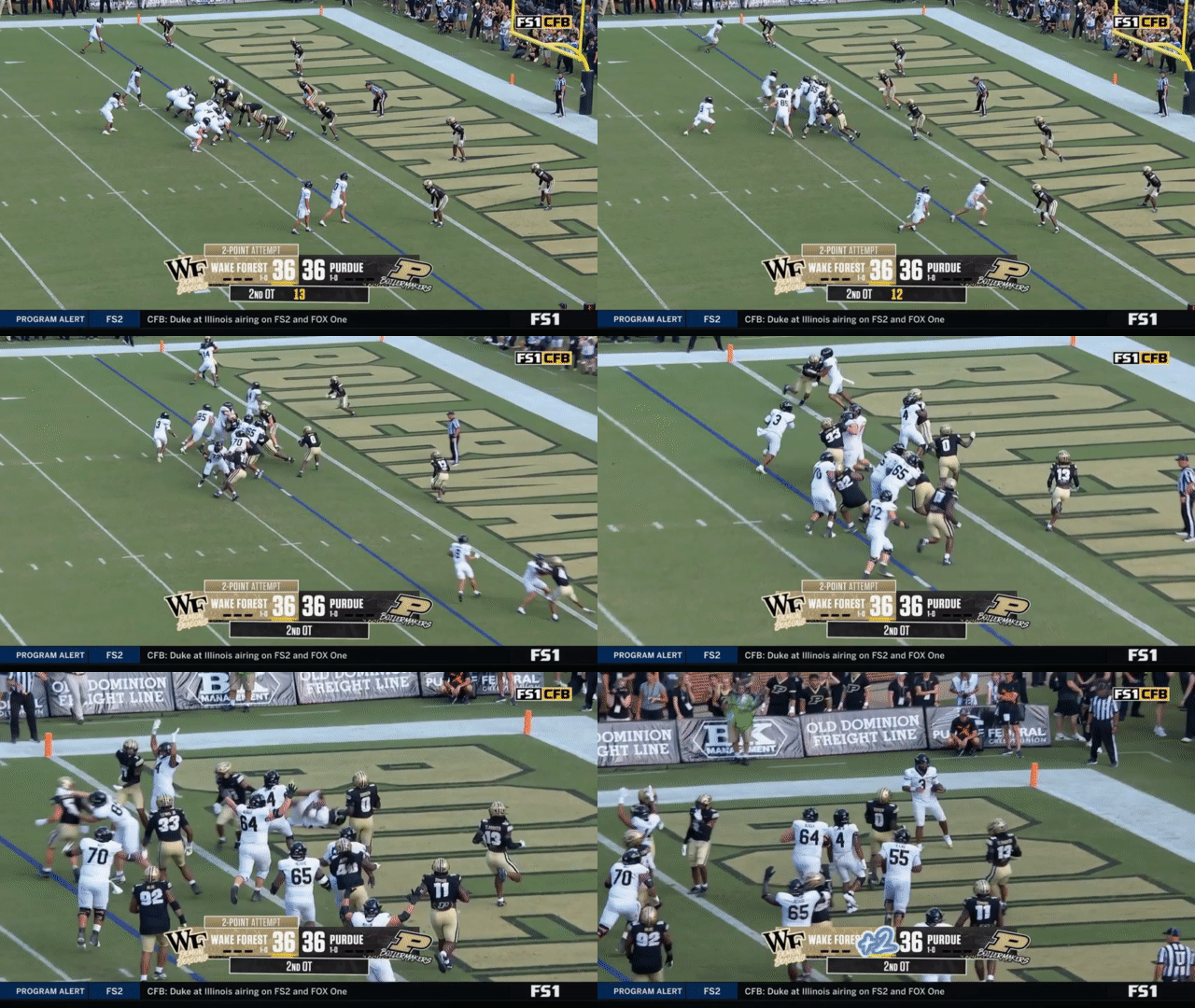
Here is yet another designed run, except this one features the backup QB Steele Pizzella lined up as the outside receiver on the bottom of the screen for some misdirection:
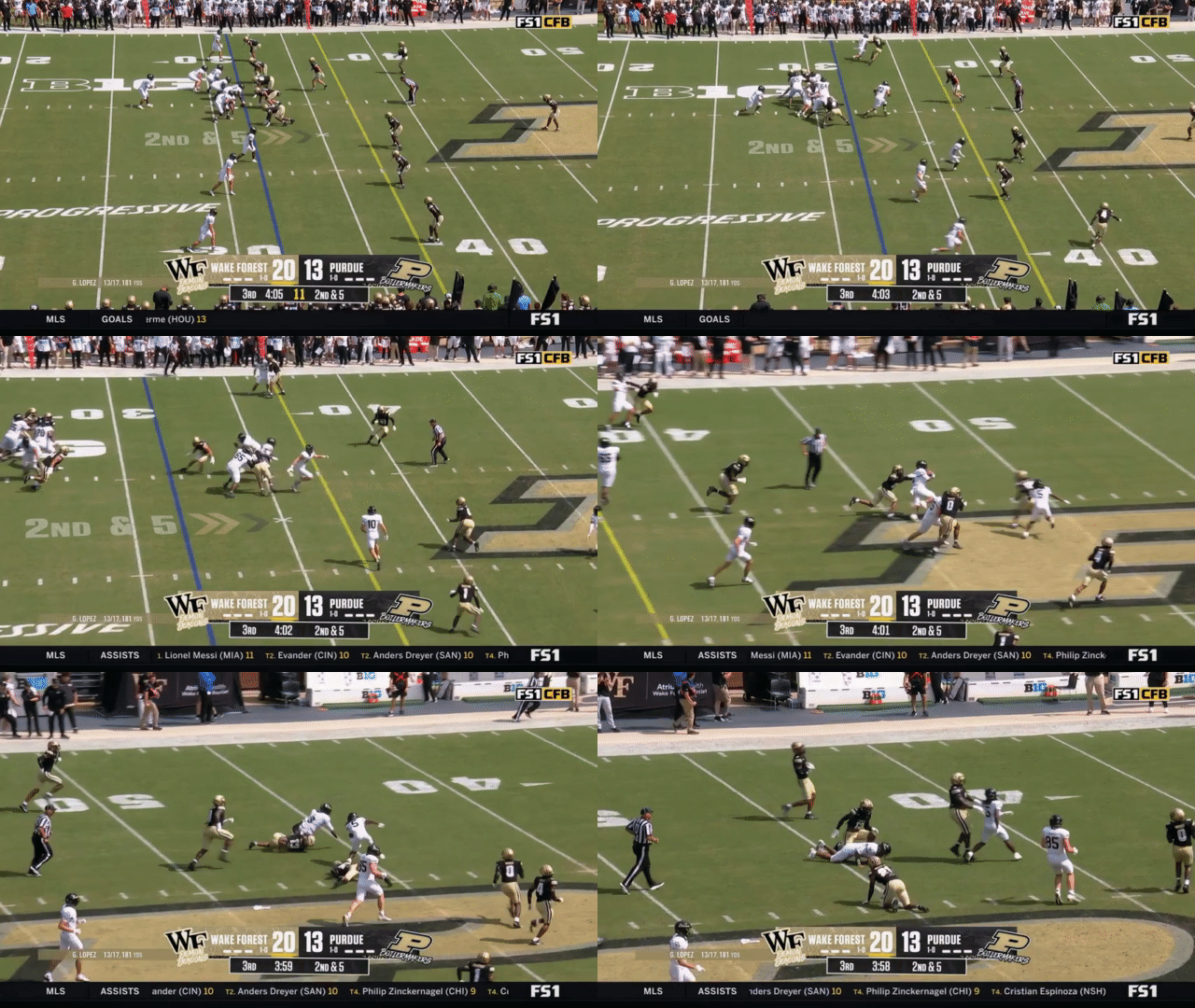
Look for Lopez to frequently run the ball on 3rd downs, even in 3rd and medium situations:
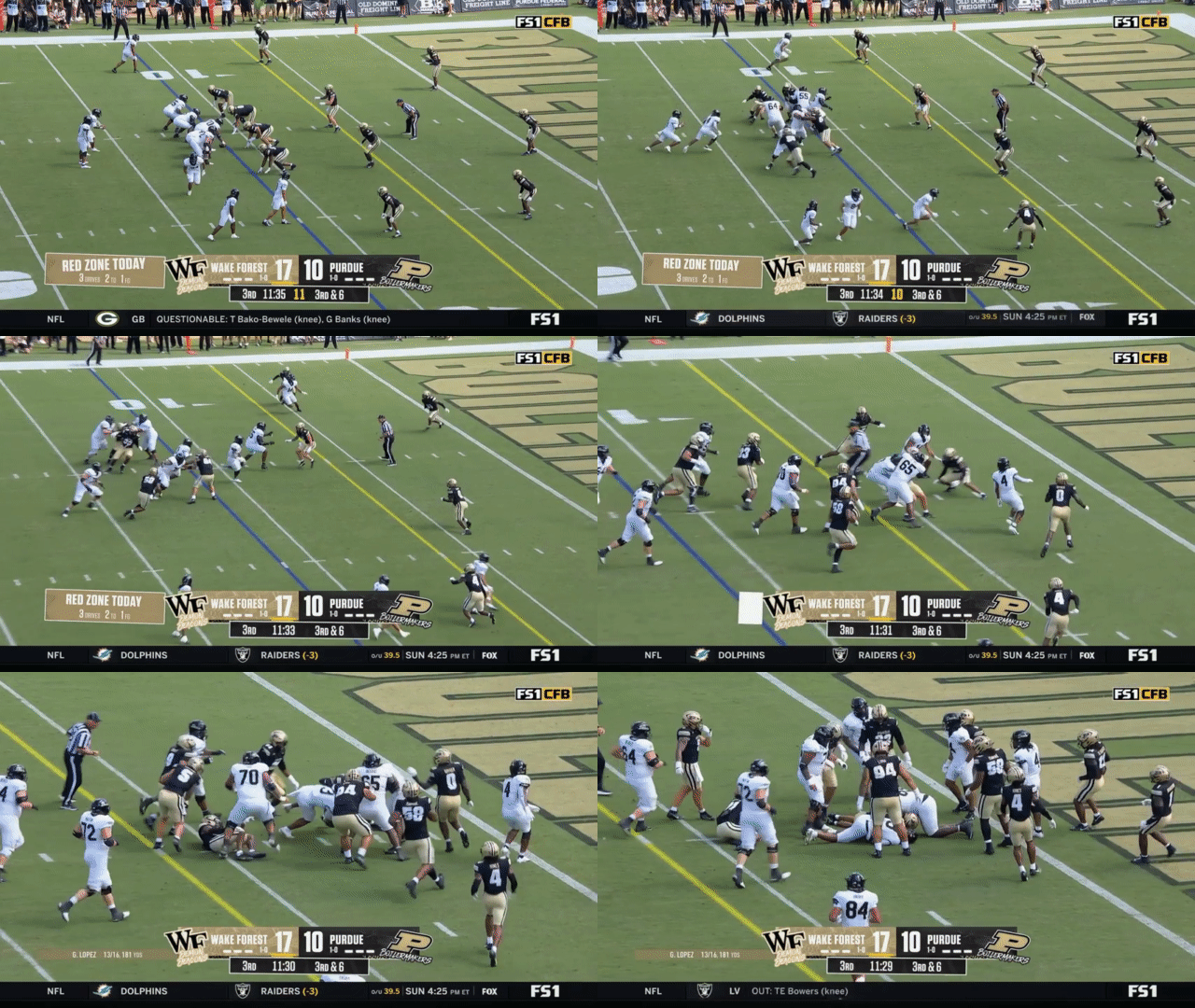
Although Lopez has some talented deep threat receivers, his accuracy on the deep balls is hit or miss:
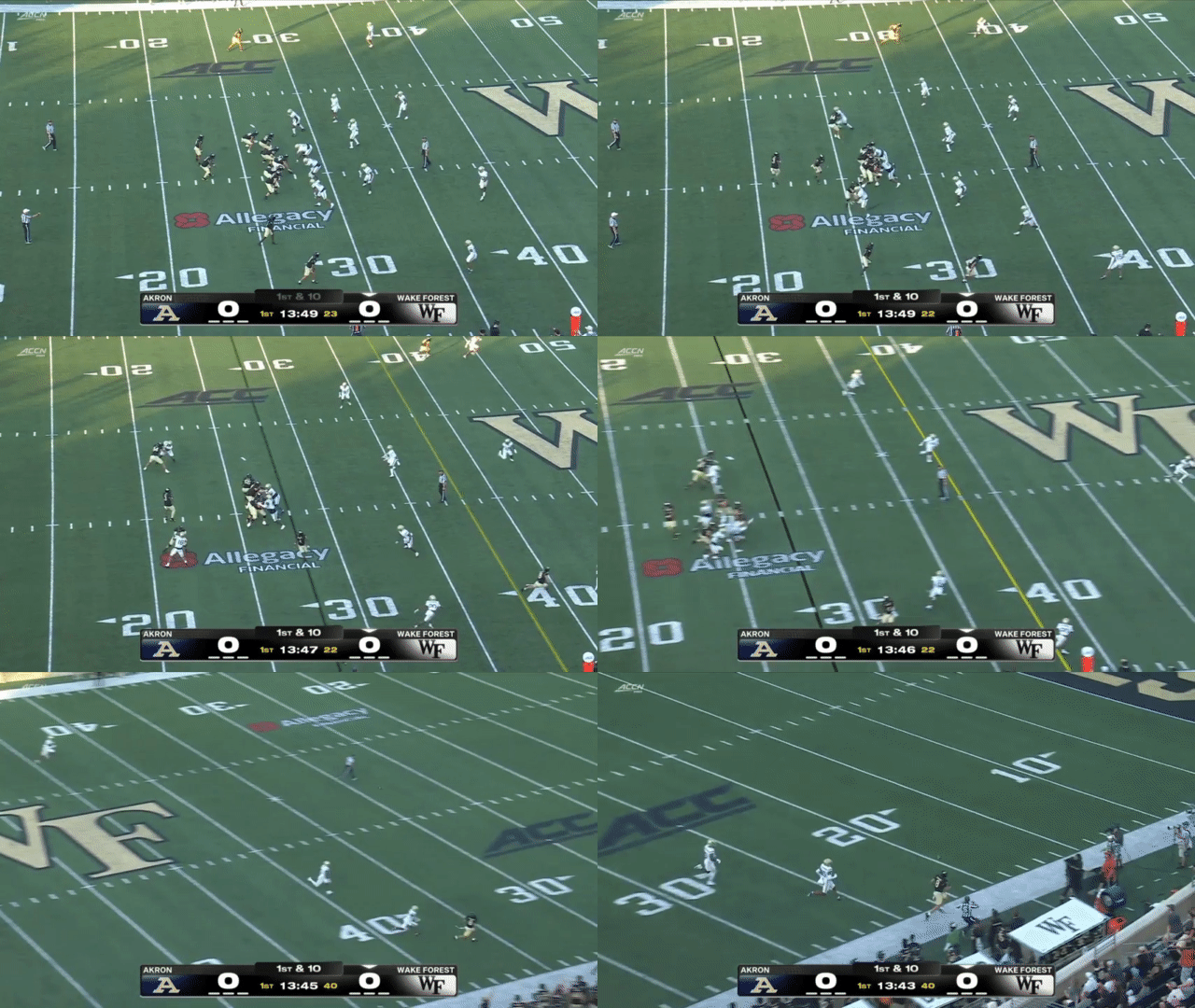
Here Lopez doesn’t move the pocket, instead planting in the pocket and throwing with all arm, misfiring in the process:
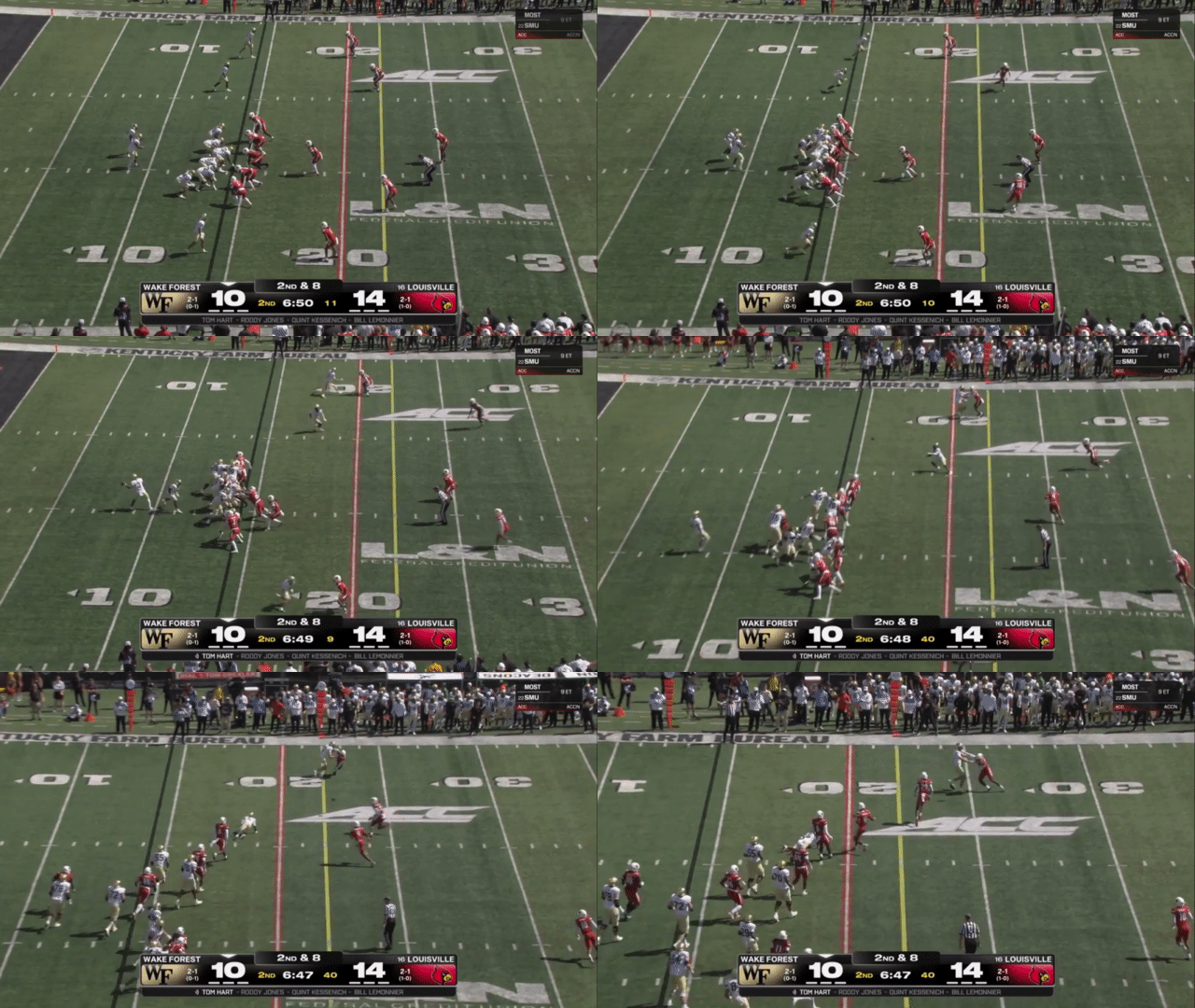
Here Lopez throws his receiver into trouble:
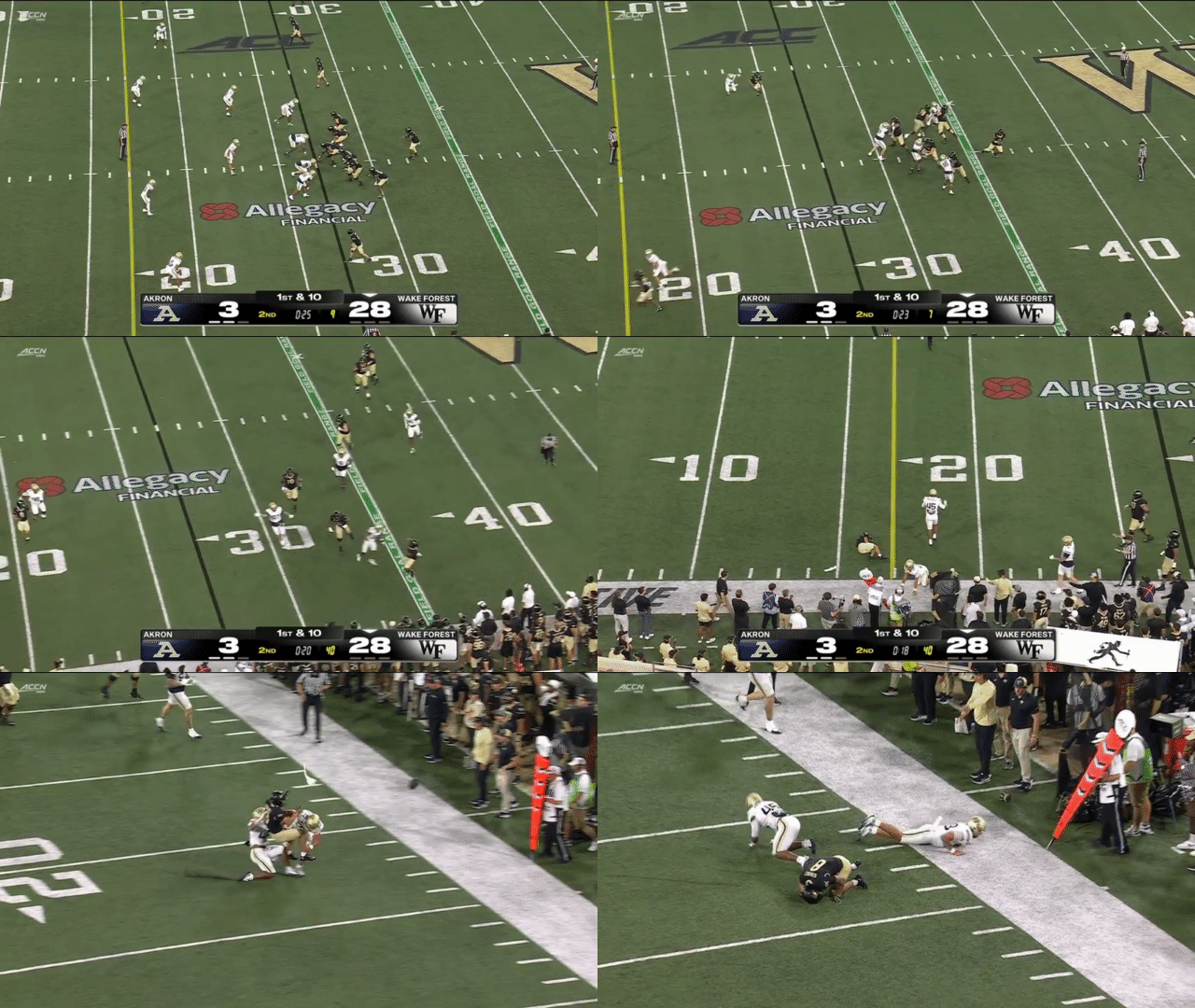
Like I mentioned in last year’s article, I think Lopez still has a tendency to force throws:
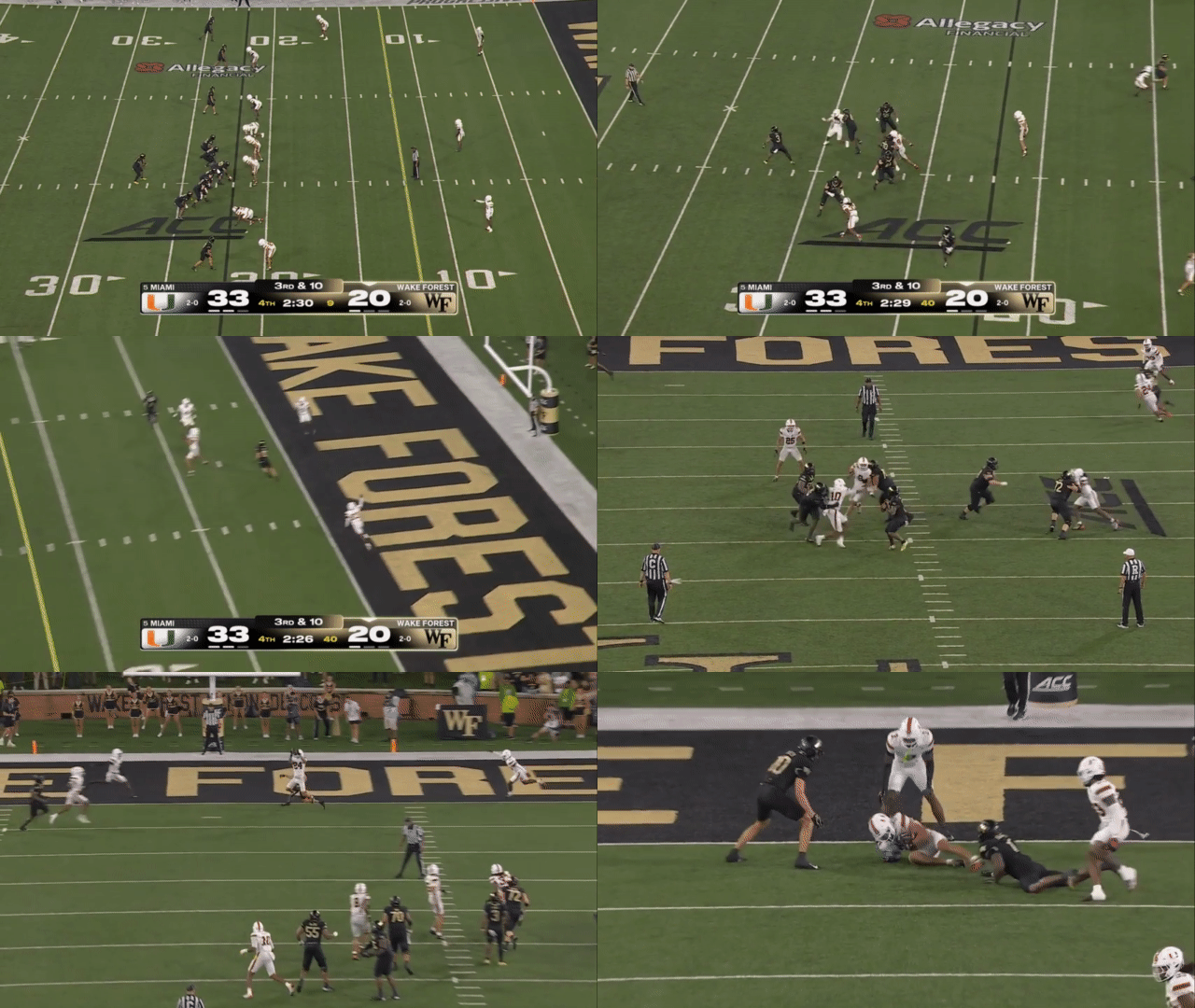
On the following throw, I am not sure if this is a miscommunication or inaccuracy, but it looks like Lopez isn’t on the same page as his receiver on this route:
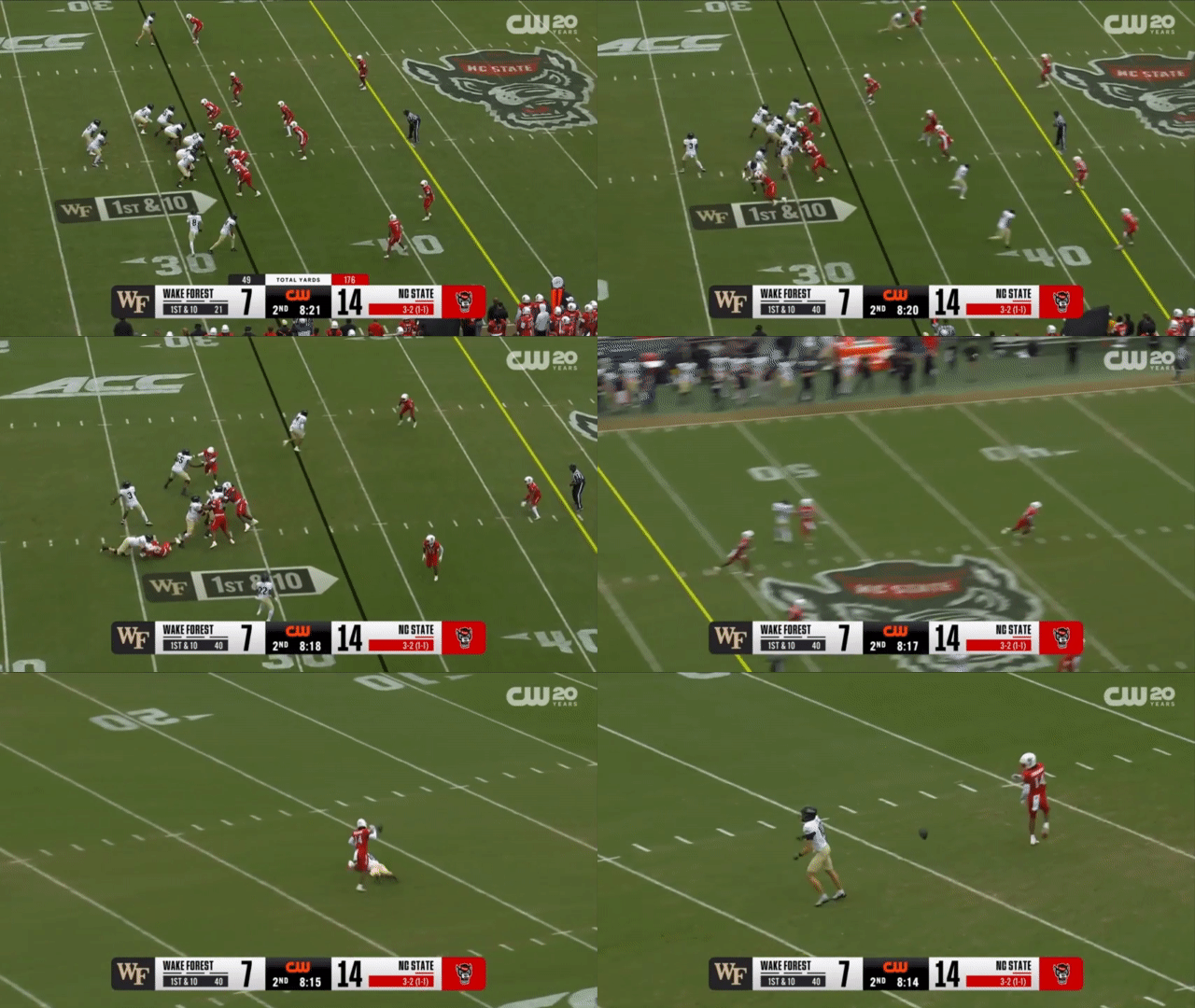
Some of Lopez’s pocket throws are suspect. Here he has a clean pocket and his receiver is wide open, but he just sails the throw here:
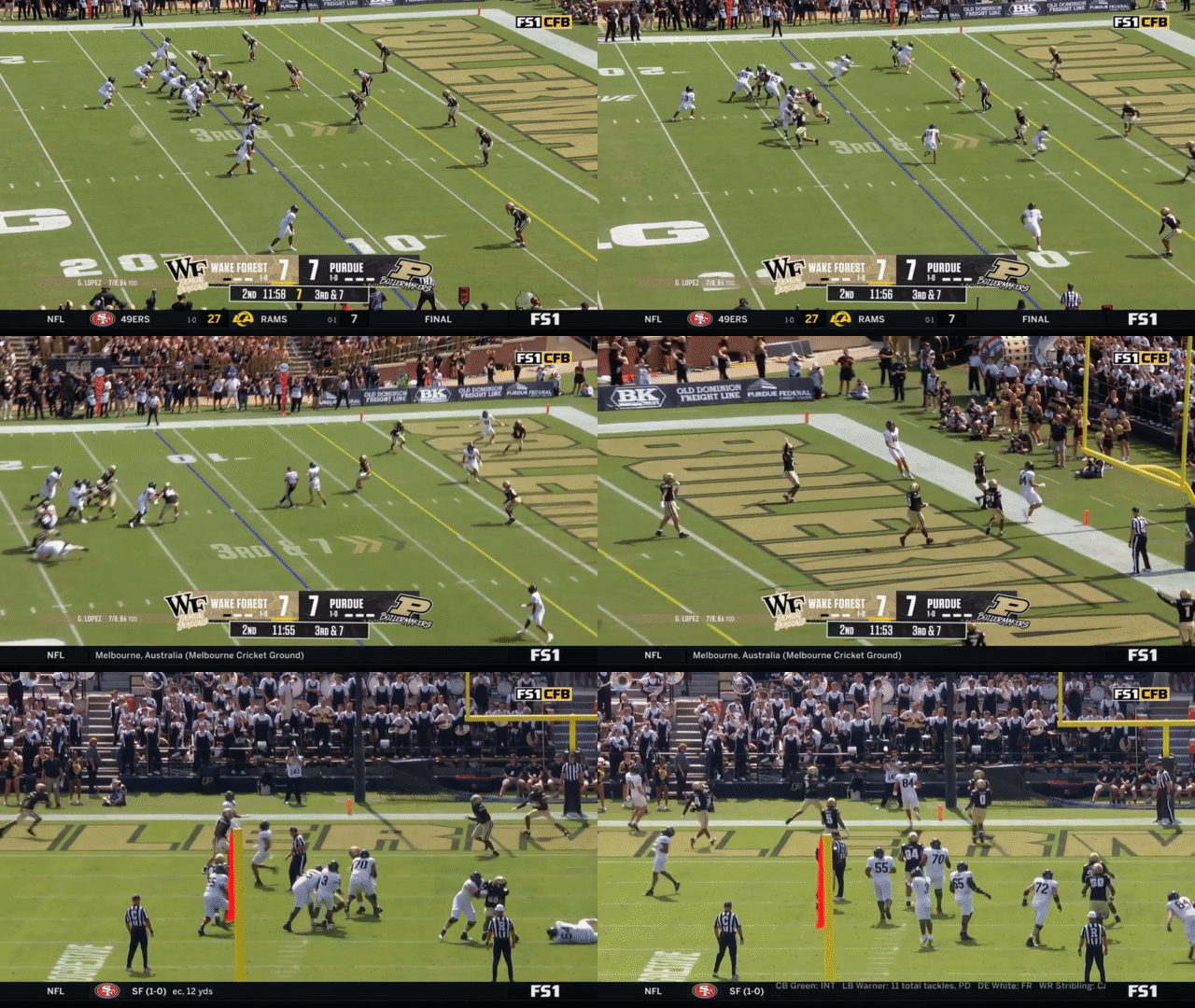
It’s obviously easier said than done (particularly after the UCLA game), but it seems like the key to limiting Lopez is keeping him in the pocket and taking away his deep threats, forcing him to consistently beat the defense underneath. Lopez will look for the big explosive plays and often run the ball when they’re not there, and he’s quite successful at it. If he’s not able to do either of those things, he’ll look more like he did at North Carolina.
The backup quarterback, redshirt freshman Steele Pizzella, is another QB with some wheels. Pizzella was actually a track star, posting a 10.64 personal best in the 100m. I’m mentioning him here despite the starter being healthy because I have a feeling WF might find some ways for him to be involved. Although he is more likely to be trusted to run the ball, he showed that he can sling it too:
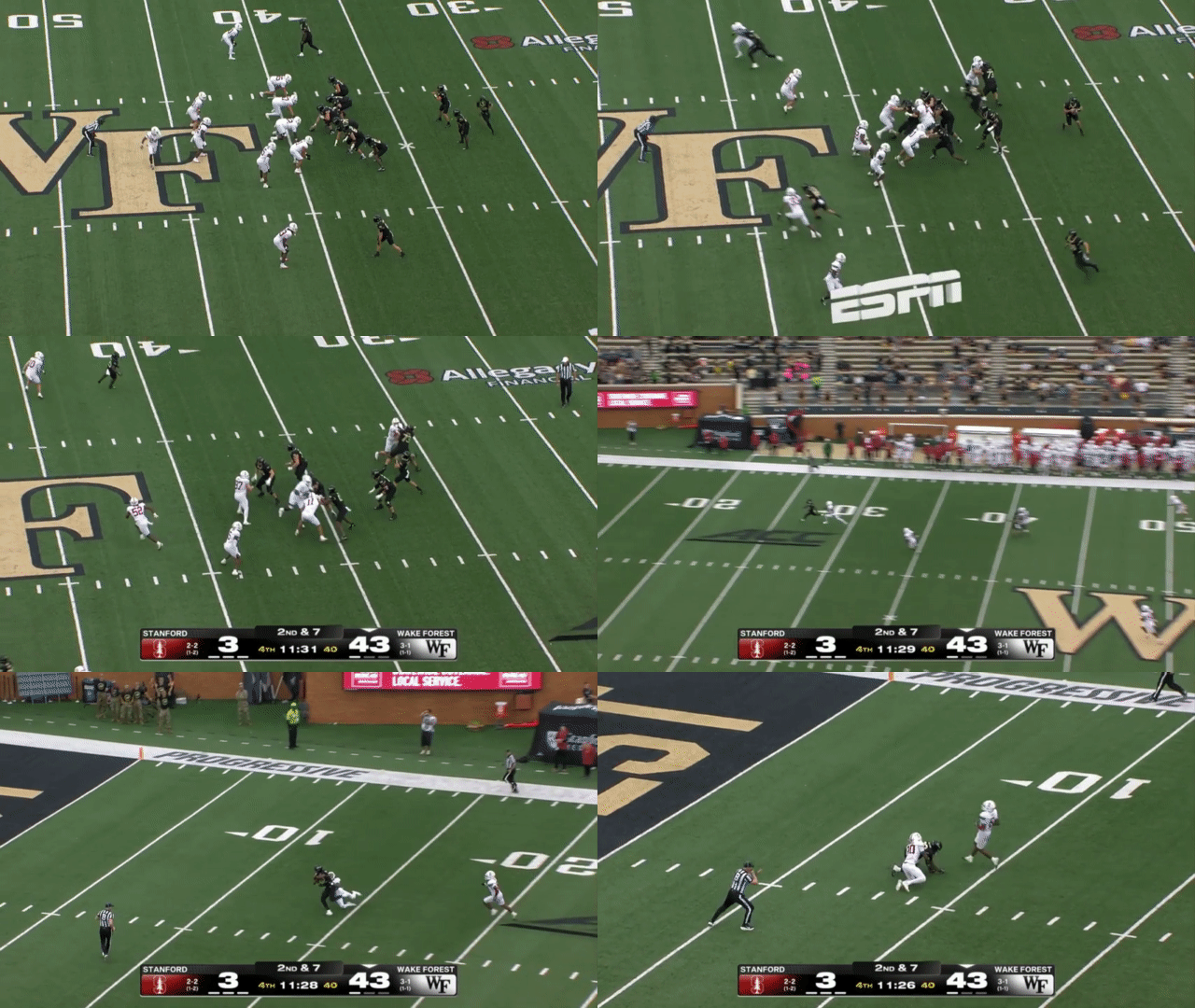
And here is Pizzella running one of Lopez’s classic plays:
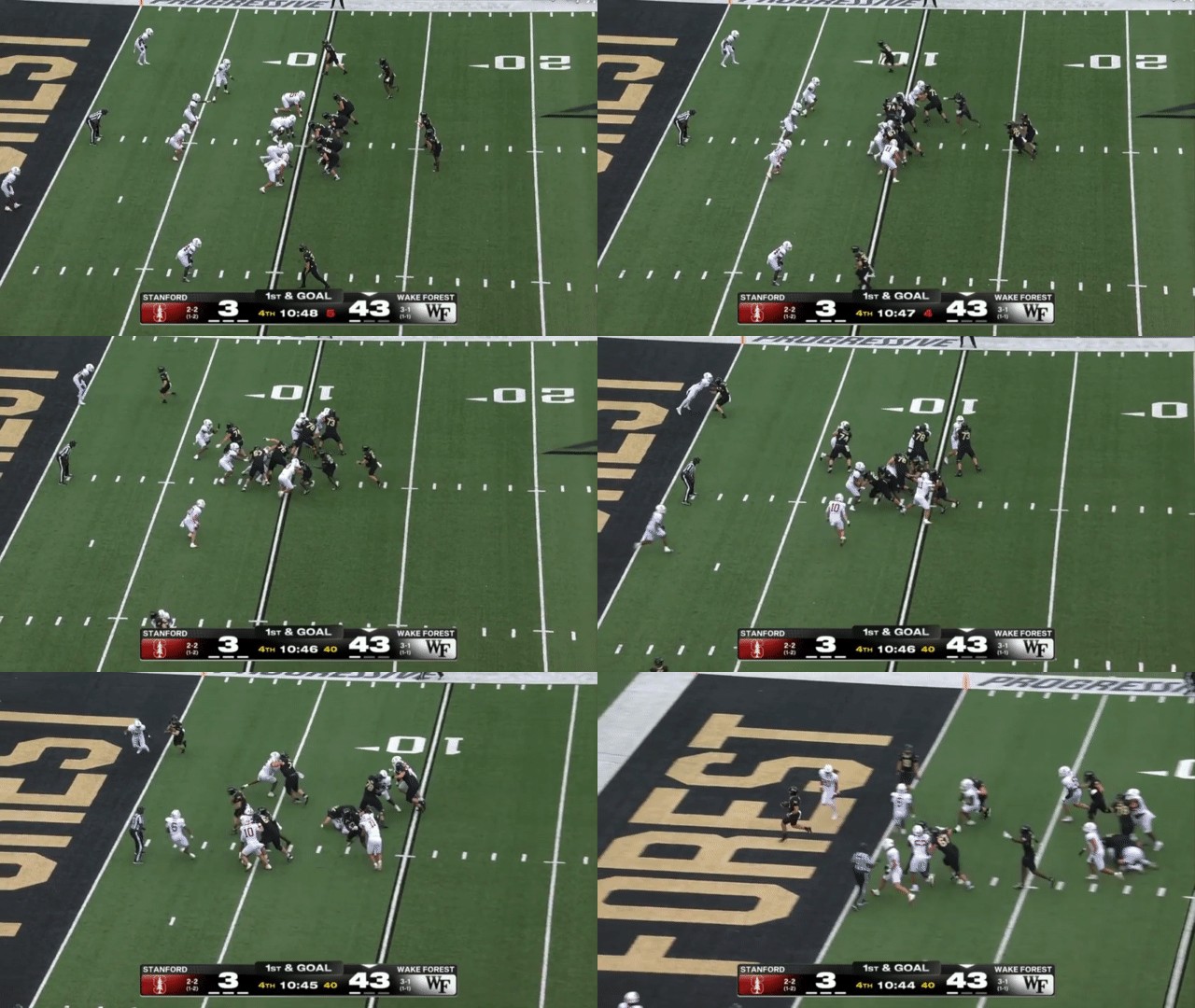
Shutting down the QB run game will be of major importance on Saturday.
Running back
One of the reasons that stopping the QB run game is difficult is because of all the misdirection with running backs and receivers in motion, and all of them may viably run the ball. QB Gio Lopez runs the ball as much as any running back (well, slightly less than RB Ty Clark III who has 62 carries, but more than RB Deuce Lawrence who has 55 carries). While I would normally think that the QB running the ball is something an offense might do to keep a defense honest, here I feel it is the other way around; the running backs run the ball to keep the defense honest. It’s the running backs running it that feels like the change of pace (or because it’s an early down, etc). Maybe I am just talking complete nonsense here (which is often the case when you write articles into the early hours of the morning) and I am overemphasizing the danger of the QB run game, because Wake Forest’s running backs have been relatively pedestrian by comparison. Wake Forest lost last year’s star running back, Demond Claiborne, to the NFL, and it’s difficult to replace his production. The only returning rushers from last year’s team are junior RB Ty Clark III and redshirt freshman RB Jamar Searcy (who had all of 5 carries last season).
Although Ty Clark III doesn’t have quite the breakaway speed as Claiborne did, he can still turn in some big runs:
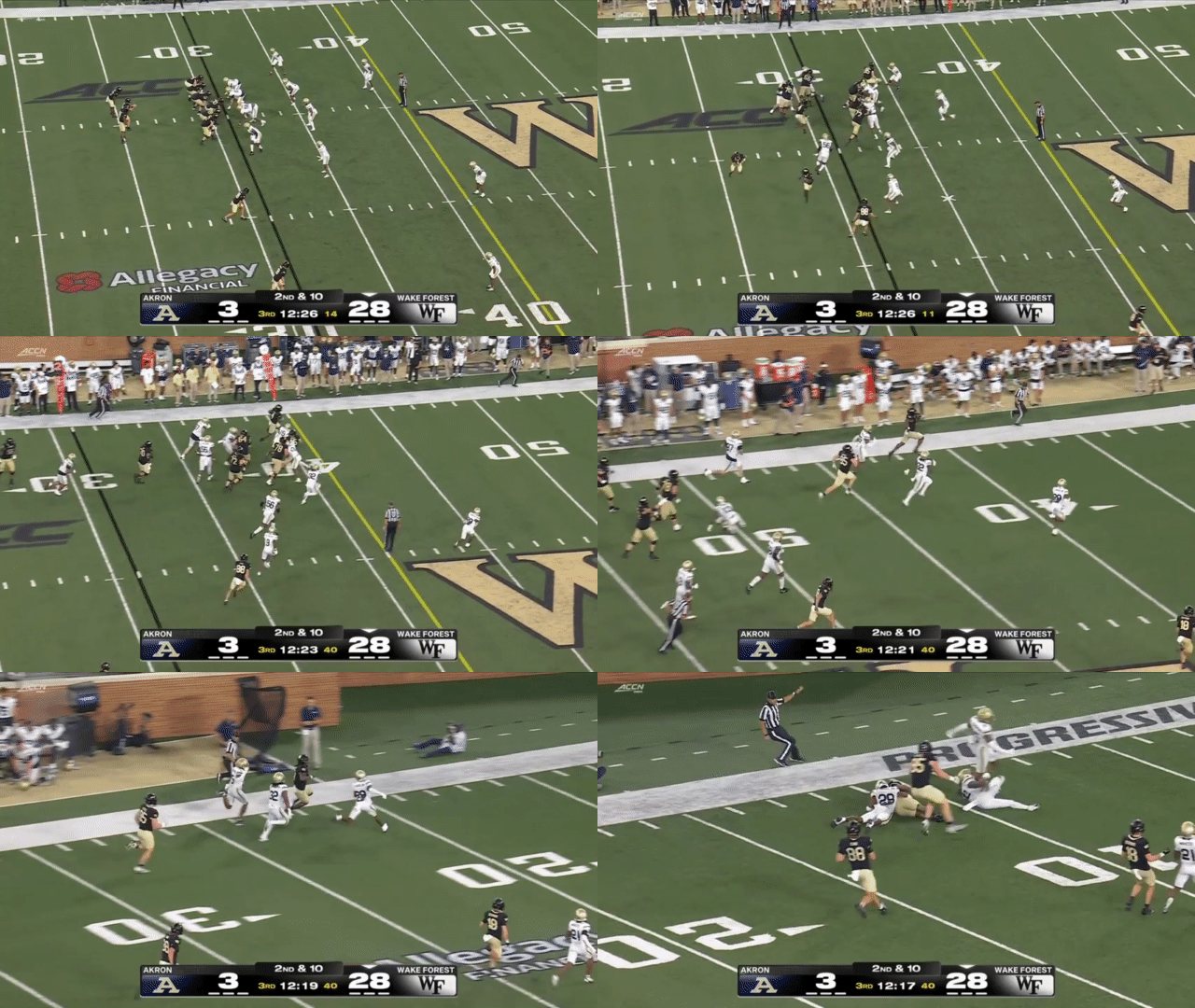
Clark III is patient with his runs, and will look to spin off tackles in open space:
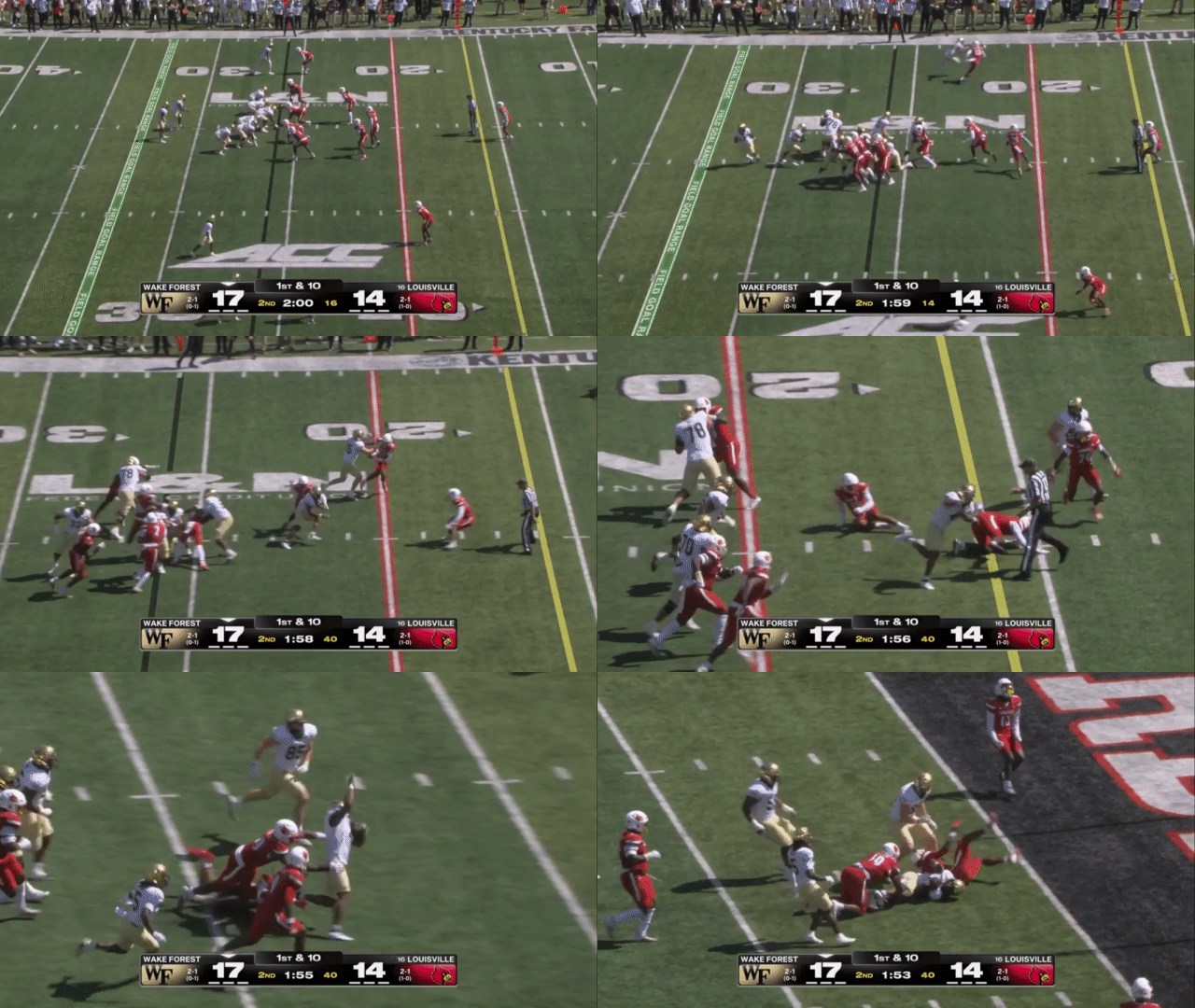
But Clark III can also run through tacklers in short yardage situations:
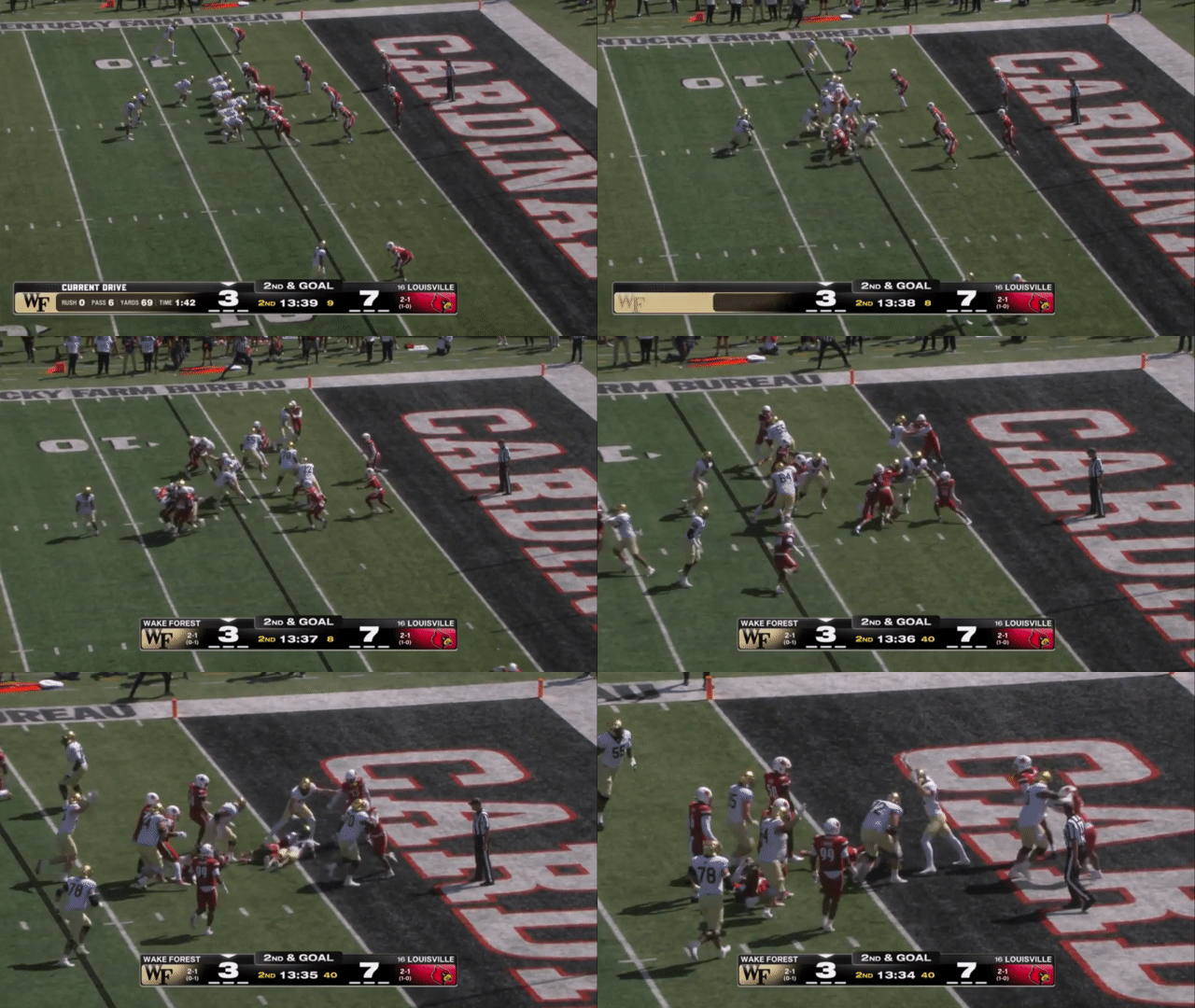
Clark III also shows good balance on contact:
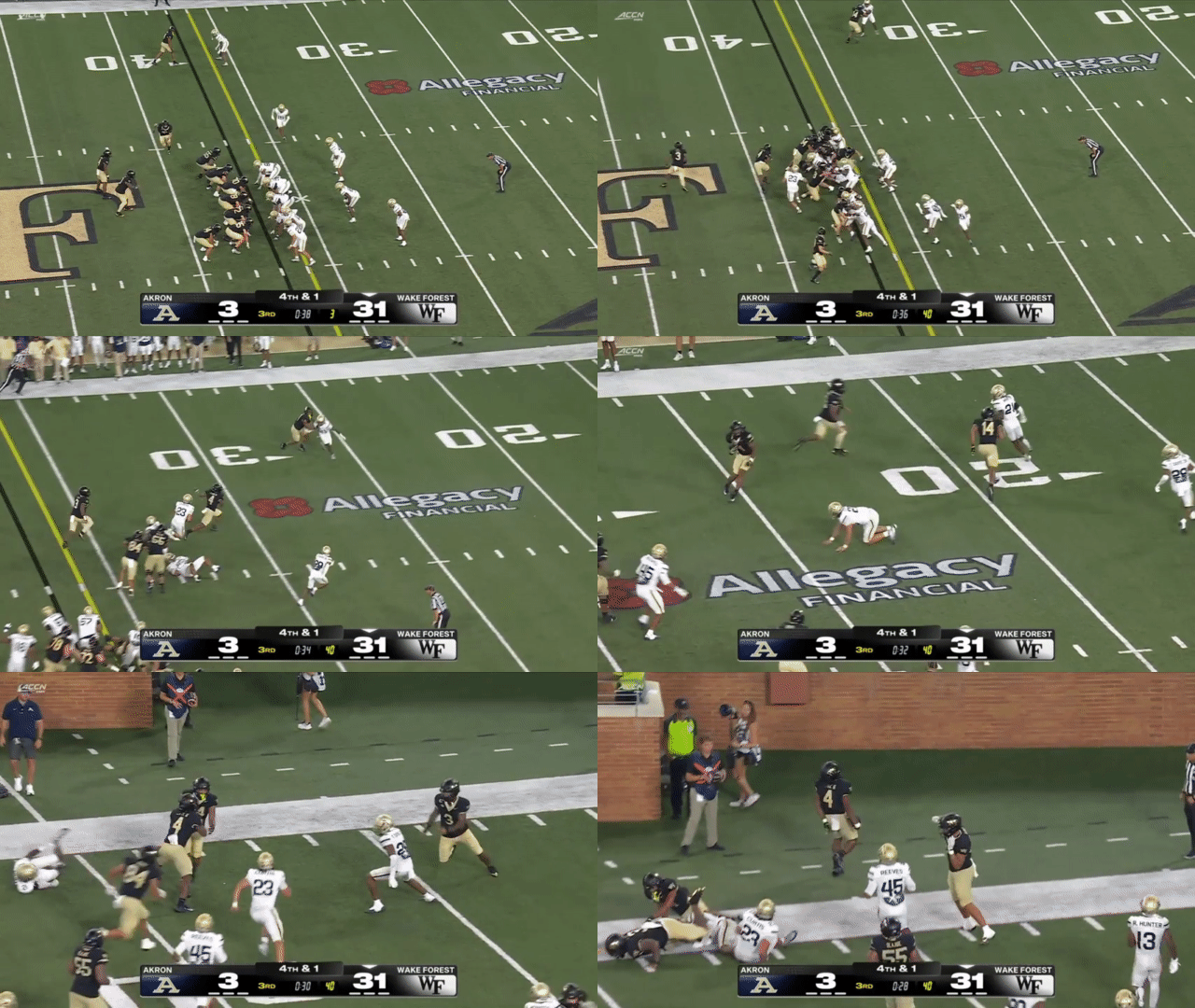
Behind Clark III at RB2 is the true freshman Deuce Lawrence, a 5’7” 195 lbs speedy back:
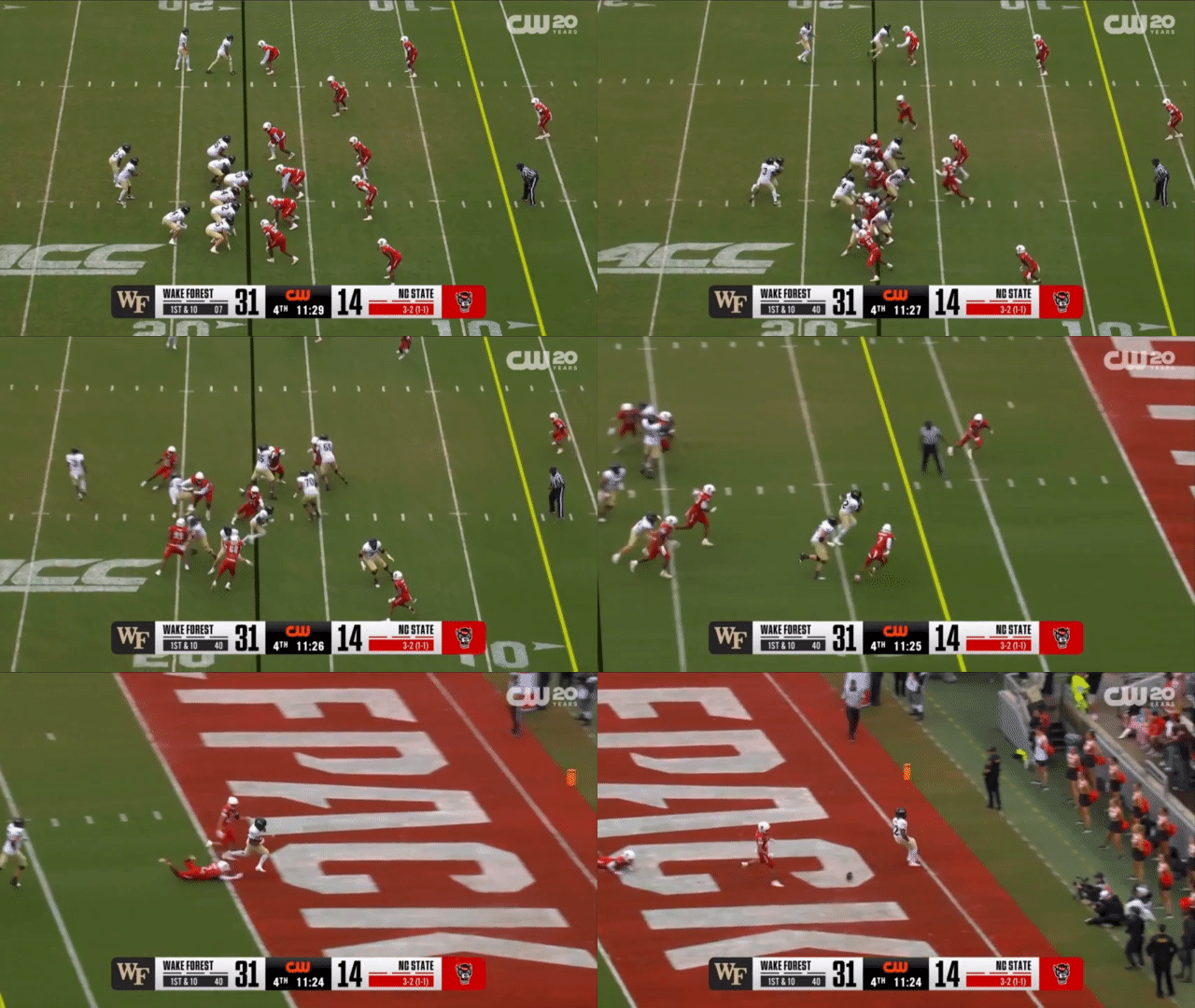
Lawrence can be difficult to find out of the backfield, and runs with a low pad level:
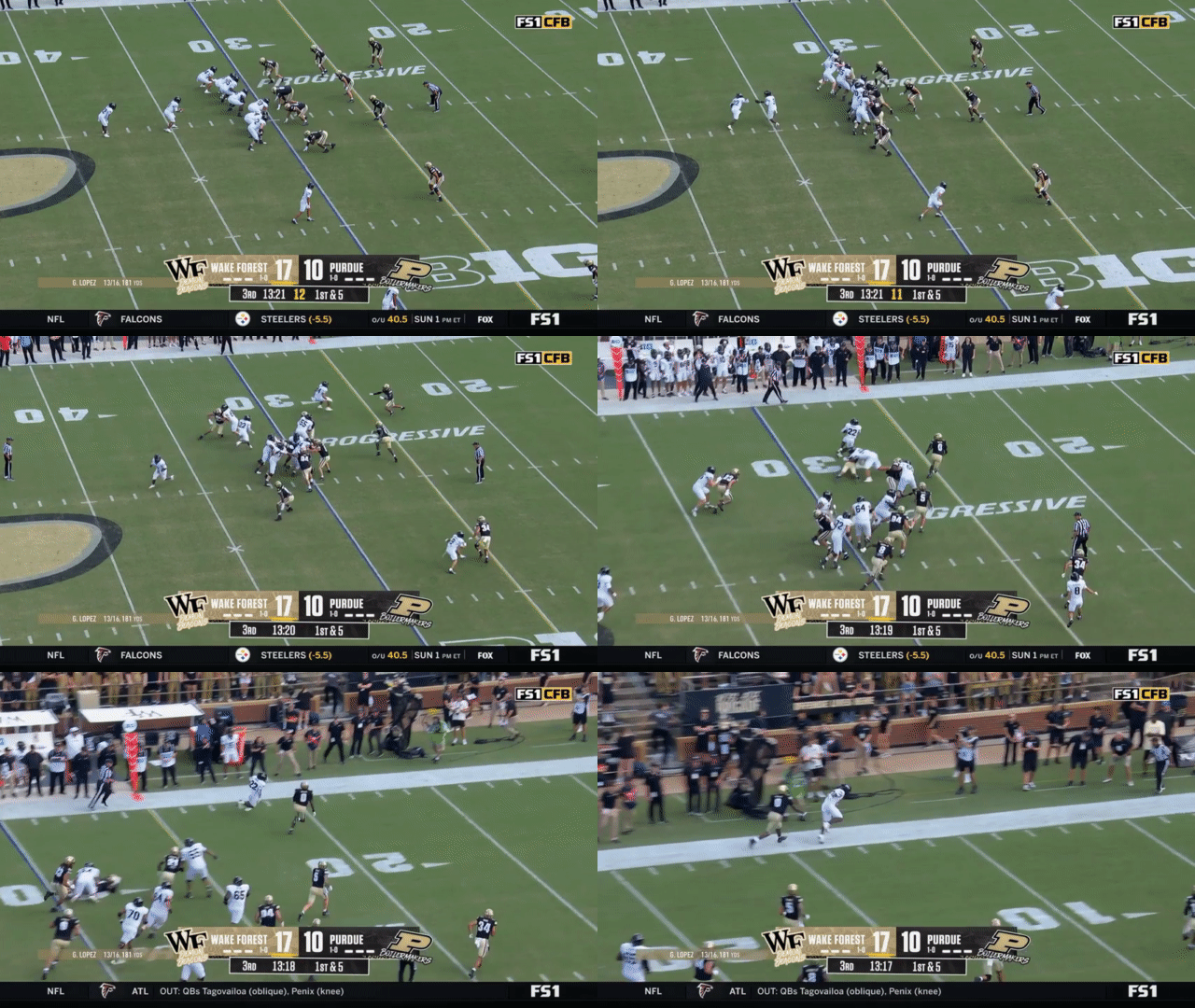
Lawrence is also elusive out of the backfield, and like Clark III, can keep his balance on contact:
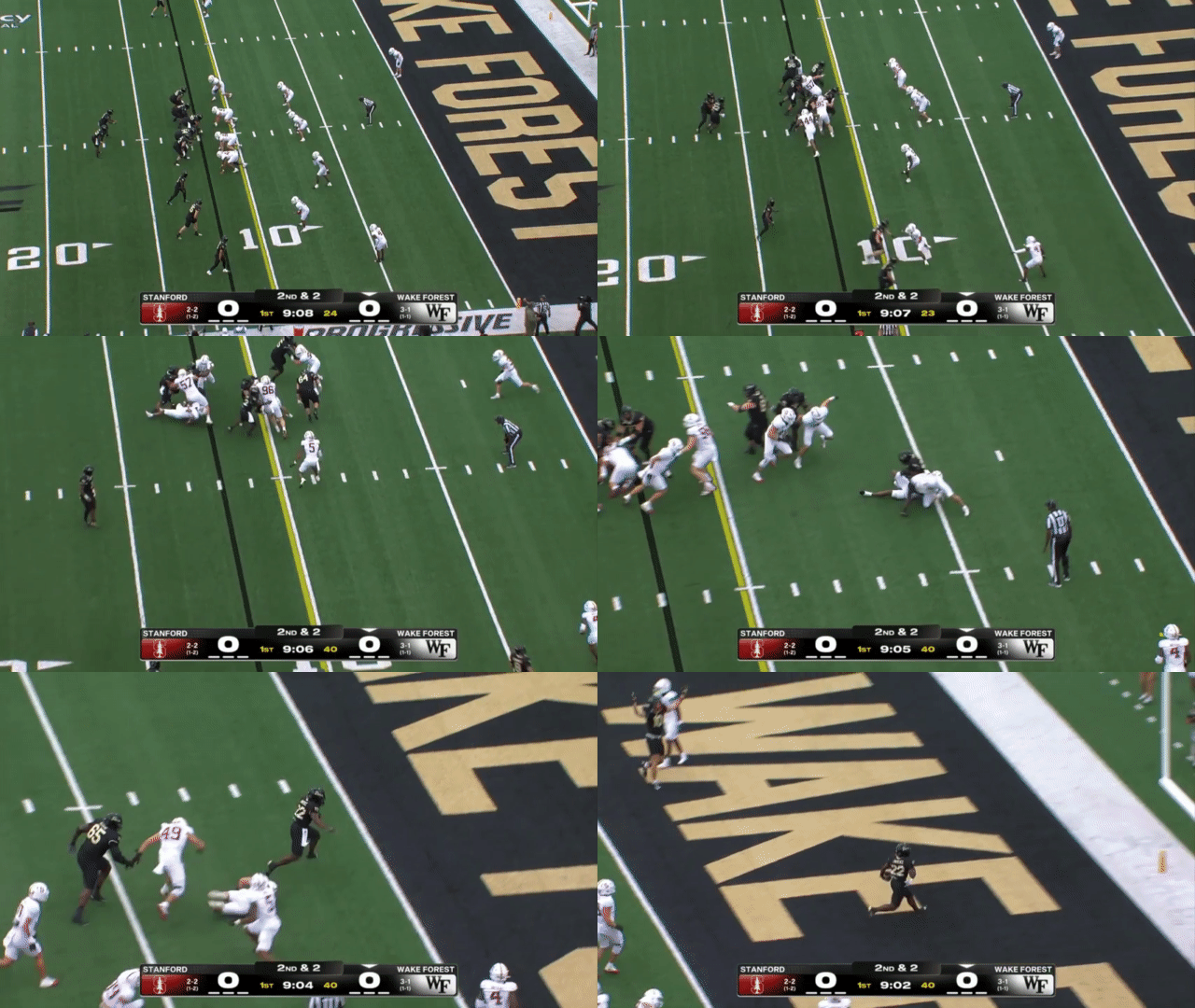
Here Lawrence again keeps his feet:
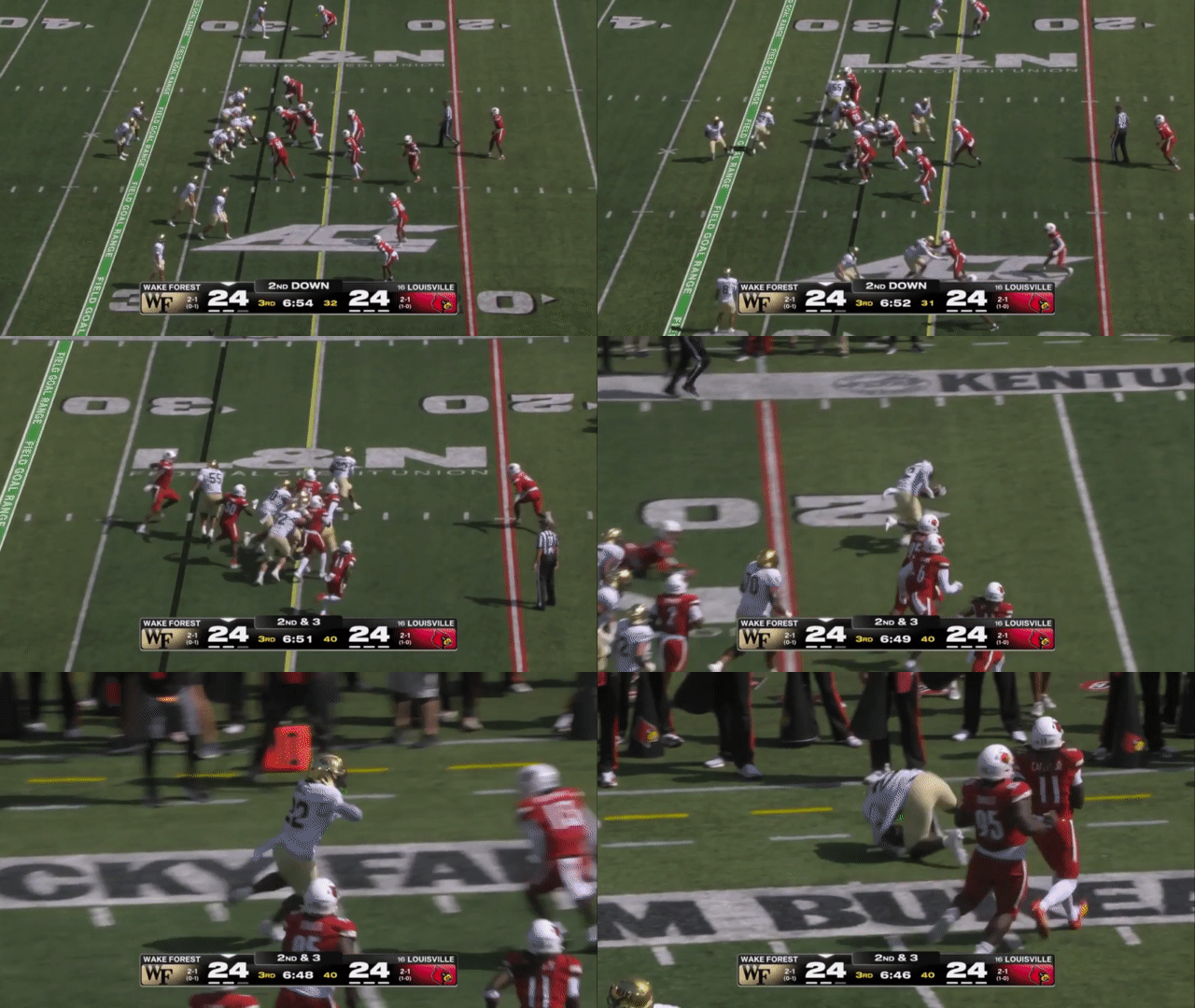
RB Jamar Searcy, like Lawrence, is another smaller back with burst and elusiveness:
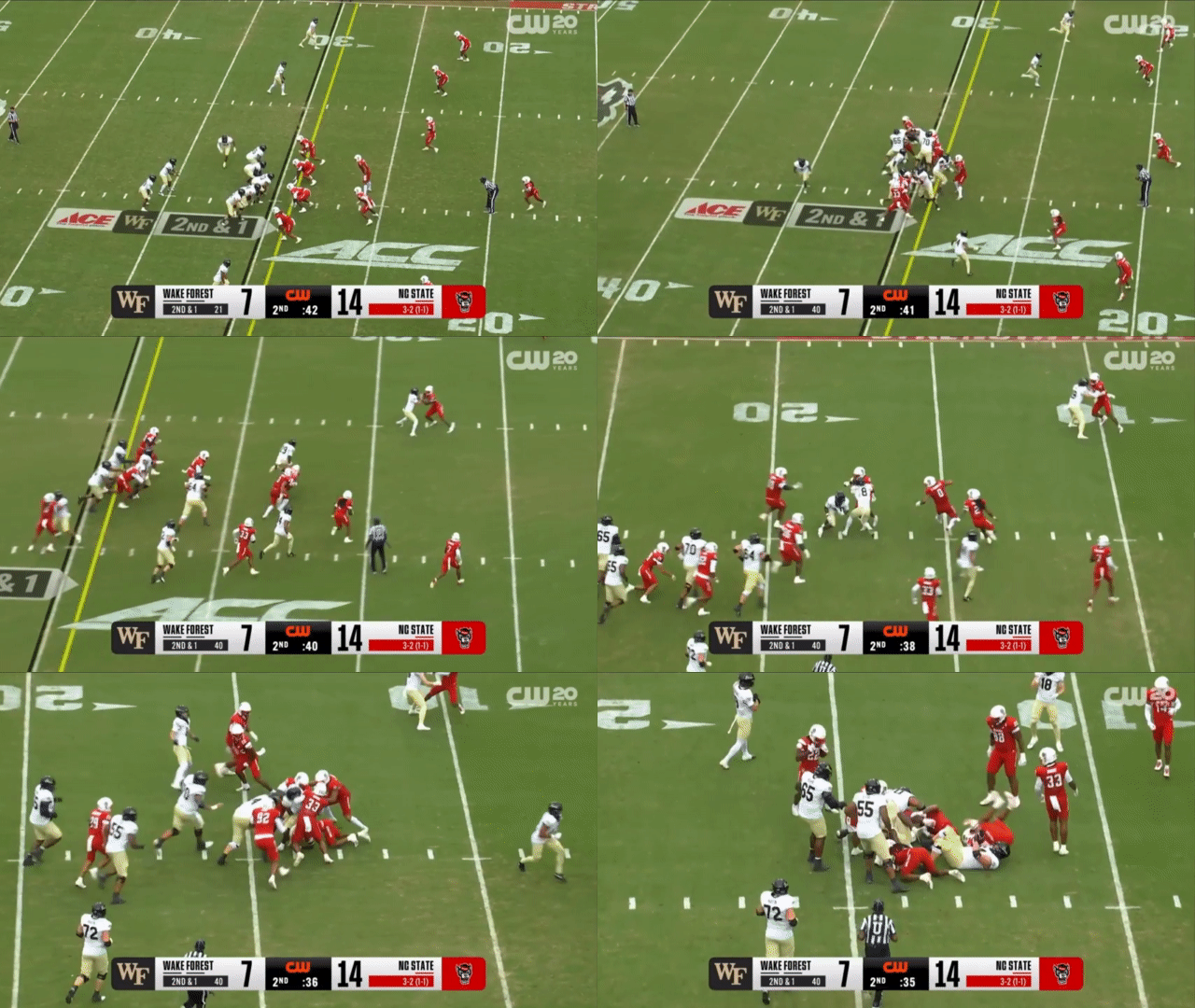
Also in the backfield is Florida transfer KD Daniels, a former 4-star recruit, who is a bigger back (like Clark), but he only has 6 carries for 14 yards so far this season (so I have no highlights to show, other than perhaps that time he headbutted a Miami player after a late hit on QB Gio Lopez). North Dakota transfer Sawyer Seidl was another transfer expected to make waves, and he’s another smaller speedier back a la Lawrence/Searcy.
Receivers
The real star of the offense here is the wide receiver, Carlos Hernandez. Hernandez is currently 3rd in the FBS in receiving yards, behind only Oregon State’s Jesse Legree and Ohio State’s Jeremiah Smith. Hernandez is a big play machine, and Wake Forest will put him all over the field, put him in motion, and do everything they can to get him space to work with. The passing offense revolves around Carlos Hernandez, and he has almost 3 times as many catches as the next leading receiver.
Hernandez’s primary strength is that he’s a YAC (yards after catch) monster, and routinely turns regular plays into explosive ones:
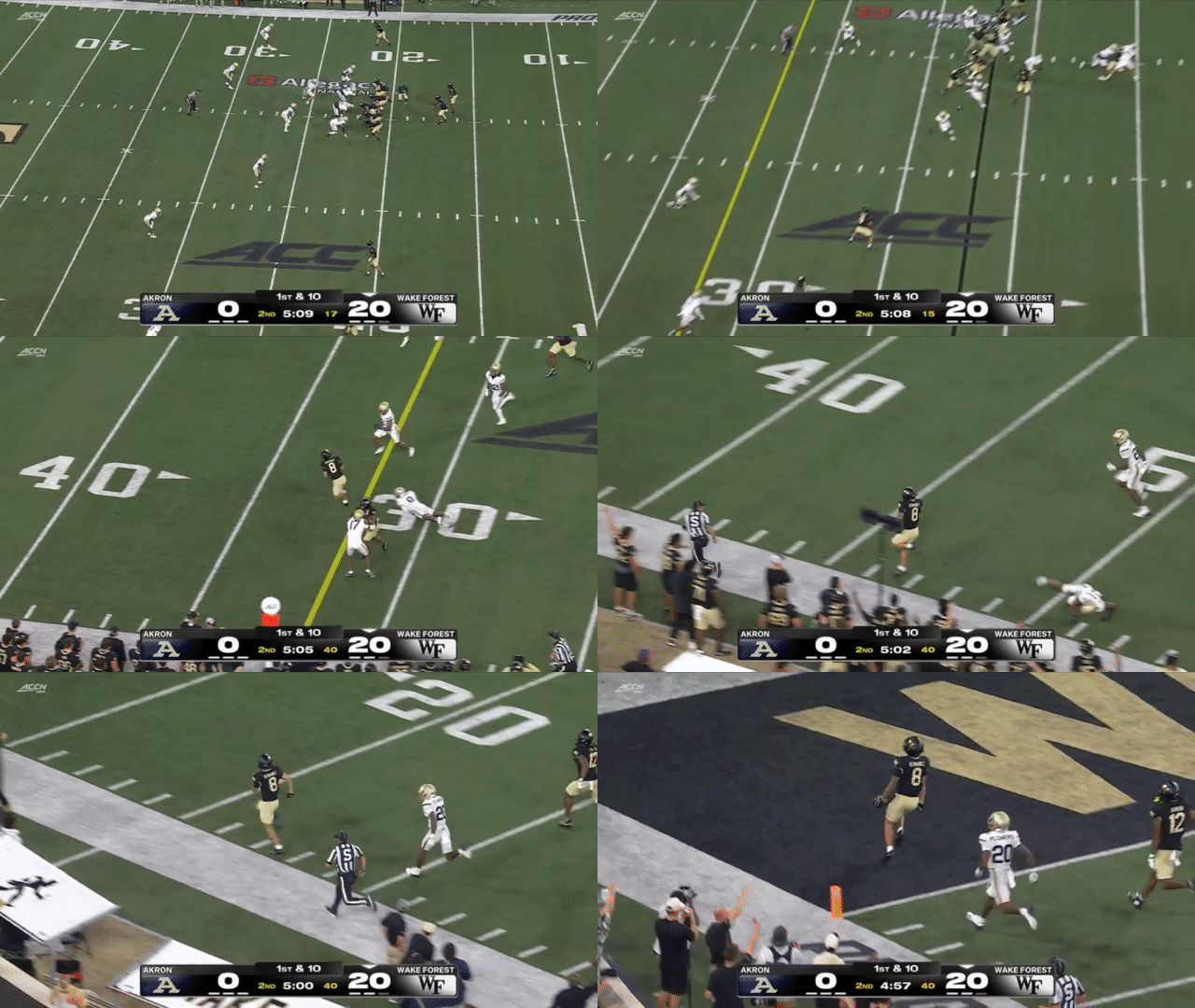
Don’t let his ability to turn short throws into big gains fool you though, he can also turn deep throws into big gains as well, and he’s Lopez’s #1 deep threat receiver:
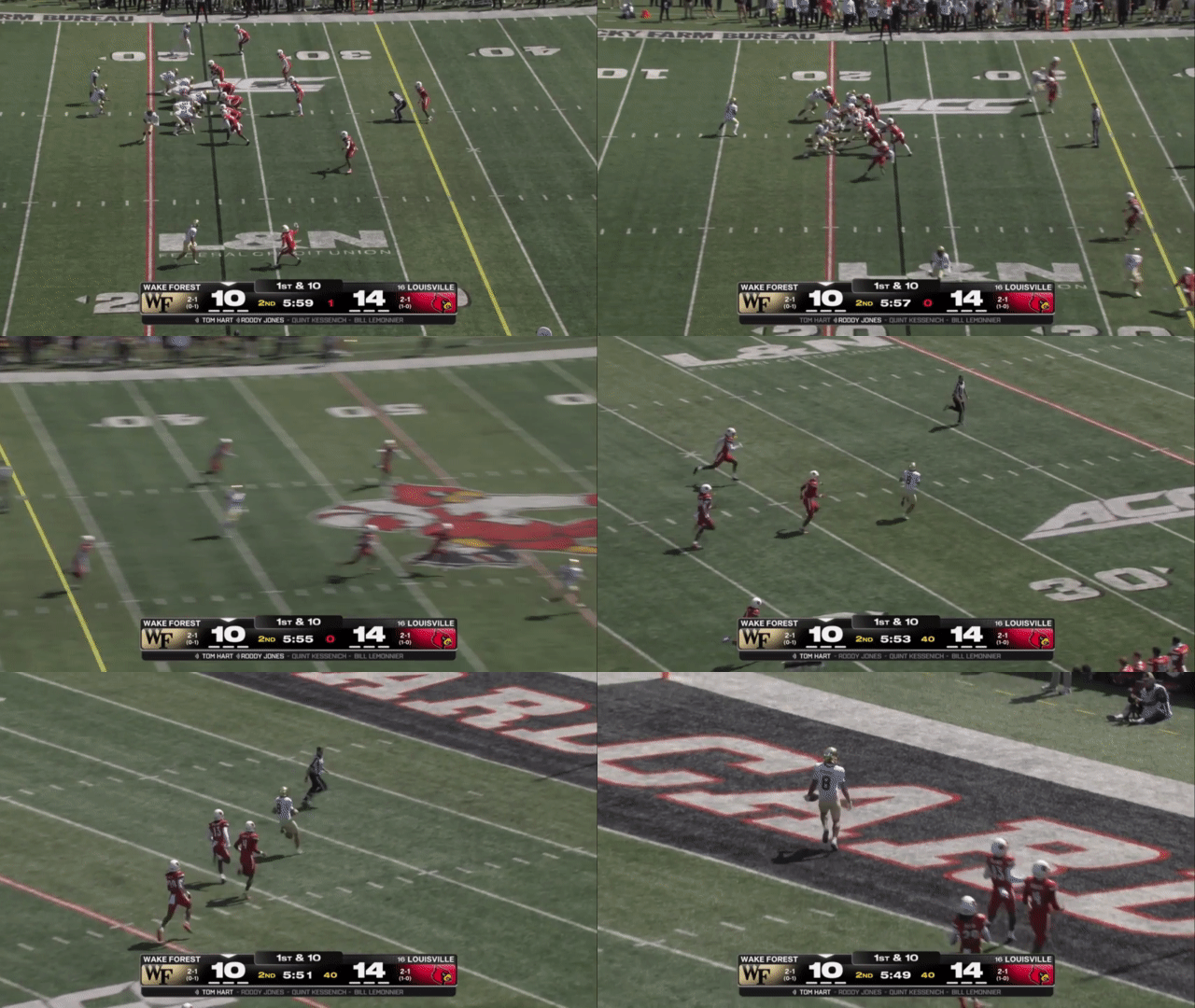
Hernandez does a great job creating a ton of separation to often get wide open, and he is elusive in open space:
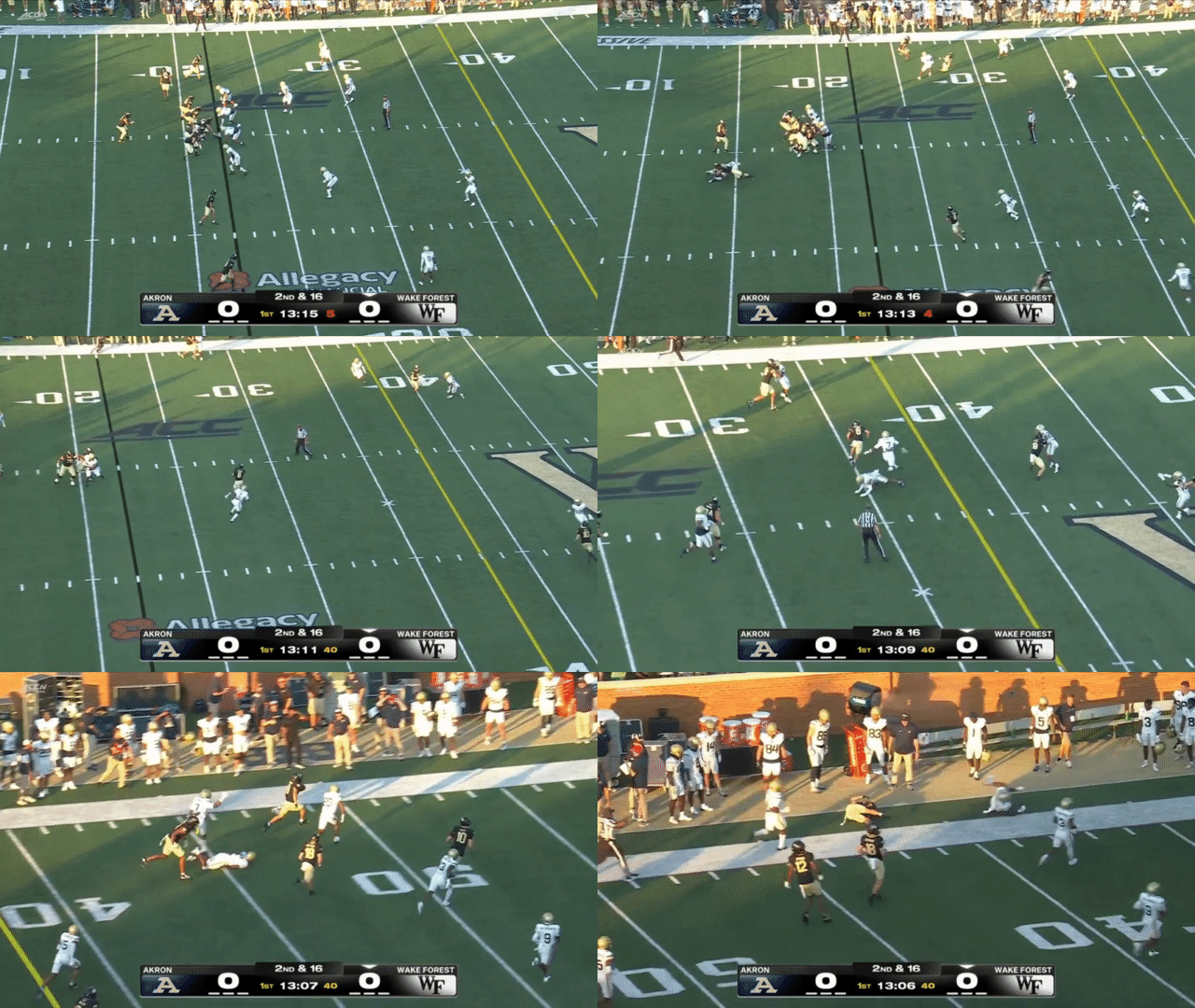
Again, his YAC is ridiculous. Look at how many defenders have a chance at tackling Hernandez:
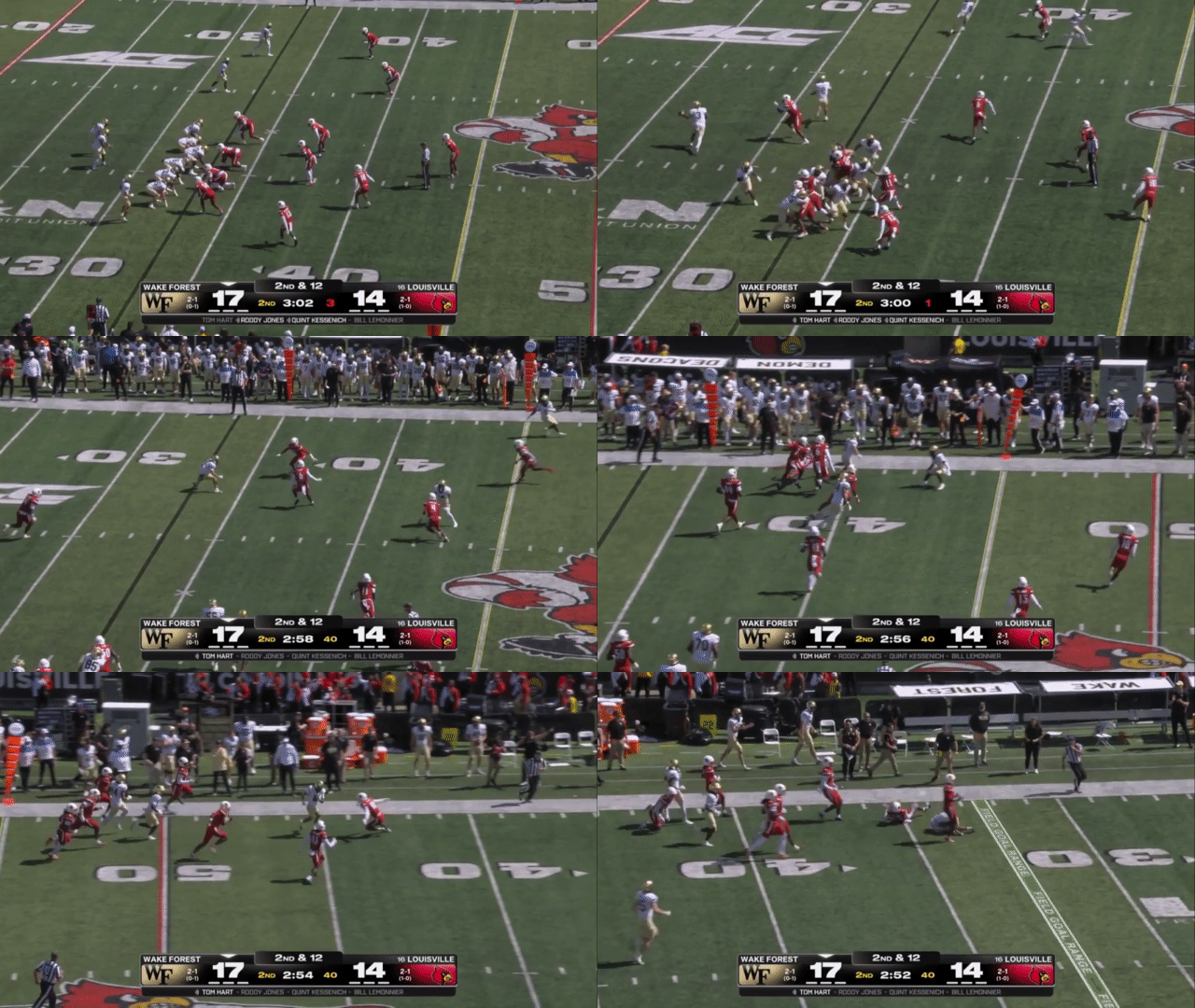
This is a game-on-the-line playmaker right here:
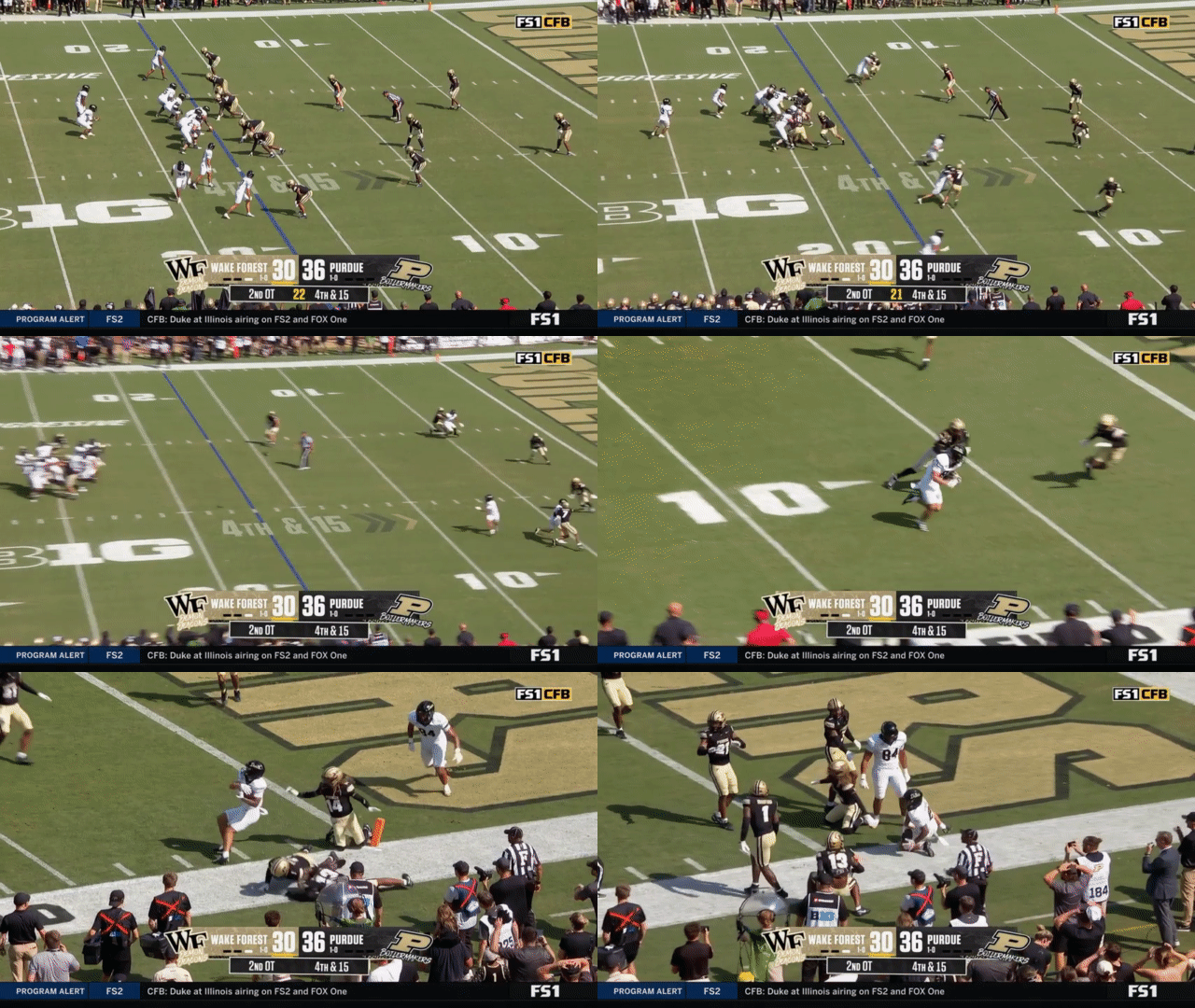
Hernandez is a great route runner and will create plenty of space for Lopez to work with:
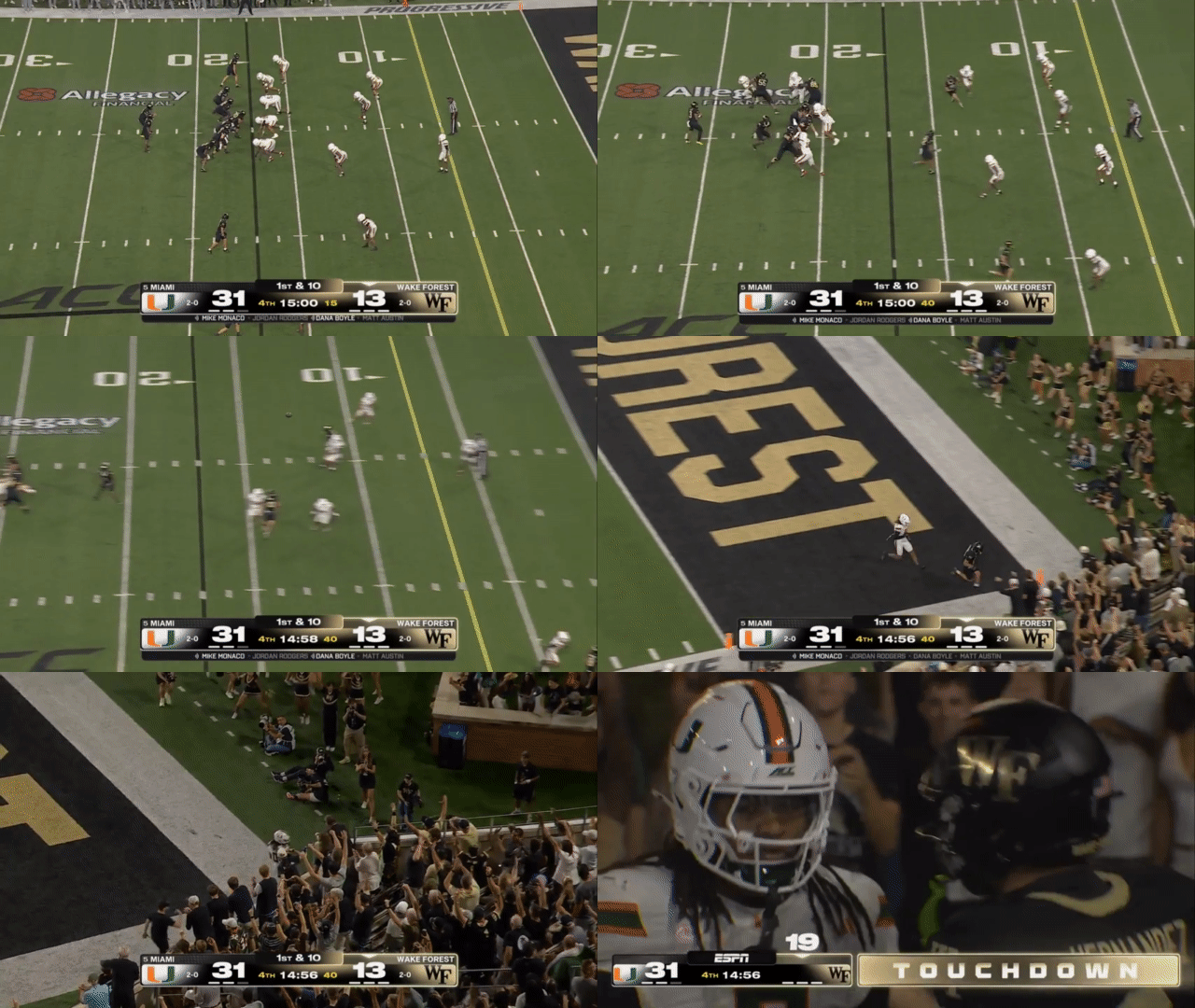
Lopez is also a sure-handed receiver:
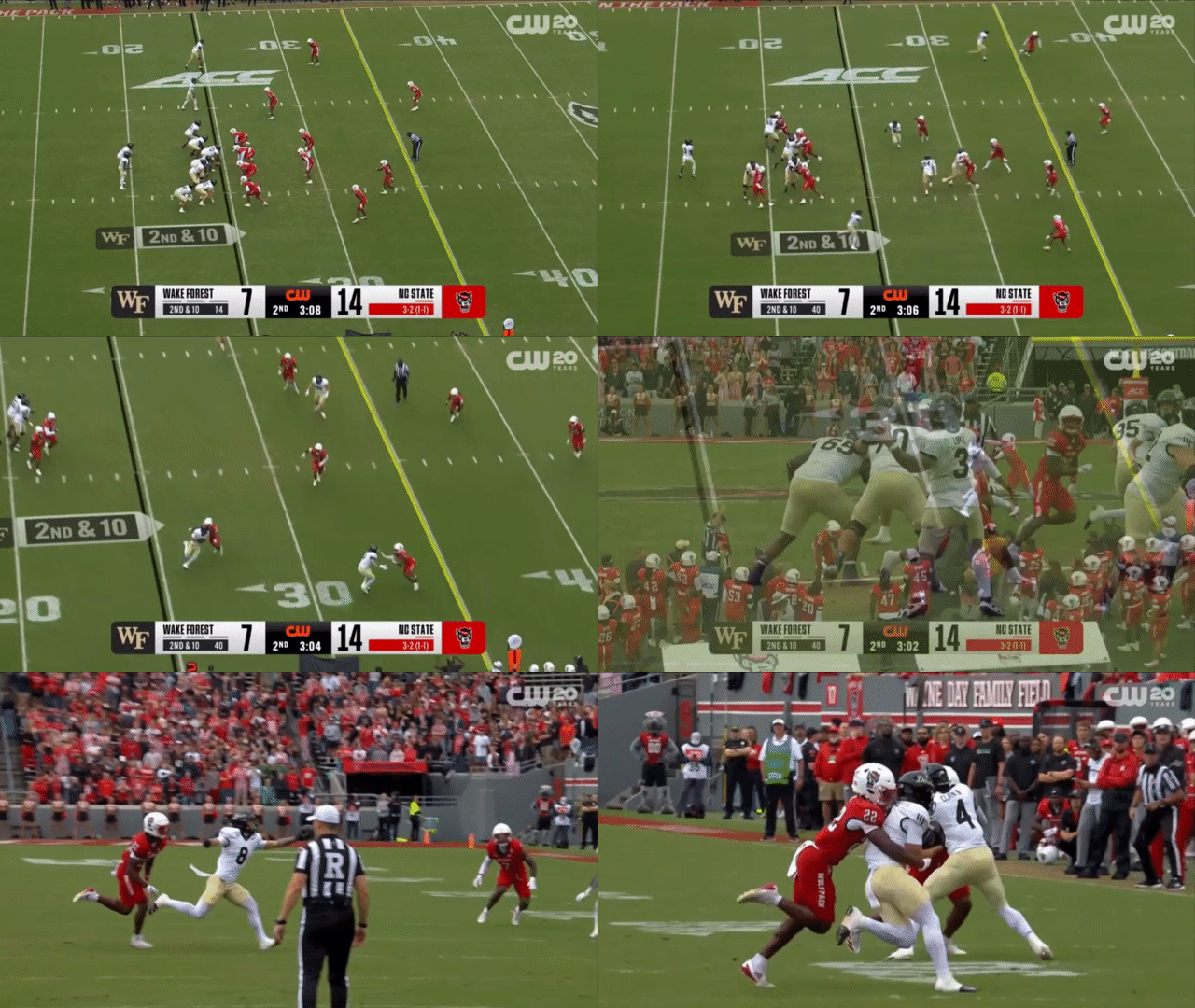
Although Hernandez’s biggest (NFL Draft scouting) knock against him is that he needs to add some musculature to combat physical corners (another reason WF will try to get him room to run as the motion man), he’s still got plenty of strength to fight through tackles:
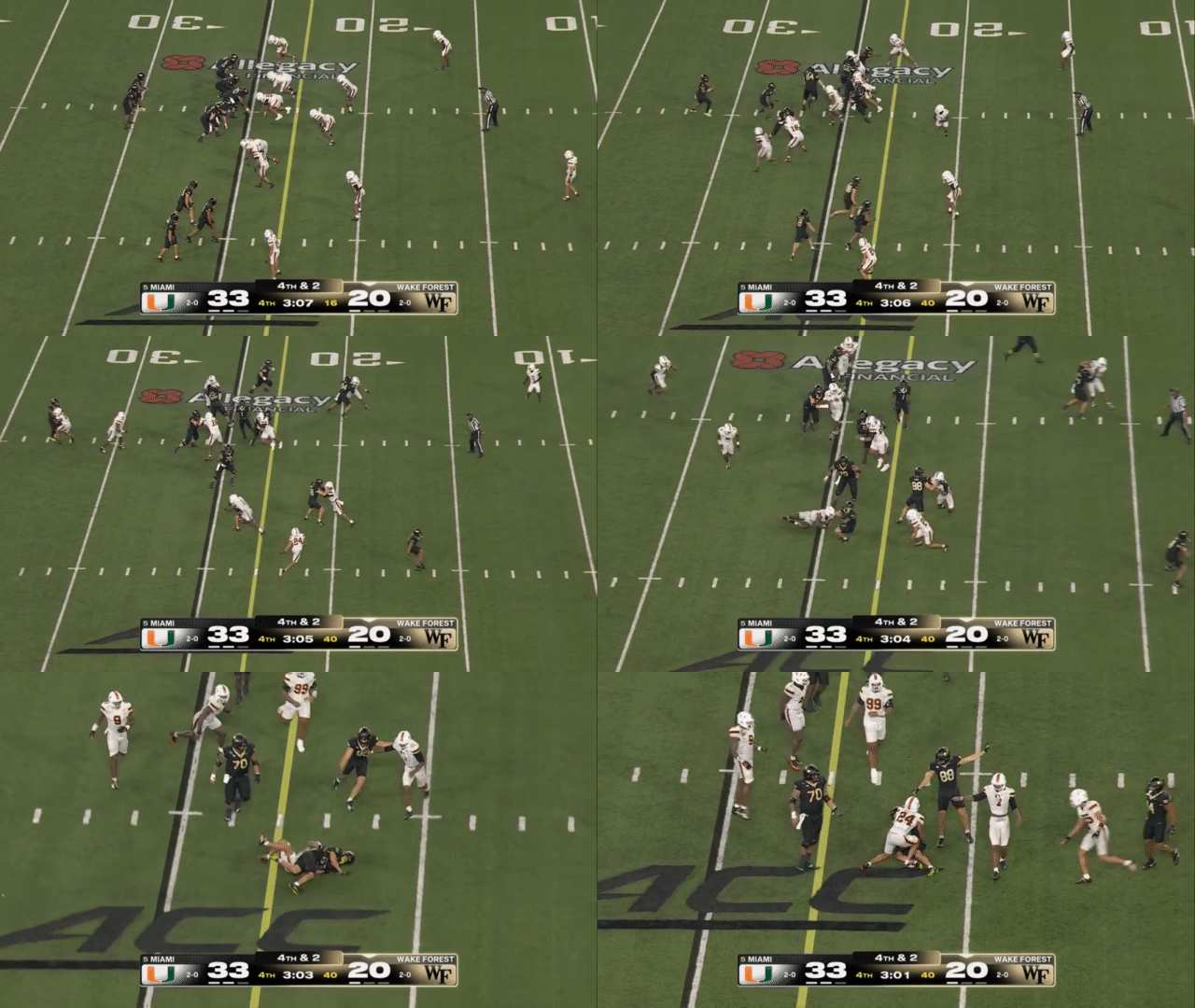
You can also see the trend (if you check the down and distances on these clips) of Hernandez being the go-to receiver when WF needs to make a play. But Hernandez just so reliably picks up chunks of yards, that you can go to him on any down and distance:
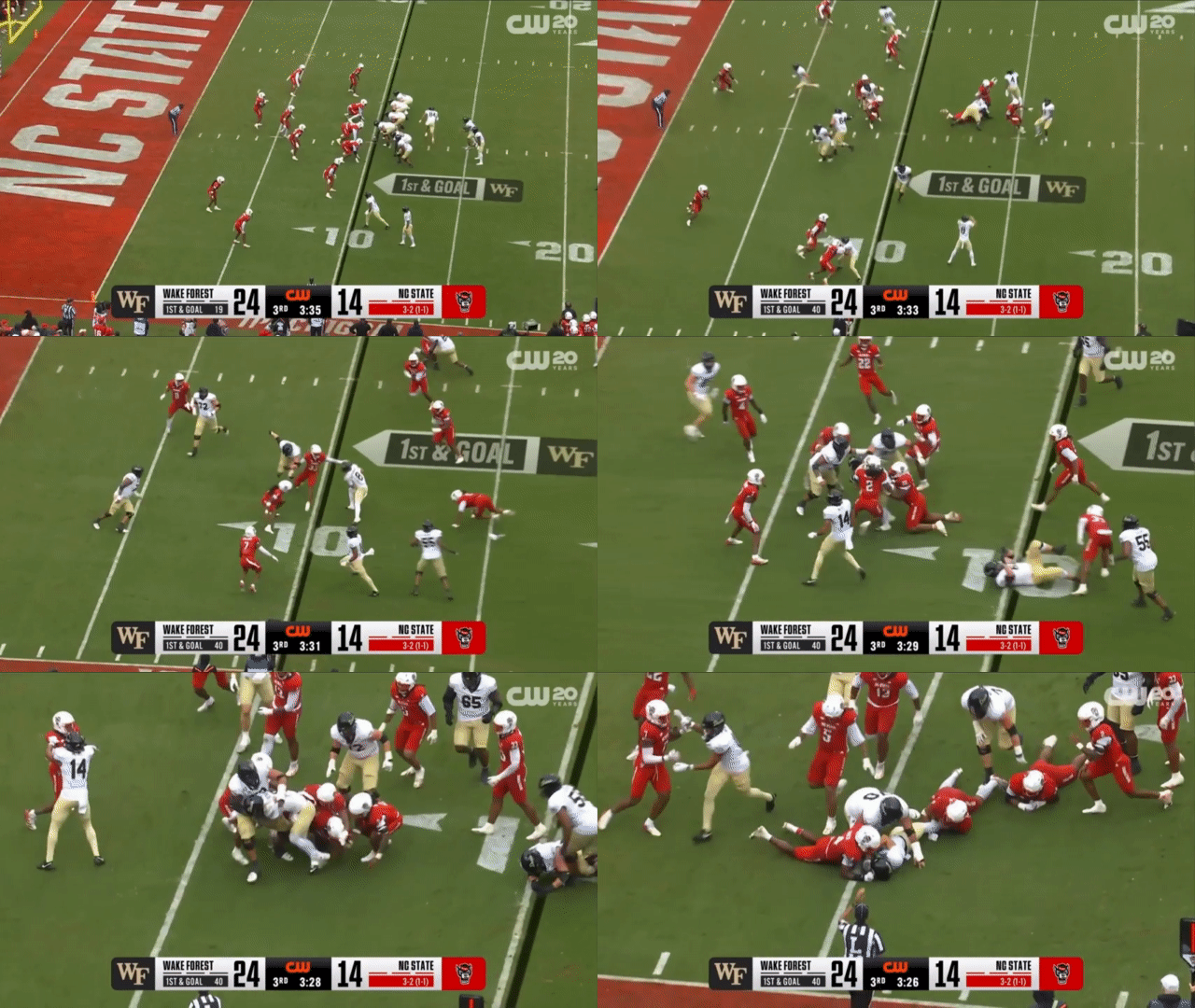
With so much defensive attention on Hernandez, one of the biggest surprises this season has been the emergence of redshirt freshman WR Jack Foley (no relation to Dr. Frederic Foley). Lined up on the other side of the field from Hernandez, he’s proven to be a complementary deep threat receiver with the way he pierces through the defense:
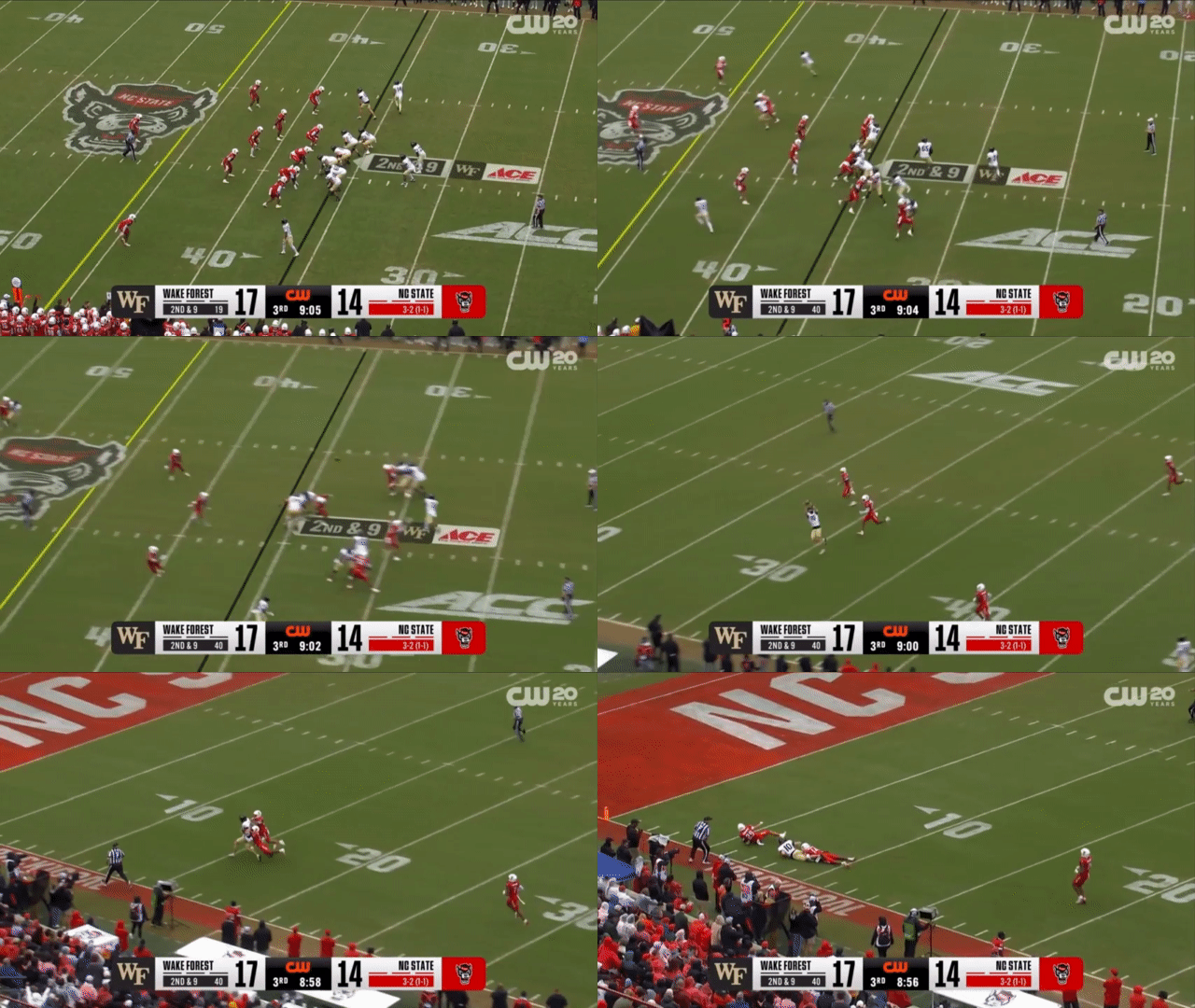
Foley is also able to create separation with his routes and speed getting out of breaks:
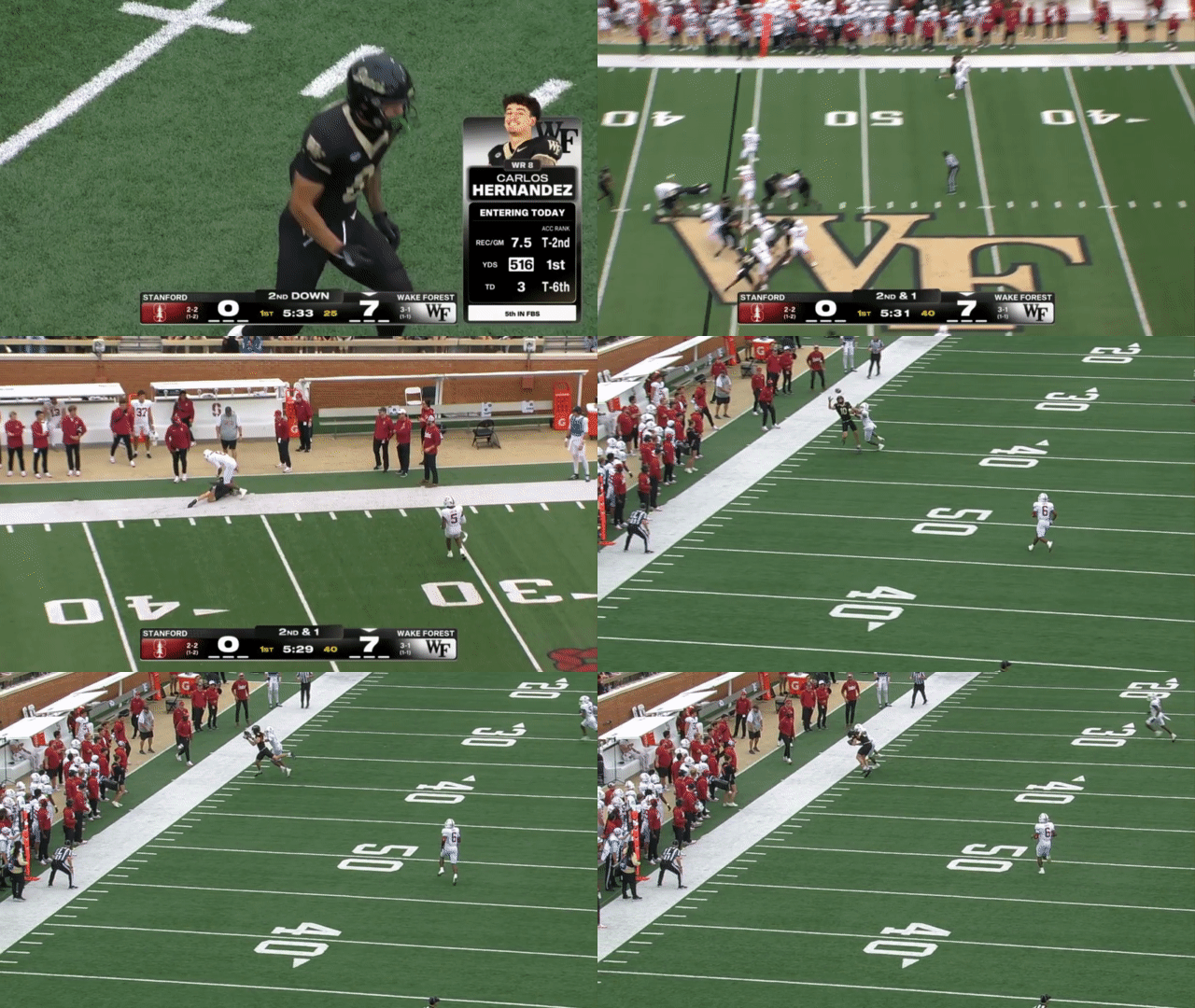
The 6’4” receiver has a large catch radius, allowing him to make some contested catches:
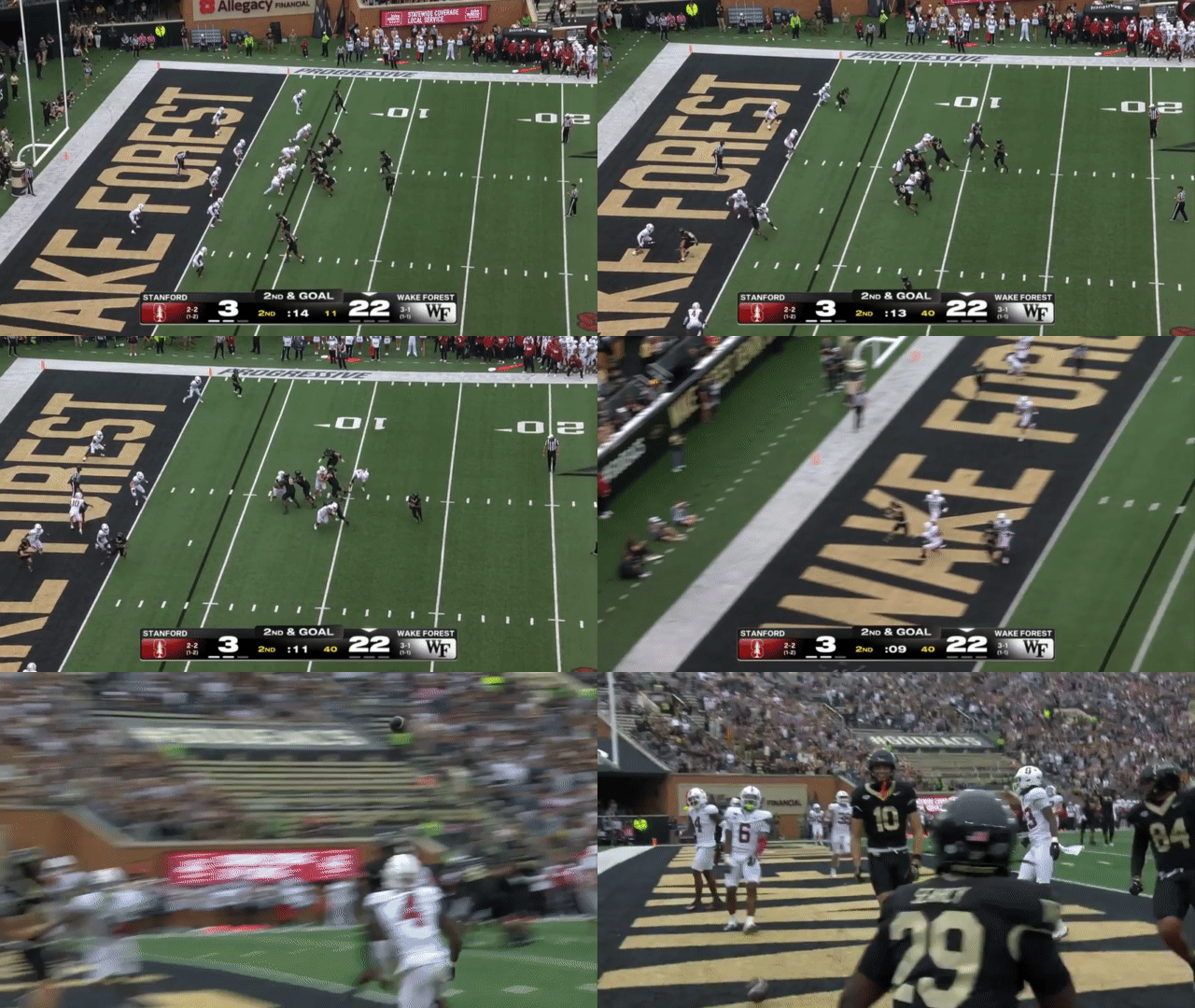
His size and catch radius make him a valuable redzone threat:
And also like Hernandez, Foley has shown some really nice hands as well:
Foley is not just a big target, he also runs well after the catch:
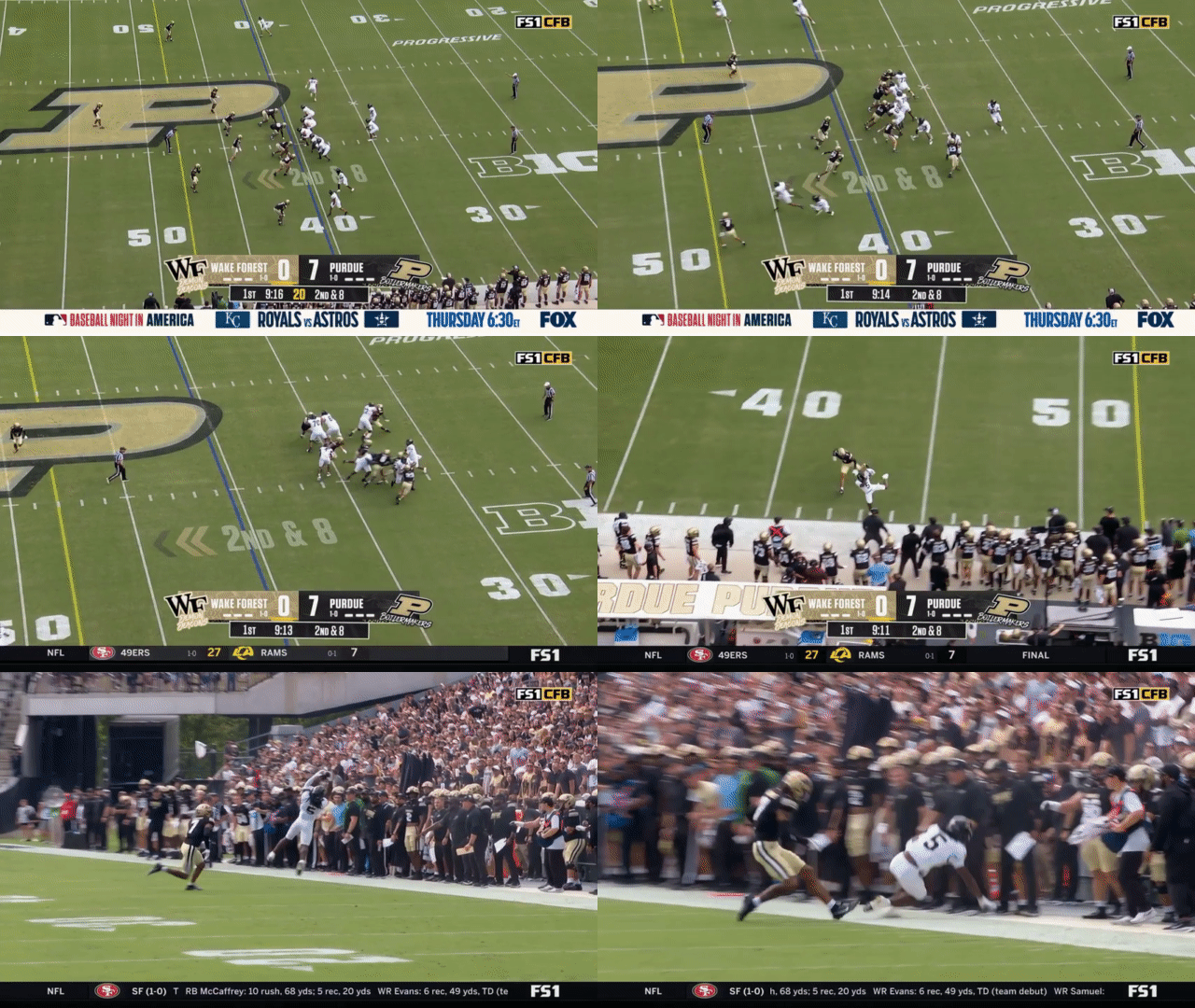
In the slot receiver role is Arkansas transfer Kam Shanks, a receiver who can use his speed to create separation:
Shanks, like the rest of the Wake Forest receivers, has shown nice hands:
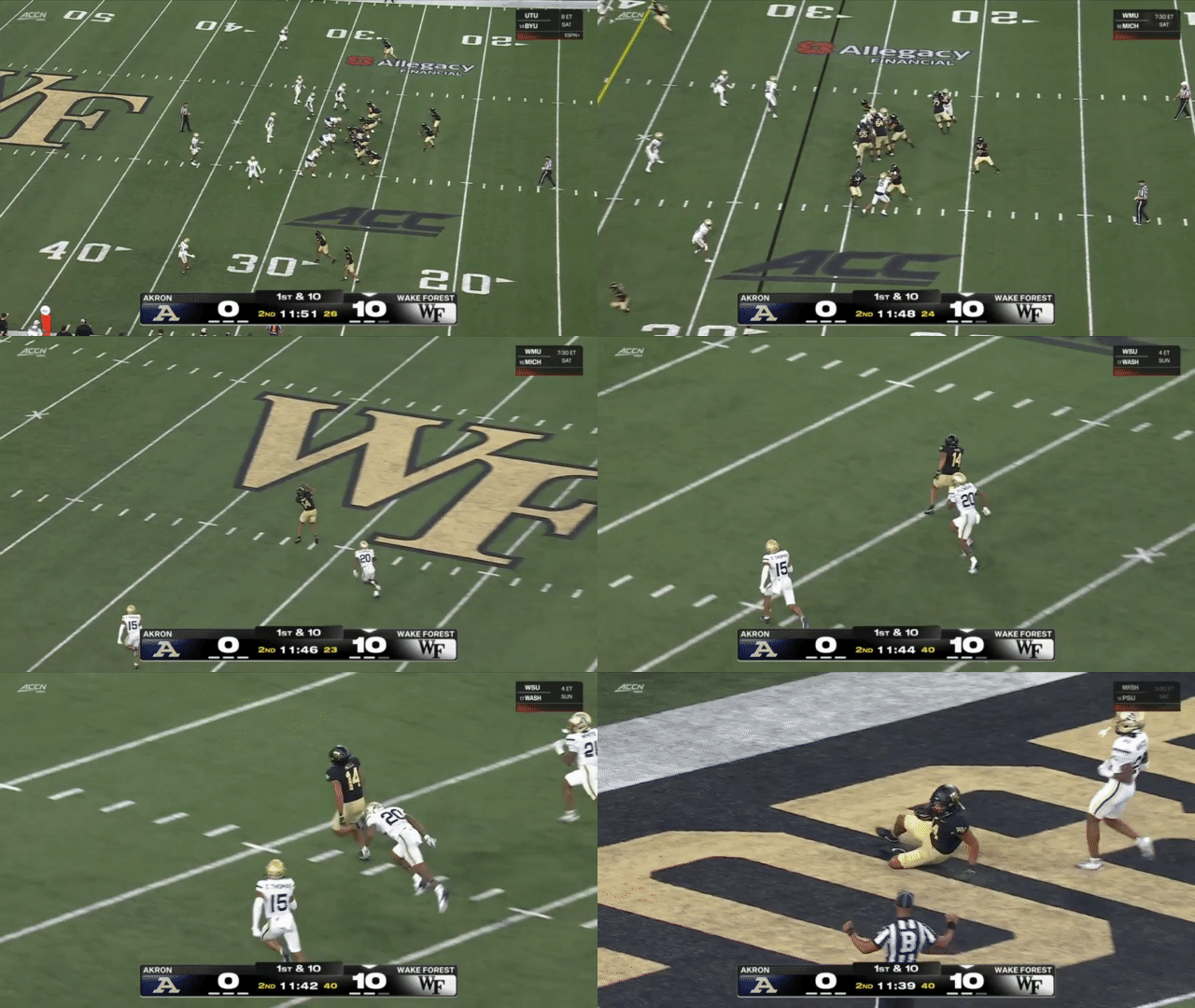
With Jack Foley at the WR-X is Louisville transfer Antonio Meeks (seen in my 2025 Louisville preview), where I remember that he also had good hands. Here Meeks also gets behind the defense (seeing any common trends with these receivers?):
Behind Shanks in the slot is the Rice transfer, Drayden Dickmann (keep him away from Foley), who has shown some nice speed getting involved in the run game:
There’s also Duke transfer WR Chase Tyler (2025 Duke), but he hasn’t recorded a stat yet this year. I also almost neglected to mention the tight ends for Wake Forest. While not super involved involved in the passing game (not until they start running 50+ yard go-routes), there’s TE Will Loerzel and freshman TE Dominick Barry, who have both caught a few short passes. One tight end that can run 50+ yard go-routes is TE Kamrean Johnson, who will occasionally line up as an outside receiver for outside fades. And finally, there’s Cal transfer TE Landon Morris.
With QB Gio Lopez buying time in the pocket, look for some long-developing routes from the Wake Forest receivers as they look for big plays. Otherwise, just try to watch where WR Carlos Hernandez is.
Conclusion
Prior to last week, I probably would have put Wake Forest’s offense roughly on par with Virginia Tech’s, i.e. one of the best in the ACC (though maybe a step below the ruthlessly efficient Miami offense). Hopefully the Cal defense similarly finds a beat to slow this Wake Forest offense, and hopefully the return of S Kingston Lopa can punish some of those deep throws with interceptions (as WF has been very good this year about not turning the ball over). I think—like the Virginia Tech game—that this one is going to be an uphill battle, but at least Cal has finally shown the ability to win another rock fight.
As always,
Go Bears.
You can find my full clips here.